The Black and White Living Room That Made My Small Apartment Feel Like a Design Magazine
There’s something quietly powerful about walking into a room where everything feels intentional — where two colors, stripped of all distraction, create a space that somehow holds more feeling than a rainbow ever could. If you’ve been staring at your apartment walls wondering how to make them say something, black and white might be the most honest conversation starter you’ve ever tried.
—
1. Why Black and White Never Actually Goes Out of Style
Let’s start here, because this is the question every skeptic asks: isn’t it a bit cold? A bit stark? A bit… magazine-ish in a way that won’t actually feel livable?
Here’s the truth — and this comes from years of scrolling through real homes, not showrooms. Black and white as a design scheme isn’t about minimalism for minimalism’s sake. It’s about contrast, which is one of the most fundamental things the human eye finds beautiful. We are neurologically wired to notice contrast. It’s why a white daisy in a dark field takes your breath away. It’s why old black and white photographs feel so emotionally loaded.
In apartment living rooms specifically, this contrast does something remarkable: it creates the perception of depth. In a 400-square-foot studio in Chicago or a compact Victorian conversion flat in Manchester, perceived depth is everything. A thoughtfully executed black and white room doesn’t just look stylish — it looks bigger, more considered, and more “finished” than rooms twice its size that haven’t been decorated with intention.
“Black and white isn’t a limitation — it’s the most liberating design decision you’ll ever make in a small space.”
The reason this scheme endures across decades of trend cycles — from the mod swinging sixties to the Scandinavian minimalism of the 2010s to today’s warm modernism — is that it works with almost any architectural style. Whether your apartment has exposed brick walls, IKEA-built-in shelving, or those utterly characterless magnolia walls that every UK rental seems to feature, black and white adapts. It doesn’t fight the bones of a space. It works with them.
2. The One Mistake People Make When They Start a Black and White Living Room
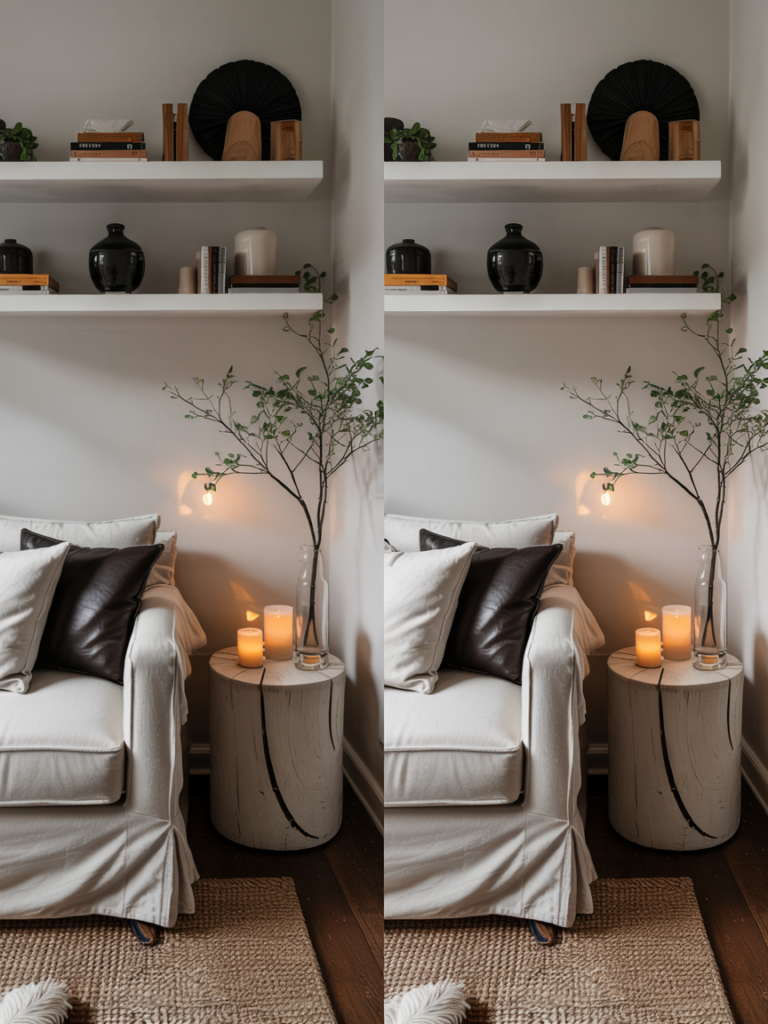
Imagine you’ve decided to go for it. You paint an accent wall in matte black, order a white sofa, and then stand in the room feeling oddly underwhelmed. The space looks… fine. But it doesn’t feel like those images you saved on Pinterest. What went wrong?
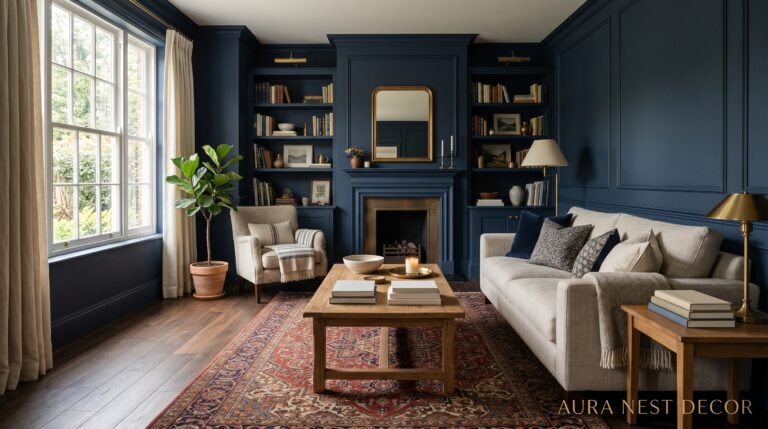
Nine times out of ten, the answer is proportion and warmth. People forget that black and white is not a ratio of 50/50 — and they also forget that pure, cold white and jet black without any warmth in the room will feel clinical rather than cozy. The most successful black and white living rooms follow an unofficial rule that interior designers have used for years: 60% dominant neutral (usually white or a warm off-white), 30% secondary shade (usually black, charcoal, or dark navy leaning dark), and 10% accent — which in a black and white scheme, often comes from natural textures, warm metals like brass or bronze, or a single carefully chosen piece of greenery.
That 10% is what prevents the room from feeling like a waiting room at a very chic dentist’s office.
3. How to Choose the Right Shade of White for Your Apartment Walls
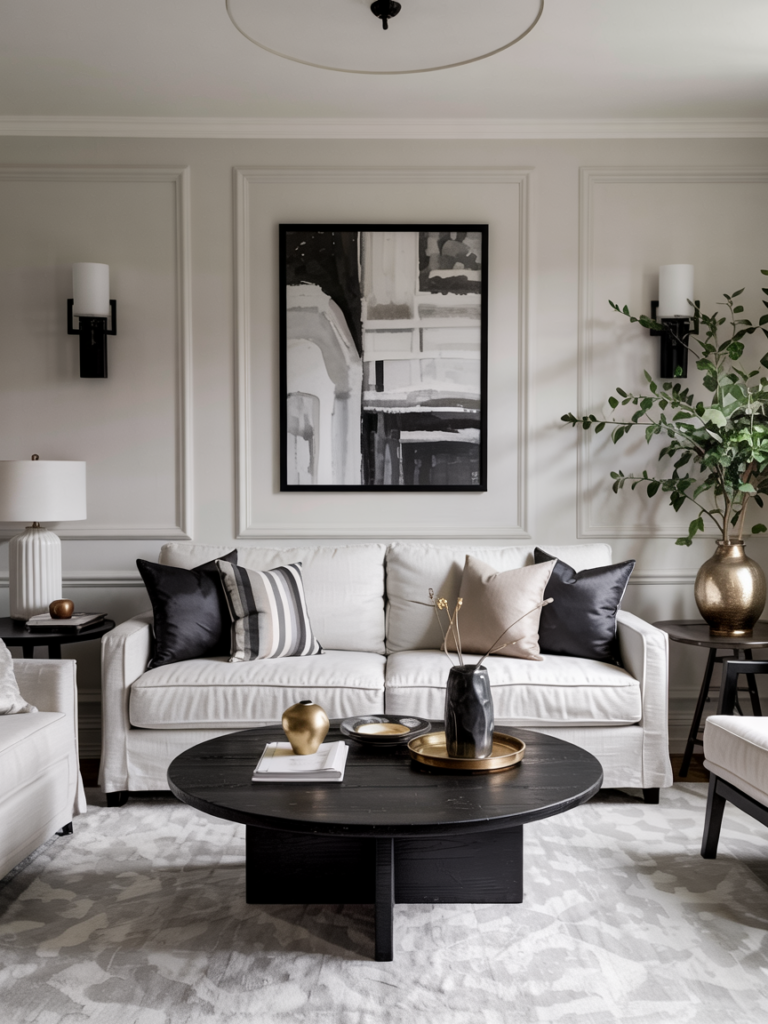
This sounds overly specific, but it might be the single most impactful decision you make. Not all whites are created equal, and in the context of a black and white living room, the wrong white can make the whole thing fall flat.
In the US, Benjamin Moore’s “White Dove” (OC-17) has become something of a legend in design circles — it has just enough warmth to feel welcoming without looking cream or yellow. Sherwin-Williams’ “Alabaster” performs similarly, with a softness that prevents the stark, hospital-corridor feel that pure brilliant white can create in north-facing rooms. In the UK, Farrow & Ball’s “All White” and “Strong White” are perennial favorites — “Strong White” in particular has a barely-there grey undertone that makes it feel intentional and sophisticated against black accents.
If you’re renting and can’t paint (hello, approximately half of London renters), don’t despair. White removable wallpaper, textured white throws draped over furniture, and white-framed gallery walls can shift the visual baseline of your room without a single stroke of a paintbrush.
4. The Art of Using Black as an Accent Without Overwhelming a Small Room
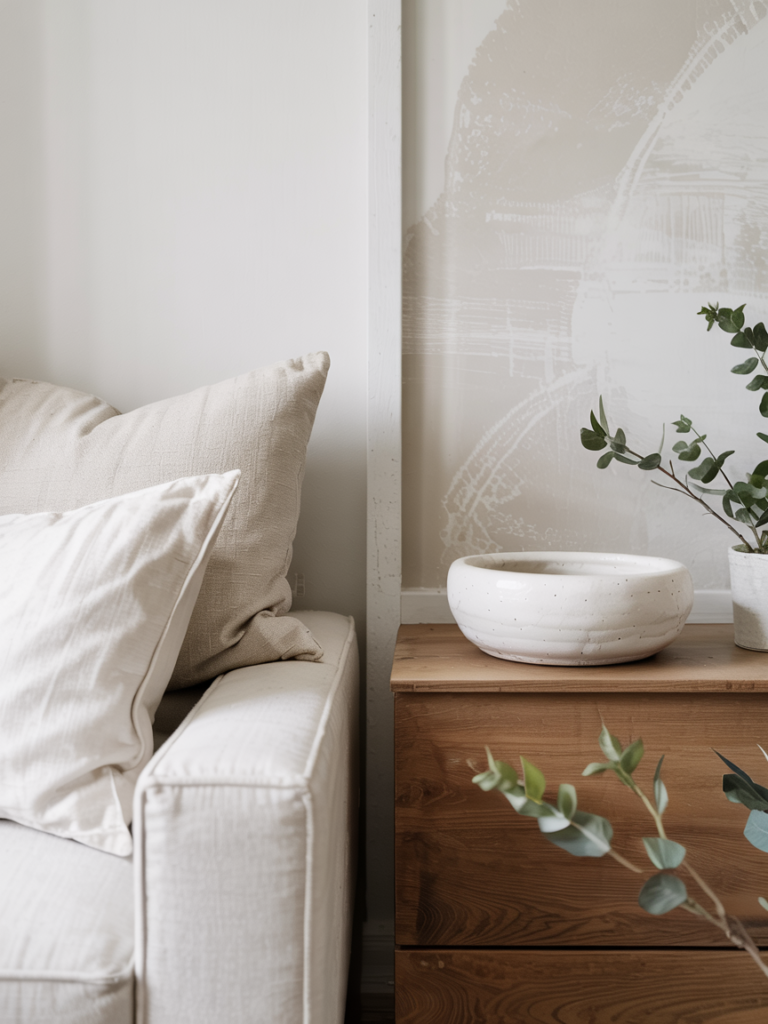
Black is the element people are most afraid of in small apartments, and this fear, while understandable, is mostly unfounded when you understand how to use it strategically. The key word here is “grounding.” Black in a room acts like punctuation in a sentence — without it, everything runs together. With it, the eye knows where to rest.
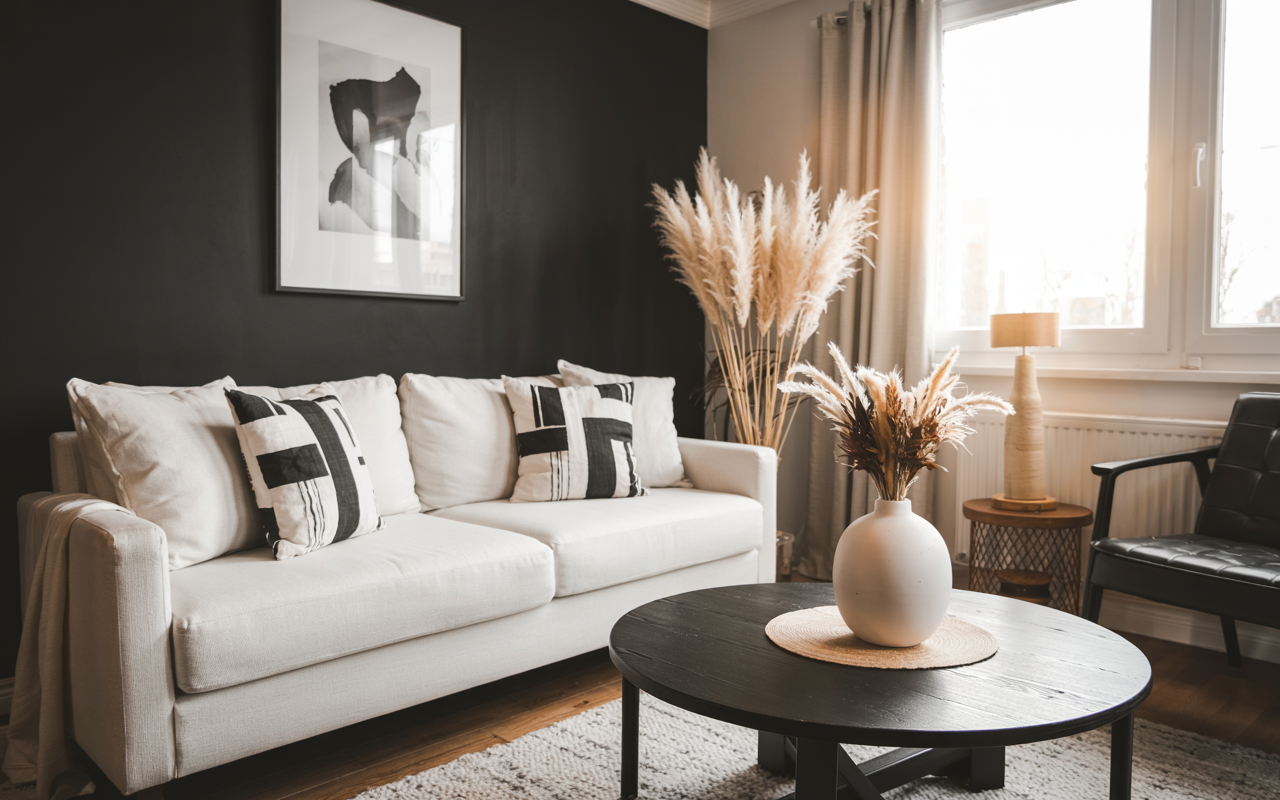
In a compact apartment living room, introduce black through what designers call “small and repeated” placements. Think: a black-framed gallery wall arrangement (IKEA’s RIBBA frames in black are perfect for this and won’t break the bank), a black coffee table with clean geometric lines, black cushion covers on a white or grey sofa, black candle holders, and — crucially — black lampshades or light fixtures. When black appears in multiple spots around the room at different heights, the eye travels around the space and the room feels curated rather than accidental.
One rule to keep close: avoid large, solid black walls in truly tiny rooms unless you have exceptional natural light. Instead, go for a black fireplace surround, black shelving units, or a black statement sofa (balanced heavily with white and light textures elsewhere).
5. Texture Is the Secret Third Color in Every Black and White Room
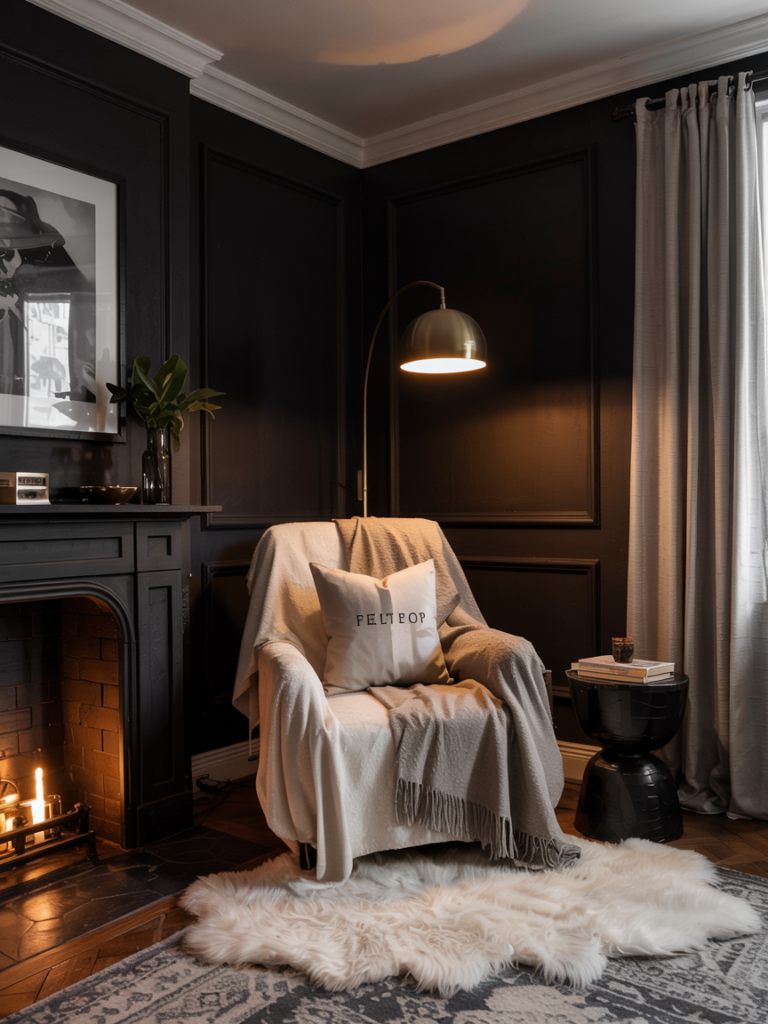
Here’s something the most beautifully executed black and white apartments all have in common that doesn’t immediately register when you look at a photo: they’re incredibly tactile. Because color variety is restricted, texture becomes the vehicle for visual richness. Without it, a black and white room is just… flat.
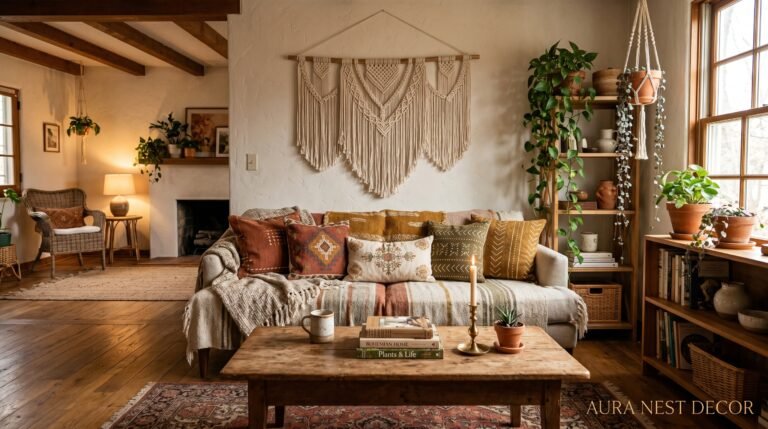
Think about layering your living room with textures at every level. At floor level: a chunky weave jute rug, a black and white geometric flatweave, or a sheepskin throw over the corner of a sofa. At mid-level: velvet cushions (the way velvet shifts between dark and light as you move around it does something almost magical in a monochrome room), a knitted throw in cream or oatmeal, linen curtains in an off-white that lets diffused light come through like warm milk. At high level: woven wall hangings, macramé in natural cotton, ceramic vases in matte black and white.
“In a room without color, texture becomes the storyteller — and every surface has something worth saying.”
This approach also solves the warmth problem. Natural materials — wood, cotton, linen, wool, jute — bring organic warmth that prevents the room from feeling sterile. A low wooden coffee table, a rattan side chair painted in black, or even a simple wooden bowl on a shelf introduces that essential element of nature that the human eye instinctively softens toward.
6. Gallery Walls That Actually Work in Black and White Apartments
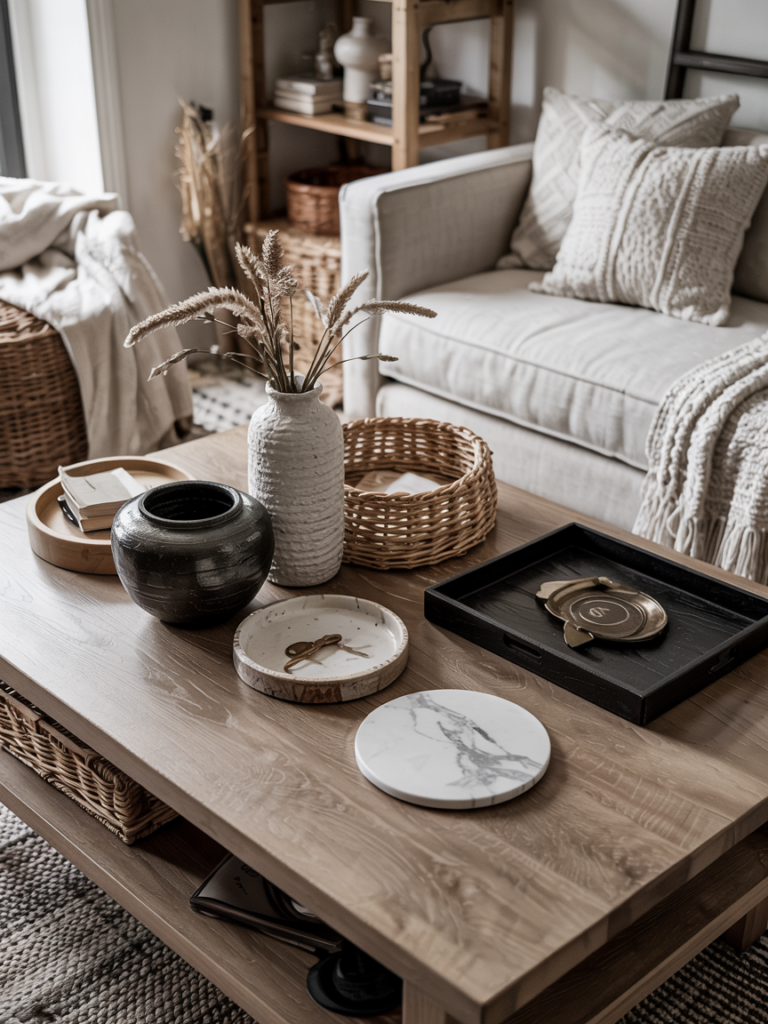
A black and white gallery wall is one of the most Pinterested decor ideas in existence for good reason: it works in virtually any apartment, at any budget, and it can be made entirely personal. But there are gallery walls that feel intentional and gallery walls that feel like an afterthought, and the line between them is narrower than you’d think.
The most important rule is consistent framing. Choose one frame color and style and stick with it throughout — black frames with a clean profile are the classic choice, and they’re available from Target, IKEA, H&M Home, and Dunelm at very accessible price points. Within those frames, mix art types for visual rhythm: a botanical print, an abstract line drawing, a black and white photograph (family photos or travel shots work beautifully here), and perhaps a typographic print in a font you genuinely love.
For layout, before you put a single nail in the wall, lay all your frames on the floor and arrange them there first. Live with it for a day. Move them around. The gallery wall that looks effortless on Instagram took someone a very deliberate afternoon to plan.
7. Lighting: The Element That Makes or Breaks a Monochrome Room
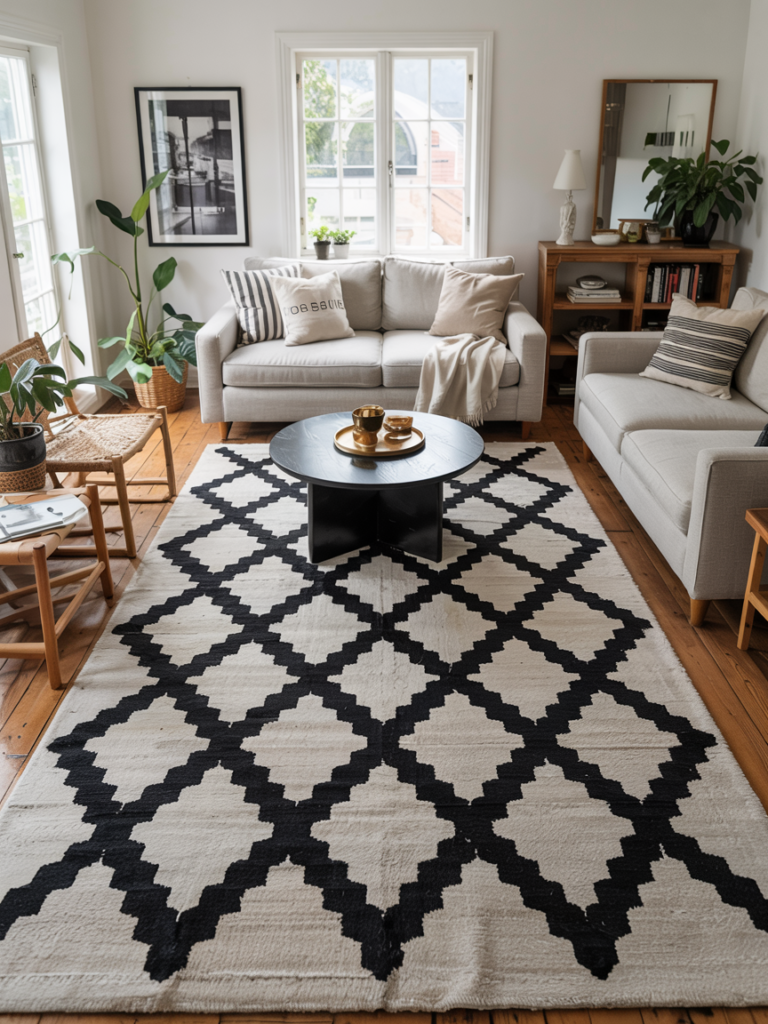
Lighting in a black and white living room is not an afterthought — it is arguably the most important design element in the room. Because you don’t have color to create warmth and atmosphere, light has to do that work.
Layer your lighting at three levels. Overhead ambient light (a sculptural pendant light in black metal or a warm-toned globe pendant works beautifully), task lighting (a black arc floor lamp positioned beside your sofa or reading chair), and accent lighting (LED strip lighting behind shelving or candles — real or battery-powered — clustered on a mantelpiece or coffee tray). The more light layers you have, the more control you have over the mood of your room throughout the day.
Warm white bulbs (2700-3000K color temperature) are non-negotiable in a black and white room. Cool white bulbs will make your space feel like an operating theatre. Warm light bouncing off white walls creates that golden, inviting quality that makes people say “I love how this room feels” without being able to explain exactly why.
8. Small Apartment Furniture Choices That Expand the Space
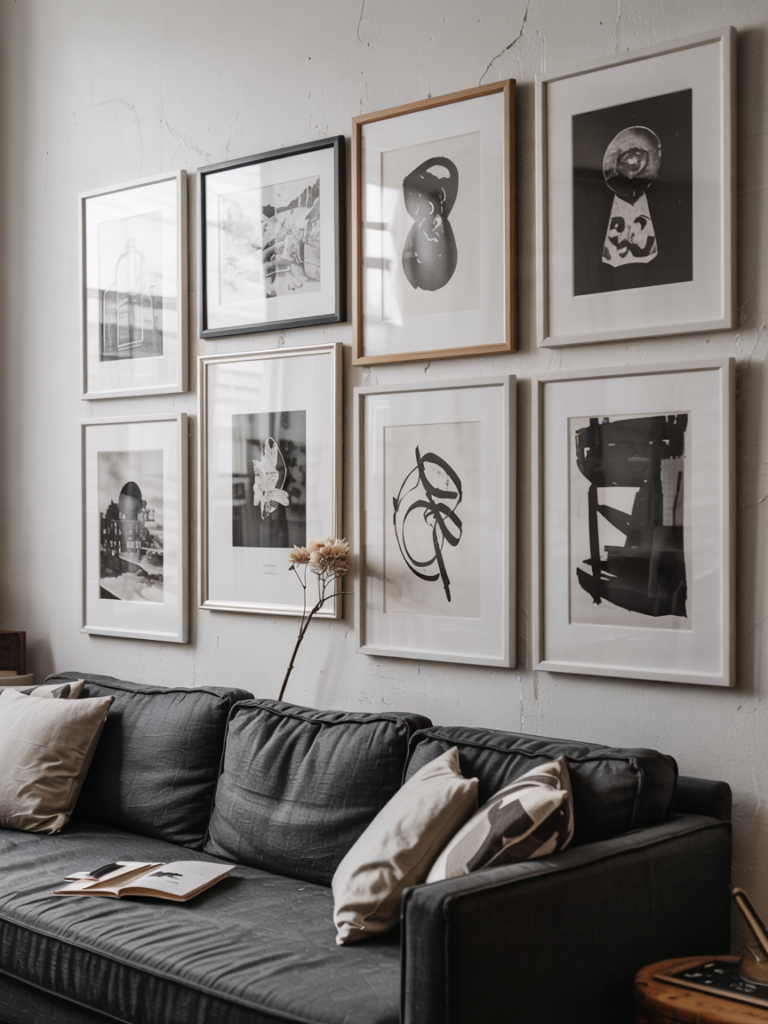
Modern black and white apartment decorating is also a lesson in furniture selection — specifically, in choosing pieces that do visual work beyond simply looking stylish. In a small living room, every piece of furniture either opens the space up or closes it down, and understanding this changes how you shop.
Furniture with legs is your friend. A sofa on legs, a coffee table with a slim profile, an open-backed bookshelf — all of these allow light and sightlines to pass through and around furniture, creating the illusion of more floor space. Solid, plinth-style furniture in small rooms creates visual weight that can make a space feel crowded even when it isn’t.
In terms of scale, resist the temptation to go too small with furniture in a misguided attempt to make the room feel bigger. A properly sized sofa in a small room looks intentional. A tiny two-seater that barely fits two people looks like an apology. Get the proportions right first, then work around them.
9. Plants and Greenery: Nature’s Contrast Dial

One of the most transformative things you can add to a black and white living room — and one that gets underestimated constantly — is greenery. A single large-leafed plant in a matte black or white ceramic pot can shift the entire energy of a monochrome room from “chic but cold” to “chic and alive.”
The contrast between deep botanical green and a crisp white wall is one of the most natural, beautiful things in design. Plants like the fiddle-leaf fig, monstera deliciosa, or a trailing pothos bring organic curves and life into a space that might otherwise feel very angular and graphic. For apartments with low light — common in UK ground-floor flats or American city apartments facing north — ZZ plants and snake plants are virtually indestructible and remarkably sculptural.
“A single plant in the right corner does what three decorative accessories couldn’t — it breathes life into a room.”
Even a small cluster of white ceramic bud vases with dried pampas grass or eucalyptus branches on a coffee table adds softness and a hint of botanical warmth without demanding the natural light that some houseplants require.
10. Budget-Friendly Ways to Achieve a High-End Black and White Look
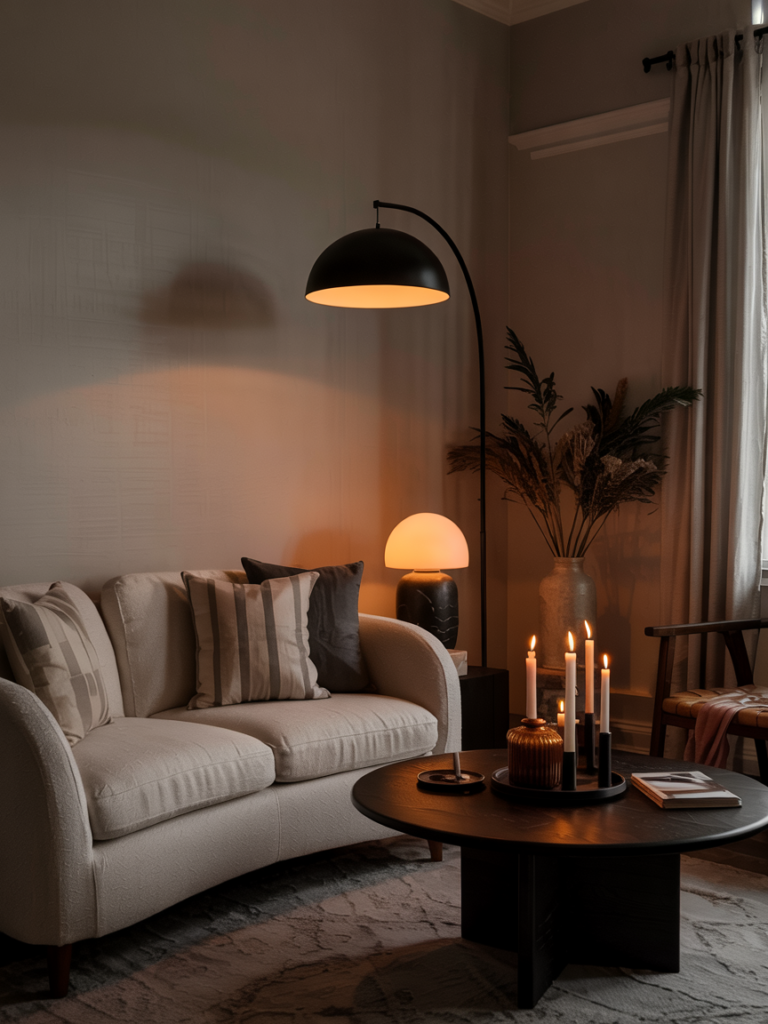
The great privilege of a black and white color scheme is that it is one of the most budget-accessible palettes in interior design. Because you’re working with neutral foundations that are mass-produced and widely available, you don’t need designer pieces to achieve a high-end result.
Start with what costs the least: rearrange what you already have. Strip the room back. Remove anything that isn’t black, white, grey, or natural. You may be surprised how much “design” was already hiding beneath the clutter and the mismatched colors. From there, build intentionally. IKEA, H&M Home, Target, and Dunelm all offer excellent black and white pieces at prices that feel almost unfair for the quality they deliver. Thrift stores and charity shops are goldmines for black frames, white ceramics, and monochrome textiles.
One investment worth making: a quality rug. In a black and white room, the rug anchors everything, and a cheap rug that pills, slides, or looks thin will undermine an otherwise beautiful space. Consider this the one area where spending a little more pays dividends.
11. Modern Black and White Styles That Are Trending Right Now
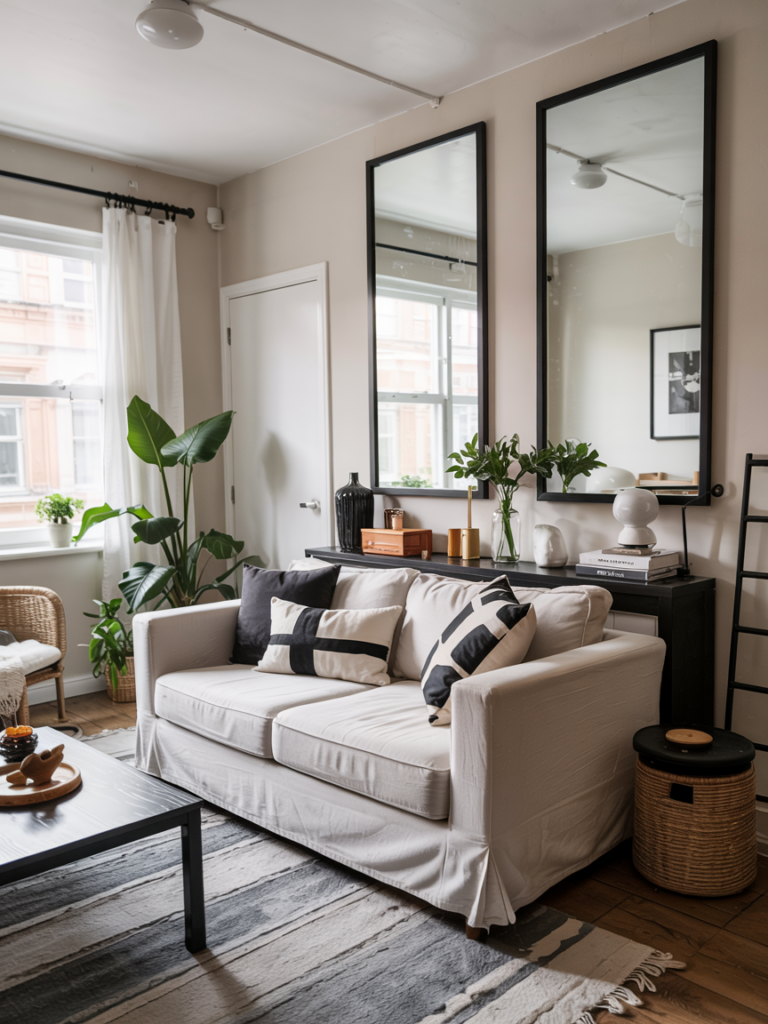
The black and white living room of 2024 and 2025 is not the stark, high-contrast minimalism of a decade ago. Today’s iterations are warmer, more layered, and more personal. Here are the specific style directions that are resonating with US and UK apartment dwellers right now.
Warm Modernism is perhaps the biggest shift — incorporating warmer tones of white (think linen, parchment, and bone rather than clinical bright white) with black accents in organic, curved forms. Think a black rounded arch mirror, curved black sofa legs, and organic ceramic objects. Japandi — the beautiful fusion of Japanese minimalism and Scandinavian hygge — is another dominant influence, emphasizing natural materials, functional beauty, and an absence of unnecessary decoration. And Maximalist Monochrome, a more recent development, layers pattern on pattern in black and white — graphic tiles alongside bold geometric textiles and oversized black and white photography — for an effect that feels bold, confident, and joyfully excessive.
12. How to Make Your Black and White Living Room Feel Like Home, Not a Hotel
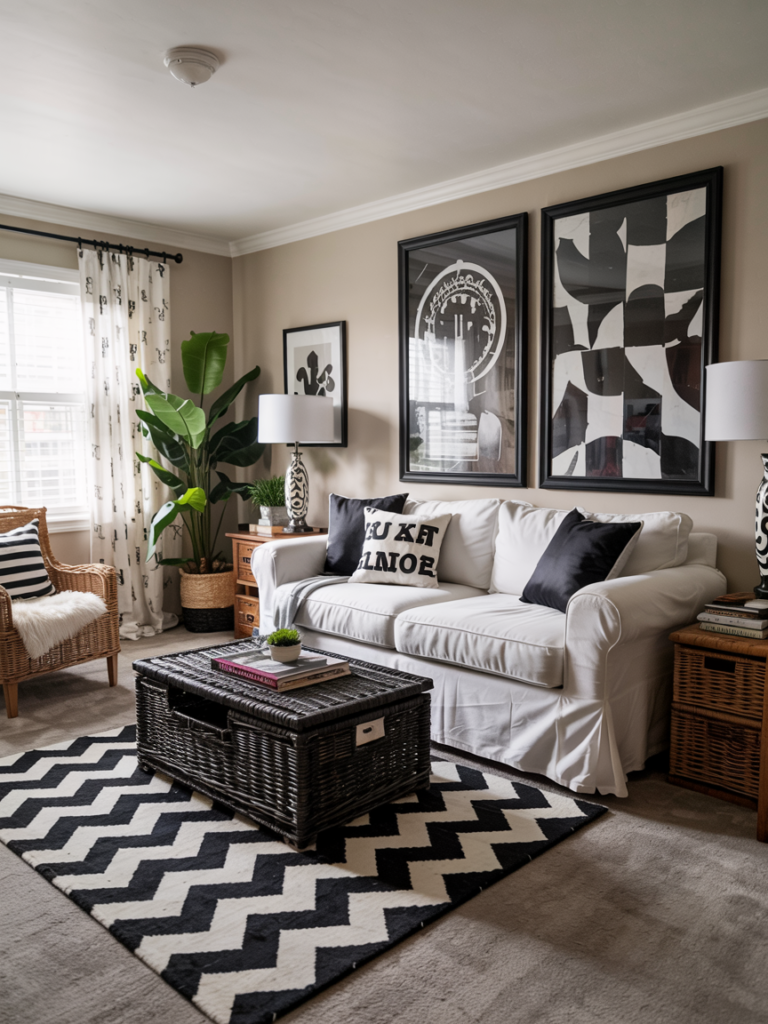
The final piece — and perhaps the most important one to close on — is soul. A black and white living room can look extraordinary in photographs and feel completely hollow in real life if it’s missing the personal details that make a space genuinely lived in and loved.
Display the things that matter to you. Not everything has to be aesthetically “correct” — a stack of well-loved books, a scented candle in a fragrance you return to, a throw blanket that’s been washed so many times it’s perfectly soft, a framed photograph of somewhere that changed you. These details are the difference between a room that looks designed and a room that feels designed for you.
The most powerful black and white living rooms on Pinterest aren’t saved because they look perfect. They’re saved because they feel like somewhere a real person actually lives — and lives beautifully.
—
🌿 How to Take Care of Your Black and White Living Room
Maintaining the crispness and beauty of a black and white scheme takes a little more intentionality than a mixed-color room, but nothing overwhelming.
Dust white surfaces regularly — dust shows more readily on white and light surfaces, and regular wiping keeps walls and furniture looking fresh. A microfibre cloth is your best friend here. For black furniture and frames, fingerprints and smudges are the main enemy. A slightly damp cloth followed by a dry buff keeps matte black surfaces looking intentional rather than grimy. Refresh textiles seasonally — swap out cushion covers and throws as the seasons change. In winter, lean into heavier textures (velvet, chunky knit) and in summer, switch to lighter linens and cotton. Keep plants healthy because a drooping or yellowing plant is visually jarring in a clean monochrome room — it becomes a focal point for all the wrong reasons. And finally, edit regularly. Black and white rooms show clutter more dramatically than rooms with busy color schemes. A ten-minute weekly edit — putting things back in their place, removing anything that doesn’t belong — keeps the space feeling intentional.
—
❓ FAQ
Q: Will a black and white living room make my small apartment feel even smaller? A: Not if you apply the principles correctly. The key is to use white as your dominant color on walls and large surfaces, introduce black in smaller, repeated accents, choose furniture with legs rather than heavy plinth bases, and layer textures to add visual warmth and depth. A well-executed black and white room typically feels larger than a room decorated with multiple competing colors, because the eye isn’t overwhelmed with competing stimuli.
Q: Can I add any other colors to a black and white living room without ruining the scheme? A: Absolutely — and most designers would encourage it. The most livable black and white rooms incorporate what designers call “near neutrals” and natural accents: warm brass or bronze metallic tones, natural wood, botanical green from plants, and soft naturals like jute, linen, and dried grasses. These additions don’t read as “color” in the traditional sense but they add warmth and organic interest that keeps the room from feeling sterile.
Q: I rent my apartment and can’t paint the walls. Can I still achieve a black and white look? A: Yes, completely. Focus your energy on textiles, furniture, and accessories rather than walls. A large white or light grey area rug, white curtains, black-framed gallery walls, and monochrome cushions and throws can transform the feeling of a room without touching the walls. Removable peel-and-stick wallpaper in white geometric or subtle pattern is another renter-friendly option that has improved dramatically in quality over the past few years.
—
💭 Final Thought
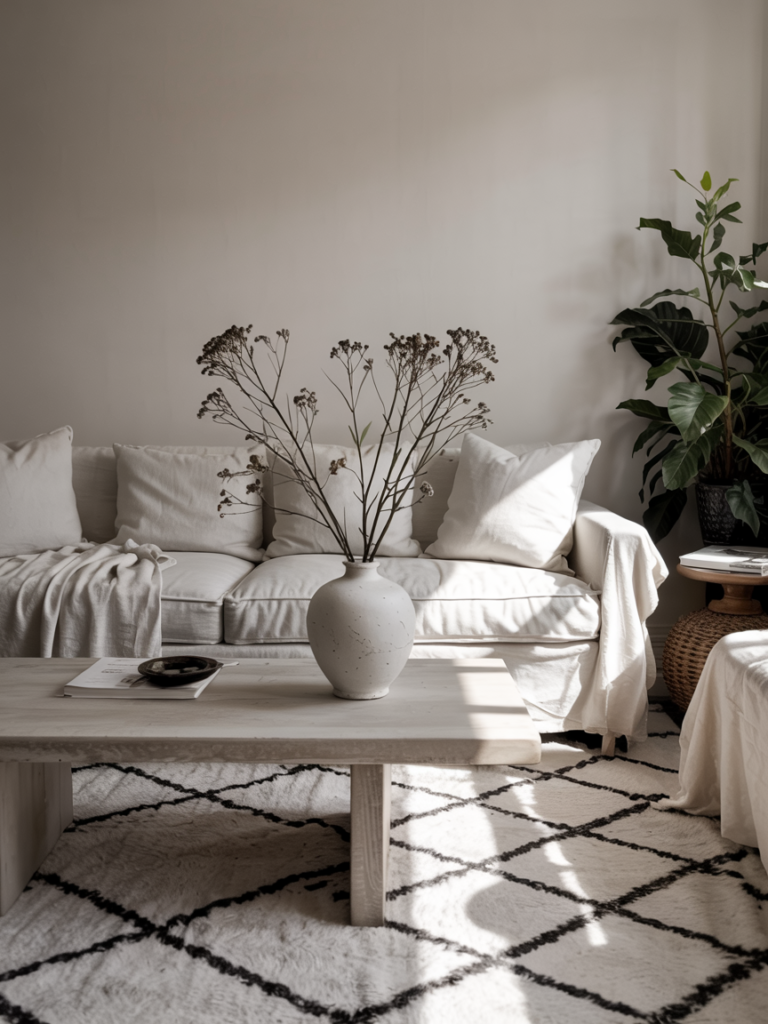
There’s a quiet confidence that comes with a black and white living room — a sense that you know exactly what you love and you’ve committed to it, even within the constraints of an apartment where so much isn’t within your control. It’s a reminder that the most beautiful spaces aren’t always the biggest or the most expensive. They’re the ones where every choice was made with intention.
So here’s the question worth sitting with: what would your living room say about you if color wasn’t allowed to speak for it?