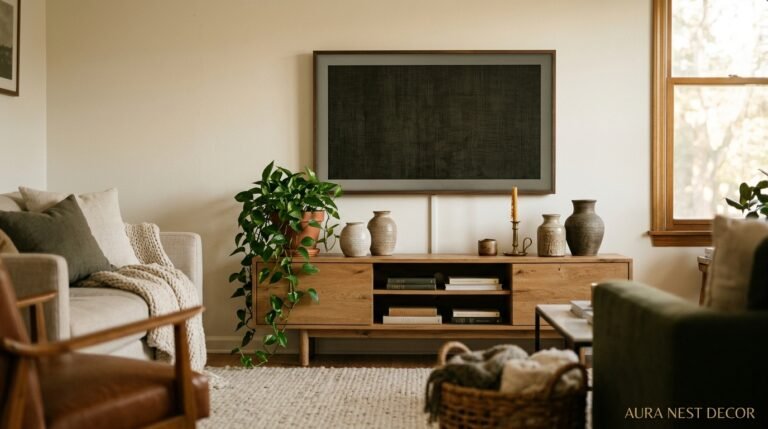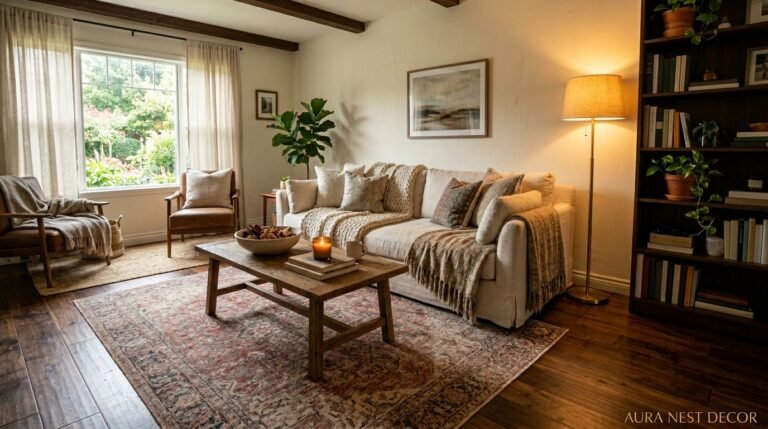
The Living Room You Keep Saving on Pinterest Is Closer Than You Think
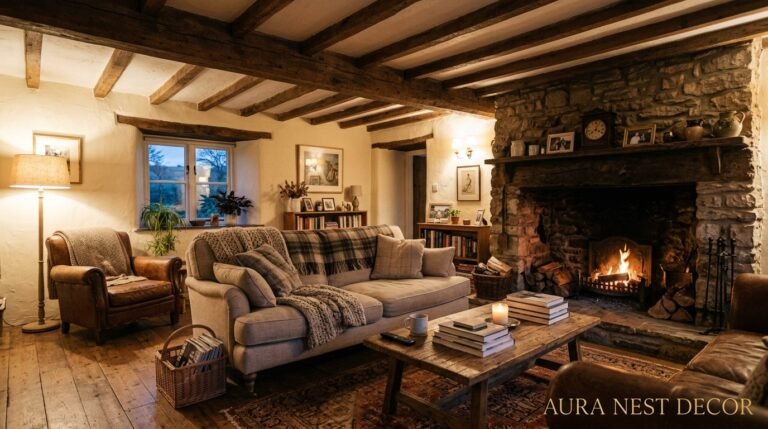
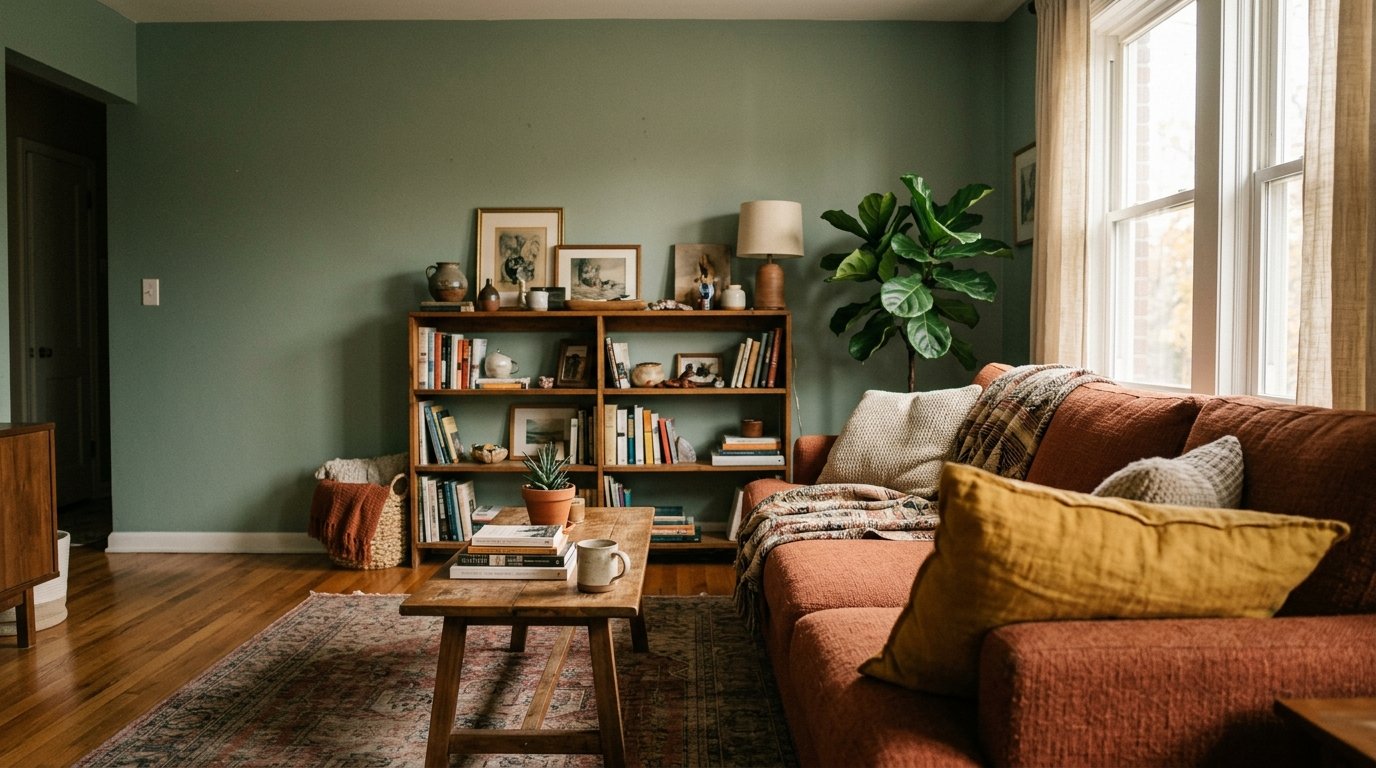
You’ve pinned it a hundred times. That apartment living room — layered, warm, somehow both minimal and full of life — that makes you stop scrolling at 11pm and quietly wish your own space felt like that. Here’s the thing nobody tells you: it’s not about the furniture. It’s about the decisions.
—
1. The Sofa Color That Interior Designers Are Quietly Recommending Right Now
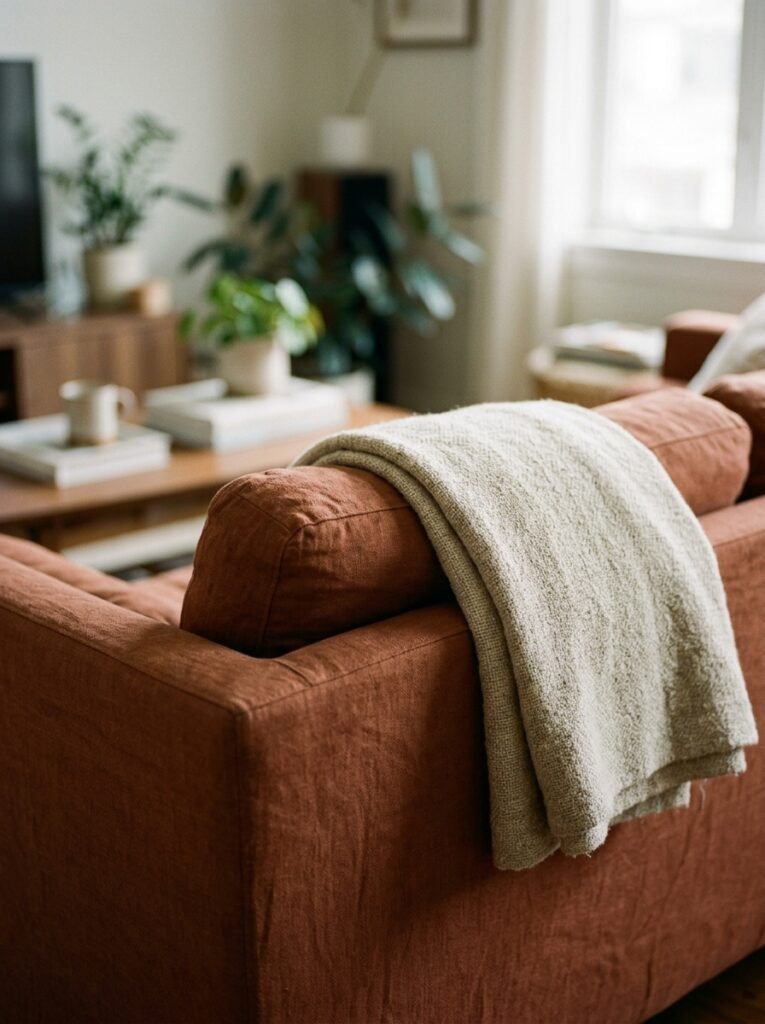
Stop defaulting to grey.
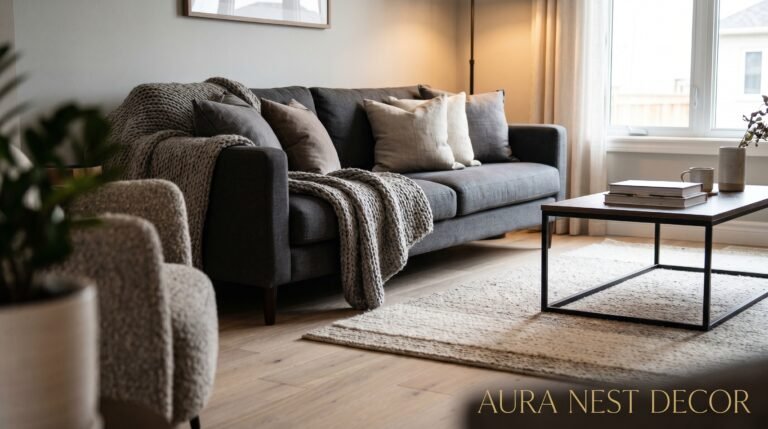
I know, I know. Grey sofa, grey rug, grey throw. It’s safe. It photographs well. It goes with everything. But “goes with everything” is another way of saying “belongs to nothing,” and the rooms that stop you mid-scroll? They belong to something.
The color showing up in every beautiful apartment living room right now is warm putty. Not beige — putty. Think the inside of a linen closet, or the color of a smooth stone you’d pick up on a Devon beach. It reads as neutral in photographs but it glows in person, especially in the late afternoon when the light gets low and golden. Pair it with rust, with deep forest green, with dusty terracotta. It takes all of them.
If you’re in a rental and can’t go large on upholstery spend, look at slipcover sofas. IKEA’s SÖDERHAMN in a warm linen slipcover performs this trick beautifully. In the US, Article does a sectional called the Sven in oatmeal that leans the same direction. Neither is a huge risk. Both photograph like something out of Apartment Therapy.
The rule: if you wouldn’t wear the color as a coat, you probably don’t love it enough to sit on it every single day for five years.
“Your sofa is the first sentence of your living room. Make it say something.”
—
2. The Wall Color Trick That Makes a Small Apartment Feel Intentional, Not Cramped
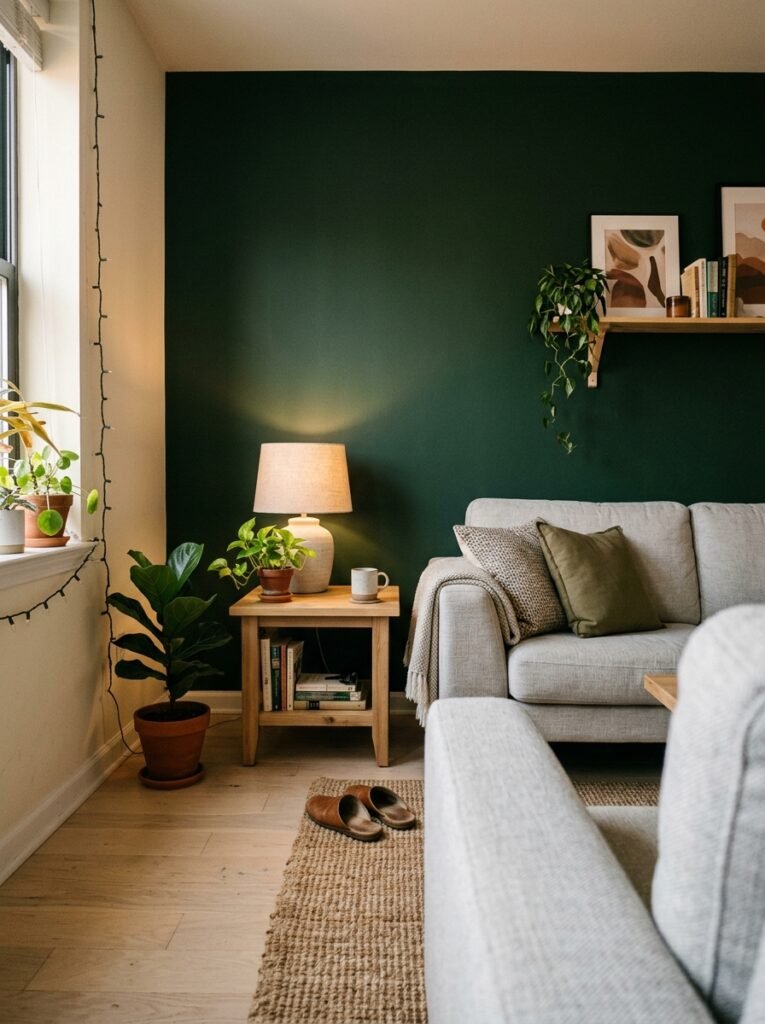
Dark walls in a small room.
Say it to most people and they’ll wince. But this is genuinely the most underused move in apartment decorating, and once you see it, you cannot unsee it.
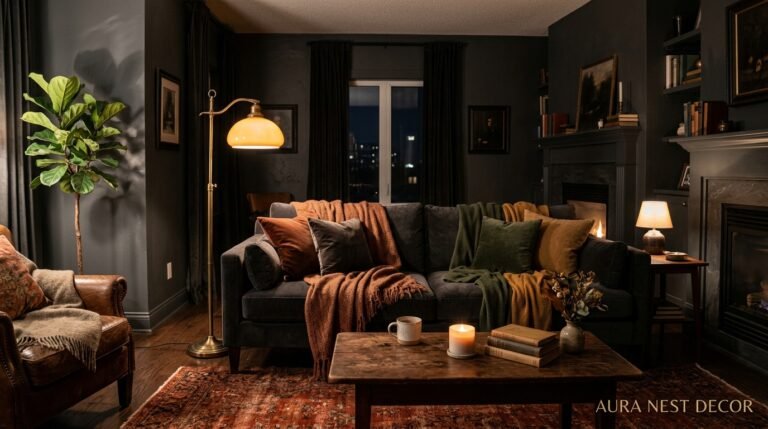
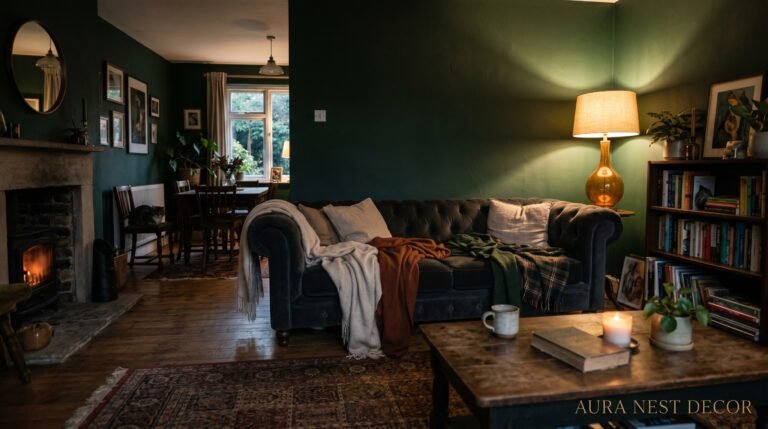
Painting a small room in a deep, moody color — a forest green, a slate blue, a plummy near-black — wraps the space inward in the best possible way. The walls disappear. The furniture comes forward. You stop reading the room as “small” and start reading it as “intimate.” There is a difference, and your guests will feel it even if they can’t name it.
In the UK, Farrow & Ball’s Down Pipe is practically a classic at this point, but Studio Green is the one that still surprises me. In the US, Benjamin Moore’s Newburyport Blue does something quietly extraordinary in north-facing rooms. And if you’re renting? Removable paint wallpapers have gotten genuinely good. Chasing Paper and Tempaper both carry dark, sophisticated options that go up in an afternoon.
The trick is keeping the trim white and the ceiling light. You need that contrast. Without it, the room caves in instead of wrapping around you. With it, you’ve built a room that feels like it was designed, not just assembled.
—
3. Why Your Furniture Layout Is Making the Room Feel Smaller (Even If It Isn’t)
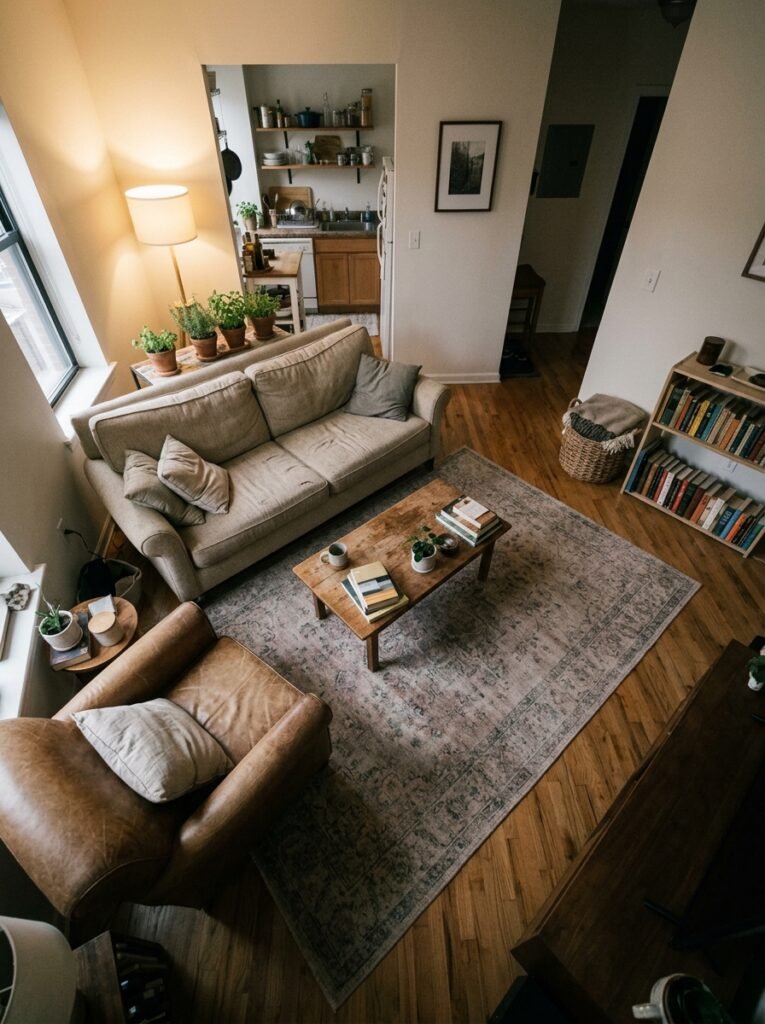
Furniture against the walls is the most common mistake in apartment living rooms.
It feels logical. Maximize the floor space in the middle. Keep things out of the way. But what it actually does is push all your furniture to the perimeter and leaves a dead, empty void in the center of the room. The room reads as a waiting area, not a home.
Pull everything in. Float your sofa. Let there be a few inches — even just six — between the back of the couch and the wall. Place your chairs at angles if you can. Build the seating around a central point, whether that’s a coffee table, a low stool, or even just a beautiful rug.
The rug, by the way, needs to be bigger than you think. In a small apartment living room, most people buy a rug that’s too small — it ends up looking like a postage stamp under the coffee table. You want the front legs of every sofa and chair sitting on the rug. That’s the rule. When everything is connected to the same foundation, the room suddenly has a sense of intention.
UK readers: the standard 160x230cm rug is almost always too small. Go to 200x290cm and feel the difference.
—
4. The Coffee Table Combination That Solves Every Small Space Problem
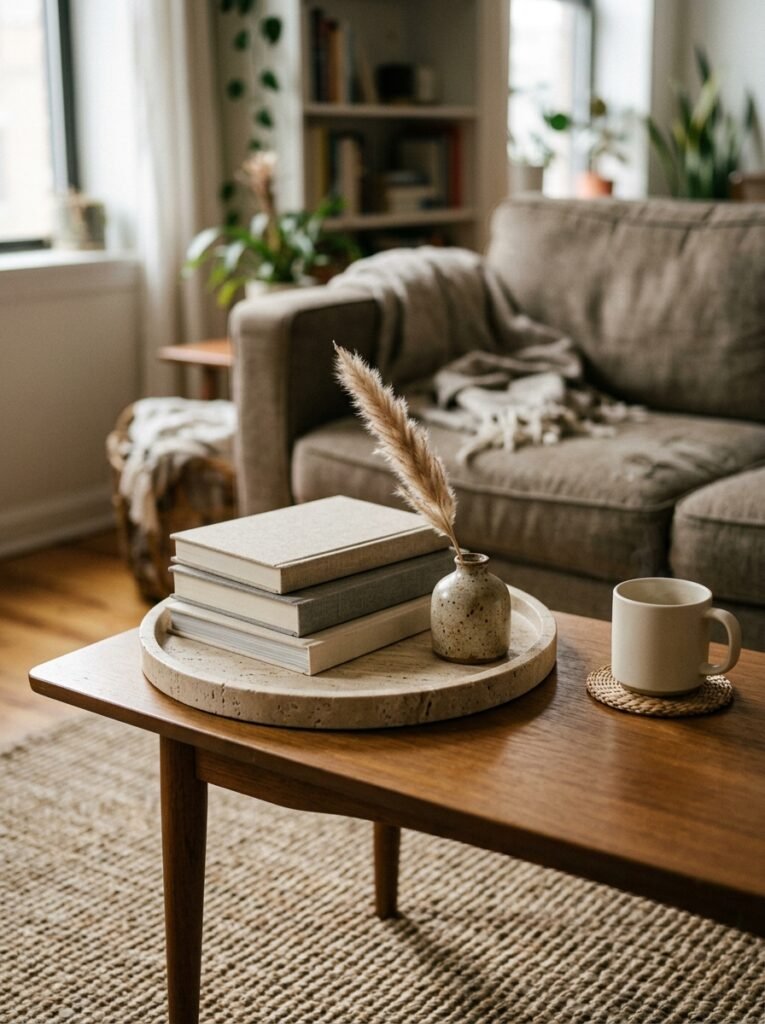
One coffee table is fine. Two different coffee tables together? That’s a room.
The mismatched coffee table moment is fully everywhere right now, and not without reason. Pairing a low wooden tray table with a small, round rattan stool. A marble side table next to a woven flat basket. A stack of art books next to a ceramic pedestal bowl on legs. These combinations do something a single coffee table almost never does: they add personality.
They also solve a practical problem. Two smaller pieces are easier to move than one big one. They flex with your space. You can push one aside when you need floor room, pull them apart when you have company, stack things differently depending on the season.
“The most interesting rooms weren’t planned all at once. They were collected.”
Texture matters here more than color. You want contrast — something smooth next to something woven, something light next to something dark. Avoid matching wood tones too carefully. Matchy is fine in theory but it reads as catalog in practice, and catalog is the enemy of personality.
In the US, Target’s Studio McGee range does incredibly affordable stone-look and natural wood pieces. In the UK, H&M Home and Oliver Bonas both do sculptural side tables that photograph beautifully and cost almost nothing.
—
5. The Lighting Layer That Changes Everything After 6pm
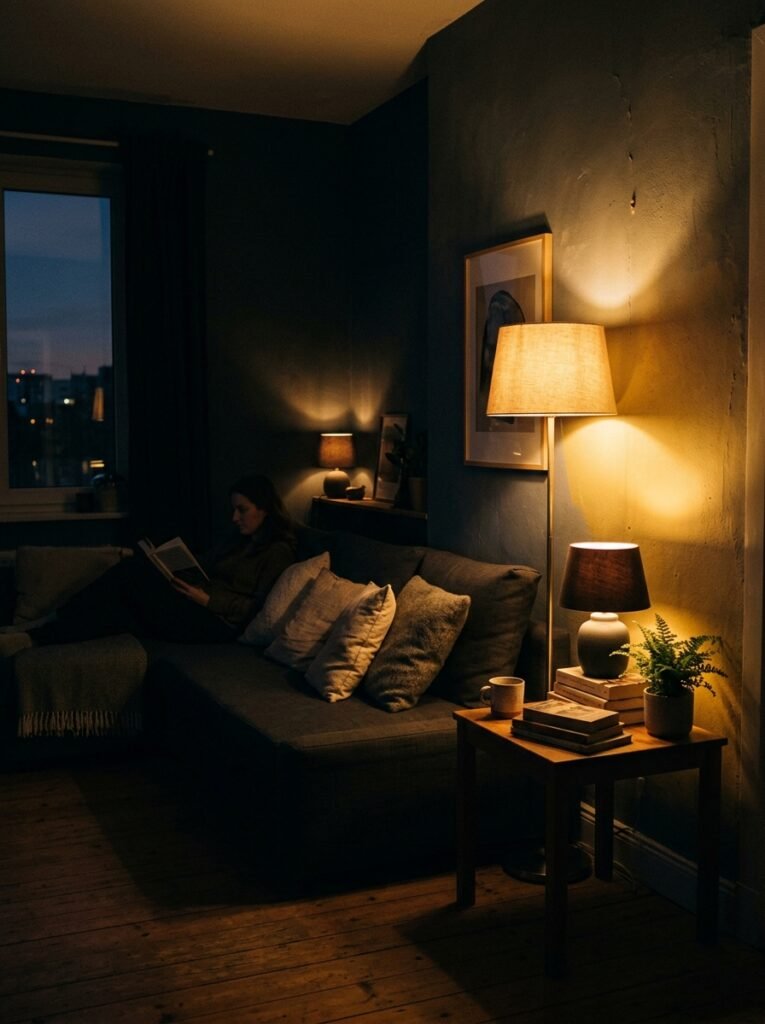
Most apartments have one overhead light. Maybe two. And that overhead light, when it’s the only thing on at 7pm, makes every room feel like a waiting room at a budget dentist.
The solution is layers. Always layers.
You need a minimum of three light sources in a living room, and none of them should be the overhead. Or, if you do use the overhead, put it on the dimmest possible setting and only as backdrop. Your primary light sources should be lower — floor lamps, table lamps, wall-mounted sconces if your rental allows.
The amber glow of an Edison-style bulb at 7pm does something to a room that no interior design decision can replicate. It makes the room feel inhabited. Lived in. Warm in a way that has nothing to do with central heating.
Pay attention to where the light falls, not just how bright it is. A lamp in the corner that throws light upward onto the wall gives you height. A table lamp at eye level when you’re seated creates intimacy. These aren’t interchangeable. Think about how the room will feel when you’re sitting in it at night, and light from that perspective first.
—
6. The Color Pairing That Works in Every Style of Apartment, Every Time
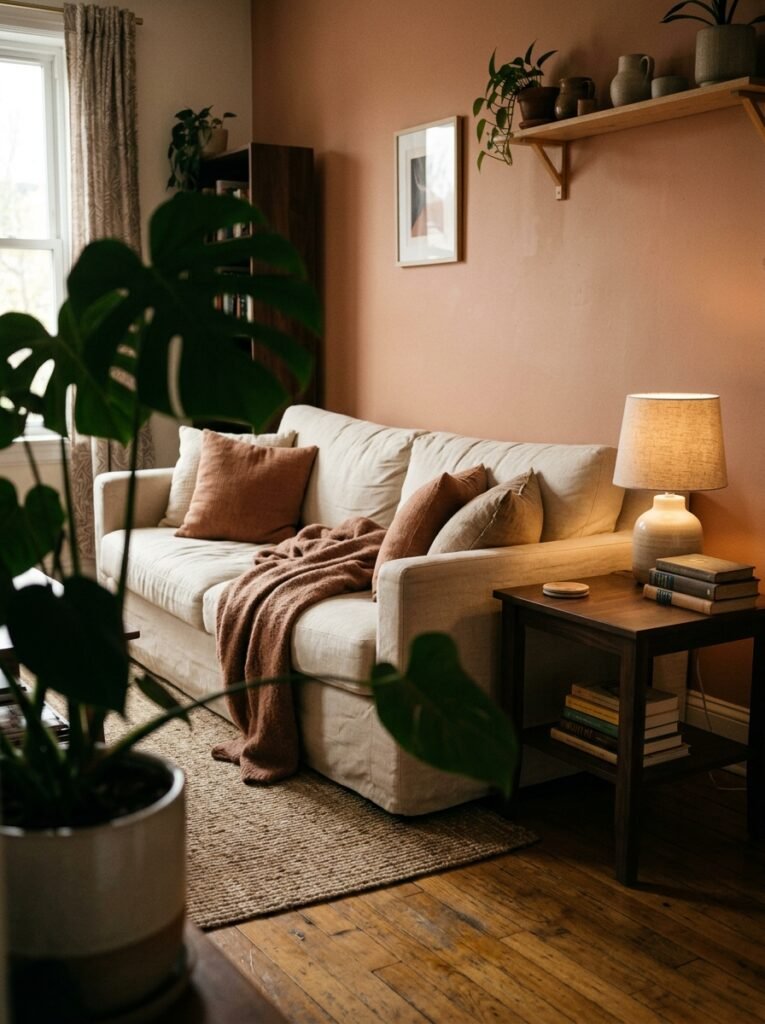
Terracotta and cream.
Earthy rust orange and soft, warm white. This combination works in a Scandi-minimal apartment. It works in a maximalist, gallery-wall-covered flat in East London. It works in a modern, clean New York studio. It works in a cozy, slightly-cluttered Victorian terrace. It has no style allegiance — it simply belongs to warmth itself.
Terracotta doesn’t have to dominate. A cream sofa with one terracotta cushion. A cream wall with a terracotta throw. A stack of cream candles next to a small terracotta pot on the coffee table. Even a single piece — a jug, a bowl, a vase — in that burnt clay orange brings the whole room into relationship with itself.
What it does visually is anchor the light. Cream reflects, terracotta absorbs, and together they create a natural balance that feels effortless without being boring.
In the UK, Emma Bridgewater does a spongeware terracotta that looks beautiful in any living room setting. In the US, West Elm and Anthropologie both carry terracotta stoneware pieces that bring this into an apartment space without requiring a single wall repaint.
—
7. What Every Beautiful Apartment Living Room Has That You Can’t Buy
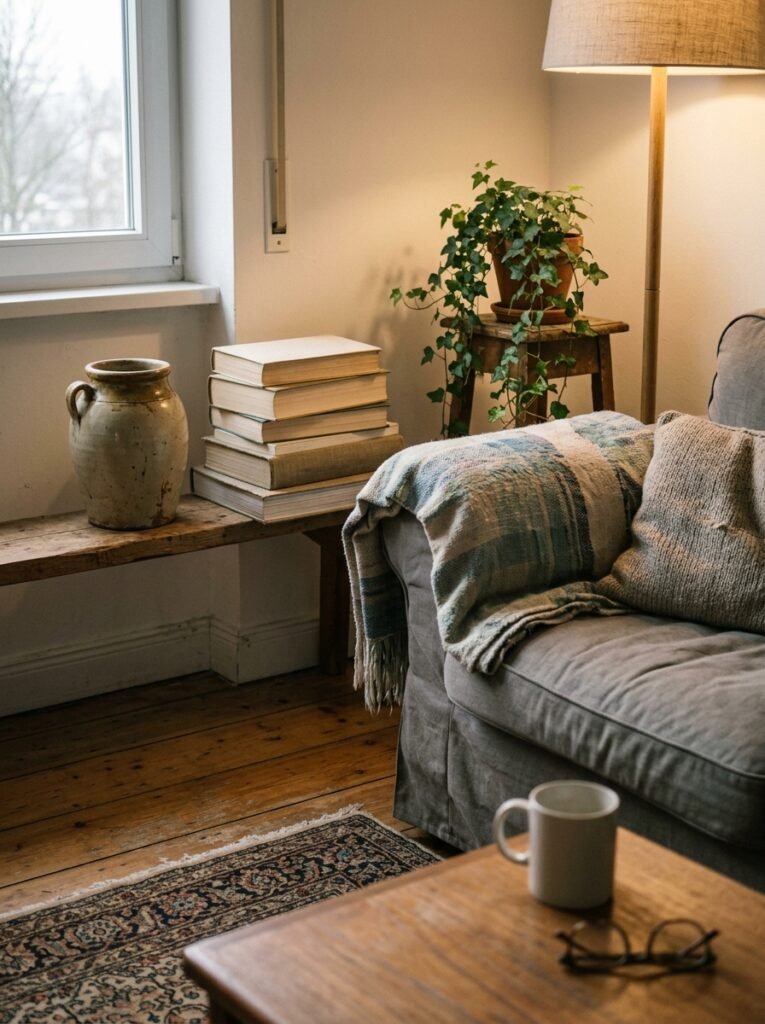
It has evidence of a person.
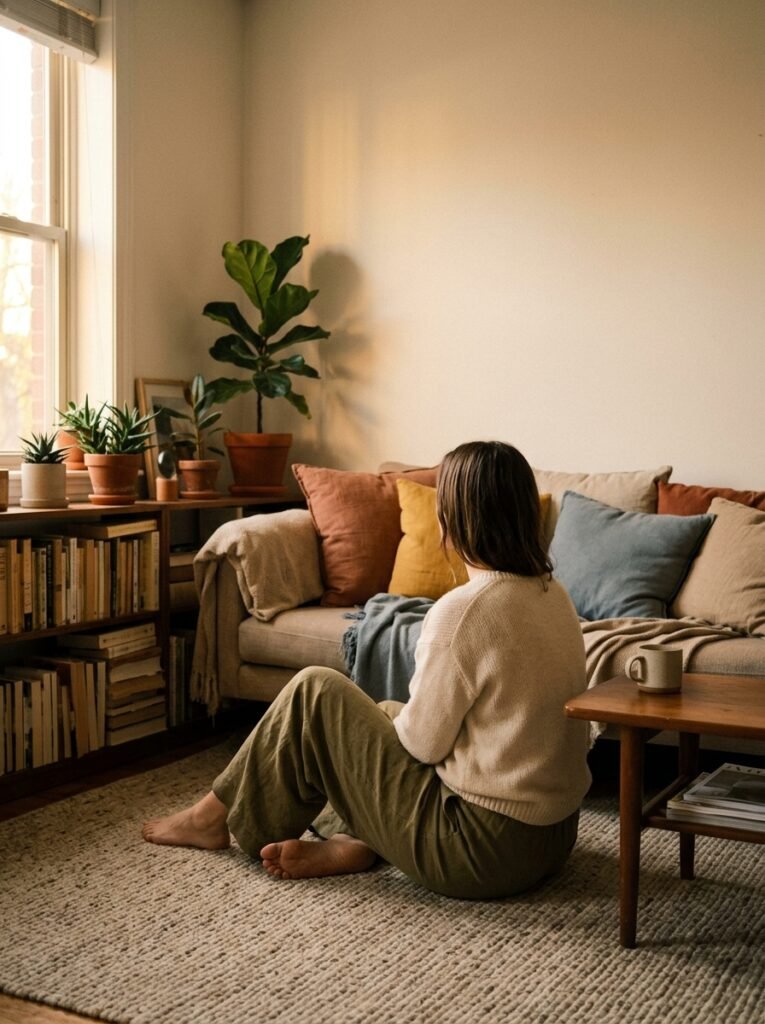
The rooms that go viral on Pinterest, the ones that get saved a thousand times — yes, they have beautiful furniture. But they also have a stack of actual books someone actually read. A plant that’s slightly imperfect. A candle that’s been burned down halfway. A throw that’s been washed so many times it’s softer than anything you’ve ever touched.
These rooms look loved. Not staged.
“The difference between a beautiful room and a showroom is proof that someone lives there.”
The hardest thing to teach in interior design is this: stop styling your home like a set and start living in it like yours. The coffee table book stack that includes one genuinely embarrassing novel you actually love. The weird little sculpture someone brought back from a trip. The frame that isn’t quite aligned but holds a photo that makes you smile every single day.
These are the things your guests will notice and comment on. Not the rug. Not the throw pillows. The thing they didn’t expect.
—
8. The Plant That Earns Its Space in a Small Apartment Living Room
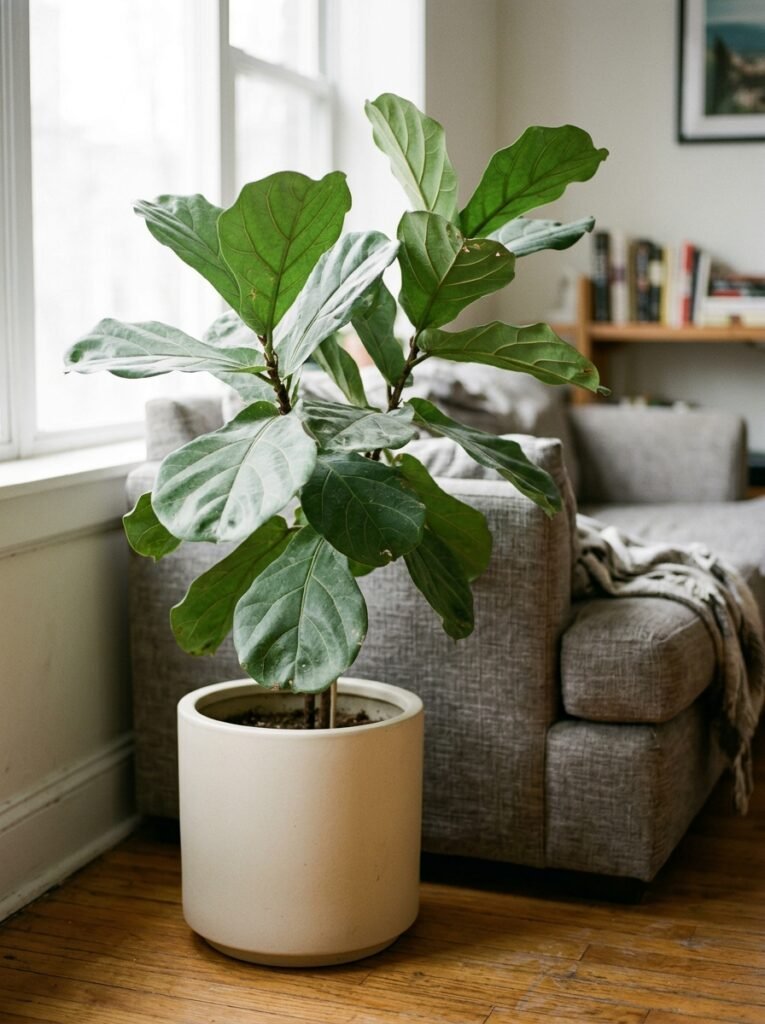
Not a fiddle leaf fig.
The fiddle leaf had its moment. Long, glorious, and beautifully photographed. But if you live in the UK with north-facing windows and central heating on all winter, a fiddle leaf will punish you. And in a small US apartment with fluctuating light, same story.
What actually thrives in living rooms and looks genuinely architectural? The Monstera. The Pothos when trained up a trellis or pole. The ZZ plant, which asks almost nothing and delivers sculptural drama. The snake plant, which has never met a room it couldn’t improve.
For scale, in a small apartment, one large plant in a beautiful pot beats six small ones scattered around. A single Monstera in a matte black or terracotta pot in the corner of the room creates the kind of visual anchor that usually requires furniture twice the price. It fills space, adds life, and changes every season without you doing a single thing.
Size the pot to the room. A small pot on the floor looks sad. A tall floor planter that reaches toward the ceiling looks intentional.
—
9. The Gallery Wall Approach That Doesn’t Look Like Everyone Else’s Pinterest
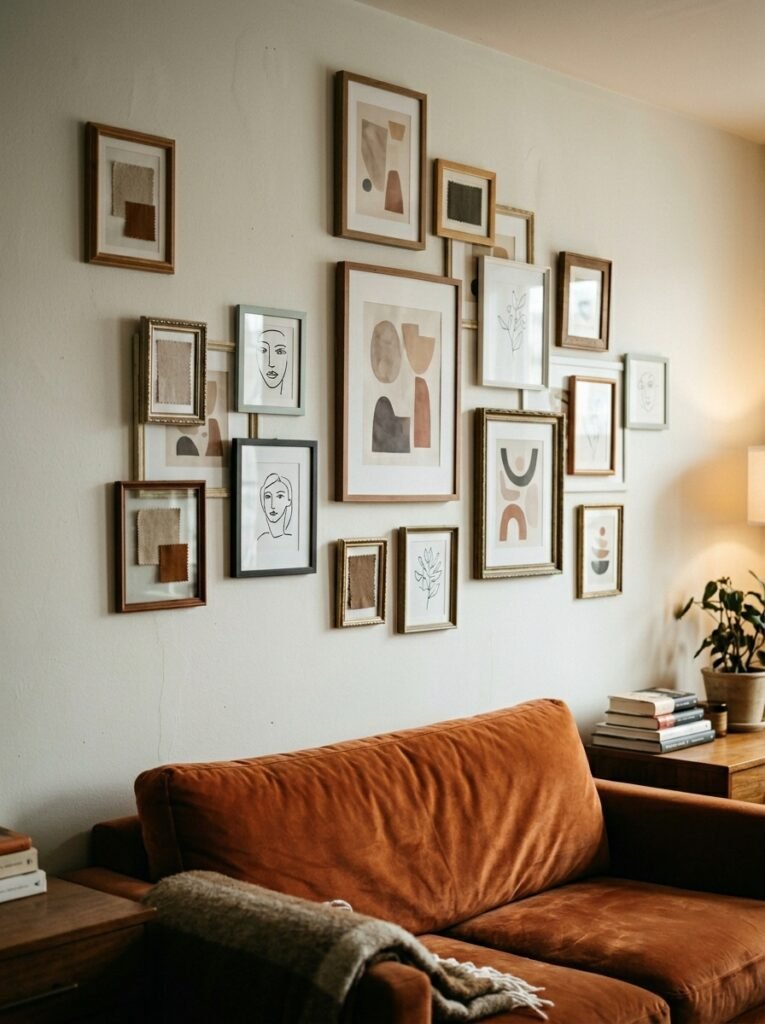
Most gallery walls follow the same template. Different-sized frames, all black or all gold, arranged in a rough rectangle on the wall. They look fine. They look like a gallery wall.
The ones that actually stop scrolling are looser than that.
Mix frames — not just sizes, but styles. A chunky natural wood next to a thin black metal next to a frameless print with just a mat. Vary the content, too: a photograph, a graphic print, something abstract, something representational, something that makes no sense and you love it anyway.
Leave gaps. Real ones. Not measured ones.
And consider what isn’t art. A wall hook with something hanging from it. A small shelf with a couple of objects. A mirror that breaks the grid. A plate. Yes, a decorative plate. The grid is a guideline, not a rule, and the beautiful gallery walls you keep saving almost always break it somewhere.
UK flat advice: use Command strips or gallery-hanging strips if you can’t put holes in the walls. They hold up to 7.5kg reliably and come off cleanly.
—
10. The Textile Layer That Warms a Room Without Buying New Furniture
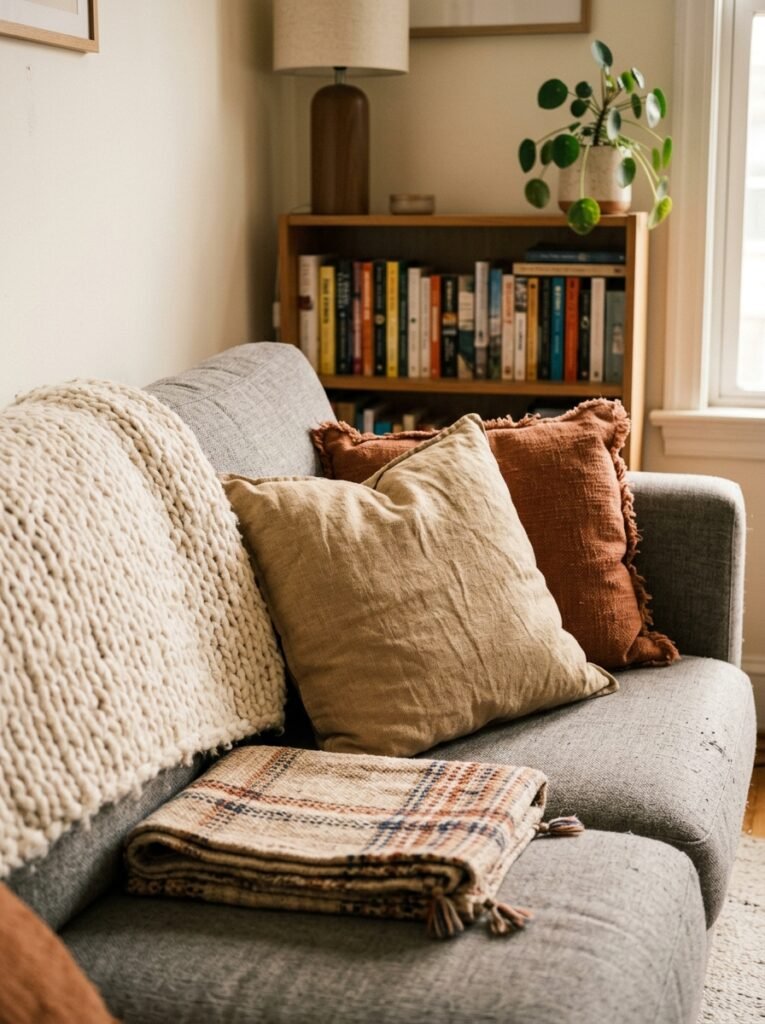
One chunky knit throw. One linen cushion. One textured rug.
That’s it. That’s the formula.
You don’t need to reupholster. You don’t need to buy a new sofa. The fastest way to change how a living room feels is to change what it’s made of — texturally. A smooth, flat room (laminate floors, cotton sofa, clean walls) feels cool and sleek regardless of the color scheme. The same room with a jute rug, a knit throw draped over the armrest, and a couple of linen cushions suddenly reads as warm, lived-in, and intentional.
Textiles also layer sound. A room with a rug, a sofa, and curtains absorbs sound differently than a bare one. It feels quieter. More contained. More like a room you want to stay in.
Fabric quality matters far more than most people realize. A cheap acrylic throw photographs fine but in person it feels clinical. A real wool throw — even a small one — has weight and warmth that changes how the room feels physically. UK readers: Baines & Ernst and John Lewis both do beautiful wool throws at prices that are fair given the quality.
—
11. The Shelf Styling Rule That Makes Any Bookcase Look Like a Design Feature
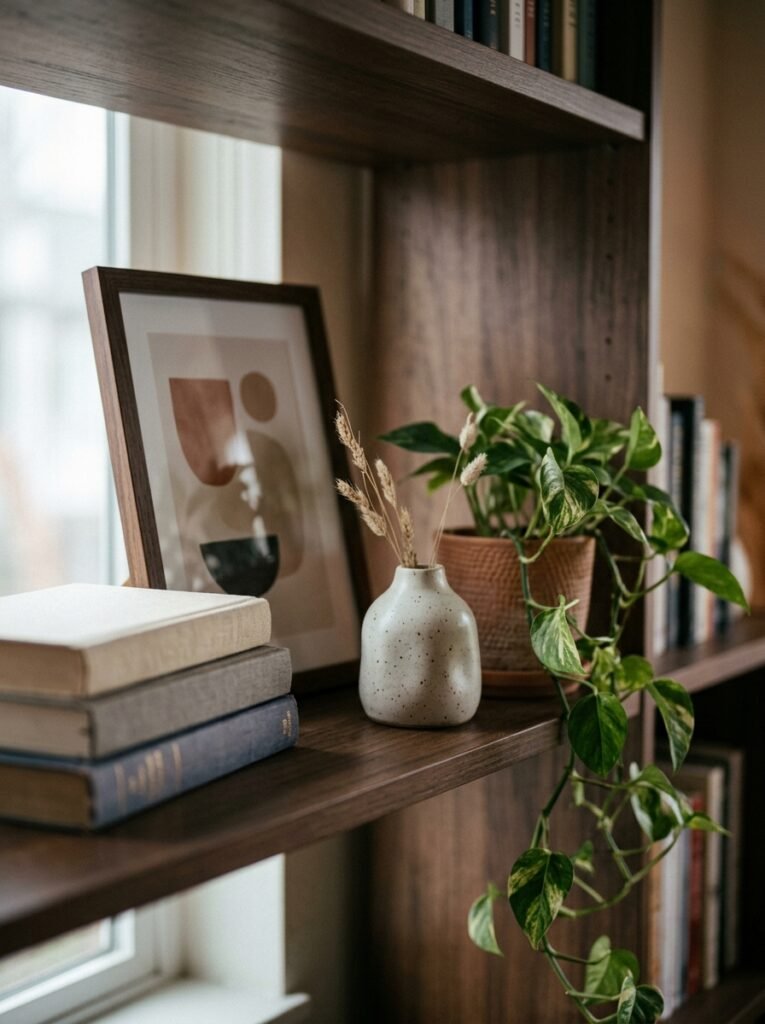
Take half the books off.
Seriously. Most bookshelves look cluttered because they’re full. Every inch, every shelf, packed tight. That’s a library. It’s not a styled living room feature.
The rule is this: one-third books, one-third objects, one-third empty space. The empty space is not wasted space. It is the thing that makes everything else readable.
Group books by color if you want visual calm. Stack some horizontally. Leave a gap before the next group. Between the groups, give one object space to breathe — a small vase, a candle, a framed photo turned to show the back because the frame is beautiful and you want to see it.
The mistake most people make is filling the shelf and then wondering why it looks busy. The editing is the designing.
—
12. The Mistake That Makes Even Expensive Living Rooms Look Unfinished
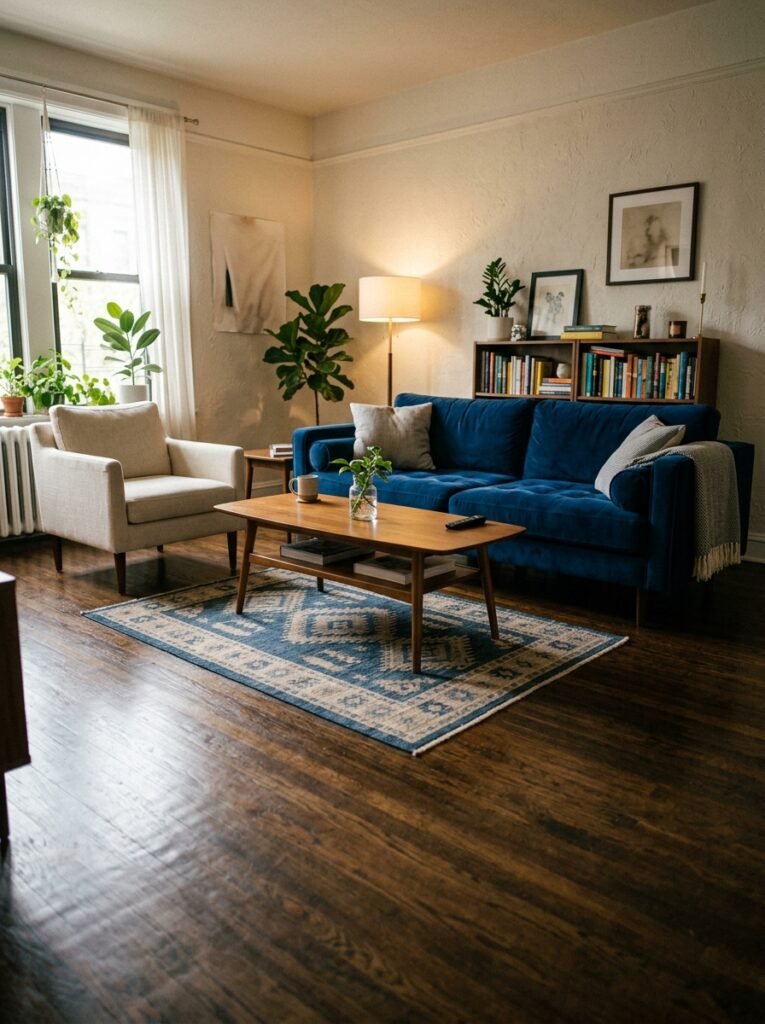
No curtains.
Or worse: the wrong curtains. Curtains that stop halfway down the wall, hovering awkwardly above the floor, making the ceiling look three feet lower than it is.
Hang curtain rods as close to the ceiling as possible — ideally within six to eight inches. Let the curtains drop to the floor. Even let them pool slightly.
This single move makes ceilings feel higher, windows feel bigger, and the entire room feel more considered. It costs nothing extra — curtain panels are the same price whether they’re hung high or low — but it is the difference between a room that looks finished and one that looks like it’s still being set up.
In the US, IKEA’s SANELA velvet curtains hung floor-to-ceiling are one of the best budget wins in any living room. In the UK, Dunelm’s lined eyelet curtains in any neutral — hung high, hitting the floor — do the same job for under £60 a pair.
The floor gap, if you want one, should be half an inch to one inch. Anything more looks like a mistake. Nothing at all, with a slight pool? That’s intentional.
—
🌿 Quick Tips
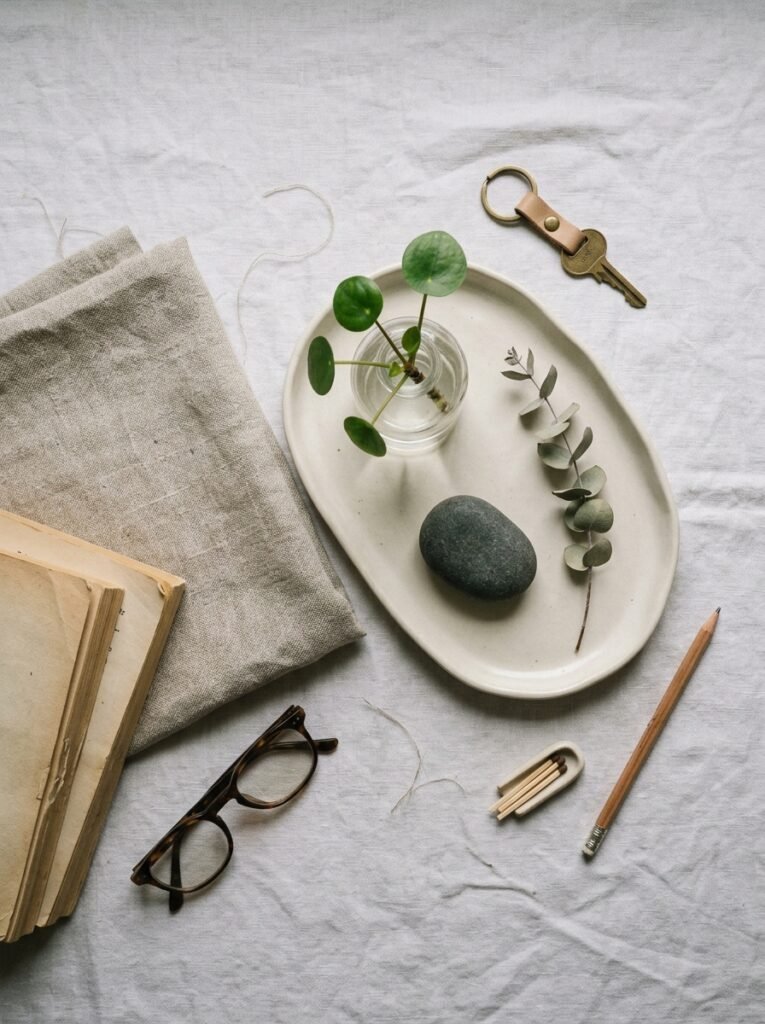
Real candles in real holders beat LED fakes every time. The actual flicker, the actual warmth, the actual smell — there’s no substitute, and in a living room they matter more than almost any decorative object.
If you’re painting an accent wall, do the wall your sofa faces, not the wall behind it. You should be looking at the color, not sitting in front of it.
Mirrors on the wall opposite a window double your natural light for free. Size up — go bigger than feels comfortable.
Your front door to your sofa sightline is the most important in your home. What someone sees the moment they walk in sets the entire mood of the visit. Spend time on that specific view.
Coffee table books are doing double duty — they’re reading material and they’re sculpture. Stack them largest to smallest, spine out, with something small and beautiful on top.
—
❓ FAQ
Q: What colors make a small living room look bigger? A: Light, warm neutrals — soft whites, warm creams, pale limewash tones — reflect light and open up a small space visually. But honestly, a darker, more saturated color used consistently (walls, trim, even furniture in the same family) can also make a small room feel intentional and intimate rather than cramped. It’s less about the specific color and more about the commitment to it.
Q: How do I make a rented apartment living room feel like mine without losing the deposit? A: Textiles, lighting, plants, and removable wallpaper do the heavy lifting. Swap out light fixtures if you keep the originals (most landlords don’t mind if you store and replace them). Use Command strips for art. Buy beautiful curtains you’ll take with you. The furniture you own is yours — bring in pieces with character and personality, and the rental bones stop mattering as much.
Q: Is it worth buying expensive furniture for an apartment you might move out of? A: Yes, with one exception — never buy oversized furniture for a space it barely fits in. Good quality pieces move with you and outlast three flats. But a massive sectional sofa that barely fits your current living room is a nightmare to move and might not fit the next one. Buy quality. Buy the right size.
—
💭 Final Thought
The living room you keep saving on Pinterest isn’t a fantasy. It’s just a series of small, considered decisions that compound over time — a lamp moved here, a rug bought bigger, a wall painted darker than you were brave enough to try last year. None of it happens all at once in real life. It accumulates.
The best rooms I’ve ever seen felt like they belonged to the people who lived in them. You could see their choices everywhere — not just the pretty choices, but the personal ones.
What’s one thing you’ve been too nervous to try in your living room?