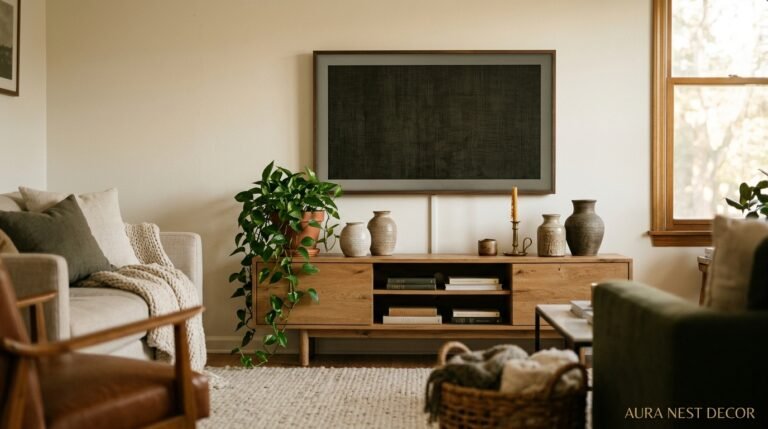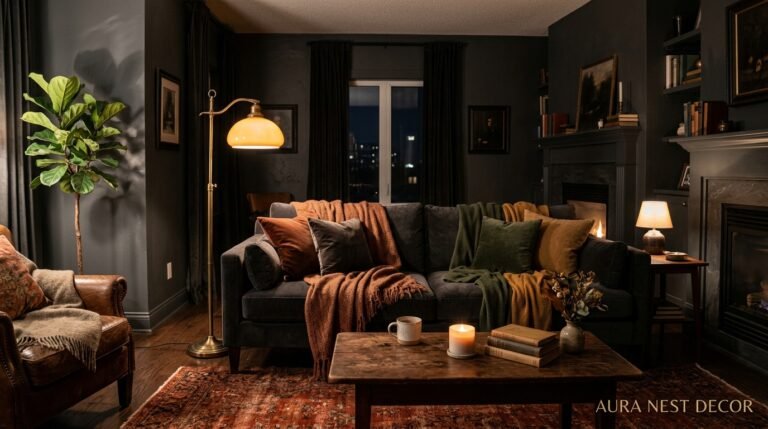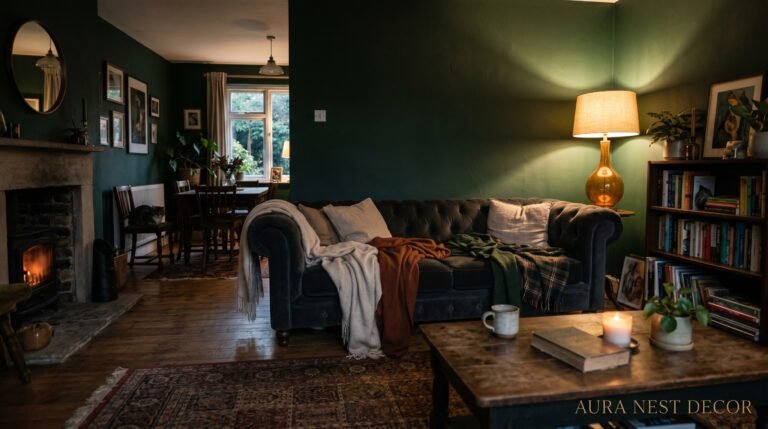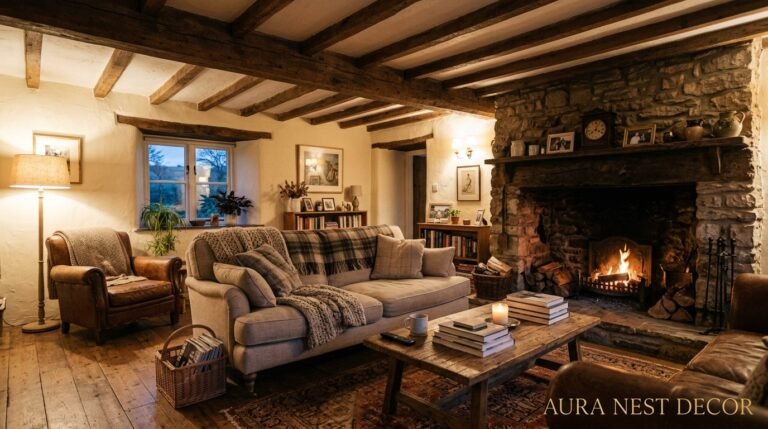
Dark Wood Floors Are Having a Moment — Here’s How to Make Yours Look Intentional
You walk into a room and it just feels right. The floors are dark, almost chocolatey, and everything sitting on top of them looks impossibly considered. That’s not an accident, and it’s definitely not luck.
—
1. Why Dark Wood Floors Feel Cozy — And Why Most Rooms Get It Wrong
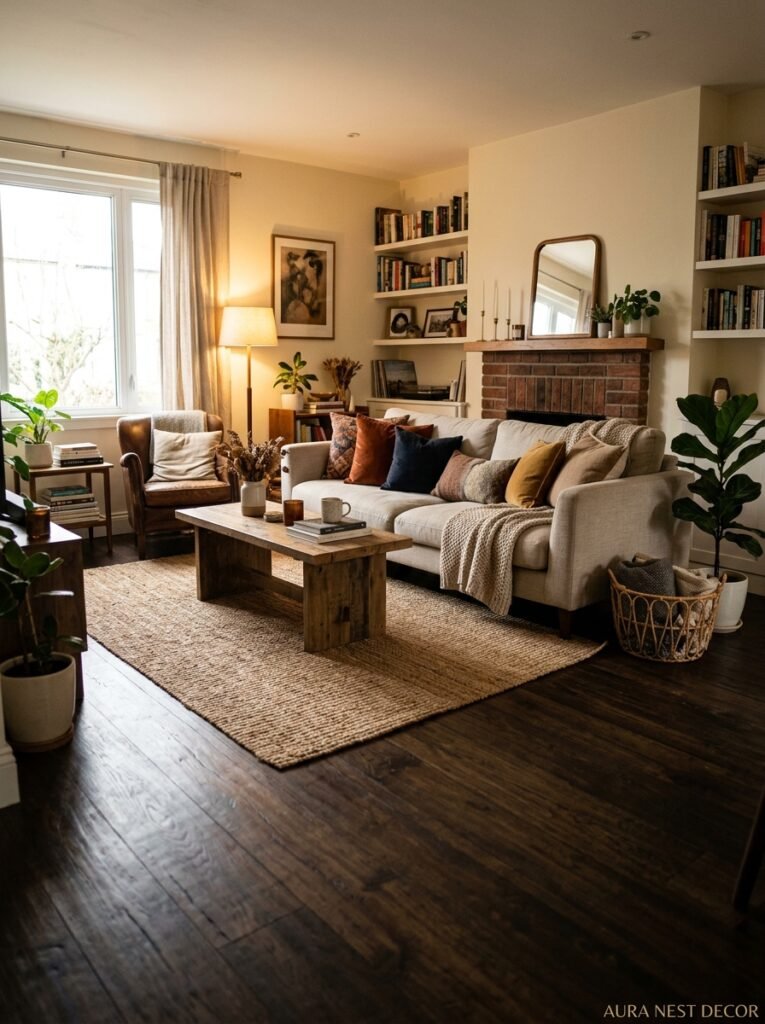
There’s something about dark wood floors that hits differently in autumn. That deep walnut or espresso tone does something to a room that lighter floors just can’t — it anchors everything, pulls it down to earth, makes the whole space feel like it has weight and intention. But here’s the thing most people don’t realize: dark floors don’t create coziness on their own. They’re more like a foundation for it.
I’ve seen so many living rooms — beautiful floors, genuinely stunning — completely undone by the wrong furniture choices sitting on top of them. Bright white sofas that look clinical. Cool grey everything that makes the room feel cold even when the heating’s on full blast. The wood is doing its part, but nothing else is meeting it halfway.
The secret is contrast that feels warm, not stark. And that’s a pretty specific thing to get right.
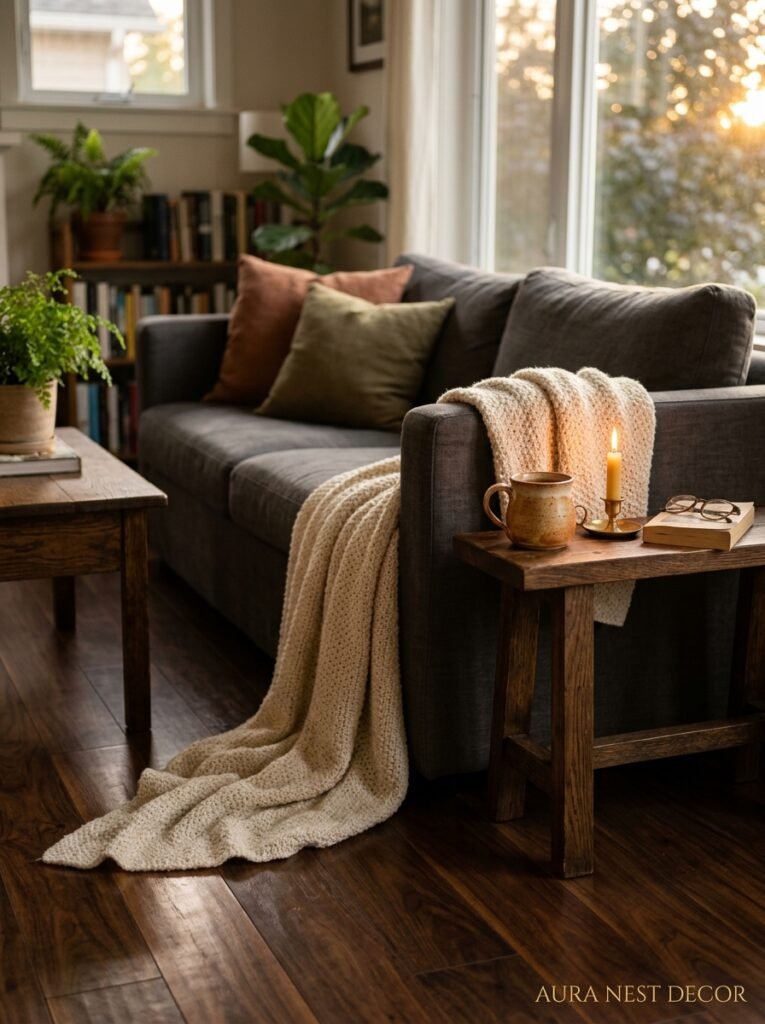
Dark floors want soft things above them. Creamy whites rather than stark ones. Fabrics that look touchable — chunky knits, worn leather, faded linen. Warm metals like brass and bronze rather than chrome. Basically, anything that looks like it belongs in a world where someone is always about to make a pot of tea and settle in for the evening.
That warmth compounds. You start with the floors, you add one warm element, then another, and suddenly the whole room has that quality people can’t quite name when they walk in. It just feels right. And it’s because everything is working with the floor, not just sitting on top of it.
“Dark floors don’t create coziness on their own — they’re a foundation for it.”
—
2. The Rug Situation: What Actually Works on Dark Wood (Hint: It’s Not What Pinterest Usually Shows You)
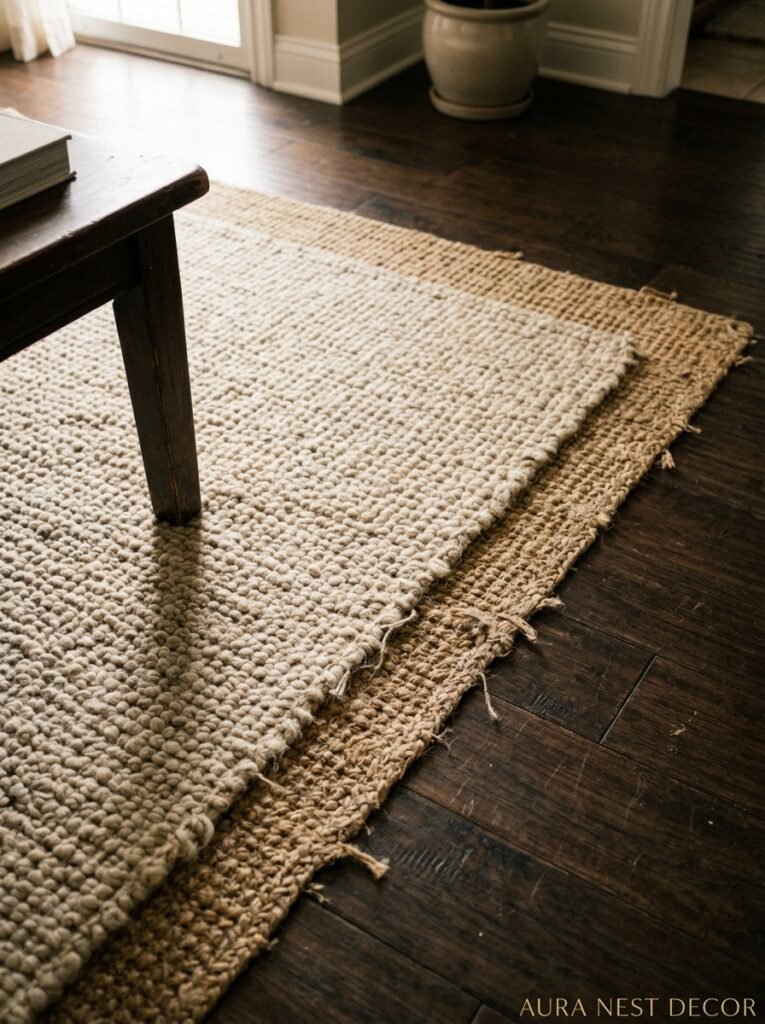
Okay, this is where I have strong opinions. The most common rug mistake on dark wood floors? Going too dark. I see it constantly — deep charcoal rugs, near-black Moroccan styles, very dark navy — and they essentially eat the floor. You lose that beautiful contrast, and the whole room just kind of… collapses into one heavy mass of darkness.
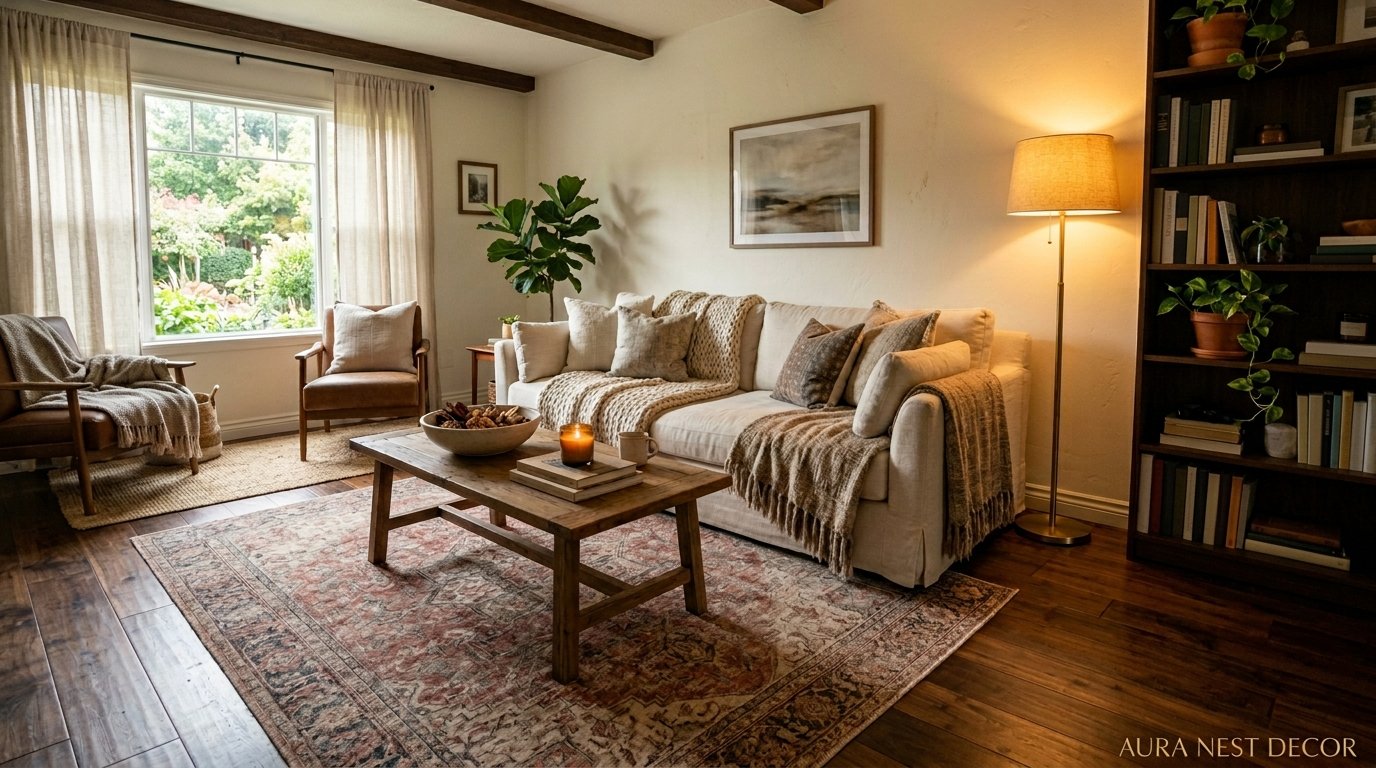
The rugs that SING on dark wood are the unexpected ones. A faded terracotta kilim. A vintage-looking oatmeal wool rug with a little age to it. Cream and warm beige Persian-style rugs, especially ones with some rust or amber in the pattern. Even a jute rug works brilliantly because it’s got that natural rawness that plays off the polish of dark wood without competing.
Size matters too, maybe more than color. A rug that’s too small looks like someone just forgot to buy a bigger one. On dark wood especially, you want a rug that means something — front legs of the sofa and armchairs sitting on it at minimum, ideally all the way under. It creates an actual room within a room, which is kind of the whole point.
For UK homes, where living rooms are often a bit smaller and the proportions are tighter, I’d go for a 160x230cm or 180x270cm — those sizes tend to work without overwhelming. In American homes with larger open-plan spaces, you can go much bigger and it’ll look incredible.
And if you already have a dark rug and love it — honestly, sometimes breaking the rules completely just works. But you have to commit. Put it all in.
—
3. The Color That Keeps Showing Up in Every Beautiful Dark-Wood Living Room Right Now
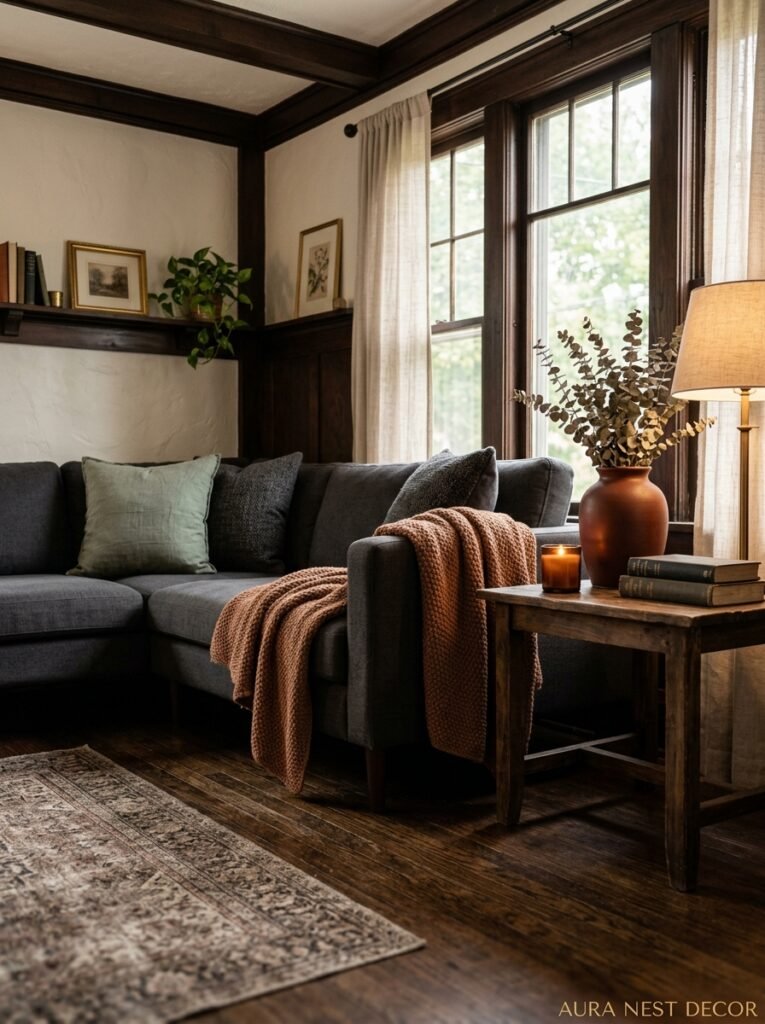
Warm terracotta. Specifically a sort of dusty, muted terracotta — not the bright orange-y stuff, but the kind that looks like it’s been sitting in a Tuscan farmhouse for forty years. It works against dark wood floors in a way that feels almost effortless.
But it’s got competition. Deep forest green is having an absolute moment in living rooms right now, and against espresso or walnut floors, it looks genuinely stunning. Think a green velvet sofa, or a single accent wall in something like a deep sage or eucalyptus. The wood grounds it, and the green stops the room from feeling too heavy.
What both of these colors have in common is that they’re organic. They feel like they came from the same world as the wood — the earth, the forest, nature in general. That’s what you’re going for in a cozy dark-wood living room. Not manufactured, not sterile. Something that could have grown.
The third color that belongs in this conversation is a warm, vintage-leaning cream. Not white-white. Almost off-white with a slight yellow or pink undertone. That color on walls or in textiles makes dark floors look even richer by contrast, and the whole room gets this soft, antiqued quality that’s deeply cozy.
—
4. Lighting Is Doing More Work Here Than You Think
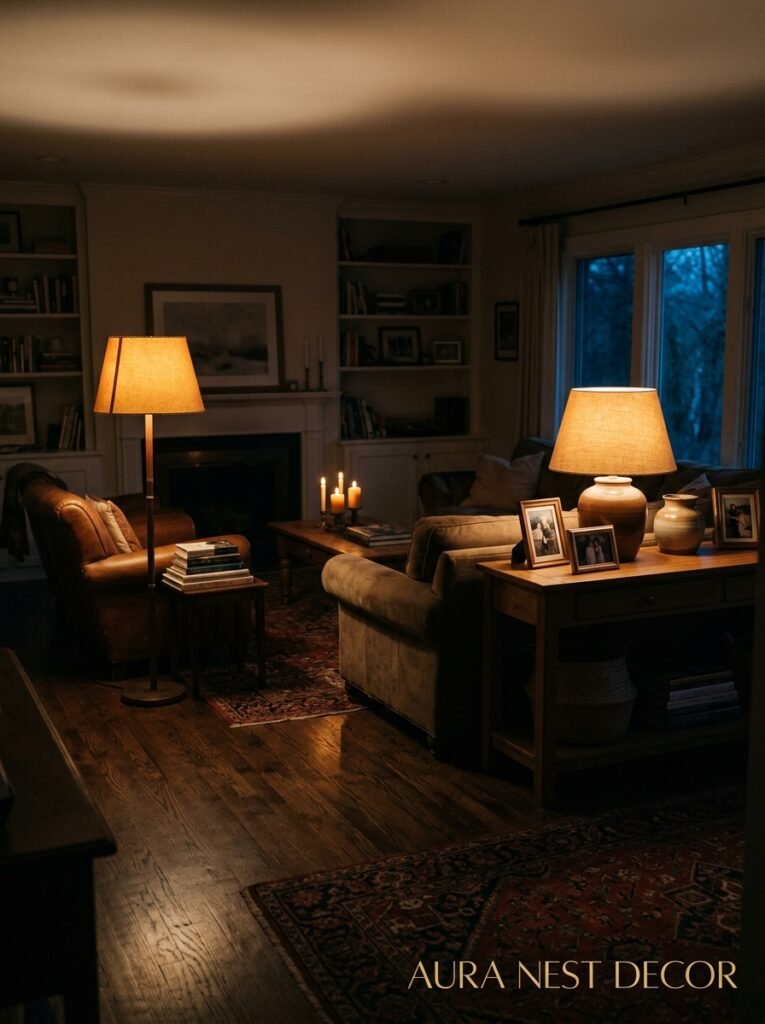
The amber glow of an Edison bulb at 7pm on a Tuesday in October. That’s the energy. That’s what you’re building toward.
Dark floors absorb light — that’s just physics — which means your lighting plan has to be intentional. A single overhead ceiling light is going to make your gorgeous floor look flat and your room look like a waiting area. Layered lighting is completely non-negotiable here.
You want sources of light at different heights. A floor lamp in the corner with a warm bulb. Table lamps on side tables — ideally with fabric shades in cream or warm amber rather than white. Even candles count; a cluster of pillar candles on a dark wood coffee table in the evening does something that no electrical light can quite replicate.
Color temperature matters a LOT. If you haven’t thought about this before, it’s basically the warmth or coolness of the light. Anything around 2700K is warm and amber, and that’s your target for a cozy living room. Cooler bulbs (4000K and above) will actively fight against the cozy atmosphere you’re trying to build with those dark floors.
Side note — if you’re renting and can’t change your ceiling fixture, a simple floor lamp with a warm bulb in the corner of the room is a total game changer. Seriously, thirty quid or forty dollars can transform the whole feel of the space after dark.
“A single overhead light is going to make your gorgeous floor look like a waiting area.”
—
5. The One Furniture Color That Makes Dark Wood Floors Look Like a Magazine Shot
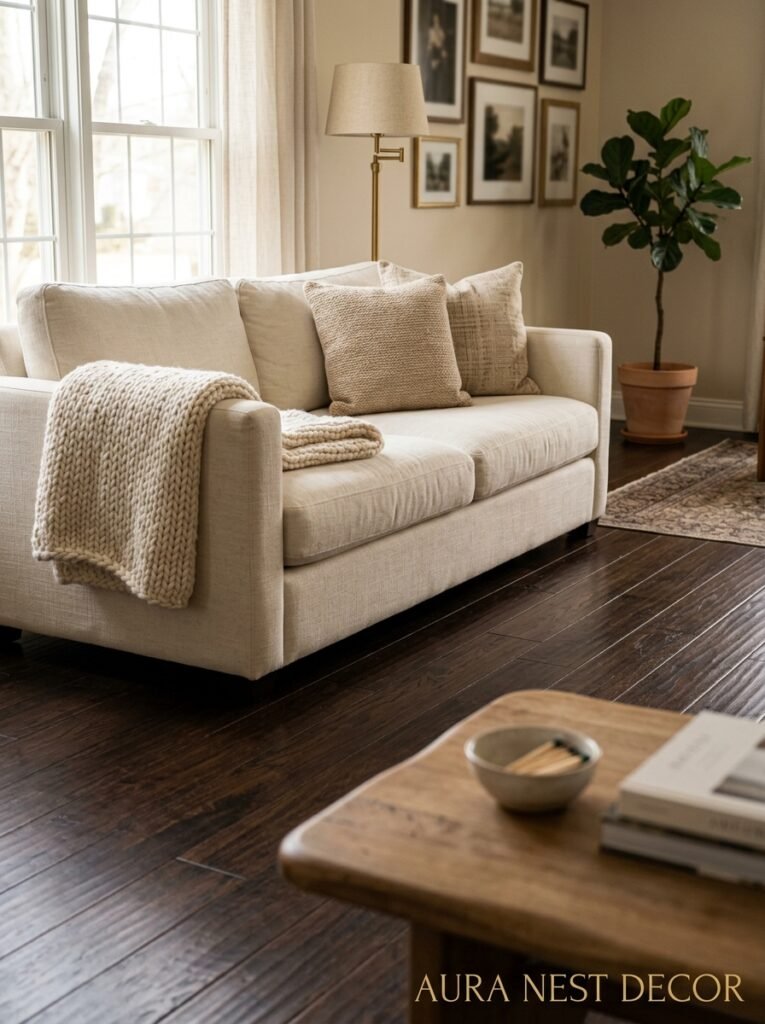
Warm caramel leather. I know it sounds very 2012 at first, but hear me out — because the way it’s being done now is completely different. A worn, slightly distressed caramel leather sofa or armchair sitting on dark wood floors has this incredible richness to it. The tones just rhyme, somehow. Both of them are warm browns, but different enough that they create contrast rather than blending into each other.
The key word is WORN. A too-shiny, too-stiff leather doesn’t give you the cozy quality — it gives you a car showroom. You want leather that looks lived in, comfortable, like it’s been sat in a lot. Vintage finds, or pieces that are specifically designed to have that aged quality.
If leather isn’t your thing (valid), then a deep rust-colored velvet sofa does the same job in a different way. Or a warm mushroom-toned fabric with some texture to it. The pattern that comes up over and over in beautifully styled dark-wood living rooms is this: the furniture is a warmer, lighter version of what the floor is doing. They’re in conversation, not competing.
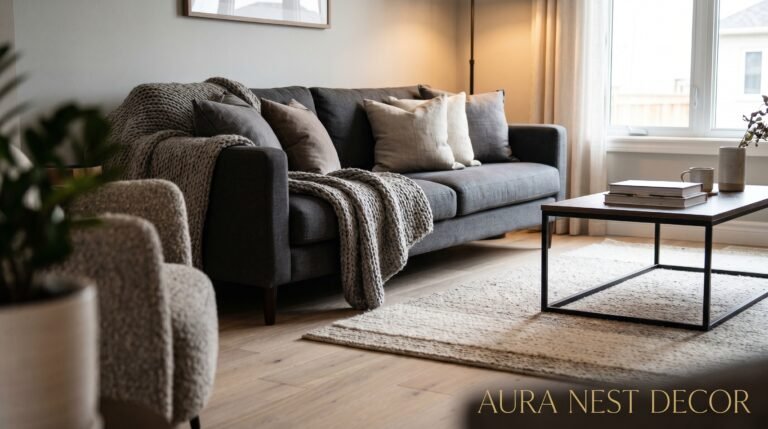
What doesn’t work — and this is a firm opinion — is very cold, very grey, very sleek contemporary furniture. It can look great in other contexts, but on dark wood floors it creates this weird tension where nothing feels settled.
—
6. What to Do With Your Walls When the Floors Are Already Doing a Lot
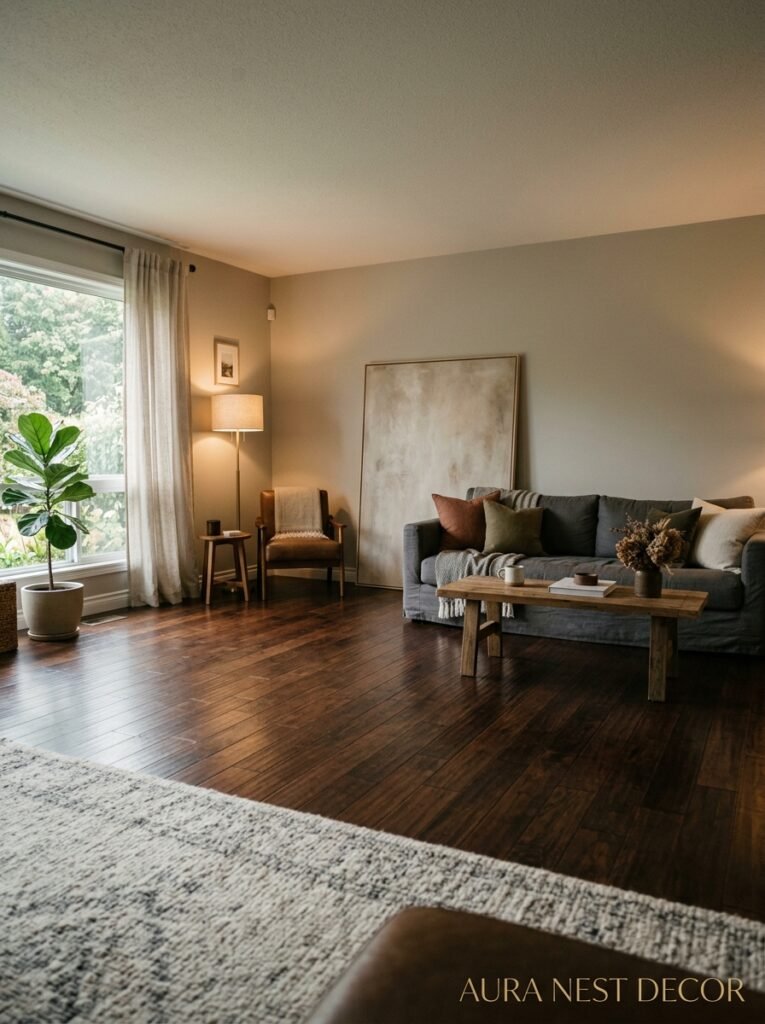
Here’s where it gets interesting. Dark floors can feel oppressive if the walls are also very heavy — so a lot of interior designers reach for the classic solution: white or very light walls to balance everything out. And honestly, it works. But it’s also the obvious move, and it doesn’t always give you the cozy quality.
The more interesting option? A warm, medium-depth wall color. Something like a complex greige — not grey, not beige, but that indeterminate warm tone that shifts depending on the light. Or a deep warm white like Farrow & Ball’s “All White” or “Pointing,” which are both technically light but have enough warmth to not feel cold.
In the UK, I keep seeing these really beautiful living rooms where the walls are in a dusty plaster pink or a muted sage, and honestly against dark wood floors they look extraordinary. The combination has an almost Victorian-cottage quality that’s deeply appealing.
For American homes, especially in spaces with higher ceilings, you can often go darker on the walls than you’d think. A warm terracotta, a deep mushroom, even a moody blue-green in a room with good natural light — the floors become an anchor rather than a liability.
—
7. The Small Things That Make a Dark Wood Living Room Feel Like Someone Actually Lives There
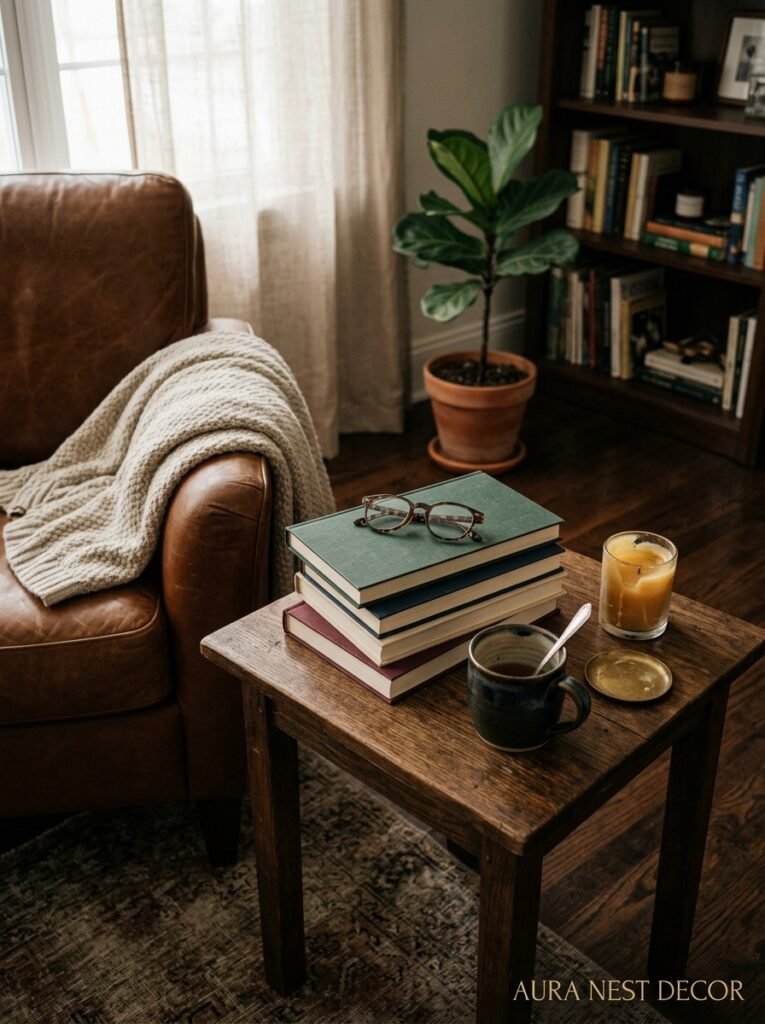
A stack of books on the coffee table — not arranged, just there. A throw blanket that isn’t folded perfectly but kind of draped. A ceramic bowl with a few things in it that you actually use, not just for styling. A plant that’s getting a bit leggy because it’s reaching for the light.
This is the stuff that makes a room feel real, and against dark wood floors, these human details really land. The floor gives you an elevated, almost formal foundation, and then all these imperfect lived-in details soften it perfectly.
I think about this a lot with styling, honestly. There’s a version of a beautifully decorated room that feels like a hotel lobby — technically impressive but not inviting. And then there’s the version that makes you want to kick off your shoes and sit down. The difference is always in the small things, the slightly imperfect things.
Dark wood floors are forgiving in this way. They don’t demand perfect styling. They have enough character on their own that you can afford a little mess and it just looks cozy rather than untidy.
“The difference between impressive and inviting is always in the slightly imperfect things.”
—
8. How to Handle the ‘Dark and Cave-Like’ Fear That Puts People Off Dark Floors
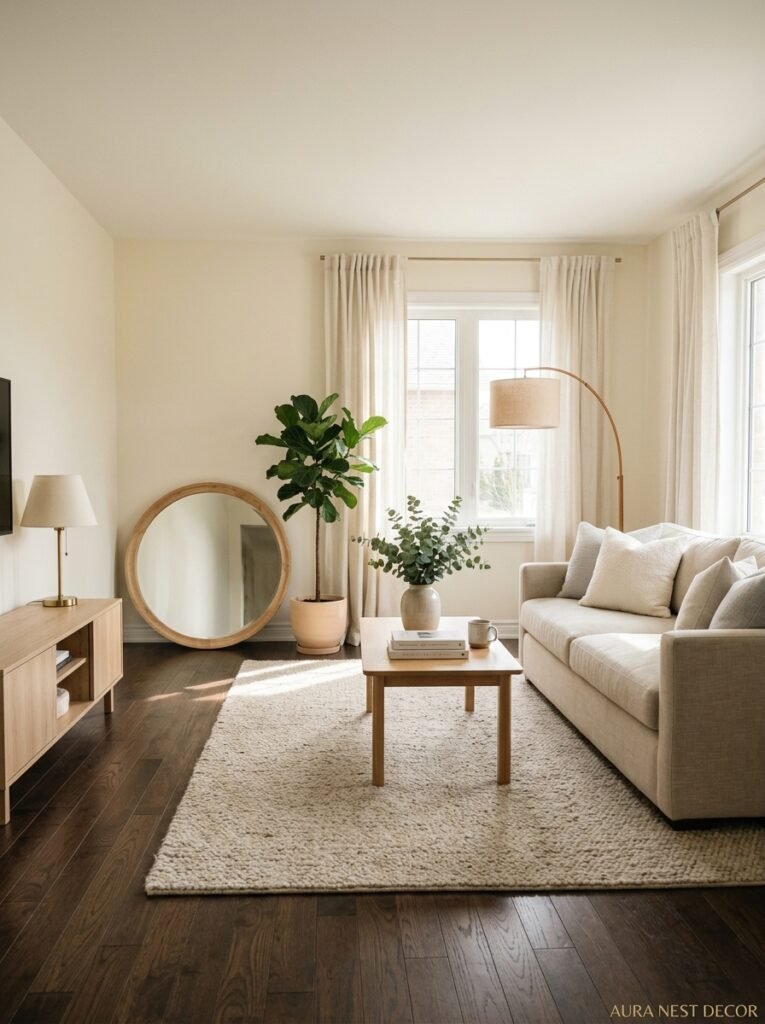
I hear this all the time. “Won’t dark floors make the room feel smaller?” And I get why people worry about it — it seems logical. But in practice? Not really. Or at least, not if you handle the other elements thoughtfully.
The mistake is pairing dark floors with dark walls AND dark furniture AND dark textiles. If you stack all of those together, yes — cave. But dark floors with lighter walls, warm lighting, and some strategically placed mirrors? A room can feel beautifully intimate without feeling claustrophobic.
Mirrors are an underused tool in dark-wood living rooms. A large mirror on the wall opposite a window bounces natural light back into the space and makes the floor actually glow. It’s kind of magic, and it costs nothing except finding a decent mirror.
In smaller UK terraced houses or flats, I’d keep furniture legs visible rather than going for fully upholstered pieces that sit on the floor. Seeing the floor under the sofa and chairs makes the room feel bigger, and it lets those beautiful floors actually be part of the composition rather than just peeking out around the edges.
—
9. The Case for Mixing Wood Tones (And Why Everyone Saying “Match Everything” Is Wrong)
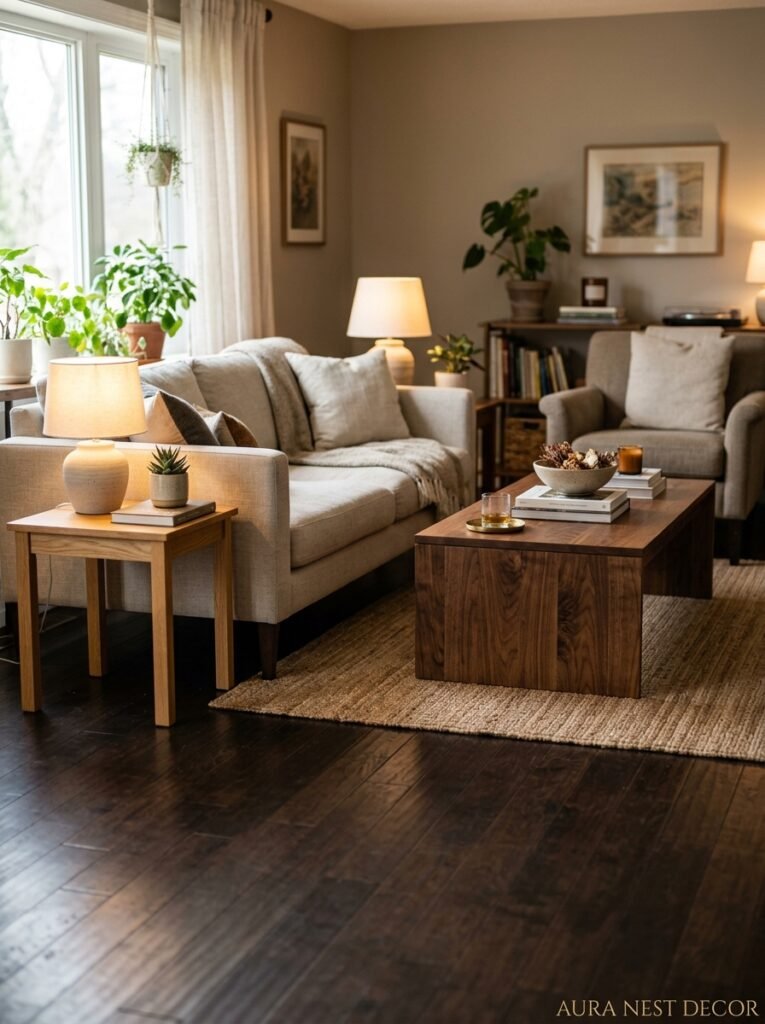
Can we talk about this? The idea that all your wood tones need to match is so outdated it’s genuinely baffling that it’s still being passed around. Mixing wood tones looks infinitely more interesting than everything being the same species and finish.
Dark walnut floors with a lighter oak coffee table? Beautiful. Espresso flooring with a bleached wood sideboard? Incredible. The variety creates depth, makes the room feel collected and curated over time rather than bought all at once from the same catalogue.
The rule — and there is one — is that you want some tonal harmony. Warm woods with warm woods, generally. Cold grey-toned wood doesn’t mix as well with a rich warm espresso floor. But within the warm spectrum, mixing freely almost always works.
This applies to painted furniture too. A white-painted bookcase on dark floors looks stunning. A black-painted console table is dramatic and great. Even a very dark green painted piece adds something interesting without clashing.
—
10. The Coffee Table That Changes Everything
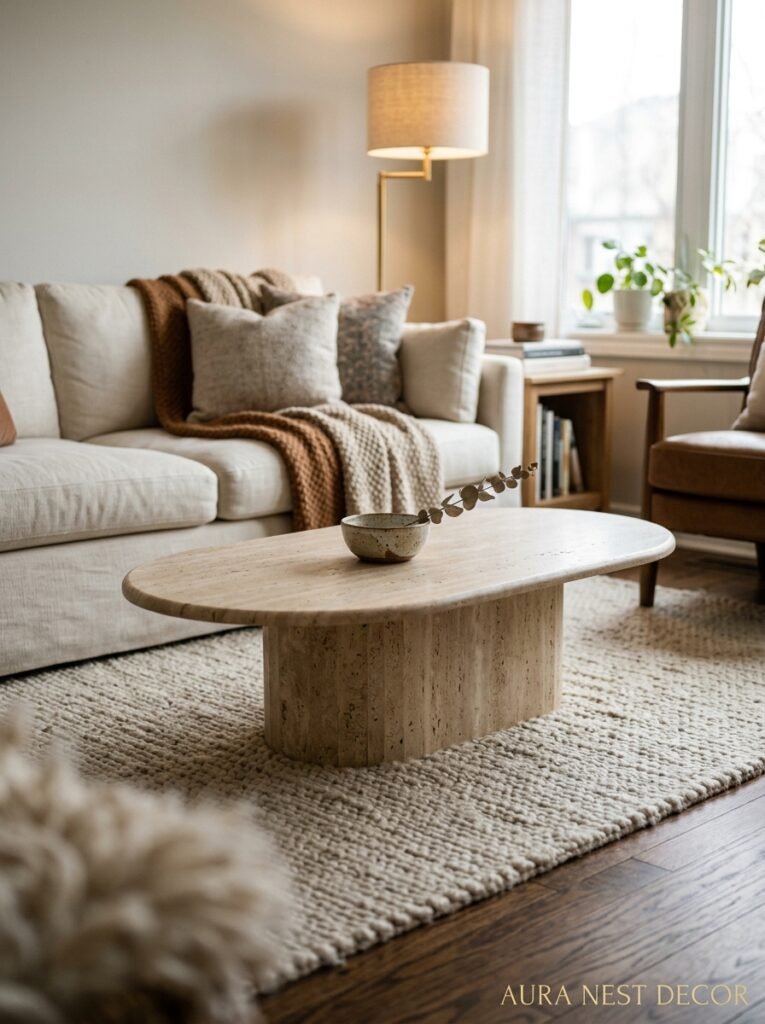
Dark wood floors basically demand a coffee table with some visual weight. A thin, spindly glass table kind of disappears, and while that can work in some rooms, it doesn’t lean into what dark floors do best — which is create a warm, grounded, layered space.
A chunky wooden coffee table in a contrasting tone is the obvious choice and it’s obvious because it works. But my current favorite for dark wood floors is a round coffee table in a warm stone or concrete look — slightly industrial but with warm undertones, sitting on a cream or oatmeal rug. The combination of materials (stone, wood, textile) is just really satisfying.
Ottoman coffee tables are another great option, especially for families. A large square velvet or leather ottoman gives you the visual warmth, the softness, and the practicality of being useful as actual seating or a footrest. Against dark floors, a cognac leather ottoman or a deep rust velvet one looks genuinely stunning.
—
11. What Scandinavian Interiors Know About Dark Wood That We Keep Forgetting
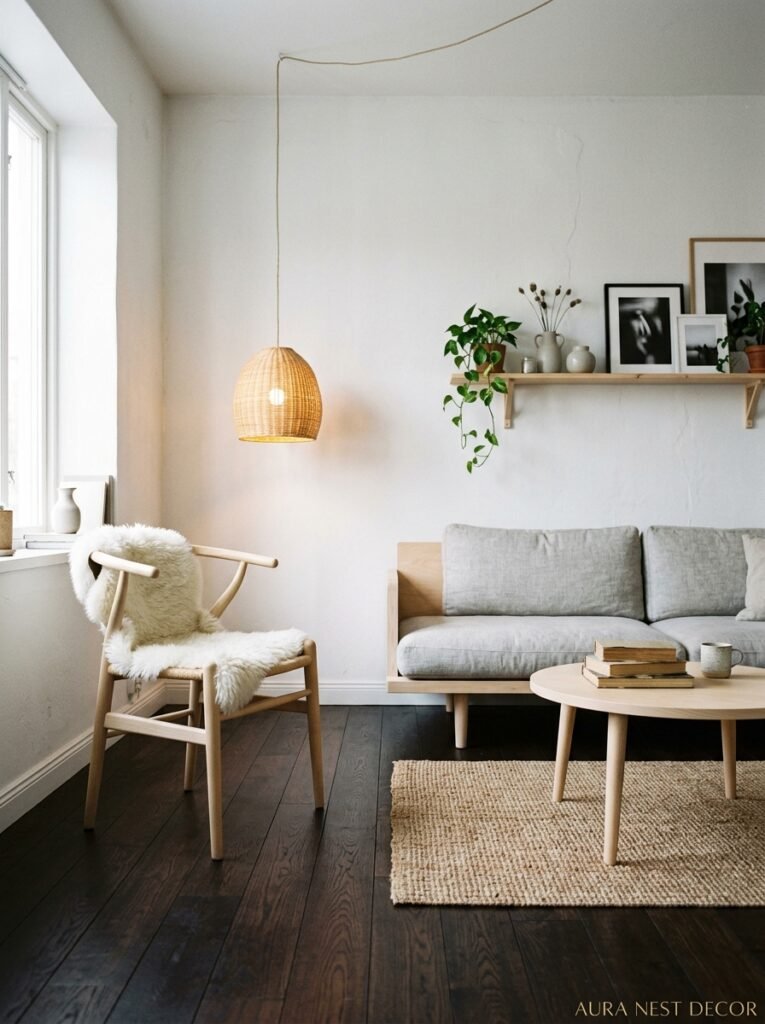
Scandinavian interior design has always had a fascinating relationship with dark wood. It’s less common in the hyper-minimalist version of Scandi style that went viral on Pinterest years ago, but in the actual homes — especially in Norway and Denmark — dark wood floors paired with cozy textiles and really warm lighting is completely standard.
And they do two things brilliantly. First, they keep the styling intentionally sparse. Not empty — just considered. Every object earns its place. Second, they go all in on textiles. Sheepskin throws, heavy wool blankets, lots of cushions in natural textures. The contrast between that warmth and the cool formality of dark floors is the whole vibe.
There’s something to learn from that approach, particularly for British homeowners who sometimes over-style their living rooms to the point where the floors — the star of the show — barely get to be seen. Edit down. Let the floor breathe. It’ll look better for it.
—
12. The Real Reason Dark Wood Living Rooms Feel Like Home
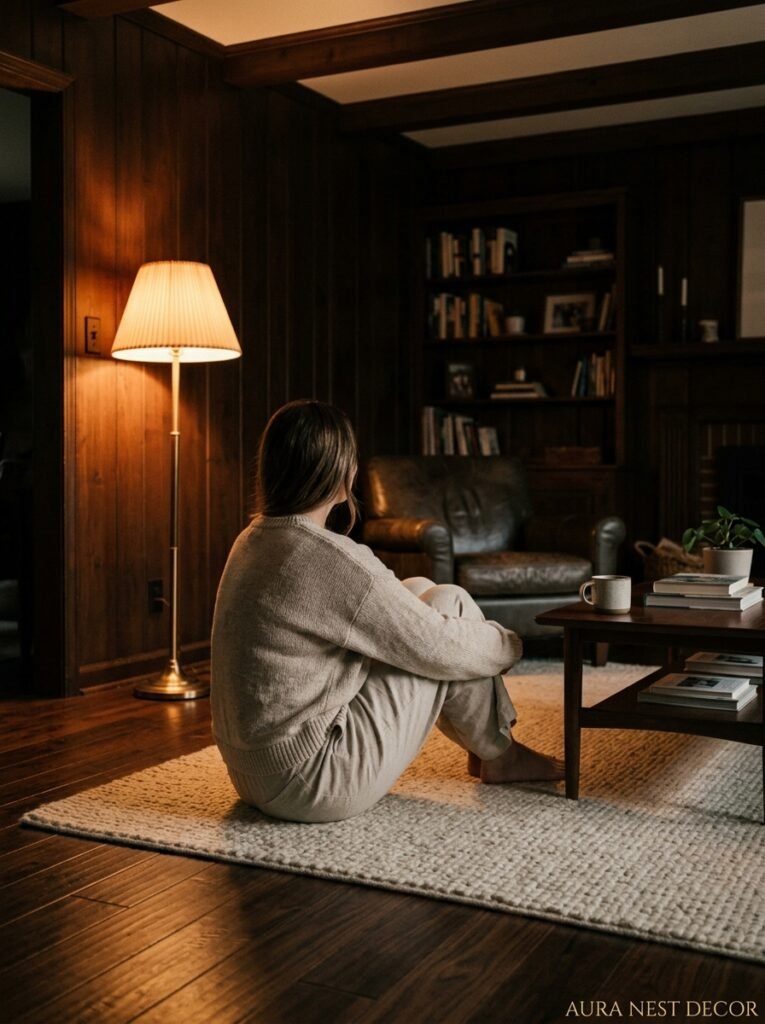
This might sound strange, but I think dark wood floors connect to something pretty primal. The color of rich soil, of old trees, of places that have been around for a long time. Sitting in a room with dark wood floors and warm light and soft things around you — it triggers something. It feels sheltering.
That’s worth designing for deliberately. Not just picking out furniture that looks good in photos, but thinking about how you want the room to feel when you walk into it at 6pm on a cold November day and close the door behind you. Dark wood floors are almost uniquely good at doing that job, if you let them.
The rooms that work best with these floors share one quality: they feel like someone thought carefully about warmth, not just style. The two things often overlap, but they’re not the same. A room can be beautifully styled and still feel cold, impersonal, like something out of a catalogue. A truly cozy dark-wood living room feels like it was built around the way a specific person actually lives.
That’s the goal. That’s always the goal.
—
❓ FAQ
Q: Do dark wood floors make a small living room look smaller? A: Not necessarily — it depends on what you pair them with. Light walls, mirrors, and furniture with visible legs all counteract the effect. The room might feel more intimate, but intimate and small aren’t the same thing at all.
Q: What’s the best rug color for dark wood floors? A: Warm, lighter-toned rugs tend to look best — think faded cream, terracotta, warm oatmeal, or vintage-looking Persian patterns with rust and amber in them. The contrast between a lighter rug and dark floors is what gives the room depth.
Q: Can dark wood floors work in a north-facing room with not much natural light? A: Yes, absolutely — but lighting becomes even more important. Layer your light sources, go warm-toned on bulbs (around 2700K), and lean into the coziness rather than fighting it. Some of the most beautiful dark-wood living rooms I’ve seen are in north-facing rooms that just leaned all the way into the moody, intimate vibe.
—
💭 Final Thoughts
There’s a version of home decor where you’re always chasing something — the right shade, the trending piece, the perfect arrangement. But dark wood floors have a way of asking you to slow down. They’re already doing something. They just want you to meet them there.
The rooms that stay with you — the ones you screenshot and come back to — usually have this quality of being deeply specific to someone. Not generic, not trying to appeal to everyone. Just really, genuinely themselves.
So what does your dark wood living room want to feel like at 8pm on a Friday night when you’re finally home?