The Living Room That Feels Both Brand New and Like It’s Always Been There
You know that feeling when you walk into a room and everything just settles? Where the furniture looks like it grew out of the floor and the light hits exactly right and you can’t quite figure out why it’s so beautiful — you just know it is? That’s what modern classic decor does when it’s done well. And the good news is, it’s not as complicated or as expensive as it looks on the cover of Architectural Digest.
—
1. Why “Modern Classic” Isn’t Just a Design Trend — It’s a Whole Philosophy
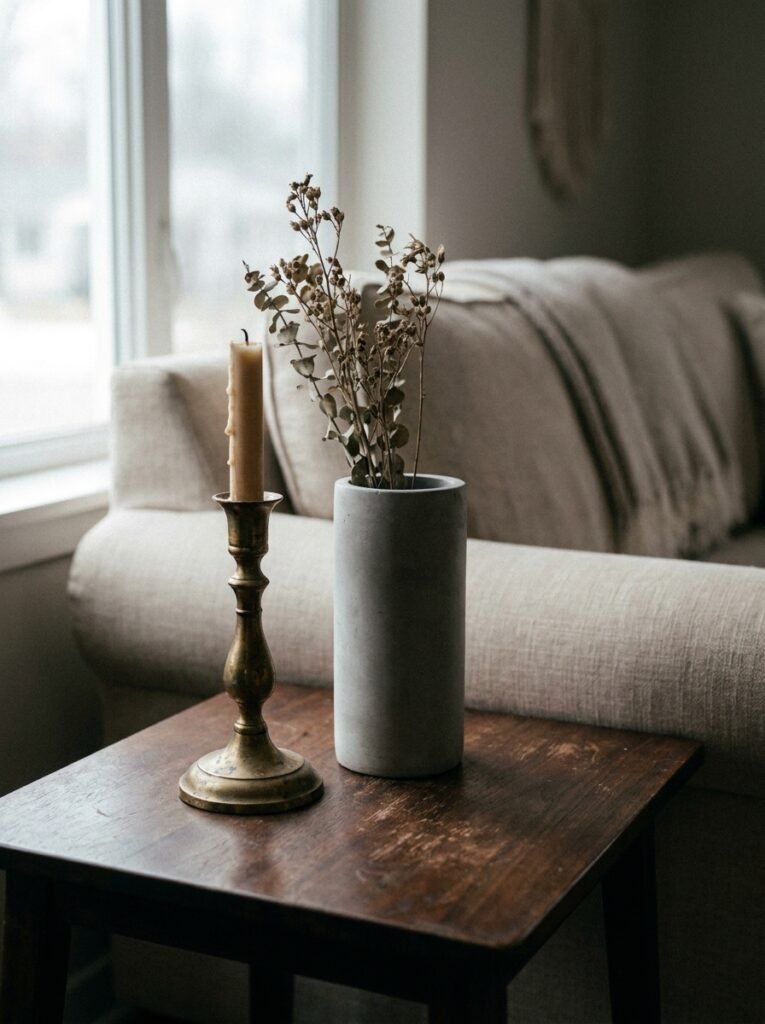
Most people treat decorating like a problem to solve. Pick a style, buy the things, arrange them, done. But modern classic interiors don’t work like that. They’re built on a tension — a deliberate, beautiful push and pull between old and new, structured and soft, formal and lived-in.
The idea is this: classical design gives you bones. The proportions, the symmetry, the materials that have survived centuries because they’re genuinely good. Modern design gives you air. The clean lines, the restraint, the willingness to leave things out instead of cramming everything in. When you combine the two, you get a room that feels neither stuffy nor cold.
Think of a chesterfield sofa in a deep forest green — unmistakably traditional in its tufted form — sitting on a pale concrete floor with a single large-format abstract print on the wall behind it. That’s it. That’s the whole formula. The old thing is allowed to be old. The new thing is allowed to be bare. And somehow, together, they do something neither could do alone.
This is the philosophy you want to carry into every decision you make in the room. Not “what’s trending” but “what’s interesting, and how does it talk to everything else?”
“The best living rooms aren’t decorated. They’re curated over time, with intention — and a little bit of stubbornness.”
2. The Color That Keeps Showing Up in Every Beautiful Modern Classic Living Room Right Now
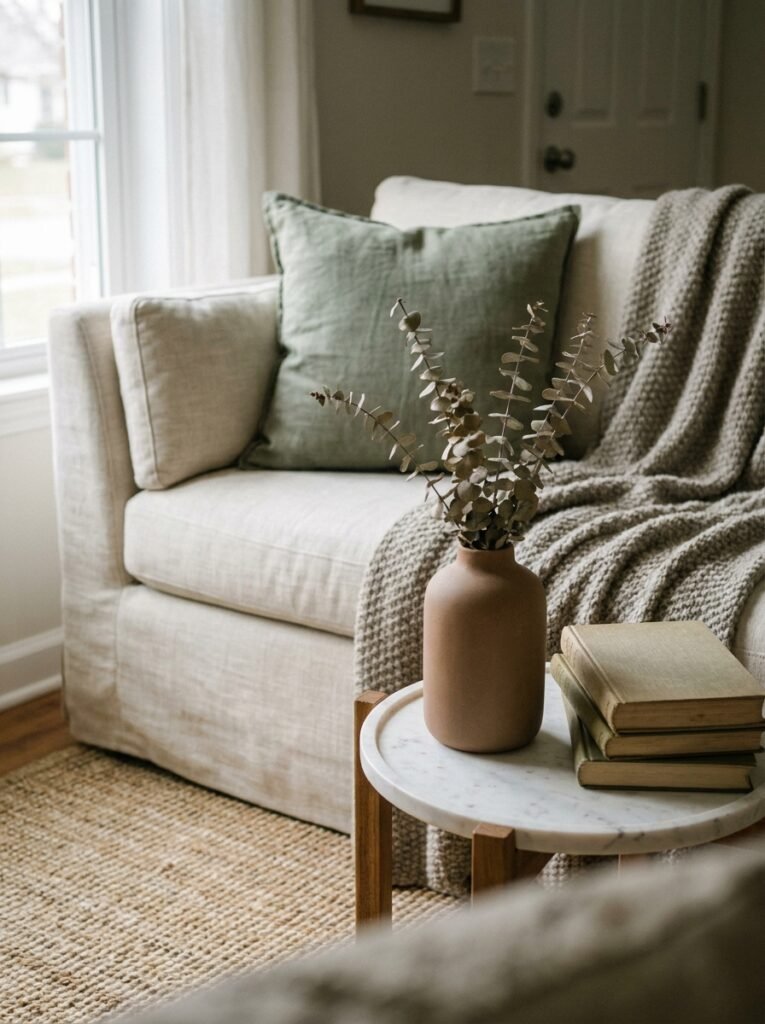
It’s not beige. It’s not gray. It’s not even the much-discussed “greige.” The color that keeps appearing in the most beautiful modern classic living rooms — from Brooklyn brownstones to Georgian townhouses in Edinburgh — is a warm, dirty white. Sometimes it leans cream. Sometimes it has the faintest blush of plaster pink. It’s the color of old linen, of unbleached cotton, of a stone wall in morning light.
What makes it work so well in this style is that it does two things at once. It gives you the brightness and simplicity of modern design without the clinical edge that pure white can bring. And it lets classical architectural details — cornicing, ceiling roses, paneling — breathe without competing.
In American homes without those period features, this color acts as a backdrop that makes everything else look more considered. Your vintage side table looks intentional. Your modern floor lamp looks elegant. The room stops being a collection of things and starts being a composition.
Paint-wise, look at shades like Farrow & Ball’s Pointing, Benjamin Moore’s White Dove, or Sherwin-Williams’ Alabaster. They’re not identical but they’re in the same family — warm enough to feel human, neutral enough to let everything else lead.
3. The Sofa Decision That Determines Everything Else in the Room
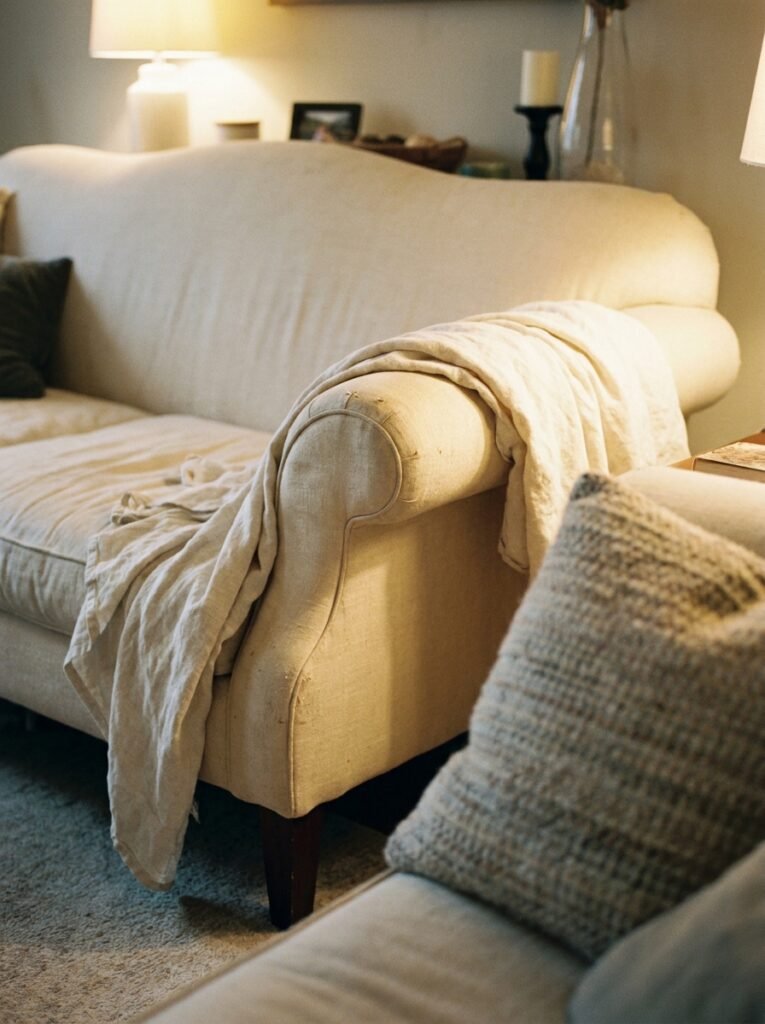
Every living room is organized around one anchor piece. In almost every case, that anchor is the sofa. And in a modern classic living room, the sofa decision carries more weight than any other single choice you’ll make.
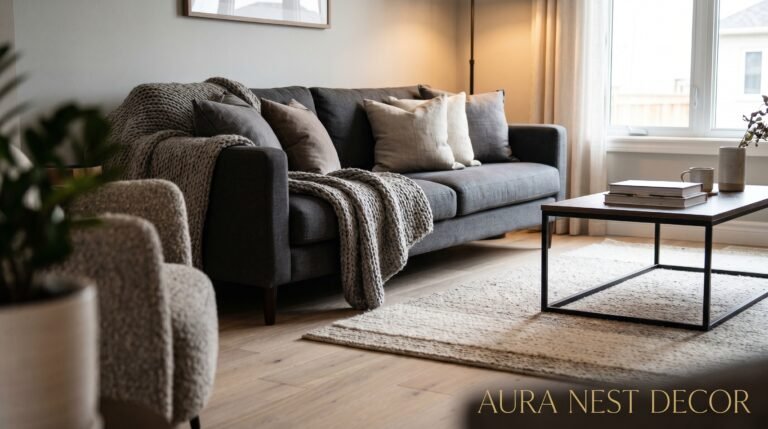
Here’s the thing about sofas in this style: you don’t want brand new and you don’t want beat-up. You want something that looks like it’s been well-loved by someone with good taste. A sofa with clear lines and good proportions — arms that are either cleanly square or gently curved, cushions that hold their shape, a silhouette that would look right in a 1940s drawing room and a 2024 apartment simultaneously.
Velvet does something remarkable here. A sage velvet sofa, or a dusty blue, or a deep terracotta — something with quiet color and a material that catches light differently depending on where you’re sitting — reads as both luxurious and relaxed. That’s the sweet spot.
In terms of scale, the biggest mistake people make in both American and British living rooms is going too small. A sofa should claim its space with confidence. If it looks like it wandered in apologetically and isn’t sure where to sit, the whole room will feel unsettled.
Linen sofas in natural or warm tones work equally well if velvet feels like too much. But whatever you choose, make sure the lines are clean and the fabric is tactile. This is a room you’re going to live in. It should feel like something when you sit down.
4. Mixing Antiques and Modern Pieces Without It Looking Like a Storage Unit
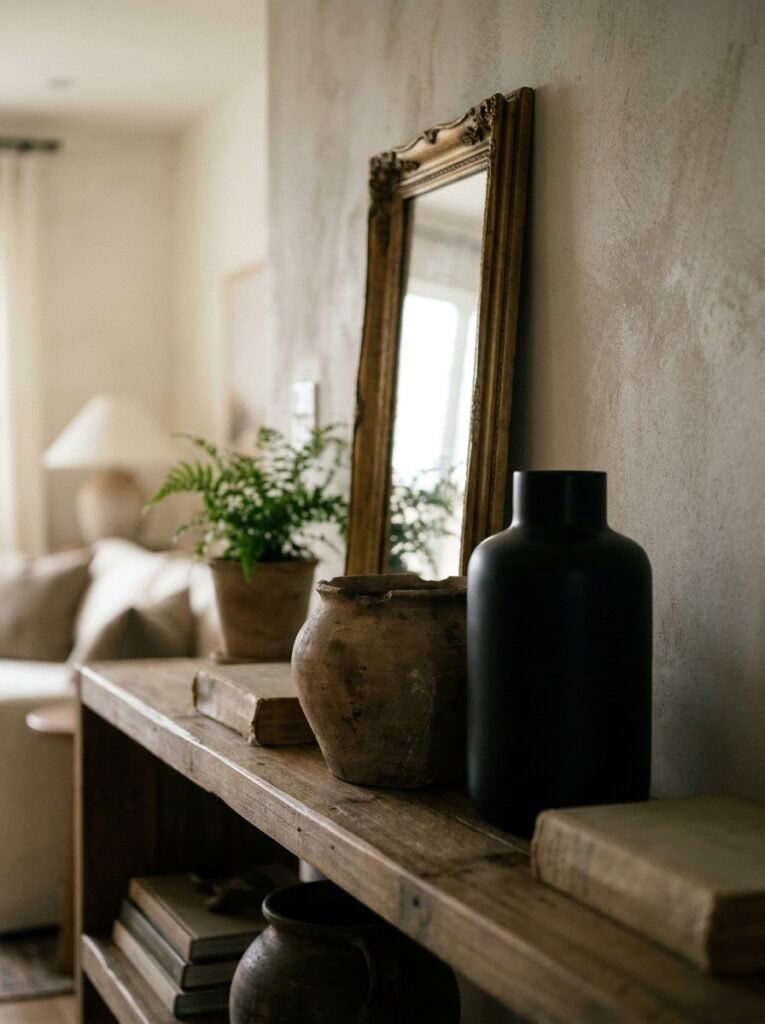
This is where most people panic, and where most well-meaning rooms go wrong. They buy all modern, realize it’s too cold, add a few antique-looking things from a chain furniture store, and end up with a room that’s neither here nor there.
Real mixing requires real contrast. Not “two different styles that are roughly the same age” but actual antiques — or genuinely vintage pieces — set against genuinely contemporary ones.
“Don’t match the old things to the new things. Let them argue a little. That’s where the interest lives.”
A mid-century modern coffee table from an estate sale, sitting on a traditional Persian rug, with a pair of sleek contemporary armchairs on either side. A Georgian mahogany side table next to a Scandi-influenced floor lamp with a clean white shade. An antique mirror — slightly foxed, slightly tarnished — above a very simple, modern console.
The rule, if there is one, is this: when you’re mixing periods, make sure they’re separated by at least forty years. Things that are close in age but different in style look confused. Things that are genuinely far apart in era look deliberate. The distance makes the contrast feel intentional.
And keep the rest of the room calm. If you’re featuring one genuinely beautiful, genuinely old piece, let it breathe. Don’t crowd it.
5. What Every Gorgeous Modern Classic Living Room Has in Common (That Nobody Talks About)
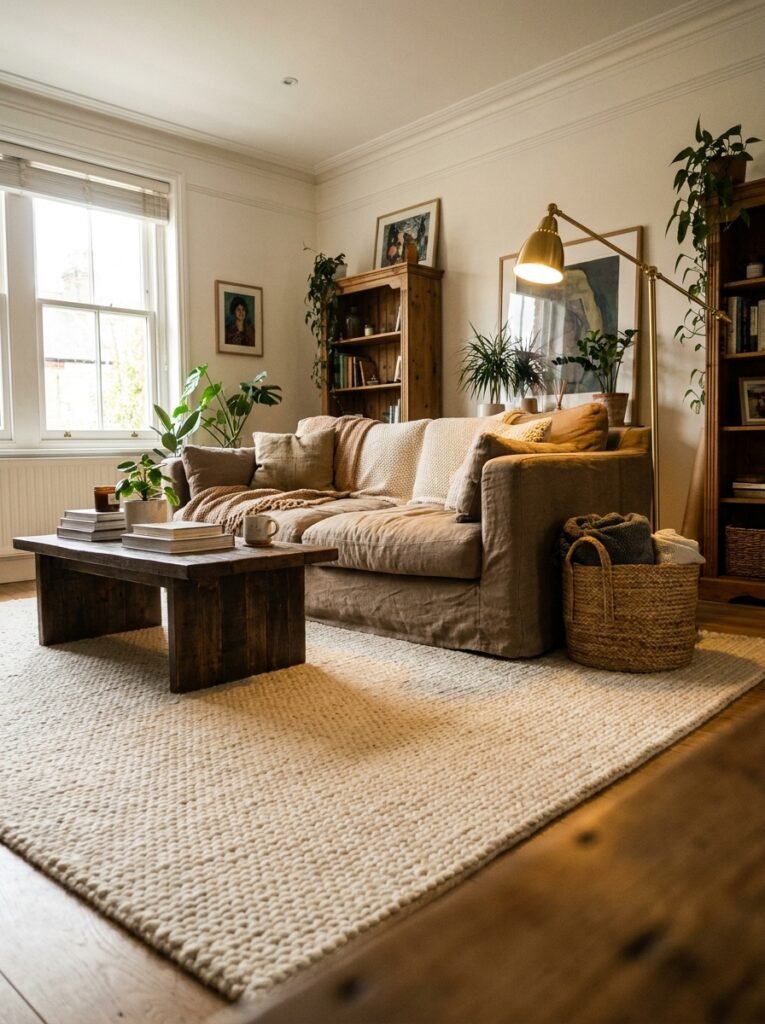
It’s layered light.
Not “good lighting.” Not just a nice lamp in the corner. Layered light — multiple sources at different heights, different warmths, with the ability to adjust what’s on and what’s off depending on the time of day and the mood you’re after.
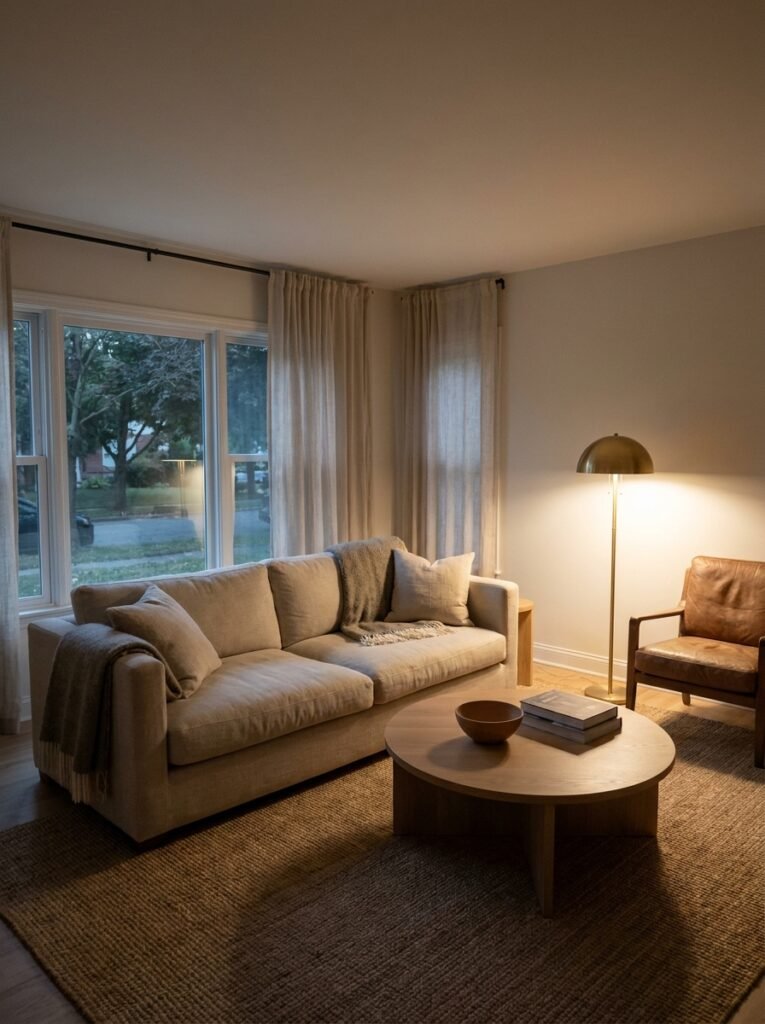
In practical terms, this means: overhead light that isn’t doing all the work (a chandelier with a dimmer is ideal — even a simple one with aged brass detailing hits differently than a flat ceiling panel), at least one floor lamp with a warm-toned shade, a table lamp on the side table, and ideally some kind of accent light — a picture light over a piece of art, a candle or two, fairy lights tucked into a bookshelf corner for evenings.
At 7pm on a winter Tuesday, when the overhead is dimmed low and the floor lamp is casting its amber pool and there are two candles on the mantel, your living room becomes something else entirely. It becomes the room people don’t want to leave.
This is the most overlooked element in modern classic decor and also, genuinely, the most powerful. Get the light right and mediocre furniture looks beautiful. Get it wrong and beautiful furniture looks mediocre.
6. Rugs: The Decision That Changes the Entire Temperature of the Room
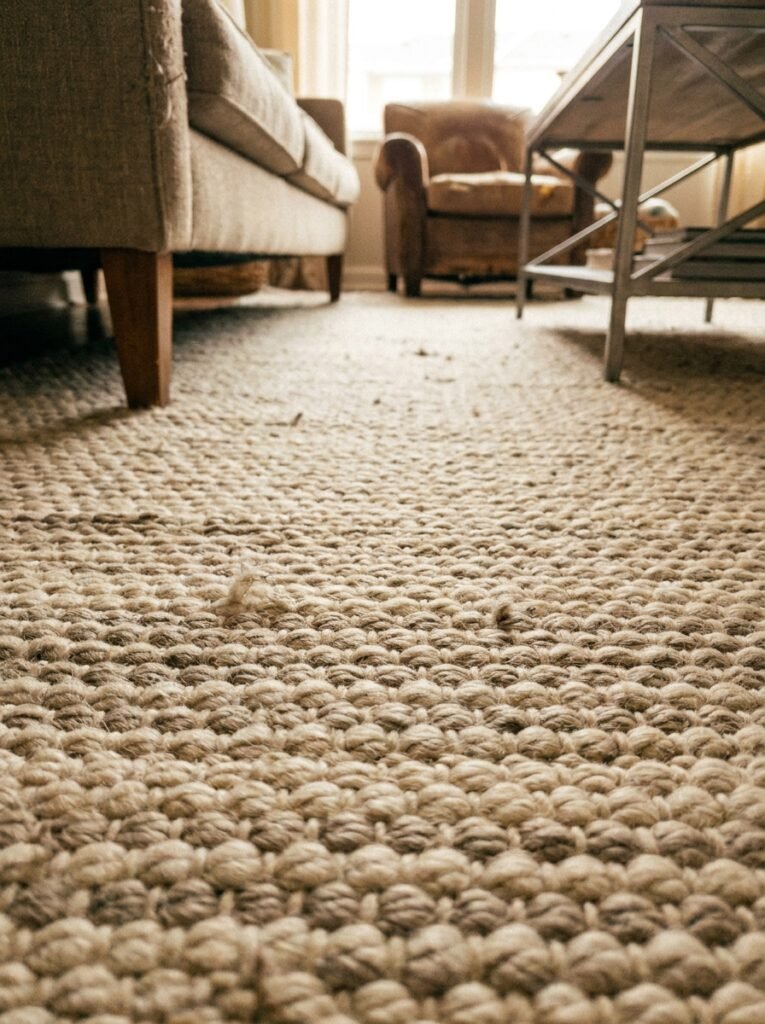
A rug isn’t just a floor covering. In a modern classic living room, the rug is the room’s emotional center.
Traditional Persian or Oriental rugs bring the classical element instantly and beautifully. The deep reds, the navy blues, the intricate geometric patterning — all of that reads as history, as quality, as considered choice. Pair one with modern, pared-back furniture and the combination is extraordinary. The rug does the decorative heavy lifting; everything around it can afford to be simple.
If a Persian rug isn’t your thing — and it’s genuinely not everyone’s — then consider a plain rug in a material that has natural texture. A jute rug, a flatweave wool rug in a muted stripe, a deep-pile rug in a single, warm, quiet tone. The material should be worth touching.
Size is the thing that trips most people up. The rug should be large enough that all the main seating furniture has at least its front legs sitting on it. A rug that floats in the middle of the seating arrangement, too small to anchor anything, makes the whole room look like it was furnished on three different budgets on three different days.
Go bigger than you think you need to. Almost every interior designer will tell you the same thing. Almost no one listens the first time.
7. The Bookcase Styling Trick That Looks Expensive and Takes Ten Minutes
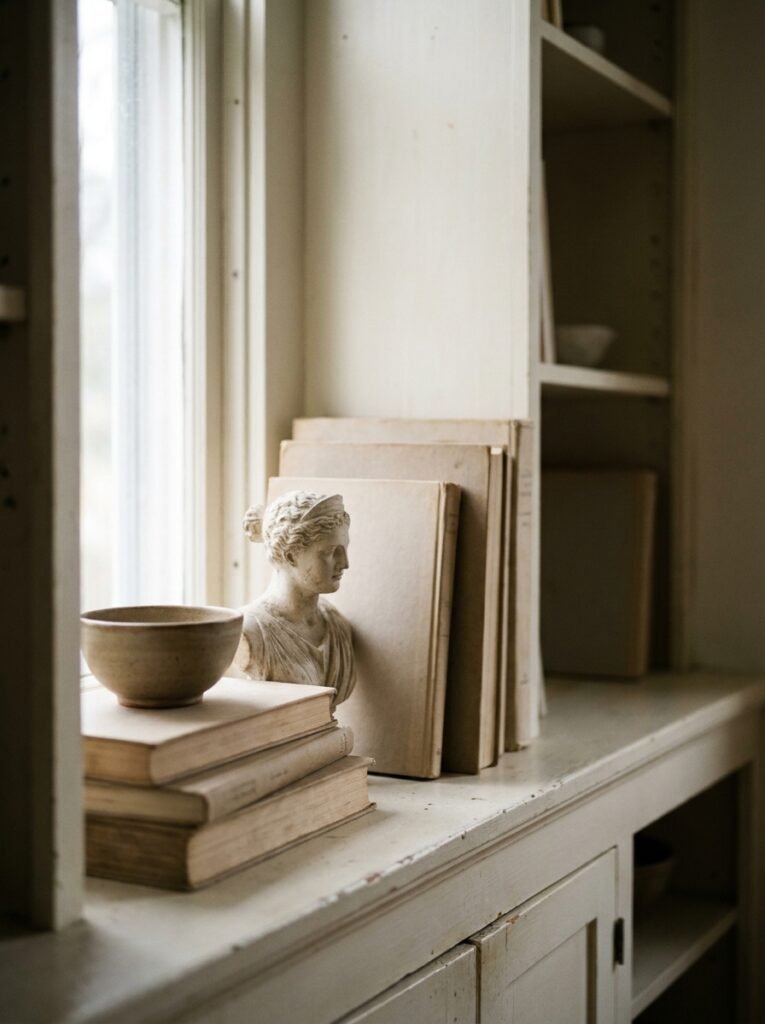
Books are one of the most underused decorating tools in a modern classic living room. Not decorative books bought for their spines, but actual, personal books — the ones you’ve read, the ones you haven’t, the ones that have lived in every home you’ve ever had.
The trick is this: remove half of them.
That sounds counterintuitive, but densely packed shelves, while cozy, can tip into chaotic in this style. Instead, pull the books out, organize what remains by height within loose color groupings (you don’t need to be militant about it — approximate is actually more beautiful than precise), and then use the empty space on each shelf for one or two non-book objects.
A small sculptural piece. A single framed photo turned face-forward. A piece of pottery in a complementary tone. A plant trailing over the edge.
“A bookshelf styled with restraint says more about a person than one crammed to the edges. It suggests choices were made.”
The effect is that the bookcase reads as a piece of art rather than a storage solution. It pulls the eye in. It invites closer looking.
This works particularly well in older British homes with built-in alcove shelving either side of a chimney breast — those shelves can become the focal point of the entire room without any structural changes and almost no spending.
8. Curtains: The Detail That Separates a Good Room from a Great One
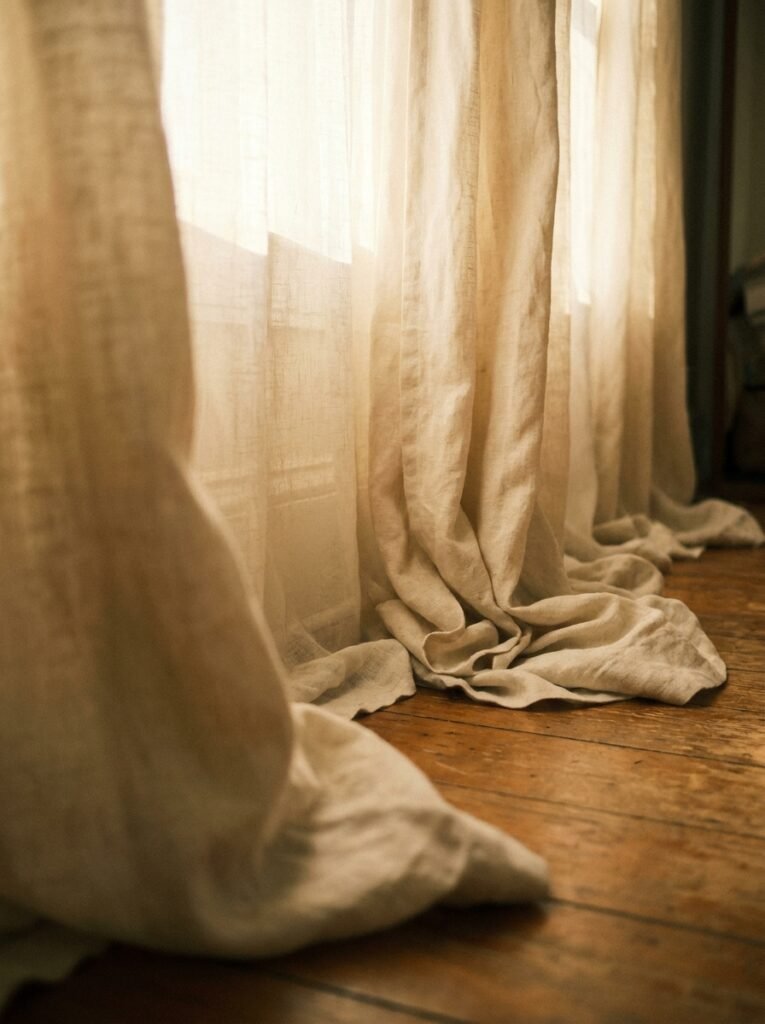
No other single change you make to a living room will have a more immediate visual impact than getting the curtains right.
In a modern classic living room, curtains should be full-length — floor to ceiling if at all possible, or as close to it as your windows allow. They should have some weight to them. A light, billowing voile might work in a beach house; in this style, you want something with presence. Linen curtains in a natural, slightly undyed tone are exceptional here. Heavy cotton in a soft, faded color. Velvet panels in a deep shade for winter rooms that need warmth and drama.
Hang the rod as high as possible — ideally at ceiling height or just below the cornice — and extend it well beyond the width of the window frame on both sides. This makes the window look larger, the ceiling look higher, and the whole room look more architecturally interesting.
Simple eyelet or pinch-pleat headings both work well in this style. Avoid anything fussy or overly decorative at the top — the drama should be in the fall of the fabric, not the header tape.
9. The One Decorative Object That Always Makes a Modern Classic Room Feel Complete
A mirror. Specifically: an antique mirror, or a very good reproduction of one.
Not a modern frameless bathroom mirror. Not a geometric sunburst in rose gold. An actual, aged, interesting mirror — with a frame that has a story, a reflection that’s slightly imperfect, a presence that goes beyond the purely functional.
In a modern classic living room, a beautiful mirror does four things at once. It bounces light around the room (crucial in north-facing British rooms that barely see the sun between October and April). It creates a focal point. It adds an antique element without requiring you to buy furniture. And it makes the room feel larger without feeling empty.
Over a fireplace is the obvious choice, and it works for very good reason — the symmetry of a mantel supports the weight of a significant mirror. But leaning a large mirror against a wall at floor level, slightly angled, is also quietly extraordinary. It feels deliberate. It feels like you know what you’re doing.
10. How Plants Fit Into a Modern Classic Living Room (Hint: It’s Not About the Trendy Ones)
Every living room needs something alive in it. This is not a matter of style — it’s a matter of feeling. A room without plants, without anything growing, can feel finished in a way that’s almost too finished. Staged, rather than lived-in.
In a modern classic living room, the plant choices matter. This is not the space for a collection of succulents on a windowsill or a trailing pothos in a plastic nursery pot. Think scale, think foliage, think presence.
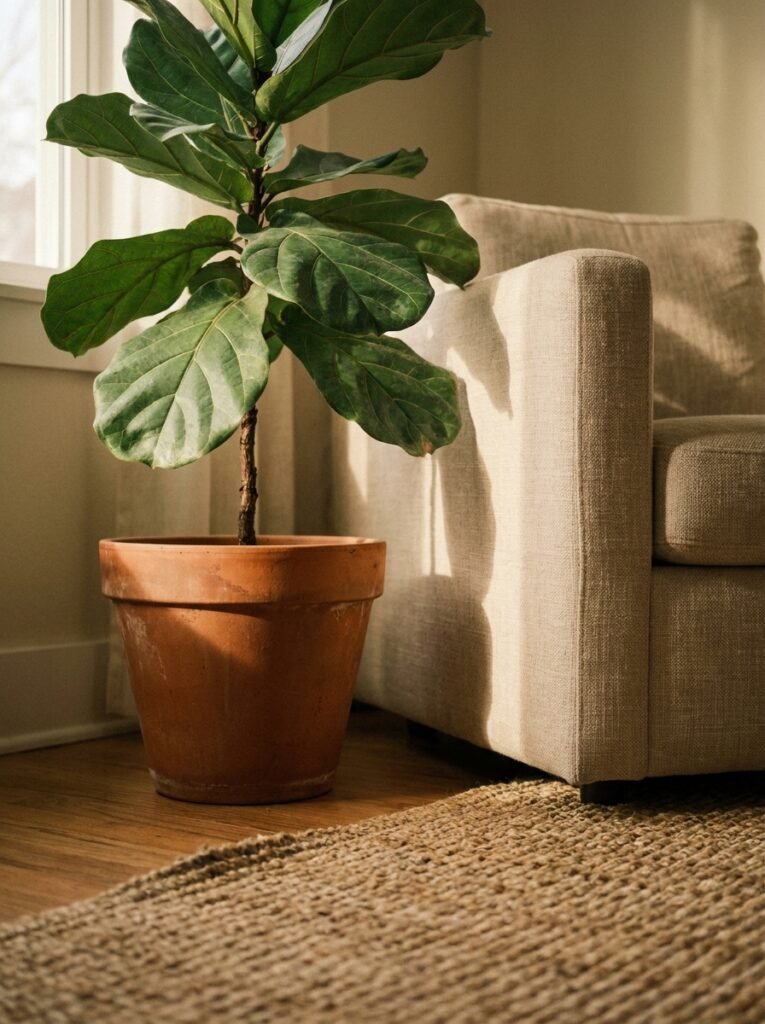
A large fiddle-leaf fig in a simple terracotta pot in the corner. A single architectural cactus. A beautiful olive tree in a textured stone planter. One tall, dramatic plant that earns its place rather than six small ones that collectively make the room feel like a garden center.
The pot is as important as the plant. A plain terracotta, an aged stone, a handmade ceramic in a matte, earthy glaze — these read as considered, natural, appropriately humble. They don’t compete with the rest of the room. They complete it.
11. The Small Styling Details That Make People Stop and Actually Look
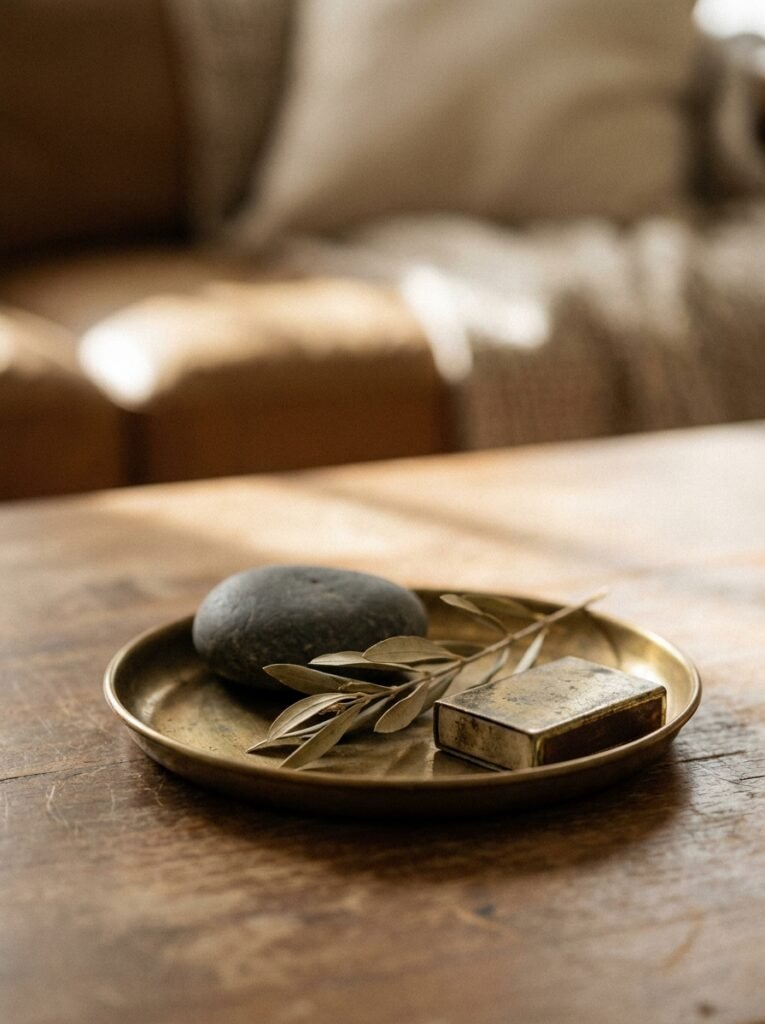
It’s the accumulation of small things, handled with care, that makes a room feel like a person lives there — a specific, interesting person with a real eye and genuine sensibility.
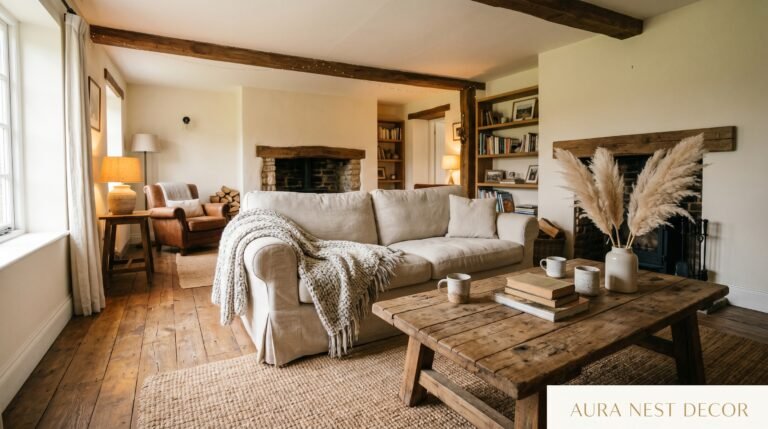
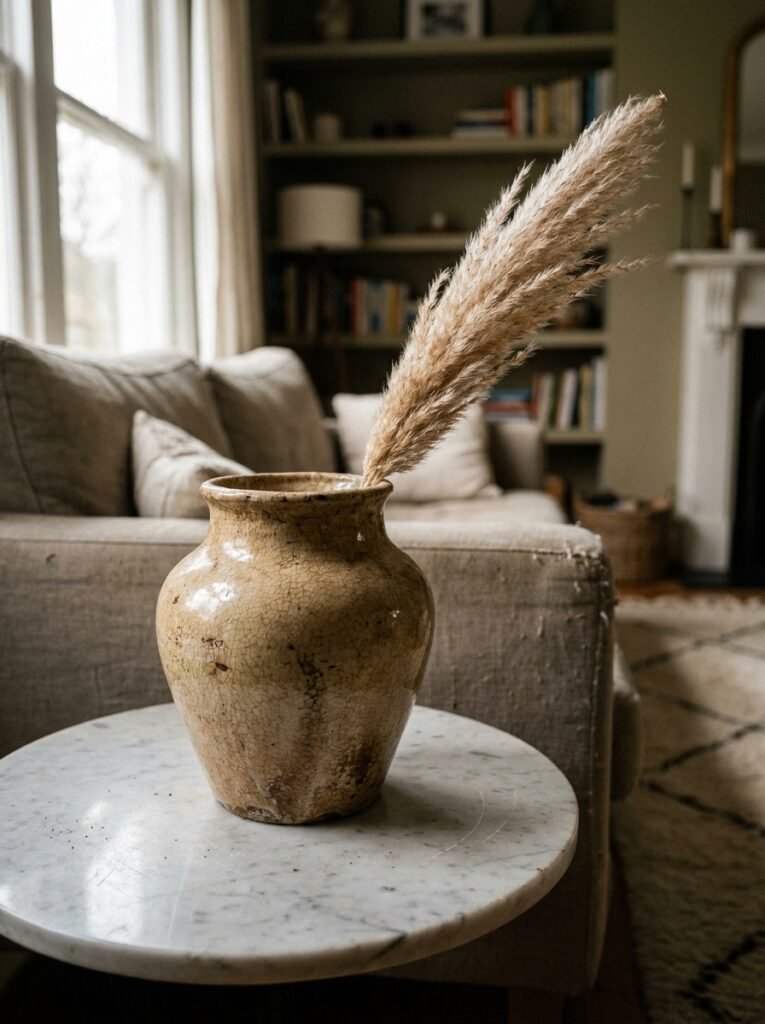
A stack of three or four coffee table books with genuinely beautiful covers, splayed slightly rather than perfectly aligned. A single candle in a simple glass holder on the fireplace hearth, used enough to have some wax pooled at the base. A vintage ceramic jug holding a few dried stems — pampas, dried lavender, eucalyptus that’s gone slightly silver. A throw draped over one arm of the sofa, not folded symmetrically but loosely, casually, like someone just used it and got up.
None of these things costs much. Together, they tell a story. They make the room feel inhabited rather than photographed, chosen rather than assembled, loved rather than staged.
The modern classic living room, at its best, looks like it belongs to someone. Make sure yours does.
12. The Mistake That Kills Modern Classic Rooms (and How to Avoid It)
Matching sets.
This is the one that undoes everything else. The sofa-and-matching-armchair set. The coffee table and side table from the same range. The lamp that came with the other lamp in a coordinated pair. Coordinated doesn’t mean composed. And a room full of matching things reads, at some fundamental level, as safe. As purchased, not curated.
Modern classic interiors derive their energy from contrast, from things that have found each other rather than come together in a box. The armchair that’s in a different fabric from the sofa. The side table that’s a different material from the coffee table. The fact that nothing in the room has a twin.
This takes confidence. It requires you to trust your eye rather than a showroom display. But the payoff is a room that looks like it was built over years — with care, with taste, with the accumulated weight of real decisions — rather than assembled in an afternoon.
And that’s the whole point. The best modern classic living rooms look like they’ve always been there. Like they could have existed fifty years ago and will still make sense fifty years from now.
—
🌿 Quick Tips

Start with your walls and floor before buying a single piece of furniture — getting those right makes everything else easier and cheaper. When in doubt about color, go warmer and lighter than your instinct says; rooms always read darker in person than on paint chips. Buy one genuinely beautiful antique piece before anything else, and build the room around it. Layer your lighting before your delivery day arrives — no designer will forgive you for a single overhead light working alone. And always, always buy a rug one size larger than you think you need.
—
❓ FAQ
Q: How do I make my living room look modern classic on a budget? A: Focus on paint first — the right warm white completely changes the mood of a room for very little money. Then hit estate sales, charity shops, and Facebook Marketplace for one genuinely interesting antique piece. Resist buying lots of affordable new things; fewer, more meaningful pieces always beat a room full of budget fills.
Q: Can a modern classic style work in an open-plan living space? A: Absolutely — it often works better in open-plan rooms because the strong anchor pieces (a significant sofa, a beautiful rug, a proper floor lamp) define the seating zone clearly. Just be mindful of how the living area relates to the kitchen or dining space; keep a consistent warm neutral running through so the whole feels cohesive rather than competing.
Q: What’s the difference between modern classic and just “traditional” decor? A: Traditional decor tends to lean heavily into period-appropriate pieces, patterns, and ornamentation. Modern classic deliberately edits — it takes the proportions, materials, and quality of classical design and strips away the fussiness, pairing it with clean contemporary lines. The result is warmer than minimalism and lighter than traditional. It’s a conversation between eras, not a recreation of one.
—
💭 Final Thought
The modern classic living room isn’t a style you finish. It’s one you keep returning to — adjusting a lamp, moving a mirror, finally finding the right thing for that empty corner. The rooms that feel the most beautiful always feel a little unfinished. Not incomplete, but open. Still thinking.
What’s the one piece in your living room right now that you’ve been holding onto because it just feels right, even if you can’t explain why?