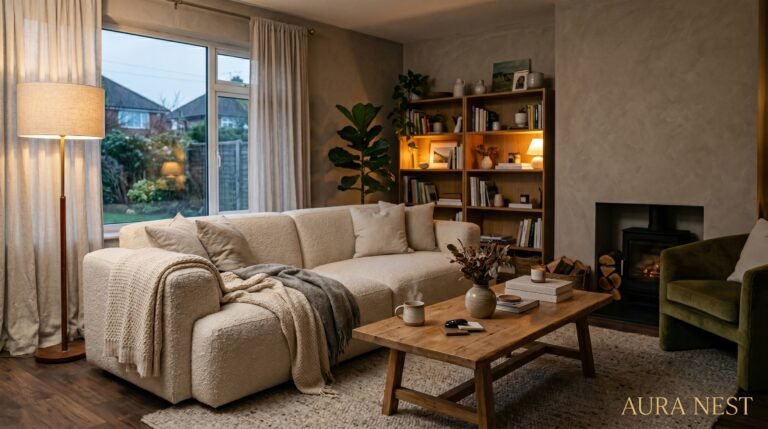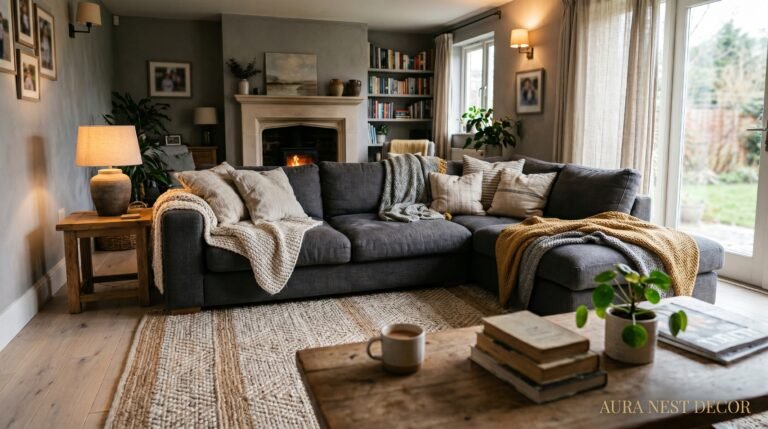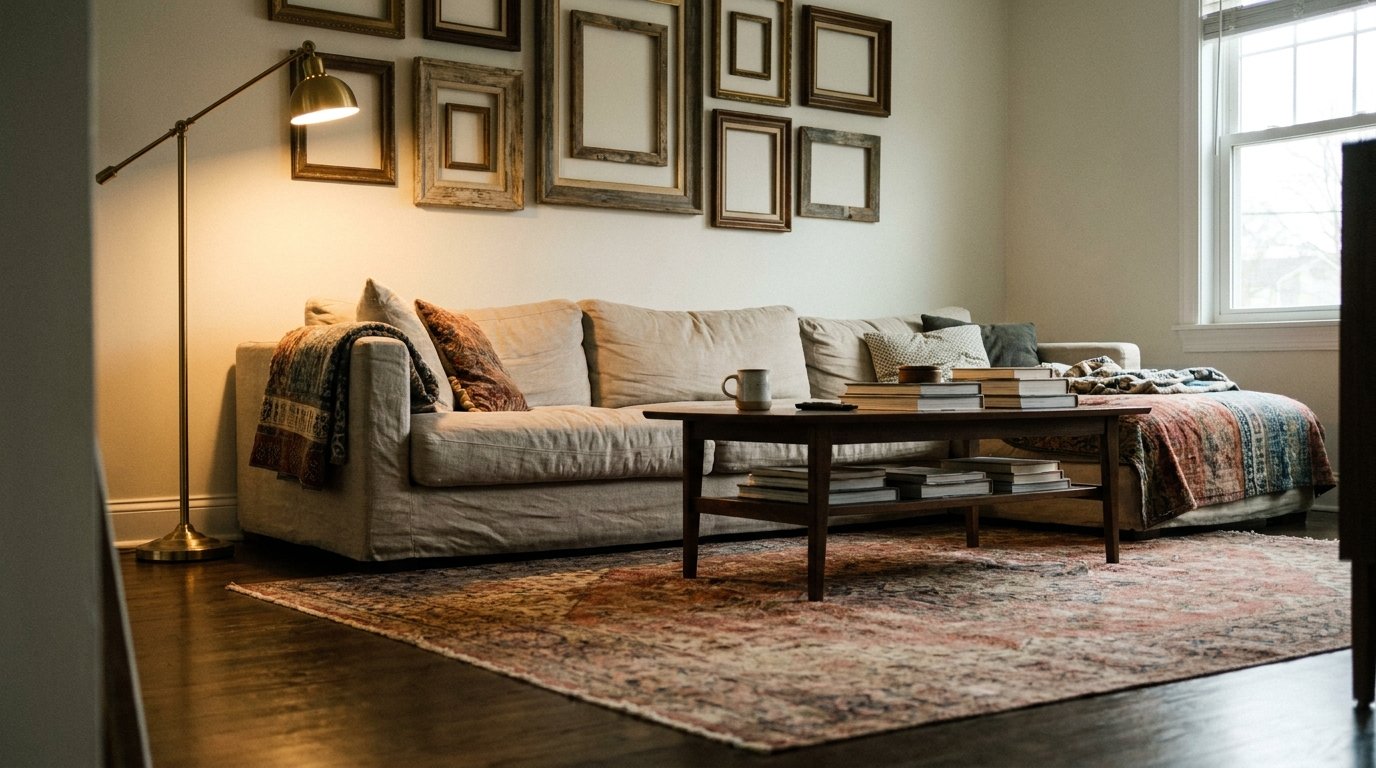
The Living Room That Feels Like It Has a Story — Modern Vintage Done Right
You walk into a room and something stops you. Not a single statement piece, not a perfect color palette — just the feeling that this space has lived. That’s what modern vintage does when it’s done well. And it’s entirely achievable, whether you’re working with a 1930s terrace in Manchester or a 1990s build in Austin.
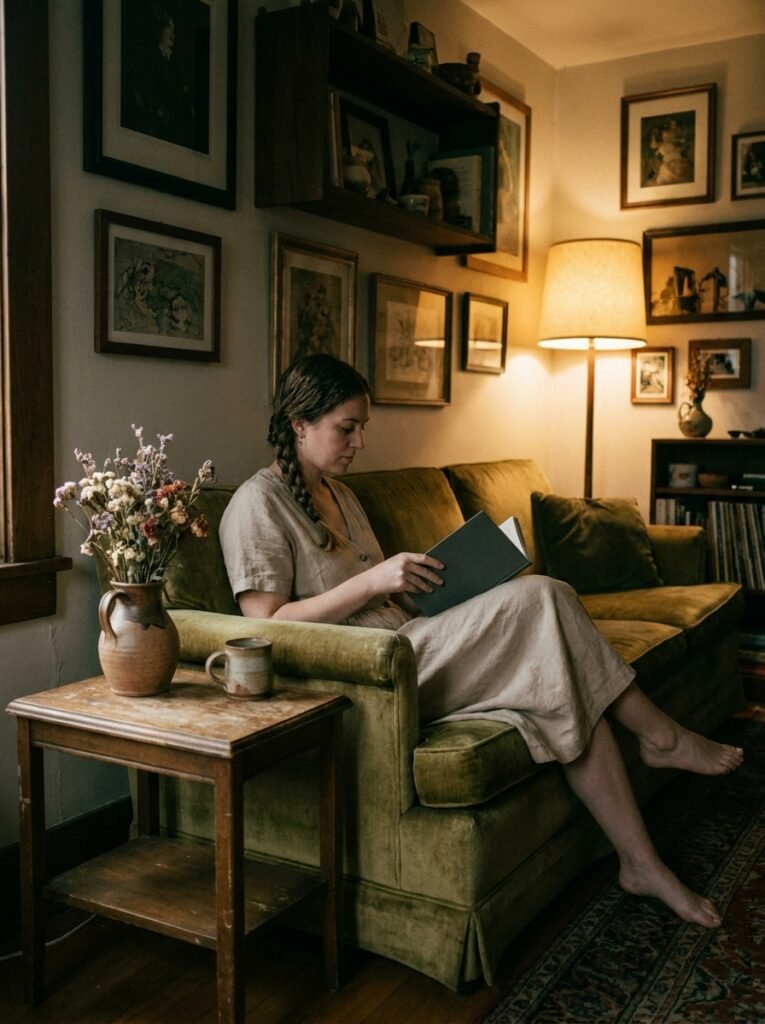
—
1. Why “Modern Vintage” Isn’t a Trend — It’s a Reaction
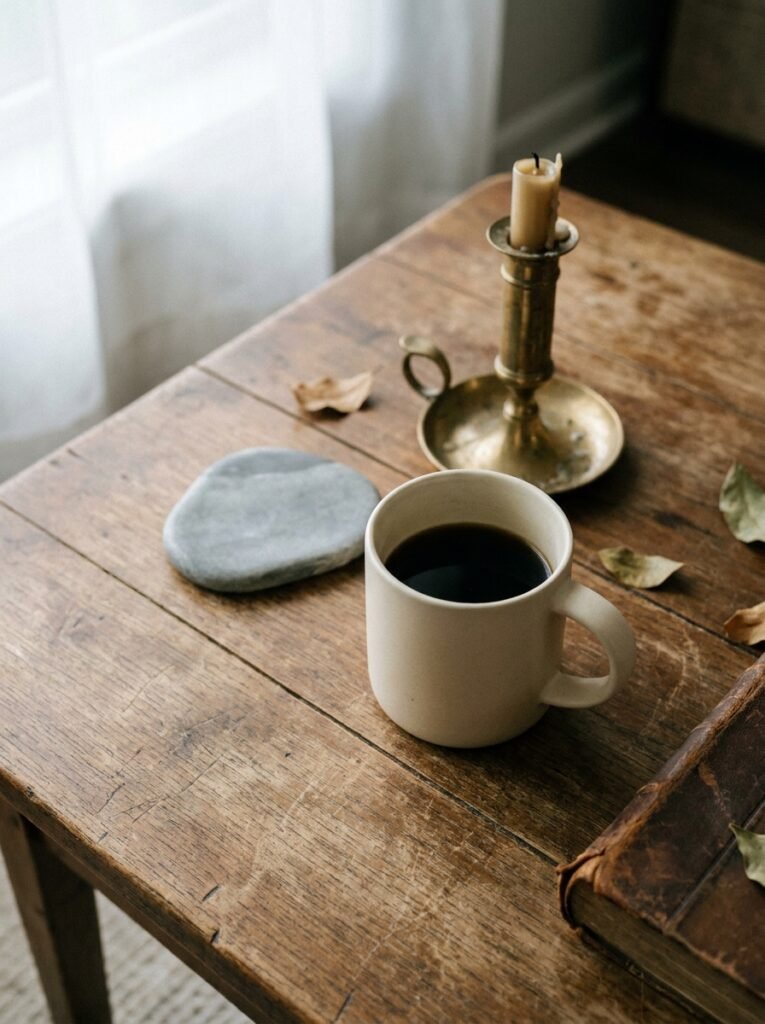
There’s a reason this aesthetic keeps showing up everywhere. We are collectively exhausted by interiors that look like they were assembled in an afternoon. The all-white room with floating shelves and a single trailing pothos? Beautiful for five minutes. Cold forever.
Modern vintage is the antidote to that. It’s the deliberate layering of things that weren’t designed to go together — a sleek low-profile sofa next to a mahogany side table with turned legs, a clean-lined floor lamp standing beside a stack of genuinely old books with cracked spines. The contrast is the point. One layer says now, the other says before, and together they say something that feels impossible to fake: someone with taste lives here.
This isn’t about buying a complete look from a single retailer. It never was. Modern vintage is fundamentally about tension — between smooth and ornate, between new and worn, between what you bought last year and what you found at a car boot sale in 2019 and have never been able to let go of. Get comfortable with that tension. It’s where the beauty lives.
“Modern vintage isn’t a look you buy. It’s a conversation between old and new that takes time to get right.”
2. The Sofa Decision Is Everything — And Most People Get It Wrong
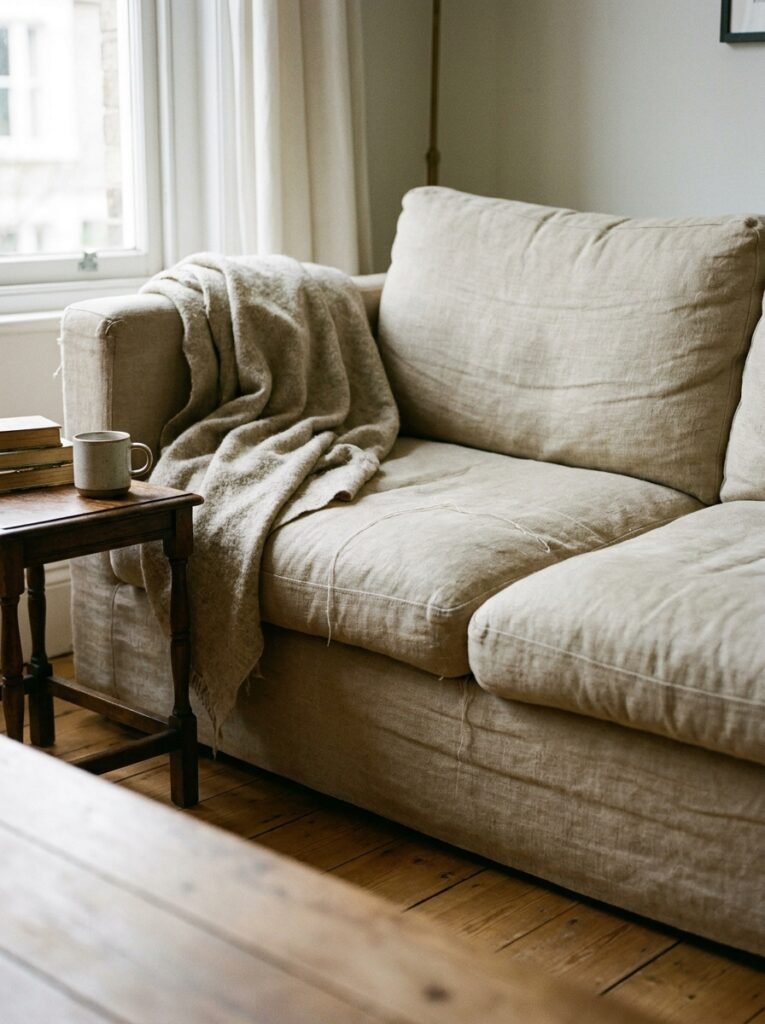
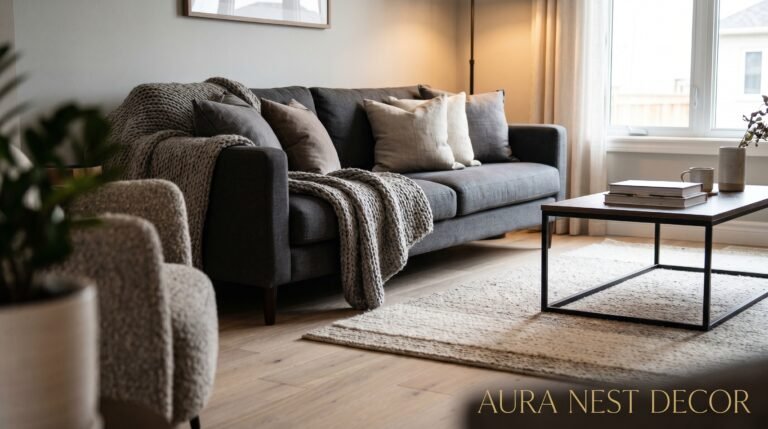
Here’s the thing about modern vintage living rooms that nobody tells you upfront: the sofa is your anchor, and it has to work in both directions. It needs to feel current enough that the room doesn’t tip into “grandparent’s front room” territory, but it can’t be so sleek and contemporary that nothing old feels at home next to it.
The shapes that work best are mid-century silhouettes — low arms, tapered wooden legs, clean lines. A deep sage velvet sofa with wooden legs will get along with almost anything: a vintage Persian rug, a contemporary pendant light, an Art Deco mirror. The velvet texture nods to the past, the clean shape keeps it modern, and that sage color is neutral enough to let everything else breathe.
What doesn’t work is an overstuffed sectional in beige microfiber. I’ve seen people try to make this work in a modern vintage room and it always feels like the sofa is having a different conversation from the rest of the space. The proportions fight. The texture fights. The color fights.
In terms of US and UK availability, look at what Joybird does on the American side and Heal’s on the British side — both understand this sofa shape intuitively. Or find one secondhand. A 1960s Parker Knoll in need of reupholstering will cost you less than a new one, and it will be better.
3. The Color That Keeps Showing Up in Every Beautiful Modern Vintage Room Right Now
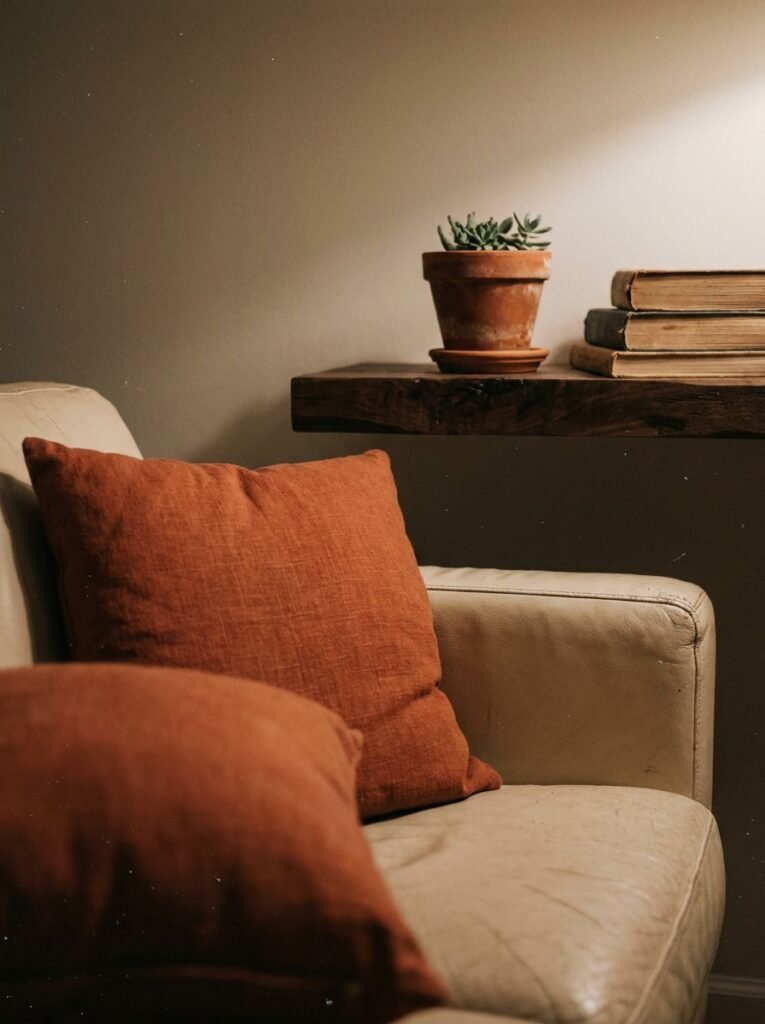
Aged terracotta. Not the bright orange-terracotta of the early 2010s — the dusky, sun-faded version that looks like it’s been sitting in a Provençal farmhouse for forty years. It’s warm without being aggressive. It works with the creams and off-whites of modern interiors, and it sings next to dark wood.
Paint it on a single wall. Use it in a linen cushion cover. Find it in a ceramic vase with a slightly uneven glaze. It doesn’t matter where it enters the room — once it’s there, everything around it settles. Cool-toned modern furniture stops looking clinical. Vintage pieces stop looking dusty. The whole room finds its temperature.
Alongside terracotta, the colors doing the most work in modern vintage rooms right now are: deep tobacco brown, chalky sage, very dark navy (almost black in low light), and a warm ivory that’s almost candlelight. These aren’t trendy colors. They’re the colors of old libraries and worn leather and Sunday afternoons, and they hold up.
4. The One Rug Rule That Changes How the Whole Room Reads
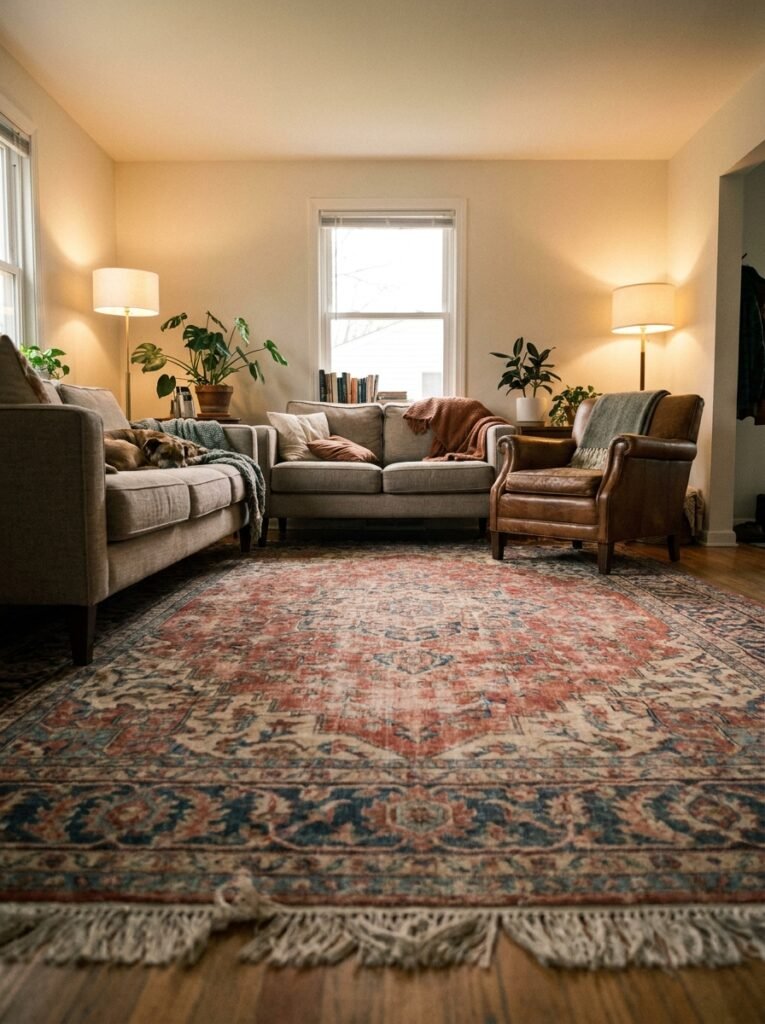
Go older than you think you need to. That’s it.
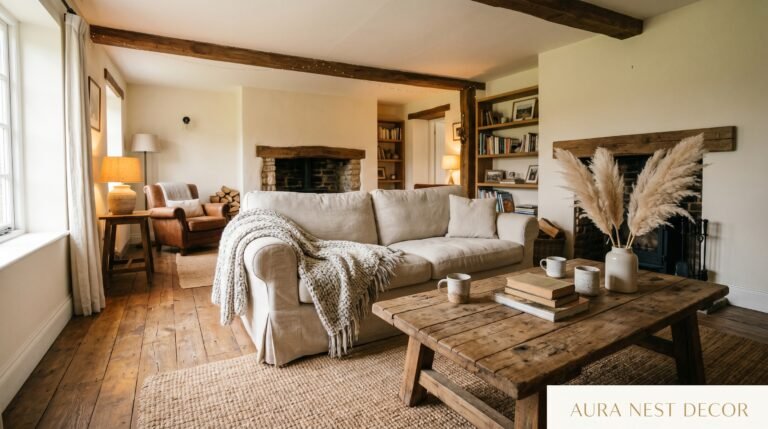
A brand-new rug in a vintage-inspired pattern is fine. It’s perfectly nice. But an actual vintage rug — faded, slightly irregular, with the kind of soft pile that only comes from age — does something a reproduction simply cannot. It grounds the entire room in a way that reads as genuine rather than styled.
Persian rugs are the classic choice, and for good reason. The color palettes in antique Persian and Turkish rugs are extraordinary — they were made with natural dyes that age into these incredible dusty, muted tones you genuinely cannot recreate synthetically. A faded Tabriz or Oushak rug under a modern sofa doesn’t look mismatched. It looks intentional.
You can find them at auction, at estate sales, on eBay, at independent vintage shops — often for less than a new rug of equivalent quality. And here’s the thing about sizing: go bigger than feels comfortable. A rug that all four legs of your sofa rest on, with 18 inches to spare on every side, makes a room feel considered and complete. A rug that floats in the middle of the space like an island makes even the best furniture look like it’s waiting for something.
“A faded vintage rug does more heavy lifting than any piece of art you could hang on the wall.”
5. Mixing Wood Tones Without It Looking Like a Mistake
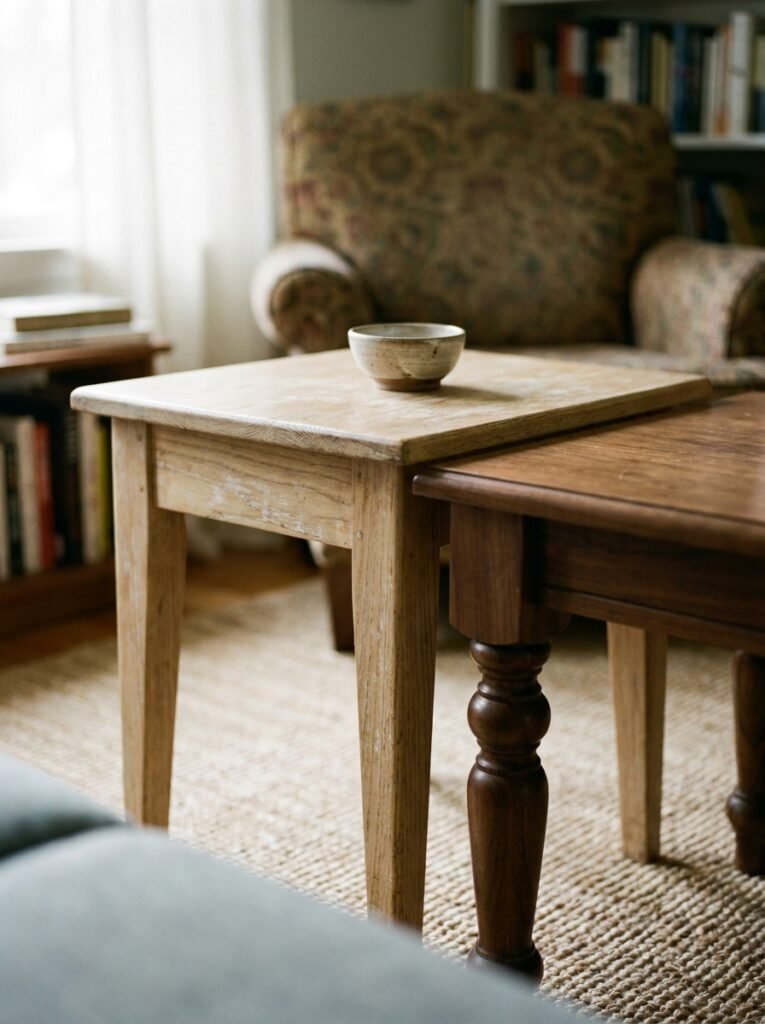
This is the thing that intimidates people most, and I understand why. You’ve been told your whole life to match your wood tones. The side table should match the coffee table should match the bookcase. And if you grew up with that as gospel, walking into a room with four different shades of wood can feel like visual chaos.
It isn’t. Here’s the simple key: anchor with one dominant wood tone, then let the others vary freely around it.
If your dominant wood is a dark walnut — maybe a mid-century sideboard or an inherited dining table you’ve moved into the living room — then a lighter oak side table and a painted pine bookcase both work beside it. What would be jarring is two woods of very similar tone that aren’t quite matching. Two slightly-off-browns fight each other. A very dark brown and a very light blonde oak are clearly different, so they coexist comfortably.
In modern vintage rooms, painted furniture solves a lot of this. A bookcase in Farrow & Ball’s “Railings” (that almost-black navy) becomes neutral. It stops competing with other wood tones entirely and just sits there holding your books like it owns the place.
6. The Shelf Styling Approach That Looks Curated, Not Cluttered
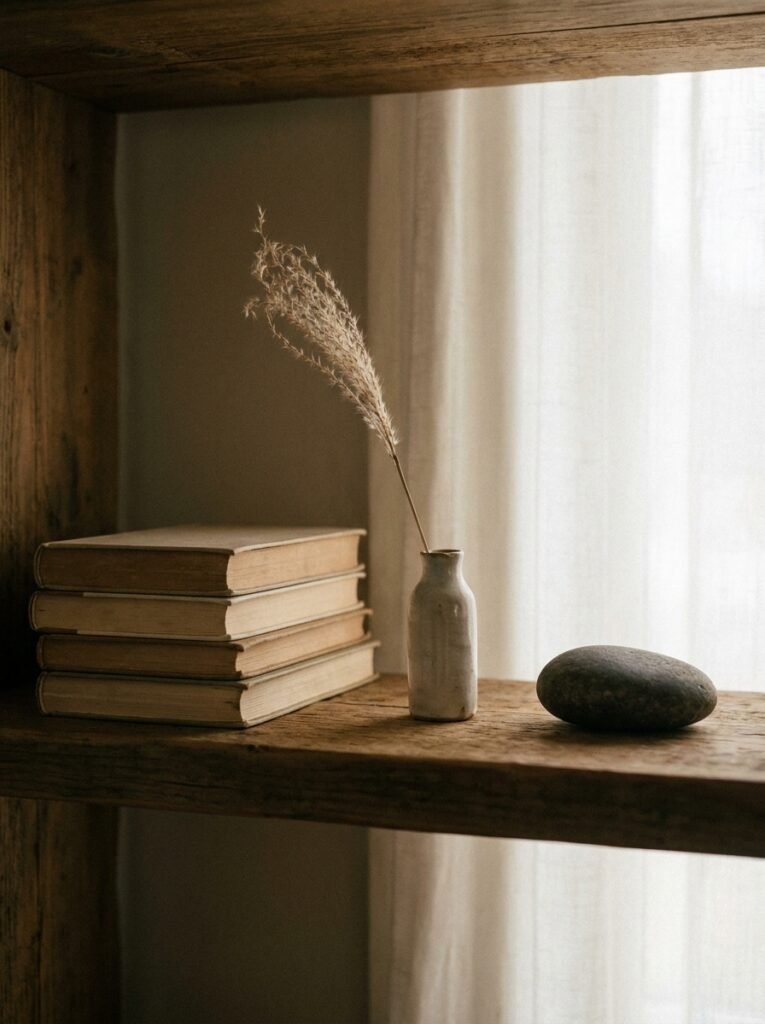
Open shelving in a living room is either the best thing you’ve ever done or the thing that haunts you. The difference is restraint.
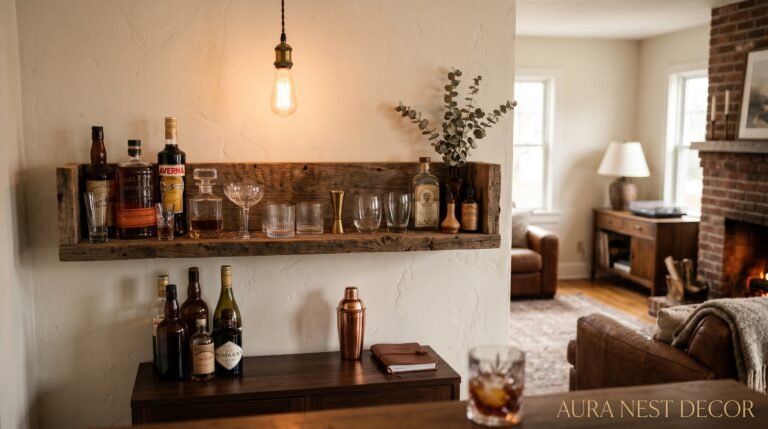
The modern vintage shelf doesn’t hold everything. It holds less than you think, and what it holds is there for a reason. Books with their spines facing out (yes, some of them can face backward — a small stack of backwards white pages is actually very beautiful), a piece of ceramic pottery you bought at a craft market three years ago, one framed photograph, a plant, and one genuinely interesting object that makes people ask questions. That’s the sweet spot.
The “genuinely interesting object” is important. In modern vintage styling, this might be an antique brass compass, a small stack of vintage Penguin paperbacks, a hand-painted tile propped against the wall, or a wooden carved figure from a junk shop. It doesn’t need to be expensive. It needs to have specificity — something that couldn’t have come from a high-street shop five minutes ago.
Negative space is part of the design. Empty shelf space isn’t a failure to fill it. It’s what makes the objects you’ve chosen breathe.
7. The Lighting Setup No One Talks About Enough
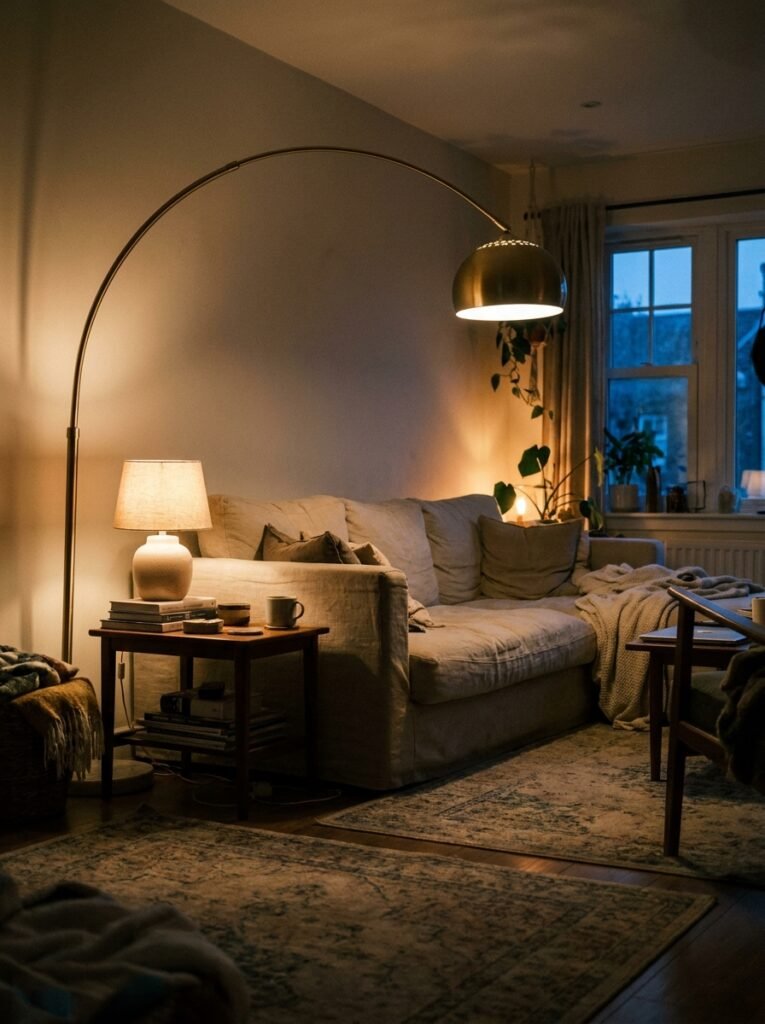
The single overhead light is the enemy of every beautiful living room. I cannot stress this enough. That flat, uniform ceiling-level glow flattens every surface, kills every shadow, and makes your carefully layered modern vintage room look like an IKEA showroom at full brightness.
What you want instead is multiple light sources at different heights: a floor lamp in one corner, a table lamp on the sideboard, candles if you’re willing (and you should be willing), and maybe under-shelf lighting if you’ve got a bookcase. The goal is pools of light rather than a wash of it.
For a modern vintage room specifically, the lamp shapes that work best tend to be either very clean and contemporary — a minimal arc floor lamp, say — or genuinely old. A 1950s ceramic table lamp with a new shade. A brass swing-arm sconce salvaged from somewhere interesting. A converted oil lamp with an Edison-style bulb.
The color temperature of your bulbs matters enormously. 2700K is what you want — it’s the warm amber tone that makes a room feel inhabited and alive. Anything above 3000K starts to feel clinical. Anything with a blue-white cast will make your vintage pieces look sad.
“Light at seven in the evening should make your room look like something you’d never want to leave. Warm, low, layered — that’s the formula.”
8. Vintage Art and How to Hang It Like You Meant It
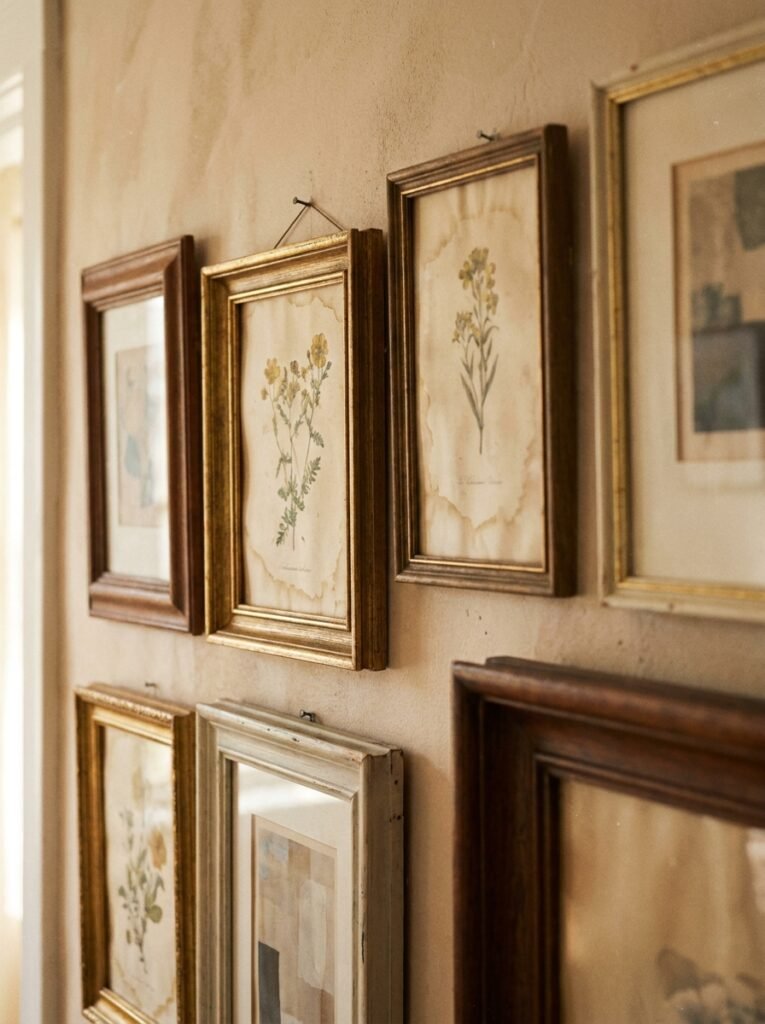
Prints and paintings are where a lot of modern vintage rooms either find their voice or lose it entirely. The mistake most people make is hanging everything at the same height, in similar frames, evenly spaced. It looks neat. It looks showroom. It looks like nobody actually chose those things — they were installed.
Real rooms accumulate art. Some pieces are large, some are small. Some frames are ornate gilt, some are plain dark wood, some are frameless. A collection of things you actually love, hung at the heights that feel natural for each piece rather than at a uniform eye level, creates a wall that tells a story.
For modern vintage rooms specifically: botanical prints, architectural drawings, abstract art from living artists, old maps, vintage travel posters, portraits of strangers from junk shops, and genuinely interesting black-and-white photography all coexist beautifully. What makes them cohesive isn’t matching frames or similar subjects — it’s that they’ve all been chosen with intention.
Gallery walls work best when they have a single connecting thread. It might be color — everything with a sepia tone, or all works that include blue. It might be subject matter, or frame material, or size. One thread. That’s enough.
9. The Furniture Scale Mistake That Makes Rooms Feel Unfinished
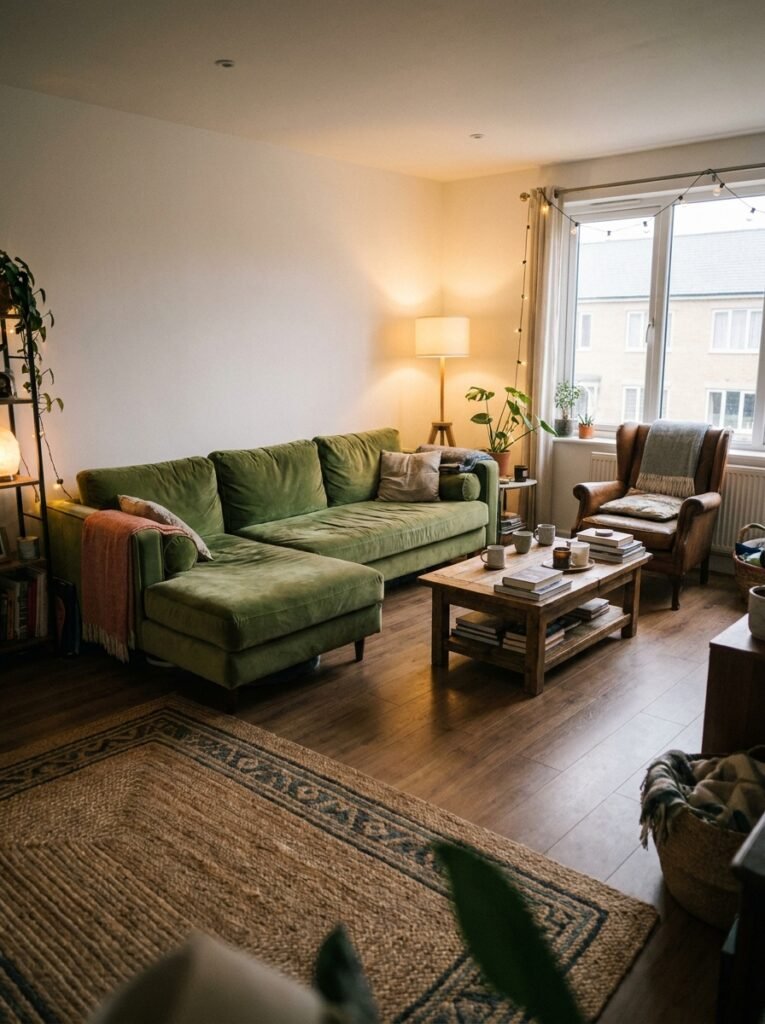
Every single piece of furniture in a room casts a visual weight. And in modern vintage rooms, where you’re often mixing pieces from different eras with different proportions, getting scale right is the difference between a room that feels complete and one that feels like it’s still in progress.
The most common error: too many small things. A room full of delicate side tables, slim lamps, and small decorative objects reads as timid. There’s no furniture with presence. Nothing holds the room.
What anchors a modern vintage living room is at least one large, substantial piece. A proper Victorian chest of drawers used as a media unit. An oversized antique mirror leaned against the wall. A bookcase that runs floor to ceiling. These anchor pieces give the room its bones, and everything lighter and more delicate works in contrast to them.
In a smaller space — a London flat, say, or a smaller American ranch — a large mirror does double duty. It holds the room visually and it makes the space feel larger. Lean it rather than hang it. Leaned mirrors feel lived-in. Hung mirrors feel like a hotel.
10. The Throw Blanket Theory (Bear With Me)
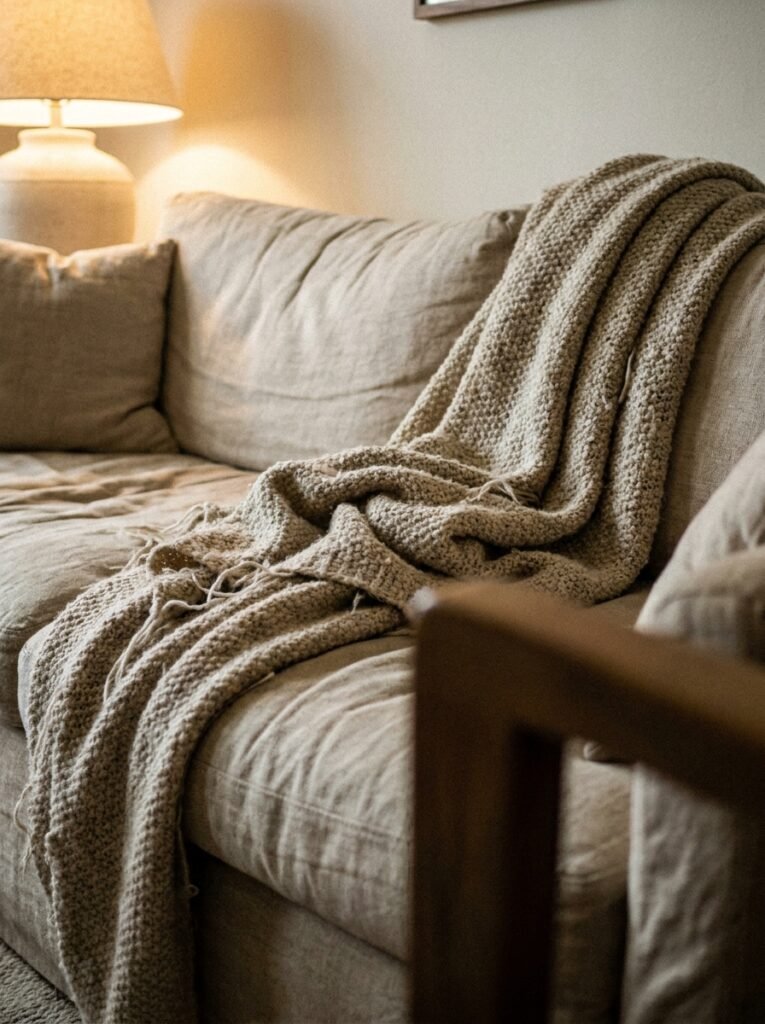
This sounds minor. It isn’t.
A throw blanket draped over the arm of a sofa is, in the hands of someone who gets it, the final touch that makes a room look inhabited rather than staged. But the key word is draped. Not folded. Not stacked. Draped — as though someone just set it aside while they got up to make tea.
In a modern vintage room, the throws that work best have texture and history. Chunky woven wool. A faded linen throw with visible wear at the edges. A patchwork quilt that was clearly made rather than bought. Something that you could imagine having a provenance.
The color matters too. A throw is a chance to bring in an accent — that terracotta we talked about, a deep burgundy, a dusty mustard. It softens the lines of the sofa beneath it and adds another layer to the room’s story.
One throw. Positioned naturally. The difference between a room that looks like a magazine and a room that looks like a home.
11. Plants That Actually Belong in This Kind of Room
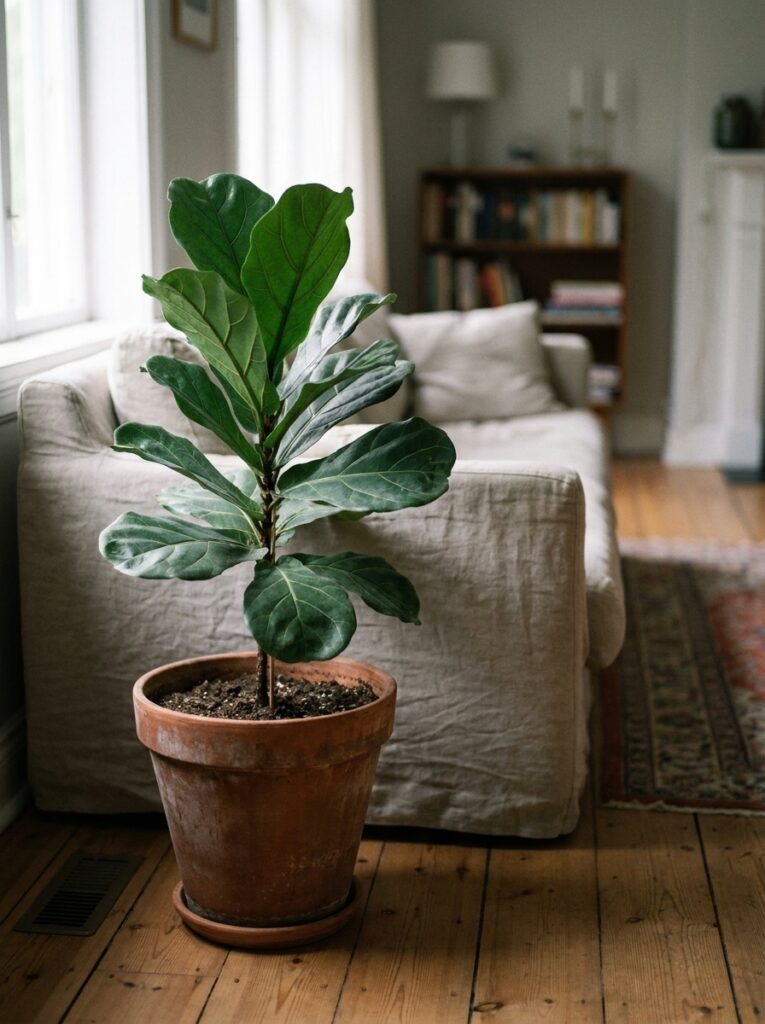
Not all plants suit every interior aesthetic, and in a modern vintage room there’s a real distinction between plants that feel right and plants that feel like they wandered in from a different design scheme.
The plants that work beautifully in modern vintage living rooms tend to be the ones with a slightly architectural or old-world quality: dark-leaved plants like a burgundy rubber plant or a dramatic monstera with aged, split leaves. Small terracotta pots of herbs sitting together on a windowsill. A large fig tree in an aged zinc planter. Ferns in ceramic pots with a matte, slightly rough glaze.
What tends to look out of place is anything too tropical or too minimalist — a perfectly potted snake plant in a geometric white pot feels more contemporary than vintage. It’s not wrong, but it pulls the room in a different direction.
For the British climate, a combination of indoor and outdoor plants in classic terracotta, aged ceramic, or zinc containers keeps the whole thing feeling grounded and natural rather than styled.
12. The Room Doesn’t Need to Be Finished
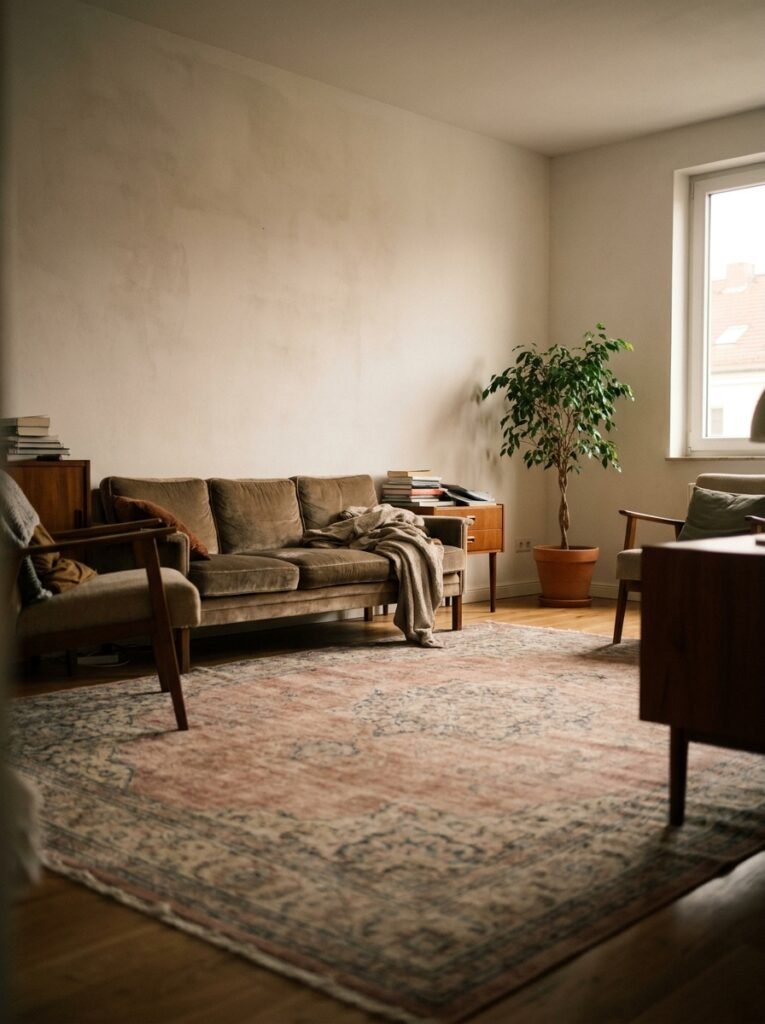
This is the thing that separates the rooms you look at and feel envious of from the ones that just feel right.
The most beautiful modern vintage living rooms are always in progress. There’s always something that still needs to find its permanent home. A chair that isn’t quite right but holds the space while you look for the right one. An empty corner waiting for a lamp. A wall that hasn’t been addressed yet.
That incompleteness is the secret ingredient. It signals that this is a room made by a person, not a project completed in a weekend. It signals that things were chosen over time, that the space grew. And that’s exactly the story that modern vintage is trying to tell.
Don’t rush the last 20 percent. Let the room breathe. Let the right pieces come to you.
—
🌿 Quick Tips
Your vintage pieces don’t all need to match — they need to have the same quality of attention. A junk shop find polished and placed thoughtfully will always look better than an expensive piece dropped in without thought.
When in doubt about a color palette, start with your rug. Let the rug set the tones and build outward from there. The rug is always smarter than you think.
Swap out lamp shades before you buy new lamps. A vintage ceramic lamp base with an updated shade looks instantly modern. It costs almost nothing.
Don’t buy brand-new “distressed” furniture if you can avoid it. The real thing is almost always less expensive than the reproduction and infinitely more interesting.
Limit decorative objects on any surface to an odd number — three is the sweet spot. Two looks timid, four looks crowded, three looks chosen.
—
❓ FAQ
Q: How do I make a modern vintage room look intentional and not just cluttered? A: The answer is editing. More ruthlessly than feels comfortable. Remove half of what’s on your shelves and surfaces, live with that for a week, and then add back only the things you genuinely miss. Clutter happens when things accumulate without curation. Intentional layering happens when everything is chosen.
Q: Can I do modern vintage on a budget in a rental in the US or UK? A: Absolutely — this aesthetic is actually more achievable on a budget than most. Charity shops, Facebook Marketplace, eBay, estate sales, and car boot sales are where the best finds are. Start with a good vintage rug (even a small one), one interesting lamp, and a few pieces of ceramics. Build slowly. The aesthetic rewards patience.
Q: What’s the difference between modern vintage and just “eclectic”? A: Modern vintage has a specific tension at its core — it’s always in conversation between a contemporary clean line and something older and more ornate. Eclectic can mean almost anything. Modern vintage has direction: forward-looking foundation, backward-looking detail. When you get that balance right, the room has coherence even if no two pieces match.
—
💭 Final Thought
The rooms that stay with you — the ones you think about later, the ones that show up in your Pinterest saves at midnight — are never the perfectly coordinated ones. They’re the rooms that feel like they contain a life. A little unfinished, a little surprising, entirely personal.
That’s what you’re building when you get modern vintage right. Not a look, but a feeling.
What’s the one piece in your home right now that already tells a story — and are you giving it room to be heard?