The Living Room Redesign That Made Me Stop Apologizing for Wanting a Beautiful Home
There’s a particular kind of hunger that hits when you walk into a room that’s just right — when the light is doing something magical and the furniture feels like it was always meant to be there. You probably know the feeling. You’ve pinned it a hundred times. Now let’s actually build it.
—
1. The First Thing Every Luxury Living Room Gets Right (That Has Nothing to Do With Money)
Proportion. It’s always proportion.
Before the velvet sofa, before the statement chandelier, before you spend a single pound or dollar on anything — the rooms that read as genuinely luxurious get the scale right. And most of us are getting it catastrophically wrong.
The number one mistake I see in living rooms that feel somehow off, even in beautiful homes, is furniture that’s too small for the space. A sofa that floats lost in the middle of a room. A rug that barely creeps out from under the coffee table. Side tables so slight they look like they’re apologizing for being there.
Luxury living rooms feel anchored. They feel settled. The furniture claims the space rather than cowering in it.
Here’s the test I always use: stand at your doorway and squint at your room. Does the furniture fill the floor plan with intention? Or does it look like everything slid to the center and stopped? If it’s the latter, you don’t necessarily need new furniture — you might just need to push that sofa closer to the wall, layer in a larger rug (a 9×12 is almost always the right answer in a standard living room), and stop treating negative space like something to preserve at all costs.
The most expensive-looking rooms I’ve ever walked into weren’t the ones with the biggest budgets. They were the ones where every piece of furniture seemed to know exactly where it belonged.
“A room that knows its own proportions will always look more expensive than a room full of expensive things.”
—
2. The Color That Keeps Showing Up in Every Beautiful Living Room Right Now
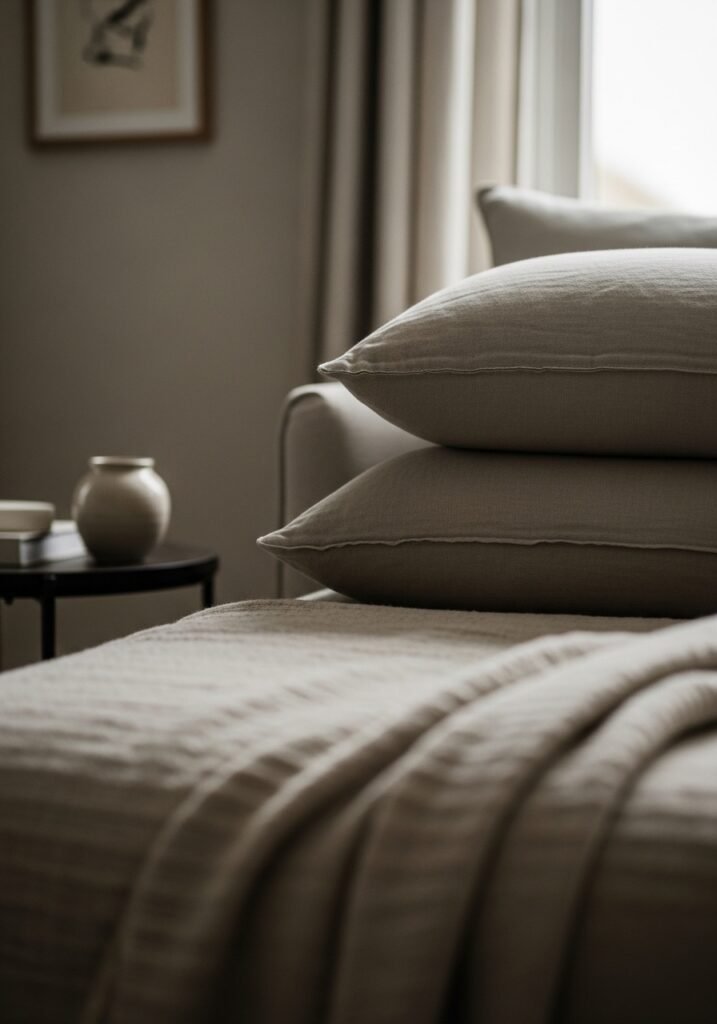
Let’s talk about the shade that’s quietly replacing greige in every aspirational living room from Brooklyn to Bristol.
It’s warm white. Not stark, not ivory, not beige — warm white. Think the color of heavy cream. The color of a good plaster wall in a Georgian townhouse. It’s doing something interesting right now because it works as a true neutral that still has personality. It doesn’t fight with anything. It lets your art breathe, your furniture read clearly, your textiles do the heavy lifting.
But here’s the thing that makes it feel luxurious rather than just… beige with pretensions. It’s all in the finish. Warm white in a flat matte finish on walls (Benjamin Moore’s “White Dove” or Farrow & Ball’s “All White” both do this beautifully) absorbs light in a way that makes a room feel wrapped in cashmere. Not reflective. Not clinical. Just deeply, quietly calm.
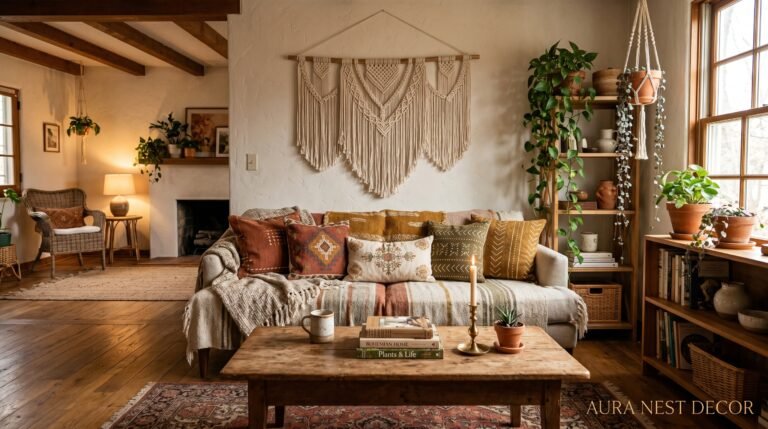
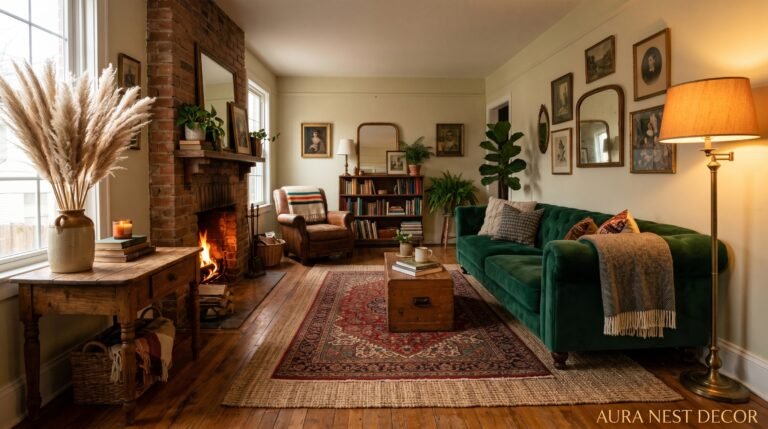
Pair it with brass hardware, natural linen, and one deeply saturated piece — a forest-green armchair, a terracotta vase of real scale, a painting with genuine darkness in it — and you have something that looks like it took years to curate. Even if you pulled it together over one long weekend.
The rooms that feel most luxurious right now aren’t the ones chasing trends. They’re the ones that found their color story and committed.
—
3. Why the Sofa You Think You Can’t Afford Is Probably Within Reach
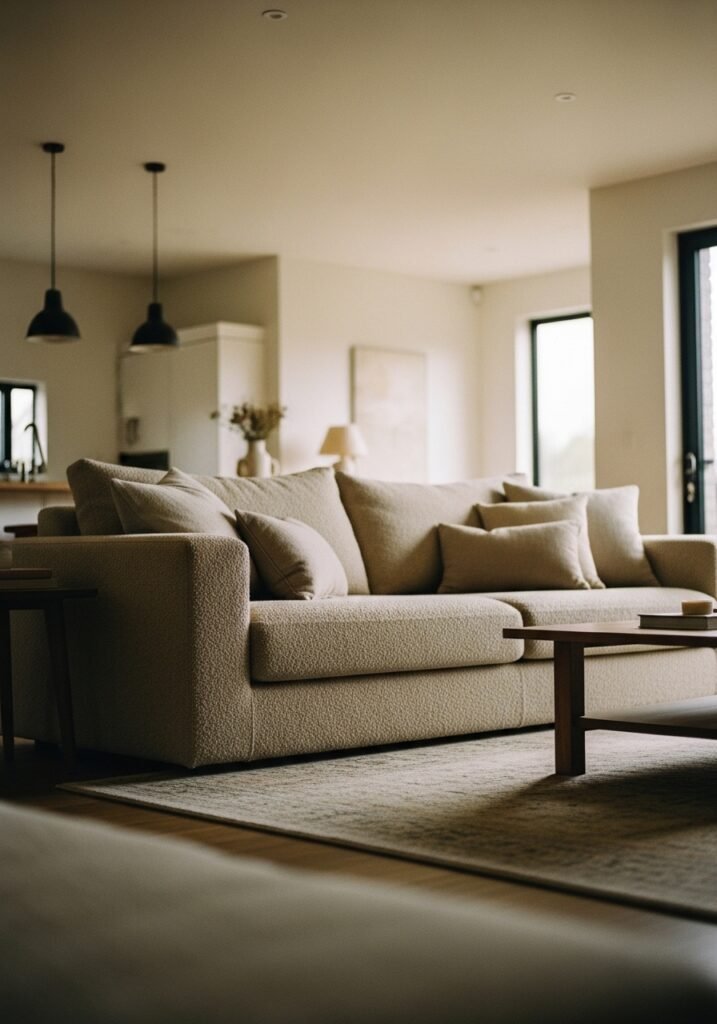
The sofa is the room. Full stop.
I know that sounds dramatic, but in a living room, the sofa sets the tone for everything else. The palette, the formality, the mood, the implicit promise of what kind of life happens here. A sad, sagging, too-small sofa in a shade you settled for will undermine every other good decision you make. I’ve seen it happen. I’ve lived it.
The good news: investing in one truly good sofa — and working around it with more budget-conscious choices everywhere else — is genuinely the formula that makes a room look expensive. You don’t need matching sets. You don’t need a sofa and loveseat from the same collection. You need one great sofa.
In the US, look seriously at Maiden Home, Article, or Floyd if you want quality without the designer markup. In the UK, Swoon, Made, and the Sofa Workshop all offer genuinely solid construction at prices that won’t send you into financial shock. For either market, a deep-seated, high-arm sofa in a neutral — oatmeal boucle, warm gray linen, or a classic camel — will read luxurious in essentially any living room.
The shape matters more than you think. Curved and round sofas are having their moment for good reason: they soften a room, they invite you in, they look interesting from every angle. But a clean-lined traditional sofa with good legs — exposed wood or tapered metal — will never go out of style either.
Buy the sofa first. Build the room around it. That’s the move.
—
4. Lighting Is the Plot Twist Nobody Talks About
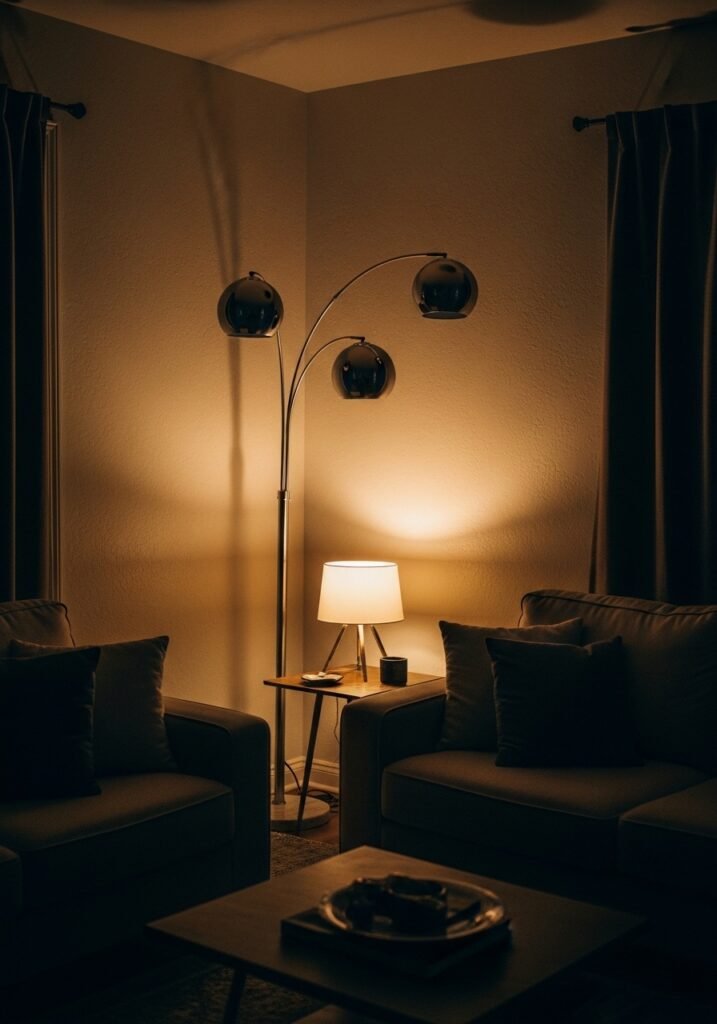
You could swap your paint, your cushions, your throw blankets, and rearrange your furniture — and your room might look marginally different. Or you could change the lighting. And the room would be completely unrecognizable.
This is not an exaggeration. Lighting is the single highest-impact, most underestimated element in interior design. And most living rooms are doing it completely wrong.
The main offender: the overhead light. That central ceiling light that illuminates everything evenly, casts no shadows, and makes your living room look like a waiting room. Even with a beautiful fixture, overhead-only lighting flattens a room. It removes the very thing that makes luxury spaces feel the way they do: depth.
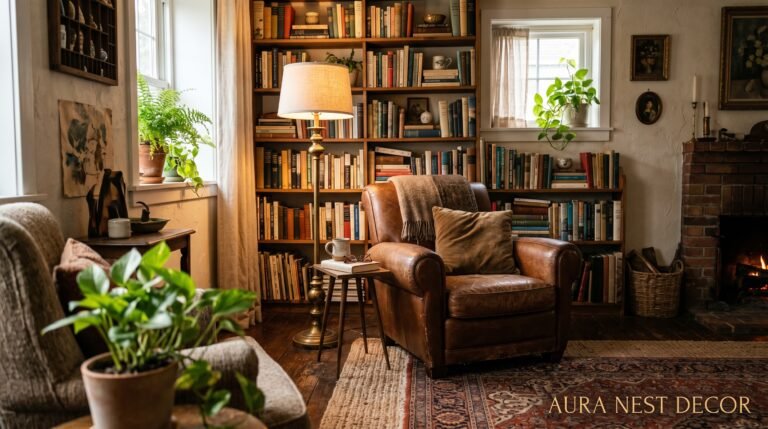
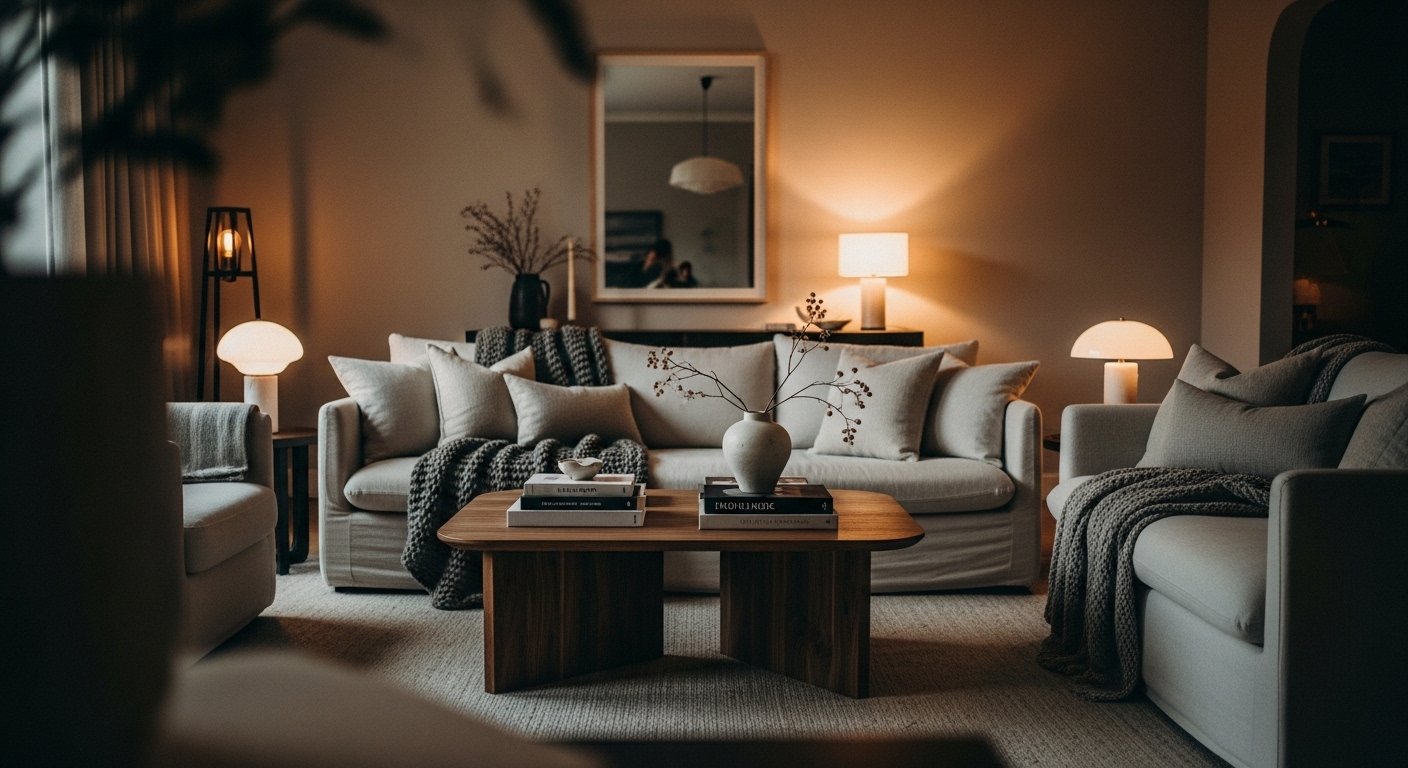
Luxury living rooms layer light. A floor lamp in one corner — ideally with a warm-toned bulb, around 2700K, no higher — throws a soft amber glow across that side of the room. A table lamp on each end of the sofa (or at minimum, one side table lamp and one floor lamp) creates pools of light that are inviting rather than interrogating. Candles on the coffee table during evenings, yes, always.
“Turn off your overhead light for one week and see if you ever turn it back on.”
Add a dimmer switch to anything you can. It costs very little and changes everything. The difference between a room at full brightness and that same room at 60% with warm lamps scattered throughout is the difference between a hotel lobby and a home.
—
5. The Rug Trick That Makes Small and Large Rooms Both Look Right
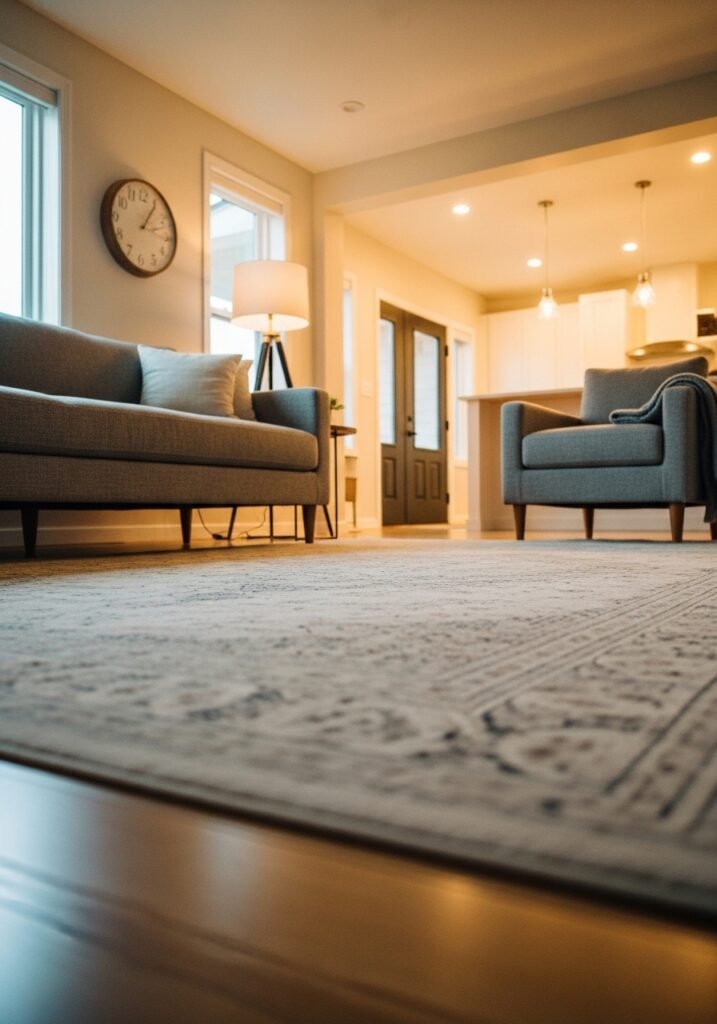
There is one rule about rugs in a luxury living room: go bigger than feels comfortable.
Seriously. Whatever rug size you think you need, go up one. If you’re considering an 8×10, get the 9×12. If you’re considering a 5×8, you need the 8×10. A rug that fits the furniture grouping — not just the coffee table, but the full conversation area including the sofa and chairs — is what grounds a room and makes it feel intentional.
In practical terms for a standard living room: all front legs of the sofa and chairs should sit on the rug. Ideally all legs. That’s the benchmark.
The texture of the rug matters enormously in a luxury context. High-pile rugs read as cozy and casual — they work beautifully in more relaxed, layered spaces. A low-pile or flatweave rug in a wool or natural fiber reads more refined and tends to photograph better, which matters if you’re going for that particular editorial aesthetic. Jute and sisal work in the right context but can feel rough underfoot, which is worth considering if this is a room where you actually live barefoot.
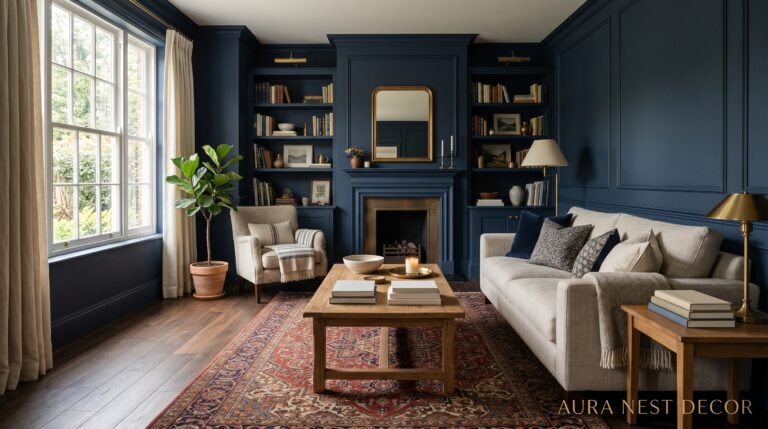
In terms of pattern: a subtle, tonal pattern — think a soft Persian or abstract in shades that echo your room’s palette — adds depth without chaos. Solid rugs read as very clean and modern. Both are right. Neither is wrong. The mistake is choosing a rug that fights with everything else in the room for attention.
—
6. The Furniture Mix That Separates “Styled” From “Bought a Set”
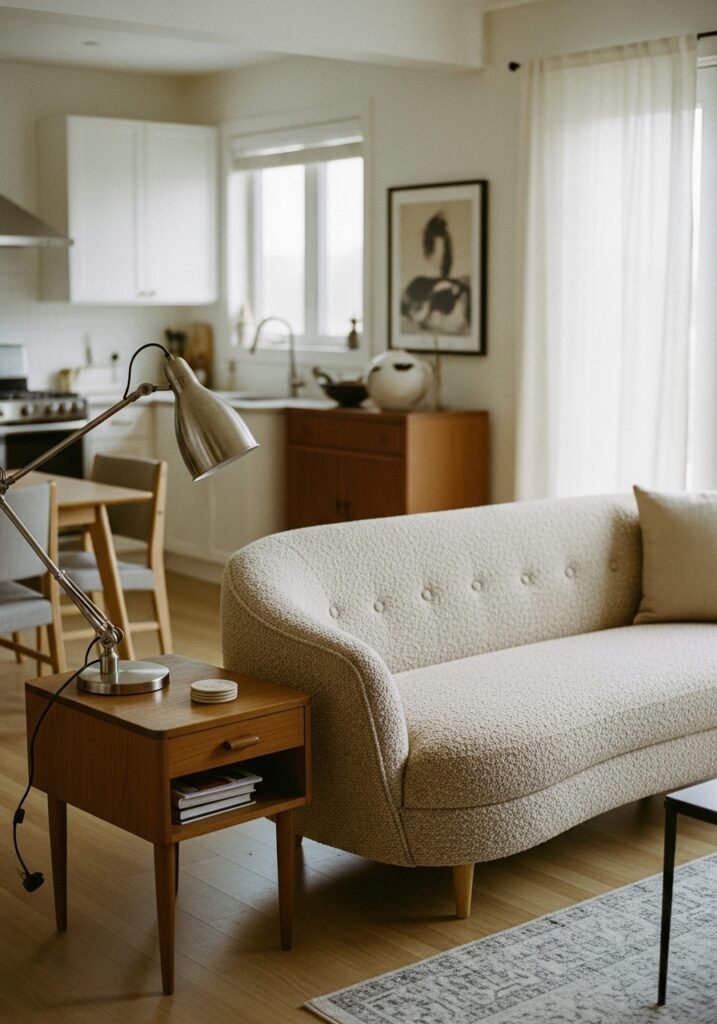
Nothing dates a room faster than matching furniture sets. The full three-piece living room suite — sofa, loveseat, and armchair all in the same fabric, from the same collection — communicates “showroom” rather than “home.” And there is a very large gap between those two things.
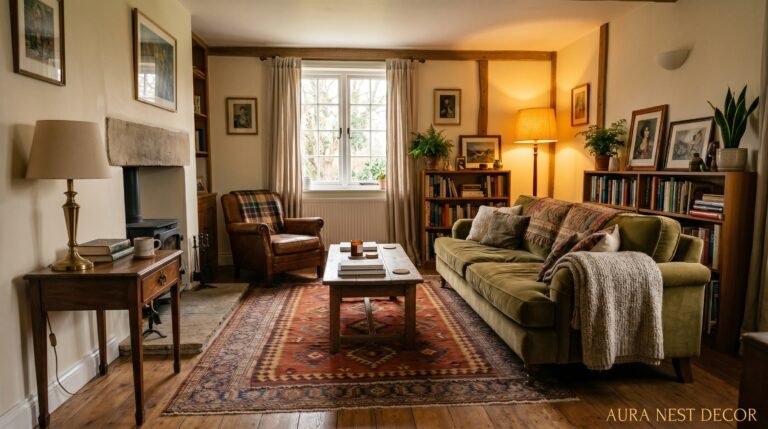
Luxury living rooms mix. A velvet sofa with a leather armchair. A marble coffee table with a rattan side table. A vintage wooden piece beside something very contemporary. The mix is the point. It communicates that this room was built over time, with thought, by someone with a point of view.
The trick is finding the common thread that holds the mix together. Usually it’s either color (everything works within the same palette, even if the styles vary wildly) or material (a consistent use of, say, brass hardware across different furniture pieces creates cohesion). Sometimes it’s just a feeling — everything in the room has a similar emotional register, even if the styles are different.
If mixing feels daunting, start small. Replace your matching armchair with something different — a different color, a different shape, even a different era. See how the room breathes. I promise it will feel more interesting immediately.
—
7. What Every Great Living Room Has in the Corner (and Most Rooms Are Missing)
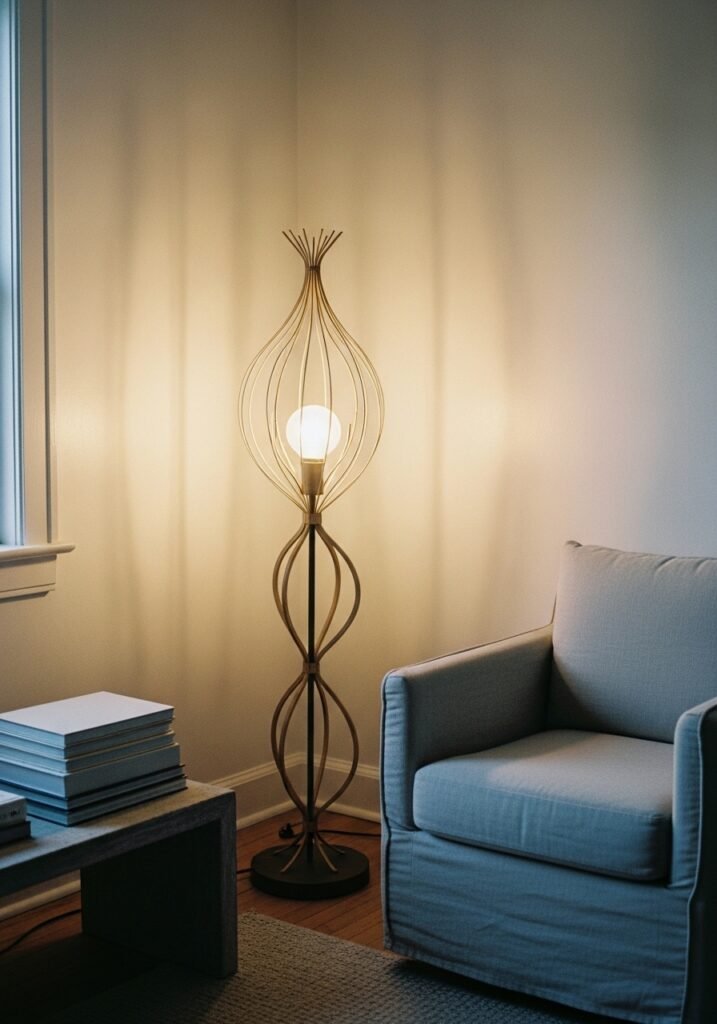
A corner with intention.
This might sound minor. It is not. The forgotten corners of a living room are where the most interesting styling decisions happen, and they’re the spots that photograph beautifully, that make the room feel complete rather than put-together-and-then-abandoned.
A great living room corner contains: a floor lamp (always), a chair or small accent piece (often), and something vertical — a plant, a tall sculptural object, a stack of beautiful books ending in something decorative. The verticality draws the eye upward and makes the ceiling feel higher. The lamp creates a specific pool of light that makes that corner feel alive rather than decorative.
“The corner is where a room whispers rather than shouts — and the whisper is always more interesting.”
In a larger room, a pair of chairs angled toward each other in a corner creates a secondary conversation area that feels genuinely luxurious — the sense that there’s more room to gather, more invitation to stay.
In a smaller room, one beautifully styled corner does more for the feeling of the space than almost any other single decision. A sculptural floor lamp, a good chair, a plant that’s allowed to be dramatic. That’s it. That’s the corner.
—
8. The Art Rule That Designers Actually Use (and Never Quite Say Out Loud)
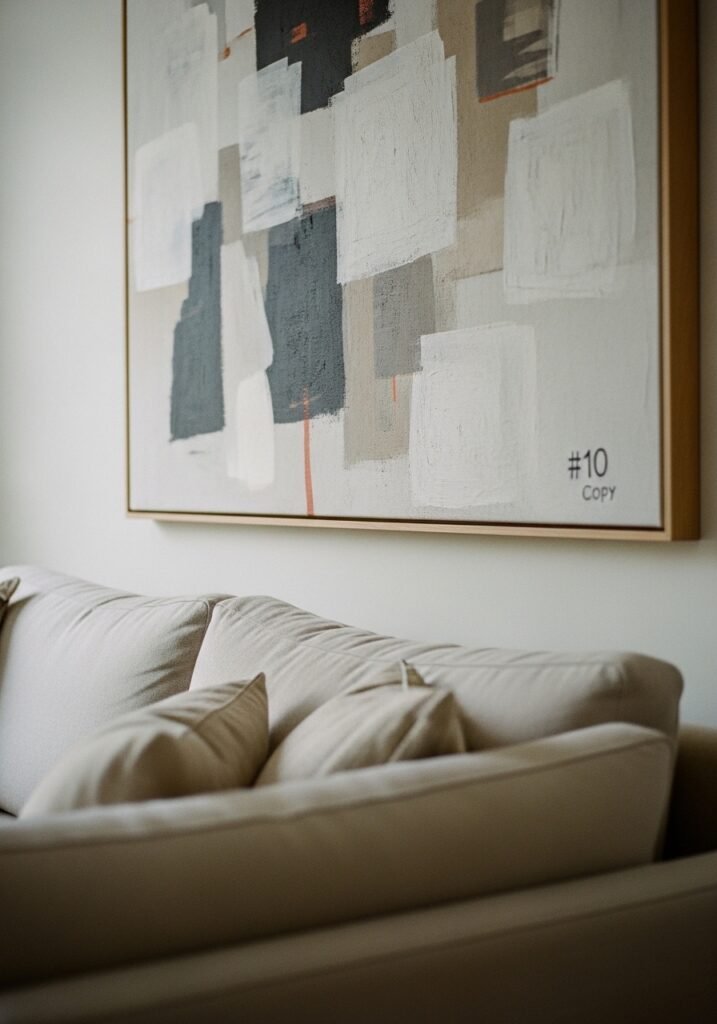
Buy art that’s too big for the space you think you have.
There. I said it.
Oversized art — a painting or print that takes up a significant portion of a wall — reads as confident. As collected. As the mark of someone who knows what they like and isn’t apologizing for it. Small art hung too high on a large wall is the fastest way to make a room feel uncertain of itself.
The rule designers quietly use: art should occupy roughly 60-75% of the wall width above the piece of furniture it’s hanging over. So a sofa that’s 84 inches wide ideally wants art that spans roughly 50-60 inches. Not a cluster of small frames that get lost. One strong piece, or a diptych, or a deliberate triptych with real breathing room between the panels.
Hang it lower than you think. The center of the art should sit at roughly eye level — about 57-60 inches from the floor — not up near the ceiling where it has no relationship to the furniture below it.
And please: don’t buy art only because it matches the cushions. Buy art that you’d want to look at every single day. The room will arrange itself around a piece you love. It always does.
—
9. The Case for Having Exactly One Dramatic Thing
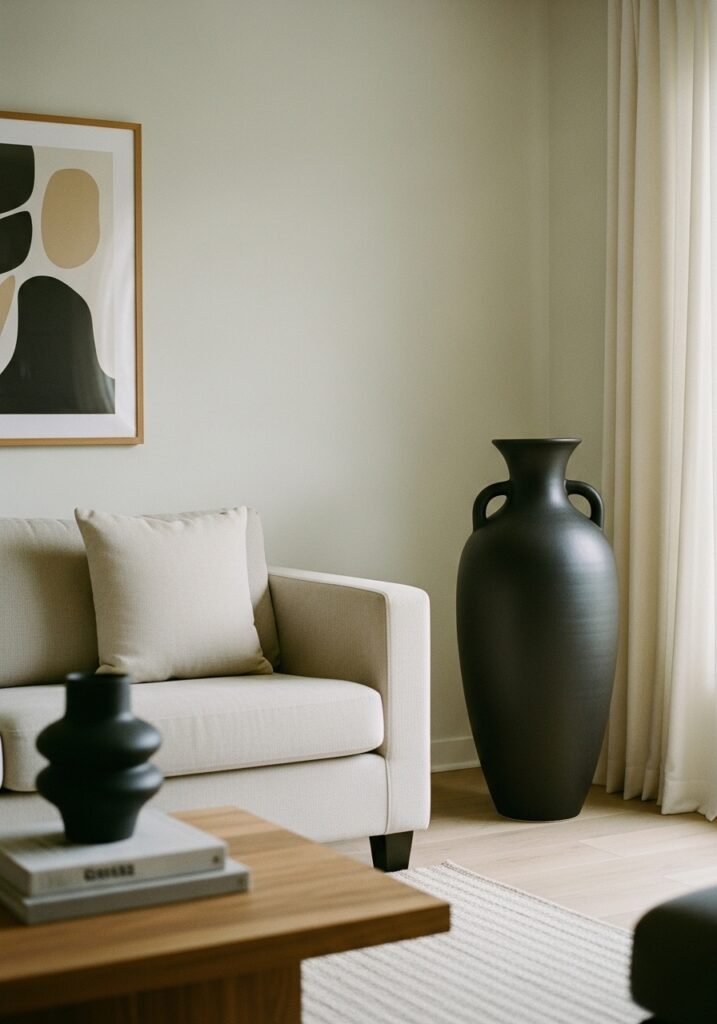
Modern luxury interiors have gotten very good at restraint. And restraint, done well, is one of the most satisfying aesthetic experiences there is.
But restraint doesn’t mean boring. It means choosing your moments.
Every great living room I’ve walked into has one dramatic element. One thing that makes you stop. A chandelier with unexpected scale. A sofa in a deeply saturated color in a room full of neutrals. A single enormous plant — a monstera or fiddle-leaf fig that’s been allowed to become genuinely magnificent. A fireplace surround in an unexpected material. One piece of furniture with a silhouette that’s almost architectural.
Just one. And everything else in the room is in quiet conversation with it.
This is the formula that prevents a room from feeling either monotonous or chaotic. The dramatic element gives the eye somewhere to land. The calm around it gives the dramatic element the space it needs to breathe.
Choose your one thing. Commit to it completely. Let everything else serve it.
—
10. The Texture Rule for Living Rooms That Feel Expensive Without Looking Overdone
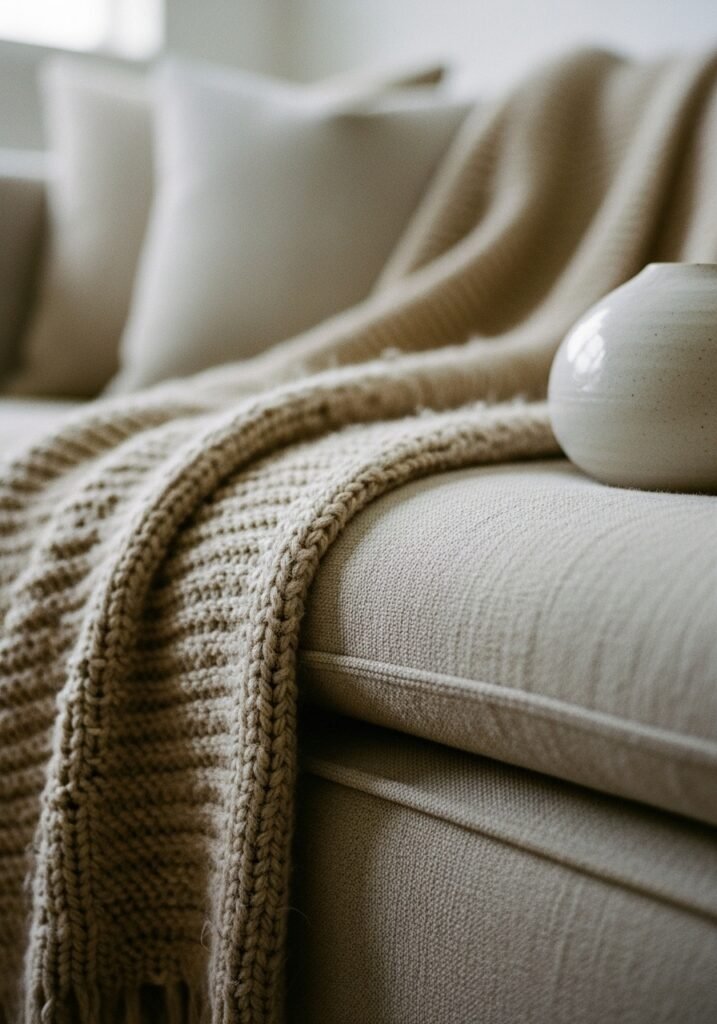
Touch is the sense that interior design almost never talks about. But it’s doing enormous work.
When you walk into a room that feels luxurious — hotel-suite luxurious, the kind where you immediately relax — a huge part of what’s creating that response is texture. The variation between materials. The softness of a knitted throw against the cool glass of a side table. The slight roughness of a linen cushion against the sheen of a silk one. The weight of a ceramic vase versus the warmth of a wood bowl.
Luxury rooms layer textures. And the layering follows a loose principle: for every soft texture, add something harder. For every matte surface, something with a bit of sheen. For every natural material, a little something refined.
In practical terms: a boucle sofa wants a leather accent piece and a glass or brass coffee table. A linen-heavy room wants one ceramic element and something in a natural wood. A room with lots of clean modern lines wants softened by something organic — a plant, a woven basket, a handmade ceramic bowl that’s visibly imperfect.
The imperfect is important. Too much precision reads as sterile. A few handmade, irregular, obviously-made-by-someone pieces make a room feel human.
—
11. Why the Coffee Table Is Actually the Hardest Piece to Get Right
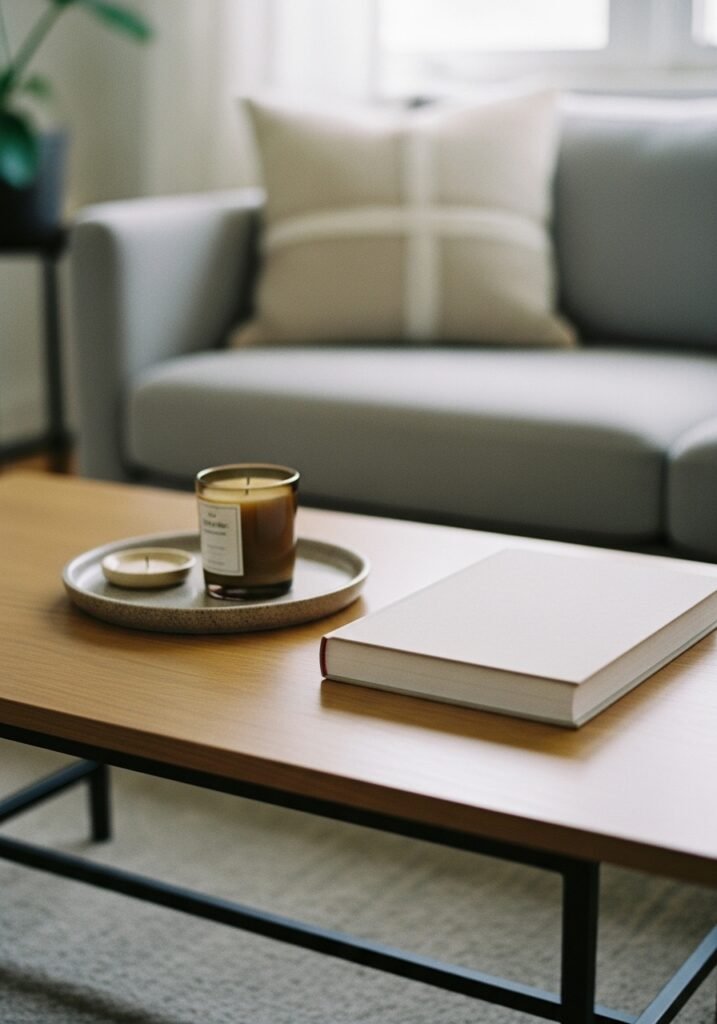
The coffee table is the room’s centerpiece. Literally and figuratively. It’s where your eyes land when you walk in. It’s what your guests look at while they’re talking to you. It’s styled within every living room photograph you’ve ever saved.
And yet. Most people treat it as functional furniture rather than a styling opportunity.
The most considered coffee tables I’ve seen do a few things consistently. They’re at the right height — roughly the same height as the cushions of the sofa, plus or minus an inch or two. They have real surface area — a too-small coffee table in a large seating area feels lost. And they have character. A round marble coffee table in a room full of straight lines. A reclaimed wood table that grounds a very polished room. A glass table that keeps an already-busy room from feeling cluttered.
The styling on top follows one reliable principle: vary the heights. A stack of books (three maximum, always at an angle), an object of medium height (a sculpture, a candle, a bowl), and something low and wide (a tray, a vase laid on its side, a spread of smaller objects). The variation in height makes the arrangement feel curated rather than scattered.
—
12. The Detail That Costs Almost Nothing and Changes Everything About How a Room Feels
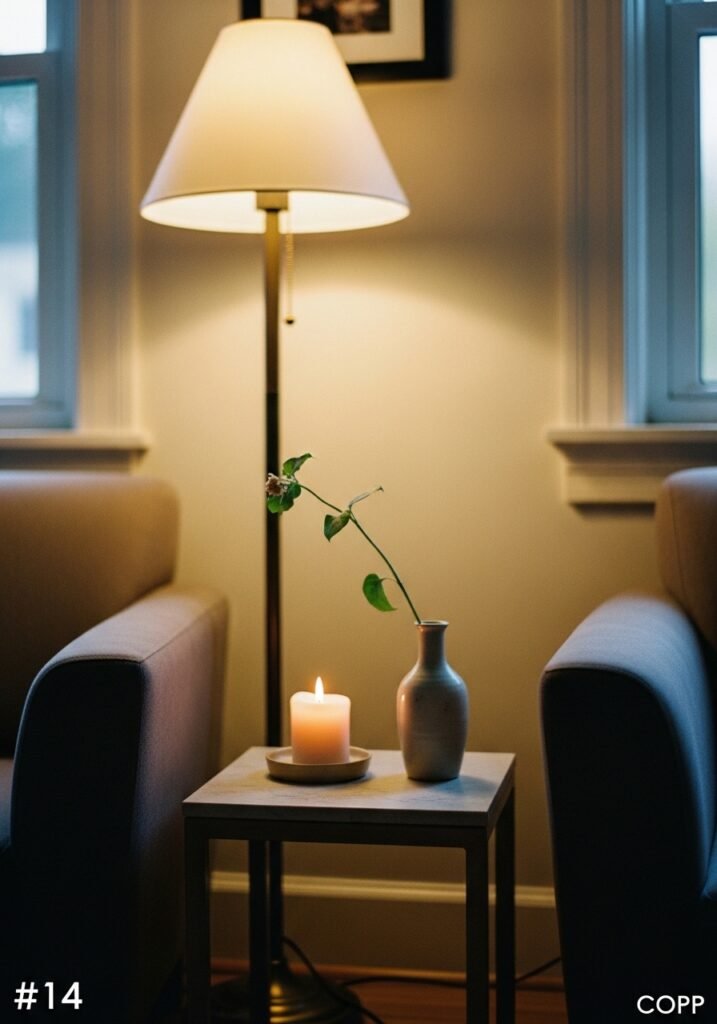
Scent. I’m serious.
The rooms that stay with you — the ones you describe to friends, the ones you photograph and pin and return to in your memory — often have a scent. Something subtle and specific. Not an air freshener, not a plug-in. A real candle, or a diffuser with a scent that’s been chosen for the room.
In a living room that leans natural and earthy: something with cedar, sandalwood, or vetiver. In a room that feels light and linen-y: fig, white tea, or green stems. In a more dramatic, jewel-toned room: oud, amber, tobacco, something with depth.
This is not frivolous. Scent affects how a room is remembered. It is the sensory note that works entirely beneath the level of conscious awareness, creating the feeling of a room long before the eye can register the proportions or the color palette.
Light your candle before guests arrive. Before you sit down for an evening yourself. Let the room be fully experienced — not just seen.
That’s the move that separates a beautiful room from one that genuinely lives in your memory.
—
🌿 Quick Tips
Here’s what I’d tell you over coffee if you asked me to cut straight to it:
1. Layer your lighting before you buy anything else. Two lamps minimum, warm bulbs only, dimmer if you can. Do this first. You’ll see what your room actually needs from there.
2. Stop centering your art. Push it slightly off-center, or go oversized, or hang it lower than feels right. The discomfort means you’re doing it correctly.
3. One plant, allowed to be large. Not three small ones. One that’s been given time and light to become genuinely impressive. Scale matters here as much as anywhere else.
4. Throw the throw. Not folded neatly over the arm. Loosely draped, slightly askew, like someone actually lives here. Perfection reads as staging. Lived-in reads as luxury.
5. Add something that doesn’t match. On purpose. One piece from a different era, a different style, a different sensibility. It’s the thing that makes a room look curated rather than purchased.
—
❓ FAQ
Q: How do I make a living room look luxurious on a tight budget? A: Focus on lighting first — two good lamps with warm bulbs will change the room more than almost any other purchase. Then put your remaining budget into one quality textile: a throw, a large cushion, a real wool rug even secondhand. The details you can actually touch make the biggest impression.
Q: What’s the most common living room mistake people make? A: Rugs that are too small and furniture that’s too centered. Push your sofa slightly away from the center of the room, get a rug that’s actually big enough for the seating area, and you’ve solved about 70% of the “something’s off” problem in most living rooms.
Q: How do I mix old and new furniture without it looking random? A: Find one common thread — either a consistent color appearing in both pieces, or a consistent material like brass hardware or natural wood tones — and let that be the bridge. You don’t need everything to match. You need everything to be in conversation.
—
💭 Final Thought
The most beautiful living rooms I’ve ever been in had one thing in common: they felt like someone had made a decision and then trusted it. Not hedged with too many options or styled to appeal to everyone. Just chosen, and committed to, and lived in.
That confidence is the luxury. More than any piece of furniture or lighting fixture, the feeling of a room that knows what it is will stay with a person long after they’ve left.
What’s the one decision in your living room you’ve been second-guessing — and what would it look like to just trust it?