The Living Room Looks That Are Redefining Luxury Right Now (And They’re Not What You Think)
You walk into a room and something stops you. Not the price tag on the sofa. Not the chandelier. Something quieter, harder to name — the feeling that every single object in this space was chosen on purpose. That’s modern luxury. And it’s completely different from what it used to be.
—
1. Why “Expensive-Looking” and “Actually Expensive” Are Finally Parting Ways
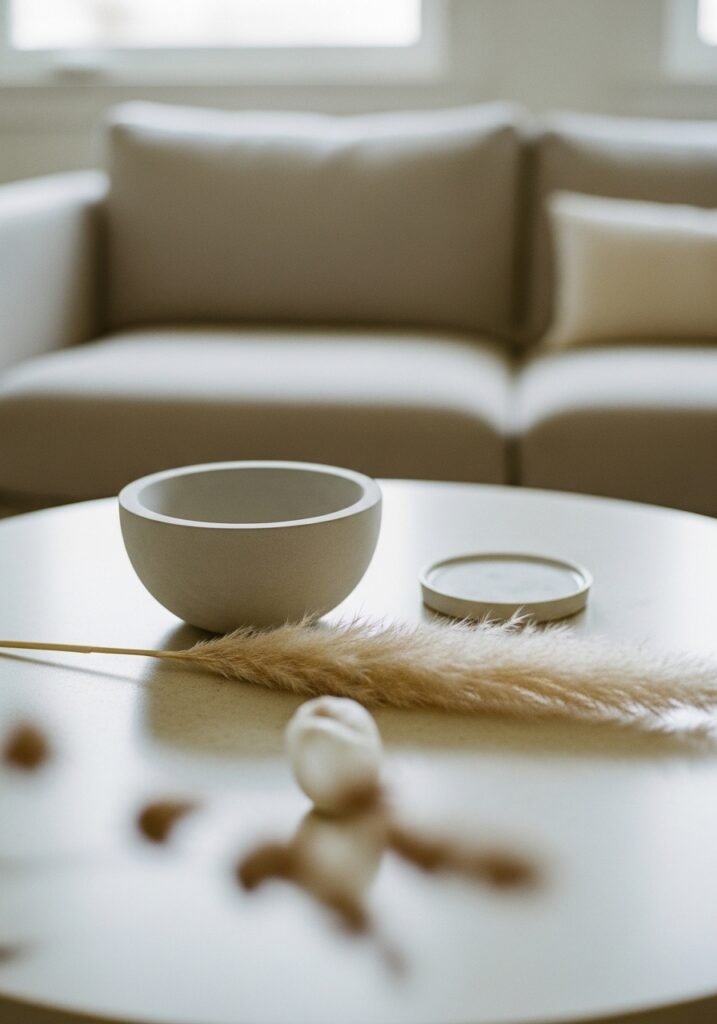
For a long time, luxury meant showing your receipts. Visible logos. Obvious marble. Furniture that cost more than a used car and looked like it knew that about itself.
That era is winding down.
What’s happening now in the most stunning living rooms — the ones stopping people mid-scroll, the ones getting saved thousands of times — is something more interesting. Restraint. Intention. The confidence to leave empty space on a shelf because nothing else belonged there.
This shift is happening on both sides of the Atlantic. American homeowners are moving away from the overstuffed maximalism that dominated the 2010s. British homeowners — who always had a quieter relationship with showing off — are leaning further into that dignified understatement, but with warmer materials and bolder shapes than before.
The result is a new visual language for luxury. One that reads expensive immediately but takes you a moment to understand why.
The why is always curation. Always confidence. Always the feeling that the person who lives here has very specific taste and absolutely no interest in compromise.
“The most luxurious thing a room can say is: nothing unnecessary lives here.”
—
2. The Furniture Silhouette That’s Showing Up in Every High-End Living Room Right Now
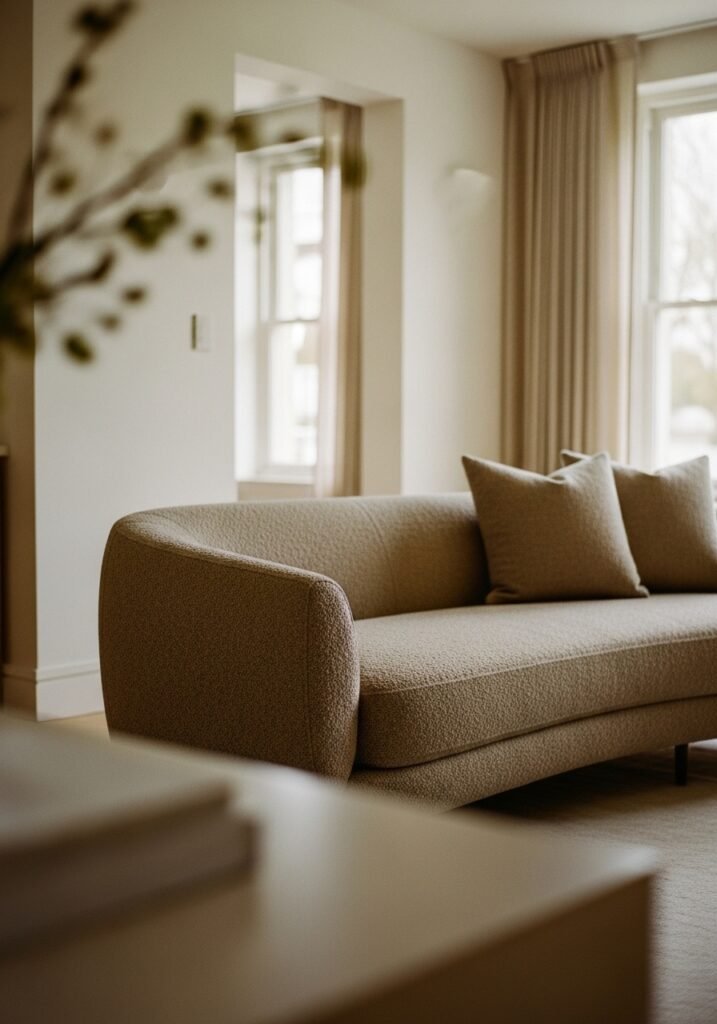
Curves. Soft, deliberate, sculptural curves.
Not the boxy, right-angled sectionals that dominated for years. Not the ultra-minimal floating-on-legs-of-nothing aesthetic that felt more like a showroom than a home. Something different — furniture that looks like it was carved rather than assembled. Sofas with arched backs. Chairs shaped like a gentle lowercase “u.” Occasional tables that look like smooth river stones had a design degree.
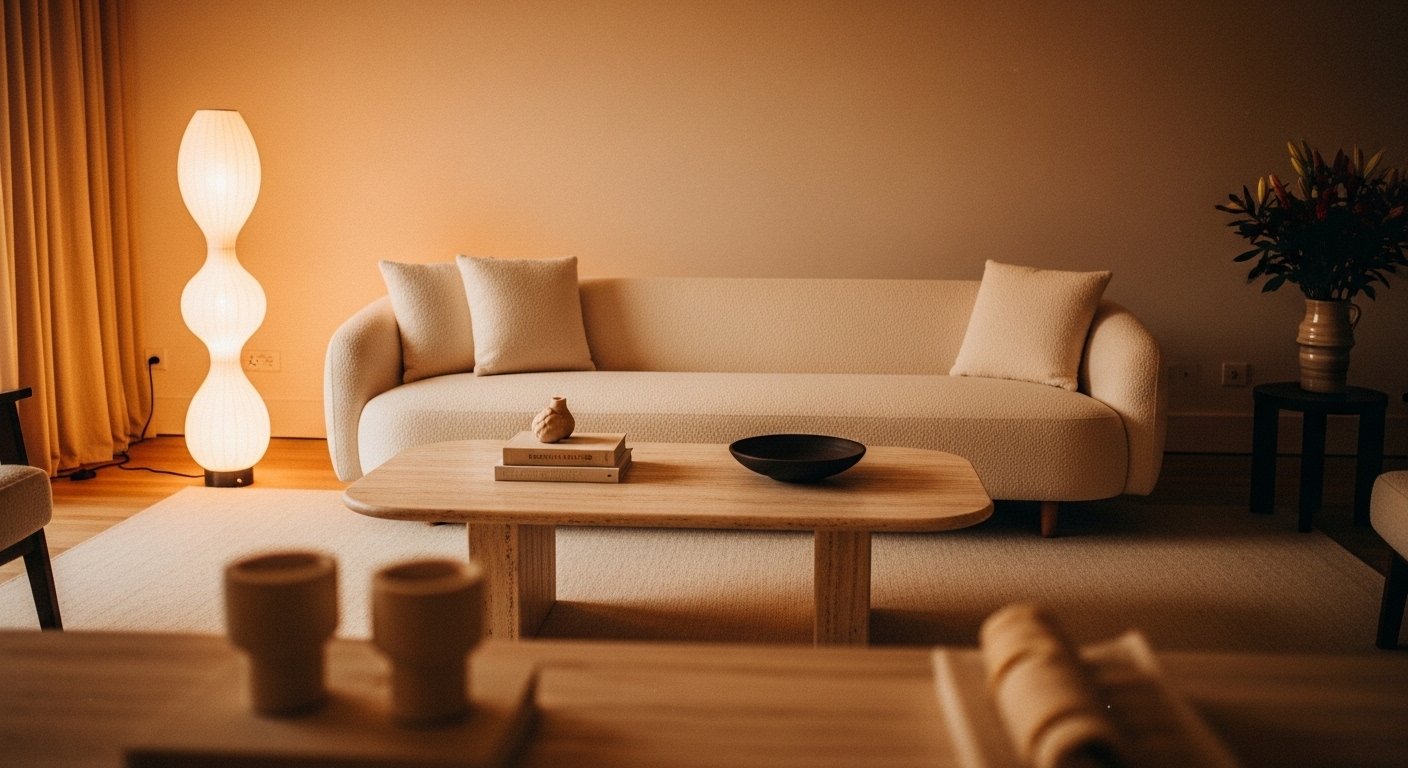
The curved sofa is the single biggest statement piece in luxury living rooms right now, and it earns every inch of that status. A deep, bouclé curved sofa in oatmeal or warm ivory anchors a room in a way that a straight sectional simply can’t. It invites you in. It creates intimacy even in a large room. It says “sit down and stay a while” in a way that tufted leather never managed.
Pair this with an asymmetrical coffee table — think irregular travertine slabs or a hand-poured resin piece with visible organic edges — and you have a conversation between furniture pieces that feels genuinely alive.
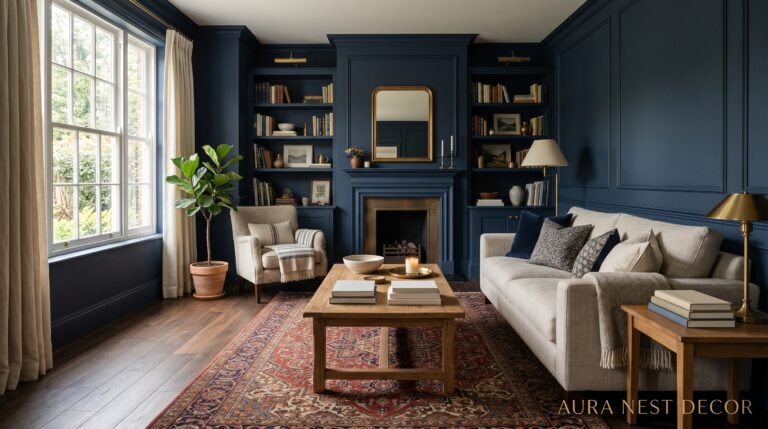
In the UK, you’re seeing this trend layered with more traditional architectural bones: cornicing, sash windows, original fireplaces. That contrast — a contemporary curved sofa sitting inside a Georgian room — is extraordinary. It makes both things more beautiful.
In American homes with open-plan layouts, the curved sofa does the work of defining space without walls. It anchors a zone. It creates a room within a room. That’s practical luxury.
—
3. The Color That Keeps Appearing in Every Beautiful Living Room Right Now
Not white. Not grey. Not the greige that colonized interiors for the better part of a decade.
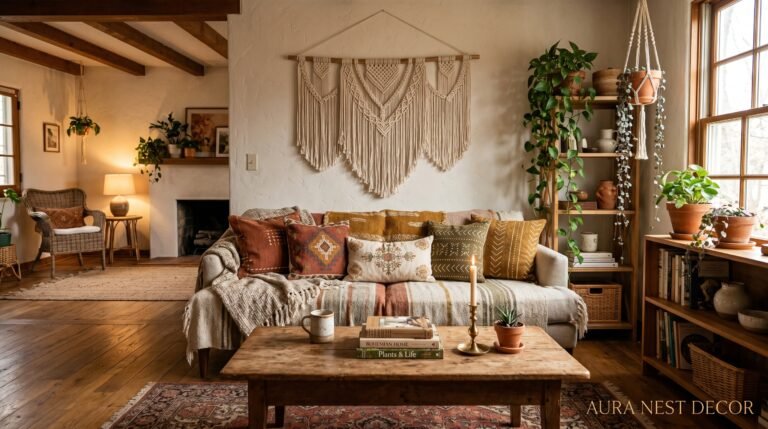
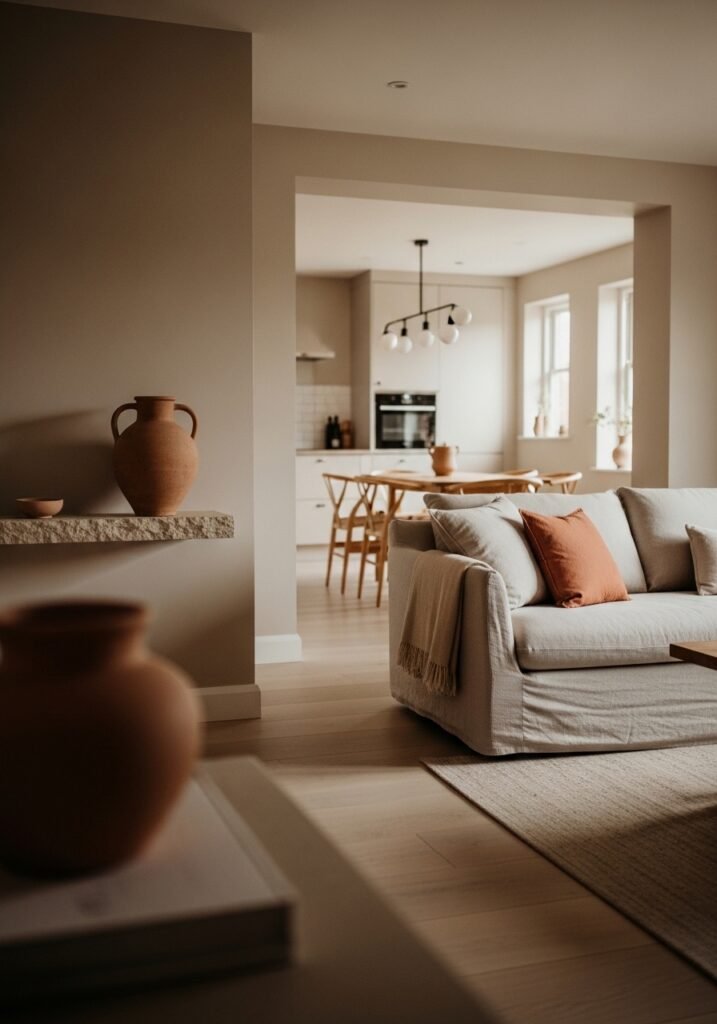
Warm terracotta, deep clay, and — most surprisingly — a particular shade of dark olive green that sits somewhere between forest and moss. These are the colors dominating right now, and they work because they’re the colors of natural materials: raw clay, old stone, dried herbs, aged leather.
But the real story isn’t one single color. It’s how these colors are being layered.
A living room wall painted in Farrow & Ball’s “Treron” (a muted, sophisticated green) with warm walnut furniture and a terracotta linen sofa is doing something that a purely neutral room cannot: it’s creating depth. Atmosphere. A sense of time, as if the room has been loved for years.
In the US, Benjamin Moore’s “Pale Oak” and “Chestertown Buff” are sitting comfortably next to bolder accent walls in deep teal or forest green. The combination feels collected rather than decorated — like things gathered over time rather than ordered from a single catalog in an afternoon.
The mistake most people make is choosing a paint color in isolation. The color only exists in relationship to the light in your room, the materials around it, the furniture against it. Hold your sample next to your sofa fabric. Hold it at 7pm when the lamps are on. A color that looks flat at noon can be stunning at dusk.
—
4. What Lighting Is Actually Doing in the Best Living Rooms (It’s Not What You Think)
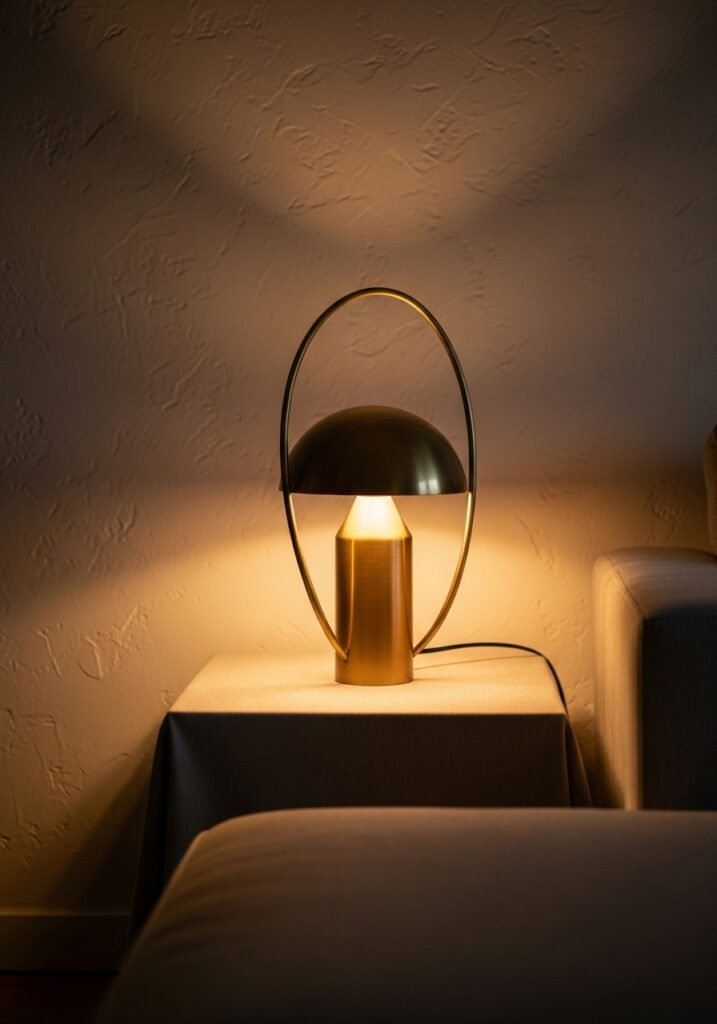
Lighting is not decoration. It’s atmosphere creation. And the living rooms getting the most attention right now have cracked this in a way that’s worth paying attention to.
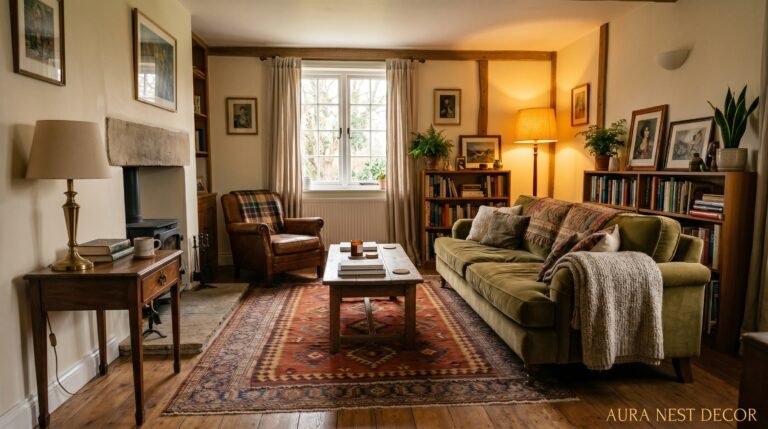
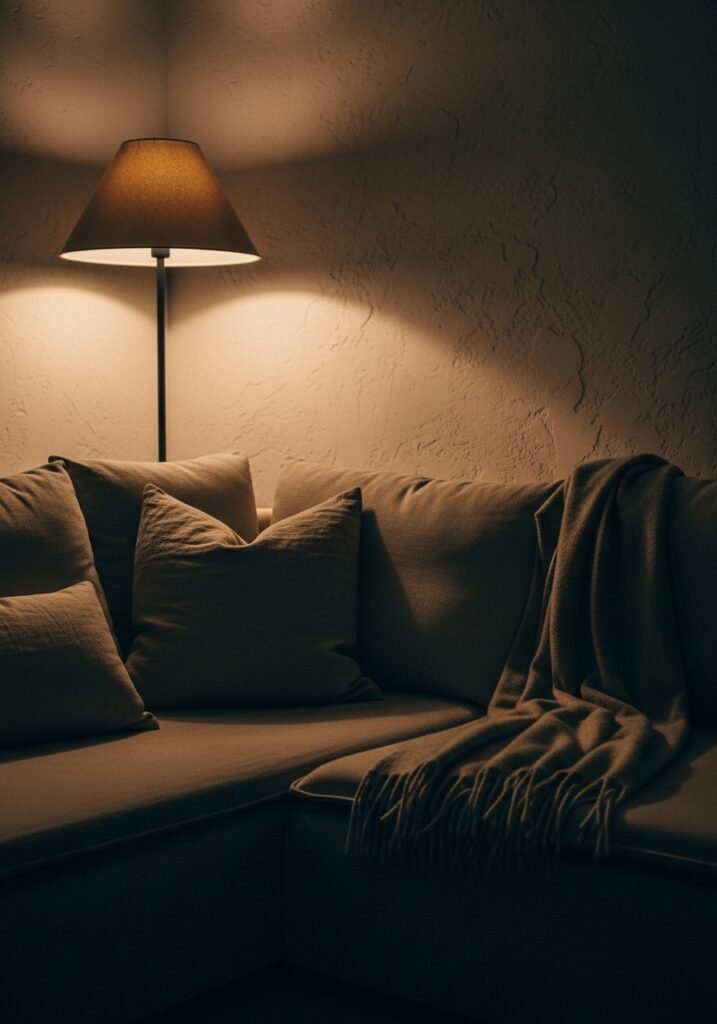
They’re using multiple low sources instead of one central overhead light. A floor lamp with a warm-toned bulb in one corner. A table lamp on a side table beside the sofa. A pair of sconces flanking a fireplace or a large piece of art. Maybe a small LED strip behind a bookcase, casting a soft glow on the objects displayed there.
No single light source is doing all the work. They’re working together, layered, creating pools of amber warmth that make the room feel three-dimensional after dark.
“Overhead lighting is for offices. Living rooms deserve pools of warmth.”
The actual bulb temperature matters enormously. Anything above 3000K starts to feel clinical. The sweet spot for luxury living room lighting is 2200K to 2700K — that golden, candlelight-adjacent warmth that makes skin look beautiful and makes even simple rooms feel expensive.
Statement pendants are having a serious moment. Not the oversized industrial pendants of ten years ago, but sculptural, artisanal pieces — hand-blown glass, woven natural fiber, raw concrete forms — hung low over a coffee table or in a reading corner. These pieces double as art. They earn the space they occupy.
In British homes where ceilings are lower and rooms sometimes smaller, clever lighting becomes even more critical. Wall sconces are a revelation in a compact space — they free up floor and surface area while adding exactly the warmth the room needs.
—
5. The Bookcase Styling Secret That Separates Curated Rooms from Cluttered Ones
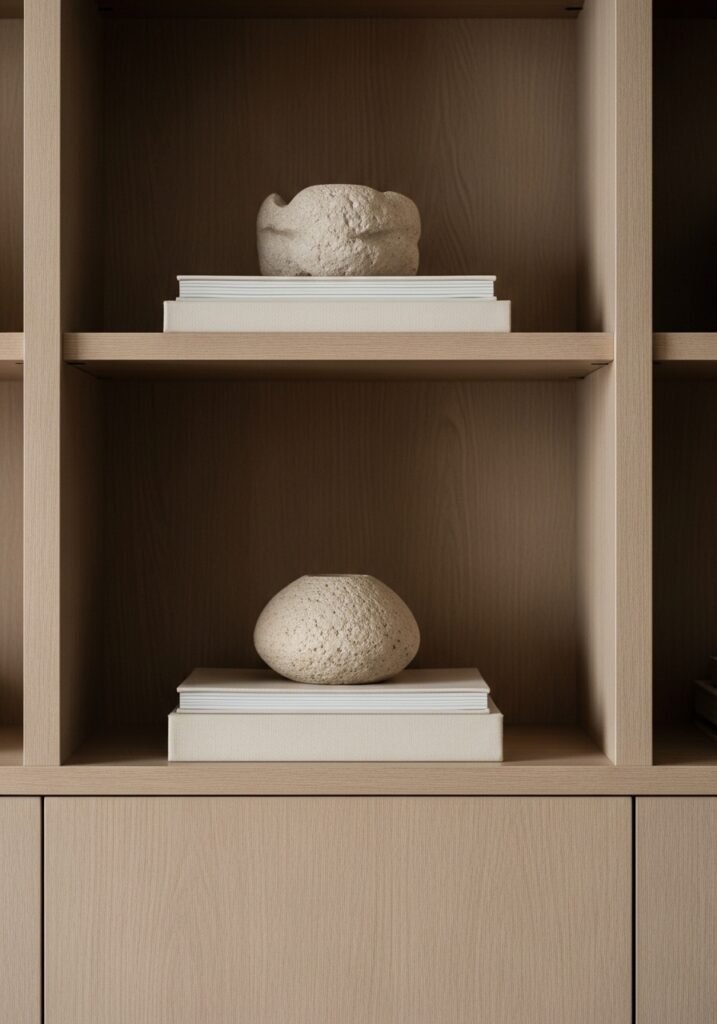
Every beautiful room has a version of this: a large bookcase or built-in shelving unit that looks genuinely effortless but is absolutely not.
The secret isn’t having fewer things. It’s grouping by weight and rhythm.
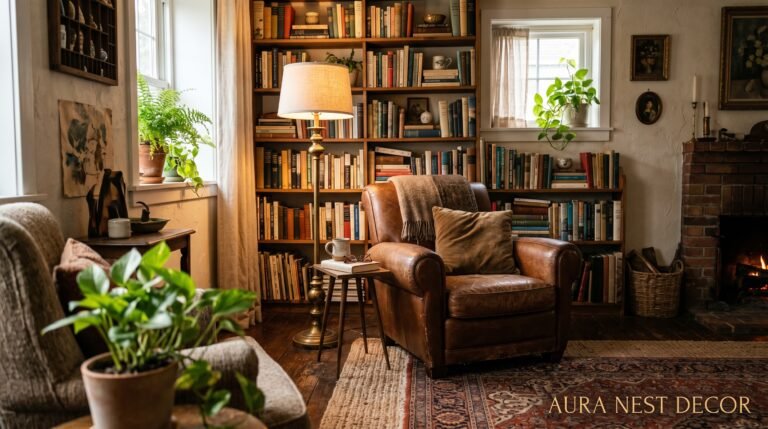
Picture this: one shelf with three oversized art books lying flat, a small ceramic vase on top of them, and nothing else. The shelf below with a cluster of books standing upright — their spines pulled to the front edge, not pushed to the back — bookended by a sculptural object on one side and negative space on the other. The shelf above with one framed photo and one trailing plant.
Nothing is crammed. Nothing is centered by instinct. Everything has breathing room.
Luxury living rooms — whether they’re penthouse apartments in Manhattan or townhouses in Edinburgh — share this quality of considered editing. The objects that remain after everything unnecessary has been removed are almost always a mix of things with personal meaning, things with visual weight, and things with texture. Not just pretty things. Meaningful things.
Natural materials photograph and read as expensive in a way that synthetic objects never quite manage. A rough linen-covered book. A small piece of unglazed ceramic. A branch of dried pampas or eucalyptus in a stone-colored vase. These earn their shelf space.
—
6. The One Rule That Makes Any Living Room Feel Like It Belongs in an Interiors Magazine
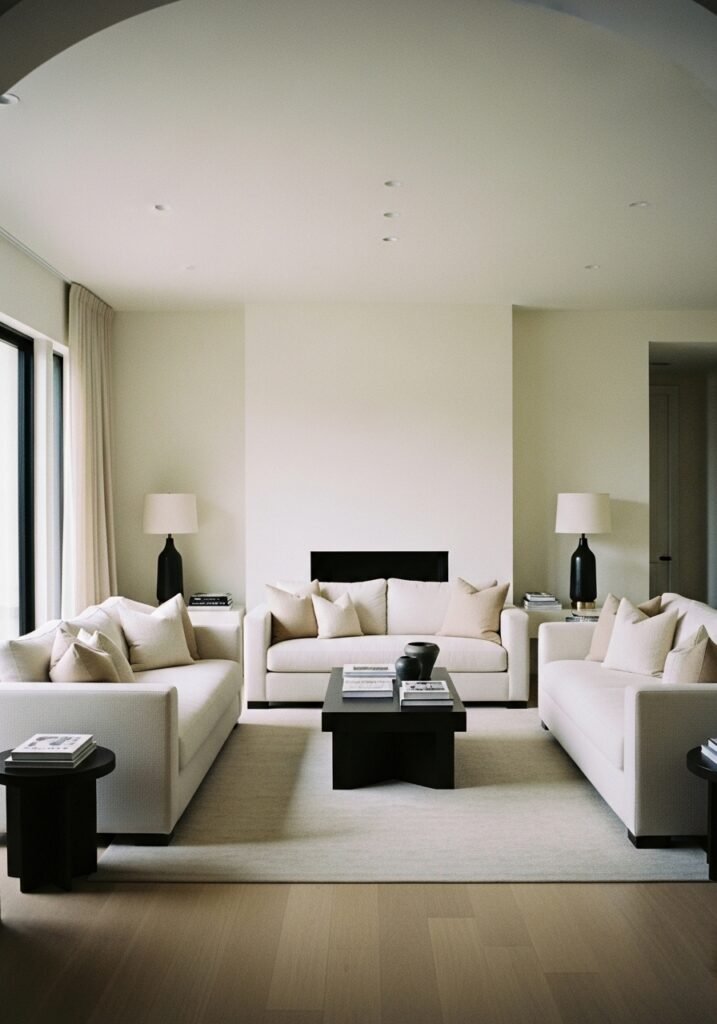
One large thing is better than many small things.
Read that again.
When you’re styling a coffee table, a single large sculptural object — a chunky candle in a concrete vessel, a bowl of smooth stones, one oversized ceramic — reads more luxuriously than five small decorative items arranged together. The small items make the eye nervous. They create visual noise. The single large object creates calm.
This rule applies everywhere. One large piece of art on a wall beats a gallery wall of smaller frames in most contemporary luxury spaces. One large area rug that actually fits the seating area — pulled under at least the front legs of every sofa and chair — beats a small rug floating in the middle of the room doing nothing useful.
Scale is one of the most underestimated tools in interior design. Most people go too small. They buy art that’s too modest for the wall. They buy a rug that barely reaches the sofa. They fill a surface with too many small things because large singular objects feel like a commitment.
That commitment is exactly the point.
—
7. Textures That Are Making Living Rooms Feel Rich Without Looking Flashy
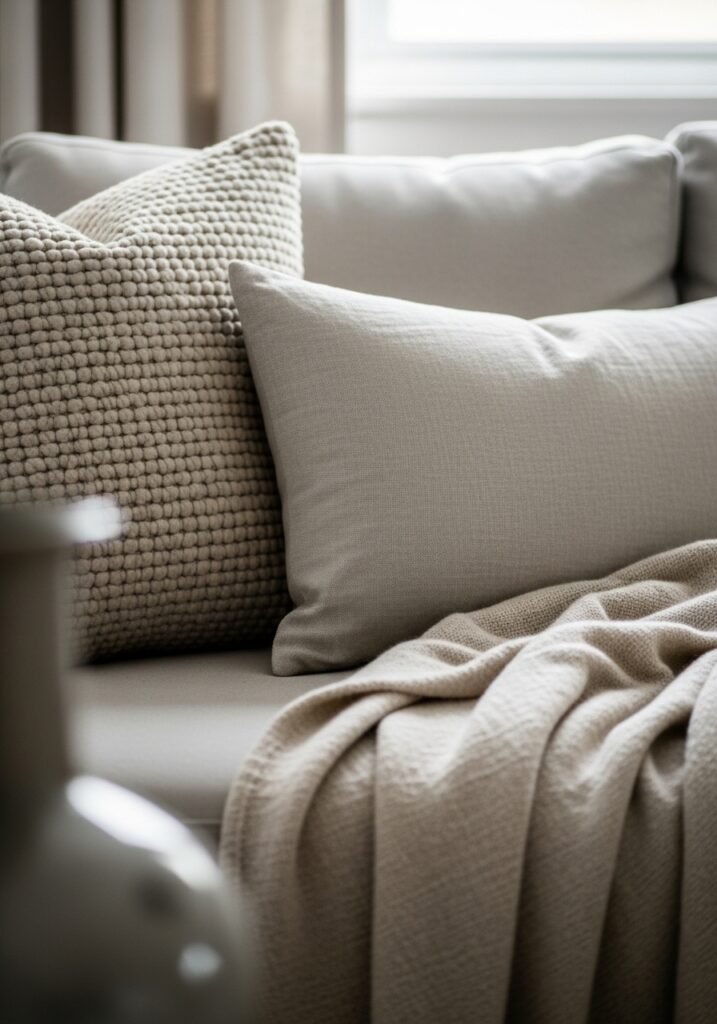
Touch is an underrated sense in interior design. You can’t feel a room through a screen, but you can see texture — and the visual suggestion of something soft, rough, warm, or cool is powerful.
Bouclé is everywhere right now, and for good reason. That loopy, slightly uneven weave on a sofa or armchair catches light differently than flat fabric. It has depth. It photographs beautifully. And it genuinely feels extraordinary to sit on.
But the rooms that feel truly rich layer multiple textures together. Smooth plaster walls with a rough jute rug. A glossy lacquered coffee table against a matte linen sofa. A polished brass lamp base next to an unfinished wood side table. The contrast is the thing.
“Texture is what you feel before you even sit down.”
Velvet is having a quieter moment than bouclé but is no less impactful. A single velvet armchair in deep teal or burnt sienna in an otherwise neutral room acts like a jewel. It holds color differently in different lights. At midday it’s rich and saturated. By lamplight it’s almost luminous.
In the UK, tactile comfort has always been central to living room design — perhaps because the weather demands it. Heavy curtains, thick rugs, and layered throws are practically a national design language. What’s changed is the materials themselves: organic linen, undyed wool, hand-loomed cotton, natural beeswax finishes on wood.
—
8. The Art Conversation That’s Replacing the Feature Wall
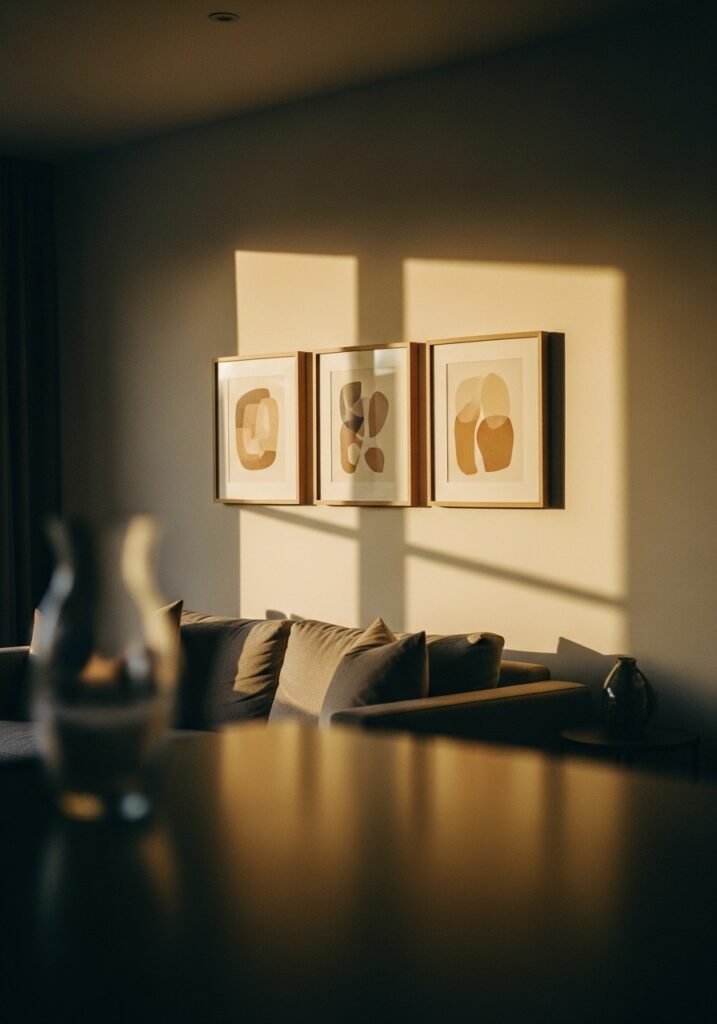
The feature wall — that one painted or wallpapered surface meant to anchor a room — is being quietly retired in favor of something more interesting.
Art as architecture.
A single enormous painting. We’re talking properly large — four feet by six feet at minimum in any reasonable-sized room. A piece that doesn’t just hang on a wall but occupies it. Commands it. Changes the room’s entire emotional register.
Abstract art is dominating here, particularly work in earthy, organic palettes — ochre, raw umber, warm whites, washed terracotta. Not because it’s safe but because it complements natural material interiors without competing with them. It adds a layer of human expression without demanding a specific emotional response.
The height matters. Most people hang art too high. In luxury interiors, art hangs lower than you expect — eye level at center, which usually means the center of the piece sits around 57 to 60 inches from the floor. Hanging lower makes the room feel more intimate. More deliberate.
In both the US and UK markets, there’s been a visible move toward supporting independent and emerging artists. Not just for ethical reasons, though those matter, but because an original piece — even from an artist you discovered on Instagram — has a story. It has presence. It’s one of a kind. And that is the most genuinely luxurious thing a living room can contain.
—
9. The Quiet Power of Natural Materials in a World Full of Perfect Surfaces
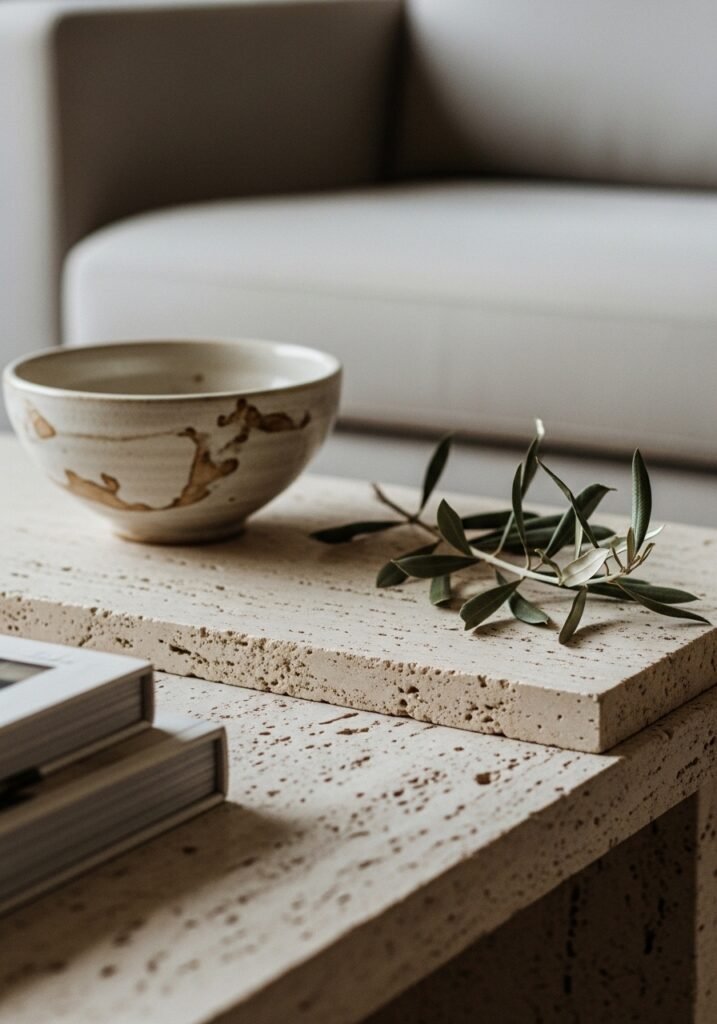
Marble. Travertine. Unlacquered brass. Smoked oak. Raw linen. Aged leather.
These materials share one thing: they change over time. They develop patina. They mark and scratch and weather and become more beautiful for it. And they are the backbone of every truly luxurious contemporary living room.
The shift away from perfect, high-gloss, impervious surfaces is real and it’s not going back. Polished stone that shows every fingerprint has given way to honed and leathered finishes that feel alive. Perfect matte painted furniture has given way to pieces with visible grain, slight imperfection, the evidence of the maker’s hand.
This isn’t just aesthetic preference. It’s a statement about values. A room full of natural materials that age gracefully is saying something about longevity, about quality, about choosing things that are meant to outlast a trend cycle.
Travertine in particular is extraordinary in a living room. As a coffee table surface, as bookends, as a lamp base. The natural pitting and variation in the stone means no two pieces look the same. It photographs in a warm, honeyed tone that looks expensive immediately. And it genuinely is durable — travertine has been used in beautiful buildings for thousands of years.
—
10. How Negative Space Became the Most Coveted Design Element in High-End Homes
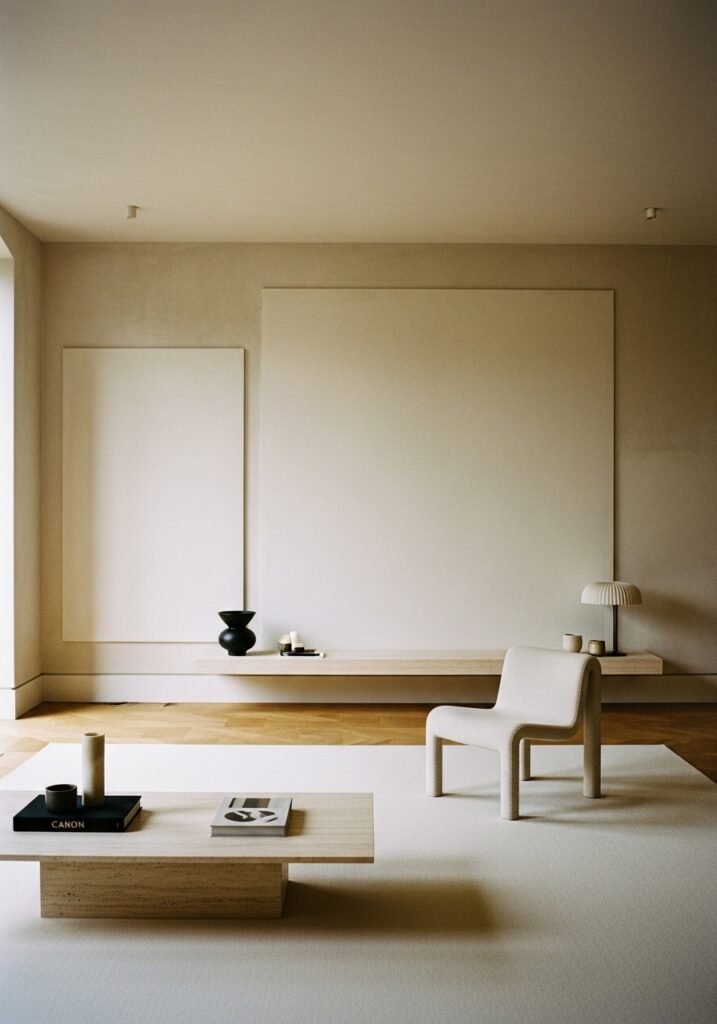
Empty space is not wasted space. This is the hardest thing for most people to believe, and it’s the thing that separates genuinely luxurious rooms from rooms that have spent a lot of money trying to look luxurious.
A shelf with breathing room between objects looks curated. A shelf packed to the edge looks like storage. A side table with one lamp, one small plant, and nothing else looks intentional. The same table covered in framed photos, remote controls, and candles looks lived-in but not designed.
The skill is knowing what to keep and what to remove. And it requires trust — trust that the empty space is doing as much work as the objects.
This is a principle that’s embedded in Japanese design philosophy, and it’s been absorbed quietly into contemporary Western luxury interiors. The concept of “ma” — the meaningful pause, the intentional gap — translated into living rooms that breathe. That let each chosen object exist fully without competing for attention.
Your eye needs somewhere to rest. Give it that.
—
11. The Small Details That Expensive Living Rooms Always Have (and Cheap Ones Skip)
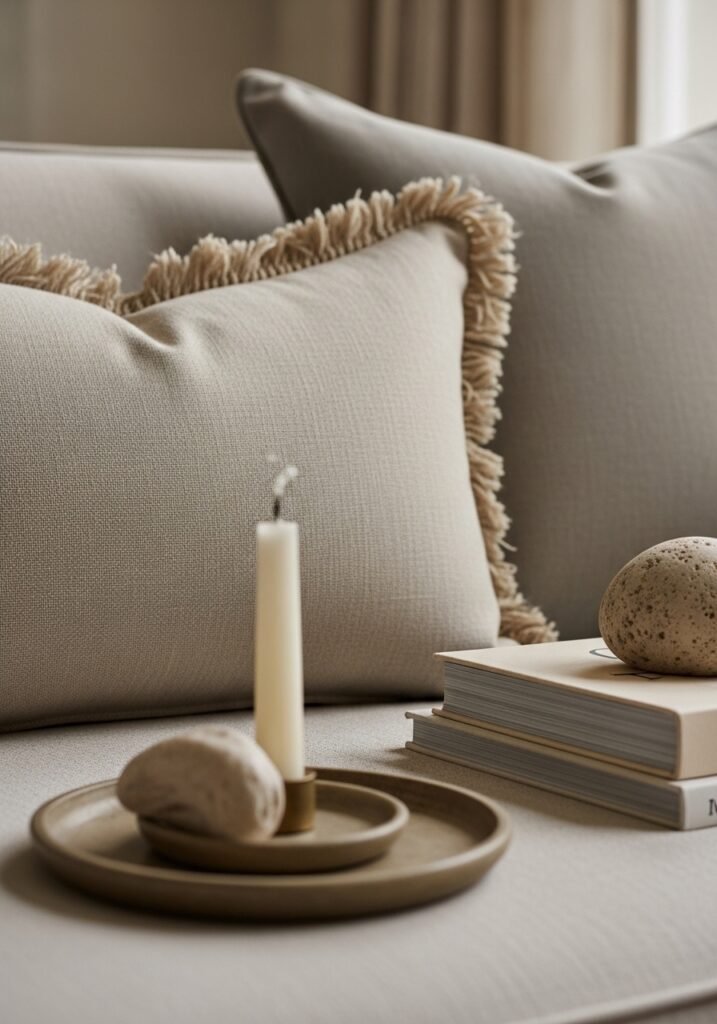
Hardware. Cord management. The quality of the trim on a cushion. The way a curtain puddles slightly on the floor. These are the details that you don’t consciously notice but that you absolutely feel.
Swap out cheap brass hardware on any furniture piece for unlacquered or antique brass and the whole piece reads differently. It’s the difference between a prop and an antique. Between something bought and something found.
Curtains hung from ceiling to floor — not just from above the window frame — make every room look more expensive. It’s one of the oldest tricks in interior design and it still works because it creates the illusion of height. Hang the rod as close to the ceiling as possible. Let the curtains pool slightly at the bottom or break just at the floor.
The cushion situation in luxury living rooms is always right. Not too many. Not too coordinated. A mix of sizes, textures, and slightly different tones in the same color family. The largest sofa might have four cushions, arranged with a casual intention — not symmetrically lined up, but resting against each other as if someone just sat up and left the room.
Details are not decorating. Details are the proof that someone cared.
—
12. The Living Room Feel That Nobody Can Quite Name But Everyone Recognizes
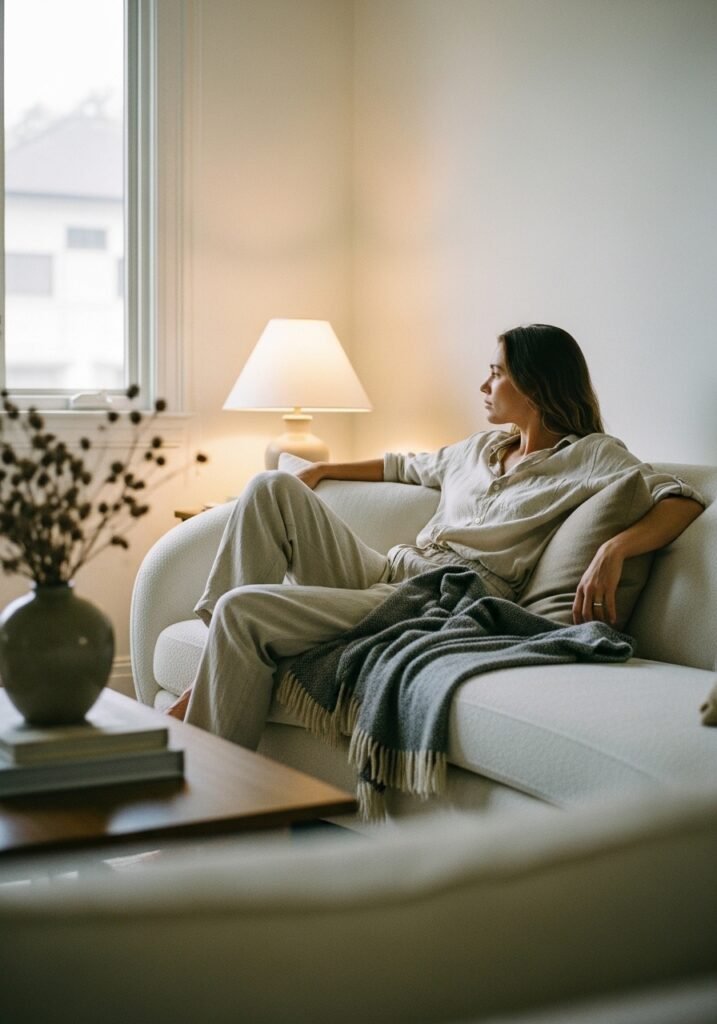
There’s a quality in certain rooms that’s almost impossible to define in a brief. A sense that the room has been arrived at rather than decorated. That the person who lives there has been paying attention — to how they live, to what they love, to what makes them feel most themselves — and the room reflects all of that back.
It’s not about a particular style. It’s not about spending a specific amount. It’s about the honesty of the space. The rooms that feel truly luxurious in this modern sense are the rooms where nothing is performing. Nothing is there to impress. Everything is there because it belongs.
That feeling is available to anyone who’s willing to take the time to figure out what actually matters to them. To resist the pressure to have the thing that’s trending and instead ask: does this belong in my life? Does this make me feel good in my own home?
The most beautiful living rooms are self-portraits. The best ones take time. And they’re always, always worth it.
—
🌿 Quick Tips
Pull your furniture away from the walls by at least 6 to 12 inches — it creates depth and makes rooms look larger, not smaller, even though it feels counterintuitive.
Invest in one genuinely great lamp before anything else. Lamp quality transforms a room faster than almost any other single purchase.
Layer your rugs if you love the look: a natural jute base rug with a smaller, softer wool rug on top. It adds texture, warmth, and looks expensive for less than you’d think.
If you’re not sure whether to remove a piece of decor, remove it. Live without it for a week. If you don’t miss it, don’t bring it back.
Use odd numbers when grouping objects on any surface — threes and fives always look more natural than even pairings.
—
❓ FAQ
Q: How do I make my living room look expensive on a budget? A: Focus on lighting, scale, and editing rather than buying new things. Swap your bulbs to 2700K warm whites, replace one small piece of art with one larger one, and remove half the objects from your surfaces. These three changes alone can completely shift how a room reads — and two of them are free.
Q: What’s the biggest living room design mistake people make? A: Going too small with rugs and too high with art. A rug that doesn’t reach under the front legs of your sofa makes the whole seating area float awkwardly. Art hung at picture-rail height (which is often too high) disconnects from the furniture below it. Both mistakes make rooms feel unfinished regardless of how much you’ve spent.
Q: Are the curved sofa and bouclé trends going to date quickly? A: The specific combination might evolve, but curved furniture and tactile natural fabrics are rooted in principles that have always worked — organic shapes are inherently comfortable to live with, and textured natural materials age beautifully. Choose pieces in neutral tones and you’ll be living with them happily for years.
—
💭 Final Thought
The living rooms that stay with you — the ones you pin and revisit and quietly aspire to — almost never have one standout feature you can easily explain. They have a feeling. A coherence. The sense that the person who lives there has made genuine peace with what they love.
Luxury, at its most modern and most meaningful, is just that: a room that fits you exactly. Not a showroom. Not a trend board. Yours.
So the real question isn’t what should your living room look like — it’s what do you want to feel the moment you walk through the door?