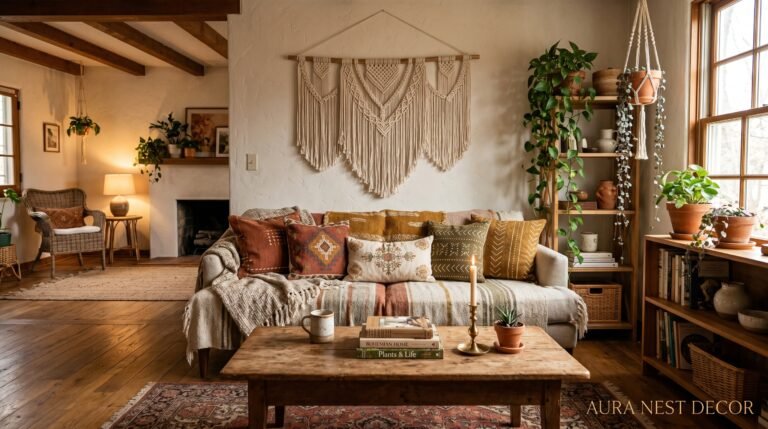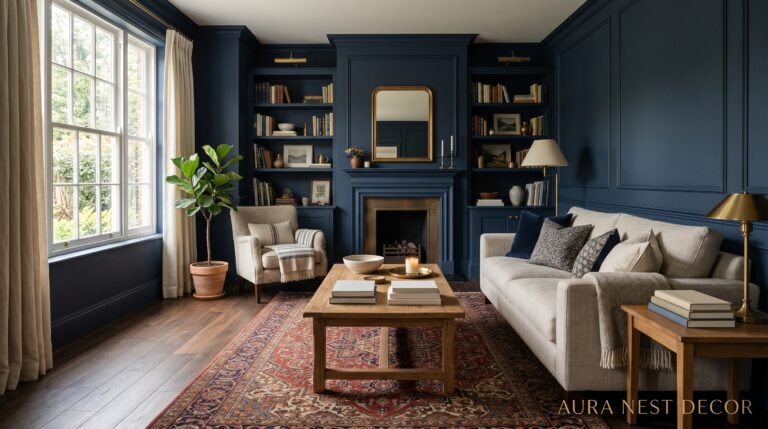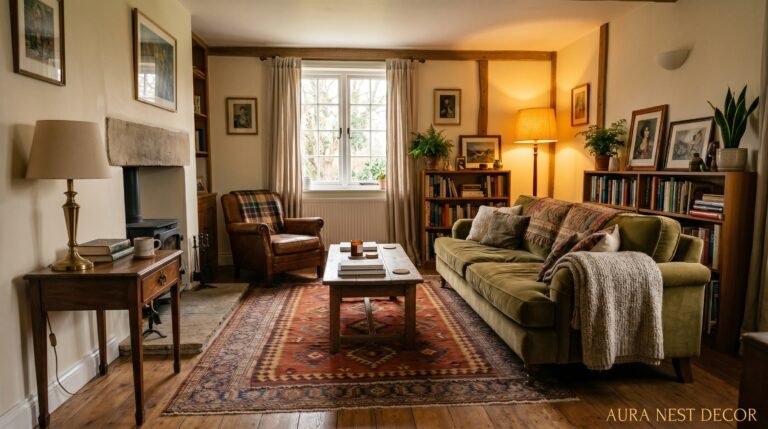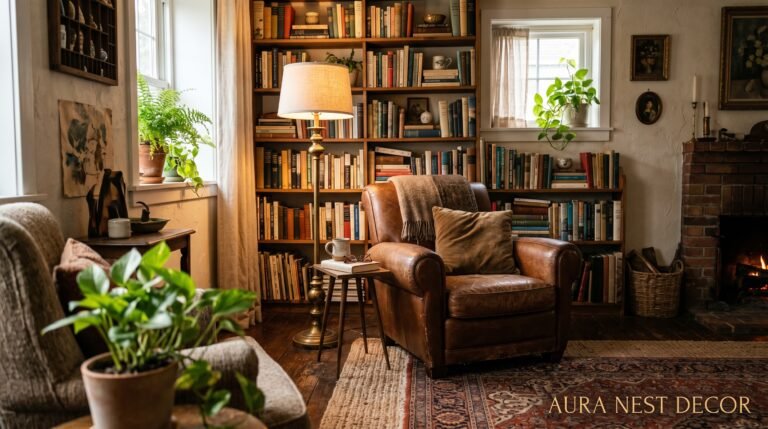
The Brown Sofa Is Back — And This Time It Looks Like a Million Dollars
You wrote it off. You donated the last one, swore you’d never go back, maybe even laughed at your mum’s old velvet chesterfield. But something shifted in the design world somewhere between 2022 and now, and suddenly the brown sofa is the most coveted seat in the room. Not your grandmother’s brown. Not the muddy, forgettable taupe you once tried to disguise with throw pillows. This brown is rich. Intentional. Quietly expensive in a way that no white sofa has ever managed to be.

—
1. Why Brown Feels Luxurious Right Now When It Didn’t Before
There’s a reason this keeps showing up on the most-saved Pinterest boards in both the US and the UK, and it has everything to do with a collective exhaustion with cool tones. For years we chased the clean, the pale, the almost-white. Grey sofas. White walls. Scandi minimalism that was beautiful in magazines and somehow freezing in real life. Brown — warm, grounded, unapologetically earthy — is the antidote.
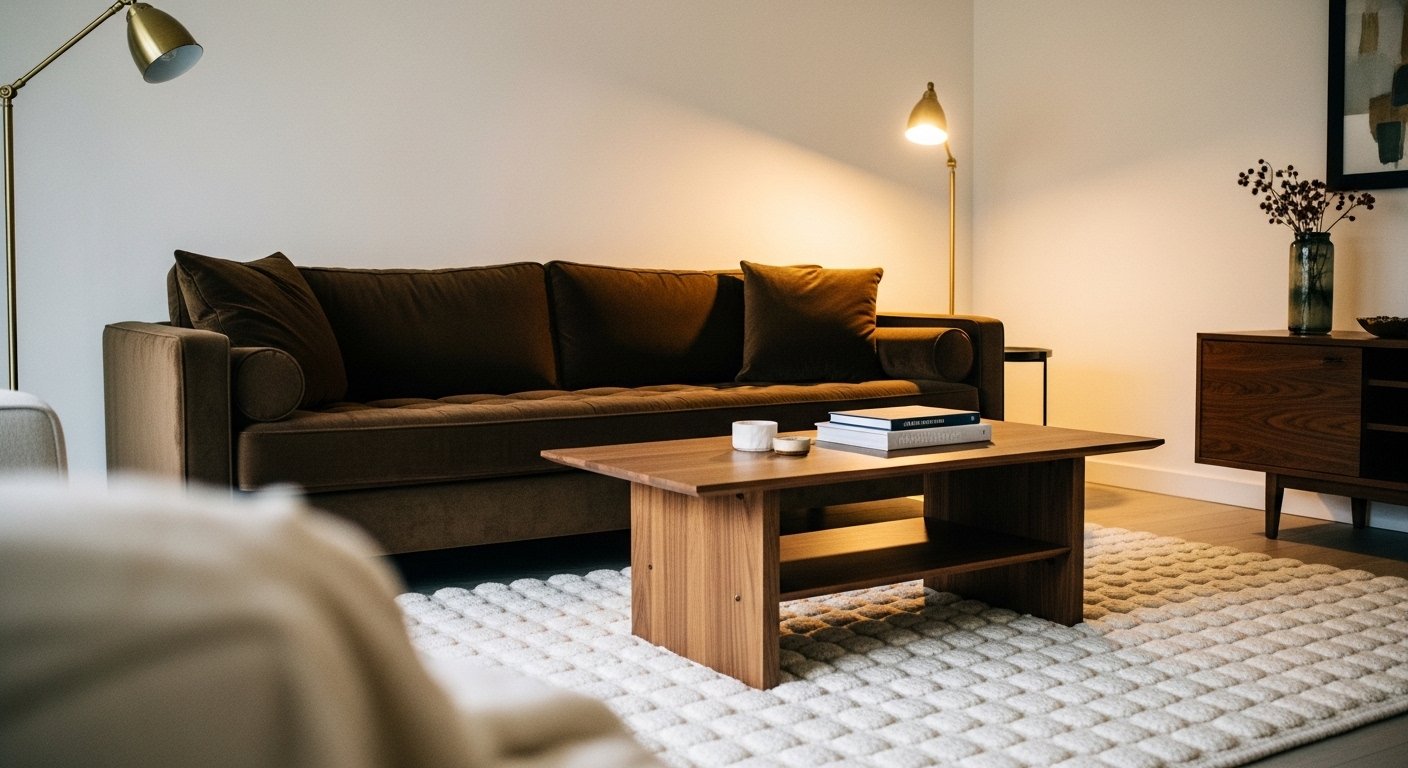
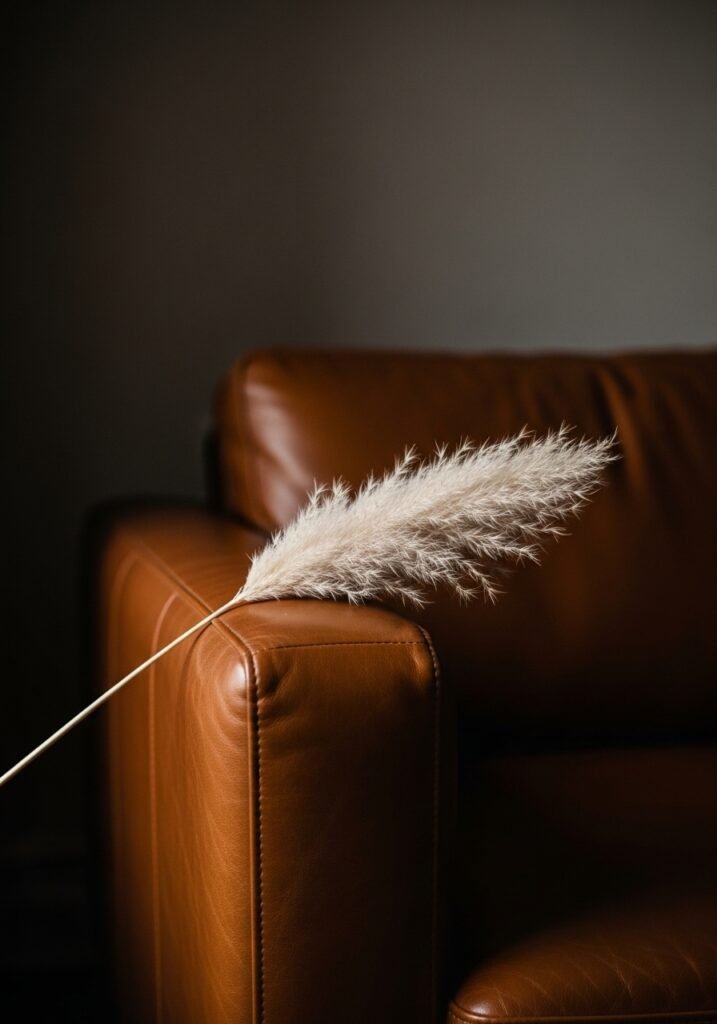
But the shift isn’t just emotional. It’s visual. Today’s brown sofas are being photographed, styled, and sold in shades that feel entirely new. Cognac leather that looks like a vintage handbag you’d pay a month’s rent for. Deep walnut velvet that seems to absorb the light from a nearby floor lamp and give it back softer. Chocolate linen that gets better every time you sit in it.
The difference between the brown sofas of 2005 and the brown sofas of right now is the same difference between a builder-grade door and a Victorian original. Same category. Completely different feeling. Brown is no longer the default choice of someone who couldn’t decide. It is the decision.
“Brown isn’t a compromise anymore. It’s a conviction.”
—
2. The Exact Shades That Make a Living Room Look High-End
Not all browns are created equal, and this is where most people get it wrong. There’s a version of brown that swallows a room whole and leaves it feeling dated within a season. Then there’s the brown that makes guests stop in the doorway and actually say something.
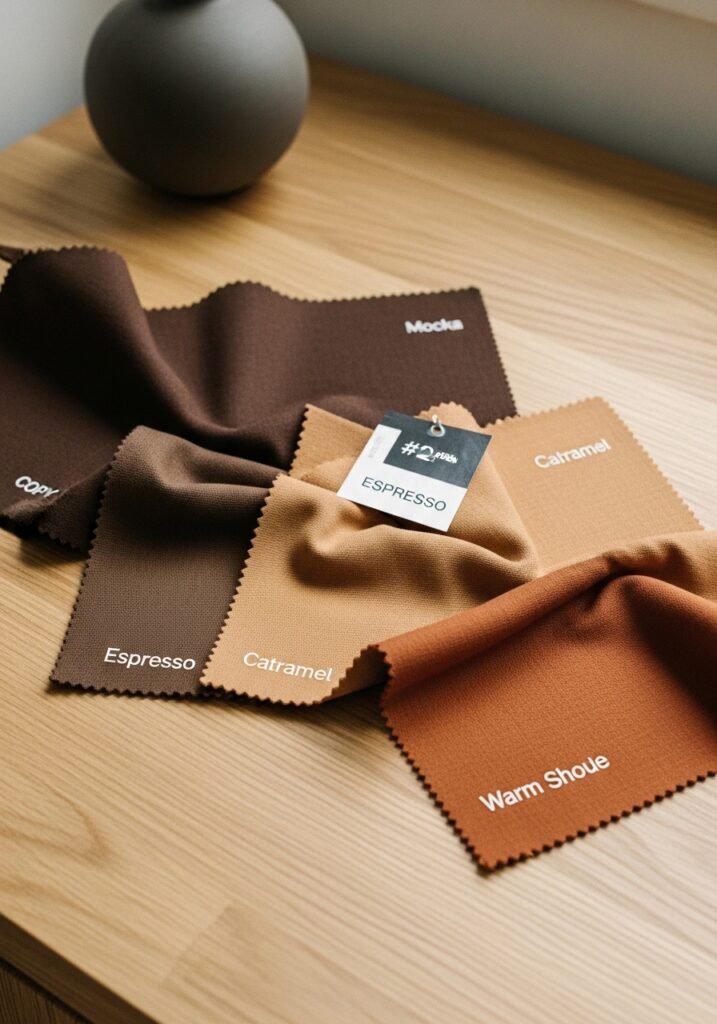
The shades doing heavy lifting right now: cognac (amber, warm, almost orange-adjacent in certain lights), chocolate (true deep brown with no red or yellow undertone), caramel (lighter, honeyed, works brilliantly in rooms that don’t get much natural light), and mocha (a middle-ground brown with just a whisper of grey that plays well with modern furniture lines).
In the US, cognac leather on a low-profile sofa with clean legs — think something architectural, not bulky — is absolutely the moment. In the UK, particularly in older homes with coving and original fireplaces, a deep chocolate velvet chesterfield or a rolled-arm sofa sits in the room like it was always supposed to be there.
The rule: go darker than you think. Brown is one of the few sofa colours where going bolder actually gives you more flexibility, not less. A pale beige-brown reads as indecisive. A rich, committed chocolate brown reads as intentional.
—
3. The Wall Colour That Makes a Brown Sofa Look Ridiculously Good
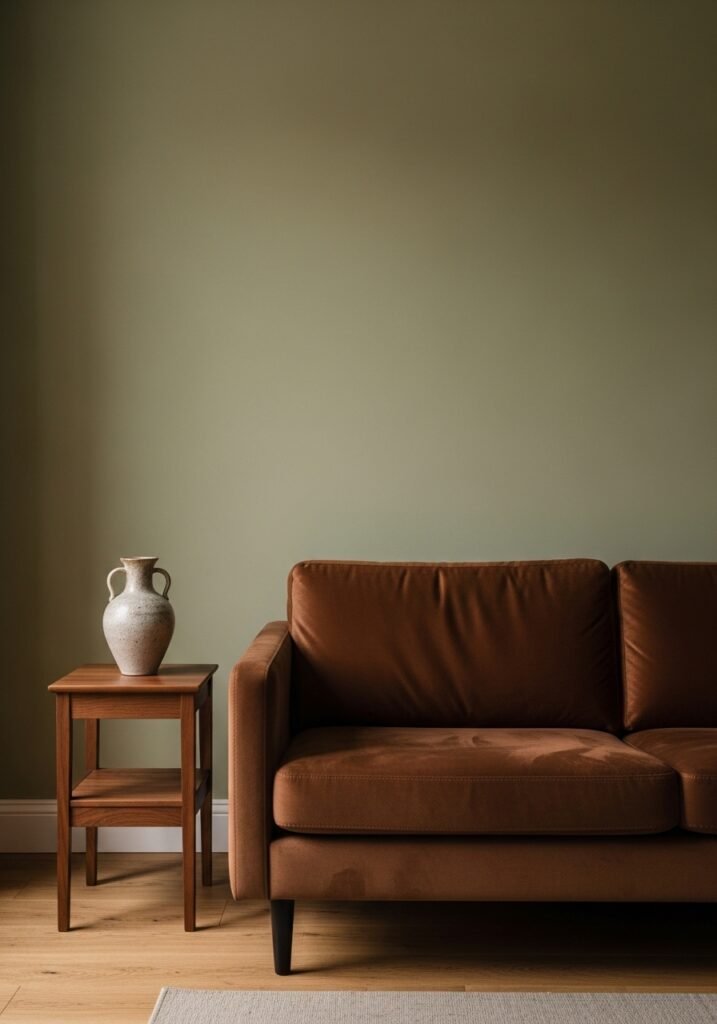
Here’s where most brown sofa mistakes happen. People pair a beautiful sofa with a white wall and wonder why the room feels flat. White doesn’t fight with brown — but it doesn’t do it any favours either. The combination is fine. Just fine.
What actually makes a brown sofa sing: terracotta. Warm sage. Deep moody olive. Burnt sienna. Even a properly warm off-white — not a cool white, not a grey-white, but something with a yellow or pink base like Farrow & Ball’s Elephant’s Breath, Nancy’s Blushes, or Benjamin Moore’s White Dove.
In a smaller American apartment, pairing a cognac sofa with terracotta walls creates a room that looks like it belongs in Architectural Digest and costs about a hundred dollars in paint to achieve. In a British sitting room, deep sage green walls behind a chocolate velvet sofa — maybe with some original cornicing painted out in the same colour — is one of those combinations that photographs beautifully and feels even better in person.
The light in your room matters more than any rule. Northern-facing rooms benefit from warmer walls to compensate. Southern-facing rooms can carry deeper, moodier tones without the space feeling oppressive.
—
4. Mixing Metals, Wood, and Brown in a Way That Doesn’t Look Cluttered
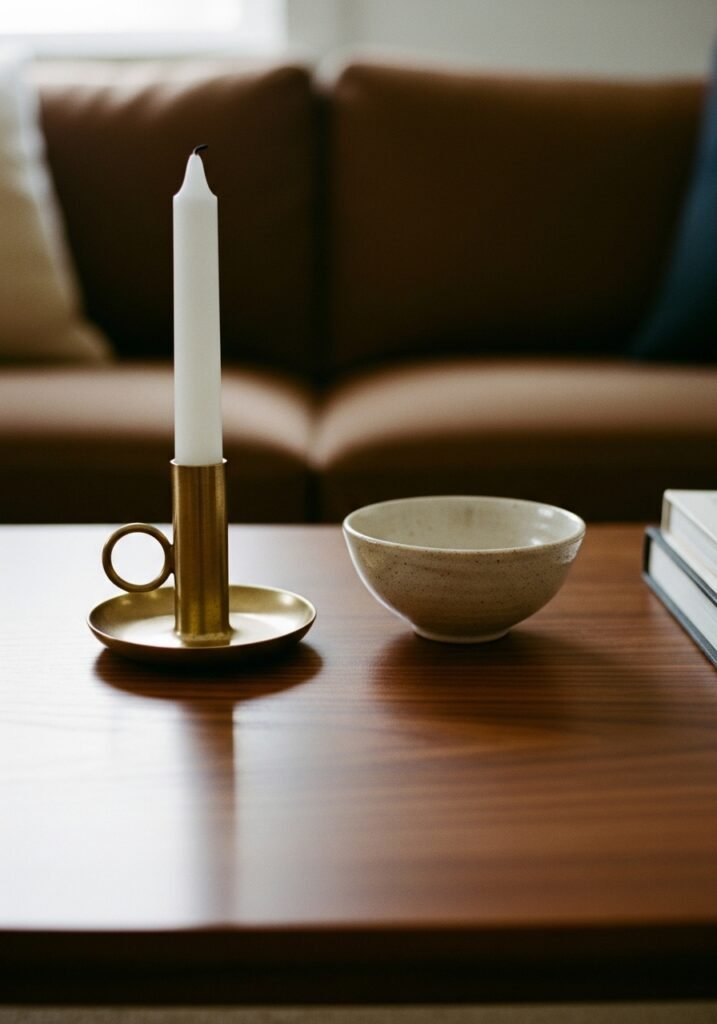
The question everyone asks: what else goes with it? Brown sofas have a reputation for being difficult to style. This reputation is entirely undeserved.
Brown is one of the most naturally compatible sofa colours when you understand what it actually is — a neutral with warmth. It plays beautifully with brass and gold hardware (lamp bases, side table legs, curtain rings). It sits perfectly alongside natural wood tones — oak, walnut, even lighter ash if your brown has enough depth to anchor the room.
The metal mixing rule that applies here: pick one dominant metal and use a second sparingly. Brass-dominant with small touches of matte black works wonderfully. Brushed nickel alongside warm bronze — less so. The eye needs a clear visual hierarchy, especially in a warm-toned room where everything is competing to feel expensive.
Wood: go for warmth over match. Your coffee table doesn’t need to be the same brown as your sofa. In fact, a lighter oak coffee table against a deep chocolate sofa creates gorgeous contrast. The tones harmonise without blending into one murky puddle.
“The room that tries to match everything ends up looking like nothing. Contrast is what makes a space feel designed.”
—
5. The Texture Combinations That Make a Brown Sofa Feel Expensive Without Spending More
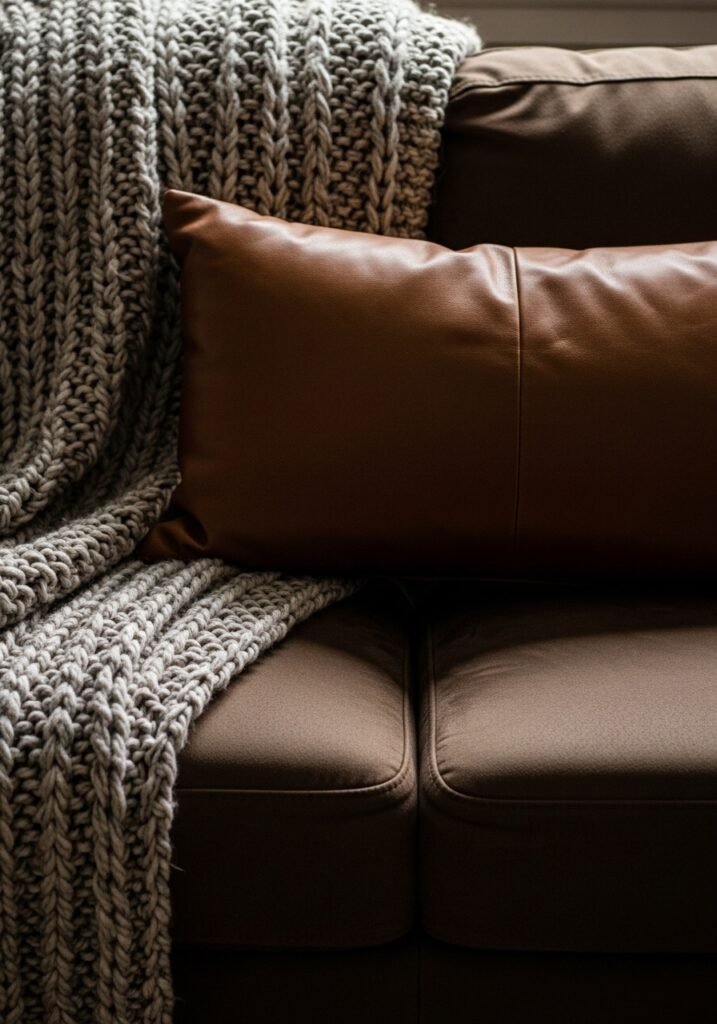
This is the secret that interior designers charge a lot of money to tell you. Colour is one thing. Texture is what separates a styled room from a showroom floor.
A brown sofa in velvet already has built-in texture — that soft, directional pile that catches light differently depending on how you’re sitting. Pair it with a natural fibre rug (jute, sisal, or a chunky wool), linen curtains in a complementary warm tone, and a couple of cushions in boucle, and suddenly the room has layers that invite you to keep looking.
Leather brown sofas are a different challenge. Leather is a hard, smooth surface, so the room needs softness everywhere else. Heavy linen drapes. A thick pile rug. Cushions in a mix of cotton and velvet. Maybe a knitted throw draped — not folded, draped — over one arm. The contrast between the leather’s structure and all that softness is exactly what makes the room feel considered.
In the UK, where older homes tend to have more architectural detail, adding texture through the walls themselves — limewash paint, exposed brick, original wood panelling — amplifies the warmth of a brown sofa without adding a single piece of furniture.
—
6. The Cushion Formula That Works Every Single Time
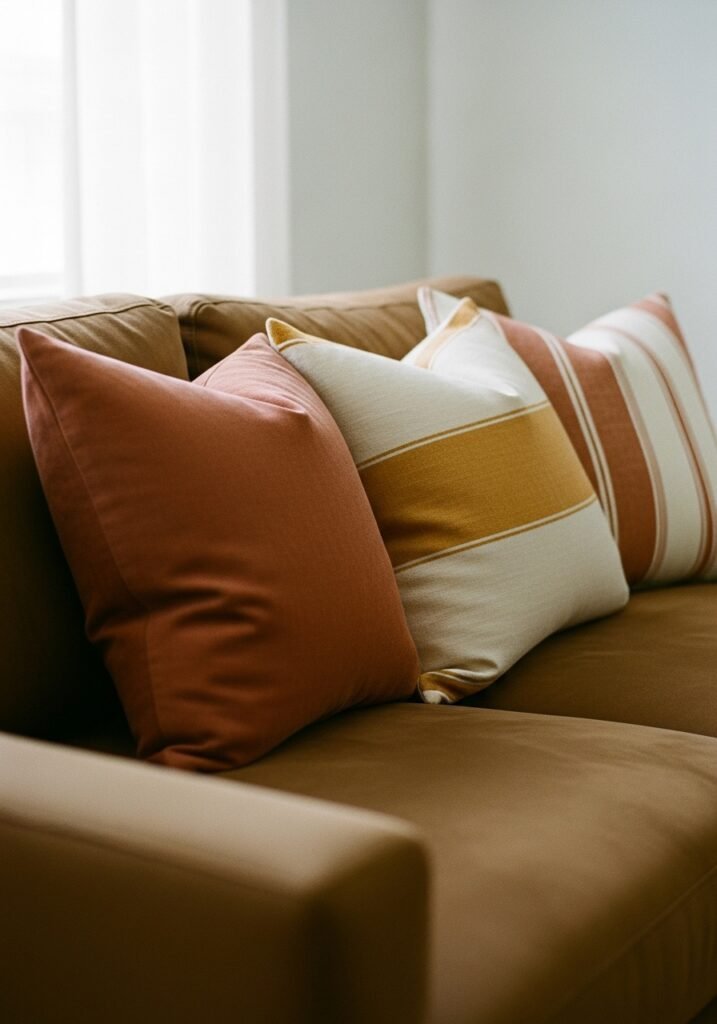
There is a formula. Once you know it, you’ll never overthink cushion styling again.
Start with one large cushion (about 22 inches) in a solid that pulls a secondary colour from the room — the warm sage from your wall, the dusty terracotta from your rug. Then add a medium cushion (about 18 inches) in a pattern: a subtle stripe, a soft geometric, a muted botanical. Then a third, smaller cushion in a contrasting texture — boucle, velvet, or embroidered linen.
For a brown sofa specifically: cream or off-white cushions are beautiful but go warm-white, not stark white. Rust or burnt orange adds life. Olive green adds sophistication. Deep navy is a bolder choice that works surprisingly well — the contrast is striking without being jarring.
American living rooms tend to style heavier, with more cushions and throws layered on. British sitting rooms often opt for fewer, more deliberate pieces. Both approaches work. The mistake is buying cushions that match too closely to the sofa colour — they disappear, and you lose the whole point.
—
7. How to Make a Brown Sofa Work in a Smaller Living Room
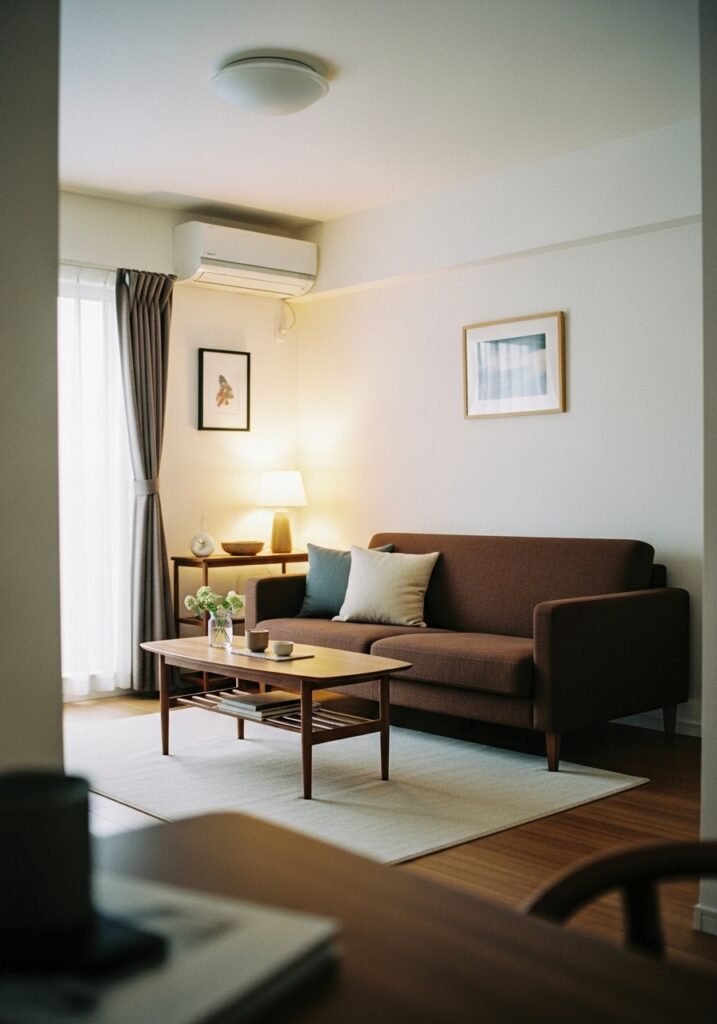
Small space styling is where brown sofas get unfairly dismissed. “A dark sofa will make the room feel smaller” — you’ve heard it, and it’s only half true. Yes, a massive, overstuffed brown sectional in a 12-by-12 room will dominate. But a well-proportioned sofa in a rich brown, in the right room, can actually make a small space feel more intentional and intimate rather than cramped.
The key is leg visibility. A sofa with visible legs — whether that’s mid-century style hairpin legs or straight tapered wooden ones — creates visual breathing room. The eye can see the floor continuing underneath the sofa, which reads as space. A sofa that sits on a plinth or skirts to the floor in a small room is the real culprit, regardless of colour.
Go lower too. A lower-profile sofa, even in a deep chocolate tone, sits lighter in a room. Pair it with a lighter rug underneath to anchor the seating area without swallowing the floor.
In a UK terrace house with a narrow front room, a brown two-seater with raised legs against a warm olive wall, minimal additional furniture, and a large mirror positioned opposite the window can feel like a very smart, considered city apartment. It’s all about proportion and intention.
“A dark sofa in a small room isn’t a problem. A wrong-sized sofa in any room is.”
—
8. The One Styling Trick That Makes Brown Feel Modern, Not Dated
Greenery. Not in a generic, “add a plant” way — in a very specific, deliberate way.
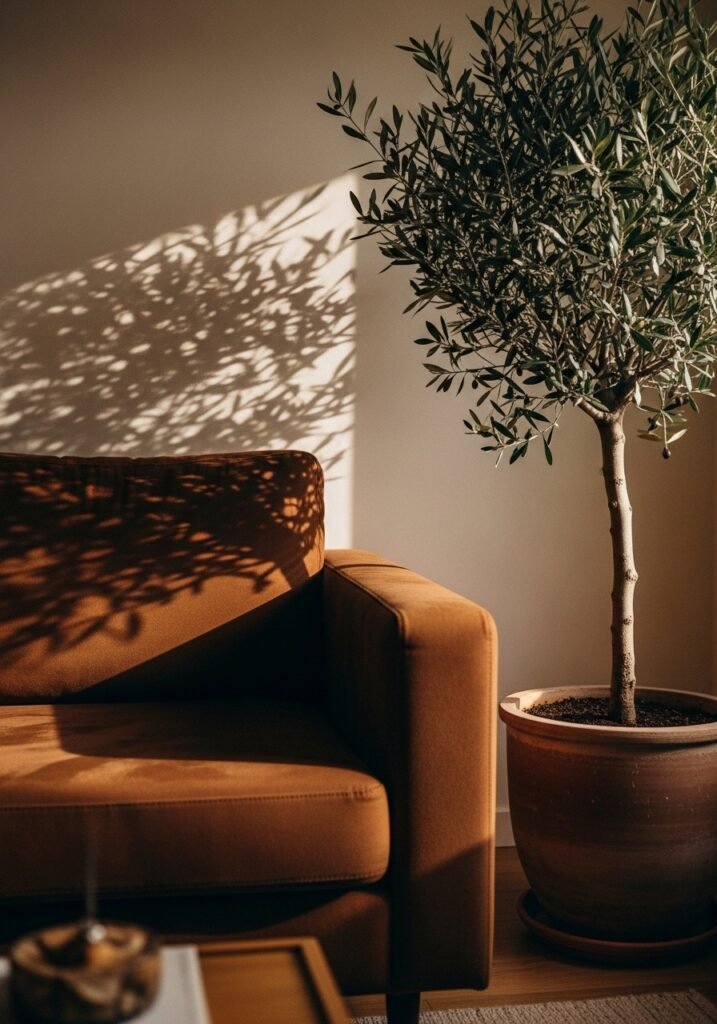
The plant shapes that work best alongside a brown sofa are the ones with strong architectural silhouettes. A fiddle-leaf fig with its large, glossy leaves. A tall snake plant with its sharp vertical lines. A cascading pothos on a high shelf, those long tendrils catching the warm light. A single olive tree in a terracotta pot, if you have a south-facing room with real natural light.
What connects brown to the contemporary interior design moment is this: brown is a fundamentally organic colour. It belongs to wood, earth, bark, leather. Plants don’t just accessorise a brown sofa — they complete its visual story. The room starts to feel like a deliberate celebration of natural materials rather than a style leftover.
In American homes, large statement plants tend to be more popular — single, dramatic specimens. In British homes, the styling often leans toward clusters of smaller plants, shelves of trailing and trailing greenery. Either approach works brilliantly alongside brown.
—
9. Art and Prints That Make a Brown Sofa Wall Look Curated
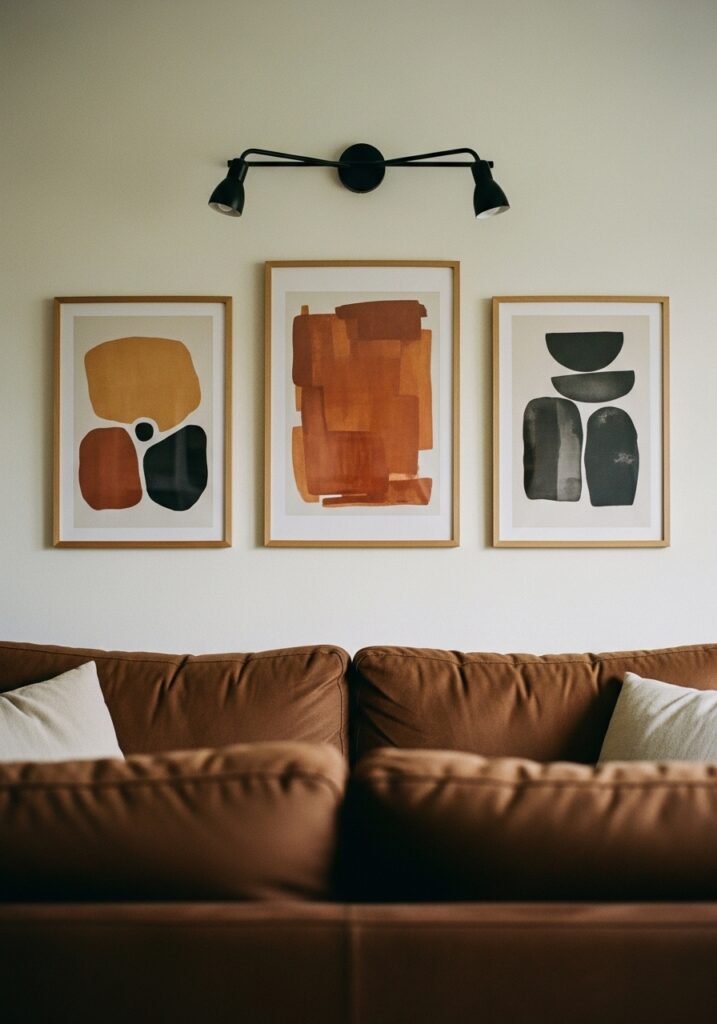
The wall behind your sofa is the most photographed wall in your house. It’s worth thinking about seriously.
Abstract art with warm tones — ochre, terracotta, rust, warm gold — ties the wall to the sofa naturally. Botanical prints are having a serious moment in both the US and UK right now, especially oversize ones in simple warm-wood or thin black frames. Landscape photography with golden hour tones. Vintage-style maps or architectural drawings in amber or sepia.
What to avoid behind a brown sofa: anything with a lot of cool blue or stark black and white. Not because it can’t work — sometimes bold contrast is the whole point — but because it tends to visually disconnect the wall from the sofa below it. The eye expects harmony and finds division instead.
Frame sizes matter more than most people think. A gallery wall behind a brown sofa works well when there’s a deliberate mix of scale — one larger anchor piece, several smaller ones arranged around it. Everything the same size feels static. Graduated sizes feel alive.
—
10. The Rug That Ties It All Together (And the One That Ruins It)
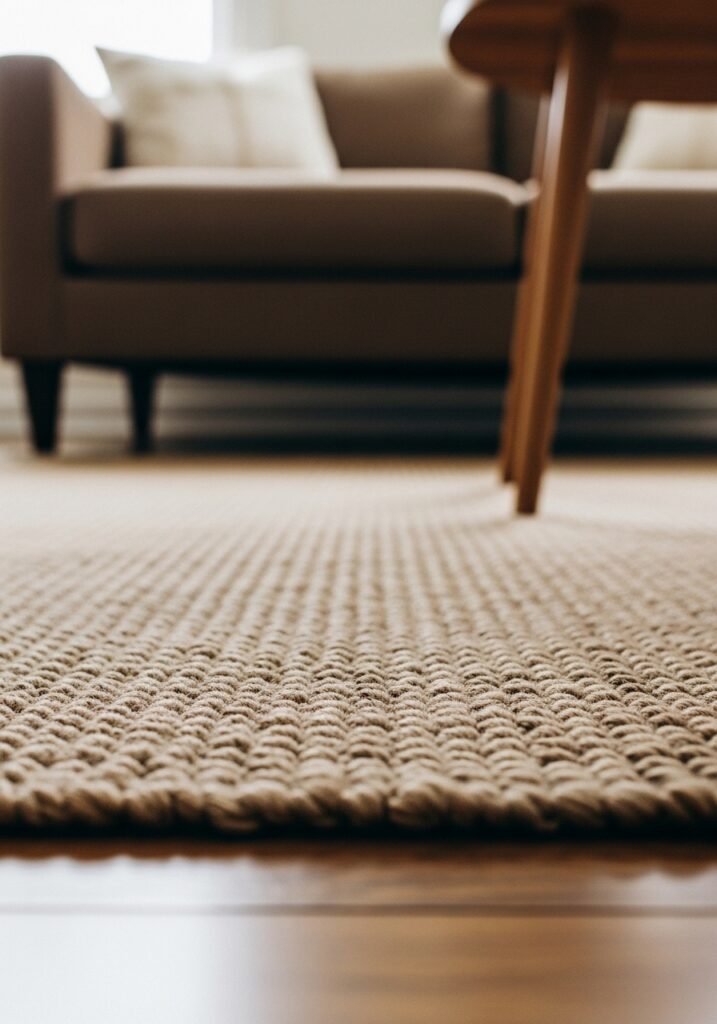
The rug is where brown sofas most often go wrong. And right.
A cream or ivory rug under a brown sofa is a classic combination that works for a reason — the contrast is clean and warm without being stark. A terracotta or rust-toned rug deepens the warmth of the whole room. A dark navy or forest green rug is the bold choice that pays off beautifully when the rest of the room is kept relatively quiet.
The rug that ruins it: anything with strong cool-grey tones. Grey and brown don’t fight exactly, but they don’t speak to each other either. The room feels like two people having separate conversations.
Size matters enormously. The rug should be large enough that at least the front legs of all seating sit on it. A rug floating in the centre of the room beneath the coffee table, with every piece of furniture arranged outside it, is one of the most common home styling mistakes in both countries.
In a large American open-plan living space, go bigger than you think — 9-by-12 feet at minimum for most sofa configurations. In a British sitting room, even an 8-by-10 often works well, but don’t drop below 6-by-9 if you can avoid it.
—
11. Lighting Choices That Make a Brown Sofa Living Room Feel Like a Retreat
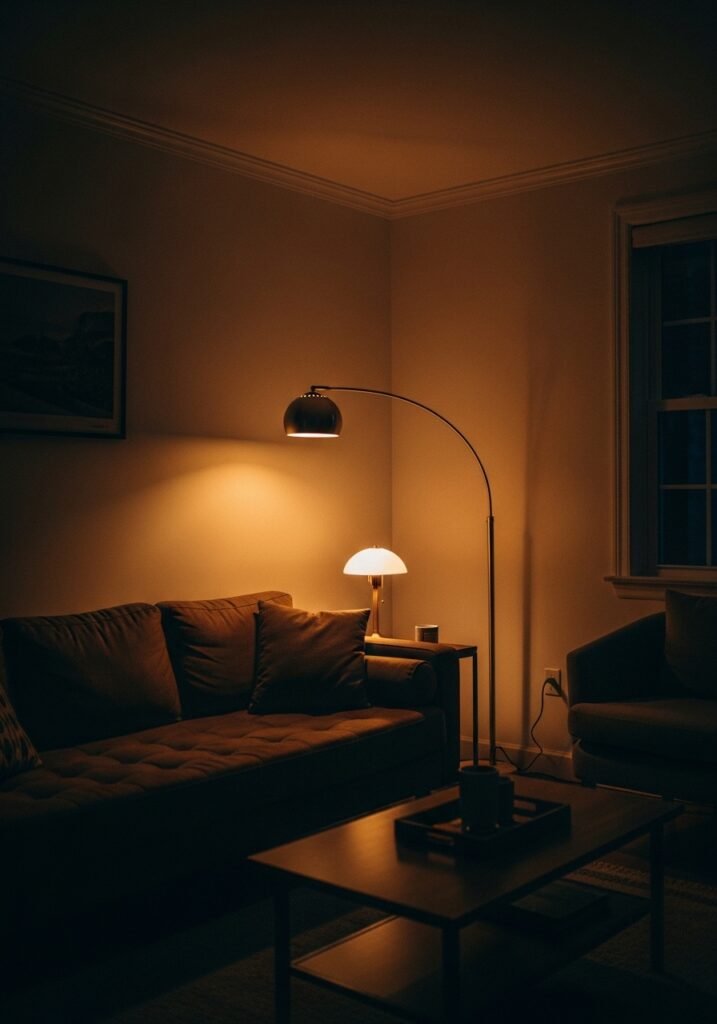
Brown absorbs light differently from lighter sofa colours. In the wrong light — harsh overhead, cool-toned LED — a brown sofa can look flat and tired. In the right light, it glows.
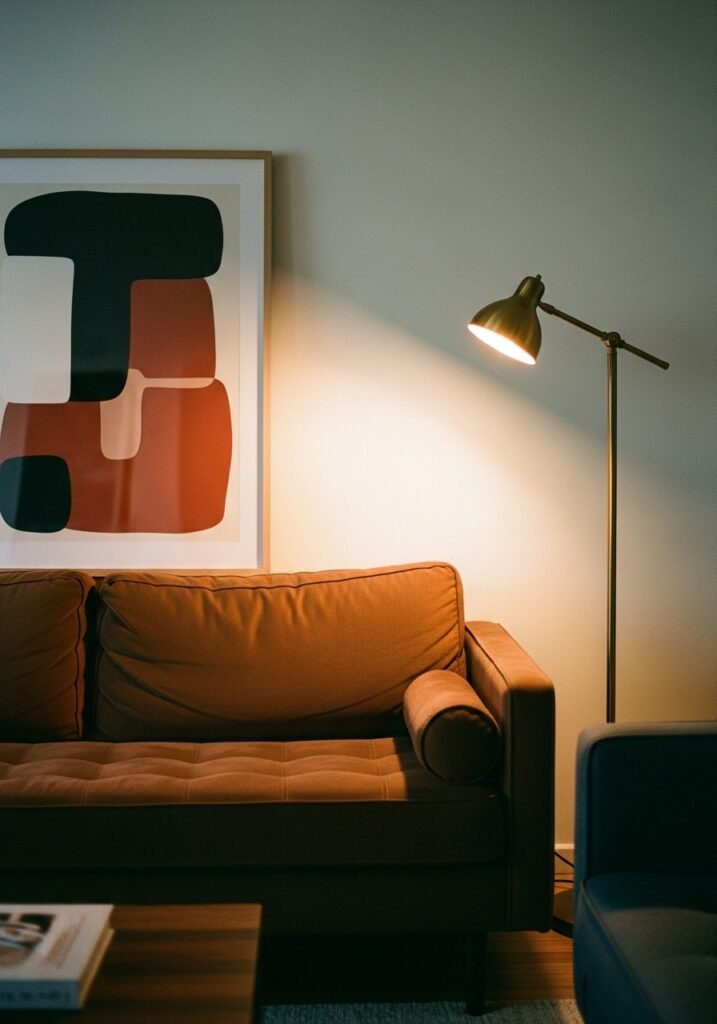
The amber glow of an Edison bulb at 7pm is basically the entire aesthetic you’re going for. Warm-toned bulbs (2700K-3000K) in table lamps placed at seating height flatter a brown sofa in ways that overhead lighting simply cannot. A floor lamp positioned behind one end of the sofa creates a halo effect that’s impossibly cosy.
Layered lighting is the goal. Overhead ambience on a dimmer. A table lamp on the side table. A floor lamp behind the sofa. Candles on the coffee table in the evening. Each layer adds depth and warmth, and by the time you’re sitting on that brown velvet sofa with a glass of wine and the lamps all low, the room looks like something from a very good hotel.
In the UK, where natural light is genuinely limited for a significant portion of the year, this layering isn’t a luxury — it’s necessary. Dark autumn and winter afternoons call for a living room that can carry its own warmth from within.
—
12. The One Thing That Makes a Brown Living Room Feel Truly Finished
It’s usually the thing people do last. Or skip entirely.
A scent.
This sounds like an unusual piece of decorating advice, but the rooms that feel most put-together — the ones that stop you in the doorway and make you want to curl up immediately — almost always have a consistent, warm scent layered into them. A candle burning on the coffee table. A diffuser tucked onto a bookshelf. A dried eucalyptus bunch behind the sofa.
The scents that work best with a brown, warm-toned living room: sandalwood, cedar, amber, vanilla, tobacco and leather, fig, and warm musk. Not florals. Not citrus. Not anything sharp or fresh. You want the scent to reinforce the visual story the room is already telling — organic, warm, grounded, rich.
The finished room is the one that works on every sense at once. When someone walks in and says “I love this room” without quite knowing why, scent is often the invisible reason.
—
🌿 Quick Tips
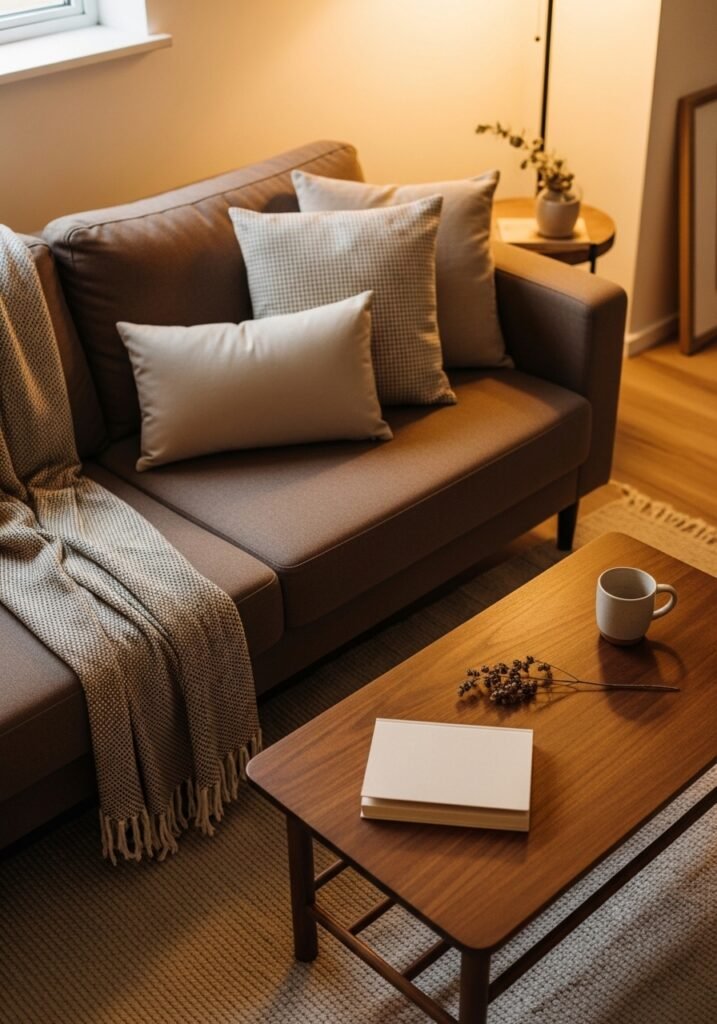
Go warm-toned on your walls — even a simple swap from cool white to a warm off-white changes everything immediately without touching a piece of furniture.
Choose a rug that’s bigger than you think you need. The sofa legs — at least the front ones — should sit on it. A rug that’s too small makes even beautiful furniture look like it’s floating awkwardly.
If you’re buying leather, go full-grain rather than bonded — it develops a patina over time that makes the sofa look more expensive the older it gets, not less.
Layer your lighting. One overhead light and nothing else makes any room, regardless of how beautiful the sofa, look like a waiting room.
Resist the urge to match everything. Your cushions, curtains, and coffee table don’t need to coordinate — they need to converse.
—
❓ FAQ
Q: Does a brown sofa make a living room look dated or old-fashioned? A: Only if you style it that way. A brown sofa in the right shade — cognac leather, deep velvet chocolate, warm caramel — paired with modern lighting, architectural plants, and warm-toned art reads as completely current. The key is committing to intentional styling rather than leaving it to chance.
Q: What colours should I avoid pairing with a brown sofa? A: Cool grey tones are the most common mismatch — they don’t clash exactly, but they don’t warm the room up either. Very stark, cool white can flatten a brown sofa visually. And too much black alongside brown can feel heavy without feeling sophisticated. Stick with warm neutrals, muted greens, terracotta, and navy for the best results.
Q: Is leather or fabric better for a brown sofa in a family home? A: Both work well depending on your lifestyle. Full-grain leather is famously easy to wipe clean and improves with age — it’s genuinely one of the more practical choices for families, despite its luxurious appearance. Quality velvet or heavy linen can be equally durable but may require professional cleaning for deeper stains. Whatever you choose, buy the best quality you can stretch to. A cheap sofa in either material will look cheap within a year.
—
💭 Final Thought
The brown sofa you’ve been pinning and second-guessing and almost buying three times? It probably belongs in your room. Not because brown is safe — it isn’t, actually — but because warmth, when done with intention, is one of the most enduring things a room can have. The colours we chase and abandon season after season rarely give us that. Brown does.
So: what’s the one thing that’s been stopping you from committing to it?