The Modern Boho Living Room Formula That Actually Feels Lived-In (Not Staged)
You know the living room on Pinterest that looks effortlessly collected, warm, and somehow both rustic and current — like someone with excellent taste just lives there? That room is achievable. And the secret isn’t buying more stuff.
—
1. Why “Modern Boho Rustic” Is the Most Forgiving Style You’ll Ever Decorate In
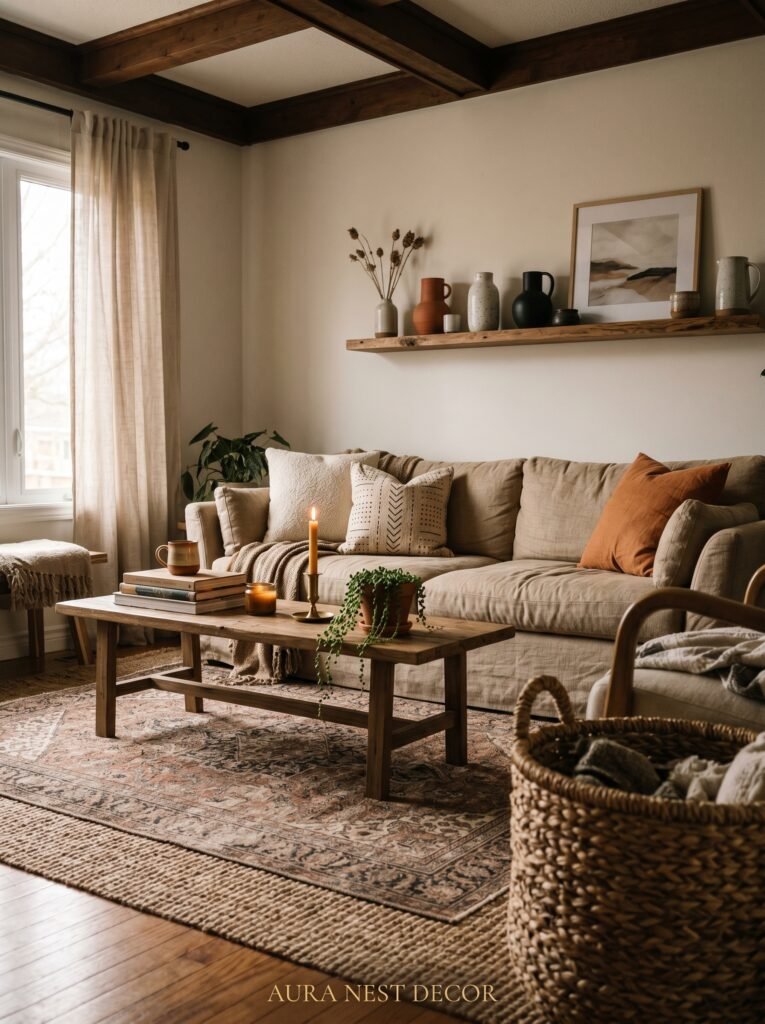
Here’s the thing nobody tells you about modern boho with rustic elements: it’s the most forgiving decorating style in existence. There is no strict grid. No matching sets required. No penalty for mixing a £12 charity shop find with a proper investment piece. The whole aesthetic is built on the idea that beautiful things can come from anywhere — a flea market in Marrakech, a roadside barn sale in Tennessee, or frankly, your grandmother’s attic.
What separates modern boho from its maximalist predecessor isn’t less stuff — it’s more intention. Every object earns its place because it has texture, story, or warmth. The rustic element is what keeps it from floating away into something airy and anonymous. Raw wood, woven jute, aged terracotta, handmade ceramics with a slightly uneven rim — these are the anchors. They say: someone real lives here.
The “modern” part is about editing. You’re not throwing every macramé piece you’ve ever owned onto one wall. You’re choosing the best one. You’re pairing it with clean lines and negative space that lets it breathe. That balance — wild and considered, rough and refined — is exactly what makes this style so satisfying to live with every single day.
“Modern boho isn’t about collecting everything beautiful. It’s about knowing which beautiful things to keep.”
2. The Neutral Base That Makes Every Texture Pop Without Looking Muddy
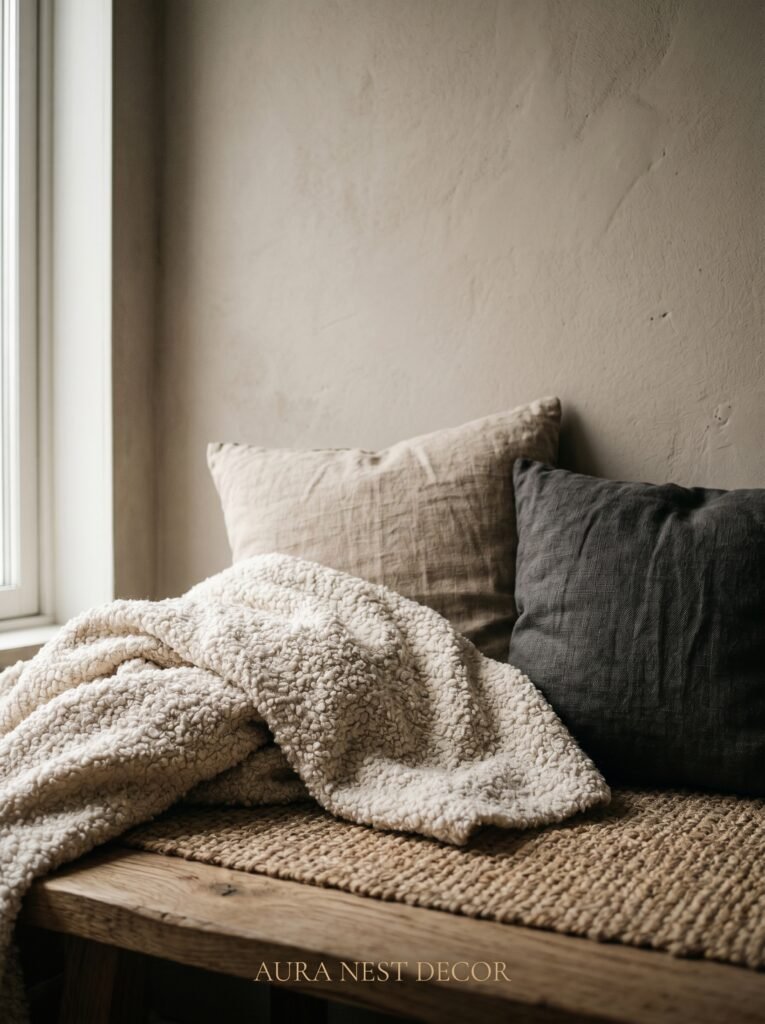
Before a single throw pillow gets placed, the walls and floors need to do quiet work. In a modern boho rustic room, your base palette should feel like the inside of a pottery studio — creamy whites, warm taupes, dusty greiges, and the occasional soft terracotta wash. These aren’t boring colours. They’re the canvas.
In the UK, where natural light comes at a premium, go warmer than you think you should. A cool white wall will drain all the life out of your woven rattan and aged wood furniture the moment the sky turns grey — which, let’s be honest, is most of the year. Choose paint tones with yellow or pink undertones. Farrow & Ball’s Elephant’s Breath, String, or Dead Salmon are all doing heavy lifting in modern boho rooms right now and for good reason.
For American homes with bigger windows and more direct sunlight, you have more latitude to go slightly cooler without losing warmth — but the principle holds. Benjamin Moore’s White Dove and Pale Oak are perennial favourites for this style.
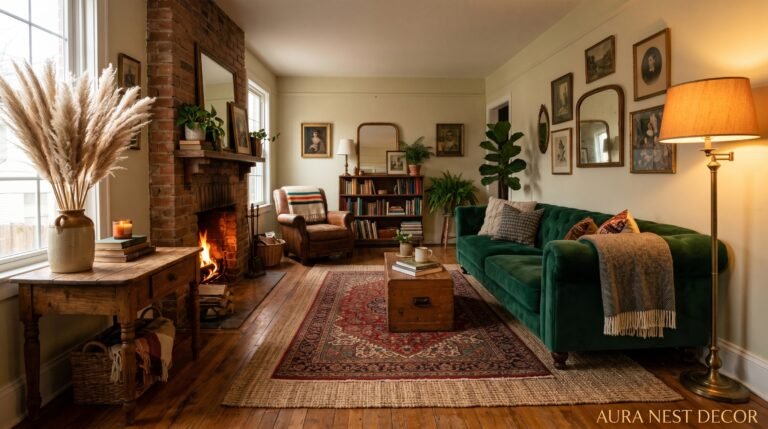
Flooring matters enormously. If you have hardwood, show it. If you have carpet, layer a large flatweave or kilim-style rug directly over it and don’t feel weird about it. The layered rug look is both practical and absolutely central to this aesthetic. Dark, wide-plank floors work beautifully. So do lighter bleached oak tones. What doesn’t work? Anything shiny.
3. The Sofa Decision That Determines Everything Else in the Room
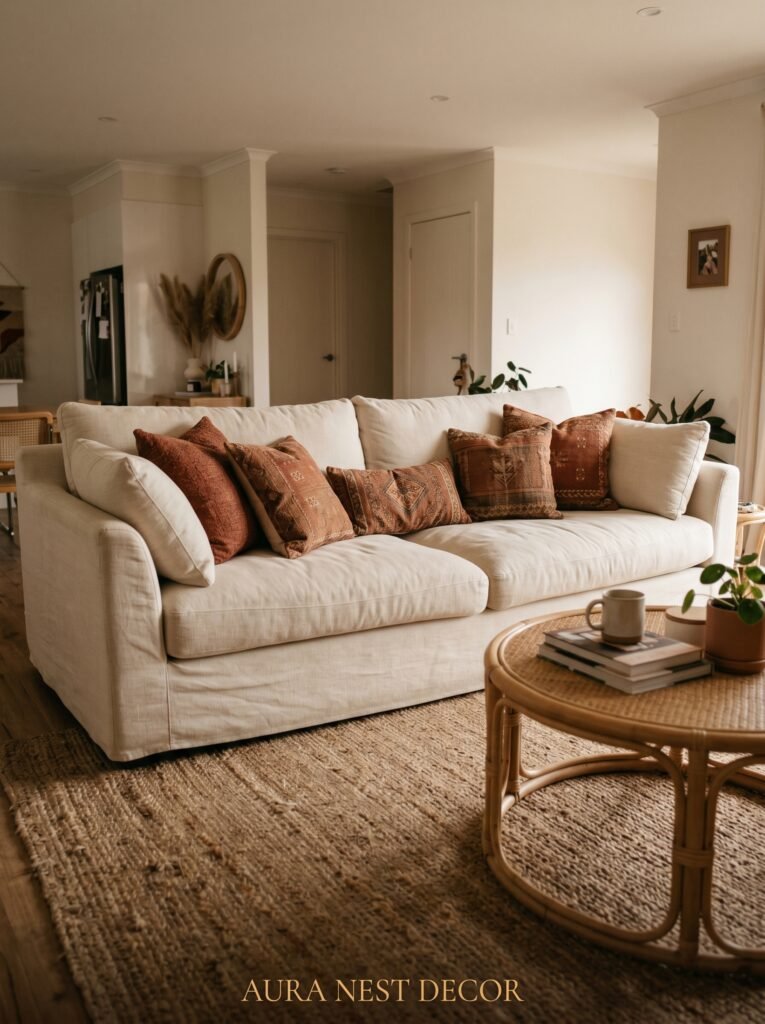
Your sofa is the mountain everything else orbits. Get this right and the whole room falls into place. Get it wrong and no amount of trailing plants or ceramic vases will save you.
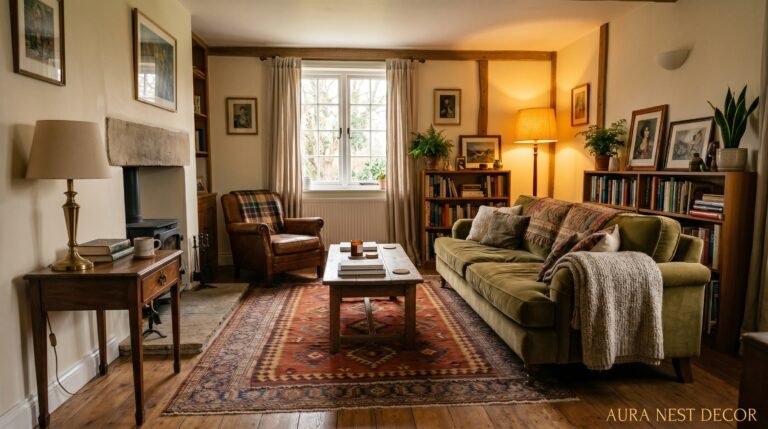
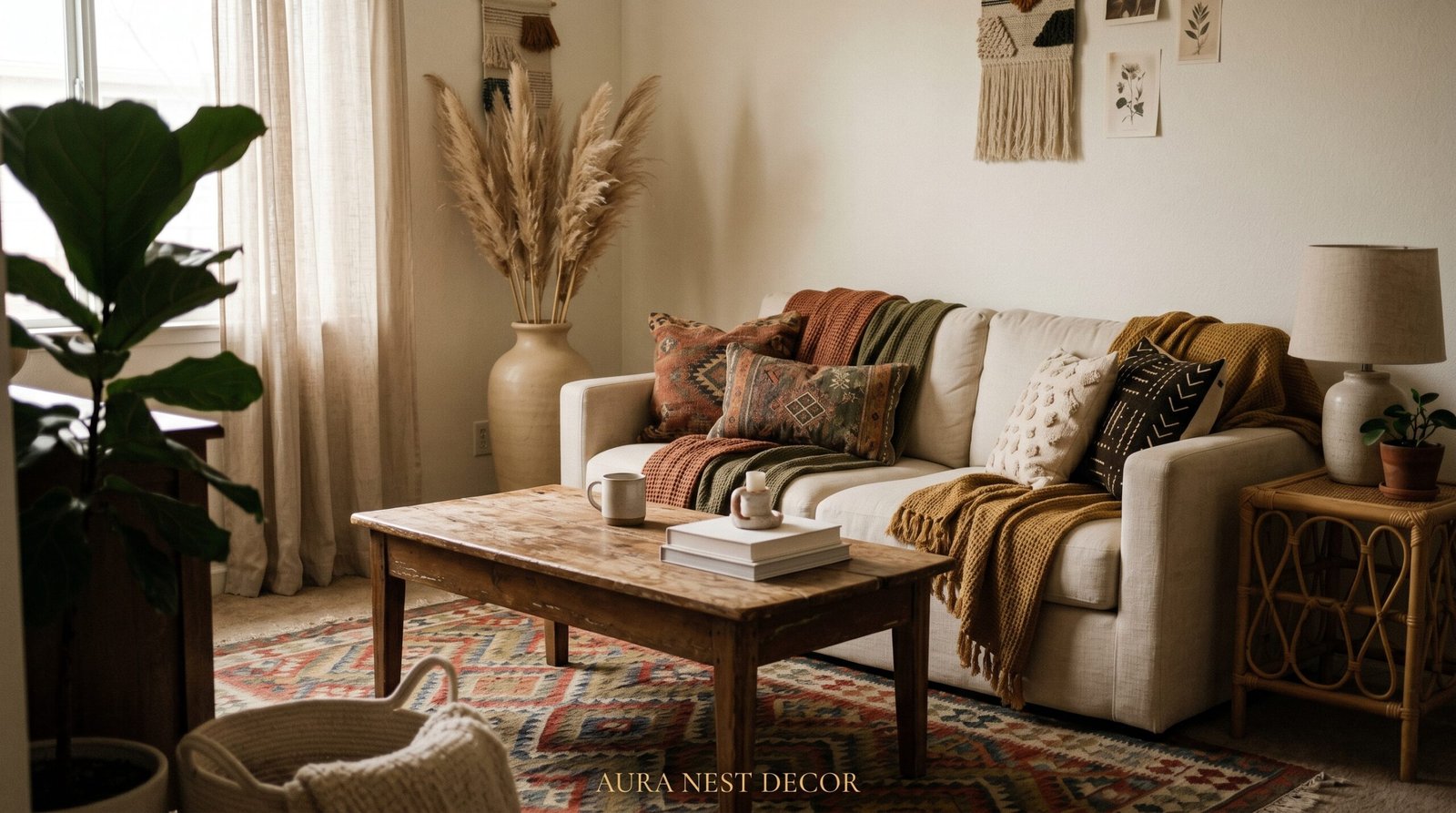
For modern boho with a rustic lean, you want something that looks like it has a history — or could develop one. Linen slipcovers in oatmeal or warm white age beautifully and wash well, which matters when you actually use your living room. Vintage leather in tobacco brown or worn cognac is spectacular if you can find it — a good quality second-hand Chesterfield with some wear already built in is more interesting than a new one. Boucle has had its moment, and it’s staying — textured, nubby, and tactile in the best way.
What shape works? Deep, low sofas with loose cushions over anything rigid and formal. A curved sofa front in a rust or warm terracotta velvet, placed on a layered rug with a low coffee table, is the singular most-pinned modern boho image for a reason. It looks like you could fall asleep there on a Sunday afternoon, which is essentially the goal.
Avoid anything too sleek, too sharp-cornered, or too matching-with-everything. The sofa should look like it was chosen with strong personal conviction, not fear.
4. The Coffee Table Rule That Interior Designers Won’t Say Out Loud
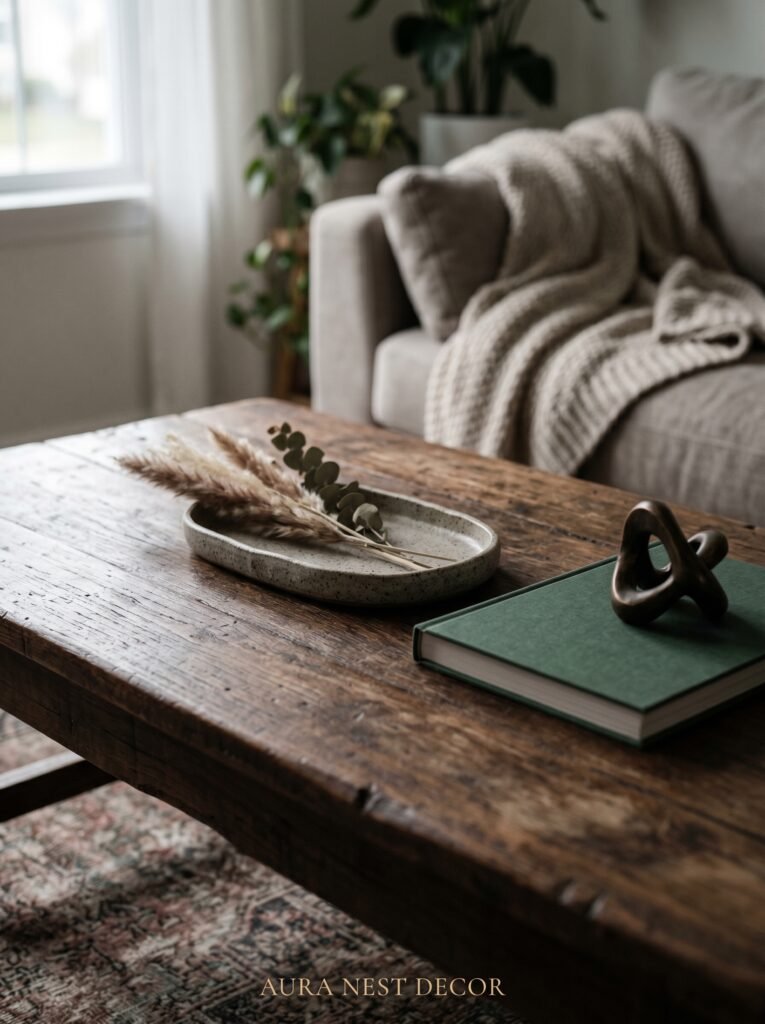
Stop buying matching coffee table sets. The paired coffee table plus matching end table plus matching TV console look is the fastest route to a room that feels like a catalogue page rather than a home.
In a modern boho rustic living room, your coffee table should be the most interesting single object in the room after the sofa. A thick slice of solid mango wood on tapered iron legs. A vintage Moroccan wooden trunk with brass hardware that also serves as storage. A large rattan-wrapped side table with a glass top you found at a market. A concrete oval that sits almost floor-level, surrounded by floor cushions.
The styling on top is where things get genuinely joyful. You’re not doing the three-item tray setup with a fake candle and a styled book. You’re doing a cluster of real objects: a chunky pillar candle that’s actually been burned, a small handmade ceramic bowl with actual things in it (a few crystals, a lighter, a spare hair tie — real life), a small stack of books you’ve genuinely read. One very good small plant in an aged terracotta pot. Maybe a piece of driftwood or a smooth river stone.
The mess is the point. The beautiful, edited, intentional mess.
“The most convincing living rooms look like real people interrupted them.”
5. Textiles Are Where Rustic Boho Actually Lives — Here’s How Not to Overdo It
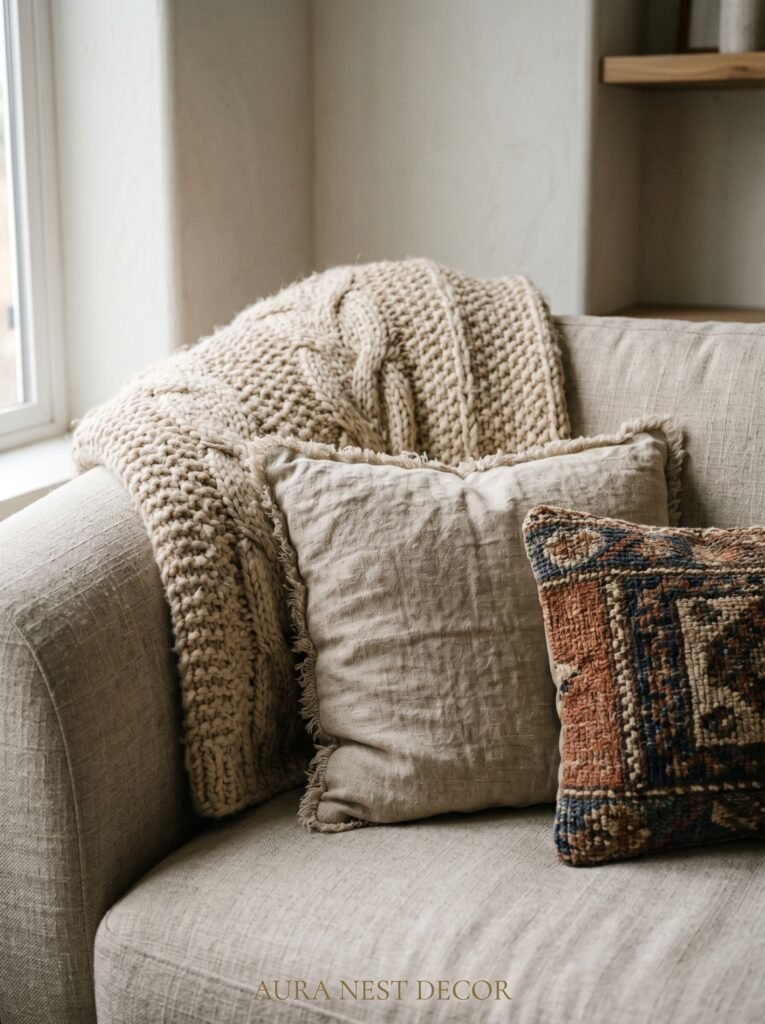
Texture is the entire language of this style, and textiles are how you speak it. But there’s a version of this that goes very wrong very fast — the room where every surface is covered in so many competing patterns and fibres that your eye doesn’t know where to rest.
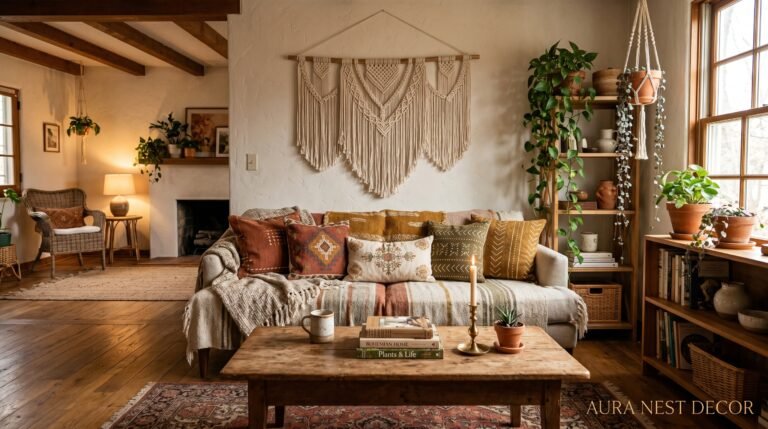
The rule that actually works: vary texture more than pattern. Pick one or two patterns maximum — say, a vintage kilim-style rug and one printed throw pillow. Everything else should be textural but relatively solid. Chunky knit throws. Solid linen pillow covers in rust, ochre, or deep sage. A woven jute rug layered under the patterned one. Sheepskin draped over the arm of a chair.
In terms of colour, the modern boho palette for textiles is doing something specific right now that feels very right. It’s leaning into earthy warmth — terracotta, burnt sienna, deep ochre, forest green, camel, off-white — rather than the blush-and-cream palette that defined the previous decade. These are colours that look good year-round and reference the natural, slightly rough world that rustic boho draws from.
One more thing: don’t hang your throw pillow collection across the sofa in a perfect symmetric row. Bunch them. Layer them. Knock one slightly forward. This is the single cheapest thing you can do to make your living room look more considered.
6. What “Rustic” Actually Means in 2025 — Because It Isn’t What It Used to Be
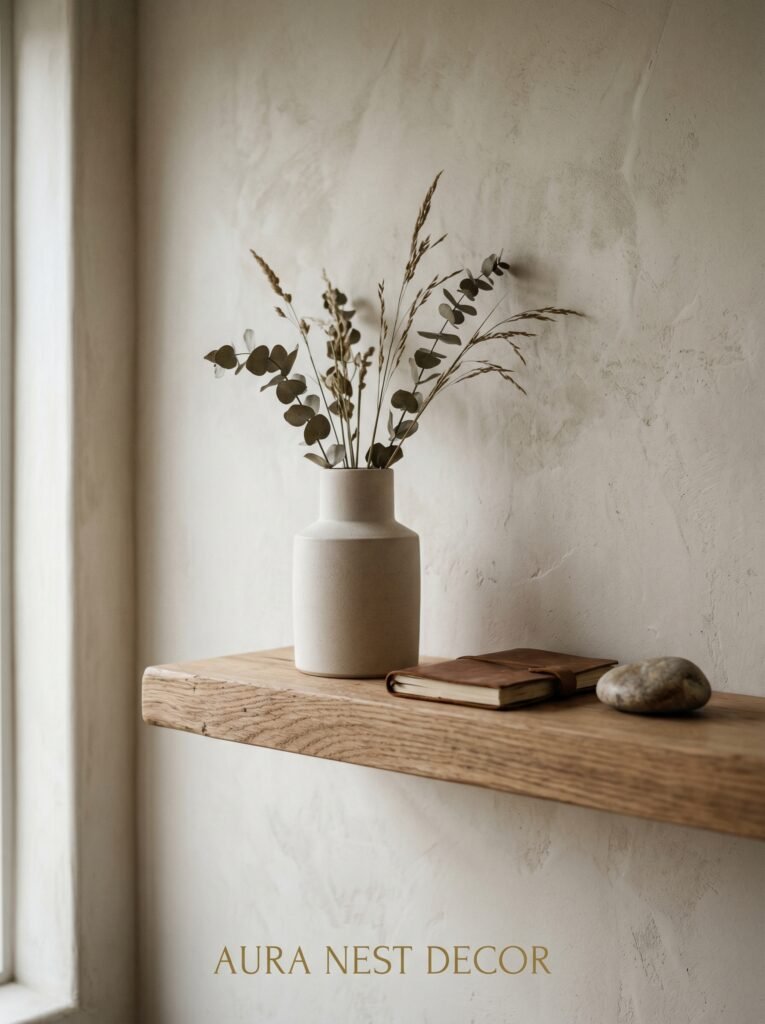
Rustic used to mean hunting lodge. Checked blankets, antler decor, that sort of energy. Then it went through a reclaimed-wood-everything phase that felt more like a farm-to-table restaurant than a home. Neither of those is what we’re doing.
Rustic in 2025 means handmade, imperfect, and materially honest. It means a wooden stool where you can still see the grain and maybe a small knot. A linen cushion where the weave is visible and slightly irregular. A clay vase where the fingerprints of the person who made it are practically still there. It means wrought iron hardware on a wooden cabinet rather than brushed gold. It means wicker and rattan and seagrass, which are genuinely rustic materials that happen to look impeccably current.
It also means not pretending things are what they’re not. Real wood, not wood-effect laminate. Actual cotton and linen, not polyester trying to look like them. These differences are felt even by people who can’t articulate them. A room full of natural materials has a different quality of presence than one full of synthetic approximations, and you feel it the moment you walk in.
This isn’t about spending more money. Charity shops and estate sales in both the US and UK are full of genuinely rustic, genuinely beautiful objects for almost nothing. It’s about knowing what you’re looking for.
7. The Plants That Complete a Modern Boho Room (And a Few That Undermine It)
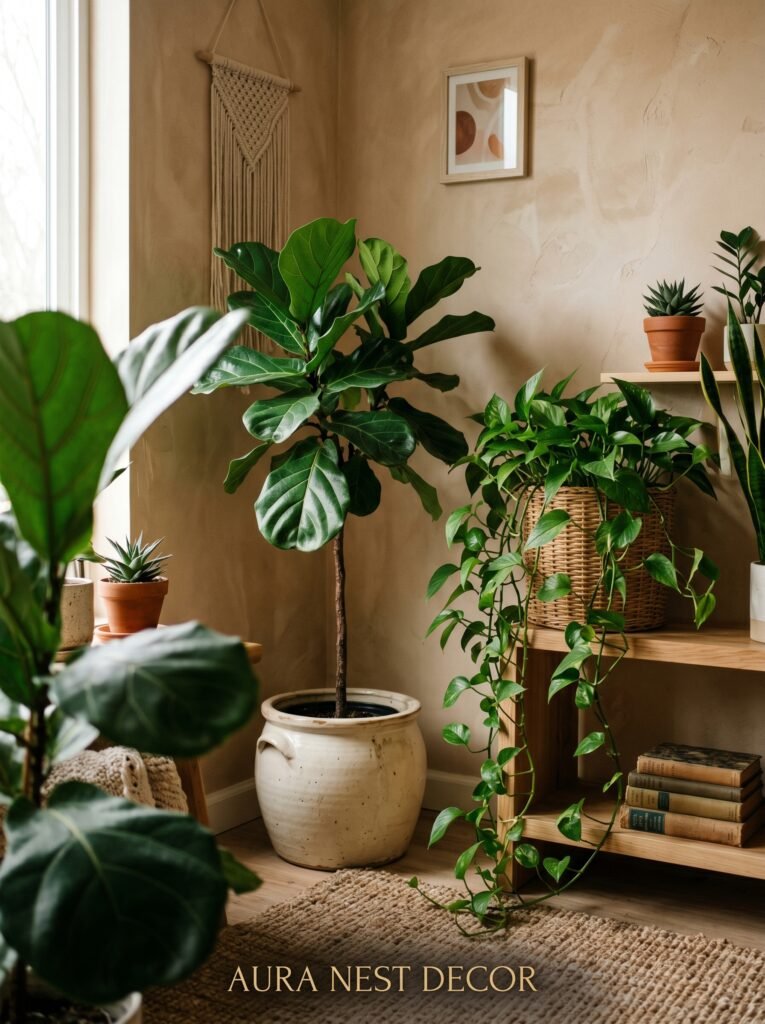
Plants are non-negotiable. But not all plants speak the same language, and the wrong ones can pull a modern boho room toward something that reads more like a suburban conservatory.
The ones that work: trailing pothos and string-of-pearls spilling off shelves and over mantelpieces. A large fiddle leaf fig or olive tree in the corner as a genuine statement. A rubber plant in a deep burgundy variety if you can find one. Dried pampas grass — yes, it’s still here, and no, it’s not leaving — in a tall ceramic or terracotta vase. Eucalyptus branches. A small cactus or succulent cluster in a handmade bowl. Anything with silvery-grey leaves like a senecio.
The ones that work against you: very formal topiary shapes. Plastic plants of any kind, full stop. Overly perfect matching pairs of plants flanking a fireplace (too formal, wrong energy). A lone tiny succulent on a large shelf doing nothing.
The secret is height variation. A tall tree, a mid-level shelf plant, trailing at the edge, and small grounding pieces near floor level. This creates the sense that the plants are just… happening, naturally, throughout the space. Which is exactly the feeling you want.
“A living room with real plants is always more alive than the most expensive furniture can make it.”
8. Lighting Is the Mood, Not the Afterthought — And This Style Gets It Right
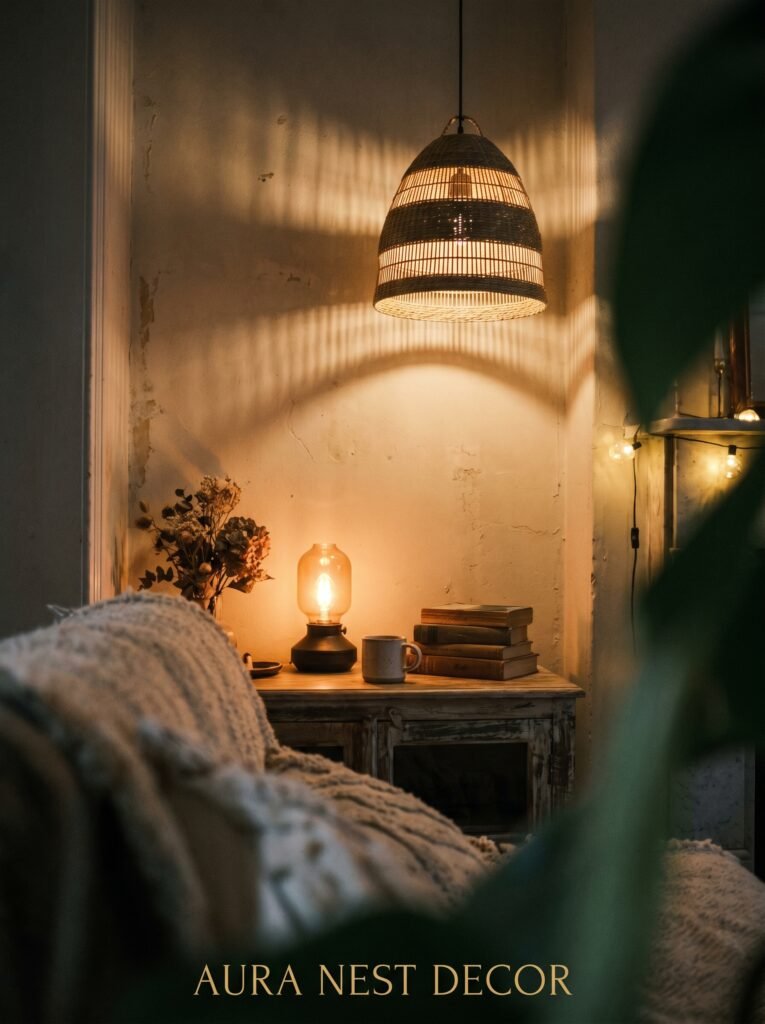
This style is practically allergic to harsh overhead lighting. The overhead fixture, if you have one, is for daytime use only. It should be something beautiful in itself — a woven rattan pendant, an aged metal chandelier, a macramé shade — but the real atmosphere comes from layered light sources set lower in the room.
Floor lamps with linen shades in warm amber tones. Table lamps on side tables with Edison bulbs that glow that particular deep gold at 7pm. A cluster of pillar candles on the coffee table that you actually burn. Fairy lights wound through a trailing plant on a high shelf. A Moroccan lantern on the floor in a corner casting small diamond shadows on the wall.
What this creates is warmth, obviously — but more specifically, it creates pockets of light that give the room zones and depth. The boho aesthetic is fundamentally about a room that feels inhabited and sensory, and layered warm lighting is the fastest way to achieve that. It costs very little relative to furniture.
One practical note: warm bulbs only. 2700K or below. Anything cooler and you lose the entire effect. This applies whether you’re in Birmingham, Alabama or Birmingham, England.
9. Bookshelves That Look Personal, Not Performative
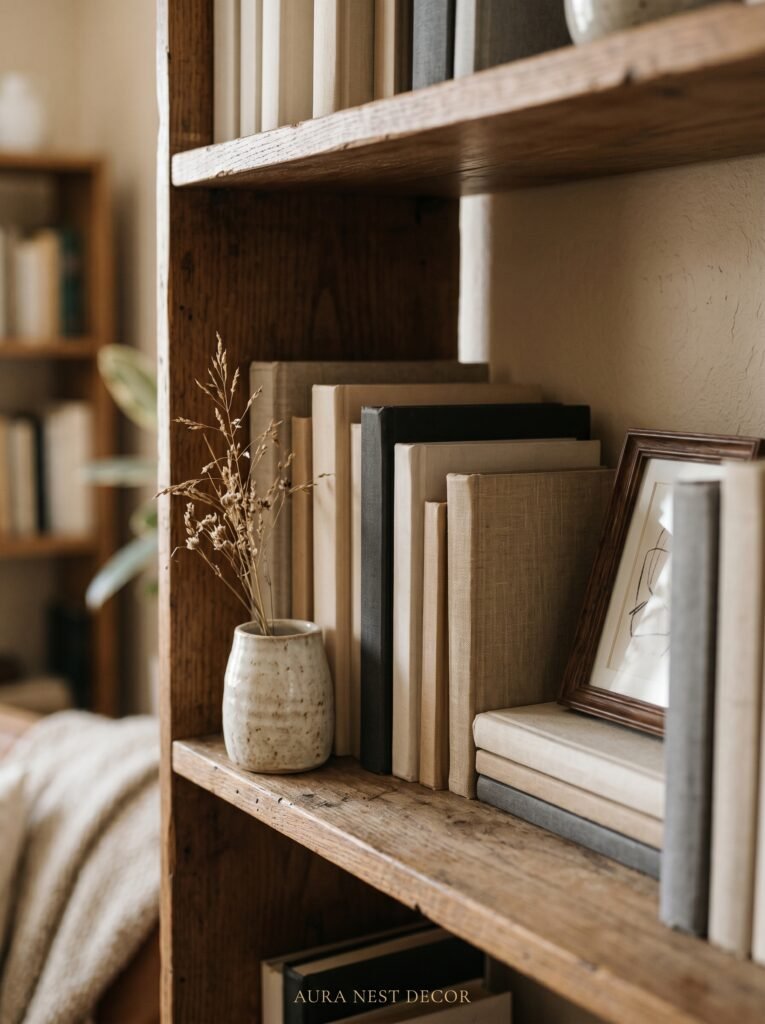
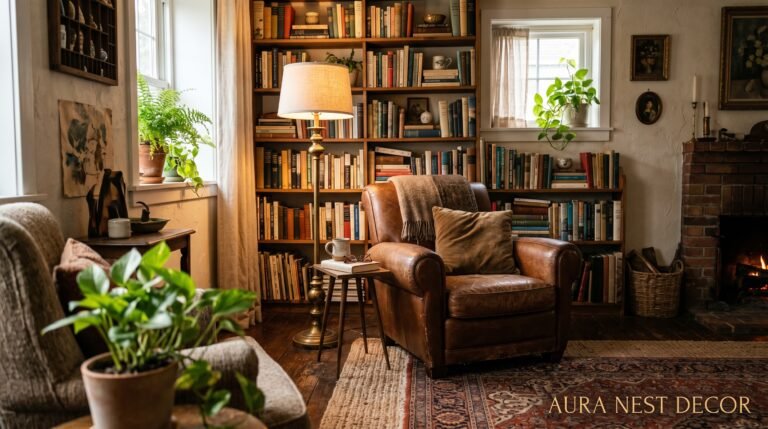
A living room bookshelf in a modern boho rustic space is an opportunity that most people either squander by being too tidy or destroy by never editing. The goal is somewhere in the middle: genuinely personal, genuinely interesting, and styled with just enough intention that it reads as thoughtful rather than random.
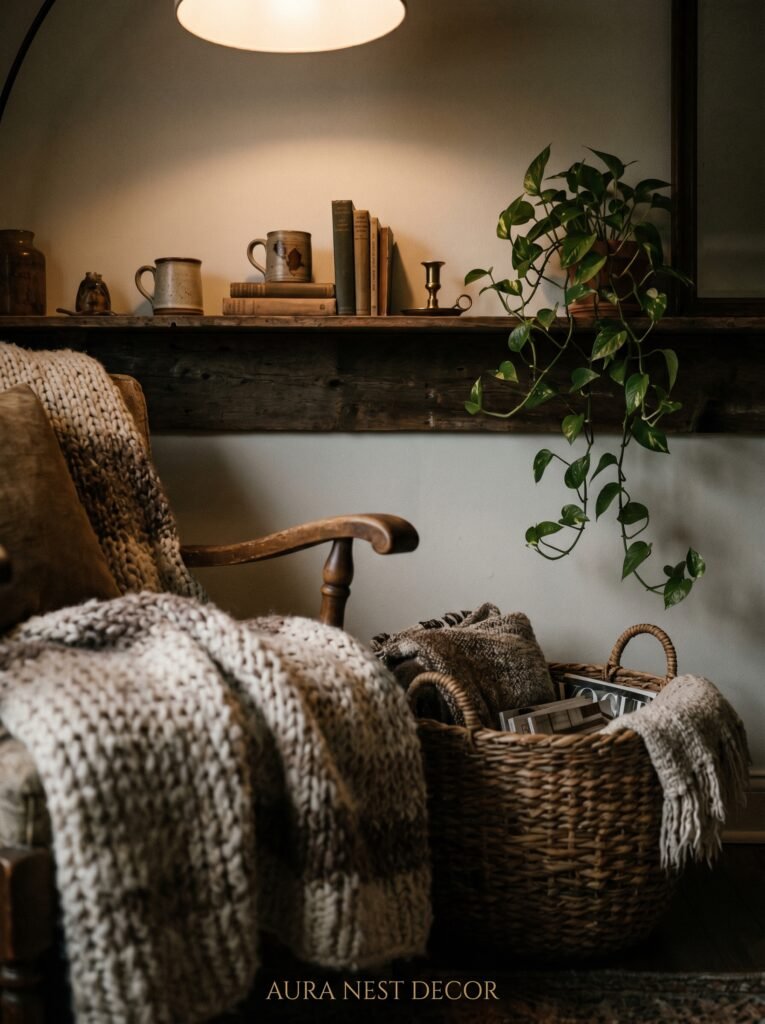
Start with books. Real ones, spine-out in colours that work with your palette — and yes, turning some books spine-in for a linen-textured effect is a legitimate move, not a crime against literature. Then layer in objects that mean something: a small piece of pottery from a trip somewhere, a framed photo or postcard leaned casually, a small sculpture, a found stone or piece of coral, a candle.
Bring in a small plant here — something trailing over the edge of a shelf works beautifully. Add one or two woven or textile items folded loosely. Leave some breathing room. Not every inch needs to be filled.
The mistake most people make is grouping everything by type — all the books together, all the objects together. Instead, mix them. A cluster of three small objects next to a short stack of books next to a plant next to one larger object. This is how real collections look when they’ve grown organically over time.
10. The Fireplace or the Focal Point — Making the Most of What You Have
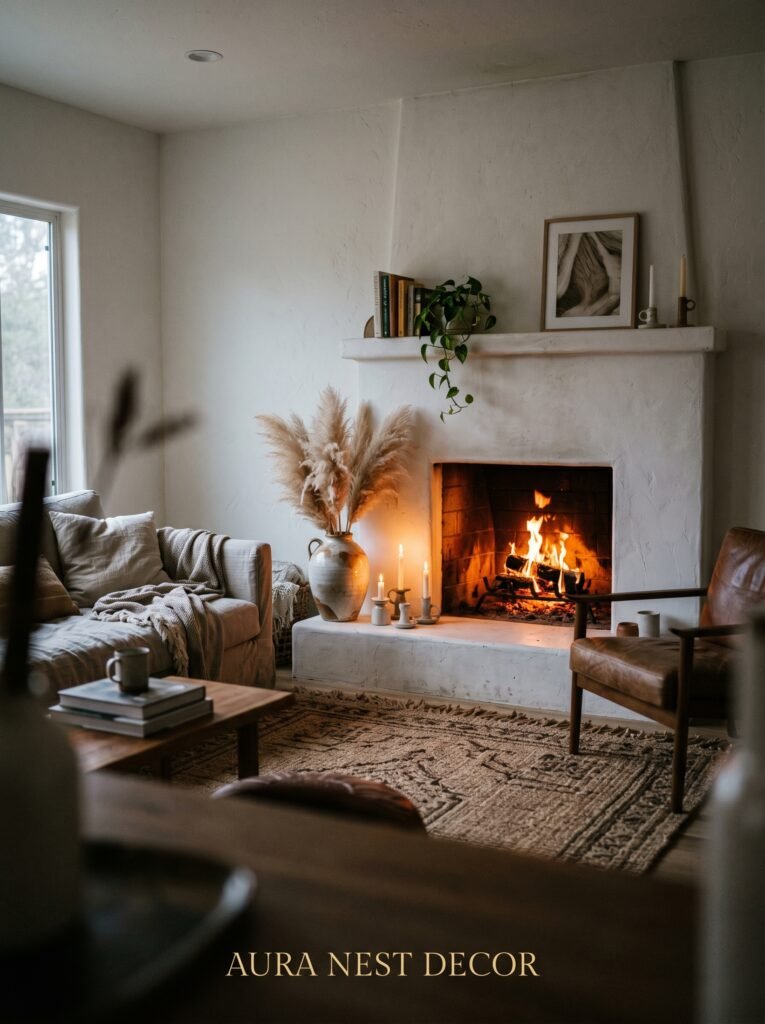
Not everyone has a fireplace, and in many UK and American homes, the original fireplace has been boarded up or removed. But every modern boho rustic living room needs a focal point — something for the eye to travel toward.
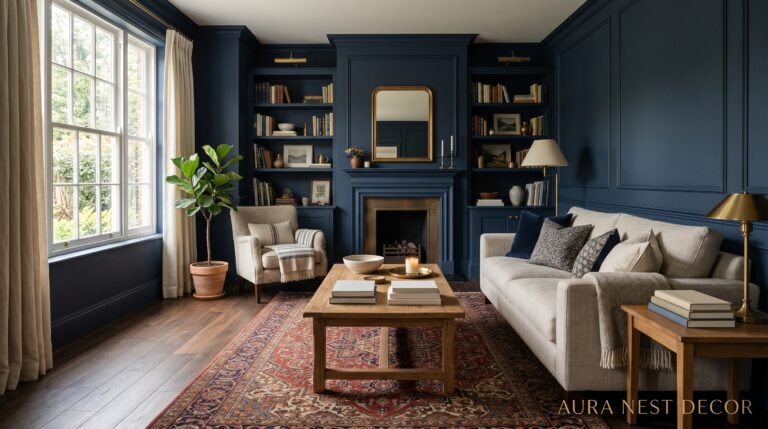
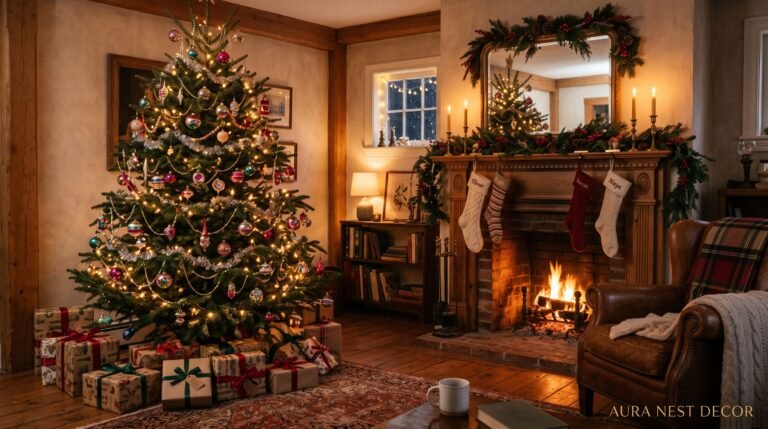
If you do have a working fireplace: treat the mantelpiece as a gallery. Lean a large, imperfect mirror against the wall above it rather than mounting a precise one. Stack art directly on the mantel shelf leaned at slight angles. A vase of dried grasses. Two tall taper candles in mismatched holders. A small ceramic figure. Something interesting in the grate itself on days when there’s no fire — a cluster of large pillar candles, or even a stack of birch logs purely for aesthetics.
If you don’t have a fireplace: a large piece of art or a gallery wall serves the same function. Or a single very large woven wall hanging or tapestry — the kind with depth and fringe and some age to it — is one of the most effective focal points this style has. Pair it with a floor-level arrangement: a tall ceramic vase, a stack of large books, a low plant, maybe a floor lamp just off to the side.
The focal point should be the place your eyes want to rest. Everything else radiates outward from there.
11. Vintage Finds Versus New Buys — How to Balance the Two Without Looking Like You’re Trying Too Hard
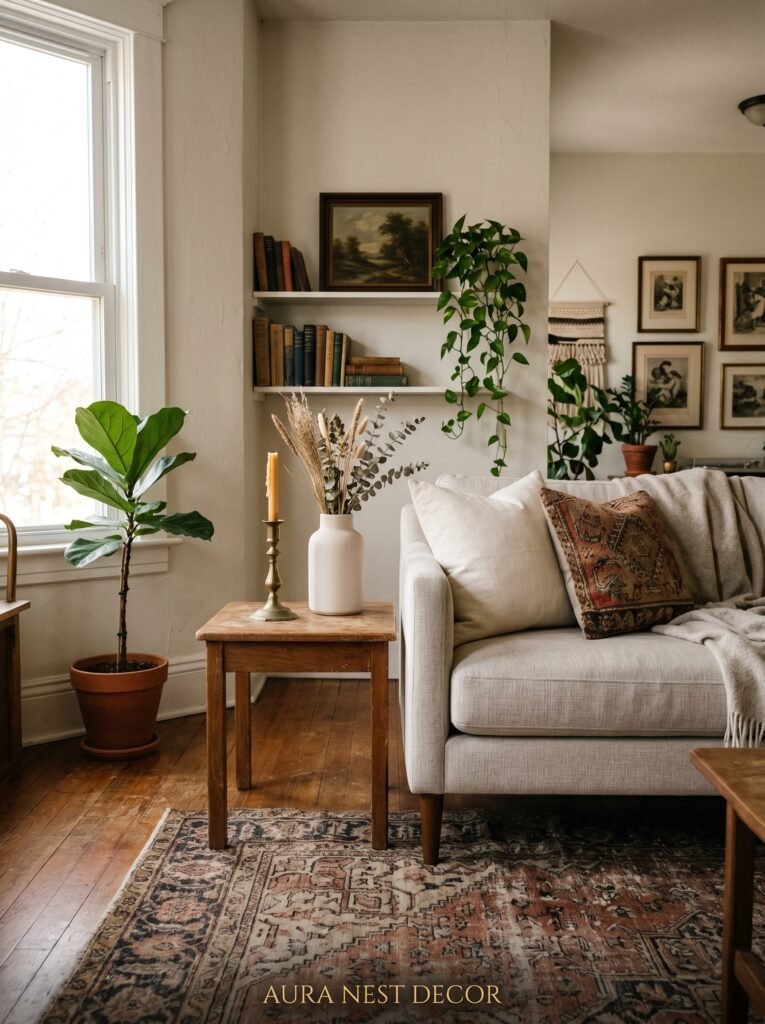
There’s a version of modern boho that looks too new. Everything is from the same three Etsy shops and it all has that same slightly sanitised, mass-artisanal quality. There’s another version that leans too vintage and reads as chaotic or accidentally retro.
The balance that works is roughly this: invest in new for the big structural pieces — the sofa, a quality rug, lighting — and hunt vintage or secondhand for everything that adds character. Old wooden side tables, ceramic vessels that have genuine age, woven textiles with real wear, mirrors with slightly foxed glass. These things are found at estate sales, car boot sales in the UK, antique markets, Facebook Marketplace, and charity shops for a fraction of what anything new would cost.
The character that comes from a genuinely old object is different from the character applied to something manufactured to look old. You can feel it. The slight warping of old wood. The patina on metal that took decades to develop. The handwoven textile that’s slightly uneven because a human made it by hand before machines existed to make things perfectly even.
These objects are everywhere. They’re waiting. And they will make your living room feel more real than any new purchase from a high street home store.
12. The Final Layer — Small Details That Make People Ask “How Did You Do That?”
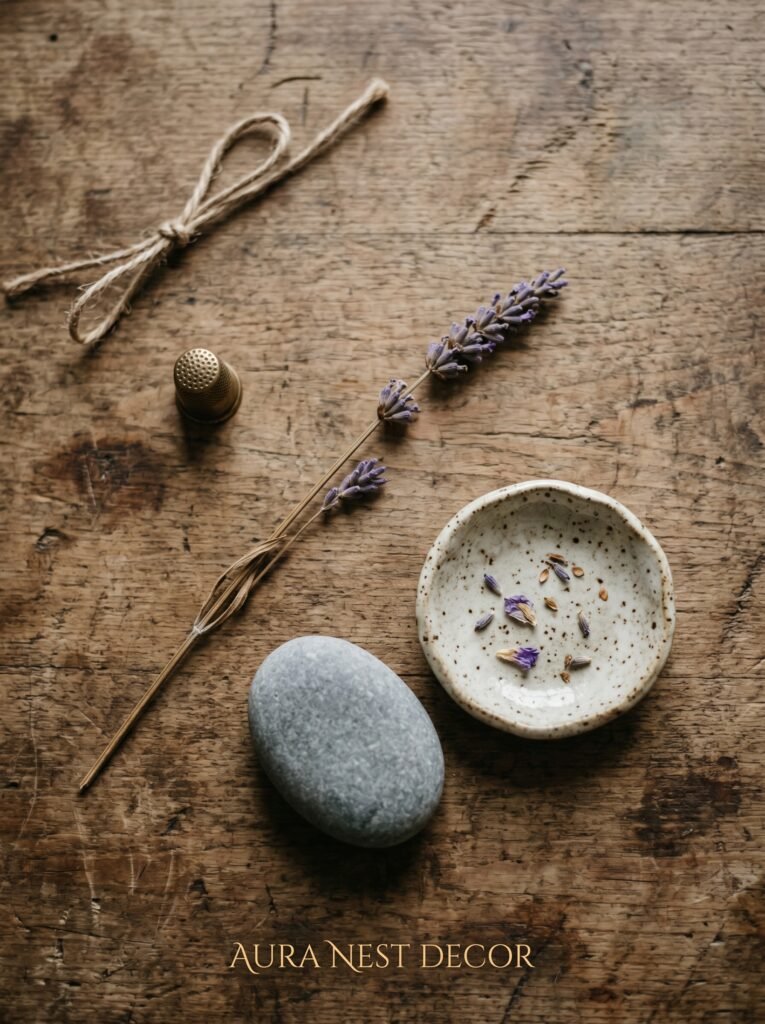
The difference between a beautiful living room and a truly extraordinary one is almost always the small details that nobody directly notices but everybody subconsciously feels.
Incense or a soy candle with a complex, warm scent — something earthy, like sandalwood or vetiver — burning when people arrive. A stack of books on the floor beside the sofa that are actually being read, not staged. A throw that’s been used enough to be slightly rumpled. A small bowl of actual objects — keys, a stone, something from a walk — that say someone real moves through this room.
A piece of art that surprises you — not a print of something beautiful and safe, but something a little strange, a little personal, a little hard to categorise. A handmade ceramic piece with a crack or an unusual glaze. A found object on a shelf that has no name but an obvious story.
Fresh flowers, when you think of it — not a perfect arrangement, just a few stems cut low in a small bottle. The kind that looks like you grabbed them on the way home.
These are the details that make people walk into your living room and feel something without knowing why.
—
❓ FAQ
Q: How do I make a small living room feel boho without making it feel cluttered? A: The key is choosing fewer, larger objects rather than many small ones, and keeping your colour palette tightly cohesive. One large statement plant, one quality woven rug, and one piece of meaningful wall art will do more than ten small decorative items scattered around.
Q: What’s the difference between boho and rustic, and do they actually work together? A: Boho is about eclecticism, layering, and a collected-over-time feeling — it draws from global textiles and art. Rustic is about natural, raw, imperfect materials and a connection to the handmade and organic. They work together beautifully precisely because they share the same underlying value: that imperfection and authenticity are more interesting than perfection.
Q: I’m renting and can’t paint the walls. How do I create the modern boho rustic feel? A: Focus everything on textiles, lighting, and accessories. Large rugs, layered throws, warm-bulb floor lamps, and a few key vintage finds can transform even a white rental room completely. A large woven wall hanging is a renter’s best friend — it covers a multitude of boring walls and costs less than a tin of paint.
—
💭 Final Thoughts
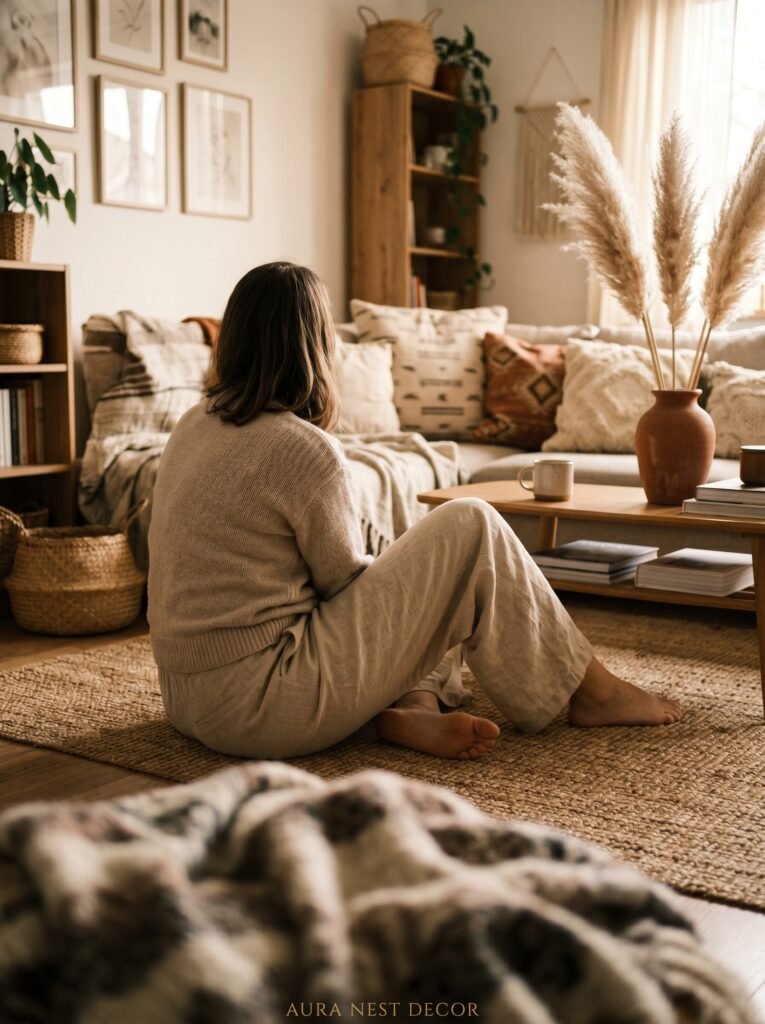
Modern boho with a rustic lean is ultimately a style built on trust — trust that beauty doesn’t require perfection, that a room can be both beautiful and genuinely lived-in, that the worn edge of an old wooden table is more interesting than a pristine new surface. It’s a style that rewards people who pay attention to what they love rather than what they’re told to love.
Your living room doesn’t need to look finished. It needs to look like you.
What’s the one piece in your living room right now that’s been there since the beginning — the thing everything else has quietly arranged itself around?