The Plant-Filled Living Room That Looks Intentional, Not Overgrown
You’ve seen it a hundred times on Pinterest — that living room where the plants feel like they belong there. Not plopped in a corner. Not forgotten on a windowsill. Actually woven into the room like they were always meant to be there. That’s the modern boho look, and it’s more achievable than you think.
—
1. Why “Modern Boho” Hits Different Than Regular Plant Styling
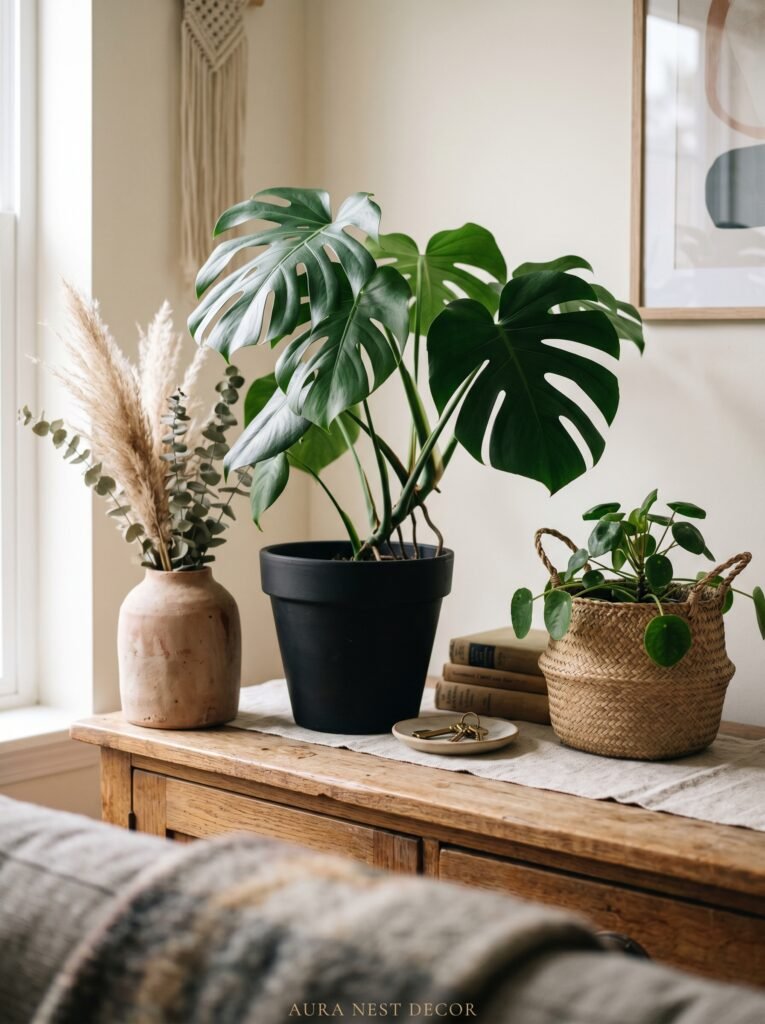
There’s a version of boho that feels chaotic. Too many patterns, too many textures, too much of everything crammed together until the room looks like a car boot sale with good lighting. That’s not what we’re doing here.
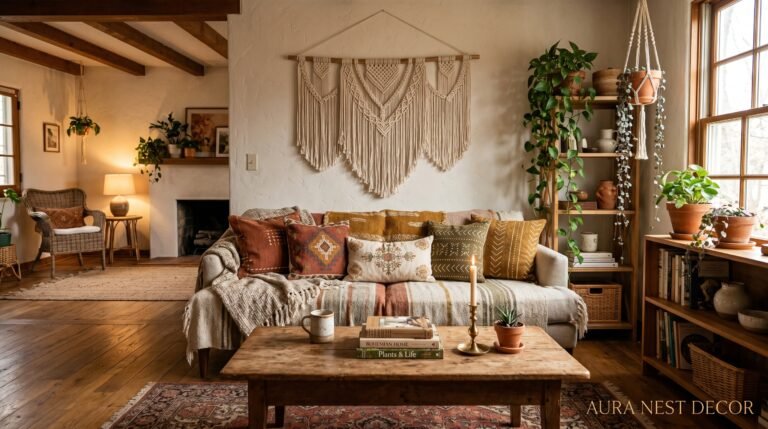
Modern boho is edited. It’s the difference between a room that has a lot and a room that has exactly enough. The plants are part of that restraint — not every surface covered, but specific spots where green becomes intentional punctuation. A tall fiddle leaf fig anchoring one corner. A single trailing pothos on a shelf where the light catches the leaves in the afternoon. A cluster of three different-sized plants in the same earthy corner rather than scattered across the room.
The “modern” part comes from clean lines underneath — a linen sofa, a simple wooden coffee table, maybe a concrete planter or two. The “boho” part comes from the warmth layered over that — woven baskets, patterned throws, the slightly wild shape of a monstera doing its thing.
When plants are styled with intention inside that framework, something magic happens. The room breathes. It feels lived in without feeling messy. It feels curated without feeling cold.
That tension — between wild and considered — is the whole game.
“Modern boho isn’t about having more plants. It’s about knowing exactly where each one belongs.”
2. The One Plant That Anchors Every Modern Boho Living Room
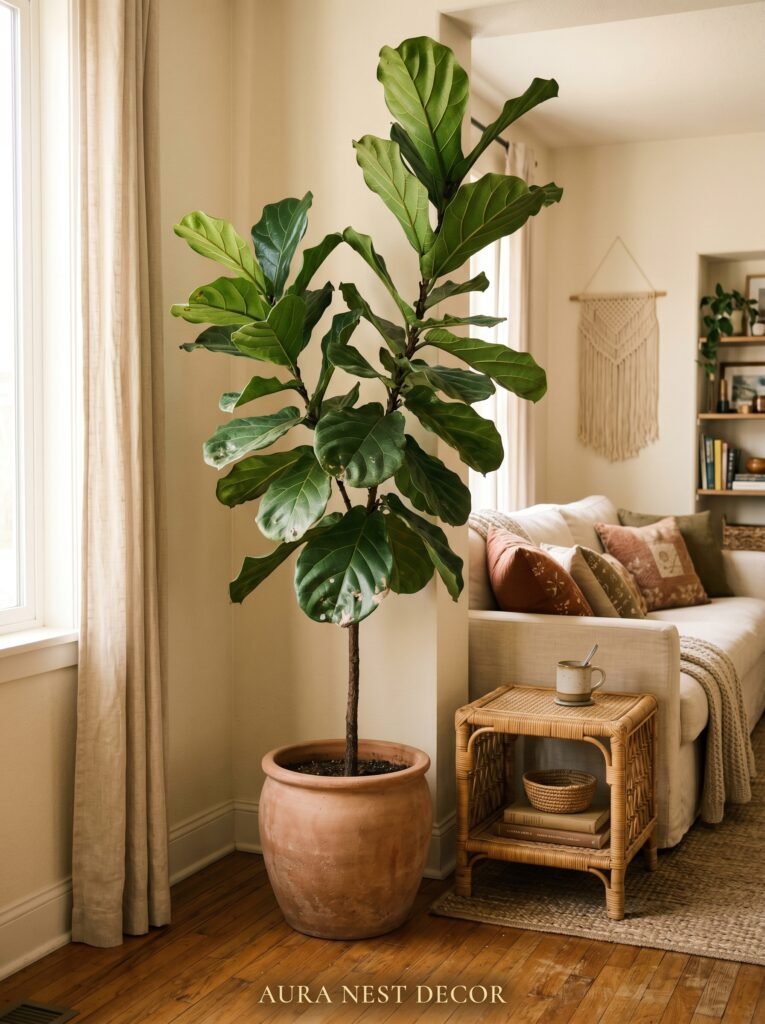
Before you start adding anything, you need an anchor. One statement plant that everything else builds around. Think of it as the equivalent of a piece of art — the thing your eye finds first when you walk through the door.
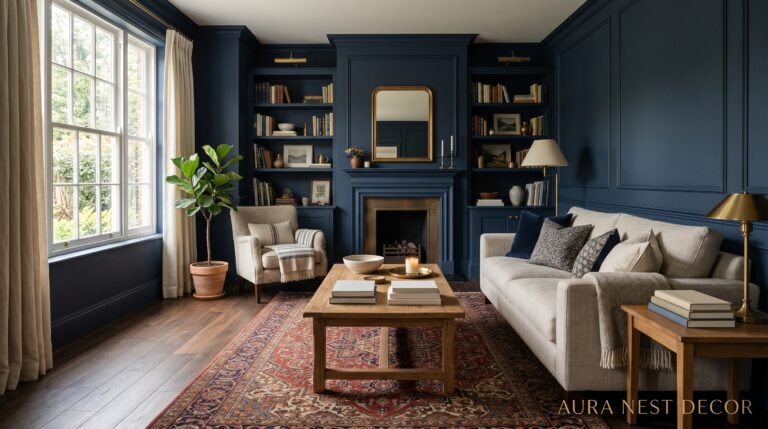
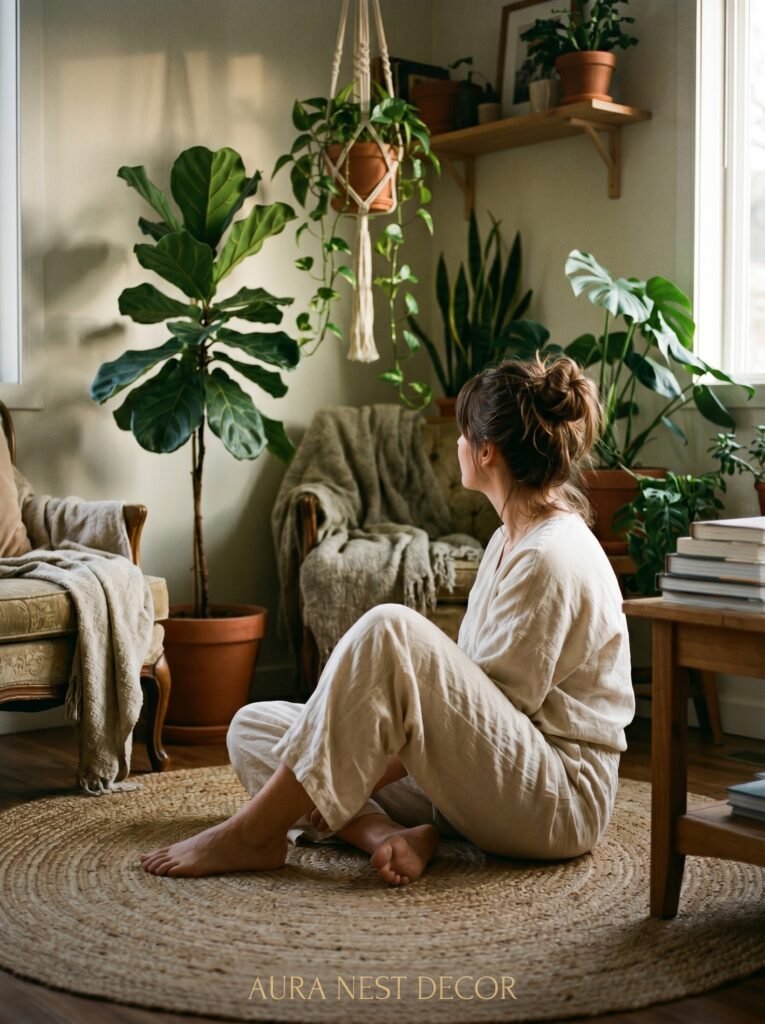
The fiddle leaf fig has held this role for a decade, and it still earns its place. That structural, sculptural quality — the large flat leaves, the upright height — creates a vertical presence that nothing else quite matches. Put it in a simple terracotta pot or a woven basket planter and it reads as effortlessly boho.
But if you want something a little more unexpected, consider the olive tree. Particularly popular in UK homes right now, especially in Scandi-boho spaces, the olive tree has a lightness to it — those small silver-green leaves catching the light differently all day long. It doesn’t dominate the room. It presides over it.
For very small living rooms, a large Monstera deliciosa can do the same job. You only need one. Pull it into a corner, give it a simple rattan or ceramic pot, and let it grow sideways in that slightly untamed way it likes to. It will become the personality of the room.
Whatever plant you choose, commit to it. Don’t crowd it with too many other plants immediately around it. Give it space. Give it breathing room. That’s what makes it an anchor rather than just another plant.
3. The Corner Rule That Interior Designers Never Explicitly Say Out Loud
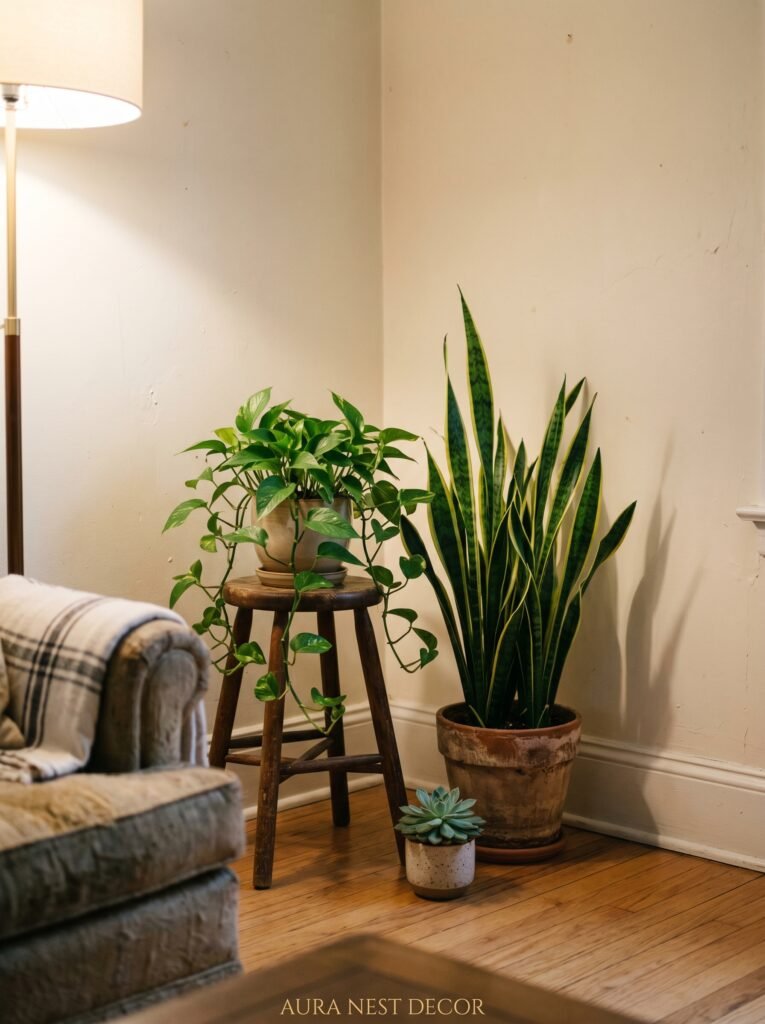
Dead corners are one of the most common problems in living rooms on both sides of the Atlantic. You have that corner — behind the sofa, next to the TV unit, across from the window — that just feels empty and awkward, no matter what you put there.
Plants solve this. But only if you use the corner rule.
Here it is: every awkward corner gets a tall plant, a medium plant, and a low surface or stool. That’s it. Three levels, one corner. The tall plant (your fiddle leaf, your olive tree, your bird of paradise) creates the vertical line. The medium plant — a compact monstera, a ficus elastica, even a well-grown peace lily — sits on the floor in front of or beside it. The stool or low side table holds a small trailing plant, a candle, and nothing else.
Three heights. Three textures. One intentional corner.
When you do this, that dead corner stops being something you mentally apologize for every time you look at it. It becomes a moment. Guests walk in and their eyes go straight to it. It photographs beautifully. It anchors the room in a way that no piece of furniture ever quite manages.
The stool is important, by the way. It keeps the arrangement from feeling like a houseplant display at a garden centre. It makes it feel styled.
4. Trailing Plants Are the Secret to That “Pinterest Shelf” Effect
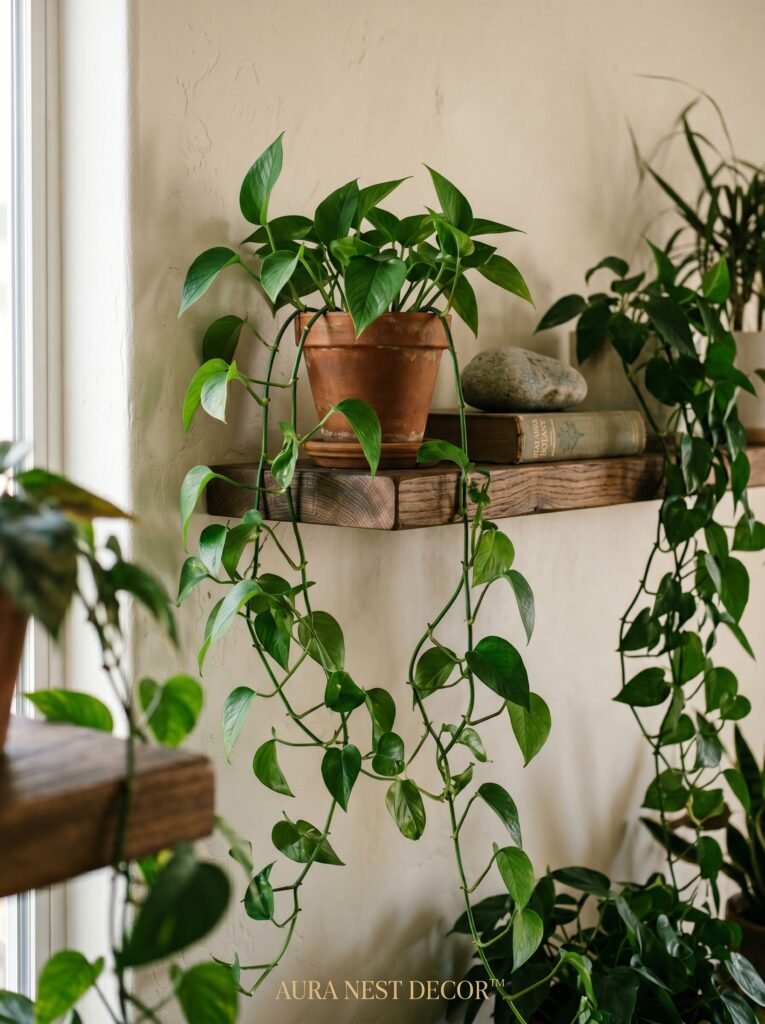
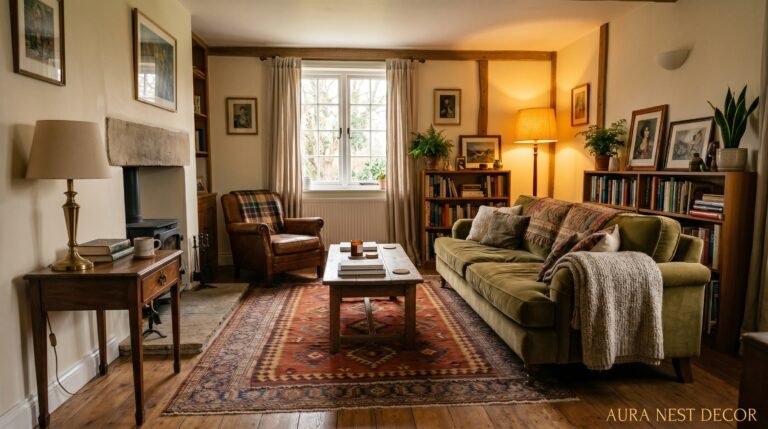
Shelves in modern boho living rooms should never look symmetrical. That’s the first rule. Symmetry is formal. Boho is asymmetrical, layered, slightly imperfect in a way that’s clearly intentional.
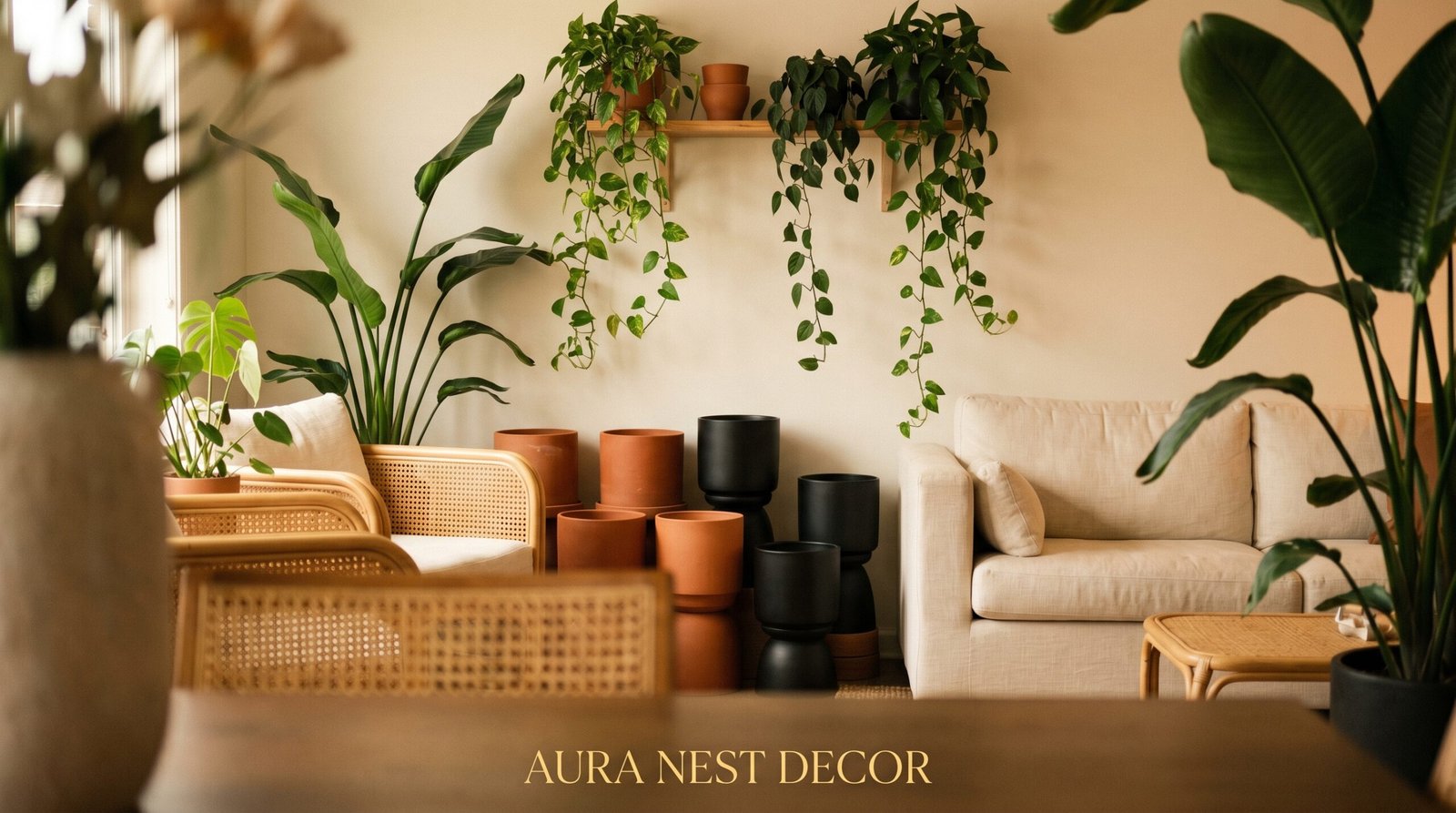
Trailing plants are what create that effect. A pothos, a string of hearts, a heartleaf philodendron — let it spill over the edge of a shelf and suddenly the whole thing loosens up. It looks like someone styled it, walked away, and life happened.
The trick is to never let a trailing plant just hang straight down. Train it slightly to one side. Let it drape over a stack of books, or trail past a ceramic pot, or curl around a framed print. The movement of the plant should lead your eye through the shelf rather than just down it.
String of hearts is particularly beautiful in a boho space — those tiny heart-shaped leaves on delicate purple-pink stems have a romantic, slightly whimsical quality that feels completely at home next to macramé, dried grasses, and earthy ceramics.
One important note: don’t mix more than two trailing plants on the same shelf. Too many trailing plants and the shelf starts to look untended rather than artfully imperfect. One trailing plant per shelf level, maximum. Let it breathe.
“A trailing plant that spills the right way makes an entire wall feel alive.”
5. The Pot Pairings That Make Your Plants Look Like a Design Choice
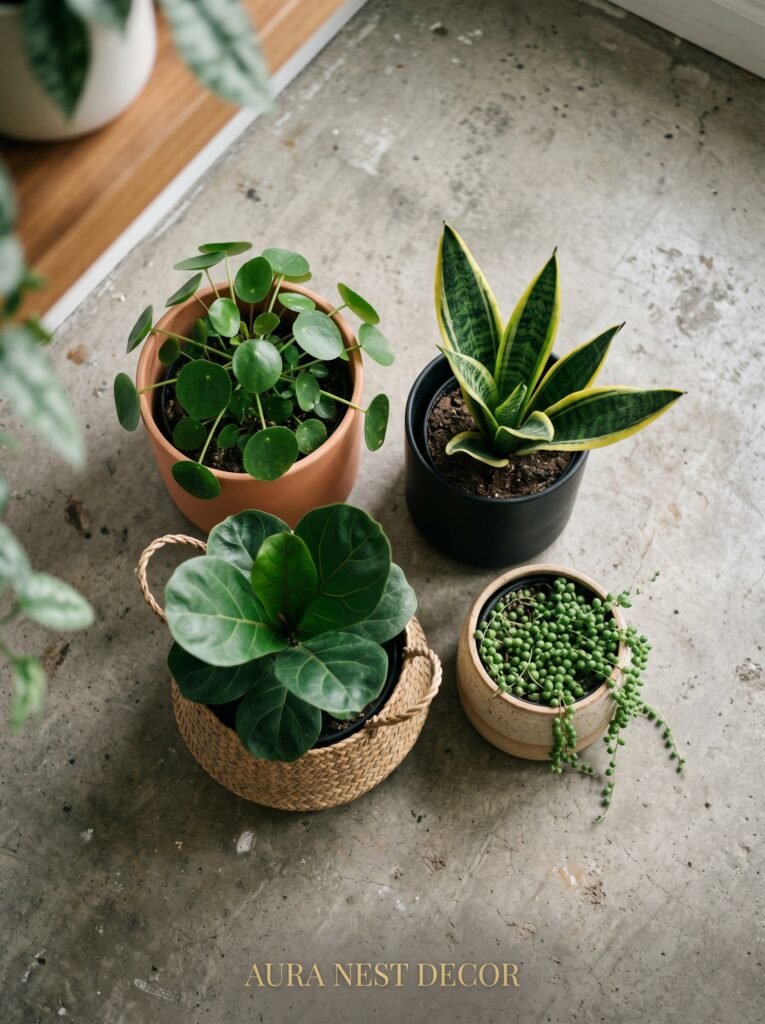
Here’s something nobody talks about enough: the wrong pot can make an expensive, beautiful plant look like an afterthought. And the right pot can make a £6 pothos from a supermarket look like it was sourced from a specialist nursery.
For modern boho, you’re working within a specific palette of materials and finishes. Terracotta — classic, warm, slightly imperfect. Woven seagrass and rattan basket covers — natural texture, earthy, soft. Matte ceramic in warm white, cream, or dusty sage. Concrete, but only if the rest of the room has clean modern lines underneath the boho layers.
What you’re avoiding: anything shiny, anything with a pattern that competes with the plant, anything that reads as plastic even if it isn’t.
The most overlooked pot decision is sizing. Your pot should be proportional to the plant. A tall fiddle leaf in a small pot looks unstable and unintentional. A small trailing plant in an oversized planter looks lost. When in doubt, go slightly larger than you think you need — it gives the roots room and the plant a grounded, settled look.
Mixing pot materials in one room is fine and actually encouraged. But mix within the same tonal palette. Terracotta and matte cream work together. Rattan and concrete work together. Shiny white ceramic next to terracotta doesn’t.
6. Where Natural Light Lives in Your Living Room (And How to Work Around It)
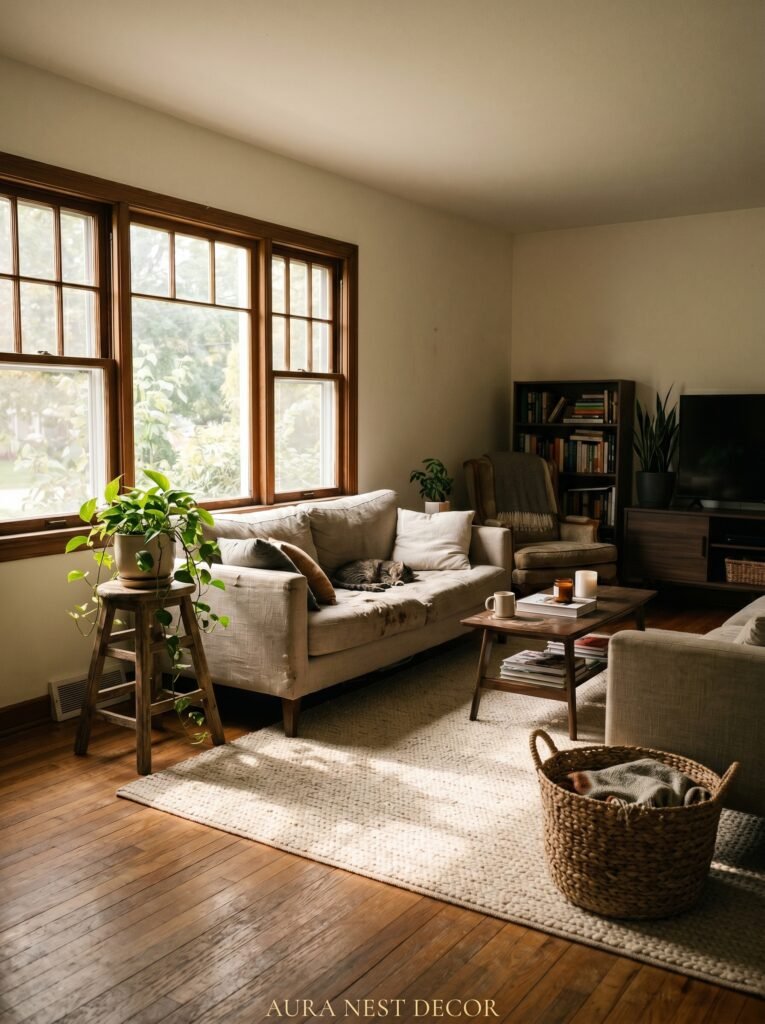
This is the practical section, and I’m going to be direct with you: most living rooms in the UK have less natural light than you want. American homes vary wildly — a sun-drenched California living room is a completely different challenge from a north-facing apartment in Chicago.
The honest answer is you need to know your light before you choose your plants.
A south-facing living room (US) or a south-facing window (UK) gives you the most flexibility. You can keep your fiddle leaf fig genuinely happy. Your monstera will thrive. Your olive tree will love it.
A north-facing or east-facing room — and this describes the majority of British Victorian terraces — means you’re working with indirect, lower-light conditions. This is not a death sentence for plant styling. It just means leaning into low-light-tolerant plants: ZZ plants, snake plants, peace lilies, pothos, cast iron plants. All of these can be styled beautifully in a boho context and all of them will actually survive in your home.
The mistake people make is buying gorgeous light-hungry plants because they saw them on Pinterest, placing them in a north-facing room, watching them slowly die, and concluding they have a black thumb. You don’t have a black thumb. You just matched the wrong plant to your light.
Know your light. Then choose.
7. Dried Botanicals Are the Part of Modern Boho That Nobody Gets Quite Right
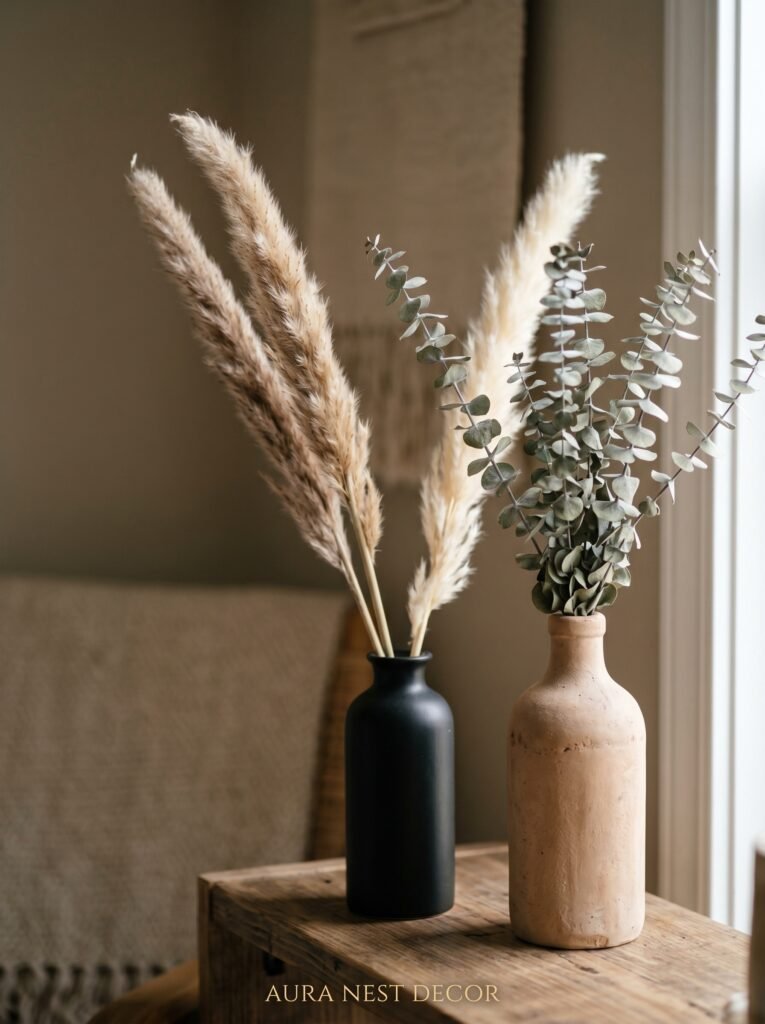
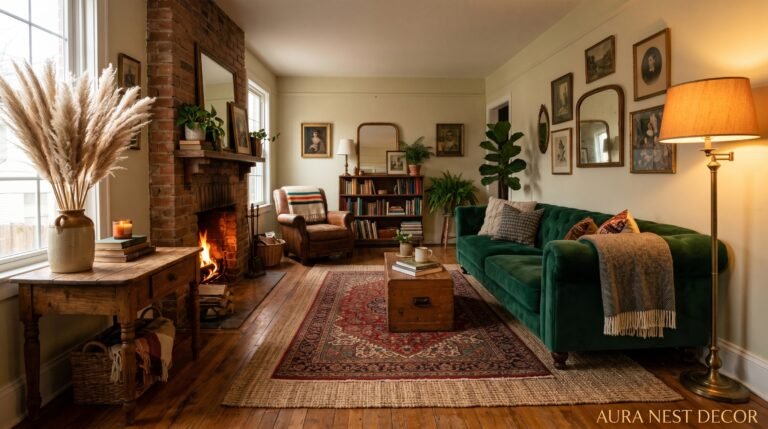
Pampas grass had its moment. In some rooms — the right rooms — it’s still genuinely beautiful. But it’s been so widely used that it now reads as a prop rather than a choice. If you’re using it, use it sparingly and pair it with something unexpected.
Dried botanicals in general are a brilliant addition to a plant-heavy living room because they add stillness. Live plants have movement — they grow, they turn toward light, they change. Dried botanicals hold their shape forever. That contrast between the living and the preserved creates visual interest you can’t achieve with plants alone.
The combinations that work in a modern boho space right now: dried lunaria (those translucent silver seed pods) in a terracotta vase alongside a thriving pothos. Dried grasses mixed with a single stem of dried protea on a high shelf. A bundle of dried eucalyptus that’s kept its grey-green color propped in the corner behind a live plant.
What makes dried botanicals feel intentional rather than neglected: height, massing, and simplicity. A tall dried arrangement in a heavy pot. Not a single stem in a tiny bud vase, and not thirty different things jammed together.
“Dried plants aren’t a compromise. They’re a counterweight.”
8. The Art of Grouping Plants Without Making It Look Like a Greenhouse
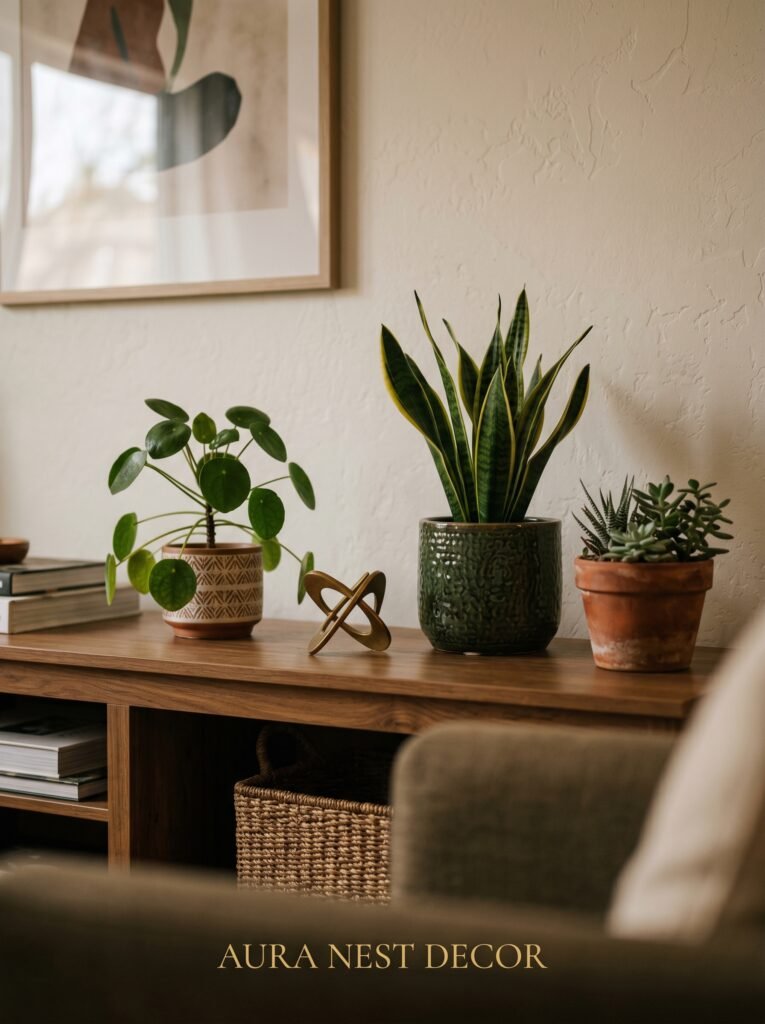
When you place plants individually around a room, each one becomes a small lonely decision. When you group them, they become a composition.
Grouping works because it mimics the way plants grow in nature — together, overlapping, in community with each other. It looks organic. It looks right in a way that solitary plants scattered around a room often don’t.
The rule for grouping: odd numbers only. Three plants. Five plants. Not two, not four. Two plants always look like a pair, which reads as deliberate symmetry — the opposite of boho. Three or five reads as gathered, collected, natural.
Vary the heights dramatically within a group. Not all medium-height plants together. Put a tall floor plant next to a medium plant on a planter stand next to a low trailing plant spilling from a stool. Step-down height creates movement and depth. Same-height groupings look flat.
For the most cohesive look, vary the leaf shape and texture within the group but keep the pot palette consistent. A broad-leafed monstera, a fine-leafed fern, and a trailing string of pearls look beautiful together. Put them all in terracotta pots of different sizes and the group reads as intentional.
One more thing: leave gaps between the pots. Let air pass between them. That space is part of the composition.
9. Hanging Plants: The Ceiling Moment Most Living Rooms Are Wasting
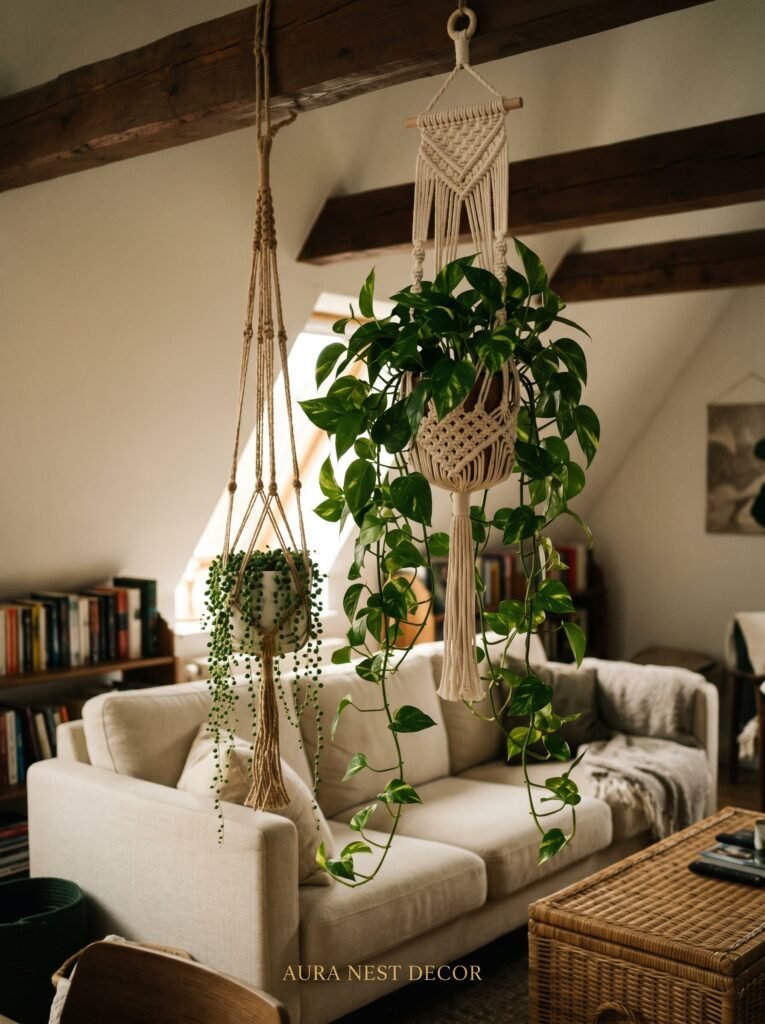
Look up. Is your ceiling doing anything? If the answer is no, you’re wasting some of the most valuable visual real estate in the room.
Hanging plants in a boho living room feel incredibly natural — they reference outdoor spaces, they use vertical height that most rooms have but don’t use, and they add a layered dimension that floor and shelf plants can’t provide.
The most beautiful approach right now is macramé plant hangers — and not the overly complicated knotted ones that feel like 1975, but the cleaner, more modern versions with simple knotting and natural rope. Hang one in front of a window where the light comes through the leaves. In the evening, with a lamp on below it, the shadows on the ceiling become part of the décor.
For US homes with high ceilings, a hanging plant cluster — three hangers at slightly different lengths in the same corner — creates a ceiling moment that photographs like a professional shoot.
For UK homes with lower ceilings, one well-placed hanger in a bright spot is plenty. Don’t overcrowd the vertical space.
Best plants for hanging in a boho room: pothos (tolerates lower light), string of hearts (visually delicate and beautiful), heartleaf philodendron, and spider plants — which have a wonderful retro-boho quality and will grow the most enthusiastic cascade of babies if you let them.
10. The Wabi-Sabi Principle That Gives Boho Plant Styling Its Soul
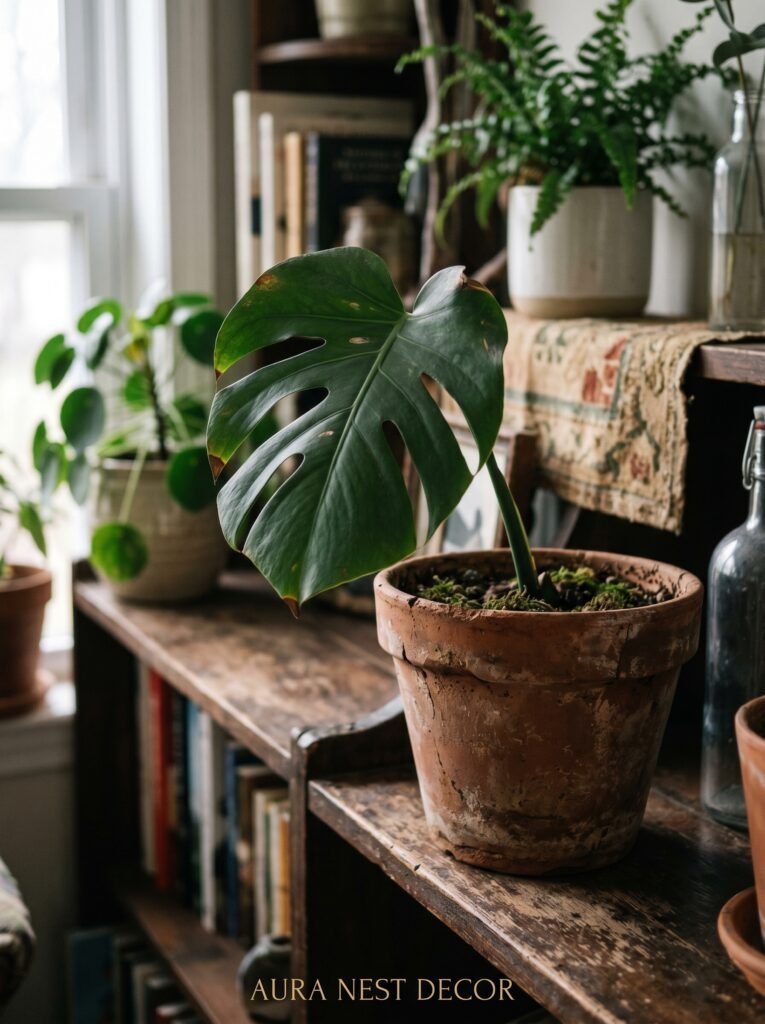
Here’s the thing about boho that takes people a while to understand: the imperfection is the point.
Wabi-sabi — the Japanese philosophy of finding beauty in the imperfect, the impermanent, and the incomplete — is the invisible backbone of boho aesthetics. A slightly chipped terracotta pot. A plant that’s growing sideways because that’s where the light is. A single yellowing leaf you haven’t removed yet because it’s still part of the story.
These things don’t ruin the look. They create it.
Modern boho resists the polished, managed, curated-to-death look that you sometimes see in magazine spreads where everything looks like it was arranged by someone wearing a headset. Real boho living rooms look like a real person lives there — a person with taste and opinions and a couple of plants that are going through something.
Don’t over-manage your plants in the name of aesthetics. Let a monstera put out a new leaf that’s still curled and young. Leave the pothos trailing slightly longer than feels tidy. Let your rubber plant lean a little toward the window.
The room will look more alive for it. Because it is.
11. Building the Boho Plant Shelf: What Goes Next to the Plant (Not Just the Plant Itself)
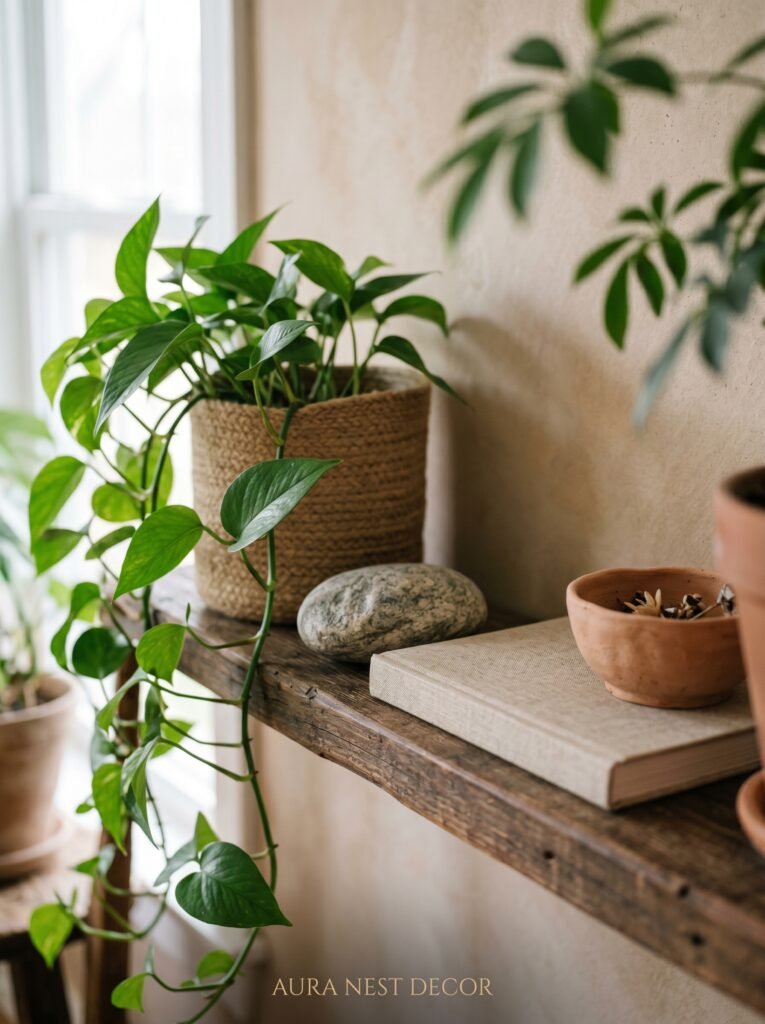
A plant on a shelf is nice. A plant styled within a shelf moment is a whole different thing.
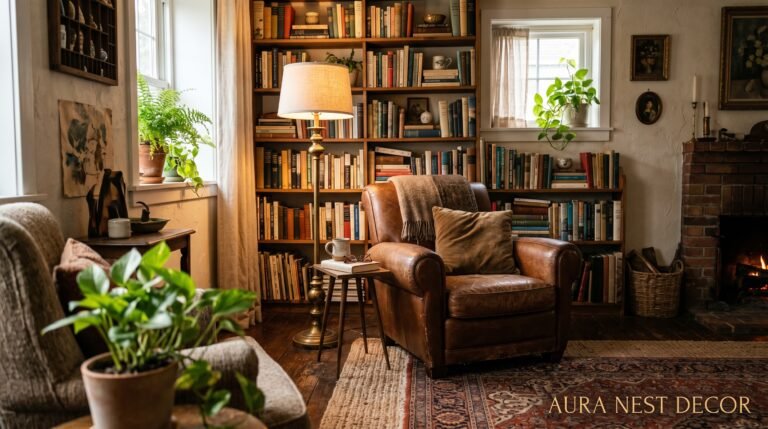
What you put with the plant matters as much as the plant itself. In a modern boho shelf, the plant is the anchor, and everything else creates context. Stacked books with their spines facing inward (the neutral linen-covered edge visible) give texture without competing. A single small ceramic sculpture — an abstract form, a small vessel, a rough stone — adds weight and contrast. A candle in an earthy holder brings warmth.
The things to avoid on a boho shelf: anything that reads as kitsch, anything in a competing primary colour, too many small items that individually mean nothing.
Leave deliberate empty space on the shelf. Not because you haven’t filled it yet, but because the empty space gives the eye somewhere to rest. A well-placed empty section of shelf makes everything around it look more considered.
One last detail: think about the wall behind the shelf. If you have the option to paint that wall section in a warm clay, terracotta, or sage tone, even a few inches above the shelf, the plants against that coloured wall will photograph beautifully and look intentional in a way that white walls rarely achieve.
12. The Five Plants to Start With if You’re Building This Look From Zero
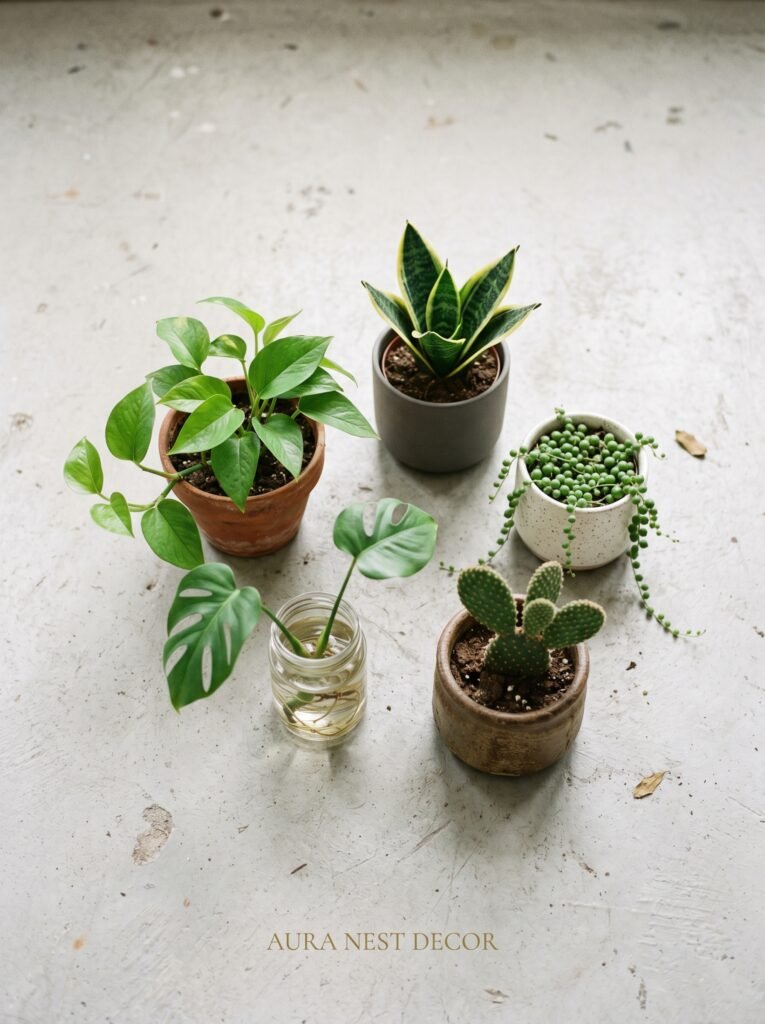
You don’t need twenty plants to achieve the modern boho plant look. You need the right five.
Start with a statement floor plant — a fiddle leaf fig, an olive tree, or a bird of paradise depending on your light conditions. This is your anchor. Don’t skimp on the pot.
Add a monstera deliciosa, either floor level or on a low plant stand. Its split leaves are the most recognisable visual shorthand for boho in the current design language, and it’s actually not difficult to keep alive.
Get a trailing pothos. It’s nearly unkillable, it grows quickly so your shelf styling will evolve, and it’s inexpensive enough that you can move it around as your room evolves without feeling like a commitment.
Add a ZZ plant for corners that don’t get much light. Dark, glossy leaves, almost architectural in their uprightness, and it will survive near-total neglect with no complaints.
Finally: one dried botanical arrangement. Something tall, something simple, in a pot that matches your plant pot palette. It brings stillness to the room, and it will be there, unchanged, long after you’ve repotted everything else.
Five plants. One room. Start there and let it grow — quite literally.
—
❓ FAQ
Q: What are the best low-maintenance plants for a boho living room? A: Pothos, ZZ plants, snake plants, and peace lilies are all genuinely low-maintenance and look beautiful in a boho setting. They tolerate irregular watering, lower light conditions, and are widely available in both the US and UK without costing a fortune.
Q: How do I stop my boho plant styling from looking cluttered? A: Group plants rather than scattering them, stick to odd numbers in each grouping, and keep your pot palette cohesive — same materials, same tonal range. Deliberate empty space on shelves and around floor plants does more for a curated look than adding more items ever will.
Q: Can I achieve a boho plant look in a small living room? A: Absolutely. The key is going vertical — one tall statement plant, a hanging plant near a window, and a trailing plant on a shelf use height and layers without taking up floor space. Small rooms often look more dramatic with one well-placed large plant than with several small ones competing for space.
—
💭 Final Thoughts
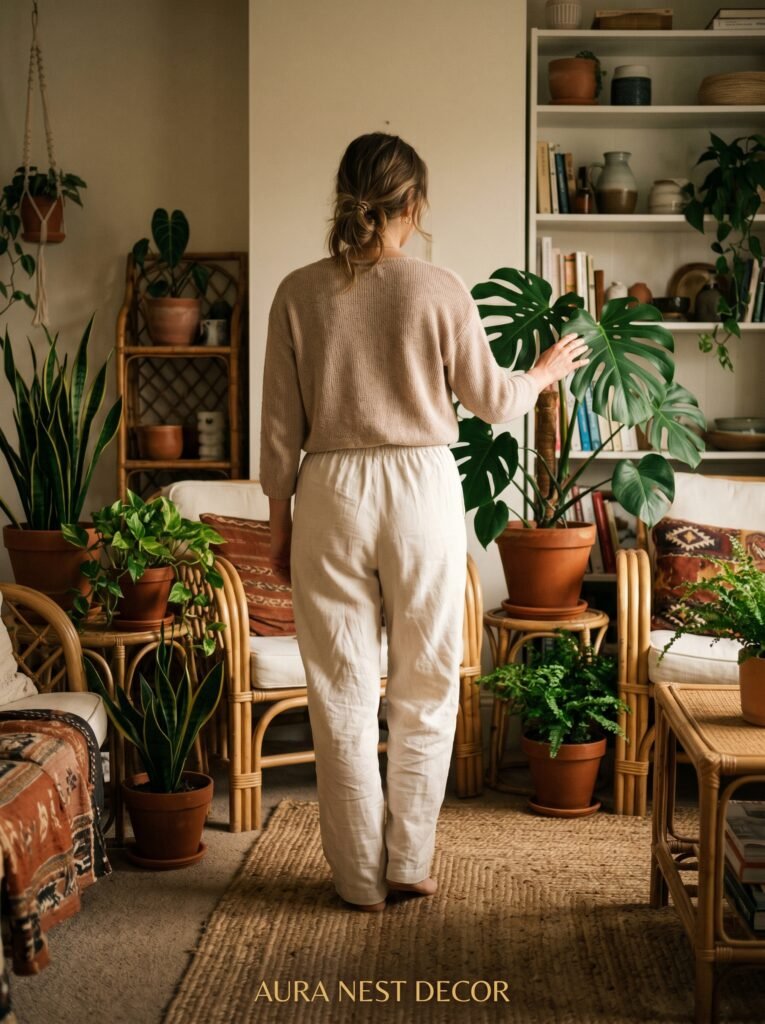
The living rooms that stop us mid-scroll aren’t the ones with the most plants. They’re the ones where every plant feels like it was always there — chosen, placed, and quietly tended by someone who cared. Start with your anchor plant, learn your light, and let the rest build slowly. What does your living room feel like right now, and what would change if one corner of it finally had a reason to draw your eye?