How to Make a Small Bedroom Feel Like a Luxury Hotel Room (Without Knocking Down a Single Wall)
You walk into someone’s tiny bedroom and your jaw drops. It’s barely 10 by 10, but it feels impossibly calm, rich, and considered. Then you go home and stand in your own bedroom — technically bigger — and wonder why it just feels like a room with stuff in it.
The difference isn’t square footage. It never was.
—
1. The One Furniture Decision That Changes Everything Before You Buy Anything Else
Before you pin another floating shelf or obsess over the perfect duvet, there’s a single decision that shapes how every other choice lands. The bed placement.
Most people push their bed into the corner or flat against the longest wall because it “saves space.” And yes, technically it does. But it also makes the room feel like a storage problem you’re sleeping inside. The bed becomes an afterthought. Everything else arranges itself awkwardly around it.
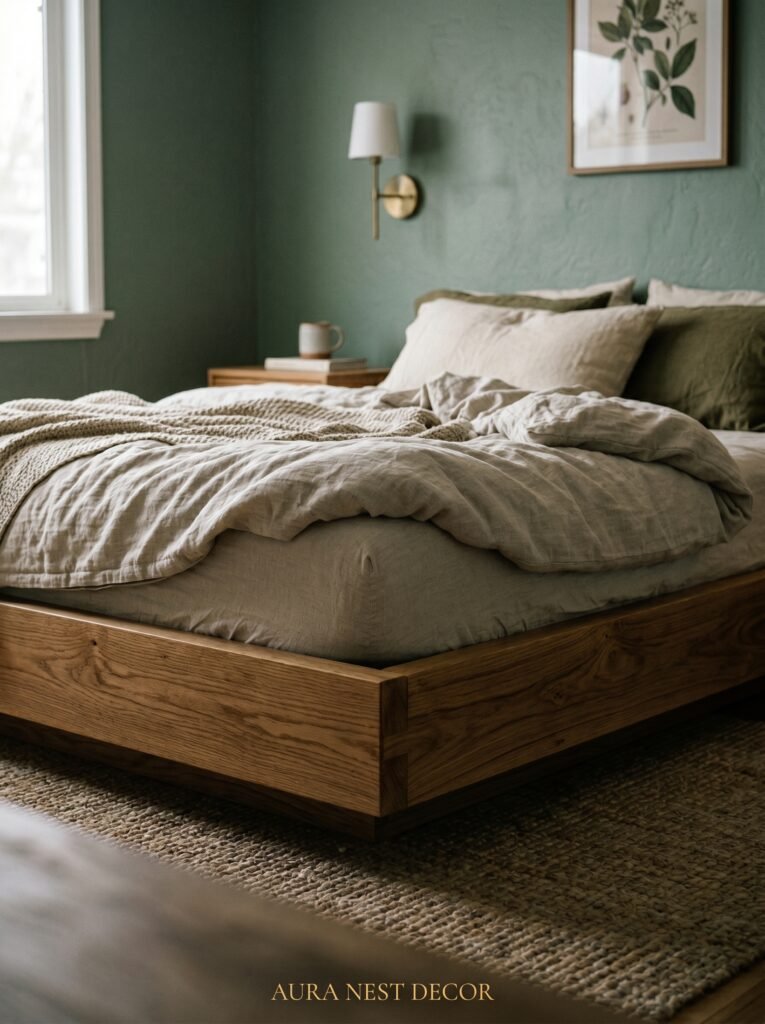
In hotel rooms — the ones that feel generous even when they’re small — the bed almost always faces the door. It sits with breathing room on at least one side, ideally two. It commands the space. When you walk in, you see it immediately and your nervous system registers: this room is for rest.
If you can’t manage both sides due to your room’s layout, even freeing up just 18 inches on one side makes a difference you’ll feel before you can articulate it. The room exhales. You do too.
This isn’t just aesthetics. It’s about how your brain reads a space the moment you enter it. A bed that looks intentionally placed tells your mind: someone thought about this. That’s the beginning of luxury.
“A bed that looks intentionally placed tells your mind: someone thought about this. That’s the beginning of luxury.”
—
2. The Wall Color Trick That’s Making Small Bedrooms Look Bigger on Every Mood Board Right Now
You’ve been told to go white. Light walls, bright room, more space. It’s the advice that’s been handed down like gospel since forever, and honestly? It’s not wrong. But it’s also not the whole story.
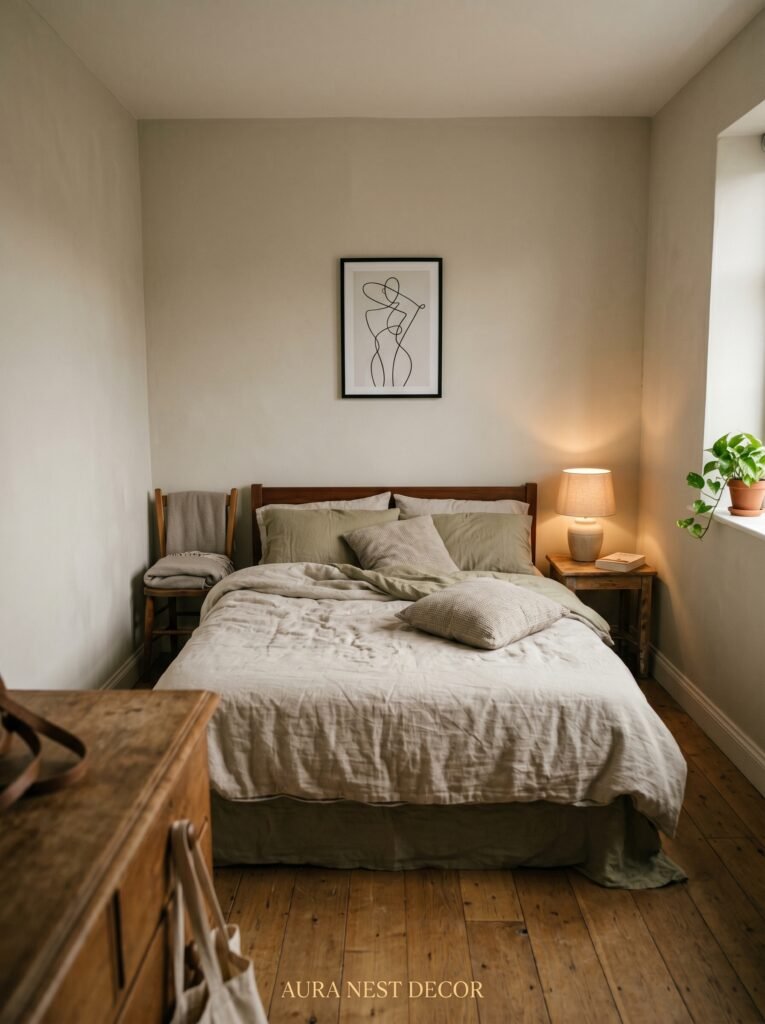
The rooms that are stopping thumbs on Pinterest right now aren’t pale and cautious. They’re going deep. Forest green, slate blue, a moody terracotta that looks like the inside of a Tuscan farmhouse at dusk. And they look enormous.
Here’s why it works: when your walls, trim, ceiling, and even curtains are all pulled into the same deep tone — a technique called color drenching — the eye can’t find the edges of the room. The corners disappear. The ceiling seems to lift. The space becomes atmospheric rather than measured.
Farrow & Ball’s Hague Blue does this in a London flat like nothing else. Benjamin Moore’s Black Forest Green does it in a Brooklyn brownstone. Try painting your ceiling the same shade as your walls, or even a half-tone darker. Watch what happens to the room.
Yes, it’s a commitment. Yes, it might take two weekends and a lot of painter’s tape. Worth every minute of it.
—
3. Why Your Lighting Is Probably the Reason Your Bedroom Feels Like a Hospital Waiting Room
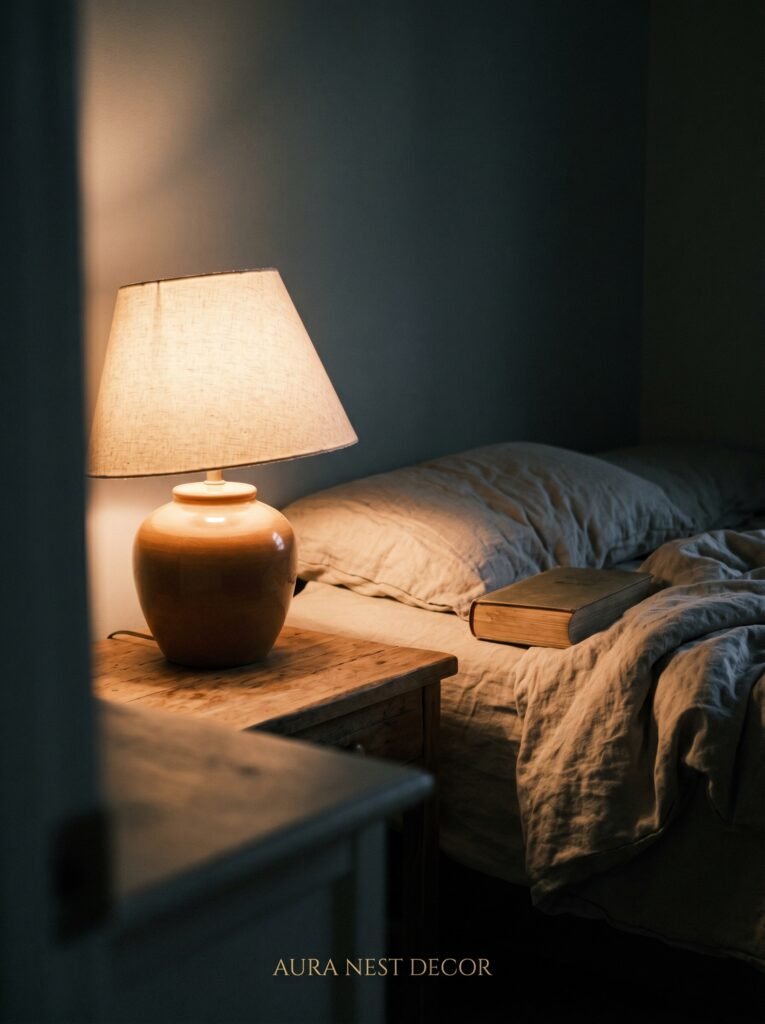
Overhead lighting in small bedrooms is almost always a mistake. That single central fixture — ceiling rose or recessed spot — floods the room with flat, directionless light that flattens everything. Every texture, every shadow, every depth you’ve carefully designed disappears.
What you want instead is layers. Multiple light sources at different heights, doing different jobs.
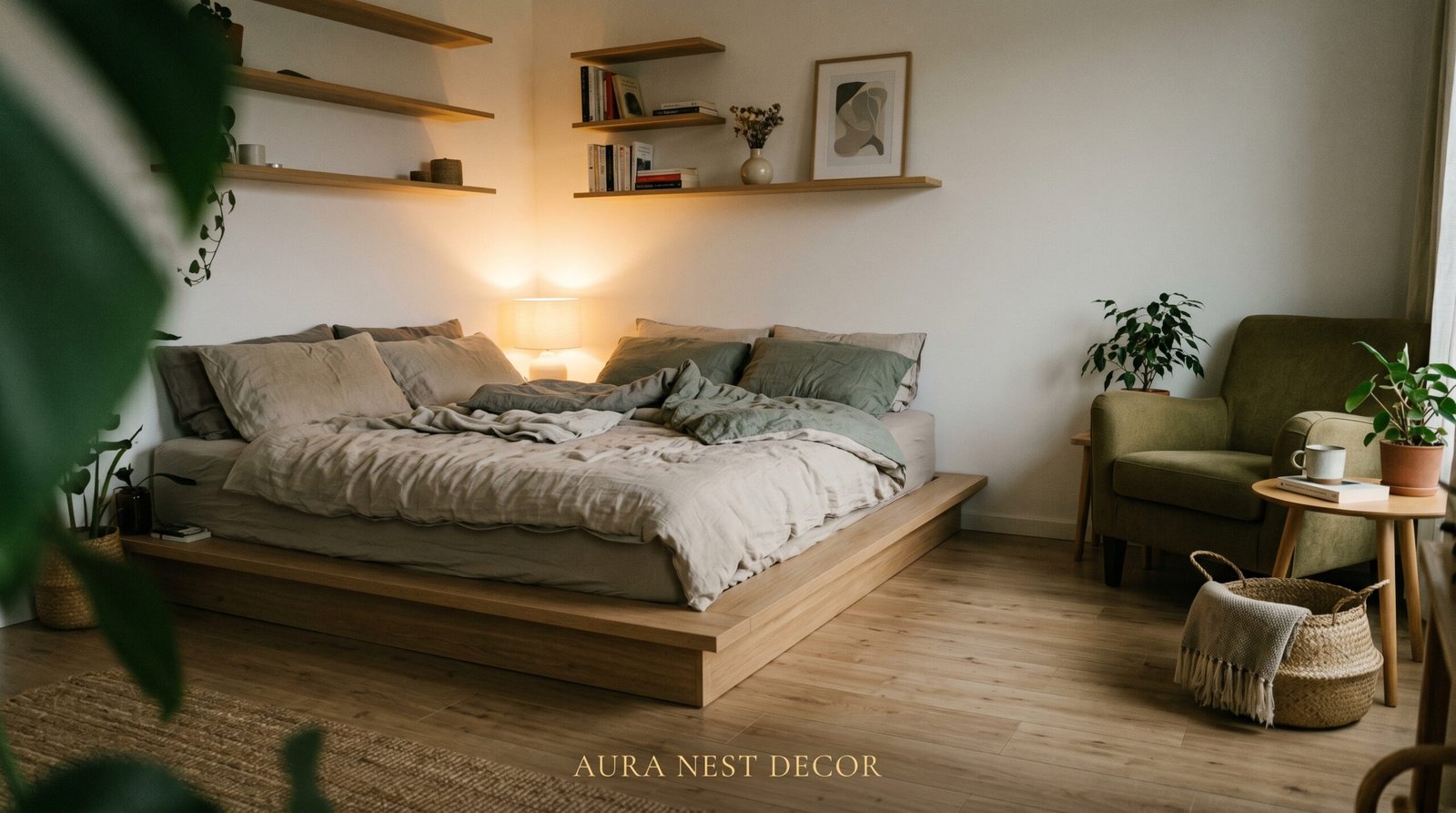
A small table lamp on the nightstand with a warm bulb — we’re talking 2700K, the amber glow of an Edison bulb at 7pm. A reading light clipped to the headboard or mounted on the wall. A floor lamp tucked into a corner if you have one to spare, pointed upward to wash the ceiling with soft warmth. Under-shelf LED strips if you have floating shelves, just enough to give them presence without drama.
None of these need to be expensive. A £12 clip-on reading light from Amazon and a $20 thrifted brass table lamp can do more work than a chandelier from a design store, if they’re placed right.
The goal is a room that looks completely different at 9am and 9pm. In the morning: clear, functional, ready. At night: soft, warm, private. A room with two moods is a room worth being in.
—
4. The Textiles Rule That Every Interior Stylist Uses and Almost Nobody Talks About
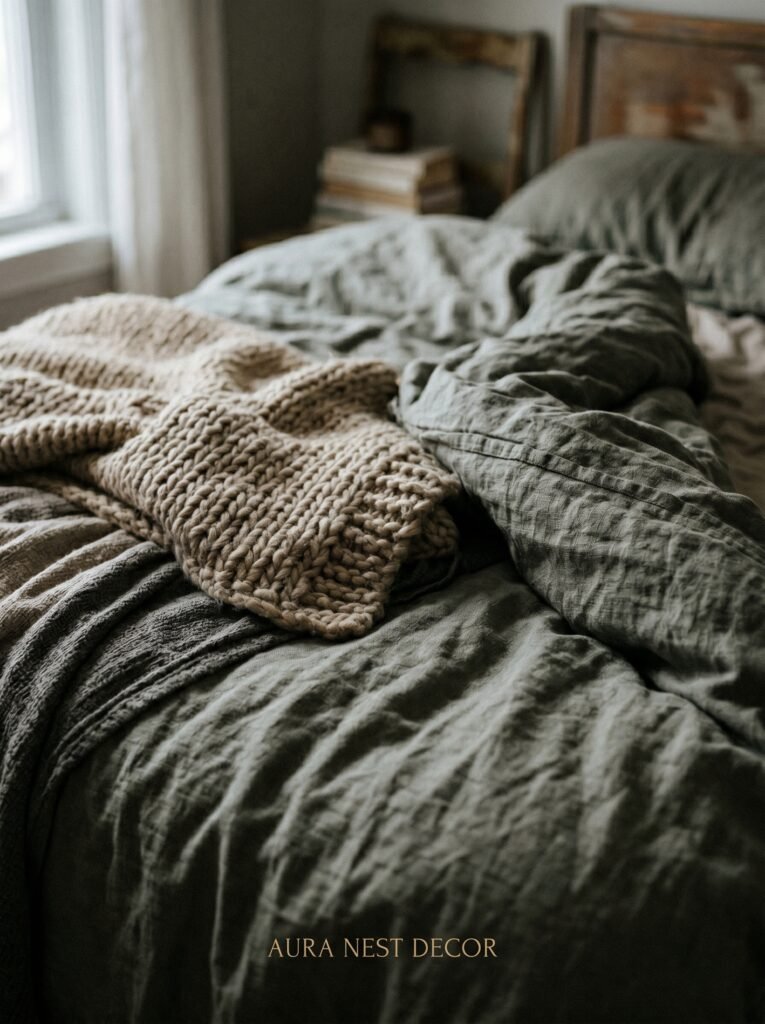
The reason some bedrooms look effortlessly styled while yours looks like you tried too hard or not enough usually comes down to a single principle: the rule of three textures.
Pick three. Maximum.
In a neutral bedroom: linen, velvet, and raw wood. In a darker scheme: brushed cotton, chunky knit, and glazed ceramic. The eye needs contrast to find things interesting, but it needs restraint to feel at rest. More than three textures and the room starts to feel noisy, even when it’s quiet.
This applies to your bed styling, your cushion covers, your curtains, your rug. Run through the room in your head. If you count more than three distinct textures, something has to go. Usually it’s the throw pillow you impulse-bought from a homeware shop in 2019 that doesn’t match anything but you keep thinking it might.
It won’t. Let it go.
And please, if you’re going to invest in one textile, make it the curtains. Floor-length, proper floor-length — meaning the hem just grazes or gently pools at the floor. Not hovering three inches above it. Curtains that almost touch the floor look like you measured wrong. Curtains that pool slightly look like you know exactly what you’re doing.
“A room with two moods is a room worth being in.”
—
5. How Mirrors Do Something to a Small Room That Paint and Furniture Simply Cannot
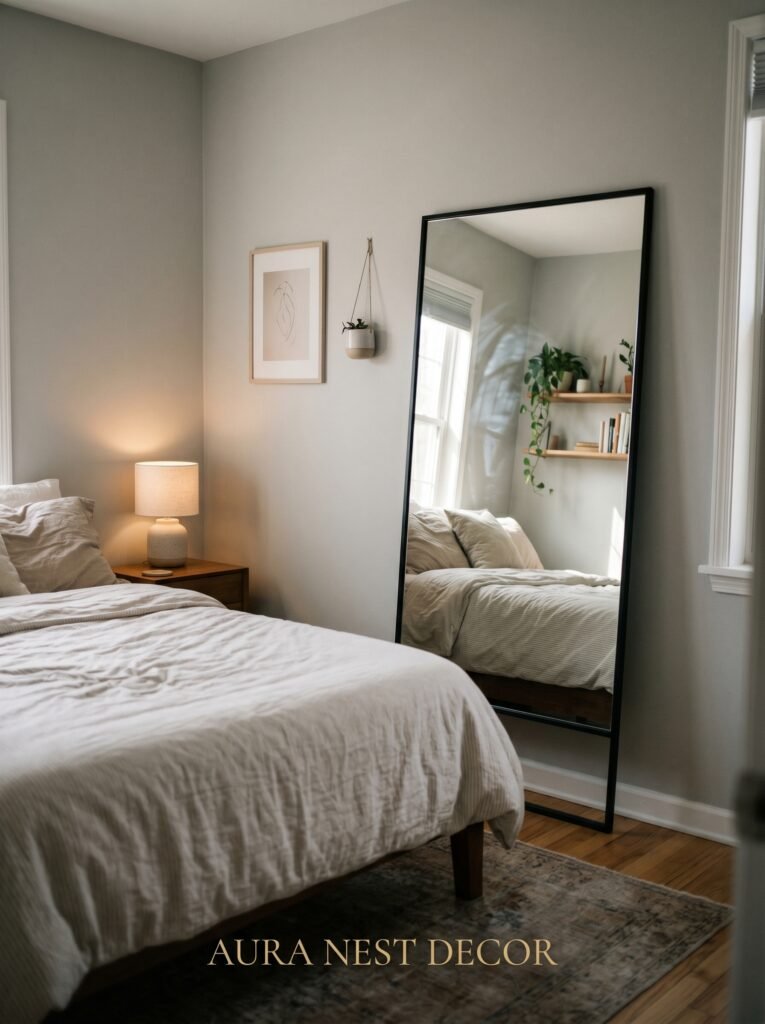
Not the big, frameless, screw-to-the-door mirror that every rented flat in Britain has. Not the medicine cabinet mirror hung at eye level like a postage stamp. Something different.
A leaning full-length mirror in a proper frame — rattan, black powder-coated metal, antique gold — does three things simultaneously. It bounces light. It adds a focal point. And it creates the visual suggestion of a doorway, which tricks the brain into reading the space as larger than it is.
Position it to reflect something beautiful. Not a wall or a door — a window, or the made bed, or your best-styled corner. What the mirror reflects is part of the design.
Decorative mirrors as art also work brilliantly in small bedrooms. A cluster of three mismatched vintage mirrors on one wall reads as a gallery wall but with twice the visual impact, because each piece reflects something different at every hour of the day. The room moves and changes as the light moves. Static becomes dynamic.
The one thing to avoid: mirrors facing directly toward the bed. Some people swear by Feng Shui here, others just find it unsettling. Either way, angled slightly off-axis is always more interesting than straight-on.
—
6. The Storage Approach That Makes Small Rooms Look More Designed, Not More Cluttered
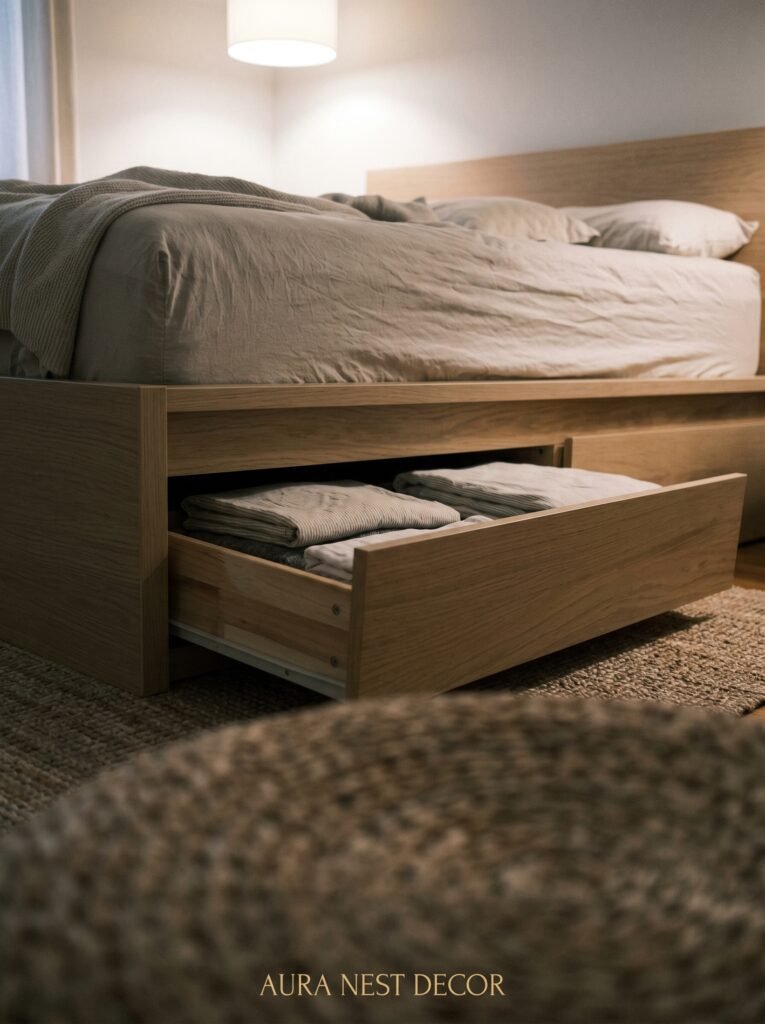
Storage in small bedrooms is a battle between two impulses: hide everything or show nothing. Both approaches, taken to an extreme, fail. A room full of lidded baskets and hidden compartments feels like you’re concealing a crime. A room with zero visible storage looks like nobody actually lives there.
The answer is curated visibility.
Pick two or three genuinely beautiful objects to store in plain sight. Not your charger cable and your hand cream. A ceramic dish on the nightstand holding a ring and a single earring. A tray on the dresser with a candle, a small plant, and a perfume bottle you actually love. One stack of books on the floor beside the bed, spines out, max five high.
Everything else: behind doors, in drawers, in under-bed storage boxes with lids. Not because clutter is shameful but because in a small bedroom, the things you choose to display become the entire visual story. Make those things worth looking at.
And if your wardrobe is the main storage offender — the double rail in the alcove that’s been there since the house was built — consider what’s facing the room. A curtain instead of sliding doors can soften an entire wall instantly. A deep linen curtain in a color that ties to your bedding doesn’t look like a workaround. It looks deliberate.
—
7. The Plant Rule for Small Bedrooms That Nobody Wants to Hear
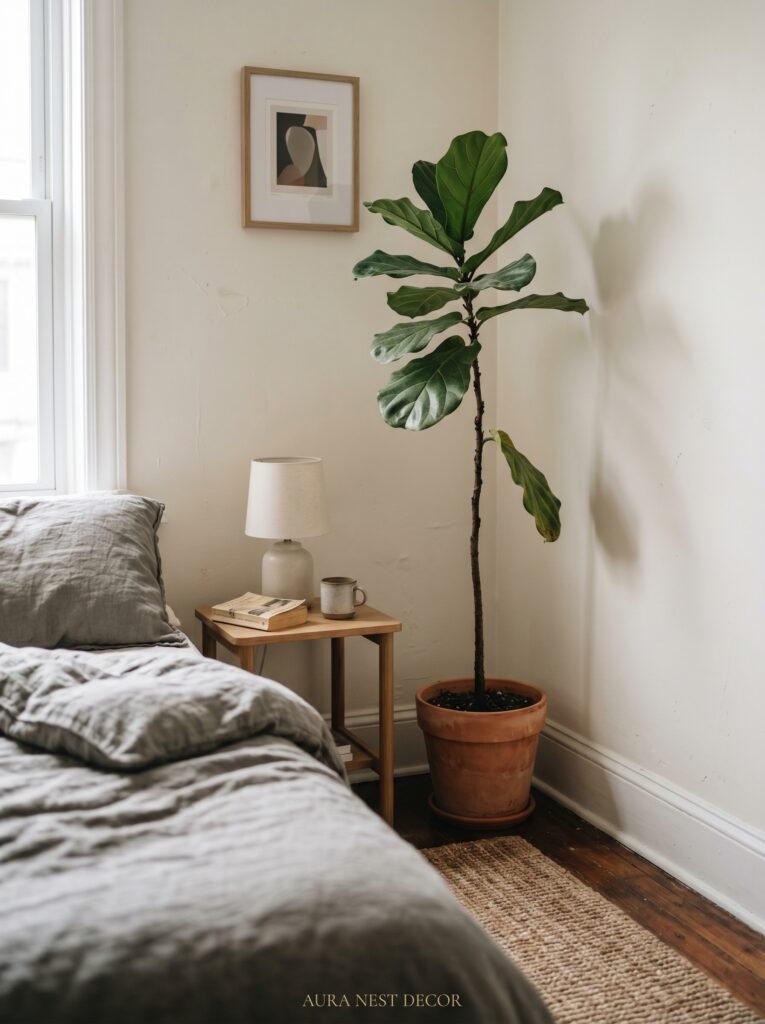
One statement plant beats ten small ones. Every single time.
A single large fiddle-leaf fig, or a trailing pothos on a high shelf, or a sculptural snake plant in a decent-sized pot does more for a small bedroom than an entire collection of four-inch succulents spread across the windowsill.
Small plants in small spaces read as clutter unless they’re arranged with extreme care. One large plant reads as a design choice. It brings height, life, organic texture, and that essential something that makes a styled room feel lived in rather than staged.
If you genuinely don’t have the light for a large plant, a very good faux option in a beautiful pot is absolutely fine. The pot matters as much as the plant. A terracotta pot with visible craftsmanship beats a white plastic nursery pot every time, even if the plant inside it is plastic.
Place it where it casts a shadow in the morning light. Shadows are design elements in a small room. They add depth that paint and furniture can’t manufacture.
“One statement plant beats ten small ones. Every single time.”
—
8. What Modern Actually Means Right Now (And Why It’s Not What You Think)
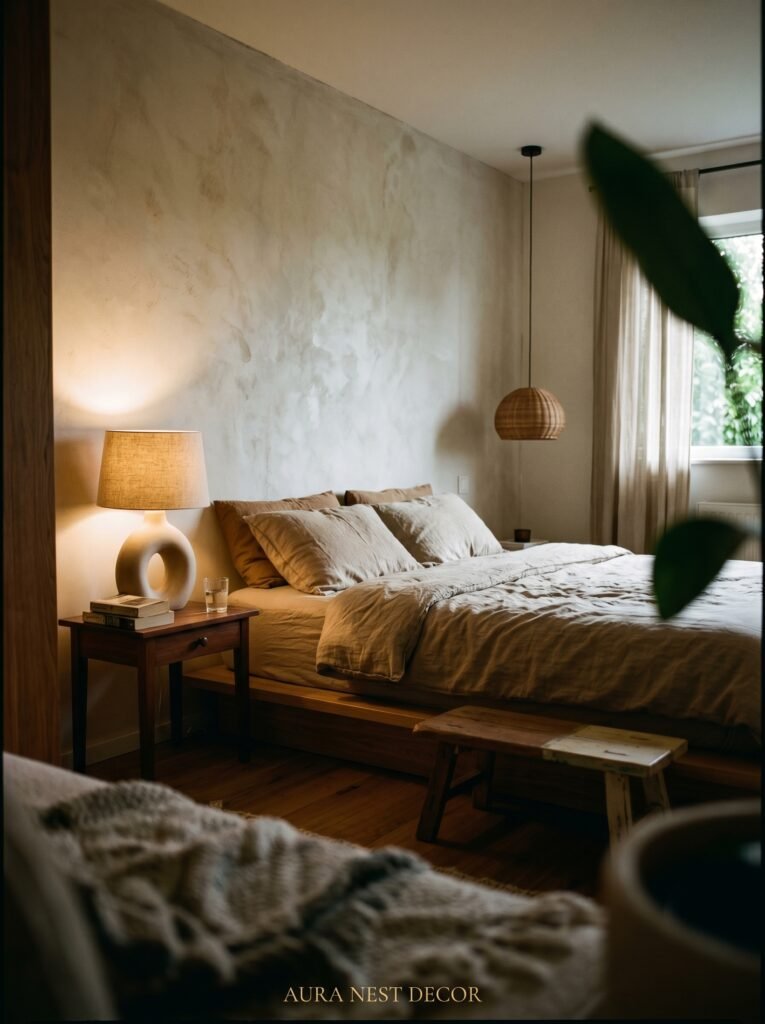
Modern interior design used to mean cold. Steel, glass, no clutter, no warmth, nothing superfluous. The kind of room that looked incredible in a magazine and felt like being inside a laptop.
What modern means right now — in the rooms that are actually getting saved and reshared and dreamed over — is something completely different. It’s warm modern. Organic modern. The kind of design that nods to contemporary line work and edited simplicity but wraps it in materials that feel like they came from the ground.
Brushed brass instead of chrome. Linen instead of polyester. Curved edges instead of sharp corners — on mirrors, on headboards, on furniture legs. Raw oak and matte clay. Things that look handmade even when they weren’t.
In a small bedroom, warm modern is your best friend because it does the most important thing: it feels intentional without feeling cold. Minimalist without feeling empty. The aesthetic that performs best in tight spaces because it works with what you don’t show as much as what you do.
—
9. The Headboard That Turns a Bedroom Into a Bedroom
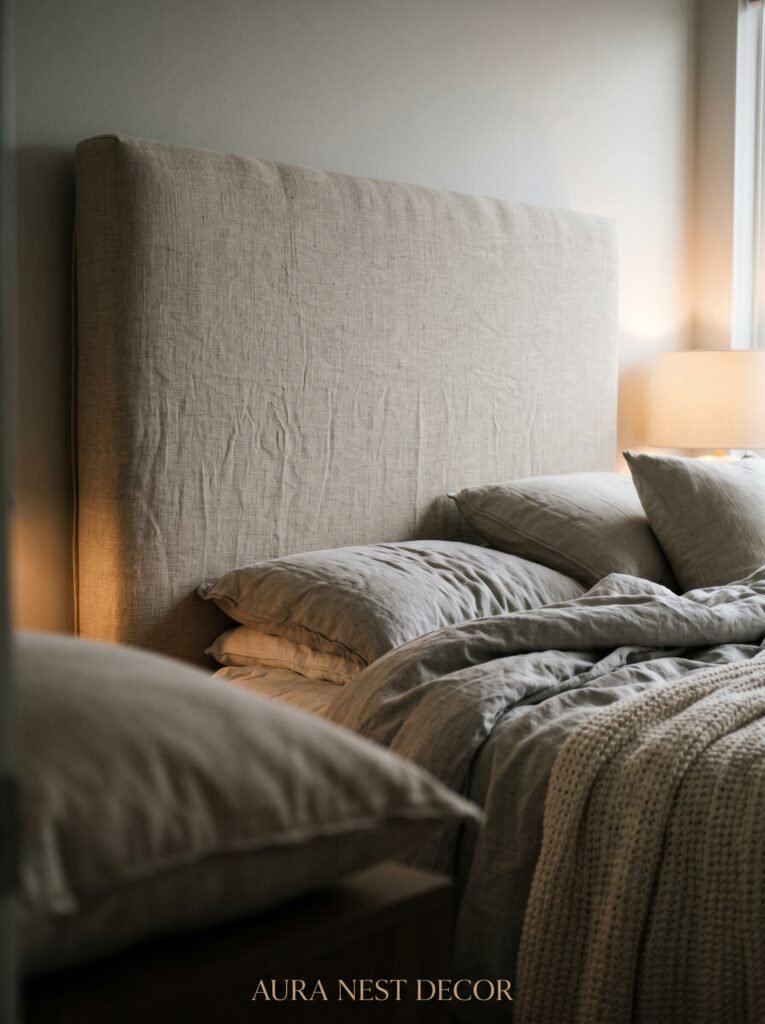
A bed without a headboard is a mattress in a room.
This isn’t a rule from a design book. It’s what your eye feels the second you walk in. The headboard is the anchor. It gives the wall behind the bed a reason to exist. It tells the room where its center is.
For small bedrooms, a headboard that mounts directly to the wall — flush, or with a slight lean — takes up zero floor space while adding enormous visual weight. Upholstered in a boucle, a velvet, or even a good linen, it immediately sets the tone for the entire room.
If you can’t change your current headboard, consider a DIY fabric panel hung behind the bed. A large piece of upholstery fabric stretched over a wooden frame, painted in a color that pulls from your wall — it reads as a statement piece and costs a fraction of a proper headboard. The internet has tutorials. You need a staple gun and a Saturday afternoon.
What you don’t need is a tube headboard from a flat-pack bed in a sad wood-effect laminate. Some battles are worth fighting.
—
10. The Rug Sizing Mistake That’s Making Your Bedroom Feel Smaller Than It Is
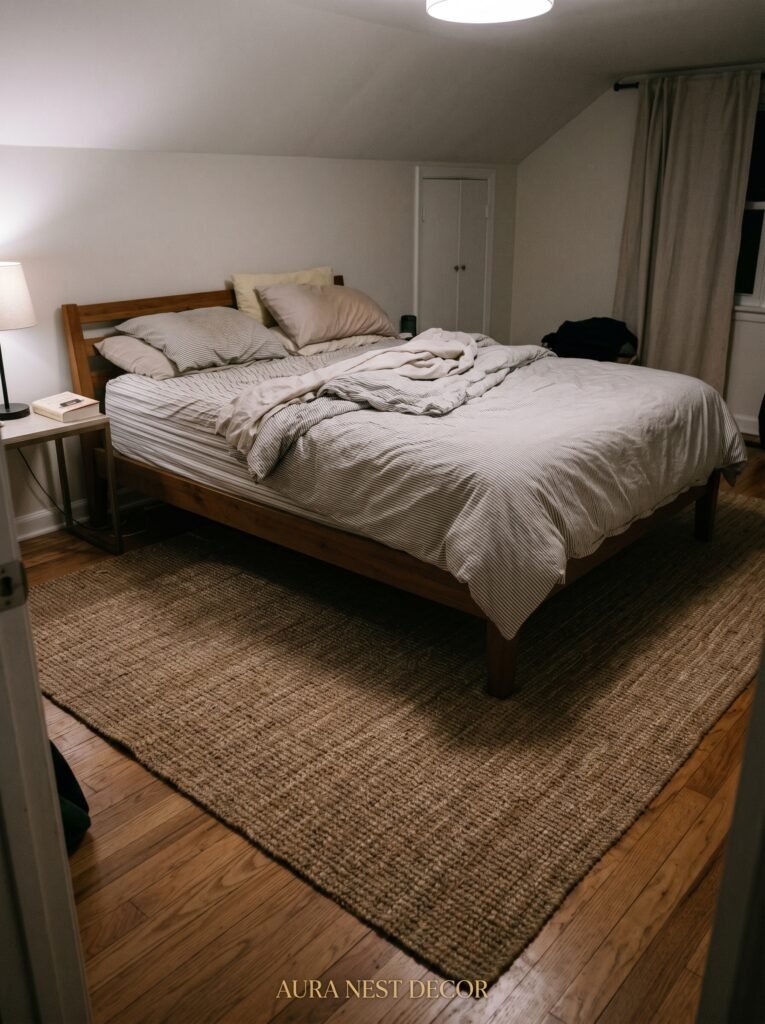
Too small. That’s the mistake. Every time.
A 4×6 rug under a king bed isn’t a rug, it’s a bath mat in denial. The proportions read as wrong even to people who can’t name exactly what’s bothering them. The room looks unfinished and somehow smaller, because the rug has created an island that emphasizes how much bare floor surrounds it.
Go bigger. In a small bedroom, a rug should extend at least 18 to 24 inches beyond the sides of the bed. If that feels counterintuitive — putting a large rug in a small room — test it. The larger the rug relative to the floor space, the more the room feels like a single composed space rather than a collection of pieces sitting awkwardly beside each other.
For a small room, a rug that runs nearly wall to wall is not a bold choice. It’s a grounding choice. And if you can’t afford a large rug in the material you want, a flatweave or Kilim in a larger size will outperform a plush 4×6 in a premium material, every time.
—
11. The Art Rule That Makes Any Wall Look Like It Was Done by Someone Who Knows
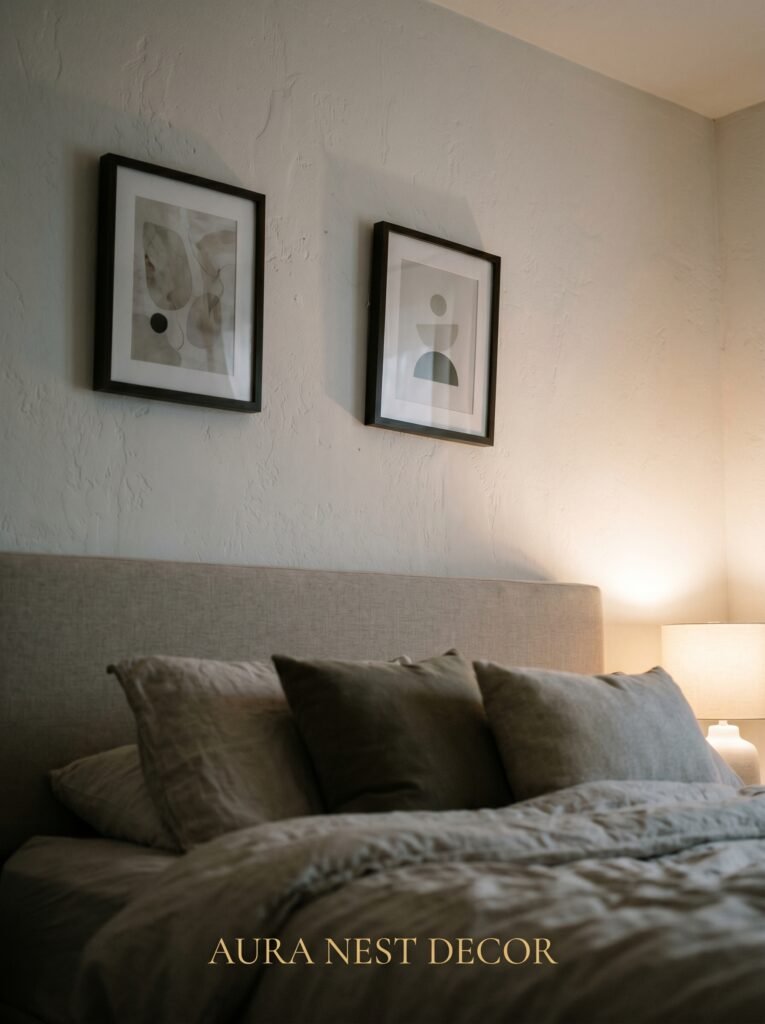
The gallery wall as we knew it — mismatched frames, inspirational quotes, the IKEA Ribba with the one black and white photo — had a good run. It’s had its run.
What’s replacing it in the rooms that look seriously considered? One oversized piece.
A single large artwork or framed print, hung so its center sits at eye level (57 inches from the floor, always — this is the museum standard and your eye knows it), does more for a small bedroom than twelve smaller pieces ever could. It pulls the eye. It anchors the wall. It makes every other choice in the room look more deliberate.
It doesn’t need to be expensive. A print from Society6 in a large format, framed in a simple black frame, can look extraordinary. What matters is the scale. Go bigger than feels comfortable. The discomfort is where the magic is.
—
12. The Finishing Detail That Separates Rooms That Look “Nice” From Rooms That Look Done
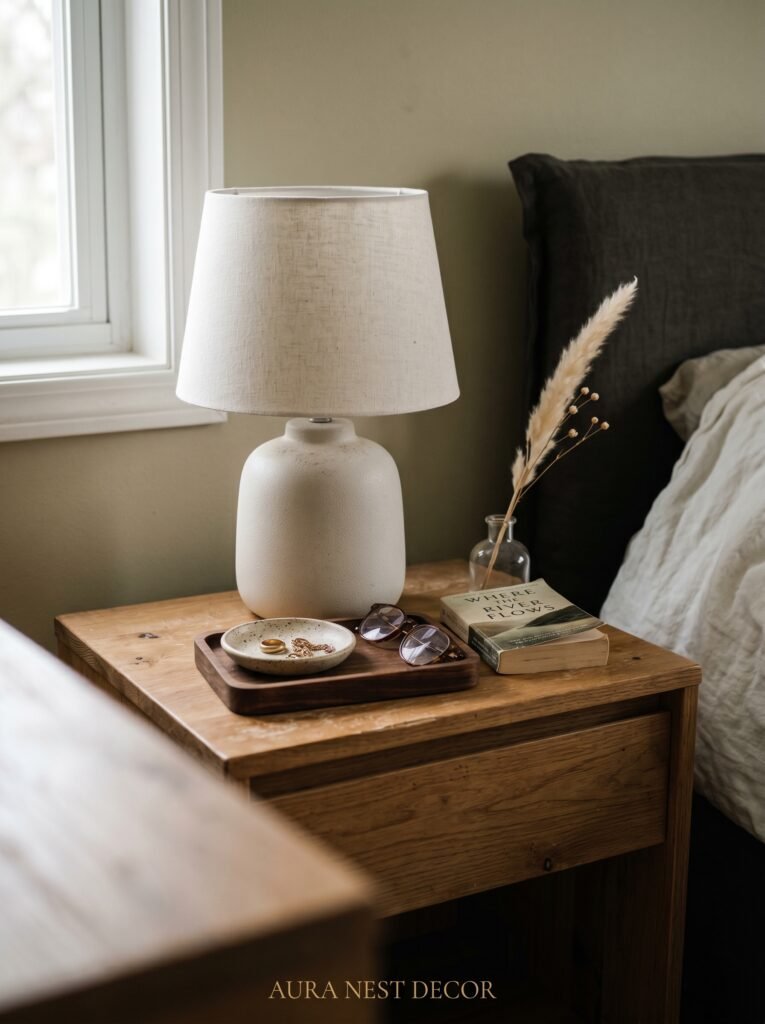
Scent. And I mean that literally.
A room can have perfect lighting, beautiful textiles, the right rug, incredible art — and still feel slightly unfinished in a way you can’t photograph. What’s missing is the sense that someone lives here and loves it. Scent is the invisible layer of a well-designed room.
A candle on the nightstand — not burning, necessarily, just sitting there with the faint suggestion of its fragrance — a diffuser tucked between the books on the shelf, a linen spray misted over the bedding before guests arrive. These things cost almost nothing and they do something to a room that no mood board can account for.
The rooms in your memory that felt like something — a hotel suite, a beautiful friend’s flat, a holiday rental you still think about — had a scent. Warmth, clean linen, something faintly botanical. That’s the feeling you’re chasing.
Build it in. It’s the last 5% of the room that makes the other 95% feel complete.
—
❓ FAQ
Q: What’s the most important change I can make to a small bedroom on a tight budget? A: Lighting, without question. Swap out your overhead bulb for a warm-toned one (2700K), add a single lamp on your nightstand, and you’ll feel the room shift within an evening. It costs almost nothing and makes every other element look better.
Q: How do I make a small bedroom feel modern without making it feel cold or sterile? A: Lean into warm modern — natural materials like linen, oak, and clay, curved forms, and a muted, earthy palette. Modern doesn’t have to mean minimal or cold. The rooms that look best right now are edited and intentional, but they feel genuinely warm to be inside.
Q: Can I use dark colors in a really small bedroom, like under 100 square feet? A: Yes, and sometimes it’s the better choice. Color drenching — painting walls, ceiling, and trim in the same deep tone — removes the hard edges of a small room and makes it feel atmospheric rather than cramped. The key is committing fully; half-measures in a dark palette tend to look gloomy.
—
💭 Final Thoughts
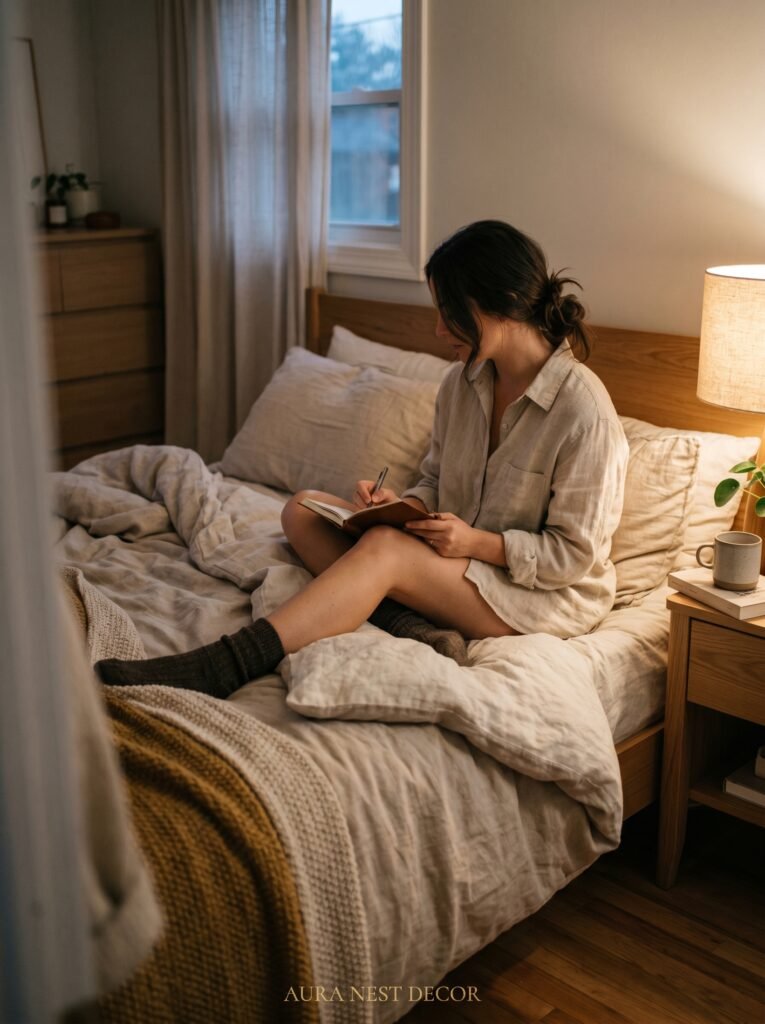
A small bedroom done well isn’t a compromise. It’s an edit — and there’s something quietly powerful about a space where every single thing has been chosen. The rooms that stay with us are rarely the biggest ones. They’re the ones that felt like someone actually cared.
What’s the one thing in your bedroom right now that you’ve been meaning to change for two years but keep walking past?