The Small Living Room Glow-Up: Modern Interior Ideas That Actually Work in Real Houses
You don’t need a loft apartment in Shoreditch or a open-plan farmhouse in Connecticut to have a living room that makes people stop and stare. You just need the right moves — and maybe permission to stop playing it safe.
—
1. Why “Small” Is the Wrong Way to Think About Your Living Room
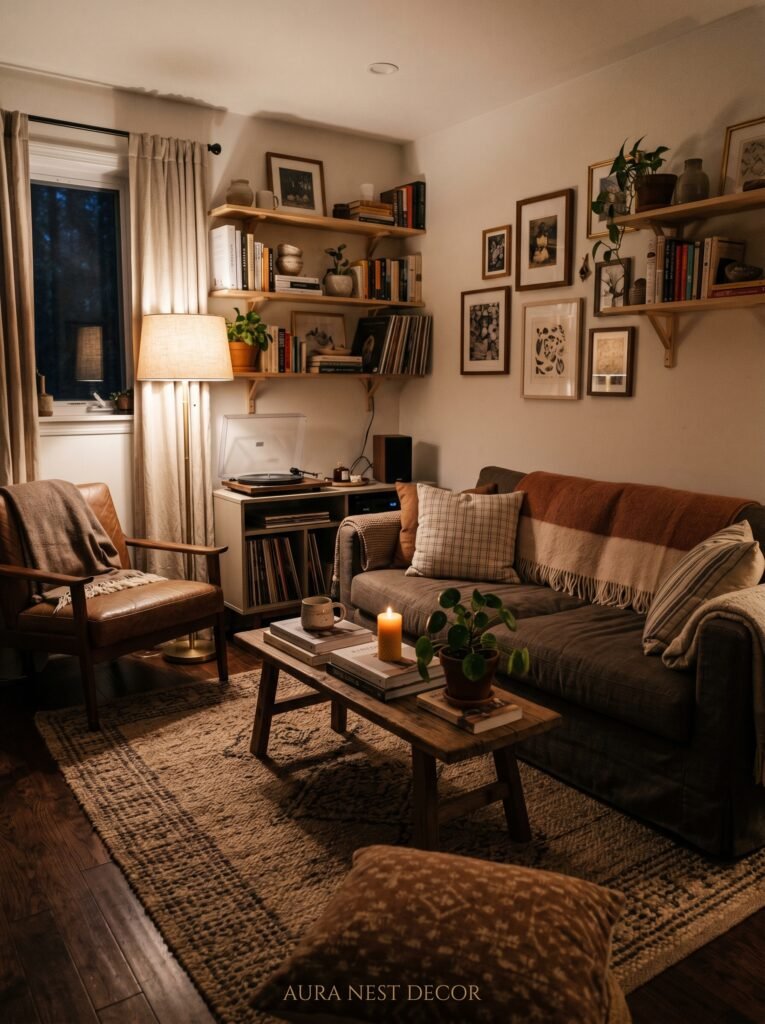
The moment you start decorating from a place of apology — “it’s small, but…” — you’ve already lost the plot. Every design decision becomes about compensation. You shrink yourself. You pick furniture that’s too cautious, colors that are too safe, and then wonder why the room feels forgettable.
Here’s the actual truth: small living rooms have something sprawling open-plan spaces never will. They have intimacy. The kind of room where you can reach the lamp without getting up. Where a single candle actually changes the whole atmosphere. Where a conversation feels like a conversation and not a press conference.
Modern interior design has been catching up to this idea for years. The best designers — the ones whose work you save to your boards at midnight — are working with compact rooms on purpose. Constraint is where creativity lives.
So the first thing to do is drop the apology. Not “small but cozy.” Just: a beautifully designed room. Start there.
“Constraint is where creativity lives — and your small living room already has it built in.”
2. The One Paint Color Decision That Changes Everything (And It’s Not White)
White walls in a small room. That’s the advice you’ve heard a thousand times. And it’s not wrong exactly — it’s just incomplete. Pale, cool white can make a small room feel clinical. Flat. Like a waiting room that’s trying its best.
What actually works? Warm white, yes — but also something bolder than you’d expect.
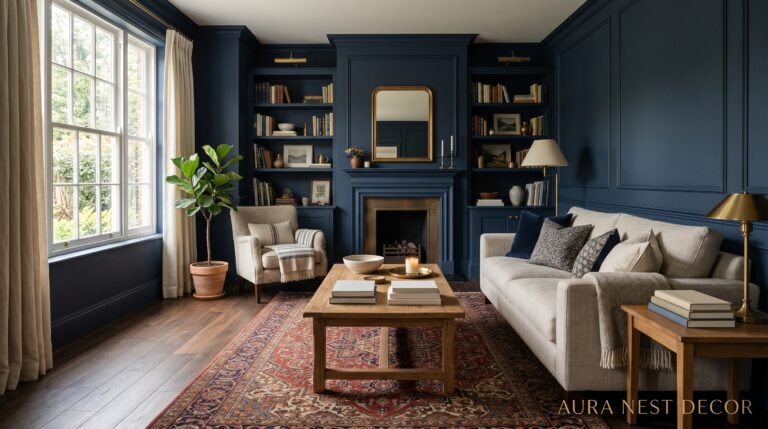
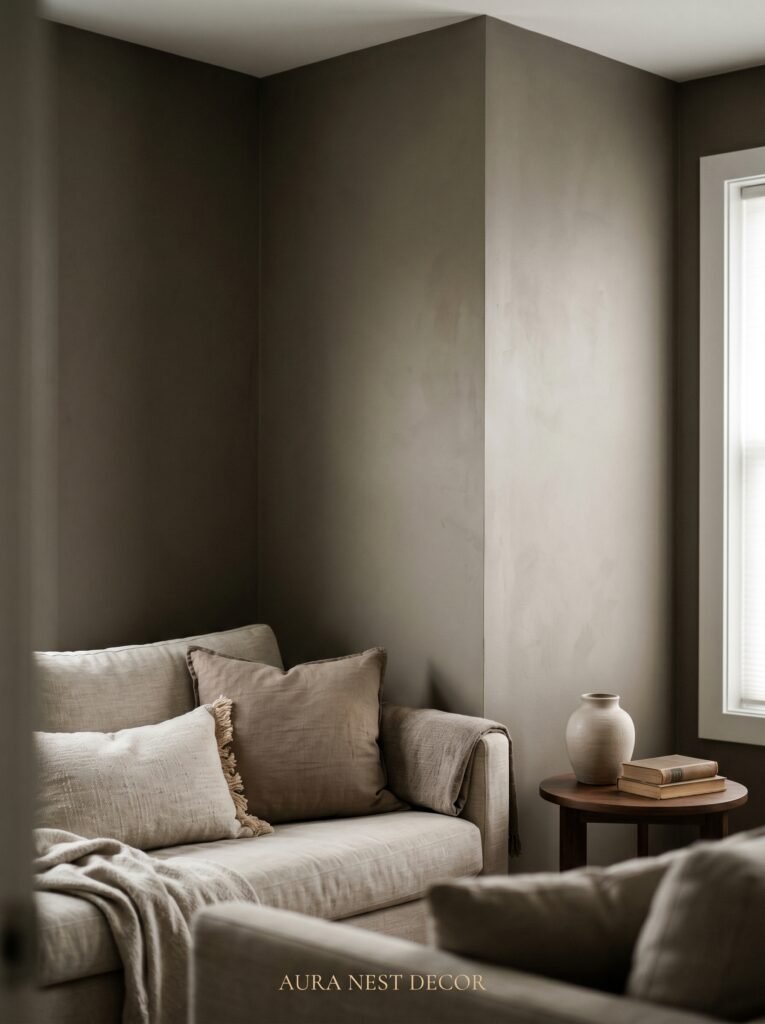
Deep, saturated colors make small rooms feel intentional rather than cramped. A living room painted in a rich sage green, a dusty terracotta, or a moody slate blue doesn’t read as small. It reads as considered. The color wraps the room around you, and suddenly “cozy” stops being a consolation prize and starts being the actual goal.
In the UK, this idea has already taken hold. Walk through any stylish Victorian terrace in Leeds or Edinburgh and you’ll find front rooms painted in colors that would have terrified a previous generation of homeowners. In the US, it’s catching on fast — especially in older homes in the Northeast and the Pacific Northwest where those smaller, character-filled rooms deserve something real on the walls.
The trick is to commit fully. Half-measures with bold paint look amateur. All four walls, ceiling included sometimes. All in. That’s when it works.
3. The Color That Keeps Showing Up in Every Beautiful Small Living Room Right Now
Warm terracotta. Mushroom. Antique white with just a breath of yellow in it.
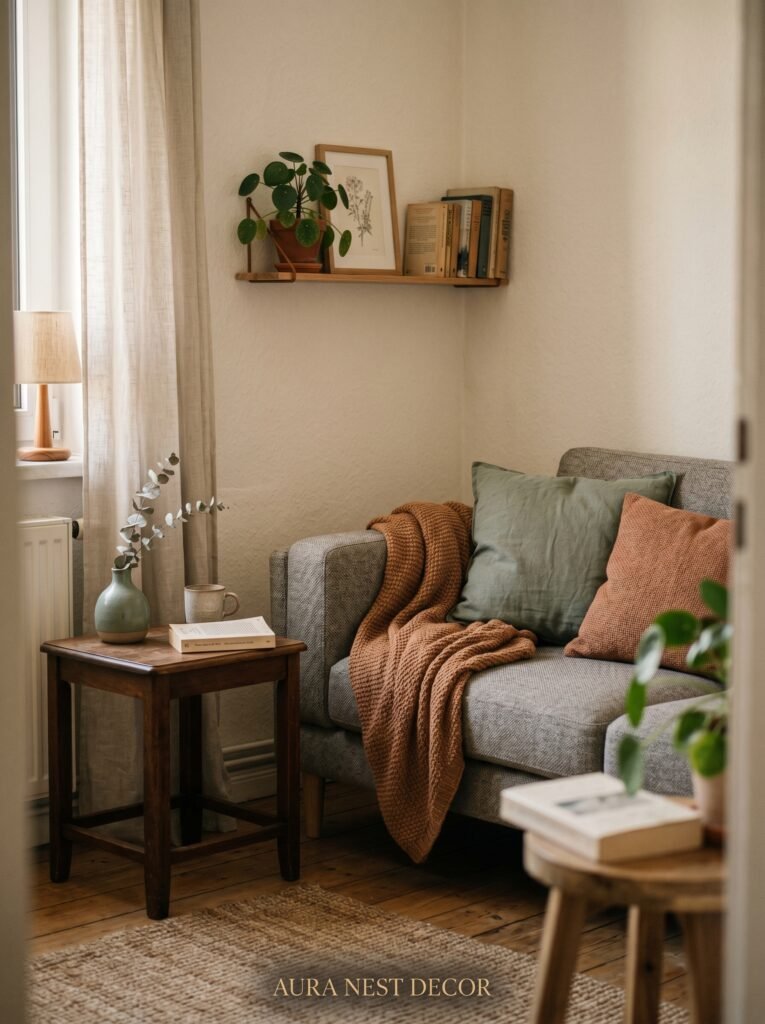
But honestly? The color dominating right now — the one I keep seeing on every beautifully styled small living room in 2024 and into 2025 — is a kind of warm, faded green. Think dried sage. Think the color of old olive oil tins. Think something that looks like it’s been in a sunlit room for thirty years already.
It works because it reads as neutral while still having personality. It pairs with almost everything — natural wood, warm brass, cream linen, burnt orange, even dusty pinks. It doesn’t compete with your furniture. It just makes the whole room feel like it grew there organically.
Farrow & Ball’s Mizzle, Olive, and Green Smoke are doing heavy lifting in UK living rooms right now. In the US, look at Sherwin-Williams Inverness and Rosemary, or Benjamin Moore’s Saybrook Sage. These aren’t trendy in a disposable way. They’re the kind of colors you choose once and don’t touch for a decade.
Pair with warm-toned wood floors, a cream or oatmeal sofa, and one bold terracotta or rust accent. The room practically decorates itself from there.
4. The Furniture Rule That Small Living Rooms Need Most (Nobody Talks About This Enough)
Stop buying matching furniture sets. Please.
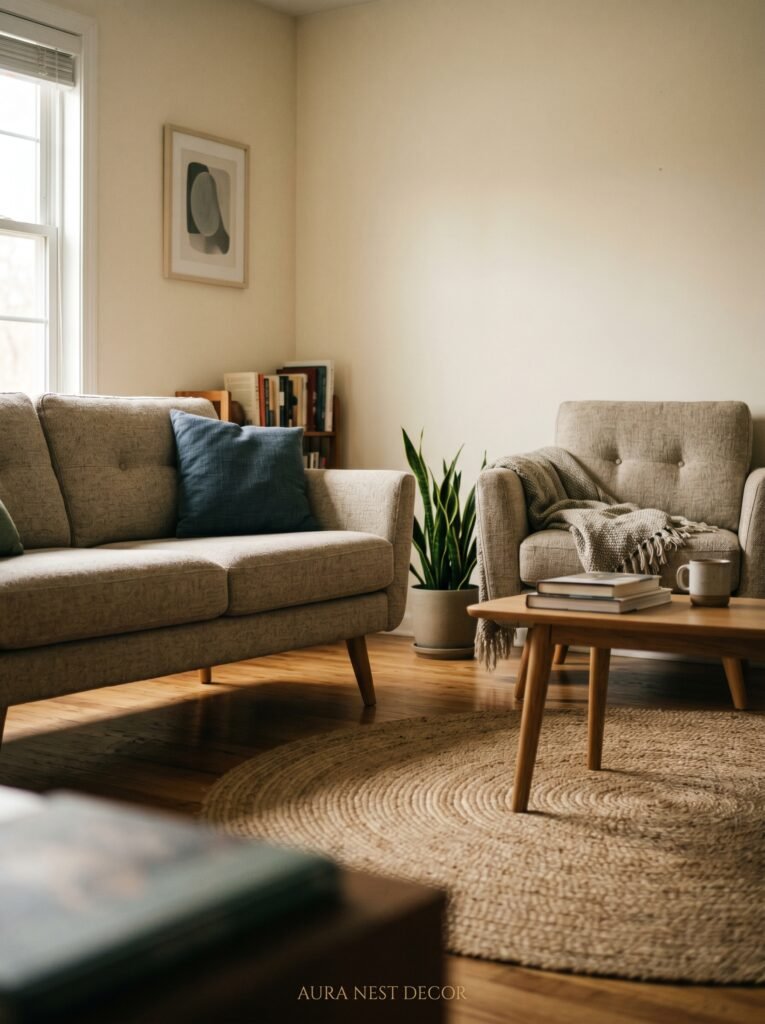
The three-piece suite — sofa, loveseat, armchair, all in the same fabric, from the same store, in the same year — is one of the most reliable ways to make any living room look smaller and less interesting than it actually is. Everything blurs together. There’s no contrast, no movement, nowhere for the eye to rest or to travel.
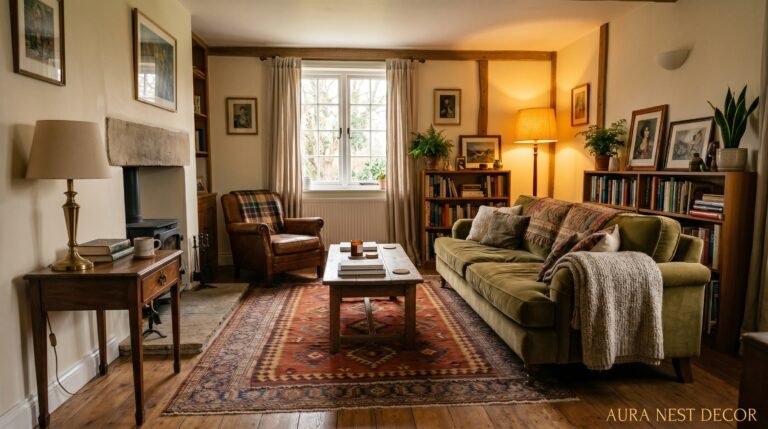
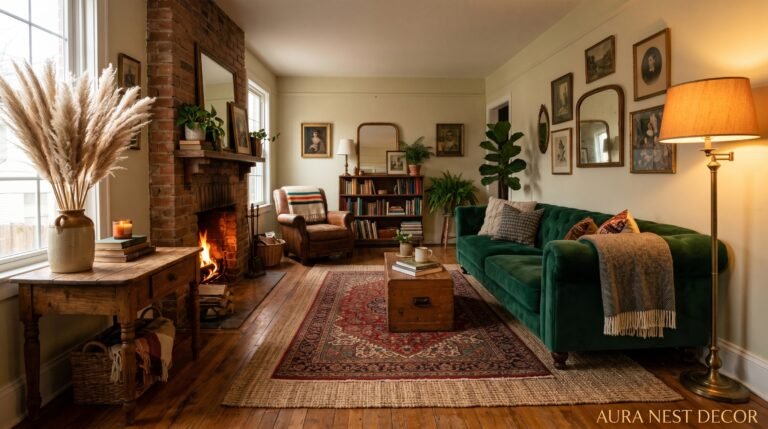
Modern small living rooms that work — that actually look good in photos and feel even better in person — almost always have some deliberate mismatching happening. A linen sofa paired with a velvet armchair in a completely different color. A wooden side table next to a marble-topped coffee table. A vintage lamp inherited from someone’s grandmother sitting next to a clean-lined modern shelf.
The eye needs variety. It needs something unexpected to land on.
The practical rule: pick one piece as your anchor — usually the sofa — and let everything else be slightly different. Different material. Different era. Different finish. As long as the colors are in the same family, it won’t look chaotic. It’ll look curated.
“Stop buying matching furniture sets. The mismatched living room is almost always the more beautiful one.”
5. How to Make Your Ceiling Work For You Instead of Against You
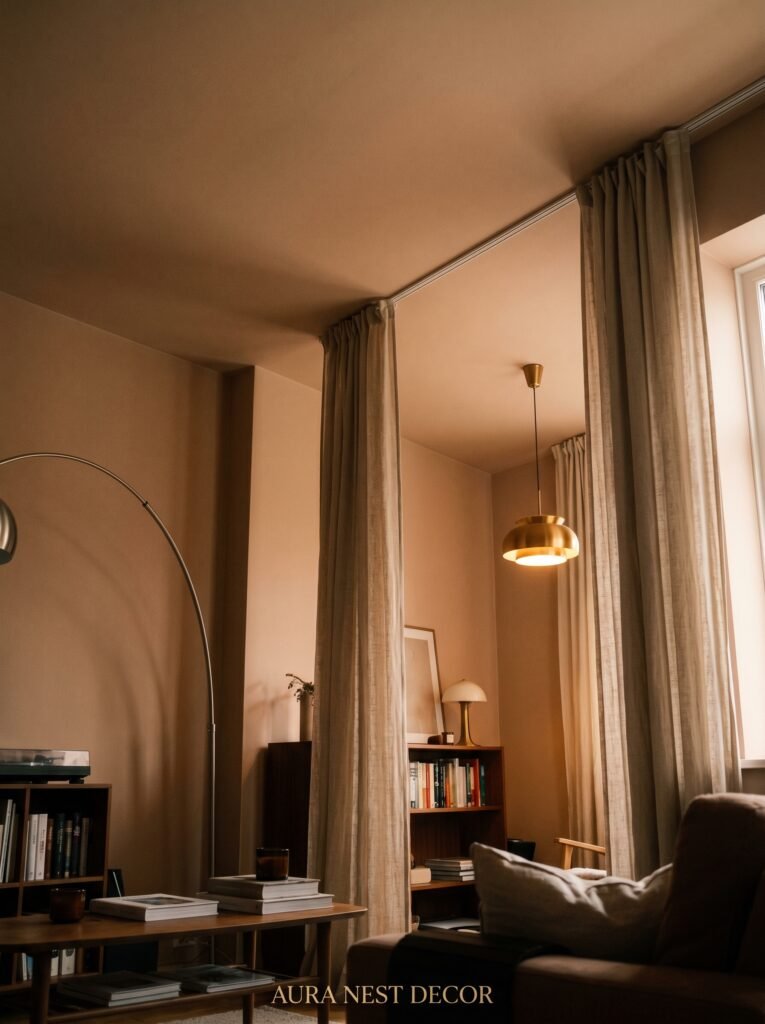
Most people look at their walls and their floors. Almost nobody thinks about their ceiling, and that is a genuinely missed opportunity — especially in small rooms.
A low ceiling in a small room can feel oppressive if you fight it. Paint it the same color as the walls and it disappears. Suddenly you’re inside a warm cocoon instead of a box. This is the painted ceiling technique, and it works staggeringly well in small living rooms. The room feels more enclosed, yes — but deliberately enclosed. Safe. Atmospheric.
For rooms with enough height, try the opposite: paint the ceiling a shade lighter than the walls. The eye travels up. The room breathes.
Pendant lights hung low from a ceiling — a single beautiful woven rattan pendant or a sculptural ceramic shade — draw the eye upward and outward simultaneously. It’s one of those small details that changes the whole spatial feel of a room without moving a single piece of furniture.
In older UK homes with original coving or ceiling roses, don’t strip them out for the sake of “modernity.” Those details are what make the room interesting. Paint the ceiling a soft warm white, leave the coving, hang something beautiful from that original ceiling rose, and the room looks both historic and completely current.
6. The Thing Every Great Small Living Room Has That You Can’t Buy at a Furniture Store
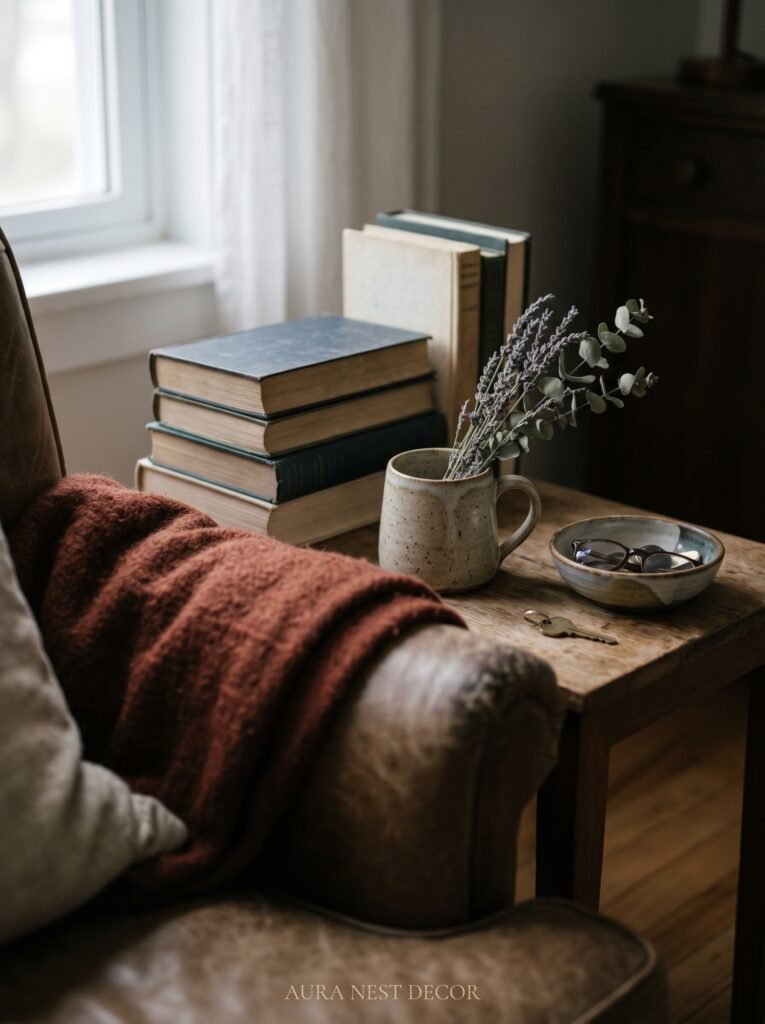
It has layers.
Not clutter. Not maximalism for its own sake. Layers. There’s a difference.
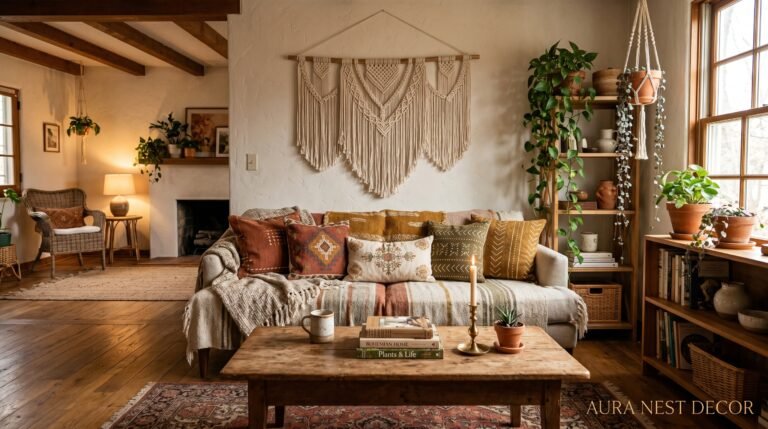
Clutter is random accumulation. Layers are intentional depth. A beautiful rug that anchors the seating area. A throw draped over the sofa arm — real texture, not a decorative prop. Books that are actually read, stacked or shelved in a way that tells something true about the person who lives there. A plant, living and real, that needs water and light and grows. A candle that’s been burned, not just displayed.
Small living rooms that feel soulless almost always lack this. Everything is too coordinated. Too clean. Too much like a catalog page. The room looks like it was assembled by someone who was afraid to commit to anything real.
The goal isn’t to add more things. The goal is to add the right things — things that have meaning or texture or a story. The ceramic vase from a market in Marrakech. The framed print you saved up for. The second-hand lamp that just works.
When a room has layers, it rewards looking. And a room that rewards looking always feels bigger than it is.
7. Mirrors: The Oldest Trick in the Book, Done Better
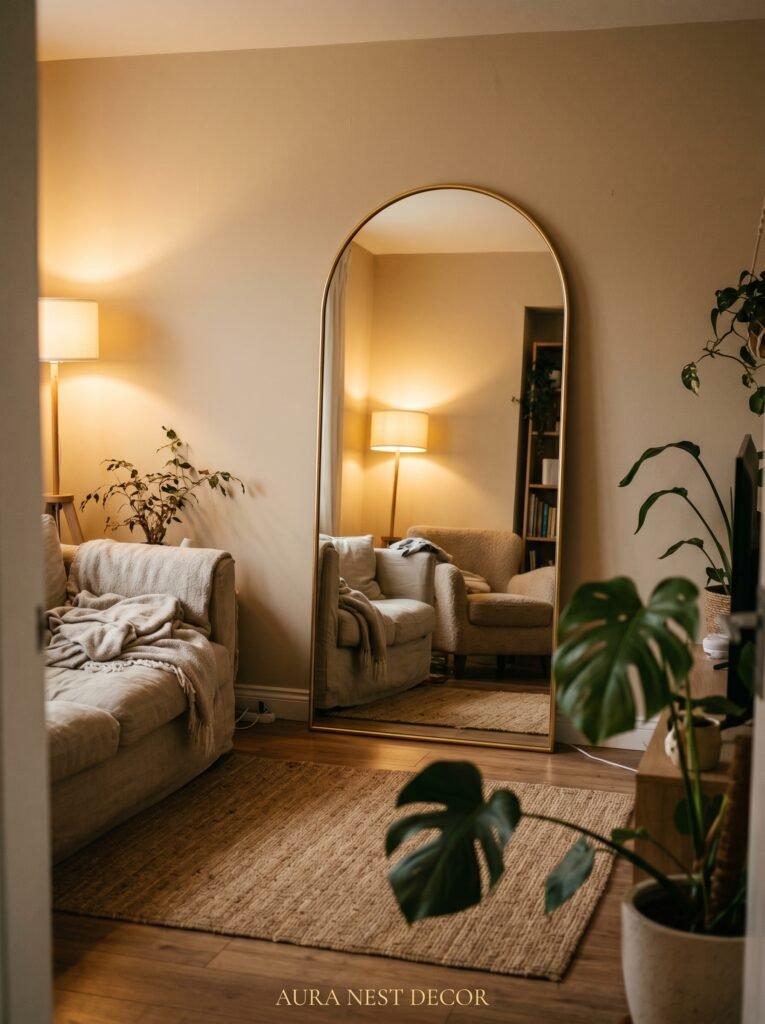
Yes, mirrors make small rooms feel larger. You know this. Everyone knows this.
But the way most people use mirrors in small living rooms is wrong. They hang one medium-sized mirror above the sofa or fireplace, slightly too high, slightly too small, and then wonder why it’s not doing the thing they hoped.
Mirrors work because of what they reflect. If your mirror reflects a blank wall, a dark corner, or the back of a door, it just doubles the dullness. If it reflects a window — natural light flooding in — or a beautiful corner of the room, it doubles the beauty.
Position matters more than size.
A large, floor-leaning mirror in a corner opposite a window changes a room dramatically. So does a cluster of smaller mirrors at different heights, creating a kind of gallery wall that also bounces light. A mirror behind a shelf of candles or plants turns that vignette into something alive and luminous.
In modern interiors, the mirror shape matters too. Arched mirrors are everywhere right now and for good reason — the curved top adds movement and breaks up the hard lines of walls and furniture. A black or unlacquered brass frame feels current. A chunky raw wood frame adds warmth. The cheap silver-framed mirror from a big box store, hung dead center above the sofa? That’s the version to avoid.
“Position matters more than size — a mirror reflecting a blank wall just doubles the dullness.”
8. Lighting Layers That Turn a Basic Living Room Into a Room You Actually Want to Be In
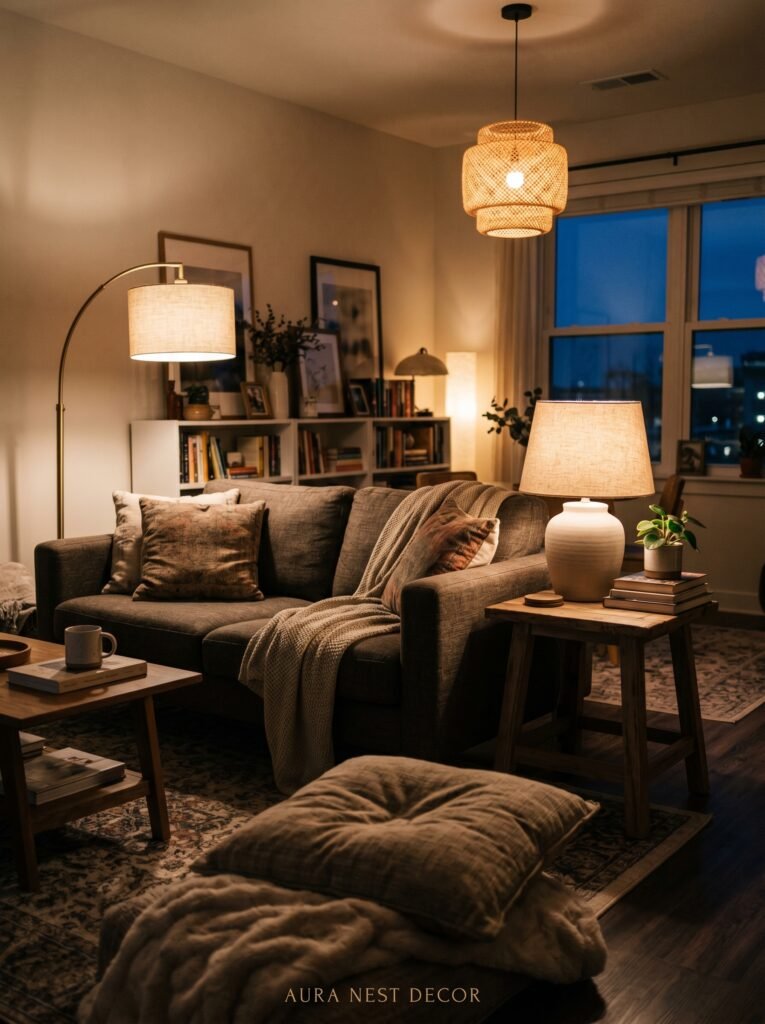
Overhead lighting is almost always the villain in small living rooms.
A single ceiling light fixture — especially a bright, cool one — destroys atmosphere. It flattens everything. It makes your beautifully chosen furniture and thoughtfully painted walls look like a furniture showroom floor. It is the enemy of cozy and the enemy of beautiful.
The solution: never rely on overhead lighting alone. Layer it.
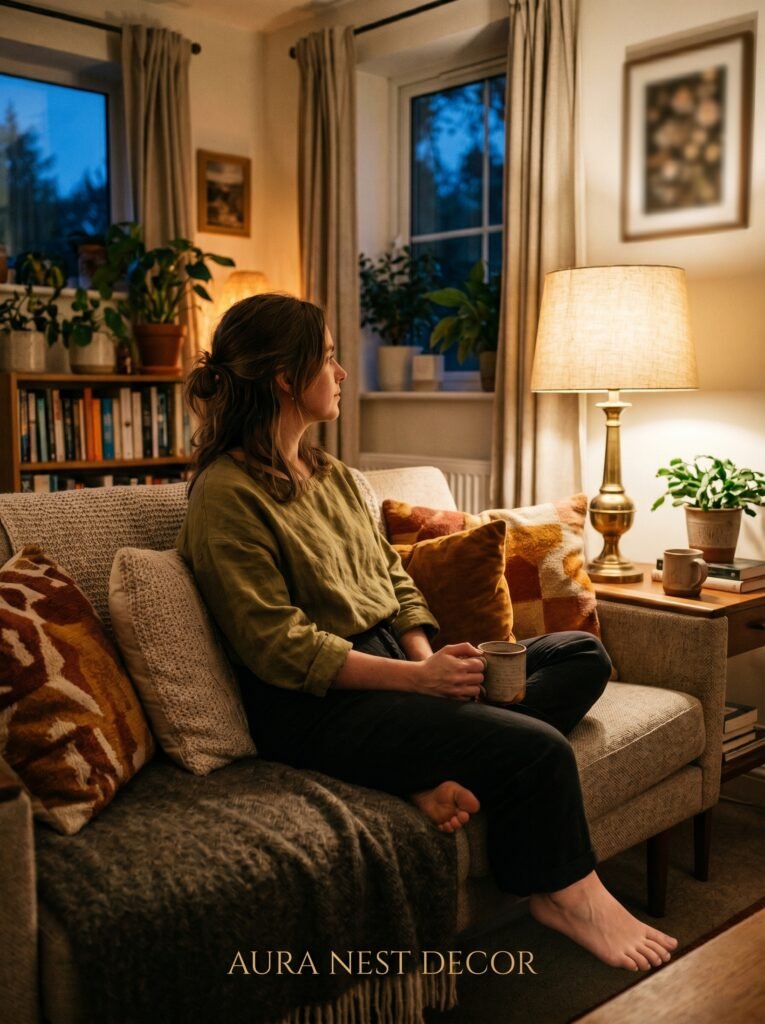
A floor lamp in the corner with a warm-toned bulb — think 2700K or lower — does something magical to a room at 6pm in November. A small table lamp on a side table creates pools of warm light that make the seating area feel intentional. A few candles (real ones, not battery-operated, please) add a flicker and a scent that no light source can replicate.
In the US and UK, the standard living room has one overhead light and maybe a floor lamp. Great living rooms have four to six light sources at varying heights, all warm-toned, all dimmable if possible. That’s the real difference between a room that feels designed and one that just feels lit.
Plug-in sconces are a game-changer for renters. No electrician required, real wall-mounted lighting, instant upgrade.
9. The Small Sofa Trap and How to Avoid It
When square footage is limited, the instinct is to buy small furniture. Smaller sofa. Smaller coffee table. Smaller armchair. Everything scaled down to match the room.
This is logical. It is also, very often, completely wrong.
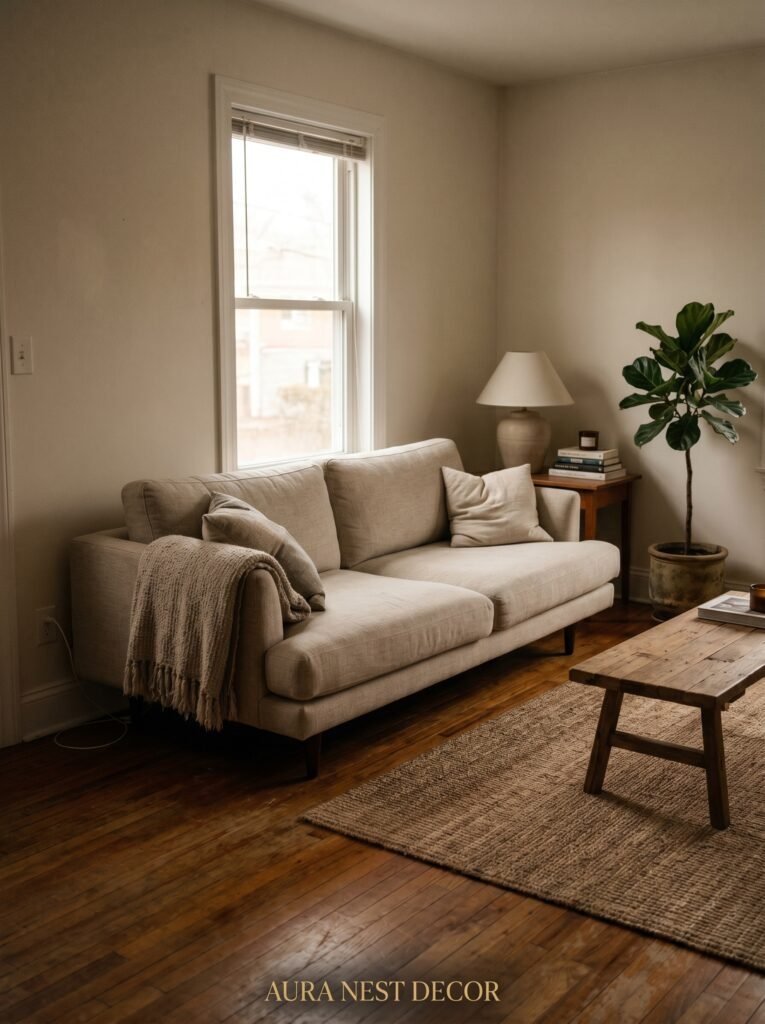
Rooms filled with too-small furniture look not spacious but fussy. Cramped in a different way — cluttered with undersized pieces that fight each other for attention. Sometimes the bold move is one large, generous sofa that fits properly along a wall, with space left in front of it, rather than three small pieces crammed in at angles.
The real trick is choosing furniture with visible legs. A sofa with short visible legs — not a boxy, floor-hugging couch — allows light to pass underneath and the floor to remain visually present. The room breathes. Same principle for armchairs and side tables. Furniture that floats slightly above the floor takes up less visual space even if it takes up the same physical space.
In a small living room, visual weight matters as much as actual dimensions. A glass coffee table weighs nothing visually. A dark, solid, low-to-the-ground wooden coffee table sits heavy. Know what you’re choosing and why.
10. Shelving That Makes a Small Living Room Feel Like a Library You Actually Want to Live In
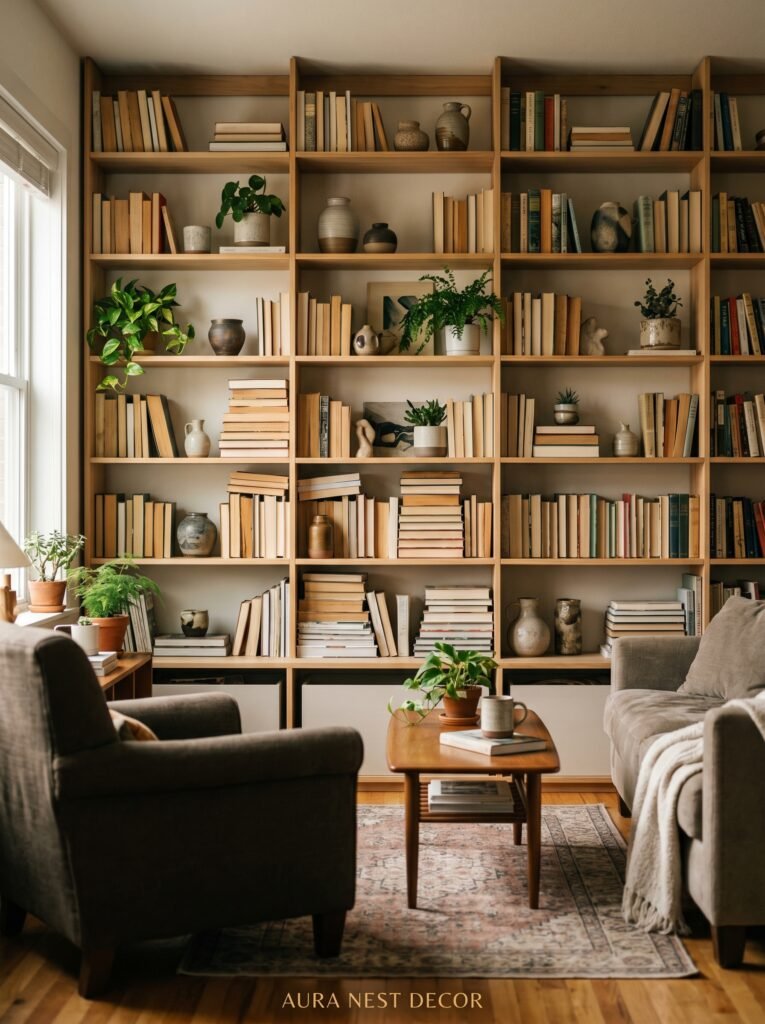
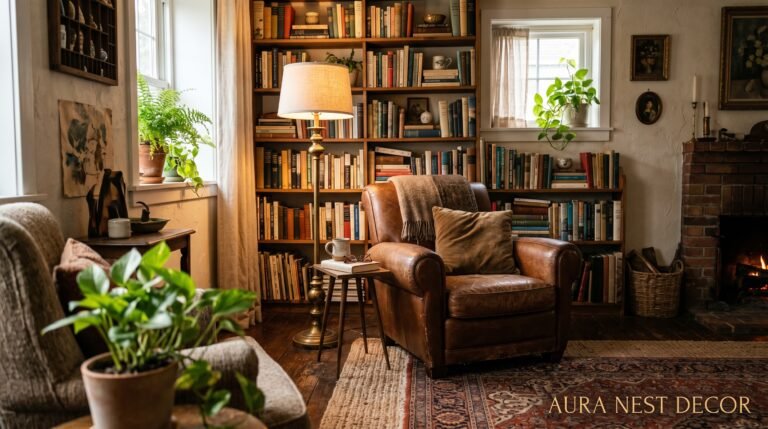
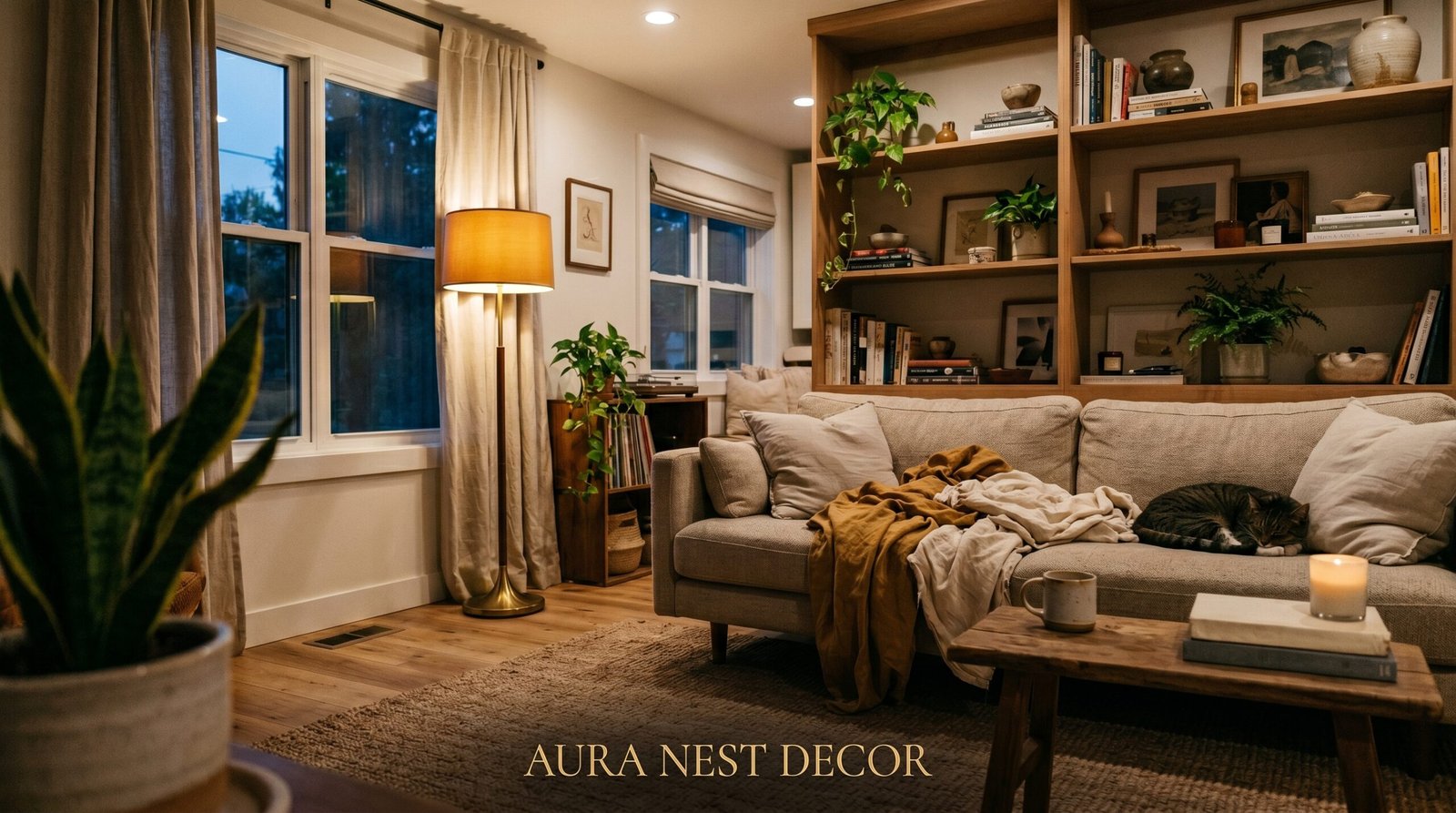
Built-in shelving or floor-to-ceiling bookcases in a small living room do something counterintuitive: they make the room feel bigger by filling the walls with purpose.
When walls are empty, the eye has nothing to travel to. The room sits flat. When walls have shelves with depth and texture and objects that tell stories, the eye moves around the room. The space feels explored, not exhausted.
You don’t need built-ins to achieve this. Tall, freestanding shelving units — Shaker-style in a painted finish, or clean-lined metal for something more industrial — work just as well in rented homes. Style them with a mix of books (not by color, please, unless you genuinely love that look — books arranged by color often feel performative), plants, ceramic objects, and a few things that are just beautiful.
Leave some shelves breathing. Not every inch needs to be filled. The negative space is part of the composition.
In UK homes, alcove shelving flanking a chimney breast is one of the most classic and most beautiful solutions for small sitting rooms. If you have those alcoves and they’re empty, you’re sitting on a design opportunity that costs less than you’d think.
11. Rugs: The Single Fastest Way to Make a Room Feel Designed or Undone
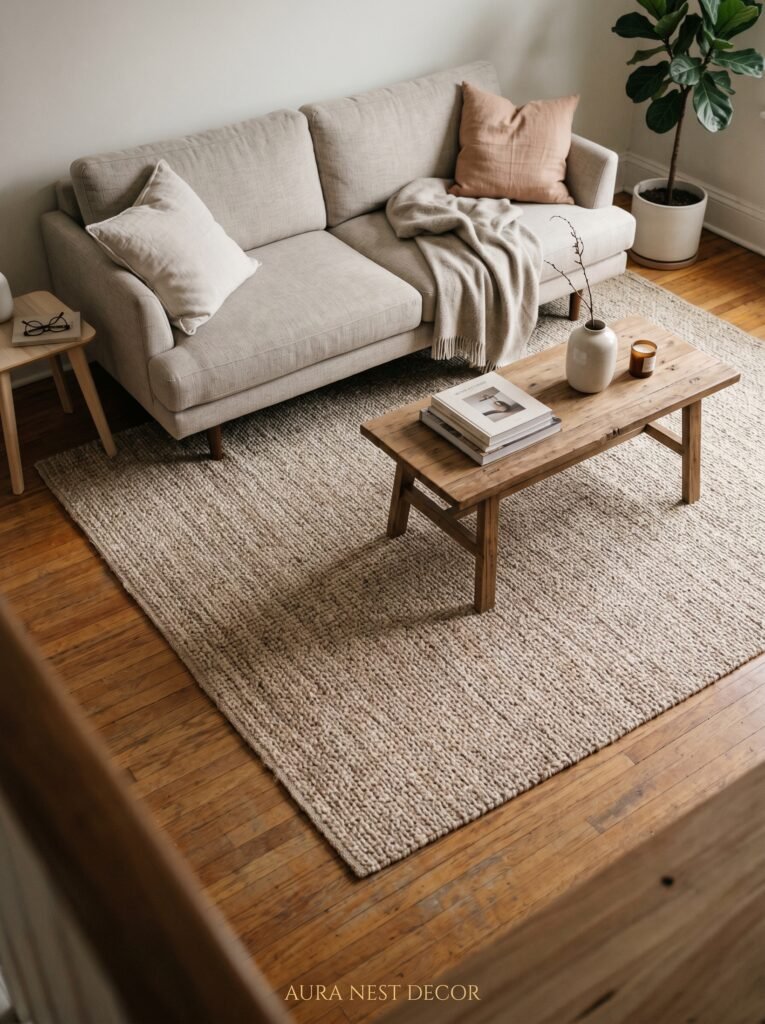
A rug that’s too small is the most common mistake in living rooms, full stop. And it’s everywhere. That little rug sitting in the middle of the room, not quite reaching the sofa, floating in space like it got lost on the way to a different room entirely.
The rule: in a seating area, the rug should be large enough for the front legs of all your seating pieces to sit on it. That’s the minimum. Ideally the whole sofa and chairs sit on the rug, with a few inches of flooring showing around the edges.
This grounds the seating area. It makes it a room within a room. In a small living room, this matters especially — it tells the eye exactly where the living space begins and ends, which paradoxically makes it feel more considered and more spacious.
The style of the rug matters too. A flatweave or low-pile rug in a small room keeps the floor from feeling overwhelmed. A vintage-style or distressed pattern adds the visual interest and warmth that a plain rug can’t. The Moroccan Beni Ourain style — cream with black geometric lines — has been popular for years because it works with almost everything and never really dates.
12. The Detail That Ties Every Modern Small Living Room Together
It’s the edit.
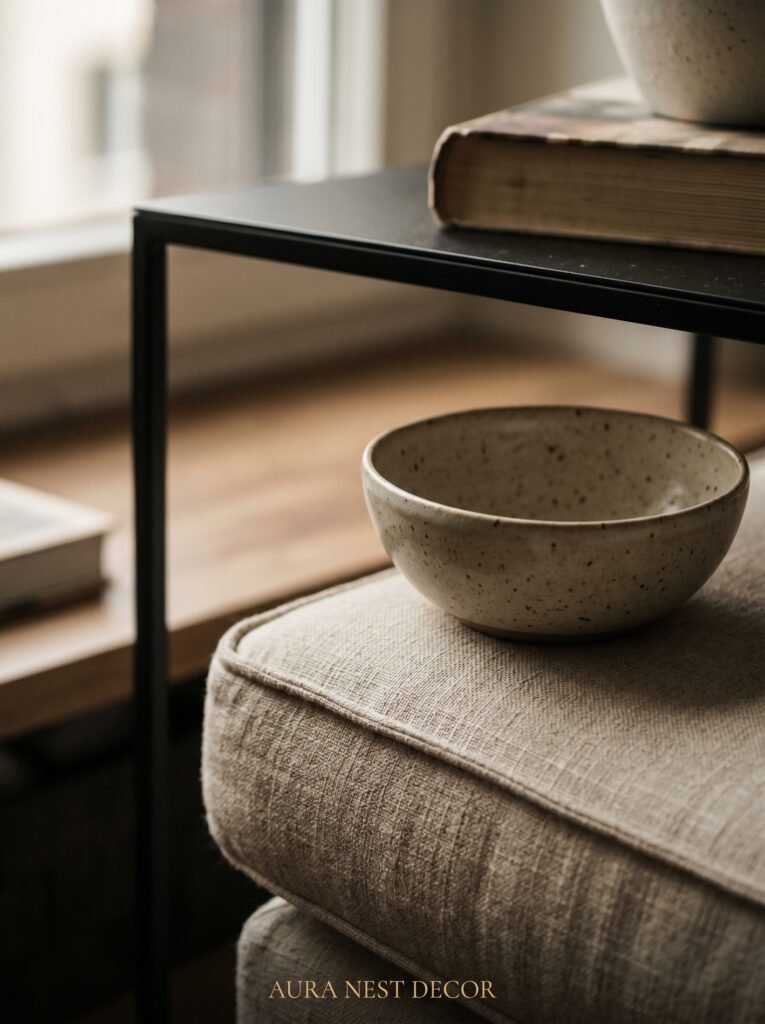
Not the furniture. Not the paint. Not the lighting, though all of those matter. The final thing that separates a living room that looks professionally designed from one that looks like a work-in-progress is the edit — the ongoing, ruthless, loving decision about what stays and what goes.
Modern interiors have a particular discipline to them. There’s a clarity. The things in the room are there because they’re either beautiful or useful or both, and everything else has been quietly removed. Not sterile — we’ve talked about layers. But intentional. Each object earns its place.
This is harder than it sounds. We accumulate. We hold on. We buy things we later regret and then keep them anyway because getting rid of them feels like admitting a mistake.
The edit is what you do when you stand in your living room and ask honestly: does this still work? Does this still belong here? Is this here because I love it or because I’ve stopped seeing it?
That question, asked once a season, is the thing that keeps a small modern living room alive. It’s maintenance, yes. But it’s also a kind of respect for the space you’ve built — and for yourself.
—
❓ FAQ
Q: What’s the best sofa size for a small living room? A: Look for a sofa between 72 and 84 inches for most small living rooms — enough to be comfortable without overwhelming the space. More important than the length is the depth: a sofa under 36 inches deep will leave more floor space and make the room feel less consumed by furniture. Visible legs always help.
Q: How do I make a small living room look modern without spending a fortune? A: Start with paint — it’s the highest-impact, lowest-cost change you can make. Then focus on lighting (swap the overhead bulb for something warm, add a floor lamp). After that, one good rug in the right size does more than almost any piece of furniture. You don’t need a full renovation. You need a few deliberate decisions.
Q: Can I use dark colors in a small living room without it feeling cave-like? A: Absolutely — the trick is lighting and contrast. A dark-painted small room with warm layered lighting and lighter furniture and textiles feels intimate and beautiful, not oppressive. Where it goes wrong is dark walls with dark furniture, dark floors, and inadequate lighting. Bring in warm light, pale fabrics, and natural textures, and a deep wall color becomes one of the best choices you can make.
—
💭 Final Thoughts
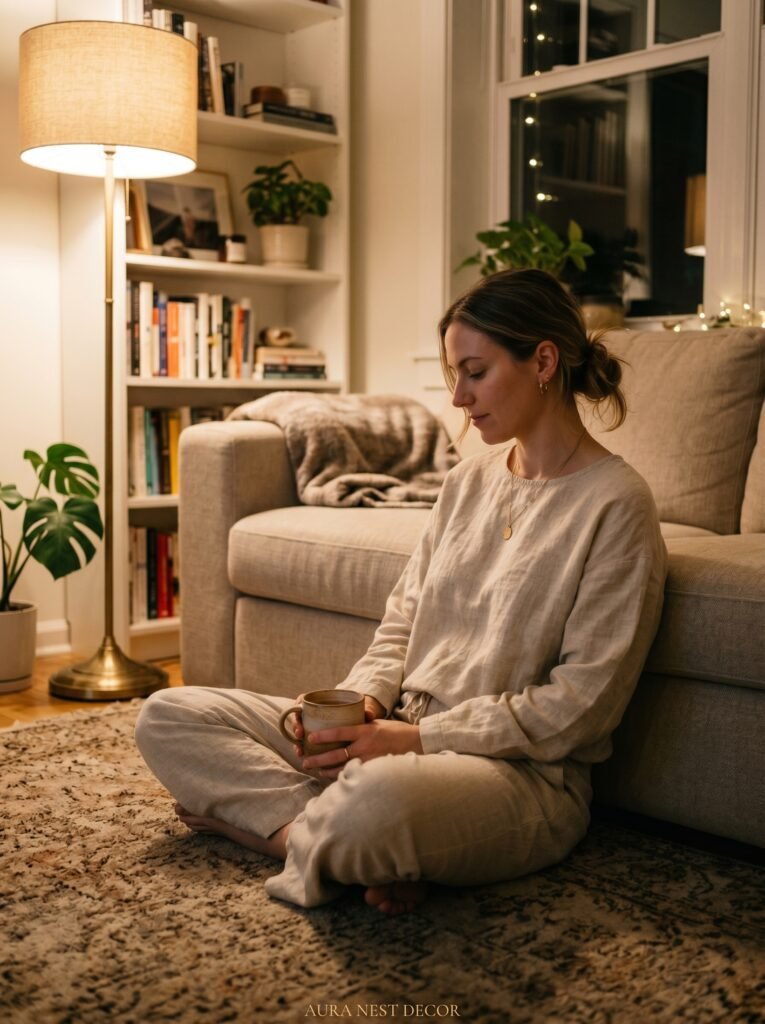
The small living room isn’t a limitation to design around — it’s a kind of gift, if you let it be. The intimacy is built in. The atmosphere is easier to create. The decisions matter more, yes, but they also show more.
Every beautiful room starts with someone deciding to take it seriously and stop waiting for more space, more budget, more time.
What’s the one thing in your living room right now that you’d change tomorrow if you could?