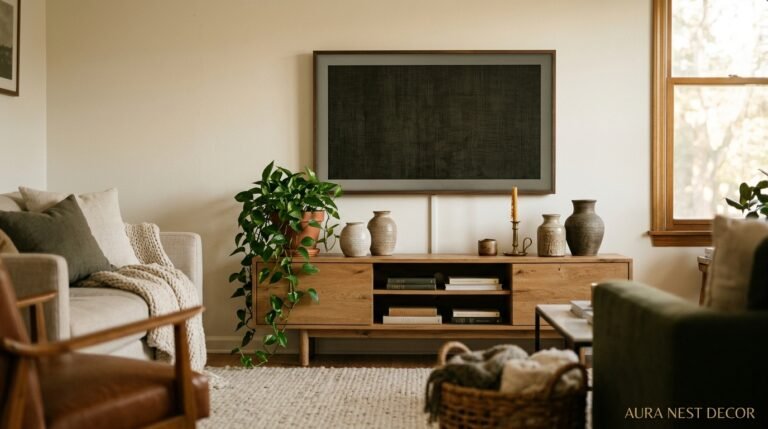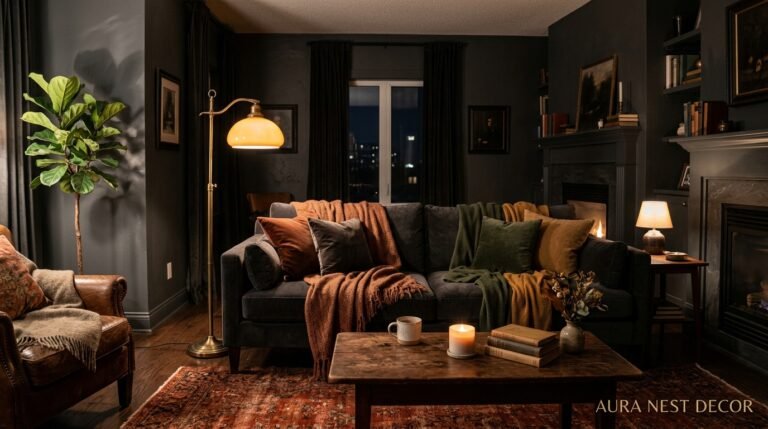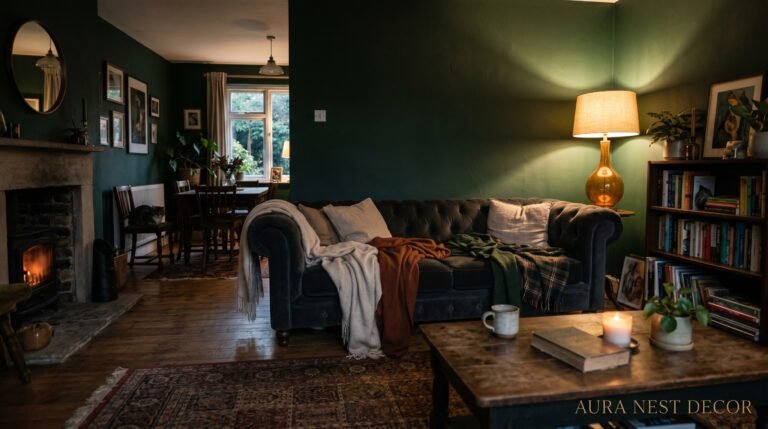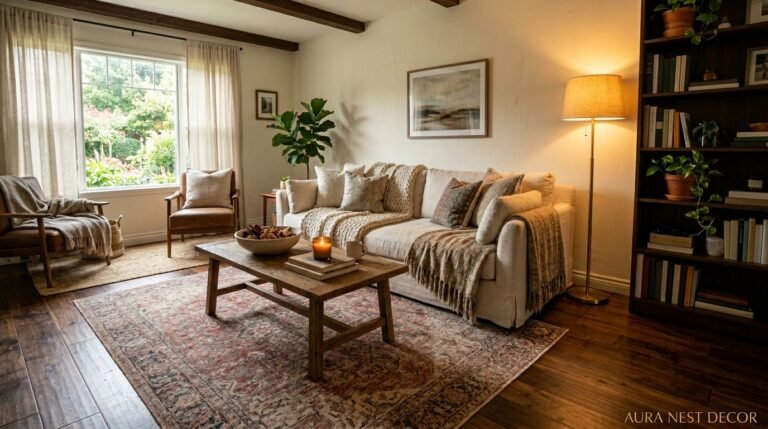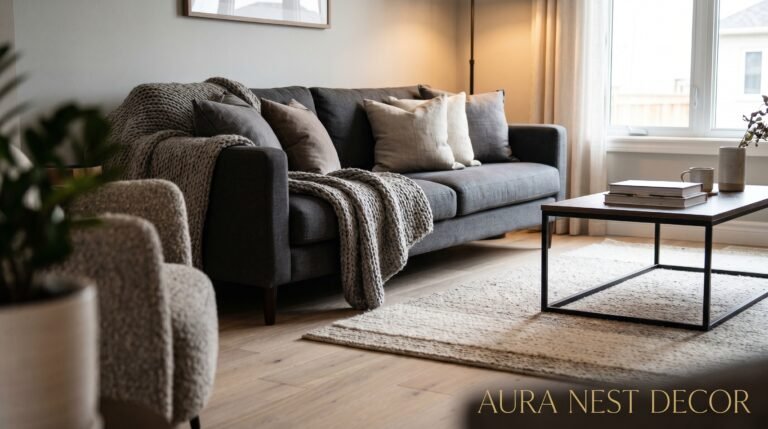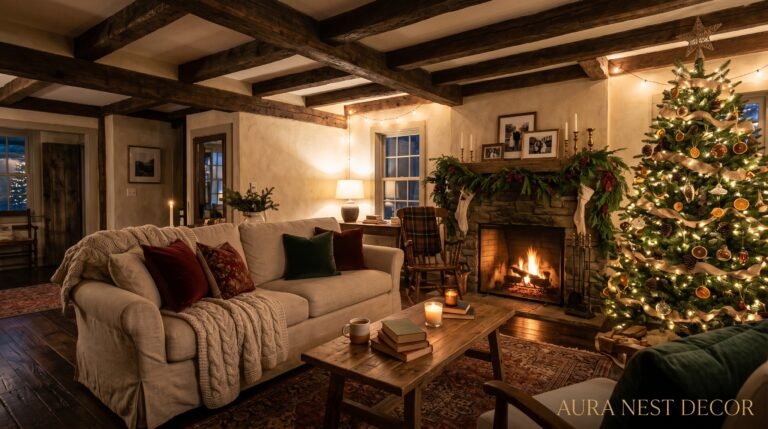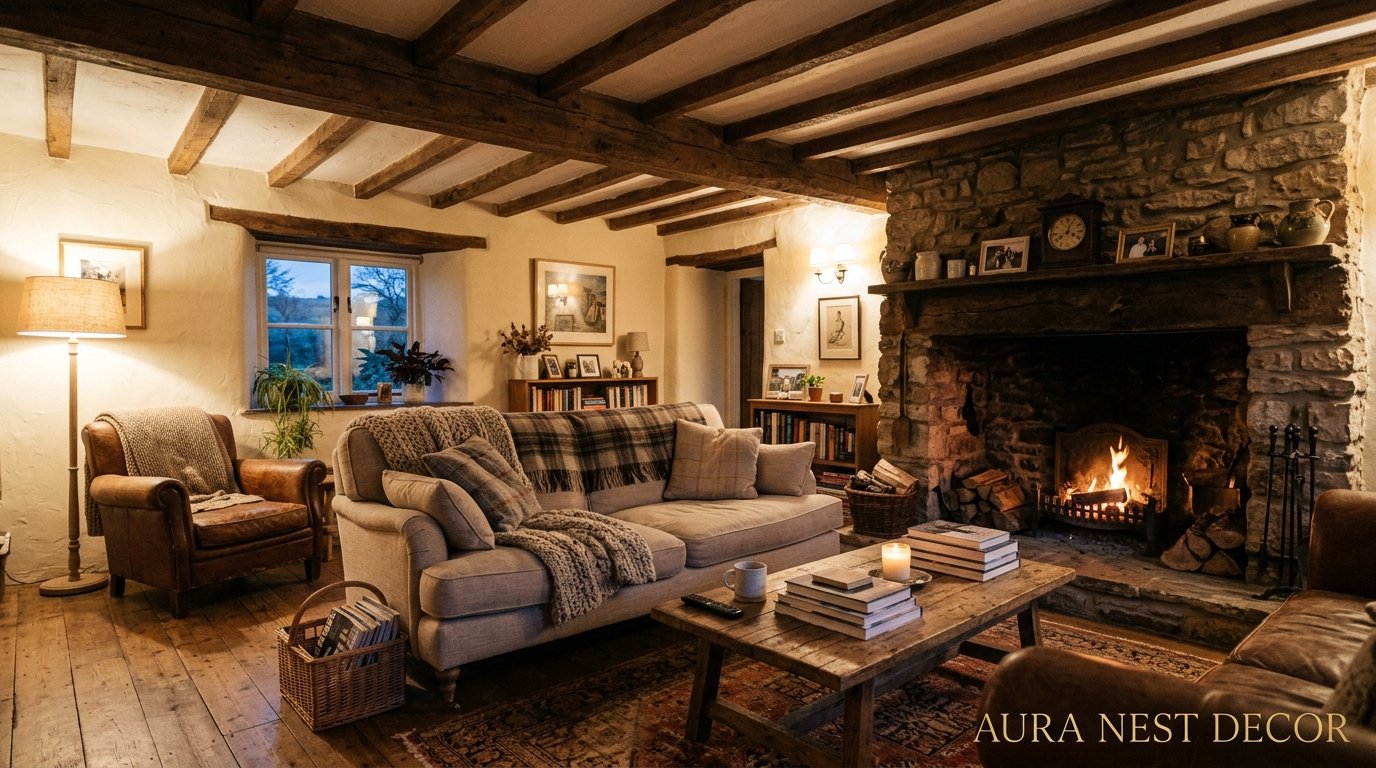
The Living Room That Made Me Stop Scrolling and Actually Go Home to Rearrange My Furniture
You know that feeling when you walk into a room and your whole body just… exhales? Not a designed room, not a styled room — a room that feels like it’s been lived in, loved in, slightly imperfect on purpose. That’s rustic done right. And I’m going to show you exactly how to get there.
—
1. The Difference Between “Rustic” and “It Looks Like a Cabin Gift Shop”
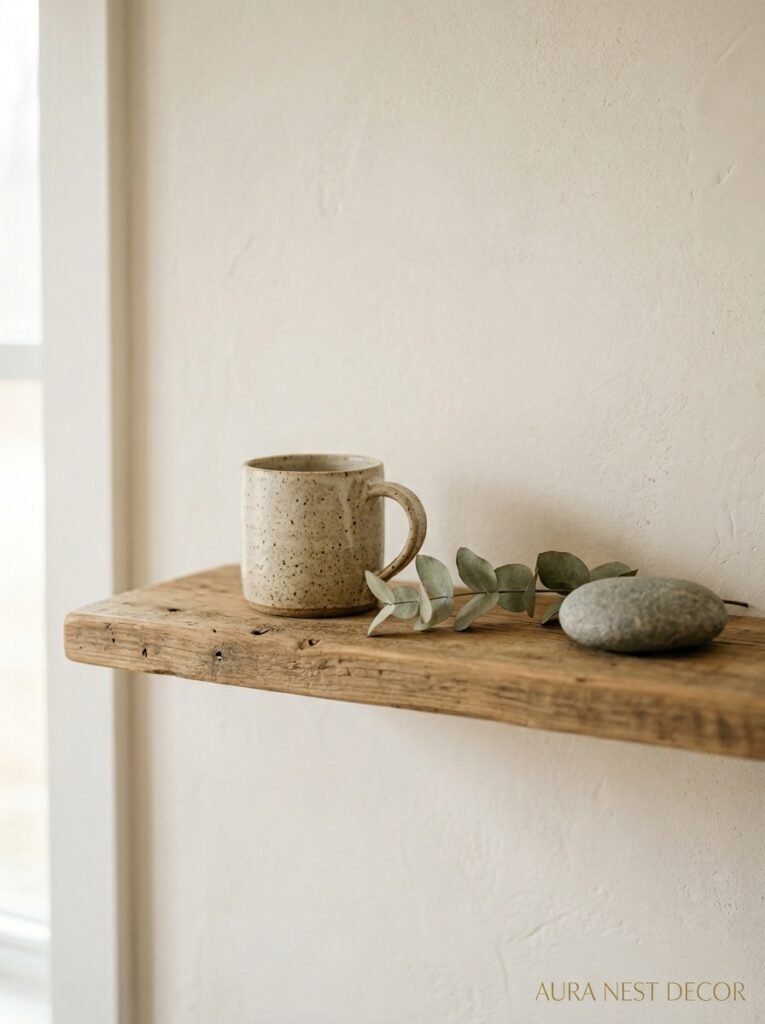
This is the thing nobody says out loud, but everyone’s thinking it when they scroll past the wrong kind of rustic. There’s a version that feels genuinely warm and considered, and there’s a version that looks like someone bought the entire “country living” section of HomeGoods in one afternoon and arranged it all on the same shelf. The difference isn’t budget. It’s restraint.
Real rustic rooms have breathing room. They’ve got a reclaimed wood coffee table, sure, but there’s nothing sitting on it except maybe one candle and a paperback someone actually left there. The throw on the sofa looks thrown, not arranged. And here’s the thing — the rougher textures work BECAUSE the room isn’t fighting itself with too many competing elements.
I’ve seen gorgeous rustic rooms in London flats and farmhouses in rural Vermont and the rule holds everywhere: pick two or three dominant textures and commit. Rough wood, soft linen, maybe a little stone or iron. That’s your palette. Everything else is just noise. Less is genuinely more here, and I know that sounds obvious but it’s so hard to actually do when you’re standing in the middle of HomeGoods or Dunelm with a basket.
“The throw on the sofa should look thrown. Not arranged. There’s a difference.”
—
2. The Exact Lighting Situation That Makes a Room Feel Like November In the Best Way
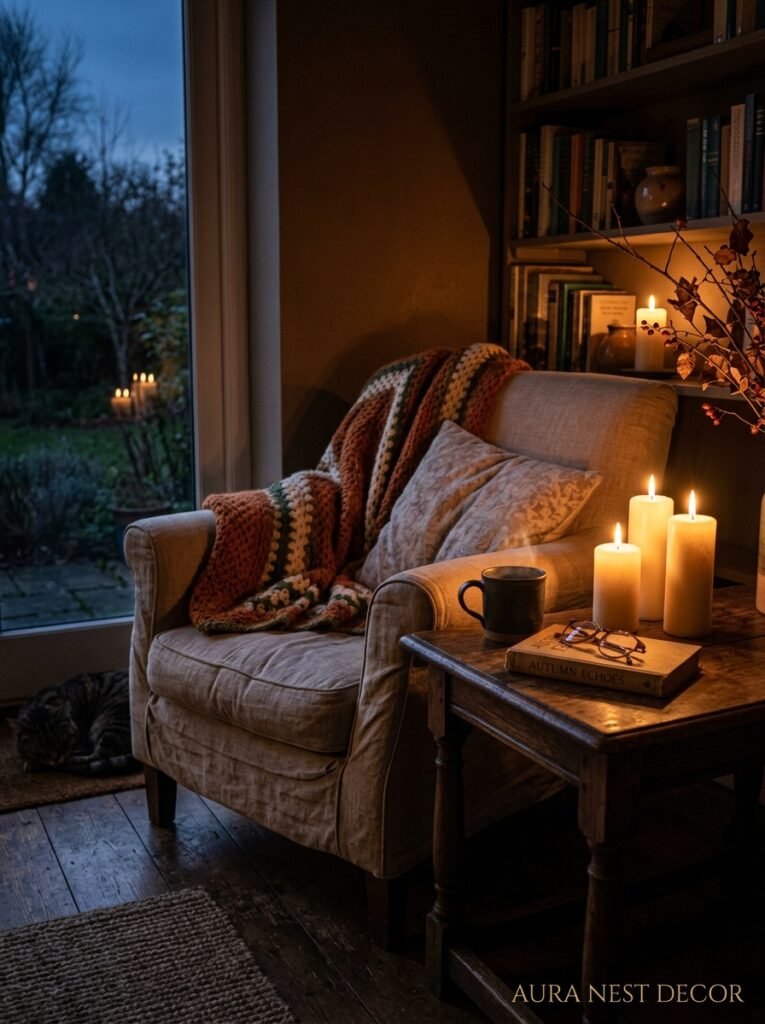
Overhead lighting is the enemy. I’ll say it again. Overhead lighting is the enemy of every cozy room that ever existed. The amber glow of an Edison bulb at 7pm, tucked into a linen lampshade on a side table — that’s the whole mood. That’s what you’re chasing.
For a rustic living room, you want LAYERS of light, and you want them all warm. Not yellow, not orange — warm white, the kind that makes everyone in the room look like they just came in from a nice walk. Think table lamps with exposed filament bulbs, maybe a string of warm fairy lights along a mantel, candles if you’re the type to actually light them (I always say I am and then don’t, but I’m working on it).
In UK homes especially, where natural light can be… let’s say, seasonal, getting the lamplight right is basically load-bearing. It carries the whole atmosphere from October through March. Side note — if you’re in the US and you’ve got bigger windows and more light hours, you can get away with slightly cooler tones in the day and then switch everything on come evening. But the principle holds either way.
Avoid recessed downlights if you can. If you’re renting and can’t change them, plug-in floor lamps positioned in the corners will do more for your room’s vibe than almost anything else you could spend money on. I’m not joking. Corners of light. That’s the secret.
—
3. Why Linen Does Things Velvet Can’t in a Room Like This
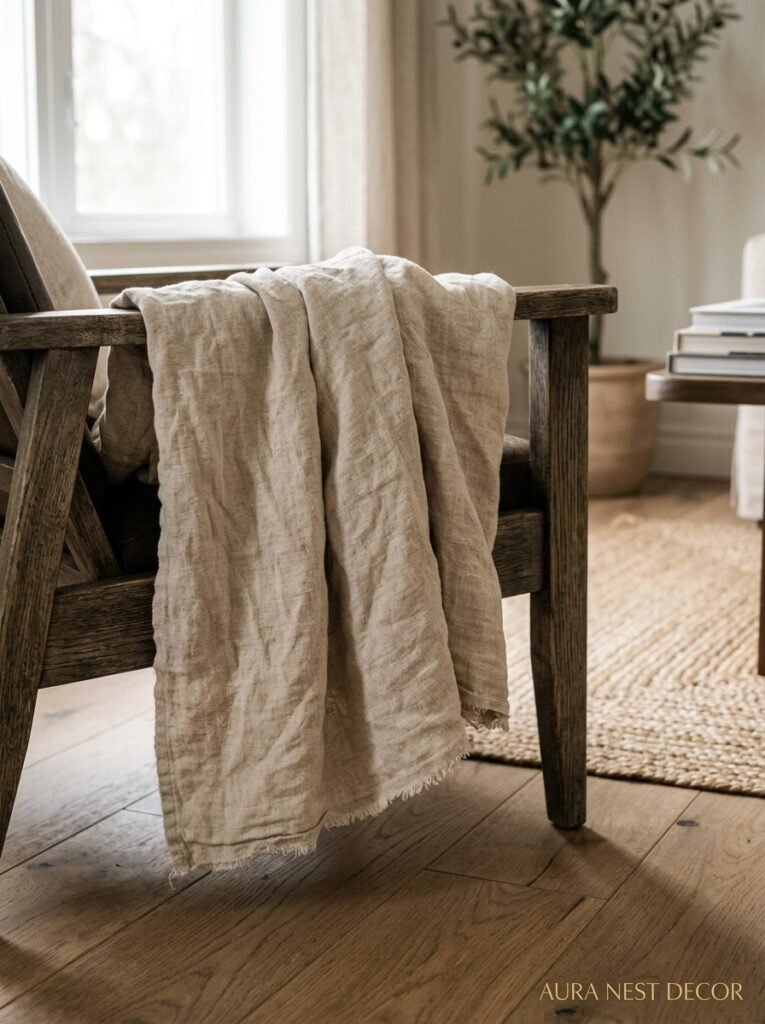
Linen has a particular quality in autumn light that I genuinely cannot explain except to say it looks like it grew out of the room. It softens everything. It moves a little when someone walks by, and that tiny bit of movement makes a room feel inhabited in the best way.
For rustic living rooms, loose linen slipcovers on sofas are the dream — not always practical with kids or dogs, fair point — but even linen cushion covers, a linen tablecloth draped over something, a curtain panel in undyed or oatmeal linen… all of it does the work. It’s not a precious fabric. It creases. It softens with every wash. That’s the POINT.
Velvet has its moment — deep forest green velvet is genuinely beautiful — but it’s a more formal material. It sits differently in a room. For that genuinely relaxed rustic feeling, linen and chunky knit and worn cotton are your friends. The kind of fabrics that look better slightly rumpled. That look like they’ve been sat in.
—
4. The Coffee Table Rule Nobody Puts In Magazines
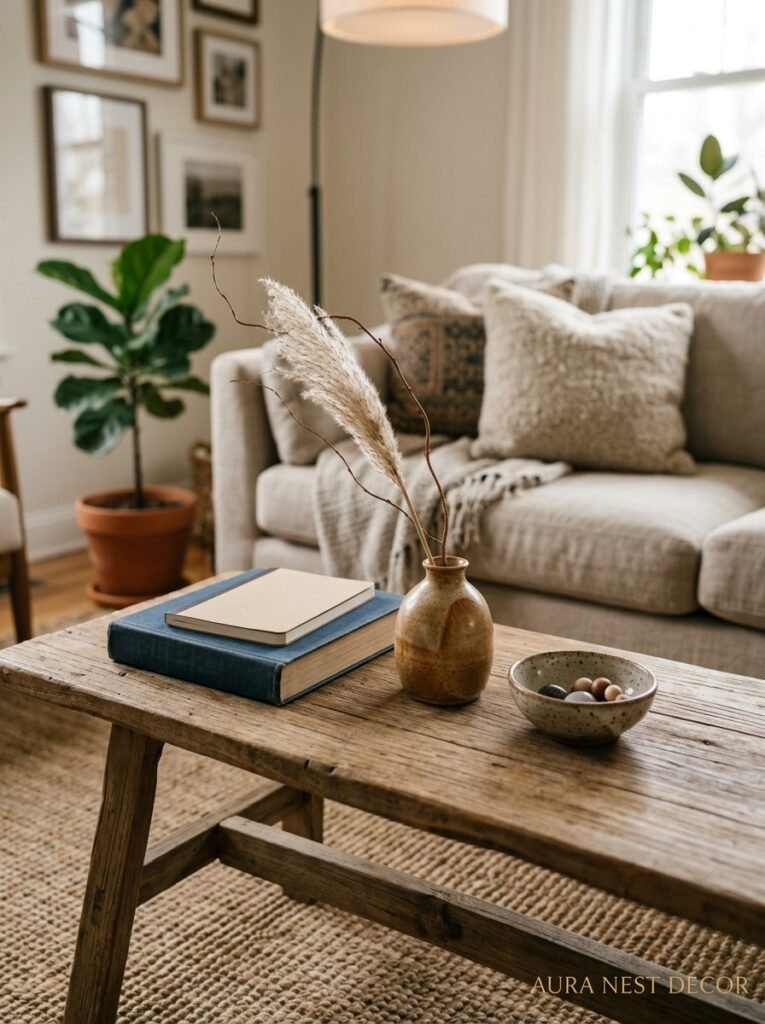
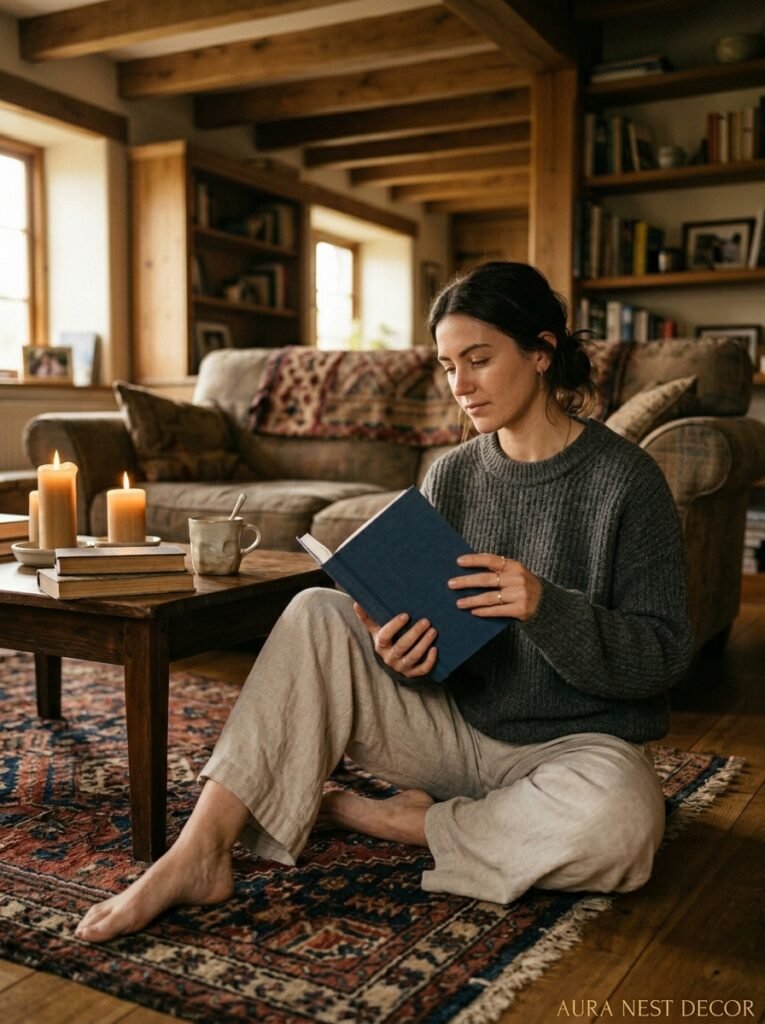
Here it is. Your coffee table should only have things on it that someone might plausibly have set down in the last 48 hours. That’s the test. A book. One or two candles. A mug you forgot to take to the kitchen. Maybe a small bowl you actually use for keys or hair ties or whatever.
What it should NOT have: artfully arranged dried pampas grass in a designated tray alongside a stack of linen-covered books you’ve never opened and a geode and a sculptural object and a small brass candlestick. That’s a magazine shoot, not a room someone lives in.
Rustic rooms live or die on whether they feel like actual habitation is happening inside them. And coffee tables are where that illusion either works or completely falls apart. I’ve been to so many homes where everything else is lovely but the coffee table looks like it’s behind velvet rope at a design exhibition.
One more thing — the material matters. Reclaimed wood, a worn wooden trunk, a stone slab on iron legs — these work because they have history written into them. Or at least look like they do. A pristine white marble coffee table in a supposedly rustic room is like wearing a ballgown to a picnic. Beautiful on its own. Wrong for the occasion.
“Your coffee table should only have things on it that someone might plausibly have set down in the last 48 hours.”
—
5. What British Country Houses Get Right That Most American Rustic Rooms Miss
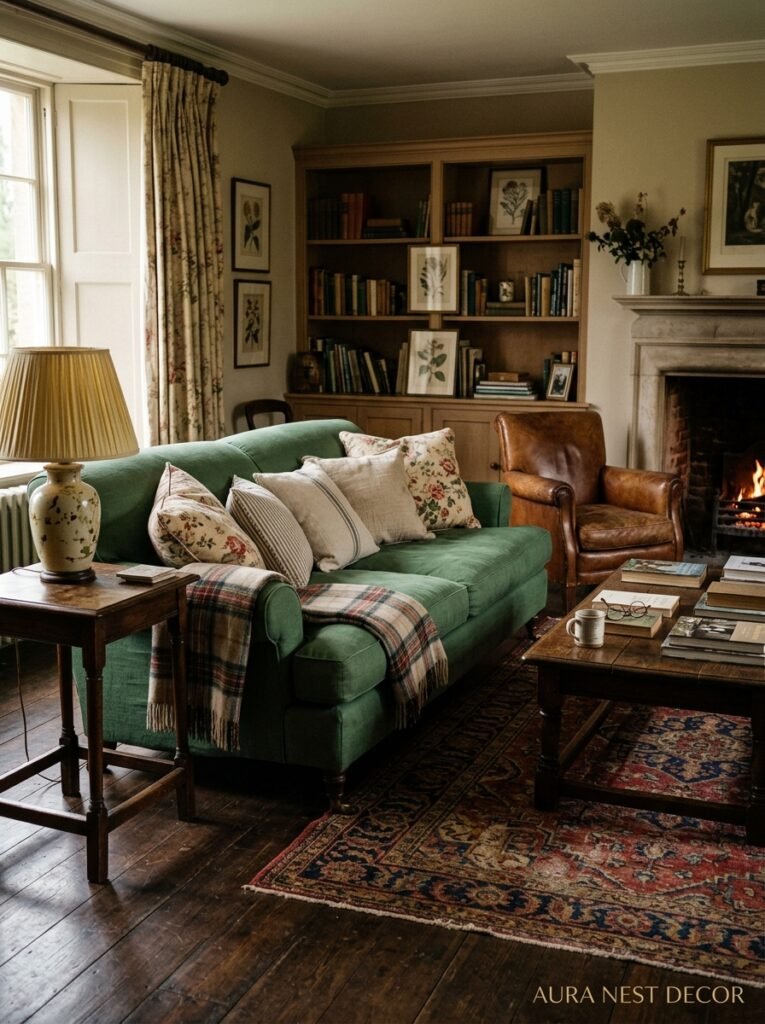
Clutter that means something. That’s it, honestly. British country house style at its best — think slightly faded chintz, built-in bookshelves that actually buckle slightly under the weight of actual books, a mismatched collection of pottery that was gathered over thirty years from different places — it’s intentional in its accumulativeness.
American rustic can sometimes lean too theme-y. Like everything was purchased in the service of “the look” in one go. British country rooms feel like they happened. Like nobody planned them entirely and some things are there because of sentiment and some things survived three house moves and some things were inherited and slightly weird but got kept anyway.
The lesson: introduce things with STORIES. Not purchased stories. Real ones. The lamp from your grandmother. The wooden bowl from that market in Vermont. The rug you found folded up in the back of an antiques shop outside Edinburgh. Rooms that feel real are rooms where the objects have provenance, even if only you know what it is.
—
6. The One Paint Color I Keep Coming Back to for This Kind of Room
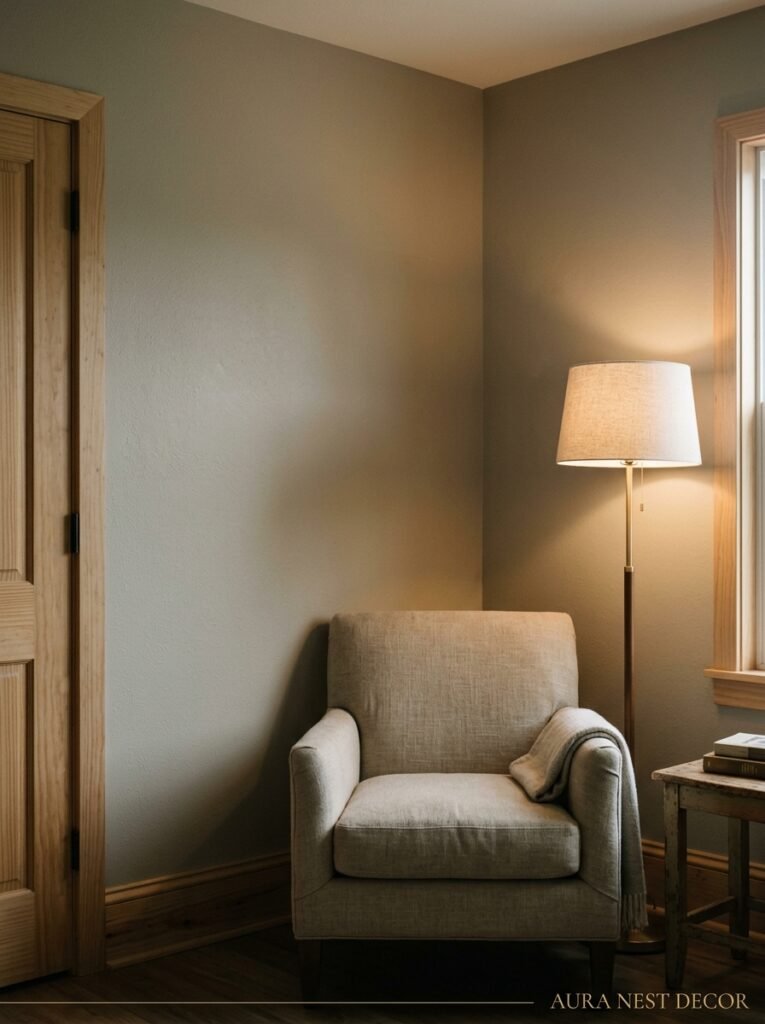
Warm white gets all the attention. And it’s good, genuinely, I’m not arguing with it. But for a rustic living room, I want to make a case for something a bit braver: a deep warm clay tone, or even a really good dirty sage. Not the bright, clean sage you see everywhere right now — the murkier, more olive-y sage that looks like it was mixed wrong and came out perfect.
This kind of color does something remarkable on a room with natural wood elements. It makes the wood look richer. It makes linen look creamier. It makes the whole room feel like it’s wrapping around you. And in the low lamplight evenings I described earlier? It’s almost impossibly good.
Farrow & Ball’s Mouse’s Back. Benjamin Moore’s Hale Navy if you’re brave. Or Clunch if you want something that reads warm white but isn’t the flat, blank version. I’ve tested a lot of these. The key is going warmer than you think you need to. Whatever you sample, hold the swatch next to your biggest wood element and see what happens. That’s the real test.
—
7. Rugs: The Biggest Mistake I See Over and Over Again
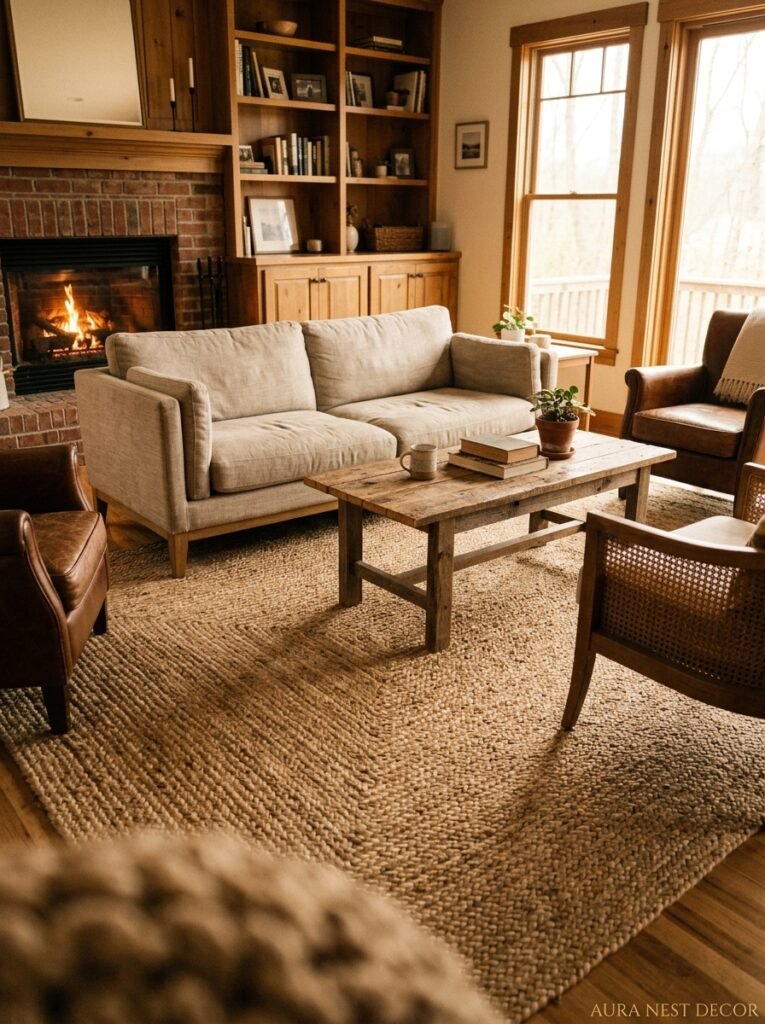
Too small. Every single time. The rug is too small and it’s floating in the middle of the room like a bath mat with ambitions. In a rustic living room with a sofa and chairs and a coffee table, you need the rug to anchor ALL of it. At minimum, the front legs of every seating piece should sit ON the rug. Ideally more.
I know large rugs cost more. I know. But an 8×10 jute rug from a decent source isn’t as expensive as you might think, and it changes the ENTIRE geometry of the room. Everything reads as intentional when it’s on a properly-sized rug. It’s not a decorative object — it’s the foundation.
For rustic rooms: natural fiber rugs are the obvious choice. Jute, sisal, wool. The handwoven look. Slightly irregular edges. A faded vintage-style Turkish or Persian rug works brilliantly too — the faded, worn quality of it fits the whole aesthetic. What doesn’t work as well: anything too patterned and graphic, anything too bright, anything that looks fresh off a factory floor. You want something that looks like it could be twenty years old. Or actually is.
“An 8×10 jute rug changes the entire geometry of a room. It’s not a decorative object — it’s the foundation.”
—
8. Plants That Belong in a Room Like This (and One That Definitely Doesn’t)
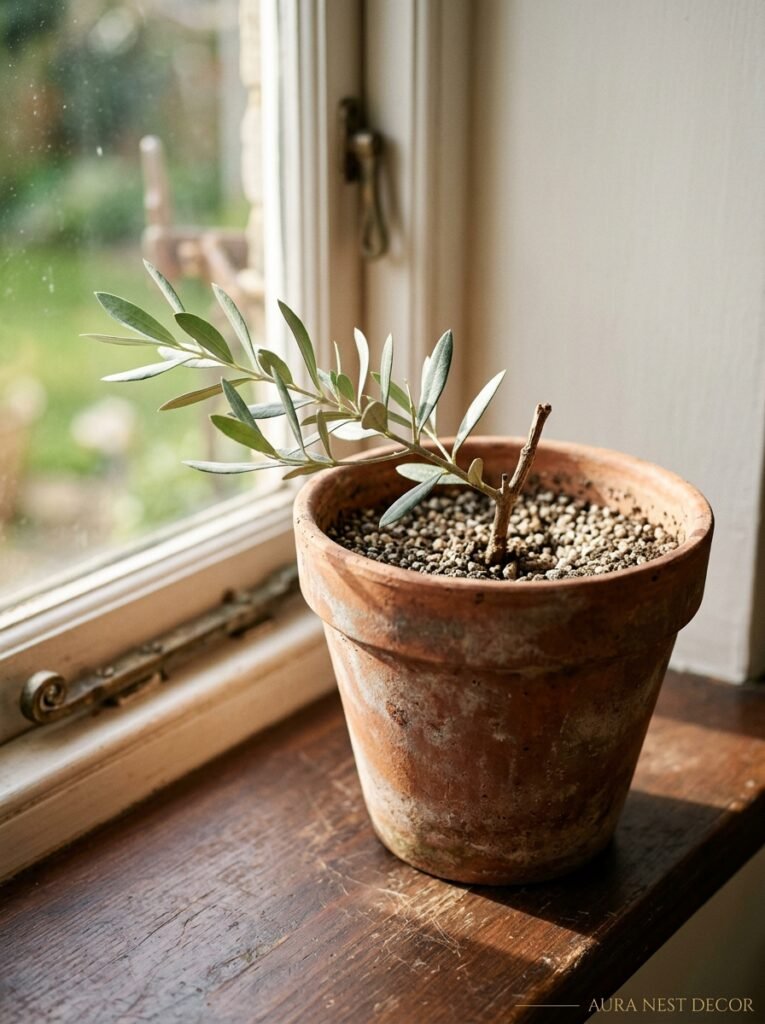
A monstera in a rustic room doesn’t feel wrong exactly, but it doesn’t feel right either. It’s too tropical, too architectural. Rustic rooms want plants that feel like they came from somewhere old. Potted herbs on a windowsill. A leggy trailing ivy. A fiddle leaf fig can work if the room has enough mass around it, but only just.
What really works: dried botanicals. Dried eucalyptus hanging from a curtain rod or beam. A vase of dried alliums in an earthenware pot. Lavender bunches. These bring a softness that living plants don’t always manage, and they won’t die when you forget to water them for three weeks over Christmas, which — real talk — we all do.
Also: trailing plants on high shelves. Something cascading down a bookcase. Pothos, if we’re being practical. They drape beautifully and they’re basically indestructible. And indestructible matters when you’re also managing a household.
—
9. Bookshelves That Look Like They Were Styled by an Actual Human
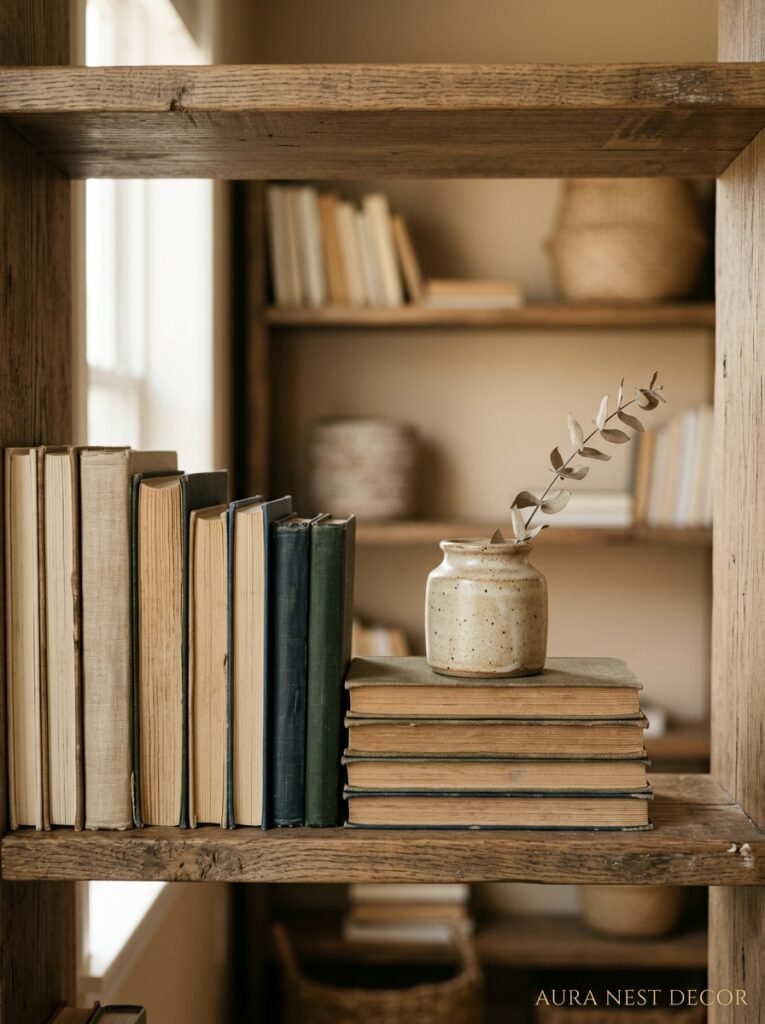
The rule is this: books first, objects second. I cannot stress this enough. Books are the backbone. Everything else is supporting cast. And the books should look used. Not arranged by color (I know it’s pretty, I know, but it looks like a prop) — arranged how a person actually organizes their books, which is usually some combination of genre and “this needs to fit here” and “I want to be able to find this.”
Add objects in among the books, not as separate clusters. A small ceramic vase tucked between two stacks. A found stone. A framed photo leaning against the spines. That mix of flat and upright creates visual rhythm without looking decorated.
And please, some books lying flat and some standing up. Books stacked horizontally with an object sitting on top is the most natural-looking thing and it just works. Every time. In rustic rooms especially, where the whole aesthetic is built around real life looking beautiful rather than beautiful looking real.
—
10. The Fireplace — or What to Do If You Don’t Have One
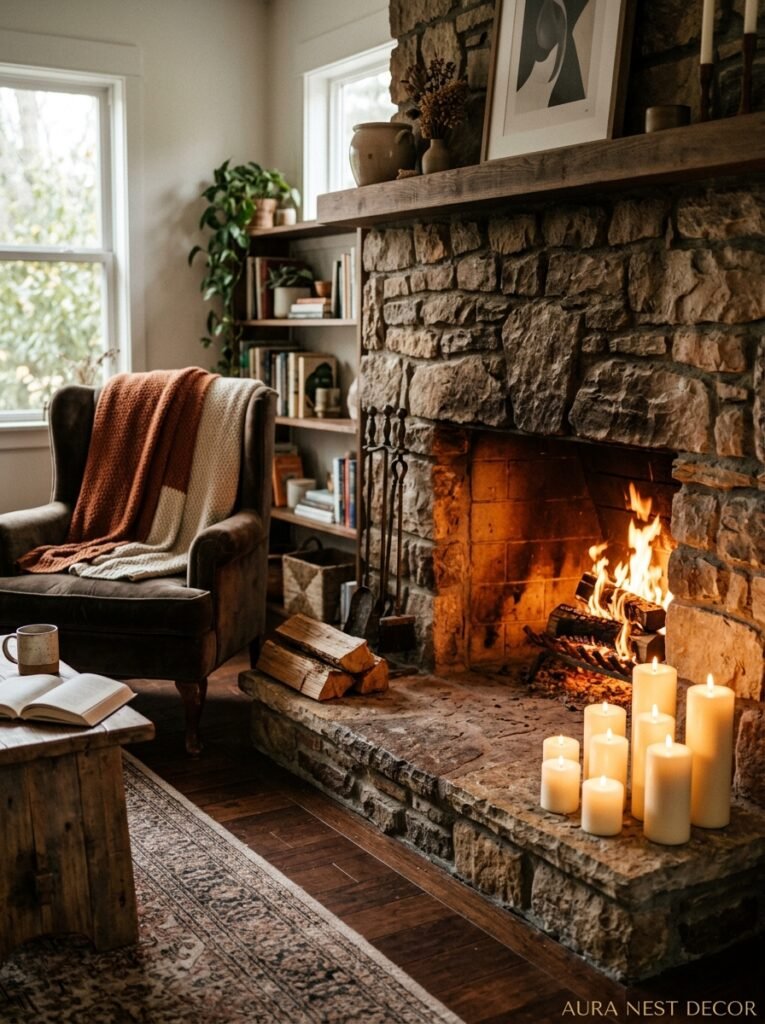
If you have one: USE it. Even in summer. A clean fireplace with a candle grouping inside it is infinitely better than a boarded-up void. In winter obviously it’s the WHOLE heart of the room, and everything — sofa placement, lighting, rug orientation — should acknowledge it.
If you don’t have one (this is most of us, let’s be honest): the fireplace alternative is a console table or low sideboard with a large mirror above it that essentially mimics the fireplace-plus-chimney breast proportions. Lean the mirror, don’t hang it flush. Light it with a pair of table lamps on either side. Add texture at the base — stacked books, a ceramic pot, maybe a small basket. It creates the same sense of “anchor point” that a fireplace provides, which is really what you’re missing if you don’t have one.
—
11. Textiles That Make People Sit Down and Not Want to Get Up
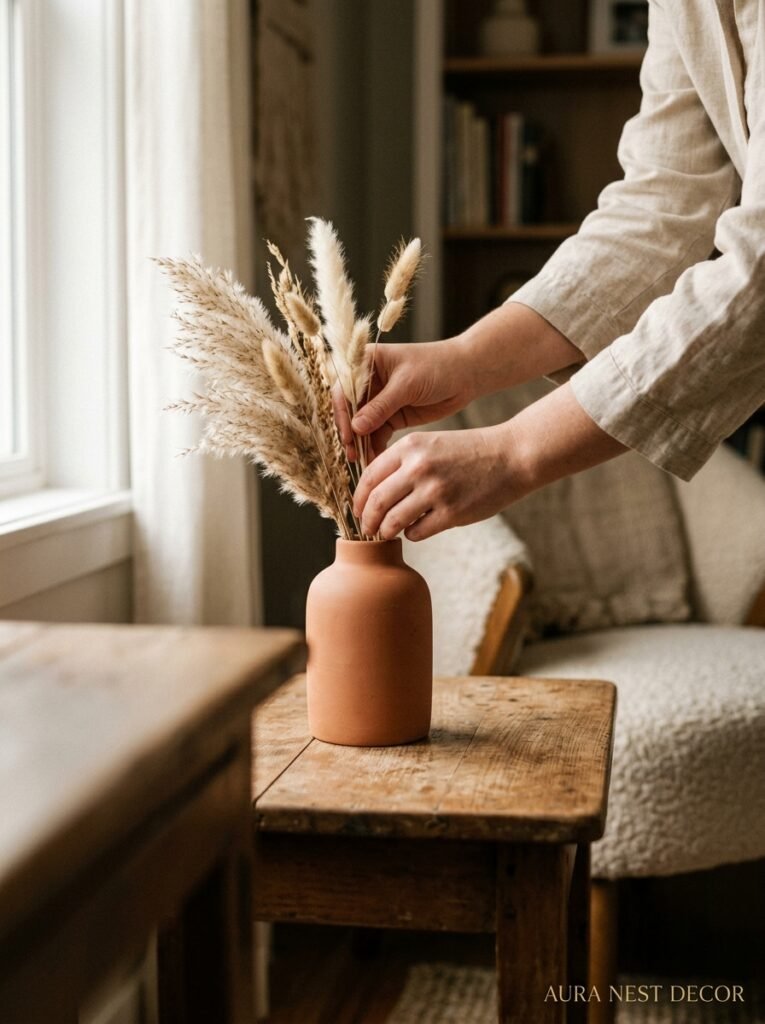
Layering is everything. One throw on a sofa is nice. Two different throws, slightly overlapping, one chunky knit and one woven cotton blanket — that’s the thing people reach for as soon as they sit down. And when guests reach for your throw, you’ve done it. That’s the highest possible compliment a room can receive.
Cushions the same way. Not matching. Never matching. A mix of sizes — some 20 inch square, some lumbar, maybe one oversized one — in tones that relate but don’t twin. Texture mix: something with a little grain or weave to it next to something plain and soft. Maybe one with a very subtle pattern. Just keep the colors in the same temperature range so it doesn’t read as chaotic.
Oh, and the more you wash these things, the better they get. Washed linen cushion covers that have gone slightly rumpled and soft are infinitely better than the crisp, stiff version they arrived in. Time is a design element. Not everything needs to be new.
—
12. The Thing You Can Actually Do This Weekend That Changes Everything
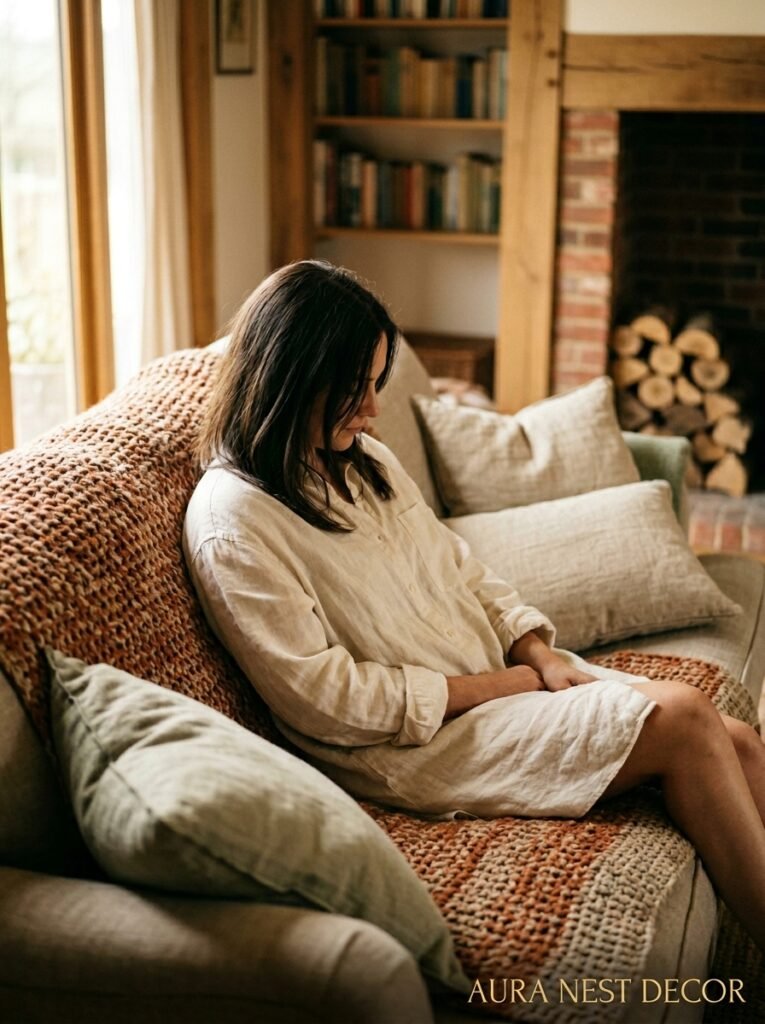
Move the furniture away from the walls. I know. You’ve heard it before. But honestly? So few people actually do it. Furniture pushed against walls creates a room that feels like a waiting room, no matter how beautiful the individual pieces are. Pull the sofa forward. Create a conversation cluster that faces itself.
And while you’re moving things: take ONE decorative item out of every shelf or surface grouping. Just one. The removal is usually the moment a room finally starts to breathe. Not more things. One fewer thing. Come back in a day and see if you miss it. You probably won’t.
These two things — furniture placement and subtraction — cost nothing. And they change the entire feeling of a room, sometimes drastically. Sometimes you rearrange a room and realize the chair belongs in the corner you never considered and suddenly there’s this little reading nook that feels like it was always supposed to be there. That discovery is such a good feeling. Genuinely one of the best things about having a home you care about.
—
❓ FAQ
Q: How do I make a rustic living room feel cozy without it looking like a log cabin? A: The key is mixing rustic textures with softer, more refined pieces. A reclaimed wood shelf pairs beautifully with a linen sofa and modern ceramics — it’s the contrast that makes it feel intentional rather than theme-y. Let one or two elements be rustic and let the rest breathe.
Q: What’s the best way to add rustic decor to a small living room without making it feel cluttered? A: Go vertical and go intentional. A single large-scale piece — one oversized mirror with a raw wood frame, one dramatic woven wall hanging — reads as considered, not crowded. And keep surfaces clear except for one or two meaningful objects. Small rooms reward restraint harder than any other space.
Q: Can a rustic living room style work in a modern apartment or new-build home? A: Absolutely, and honestly sometimes better than in older homes because you’ve got that contrast working for you. Raw wood, aged textiles, and natural materials against clean plaster walls and modern proportions looks incredibly considered. The rustic elements become the warmth that new-build spaces often lack.
—
💭 Final Thoughts
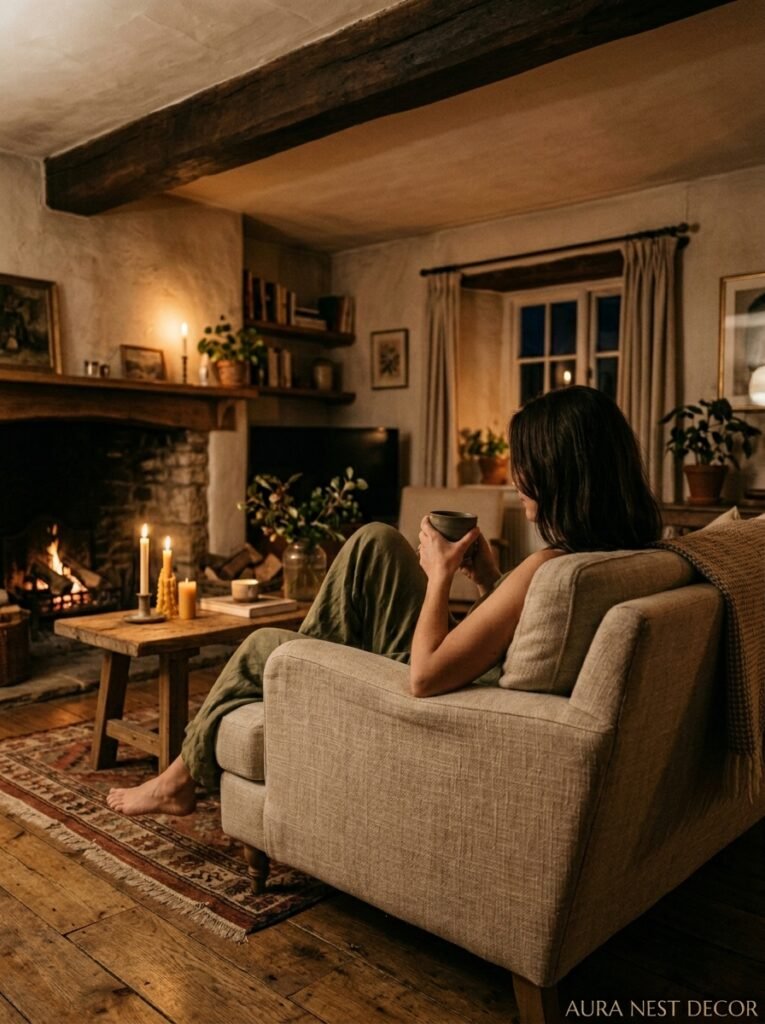
Rustic rooms aren’t built in a day, and the best ones weren’t bought in a day either. They accumulate. They soften. They get better every time someone lives in them and leaves a book on the coffee table or forgets to fold the throw back. That’s not a design failure — that’s the whole point. What would it feel like if you stopped trying to get your living room to look finished, and started letting it look lived in instead?