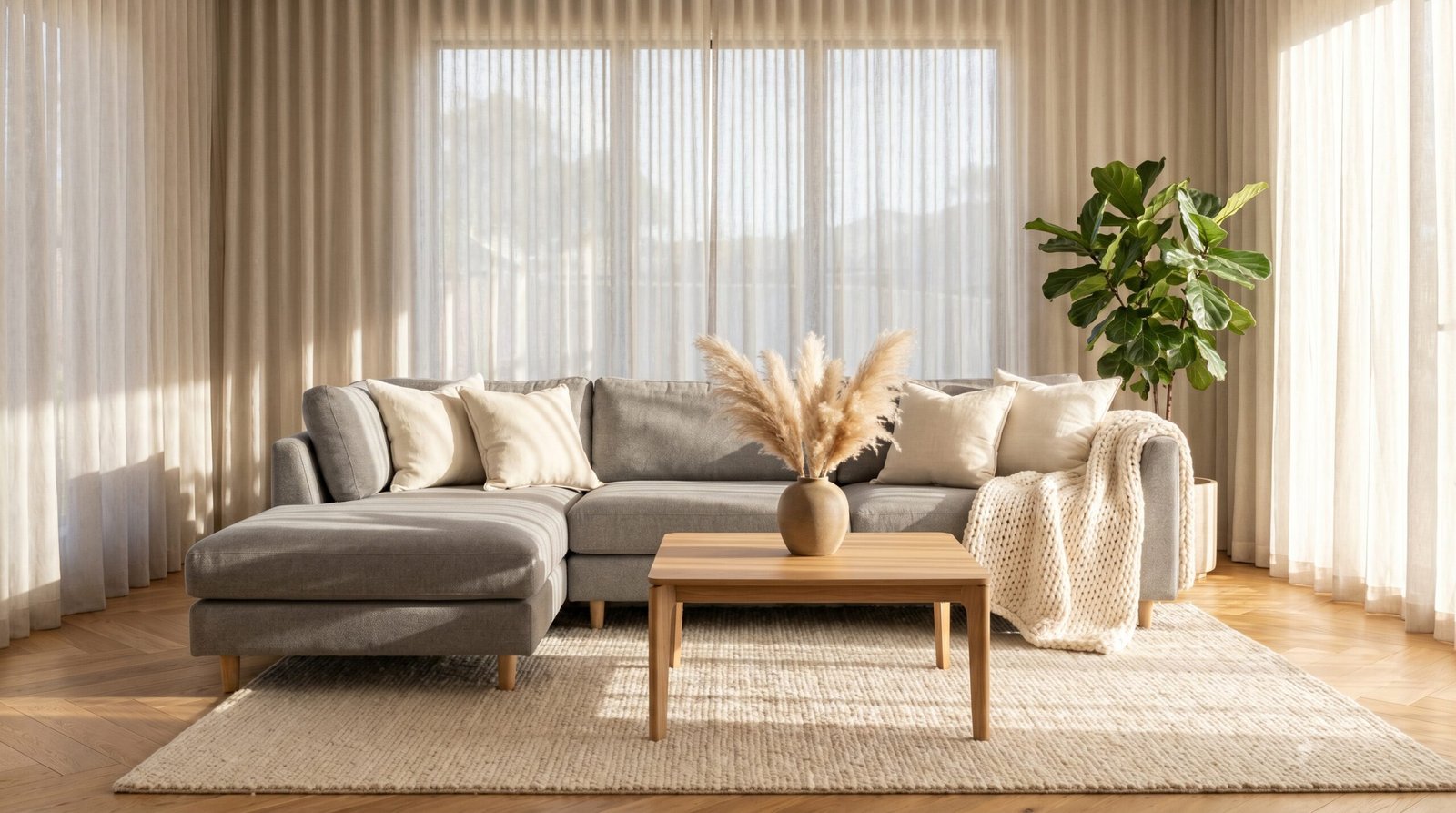
The Grey Couch Living Room Guide That Will Make You Fall in Love With Your Home Again
There’s a moment — maybe you’ve had it — when you walk into someone’s living room and feel an almost physical sense of calm wash over you. The kind of room that makes you exhale. More often than not, a beautifully styled grey couch is sitting right at the heart of it.
—
1. Why Grey Became the Most Beloved Couch Color on Both Sides of the Atlantic
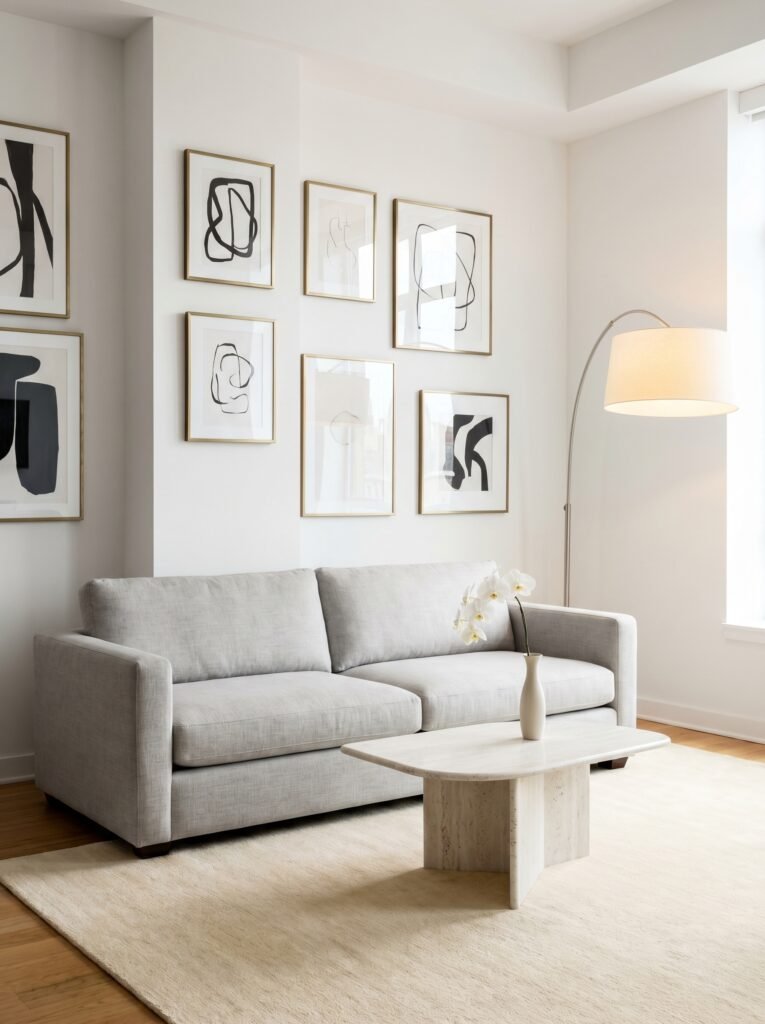
Grey didn’t stumble into living rooms by accident. It earned its place — slowly, quietly, and with remarkable staying power. Unlike the beige sofas that dominated the 1990s or the jewel-toned velvet couches that trend wildly then vanish just as fast, grey has remained a constant. And the reason is both simple and deeply human: grey works with people, not against them.
In the United States, the open-plan living space became the dominant home layout from the early 2000s onwards — and grey, with its ability to anchor a large room without visually overwhelming it, fit that lifestyle perfectly. In the UK, where Victorian terraces and Georgian townhouses tend to offer smaller, more intimate sitting rooms, grey performs just as brilliantly. It reflects what little natural light comes through a north-facing bay window without reading as stark or cold.
“Grey isn’t the absence of color — it’s the permission for every other color to exist.”
Interior designers on both sides of the Atlantic agree: grey is not a default or a compromise. It’s a deliberate choice made by people who understand how light, texture, and color emotion actually work in a home.
—
2. The Spectrum of Grey — Finding Your Shade Before You Buy
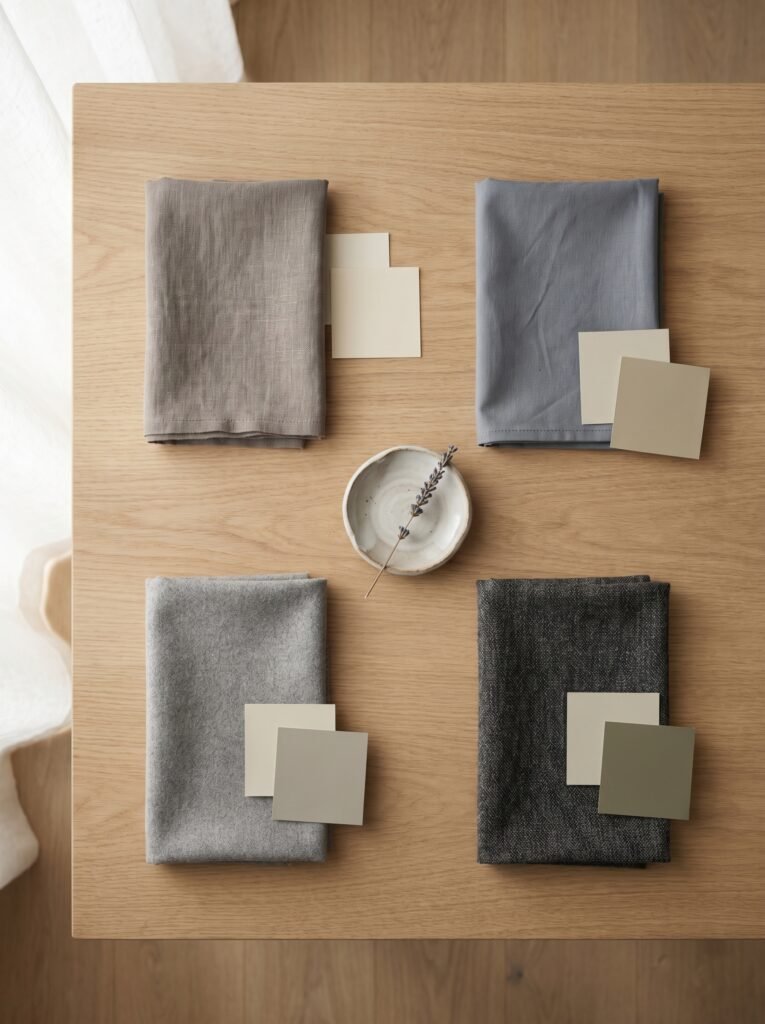
This is where so many people go wrong. They say “I want a grey couch” and then are completely blindsided when their new sofa arrives and reads as purple, blue, or almost black under their home’s lighting. The truth is that grey is one of the most nuanced colors you’ll encounter in interior design — and understanding its undertones is non-negotiable before you commit.
Warm greys lean toward beige, taupe, or even a faint blush. They feel cozy and grounding, and they pair beautifully with wooden floors, rattan furniture, and earthy tones. These are the greys you’ll find in Restoration Hardware’s beloved “cloud” collections or in British Heritage paint palettes — think something close to Farrow & Ball’s Mole’s Breath.
Cool greys lean toward blue or green and feel crisp, contemporary, and quietly sophisticated. They thrive in spaces with good natural light and suit homes leaning toward a Scandinavian or modern coastal aesthetic.
The single best piece of advice for buying a grey couch? Bring a fabric swatch home, sit it in your actual room, and observe it at three different times of day — morning, noon, and evening lamplight. The shade you see in a showroom under fluorescent lighting may shock you once it’s living in your home.
—
3. The Furniture Arrangement Secret That Changes Everything
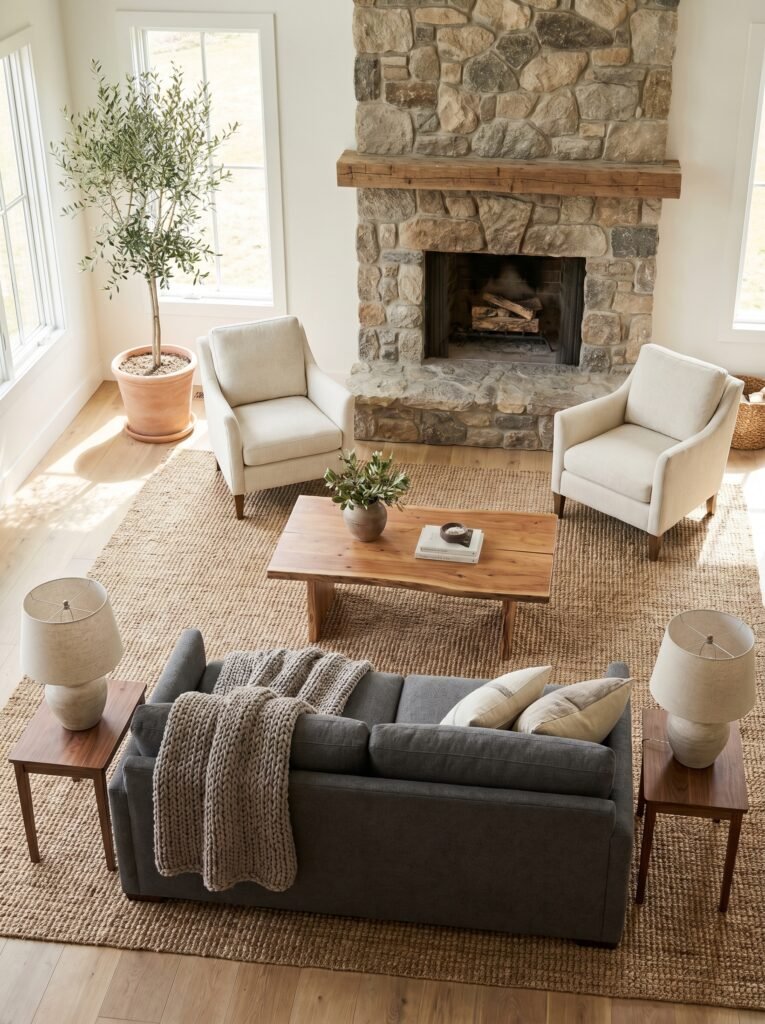
A grey couch placed incorrectly can make even a beautiful room feel like a waiting room. But positioned thoughtfully, it becomes the gravitational center of a space — the piece everything else orbits around naturally.
In the US, many living rooms suffer from “furniture pushed against the walls” syndrome. It feels counterintuitive to pull your sofa forward, but floating furniture away from the walls creates intimacy, encourages conversation, and makes a room feel more intentional. Pull that grey sofa at least 18 inches from the wall and anchor it with a substantial area rug underneath — the rug should be large enough that the front legs of the sofa rest on it.
In UK homes, space is often tighter. A classic L-shaped grey corner sofa can be a revelation in a small British sitting room — it maximizes seating without requiring additional armchairs while defining the room’s “zone” clearly. Pair it with a low-profile coffee table (a nesting table set works brilliantly) to keep the room feeling airy.
—
4. The Colors That Make a Grey Couch Look Absolutely Stunning
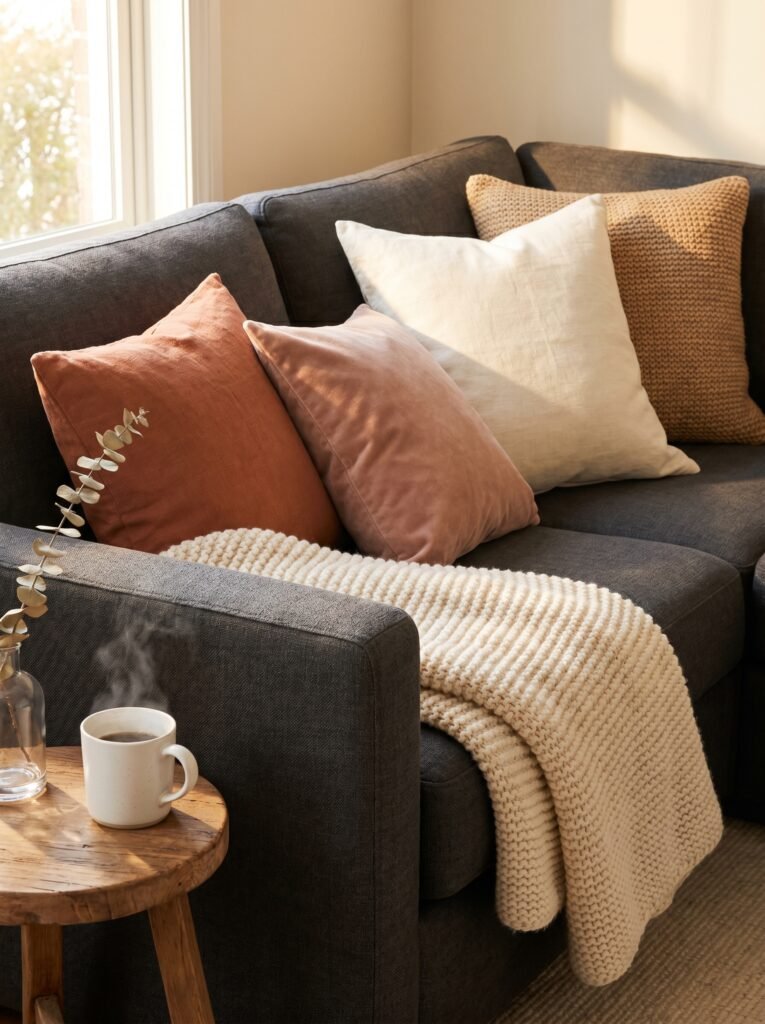
Imagine your grey couch as a stage. The question isn’t “what goes with grey?” — the question is “what story do I want this room to tell?” Because the colors you choose around a grey sofa will completely determine the mood, the warmth, and the personality of the space.
Warm whites and creams soften a cool grey beautifully and create that effortlessly layered look that dominates Pinterest boards. Think cream linen cushions, an off-white knitted throw, and natural wood tones. Benjamin Moore’s White Dove or Dulux’s Jasmine White in the UK are both excellent companions to a grey sofa.
Terracotta and burnt orange introduce warmth that grey alone doesn’t carry. Two terracotta cushions against a mid-grey sofa create an almost Mediterranean warmth — grounded, sun-baked, inviting. This pairing has been enormously popular in both US and UK interiors over the past three years and shows no signs of slowing.
Forest green and sage bring nature inside and create a room that feels genuinely calm. This combination photographs beautifully — which is probably why it appears on approximately half of all Pinterest living room boards — but more importantly, it feels restorative to live in.
—
5. Textures Are the Secret Weapon You’re Not Using Enough
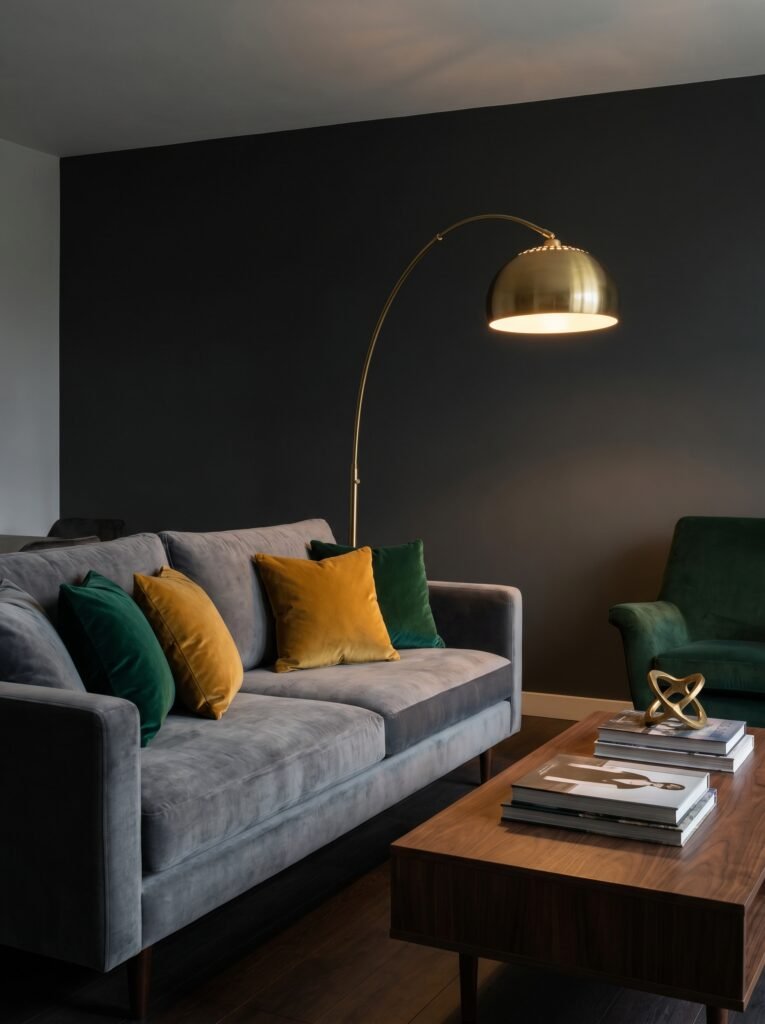
Here’s what separates a grey living room that looks like a showroom from one that feels like a home: texture. Grey, precisely because it’s not demanding in terms of color, gives you the freedom to go wild — responsibly — with tactile contrast.
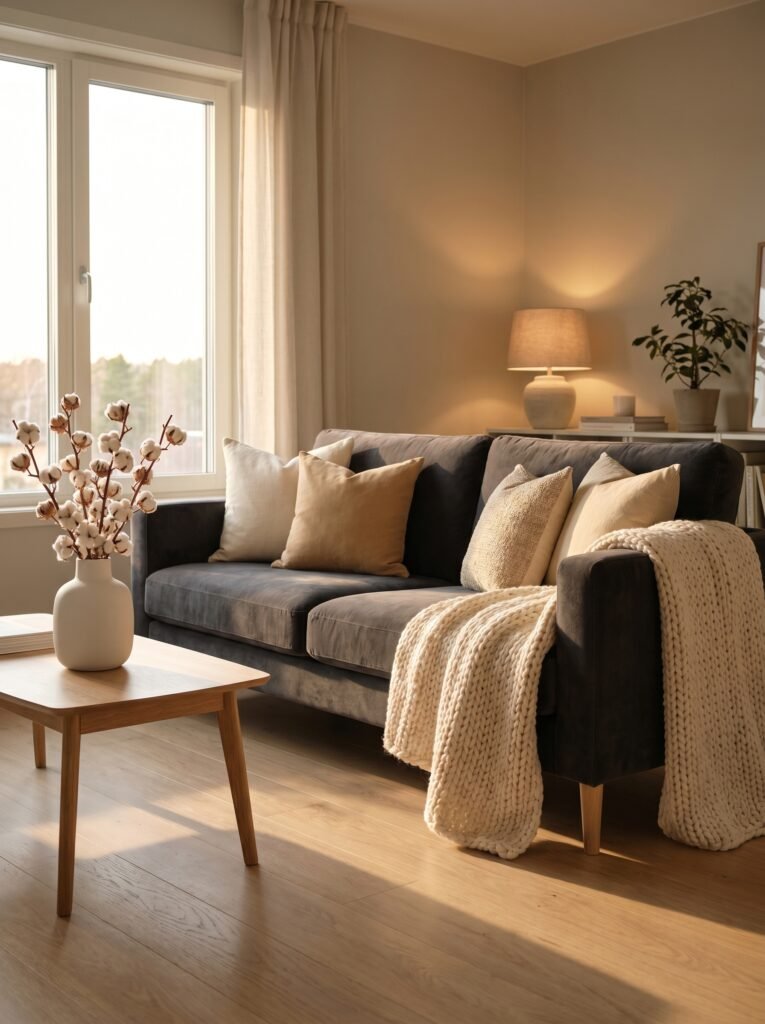
Layer a chunky knit throw over the arm of your grey sofa. Stack cushions in velvet, linen, and woven cotton together. Place a sheepskin or faux fur accent on a nearby chair. Put a jute rug under a glass coffee table. Every different material your eye lands on adds depth to the space and tricks the brain into feeling surrounded by warmth and richness.
“A well-textured grey living room doesn’t just look beautiful — it feels like a hug the moment you walk in.”
In the UK, textured layering is practically a cultural institution — think of the classic English country house aesthetic, where no surface is left bare and comfort is considered an art form. American interiors are increasingly embracing this idea, moving away from the minimalist “Instagram house” aesthetic toward homes that feel genuinely lived in and loved.
—
6. Lighting Choices That Transform the Entire Mood
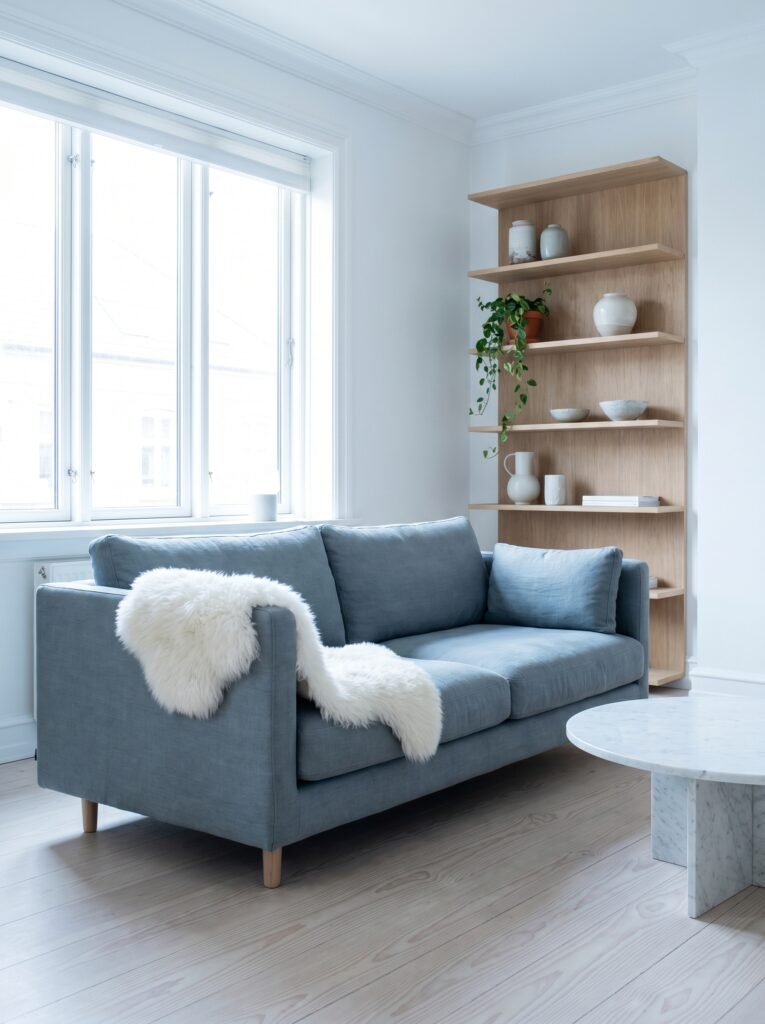
Nothing is more transformative — or more underestimated — than lighting in a grey living room. Grey is a color that responds to light, almost like a mood ring for your room. Get the lighting right and your grey sofa becomes the centerpiece of something genuinely beautiful. Get it wrong and you’ll wonder why the room always feels a little gray in the wrong way.
Start with warm-toned bulbs — 2700K to 3000K is the sweet spot for living rooms. Avoid anything labeled “cool white” or “daylight” unless you want your grey sofa to feel like it’s sitting in an office. Table lamps placed at varying heights create what designers call “layered lighting” — it’s the technique behind why hotel lobbies feel so luxurious, and it works just as effectively at home.
Floor lamps positioned in corners warm up the entire room and eliminate those flat, shadowless spaces that make rooms feel uninspired. In a UK sitting room with period features — cornicing, a fireplace surround, original sash windows — targeted lamp placement can actually highlight architectural detail that overhead lighting completely misses.
—
7. Wall Colors That Complement a Grey Couch Without Competing
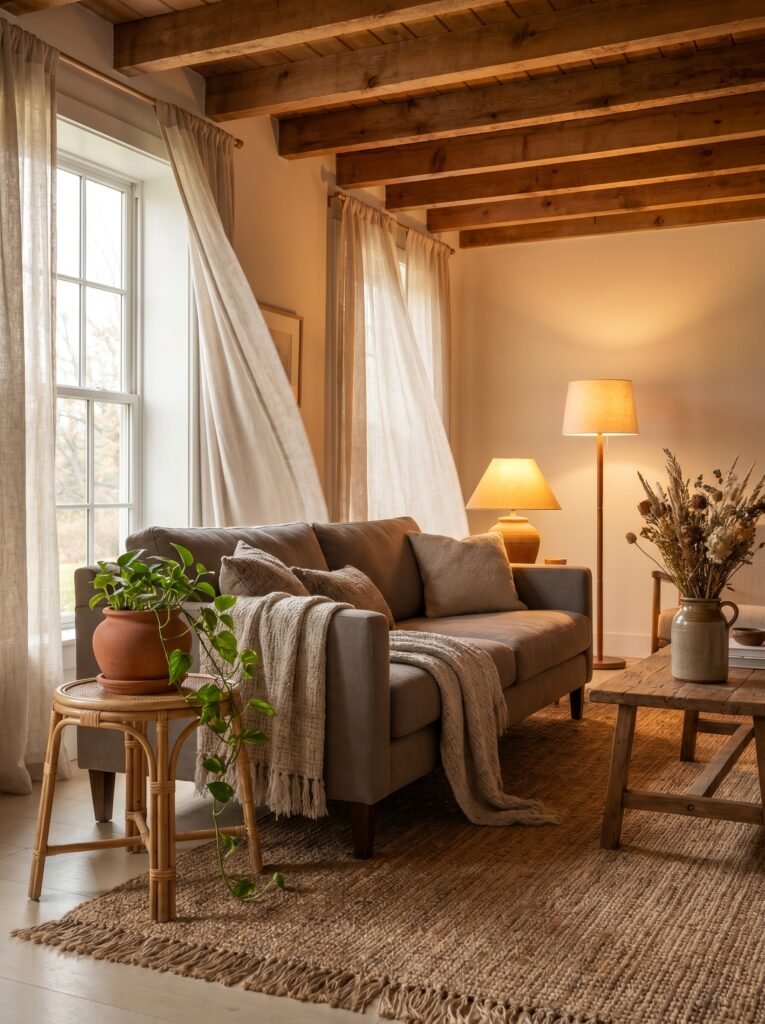
The walls of a living room containing a grey sofa need to be chosen with genuine care. Too similar and the room lacks contrast and feels flat. Too different and the room feels discordant, like two people talking over each other at a dinner party.
Warm white walls are universally safe and universally beautiful with grey furniture. But “safe” doesn’t mean boring — the right warm white creates a gallery-like backdrop that lets your sofa, your artwork, and your accessories do all the talking.
If you’re feeling bolder, a deep charcoal or navy feature wall behind the sofa creates extraordinary drama. This works especially well in a room with good natural light or a fireplace — the contrast between the dark wall and the grey sofa creates depth that feels expensive and intentional. In the UK, moody, darker walls have been a dominant design trend for several years, championed by designers and paint brands alike. Across the US, the “dark and moody living room” aesthetic has been gaining significant traction since around 2022.
—
8. Styling the Coffee Table in Front of a Grey Couch
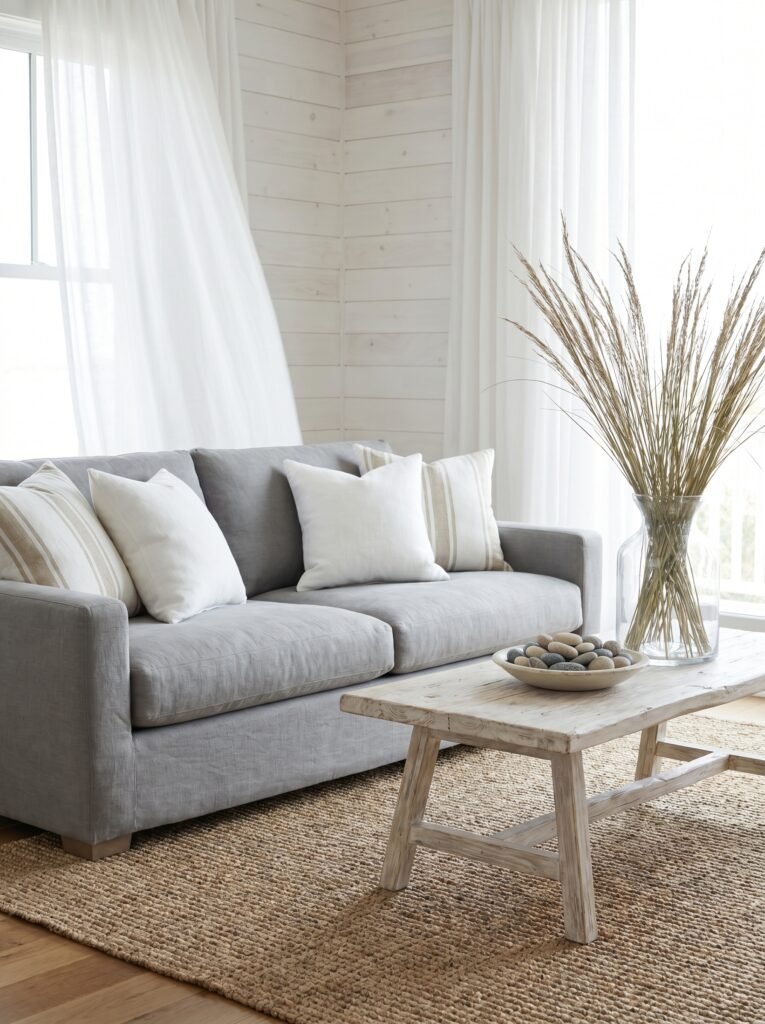
The coffee table is the grey sofa’s closest companion — and styling it well is both an art and a kindness to anyone who enters your living room. A beautifully styled table prevents the grey sofa from feeling visually heavy or unanchored.
The “rule of three” is your starting point: group objects in odd numbers, and vary their height. A stack of hardcover books, a small sculptural vase with dried grasses, and a single candle in an interesting holder — that’s a coffee table vignette that photographs beautifully and lives beautifully. Add a small tray to create a sense of intention and contain the arrangement.
For US homes with larger coffee tables, you can afford more generosity — a large coffee table book on American architecture or food photography, a chunky stone tray, a dried floral arrangement in a ceramic vase. UK homes with smaller occasional tables benefit from restraint — one well-chosen object makes more of a statement than five competing for attention.
—
9. How to Use Plants to Breathe Life Into a Grey Living Room
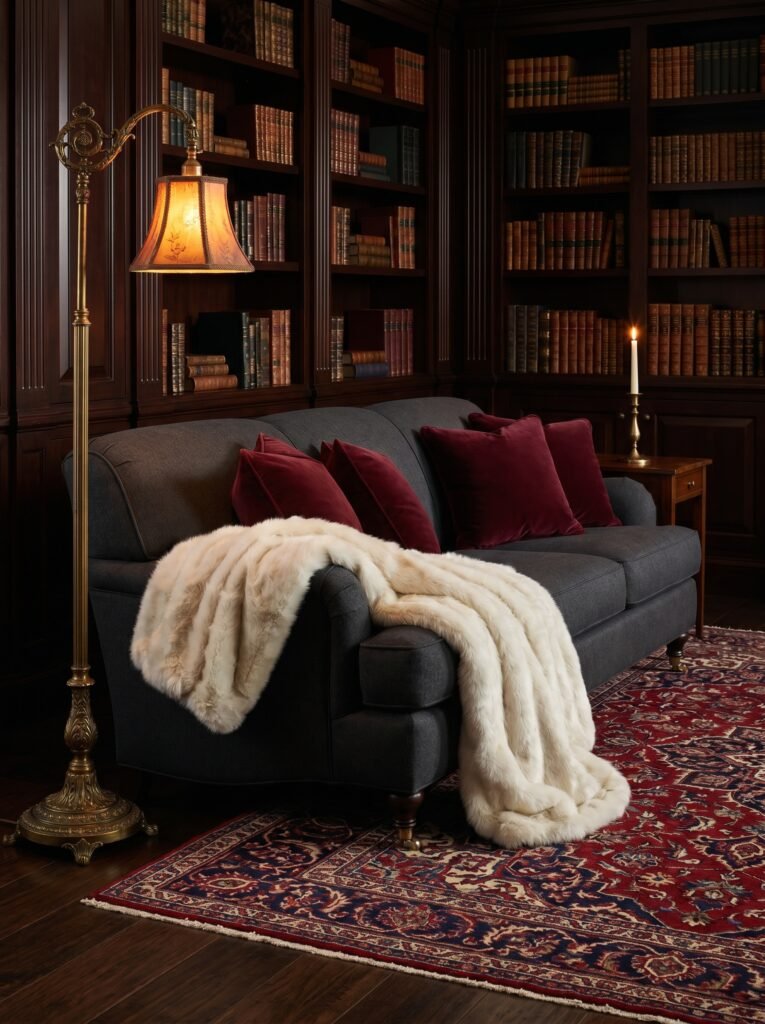
A grey living room without plants can feel slightly cold — beautiful, but somehow held at arm’s length. The addition of greenery is the single fastest way to make a grey sofa arrangement feel warm, alive, and genuinely inviting.
The scale of the plant matters enormously. A large fiddle leaf fig or a sculptural snake plant beside the sofa creates a strong vertical element that balances the horizontal mass of the couch. On a side table, a trailing pothos or a small olive tree in a terracotta pot adds organic softness without demanding too much space.
“Green leaves against a grey sofa is not just an aesthetic choice — it’s a reminder that even the most carefully designed room still belongs to the living world.”
In UK homes, where natural light can be limited, choose shade-tolerant plants — peace lilies, aspidistras, and ferns all thrive without direct sunlight and look quietly lush against a grey backdrop. In sunnier US rooms, you have a wider palette to work from — and the combination of a grey sofa with abundant trailing and sculptural plants is one of the most pinned living room aesthetics on the entire platform.
—
10. Budget-Friendly Ways to Refresh a Grey Sofa That’s Lost Its Spark
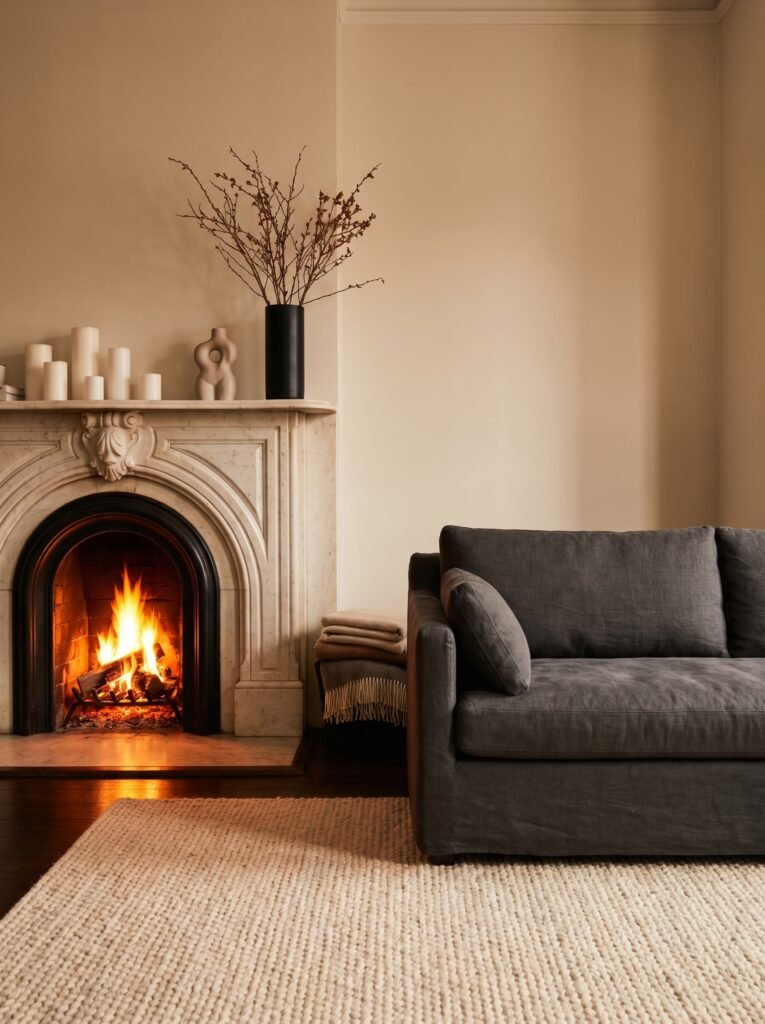
Sometimes the grey sofa itself is perfectly fine — it’s everything around it that needs refreshing. Before you commit to an expensive reupholster or a new sofa purchase, there are several high-impact, low-cost interventions worth trying.
New cushion covers are the fastest and most affordable transformation available. Swap out tired covers for a curated set in two or three complementary textures and tones — this alone can make a three-year-old grey sofa feel brand new. In the US, HomeSense, Target, and Pottery Barn all offer excellent cushion cover options at various price points. In the UK, Dunelm, MADE (while it lasts online), and H&M Home carry stunning options at accessible prices.
A new throw draped over one arm — artfully casually, not militarily neat — instantly updates the sofa’s silhouette and adds seasonal warmth. Change your throw with the seasons: a cotton weave in summer, a chunky knit in autumn, a soft velvet in the winter months.
—
11. Grey Sofa Styles and What They Say About Your Home
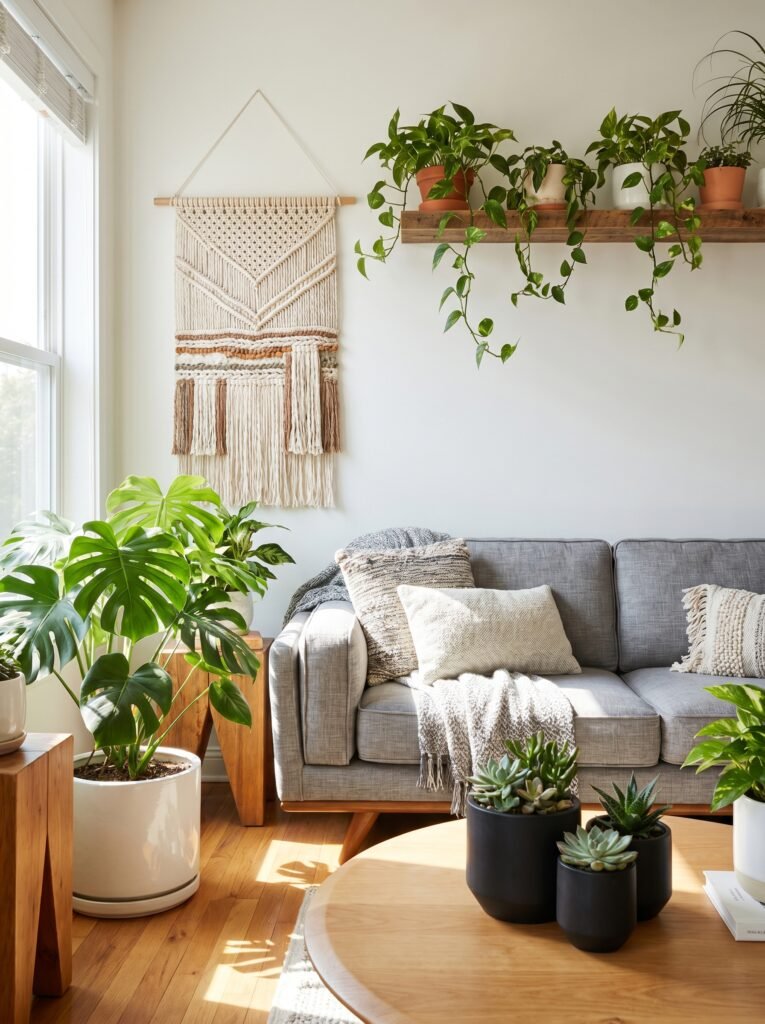
Not all grey sofas are created equal — and the style of sofa you choose communicates almost as much as its color. A sleek, low-profile grey sofa with tapered wooden legs says something fundamentally different to a deep, roll-arm grey sofa with brass castors.
Mid-century modern grey sofas — those clean lines, tapered legs, slightly retro proportions — suit open-plan US living rooms and smaller UK flats equally well. They’re timeless without being stiff.
A deep-seated, generously cushioned grey sectional sofa says: this is a home where you will be fed, watched over, and never rushed out. It’s the sofa of Sunday films and long conversations and staying later than you planned. In larger US homes especially, the sectional has become a central character in the story of the family living room.
Tuxedo-style grey sofas — those with arms and back at the same height — bring a certain tailored elegance that suits both the classic British townhouse sitting room and the modern American city apartment with architectural bones.
—
12. The Emotional Truth About Why Grey Living Rooms Feel Like Home

All the styling advice in the world — the textures, the lighting, the plants, the cushions — ultimately serves one purpose: to create a room where people feel genuinely welcome. And there is something about grey, specifically, that supports this goal in a way few other colors can.
Grey is quiet. It doesn’t compete with the people in the room. It doesn’t shout or demand. It creates a kind of visual silence that allows everything else — laughter, conversation, the smell of something cooking in the next room, the afternoon light moving across the floor — to be heard more clearly. Grey living rooms have a particular gift for absorbing the energy of the people who inhabit them and giving it back in the form of comfort.
This is why, after a long day — after the commute, the emails, the school run, the mental load of modern life — walking into a beautifully styled grey living room feels, against all logic, like arriving somewhere safe. The color holds you. It doesn’t demand anything in return. It simply is.
—
🌿 How to Take Care of Your Grey Couch
A grey couch is a long-term relationship, and like any good relationship, it rewards consistent, gentle attention.
Vacuum your grey sofa weekly using an upholstery attachment, paying particular attention to the crevices where crumbs and dust accumulate. This prevents grime from working its way into the fabric fibers over time. Most fabric grey sofas respond well to a light clean with a mixture of mild dish soap and lukewarm water — always test a hidden area first and blot rather than rub to avoid spreading stains. For velvet grey sofas, use a soft bristle brush to lift the pile after cleaning and restore that characteristic sheen. Rotate and flip your sofa cushions monthly to ensure even wear — this can genuinely double the lifespan of your cushions. Finally, keep your grey sofa out of direct sunlight where possible, as UV exposure causes fading and fabric degradation faster than almost anything else.
—
❓ FAQ
Q: What color cushions go best with a grey sofa? A: It truly depends on the undertone of your grey. For warm greys, reach for terracotta, mustard yellow, cream, or burnt orange. For cool greys, consider dusty rose, sage green, navy blue, or soft white. Using a mix of three complementary tones in varying textures always looks more considered than matching everything exactly.
Q: Can a grey sofa work in a small living room? A: Absolutely — in fact, a light to mid grey sofa in a small living room can make the space feel larger and more cohesive than a brightly colored one. Keep the surrounding furniture low-profile, use mirrors to bounce light, choose a pale wall color, and avoid oversized coffee tables to maintain a sense of openness.
Q: How do I stop my grey living room from feeling cold or sterile? A: Layer warm textures — knit throws, velvet cushions, jute rugs. Add warm-toned lighting using 2700K bulbs in table lamps rather than overhead lighting. Introduce plants and natural wood tones. Display personal objects — books, art, objects collected over time. Cold grey living rooms are almost always suffering from a lack of texture, warmth in the lighting, and personal detail, not from the grey itself.
—
💭 Final Thought
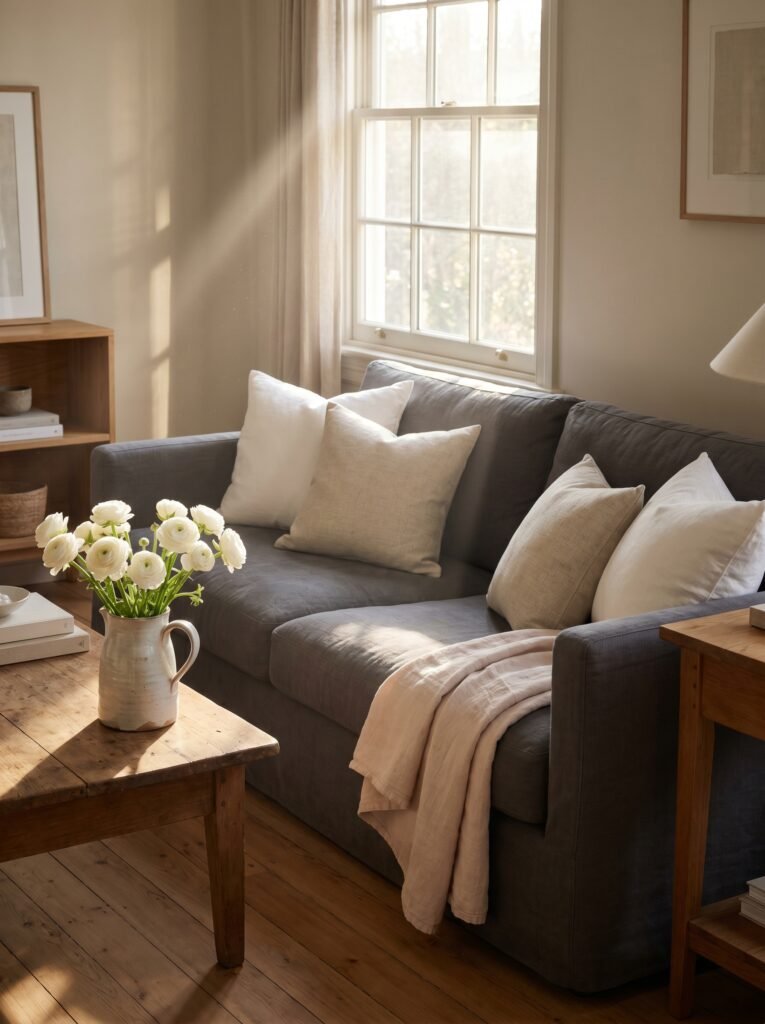
A grey living room, done with care and intention, is one of the most generous things you can create in a home. It holds people. It absorbs the noise of life and returns it as peace. It’s the rare design choice that feels both timelessly beautiful and deeply personal at the same time — because what you bring to it, the colors and textures and objects and light, is entirely and uniquely yours.
So here’s the question worth sitting with: if your living room could feel like anything right now — what one change would start that journey?