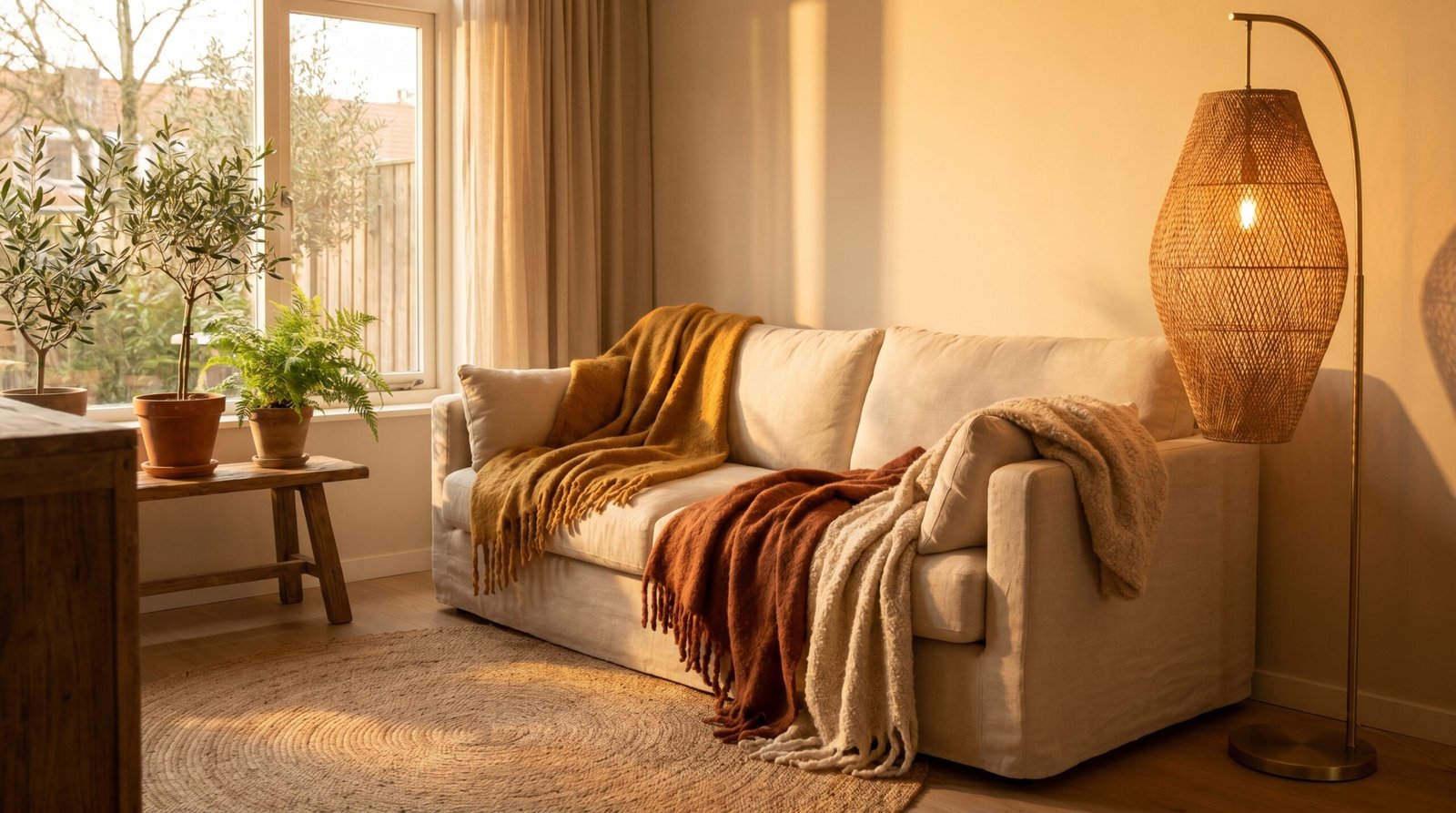
The Living Room Lamp Guide That Will Change the Way You See Your Home
There’s a moment — usually sometime in autumn, when the days get shorter and the evenings close in — when you switch on your living room lamp and something shifts. The room softens. The world outside disappears. And for just a second, everything feels exactly right. That’s the quiet, underrated power of the perfect lamp, and most of us have never given it the credit it deserves.
—
1. Why Your Living Room Lamp Is the Most Underestimated Piece in the Room
Ask most homeowners what they’d change about their living room and you’ll hear the same answers — the sofa, the rug, the paint color. Rarely does anyone say the lighting. And yet, walk into any beautifully styled living room — whether it’s a Georgian terrace in Edinburgh, a Brooklyn brownstone, or a suburban semi in Surrey — and the first thing you feel is the light.
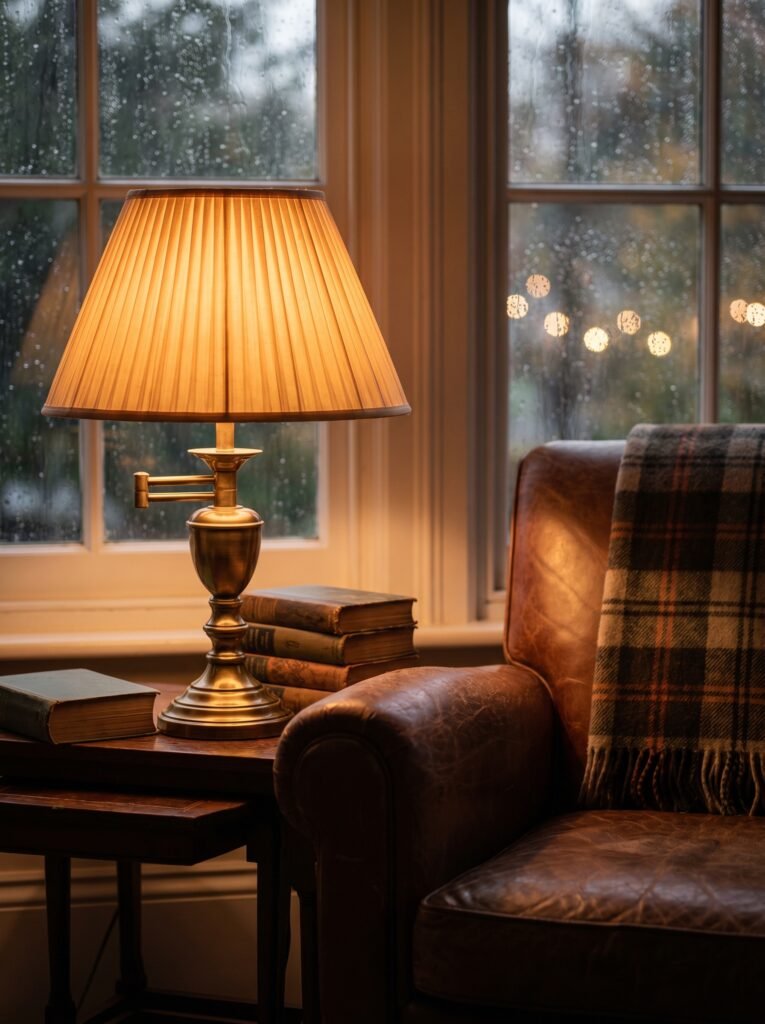
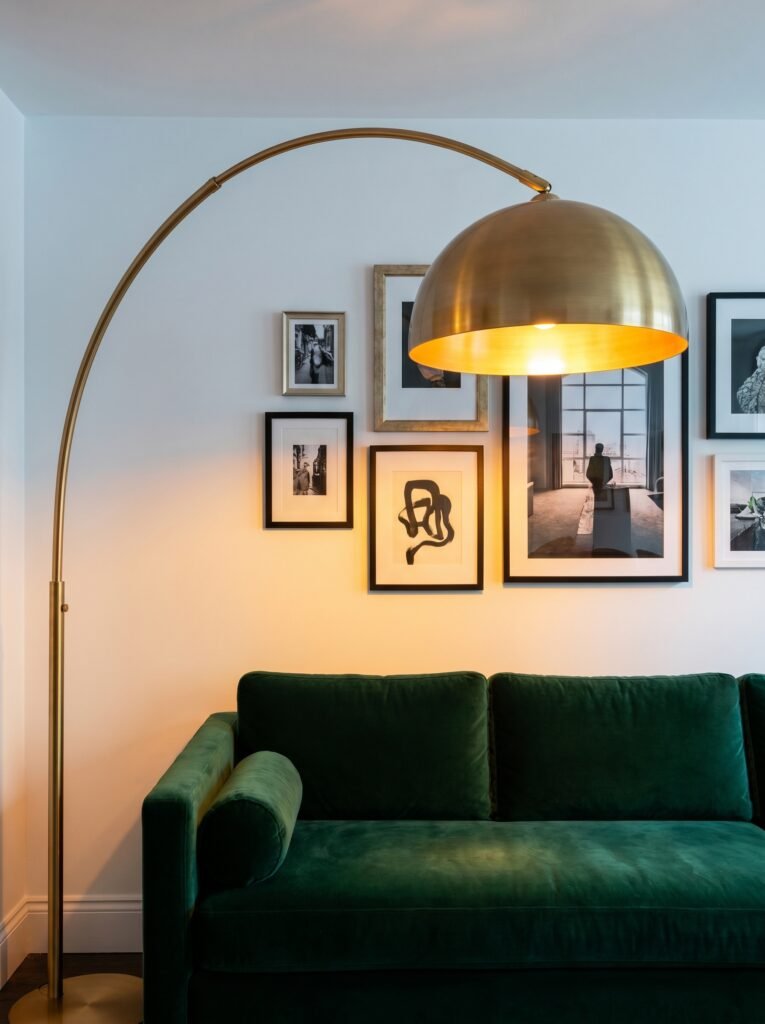
Lamps are the invisible architects of atmosphere. They don’t just illuminate a room; they define it. A cool, blue-toned floor lamp against a white wall creates a gallery-like crispness. A warm amber table lamp sitting beside a worn leather armchair whispers of fireside evenings and a good book. The lamp you choose isn’t just functional — it’s emotional. It tells the story of the room before anyone even sits down.
“A lamp doesn’t just light a room. It tells you how the room wants to feel.”
The design world has long known this, but for everyday homeowners, the lamp section of a furniture store can feel overwhelming — too many options, too little guidance. This guide changes that. Whether you’re decorating your first flat in Manchester or rethinking a family room in Austin, Texas, these ideas will help you choose, place, and style living room lamps with genuine confidence.
—
2. The Three Types of Lighting Your Living Room Actually Needs
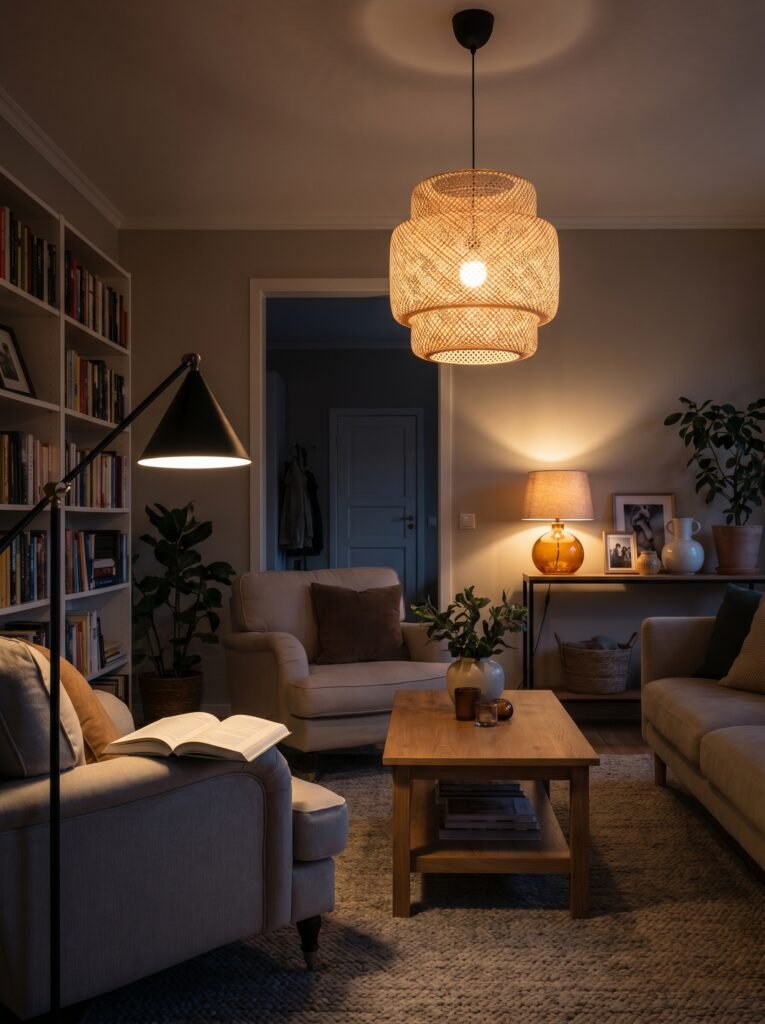
Before you fall in love with a lamp on Pinterest, it helps to understand a foundational principle of interior design: layered lighting. Professional designers build every room around three distinct layers, and lamps play a starring role in all of them.
The first layer is ambient lighting — your room’s overall, general illumination. This is often the overhead light, the ceiling fixture, or recessed downlights. It’s functional, but rarely flattering. The second layer is task lighting — focused light for reading, working, or crafting. A lamp beside a sofa or on a desk serves this purpose beautifully. The third and most magical layer is accent lighting — atmospheric lamps that create warmth, highlight architectural features, or simply add visual interest.
Most living rooms in the US and UK rely too heavily on a single overhead light, which flattens the entire space and makes it feel like a waiting room rather than a home. The solution isn’t complicated — it’s simply adding lamps at different heights and in different corners of the room to create depth, warmth, and that golden-hour glow that makes everyone look better and feel more relaxed.
—
3. Floor Lamps: The Tall, Quiet Statement-Makers
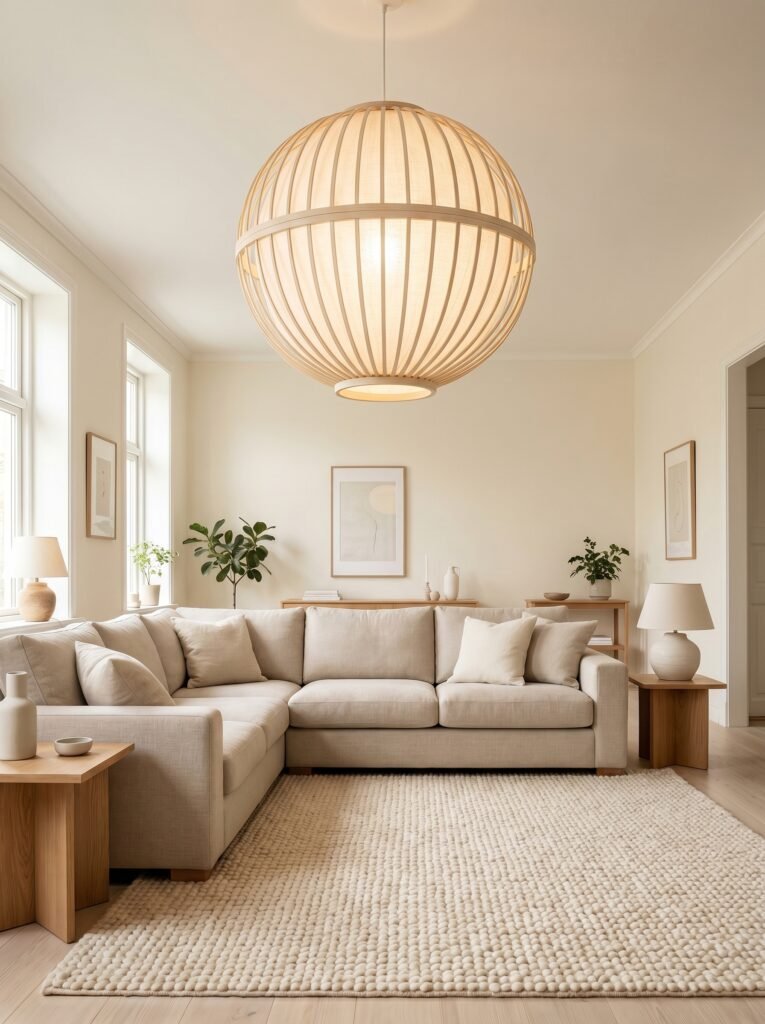
A floor lamp is one of the most versatile pieces of furniture you can own — and yes, a lamp absolutely counts as furniture when it’s doing this much work. Floor lamps earn their place in a room by filling vertical space, drawing the eye upward, and anchoring a seating area without the need for a side table.
In American living rooms, arc floor lamps — those beautifully sweeping designs where the head curves out over the seating area — have seen a major resurgence. They’re especially brilliant for apartments where space is tight, since they provide reading light over a sofa without requiring a table at all. In UK homes, particularly in period properties with high ceilings, a tall tripod floor lamp with a drum shade can feel architectural and intentional — like it was always meant to be there.
When shopping for a floor lamp, consider the shade material as carefully as the base. A linen shade casts a soft, warm, diffused light that flatters the room. A metal shade creates a more directed pool of light, perfect for reading corners. A frosted glass shade gives a clean, almost Scandinavian quality — popular right now in both British and American interiors leaning into the quiet luxury aesthetic.
—
4. Table Lamps: The Heart of the Living Room
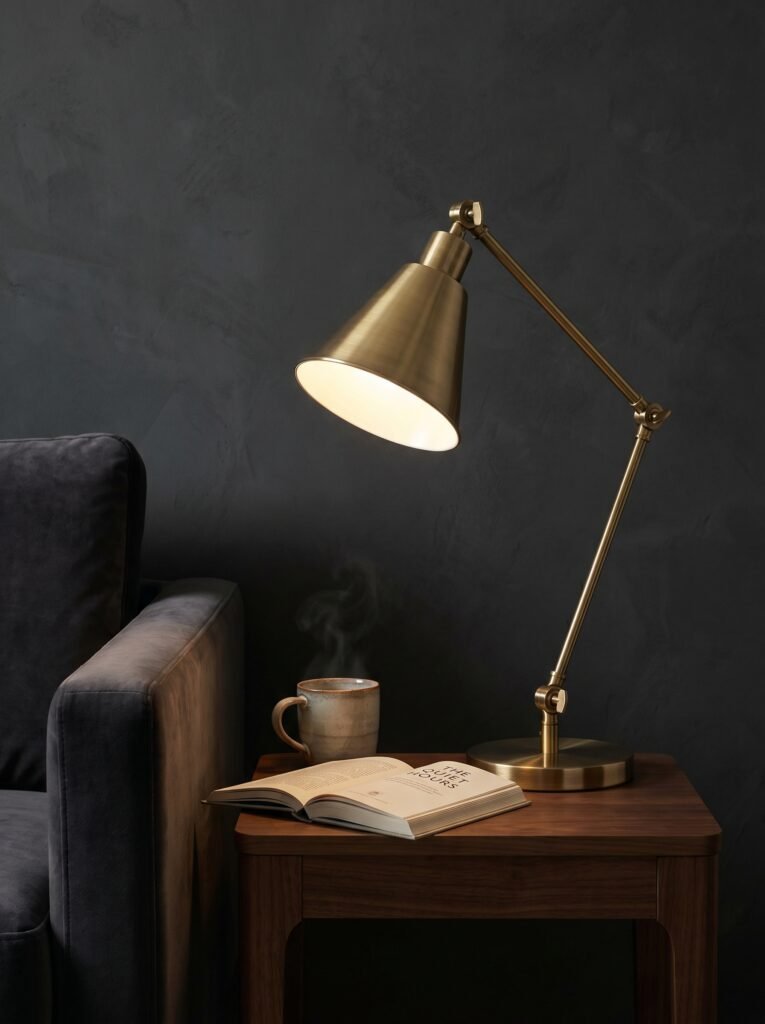
If floor lamps are the quiet statement-makers, table lamps are the heart. They sit at eye level — or just below it — which means their light falls exactly where you need it most: across faces, over books, along the length of a sofa. A well-chosen table lamp on a console table, side table, or bookshelf can transform the entire energy of a room.
The best table lamps work on two levels simultaneously: switched off, they’re a decorative object — sculptural, colorful, or beautifully textured. Switched on, they become the warm, golden center of the room. Look for bases made from ceramic, marble, brass, rattan, or blown glass — all materials that carry visual weight and character even in the dark.
In terms of scale, the lampshade should be roughly two-thirds the height of the base. A shade that’s too small looks pinched and awkward. Too large, and it overwhelms the base entirely. The bottom of the shade should sit at roughly eye level when you’re seated — this is the sweet spot that ensures the light falls where it’s most flattering and most functional.
“The right table lamp doesn’t just light the room. It gives the room a pulse.”
—
5. The Color Temperature Secret That Most People Get Wrong
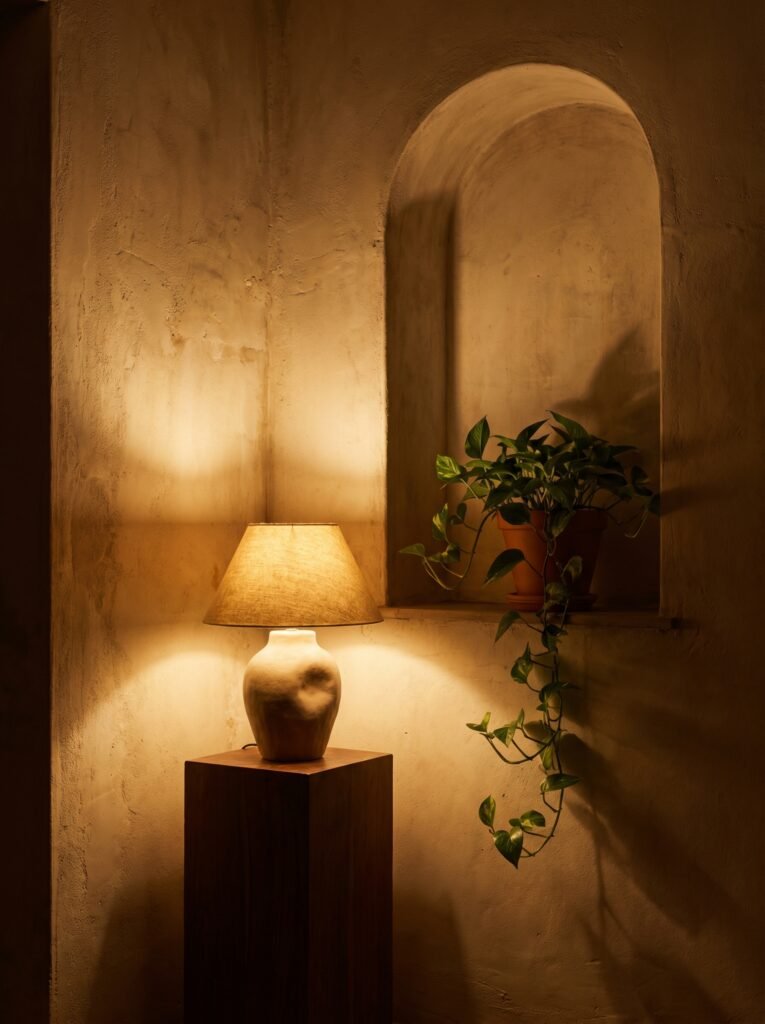
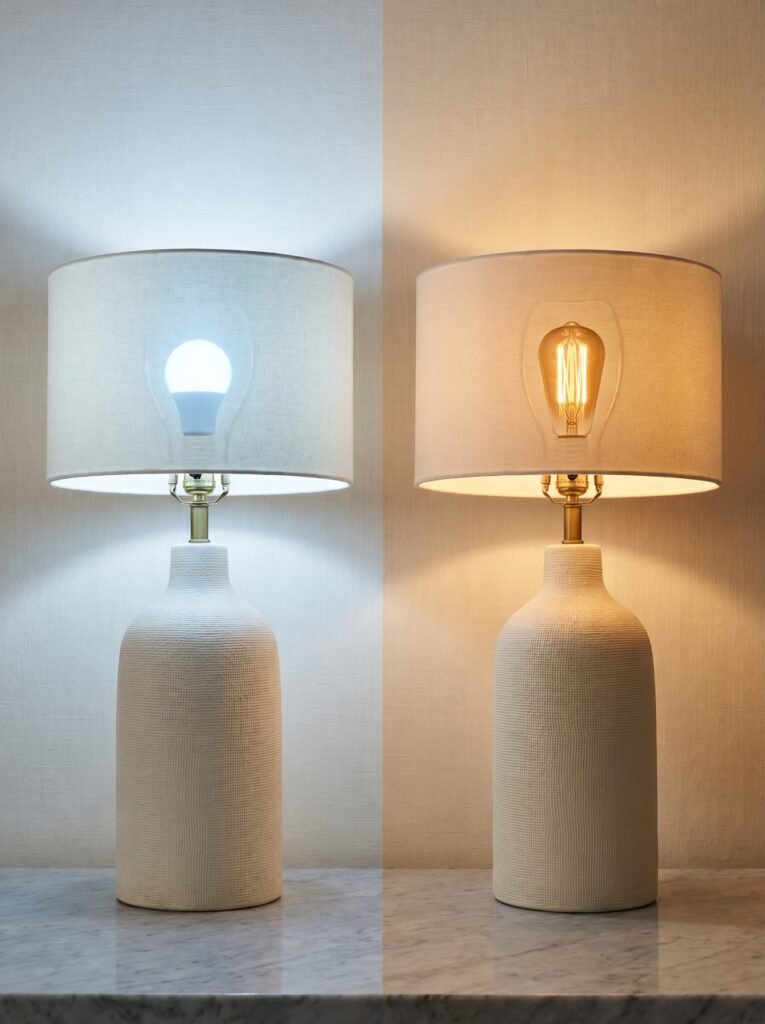
Here’s something that makes an enormous difference and almost no one talks about when decorating: the color temperature of your lightbulbs. Measured in Kelvins (K), color temperature determines whether your lamp emits a warm, cozy glow or a cool, clinical brightness.
For living rooms in both the US and UK, the sweet spot is between 2700K and 3000K — this is the warm white range that mimics the golden tones of candlelight or an early sunset. It’s flattering to skin tones, makes wood and textiles look rich and inviting, and creates that soft, enveloping atmosphere we all crave in a living space.
Bulbs above 4000K lean toward cool white or daylight tones — better for kitchens, bathrooms, and home offices where clarity and focus matter. In a living room, they can make the space feel cold and slightly clinical, no matter how beautiful the lamp itself might be. When you’re next buying bulbs — whether LED Edison styles, globe bulbs, or candelabra shapes — always check the Kelvin rating on the box. It’s the smallest detail that makes the biggest difference.
—
6. Lampshade Shapes and What They’re Really Telling You
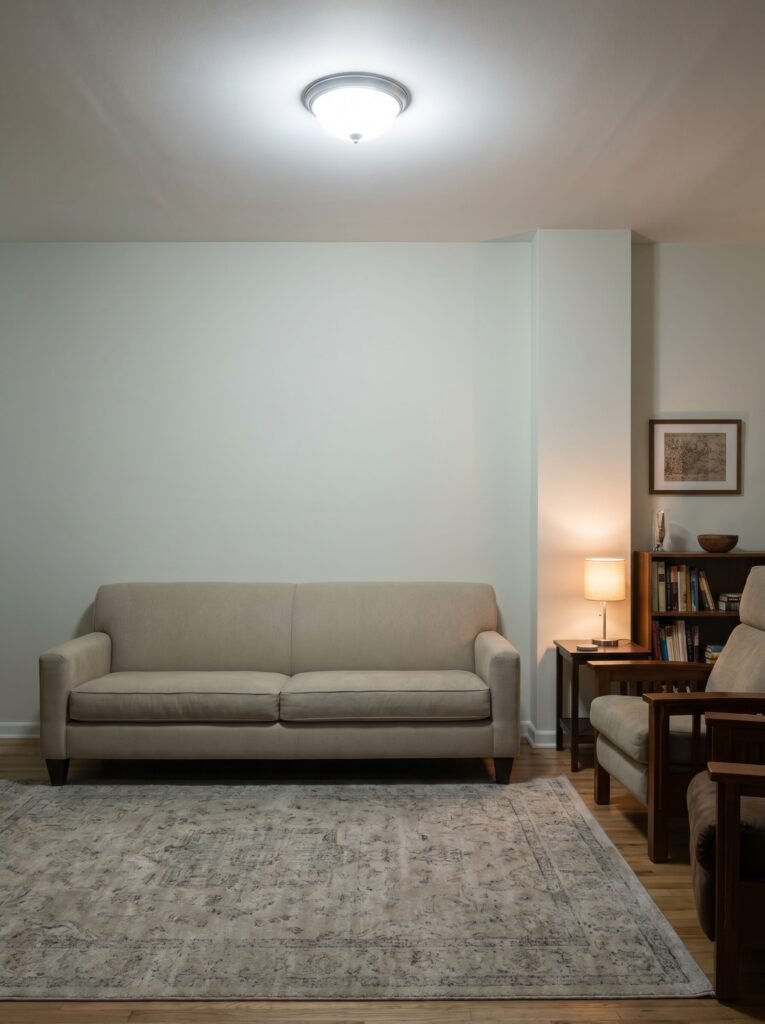
The shape of a lampshade is far more than a stylistic preference — it fundamentally changes how light behaves in the room. Empire shades (wider at the bottom than the top) direct light both upward and downward, creating a gentle, even glow that’s versatile and universally flattering. Drum shades emit light more directly sideways, creating a focused brightness that suits modern, minimal interiors beautifully.
Coolie shades — those wide, angled silhouettes that flare dramatically outward — make a visual statement and flood a room with light, which can be lovely if your living room is on the darker side (a common challenge in UK terraced houses where natural light is precious). Bell shades have a classic elegance that suits both traditional British country house interiors and East Coast American colonial-style homes.
Whatever shape you choose, consider the fabric too. White or cream linen shades are the most forgiving — they diffuse light beautifully and complement almost any décor. Patterned fabric shades add personality but require more careful coordination with the rest of the room. Dark-colored shades (navy, forest green, charcoal) are having a major moment right now, creating dramatically moody pools of light that feel extremely intentional and sophisticated.
—
7. Placement Strategies That Professional Designers Actually Use
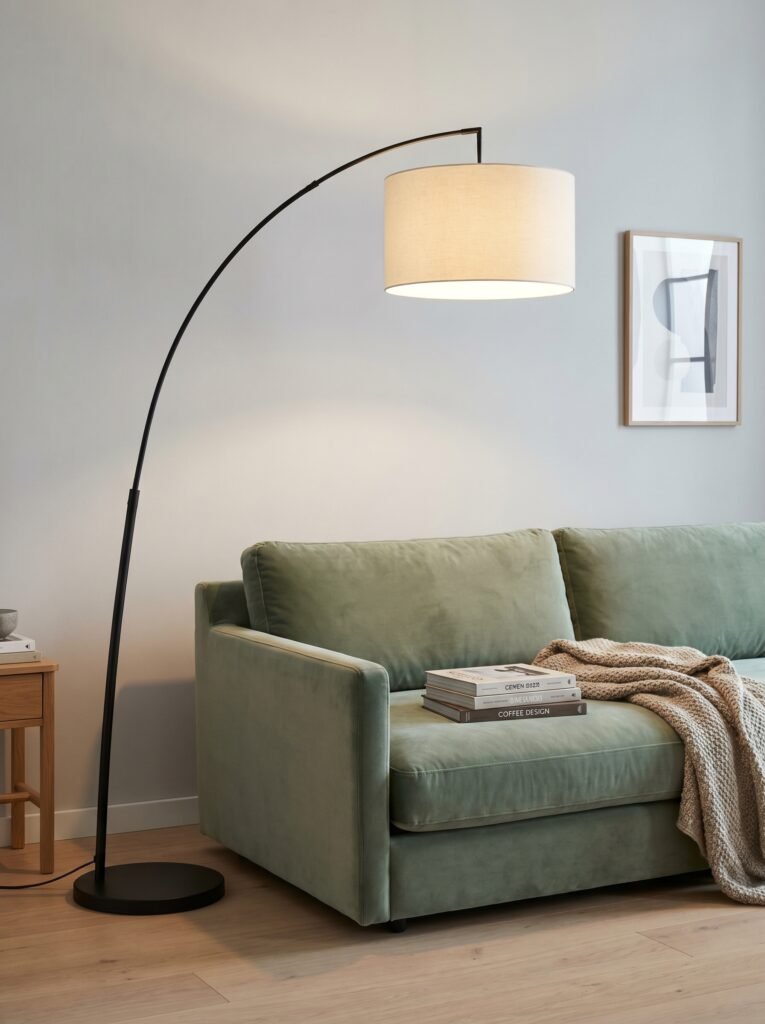
Here’s the honest truth about lamp placement: most people put lamps where there’s space for them, rather than where they’re actually needed. The result is a room that’s accidentally lit — some corners in shadow, others harshly bright, with no sense of flow or intention.
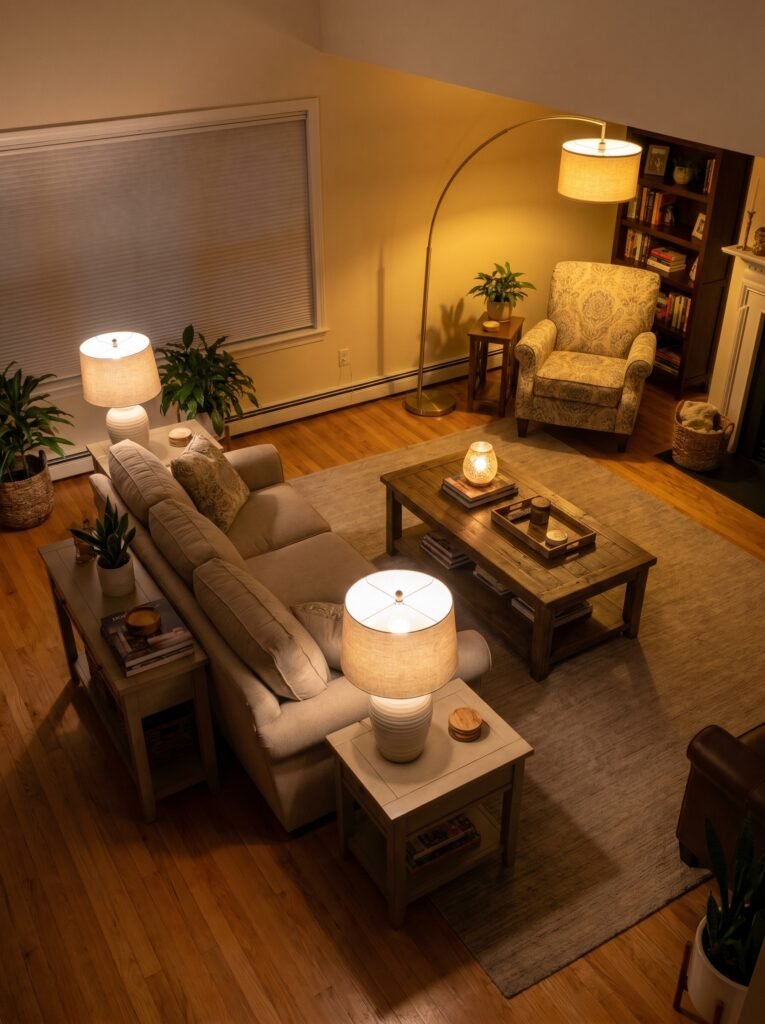
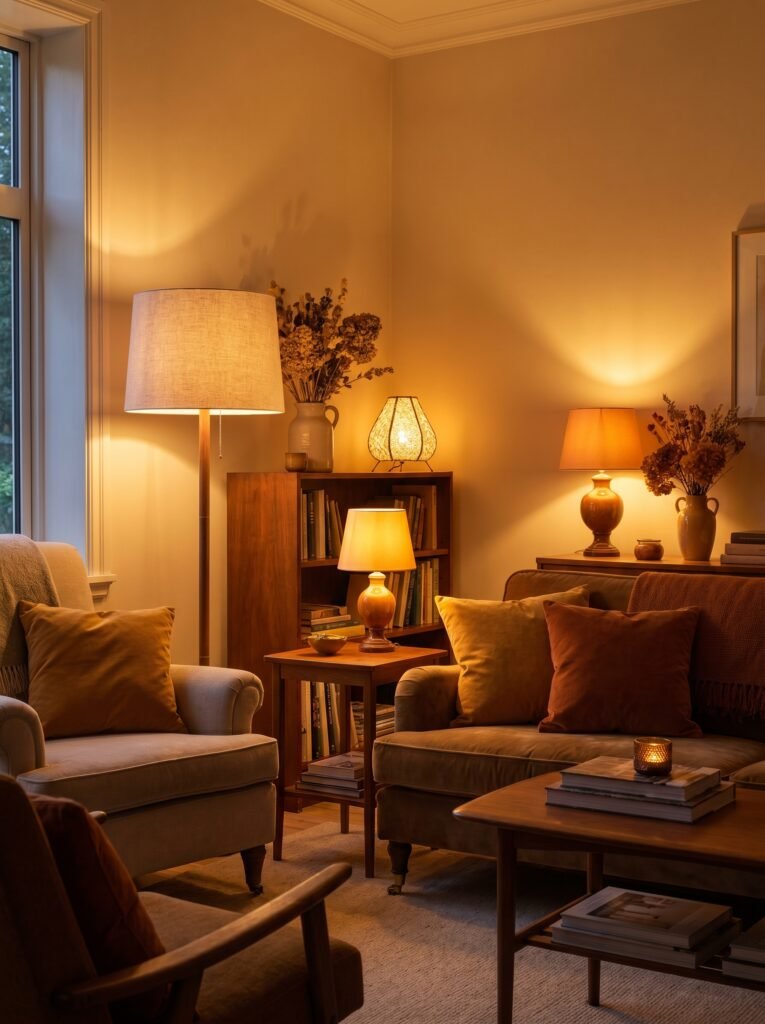
Professional designers think about placement differently. They start with the seating area and work outward. If you have a sofa and two armchairs arranged around a coffee table, you ideally want light sources at three different points around that cluster — this creates an encircling warmth that makes the seating area feel like its own cozy world within the larger room.
Avoid placing lamps only at the edges of a room; this creates a theatrical, spotlight effect that can feel more dramatic than comfortable. Instead, bring at least one light source into the center of the seating area — a low table lamp on the coffee table, or an arc floor lamp sweeping over the sofa, works beautifully for this.
“Don’t light the room — light the life that happens inside it.”
—
8. Mixing Lamp Styles Without Making It Look Cluttered
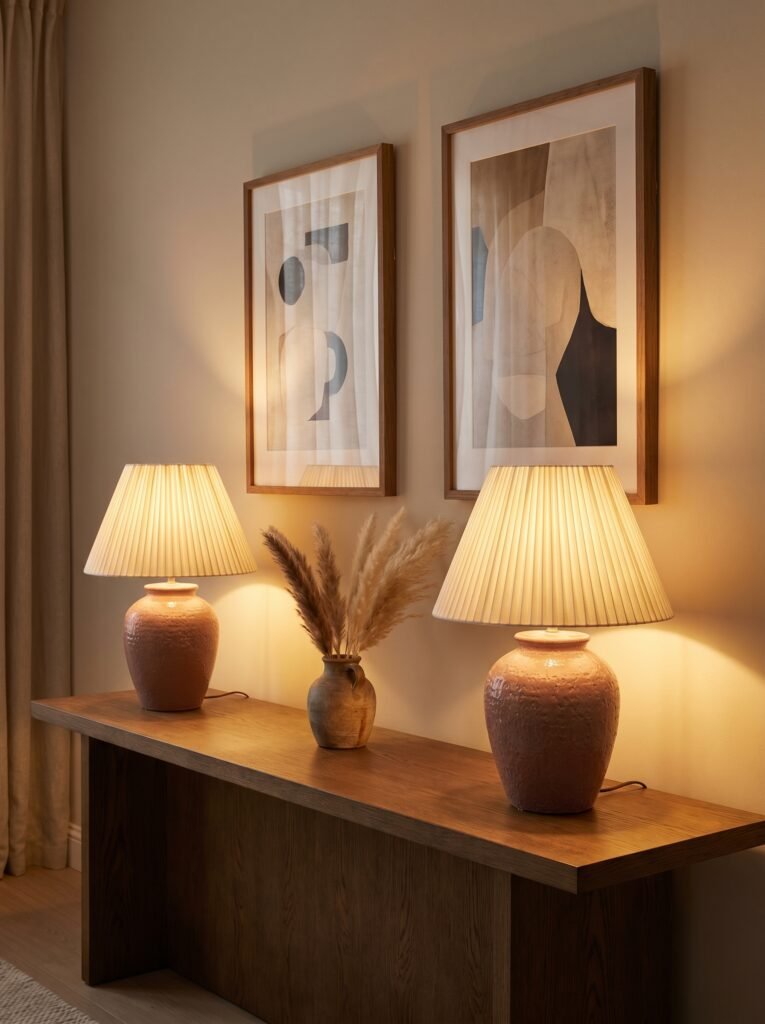
One of the most common fears in interior decorating — particularly among UK and American homeowners who love a Pinterest board but worry about overdoing it — is mixing too many styles and ending up with a room that looks chaotic rather than curated. With lamps, the key is finding harmony through repetition of one element: material, color, or finish.
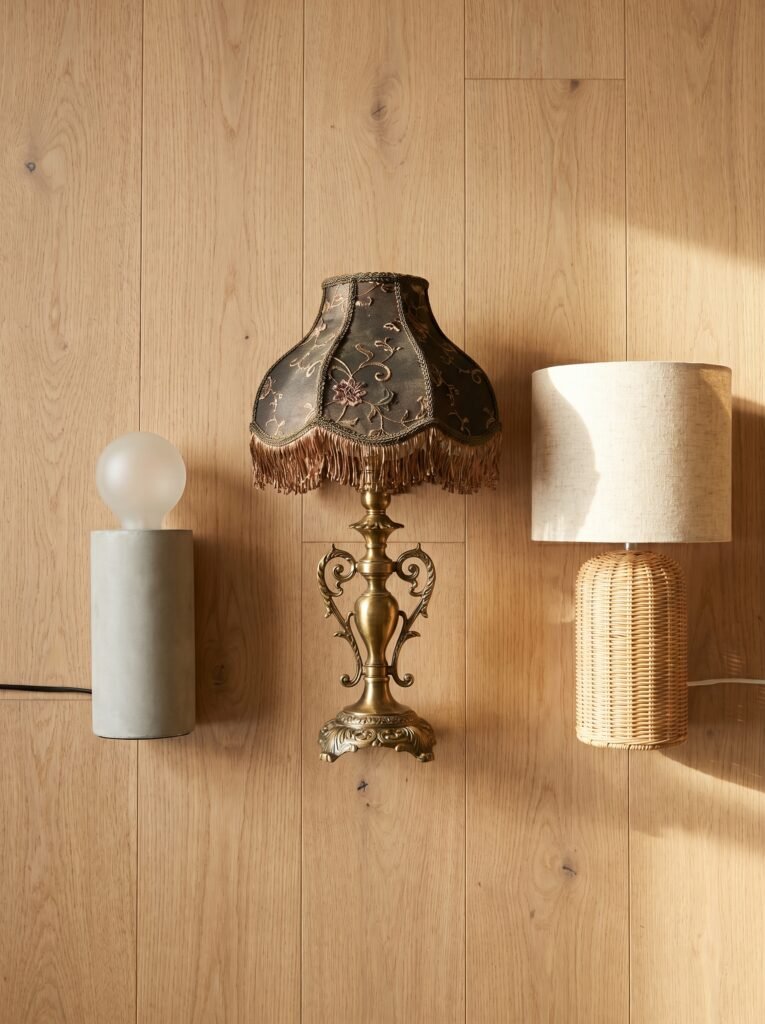
You might have three completely different lamp styles — a rattan floor lamp, a ceramic table lamp, and a brass swing-arm wall lamp — but if they all share a warm brass finish on their fixtures, they’ll read as a cohesive family. Alternatively, tie them together through shade color: all cream, all white, or all a rich cognac linen. The bases can be wildly different as long as something visual connects them.
The “rule of three” beloved by interior designers applies beautifully to lamps. Three light sources in a living room — at varying heights — almost always creates a balanced, layered feel. Two can feel sparse; four can start to feel busy unless the room is very large. Three is the magic number.
—
9. Budget-Friendly Lamps That Still Look Expensive
Beautiful lighting doesn’t require a bottomless budget — and this is genuinely one of the areas where smart shopping pays off most. Some of the most visually striking lamps available right now are surprisingly affordable, particularly from retailers like IKEA, Target, H&M Home, Dunelm, and Next Home.
The secret to making a budget lamp look expensive lies almost entirely in the bulb and the placement. A simple ceramic base from a high street shop, fitted with a vintage-style Edison bulb (around 2200K for that gorgeous amber glow) and set at the right height on a side table, can look indistinguishable from something that cost three times the price.
Alternatively, consider investing in one quality lamp as the room’s anchor — perhaps a marble-base table lamp or a solid brass floor lamp — and surrounding it with more affordable pieces. The eye naturally gravitates toward the quality piece and uses it as a reference point for the whole room. It’s the same principle fine restaurants use when they put one beautiful centrepiece on each table.
—
10. Lamps That Work for Small Living Rooms in British Terraces and American Apartments
Small space living is a reality for millions of people in both the UK and the US — whether you’re in a London flat, a Glasgow tenement, a New York studio, or a compact Chicago condo. In tight spaces, lamps do triple duty: they provide light, add decorative character, and can actually make the room feel larger if used correctly.
Wall-mounted swing-arm lamps are absolute heroes in small living rooms — they provide task lighting without occupying any floor or table surface at all. Slim tripod floor lamps with small footprints can tuck into corners elegantly. Tall, vertical lamps draw the eye upward, creating the illusion of height in rooms with lower ceilings.
In small rooms, resist the urge to use tiny lamps thinking they’ll take up less visual space. Counter-intuitively, one or two properly scaled lamps look far better — and make the room feel larger — than four or five small, timid ones scattered around the room. Confidence in scale is everything in small space decorating.
—
11. Trending Lamp Styles Right Now in the US and UK
Interior design trends move quickly, and lamps — being relatively affordable to update — are one of the easiest ways to refresh a room’s look without redecorating entirely. Right now, across both American and British homes, several specific lamp styles are dominating Pinterest boards and design publications alike.
Organic shapes — lamps with irregular, handmade-looking ceramic bases in earthy tones like sage, terracotta, cream, and warm sand — are everywhere. They fit perfectly into the biophilic design trend that’s been building for several years, bringing natural, imperfect beauty into the home.
Mushroom lamps — inspired by mid-century Italian designs — continue their quiet reign, particularly in homes leaning into the cozy, earthy aesthetic. Pleated shades have returned with real force, adding a romantic, almost editorial quality to a room. And rattan and natural fiber bases remain consistently popular, especially in UK coastal homes and American bohemian-style interiors.
On the more dramatic end, dark-glazed ceramic lamps in deep blues, forest greens, and oxblood are making strong appearances in rooms that want to embrace the moody, jewel-toned interiors currently inspiring so many US and UK Pinterest users.
—
12. How to Know When You’ve Finally Got Your Lamp Situation Right
You’ll know your living room lighting is working when you stop noticing it consciously — when you walk into the room in the evening and simply feel at ease without quite being able to explain why. That’s the goal. Not a room that looks like a showroom, but a room that feels like your room, at its most comfortable, most welcoming, most alive.
The right combination of lamps makes guests linger longer. It makes you want to sit down and stay. It makes the ordinary evening — a cup of tea, a film, a quiet conversation — feel somehow more special. That’s an extraordinary thing for an object most of us buy without much thought.
Take the time to layer your lighting. Invest in the right bulbs. Think about placement, proportion, and warmth. Your living room — and everyone who gathers in it — will thank you in a language older than words: the language of light.
—
🌿 How to Take Care of Your Living Room Lamps
Lamps are low-maintenance, but a little regular attention keeps them looking their best and working safely.
First, dust lampshades monthly using a soft lint roller or a dry microfibre cloth — dust accumulates faster than you’d think and subtly dulls the light over time. For fabric shades, check the manufacturer’s label before attempting any damp cleaning; many can only be gently vacuumed on the lowest setting.
Second, check your bulb wattage against the lamp’s maximum rating — this will be printed inside the socket or on the base. Using a bulb that’s too powerful generates excess heat, which can discolor fabric shades and, in older lamps, pose a safety risk. LED bulbs are almost always the safest and most energy-efficient choice.
Third, inspect the cord periodically — especially in older lamps or those placed near high-traffic areas. Frayed or damaged cords should be repaired by a qualified electrician; in the UK, you can also check that the lamp carries a British Standard safety mark. In the US, look for UL (Underwriters Laboratories) certification.
Finally, clean lamp bases seasonally. Ceramic and glass bases can be wiped with a slightly damp cloth. Brass and metal bases respond beautifully to a soft, dry polishing cloth. Rattan and natural fiber bases can be gently brushed clean with a dry pastry brush — perfect for getting into the woven texture without damaging the fibers.
—
❓ FAQ
Q: How many lamps does a living room need? A: Most living rooms benefit from at least three light sources — a combination of floor lamps, table lamps, or wall-mounted lamps. Three points of light at varying heights creates a layered, warm atmosphere that feels balanced and intentional. In larger rooms, you may want four or five. The goal is to eliminate harsh shadows and create a gentle glow throughout the space.
Q: What’s the best bulb color temperature for a cozy living room? A: Look for bulbs in the 2700K to 3000K range — this is warm white, which mimics the golden tones of candlelight and creates an inviting, flattering atmosphere. Avoid anything above 4000K in a living room, as cooler daylight tones can make even the warmest room feel clinical and uninviting.
Q: Can I mix different lamp styles in the same living room? A: Absolutely — in fact, mixing styles often looks more interesting and lived-in than perfectly matching sets. The key is to tie your lamps together through one repeated element: a shared finish (like brass or matte black), a consistent shade color, or a similar material in the base. This creates visual harmony without the stiffness of a perfectly matched set.
—
💭 Final Thought
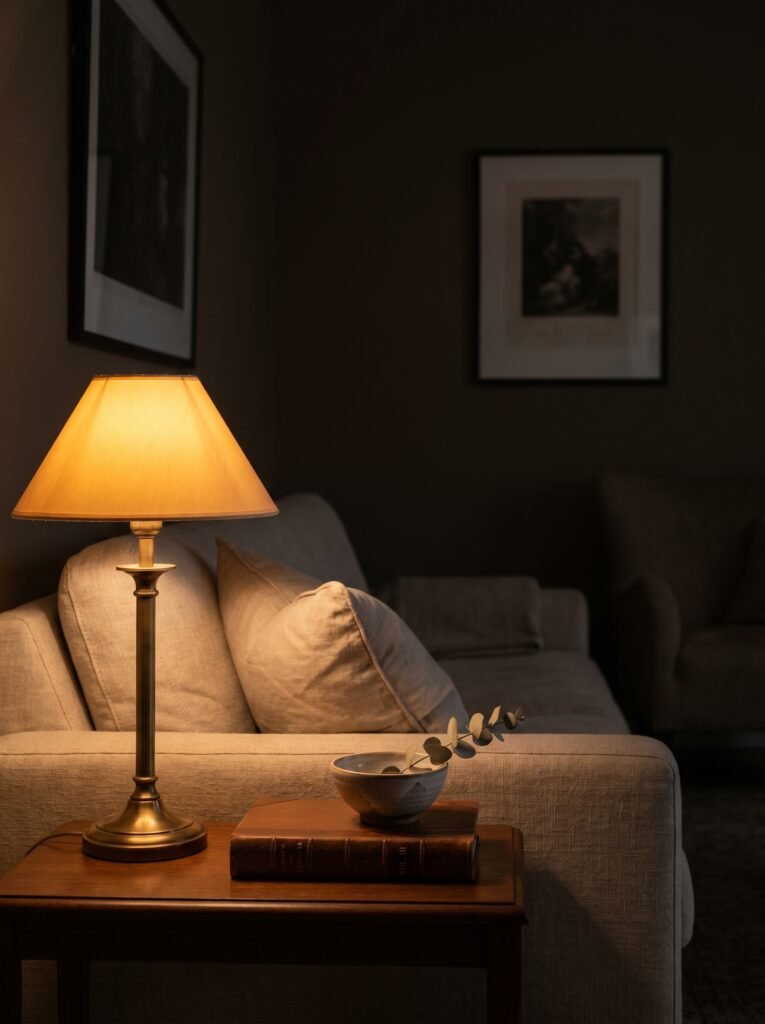
Light is one of our most primal comforts — we’ve been gathering around it since the very beginning of human history. The living room lamp, in all its quiet, understated elegance, carries that same ancient promise: warmth, safety, and belonging. It doesn’t take a complete renovation or an unlimited budget to transform the way your home feels. Sometimes, it takes nothing more than the right lamp, placed in exactly the right spot, switched on at exactly the right moment.
So here’s the question worth sitting with tonight: what is the light in your living room actually saying about the kind of home you want to live in?