The Open-Plan Life: How to Make Your Living Room and Kitchen Feel Like One Beautiful Space (Not a Mess)
You knocked down the wall. Or maybe you moved into a place where the wall was already gone. Either way, you’re standing in this big, open room thinking: how do I make this feel intentional? Because right now it just feels like two rooms that happen to share a floor.
Here’s the thing — an open-plan living and kitchen space is one of the most beautiful layouts you can have. It just needs a few deliberate choices to feel designed rather than accidental.
—
1. The Invisible Line That Holds the Whole Room Together
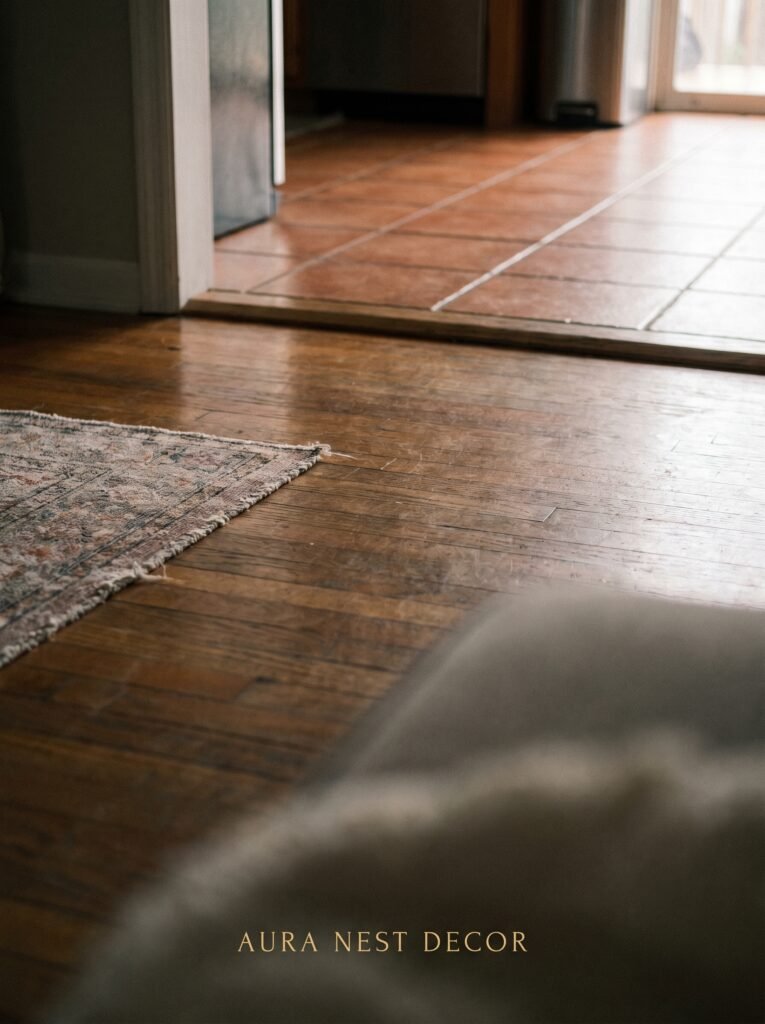
Before you buy a single piece of furniture, you need to understand the concept of the zone boundary. This is the invisible line — sometimes marked by a rug, sometimes by a kitchen island, sometimes by a change in pendant lighting — that tells your eye where the kitchen ends and the living room begins.
Without this line, the space feels unresolved. Guests don’t know where to stand. You don’t know where to look. Everything bleeds into everything else, and not in a good way.
The best zone boundaries do two things at once: they separate and they connect. A large jute rug under the sofa and coffee table creates a clear “living room territory” without putting up a wall. A kitchen island with seating faces outward toward the lounge, so it’s a boundary and a bridge. A change in ceiling treatment — exposed beams over the kitchen, flush plaster over the sitting area — achieves the same thing overhead.
Pick one strong zone boundary and let it do the work. You don’t need three. One clear line, confidently placed, is worth more than a dozen half-measures.
“You don’t need a wall. You need one strong line that tells the eye where it is.”
2. The Color Rule That Open-Plan Spaces Break All the Time
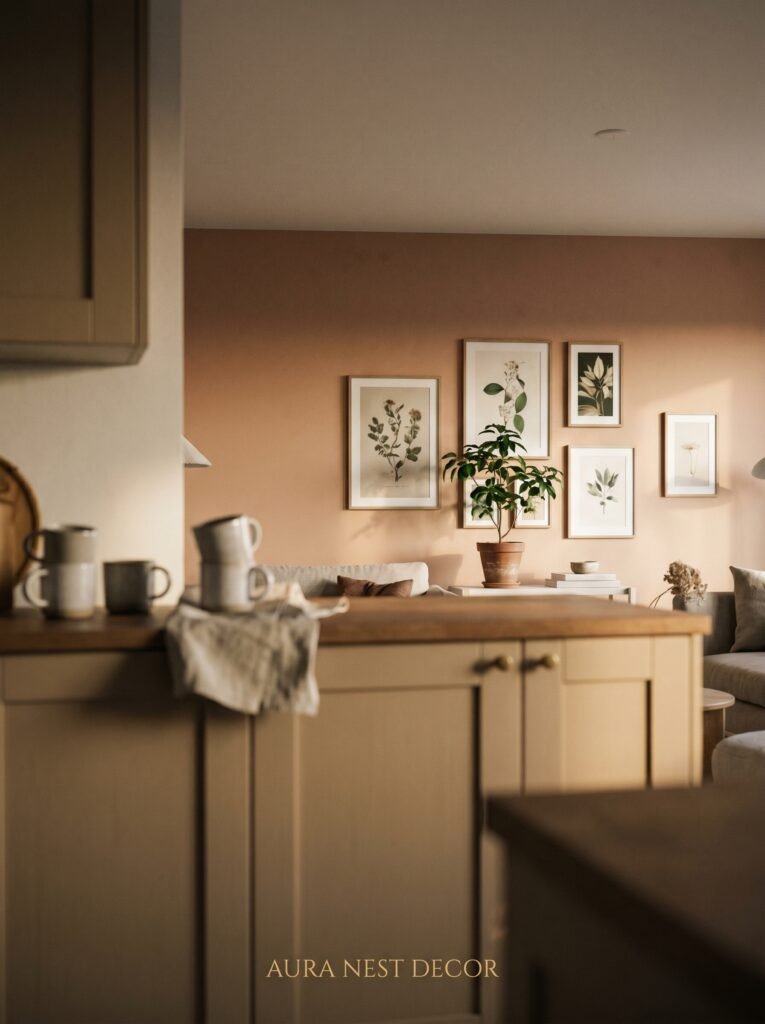
Here’s where most people go wrong. They treat the kitchen and the living room as two separate decorating projects, then wonder why the open-plan feels disjointed and strange.
Walk into any open-plan space that feels genuinely beautiful — a Cotswolds cottage with a knocked-through kitchen and snug, a New York loft with concrete floors and warm cabinetry — and you’ll notice immediately that the colors are talking to each other. The warm sage on the kitchen cupboard doors echoes in the velvet throw on the sofa. The raw oak of the floating shelves reappears in the coffee table legs.
You need a shared color story. Not identical colors throughout — that would be monotonous — but a palette that belongs to the whole room, not just its parts. Choose two or three anchor colors and make sure each “zone” carries at least two of them.
If your kitchen has cream cabinets, warm brass hardware, and dark slate tiles, your living room needs to borrow from that same family. Cream linen cushions. A brass lamp. A dark charcoal bookshelf. Now the room breathes together.
The single biggest mistake in open-plan design is treating each area as its own isolated mood board. They’re one room. They need one story.
3. Why Your Kitchen Island Might Be the Best Piece of Furniture You Own
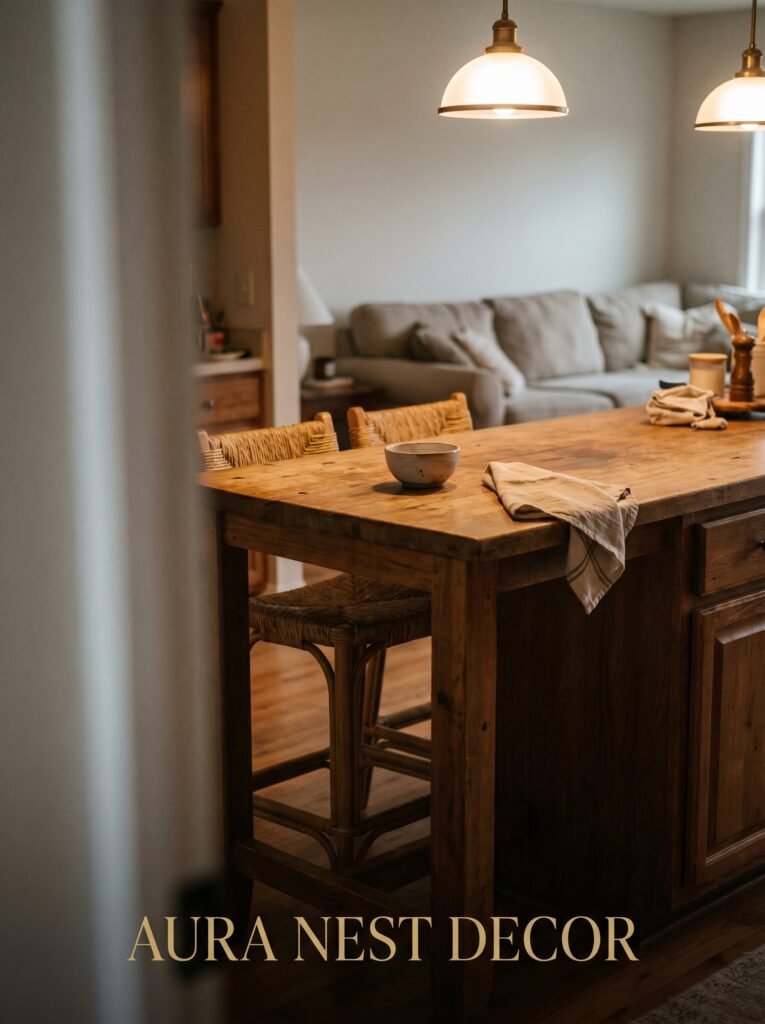
If you have a kitchen island — or you’re thinking about adding one — stop thinking about it as kitchen furniture. Start thinking about it as the most hardworking piece of furniture in your entire home.
In an open-plan space, the island is the hinge. It faces both zones. People lean on it with a glass of wine while someone cooks. Kids do homework there while dinner happens behind them. On Sunday morning it holds the coffee, the newspapers, the slow ritual of a day starting gently.
Styling your island matters enormously for how the whole room looks from the sofa. A few bar stools pulled up — ideally with a finish that echoes something in the living space, like rattan seats that match a wicker basket on your coffee table — visually connect the two zones without any effort.
Keep the island surface mostly clear if you want the room to feel expansive. A small bowl of lemons. A chopping board propped at an angle. One good pendant light hanging low above it. That’s it. The temptation to cover every surface in an open-plan kitchen is real, but the living room will always be visible in the background, and clutter travels across open space faster than it does in a closed room.
4. The Lighting Setup That Makes the Whole Space Feel Like It Was Designed by Someone Who Really Knew What They Were Doing
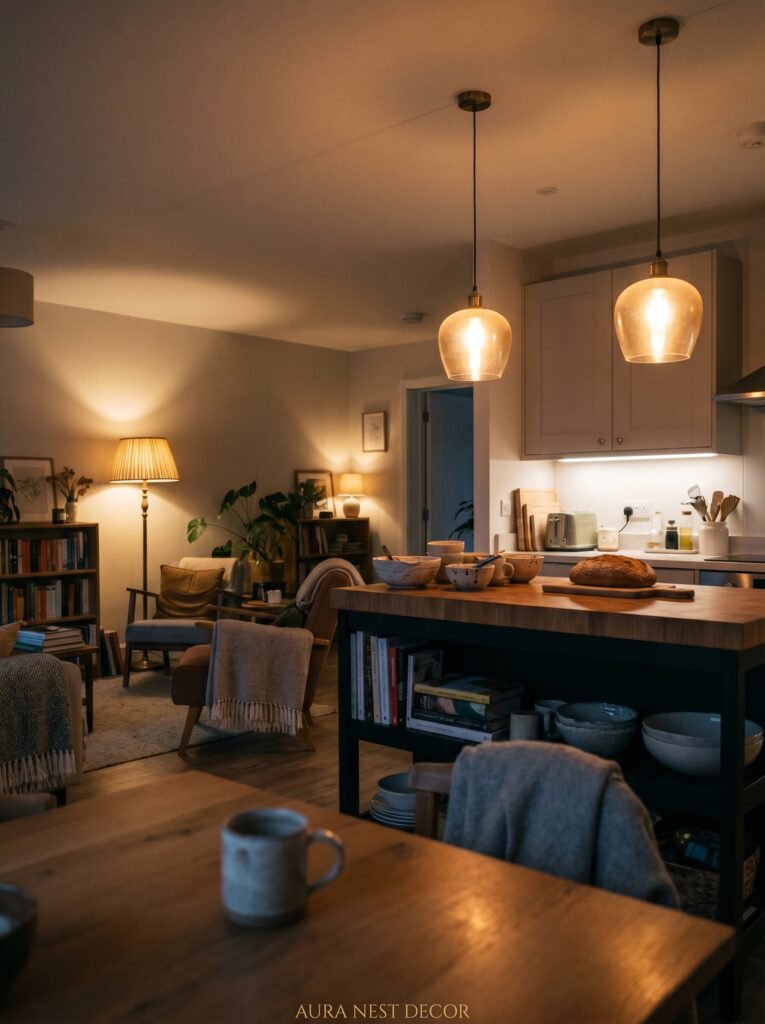
Lighting is the single most powerful tool in an open-plan space, and it is almost always underused.
Most people install one type of lighting — ceiling downlights, usually — and run them across the entire floor plan. The result is a flat, shadowless brightness that makes the kitchen feel like a surgery and the living room feel like an office. Nothing about it says home.
What you actually need is lighting that defines each zone independently while keeping the warmth consistent. Over the kitchen: task lighting that’s bright enough to cook by, usually recessed downlights plus pendants above the island. Over the living area: lamps. Plural. Side table lamps, floor lamps, the amber glow of an Edison bulb at 7pm — this is the light that makes people sink into your sofa and not want to leave.
The living room should never be lit by overhead light alone. That’s the rule. One lamp in the corner changes the entire feeling of the space. Two lamps and a dimmer switch on the kitchen pendants? Now you have a room that can feel bright and functional at noon and warm and intimate at eight in the evening.
Smart bulbs with adjustable color temperature are worth every penny in an open-plan space. Being able to shift the kitchen from cool white (for cooking) to warm amber (for evenings) without changing a single fitting is the kind of detail that makes people say your home feels special without knowing why.
“Flat overhead light is the enemy of every beautiful open-plan room.”
5. The Smell Problem Nobody Talks About — And How to Actually Solve It
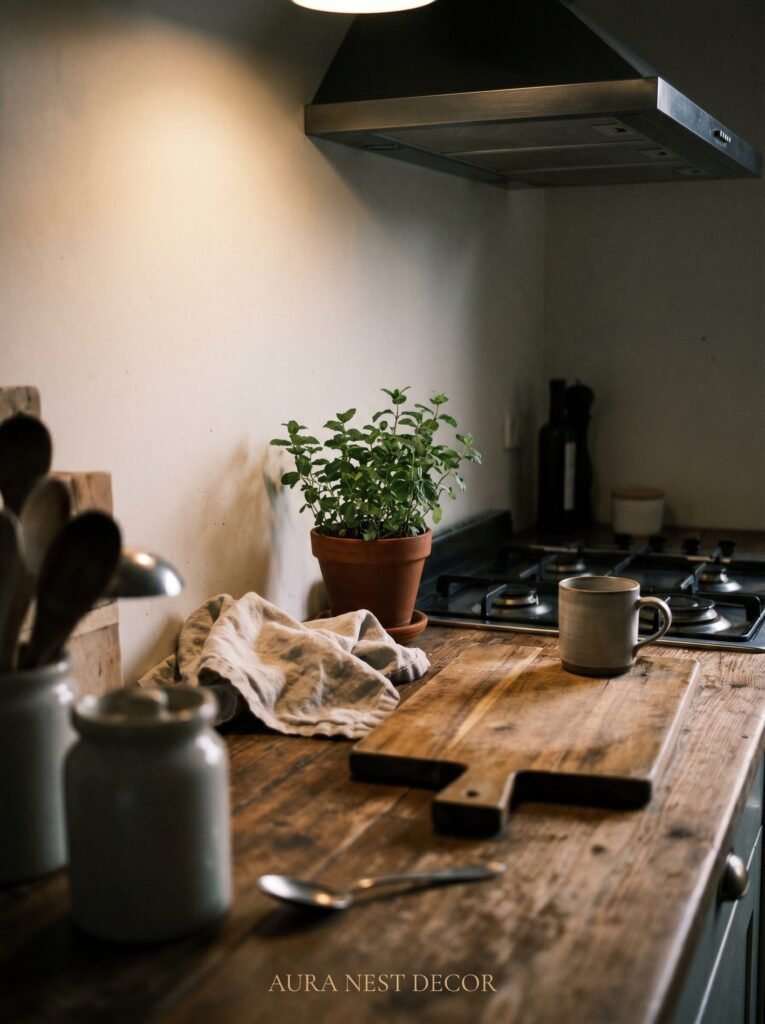
Open-plan living is romantic until someone fries fish on a Tuesday night and the entire living room absorbs it.
This is real, and it matters more than almost any design decision you make. The kitchen and the living room now share air. Everything that happens in the kitchen — bacon on Saturday morning, garlic at dinner, the particular toasted smell of a sourdough loaf — is immediately present in your sitting space.
For most meals this is pure joy. For some, it’s a problem. The solution isn’t to avoid cooking or to keep the windows permanently open. It’s extraction. A genuinely powerful extractor fan or range hood, vented externally (not just recirculating), does more for the quality of your open-plan living than any cushion or artwork.
If extraction isn’t an option or isn’t enough, fresh air management becomes a habit. A window cracked while cooking, a kitchen fan running for ten minutes after a strong-smelling meal. Candles in the living space — real ones, burning, not just decorative — do more than you’d think.
Beyond cooking smells, scent layering in the living zone actively pulls the room’s identity toward comfort. A diffuser with eucalyptus and cedar. A beeswax candle on the coffee table. These things don’t mask kitchen smells — they create a second sensory anchor that tells you clearly: you are in the living room now.
6. The Furniture Arrangement Mistake That Makes Open-Plan Rooms Feel Awkward and Cold
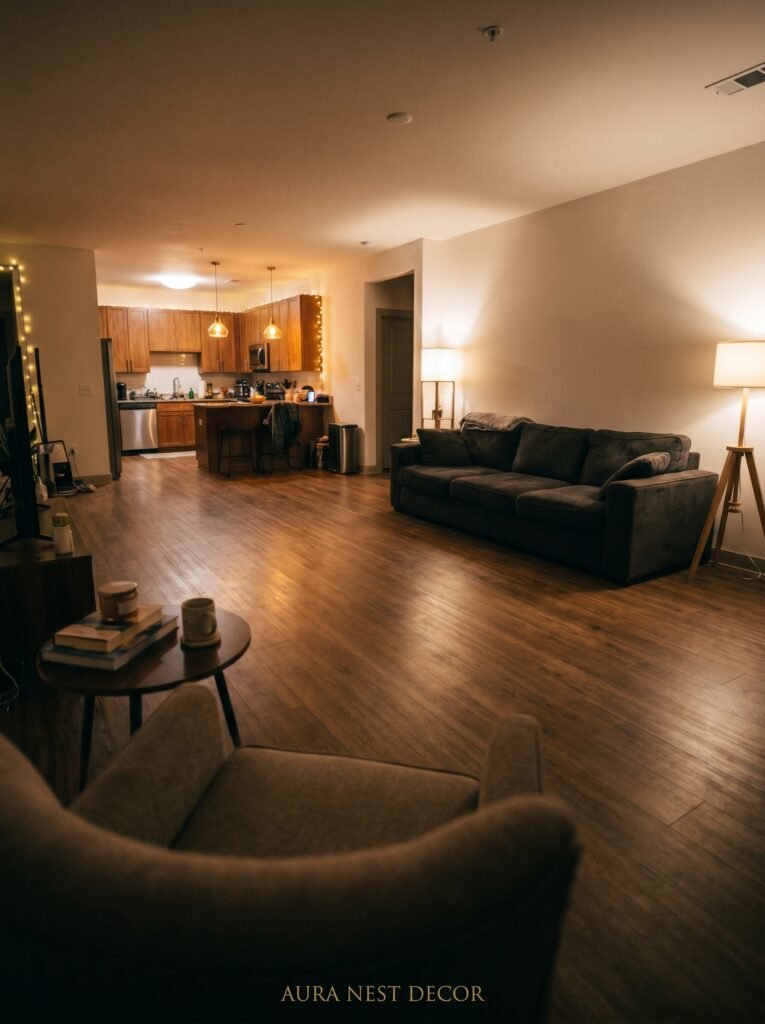
Here’s a scene. The living room furniture is pushed against all four walls — sofa along one wall, TV on the opposite, armchair in the corner — leaving a vast empty expanse of floor in the middle. The kitchen sits beyond. The whole thing looks like a waiting room in a GP surgery.
Sound familiar?
Floating your furniture — pulling it away from the walls and grouping it inward — is the single most impactful change you can make to an open-plan living space. When your sofa faces inward, toward the coffee table and the rest of the seating, the living area becomes its own contained world. It feels cozy rather than lost. It creates the zone boundary we talked about earlier.
The distance from sofa to TV or focal wall should be between 8 and 12 feet for comfortable viewing. Don’t push things further apart just because you have the floor space. Intimacy and intention come from grouping, not from spreading everything out.
Equally important: the sofa should have its back to the kitchen — or at least angled away from it — so that sitting on it feels like being in the living room, not facing the washing up. This matters psychologically. The room should have different feelings in different places. The island is energetic and social. The sofa is quiet and restorative. Those two energies need to face different directions.
7. The One Material That Ties Everything Together When Nothing Else Is Working
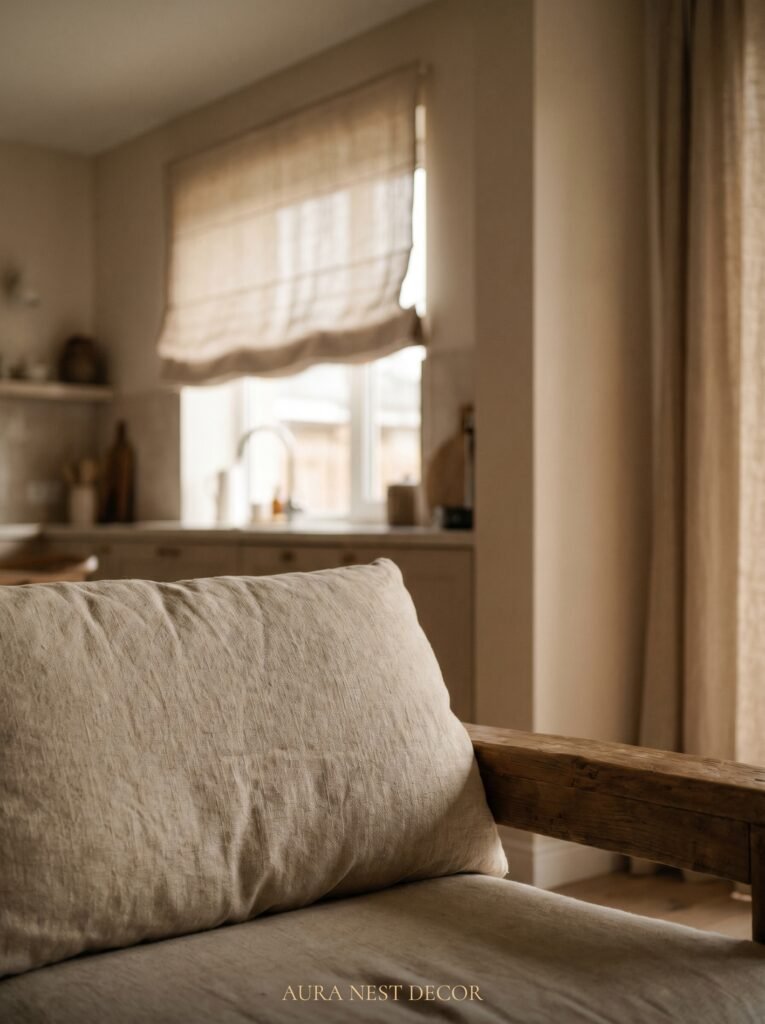
When an open-plan room feels uncoordinated — when the kitchen and the living space look like strangers sharing a floor — the fastest fix is almost always a repeated material.
Not a repeated color. A repeated material. Texture you can see and nearly touch.
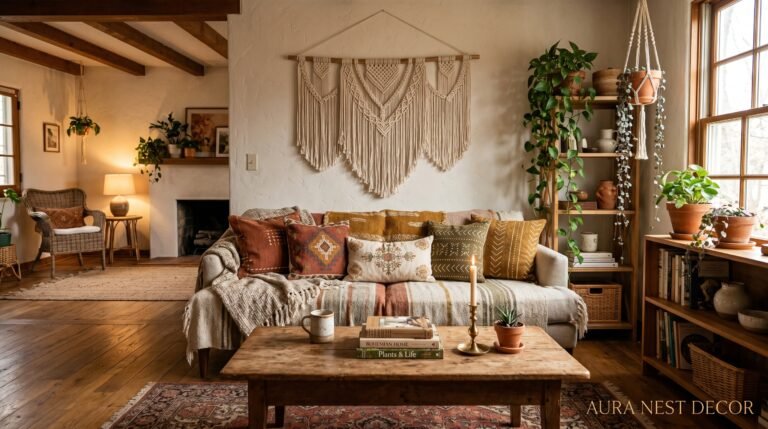
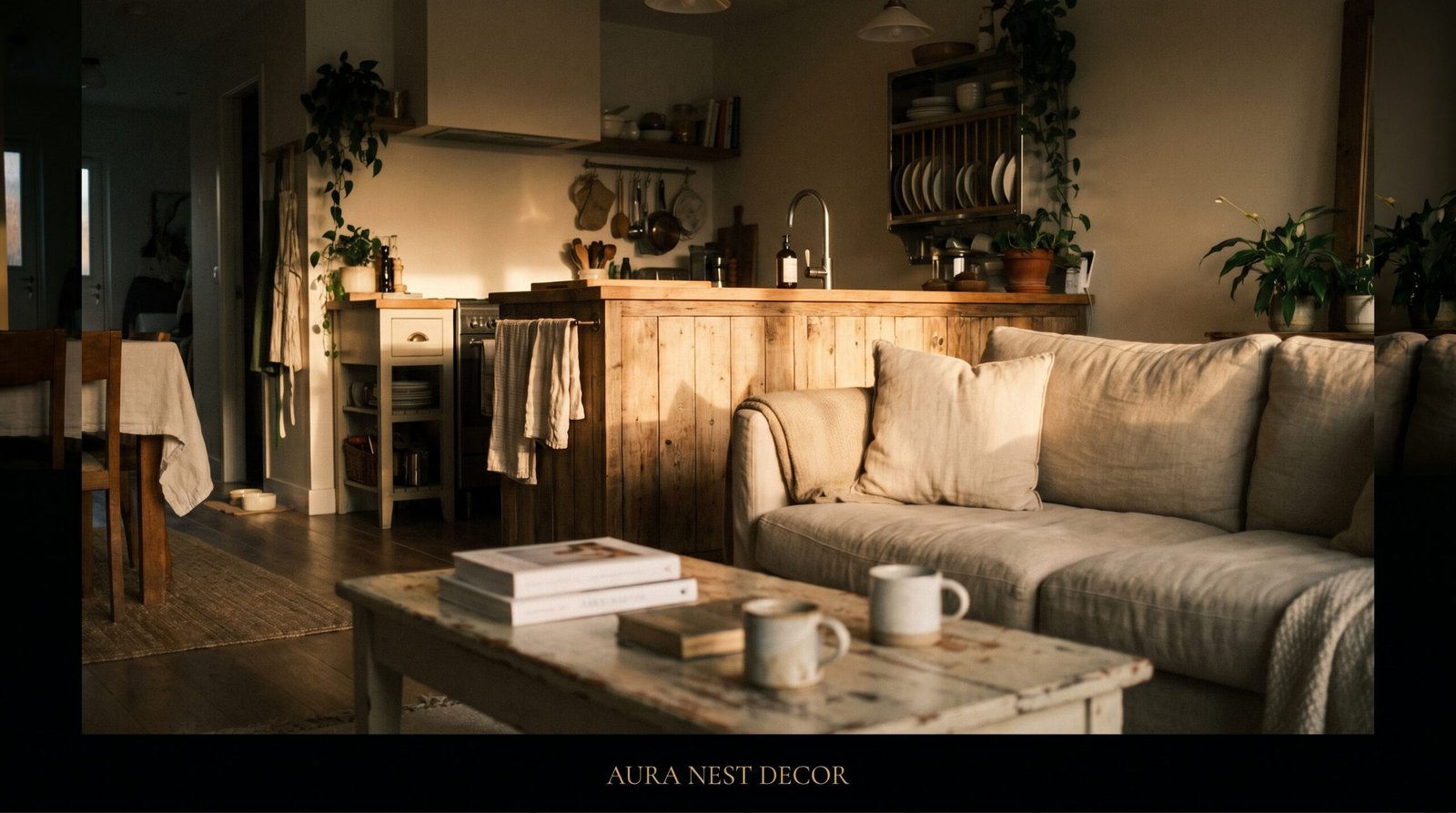
Timber is the classic example. Raw oak on the kitchen shelves, raw oak on the coffee table legs, a timber-framed mirror on the living room wall. The eye moves from kitchen to living room and recognizes something. This is the same place. A sense of calm sets in.
Other materials that do this beautifully: linen (kitchen blind, sofa cushions, lampshade), rattan (kitchen bar stools, living room pendant light, fruit bowl), stone or marble (kitchen countertop, coffee table top, candle holders on the bookshelf), and aged brass (kitchen hardware, side table feet, picture frames).
You don’t need a lot of it. Three appearances of the same material across the whole space is enough to create cohesion. Think of it as a thread you’re pulling through the room. Subtle, but once you notice it, you can’t unsee it.
“Three appearances of the same material is the invisible thread that makes a room feel designed.”
8. The Kitchen Side That’s Actually a Backdrop — Style It Like One
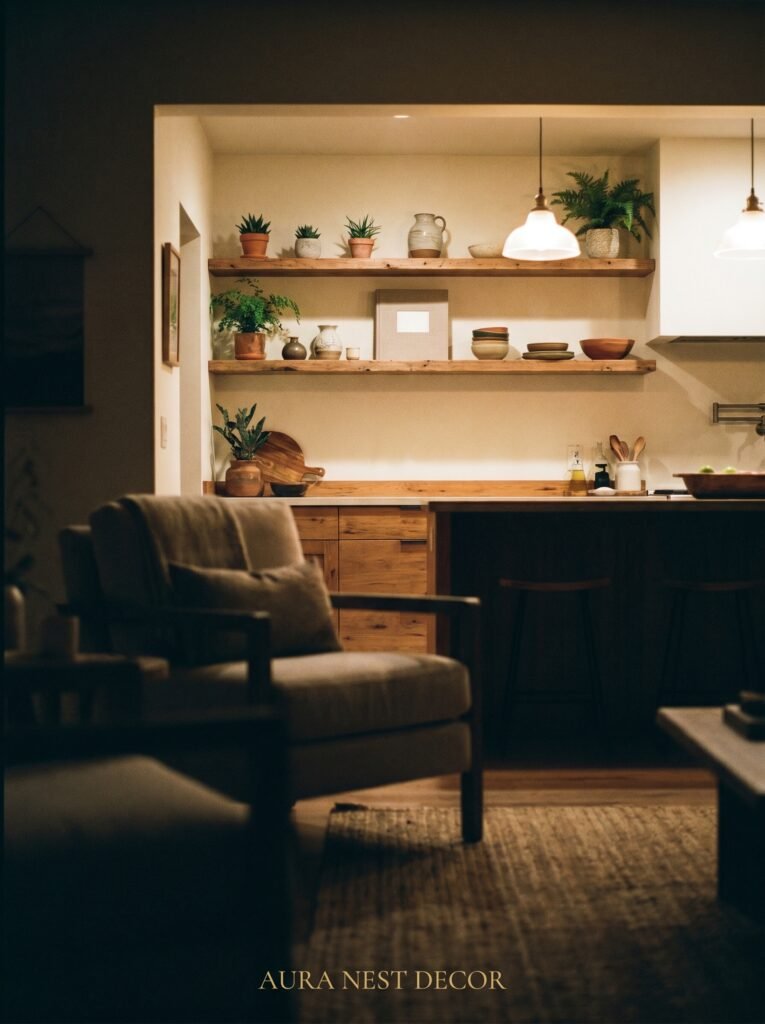
From your sofa, you’re looking at the kitchen. That’s just how open-plan works. And if you haven’t thought about the kitchen from that angle — literally walked to your sofa and turned around to look at what you see — you might be missing something important.
The kitchen, viewed from the living room, is a backdrop. It needs to hold up as a visual.
Open shelving is one option. Styled honestly — some things you actually use, arranged thoughtfully with space to breathe — it gives the kitchen warmth and character from a distance. Glass-fronted cabinets do the same without requiring quite such ruthless tidiness.
If you have closed cabinets, the cabinet color becomes enormously important because it’s a large visual mass your living room looks at every day. Flat white is safe but often feels cold from a distance. Deep green, warm cream, navy, dusty terracotta — these colors are present in the room even when you’re sitting in the living area with a cup of tea.
And don’t forget what’s visible on the counters. From the sofa, a wooden knife block, a pottery jug of wooden spoons, a bunch of fresh herbs in a jam jar — these things read as warmth and life. A cluttered counter reads as noise. Decide what the kitchen says from a distance and arrange it accordingly.
9. The Rug That Does More Than You Think It Does
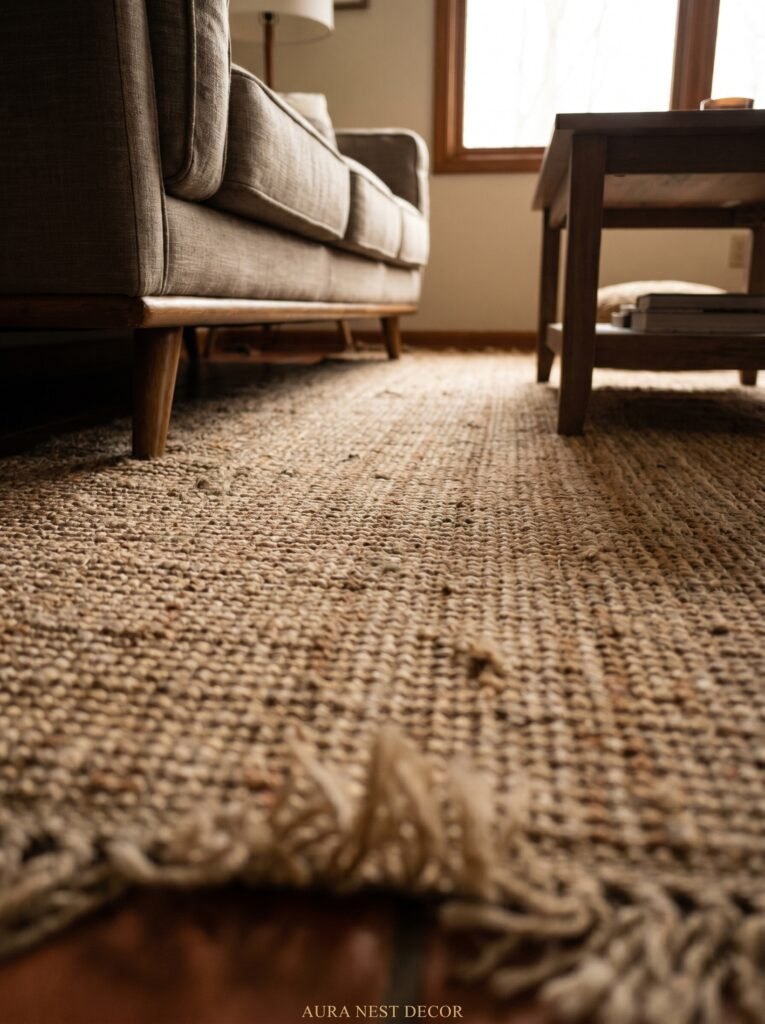
I’ve mentioned rugs already but they deserve their own moment because they are that important.
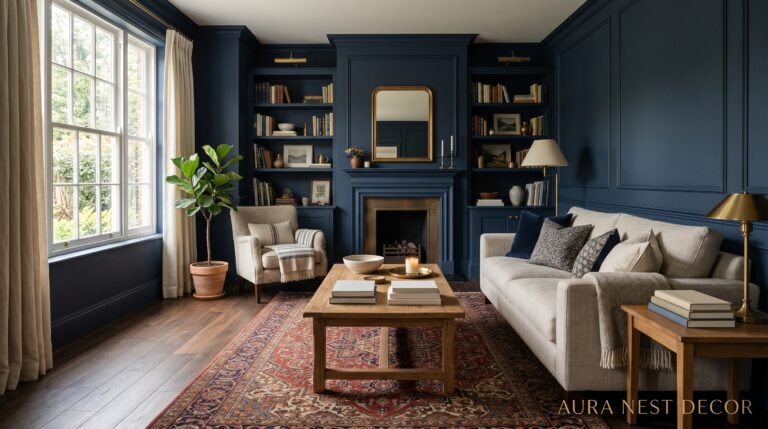
In an open-plan space, a large rug under your living room seating is not optional. It is the thing that creates the room. Without it, the sofa and chairs float on open flooring with no anchor, looking uncertain about where they belong. With it, the seating area becomes its own defined territory — a room within a room.
Large. That’s the rule. Too small is always worse than too large. The rug should sit under all the front legs of your seating at minimum — ideally under all four legs of every piece of furniture in the grouping.
For an open-plan space, natural fibers work best: jute, sisal, wool, cotton. They’re grounded and warm, and they complement the functional hardness of a kitchen without competing with it. A thick-pile plush rug in an open-plan space can sometimes feel out of place, like it belongs in a closed bedroom rather than a room that flows into a kitchen.
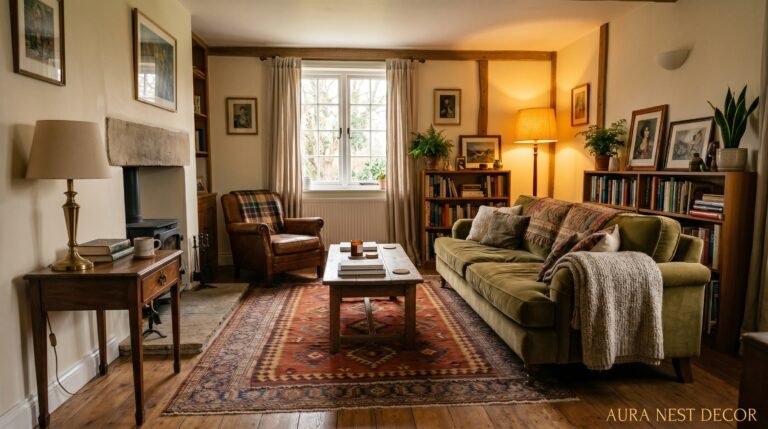
Color should come from your shared palette. A rug is large, it’s a major visual element, and it needs to speak to both sides of the room. Warm neutrals with a bit of texture — flecked wool in oatmeal and cream, a faded Turkish-style pattern in rust and sand — earn their place in an open-plan space without demanding too much attention.
10. Making It Feel Like Home, Not a Showroom: The Personal Touches That Open-Plan Spaces Need
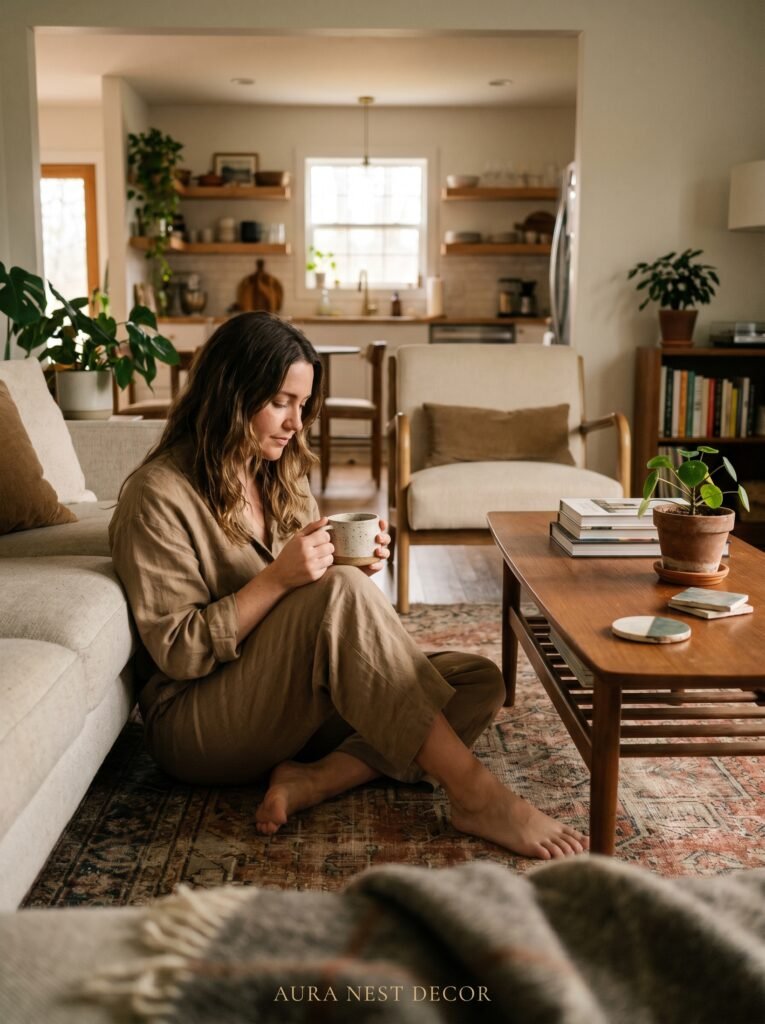
Open-plan spaces can feel spectacular and also strangely impersonal. All that light, all that flow — it can start to feel like a hotel lobby if you’re not careful.
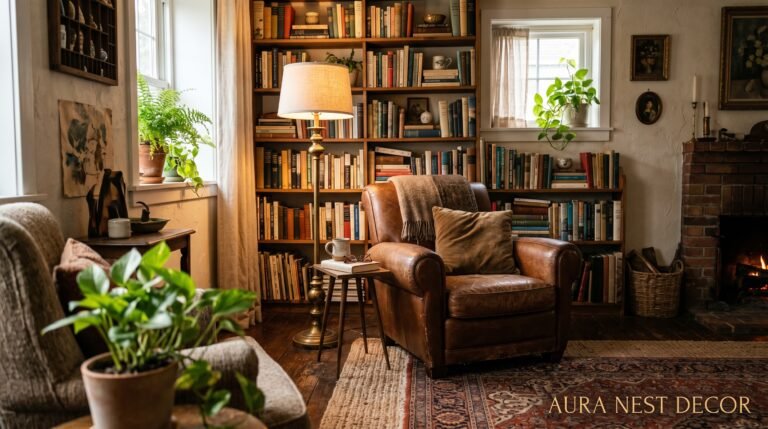
The antidote is clutter. Intentional clutter, but clutter. The stack of cookbooks with a jam jar of pens beside them. The framed photos on the floating shelf next to the sourdough starter jar. The oversized art print propped against the wall rather than hung. The basket of throws beside the sofa that gets messy because people actually use the throws.
Personal items should appear in both zones. The living room isn’t the only place for personality. A print you love on the kitchen wall. A small collection of objects on the kitchen windowsill. The jug you bought at a market in Cornwall or a ceramics fair in Brooklyn, holding spatulas on the counter.
Life belongs in both parts of the room. When the kitchen looks curated and warm and human, it becomes a backdrop you genuinely love sitting and looking at. That’s the goal.
11. The Sound Thing — Because Open-Plan Means Your Podcast Echoes
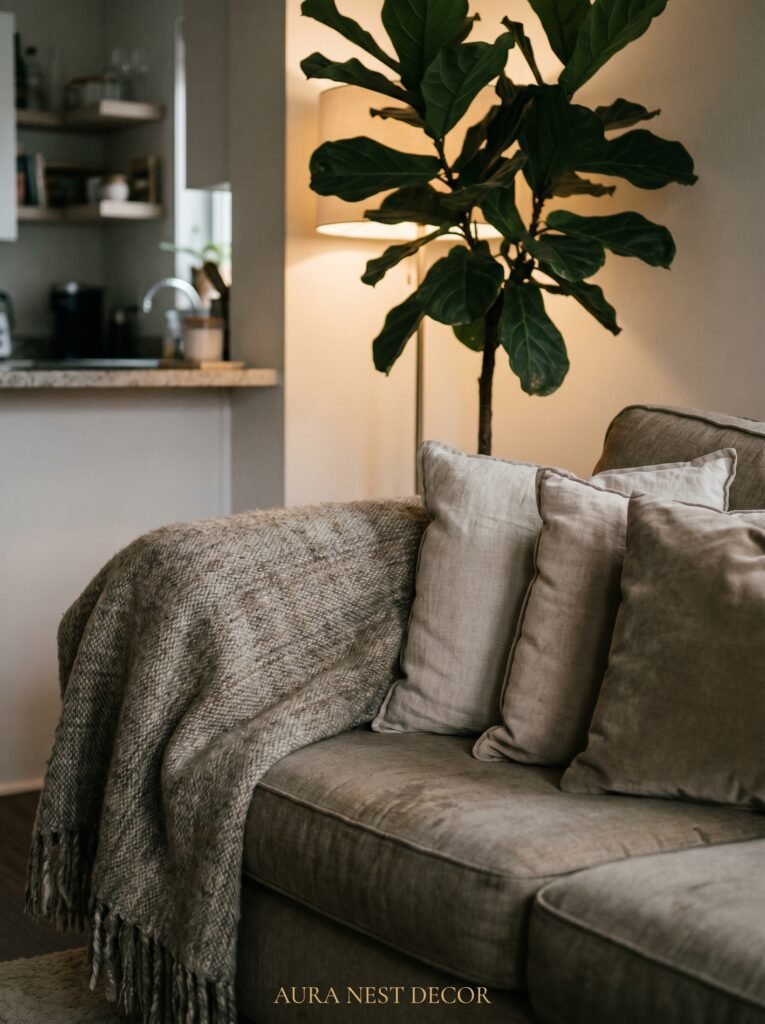
Hard floors, high ceilings, and two merged rooms mean your open-plan space is probably louder than you’d like. Sound bounces. Conversations carry. A podcast from the kitchen counter follows you to the sofa.
Soft furnishings absorb sound. This is the functional argument for all the things that are also beautiful: the large rug, the velvet sofa, the stack of cushions, the linen curtains that pool slightly on the floor, the bookshelf crammed with actual books. These things aren’t just decorative. They’re acoustic.
If your open-plan space still feels echo-y even with adequate soft furnishings, check the ceiling. A high, smooth, hard ceiling is a sound reflector. Ceiling-hung fabric panels exist — and look intentional and cool in the right space. Pendant lights with fabric shades help. Even a trailing plant hanging in the window breaks up the hard surfaces that sound bounces between.
The feeling of comfort and warmth is partly acoustic, not just visual. A room that sounds soft and contained feels more intimate than one that carries every sound across it at full volume. Get the surfaces right and the room will feel more like home almost immediately.
12. The Six Things That Are Always Worth Buying for an Open-Plan Space
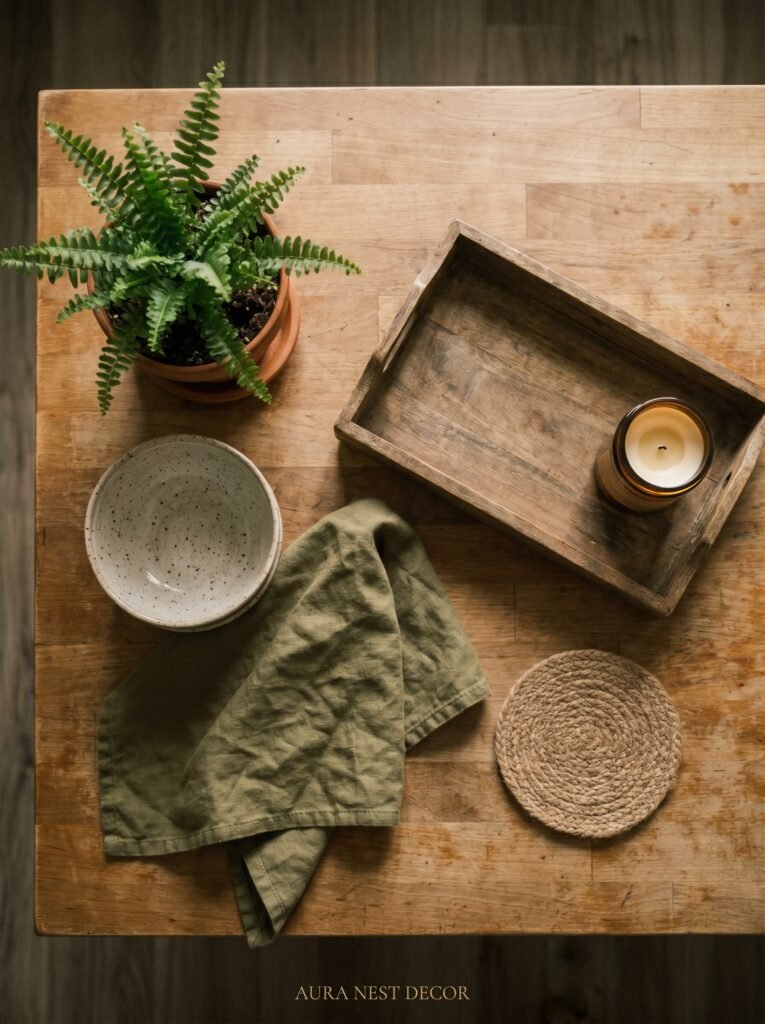
There are purchases you make that change nothing. And there are purchases that change everything. For an open-plan kitchen and living room, the latter list is short but worth knowing.
A quality extractor fan with external venting is worth more than almost anything else on this list. A large area rug sized correctly for your seating group. Two or three lamps for the living area, with warm-toned bulbs. A kitchen island or peninsula if your floor plan allows it. Full-height curtains in a natural linen or cotton — hung as high as possible to draw the eye up and make the ceilings feel taller. And one large piece of art: either in the living zone as a focal anchor, or on the kitchen wall as a backdrop you love looking at from the sofa.
These six things, done well, will make your open-plan space feel like the room you always imagined it could be. Not magazine-perfect. Something better than that. Warm, and real, and completely, unmistakably yours.
—
❓ FAQ
Q: How do you define zones in an open-plan kitchen and living room without walls? A: The most effective zone definers are a large area rug under the living room seating, a kitchen island or peninsula facing the living space, and distinct pendant lighting over each area. You don’t need all three — even one done well creates a clear, intentional boundary that makes the room feel designed rather than just open.
Q: What’s the best flooring for an open-plan kitchen and living space? A: Consistent flooring throughout is almost always the better choice — it makes the space feel larger, more cohesive, and easier to furnish. Wide-plank engineered wood or large-format stone-effect porcelain tiles are popular choices that work well in both kitchen and living areas. If you have different flooring in each zone already, a large rug in the living area bridges the visual gap effectively.
Q: How do I stop cooking smells from taking over the living area in an open-plan space? A: A powerful extractor hood vented externally is the most effective solution — recirculating hoods help but don’t eliminate smells the way external venting does. Beyond that, a habit of opening windows while cooking strong-smelling foods makes a significant difference, and keeping a scented candle burning in the living zone creates a pleasant counter-scent that anchors that part of the room.
—
💭 Final Thoughts
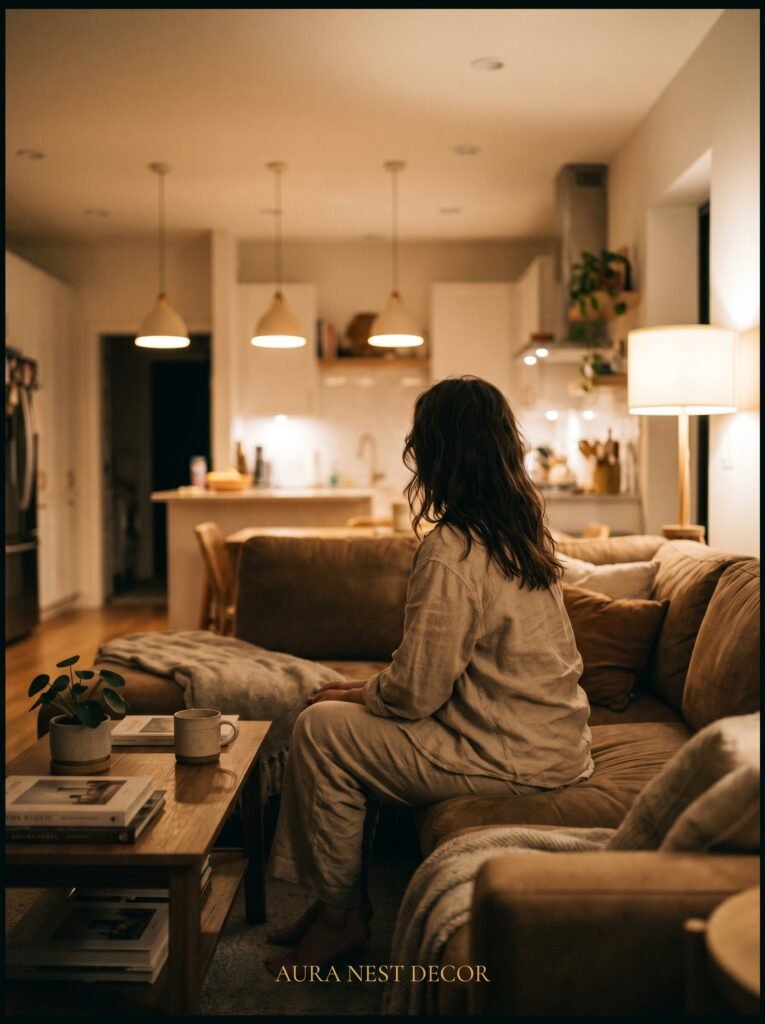
The open-plan kitchen and living room is, at its best, one of the most generous spaces a home can have. It’s where the whole house gathers. Where the person cooking isn’t isolated from the conversation. Where the light moves through uninterrupted from the kitchen window to the living room wall at four in the afternoon in October, and you stop and notice it.
All it takes is a few honest decisions — a rug, a palette, a lamp, a material repeated three times — and the whole room starts to feel like it belongs to itself. Not two rooms. One.
What’s the thing in your open-plan space that’s been bothering you most — and have you found something that actually fixed it?