Why a Leather Sectional Might Be the Best Design Decision You’ll Make This Year
You walked past it in the showroom. Or maybe you spotted it on Pinterest at 11pm and suddenly your entire living room felt wrong. A leather sectional has a way of doing that — it doesn’t ask permission, it just announces itself, and you realize you want that energy in your home.
—
1. The Reason Leather Sectionals Keep Showing Up in Every Aspirational Living Room
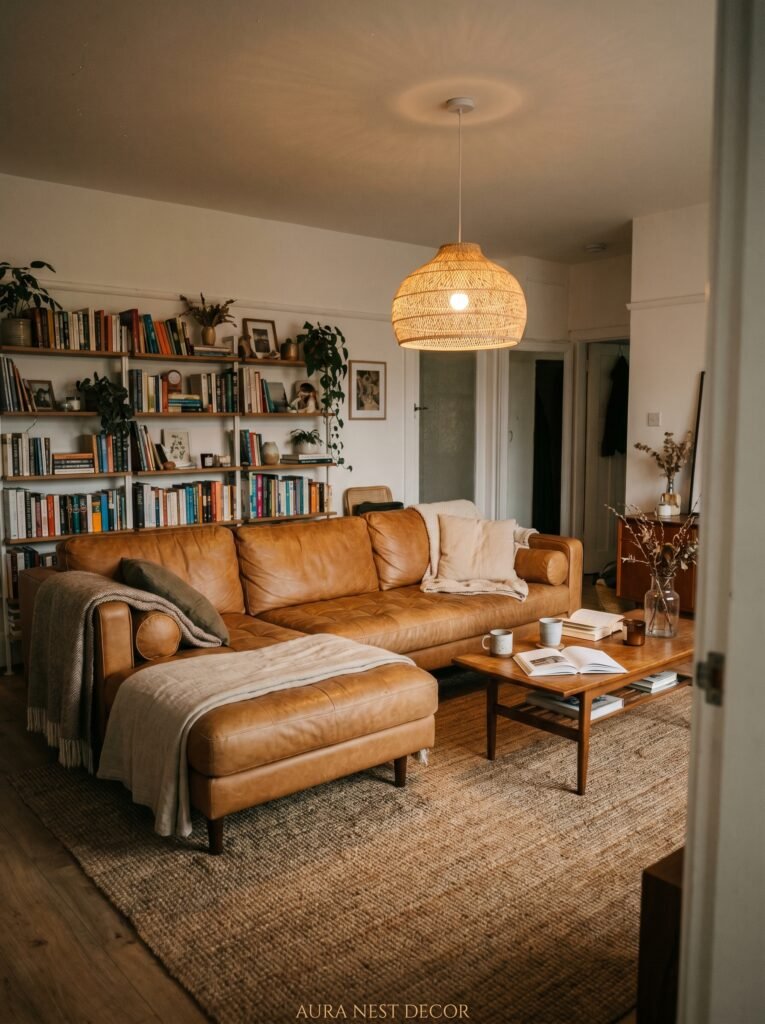
There’s a reason this piece keeps dominating design boards, real estate staging photos, and those “before and after” posts that get 50,000 saves. A leather sectional is not just furniture. It’s a statement about how you want to live — stretched out, comfortable, a little bit unbothered.
The scale of it is part of the appeal. When you walk into a room anchored by a generous leather sectional, you feel it before you fully process it. The room has weight. It has intention. It doesn’t look like someone grabbed the cheapest option from a flat-pack catalog and hoped for the best.
But it’s more than aesthetics. Leather ages in a way that almost nothing else in your home does. That cognac-colored sofa you buy today will look richer, softer, and more interesting in five years than it did the day it arrived. The grain deepens. Small scuffs become part of its character rather than reasons to panic. Fabric sofas fade, pill, and eventually look tired. A quality leather sectional moves in the opposite direction entirely — it gets better.
For families in the UK and US who are putting real money into their homes, that trajectory matters enormously.
“A leather sectional doesn’t just fill a room. It gives a room a reason to exist.”
2. The Color That Keeps Showing Up in Every Beautiful Living Room Right Now
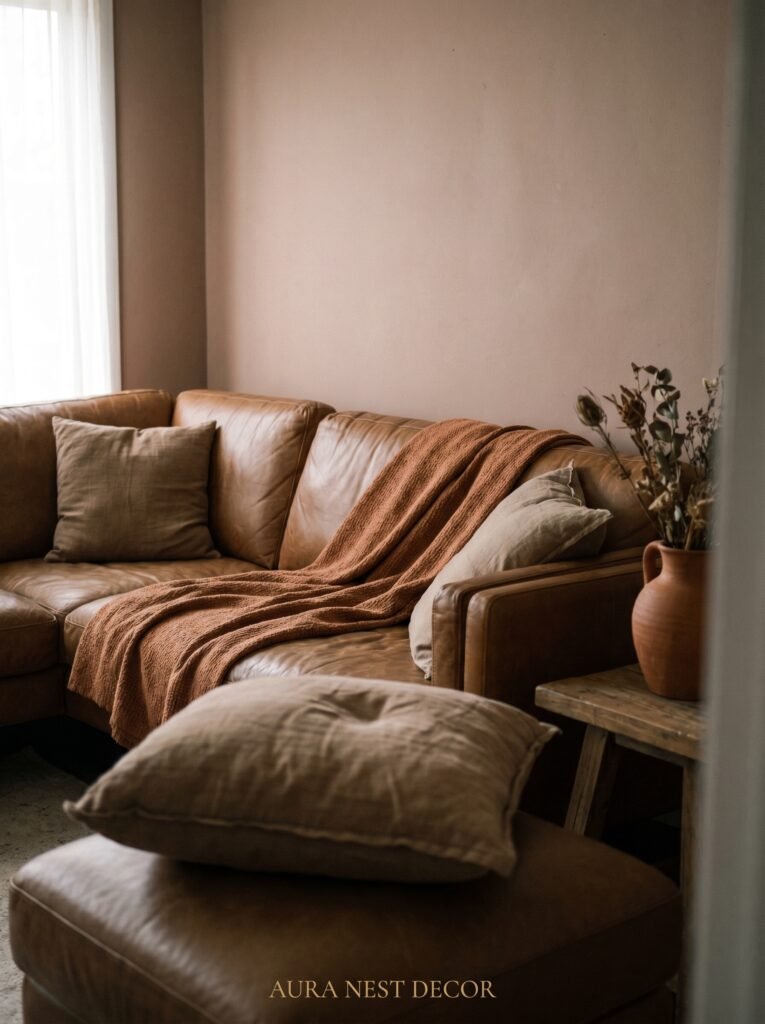
Cognac. Warm, amber-toned, somewhere between burnt honey and aged whiskey — cognac leather is having an unmistakable moment, and it’s not hard to see why.
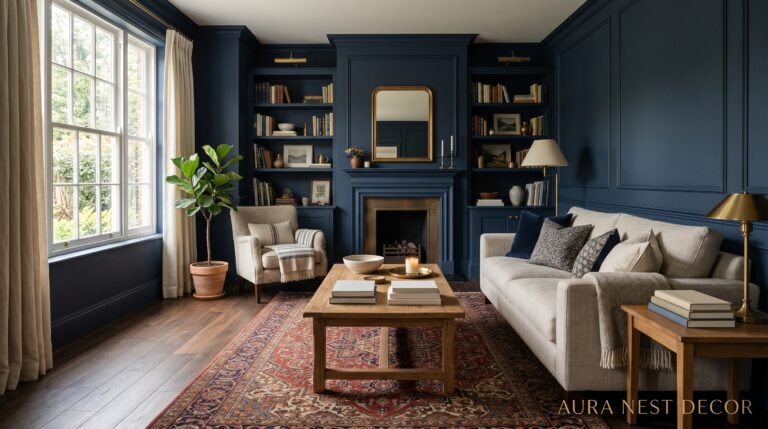
It works with almost everything. Against white walls, it glows. Against dark, moody paint colors like deep forest green or near-black navy, it practically vibrates with warmth. Against exposed brick, which so many UK homes have in spades, it looks like it was always meant to be there.
But cognac isn’t the only answer. Black leather sectionals have a clean, architectural quality that works brilliantly in modern apartments and open-plan spaces — the kind of London or Chicago loft where the furniture needs to hold its own against industrial ceilings and oversized windows. A black sectional doesn’t disappear into a room. It makes every other choice around it look deliberate.
Then there’s taupe and greige — softer, more neutral, easier to build around if you redecorate often. These tones read as relaxed luxury. They’re the leather equivalent of a really good cashmere sweater. Not flashy, but undeniably good.
Whichever direction you go, commit fully. The biggest styling mistake people make with a leather sectional is surrounding it with timid, apologetic accessories that seem afraid of it. The sofa wants conversation, not cowering.
3. The Configuration Question Nobody Talks About Until It’s Too Late
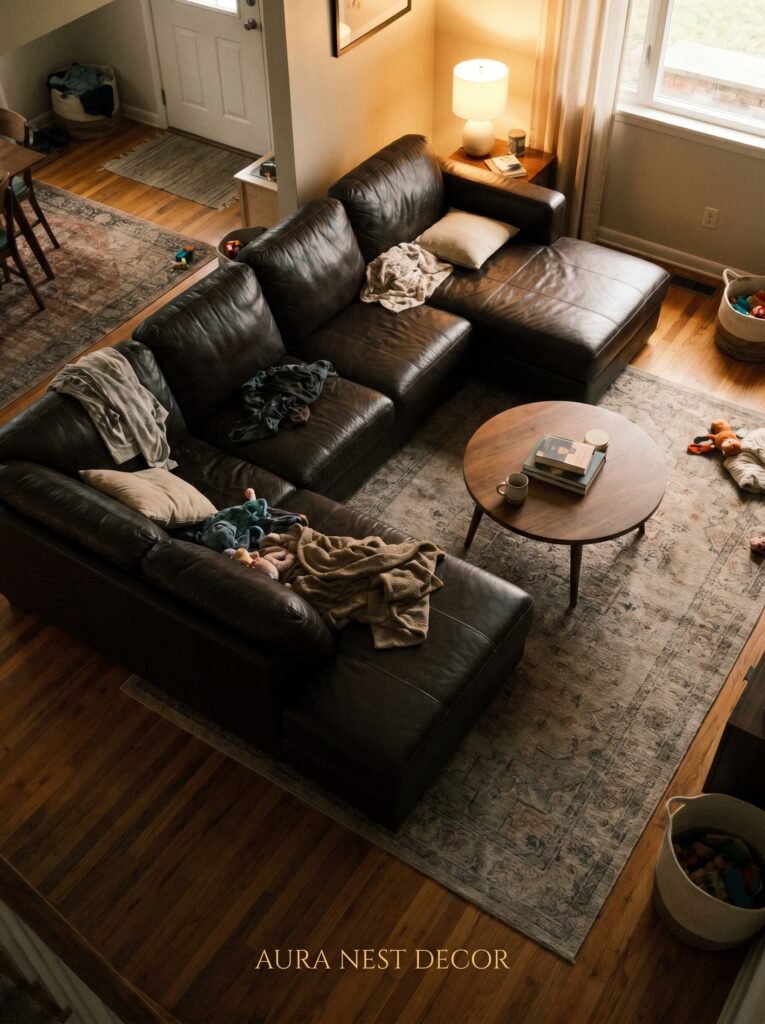
Here is something the showroom will not always tell you: the direction your sectional faces matters more than its color, its leather grade, or its price tag.
The chaise. Where does the chaise go? Left-facing or right-facing isn’t just a preference — it’s a spatial decision that will either make your room flow naturally or create an awkward bottleneck you’ll navigate around for years, quietly frustrated every single time.
Walk your room. Imagine the traffic patterns. Where do people enter? Where is the television? Where do you want people to naturally end up? The chaise should face toward the action, not away from it. In most rectangular living rooms, the chaise works best on the side closer to the wall, keeping the center of the room open and the sightlines clear.
In open-plan homes — enormously popular now in both American new builds and UK renovations — the sectional often does double duty as a room divider. The back of the sofa defines where the living space ends and the dining or kitchen space begins. In this case, the configuration decision becomes even more critical. A poorly placed sectional in an open plan space doesn’t just look off — it can interrupt the entire logic of how the rooms connect.
Measure twice. Then measure again. The standard advice is to leave at least 18 inches between your sectional and any adjacent furniture or wall. In practice, 24 inches feels much more livable.
4. The One Leather Grade Detail That Changes Everything About Your Purchase
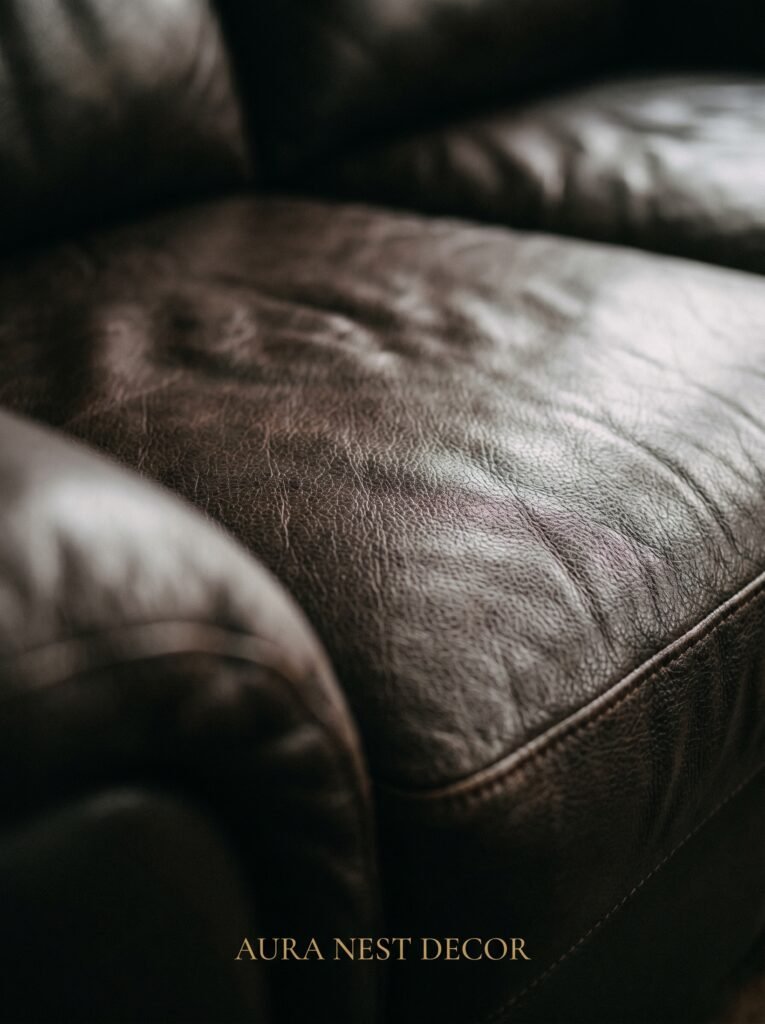
Not all leather is the same. This sounds obvious, and yet people are surprised constantly by the difference between what they tested in the showroom and what arrived at their door six weeks later.
Full-grain leather is the top tier. It uses the outermost layer of the hide, keeping all the natural markings and texture. It breathes, it ages beautifully, and it costs accordingly. This is the leather that your grandchildren will still be fighting over.
Top-grain leather is sanded down to remove natural imperfections, then given a surface treatment. It’s more uniform looking, slightly less durable over decades, but still genuinely good quality and far more accessible in price. Most well-regarded leather sectionals in the mid-to-high range are top-grain.
Bonded leather is where things get tricky. It’s made from scraps and fibers bonded together with polyurethane, then embossed to look like the real thing. It can look convincing on the showroom floor. Within two or three years, it starts to peel and flake, and there is no coming back from that. If someone is offering you a very attractive price on a leather sectional, check the label. Bonded leather is a false economy every single time.
“Buy the best leather you can genuinely afford. You will never once regret it.”
5. The Colors That Actually Work Around a Dark Leather Sectional
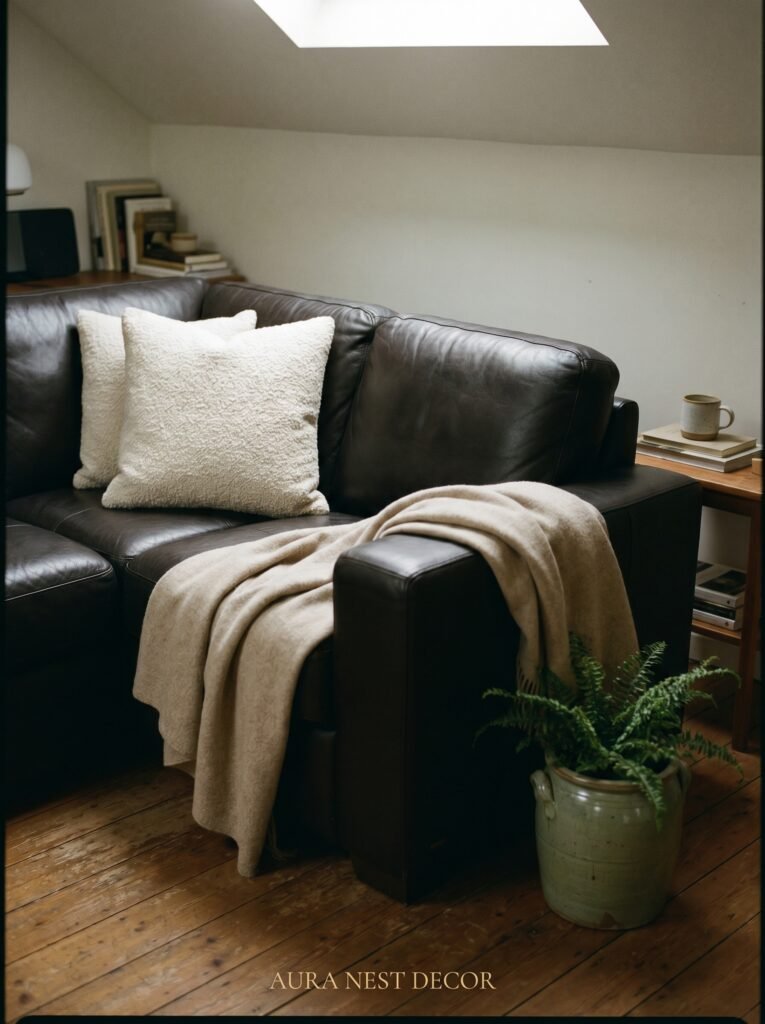
Here is where people get stuck. They’ve committed to a dark chocolate or black leather sectional and then they stare at their walls wondering what on earth to do next.
The answer is almost always: go warmer than you think you need to. Dark leather against cool gray walls tends to look heavy and slightly gloomy. The same sectional against warm white, off-white, or even a soft terracotta or rust accent wall looks anchored and intentional.
Throw pillows are your most powerful tool here and also your most common mistake. Too many pillows in too many competing patterns and you end up with a chaos that fights the natural authority of the sofa. Pick a palette — two or three colors maximum — and lean into textures instead of prints. Chunky knit pillows, velvet in deep jewel tones, woven cotton in warm neutrals. Let the leather be the main character.
Rugs matter enormously. A large, warm-toned rug — think Persian-style, or a modern abstract with ochre and rust — grounds the sectional and stops it from feeling like it’s floating in the space. The rug should be generous. Under-rugging is one of the most common mistakes in living room styling, and it’s especially visible with a large sofa.
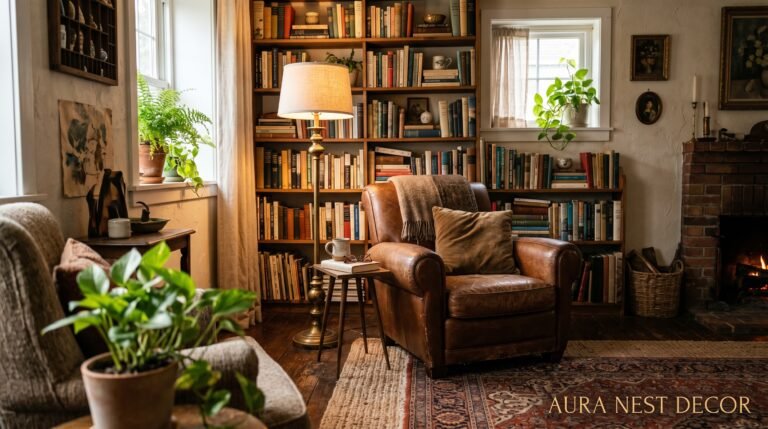
For UK homes with original fireplaces, the combination of dark leather and a working fireplace is essentially perfection. That amber glow hits the leather differently than any other light source. Plan your room around that moment.
6. The Small Living Room Problem That Isn’t Actually a Problem
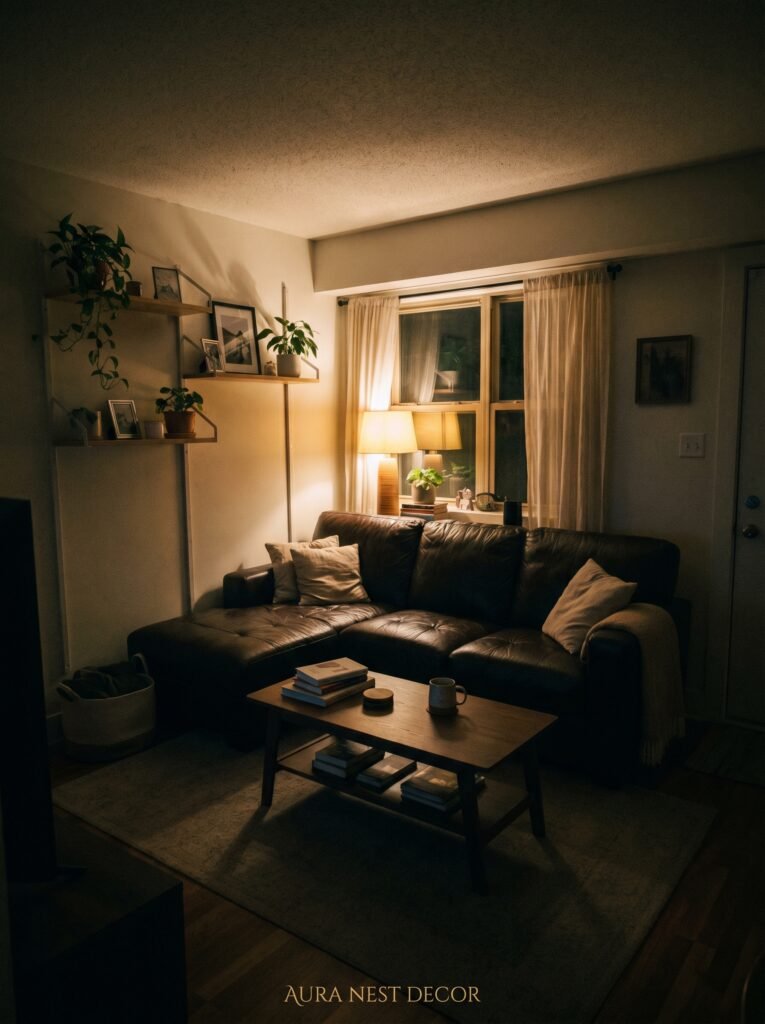
There is a persistent belief that sectionals are only for large rooms. That belief is wrong and has prevented countless people from having the sofa they actually want.
A compact sectional — sometimes called a apartment sectional or small-scale L-shape — can work beautifully in a room that feels too small for it on paper. The key is being ruthless about everything else. A small room with a leather sectional needs clean lines everywhere else. No overcrowded side tables, no excessive wall art, no floor lamps competing for space. Let the sectional be the hero and give it room to breathe by clearing the visual clutter around it.
In many UK terrace houses and American city apartments, the living room is not large. But living in a smaller space does not mean settling for less considered furniture. A well-chosen leather sectional in a smaller room can actually make the space feel more intentional — like someone with real taste lives here — rather than a larger space filled with smaller, scattered pieces that don’t quite commit to anything.
The configuration matters more in a small room. A smaller L-shape almost always works better than a full U-shape, and the chaise should run along the longest wall to maximize the open floor space in front of the sofa.
7. The Styling Move That Interior Designers Use That You’re Probably Not Doing
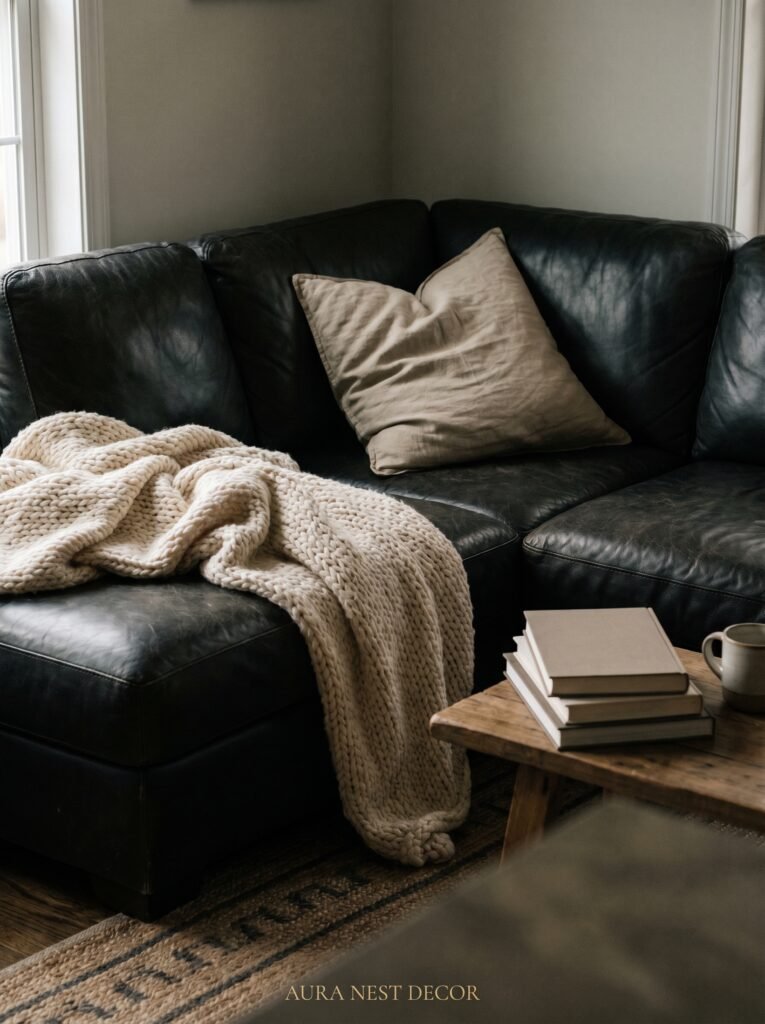
Layering behind the sofa.
Most people style around a sectional — throw, pillows, rug. Interior designers style behind it too. A large-format artwork, centered above the back of the sofa, does something important: it ties the sofa to the wall and makes the furniture feel like it belongs to the room rather than sitting in front of it.
The artwork doesn’t have to be expensive. A simple abstract print in warm tones, scaled correctly, does the job. In general, the artwork should be roughly two-thirds the width of the sofa’s longest run. Go smaller and it looks timid. Go wider and it competes.
Tall plants — a fiddle leaf fig, a large monstera, a snake plant in a woven basket — placed in the corner beside the chaise end of the sectional do something similar. They soften the angular geometry of the sofa and add a layer of living texture that no throw pillow can replicate.
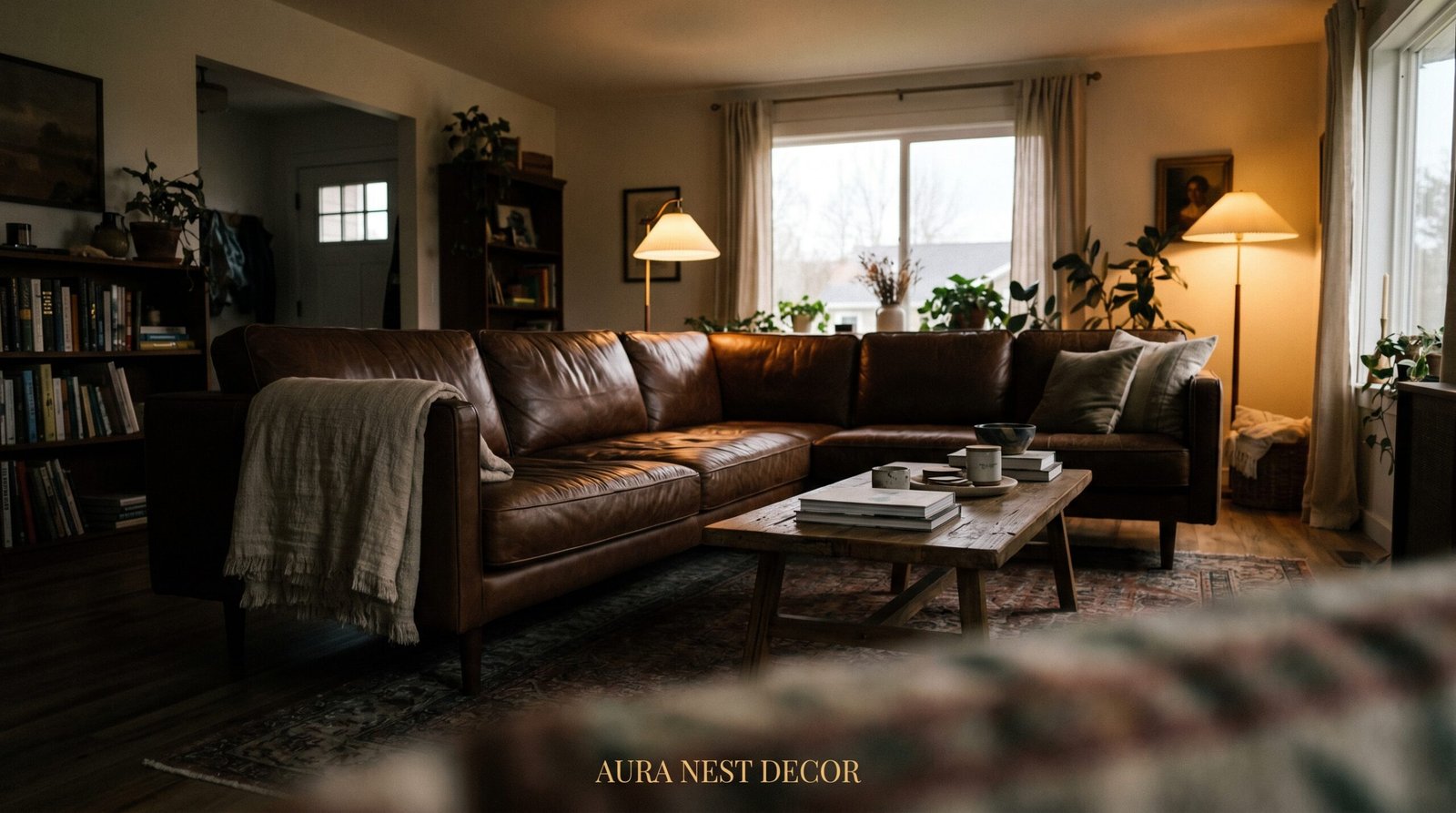
And lighting. This is the part almost everyone underestimates. Overhead lighting alone will make your leather sectional look flat and slightly sterile. Floor lamps placed beside or slightly behind the sofa throw light at an angle that catches the grain and depth of the leather. The difference between a leather sofa under a single overhead bulb and the same sofa lit by a warm floor lamp is the difference between a furniture showroom and a home.
“The right floor lamp beside a leather sectional is worth more to the room than almost anything else you could buy.”
8. What American and British Living Rooms Do Differently — and What Each Gets Right
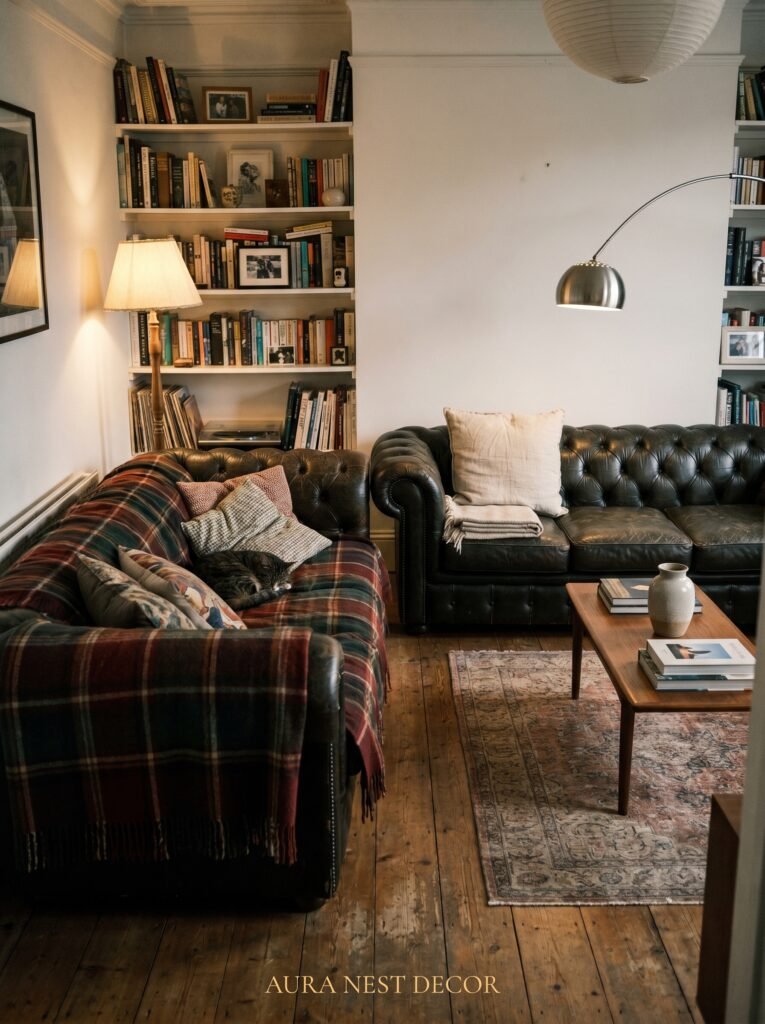
American living rooms tend to lean into scale. The sofa is large, the television is large, the room is arranged around comfort and entertainment. There is a confidence in American interiors about committing fully to what a room is for.
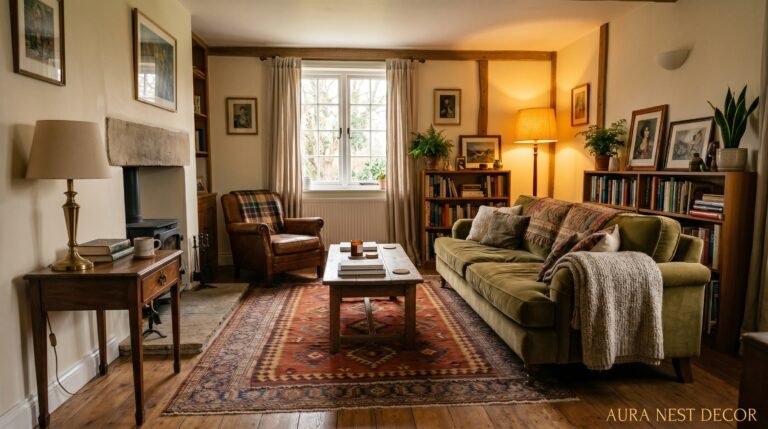
British living rooms tend to layer. Older furniture alongside newer pieces, accumulated art on the walls, a mix of patterns and textures that somehow coheres into something that feels deeply personal. British homes often have more architectural detail — cornicing, picture rails, period fireplaces — and the tendency is to work with those details rather than override them.
A leather sectional sits differently in both contexts, and it works in both. In an American living room, it anchors a media space. It looks at home beside a large television cabinet, a substantial coffee table, built-in shelving on either side. Everything proportional and intentional.
In a British living room — particularly in an older property — a leather sectional introduces a satisfying tension between the modern and the historic. Dark cognac leather against Victorian tiles and exposed brick is a genuinely beautiful combination. The key in British homes is to not over-modernize the rest of the room. Keep the original details, add the contemporary leather sofa, and let the contrast do its work.
9. The Coffee Table Pairing That Actually Works (and the One to Avoid)
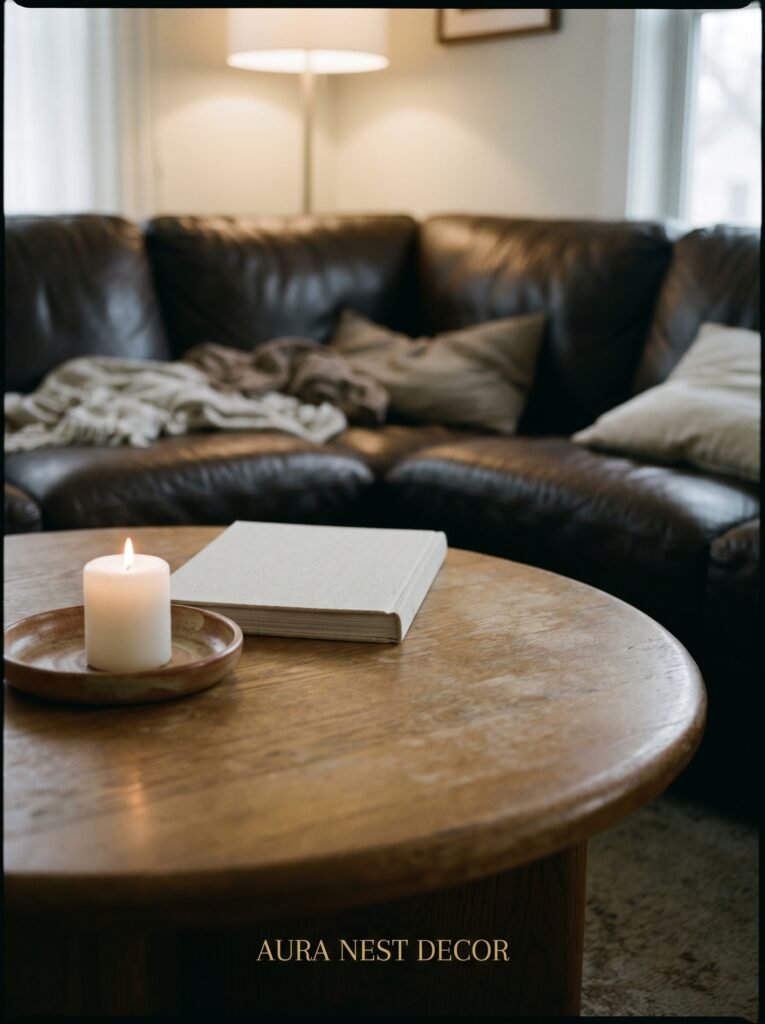
Your coffee table is in conversation with your sectional whether you plan it that way or not. Get this pairing right and the whole room makes sense. Get it wrong and something will feel slightly off every time you sit down, even if you can’t name why.
For a leather sectional, the best pairings are honest materials. Solid wood with visible grain, warm-toned. Rattan or cane for something lighter and more relaxed. A stone-topped table with a metal or wooden base for a more architectural feel. These materials complement leather without competing with it.
What tends not to work: all-glass tables that feel clinical against rich leather. Overly ornate designs that fight for the room’s attention. Tables that are too small — a large sectional with a tiny coffee table looks like a stylistic oversight.
For L-shaped sectionals, an oversized square coffee table or a cluster of two smaller rectangular tables placed side by side often works better than a single rectangular piece, because it fills the visual space created by the angle of the sofa more naturally.
And leave some surface of the coffee table visible. A coffee table that is entirely covered in books and objects just becomes a storage surface. Leave enough open space that it can also be used as, you know, an actual coffee table.
10. The Room That Always Looks Incredible with a Leather Sectional (and It’s Not What You Think)
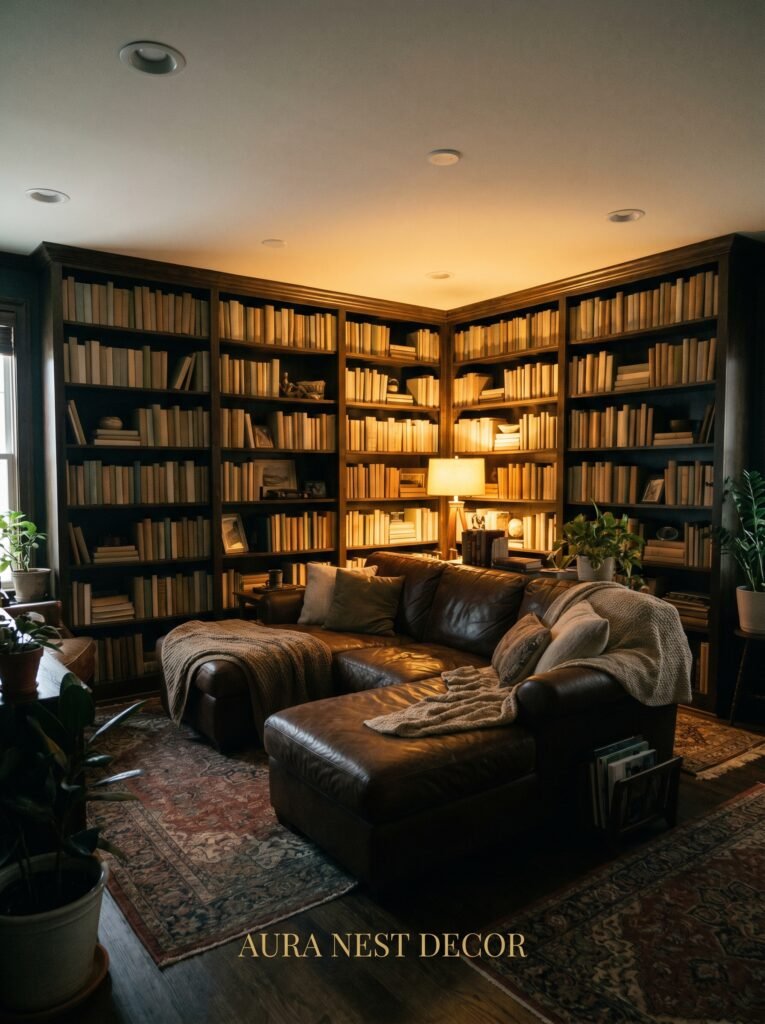
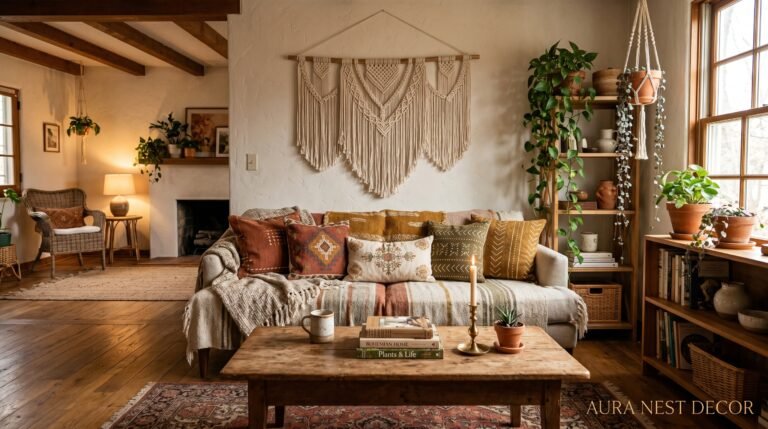
Everyone imagines the sleek, modern, minimalist space when they picture a leather sectional. But the room where leather sectionals look genuinely stunning? The warm, collected, slightly lived-in space. The room that has books, and plants, and a throw that someone actually uses, and a rug with a history.
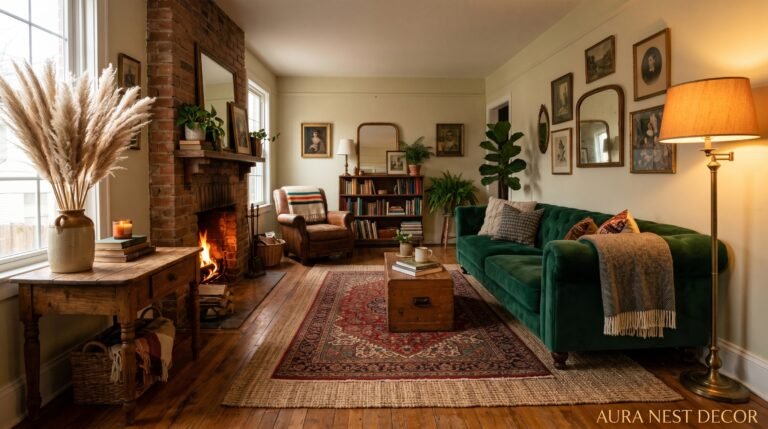
Maximalist interiors with leather sectionals are having a significant moment right now. Deep green walls with a cognac sectional and vintage Persian rugs, shelves full of books and ceramics, warm brass accents, a collection of gallery wall prints. This is not a room that appeared in a mood board. This is a room that looks like someone actually lives there, and loves being there.
The leather grounds it. In a room with a lot of visual activity — different colors, different textures, different objects — the sectional’s consistency and material honesty acts as the anchor. Everything else can be layered and interesting precisely because the sofa is doing such solid, reliable work underneath it all.
Don’t be afraid of that combination.
11. How to Keep It Looking That Good in Five Years
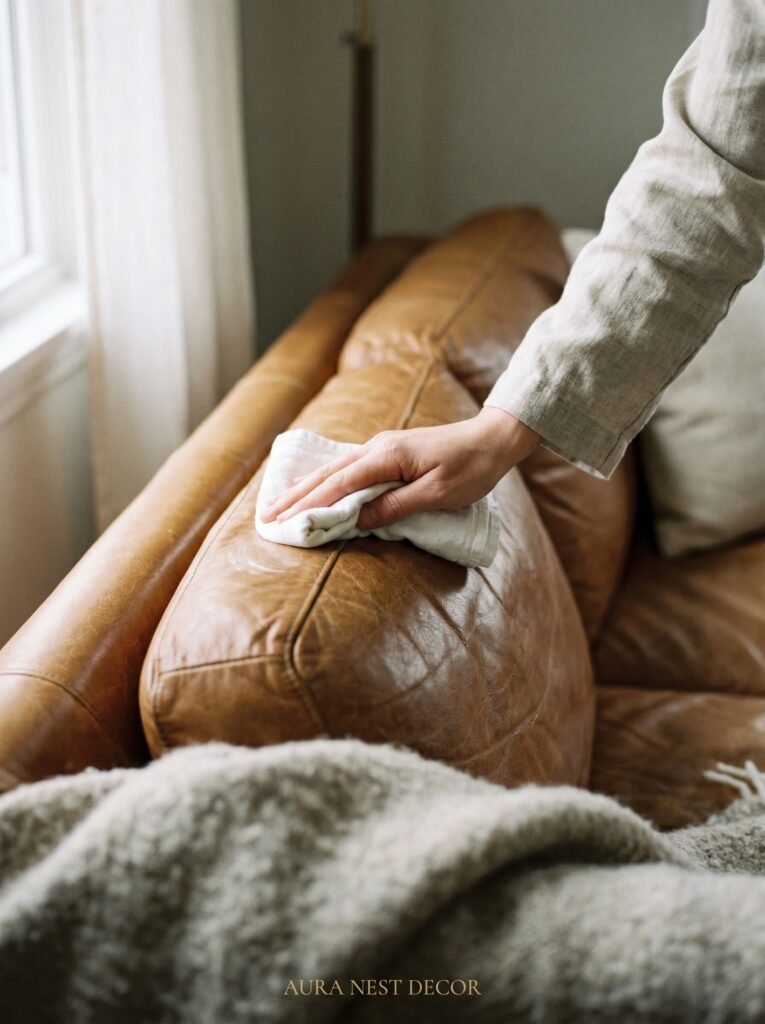
Leather care is simpler than most people think. The main rules: keep it away from direct sunlight, which dries it out and causes cracking. Keep it away from direct heat sources — radiators, floor vents, fireplaces placed too close. Wipe spills immediately with a dry or very slightly damp cloth rather than rubbing them.
Conditioning your leather sectional two to four times a year with a quality leather conditioner is genuinely worthwhile. It takes about twenty minutes and it keeps the leather supple, prevents cracking, and maintains that depth of color that made you fall in love with it in the first place.
For families with children or pets — and this is the honest answer most guides won’t give you — leather is actually one of the more practical choices. Most spills wipe off without leaving a mark. Pet hair doesn’t embed itself in leather the way it does in fabric. A fabric sofa with children and pets tends to look worn within a year or two. Leather looks better.
The patina that develops over years of use is genuinely desirable on a quality leather sectional. Arm rests that develop a slight sheen, cushion edges that soften — these are features, not flaws.
12. The One Thing That Will Make You Love Your Leather Sectional More Than You Already Do
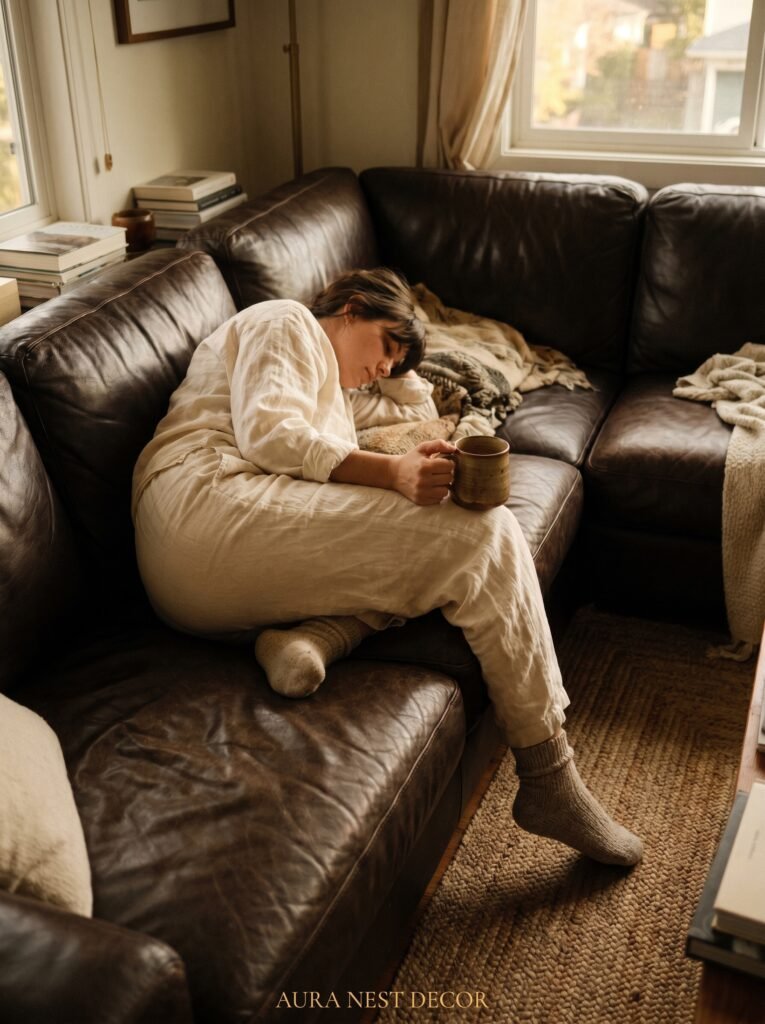
Buy one excellent throw blanket. Not the first one you see at a department store, but a genuinely beautiful one — chunky knit, cashmere if you can, or a high-quality merino. Something in a warm caramel, cream, or rust tone that lives permanently draped over one end of the sectional.
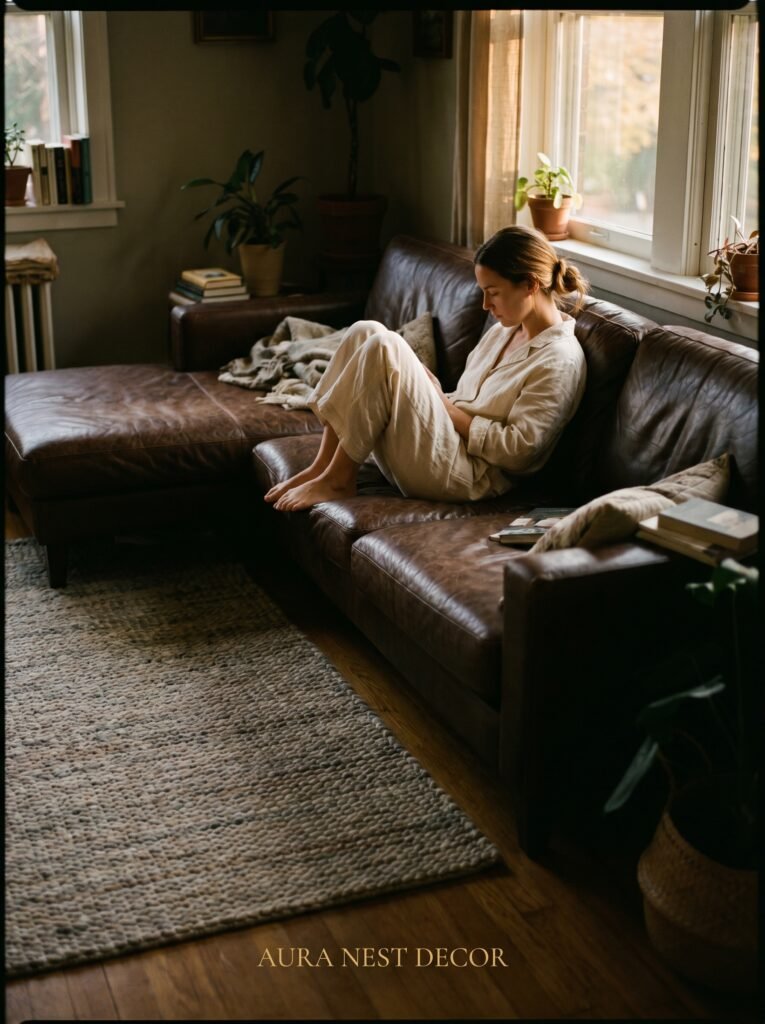
This single object transforms how the sofa reads in the room. Without it, even the most beautiful leather sectional can look slightly formal, slightly untouchable. With it, the whole thing softens. The room says: sit down. Stay a while. Take your shoes off.
It sounds almost too simple to be worth mentioning. But it is the most consistent styling move I’ve seen make an immediate difference to a leather sectional in any room, in any style, at any price point.
One throw. That’s it. You’ll see.
—
❓ FAQ
Q: Are leather sectionals good for homes with kids and pets? A: They’re actually one of the most practical choices for busy households. Spills wipe away easily without soaking into the fabric, and pet hair sits on the surface rather than embedding itself. Avoid bonded leather — it peels over time — and opt for full-grain or top-grain leather for real durability.
Q: How do I know if a sectional will fit in my living room? A: Measure your room carefully and use painter’s tape on the floor to mark the footprint of the sofa before you buy. The general rule is to leave at least 18 to 24 inches between the sofa and surrounding furniture or walls, and to keep a clear traffic path of at least 36 inches to any doorways or passages.
Q: Can I put a leather sectional in a traditional or period home? A: Absolutely — and the contrast between a contemporary leather sectional and period architectural details like cornicing, original fireplaces, or exposed brick is often genuinely beautiful. The key is not to over-modernize everything else around it. Let the leather be the one contemporary note in an otherwise layered, characterful room.
—
💭 Final Thoughts
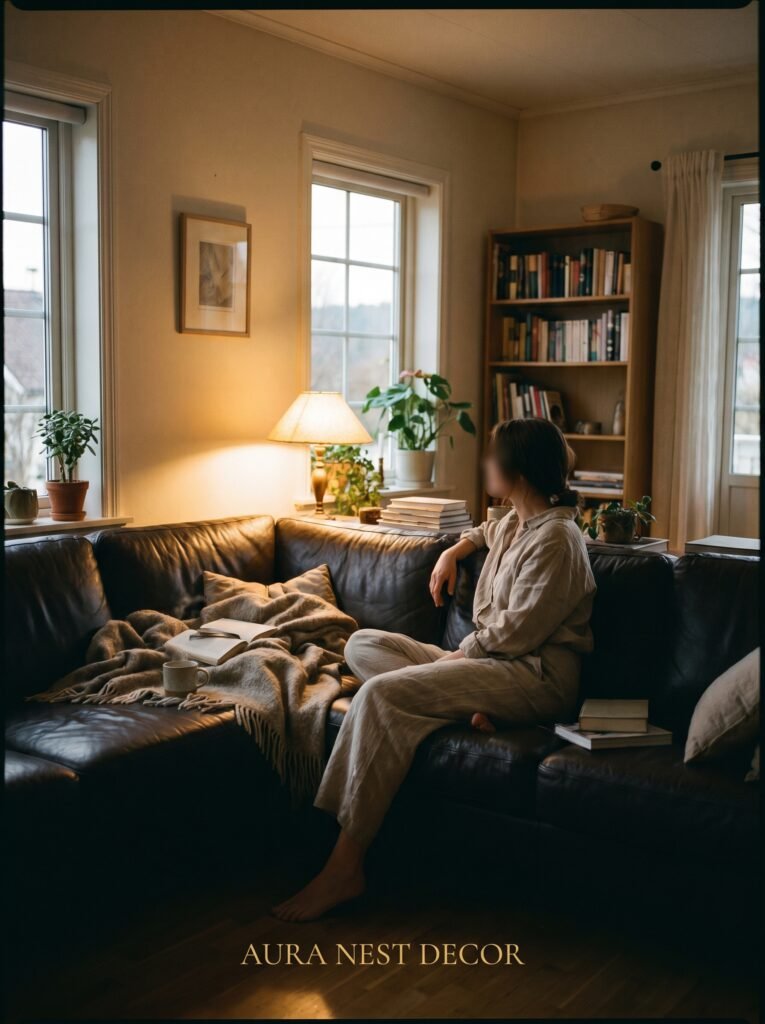
A leather sectional is not a timid purchase. It makes a claim about how you want your home to feel — generous, comfortable, honest, considered. And when it’s styled well, with the right light and the right layers around it, it becomes the piece every guest notices first and remembers longest.
Give it good company: a real rug, a warm lamp, a throw that means something. The room will know.
What would you pair with your leather sectional — warm cognac in a light, airy room, or deep chocolate against something rich and moody?