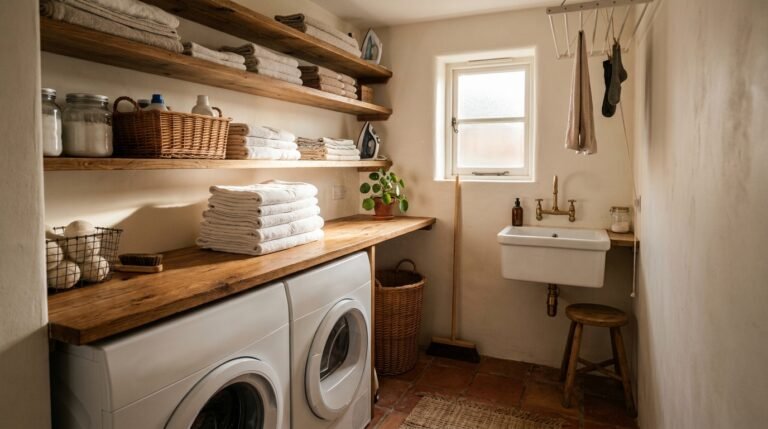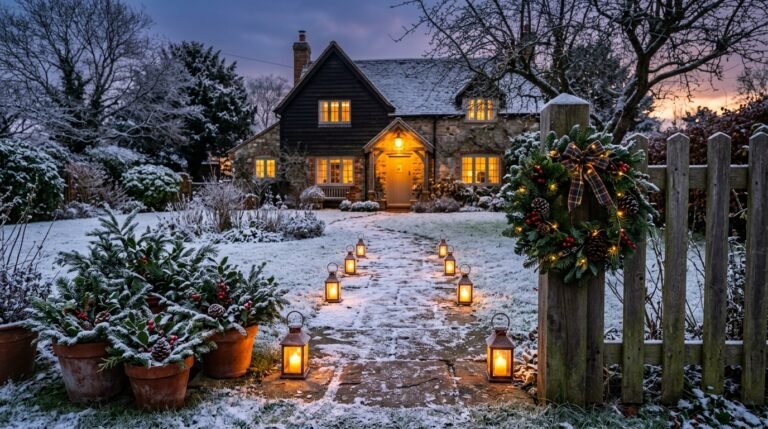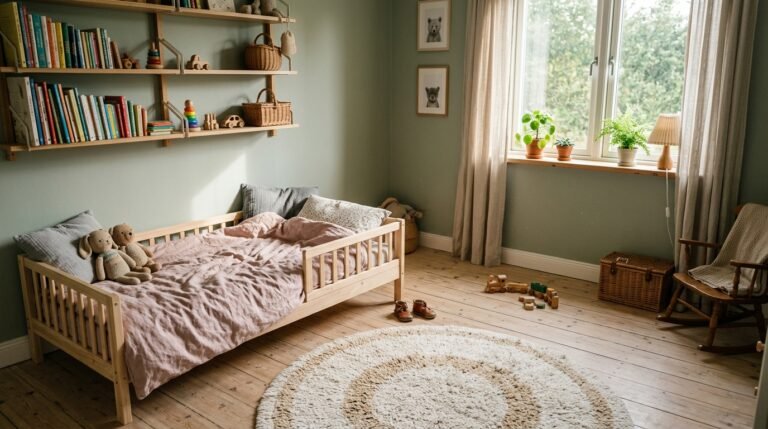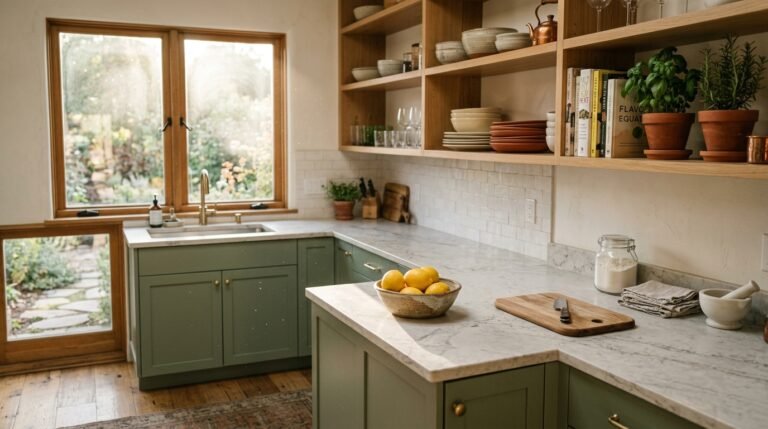
When a Pixel Farmhouse Feels More Like Home Than Your Own Living Room
There’s something quietly remarkable about the moment you stop playing Stardew Valley to farm crops — and start playing it just to rearrange your furniture. If you’ve been there, you already understand. If you haven’t, you’re about to.
—
Table Of Content
1. The Surprising Emotional Pull of a Pixelated Living Room
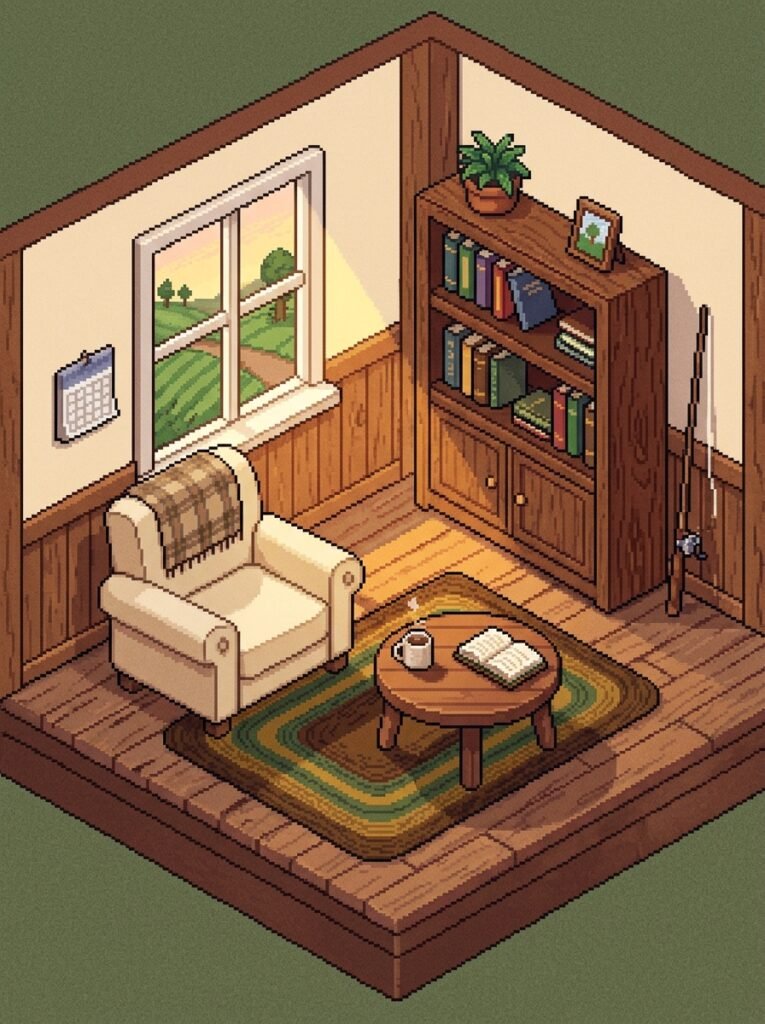
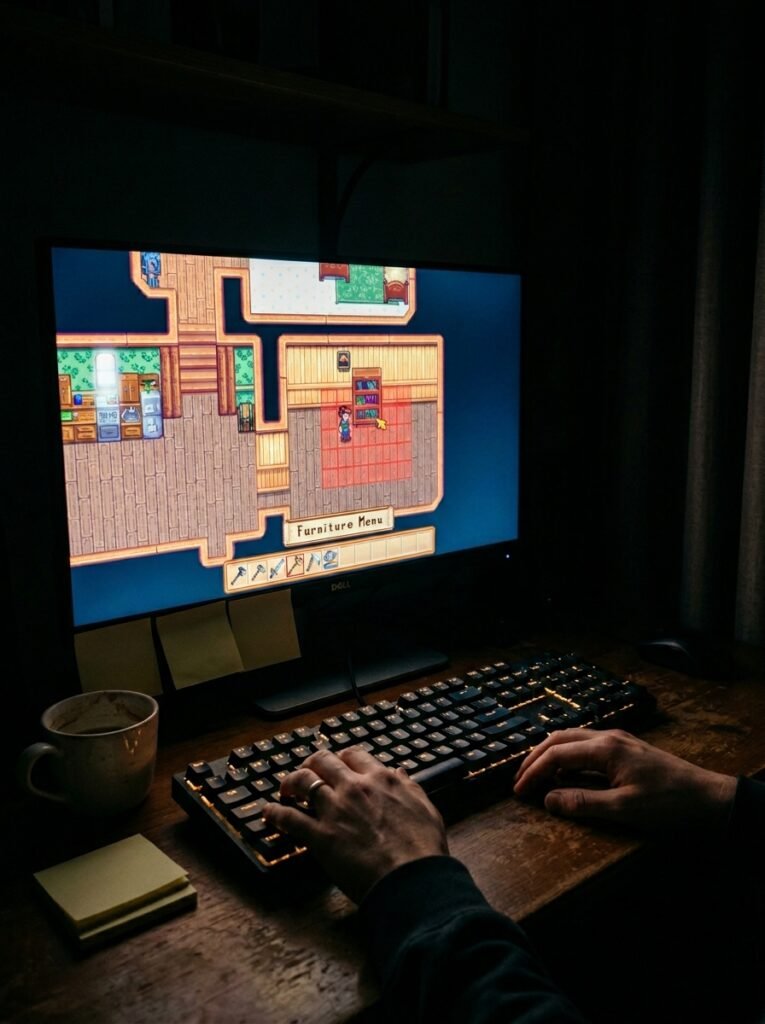
Nobody warns you about this part. You start Stardew Valley expecting to plant seeds and sell parsnips. Then, somewhere around your second in-game year, you find yourself spending an entire Saturday afternoon agonizing over whether the wooden bookcase looks better against the north wall or the east wall of your farmhouse.
This isn’t a quirk. It’s actually one of the most talked-about aspects of the game in dedicated communities, Reddit threads, and YouTube channels — millions of players who got deeply invested not in the combat or the farming mechanics, but in making their little pixel home feel right.
The reason this hits so hard is simple: Stardew Valley gives you a space that responds completely to your creative vision. No landlord, no budget crisis, no aesthetic compromise. In a world where most of us rent apartments we can’t repaint and live in rooms that never quite feel like us, that kind of pure creative freedom is genuinely moving.
“In Stardew Valley, your home is the one space in the world that is entirely, unconditionally yours.”
2. Starting Small — The Humble Farmhouse and What It Teaches You
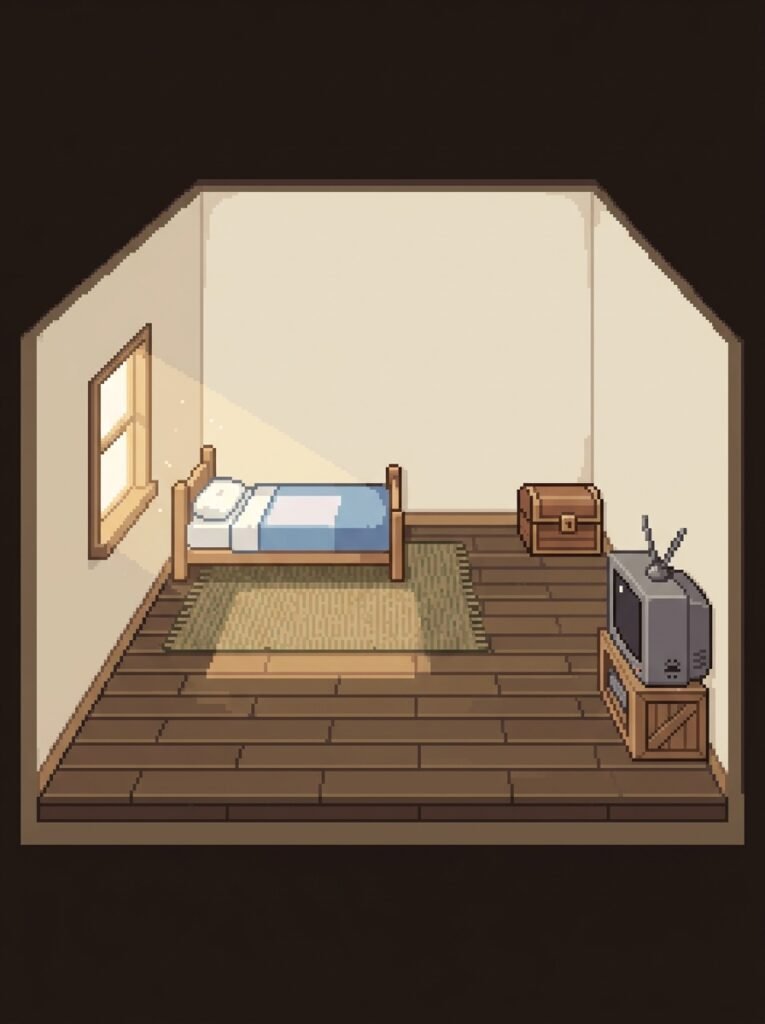
When you first inherit Grandpa’s farm, the house is a single room. A bed, a TV, a few wooden floors. It’s sparse in a way that feels intentional, almost like the game is saying: this is just the beginning.
That first little room is actually a masterclass in restraint for interior design. Because you have so few items and so little space, every placement decision matters. The chest you put in the corner isn’t just storage — it’s a design choice. The rug you place under the bed anchors the entire room. New players often underestimate this early stage, rushing to upgrade the house as fast as possible. But experienced players know: learning to love the small space first makes everything that follows feel more meaningful.
3. The Art of the Farmhouse Upgrade — More Space, More Story

Robin the carpenter can expand your farmhouse three times across the game, each upgrade adding rooms and possibilities. The kitchen. The bedroom wing. The children’s room. Each expansion doesn’t just add square footage — it adds narrative. You’re building a life, not just a home.
The second upgrade, which adds a proper kitchen and doubles your main room space, is where most players feel the interior design instinct truly ignite. Suddenly there’s room for a dining area. Room for a reading nook. Room for a cozy corner with a fish tank and a tropical plant. The possibilities multiply, and with them, the creative investment deepens.
4. Floors, Walls, and the Quiet Power of a Well-Chosen Palette
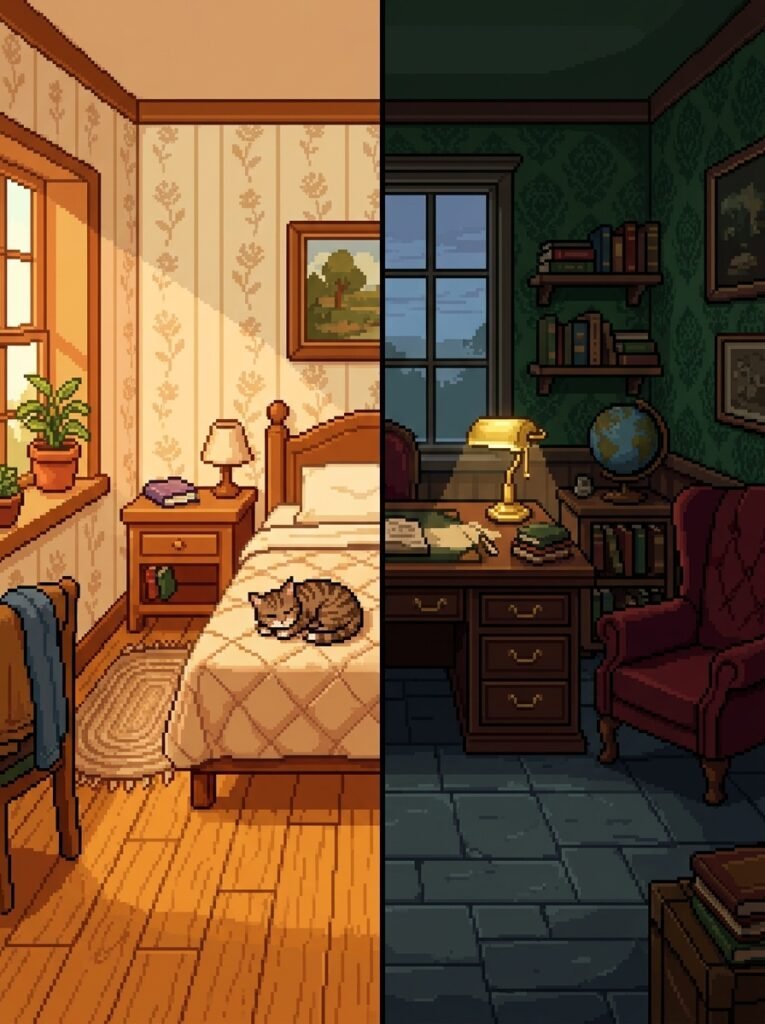
One of the most underappreciated details in Stardew’s interior design system is wallpaper and flooring. There are over 100 unique wallpaper designs and flooring options available in the game — from rustic stone floors and wooden planks to elegant parquet and soft pastel walls. Players can purchase these from the Travelling Cart, find them in treasure rooms, or craft them.
The choice of flooring and wallpaper sets the emotional tone of an entire room. A warm wood floor with cream-colored wallpaper creates a cottage-core bedroom that feels like a Sunday morning. Dark stone flooring paired with deep green walls transforms a space into something that feels like a Victorian botanical study. These aren’t just cosmetic — they shift the entire mood of how a space feels to inhabit.
5. Furniture That Tells a Story
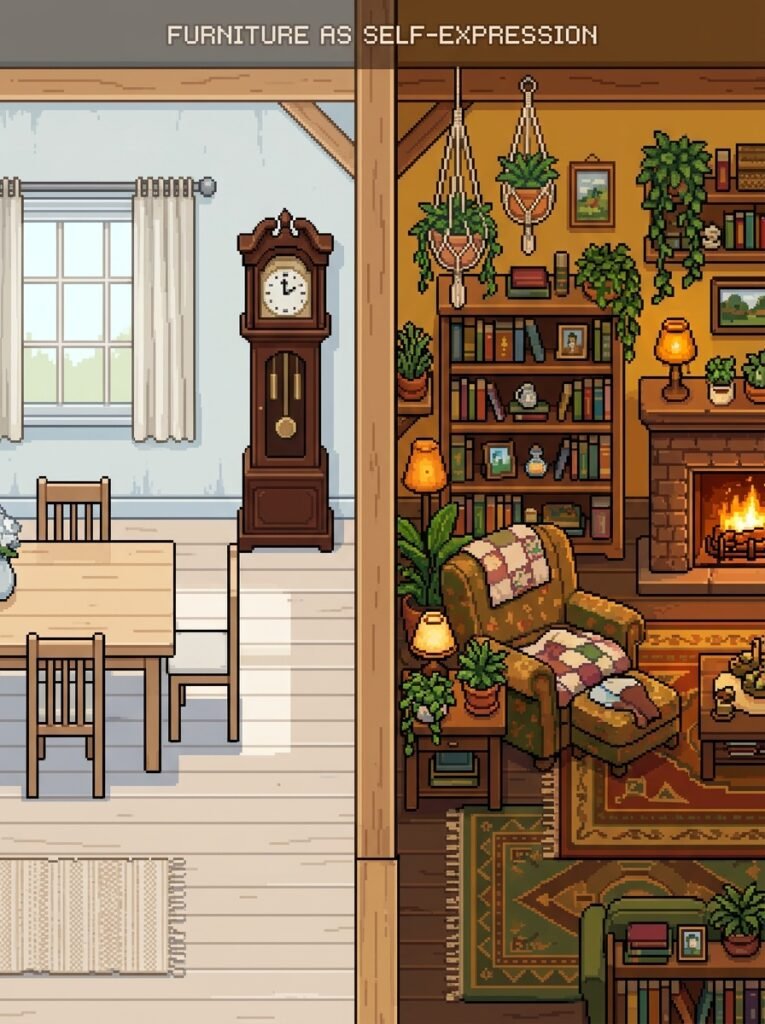
Stardew Valley’s furniture catalog is extensive and beautifully varied. Beds, sofas, bookshelves, fish tanks, end tables, potted plants, grandfather clocks, arcade machines, statues from the mine — every item carries its own aesthetic energy, and choosing what to place in your home becomes a form of self-expression.
What’s fascinating is how players naturally gravitate toward furniture that reflects their real-life sensibilities. Minimalist players tend toward clean wooden furniture, open floor space, and a single statement piece. Players who love maximalist warmth fill every corner with bookshelves, rugs layered over rugs, and plants tumbling out of every available surface. Your Stardew home often ends up revealing something true about you.
“The furniture you choose for a virtual home tells the same story as the furniture you choose for a real one — just without the moving costs.”
6. The “Cozy Corner” Philosophy Every Player Discovers
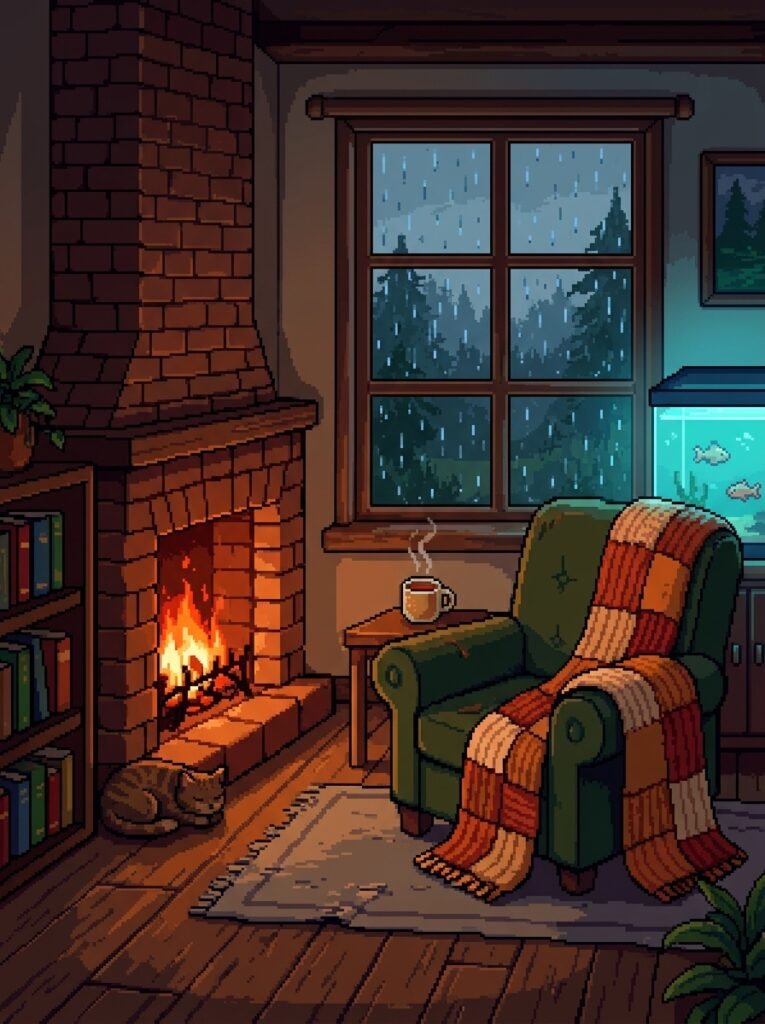
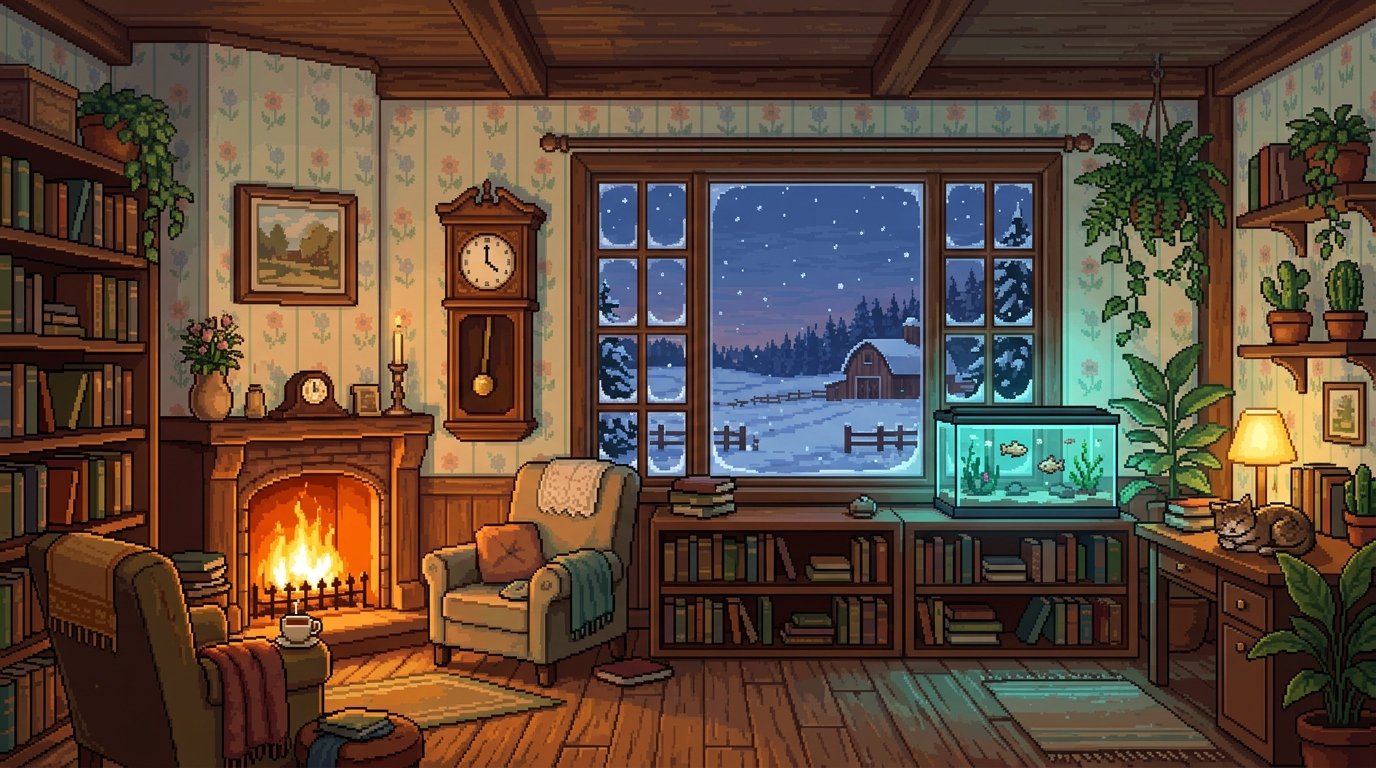
At some point, almost every Stardew player develops what the community has come to call a “cozy corner” — a deliberately small, intentional area within a larger room designed purely for comfort and atmosphere. A reading chair next to a window. A bookcase flanking a fireplace. A fish tank glowing softly next to a bed.
This mirrors a real interior design principle called “nesting” or creating “vignettes” — small, purposeful compositions within a larger space that draw the eye and create a sense of warmth. The fact that players independently discover and apply this principle in a video game, without being taught it, says something profound about how deeply humans are wired to seek out coziness.
7. Seasonal Decorating — The Detail That Changes Everything
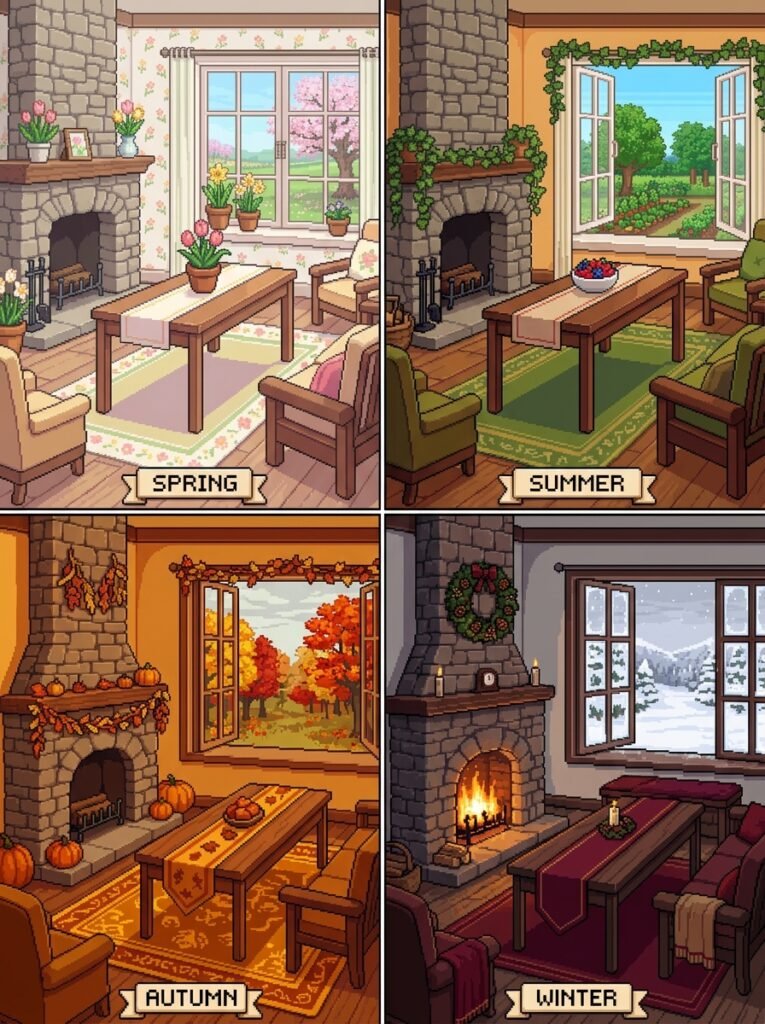
Here is where Stardew Valley becomes truly special as an interior design experience: the seasons change. And when they do, the light through your farmhouse windows shifts. The world outside your door transforms from green summer warmth to golden autumn to cold, quiet snow.
Many dedicated players redecorate their homes seasonally, the way some real-world homeowners swap out throw pillows and curtains. Winter farmhouses get darker wooden furniture, deeper colored walls, and warm rugs. Spring setups explode with floral wallpaper and bright, airy palettes. This isn’t required by the game — nobody tells you to do it. Players do it purely because it feels right. Because it honors the rhythm of the world they’ve built.
8. The Community Garden Indoors — Plants as Design Elements
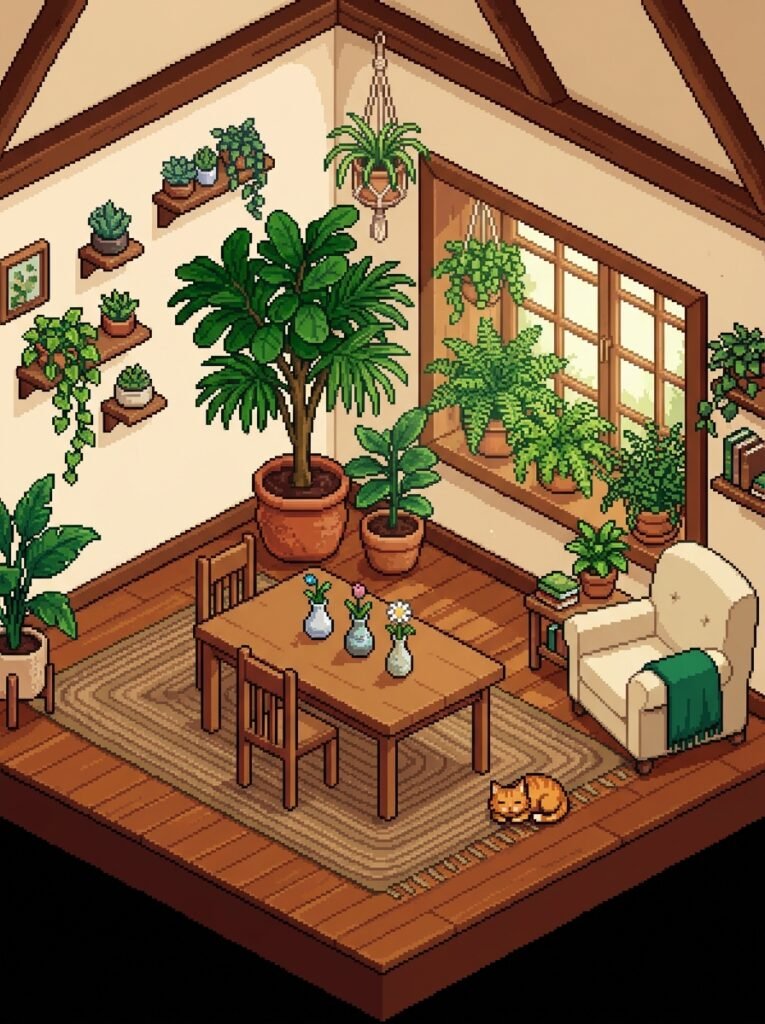
One of the most beloved interior design techniques in Stardew Valley is the use of plants and natural elements inside the home. The game includes a variety of plantable pots, decorative trees, and seasonal flowers that can be placed indoors, and experienced decorators use them with the same intention a real interior designer would apply to a living space.
A cluster of potted ferns near a window creates visual softness. A single large tropical tree in the corner of a room anchors the space. Flowers in bud vases on a dining table bring life to a composition. This is biophilic design — the real-world philosophy that connecting interior spaces to natural elements improves wellbeing — playing out in sixteen pixels of resolution, and working just as beautifully.
9. When Your Farm’s Exterior and Interior Finally Match

There’s a specific kind of satisfaction that arrives late in Stardew Valley when your farm’s exterior aesthetic and your house’s interior finally feel cohesive. Maybe your farm is a cottage-core dream of wildflowers and winding paths, and your house is all warm wood floors and pastel floral wallpaper. Maybe your farm is a sleek, organized grid of crops, and your interior is minimal, practical, and calm.
“The most beautiful homes — virtual or real — are the ones where every corner quietly agrees with every other corner.”
Getting there takes time, iteration, and a lot of holding an item above your head while you stand in the middle of the room wondering if it’s right. But when it clicks, it really clicks.
10. The Fish Tank Phenomenon — Why Everyone Ends Up With One
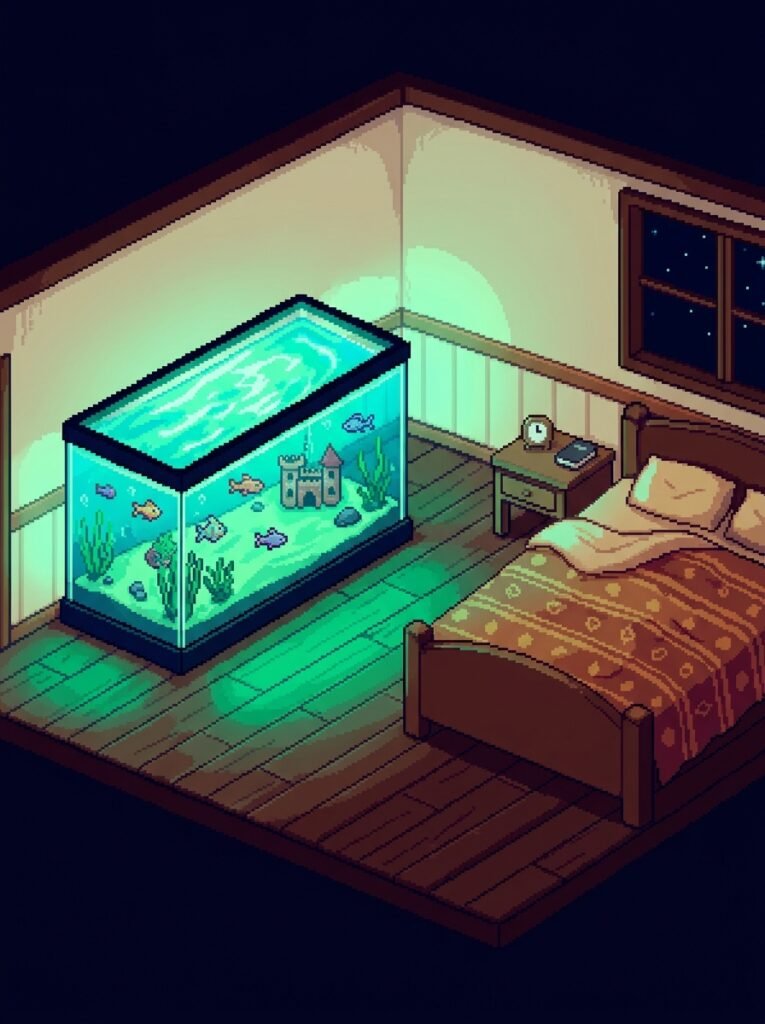
It deserves its own section, honestly. The fish tank in Stardew Valley — which you can fill with fish you’ve caught — is one of the most consistently beloved decorative objects in the game. Players place it prominently, light the room around it, and often describe it as the emotional centerpiece of their home.
This maps perfectly onto real interior design psychology. Aquariums in living spaces are consistently associated with reduced stress and increased sense of calm. The gentle movement of fish, the soft glow of water — these things work on us at a level deeper than aesthetics. Stardew taps into this without trying.
11. Multiplayer Homes — Designing With Someone Else’s Vision
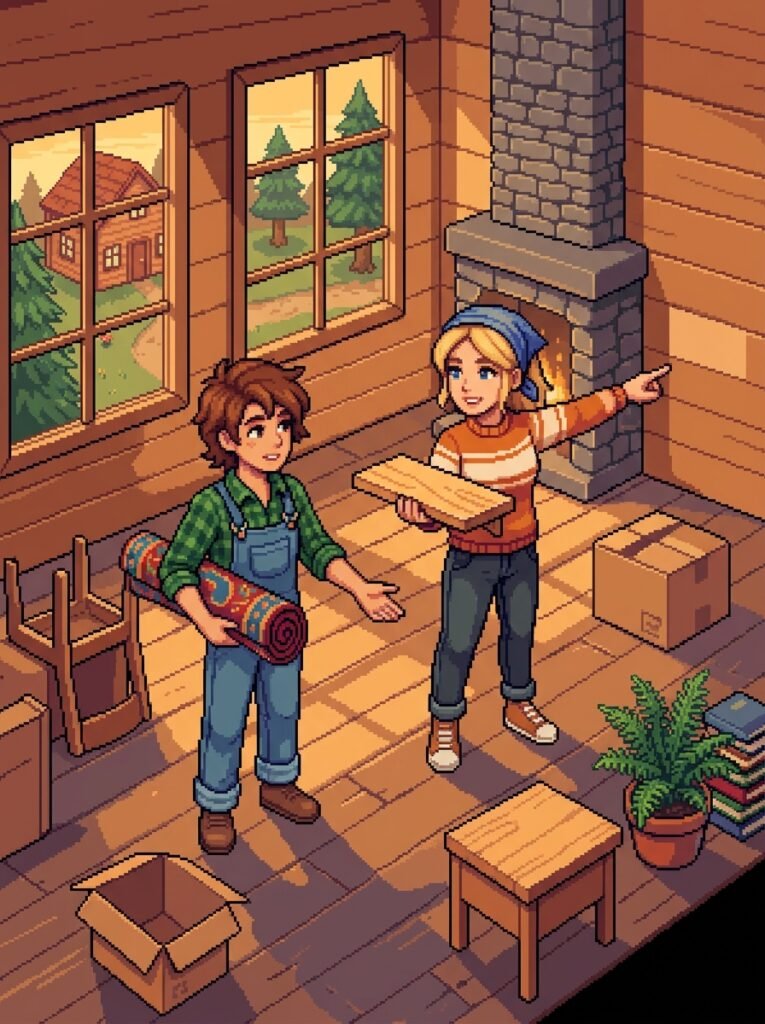
When you play Stardew Valley in multiplayer mode, the farmhouse becomes shared territory, and interior design suddenly becomes a collaborative (and sometimes negotiated) process. Who gets which cabin? What does the main house look like? Do you divide the decorating duties by room, or does one person take the lead?
This mirrors real-world cohabitation more closely than most games ever intend to. Players report genuine conversations with partners, friends, or siblings about aesthetic preferences, spatial layout, and what feels welcoming versus cluttered. A game about farming becomes an unexpected exercise in domestic communication.
12. What Stardew Valley’s Interior Design Teaches Us About Real Homes
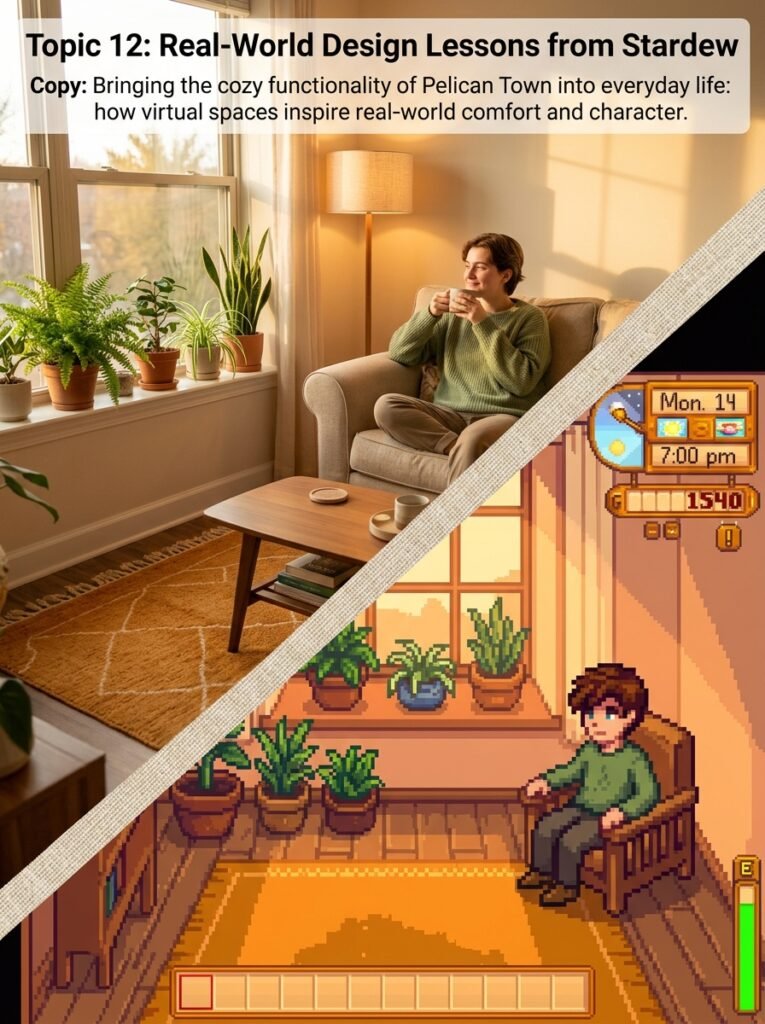
It might seem like a stretch to draw lessons from a pixel game about farming — but Stardew Valley’s interior design culture has genuinely helped some players think more intentionally about their real-world spaces. Players who spent hours refining a virtual color palette began noticing they wanted more warmth in their actual apartments. People who fell in love with cozy, layered interiors in the game started adding rugs and plants and soft lighting to their own homes.
This isn’t surprising when you understand why the game resonates so deeply. It strips away every obstacle to pure creative expression — cost, practicality, landlord restrictions, moving furniture alone on a Tuesday — and lets you experience what it feels like when a space is exactly what you wanted. And once you’ve felt that, you want it in real life too.
—
🌿 How to Take Care of Your Stardew Interior Design Journey
Whether you’re new to the farmhouse or deep into your third save file, here are a few gentle principles that experienced players swear by.
Start with the floor and walls before placing any furniture. These two elements set the emotional tone for everything else, and it’s much easier to choose furniture to complement a palette than to find a palette that accommodates random furniture.
Give yourself permission to leave empty space. Real interior designers call this “negative space,” and it’s just as important in Stardew. A room where every tile is filled feels cluttered; one where space breathes feels intentional.
Use the seasonal rhythms as creative prompts. When the game transitions to a new season, take five minutes to look at your interior and ask: does this still feel right? Often a small change — swapping a rug, moving a plant — can make an old space feel renewed.
Reference real-world design styles for inspiration. Cottagecore, Japandi, Maximalist Victorian, Scandinavian minimalism — these real aesthetics translate beautifully into Stardew’s furniture system, and using them as a loose framework can help when you’re feeling stuck.
Finally, let your home evolve with your playthrough. The farmhouse that suits Year 1 you won’t necessarily suit Year 4 you, and that’s exactly right. The best homes grow.
—
❓ FAQ
Q: Where can I find the best furniture and wallpaper in Stardew Valley? A: The Travelling Cart (available Fridays and Sundays in Cindersap Forest) is the best source for rare wallpaper and flooring. Robin’s carpenter shop sells a rotating selection of furniture, and the furniture catalogue item — which you can obtain from Robin — lets you purchase almost any furniture in the game for free once you own it.
Q: Can you move furniture freely in Stardew Valley? A: Yes, you can pick up and reposition most furniture items at any time by holding the action button while standing next to them. This makes experimentation easy and low-stakes, which is part of what makes interior decorating in the game so enjoyable.
Q: Does interior design affect gameplay in Stardew Valley? A: Functionally, most furniture is decorative and doesn’t change your stats or farming outcomes. However, certain items like the crib and children’s bed are required for family events. Beyond that, your interior is entirely for the joy of it — which, in many ways, is exactly how it should be.
—
💭 Final Thought
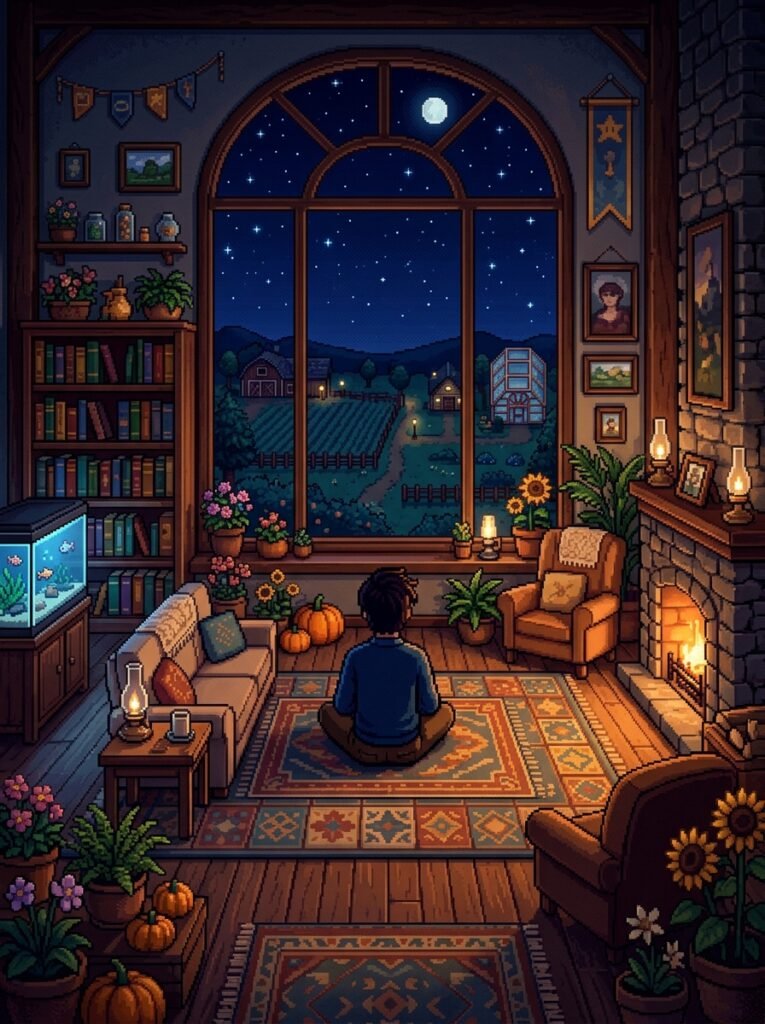
There’s something quietly profound about the fact that millions of people — across every age, every background, every corner of the world — have sat down to play a farming game and ended up spending their most contented hours just making a little pixel house feel like home. Maybe that impulse tells us something important: that the desire to create beauty in our personal spaces isn’t a luxury or a hobby. It’s something essential to us, something that surfaces even in a virtual world with no stakes and no consequences.
So here’s what I’d ask you to sit with: if you could design your perfect room — virtual or real, no budget, no limits, no compromise — what would it actually look like?