The Green Wall Interior That Changed How I Feel About Coming Home
There’s something quietly powerful about walking into a room and feeling your shoulders drop — that involuntary exhale that happens when a space truly holds you. A green wall can do exactly that. Whether it’s a deep forest tone painted behind your sofa or a living moss installation cascading down your hallway, green walls have a way of making interior spaces feel alive, grounded, and deeply personal in ways that no other color or design choice quite can.
—
Table Of Content
1. Why Green Walls Feel Like a Breath of Fresh Air in Any Room
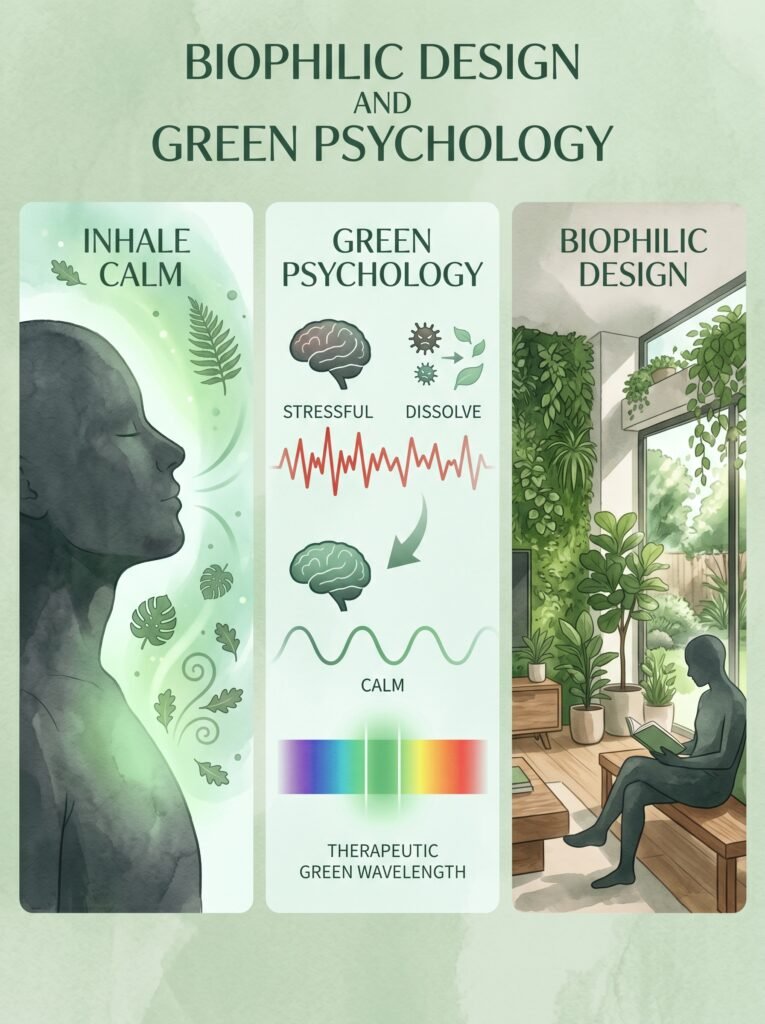
Before we talk paint chips and plant panels, let’s talk about why green walls resonate so deeply with us as human beings. It’s not a coincidence that stepping into a green room makes you feel calm, or that a living plant wall makes you want to linger longer. There’s actual science behind it. Biophilic design — the principle that humans have an innate need to connect with nature — shows us that incorporating natural elements, colors, and textures into our living spaces directly reduces cortisol levels, lowers heart rate, and improves overall mood and cognitive function.
Green is the color our eyes require the least effort to process. It sits right in the middle of the visible light spectrum, meaning our visual system doesn’t have to strain or adjust to absorb it. On a purely physiological level, being surrounded by green feels effortless — because it genuinely is. When designers and psychologists talk about restorative environments, green inevitably makes the list. It bridges the gap between the outside world and our interior lives in a way that feels natural rather than forced.
“A green wall doesn’t just decorate a room — it gives it a pulse.”
So when you’re choosing a green wall for your home, you’re not just making an aesthetic decision. You’re making a deeply human one.
—
2. The Psychology of Green: What Different Shades Are Actually Saying
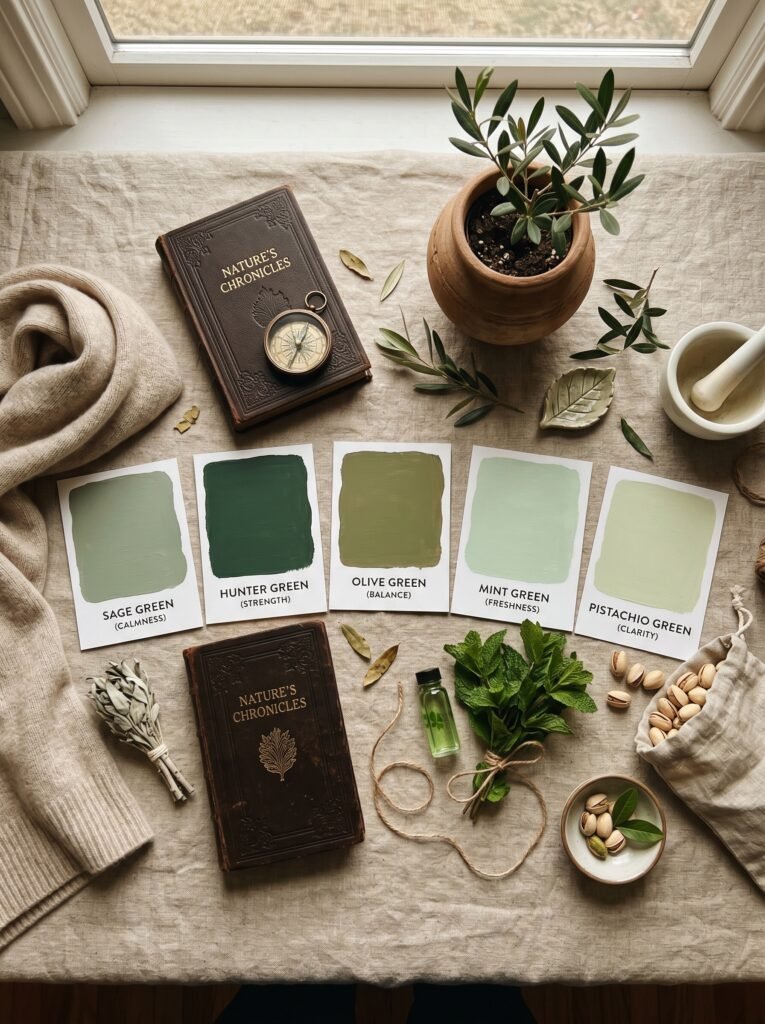
Not all greens are created equal, and understanding the emotional language of each shade will help you choose one that genuinely serves the feeling you want to create in your home. Think of it this way — the green you choose is essentially deciding what the room whispers to you every time you enter it.
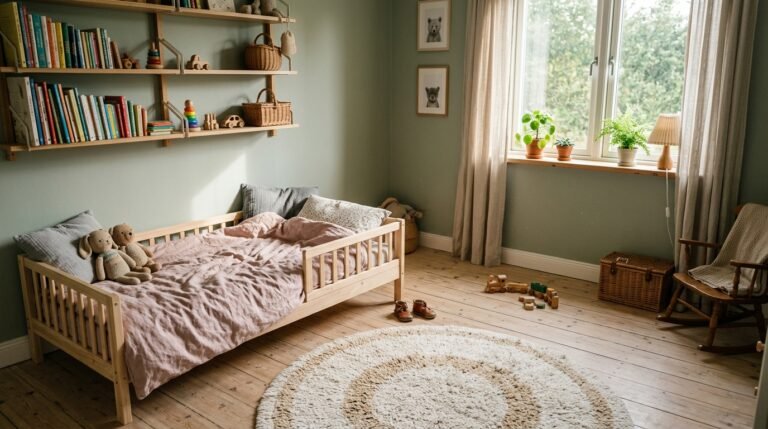
Sage green, soft and muted with its grey undertones, is the conversationalist of the green family. It says “stay a while.” It’s unpretentious and grown-up, deeply comfortable without trying too hard. Sage walls in a living room or bedroom create a sense of quiet sophistication — the interior design equivalent of a cashmere sweater. Deep forest greens, like hunter or British racing green, bring drama and depth. They’re bold without being aggressive, luxurious without being cold. These shades work beautifully in dining rooms, home libraries, or any space where you want to create intimacy and a sense of being nestled inside something beautiful.
Olive green carries a vintage warmth — earthy, a little moody, and undeniably cool. It pairs effortlessly with terracotta, warm woods, and brass accents. Mint and pistachio greens, on the lighter end of the spectrum, bring freshness and lightness — perfect for kitchens, bathrooms, or any small space that needs to feel airier and more open. Every shade has a story to tell. Your job is simply to decide which story belongs in your home.
—
3. Living Green Walls vs. Painted Green Walls — How to Choose What’s Right for You
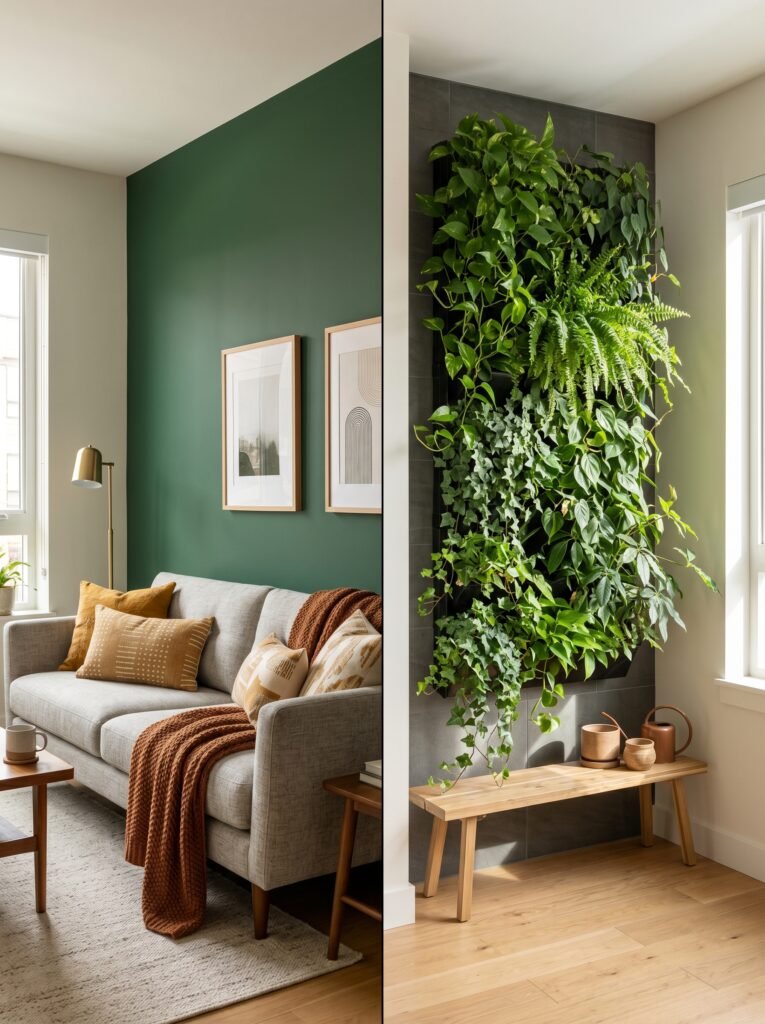
This is often the first crossroads people arrive at when they fall in love with the idea of a green wall: do you want the color of green, or the life of green? Both are extraordinary in their own way, and the right choice depends entirely on your lifestyle, budget, and the emotional experience you want the room to offer.
A painted green wall is immediate, transformative, and completely manageable. A single wall — the wall behind your bed, the alcove in your kitchen, the empty expanse behind your sofa — painted in the right shade of green can reframe an entire room. It costs relatively little, can be changed seasonally or whenever your tastes evolve, and requires no maintenance beyond an occasional wipe-down. If you’re someone who loves design but also values simplicity, a beautifully painted green accent wall might be the most satisfying creative decision you ever make.
A living green wall — a vertical garden or moss panel installation — is a completely different kind of commitment, and also a completely different kind of reward. The texture, the scent, the way light plays across living leaves — these are things that paint simply cannot replicate. Living walls purify air, regulate humidity, and reduce ambient noise in a room. They are genuinely alive, and that aliveness changes how a space feels on a level that goes beyond the visual. They do, however, require care, appropriate lighting, and a higher upfront investment.
—
4. The Best Rooms in Your Home for a Green Wall — and Why
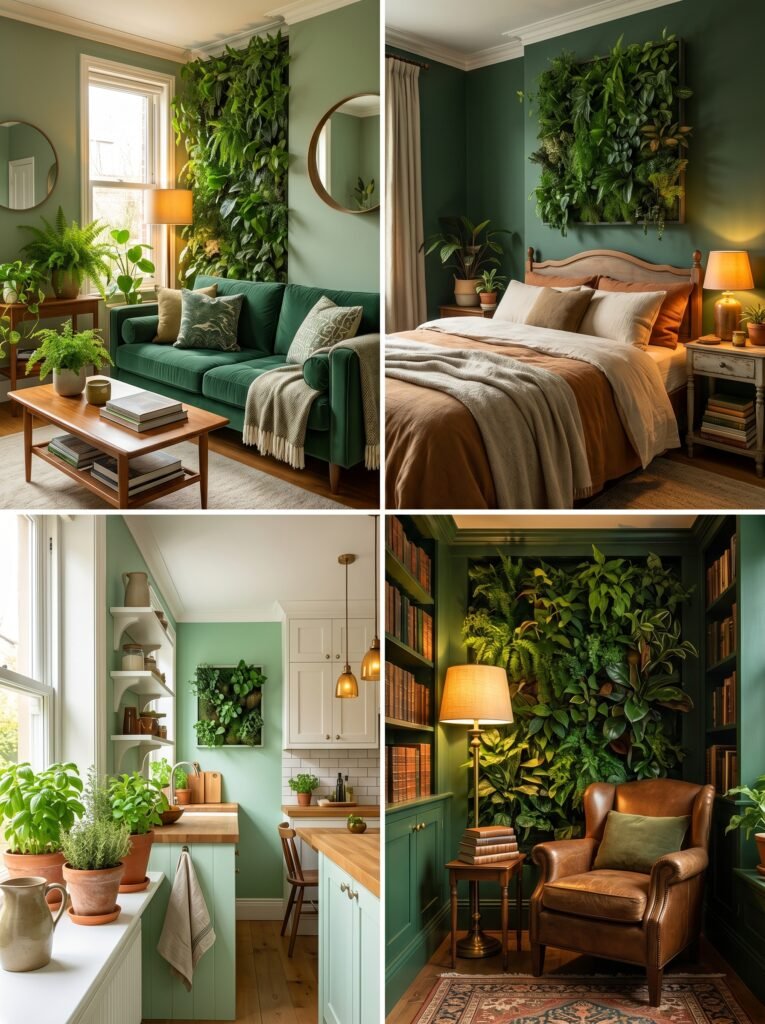
Some rooms are practically begging for a green wall, and knowing which spaces benefit most will help you make a confident, well-informed decision. Let’s walk through the home room by room and unpack the possibilities.
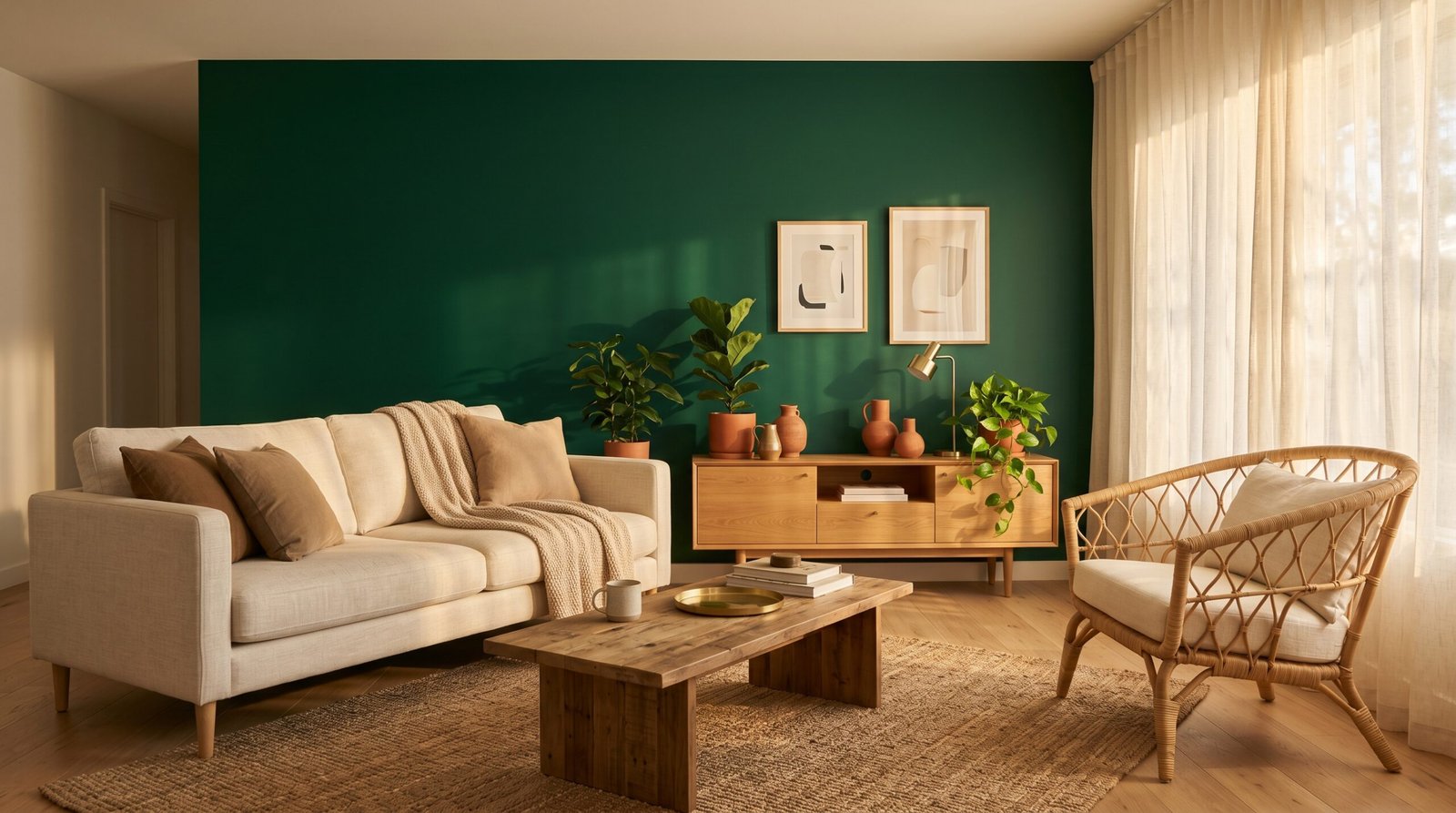
The living room is perhaps the most versatile canvas. A deep emerald or sage green wall behind the sofa creates an instant focal point and a sense of depth that makes the whole room feel more intentional. Pair it with warm-toned textiles — cream, burnt orange, terracotta — and natural materials like rattan, wood, and linen, and you have a space that feels genuinely curated rather than assembled. The bedroom is another natural home for green. Sleeping in a room with green walls has been linked to lower stress levels and better quality sleep. A forest green bedroom with warm lighting and layered textures creates a sanctuary-like quality — intimate, enveloping, and restorative.
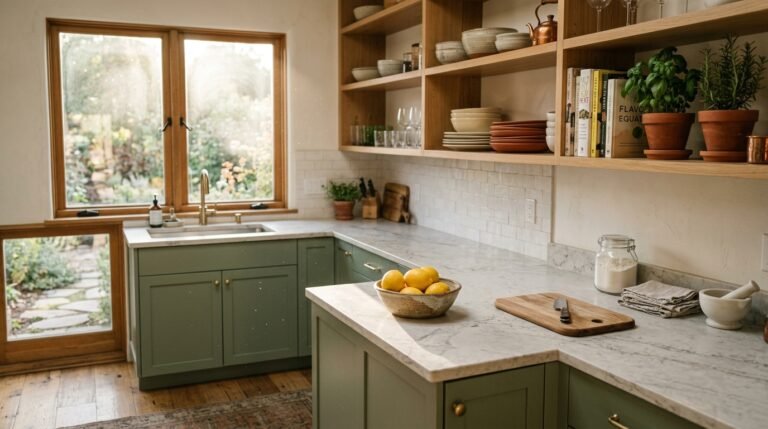
Kitchens love green too, especially the paler shades. A mint or sage green kitchen wall pairs beautifully with white cabinets, open wooden shelving, and terracotta pots of herbs growing on the windowsill. It brings warmth without competing with the natural busyness of a kitchen environment. Home offices and reading nooks benefit enormously from green’s cognitive benefits — improved focus, reduced eye strain, and a general sense of calm that supports deeper concentration.
—
5. How to Build a Color Palette Around Your Green Wall
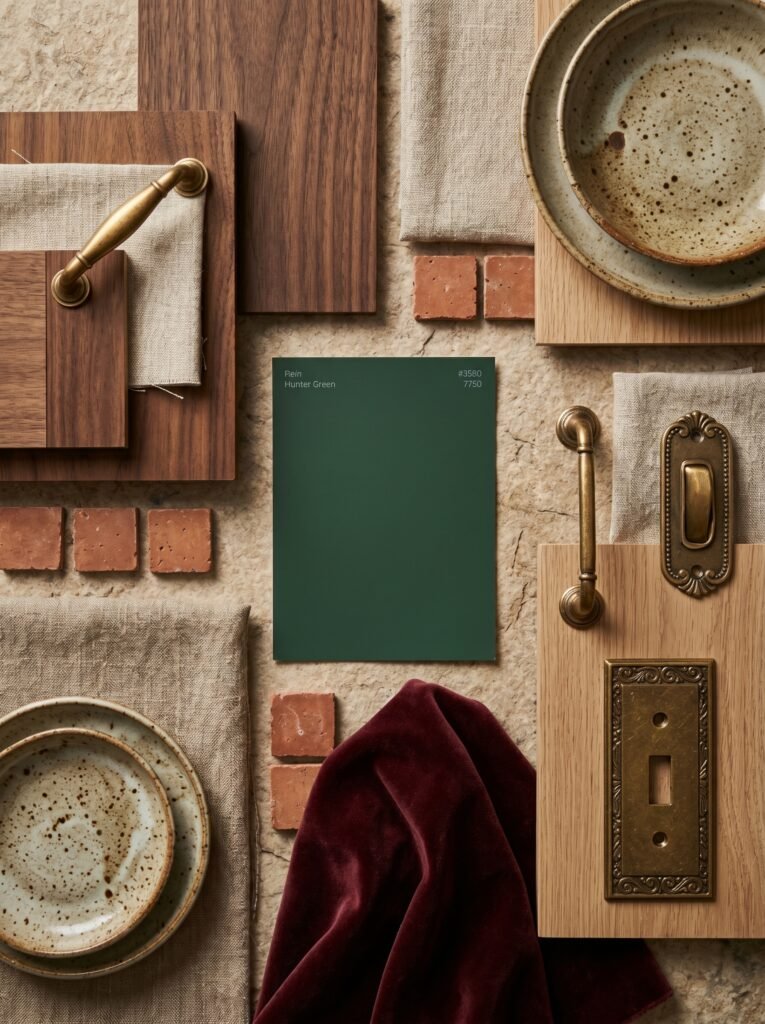
Here’s something that trips up even the most enthusiastic decorators: choosing the green is just the beginning. The colors and materials you pair with it will determine whether the room feels cohesive and beautiful or jarring and unfinished.
The most effortless approach is to lean into the natural world for your supporting palette. Green in nature doesn’t exist alone — it comes with soil, bark, stone, sky, and sunlight. Translate that into your interior with warm woods, raw linens, earthy ceramics, and touches of brass or aged gold for warmth. This palette works for every shade of green from the palest sage to the darkest forest tone. For something with a little more edge, pair a deep green wall with rich burgundy or terracotta accents — this combination feels maximalist but grounded, like a Wes Anderson film set in the best possible way.
“Green doesn’t just pair well with other colors — it makes every other color look better.”
If you love a cleaner, more contemporary aesthetic, pair your green wall with crisp white, concrete grey, and matte black hardware. This creates a modern, almost architectural look that’s still warm because the green itself brings so much organic comfort to the space.
—
6. The Art of Styling a Green Wall — What to Hang, Place, and Display
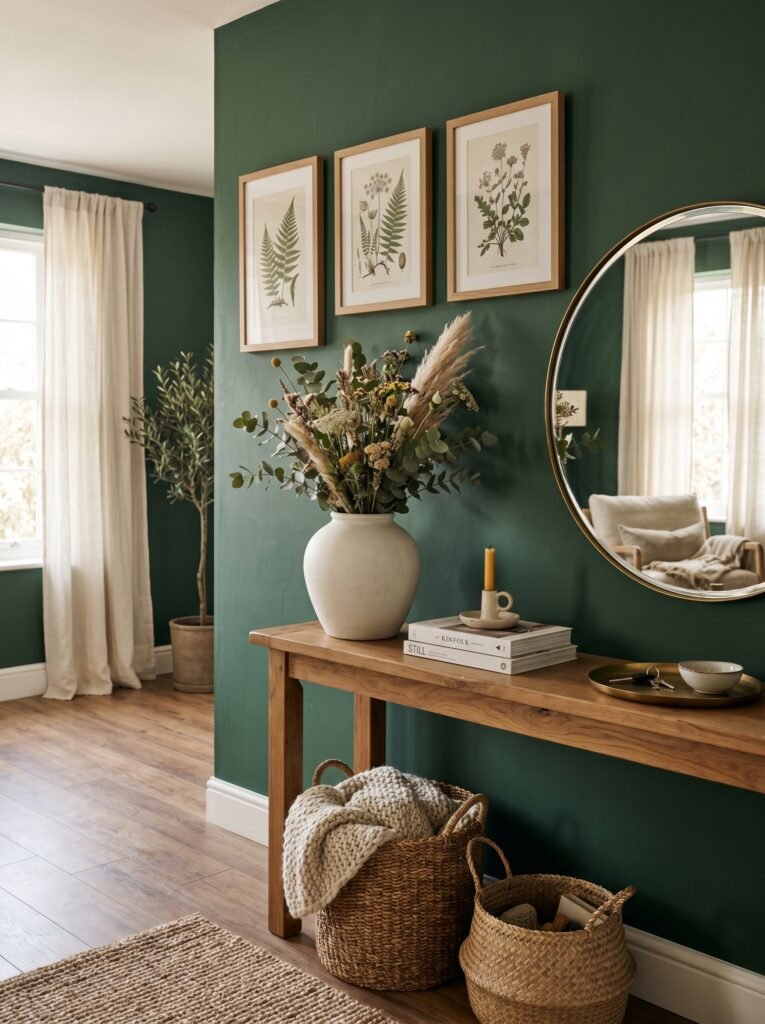
A green wall is a backdrop, and like any great backdrop, it deserves thoughtful styling. The goal isn’t to cover the wall — it’s to create a conversation between the wall and the objects in front of it.
Natural materials shine against green. A large ceramic vase in off-white or terracotta, placed on a wooden console in front of a deep green wall, creates a still-life quality that feels almost effortlessly artistic. Woven baskets, linen curtains, and wooden frames all vibrate beautifully against green tones. For art, think warm-toned botanical prints, abstract paintings with earthy undertones, or black-and-white photography framed in natural wood or thin brass frames. Mirrors work magnificently on or adjacent to green walls — they amplify the color and bounce light around the room in a way that makes the whole space feel more luminous and alive.
—
7. Small Space? Here’s Why a Green Wall Might Actually Help
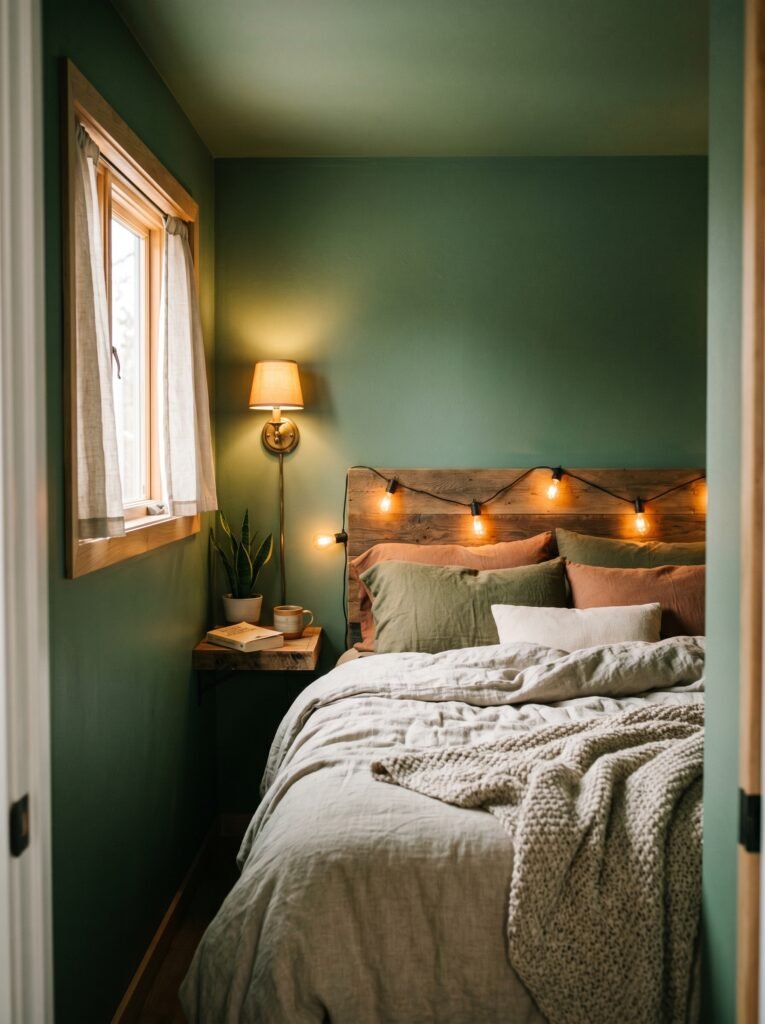
There’s a persistent myth that dark or bold walls make small rooms feel smaller. In reality, a thoughtfully chosen green wall can make a small space feel more intimate and intentional — like a jewel box rather than a cramped room. The key is in the finish and the shade. A matte sage green in a small bedroom creates a cocoon-like warmth that doesn’t shrink the space — it transforms it into something deliberately cozy. A pale mint green in a narrow bathroom makes the room feel fresher and more open.
The trick is always lighting. Natural light amplifies green beautifully, making it glow with warmth and depth. In rooms with limited natural light, warm-toned artificial lighting — think Edison bulbs and warm-white LED strips — will do the same job. What you want to avoid is cool fluorescent lighting, which can turn even the most beautiful green slightly grey and flat. Layer your lighting thoughtfully, and even the smallest room with a green wall will feel like the coziest room in the house.
—
8. Budget-Friendly Ways to Create a Green Wall Without a Full Renovation
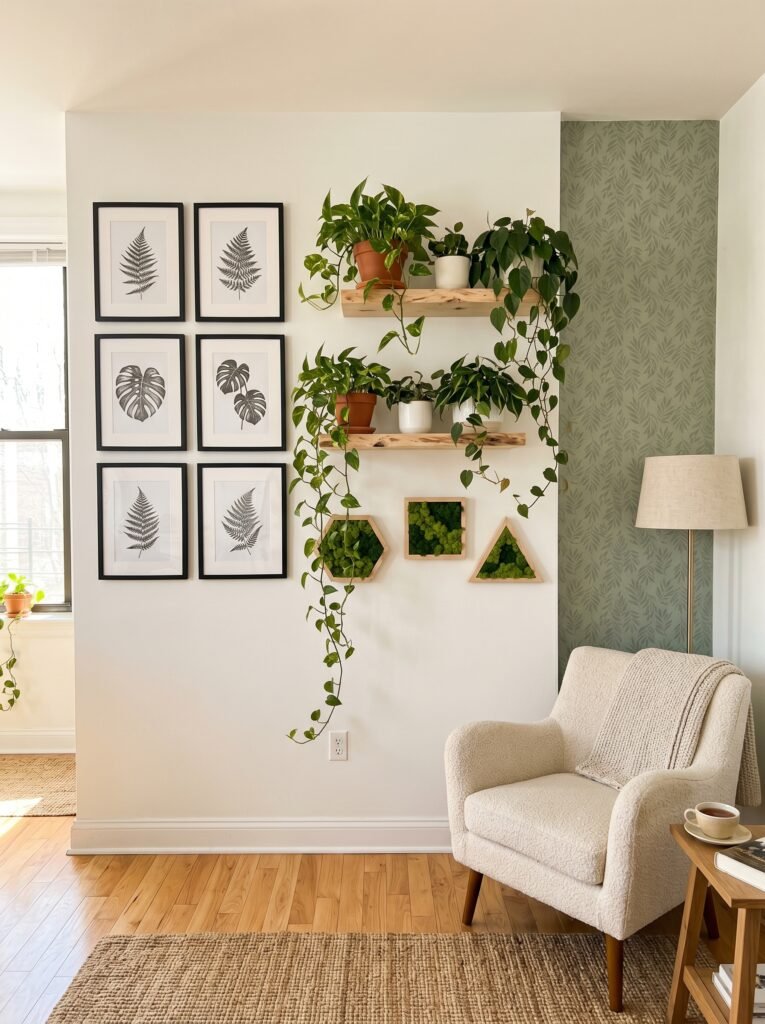
Not everyone has the budget for a professional living wall installation or a full room repaint, and that’s completely fine — some of the most beautiful green wall moments happen on the smallest budgets. Here are ways to bring the green wall energy into your home without a major financial commitment.
Peel-and-stick wallpaper panels in botanical prints or solid sage tones can transform a wall in an afternoon and peel off without damaging paint when you’re ready to change things up. A large grid of framed green botanical prints arranged on a white wall creates a gallery that feels like a green wall without a single drop of paint. Trailing plants — pothos, ivy, heartleaf philodendron — arranged on floating shelves or in hanging planters along a wall build a living, growing green backdrop over time that costs very little but earns enormous visual impact. Moss art panels — preserved moss in geometric or abstract shapes — are available at a range of price points and require zero maintenance, giving you the texture and life of a living wall without the upkeep.
—
9. Trending Green Wall Styles Worth Knowing About
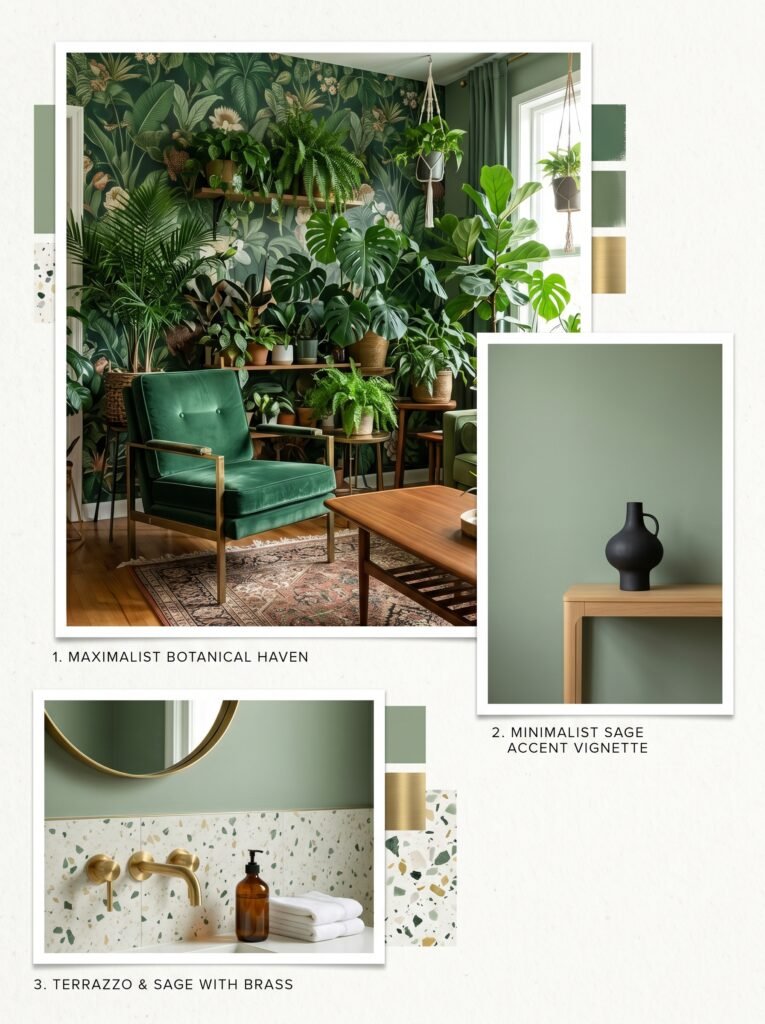
Interior design moves in waves, and right now, green walls are riding one of the most beautiful ones. Knowing the current trends helps you make choices that feel both timely and timeless — the sweet spot every decorator is chasing.
Maximalist botanical interiors — rooms layered with plants, botanical wallpapers, and lush green walls — have exploded on Pinterest and Instagram. This style, sometimes called “the new grandmillennial,” combines traditional patterns with modern warmth and creates spaces that feel eclectic, personal, and deeply lived-in. At the other end of the spectrum, minimalist sage interiors are equally popular: single sage green walls with clean-lined furniture, minimal clutter, and carefully chosen natural objects. This style aligns perfectly with the wellness and slow-living aesthetic that continues to define how many people want to feel in their homes.
“The best green wall trend is always the one that makes you feel most like yourself.”
Terrazzo and green make an unexpectedly joyful pairing that’s growing in popularity — imagine a pale terrazzo tile floor meeting a sage green wall in a bathroom, with brass fixtures bringing warmth to the whole composition. It’s playful and polished at the same time.
—
10. Green Walls in the Kitchen — a Love Story Worth Telling
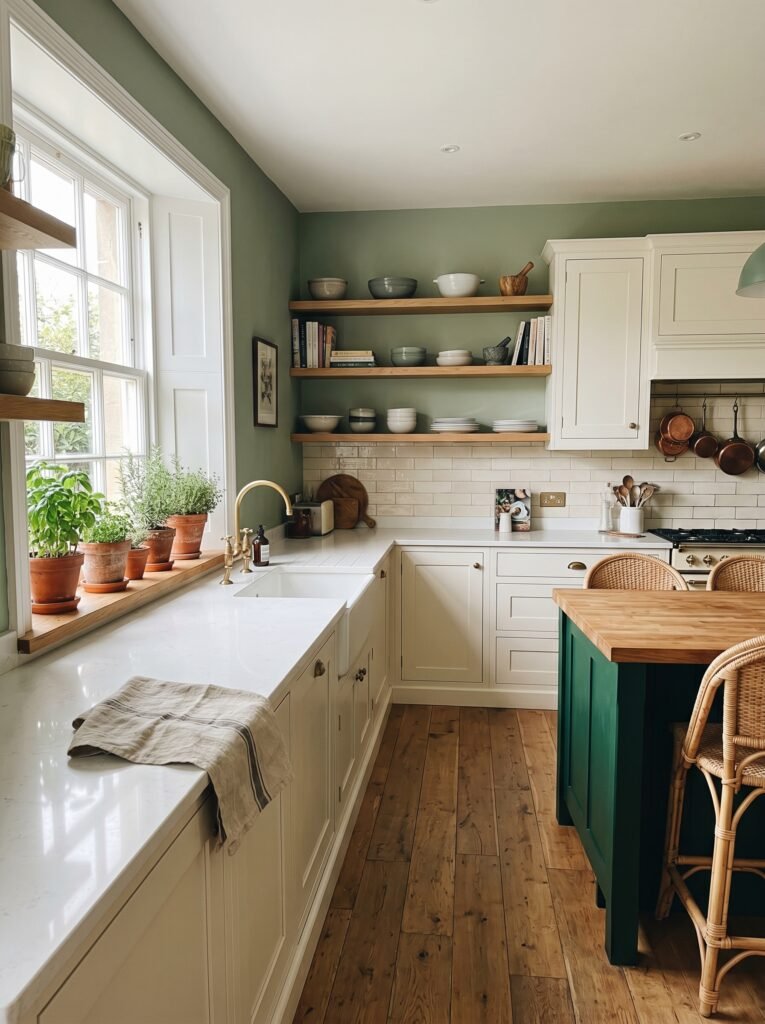
The kitchen is the room where so much of our daily emotional life actually happens. It’s where we make coffee in the morning before the rest of the house wakes up, where we cook for people we love, where we stand at the counter eating leftovers at midnight. A green wall in the kitchen isn’t just decorative — it’s deeply mood-altering.
Sage green kitchen walls are practically a design institution at this point, and for good reason. The combination of sage green, white or cream cabinetry, warm wooden shelves, and terracotta or linen accessories creates a kitchen that feels both beautiful and genuinely comfortable — a space where you actually want to spend time cooking rather than just surviving the task. For bolder spirits, a deep emerald green on a kitchen island or on the wall behind open shelving creates a dramatic focal point that elevates even the most basic kitchen into something that feels considered and special.
—
11. Caring for a Living Green Wall — What No One Tells You
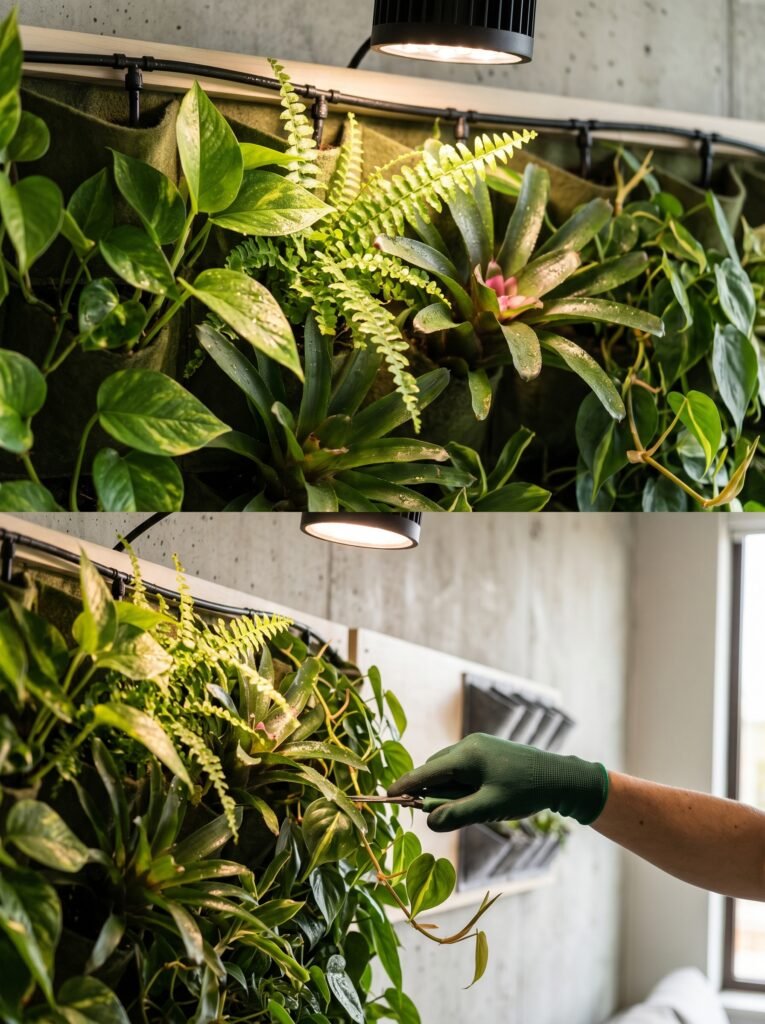
If you’ve decided that a living green wall is your dream, it’s worth going in with clear, honest information about what maintaining one actually involves. The good news is that with the right plant choices and setup, a living green wall is far less demanding than its dramatic beauty suggests.
The most important factor is light. Most indoor plants suitable for wall gardens — pothos, ferns, philodendrons, bromeliads — require bright indirect light rather than direct sun. Position your living wall near a window, or invest in a grow light system designed for vertical gardens. Watering is typically done through a drip irrigation system built into the panel, and many modern living wall kits come with self-watering mechanisms that make the process genuinely simple. Fertilizing lightly during the growing season keeps your plants healthy and lush, and occasional pruning maintains the wall’s shape and encourages new growth.
—
12. The Emotional Return on Investment of a Green Wall

Let’s end where we began — with how a space makes you feel. Interior design at its best isn’t about trends or property values or Instagram aesthetics. It’s about creating a home that genuinely supports the life you want to live inside it. A green wall does something that few design elements can: it brings the restorative quality of nature indoors in a way that is both visually stunning and emotionally nourishing.
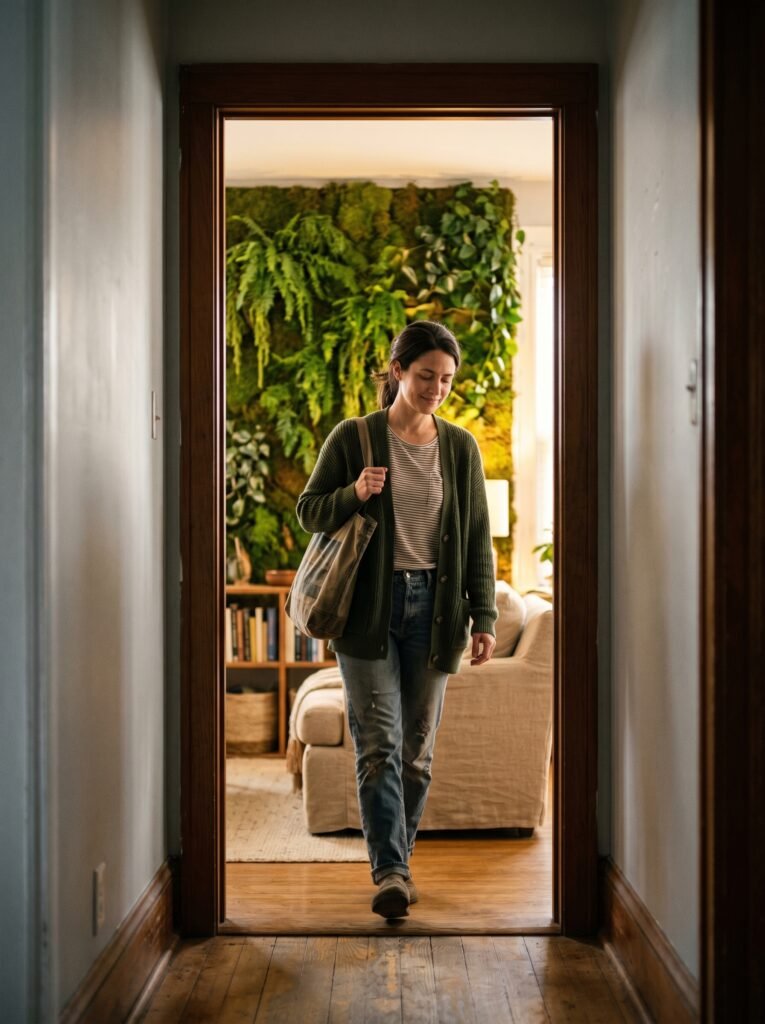
People who live with green walls often describe their homes as feeling “calmer,” “more alive,” “like a sanctuary.” They report spending more time in the rooms where green is present. They feel more creative, more relaxed, more at ease. That is an extraordinary return on what might be the cost of a can of paint or a few hours spent building a plant shelf. When you invest in a green wall, you’re not just investing in how your home looks — you’re investing in how you feel every single time you walk through the door.
—
🌿 How to Take Care of Your Green Wall
Whether you’ve chosen paint or plants, keeping your green wall looking its best is simpler than you might think. First, if you’ve painted, use a high-quality eggshell or satin finish rather than matte — it’s far easier to clean and resists scuffs and moisture, especially in kitchens or bathrooms. Touch up any chips or marks promptly, as green paint can show age more visibly than neutral tones if left unattended. Second, for living walls, always check moisture levels before watering — overwatering is the most common mistake and the fastest way to lose plants in a vertical setup. Third, dust your moss panels or hanging plants gently every few weeks — dust accumulation dulls the natural vibrancy of green foliage and makes even healthy plants look tired. Fourth, rotate or rearrange your plants periodically if they’re in containers on shelves, ensuring every plant gets adequate light exposure and grows evenly. Fifth, seasonal refreshes matter — swap cushions, throws, and accessories around your green wall to keep the overall composition feeling current and personal throughout the year.
—
❓ FAQ
Q: What is the best shade of green for a living room wall? A: It depends on the mood you want to create, but sage green and deep forest green are consistently the most universally flattering choices for living rooms. Sage works beautifully in light, airy spaces and pairs well with warm neutrals, while deep green creates drama and intimacy in larger rooms with good natural light.
Q: Can a green wall work in a north-facing room with little natural light? A: Absolutely, but choose your shade carefully. Warmer greens with yellow or olive undertones tend to fare better in low-light rooms than cool, blue-toned greens, which can read flat or slightly grey without sunlight. Pair with warm-toned artificial lighting to bring out the green’s depth and warmth.
Q: How do I stop a green wall from looking outdated in a few years? A: Choose your shade based on how it makes you feel rather than chasing a trend. Classic greens — sage, olive, forest, and deep emerald — have remained beautiful in interiors across decades. Pair your green wall with quality, timeless materials and allow your accessories to evolve seasonally, and the wall itself will always feel relevant.
—
💭 Final Thought
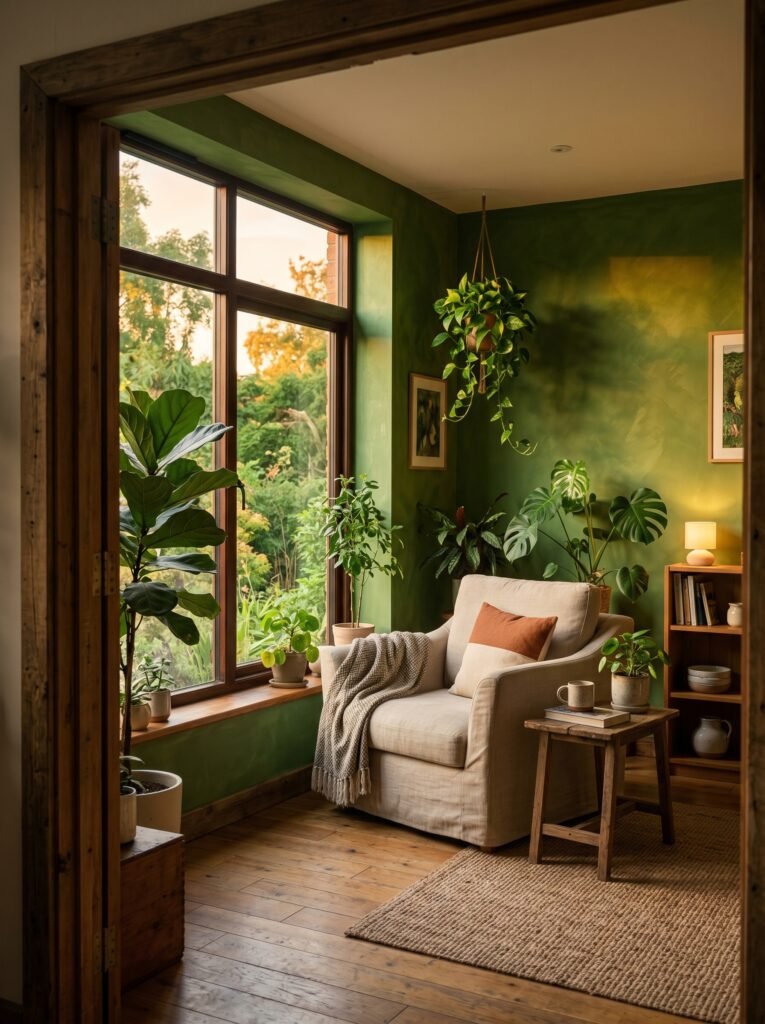
A green wall is one of those rare design decisions that manages to be both deeply personal and universally beautiful — the kind of choice that looks different in every home but feels right in all of them. It’s more than decoration. It’s a quiet act of bringing the natural world inside, of creating a space that breathes alongside you. So the only question left is this: which shade of green is your home already asking for?