The Secret Life of Hallway Lighting: How the Right Light Can Transform the Most Overlooked Space in Your Home
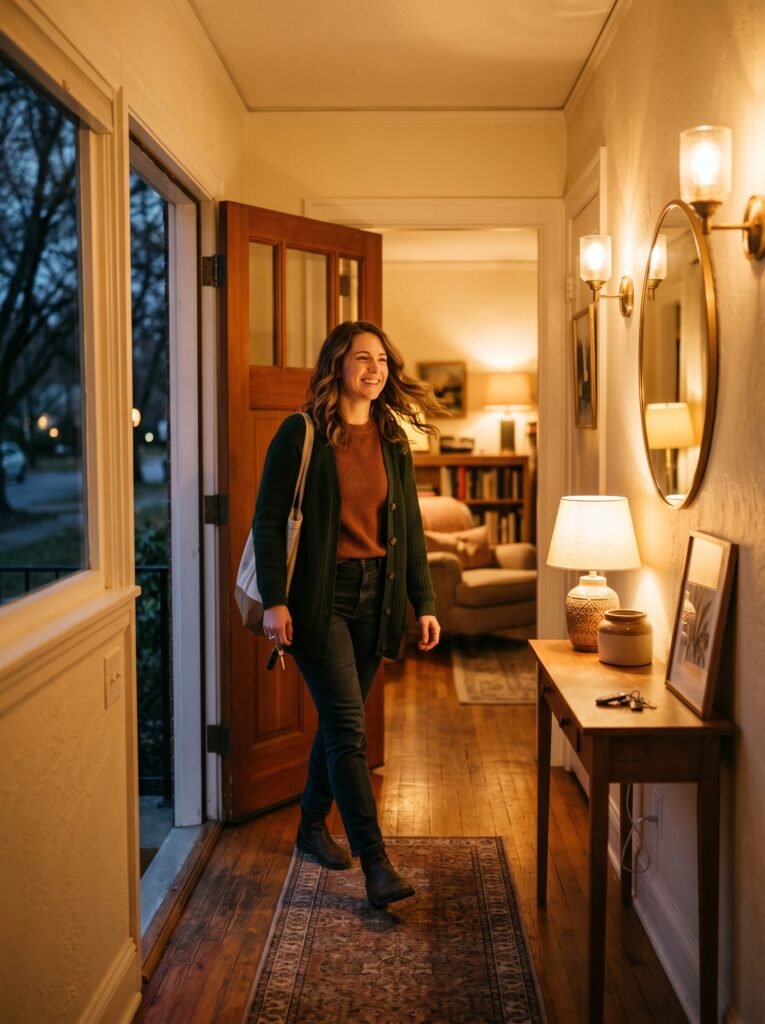
There’s a moment — you probably know it well — when you walk into someone’s home and feel immediately at ease before you’ve even reached the living room. That feeling doesn’t come from a grand sofa or an expensive rug. More often than not, it begins in the hallway, where the light wraps around you like a quiet welcome. Hallway lighting is the unsung hero of interior design, and once you understand its power, you’ll never think of your entryway the same way again.
—
Table Of Content
1. Why Your Hallway Lighting Is Doing More Work Than You Think
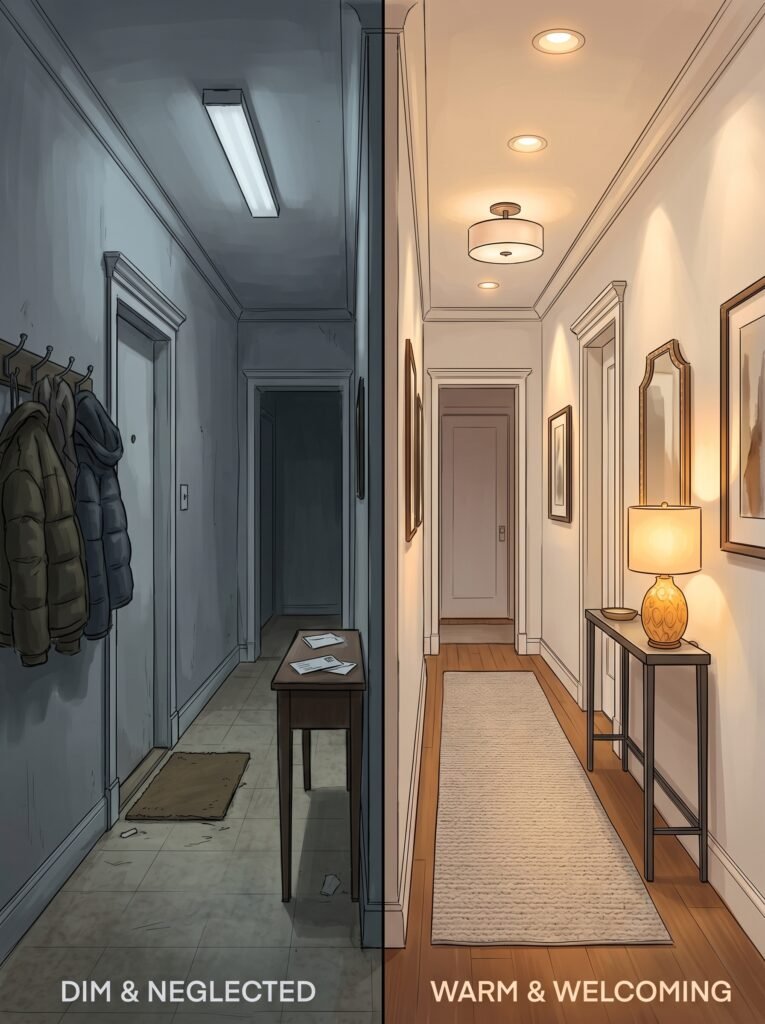
Most people treat their hallway as a corridor — a necessary passageway between the rooms that “actually matter.” But interior designers know a different truth. The hallway is the first impression your home makes on every person who walks through your door, including yourself. Every single day, the lighting in that narrow stretch of space tells your brain whether this is a home to relax in or just a building to move through.
Poor hallway lighting — too dim, too harsh, poorly placed — can make even the most beautifully decorated home feel off-balance. It creates shadows that flatten the walls, makes the space feel cramped, and subtly signals neglect, even when the rest of the house is immaculate.
“The hallway doesn’t just connect rooms — it sets the emotional tone for your entire home.”
Good hallway lighting, on the other hand, does something almost magical. It makes the space feel larger, warmer, and intentional. It transforms a throughway into an experience.
—
2. The Three Layers of Light You Need to Know
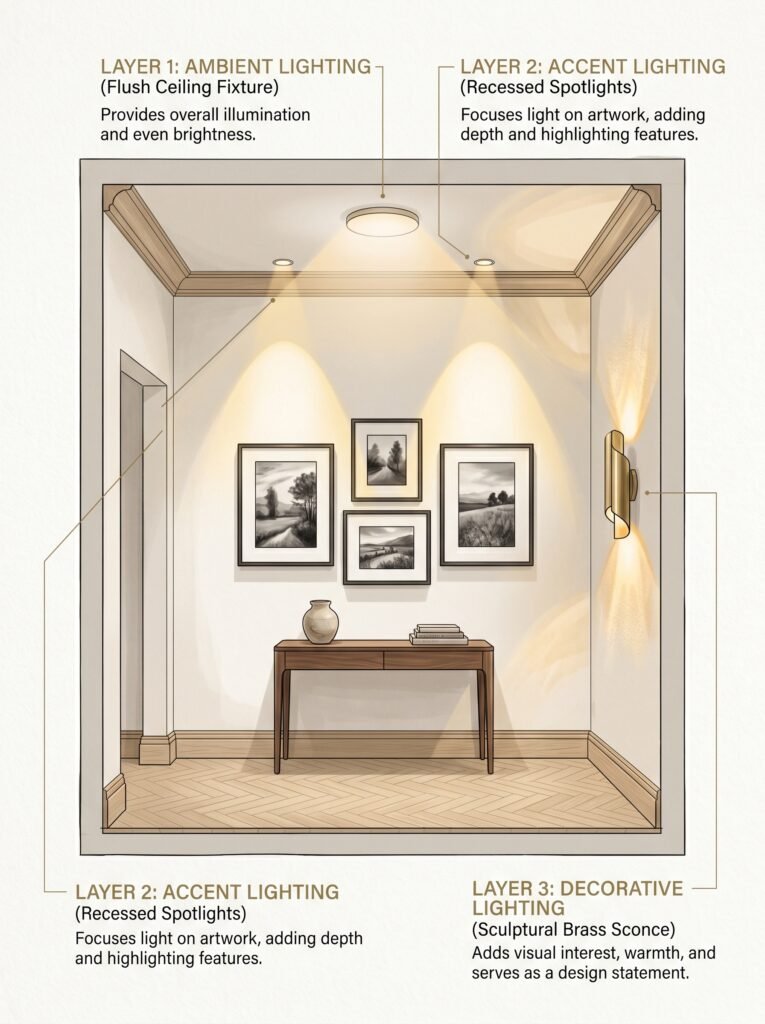
Before you choose a single fixture, you need to understand one foundational concept that professional interior designers use in every project: layered lighting. It sounds complicated, but it’s actually beautifully simple once you break it down.
The first layer is ambient lighting — this is your base, the overall illumination that makes the space functional and navigable. In a hallway, this is usually a ceiling fixture, recessed lights, or a pendant lamp. The second layer is accent lighting, which adds depth and visual interest by highlighting architectural details, artwork, or the texture of a wall. The third layer is decorative lighting — fixtures that serve as visual statements in themselves, like a sculptural wall sconce or a vintage-inspired lantern.
Most hallway lighting mistakes happen because people only consider one of these layers — usually just the ceiling light — and wonder why the space still feels flat and uninspiring. When you layer all three, even a narrow, windowless hallway can feel rich and alive.
—
3. The Warm vs. Cool Light Decision That Changes Everything
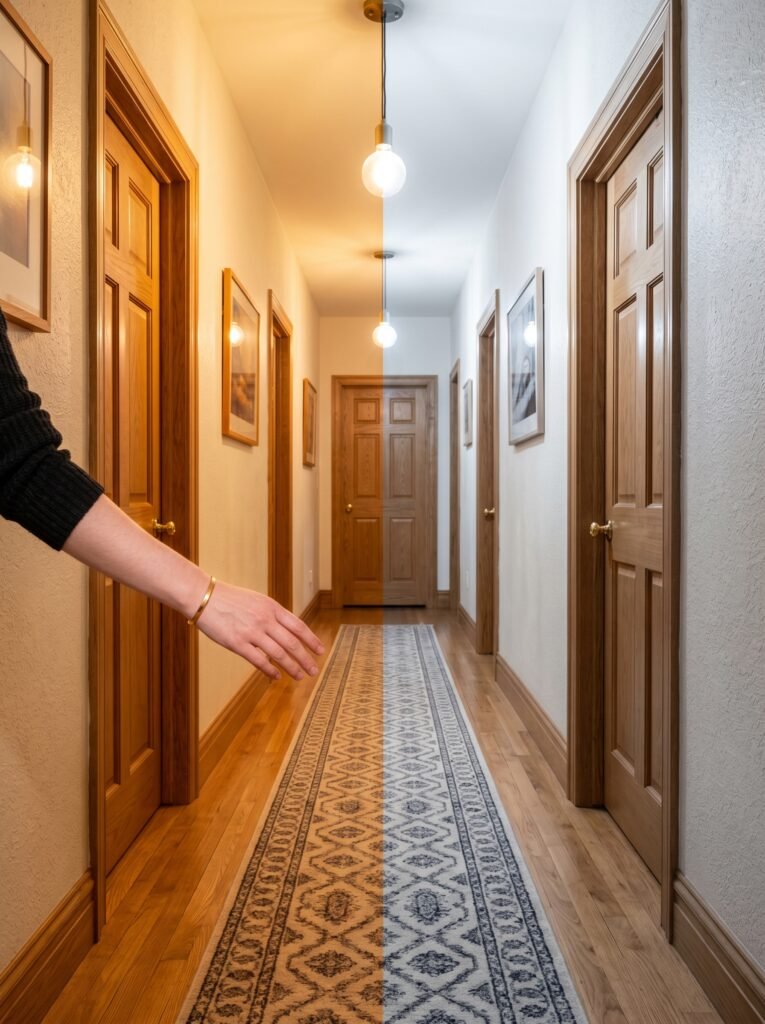
Here’s a question that doesn’t get asked nearly enough when people redesign their hallways: what color temperature are you working with? This single decision — warmer or cooler light — has an outsized impact on how your hallway feels at every hour of the day.
Color temperature is measured in Kelvins. Bulbs in the 2700K–3000K range produce a warm, golden light that feels intimate and inviting — the kind of light that makes skin look radiant and wood tones glow. Bulbs in the 4000K–5000K range produce a cooler, crisper light that feels modern and energizing.
For residential hallways, warm light is almost always the right choice. It makes narrow spaces feel cozy rather than clinical. It softens hard edges. And at the end of a long day, walking through a warmly lit hallway signals to your nervous system that you are, without question, home.
—
4. Ceiling Fixtures That Actually Work in Narrow Spaces
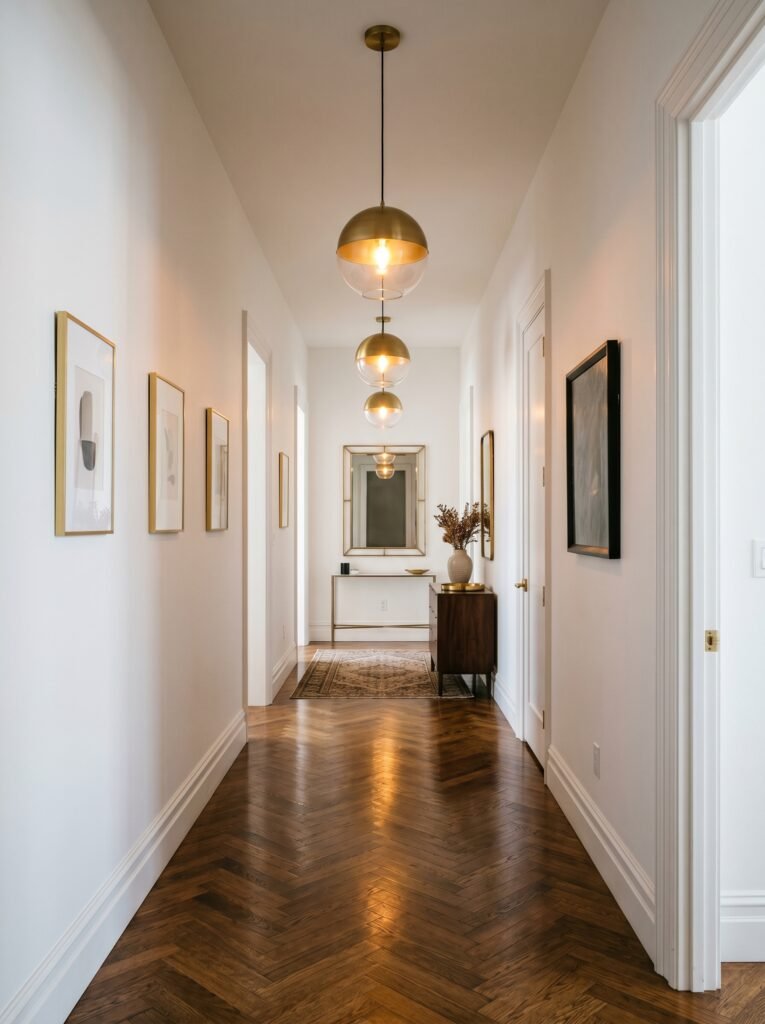
The hallway ceiling fixture is a source of enormous frustration for many homeowners, largely because the wrong choice can make a small space feel suffocating. Here’s what to look for — and what to avoid.
Flush-mount ceiling lights are almost always the safest bet for hallways with standard ceiling heights (8 to 9 feet). They sit flat against the ceiling, maximize headroom, and come in an astonishing range of styles from mid-century modern to farmhouse to sleek contemporary. Semi-flush mounts drop a few inches and create a slightly more elegant look without sacrificing practicality.
Pendant lights can work beautifully in hallways with higher ceilings — 10 feet or more. A single pendant at the end of a hallway creates a visual destination, drawing the eye forward and making the space feel more intentional. If your hallway is long, consider two or three pendants spaced evenly; the rhythm they create is deeply satisfying in a way that’s hard to articulate but impossible to miss.
What to avoid: chandeliers that are too large for the space, bare bulbs without shades, and anything that creates a single harsh pool of downward light without any upward bounce.
—
5. Wall Sconces: The Underrated Stars of Hallway Design
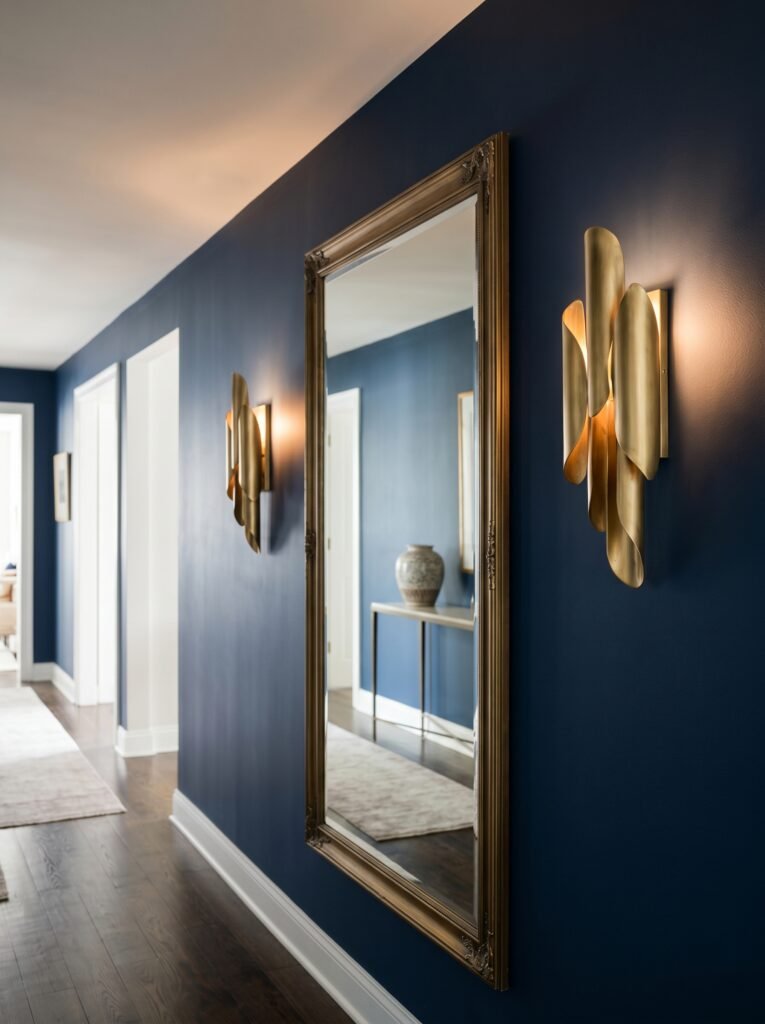
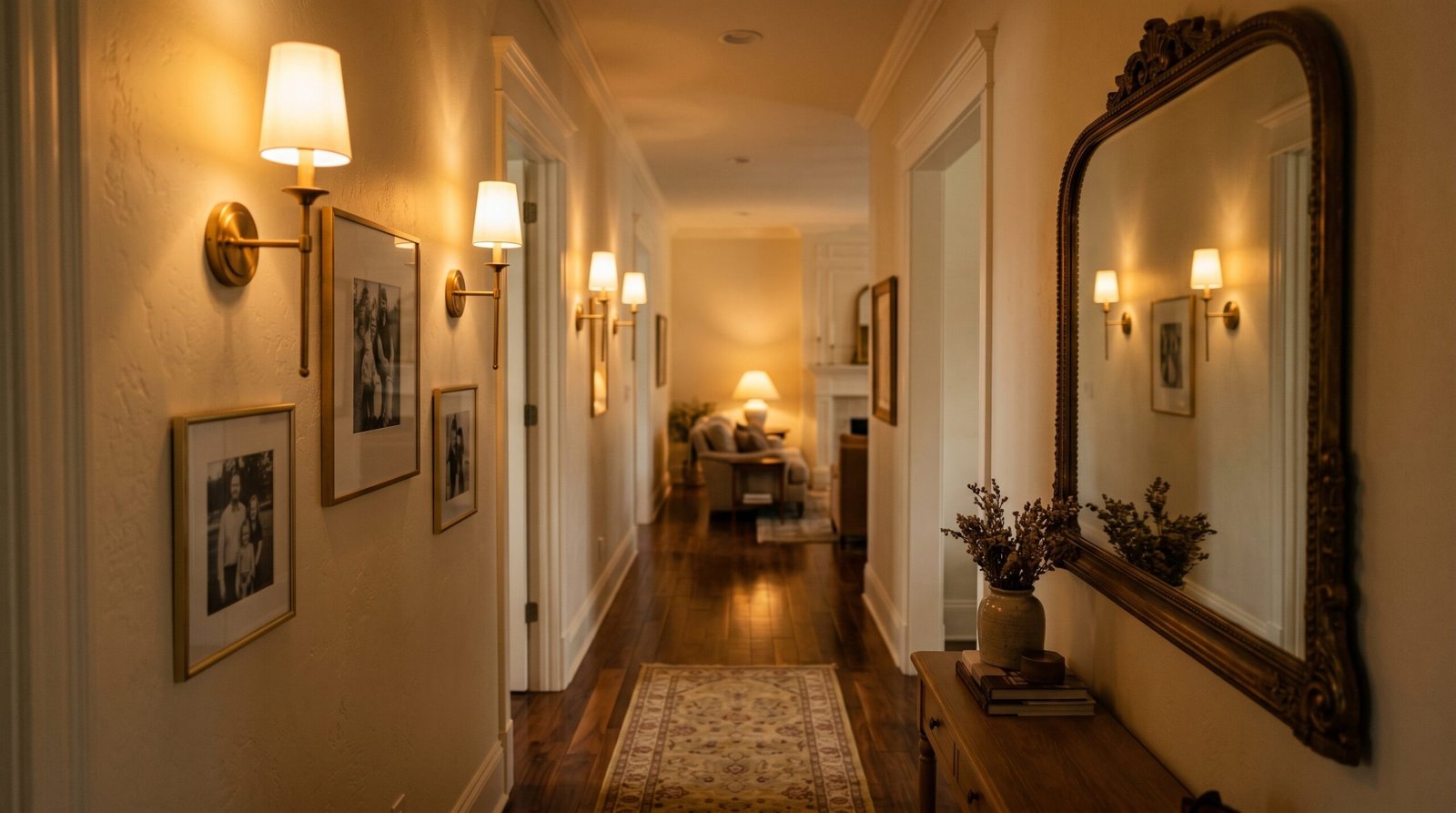
If there is one lighting choice that consistently elevates a hallway from ordinary to extraordinary, it’s the addition of wall sconces. They are versatile, beautiful, and they solve one of the hallway’s biggest lighting challenges: getting illumination to the middle of the wall where recessed ceiling lights simply can’t reach.
Wall sconces create a soft, flattering light that bounces gently off walls and ceilings, filling a space with warmth rather than directing a harsh beam downward. Paired with mirrors, they create a sense of depth and brightness that makes even the narrowest hallway feel more spacious.
“A pair of well-chosen wall sconces can make a hallway feel like it belongs in an interior design magazine — without the magazine budget.”
When installing sconces in a hallway, the general rule is to place them at around eye level — approximately 60 to 65 inches from the floor. This ensures the light source works with the human scale of the space rather than fighting it. If you’re lining a longer hallway with multiple sconces, aim for spacing of roughly 6 to 8 feet between fixtures for a rhythm that feels balanced rather than crowded.
—
6. Using Lighting to Make a Narrow Hallway Feel Wider
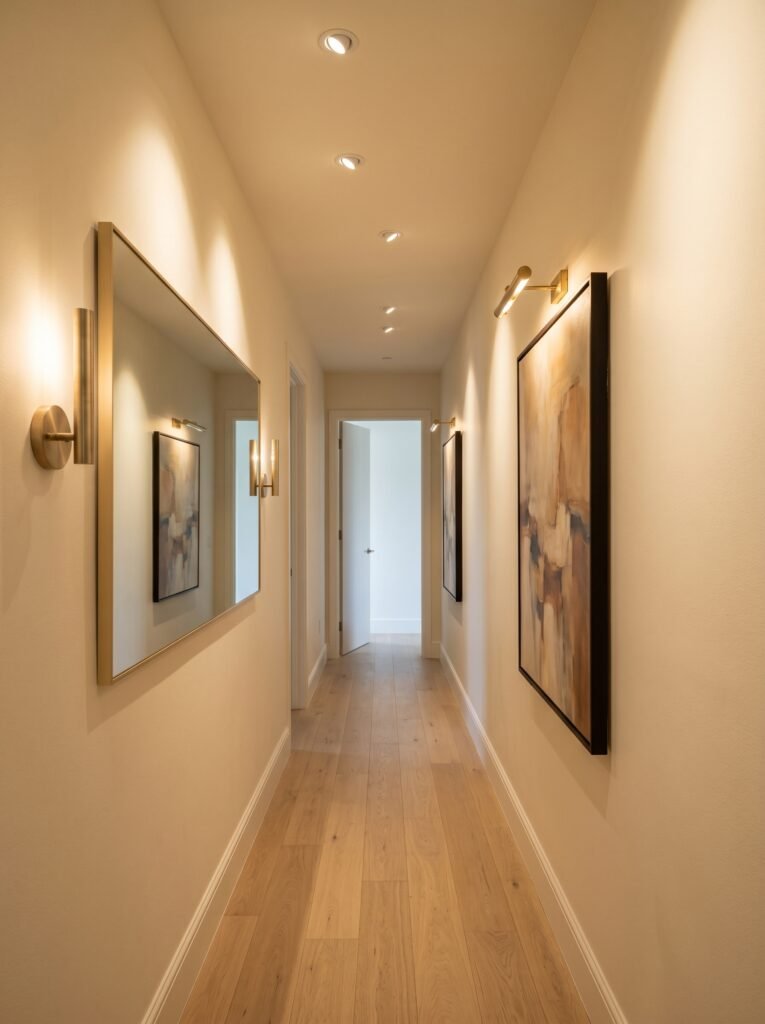
This is perhaps the most practical question people ask about hallway lighting, and the answer involves a few clever tricks that work every time. The first is directional accent lighting — small spotlights or recessed lights angled toward the walls rather than straight down. This “wall washing” technique spreads light across the surface, making the walls appear to recede and the space to expand.
The second trick is to use lighting to highlight art or objects placed on the walls. When the eye has something interesting to focus on, the brain perceives the space as larger because it’s actively engaging with the environment rather than just passing through it. A small picture light above a framed print, or a recessed light above a gallery wall, creates this effect beautifully.
Mirrors are lighting’s best friend in any narrow hallway. Place a large mirror opposite a sconce or window, and the reflected light effectively doubles the perceived brightness and width of the space.
—
7. The Magic of Recessed Lighting in Hallways
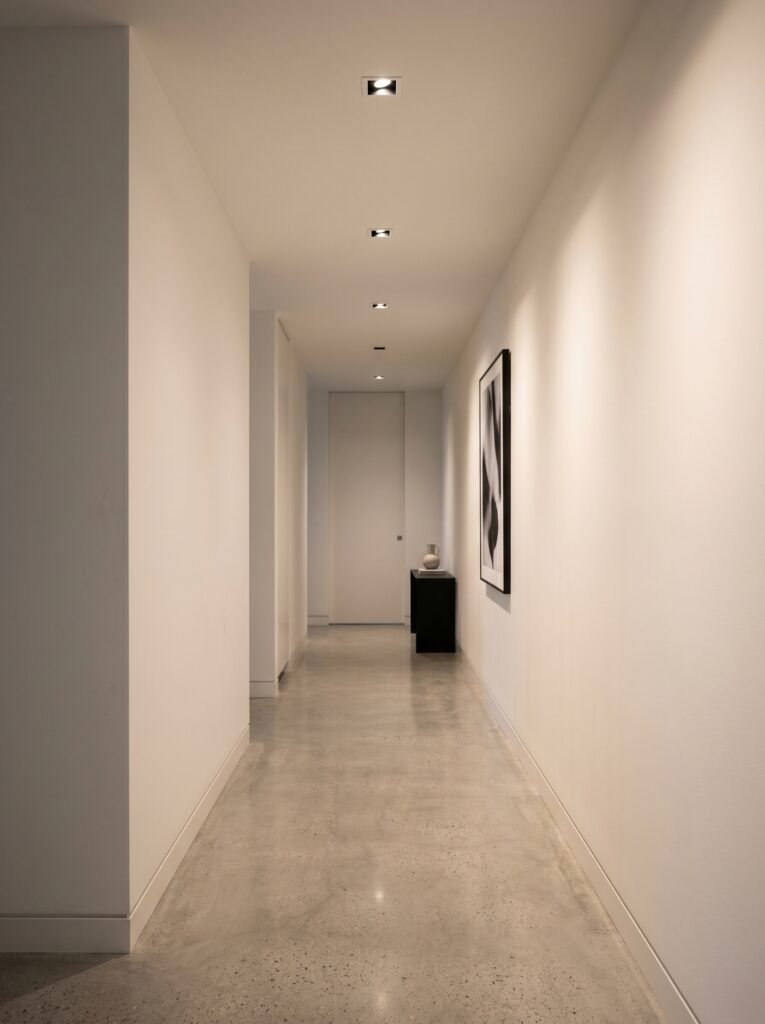
Recessed lighting — those small, canister-style fixtures set flush into the ceiling — has a reputation for being cold and corporate. But in a hallway, when used correctly, recessed lights are one of the most elegant solutions available.
The key is placement and bulb choice. Recessed lights should be spaced evenly along the length of the hallway, typically 4 to 6 feet apart, and positioned about 18 to 24 inches from the walls if you want to achieve that wall-washing effect. Use warm-toned bulbs (2700K) and, if possible, install a dimmer switch so you can control the intensity throughout the day.
Recessed lights work exceptionally well in modern and minimalist hallway designs where visible fixtures would interrupt the clean lines. They’re also ideal in hallways with lower ceilings where any hanging fixture would feel intrusive.
—
8. Statement Lighting for Entryways That Leave a Lasting Impression
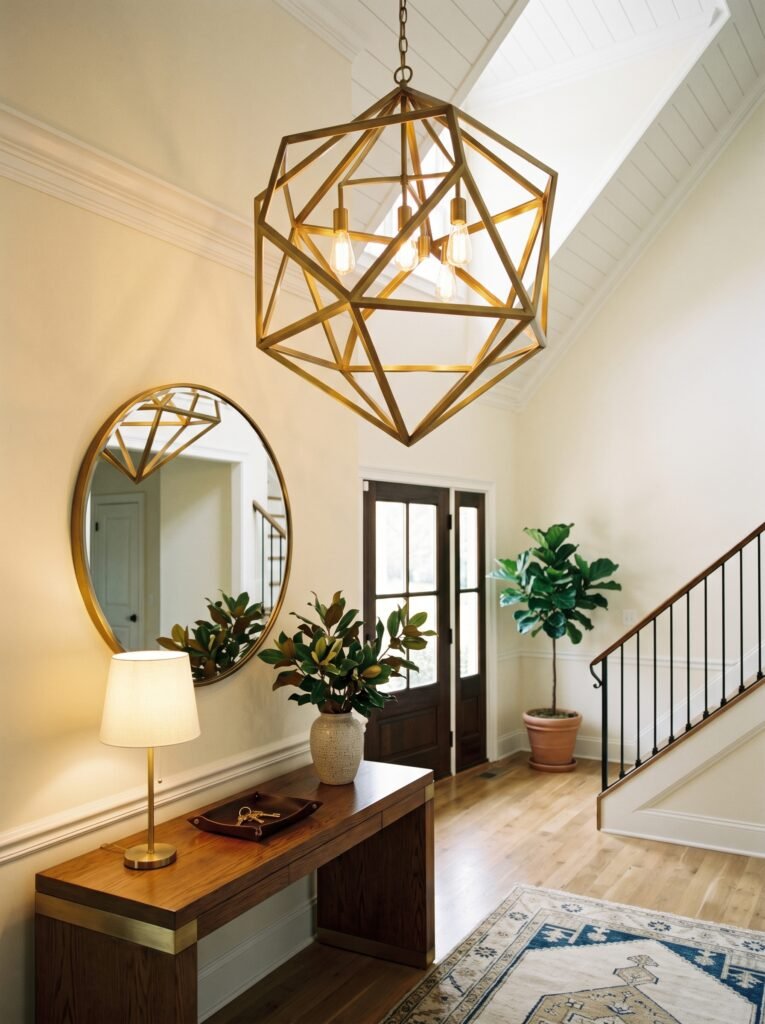
The entryway — that transitional space between outside and inside — deserves its own lighting moment. This is where you have the most freedom to be bold, because the entryway is a brief visual experience rather than a space people linger in.
A sculptural pendant light or a dramatic chandelier in an entryway makes an immediate statement that sets the tone for the entire home’s design personality. A rattan pendant speaks to a relaxed, natural aesthetic. A geometric brass fixture signals modern sophistication. A vintage lantern-style hanging light evokes warmth and history.
The entryway is also where the lighting needs to be genuinely functional — bright enough to find your keys, check your reflection, and navigate safely while also carrying an armful of groceries. Layering a statement overhead fixture with a small table lamp on an entryway console creates both drama and practicality.
—
9. Smart Lighting in Hallways: The Feature You Didn’t Know You Needed
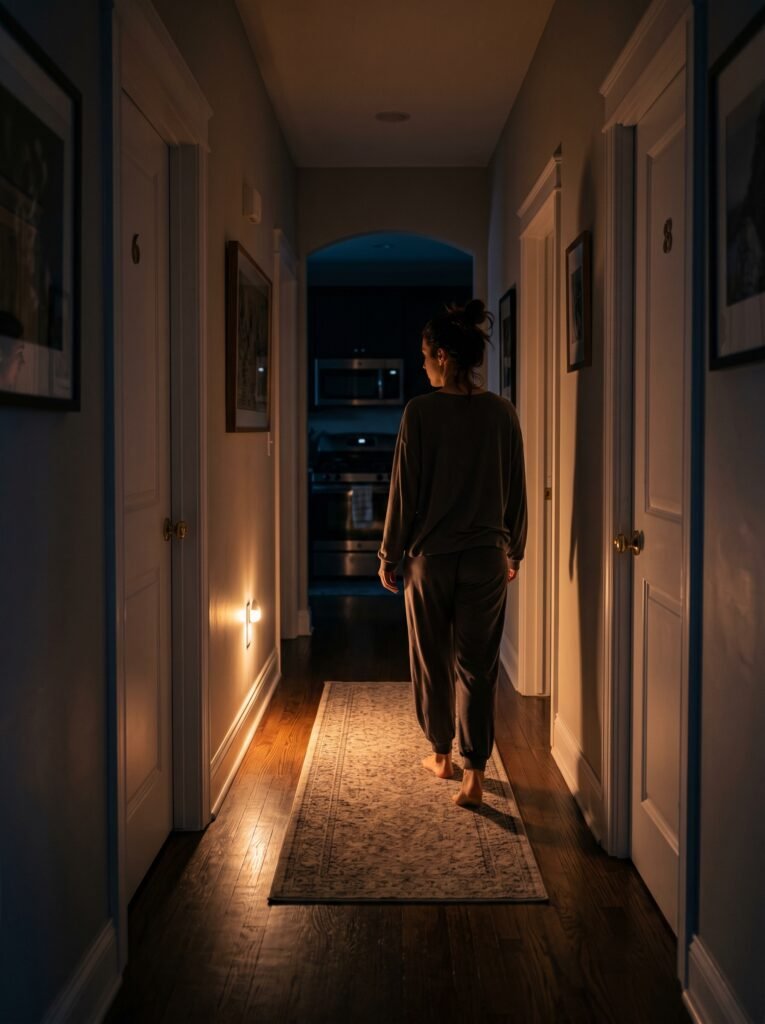
Motion-activated lighting in hallways is one of those ideas that sounds merely practical until you actually experience it — and then you wonder how you ever lived without it. Imagine waking up at 2 a.m. for a glass of water and having the hallway gently illuminate at exactly the right brightness as you pass through, then quietly fade again as you return to bed.
Smart lighting systems like Philips Hue, Lutron Caseta, or LIFX allow you to program scenes and schedules for your hallway lighting. A “morning” scene might bring the lights up gradually to a bright, warm white that eases you into the day. An “evening” scene dims them to a soft amber that prepares your body for rest.
“Smart hallway lighting isn’t about technology for its own sake — it’s about designing a home that responds to the rhythms of your life.”
Even without a full smart home system, a simple motion sensor paired with a warm LED bulb on a dimmer can transform a dark, forgettable corridor into a space that feels genuinely thoughtful and modern.
—
10. Lighting for Stairways: Safety, Style, and the In-Between
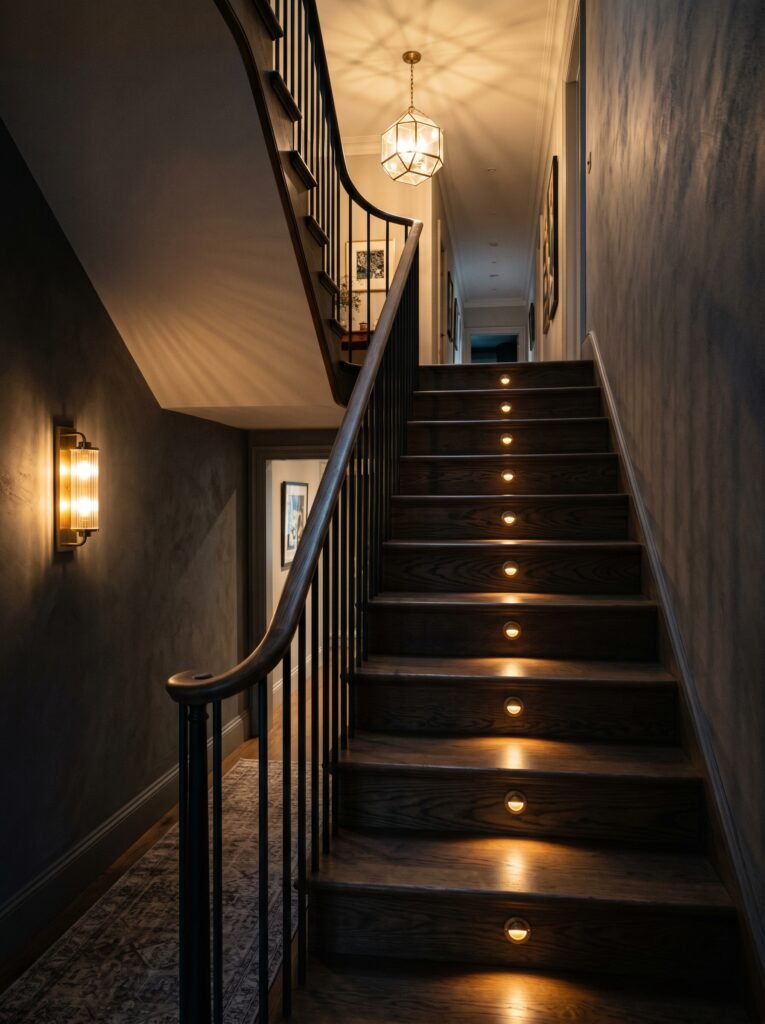
If your hallway includes a staircase, the lighting equation becomes even more important — because here, getting it wrong is not just aesthetically displeasing, it can be genuinely hazardous. Stairway lighting needs to be bright enough to illuminate each step clearly while still feeling consistent with the rest of the hallway’s atmosphere.
Step lighting — small LED fixtures embedded into the stair risers or installed low on the adjacent wall — provides a beautiful, low-profile solution that illuminates the treads without creating glare. It has a subtle, almost cinematic quality that makes even a simple staircase feel designed rather than merely functional.
Combine step lighting with an overhead pendant or sconce at the top and bottom of the staircase for a layered effect that is both safe and visually stunning.
—
11. How Lighting Interacts With Hallway Color and Materials
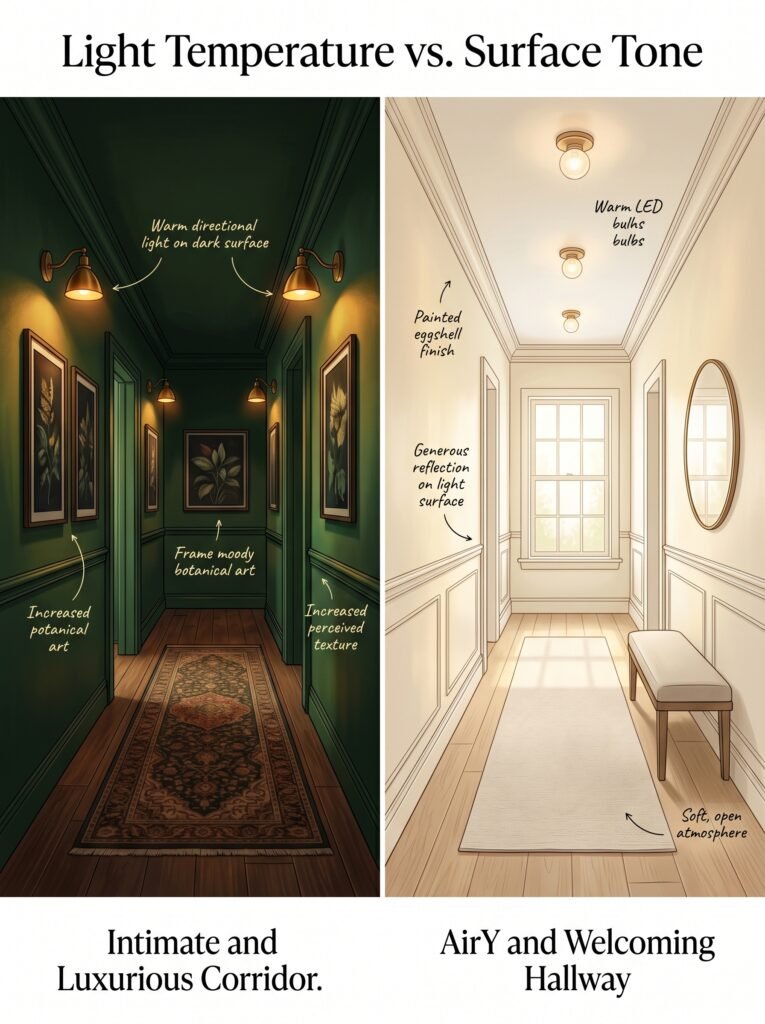
Light and color are inseparable. The finish of your walls, the tone of your flooring, the sheen of your trim — all of these surfaces interact with light in ways that can either amplify your design vision or subtly undermine it.
Dark-painted hallways — deep navy, forest green, charcoal — absorb light rather than reflecting it, which means they need more of it, and specifically more directional, warm-toned light to avoid feeling cave-like. The payoff, when done well, is extraordinary: a dark hallway lit with warm, layered light feels deeply intimate and luxurious, like the kind of space you’d find in a beautifully designed boutique hotel.
Light-painted hallways — white, cream, pale sage — reflect light generously, making them more forgiving and naturally brighter. In these spaces, you have more flexibility with your lighting choices, though warm light will always create a more welcoming atmosphere than cool.
Glossy surfaces — lacquered trim, mirrored furniture, polished tile floors — bounce light and increase the perceived brightness of the space. Matte surfaces absorb light and soften its impact. Understanding this interplay allows you to make lighting and material choices that work together rather than competing.
—
12. The Finishing Details That Pull It All Together
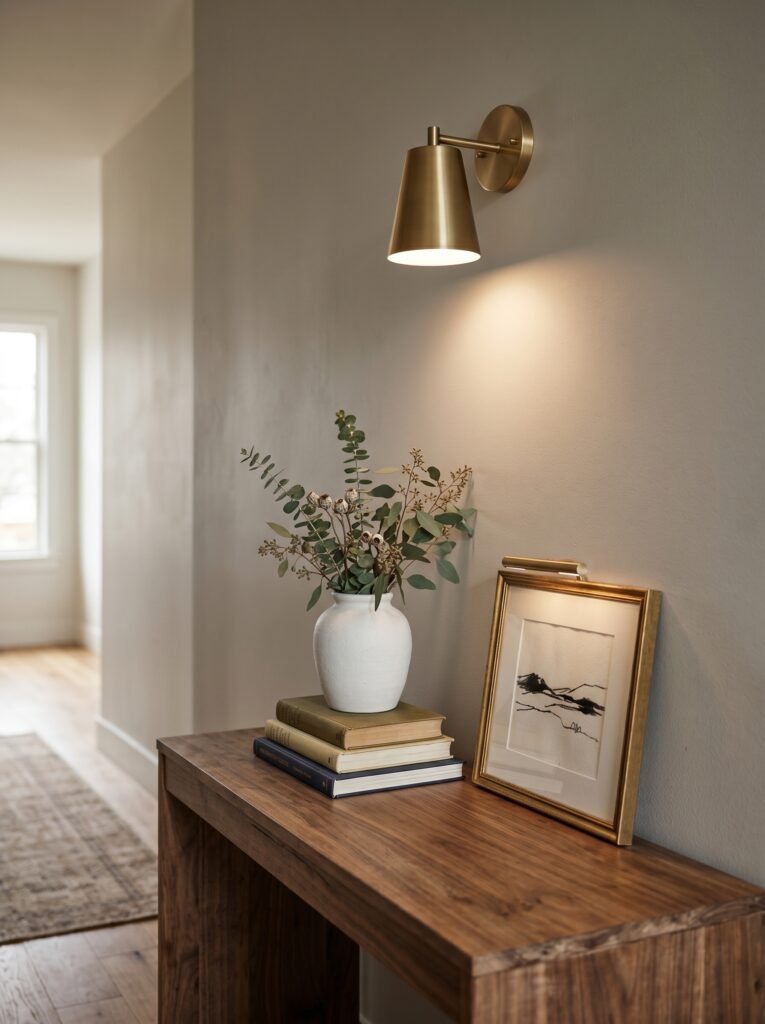
Here’s where the magic really lives — in the details that take a well-lit hallway from “nice” to “unforgettable.” Think about the finish of your fixtures. Brushed brass adds warmth and pairs beautifully with natural materials like linen, wood, and stone. Matte black creates a graphic, contemporary contrast that is particularly striking against white or pale walls. Polished nickel or chrome reflects light cleanly and suits a more refined, classical aesthetic.
Consider the lamp shades on any visible bulbs. A linen shade diffuses light gently and adds texture. A glass or crystal shade allows light to scatter and sparkle. A dark shade creates a more directed, dramatic effect.
Finally, think about what your lighting is illuminating. A well-placed light above a piece of art, a beautiful console table, a vase of fresh branches, or a stack of thoughtfully chosen books turns your hallway into a curated space that tells your story, one warm pool of light at a time. The hallway is not where design goes to die — it is where design gets to make its first, most honest impression.
—
🌿 How to Take Care of Your Hallway Lighting
Maintaining your hallway lighting is simpler than most people expect, and a little regular attention keeps everything looking and functioning beautifully for years.
Start by cleaning your fixtures every few months — dust accumulates on shades, glass diffusers, and bulbs, reducing brightness noticeably over time. A soft microfiber cloth handles most surfaces easily. For glass and crystal fixtures, a gentle glass cleaner restores clarity and sparkle.
Replace bulbs proactively rather than reactively. LED bulbs last far longer than traditional incandescents, but when one goes, replace all the bulbs in a matched set at the same time so the light temperature and brightness stays consistent throughout the space.
Check your dimmers periodically — dimmer switches can develop a slight buzz or flicker over time, which is often a sign the dimmer isn’t rated for the LED load. Updating to an LED-compatible dimmer is an inexpensive fix that makes a significant difference.
Finally, revisit your lighting seasonally. The shorter, darker days of autumn and winter call for warmer, slightly brighter settings; the longer days of spring and summer can support dimmer, cooler evening scenes. Your hallway lighting should evolve with the light outside.
—
❓ FAQ
Q: What is the best type of lighting for a dark, windowless hallway? A: Wall sconces with warm-toned bulbs and recessed ceiling lights angled toward the walls are your best allies in a windowless hallway. Adding a large mirror opposite your light source will dramatically increase the perceived brightness and make the space feel more open.
Q: How many lumens do I need for hallway lighting? A: For a typical residential hallway, aim for a total of 50 to 100 lumens per square foot. A narrower hallway may need only two or three fixtures to hit this target comfortably. Always use a dimmer switch so you can adjust the intensity based on time of day and personal preference.
Q: Can I mix different lighting fixtures in a hallway? A: Absolutely — and in fact, mixing fixture types is what creates that layered, designer-quality look. The key is to maintain a consistent finish and style across your fixtures. For example, a mix of brushed brass recessed lights, a matching brass pendant, and brass-finished wall sconces creates a cohesive, intentional look even though the fixture types are different.
—
💭 Final Thought
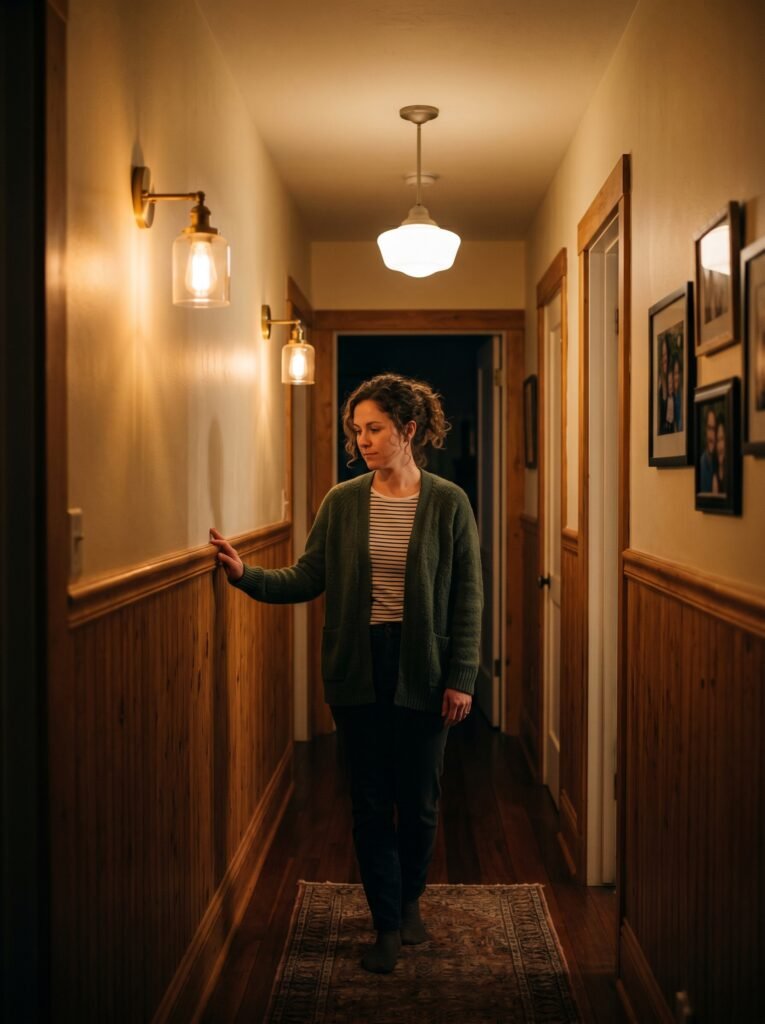
The hallway is the first chapter of your home’s story — the opening line that sets everything that follows into context. When the light there is warm, thoughtful, and beautifully placed, every person who steps through your door — including you, every single day — feels it before they consciously register it. That invisible welcome is worth every moment spent getting the lighting right. So the next time you walk through your hallway and something feels slightly off, ask yourself: is it really the décor that needs changing, or is it simply the light?