Why Monstera Plants Are the Secret Soul of a Beautiful Interior (And How to Style Them Like a Designer)
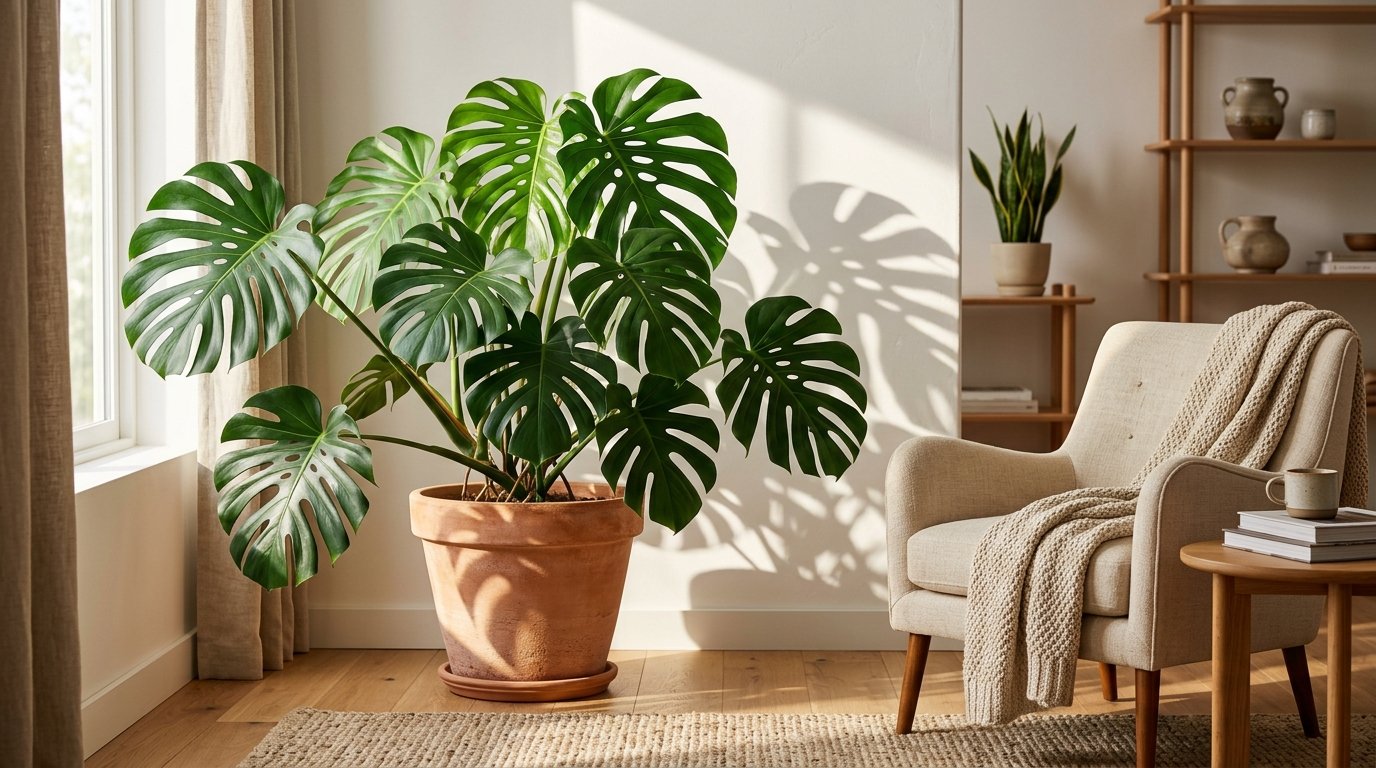
There’s something almost inexplicable about walking into a room and feeling instantly at ease — and more often than not, there’s a monstera sitting quietly in the corner, doing all the heavy lifting. With their dramatic split leaves and effortless tropical presence, monstera plants have become the defining piece of a generation of interiors that value warmth, life, and genuine character over sterile perfection.
—
Table Of Content
1. The Monstera Moment That Changed Interior Design Forever
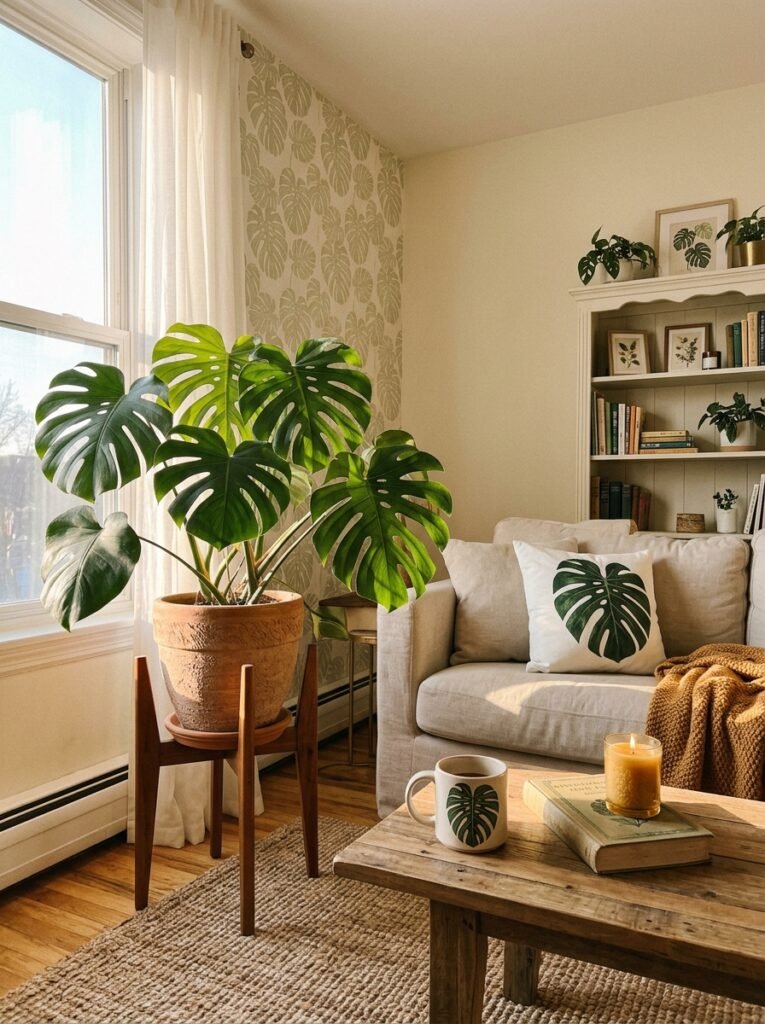
It didn’t happen overnight. The monstera — formally known as Monstera deliciosa, and casually beloved by nearly every interior stylist alive — began its true cultural rise in the early 2010s, when Pinterest boards started filling with images of light-soaked apartments anchored by a single, impossibly beautiful plant. Before long, that fenestrated leaf was everywhere: on wallpaper, ceramic mugs, throw pillows, and Instagram feeds from Stockholm to São Paulo.
But here’s what those trend reports often miss: the monstera didn’t become iconic because it was trendy. It became iconic because it works. It softens hard architectural lines. It adds scale to rooms that feel flat. It brings an organic texture that no piece of furniture, no matter how well-designed, can replicate. The monstera moment wasn’t a fad — it was a return to something deeply human: the instinctive need to live alongside growing, breathing things.
“A room without a plant is just a room. A room with a monstera is a home.”
2. Understanding the Monstera Family — More Variety Than You Think
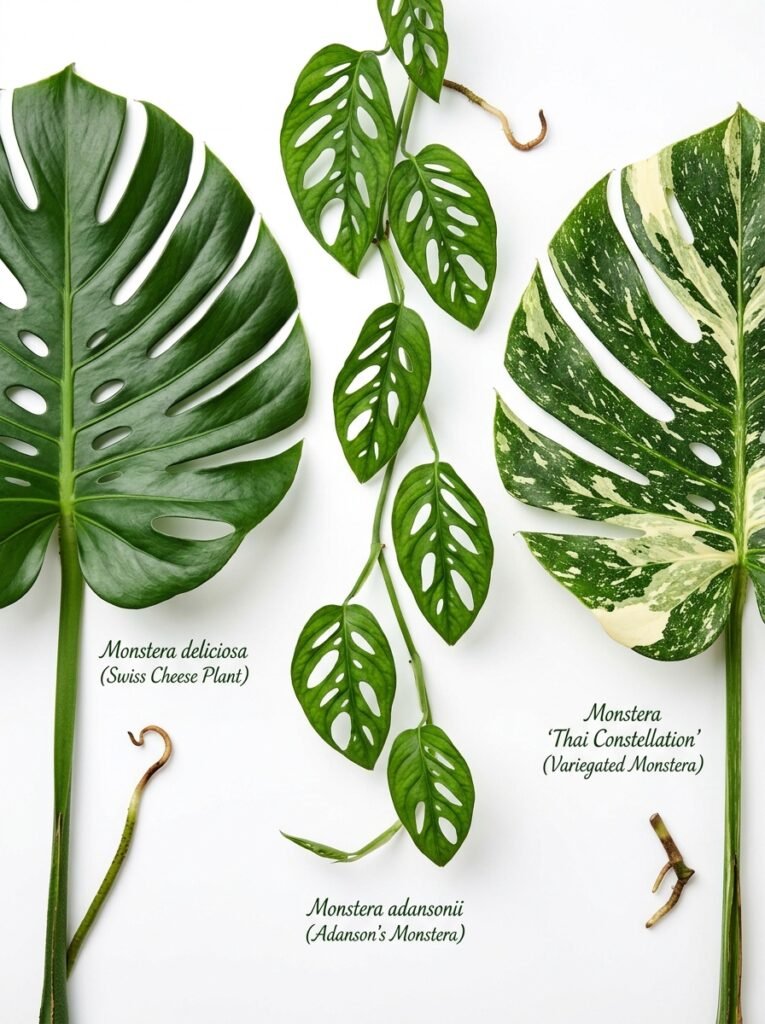
Most people hear “monstera” and picture the classic Monstera deliciosa — that large, glossy leaf with the characteristic holes and deep cuts that look like they were designed by an architect who moonlighted as a botanist. And yes, that variety is magnificent. But the monstera family is far richer than most people realize, and understanding your options is the first step to making a truly intentional interior choice.
Monstera adansonii, sometimes called the Swiss cheese vine, produces smaller, more hole-heavy leaves and trails beautifully — ideal for hanging planters or cascading off a shelf in a home office or reading nook. Monstera thai constellation offers creamy white variegation splashed across deep green leaves, turning each individual leaf into something that looks more like fine art than botany. Monstera obliqua is rarer still, almost skeletal in its delicacy, with leaves that are more hole than leaf — genuinely breathtaking in the right interior context.
Knowing which variety suits your space isn’t just practical — it’s creative. It’s the difference between choosing a statement piece and choosing the right statement piece.
3. Why the Monstera Leaf Shape Speaks to Something Deeply Emotional
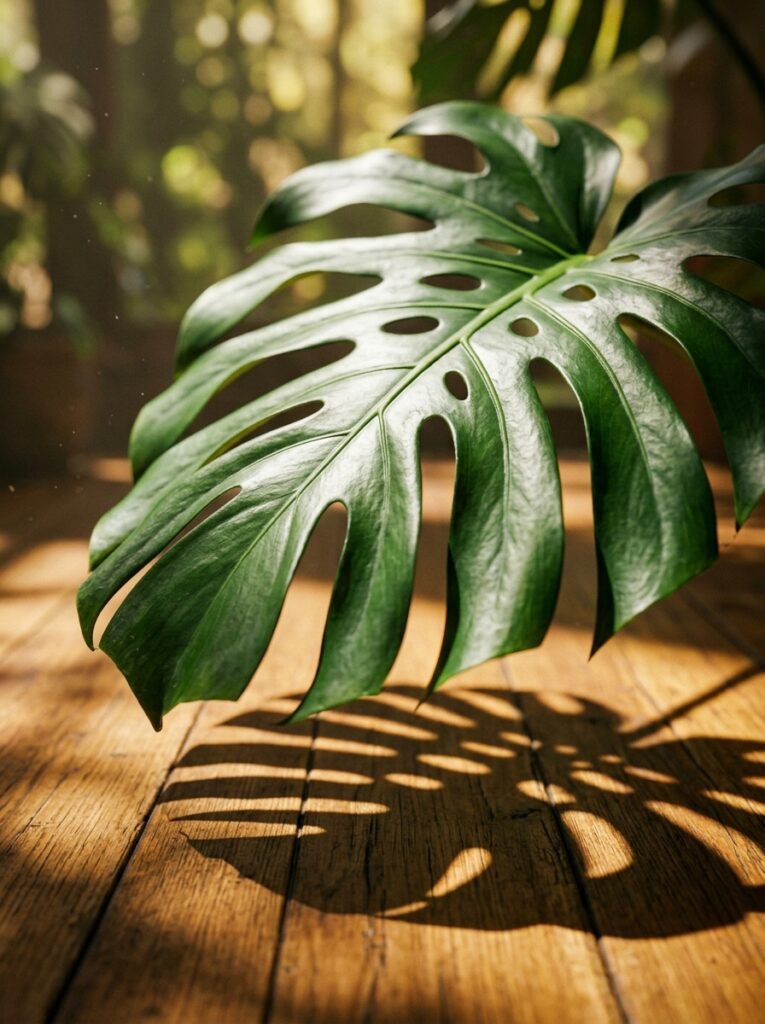
Here’s a question worth sitting with: why does looking at a monstera leaf feel so satisfying? It’s not just aesthetics, though the aesthetics are undeniably compelling. There’s a growing body of research around biophilic design — the concept that humans have an innate, evolutionary need to connect with nature — that suggests our positive response to plants like monstera is essentially hardwired.
Those fenestrations, the scientific term for the holes in the leaf, exist in nature to allow the plant to survive high winds and dappled light in the jungle canopy. But when we bring that leaf indoors, something shifts in the atmosphere of a room. The organic asymmetry is calming. The bold shape is grounding. The deep green, especially in low light, is visually restful in a way that painted walls and fabric simply cannot achieve on their own. You’re not just decorating with a plant. You’re tapping into something ancient and essential about what it means to feel safe and alive inside a space.
4. Choosing the Right Monstera Size for Your Room — Scale Is Everything
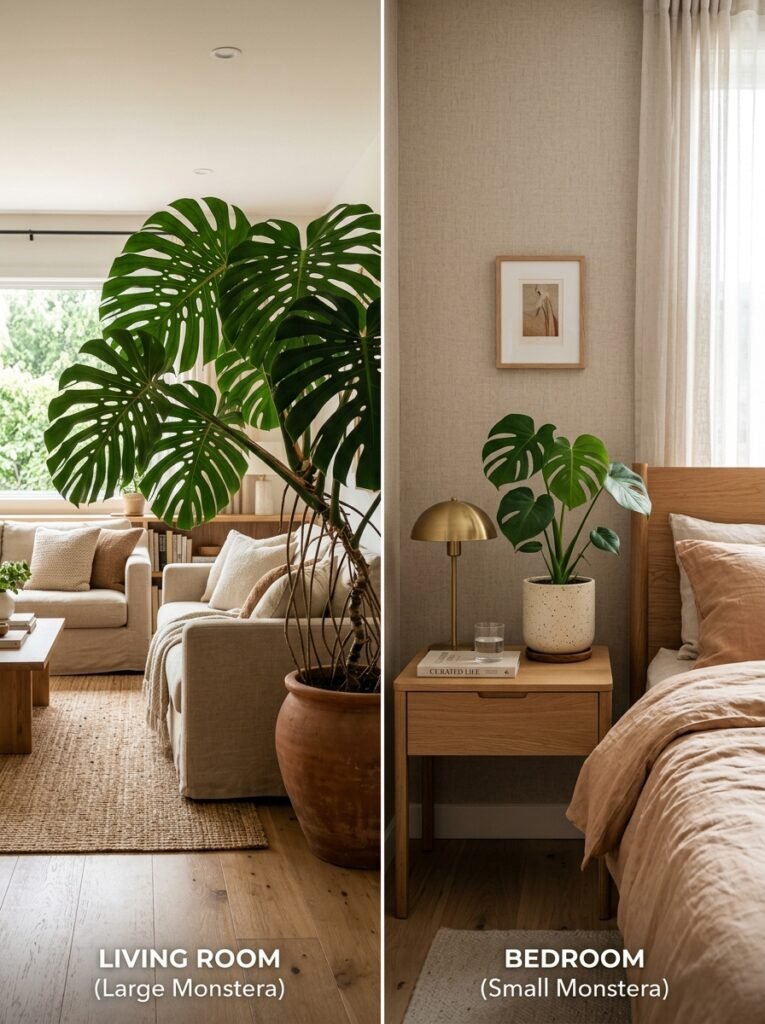
One of the most common mistakes people make when styling a monstera interior is getting the scale wrong. A tiny starter plant tucked into a corner of a large living room does almost nothing for the space. Conversely, a massive specimen crammed into a narrow hallway overwhelms and crowds rather than elevates.
The guiding principle is simple but transformative: your monstera should feel intentional, like it was placed with the same care you’d give a piece of furniture. In large living rooms and open-plan spaces, a mature Monstera deliciosa with leaves that span 18 inches or more creates an immediate sense of drama and lushness. In smaller spaces — a bedroom, a home office, a bathroom with decent natural light — a younger plant in a well-chosen pot reads as curated and considered rather than ambitious. For shelves and narrow surfaces, the trailing varieties like adansonii offer all the visual impact without demanding floor space. Think of scale not as a limitation but as a design tool.
5. The Best Rooms to Style a Monstera In — And the Ones People Always Forget
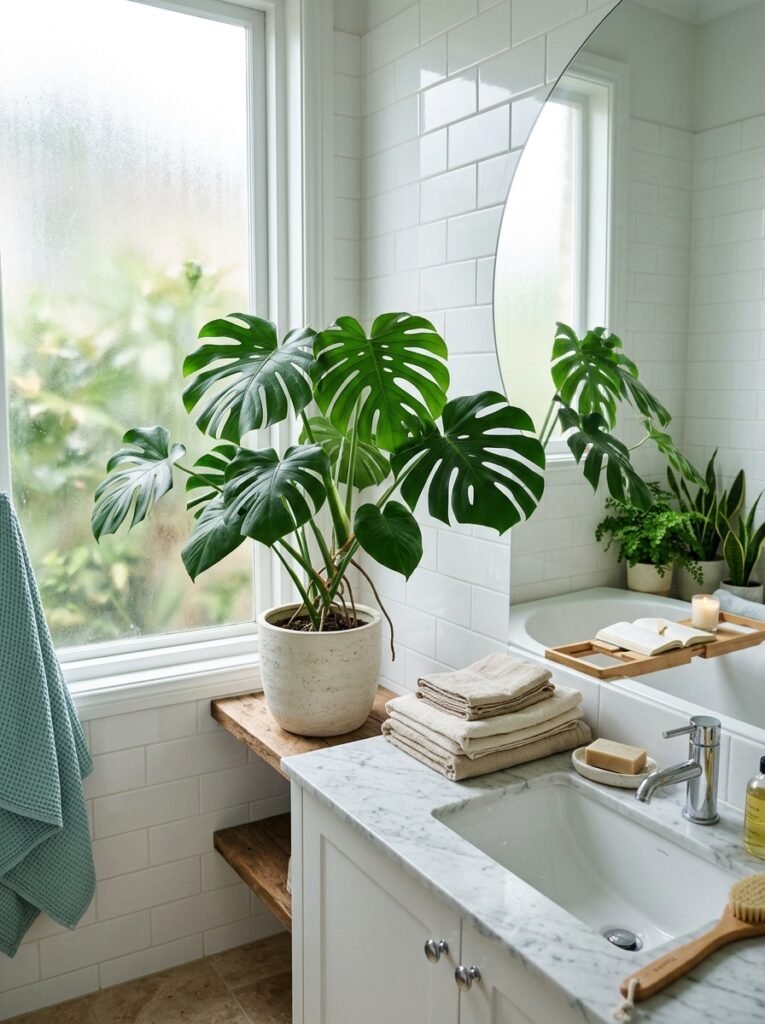
The living room is the obvious choice, and it’s obvious for good reason. A monstera anchoring a seating area, positioned near a window with soft morning light streaming across its leaves, is one of the most effortlessly beautiful interior moments you can create. But there are rooms people consistently overlook that deserve their own monstera spotlight.
The bathroom is one of them. Monstera plants tolerate humidity surprisingly well, and a medium-sized plant near a bathroom window not only looks stunning but brings a spa-like serenity to a space that’s often an afterthought in home décor. The home office is another undersung location — research has consistently shown that having plants in your workspace reduces stress and improves focus, and the bold visual presence of a monstera provides a living, breathing anchor in a room that otherwise risks feeling purely functional. Even a well-lit kitchen can house a smaller trailing variety, softening the hard edges of cabinetry and countertops with something genuinely alive.
“The rooms you forget to style are often the ones that need a monstera the most.”
6. Pairing Monstera Plants With Interior Design Styles — The Perfect Match Guide
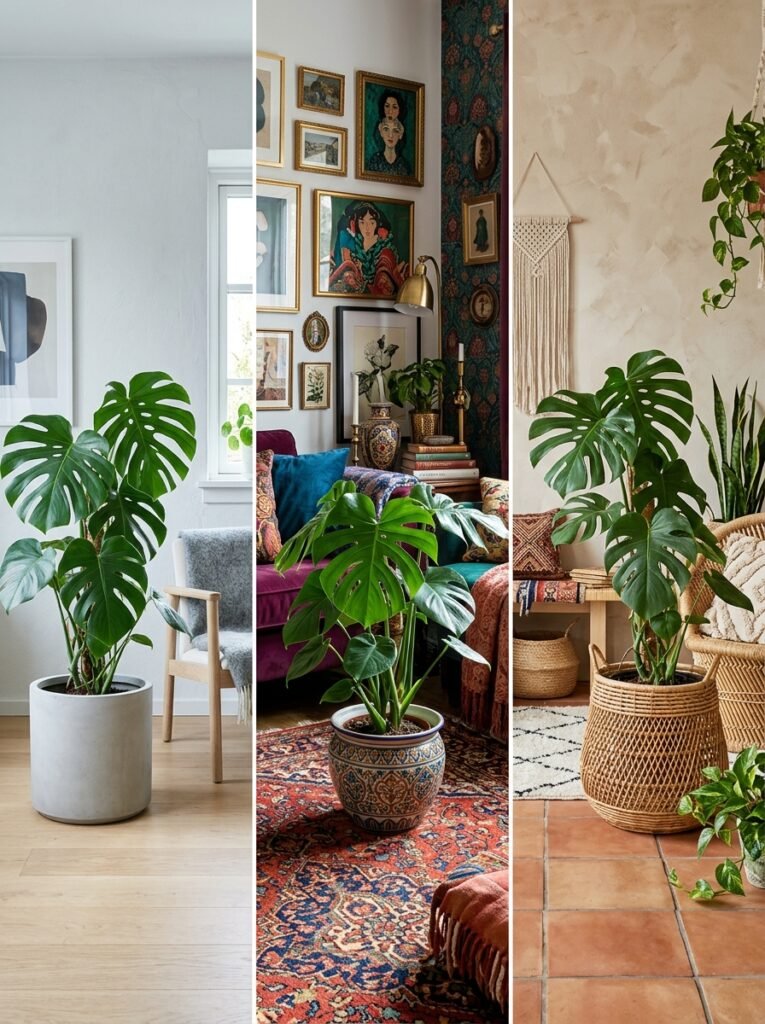
One of the quiet superpowers of the monstera is its remarkable versatility. Unlike a piece of furniture that commits hard to a particular aesthetic — a mid-century modern sofa, a farmhouse dining table — the monstera has a chameleonic quality that allows it to feel at home in almost any design context, provided you approach the pairing thoughtfully.
In a Scandinavian-inspired interior, where the palette is cool, pale, and minimal, a monstera in a simple white ceramic or pale stone pot creates a stunning contrast — all that bold green life against a backdrop of quiet restraint. In a maximalist, eclectic space full of pattern, texture, and collected objects, a large monstera actually provides visual rest, a breathing space in the midst of complexity. For bohemian interiors, a monstera in a woven rattan planter or a terracotta pot feels completely at home. In a modern, architectural space with clean lines and a monochromatic palette, the organic irregularity of monstera leaves provides the softness that keeps a room from feeling cold.
The one universal rule: let the pot do some of the work. The pot is the monstera’s frame, and a thoughtfully chosen one — in terms of material, color, and proportion — elevates the entire composition.
7. Light Requirements and Placement — Getting It Right the First Time
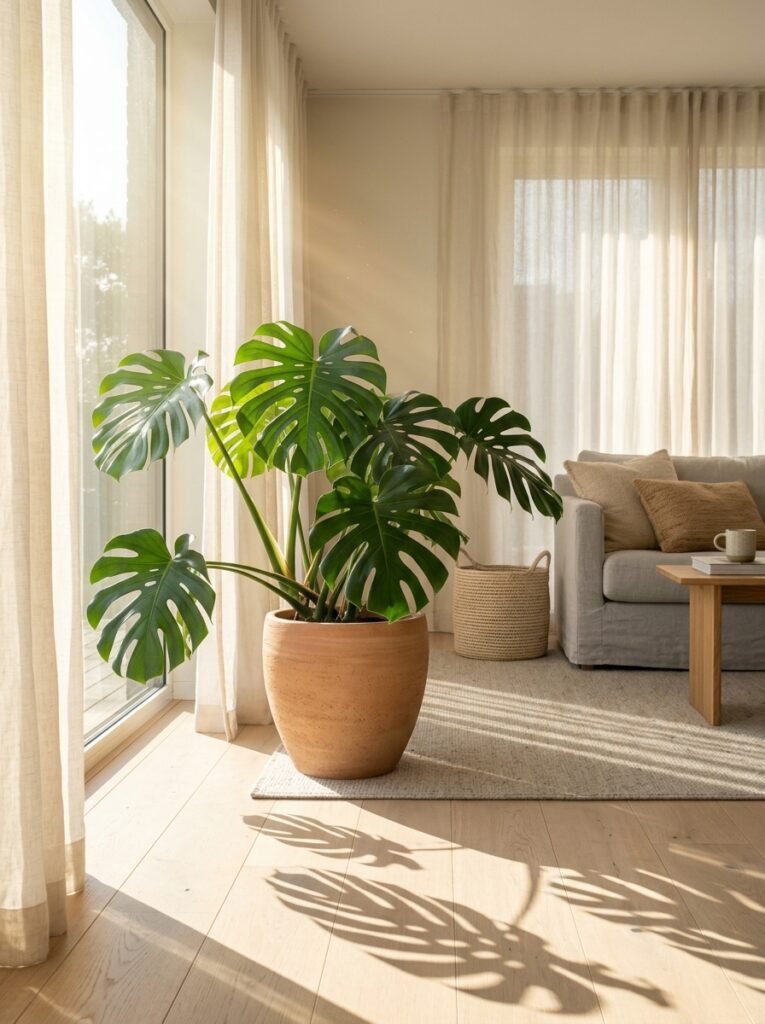
Understanding how monstera plants interact with light isn’t just about keeping the plant healthy — it’s about understanding how light and plant together will shape the atmosphere of your room. Monstera plants thrive in bright, indirect light. They can tolerate lower light conditions better than many tropical plants, but they reward good light with faster growth and more pronounced fenestrations.
From a design perspective, this matters enormously. Placing a monstera near a north-facing window often means slower growth and smaller leaves — which can work perfectly in a minimalist space where you want a more contained, delicate presence. Near a bright east or west-facing window, a monstera grows more boldly, with larger leaves and more dramatic splits — ideal for a room where you want the plant to command attention. Direct afternoon sun can scorch the leaves, so if a south-facing window is your only option, diffuse the light with a sheer curtain. The plant will thank you, and so will the room’s overall mood.
8. Pot and Planter Styling — Because the Container Is Part of the Design
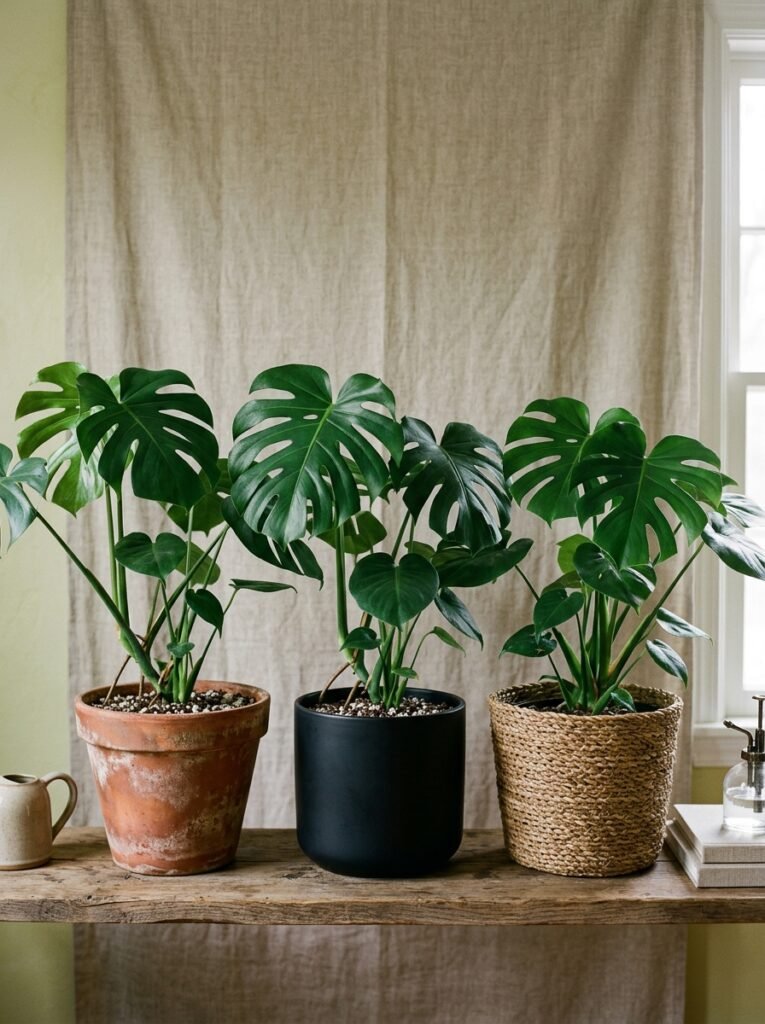
The pot your monstera lives in is not an afterthought — it is, in many ways, half the design decision. A beautiful plant in an ill-considered container is a missed opportunity. The right pot can turn a lovely plant into a genuine design statement.
Terracotta pots have seen a massive resurgence in recent years, and for good reason. Their warm, earthy tones complement the deep green of monstera leaves beautifully, and they age gracefully, developing a patina that adds character over time. For a more contemporary, sophisticated look, matte black or deep charcoal planters create a striking contrast with the vibrancy of the leaves. Textured concrete pots work brilliantly in industrial or minimalist interiors. Woven seagrass or rattan baskets — used as pot covers rather than direct planters — add warmth and texture to bohemian or Scandinavian schemes. Whatever you choose, ensure the proportion is correct: a pot that’s too small looks precarious; too large, and the plant drowns visually. A general rule of thumb is that the pot should be roughly one-third the total height of the plant and its foliage.
9. Creating a Monstera Corner — The Art of the Styled Vignette
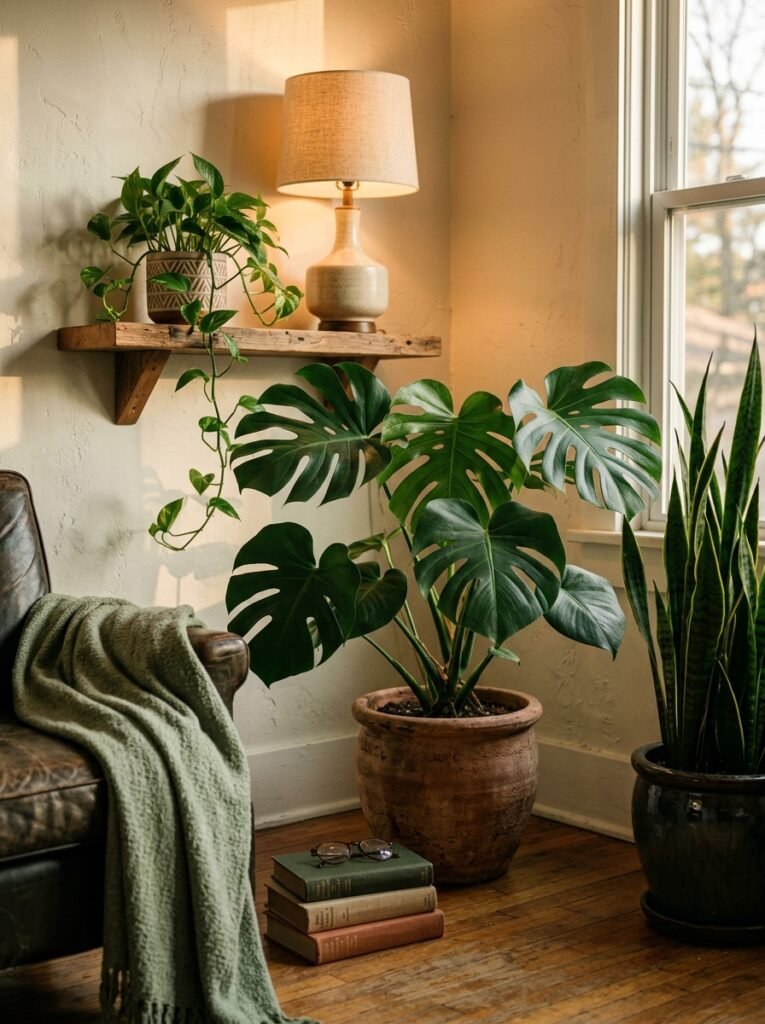
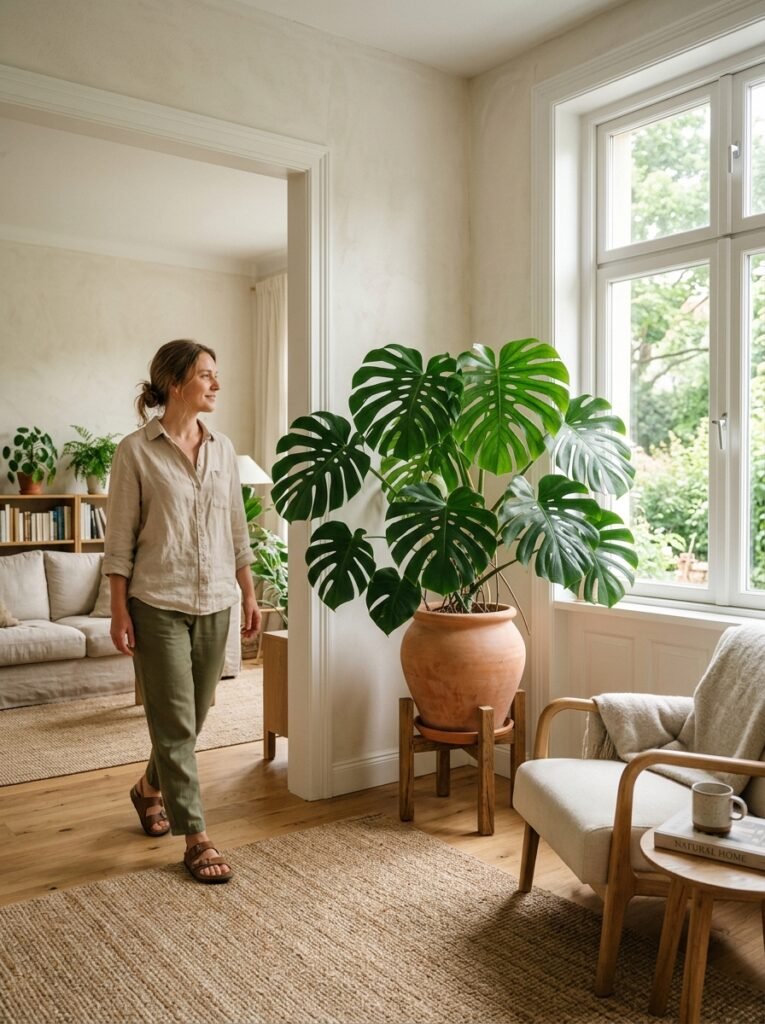
One of the most pinned and shared approaches to monstera interior styling is the deliberate creation of a “plant corner” — a curated vignette where the monstera is the hero piece, surrounded by carefully chosen supporting elements. Done well, this is interior design at its most intimate and personal. Done poorly, it looks cluttered and unresolved.
The key is layering with intention. Start with the monstera as your anchor. Then consider adding height variation — perhaps a smaller trailing plant on a higher shelf, or a taller, more slender plant like a snake plant or a fiddle leaf fig nearby to create a plant community rather than a single specimen. Add a woven pouf, a vintage ceramic lamp, or a stack of linen-covered books at the base of the planter. Bring in a textured throw or a piece of art that echoes the green tones of the leaves. The goal is not to fill every inch of space but to create a composition that feels curated, comfortable, and deeply liveable — like a corner of a room that has a personality all its own.
“The best plant corners don’t look styled. They look discovered.”
10. Seasonal Styling With Monstera — Keeping the Interior Fresh Year-Round
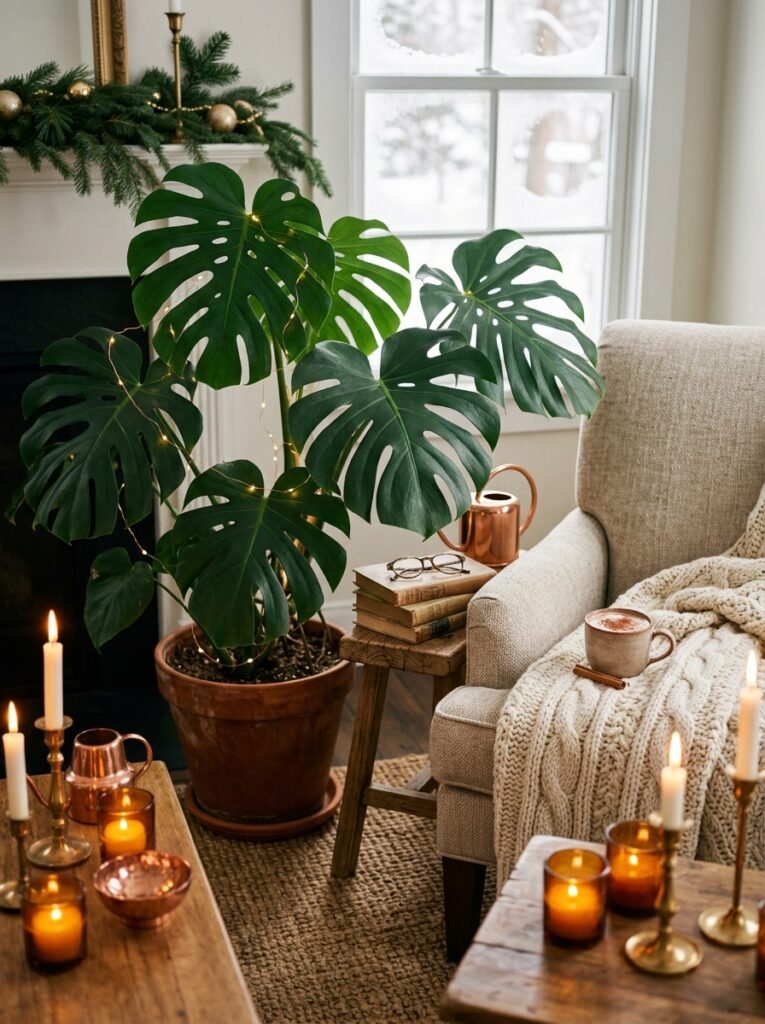
One of the most overlooked aspects of monstera interior design is how the plant can be restyled seasonally to keep your space feeling fresh and intentional throughout the year. The plant itself, of course, remains constant — but the elements around it can shift with the seasons in small, meaningful ways.
In winter, surround your monstera with warm, candlelit accents — amber glass votives, chunky knit textiles, copper or brass accessories. The deep green of the leaves against these warm tones creates a genuinely cozy, enveloping atmosphere. In spring, swap to lighter textures — linen napkins, pale ceramic pots, simple white flowers in a clear vase nearby. In summer, the monstera is at its most exuberant, often putting out new leaves, and minimal styling lets the plant itself take center stage. In autumn, earthy tones — terracotta, burnt orange, deep rust — placed around the base of the planter create a seasonal richness that feels intentional rather than accidental. Seasonal restyling takes minutes but keeps your interior feeling dynamic and thoughtfully maintained.
11. Monstera and Color Palettes — How to Build a Room Around the Plant
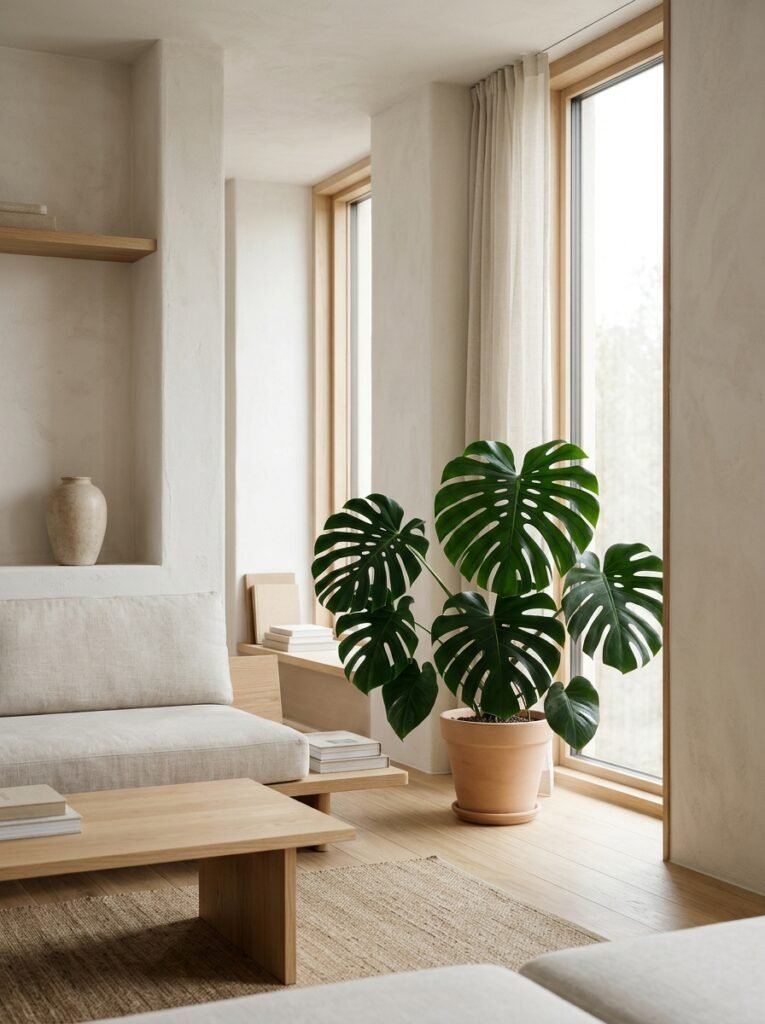
If you’re designing a room from scratch, or refreshing one, the monstera can actually serve as your color palette starting point. That deep, waxy green — which shifts subtly between warm and cool tones depending on the light — is one of the most versatile colors in the interior designer’s toolkit.
Pair monstera green with warm white walls and natural wood tones for a Japandi-inspired calm that feels both modern and timeless. Layer it against warm terracotta or rust-toned walls for a rich, jewel-toned interior that feels maximally alive. Use it as the only color in an otherwise monochromatic black-and-white interior to create a single, deliberate moment of nature in an architectural space. The monstera’s green also works beautifully alongside mustard yellows, soft blush tones, and navy blues — combinations that feel sophisticated and considered rather than trendy and transient. When you build a palette around the plant, the room achieves a coherence that can be difficult to articulate but is immediately, viscerally felt.
12. The Emotional Return on a Monstera Interior — Why It’s Worth Every Effort
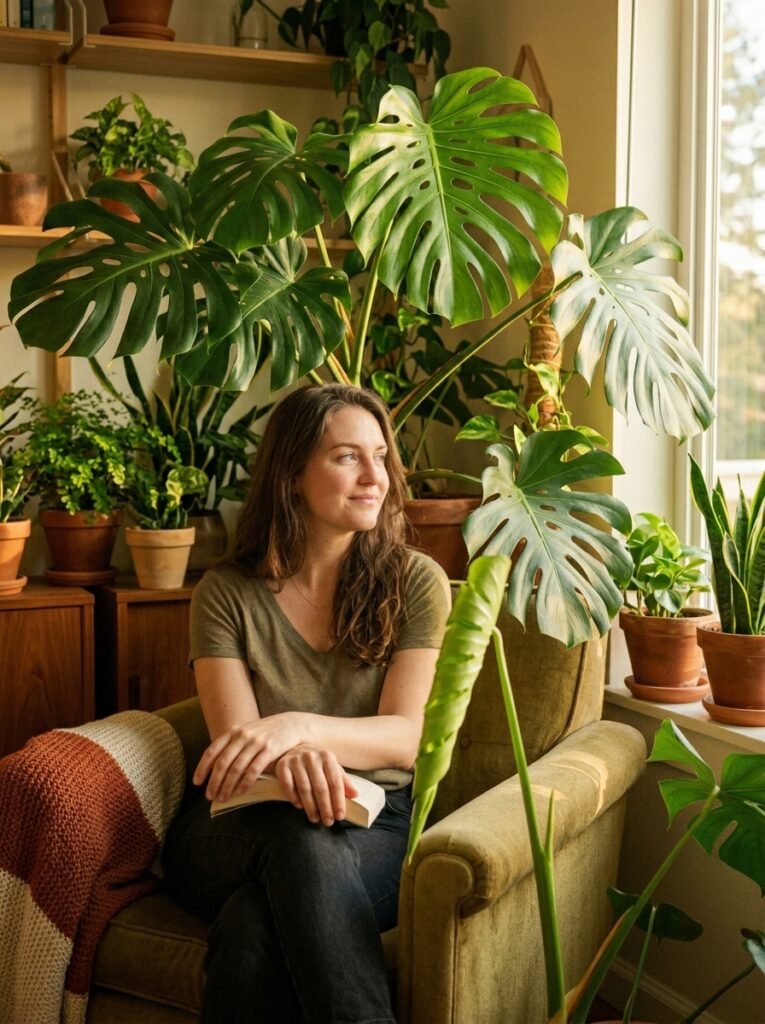
When people talk about interior design, the conversation often focuses on aesthetics, functionality, and investment value. All of those things matter. But the monstera offers something that’s harder to quantify and, perhaps because of that, more deeply valuable: it changes how a room feels to be in. Multiple studies in environmental psychology have documented that the presence of plants in indoor spaces reduces cortisol levels, lowers perceived stress, improves mood, and increases feelings of vitality and wellbeing.
But you don’t need a research paper to understand this. You’ve probably felt it yourself — that settling of the shoulders that happens when you walk into a beautifully green, plant-filled room. That sense that a space is genuinely alive, that it breathes and changes and grows alongside you. A monstera, well-placed and genuinely cared for, becomes more than decoration. It becomes a relationship. It marks the passage of time as new leaves unfurl in spring. It shows you when something is wrong — when the light isn’t right, when it needs water — and it rewards your attention with spectacular, generous growth. In a world of objects that demand attention without giving anything back, the monstera is refreshingly reciprocal.
—
🌿 How to Take Care of Your Monstera Interior
Keeping your monstera thriving isn’t complicated, but it does require consistency and a little attention. Water your monstera when the top two inches of soil feel dry — typically every 7 to 10 days in summer and every 14 days or so in winter. Overwatering is the most common mistake, and yellow leaves are usually the first signal that roots are sitting in too much moisture.
Dust the leaves occasionally with a soft, damp cloth. This isn’t just aesthetic — it allows the plant to absorb light more efficiently, which translates to healthier growth and more dramatically fenestrated leaves over time.
Feed your monstera a balanced liquid fertilizer once a month during the growing season, from spring through early autumn. In winter, the plant rests and doesn’t need feeding.
As your monstera grows, it will benefit from a moss pole or support stake, which allows it to climb as it would naturally in the wild — and which also produces larger, more impressively split leaves than a plant left to sprawl unsupported.
Finally, repot your monstera every one to two years, moving up one pot size at a time. Root-bound plants slow their growth considerably, and repotting in fresh, well-draining potting mix gives the plant everything it needs to continue its magnificent, leaf-by-leaf transformation.
—
❓ FAQ
Q: Can a monstera survive in a low-light room? A: Monstera plants are more tolerant of lower light than many tropical houseplants, but they won’t truly thrive in deep shade. In low-light conditions, growth slows significantly and the characteristic leaf fenestrations may not develop fully. If your room has limited natural light, position the plant as close to the brightest window available, and consider a grow light to supplement during winter months.
Q: How do I stop my monstera leaves from getting holes or yellowing? A: Yellow leaves most commonly indicate overwatering or poor drainage — always check that your pot has drainage holes and that you’re allowing the soil to partially dry between waterings. Brown, crispy edges usually point to low humidity or too much direct sun. Genuinely healthy monstera leaves develop their characteristic holes naturally as the plant matures, so if your younger leaves are solid and uncut, that’s completely normal and simply means the plant needs more time and better light.
Q: Is monstera safe to have in a home with pets or children? A: Monstera plants are toxic if ingested, as they contain calcium oxalate crystals which can cause irritation and discomfort to the mouth and digestive tract. They are not considered severely toxic, but it’s wise to keep them out of reach of curious pets and very young children. Placing the plant on a raised stand or in a room with restricted access is an easy and effective solution that lets you enjoy all the aesthetic benefits without concern.
—
💭 Final Thought
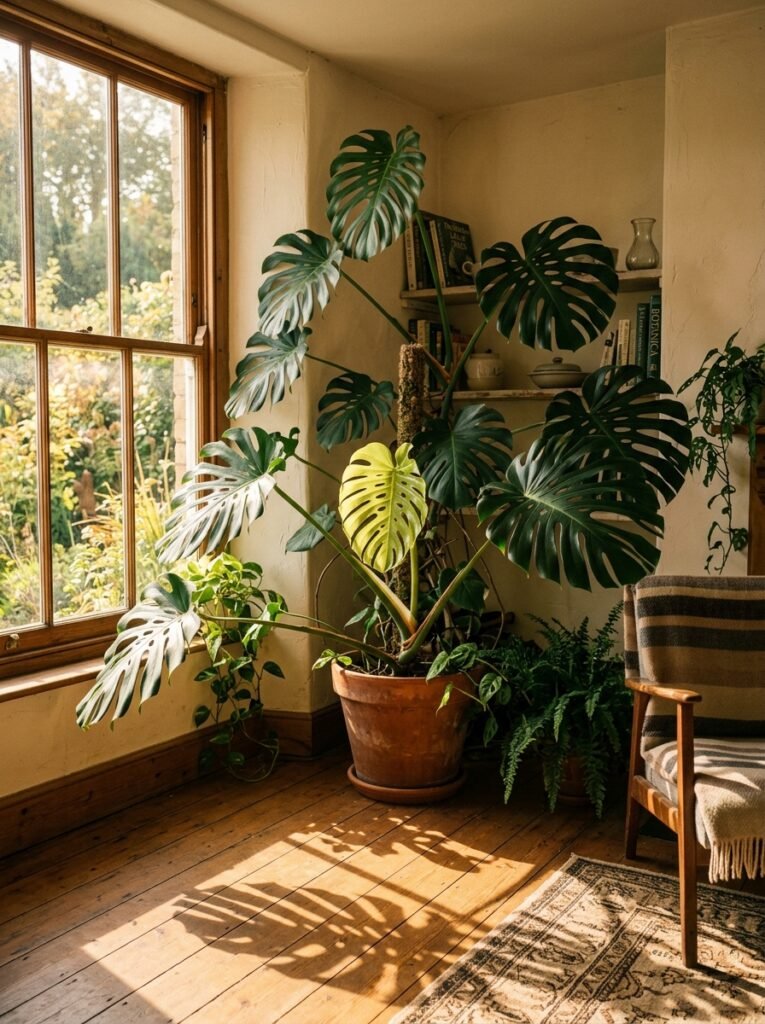
There’s a particular kind of quiet joy in walking into a room where a monstera has made itself completely at home — leaves reaching toward the light, a new unfurling leaf tightly coiled and full of potential, the whole plant humming with an unhurried, living energy. It’s a daily reminder that the most beautiful interiors aren’t built from objects alone, but from the living, breathing things we choose to surround ourselves with. The monstera doesn’t ask for much. It gives back enormously.
So the real question is: which corner of your home has been waiting — perhaps without you even knowing it — for a monstera to finally bring it to life?