The Soul of an Old English House Interior: How Ancient Walls Still Tell the Most Beautiful Stories
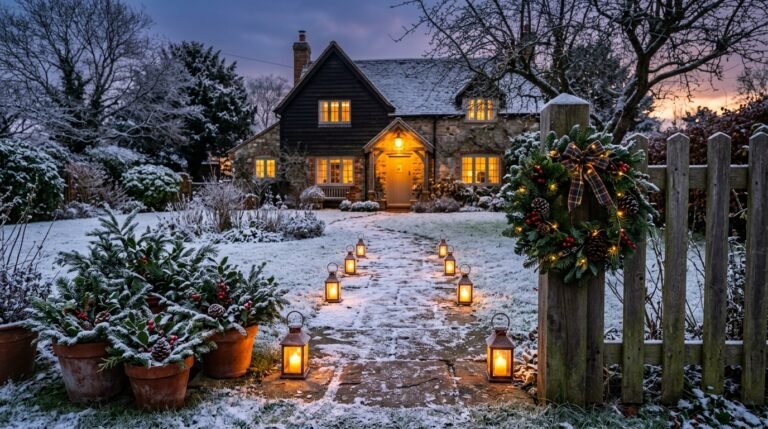
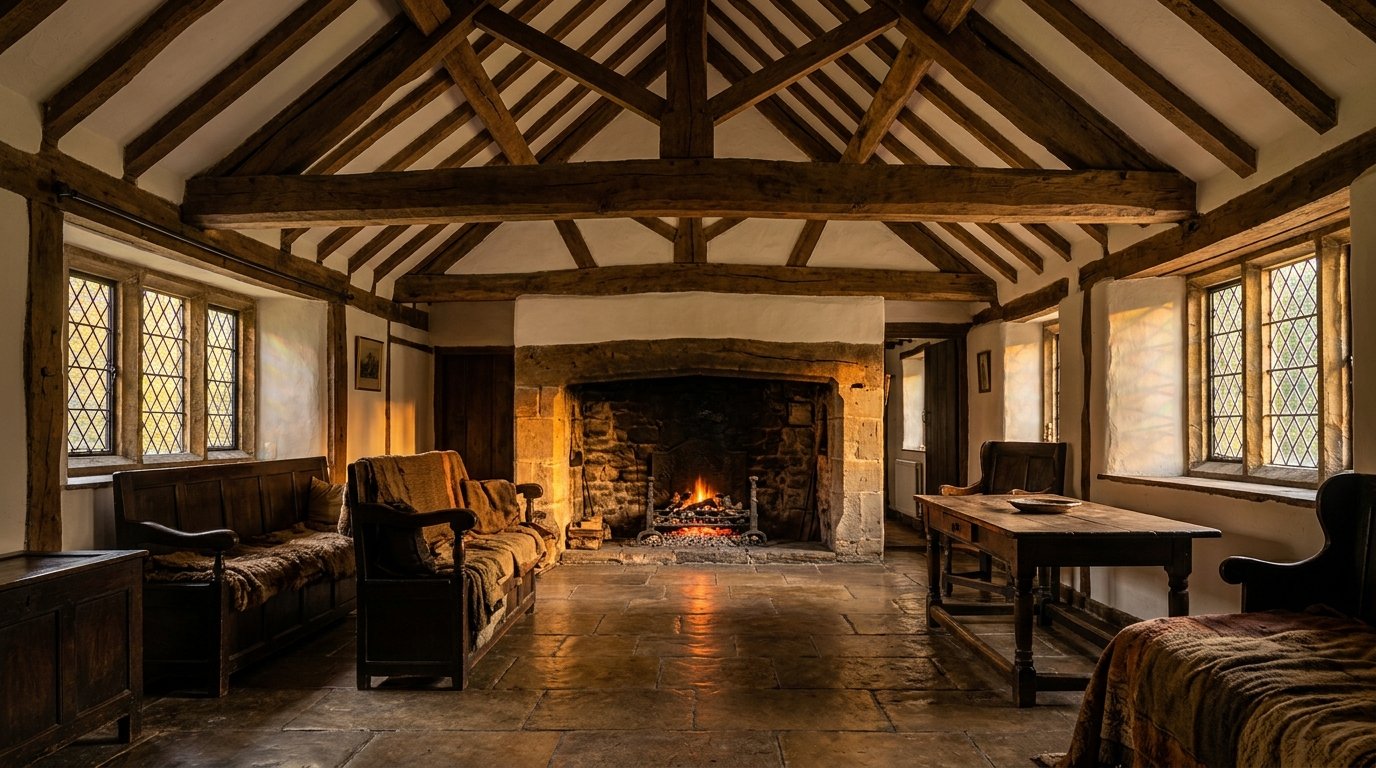
There’s a particular kind of stillness you feel when you step inside a centuries-old English home — a silence that isn’t empty but full, layered with the breath of everyone who ever lived there. It smells of aged timber, cool stone, and something else entirely: time itself. If you’ve ever stood in a room with exposed oak beams and a fireplace wide enough to walk into, you already know that old English interior design isn’t just a style. It’s a feeling.

—
Table Of Content
1. What Makes an Old English Interior Instantly Recognizable — And Why It Moves You
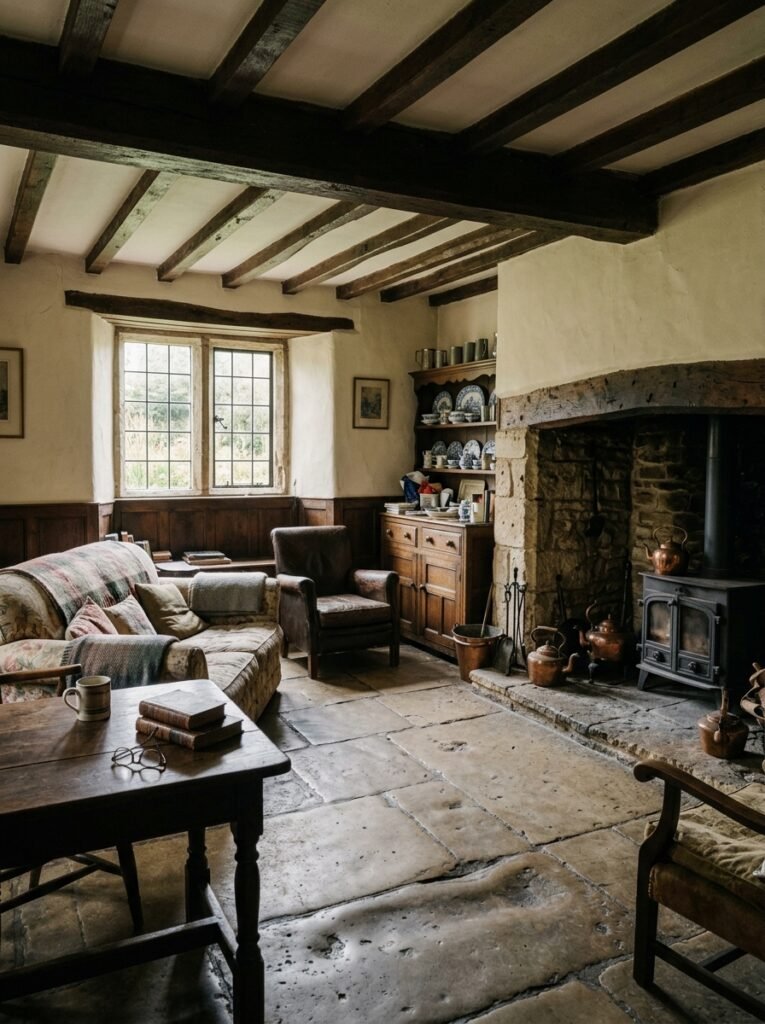
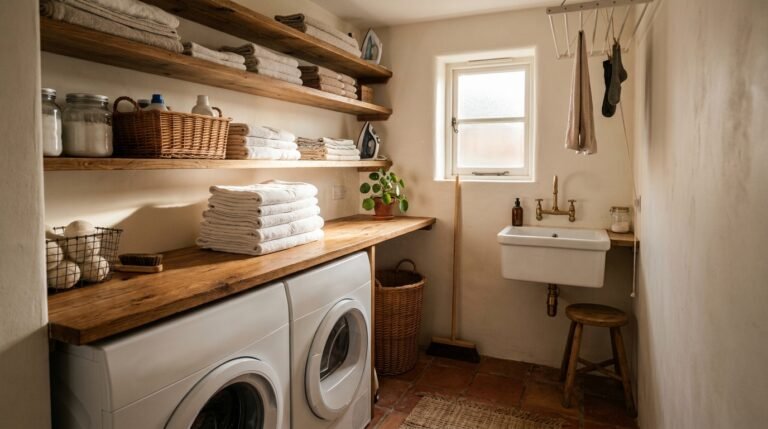
Walk into a genuinely old English home and something in your chest shifts. It isn’t the furniture alone, or even the architecture — it’s the combination of everything working together in a way that feels utterly unplanned, organically layered across decades and generations. The flagstone floors worn smooth from two hundred years of footsteps. The low-slung doorways that make you duck. The windows so thick with old glass that the outside world looks slightly wavy, like something from a dream.
Traditional English interiors are defined by a handful of unmistakable elements: exposed timber beams, inglenook fireplaces, wainscoting and wood paneling, stone or flagstone floors, and heavy wooden furniture built to last lifetimes. But what truly separates this aesthetic from any modern imitation is the sense of accumulation — the feeling that no single person decorated this space all at once. Instead, it grew, room by room, decade by decade, absorbing the tastes, needs, and memories of everyone who called it home.
“A room that has been lived in for a century carries a warmth no designer can replicate in a single afternoon.”
This is the first principle of the old English interior: nothing should look bought all at once. The magic lies in layering, imperfection, and honest aging — and that’s precisely what makes it so deeply comforting.
2. The Inglenook Fireplace: The Heart That Has Always Kept the House Alive
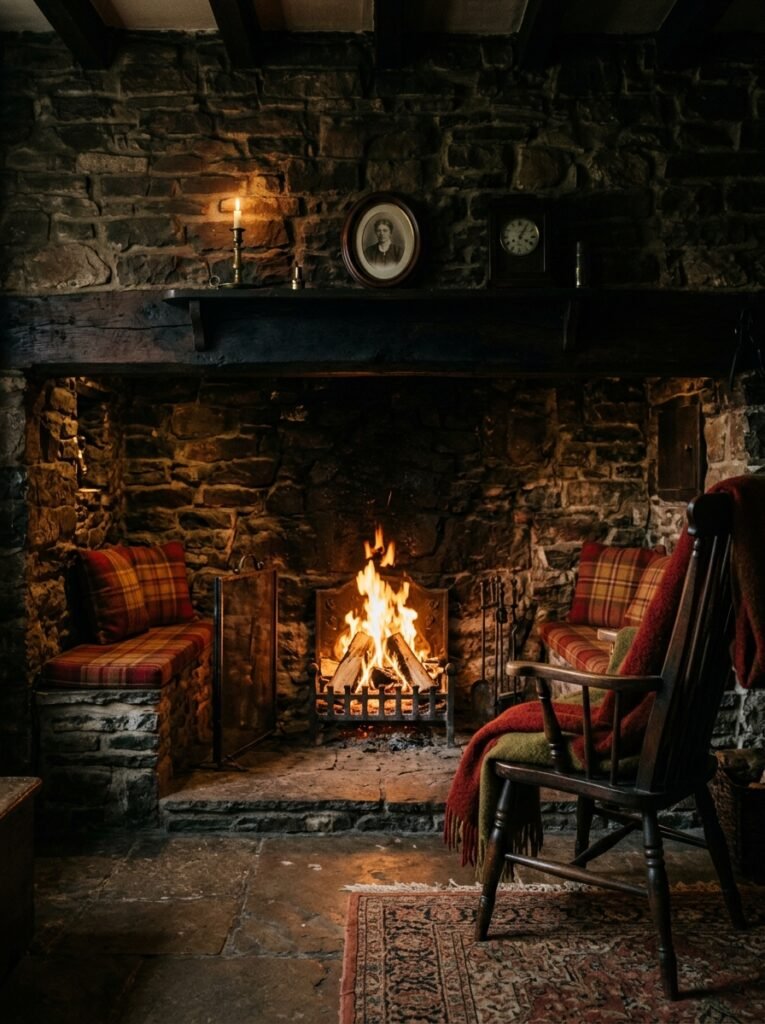
Before central heating, before radiators, before thermostats, there was the inglenook. These enormous recessed fireplaces — often large enough for stone benches on either side — were the literal and emotional center of English domestic life for centuries. To sit inside an inglenook is to understand something primal about shelter and warmth that modern living has largely forgotten.
In old English homes, the inglenook wasn’t merely functional. It was social. Families gathered there in the evenings. Food was cooked there. Stories were told there. The fireplace mantle held the objects a family considered precious — small portraits, candlesticks, a clock passed down through generations. Even today, when you encounter an original inglenook in a period property, the impulse is always the same: pull up a chair and stay awhile.
If you’re restoring or designing a room inspired by this tradition, the inglenook principle translates beautifully into any space. It isn’t about size — it’s about creating a destination within the room, a place so warm and inviting that people are drawn to it instinctively. Frame a fireplace with rough stone or aged brick. Add low, cushioned seating nearby. Keep the mantle thoughtfully dressed but never cluttered. Let it breathe.
3. Exposed Timber Beams: The Lines That Hold the Story of the House
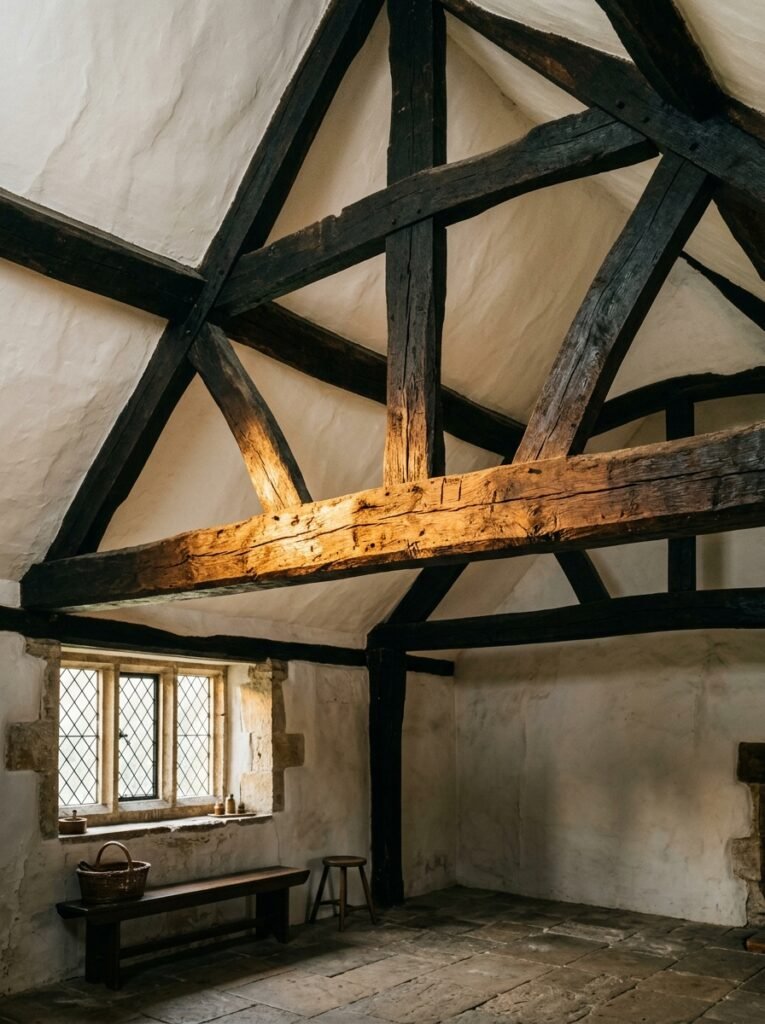
Perhaps no single feature speaks to old English interiors more powerfully than the exposed timber beam. These structural elements — originally hidden beneath plaster in many cases, later celebrated when Victorian and Edwardian restorers began stripping them back — carry an unmistakable visual weight. They are the skeleton of the house made visible, and there is something almost poetic about living beneath them.
Oak was the timber of choice for centuries of English construction, and oak ages in a way few other materials can match. It darkens, deepens, and develops a patina that seems to glow from within when light catches it correctly. In a room with original oak beams, no lighting design can compete with a single well-placed afternoon sunbeam finding its way through a leaded window. The contrast between those dark horizontal lines and a whitewashed or limewashed plaster ceiling is one of the most enduringly beautiful things English domestic architecture ever produced.
For those decorating in this tradition, working with — rather than against — exposed beams is essential. Keep walls pale to maximize the contrast. Avoid hanging things from beams unless absolutely necessary. Let them be structural poetry, not convenient hooks.
4. Stone Floors That Tell You Exactly How Old a House Really Is
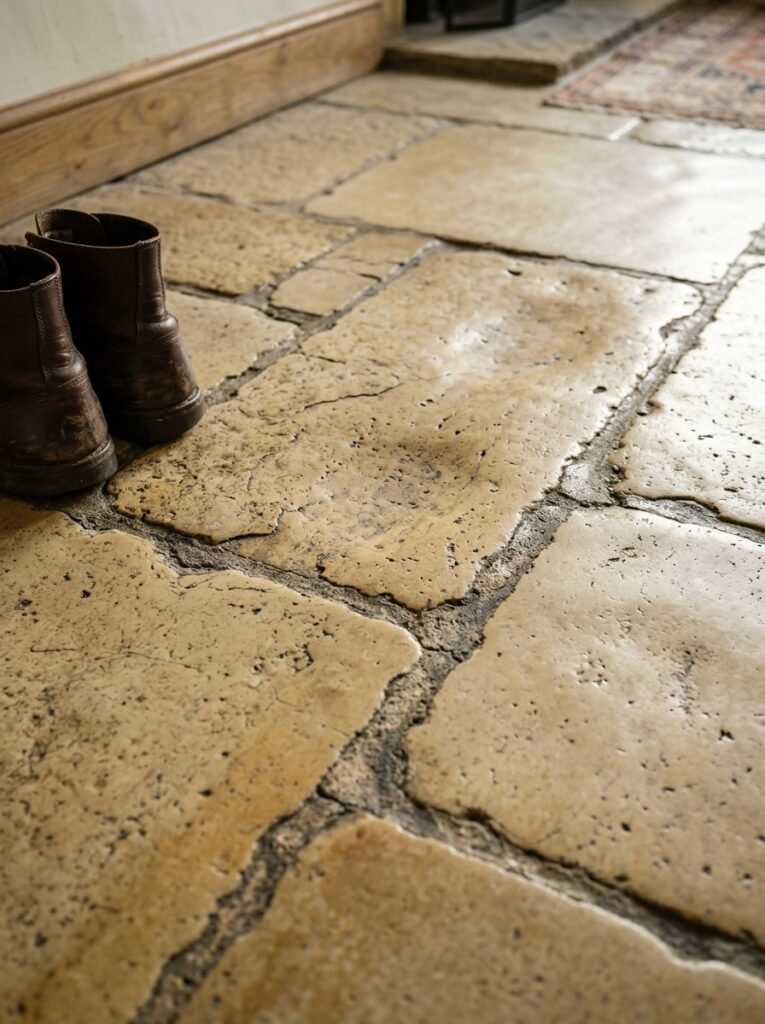
There is no faking a genuine flagstone floor that has been walked on for three hundred years. The slight dips and hollows that form beneath the most-traveled paths. The way the stones fit together imperfectly, with thin rivers of aged mortar between them. The cold that rises through them in winter, and the surprising coolness they offer in summer. These floors don’t just look old — they feel old, literally, underfoot.
Original flagstone floors are found throughout the ground floors of English farmhouses, cottages, manor houses, and village homes built before the widespread use of timber flooring on lower levels. The stones themselves vary regionally — York stone in the north, Cotswold limestone in the Midlands, slate in Wales and the west. Each has its own color story, from warm honey and cream to deep charcoal grey, and each develops its own patina with age.
Modern reclaimed flagstone is widely available and, when properly installed and sealed, can evoke this aesthetic with real authenticity. What makes or breaks the look isn’t the stone itself — it’s the grout. Traditional lime mortar, applied generously and unevenly, creates the organic, aged quality that cement grout simply cannot replicate.
5. The English Palette: Colors That Have Kept Rooms Beautiful for Centuries
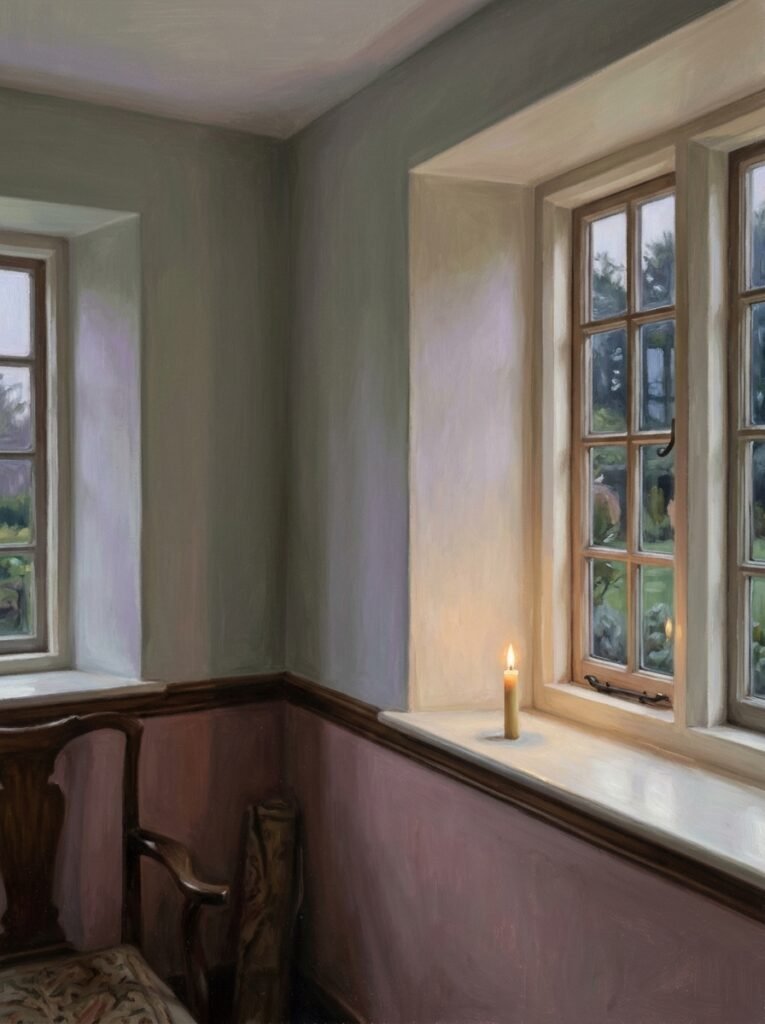
Old English interiors are not a riot of color. They are measured, earthy, and rooted in the natural world outside the window — which in England means greens pulled from hedgerows, creams borrowed from limestone walls, warm whites from limewash, and the occasional deep red or forest green that appears in a library or dining room like a held breath.
Paint companies like Farrow & Ball and Little Greene built their reputations almost entirely on this palette — shades like “Dead Salmon,” “Elephant’s Breath,” “Stone Blue,” and “Lamp Room Grey” that sound eccentric but look, on an old wall with deep window reveals, absolutely perfect. These colors work because they were designed in relationship with the kind of light that moves through small, thick-paned windows in a north-facing English room: soft, diffuse, never harsh.
“The right color in an old English room doesn’t shout — it exhales.”
If you’re recreating this palette, the key rule is to always test in natural light, and to look at the color at multiple times of day. A color that appears too blue at noon may turn a beautiful soft lavender by evening candlelight. That complexity — that changeability — is exactly what these colors are designed for.
6. Wood Paneling and Wainscoting: The Architecture That Lives on the Walls
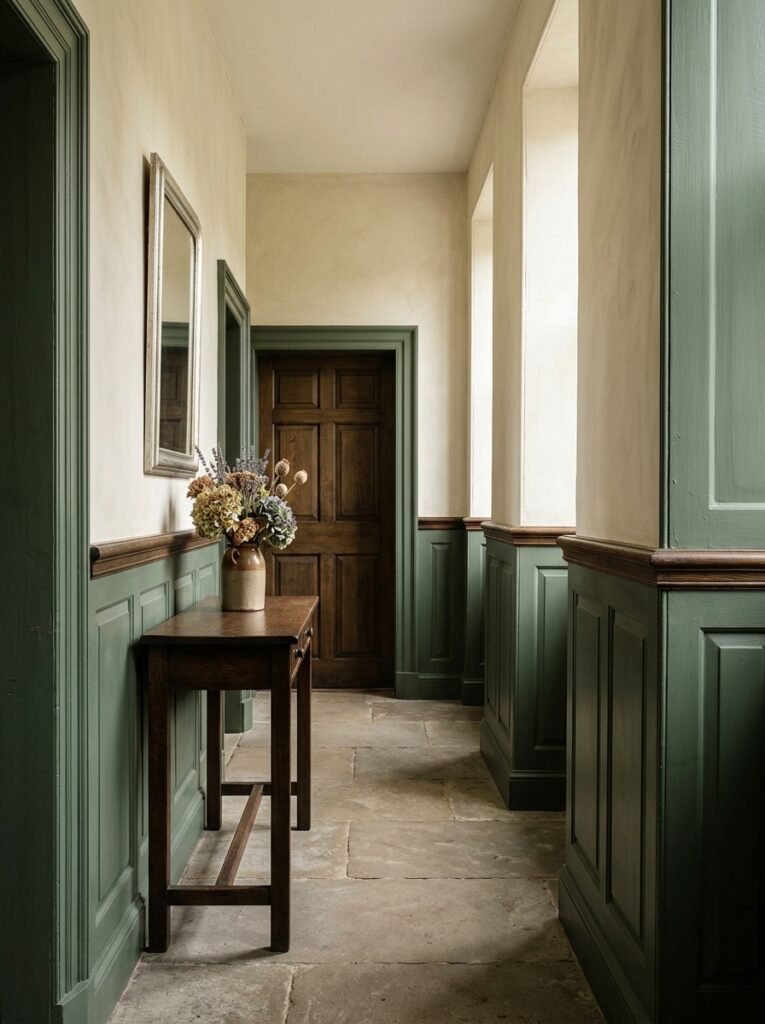
Before wallpaper, before painted plasterwork, there was wood. The earliest English interiors featured floor-to-ceiling timber paneling not only for its beauty but for its practical insulating properties. Cold stone walls, separated from the room by a layer of oak paneling, could suddenly feel habitable in even the hardest English winter. Over centuries, this evolved into the more familiar wainscoting — paneling that runs from floor to chair-rail height — that remains one of the most beloved features of period English rooms.
The visual effect of wainscoting is immediately grounding. It gives a room a sense of permanence and architectural weight that paint alone can never achieve. In a hallway, it protects walls while adding formality. In a kitchen, it creates a sense of cozy enclosure. In a bedroom, painted in a soft sage or dusty blue, it wraps the room in quiet dignity.
Reproduction wainscoting kits are widely available for those looking to introduce this element into a modern home. The key is proportion — panels should be neither too wide nor too narrow, and the chair rail that caps the wainscoting should sit at a height that feels instinctively right in the specific room you’re working with.
7. The English Country Kitchen: Where Function and Beauty Have Always Been the Same Thing
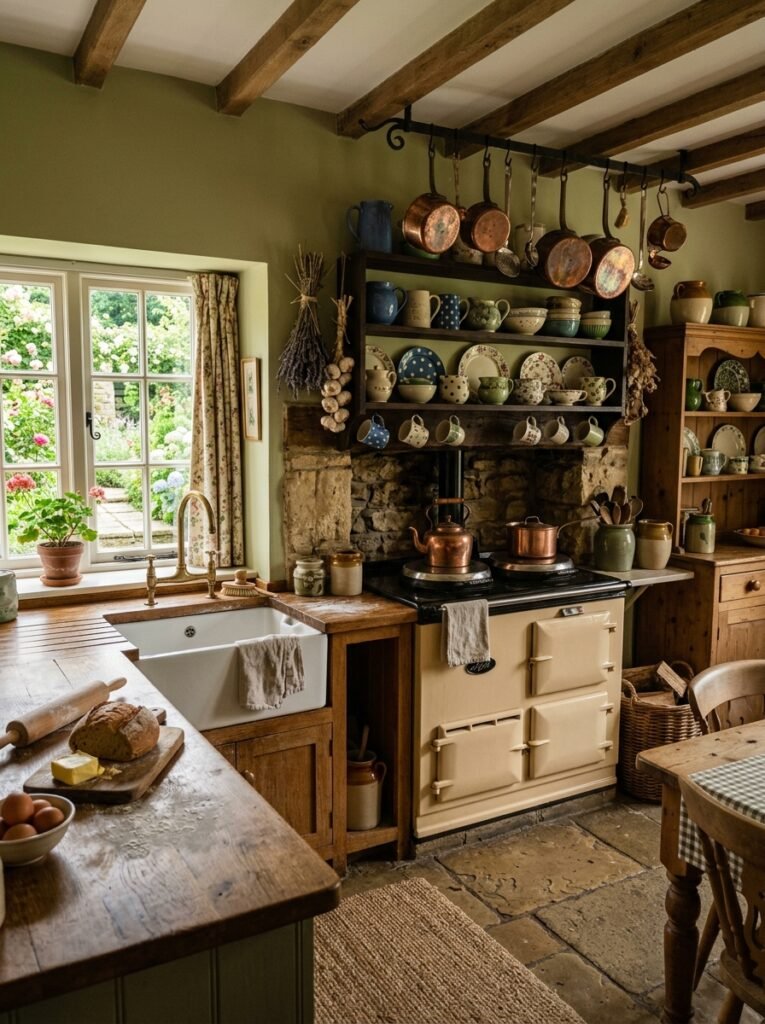
The old English kitchen is perhaps the most emotionally resonant room in the entire house. It is the room where butter was churned and bread was proved and preserves were put up for the winter. It smells, in memory and in reality, of warm stone, dried herbs, beeswax, and something gently caramelizing. It is a room that was never designed to be beautiful — and yet it almost always is.
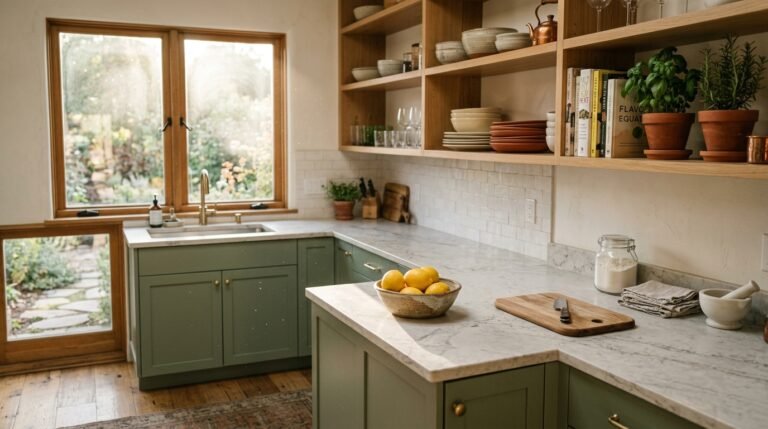
The key features of a traditional English country kitchen are immediately recognizable: a large stone or ceramic sink beneath a window, open shelving holding mismatched but carefully loved pottery, a larder or pantry off to one side, and almost always — an Aga or range cooker standing against a chimney breast like a quietly benevolent god of the room. Dresser units displaying crockery. Wooden countertops worn soft with use. Hooks holding copper pans and bundles of dried lavender.
What makes this kitchen work visually is that nothing was chosen for show. Everything was chosen to be used, and the beauty is a byproduct of honest utility. That’s the design principle worth stealing: choose things for how they work, and trust that beauty will follow.
8. Antiques, Heirlooms, and the Art of Decorating With Things That Have Already Lived
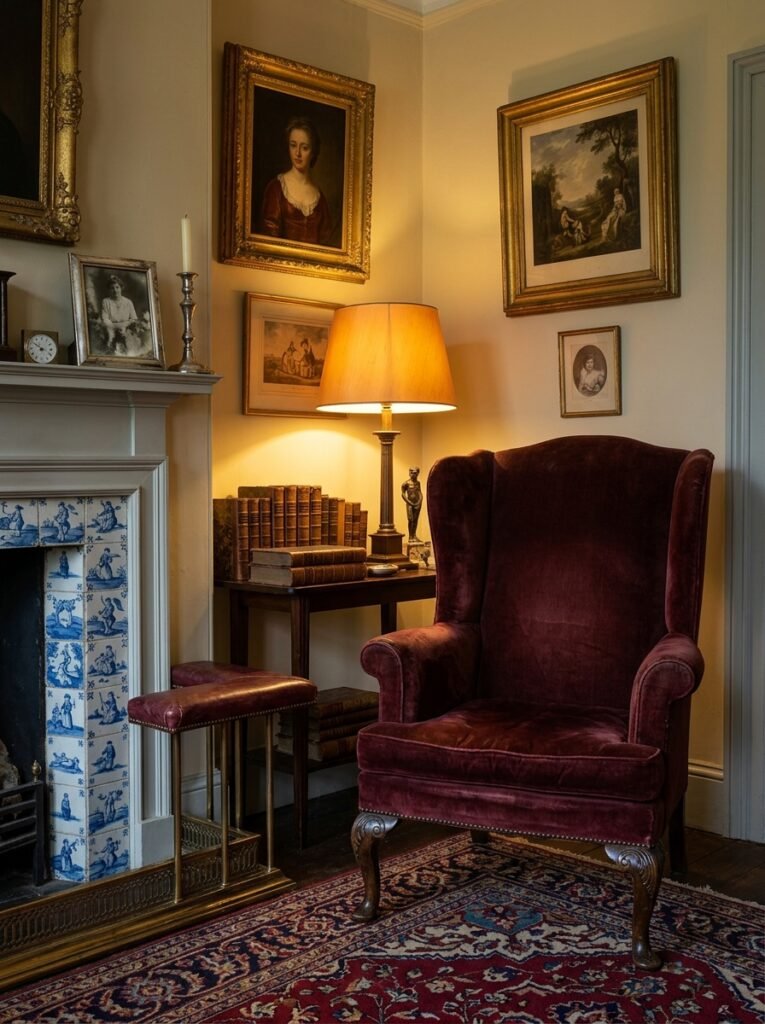
One of the most distinctive qualities of old English interiors is their relationship with objects. These rooms are never minimal. But they are also never meaninglessly cluttered. Every object has a story — or at least the strong suggestion of one — and it is the accumulation of these stories that gives the room its particular texture and warmth.
A Georgian wingback chair, re-covered in worn velvet. A collection of blue-and-white delft tiles framing a fireplace. A stack of leather-bound books on a side table. A silver-framed photograph, slightly tarnished, on the mantle. These are the details that separate a room with old English character from one that merely has old English furniture. One has been lived in; the other has been styled.
For those building this aesthetic from scratch, the advice is consistent: shop secondhand first. Antique markets, estate sales, and online vintage sellers are full of pieces with genuine age and character that can be acquired for far less than their new equivalents. A single genuinely old piece, placed with intention in a modern room, does more for the atmosphere than an entire suite of reproduction furniture.
9. Windows, Light, and the Quiet Drama of Leaded Glass

English windows deserve their own chapter. In old cottages and manor houses, windows were small by modern standards — punched through thick walls with deep stone sills and often fitted with leaded lights: small panes of glass held together with lead came, sometimes tinted in soft amber or green by the original manufacturing process. The effect of light passing through such a window and falling across a stone floor is one of the most beautiful things domestic architecture has ever accidentally produced.
“There is no lamp in the world that creates light as honest as an old English window on a grey morning.”
Even in restoration projects where original windows have been lost, sourcing reclaimed or carefully reproduced leaded lights is one of the most impactful investments you can make. Deep window seats — cushioned, naturally — invite exactly the kind of reading and gazing that the English climate seems specifically designed to encourage. Dress these windows simply: heavy linen curtains or shutters, never fussy swags or elaborate valances.
10. The Study or Library: Where the English Interior Reaches Its Philosophical Peak
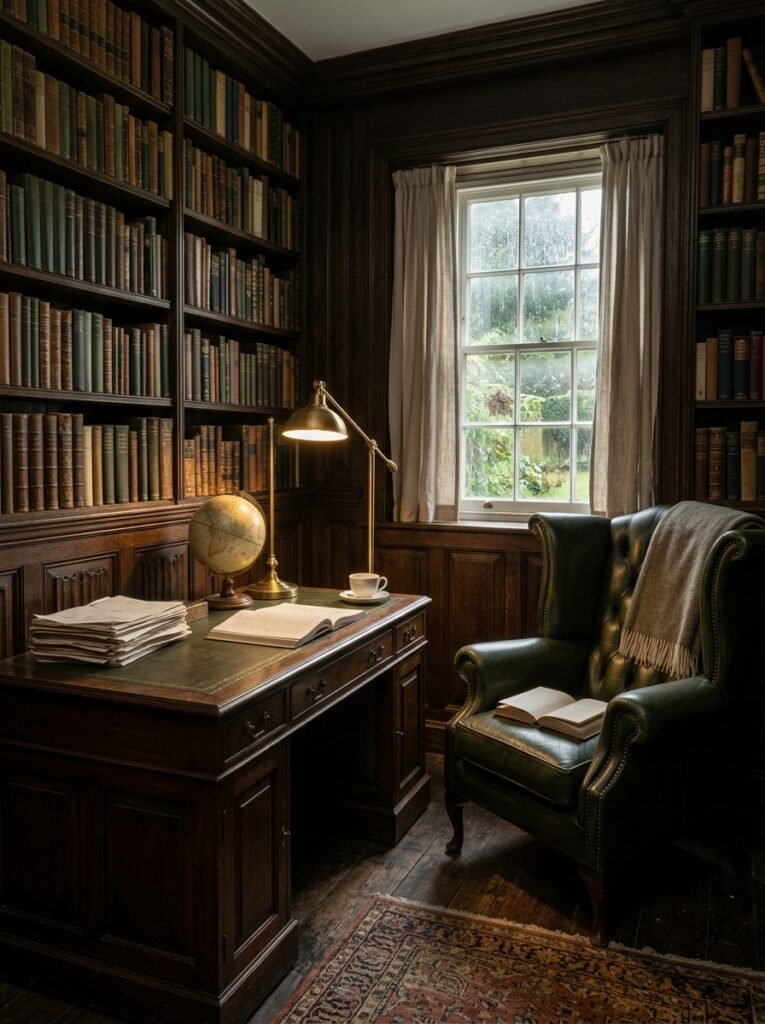
If the kitchen is the heart of the old English home, the study or library is its soul. These rooms — paneled in dark oak or walnut, lined floor to ceiling with bookshelves, lit by a single deep window and a reading lamp on the desk — represent the English interior at its most intentional and most beautiful.
The furniture here is substantial and purposeful: a deep leather armchair, a partners desk, possibly a chesterfield sofa in burgundy or hunter green. The atmosphere is one of concentrated quiet — the sense that important things happen in this room, slowly and thoughtfully. No room in the English domestic canon rewards careful attention to detail more richly than this one.
For modern interpretation, even a small alcove can be transformed into a library nook with the right shelving, the right chair, and the right lamp. The key is density: books should fill the shelves, not decorate them. The room should feel used, not curated.
11. Bedrooms With a History: Sleeping Beneath the Weight of Beautiful Things
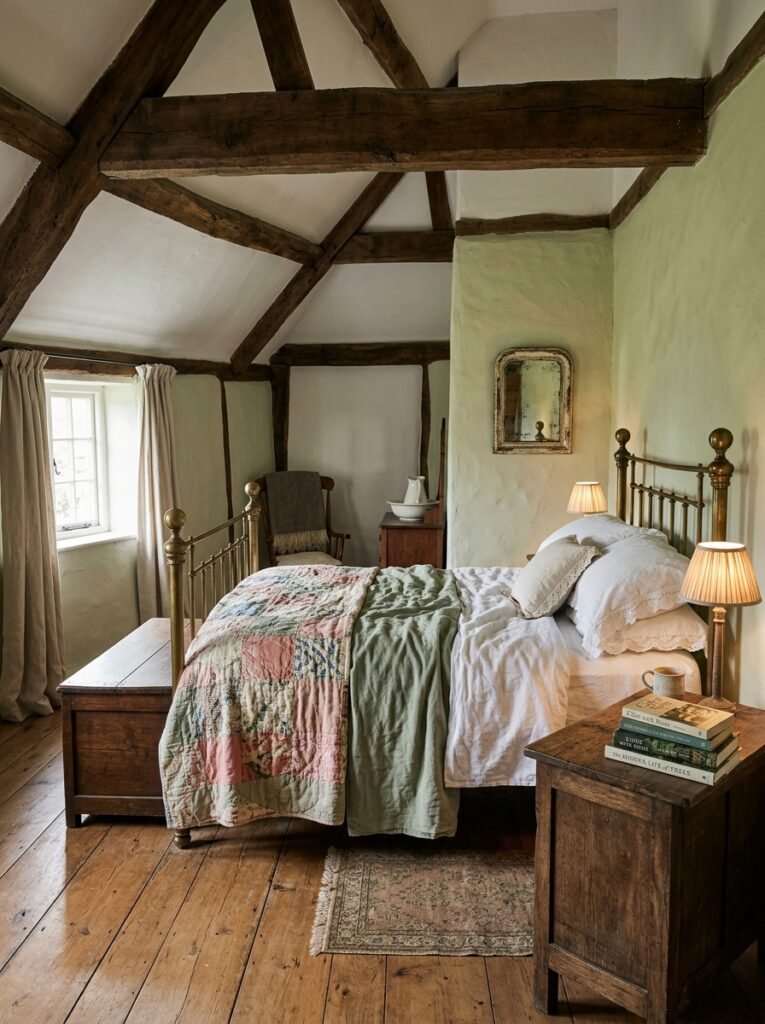
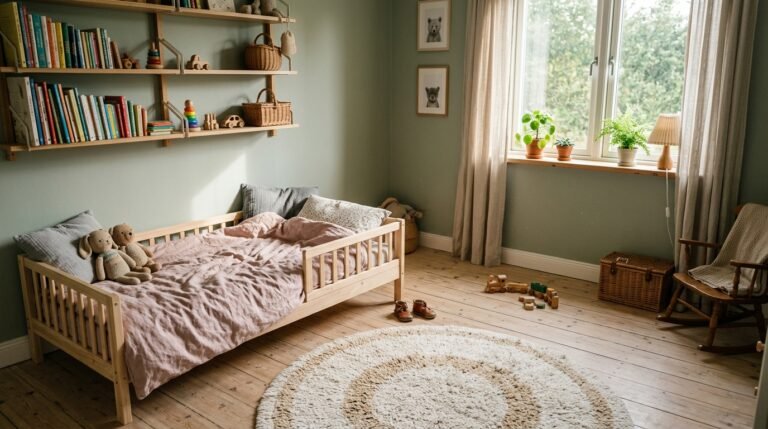
Old English bedrooms are quiet places. The colors are muted — soft whites, faded rose, pale sage — and the fabrics are layered: linen sheets, wool blankets, a patchwork quilt perhaps handed down or simply chosen for its worn beauty. The bed itself is likely a four-poster or a brass bedstead, and the floorboards creak slightly underfoot.
What makes these bedrooms feel so profoundly restful is the absence of anything unnecessary. There is a dressing table with a mirror that’s slightly foxed at the edges. A small bedside table with a stack of books and a lamp. Perhaps a wooden chest at the foot of the bed. Curtains that puddle slightly on the floor. Nothing shouts; everything whispers.
This is the bedroom principle worth applying universally: the bedroom should be the quietest room in the house, in every sense. Color, texture, and furniture should be chosen with a single criterion — does this help the room breathe?
12. The Garden Door: Where the Inside Always Remembered It Was Part of the Outside
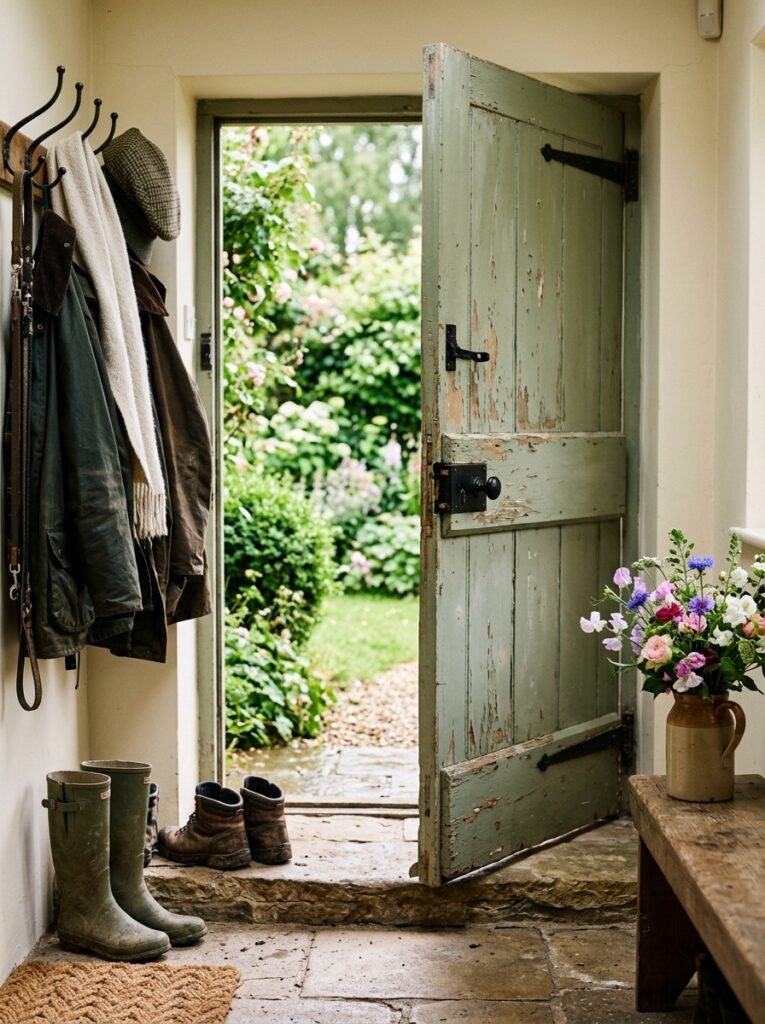
Every truly old English home has a garden door — usually at the back of the house, usually swollen slightly with age and requiring a firm push — that blurs the boundary between inside and outside with beautiful imprecision. Muddy boots on the stone step. A coat rack crowded with waxed jackets and scarves. The smell of rain on grass drifting through whenever the door swings open. A jug of garden flowers on the kitchen table.
This connection to the outdoors isn’t accidental. English domestic life has always turned on the rhythm of seasons — foraging, harvesting, gardening, preserving — and the old English interior reflects this in dozens of small ways. Dried herbs hanging in the kitchen. A bowl of seasonal fruit on the table. Cut flowers from the garden in a jug that’s slightly chipped but perfectly loved. Nature is always just one step inside, always part of the decoration.
—
🌿 How to Bring Old English Interior Energy Into Your Own Home
You don’t need a thatched cottage or a country estate to bring this aesthetic home. It’s more about intention than architecture.
Start with the floors and walls — these are the elements that do the most atmospheric heavy lifting. If you have timber floorboards, sand them back and oil them rather than covering them with fitted carpet. If you have plain walls, consider introducing wainscoting or a dado rail at chair height, even in a rented property using removable adhesive panels.
Choose a palette drawn from the natural world outside your window, and test every color in natural light before committing. The Farrow & Ball and Little Greene archives are invaluable here, but any quality paint range can offer something in the warm, chalky, slightly-muted direction this style demands.
Shop for furniture with age before you shop for furniture that’s new. A single piece with genuine provenance will do more for your room than any number of trend-led purchases. Antique markets, charity shops, and estate sale listings are your best allies.
Finally — and most importantly — let the room accumulate over time. The old English interior was never finished. It was always in the process of becoming. That’s precisely what makes it feel so deeply, honestly alive.
—
❓ FAQ
Q: Can I recreate an old English interior style in a modern apartment or new-build? A: Absolutely — the key is to focus on the elements that translate across architecture: color palette, furniture with age and character, textiles with depth and warmth, and meaningful objects with stories. Even in a box-fresh apartment, the right paint color, a vintage armchair, and bookshelves filled with genuinely read books can shift the atmosphere considerably.
Q: What’s the most affordable way to start decorating in this style? A: Secondhand and vintage shopping is both the most affordable and the most authentic starting point. Look for solid wood furniture, old ceramics, framed prints, and textiles at antique markets or online resale platforms. One or two genuinely old pieces will do far more for the atmosphere than a room full of reproduction furniture.
Q: How do I keep an old English interior feeling cozy rather than dark or heavy? A: Balance is everything. Keep walls pale and plasterwork light to contrast with any dark woodwork. Maximize natural light with simple window treatments that don’t block the view. Layer warm-toned textiles — wool, linen, aged velvet — and introduce living elements like plants, fresh flowers, and candles to keep the room breathing.
—
💭 Final Thought
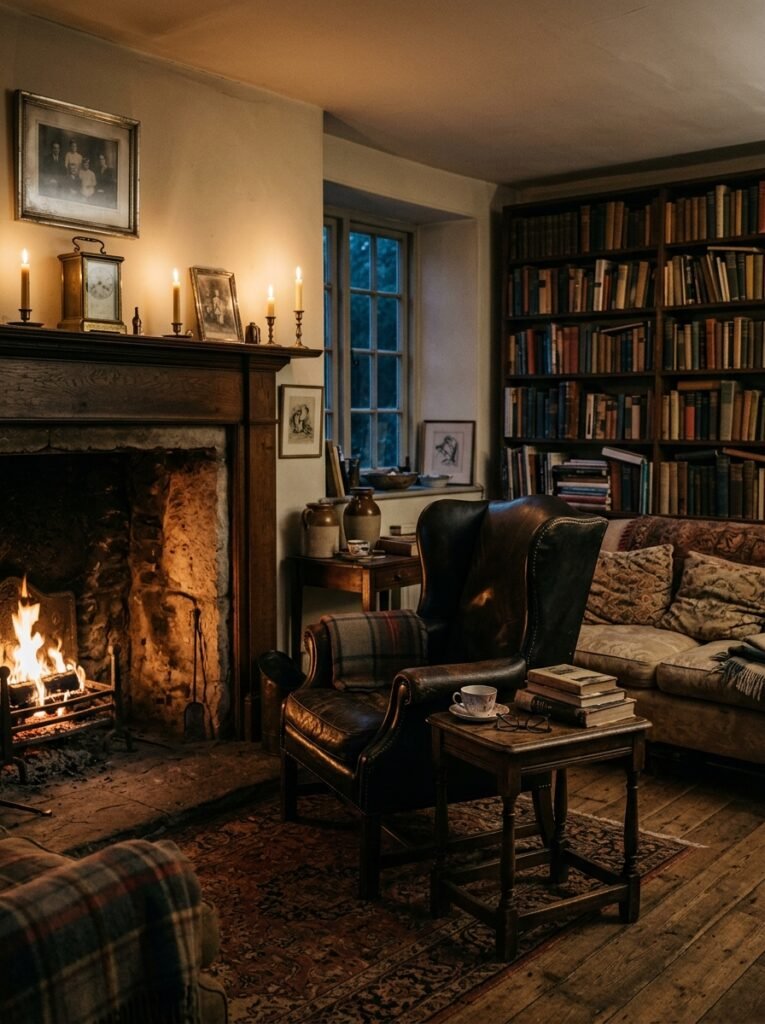
There is something quietly radical about loving old things in a world that moves so relentlessly toward the new. An old English interior isn’t a retreat into nostalgia — it’s a statement of values: that permanence matters, that beauty deepens with age, that the spaces we inhabit should hold our stories as carefully as we hold them. These rooms took centuries to become what they are, and that is not a design shortcut. It is an invitation.
What would it feel like to live in a room that already had a history before you arrived — and what story would you add to it?