Rustic Mountain Homes Interior: The Art of Living Beautifully in the Wild
There’s a particular kind of silence that exists only in the mountains — and somehow, the most extraordinary homes manage to bring that silence indoors. Rustic mountain interiors don’t just look a certain way; they make you feel a certain way — grounded, unhurried, deeply at home in your own skin. If you’ve ever walked into a cabin and felt your shoulders drop three inches, this one is for you.
—
Table Of Content
1. Why Rustic Mountain Style Feels Like a Deep Exhale
It’s not an accident that rustic mountain interiors have taken over Pinterest boards, mood boards, and weekend renovation dreams across the world. There’s real psychology behind why these spaces feel so profoundly restful. When we surround ourselves with raw, natural materials — rough-hewn wood, river stone, wool textiles — we activate something ancient in the human brain. Researchers call it biophilia: our innate, biological need to connect with nature. Rustic mountain design doesn’t mimic nature from a distance. It invites nature in through every beam, every fiber, every knot in the wood.
Think about what makes a mountain cabin feel different from any other space. It’s not just the antler chandelier or the stone fireplace, though those certainly help. It’s the cohesion — the way every element whispers the same quiet story about belonging somewhere wild and beautiful.
“A rustic mountain home doesn’t decorate around nature — it bows to it.”
2. The Foundation: Choosing the Right Materials to Build Your Story
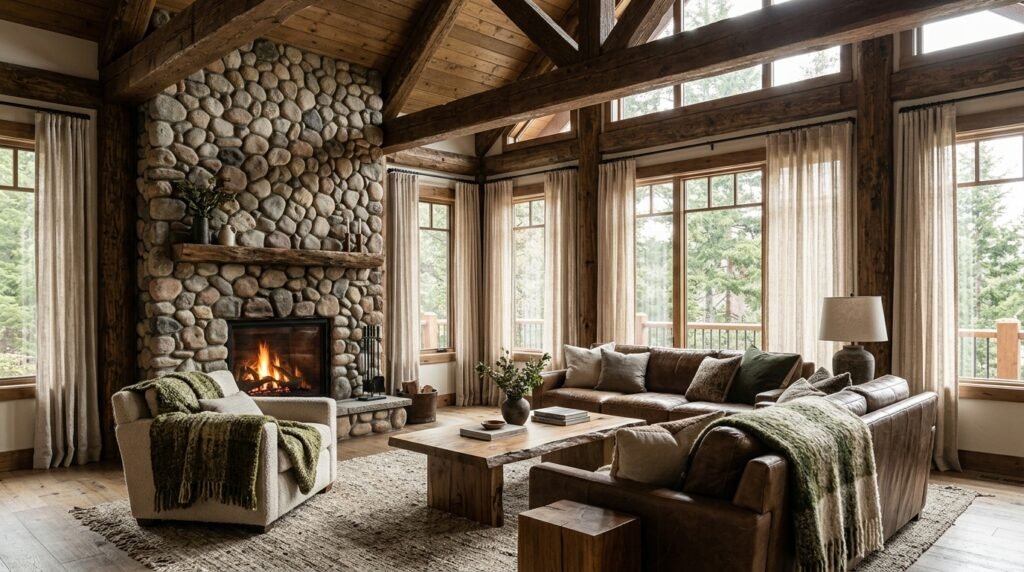
Every great rustic mountain interior begins with an honest conversation about materials. And by honest, I mean raw — unpolished, imperfect, real. The bones of a mountain home deserve materials that have lived: reclaimed timber that once stood in a barn, fieldstone pulled from a local creek bed, hand-poured concrete countertops that bear the marks of their making.
Reclaimed wood is arguably the single most important element in this style. It brings history, texture, and an irreplaceable warmth that no factory-finished product can replicate. Look for wide-plank flooring in oak, hickory, or pine — each species brings its own personality to a room. Pine has a golden honey warmth; hickory brings dramatic grain patterns; oak offers a dignified, timeless solidity. The knots, the cracks, the color variation — these aren’t flaws. They’re the point.
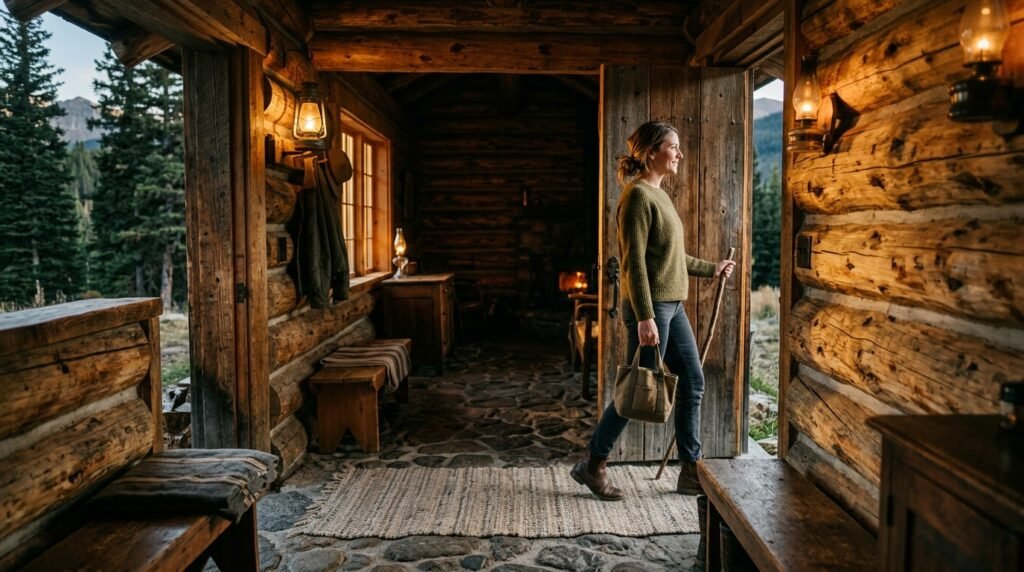
Stone is the second language of mountain interiors. Whether you’re using it for a fireplace surround, an accent wall, or flooring in an entryway, natural stone grounds a room in a way nothing else can. Stacked ledger stone, river rock, and hand-laid flagstone each create a distinct mood, from wildly rustic to quietly refined.
3. The Palette That Makes a Mountain Home Feel Like Shelter
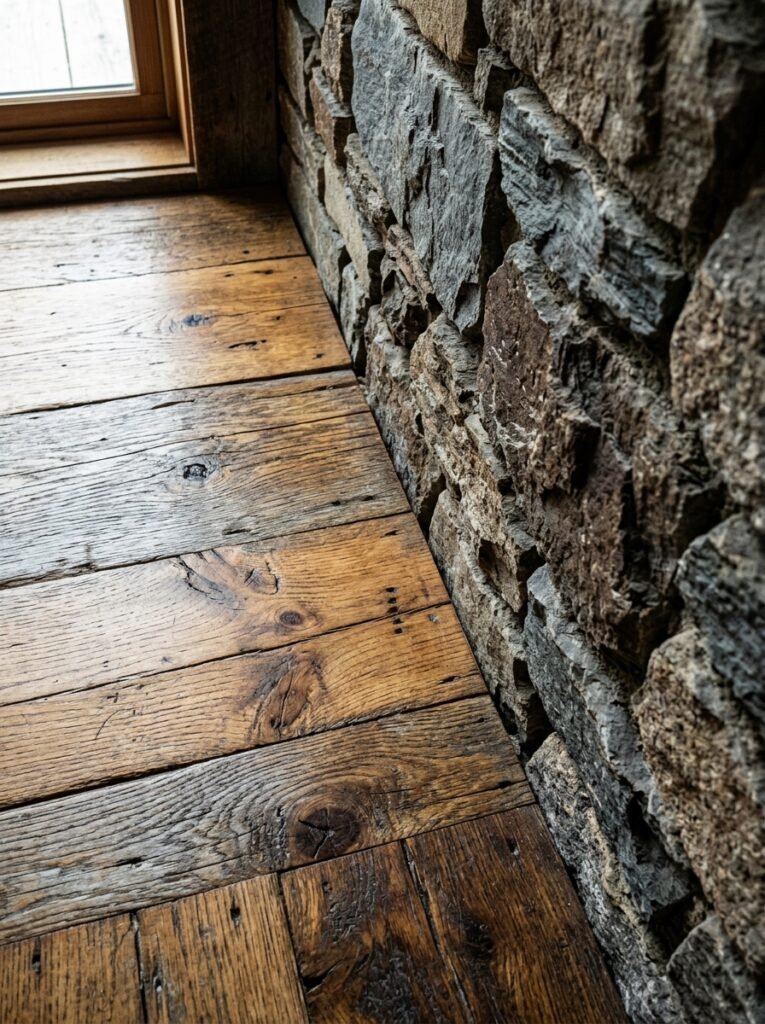
Color in a rustic mountain home should feel like a landscape painting — not a color swatch from a big-box store. The palette begins outdoors and works its way in. Think of the colors you actually see in a mountain environment: the warm amber of pine needles in afternoon light, the cool grey-green of lichen on stone, the deep chocolate of wet earth, the dusty sage of mountain shrubs, the near-black silhouette of pine trees at dusk.
Your walls don’t need to be dramatic to be beautiful. Many of the most stunning mountain interiors use a quiet, warm off-white or a creamy linen tone as the primary wall color — letting the architectural elements and natural materials carry the visual weight. Then, layer in deeper tones through textiles, cabinetry, and accent walls. A muted terracotta, a stormy slate blue, or a rich forest green can serve as a perfect secondary palette color without overwhelming the natural materials you’ve worked so hard to feature.
What to avoid: anything that screams “trend” rather than “timeless.” Rustic mountain style is fundamentally anti-trend. It’s the design language of permanence.
4. The Fireplace: The Beating Heart of Every Mountain Home
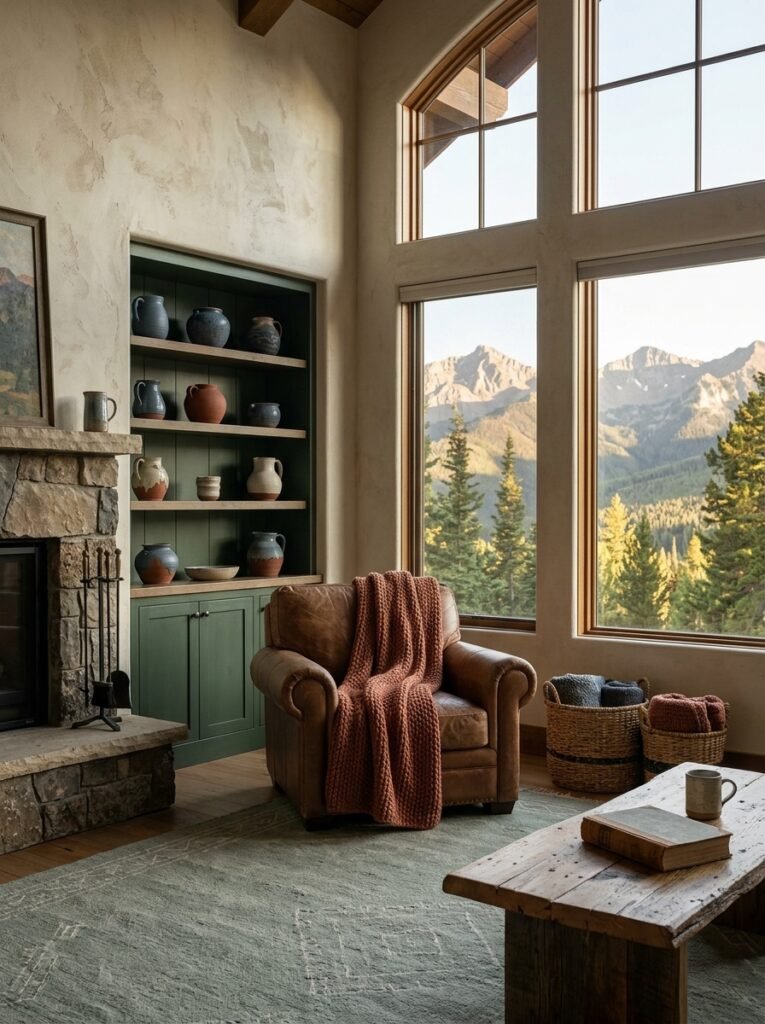
If you were to design a rustic mountain home and could only get one element exactly right, let it be the fireplace. Because in a mountain home, the fireplace isn’t décor — it’s life. It’s where wet ski boots get propped, where stories get told, where the cold gets chased out, where a family actually becomes a family at the end of a long day outdoors.
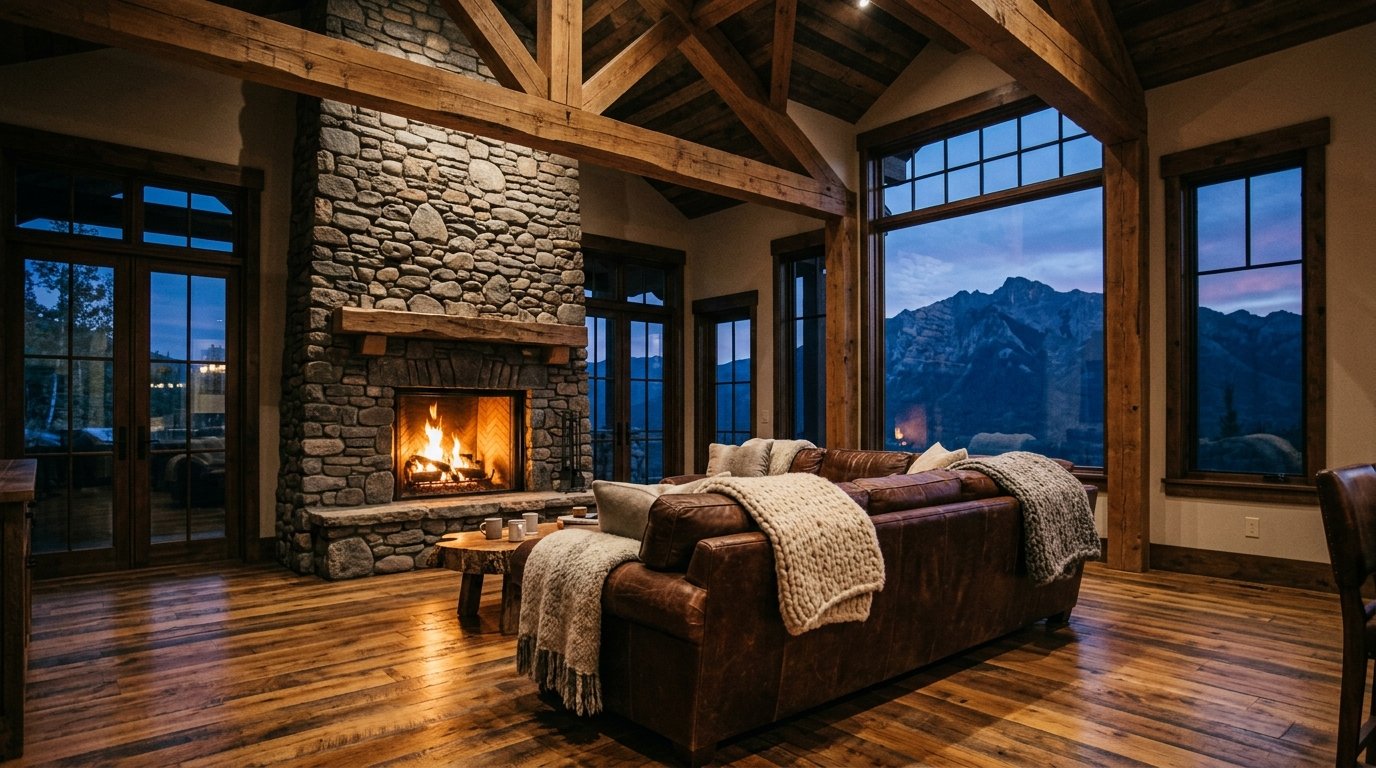
A stone fireplace that runs floor to ceiling is the gold standard, and for good reason. It draws the eye upward, makes the ceiling feel intentional even in a large open-concept space, and creates a natural focal point that organizes every other piece of furniture in the room. The firebox itself should feel generous — wide enough to hold a real log fire, deep enough to radiate serious heat. Surrounding it with hand-stacked river rock or rough-cut limestone gives it that irreplaceable “this has always been here” quality.
The mantel deserves equal attention. A single thick slab of live-edge wood — something with visible grain, a beautiful natural edge, maybe a small split running through it — is far more powerful than any carved, painted mantelpiece. Use it to display things that matter: a vintage clock, a collection of pine cones gathered on a trail walk, a simple ceramic vase, a framed photograph of the mountain view from your own backyard.
5. Furniture That Looks Like It Has Somewhere to Be — and Chose to Stay
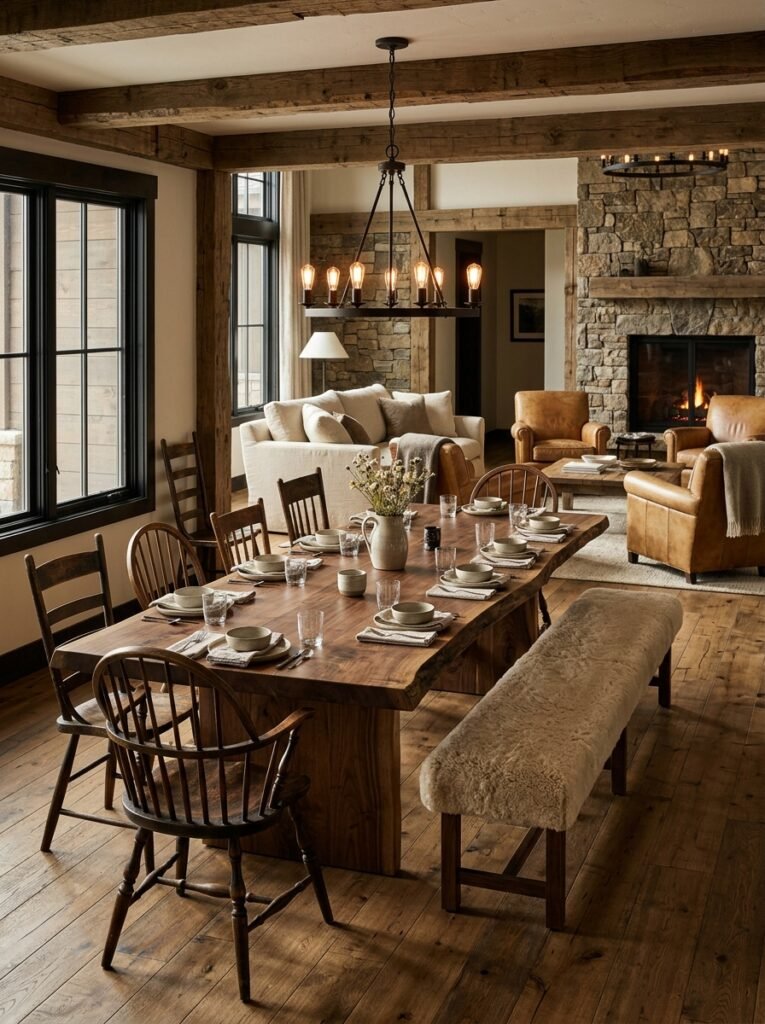
Rustic mountain furniture has a particular quality: it looks substantial. Solid. Like it was made to outlast the people who chose it. This is not the space for lightweight, easily rearranged pieces. Mountain furniture plants itself and means it.
Look for sofas with deep seats and thick cushions — the kind you genuinely sink into. Upholstery in natural linen, heavy canvas, or woven wool checks all work beautifully, especially in colors that echo the earth palette. Leather — real, full-grain leather — ages gorgeously in a mountain home, developing a patina that only makes it more beautiful over time.
“In a mountain home, every piece of furniture should feel like it was chosen to stay forever.”
Dining tables in rustic mountain interiors are often the most jaw-dropping pieces in the house. A long, live-edge harvest table can seat twelve people comfortably and serves as both a functional surface and a genuine piece of art. Pair it with mismatched wooden chairs, a bench upholstered in sheepskin, or simple ladder-back chairs in a dark walnut finish — the slight imperfection of mixing styles actually strengthens the overall look.
6. Textiles: The Secret Ingredient That Makes Cold Houses Feel Warm
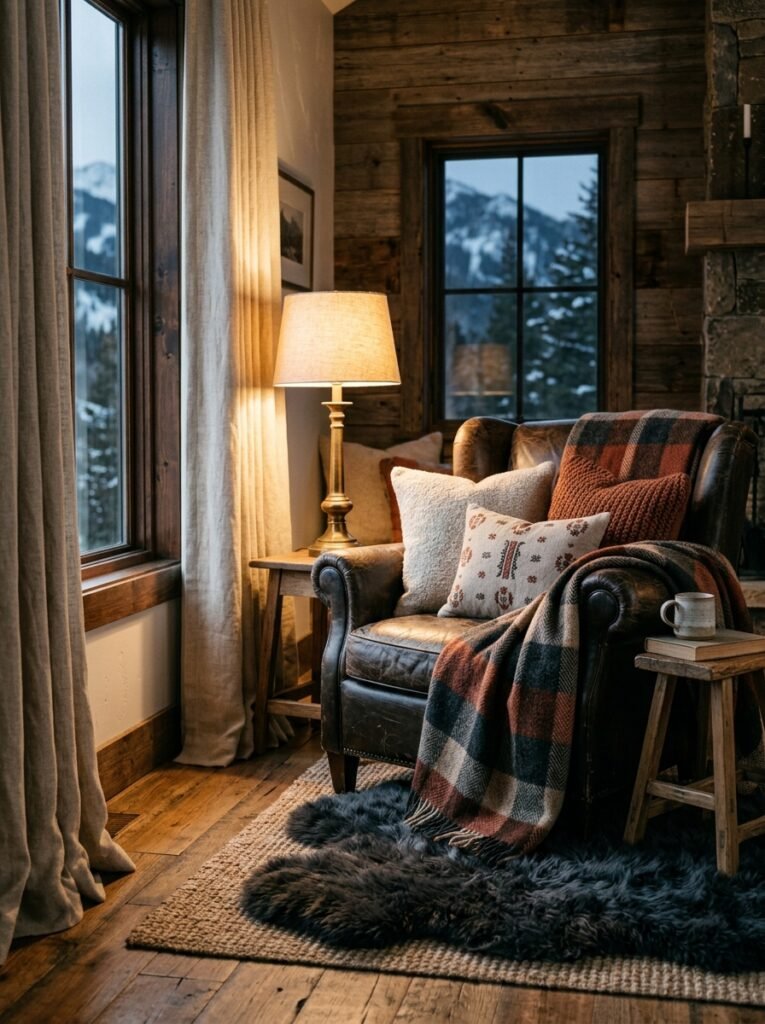
Walk into any rustic mountain home that truly works and you’ll notice something before you even consciously process it: warmth. Not the temperature kind — though that matters too — but a tactile warmth that comes from layering the right textiles throughout the space. This is the often-overlooked detail that separates a beautiful mountain home from a merely decorated one.
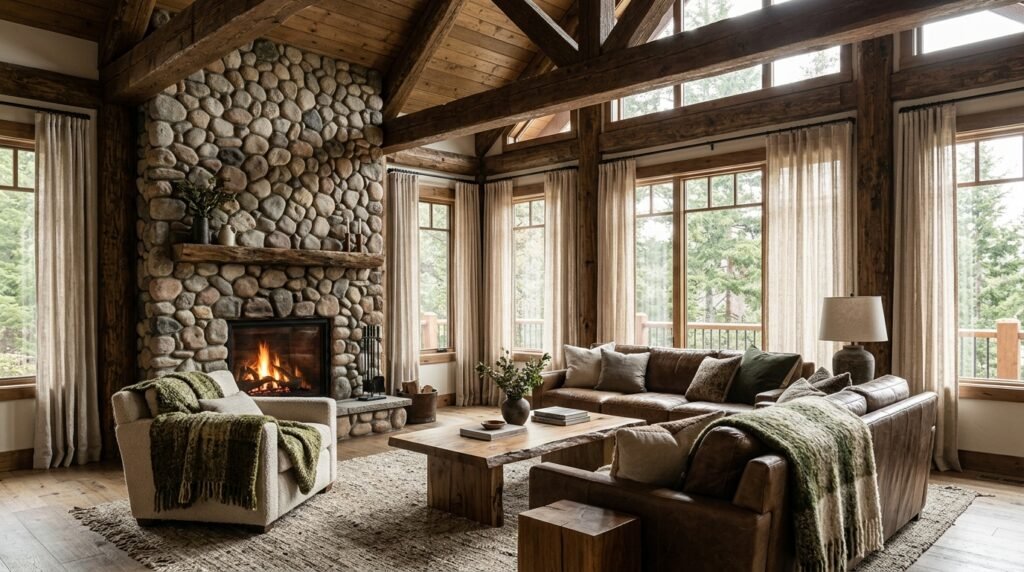
Think in layers, always in layers. A sisal or jute rug as the base layer underfoot, with a faux-fur or chunky woven wool throw rug layered on top. Linen curtains that pool slightly on the floor — unlined, so they let in mountain light while still offering softness. Pillows in different textures: a smooth leather lumbar pillow beside a bouclé throw cushion beside a hand-embroidered linen square. The combination creates a richness that no single high-end piece can achieve on its own.
Wool blankets deserve their own moment of recognition. A good wool throw — genuinely heavy, genuinely warm — draped over the arm of a leather chair or folded at the foot of a bed is one of the simplest and most effective things you can do to make a mountain space feel lived-in and loved. Buffalo check, herringbone, and simple solid weaves are all perfectly at home here.
7. Lighting That Mimics the Magic of Firelight
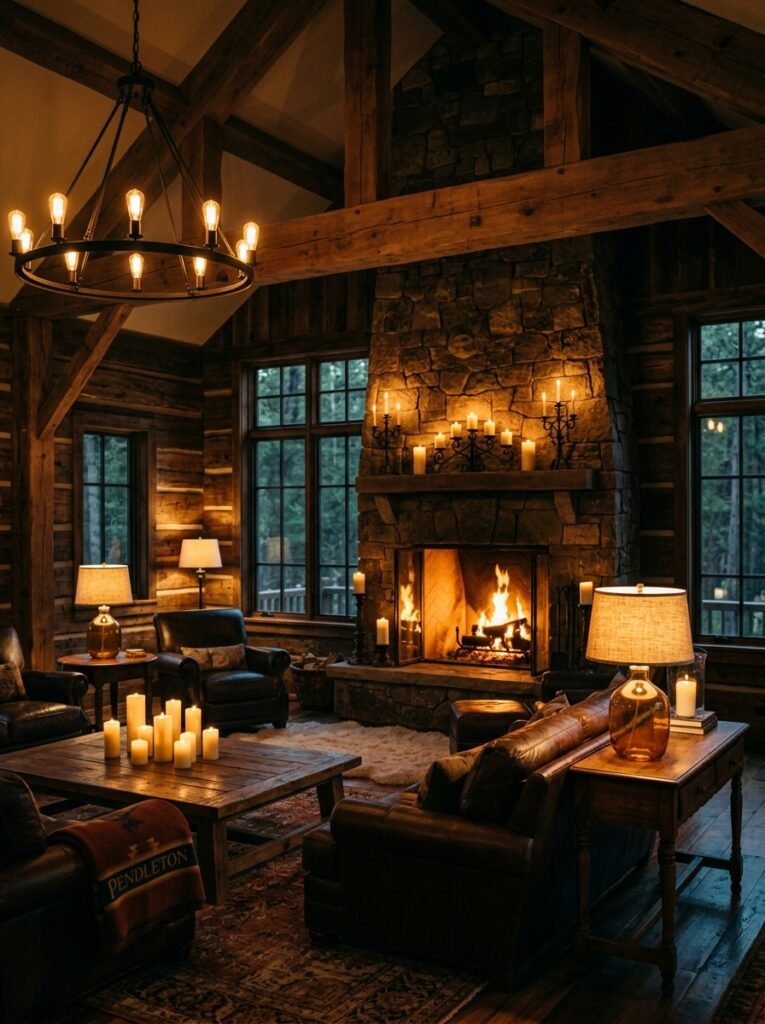
Lighting in a rustic mountain home should never be harsh. The goal is to create an atmosphere that feels like perpetual golden hour — warm, layered, slightly imperfect. Think about the way firelight moves: it flickers, it pools in certain areas, it leaves corners in gentle shadow. Good mountain interior lighting aims for exactly that quality.
Overhead fixtures should make a statement without pretense. A wrought-iron chandelier with visible candlestick bulbs, an antler light fixture (real or artfully crafted faux), or a simple wagon-wheel design can serve as a striking centerpiece without feeling costume-y if the rest of the space is grounded. The key is scale — mountain homes often have high ceilings, and undersized fixtures look tentative and out of place.
Layer your lighting intentionally: overhead fixtures for general illumination, table lamps with linen or amber glass shades for warm pools of task and ambient light, and candles — always candles — for the moments when you want the room to breathe and settle around you.
8. The Kitchen: Where the Mountain Meets the Meal
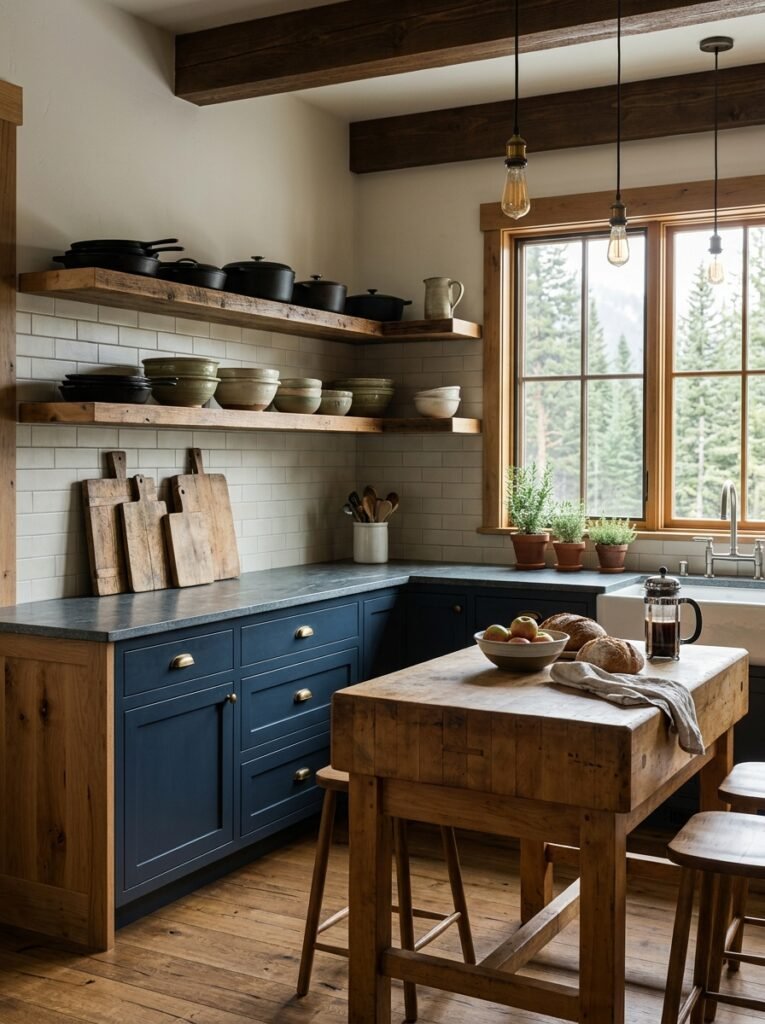
A rustic mountain kitchen is one of the most functional, most beautiful spaces in the entire home — and it should feel like both simultaneously. The design philosophy here is honest craftsmanship: things should look like what they are and do what they’re meant to do, beautifully.
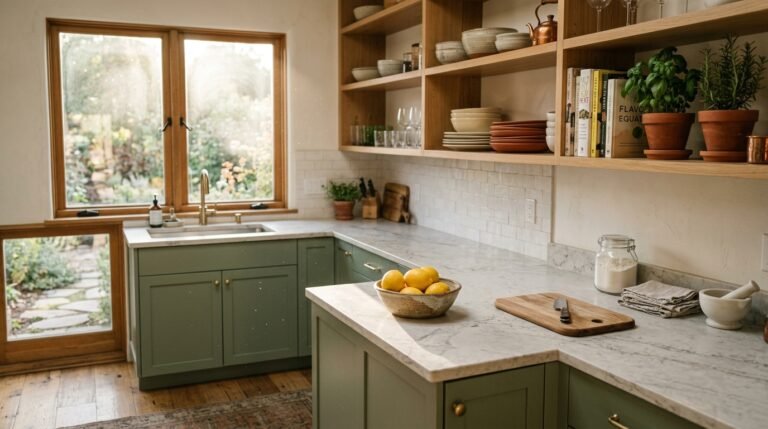
Cabinetry in a mountain kitchen tends toward painted or stained wood in muted tones — deep navy, warm white, forest green, or a simple natural wood finish that allows the grain to show. Open shelving is a mountain kitchen staple: thick wooden shelves displaying cast iron pans, ceramic bowls in earthy tones, a collection of vintage cutting boards, and the kind of everyday objects that tell a story about how the space is actually used.
Countertops in honed granite, leathered quartzite, or butcher block bring the same honest-materials philosophy to the work surface. Honed finishes, in particular, feel more at home than polished ones — they absorb light rather than reflecting it, lending the kitchen a matte, tactile quality that perfectly complements rough-hewn wood and stone.
“A mountain kitchen should smell like something wonderful is always about to happen.”
9. The Bedroom: A Nest at the Top of the World
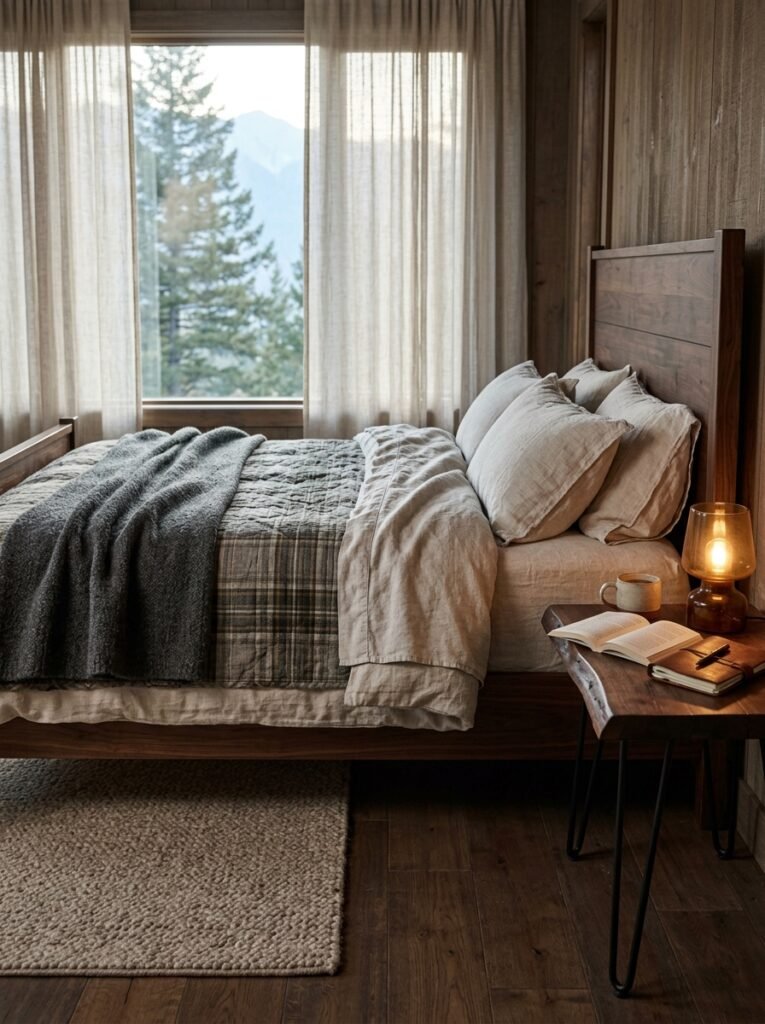
Imagine waking up in a mountain bedroom — early morning light filtering through linen curtains, the sound of wind through pine trees outside the window, a weighted wool blanket heavy and warm across your legs. This is the experience a well-designed mountain bedroom promises, and it’s entirely achievable with the right intentionality.
The bed is the undeniable anchor. A solid wood frame — preferably in a dark walnut, weathered grey, or natural pine finish — with a tall, simple headboard sets the tone. Layer the bedding in a way that invites burrowing: a fitted sheet in high-thread-count cotton, a flat sheet in washed linen, a quilt in a subtle plaid pattern, and finally that wool blanket folded across the foot. A mountain bed should look like you could disappear into it for an entire rainy Saturday, and never feel guilty about it.
Nightstands in a rustic mountain bedroom often do their best work when they’re unexpected: a slice of live-edge wood on simple legs, a vintage wooden crate turned on its side, a simple iron-legged table with a raw wood top. The bedside lamp should cast a warm, low light — nothing harsh, nothing bright.
10. Small Details That Make a Mountain Home Feel Deeply Lived-In
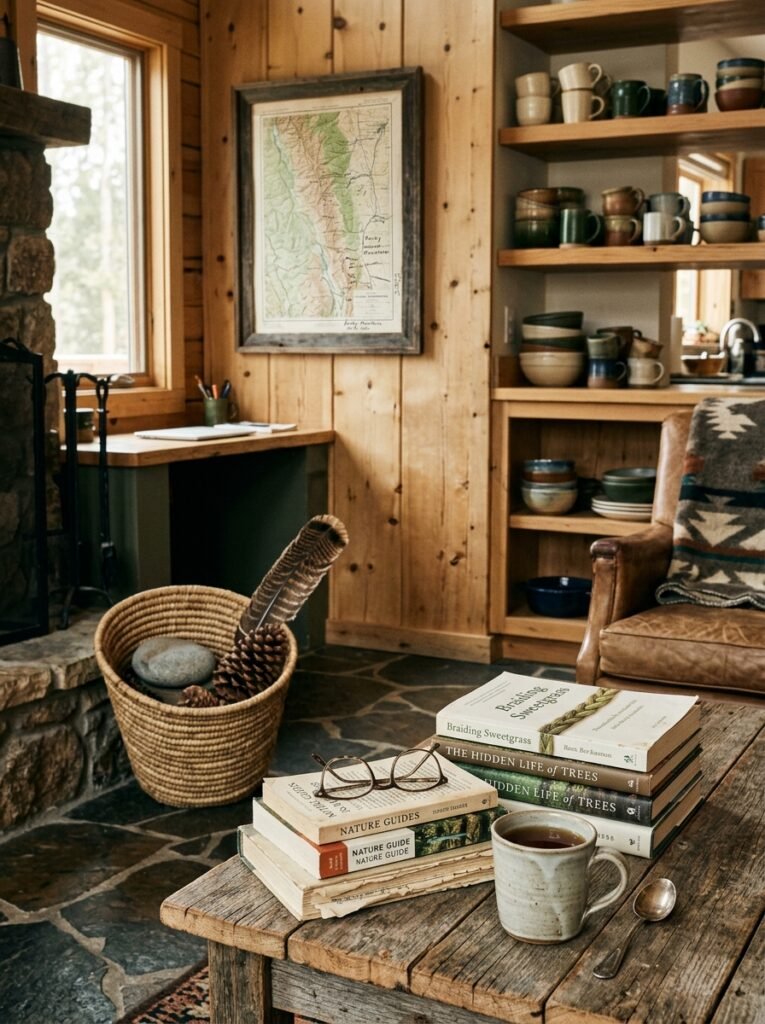
The difference between a mountain home that feels like a magazine set and one that feels like a real life being beautifully lived is always in the details. These are the small, considered choices that most designers don’t talk about but every person feels when they walk through the door.
A stack of books on a coffee table — not arranged as decoration, but actually read and slightly bent-spined. A basket near the door for collecting things from walks: a smooth stone, a pinecone, a feather. A vintage topographic map framed above a hallway desk. A collection of mismatched ceramic mugs on open kitchen shelving that were chosen because they were loved, not because they matched.
These details don’t have to be expensive or curated. They have to be real. The mountain home aesthetic is ultimately about authenticity — and the most authentic homes are the ones that show evidence of a full, curious, engaged life being lived inside them.
11. Bringing the Outdoors In Without a Single Piece of Furniture
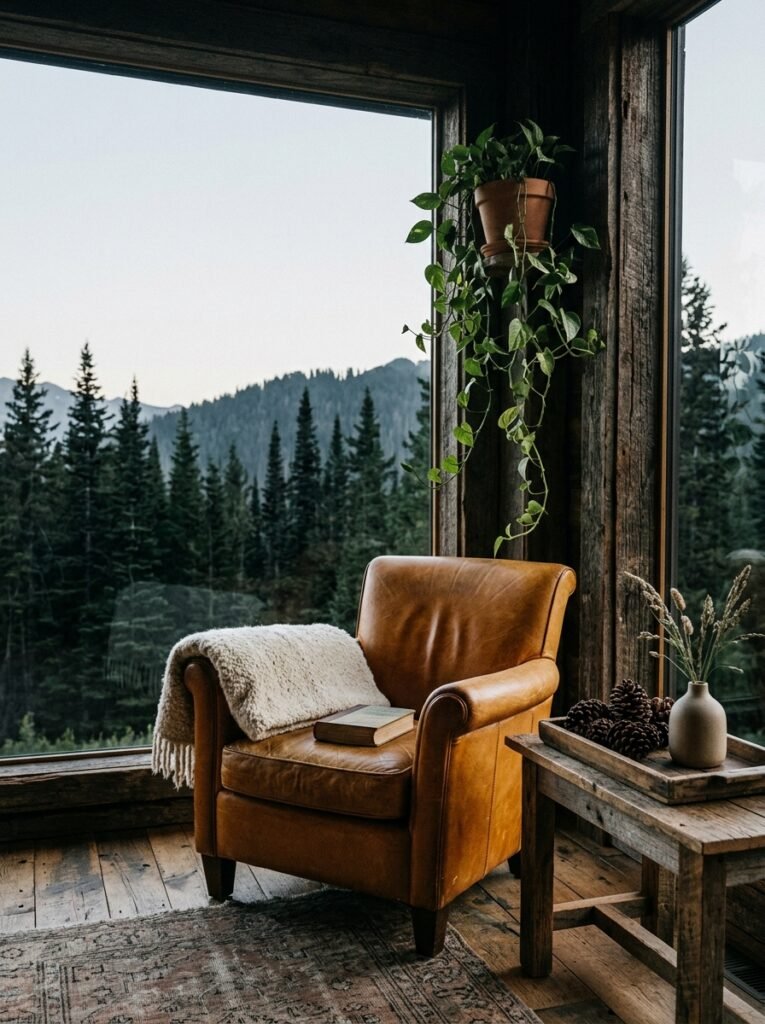
One of the most powerful tools in a mountain interior designer’s kit costs almost nothing: the view. If your home has mountain views — even partial ones — treat every window as a deliberate frame. Keep window treatments minimal and easy to pull aside. Consider the sightlines from your most-used furniture positions. Arrange a reading chair to face the window that captures morning light and a ridge of treeline.
Inside, bring the outdoors in through botanical elements: a single stem of dried grasses in a rough ceramic vase, a branch of eucalyptus laid across a mantel, a cluster of pinecones grouped on a wooden tray. Live plants — particularly hardy ones like pothos, ferns, and succulents — soften hard architectural lines and remind you that even indoors, life is growing.
Don’t overlook scent as an element of the mountain interior experience. Candles, diffusers, or even simmering a pot of water with pine needles and orange peel can make a space smell the way a mountain forest feels — and that sensory connection matters more than most people realize.
12. How to Start Your Rustic Mountain Interior Without Starting Over
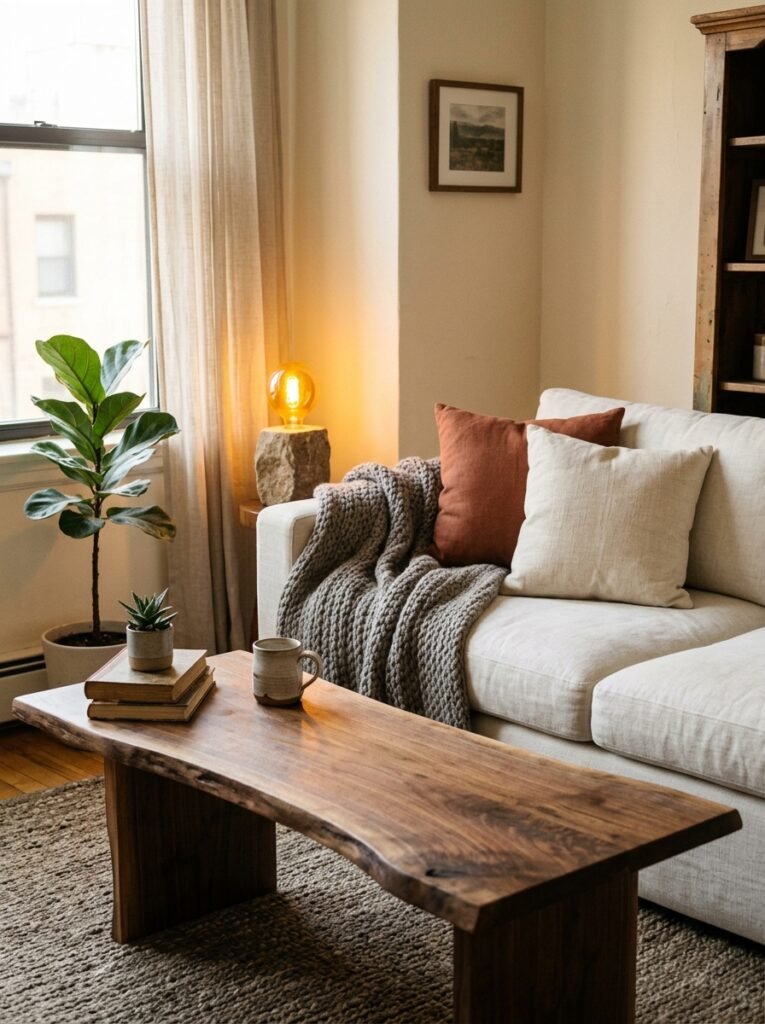
Perhaps the most encouraging thing about rustic mountain style is this: you don’t need to demolish walls, find a cabin, or spend a fortune to bring this aesthetic into your home. You can begin with a single, well-chosen piece — a live-edge coffee table, a stone lamp base, a chunky knit throw in a warm heather tone — and let the style grow organically from there.
Start with what you already love in your space. If you have hardwood floors, let them be the foundation. If you have a fireplace, make it the focal point it deserves to be. Layer in natural materials gradually, replacing synthetic or overly polished elements one at a time. Edit ruthlessly — rustic mountain style is generous with texture but disciplined about clutter.
The most important principle to carry with you throughout the process: choose things that will age beautifully. A piece that looks better with ten years of use and wear is a mountain home piece. A piece that will look tired and dated in two years is not.
—
🌿 How to Take Care of Your Rustic Mountain Interior
Maintaining the beauty of a rustic mountain home requires a little knowledge and a lot of patience — because the materials that make these spaces so stunning are also ones that are alive, in a sense, and will continue to change over time.
Seal your natural wood surfaces annually with a high-quality beeswax or hardwax oil finish rather than polyurethane — it preserves the natural look and feel while protecting against moisture and wear. Treat your leather upholstery with a good leather conditioner twice a year to prevent cracking and maintain that gorgeous patina. Clean stone surfaces with pH-neutral cleaners only; acidic or harsh chemical cleaners can etch and dull natural stone permanently. Rotate your textiles seasonally — lighter linens in the warmer months, heavy wool and faux fur in winter — to give each piece a rest and keep the space feeling fresh. And finally, let minor marks and imperfections in wood and stone be. They are not damage. They are the story of a home being truly lived in.
—
❓ FAQ
Q: What is the difference between rustic and farmhouse interior design? A: Rustic design leans heavily on raw, unfinished natural materials and a wilderness-inspired mood — it feels wild and grounded. Farmhouse style shares some of those natural elements but is generally more polished, with painted shiplap, clean lines, and a lighter, brighter palette. Think of rustic as the untamed older sibling of farmhouse design.
Q: Can rustic mountain style work in a small apartment or urban home? A: Absolutely — and beautifully. The key is to focus on one or two signature elements rather than trying to replicate a full cabin aesthetic. A live-edge wood piece, a stone lamp, a chunky wool throw, and a warm earth-tone palette can bring all the soul of mountain design into even a compact urban space.
Q: What colors work best with exposed wood beams in a mountain interior? A: Warm whites, soft creams, and muted greiges work beautifully with dark-stained exposed beams, allowing the beams to stand out without competing with the walls. If your beams are lighter in tone, consider a deeper wall color — a dusty sage, a muted terracotta, or a warm charcoal — to create contrast and depth.
—
💭 Final Thought
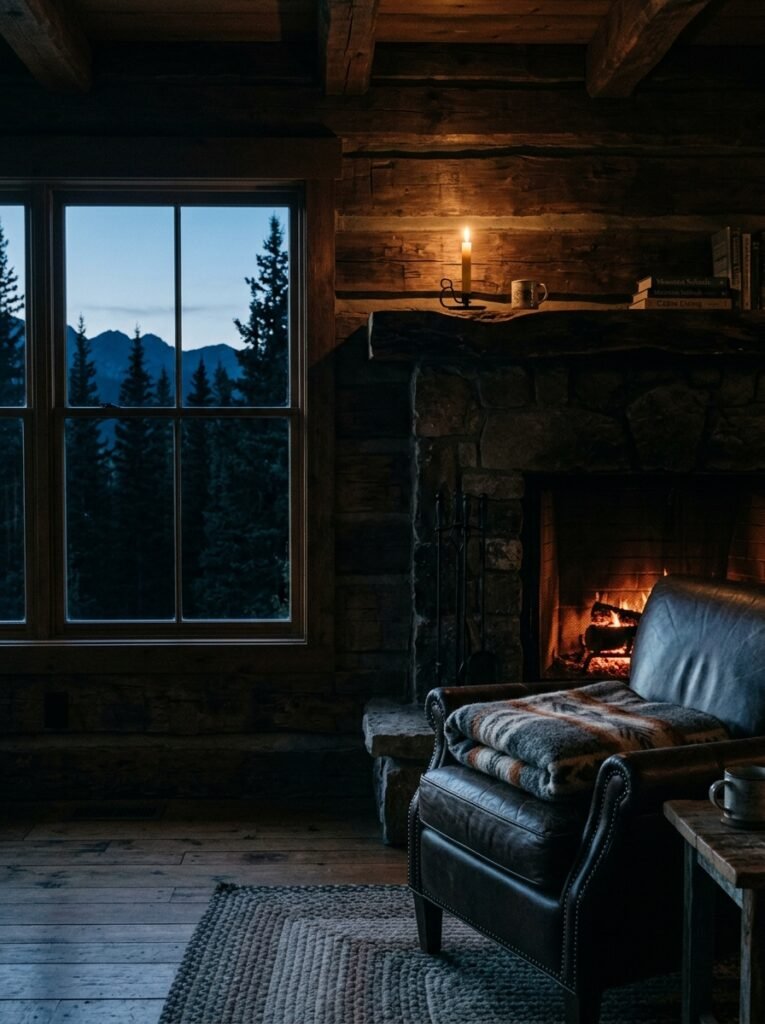
A rustic mountain home, at its truest, is not an aesthetic. It’s a philosophy — a decision to live surrounded by things that are honest, enduring, and quietly beautiful. It’s the choice to let nature be the most powerful designer in the room, and to arrange everything else in humble service to that. The mountain doesn’t rush, and neither should your home.
So here’s something to sit with: if your home were a landscape, what would it look like — and does the way you’ve designed your space actually reflect the life you most want to be living inside it?