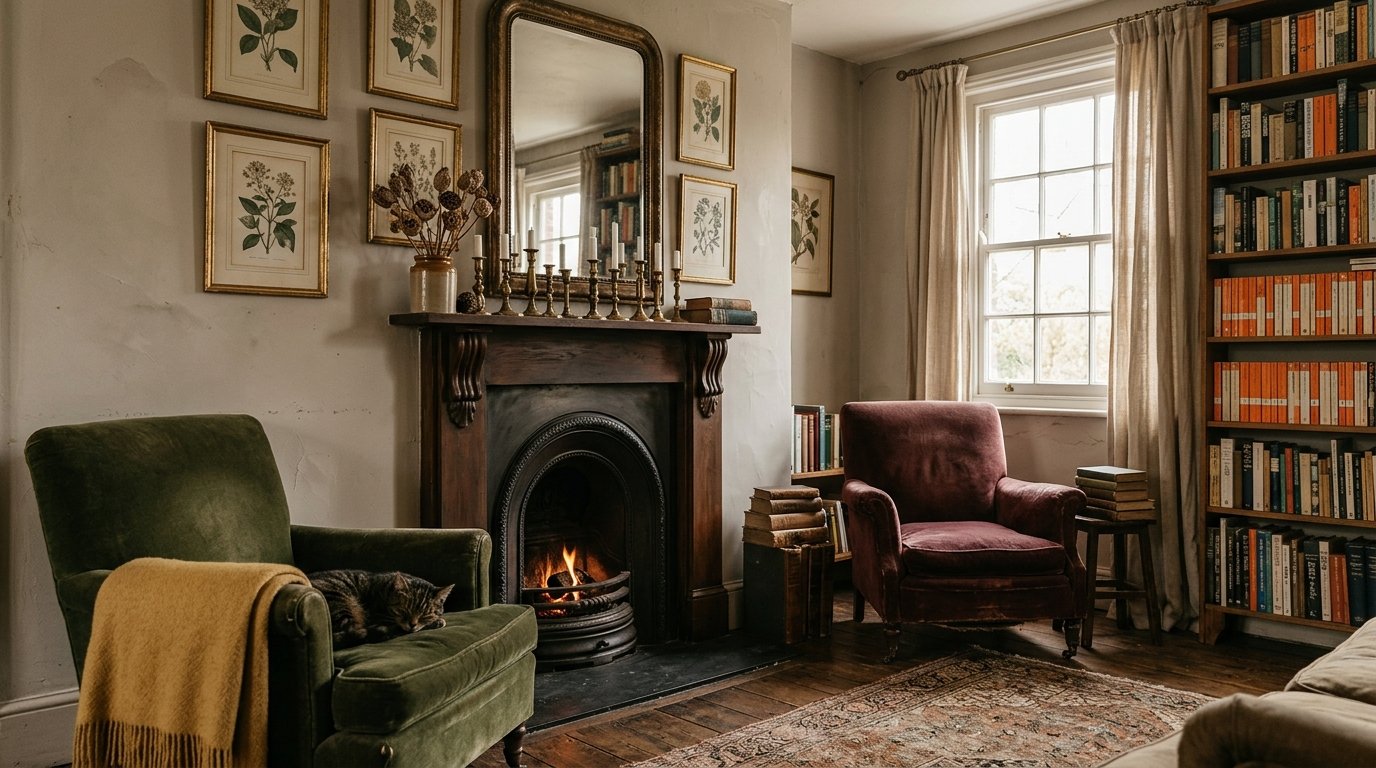
The Quiet Magic of British Homes: Why Their Interior Style Feels Like Coming Home
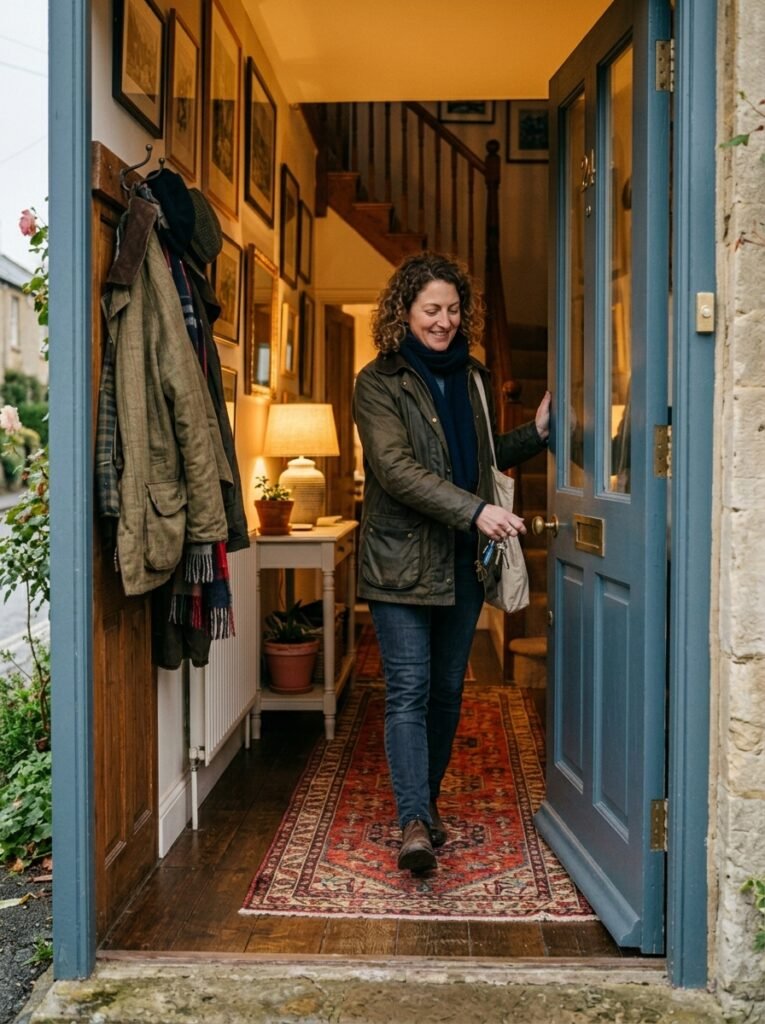
There’s something about stepping inside a truly British home that makes your shoulders drop and your breathing slow — like the house itself is exhaling a welcome. It’s not flashy. It’s not trying too hard. And yet, somehow, it’s the most beautiful thing you’ve ever seen.
—
Table Of Content
1. The Secret Language of the British Living Room
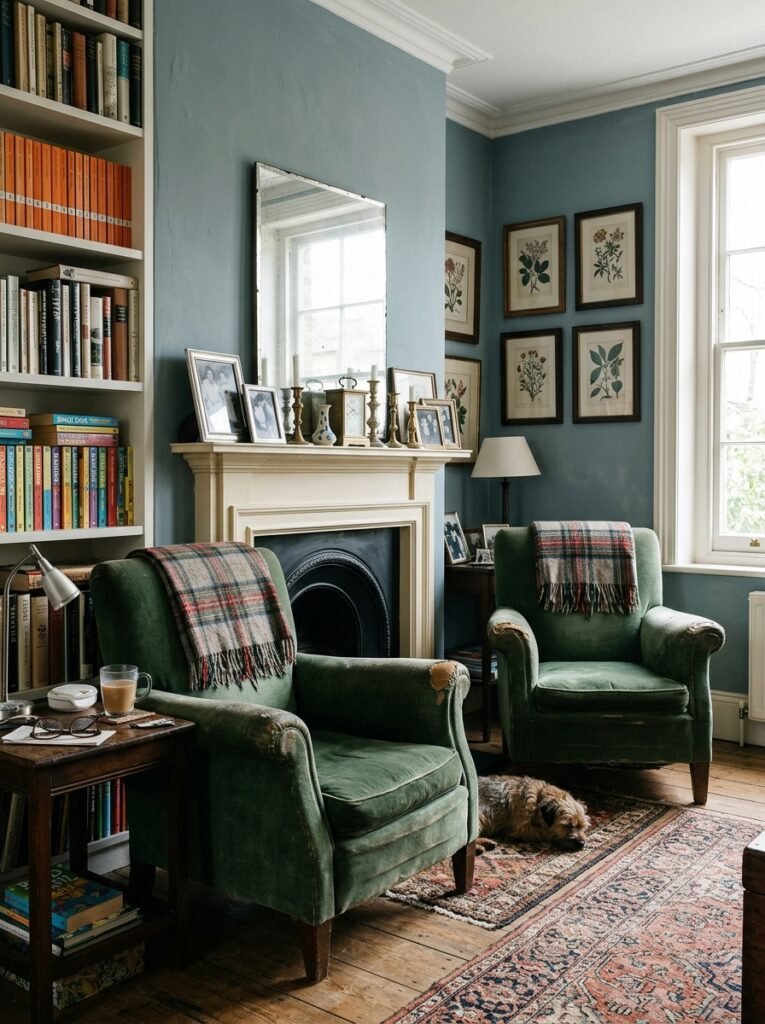
Walk into a traditional British living room and you’ll notice something almost immediately — it doesn’t feel designed. It feels accumulated. And that, quietly, is the entire point.
British interior design has always operated on a philosophy of layering rather than curating. Where other design traditions favour the clean sweep — the matching set, the colour-coordinated throw pillows, the perfectly balanced vignette — British homes tend to gather things over time. A velvet armchair that belonged to someone’s grandmother. A framed botanical print picked up at a village market. A bookshelf that holds an unlikely mix of Penguin Classics and well-loved Roald Dahl paperbacks.
This approach has a name in design circles: “collected eclecticism.” But in British homes, it was never a trend. It was just life, lived fully and recorded faithfully in furniture and fabric.
“A British living room doesn’t look designed — it looks lived in, and that’s exactly why it’s beautiful.”
The fireplace is almost always the anchor. Whether it’s a working Victorian cast-iron hearth or a decorative Edwardian surround painted in heritage cream, the mantelpiece tells the story of the household. Family photographs leaning casually against a mirror. A pair of mismatched candlesticks. A small clock that may or may not be keeping the right time. None of it matches perfectly. All of it belongs completely.
Colour plays a fascinating role in British living rooms too. The palette tends to reach toward the muted and the mellow — Farrow & Ball’s “Elephant’s Breath,” “Dead Salmon,” and “Mole’s Breath” have become almost synonymous with British interiors because they capture something essential about the light in this country. British light is soft and diffused, gentle even on sunny days, and these chalky, complex shades respond to that light in ways that bright, saturated colours simply cannot.
—
2. Why British Homes Embrace Imperfection Like Nowhere Else
There is a concept — much discussed in Japanese aesthetics — called wabi-sabi: the beauty of imperfection, of things worn and aged and imperfectly wonderful. What’s remarkable is that British interior design arrived at a very similar philosophy entirely independently, and it has been baked into domestic culture for centuries.
The slightly uneven plaster wall. The flagstone floor with its chips and dips. The window frame that doesn’t quite close flush. In many design cultures, these would be problems to fix. In a British home, they’re often the things that give the space its soul.
This is particularly true in the older housing stock that makes up so much of Britain’s residential landscape. Britain has some of the oldest inhabited domestic buildings in the world — Georgian townhouses, Victorian terraces, Edwardian semis — and the owners of these properties rarely gut them entirely. Instead, they layer the modern gently over the historic, creating interiors that feel like conversations between past and present.
—
3. The Role of Pattern in the Quintessentially British Interior
If there is one design element that separates British interiors from their Scandinavian counterparts — so beloved on Pinterest for their clean minimalism — it is pattern. British rooms love pattern. They embrace it, layer it, and refuse to apologise for it.
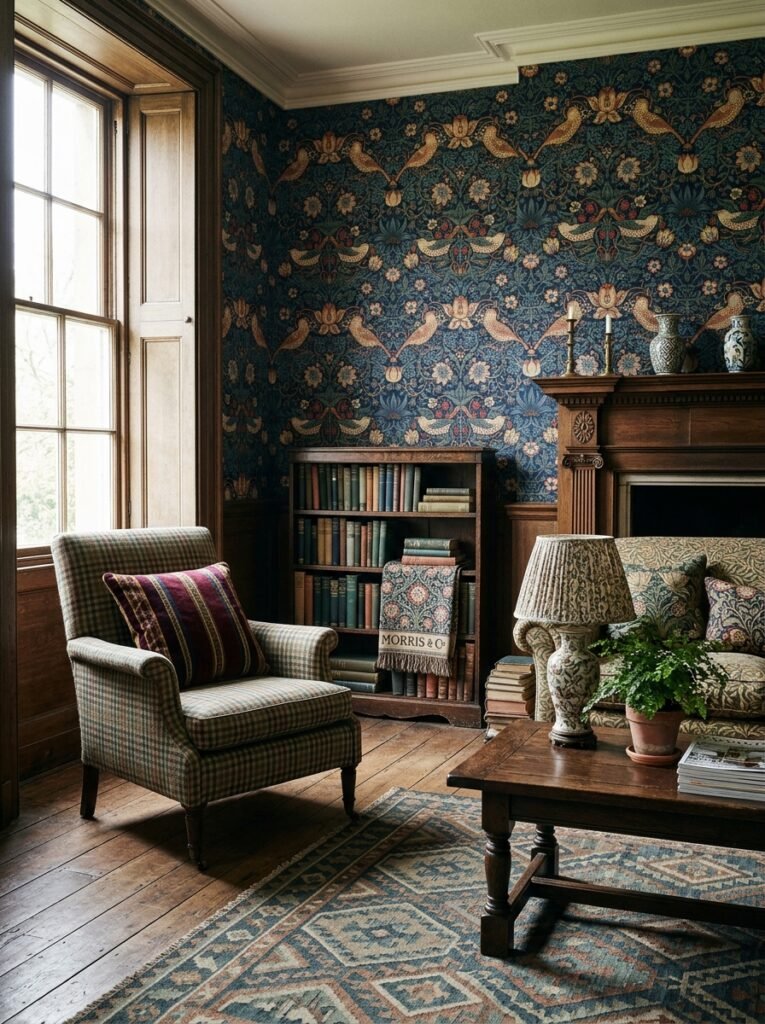
Think of the iconic William Morris prints that have been decorating British drawing rooms since the 1860s. The intricate, nature-inspired repeats — “Strawberry Thief,” “Willow Bough,” “Golden Lily” — were radical at the time, a deliberate rejection of industrialisation in favour of craft and beauty. Over a century and a half later, they still feel completely at home in British interiors because the sensibility hasn’t changed.
A British room might combine a floral wallpaper with a geometric rug, a stripe cushion on a checked armchair, and still somehow avoid visual chaos. This is because British design instinctively understands the principle of tonal harmony — keeping the colours within a cohesive range allows the patterns to coexist without competing.
—
4. The Kitchen: The True Heart of a British Home
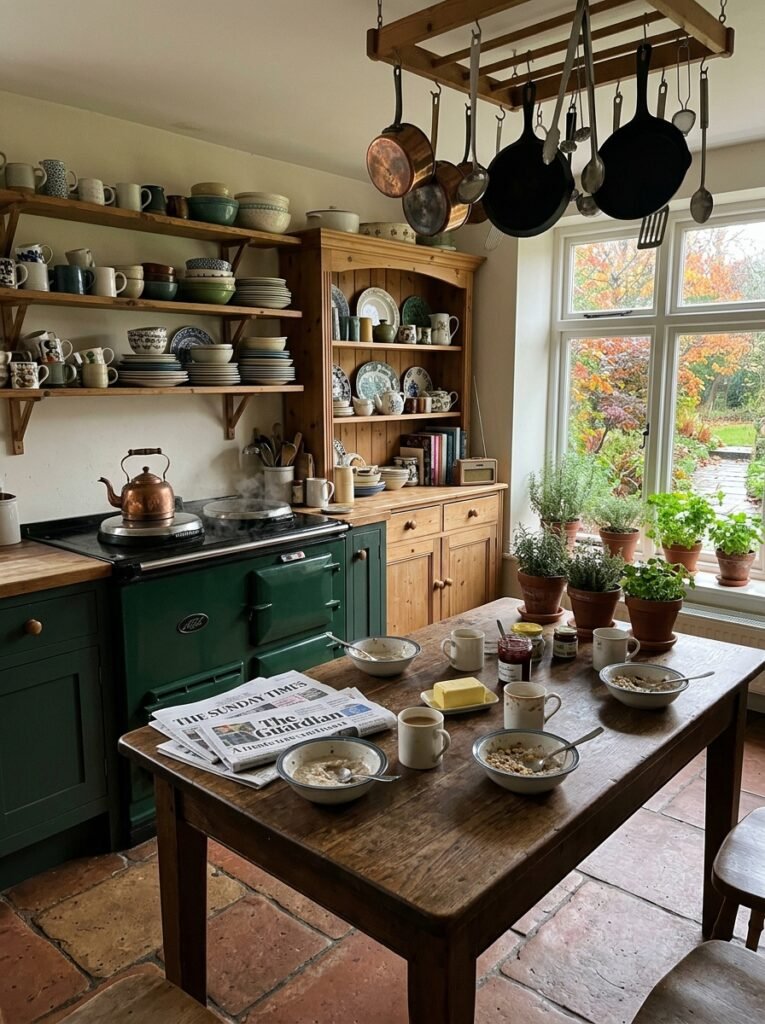
Ask any British homeowner which room in the house matters most and nine times out of ten, they’ll say the kitchen. Not because it’s the most impressive, but because it’s the most used. The most loved. The most human.
Imagine Sunday morning in a British kitchen — a worn wooden table covered in newspapers and cereal bowls, a kettle that’s been going all morning, a garden through the window showing the last of autumn’s leaves. It’s not a showroom kitchen. It’s a kitchen where things happen.
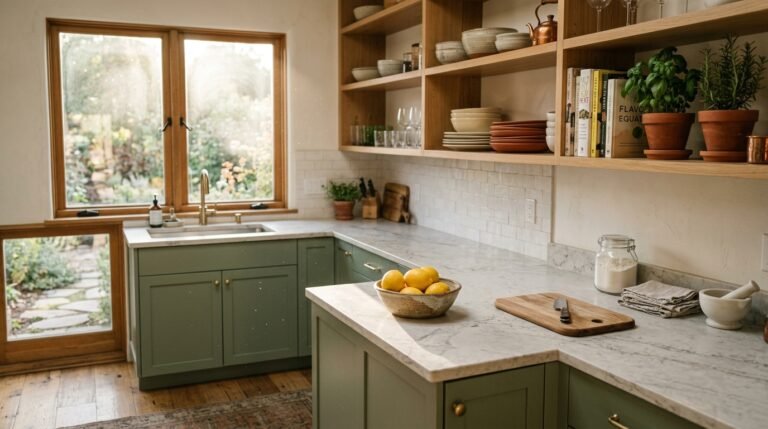
The British kitchen aesthetic is often described as “unfitted” or “country” — and both of those terms point toward the same ideal: a kitchen that feels like it grew organically rather than being installed in a single weekend. Open shelving displaying everyday crockery in pleasing stacks. Freestanding dressers holding mismatched but complementary pieces. Pots hanging from ceiling hooks. Herbs growing on the windowsill.
“The best British kitchens look like they’ve been feeding families for generations — because they have.”
The colour palette of the British kitchen tends to run warmer and deeper than the rest of the house — forest greens, deep navies, warm terracottas, dusty pinks. These colours have been popularised by paint brands like Little Greene and Farrow & Ball, and they work because they make the kitchen feel warm and enveloping rather than clinical and bright.
—
5. Understanding British Heritage Style vs. Contemporary British Design
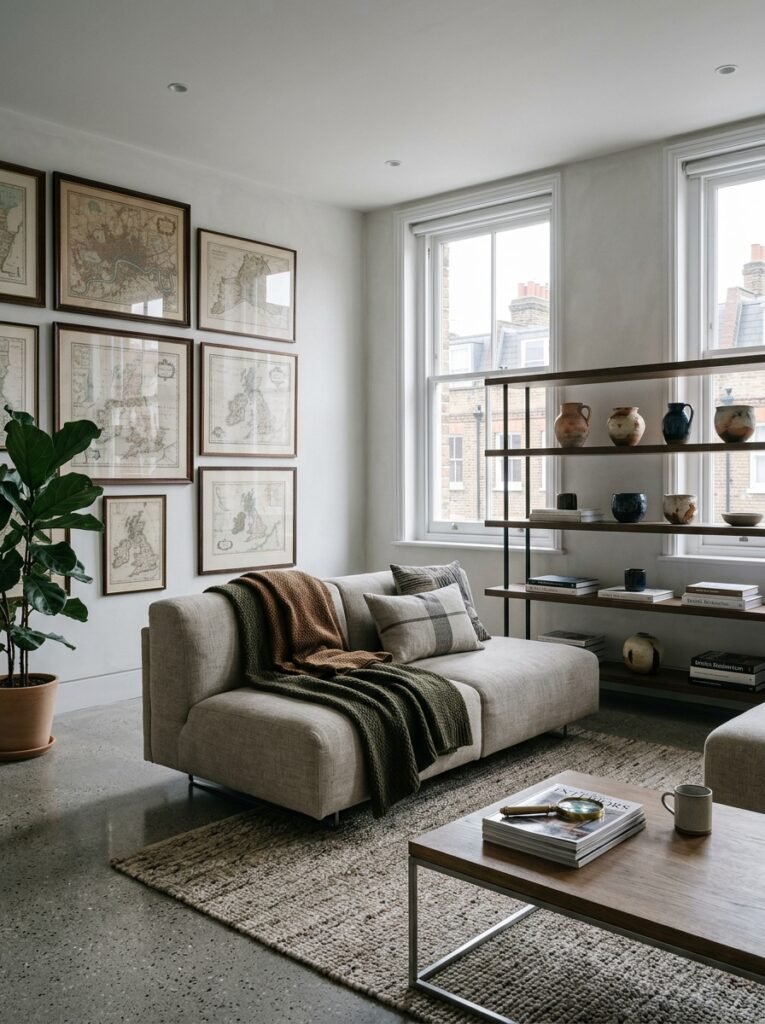
It would be a mistake to assume British interior design is entirely rooted in the past. The country that gave the world maximalism in the form of the grand Victorian drawing room has also produced some of the most innovative minimalist designers of the 20th and 21st centuries — John Pawson, Terence Conran, and Jasper Morrison among them.
Contemporary British interior design tends to exist in conversation with heritage, rather than in rebellion against it. A London flat might feature polished concrete floors and a sleek modular sofa, but the walls will be hung with antique maps and the shelves will hold a thoughtful collection of ceramics. The new and the old coexist because British design culture has never fetishised novelty.
This is actually what makes British interior style so remarkably liveable. It doesn’t demand that you throw everything out and start again with each new trend cycle. It invites you to add, to consider, to keep what works and quietly retire what doesn’t.
—
6. The Garden Room: Britain’s Most Romantic Design Invention
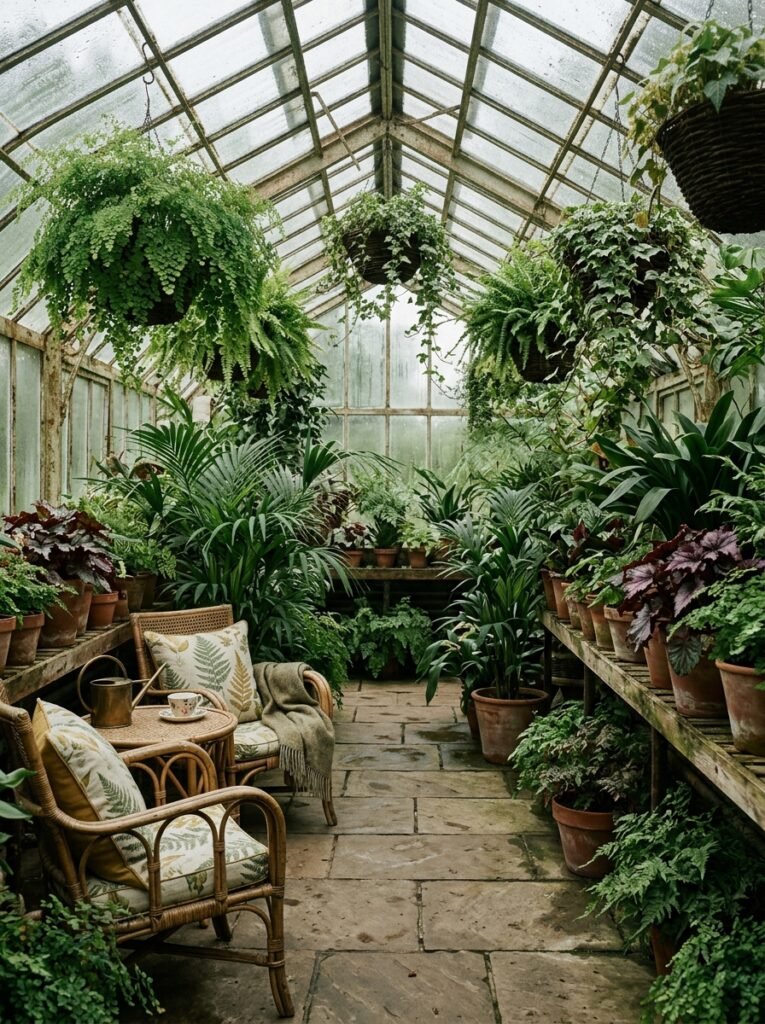
Few things are more distinctly British — or more achingly beautiful — than the garden room. Whether it’s a glassed-in Victorian conservatory frothing with ferns and begonias, or a modern orangery with bifold doors that fold the outside in, the garden room represents something deeply important to the British understanding of home.
The British relationship with gardens is almost mythological. In a country where the weather is genuinely unreliable, the garden becomes both aspiration and obsession. The garden room is the compromise — a space that feels like outside, that smells like green things and damp earth, but offers the consolation of a roof overhead.
Decorating a garden room in British style means embracing natural materials — rattan, cane, terracotta, linen — and keeping the palette rooted in the natural world. Sage greens, earthy browns, the ochre-yellow of turning leaves. Cushions in botanical prints. A worn terracotta pot holding something architectural. The whole room should feel like a deep breath.
—
7. How British Homes Handle Colour Without Fear
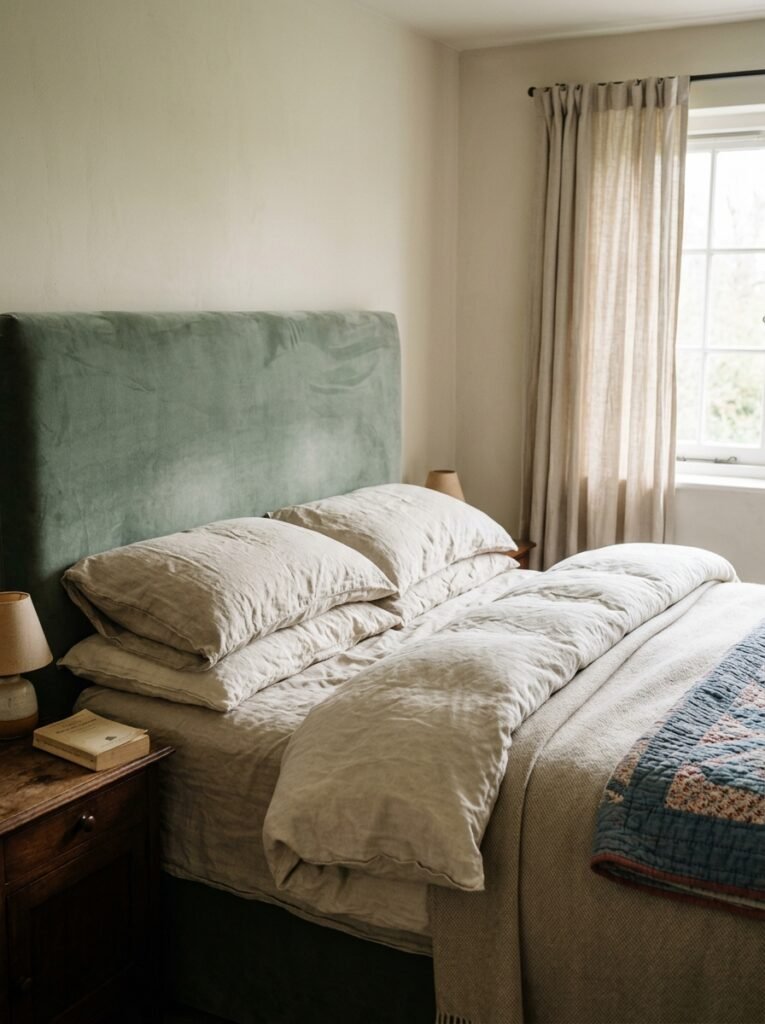
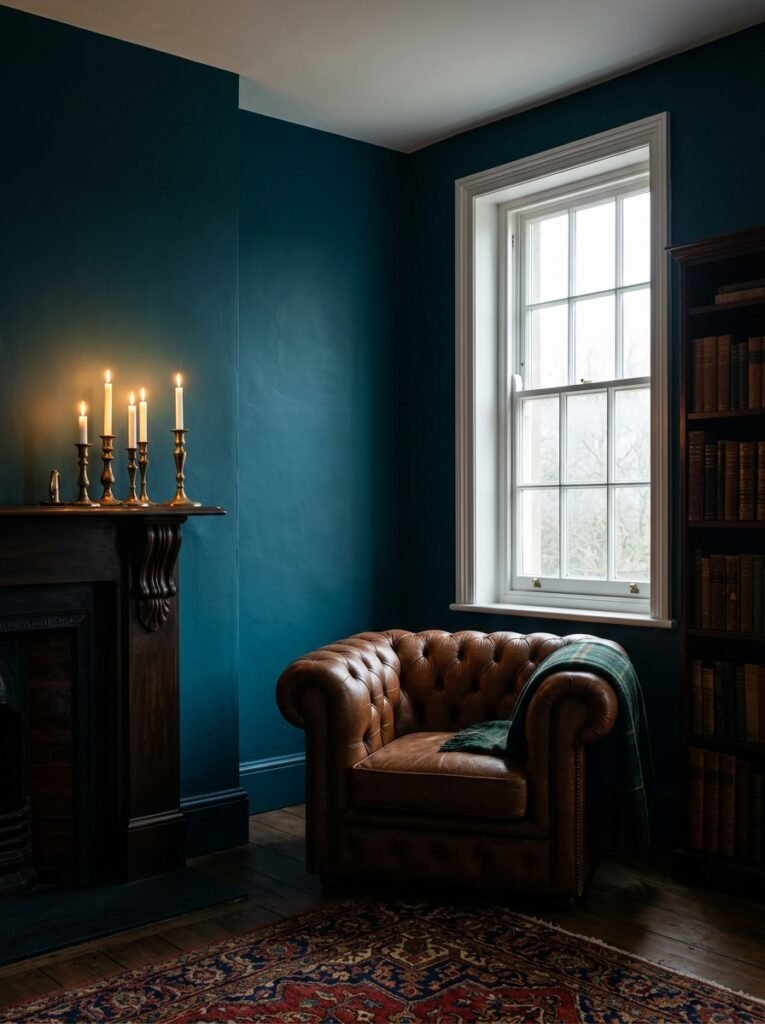
British designers have historically been far more adventurous with colour than their reputation sometimes suggests. The popular image of the neutral, beige British interior is frankly outdated — walk through any design quarter in London, Edinburgh, or Bristol and you’ll find rooms painted in the deepest peacock blue, the most saturated bottle green, the richest tobacco brown.
What’s consistent across British colour use — whether muted or bold — is a commitment to depth. British paint colours are rarely flat. They contain undertones of grey, brown, green, or blue that make them shift and breathe as the light changes throughout the day. This is why a British dark green wall can look brooding and mysterious at noon, warm and inviting at candlelight, and softly moody on a grey morning.
—
8. The Bedroom: Sanctuary, Story, and Soft Linen
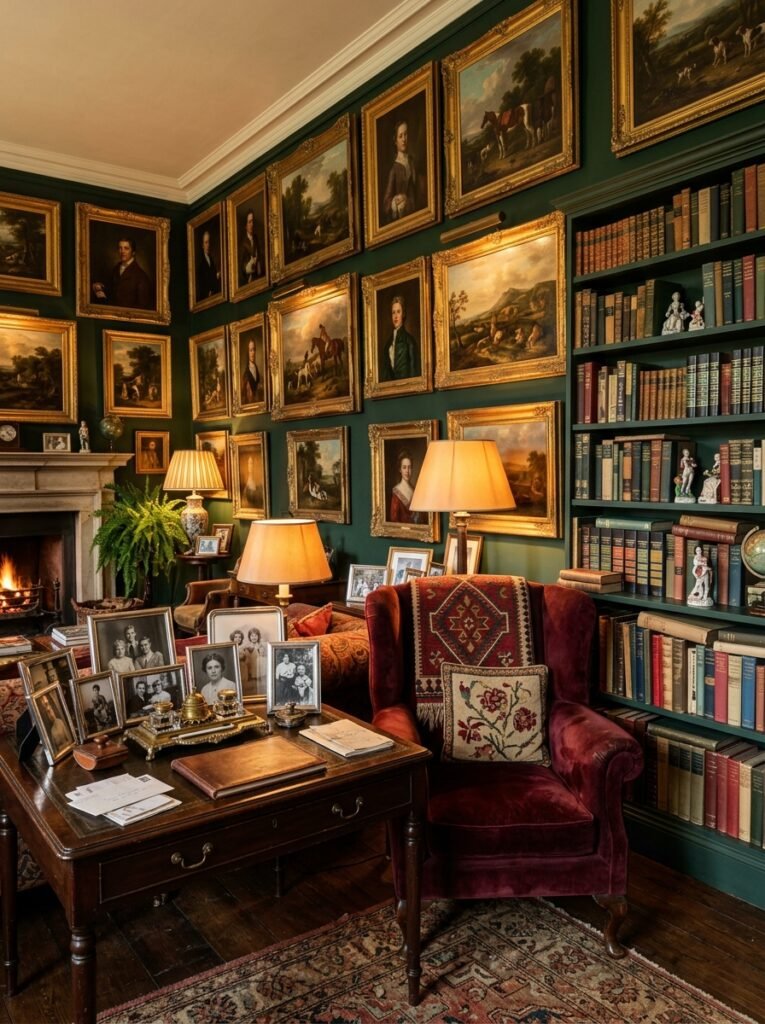
The British bedroom, at its best, is a sanctuary in the most literal sense — a place withdrawn from the world, set apart, quiet. The aesthetic priorities are comfort, texture, and a faint sense of timelessness.
“A great British bedroom is where you go to remember who you are, separate from the noise of the world.”
Linen is perhaps the defining fabric of the British bedroom. Properly aged linen — the kind that’s been washed so many times it’s become soft as a whisper — has a texture and a drape that no other fabric can replicate. It wrinkles beautifully. It gets better with every wash. It is the fabric equivalent of the British philosophy of beauty in imperfection.
Headboards in British bedrooms tend to be upholstered — often in velvet or linen — and sized generously. The bed itself is usually piled with layers: a cotton sheet, a wool blanket, a substantial duvet, a quilt folded at the end. This layering approach means the bed is endlessly adjustable to the British climate, which can shift dramatically between seasons, and occasionally between morning and afternoon.
—
9. Maximalism Done the British Way
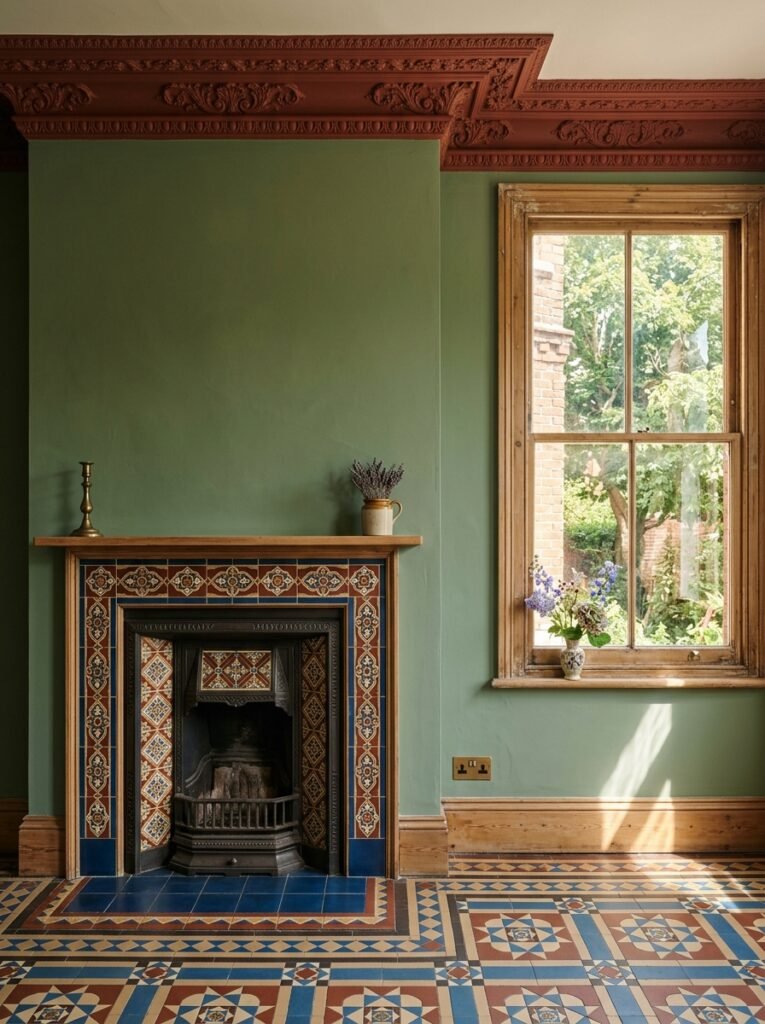
The British interior has long had a more-is-more school of thought that deserves genuine respect. This is the tradition of the “grand English country house” — vast rooms filled with oil paintings stacked three rows high, escritoires covered in silver-framed photographs, bookshelves overflowing with everything from first editions to Reader’s Digest collections, and not a single surface left bare.
In its domestic, everyday expression, British maximalism is warmer and more personal than this grand tradition — but it shares the same fundamental confidence. The confidence that things are worthy of space. That beauty doesn’t require reduction. That a room can hold many stories at once without becoming chaotic, as long as those stories are told with intention and love.
The key to pulling off British maximalism is exactly that — intentionality. Every object should be there because it is loved, used, or beautiful. Not because it was cheap. Not because it filled a gap. Because it was chosen.
—
10. Period Architecture and How British Homeowners Celebrate It
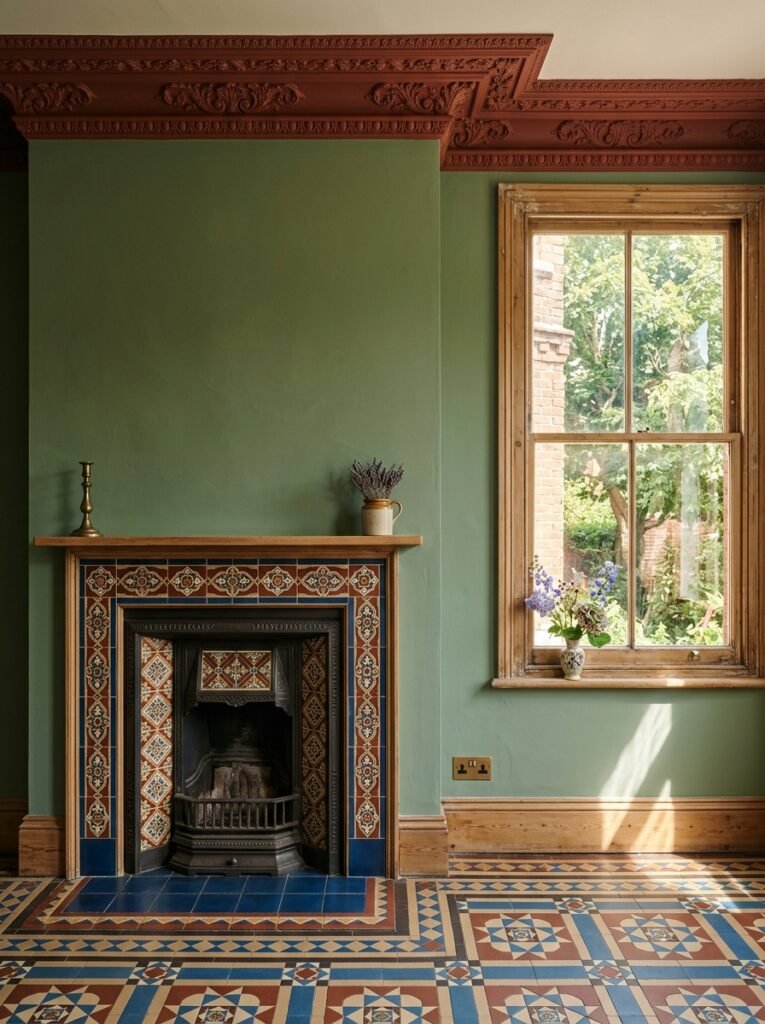
Britain’s built heritage is, by any measure, extraordinary — and the country’s homeowners have developed a remarkable relationship with the period architecture they inhabit. Rather than treating original features as inconveniences to modernise away, British homeowners typically celebrate them.
Original cornicing, picture rails, sash windows, tiled fireplaces, encaustic floor tiles, stained glass — these are the elements that give period British homes their character, and their preservation is a point of genuine pride. You’ll find British interior designers and homeowners alike agonising lovingly over the right shade of paint for an Edwardian cornice, or scouring reclamation yards for a replacement piece of Victorian floor tile that matches the original within a millimetre.
—
11. Budget Decorating the British Way: Charity Shops and Car Boot Sales
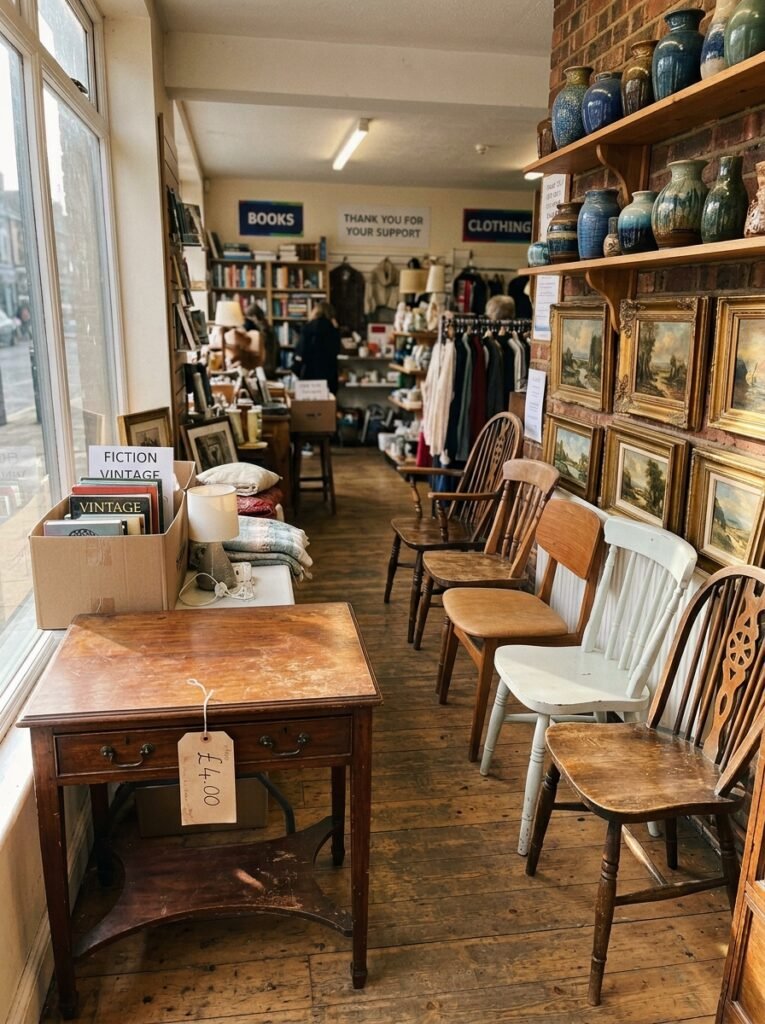
Here is something that might surprise you about British interior design: some of the most beautiful British homes are furnished almost entirely from charity shops, car boot sales, and reclamation yards. This is not accidental and it is not a compromise — it is a philosophy.
The British have a long-established culture of second-hand, and their interiors are better for it. A Victorian mahogany side table found for four pounds at a charity shop has more character than a new piece costing forty times as much. A set of six mismatched dining chairs, each picked up separately from different sources, tells a more interesting story than a matching set.
“The most interesting British homes weren’t designed with a budget — they were built with a story.”
This culture of second-hand sourcing also speaks to something genuinely important about sustainability. At a time when fast furniture is an environmental concern, the British tradition of buying once (or buying used) and keeping forever is quietly radical — and producing some of the most beautiful interiors in the world in the process.
—
12. What the World Can Learn From British Home Design
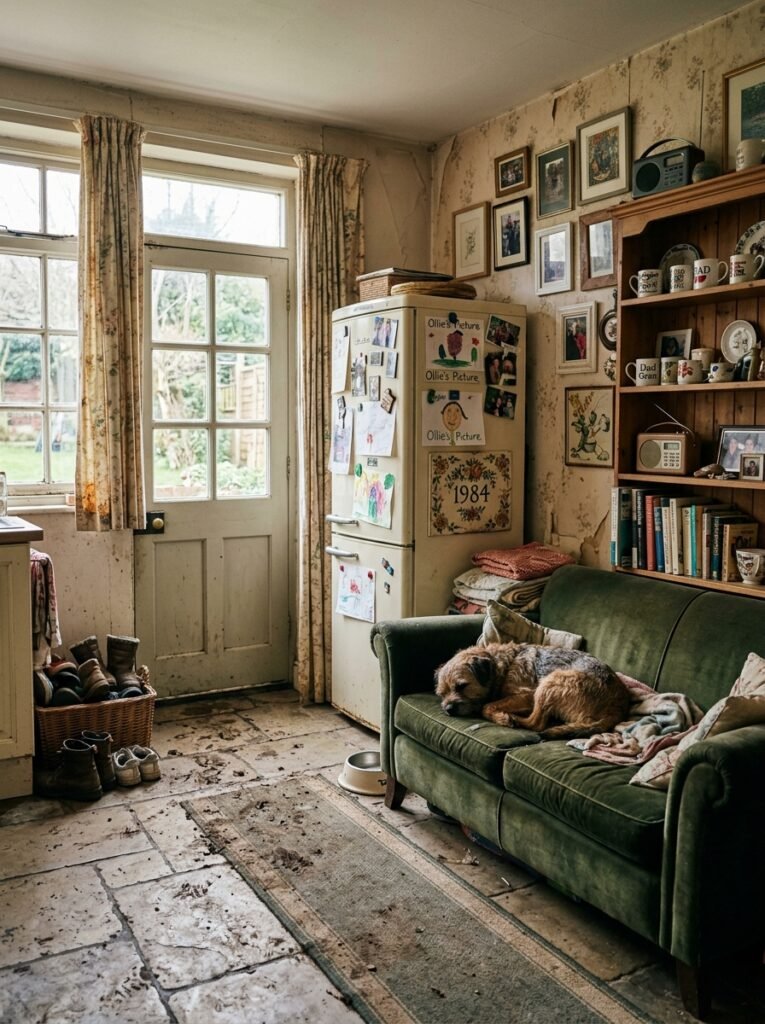
Every great design culture has something to teach the world, and the British contribution is this: that beauty doesn’t require perfection. That a home doesn’t need to be finished to be wonderful. That the things we love — even if they’re chipped, mismatched, old, or unfashionable — deserve space in our lives.
At a time when social media creates constant pressure to have the right home, the current home, the photographable home — the British interior offers a quieter, kinder alternative. It says: live here. Use these rooms. Let the dog on the sofa. Keep the children’s drawings on the fridge. Let the wallpaper fade a little at the edges. Let the garden track mud in through the back door.
Because a home that shows evidence of living isn’t imperfect. It’s the realest, most beautiful kind of perfect there is.
—
🌿 How to Bring British Interior Style Into Your Own Home
Start with paint before you invest in furniture. British heritage paint colours — the chalky, complex, tonally rich ones — can transform a space more profoundly than almost any other change. Choose one wall or one room and see how it shifts.
Layer rather than match. Resist the urge to buy a coordinating set of anything. Instead, combine pieces that you love individually and trust that personal taste will create cohesion where a colour wheel cannot.
Visit your local charity shops, thrift stores, and antique markets with genuine intention. Look for pieces with age and character — a worn leather-bound book, a small oil painting in a gilded frame, a ceramic vase with an interesting glaze. These things carry history and it shows.
Prioritise texture over trend. Linen, wool, velvet, worn leather, raw wood — these materials age beautifully and create the layered, sensory richness that is the hallmark of a great British interior.
Finally, let your home be unfinished. Leave that one corner slightly undecided. Keep that shelf with a gap in it. British interiors are never truly complete because the people who live in them are still living — and that is precisely the point.
—
❓ FAQ
Q: What defines British interior design style? A: British interior design is defined by its layered, eclectic, and deeply personal character. It tends to combine old and new, pattern and texture, and heritage colours — favouring depth and imperfection over sleekness. The most consistent characteristic is that it looks lived in rather than styled, because it genuinely is.
Q: What colours are most associated with British home interiors? A: British interiors are famous for their complex, muted heritage colours — chalky whites, dusty pinks, muted greens, deep navies, and warm earthy tones. Paint brands like Farrow & Ball, Little Greene, and Paint & Paper Library have become internationally recognised for producing these characteristically rich, tonally layered shades that respond beautifully to British natural light.
Q: Can British interior style work in a modern home or apartment? A: Absolutely. British interior style is more about philosophy than period architecture. The principles of layering, collecting with intention, valuing quality and age, and embracing imperfection translate beautifully to any space — from a new-build apartment to a converted warehouse. The key is to resist the pressure for everything to match perfectly, and to let your space develop gradually over time.
—
💭 Final Thought
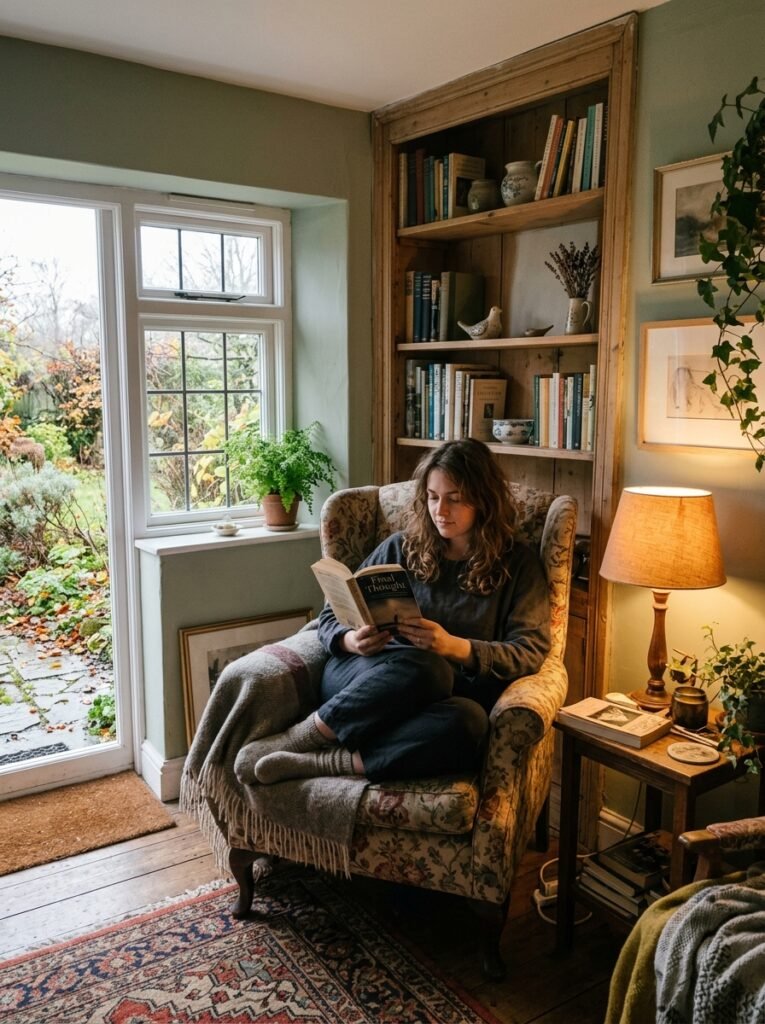
The most enduring thing about British home interiors is what they say about the people who create them: that life is worth making beautiful, that beauty is worth living inside rather than just admiring from a distance, and that the best home you can have is one that genuinely reflects who you are. Not who a mood board told you to be.
So as you think about your own space — however small, however rented, however far from finished — ask yourself this: what would it feel like to stop decorating for an audience, and start decorating for yourself?