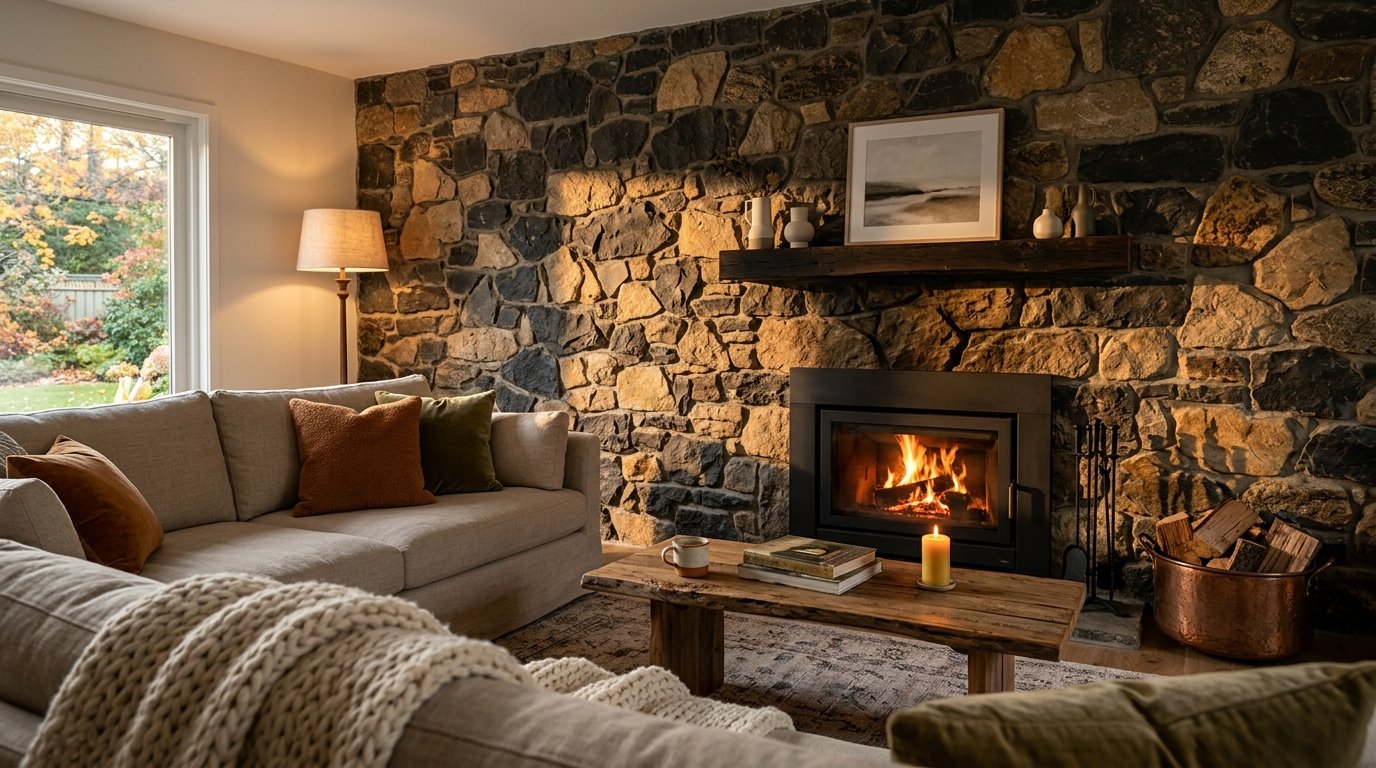
Stone Walls That Make You Stop, Stare, and Never Want to Leave the Room
There’s something about a stone wall that makes you exhale. Not the kind of exhale that happens when you walk through any nice room — but the deeper kind, the one that comes from something ancient and grounding reaching through the décor and touching something real inside you. Stone walls do that. They always have.
—
Table Of Content
1. Why Stone Walls Feel Like Coming Home (Even in a House You Just Moved Into)
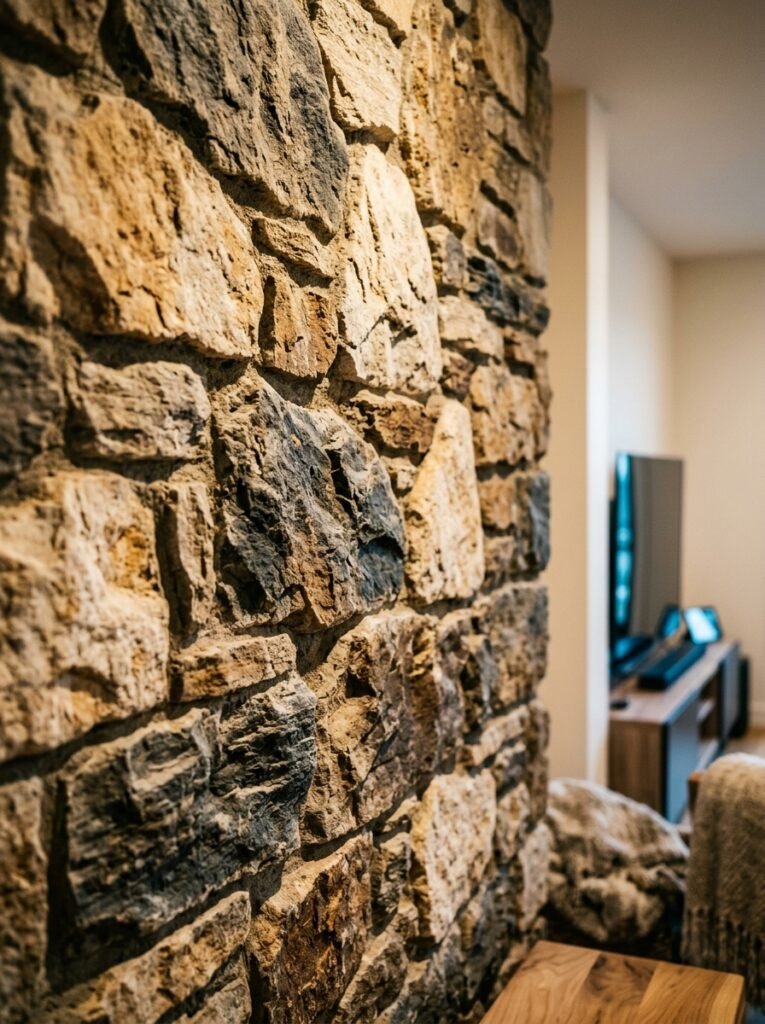
Before we talk about textures and installation and which rooms work best, let’s talk about why stone walls affect us the way they do. Humans lived alongside stone for thousands of years — in caves, in castles, in cottages tucked into hillsides. There’s an evolutionary comfort in it, a primal recognition that says this is solid, this is safe, this is shelter.
When you walk into a room with a stone accent wall, something in your nervous system quietly settles. The irregular patterns, the variation in color from one stone to the next, the way light moves differently across a rough surface than it does across drywall — all of it signals depth and permanence to a brain that’s spent the day absorbing flat digital screens and smooth, featureless surfaces.
Interior designers call this biophilic design — the intentional incorporation of natural materials and organic patterns into living spaces. Stone is arguably its most powerful expression. It doesn’t just look natural. It is natural, and the human body knows the difference.
“A stone wall doesn’t decorate a room. It gives the room a soul.”
If you’ve been scrolling through Pinterest feeling like something is missing in your home — some texture, some weight, some sense of story — there’s a good chance a stone wall is exactly what you’ve been searching for.
—
2. The Most Gorgeous Types of Stone for Interior Walls (And What Each One Says About a Room)

Not all stone is the same, and the type you choose will shape the entire personality of your space. This isn’t a decision to make quickly — it’s worth sitting with for a moment.
Fieldstone is the most rustic of the options. Its irregular, rounded shapes come from stones smoothed by rivers and time, and a fieldstone wall immediately evokes a centuries-old farmhouse. It pairs beautifully with warm wood beams, linen textiles, and hand-thrown ceramic pottery.
Stacked ledger stone has a more architectural feel. The flat, horizontal layers create a contemporary look that’s simultaneously rugged and refined — it belongs just as comfortably in a modern living room as it does in a mountain retreat. This is one of the most popular choices for fireplace surrounds and feature walls in open-plan homes.
Limestone brings softness. Its muted creams and warm greys have a quiet dignity that makes rooms feel elevated without feeling cold. A limestone wall in a bathroom or bedroom creates an almost spa-like atmosphere.
Slate is darker, more dramatic, and deeply textural. It absorbs light rather than reflecting it, which makes a slate wall feel moody and grounding — ideal for home libraries, wine cellars, or any space where you want depth over brightness.
River rock fills walls with movement and life. No two stones look alike, and the rounded forms create a visual rhythm that’s endlessly interesting. It’s a particularly stunning choice for showers and entryways.
—
3. The Stone Fireplace Feature Wall — The One That Started a Design Movement
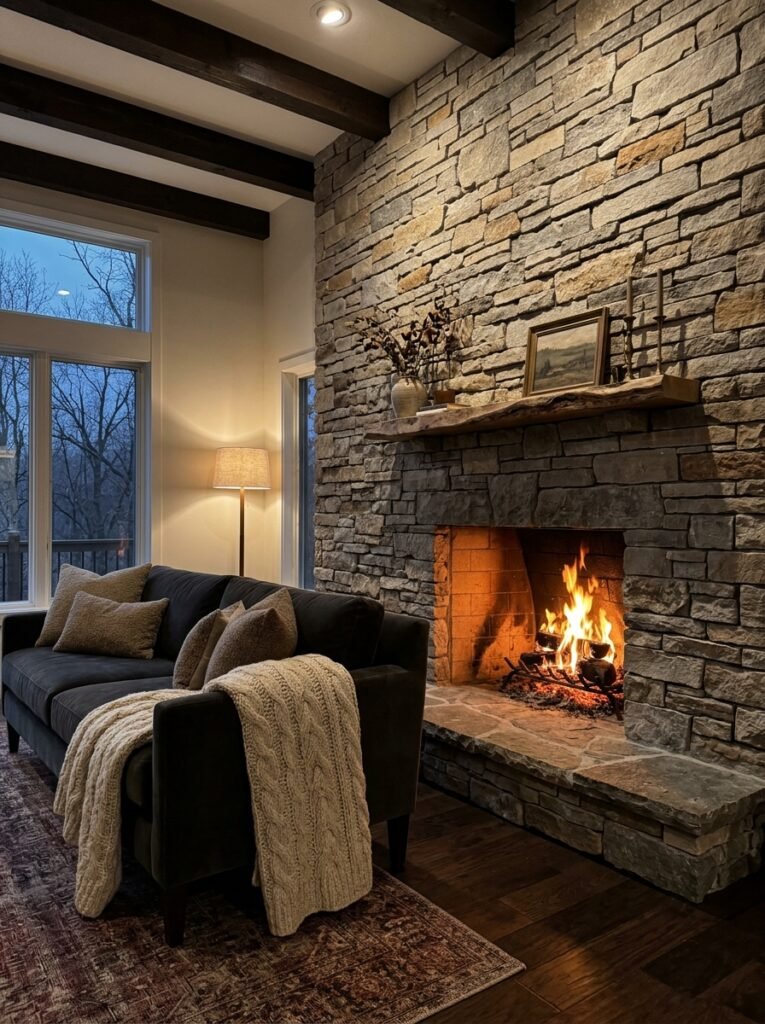
If there is a single image that lives rent-free in the minds of Pinterest users across every design board, it’s the stone fireplace wall. And for good reason — it’s one of the most emotionally powerful combinations in interior design.
Picture it: a cold November evening, fire crackling, the warm amber light moving across the texture of natural stone, a chunky knit throw folded over the arm of a deep sofa. This isn’t just a design moment. It’s a memory in the making.
Stone fireplace walls work so well because the material and the function are perfectly matched. Stone is naturally fire-resistant, visually weighty, and texturally opposite to everything else in a typical living room — which means it commands attention without trying. You don’t need art above a stone fireplace. The stone is the art.
When planning a stone fireplace feature wall, extend the stone from floor to ceiling rather than stopping it at mantle height. This creates a vertical anchor for the entire room and makes the ceiling feel taller. If your budget allows, wrapping the stone around a corner creates an even more dramatic, immersive effect.
—
4. Small Spaces, Big Impact — How Stone Transforms Apartments and Compact Homes
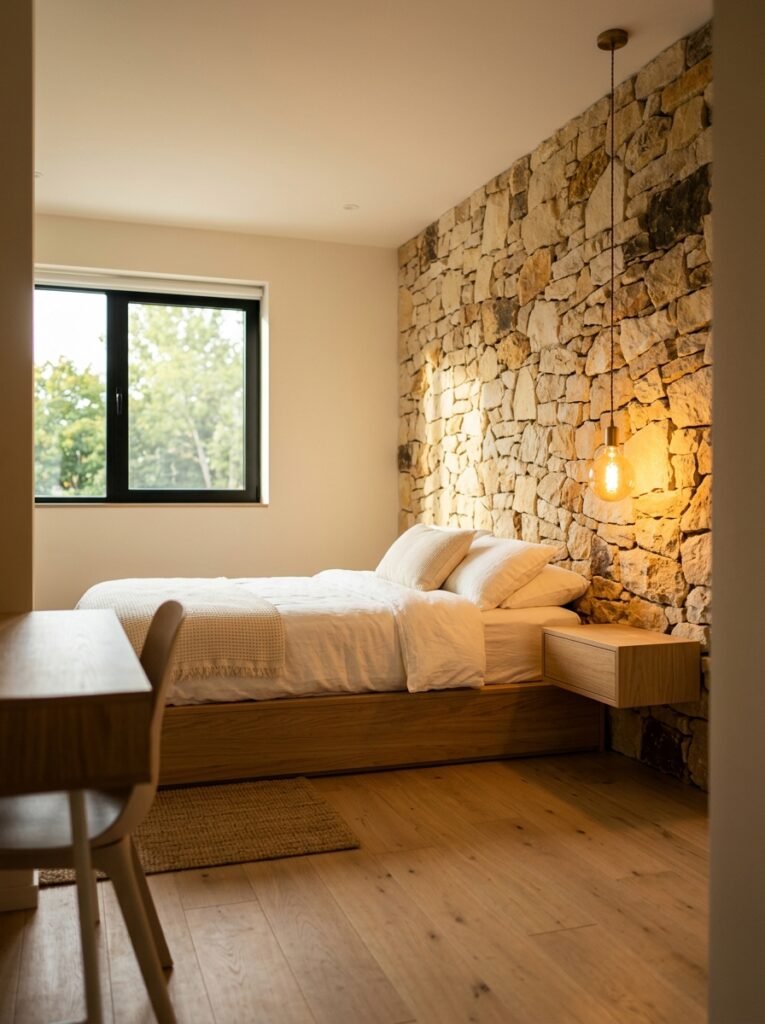
Here’s a misconception worth clearing up: stone walls are not just for large, dramatic spaces. In fact, some of the most stunning uses of interior stone happen in small apartments and compact rooms where every design choice carries enormous weight.
In a studio apartment, a single stone accent wall behind a bed or sofa creates an instant focal point and adds visual depth that makes the space feel larger, not smaller. The texture reads as layered and complex, giving your eye multiple places to land — which paradoxically opens a room up rather than closing it in.
In a narrow entryway, a stone wall on one side transforms a transitional space into an experience. Walking through a stone-lined entry into a home feels intentional and considered — like the home is welcoming you properly rather than just letting you in.
For small bathrooms, consider a partial stone wall — perhaps behind the vanity or along the bathtub surround. You get all the warmth and texture of the material without overwhelming a compact footprint. Pair it with simple white fixtures and brass hardware, and you have something that feels genuinely luxurious.
“You don’t need a mansion to have a stone wall moment. You just need one wall and a little courage.”
—
5. Natural Stone vs. Stone Veneer — The Honest Breakdown You Need Before You Decide
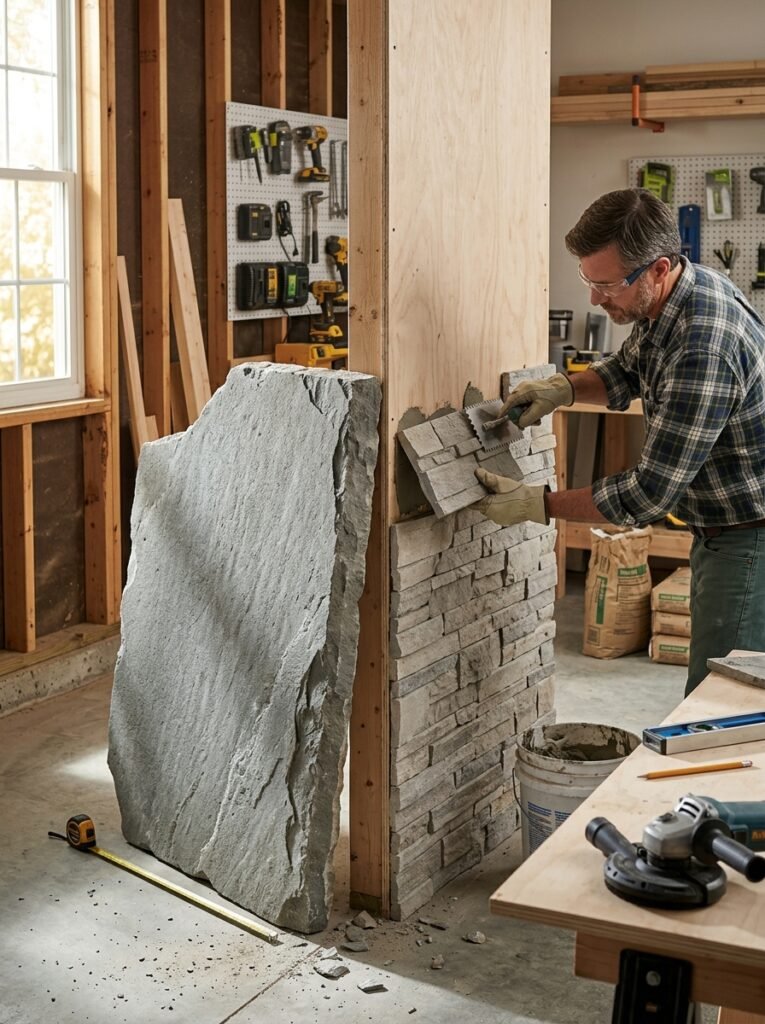
This is one of the most common questions that comes up when people start planning a stone wall project, and it deserves a clear, honest answer.
Natural stone — actual quarried rock installed by a mason — is the most authentic option. The depth is real, the weight is real, and the result is something that will genuinely last for generations. The downsides are equally real: it’s heavy (requiring structural consideration), expensive, and requires skilled installation.
Stone veneer is thin-cut natural stone or manufactured stone panels designed to mimic the look of full stone at a fraction of the weight and cost. The quality has improved dramatically over the past decade, and the best veneer products are genuinely difficult to distinguish from the real thing at a conversational distance.
For most homeowners and renters working within a realistic budget, stone veneer panels are not a compromise — they’re a smart solution. They can often be installed as a DIY project over a weekend, they’re available in virtually every style from rustic to contemporary, and they create the same visual warmth and textural depth as full natural stone.
If budget is no constraint and you’re building or renovating a permanent home, invest in natural stone — particularly for fireplace applications where authenticity matters. For accent walls, rental spaces, or flexible design projects, quality stone veneer will serve you beautifully.
—
6. Color and Tone — Choosing Stone That Works With Your Existing Palette

Stone comes in a remarkable range of colors, and choosing the right tone for your space is just as important as choosing the right type. Get this wrong and the stone fights your room. Get it right and the whole space suddenly makes sense.
Warm-toned stones — honey, terracotta, ochre, warm grey — work beautifully with earthy interiors built on linen, timber, and botanical accents. They bring energy without aggression and pair naturally with warm whites and amber lighting.
Cool-toned stones — blue-grey slate, silver limestone, charcoal river rock — are natural companions for more contemporary, Scandinavian-influenced, or moody interiors. They work especially well against crisp white walls, black metal fixtures, and the kind of muted, sophisticated palette that feels quietly expensive.
Multi-toned fieldstone and stacked ledger panels have their own flexibility — because they contain multiple colors within each stone, they’re surprisingly easy to integrate into a variety of palettes. The key is to pull one of the stone’s secondary colors into your textile choices or accent furniture, creating a visual thread that ties the room together.
—
7. The Bedroom Stone Wall — Unexpected, Romantic, Unforgettable
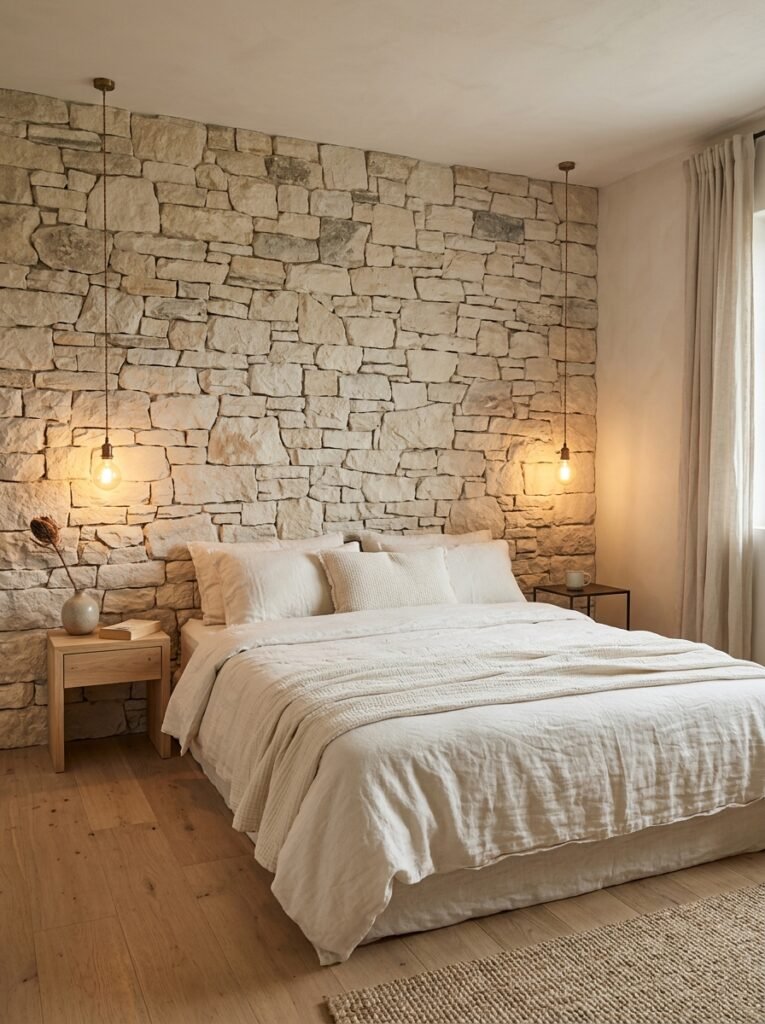
Most people don’t immediately think of the bedroom when they imagine a stone wall. They think living rooms, kitchens, entryways. And that’s exactly why bringing stone into a bedroom creates such an impact — it’s unexpected, and it works.
A stone wall behind the bed — used as a dramatic alternative to a traditional headboard wall treatment — adds a textural layer to the most intimate room in your home. Imagine soft linen bedding in warm white against the irregular, organic surface of ledger stone. The contrast is striking and deeply cozy at the same time.
Keep the rest of the bedroom simple when using stone as a focal point. Natural wood nightstands, soft warm lighting from low-hanging pendants or bedside lamps, and organic textiles in muted tones let the stone breathe without competing. Less is always more in a bedroom built around a statement wall.
—
8. Stone in the Kitchen — Where Warmth Meets Function
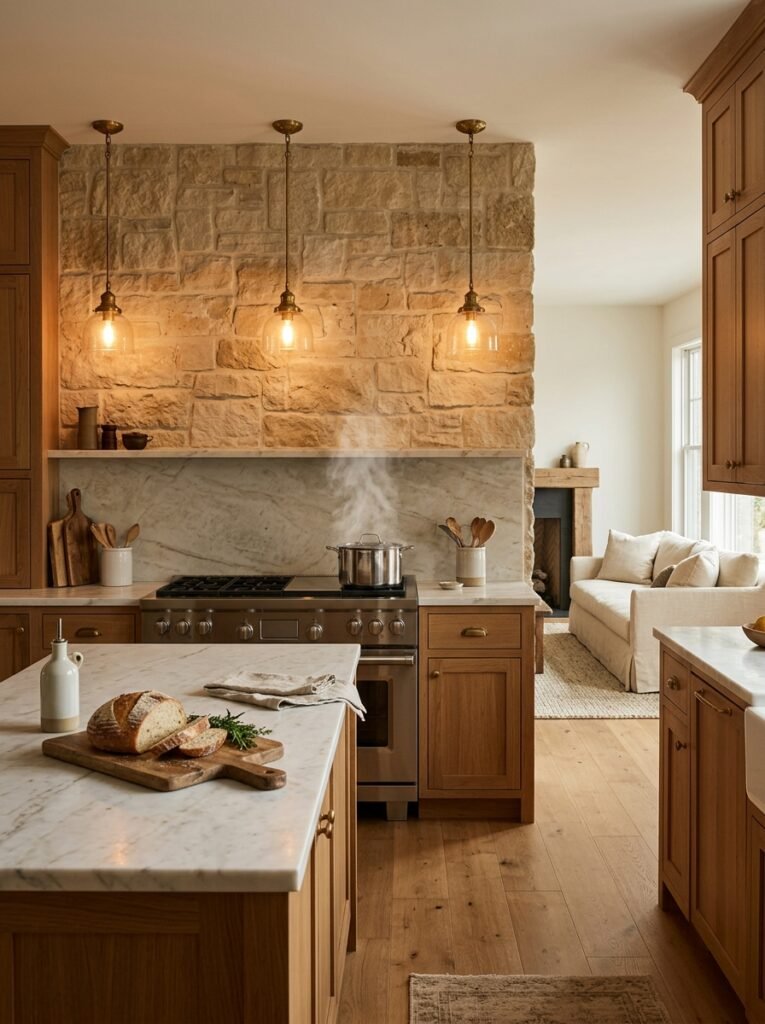
The kitchen is already the heart of the home, and stone makes it beat a little louder. Whether you’re looking at a full stone backsplash, a stone range hood surround, or an entire exposed stone wall on one side of an open kitchen, the material brings something to this room that tile and painted drywall simply cannot replicate.
A stone backsplash behind a range feels intentional and crafted — like the kitchen was built by someone who understood that cooking is a ritual, and rituals deserve beautiful backdrops. Limestone and stacked ledger stone are particularly well-suited for kitchen environments because their relatively flat surfaces are easier to keep clean than deeply textured options like fieldstone.
If your kitchen opens to a living or dining area, a stone wall on the shared side creates a visual anchor for the entire open-plan space. It defines the kitchen zone architecturally without needing a ceiling-height wall or divider, and the texture creates a natural contrast to cabinetry and countertops.
“The kitchen doesn’t need to be just functional. It can be the most beautiful room in your home, and stone is one of the fastest ways to get there.”
—
9. Lighting a Stone Wall — This Step Changes Everything
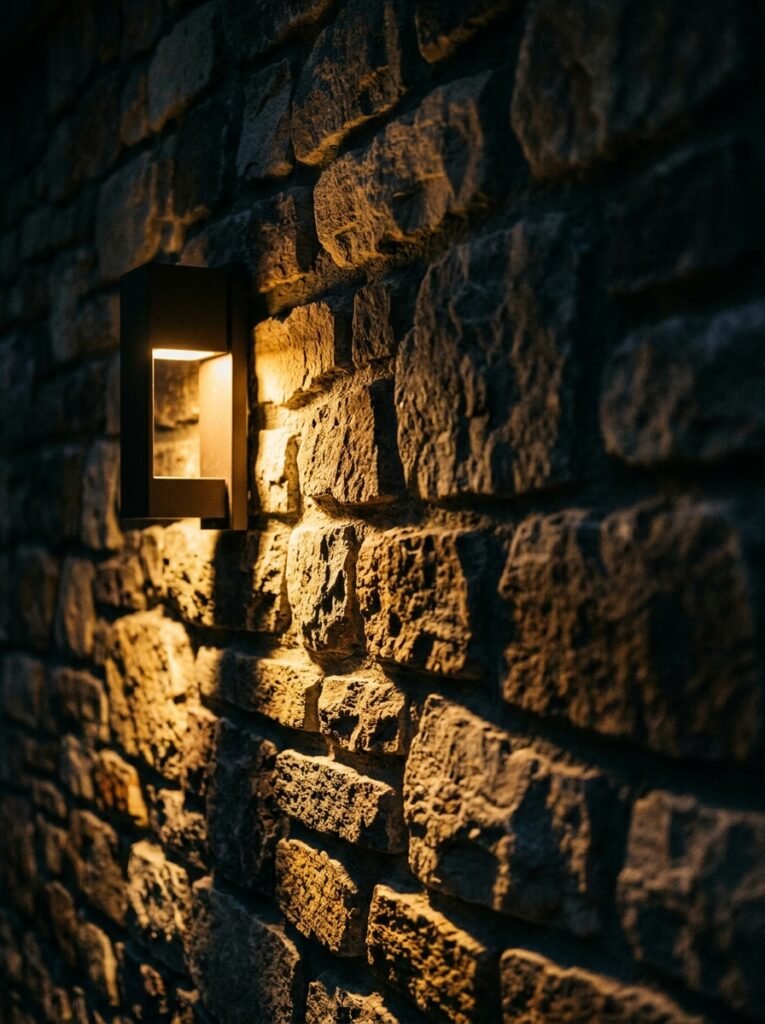
Here is something that doesn’t get talked about enough: the way you light a stone wall determines whether it becomes magical or merely nice. Lighting is the difference between a stone wall that looks like a design choice and one that looks like the room’s soul.
The single most effective technique is grazing light — placing a light source very close to the stone surface so the light travels across it at a sharp angle rather than hitting it head-on. This technique throws every groove, bump, and shadow into relief, creating a deeply three-dimensional effect that makes the texture come alive. Wall sconces, uplights at floor level, or directional recessed lighting positioned close to the wall all achieve this beautifully.
Warm-toned bulbs (2700K–3000K) are almost always the right choice for stone walls. They enhance the natural warm tones in most stone varieties and create the kind of amber, candlelit atmosphere that makes a room feel genuinely inviting. Cooler, whiter light tends to flatten the stone’s texture and strip out its warmth.
—
10. The Entryway Stone Wall — Your Home’s First Impression, Elevated
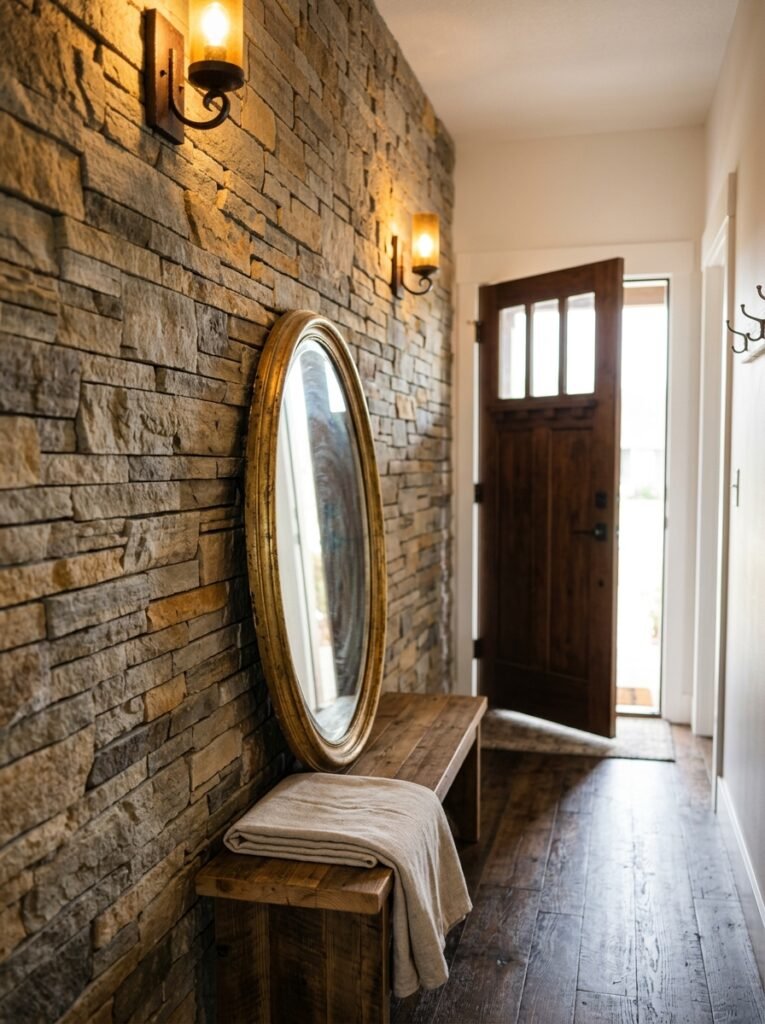
You only get one first impression, and your entryway makes it. A stone wall in this space doesn’t just look beautiful — it communicates something about the home before anyone has seen any other room. It says: this is a thoughtful place, built with intention.
Even in narrow, compact entryways, a stone wall works. A single wall treated in stacked ledger stone or rough-cut limestone transforms a pass-through corridor into a proper arrival moment. Pair it with a vintage mirror, a simple wooden bench, and warm lighting, and guests will feel welcomed before they’ve even taken off their coats.
If your entryway is more generous, consider using stone on the back wall — the one you see when you first open the door. This creates a dramatic focal point that draws the eye inward and makes the home feel larger and more considered from the very first step inside.
—
11. Bathroom Stone Walls — Spa Energy, Every Single Day
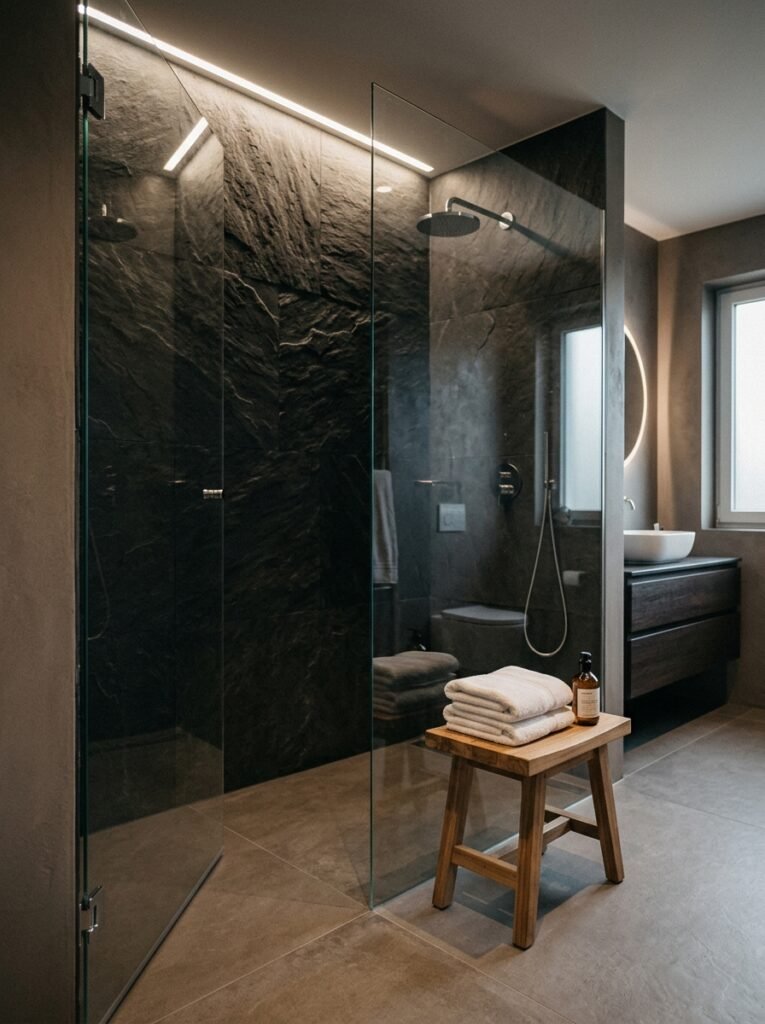
The bathroom is one of the most underestimated rooms in the home when it comes to design potential. Most people treat it as purely functional, which is exactly why a stone wall in this space creates such a powerful contrast. Suddenly, getting ready in the morning becomes an experience rather than a task.
For wet areas like showers, choose a naturally dense stone like slate or granite, and ensure proper sealing to protect against moisture. A slate shower wall in dark charcoal with soft lighting and a frameless glass enclosure is genuinely one of the most spa-like environments you can create at home.
For dry areas — behind the vanity, along a bathtub, or as an accent wall in a powder room — the options open up considerably. Even a small application of stone, like a single panel behind a vessel sink, is enough to completely change the character of the room.
—
12. Styling Around Your Stone Wall — How to Let It Breathe and Shine
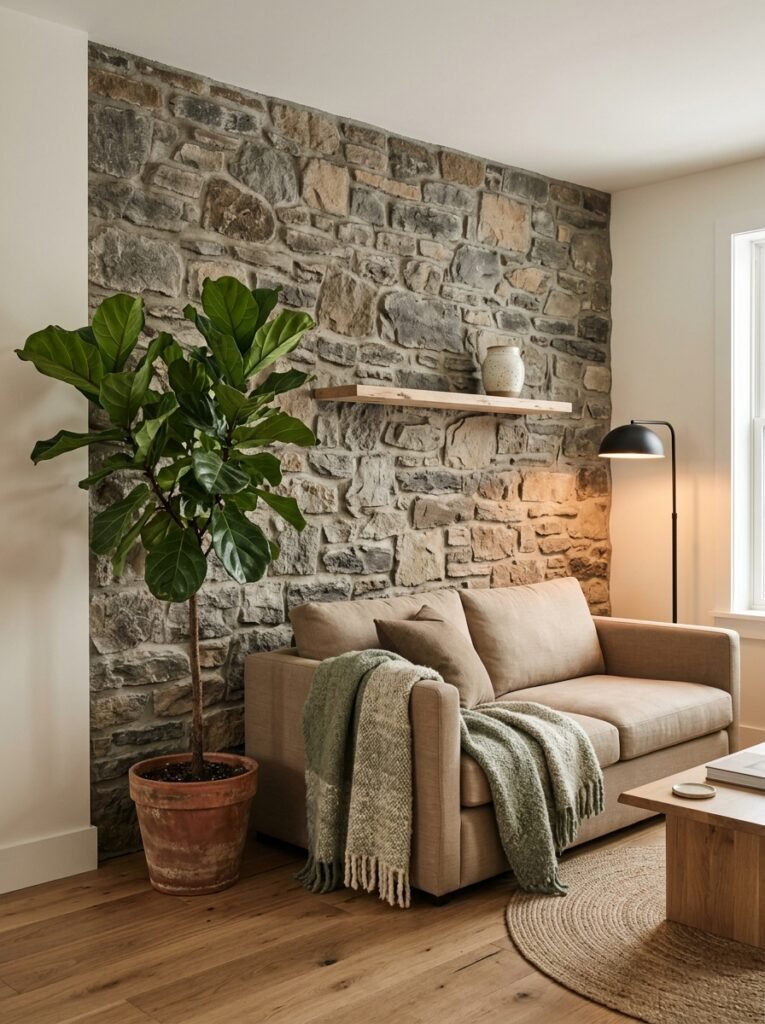
Once the stone wall is in place, the styling around it matters enormously. The most common mistake is over-decorating — hanging too many things on or near the stone, filling every surrounding surface, and inadvertently competing with what should be the room’s star.
Let the stone be the loudest voice in the room. Everything else should support it, not compete with it. Natural wood furniture warms it. Linen and wool textiles soften it. Botanical elements — a trailing pothos on a shelf, a large fig tree in the corner — bridge the gap between the stone and the rest of the room. Metal accents in warm brass or matte black add definition without distraction.
Leave some of the wall exposed and uncovered if possible. Stone doesn’t need to be decorated — it is decoration. Trust the material to do its job, and resist the urge to fill every inch of visual space around it.
—
🌿 How to Take Care of Your Interior Stone Wall
Stone is wonderfully low-maintenance compared to painted walls, but a little care goes a long way in keeping it looking its best for decades.
First, seal your stone properly at installation — and reseal natural stone every one to two years, or as directed by your mason. Sealant protects against moisture, staining, and the slow deterioration that can happen in high-humidity spaces like bathrooms and kitchens.
For regular cleaning, a soft brush or dry microfiber cloth is usually all you need. Avoid harsh chemical cleaners, as these can strip sealant and damage the stone’s surface over time. A gentle, pH-neutral stone cleaner is the right tool for anything beyond a light dust.
If your stone wall is in a kitchen, wipe down any cooking splatters while they’re fresh — grease is the one thing that can stain porous stone quickly. For bathrooms, a squeegee after showering will significantly reduce mineral deposit buildup in wet stone areas.
Finally, inspect the grout or mortar lines once a year in older installations. Small cracks can be filled easily and inexpensively before they become larger issues.
—
❓ FAQ
Q: Can I install a stone wall myself, or do I need a professional? A: Stone veneer panels are genuinely DIY-friendly and many homeowners install them successfully over a weekend with basic tools and careful preparation. Natural stone installation, however, requires a skilled mason — particularly around fireplaces or load-bearing areas where the weight and structural implications are significant.
Q: Will a stone wall make my room feel dark or cave-like? A: Only if you let it. Strategic lighting — particularly grazing wall sconces or uplights — actually makes stone walls feel warm and luminous rather than dim. Choosing lighter stone tones and pairing them with pale-colored furniture and warm bulbs ensures the room stays bright and inviting.
Q: Are stone walls a good idea for renters? A: Yes — peel-and-stick stone veneer panels have become remarkably realistic and are designed to be removable without damaging the wall beneath. They’re an excellent solution for renters who want the look without the permanent commitment.
—
💭 Final Thought
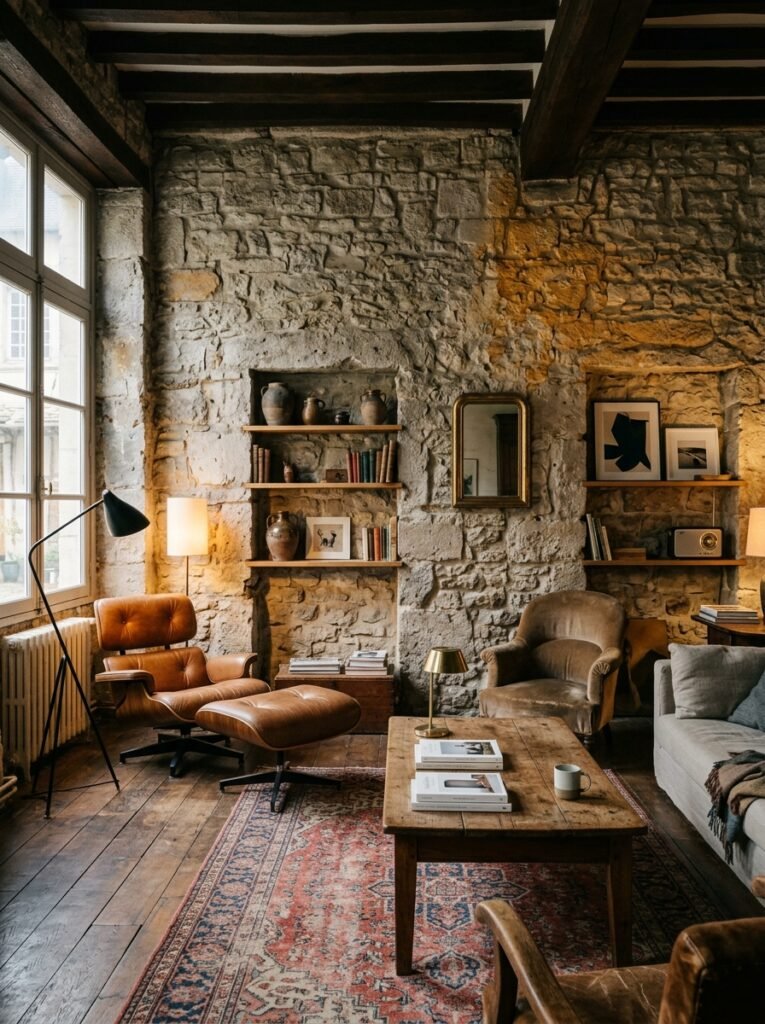
A stone wall is one of those rare design choices that doesn’t age. Trends come and go, color palettes shift, furniture styles cycle in and out — but a well-chosen stone wall sits quietly through all of it, growing more beautiful as the years pass and the room evolves around it. It adds something that money alone can’t buy: the feeling that a room has history, weight, and meaning.
Which room in your home do you think is waiting for a stone wall to finally bring it to life?