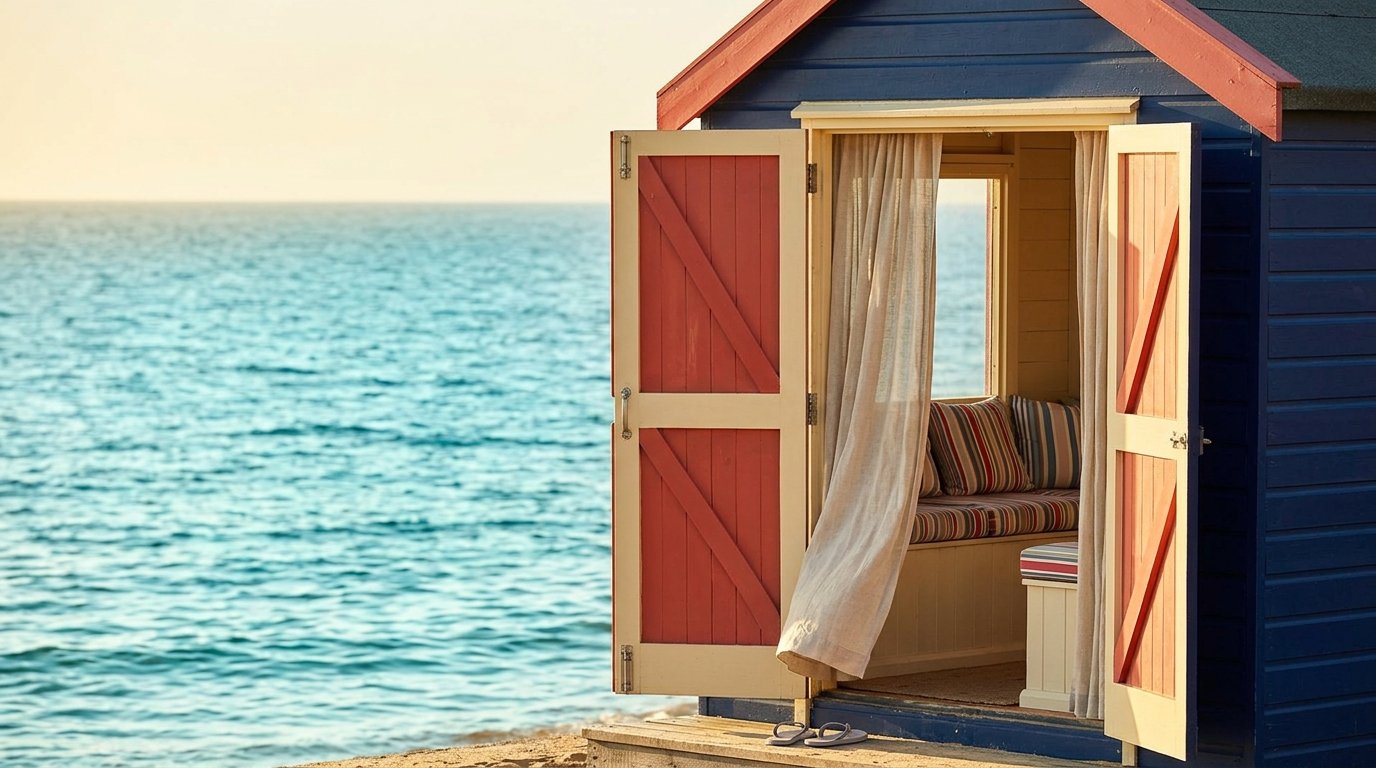
Beach Hut Interiors That Make You Want to Stay Forever (And Never Go Back to Real Life)
There’s something quietly magical about a beach hut — that tiny, colorful slice of the world where flip-flops are acceptable footwear at all hours and the sound of waves is the only alarm clock that matters. Whether you own one, rent one, or simply dream about one while scrolling Pinterest on a Tuesday night, beach hut interiors have this extraordinary power to make you feel lighter just by looking at them.
—
Table Of Content
1. Why Beach Hut Interiors Have Captured the World’s Heart

It’s worth pausing for a moment to ask: why do we feel so drawn to beach hut spaces? Why does a tiny wooden cabin on a stretch of British coastline — or a pastel-painted shack on a Caribbean shore — produce that immediate exhale, that sense of yes, this is exactly where I want to be?
The answer lies in what designers call “compression and release.” When you step into a small, carefully curated space that opens directly toward the sea, your nervous system responds with genuine relief. The constraints of the space actually make it feel safer — more like an embrace than a room. And when every inch has been thoughtfully considered, when there’s a striped cushion in exactly the right place and a vintage shell collection on a whitewashed shelf, something in you relaxes in a way that a grand hotel lobby simply cannot replicate.
Beach hut design has become one of Pinterest’s most saved interior aesthetics for a reason. It blends nostalgia, simplicity, and a kind of honest beauty that feels increasingly rare.
“The most beautiful spaces don’t ask anything of you — they simply let you breathe.”
2. The Color Palettes That Define the Most Iconic Beach Hut Looks
Color is everything in a beach hut interior — perhaps more so than in any other design context — because the palette does the heavy lifting. You don’t have architectural drama or sweeping square footage to rely on. What you have is paint, fabric, and the genius of color psychology.
The classic British coastal palette leans into navy, cream, and weathered red — think Mudeford Spit or Herne Bay on a bright July morning. These colors carry decades of nostalgic weight. They feel like childhood summers, sandy sandwiches, and the particular joy of a thermos of tea when you’re slightly too cold but entirely too happy to leave.
The Scandinavian coastal influence brings in softer tones — pale sage, chalky white, driftwood grey, and washed-out terracotta. This palette feels more contemporary, more Instagram-ready, and suits beach huts in cooler climates where the light is silvery rather than blazing.
Then there’s the tropical interpretation — turquoise, coral, sun-bleached yellow, and bright white — which channels a more exuberant, Caribbean-inspired joy. This is the palette that makes you feel like every day should involve a rum cocktail and a hammock.
Whichever direction you choose, the rule is consistency. Keep your palette to three or four tones maximum. In a small space, too many colors compete rather than harmonize, and you lose that effortless, pulled-together feeling that makes a beach hut interior so visually satisfying.
3. The Art of Making Tiny Spaces Feel Luxuriously Livable
A standard beach hut is remarkably small — often just ten feet wide and six feet deep. And yet, the most beautifully designed ones feel utterly complete. That’s not an accident. It’s the result of intentional spatial thinking that every interior designer who loves small spaces will recognize immediately.
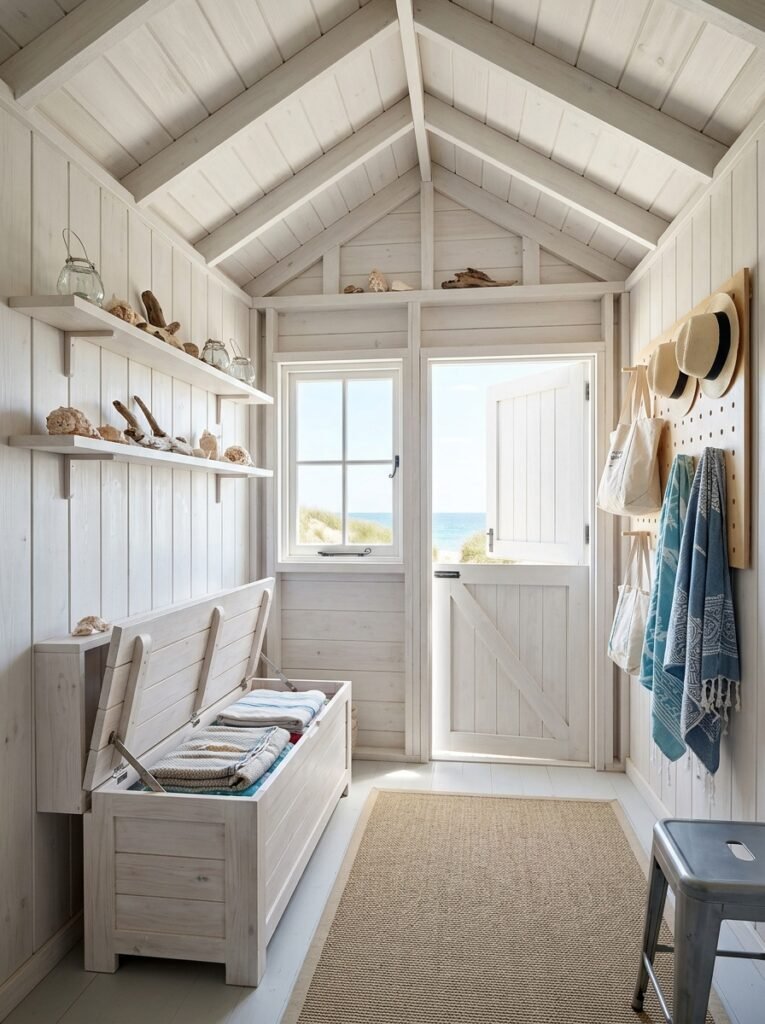
The first principle is multi-functionality. A fold-out bench that doubles as a storage chest. A narrow shelf that serves as both a drinks ledge and a display surface. A hook rail that holds everything from damp towels to canvas bags without sacrificing an inch of precious floor space. In a beach hut, every element earns its place — or it simply doesn’t get a place.
The second principle is vertical thinking. When floor space is limited, you build upward. Floating shelves above the eye line, pegboards for hanging equipment, ceiling hooks for lanterns or hanging baskets of shells — all of these draw the eye upward and create a sense of visual height that makes the space feel less compressed.
The third principle — and perhaps the most underrated — is editing. The most beautiful beach huts are curated, not cluttered. They contain exactly what is needed and nothing more. That restraint is what gives them their serenity.
4. Furniture Choices That Work Hardest in a Beach Hut
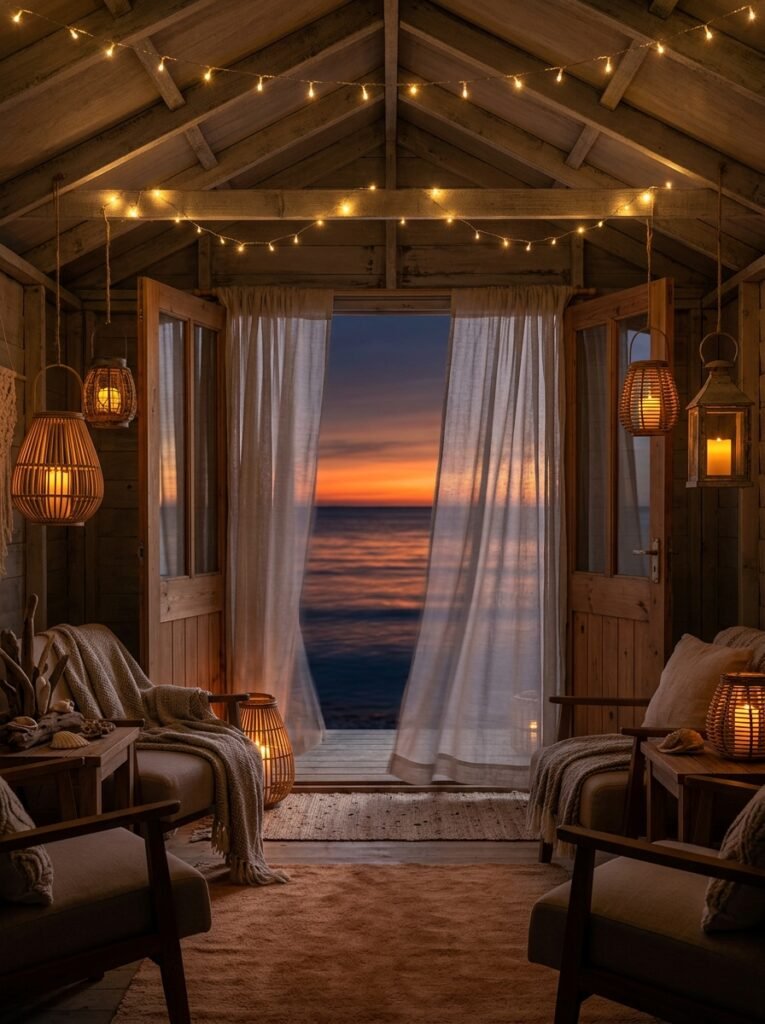
The furniture inside a beach hut has to be resilient, practical, and beautiful in equal measure — because the seaside environment is genuinely demanding. Salt air, sand, damp towels, sunscreen-covered hands, and the occasional unexpected downpour all conspire against anything too precious or too delicate.
Rattan and wicker are perennial favorites for good reason. They’re lightweight, they tolerate humidity without warping, and they bring that immediate coastal texture that makes a space feel relaxed and intentional at once. A pair of rattan armchairs with thick cushioned seats can transform a bare beach hut into something that feels genuinely inviting within minutes of being installed.
Painted wooden furniture — particularly pieces with a slightly distressed, chalky finish — suits the aesthetic beautifully. Think small milkmaid stools, whitewashed side tables, and narrow benches with visible brushstrokes. The imperfection is the point. In a beach hut, things are allowed to show their age.
Canvas and linen upholstery work better than velvet or heavy weaves in this environment. They dry quickly, feel appropriately casual, and come in the kind of sun-bleached tones that look even better as they fade — which, in a beach hut, they inevitably will.
“Choose furniture the way you choose beach companions: practical, easygoing, and entirely unbothered by a bit of salt and sand.”
5. Textiles and Soft Furnishings That Bring the Whole Look Together
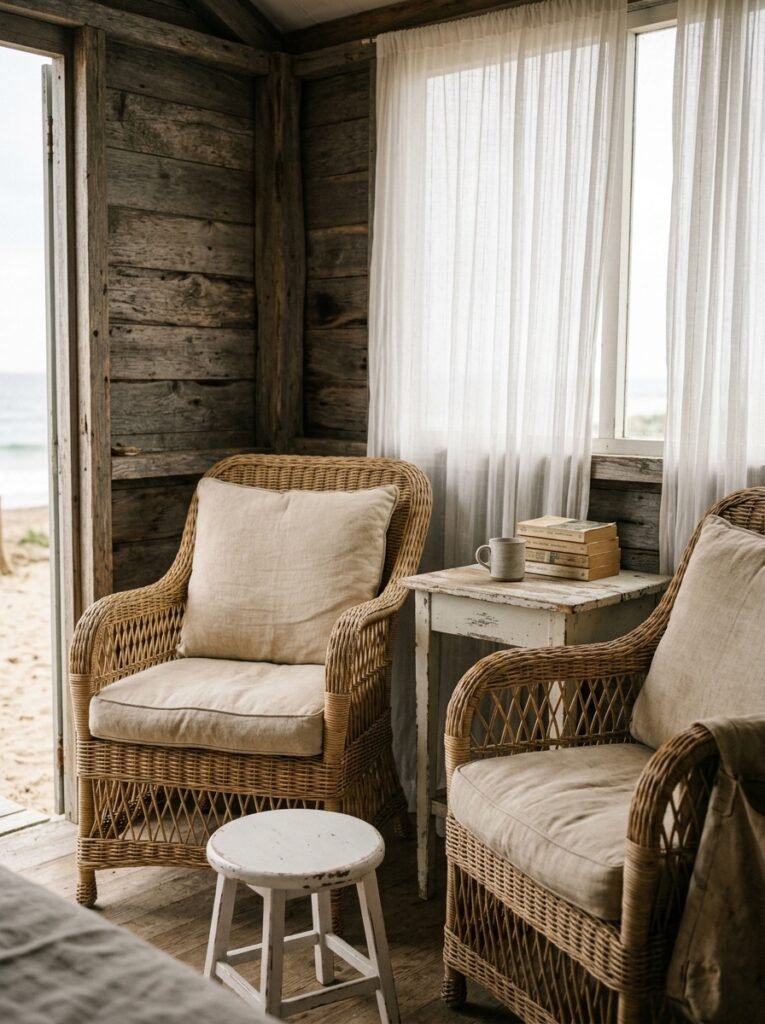
If color is the soul of a beach hut interior, then textiles are the heartbeat. They’re what you reach for when the wind picks up and the temperature drops, what makes the difference between a space that looks designed and one that actually feels lived in.
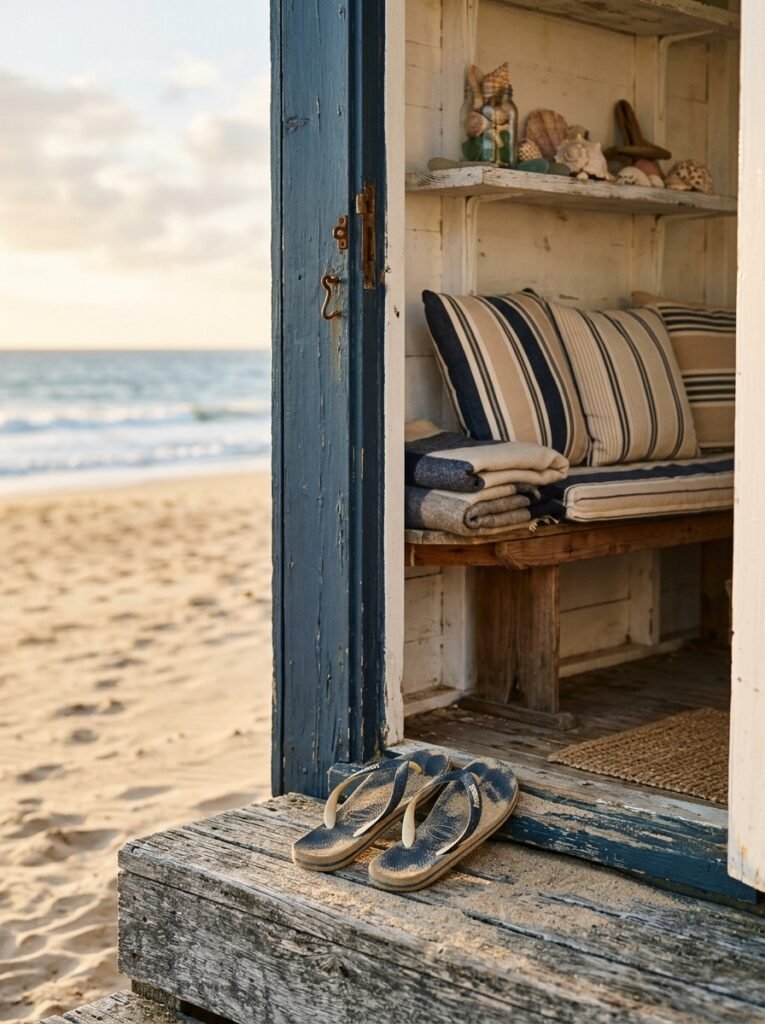
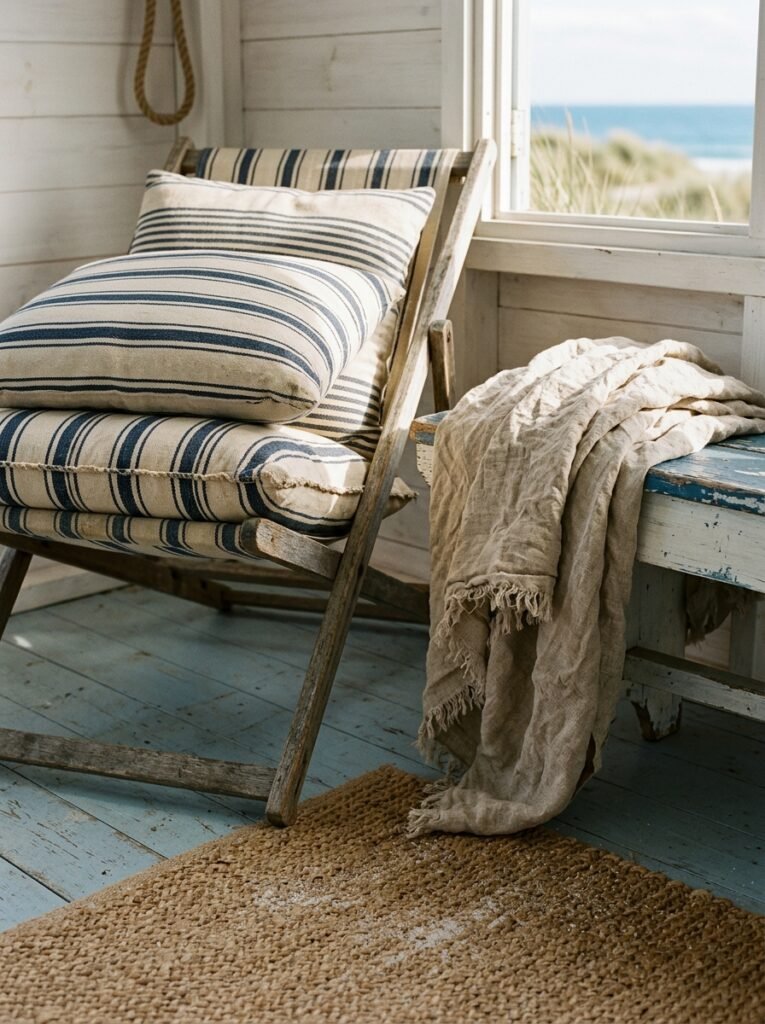
Striped textiles are the undisputed signature of the British beach hut tradition — thick canvas stripes in navy and cream, red and white, or green and yellow that have been adorning deckchairs and windbreaks since the Victorian era. Using these stripes inside the hut — on cushions, deck chairs, even as a simple piece of bunting — immediately anchors the space in its coastal identity.
Linen throws draped casually over a bench or folded at the foot of a day bed add warmth and that effortlessly undone quality that the best coastal interiors always have. The trick is to use genuine linen rather than synthetic alternatives — it photographs beautifully, feels better against skin, and develops character over time.
Jute rugs are a practical and stylish flooring solution for beach hut interiors. They handle sand surprisingly well — shaking out easily — and their natural, earthy texture provides a grounding contrast to painted wood or whitewashed walls.
6. Lighting Tricks That Turn a Simple Hut Into a Magical Space
Lighting in a beach hut is largely governed by the natural environment — and that’s a gift. The particular quality of coastal light, whether it’s the fierce brightness of a midsummer noon or the honeyed, horizontal gold of late afternoon, does most of the work for you. Your job is simply to not get in the way of it.
Large, unobstructed openings — double doors thrown wide open, windows left without heavy dressings — allow that beautiful natural light to flood in freely. Sheer white or linen-colored curtains that billow slightly in the sea breeze are the only window treatments a beach hut really needs.
For evening ambiance, solar-powered fairy lights strung along the interior roof are both practical and genuinely enchanting. Lanterns — either hanging or standing — with warm-toned LED candles create that flickering, intimate quality that makes a beach evening feel special.
Avoid overhead fluorescent lighting at all costs. It destroys the atmosphere of a beach hut interior instantly, replacing warmth and romance with the energy of a storage unit.
7. Displaying Coastal Collections Without Tipping Into Kitsch
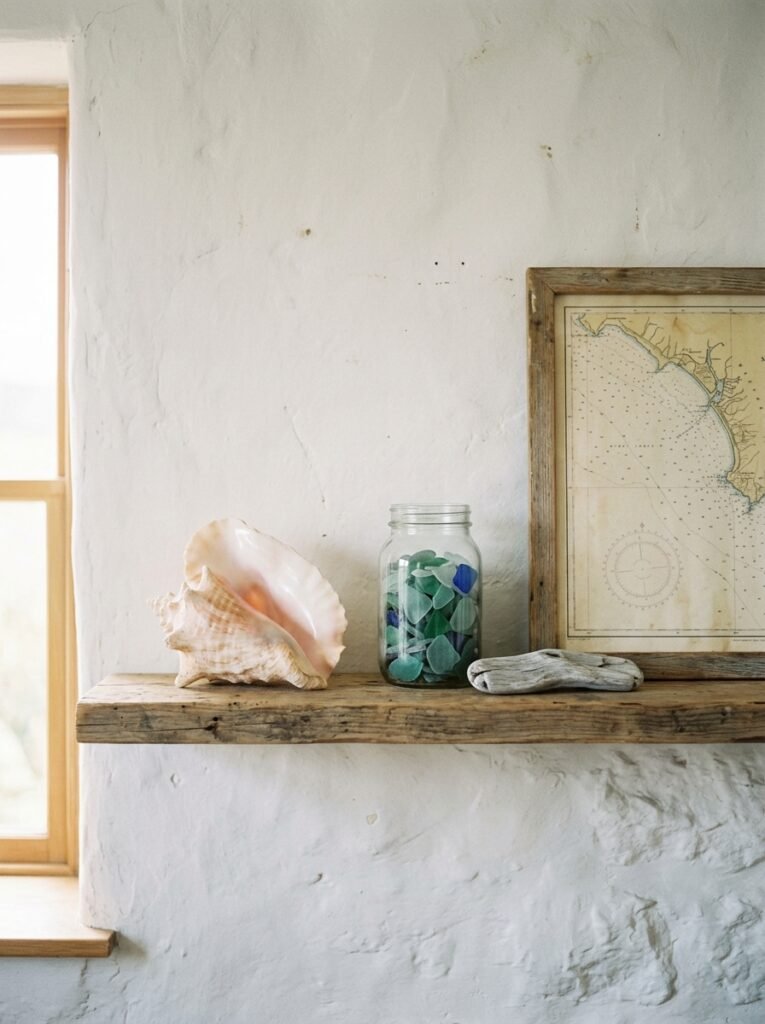
There is a very fine line between a curated coastal collection that feels soulful and personal, and a cluttered assembly of souvenir shop shells that feels like you haven’t made any real decorating decisions at all. Navigating that line thoughtfully is one of the most important skills in beach hut interior styling.
The key is intentionality. A single large, genuinely beautiful conch shell displayed on its own — perhaps on a raw wooden shelf against a white wall — has ten times the visual impact of twenty smaller shells crowded together. Choose fewer pieces and give them room to breathe.
Natural materials always outperform manufactured “coastal” decor. A collection of smooth pebbles gathered from a specific beach on a specific day carries meaning and visual interest that a mass-produced painted driftwood sign never will. Sea glass arranged in a clear jar, a small piece of genuine driftwood that you found yourself, a framed piece of aged maritime map — these things tell a story.
“The best coastal decor isn’t bought — it’s collected, carried home in sandy pockets, and placed somewhere it can be seen every single day.”
8. Beach Hut Kitchen Nooks: Small Spaces With Big Personality
Not all beach huts include cooking facilities, but when they do — or when a larger beach cabin gives you room to create a simple kitchen nook — the opportunity for creative, joyful design is enormous.
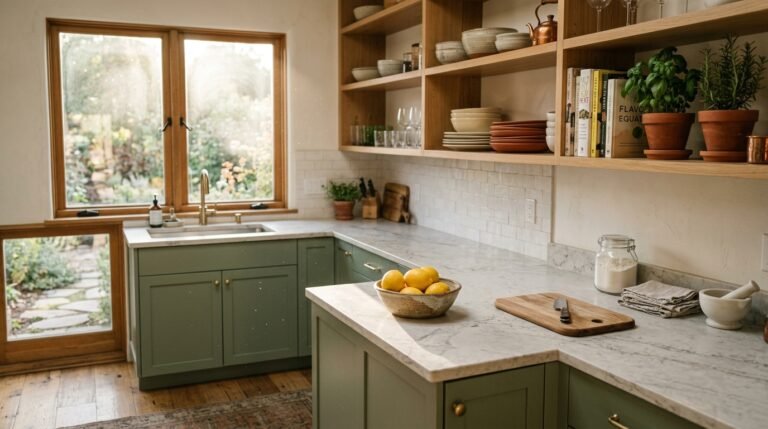
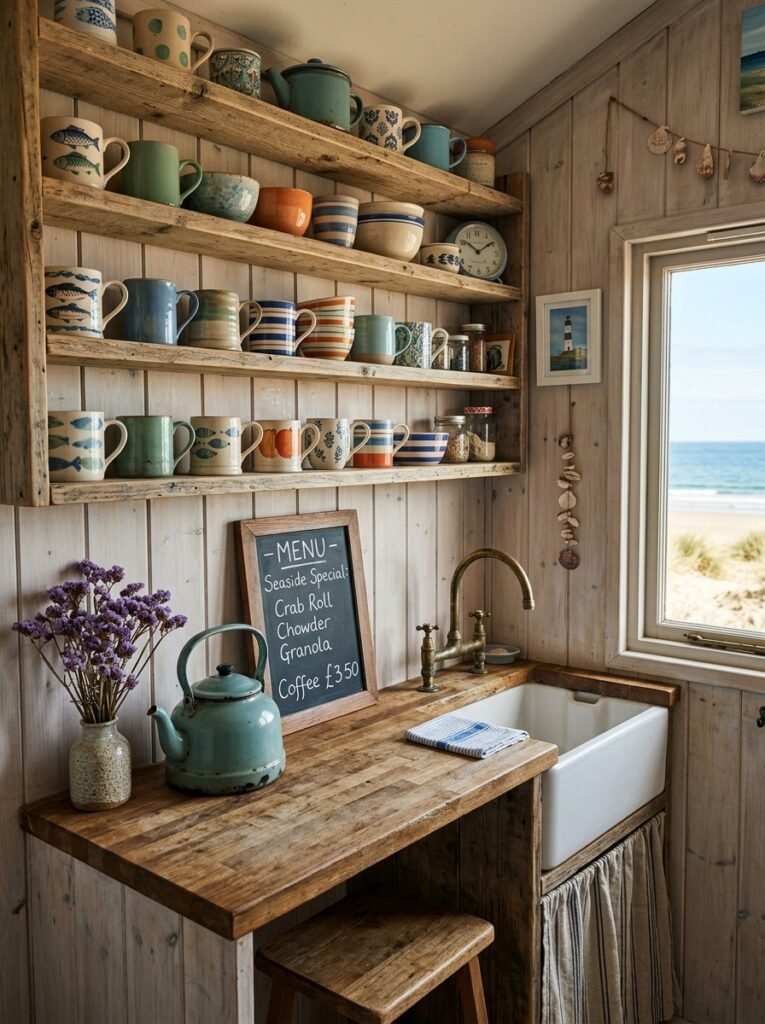
Open shelving is almost always the right choice in a beach hut kitchen context. It keeps the space feeling airy and allows you to display the kind of cheerful, mismatched ceramics that look their best in coastal settings. Think hand-painted mugs, enamelware in classic coastal colors, and simple glass jars filled with coffee, sugar, and sea salt.
A small butcher block countertop or a narrow piece of reclaimed wood as a prep surface brings warmth and texture to what might otherwise be a cold, utilitarian corner. Paired with a simple Belfast-style sink and an antique brass tap, it creates something that feels genuinely considered rather than functional by default.
The details matter enormously at this scale. A small bunch of dried sea lavender in a ceramic vase. A vintage enamel kettle in a color that picks up the palette of the rest of the space. A handwritten chalk menu board propped against the wall. These are the things that transform a utility corner into a space that makes people reach for their phones to photograph it.
9. Creating the Perfect View Frame Around Your Hut’s Best Feature
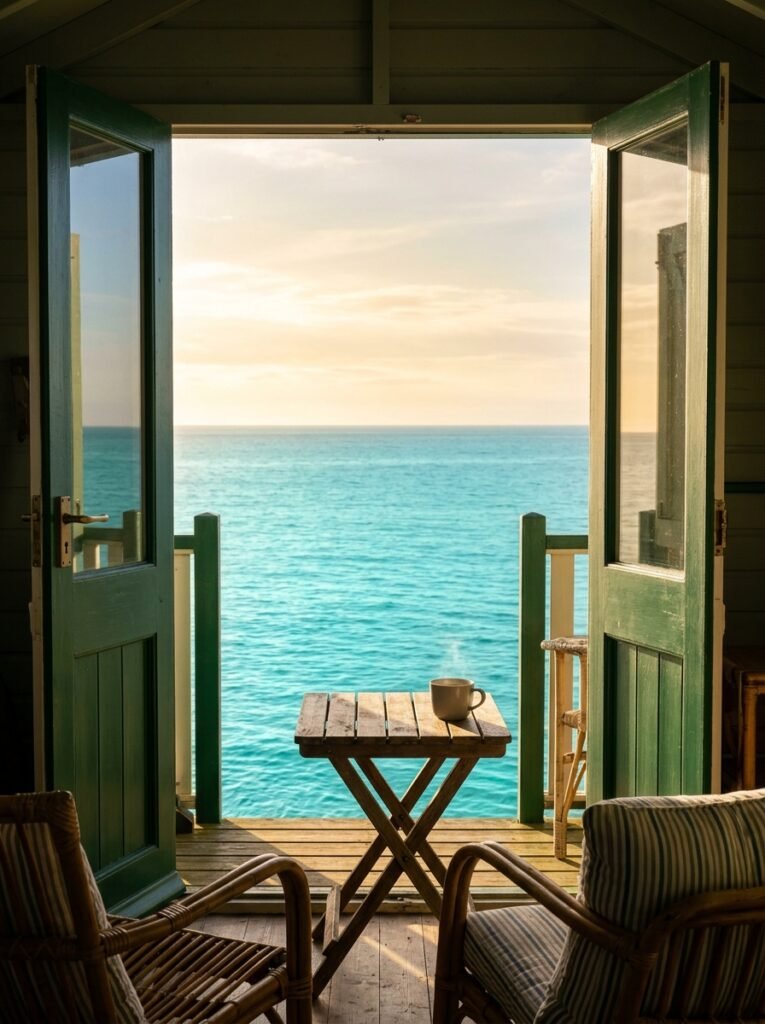
In almost every beach hut, there is one design element that outranks all others: the view. The ocean — in whatever form it presents itself, from the dramatic steel-grey Atlantic to the turquoise Caribbean shallows — is the most powerful interior design element you will ever have access to. Your job is simply to frame it well.
Wide double doors that open fully create what designers call a “threshold moment” — that breath-catching instant when inside becomes outside and the view opens up completely. Painting these doors in a bold, contrasting color (deep navy, forest green, or sun-bleached red) creates a frame that makes the view beyond feel even more vivid and intentional.
The furniture arrangement inside the hut should always honor the view. Seating should face outward. Nothing tall or visually heavy should obstruct the sightline toward the water. Even a small fold-out table positioned just inside the open doors — where you can have your morning coffee with the sea directly in front of you — creates one of those small, perfect daily rituals that you’ll remember for the rest of your life.
10. Budget-Friendly Ways to Achieve an Expensive-Looking Beach Hut Interior
The wonderful truth about beach hut interior design is that it is one of the most democratically accessible aesthetics in the entire world of interiors. The things that make a beach hut beautiful — simplicity, natural materials, carefully chosen color, personal objects — cost very little when approached thoughtfully.
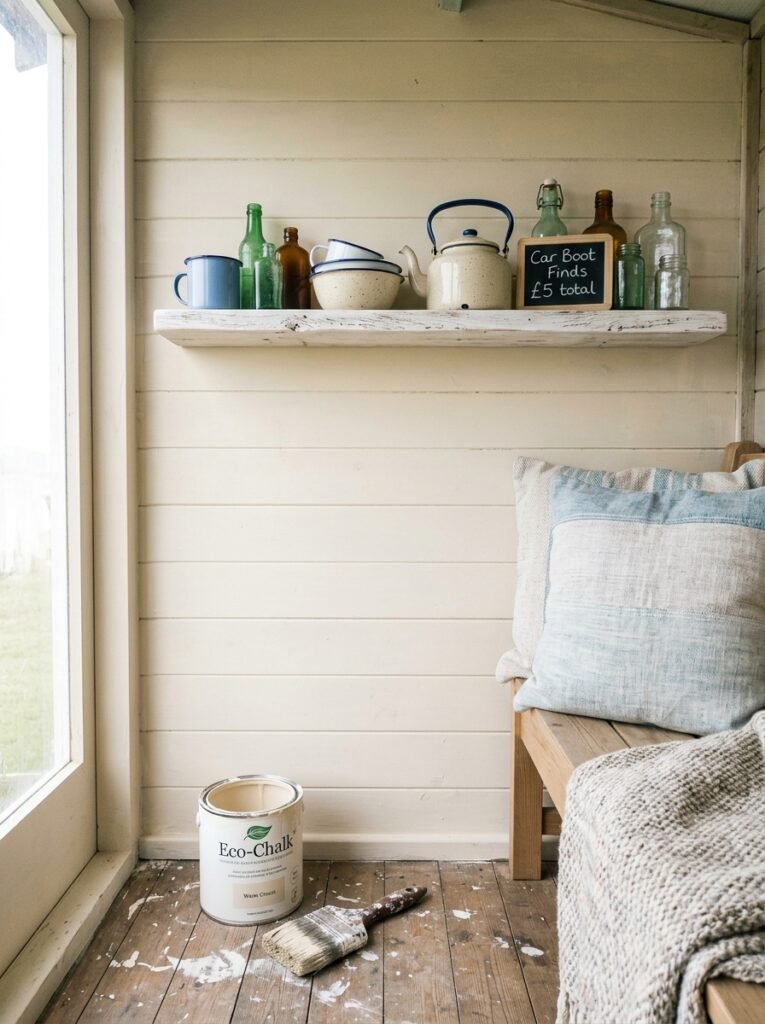
Paint is always your highest-value investment. A fresh coat of the right white — not a stark, cold white, but a warm, chalky one with the faintest hint of cream — can transform a tired, dark interior into something that feels genuinely spacious and beautiful for the cost of a single tin.
Second-hand and antique markets are endlessly generous hunting grounds for beach hut interiors. Enamelware, vintage glass, wicker furniture, old maritime maps and prints, ceramic pitchers and linen napkins — all of these things can be found inexpensively at car boot sales, charity shops, and online second-hand marketplaces. The patina that comes with age is not a flaw in a beach hut context; it’s the whole point.
DIY contributions add both personality and significant savings. Whitewashing a piece of reclaimed wood for a floating shelf. Sewing a simple set of linen cushion covers in a palette that suits the space. Repainting a tired wooden stool in a cheerful coastal color. In a beach hut interior, handmade objects don’t look amateur — they look deliberate and deeply personal.
11. The Seasonal Beach Hut: Styling for Every Time of Year
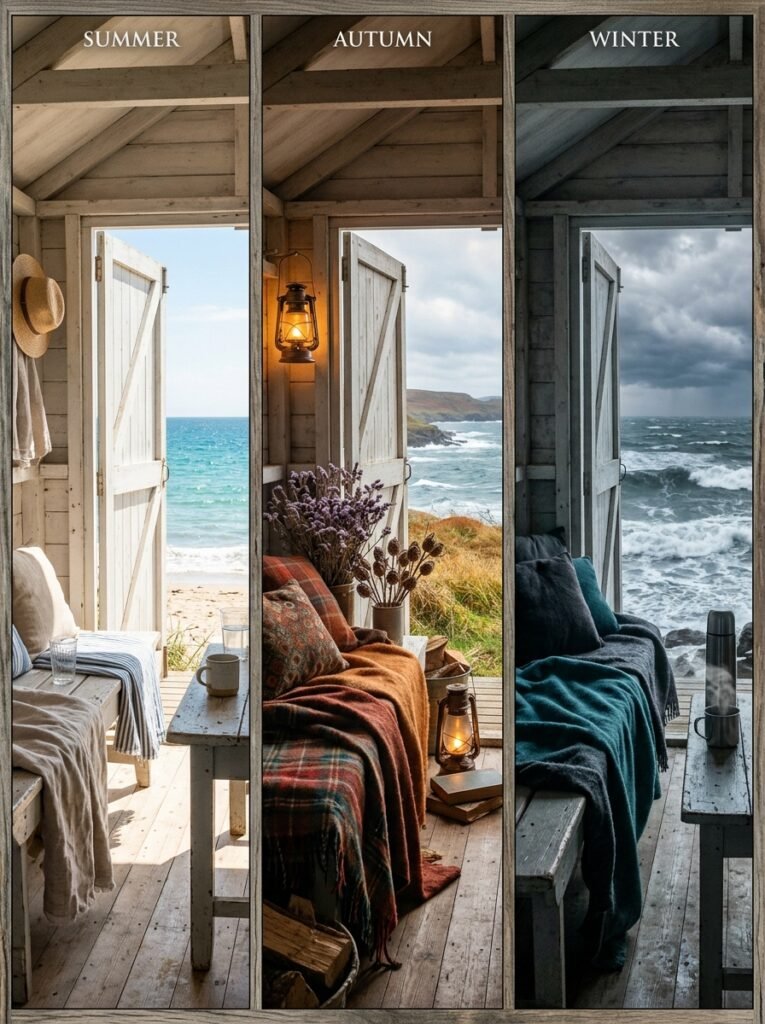
One of the quieter joys of having a beach hut — or even just styling one conceptually — is the pleasure of adjusting it seasonally. Unlike a permanent home, where seasonal updates can feel like a significant undertaking, a beach hut’s small scale means that changing its feel entirely takes very little time and very few resources.
In summer, pare everything back. Light linens, minimal decoration, maximum openness. The space should feel like a direct extension of the beach itself — sandy, sunny, and delightfully un-serious.
As autumn arrives, layer in warmth. Thicker throws, a few more cushions, lanterns for the earlier evenings, perhaps a small collection of dried seed heads or sea lavender. The coastal aesthetic shifts beautifully into something more contemplative and cozy — still salt-aired and honest, but softer around the edges.
In winter, a beach hut becomes something genuinely unexpected: a refuge. Wrapped in enough layers, with a good flask of something hot, a winter beach hut surrounded by a wild, dramatic sea can be more beautiful and more restorative than its summer version. Lean into dark, moody tones — deep teal, charcoal, aged wood — and let the wild weather outside become part of the design.
“There is no bad season for a beach hut — only different reasons to love it.”
12. The Small Details That Separate a Good Beach Hut From an Unforgettable One
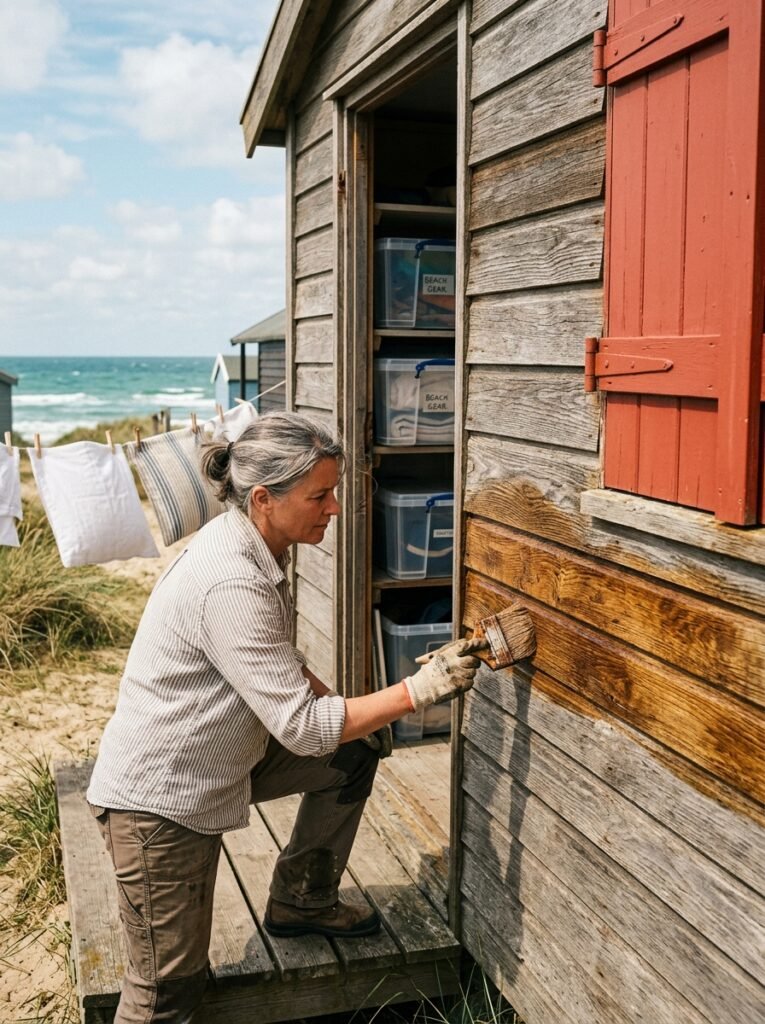
In the end, what separates a well-designed beach hut from one that stays in your memory long after you’ve left comes down to the small, personal, specific details. The ones that say: someone who really loves this place put these things here.
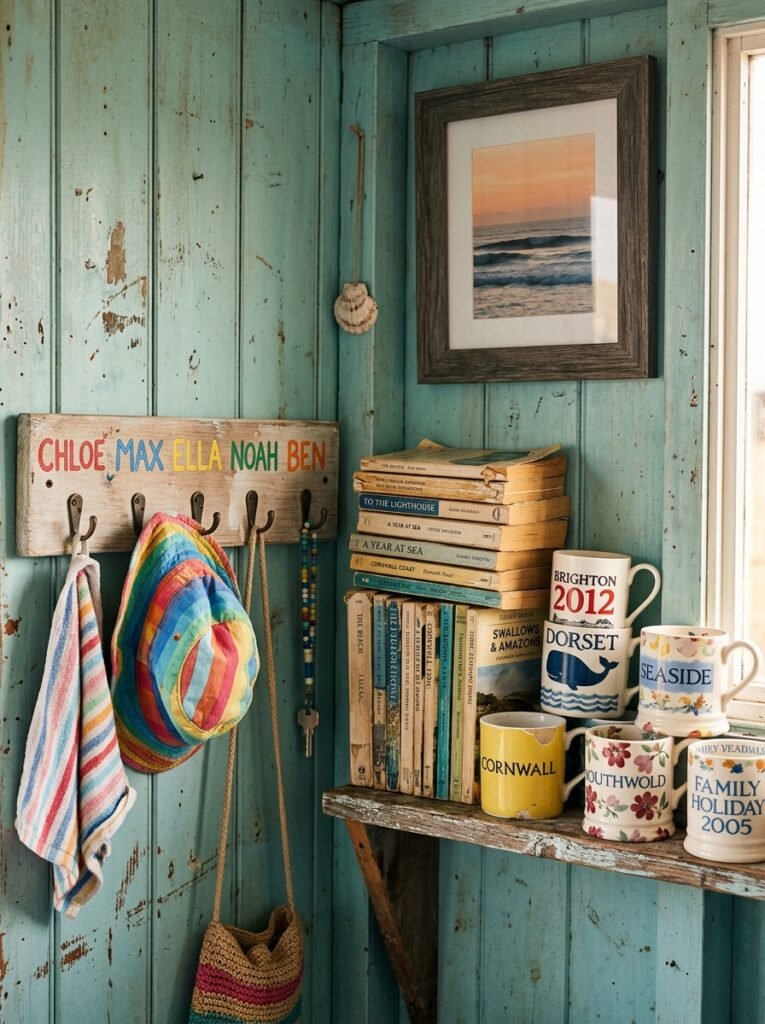
It’s the names of children painted in bright letters on a wooden hook rail. It’s a stack of dog-eared paperbacks that have been read and reread over fifteen summers. It’s the particular mismatched set of mugs that came from different places and different years and somehow look perfect together. It’s a single framed photograph of the view taken on an early morning when the light was extraordinary.
These details cannot be purchased or replicated from a Pinterest mood board. They can only be accumulated — slowly, lovingly, over time — by people who return to the same stretch of coast year after year and find, with quiet gratitude, that it always feels like coming home.
—
🌿 How to Take Care of a Beach Hut Interior
Maintaining the beauty of a beach hut interior requires a little regular attention — the seaside environment is wonderful but genuinely tough on surfaces and materials. First, treat all wooden surfaces annually with a good quality outdoor wood oil or paint to prevent salt air from drying and cracking them. Second, wash textiles — cushion covers, throws, rugs — at the end of each season before storing them, as salt and sand left in fabric over winter will deteriorate the fibers. Third, check for moisture ingress regularly, particularly around windows and door frames; a small damp patch caught early is a five-minute fix, while one left unattended can become a significant problem. Fourth, store delicate or sentimental decorative objects inside a moisture-sealed box during the off-season rather than leaving them exposed to the humidity of a closed hut. Finally, repaint or touch up the exterior every couple of years — a freshly painted beach hut doesn’t just look beautiful, it’s also better protected against the coastal elements that work hardest to age it.
—
❓ FAQ
Q: What colors work best for a small beach hut interior? A: Soft whites, warm creams, pale blues, and natural linen tones are consistently the most successful choices for small beach hut interiors because they reflect light and make the space feel larger and more serene. Keep your palette to three or four tones maximum, and use bolder accent colors in small doses through cushions, ceramics, or a painted piece of furniture.
Q: How do I make a beach hut feel cozy without making it feel cramped? A: The secret is layering soft textures — linen throws, jute rugs, cushioned seating — while keeping the color palette light and the layout open toward the view. Warm lighting from lanterns and fairy lights creates intimacy without visual heaviness, and a few carefully chosen personal objects make the space feel genuinely lived-in rather than merely decorated.
Q: What’s the best flooring for a beach hut interior? A: Painted floorboards in white, grey, or a soft blue-green are the most practical and beautiful option for most beach huts — they handle sand well, are easy to sweep and mop, and improve visually over time as they develop a natural patina. Layering a jute or cotton flatweave rug over painted boards adds warmth and texture while remaining easy to shake out and clean.
—
💭 Final Thought
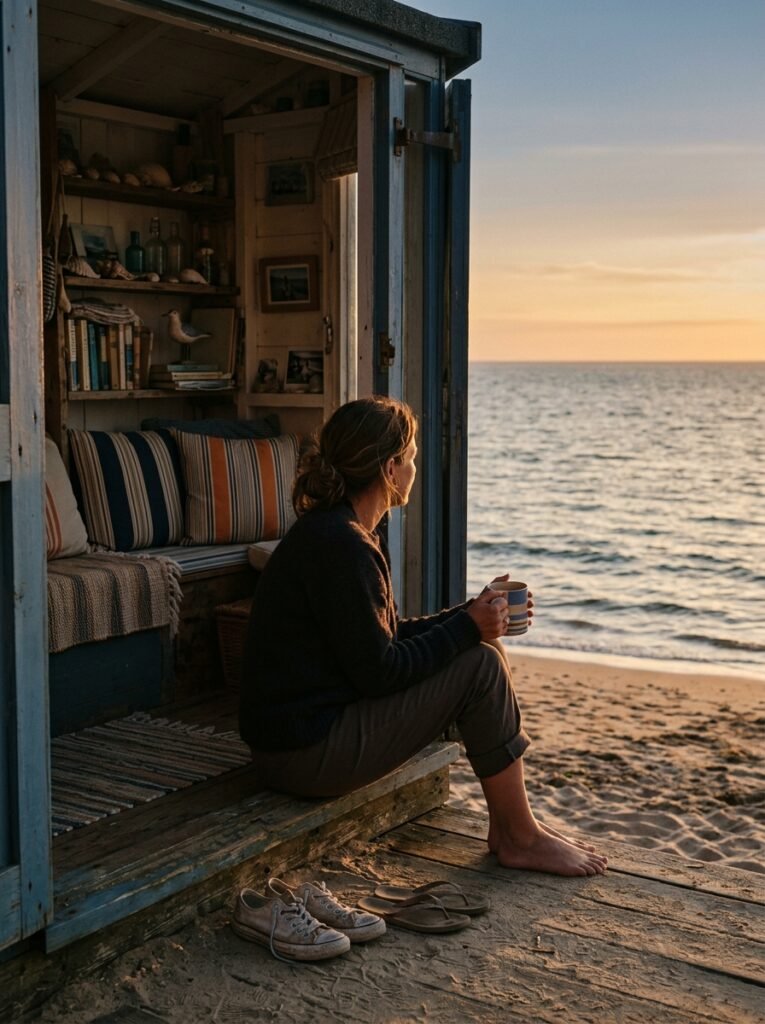
A beach hut interior, at its very best, is not really a design project at all — it’s a philosophy. It’s the radical idea that a small, simple, honest space filled with things you actually love is worth more than any grand interior that requires upkeep, performance, or pretense. Every stripe, every worn-smooth wooden shelf, every mismatched mug tells you the same quiet truth: life is better when you take off your shoes, open the doors, and let the sea do its work.
So tell me — what would your perfect beach hut look like, and what would you do there first?