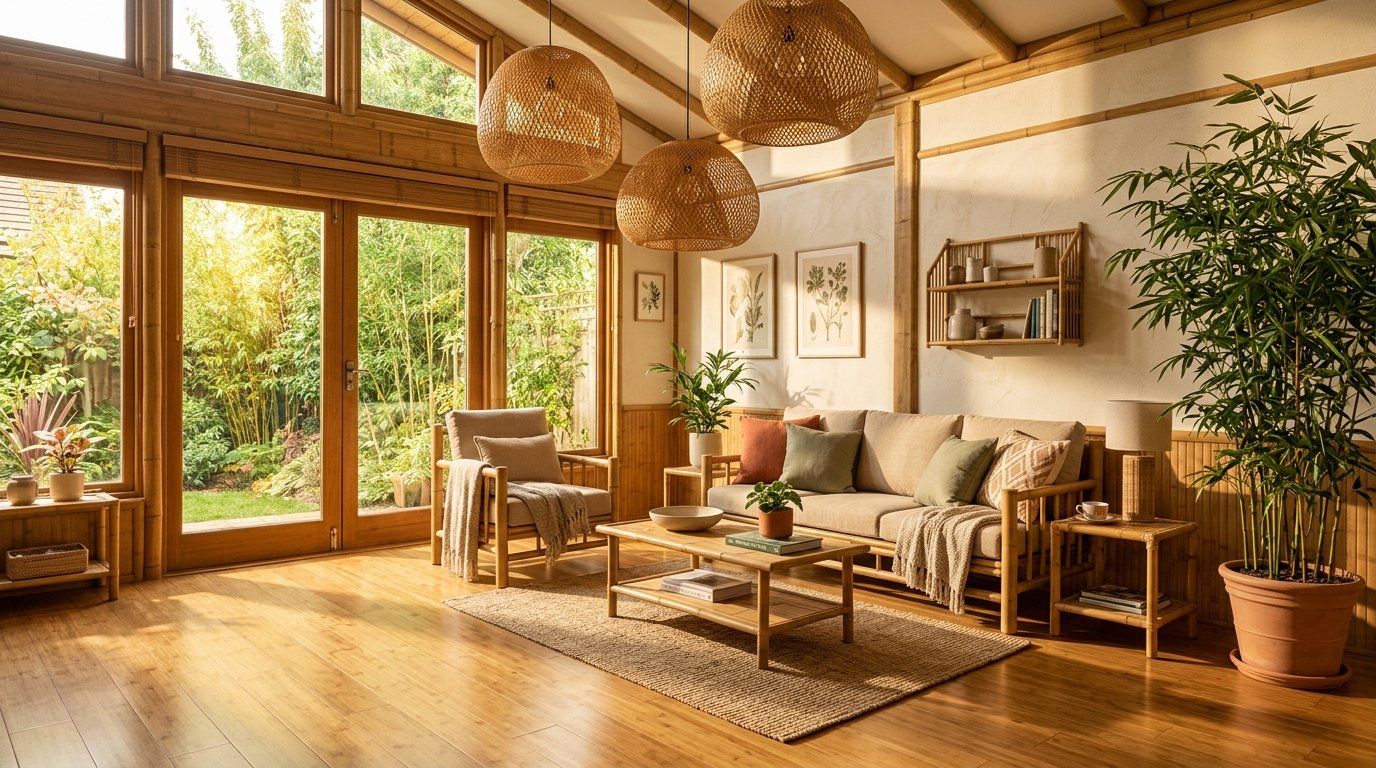
Why Bamboo Interiors Are Taking Over Pinterest (And Why Your Home Deserves One Too)
There’s a particular kind of calm that washes over you when you step into a bamboo-designed space — a hush, a warmth, a sense that the room itself is breathing. If you’ve been endlessly scrolling Pinterest boards lately and noticed a certain earthy, luminous aesthetic showing up everywhere, you’re not imagining things. Bamboo interiors are having a genuine cultural moment, and once you understand why, you’ll want to weave this remarkable material into every corner of your home.
—
Table Of Content
1. The Secret History of Bamboo That Interior Designers Don’t Always Tell You
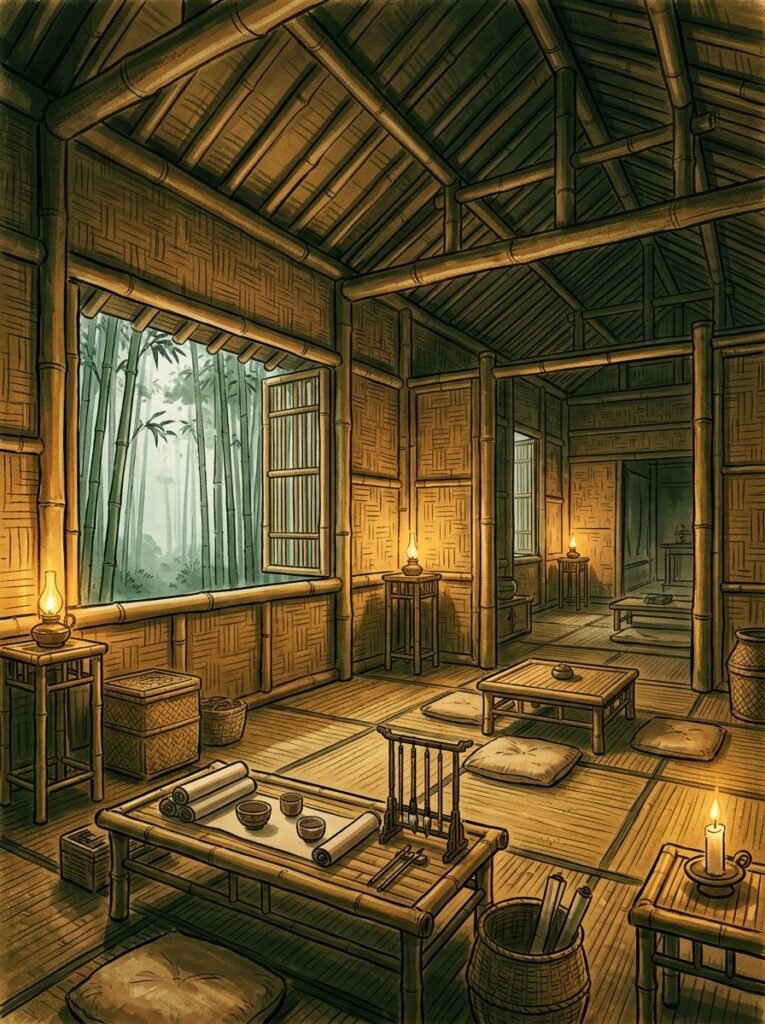
Bamboo has been shaping human living spaces for over five thousand years. Long before it became a Pinterest aesthetic, entire civilizations across East and Southeast Asia built their homes, furniture, and tools from this extraordinary grass — yes, grass. Bamboo isn’t technically a tree, which surprises most people. It’s the world’s fastest-growing plant, capable of growing up to 91 centimeters in a single day under ideal conditions.
What does that mean for your home? It means that every bamboo floor you walk on, every bamboo shelf you admire, every woven lampshade casting that honeyed glow across your living room — all of it comes from an almost endlessly renewable source. Bamboo can be harvested in three to five years, compared to the forty-plus years needed for most hardwood trees. When you bring bamboo into your interior, you’re not just choosing beauty. You’re participating in a design lineage that stretches back millennia.
“Bamboo doesn’t just decorate a space — it roots it in something ancient, something alive.”
2. What Makes a Bamboo Interior Feel So Unmistakably Different
Walk into a room layered with bamboo elements and something shifts in your nervous system. There’s a warmth without heaviness, a structure without rigidity. Bamboo brings what designers call biophilic resonance — the deeply human response to natural materials that our bodies instinctively recognize as safe, grounding, and alive.
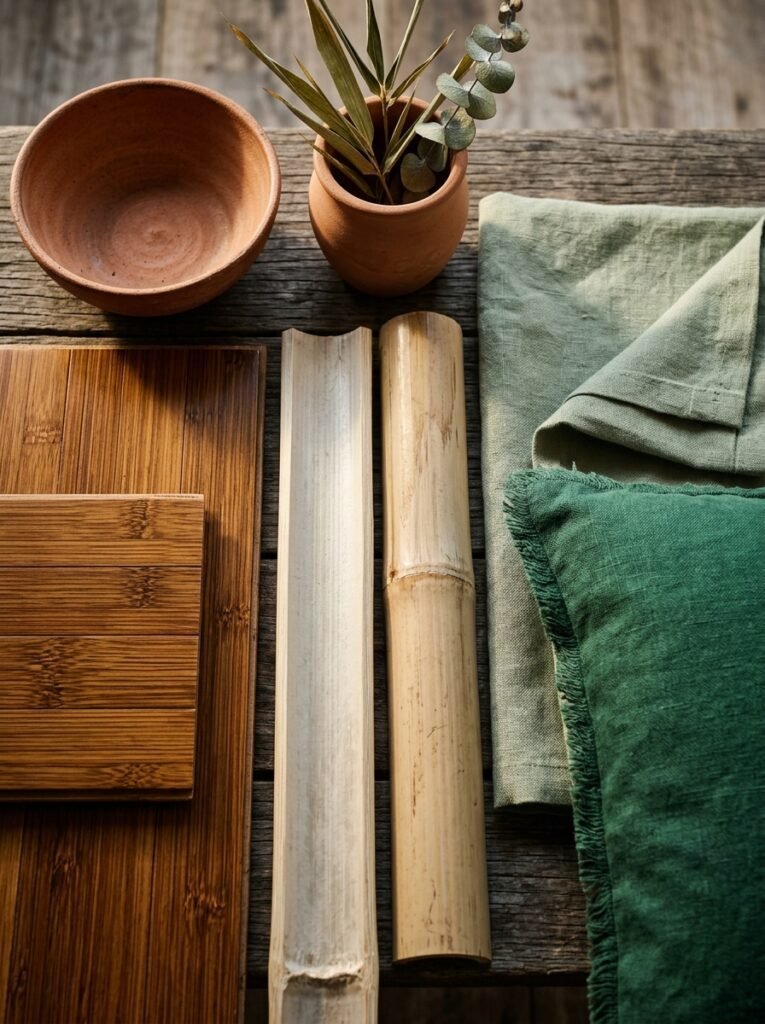
The tones bamboo introduces into a space are extraordinary. Its natural palette ranges from pale, almost silvery cream tones in lighter varieties to rich caramel and deep amber in carbonized bamboo (which is heat-treated to deepen its color). These tones work beautifully with whites, warm grays, terracotta, sage green, and even deeper jewel tones like forest green or rust. Unlike wood, bamboo has a subtle linear grain that adds visual movement to surfaces without ever feeling busy or overwhelming — a quality that makes it uniquely flattering in photography, which is precisely why it photographs so well and spreads so naturally on Pinterest.
3. Bamboo Flooring — The Foundation That Changes Everything About a Room
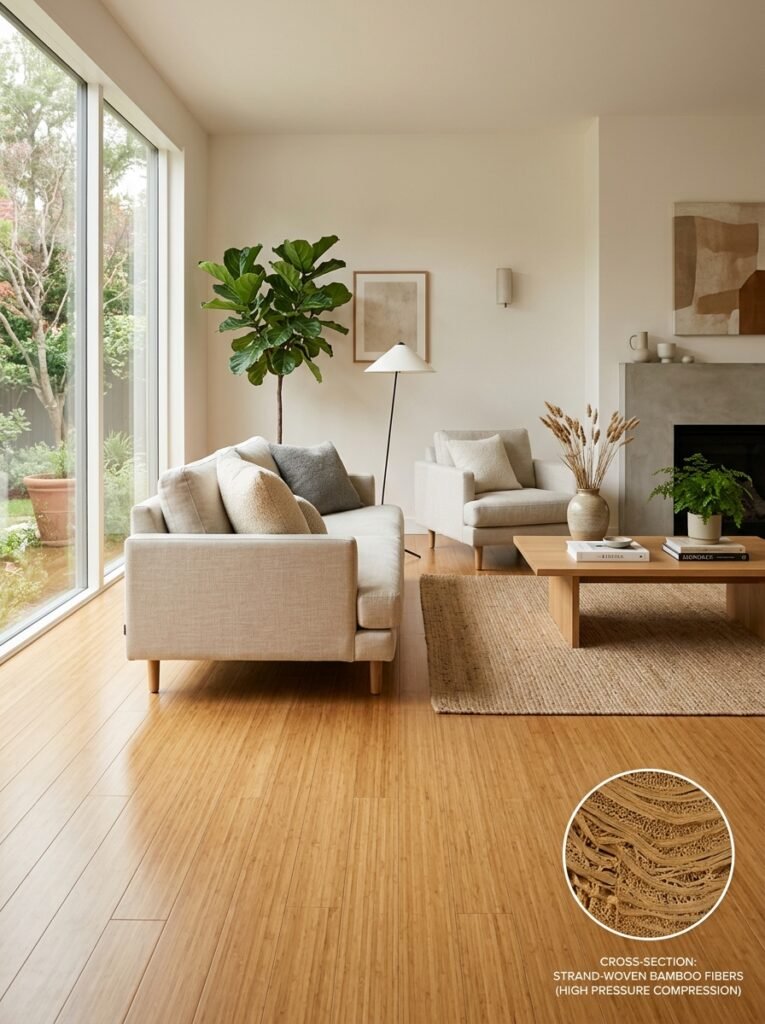
If there’s a single bamboo investment that delivers the most transformative result, it’s bamboo flooring. Replacing conventional hardwood or laminate with bamboo changes the entire energy of a room — not just visually, but texturally and even acoustically. Bamboo flooring has a slightly different resonance underfoot, a quiet solidity that feels more grounded than synthetic options.
There are three primary types of bamboo flooring worth knowing: horizontal grain (which shows the characteristic bamboo nodes and has a more traditional look), vertical grain (a cleaner, more modern feel with tight linear patterns), and strand-woven bamboo (the most durable option, made by compressing bamboo fibers under high pressure to create a material harder than most hardwoods). Strand-woven bamboo flooring rates higher than oak on the Janka hardness scale — a fact that surprises even seasoned interior designers.
Installation is relatively straightforward, and bamboo flooring is compatible with underfloor heating systems, which is a common worry homeowners have before making the switch. The key is maintaining consistent humidity levels in your home, since bamboo — like all natural materials — responds to moisture.
4. Bamboo Walls and Paneling — The Feature Wall Idea That Never Gets Old
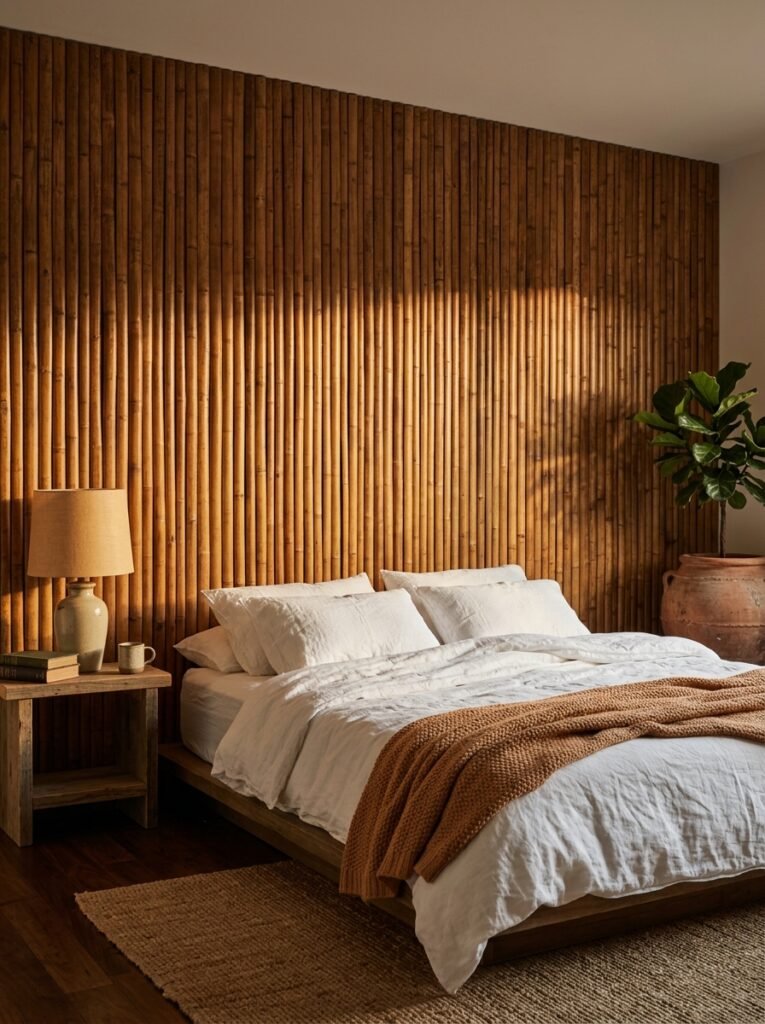
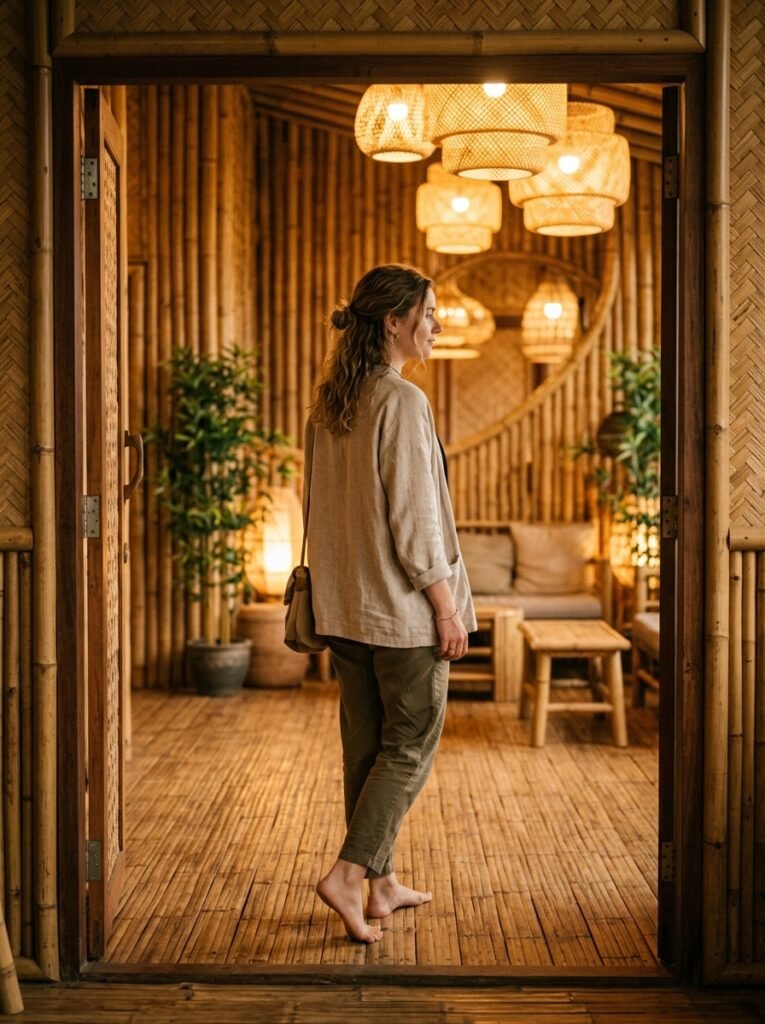
There is something almost meditative about a bamboo-paneled wall. Whether you’re incorporating full-length split bamboo canes, engineered bamboo paneling, or woven bamboo sheets, a single accent wall can transform an entire room’s atmosphere — pulling it away from the generic and into the genuinely singular.
In living rooms, a bamboo feature wall behind a sofa creates an earthy, grounded backdrop that makes every piece of furniture in front of it look more intentional. In bedrooms, bamboo paneling behind the bed headboard creates a warmth and texture that no paint color alone can quite replicate. Even in smaller spaces like entryways or powder rooms, a bamboo wall panel introduces a point of surprise that elevates the whole experience of moving through a home.
The installation options range from gluing individual bamboo poles to a wall surface (for a more rustic, organic effect) to installing engineered bamboo panels that click together like flooring (for a cleaner, more contemporary look). Both approaches are manageable as weekend DIY projects, which is another reason they’ve become such popular content on home improvement and design platforms.
5. The Art of Bamboo Furniture — Choosing Pieces That Age Beautifully
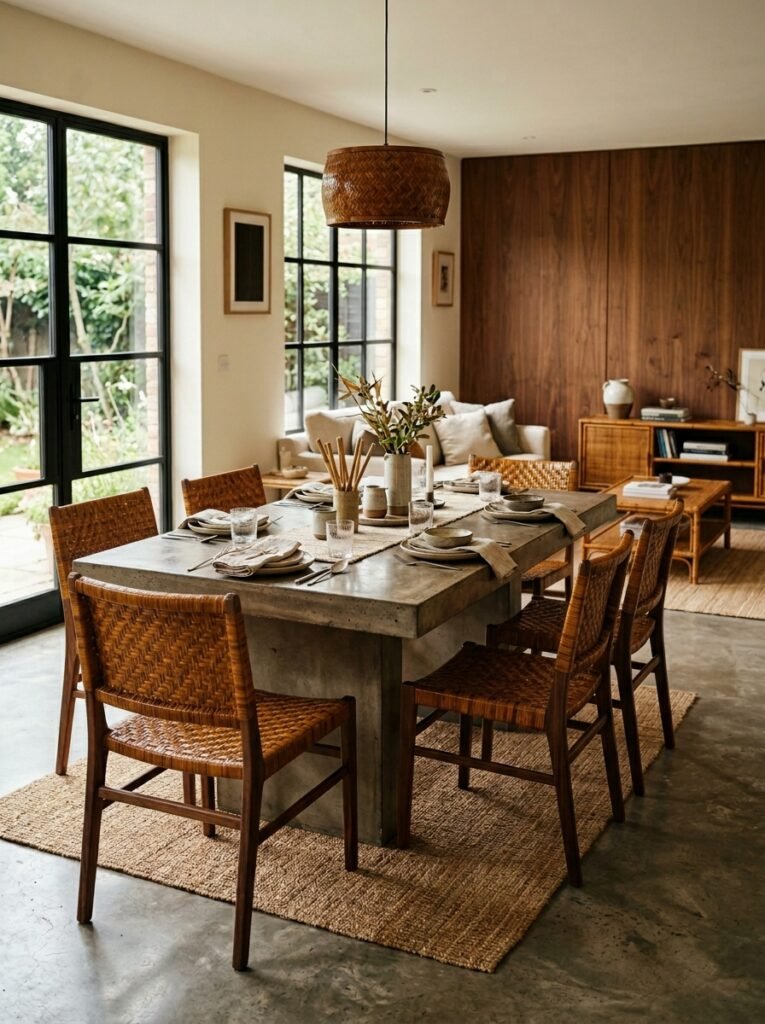
Bamboo furniture has shaken off its old association with cheap, wobbly garden chairs. Today’s bamboo furniture — designed by serious makers working with precision-engineered bamboo composites — is sophisticated, durable, and genuinely beautiful. The key is understanding the difference between solid bamboo furniture and bamboo veneer furniture, because they behave very differently over time.
Solid bamboo furniture, particularly strand-woven bamboo pieces, develops a gorgeous patina with age. Surfaces deepen slightly in tone, and the material takes on a lived-in richness that improves its character rather than diminishing it — much like good leather or solid walnut. Bamboo veneer furniture, on the other hand, requires more careful maintenance and is less forgiving of moisture or heavy use.
“The best furniture doesn’t age gracefully — it ages honestly, and bamboo does this better than almost anything.”
For living rooms, bamboo coffee tables and media consoles work exceptionally well. In dining rooms, bamboo chairs paired with a marble or concrete dining table create that perfect tension between organic and architectural that high-design spaces always seem to achieve effortlessly. In bedrooms, bamboo bed frames and side tables bring a quietness to the space that encourages genuine rest.
6. Bamboo Textiles — The Softest Surprise in a Bamboo Interior

Most people focus on hard bamboo elements — floors, furniture, walls — and overlook one of the most transformative bamboo materials available: bamboo fabric. Bamboo textiles are softer than cotton, naturally thermoregulating (meaning they keep you cool in summer and warm in winter), moisture-wicking, and hypoallergenic. They’re among the most tactilely luxurious natural fabrics available, and they drape beautifully.
In an interior context, bamboo linen curtains filter light in a way that’s genuinely breathtaking — that warm, diffused golden light that every photographer dreams of. Bamboo throw blankets and cushion covers layer in texture without adding visual noise, maintaining the clean, calm aesthetic that bamboo interiors do so well. Bamboo bedding sets transform the bedroom experience entirely, with a silkiness against the skin that makes sleep feel like a genuine act of self-care.
When selecting bamboo textiles, look for certifications like OEKO-TEX Standard 100, which confirms that the fabric has been tested for harmful substances — an important consideration, since some bamboo fabrics use chemical processes in their production that offset the environmental benefits of the raw material.
7. Lighting and Bamboo — How to Create That Glow Everyone Is Saving on Pinterest
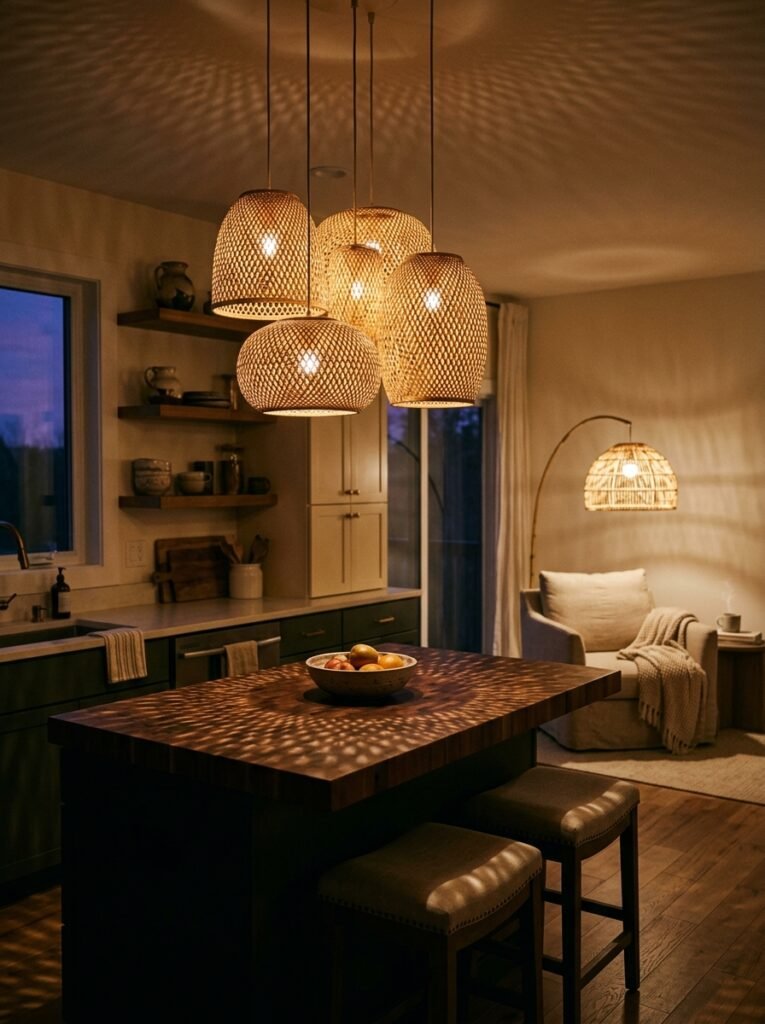
If you’ve ever stopped scrolling at a photo of a warm, golden-lit interior and felt something in your chest loosen, there’s a good chance bamboo lighting was involved. Woven bamboo pendant lights, bamboo lampshades, and bamboo floor lamp bases create a quality of light that is almost impossible to achieve with other materials — a soft, dappled glow that falls across surfaces like late afternoon sun through leaves.
The science behind this effect is straightforward: woven bamboo creates micro-perforations through which light escapes in thousands of tiny beams, diffusing and scattering in a way that feels organic rather than mechanical. This is sometimes called hygge lighting in Scandinavian design contexts — the kind of light that makes a space feel inhabited and intimate.
Cluster bamboo pendants at different heights over a kitchen island or dining table for an effect that’s both architectural and warm. Use a large woven bamboo floor lamp beside an armchair to create a reading nook that feels genuinely inviting. Even small bamboo candle holders on a windowsill can shift the entire mood of a room at dusk.
8. Bamboo in the Kitchen — Where Function Meets Pure Aesthetic Joy
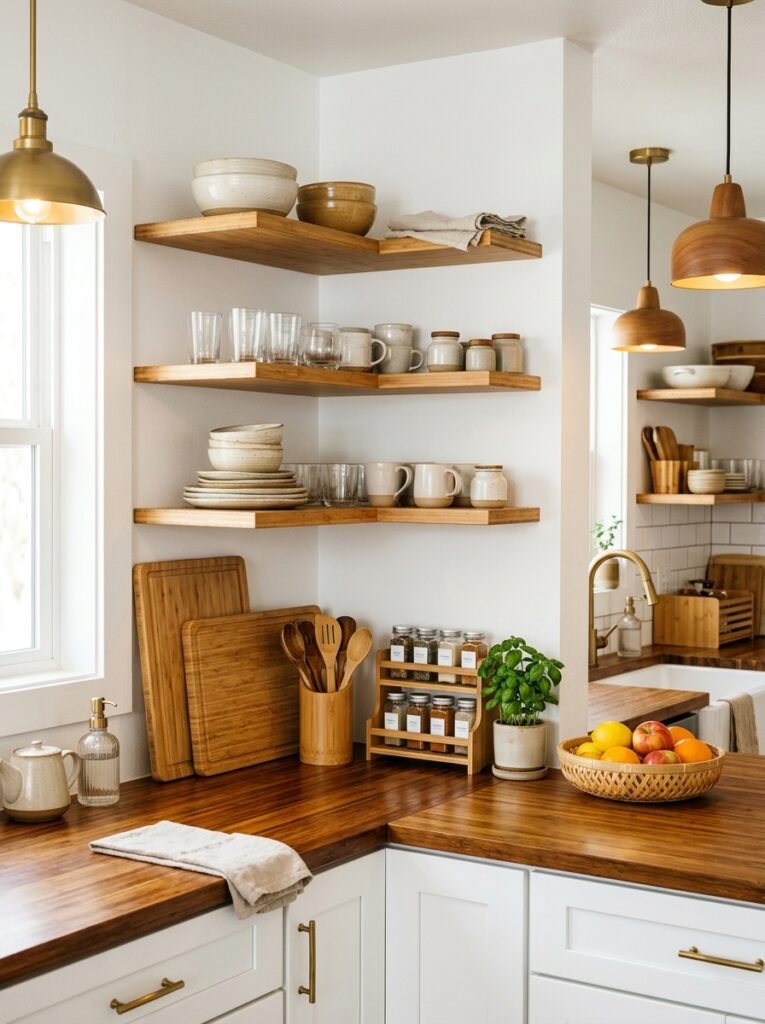
The kitchen is where bamboo truly earns its place in everyday life — not just as decoration, but as a working partner in one of the most active rooms in a home. Bamboo cutting boards are naturally antimicrobial due to a substance called “bamboo kun” found in the fiber, which resists bacteria and fungi without requiring chemical treatment. They’re also gentler on knife edges than glass or ceramic boards, preserving both your blades and the board itself.
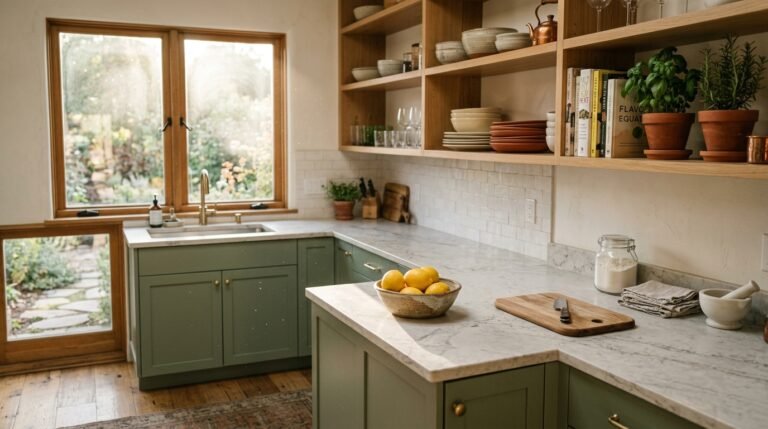
Beyond cutting boards, the bamboo kitchen universe is genuinely expansive. Bamboo drawer organizers, utensil holders, spice racks, fruit baskets, and even bamboo countertops all contribute to a kitchen that feels cohesive, calm, and considered. A bamboo open-shelf kitchen — where dishes and glasses are displayed on bamboo shelving against a white wall — is one of the most reliably popular interior aesthetics on Pinterest for exactly this reason: it looks curated without looking sterile.
Bamboo countertops deserve special mention. They’re harder than maple, beautiful in their grain, and require only periodic oiling with food-safe mineral oil to stay in perfect condition for decades. They bring a warmth to kitchen surfaces that stone, however beautiful, can’t quite match.
9. Bamboo and Biophilic Design — The Wellness Connection Your Home Might Be Missing
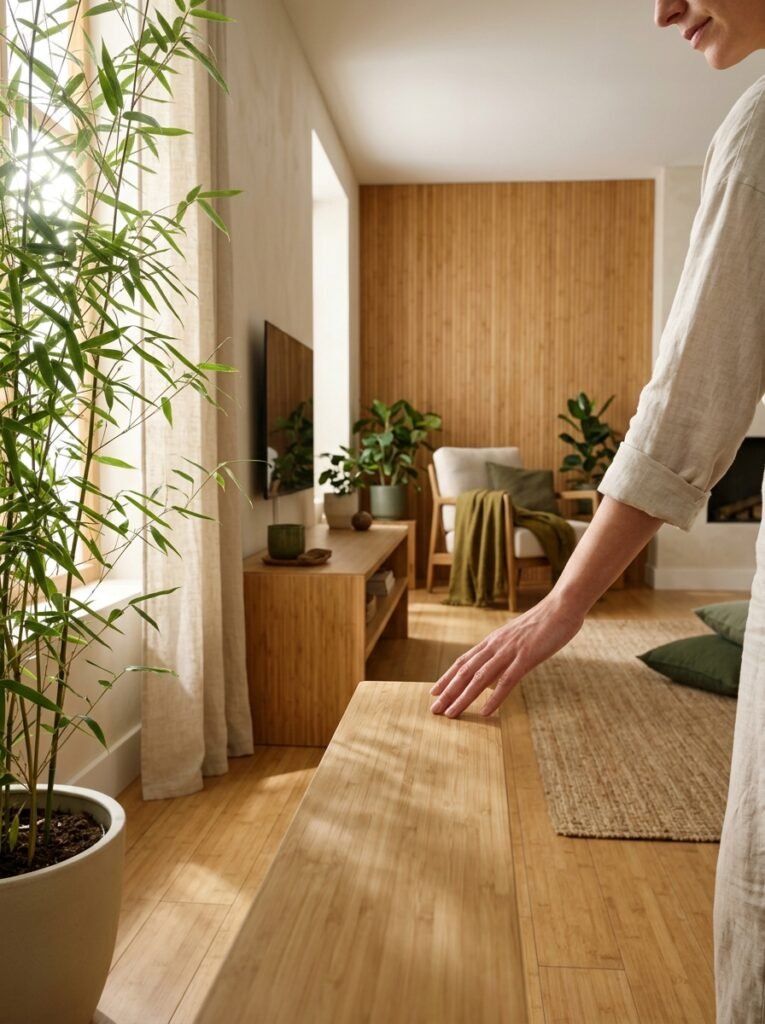
Biophilic design — the practice of incorporating natural elements into built environments to support human wellbeing — has moved from architecture journals into mainstream home design over the past decade, and bamboo is one of its most powerful tools. Research in environmental psychology consistently shows that exposure to natural materials reduces cortisol levels, lowers blood pressure, and improves mood and cognitive function.
“A home that includes natural materials isn’t just more beautiful — it’s measurably better for your health.”
Bamboo delivers biophilic benefits on multiple sensory levels simultaneously. Its visual warmth and natural grain appeal to sight. Its texture — smooth but with a subtle grain you can feel under your fingertips — appeals to touch. In spaces with living bamboo plants (which are a different and equally wonderful addition), the soft rustling of leaves introduces sound. This multisensory engagement is exactly what biophilic design aims to achieve, and bamboo achieves it with remarkable elegance.
10. Mixing Bamboo with Other Materials — The Combinations That Always Work
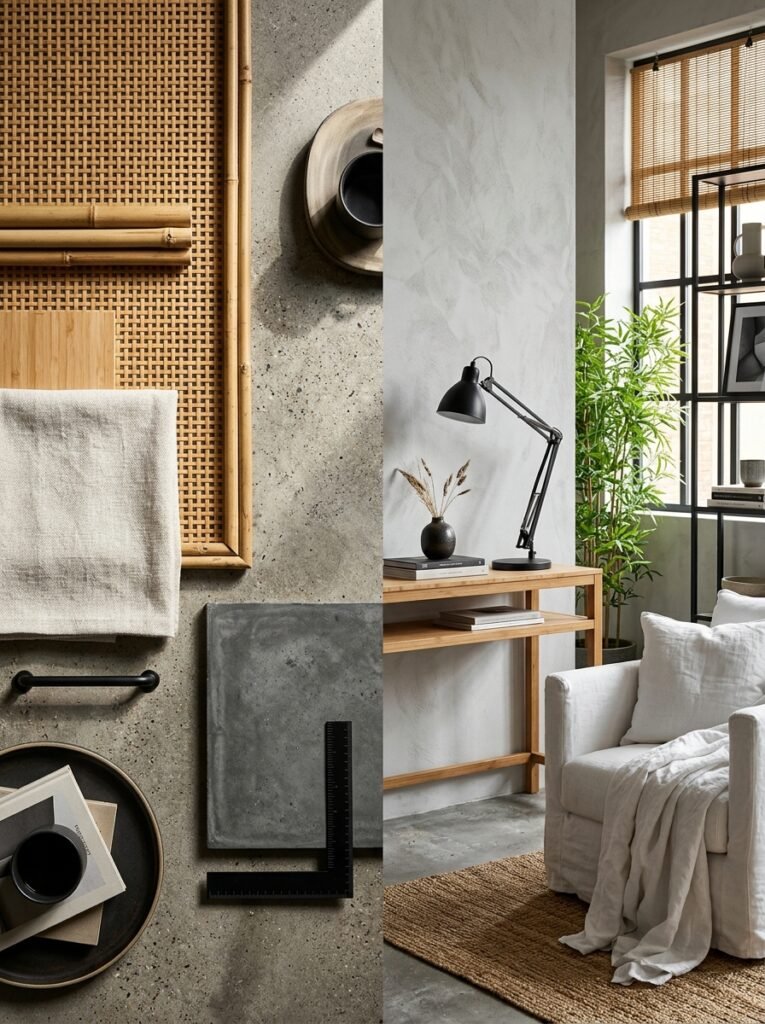
One of the questions interior designers hear most often about bamboo is: what does it go with? The reassuring answer is almost everything — but certain combinations are particularly magical. Bamboo and white linen is perhaps the most classic pairing, evoking that effortless, breezy serenity of a beach house or a tropical resort. The contrast between bamboo’s warmth and linen’s softness is visually perfect.
Bamboo and concrete is the combination that surprises people the most. The industrial coolness of exposed concrete — whether a polished floor, a poured countertop, or a raw wall — is beautifully softened by bamboo elements, which prevent the space from feeling cold or clinical. Bamboo and black matte metal (in fixtures, hardware, and frame details) creates an interior that feels both earthy and sophisticated — the combination that drives the most saves on Pinterest interior boards.
Avoid pairing bamboo with heavily distressed or very dark wood finishes, which can create a visual competition rather than a complement. Bamboo is a team player, but it shows its best qualities when it has room to breathe.
11. Budget-Friendly Bamboo Decorating — Beautiful Doesn’t Have to Mean Expensive
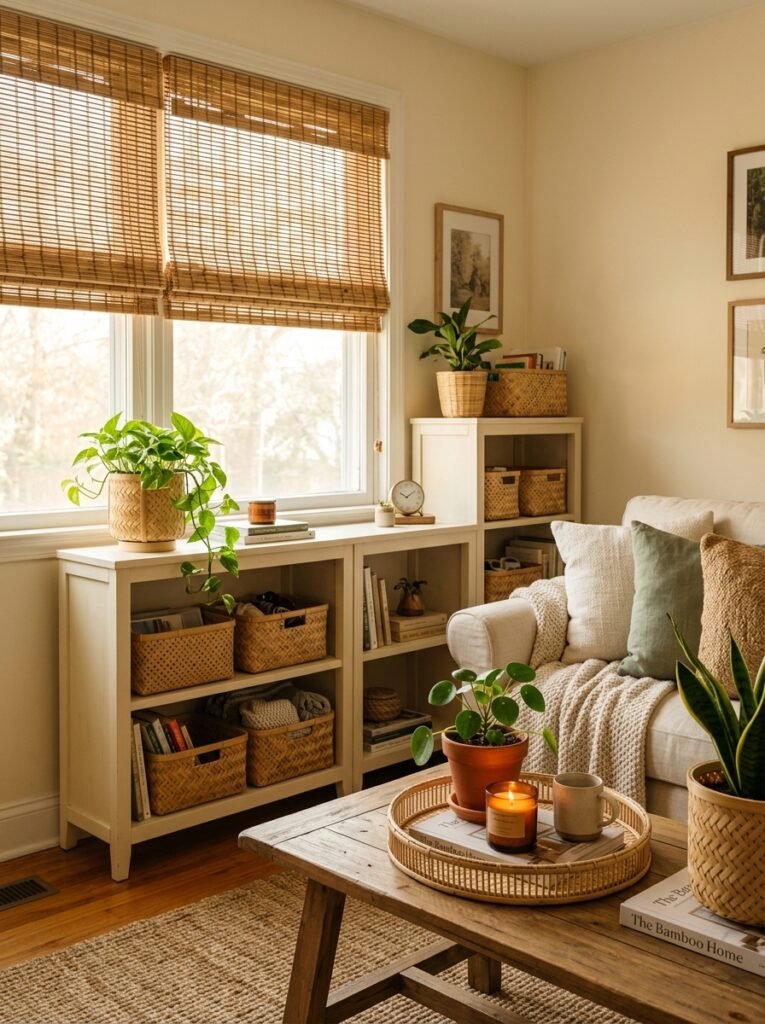
One of the most genuinely wonderful things about bamboo as an interior material is its accessibility. While high-end bamboo flooring and furniture can certainly represent a significant investment, the entry points into bamboo decorating are remarkably affordable — which is part of why bamboo content performs so well with audiences at every budget level.
Bamboo blinds, for instance, cost a fraction of custom wooden blinds and deliver much of the same visual warmth. A set of bamboo storage baskets — for shelving, under beds, or in home offices — transforms both organization and aesthetics for the price of a dinner out. Bamboo trays styled on a coffee table or kitchen counter cost almost nothing and photograph beautifully. Bamboo plant pots and plant stands are perennial bestsellers in home decor shops because they hit exactly the right balance between affordable and elevated.
For those ready to commit to larger bamboo elements, shopping secondhand is worth exploring. Bamboo furniture — particularly solid and strand-woven pieces — is extremely durable and ages well, meaning secondhand bamboo pieces often retain their beauty long after their first owners have moved on.
12. The Future of Bamboo Interiors — Why This Isn’t Just a Trend
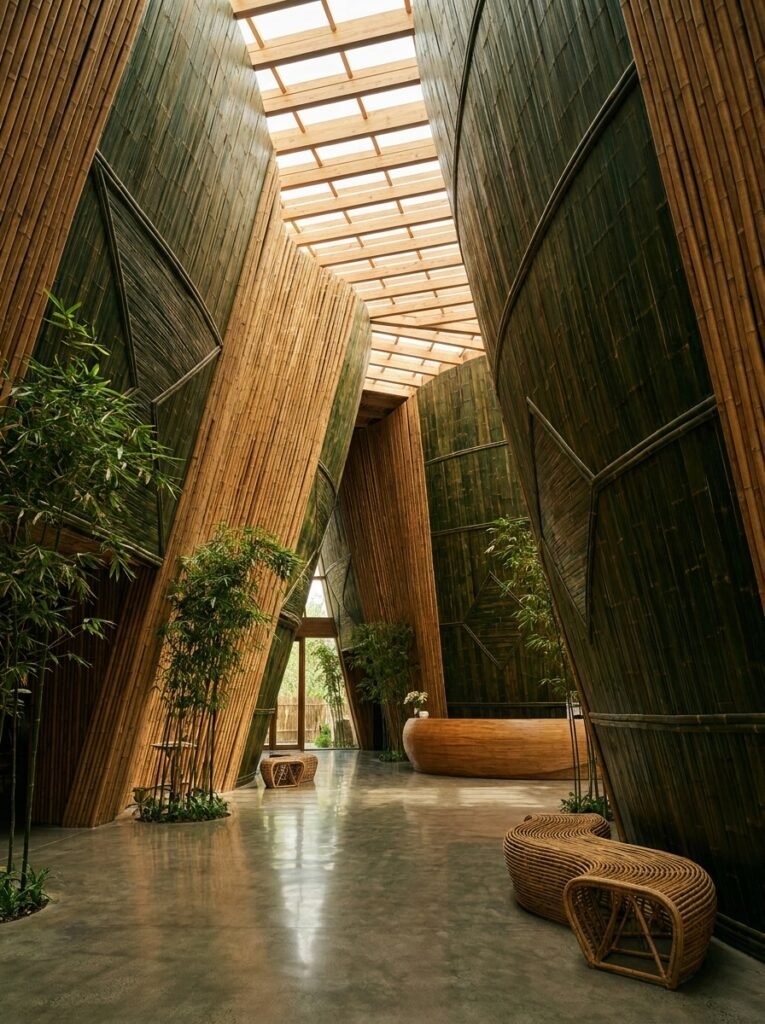
Every few years, a design aesthetic sweeps through Pinterest and then quietly disappears — shiplap, all-grey everything, industrial chic. Bamboo is different, and understanding why helps explain why investing in a bamboo interior is a decision that will age well.
Bamboo sits at the intersection of three of the most durable shifts in contemporary design values: sustainability consciousness, biophilic living, and the rejection of the purely synthetic. These aren’t passing trends. They’re responses to genuine changes in how people think about their homes — as environments that should actively support wellbeing, reflect considered values, and connect them to the natural world rather than sealing them away from it.
Architects working at the highest level — from WOHA in Singapore to Kengo Kuma in Japan — have incorporated bamboo into award-winning projects precisely because the material performs beautifully at every scale. What works in a Kengo Kuma cultural center works, in principle, in your living room. The aesthetics of bamboo — that warmth, that linearity, that quiet — are not bound to a particular decade. They’re expressions of something timeless.
—
🌿 How to Take Care of Your Bamboo Interior
Caring for bamboo is genuinely straightforward, which is part of its appeal — but a few practices will help your bamboo elements look beautiful for decades rather than years.
Keep bamboo materials away from direct prolonged sunlight where possible. UV exposure over time can cause bamboo flooring and furniture to bleach unevenly. Use curtains or UV-filtering window film in very sunny rooms to protect your investment.
Maintain stable humidity. Bamboo, like all natural materials, expands and contracts with changes in humidity. In very dry climates or during winter heating months, a humidifier helps prevent cracking or warping. Ideal relative humidity for bamboo interiors is between 40% and 60%.
Clean bamboo surfaces with a damp (never saturated) cloth and a mild, pH-neutral cleaner. Avoid harsh chemical cleaners, which can strip bamboo’s natural finish and introduce discoloration. For bamboo flooring, a dry mop for daily maintenance and a barely damp mop for deeper cleaning keeps surfaces looking their best.
Oil bamboo countertops and cutting boards regularly with food-safe mineral oil. This takes five minutes, prevents the surface from drying out and cracking, and genuinely improves the material’s appearance — bamboo oiled regularly develops a depth and richness that unsealed bamboo never achieves.
Address moisture promptly. Bamboo handles normal household humidity well, but standing water — from a plant pot sitting directly on bamboo flooring or a wet glass left on a bamboo surface — can cause staining or warping. Simple habits like using coasters and plant saucers protect your bamboo for the long term.
—
❓ FAQ
Q: Is bamboo a sustainable choice for interior design? A: Yes — bamboo is one of the most sustainable materials available for home interiors. It grows to maturity in three to five years (compared to decades for hardwood trees), requires no pesticides, and regenerates from its root system after harvesting without needing to be replanted. The primary sustainability consideration is transportation footprint, since most bamboo is grown in Asia, and the processing methods used for some bamboo textiles. Look for FSC-certified bamboo products and OEKO-TEX certified bamboo fabrics for the most environmentally responsible choices.
Q: Is bamboo flooring durable enough for families with kids and pets? A: Strand-woven bamboo flooring in particular is exceptionally durable — harder than oak and most traditional hardwoods on the Janka hardness scale. It handles foot traffic, children’s play, and pet claws better than many conventional hardwood options. The key is choosing a quality, properly finished product and maintaining stable humidity levels in your home.
Q: Can bamboo interiors work in cold climates, or does it feel too tropical? A: Bamboo interiors work beautifully in cold climates — the warmth of the material’s tones is actually particularly welcome in northern or cooler settings. The key is in how you style it. Pair bamboo with warm textiles like wool throws and linen cushions, incorporate deep warm colors like terracotta or forest green, and use layered lighting to create a cozy, hygge-inspired atmosphere. The result feels grounded and warming rather than tropical.
—
💭 Final Thought
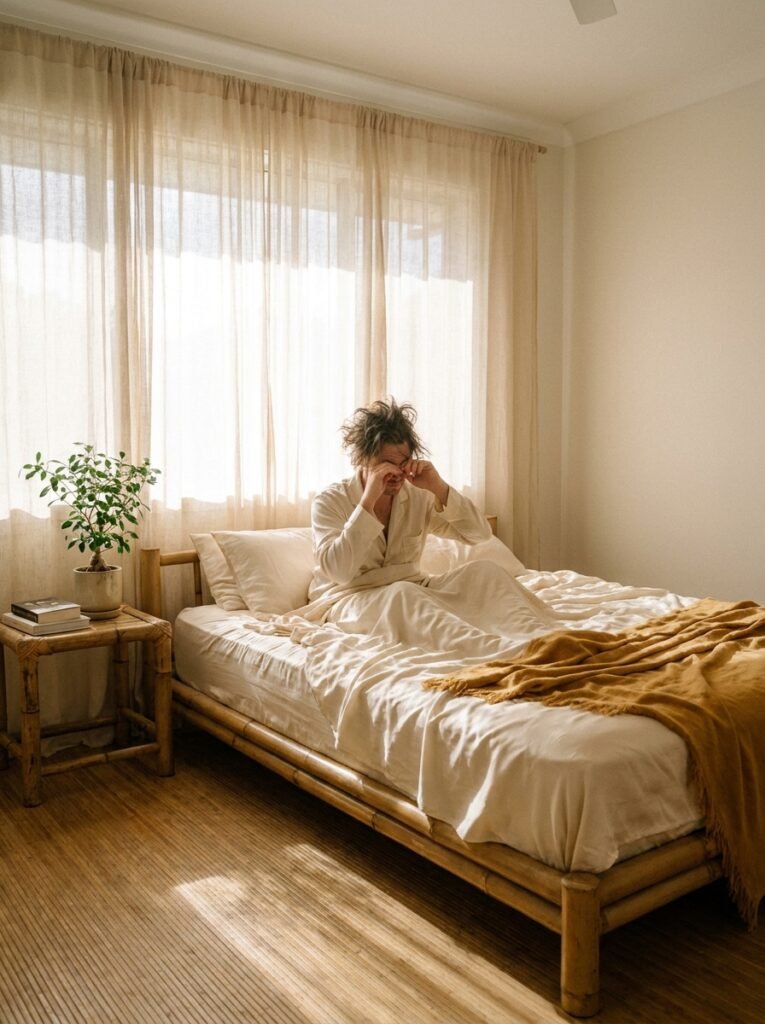
There’s something quietly radical about choosing bamboo for your home — it’s a decision that says something about how you want to live, what you value, and what kind of environment you believe you deserve. Bamboo interiors aren’t about following a trend. They’re about choosing materials that connect you to the natural world, support your wellbeing, and grow more beautiful with time rather than less.
So here’s the question worth sitting with: what would it feel like to wake up tomorrow in a home that felt as grounded, warm, and alive as bamboo itself?