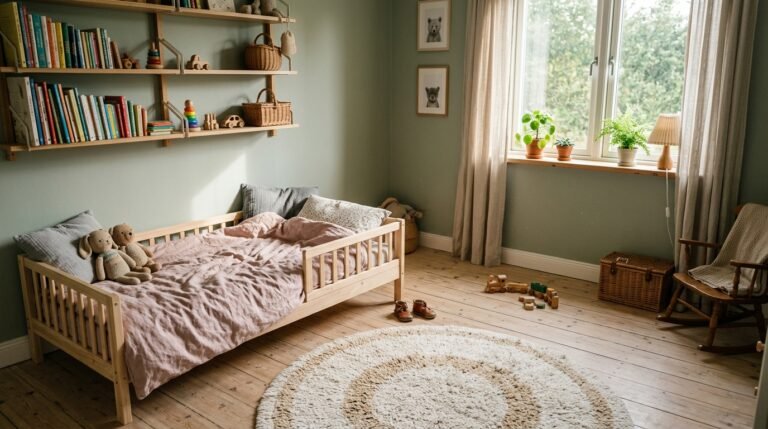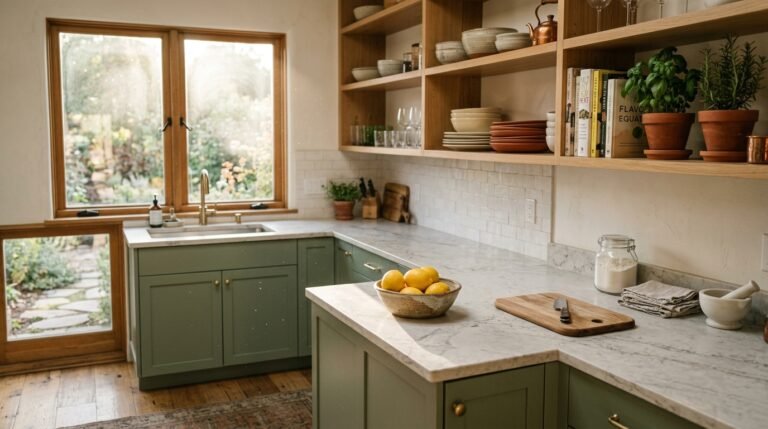
The Warm Interior: How to Transform Any Room Into a Place That Feels Like a Hug
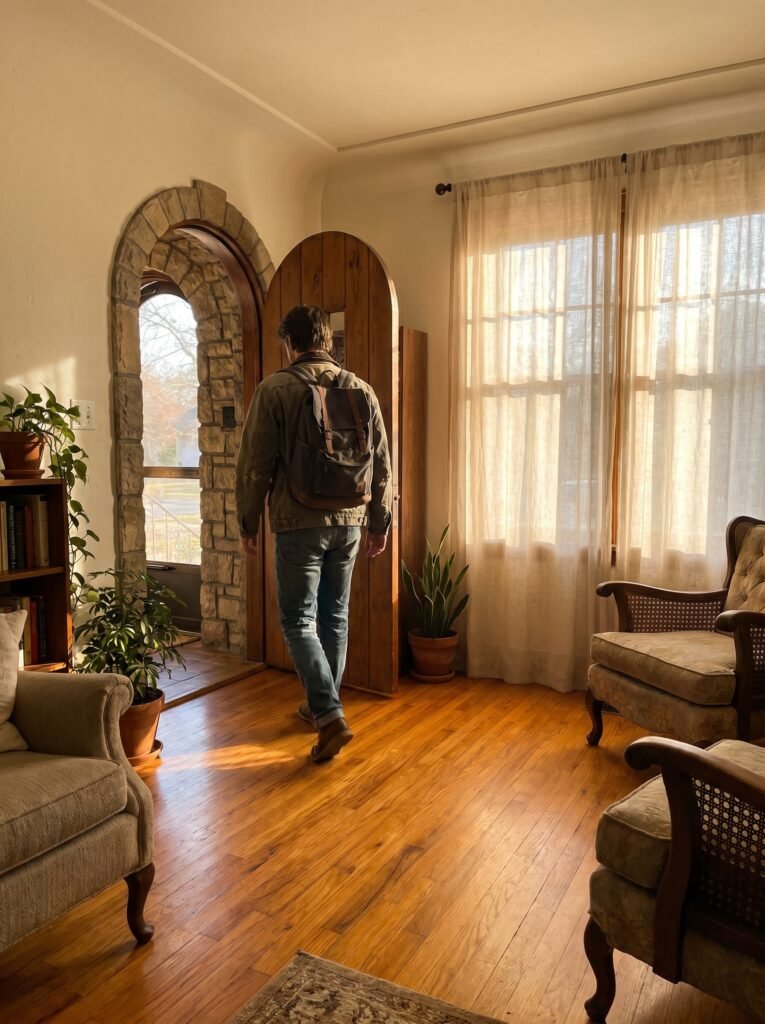
There’s a moment — you’ve probably felt it — when you step into a room and something inside you just exhales. The light is soft, the colors feel familiar, and the air carries the faint warmth of something real. That’s what a warm interior does. It doesn’t just decorate a space; it heals it.
—
1. What “Warm Interior” Actually Means (And It’s Not Just About Color)
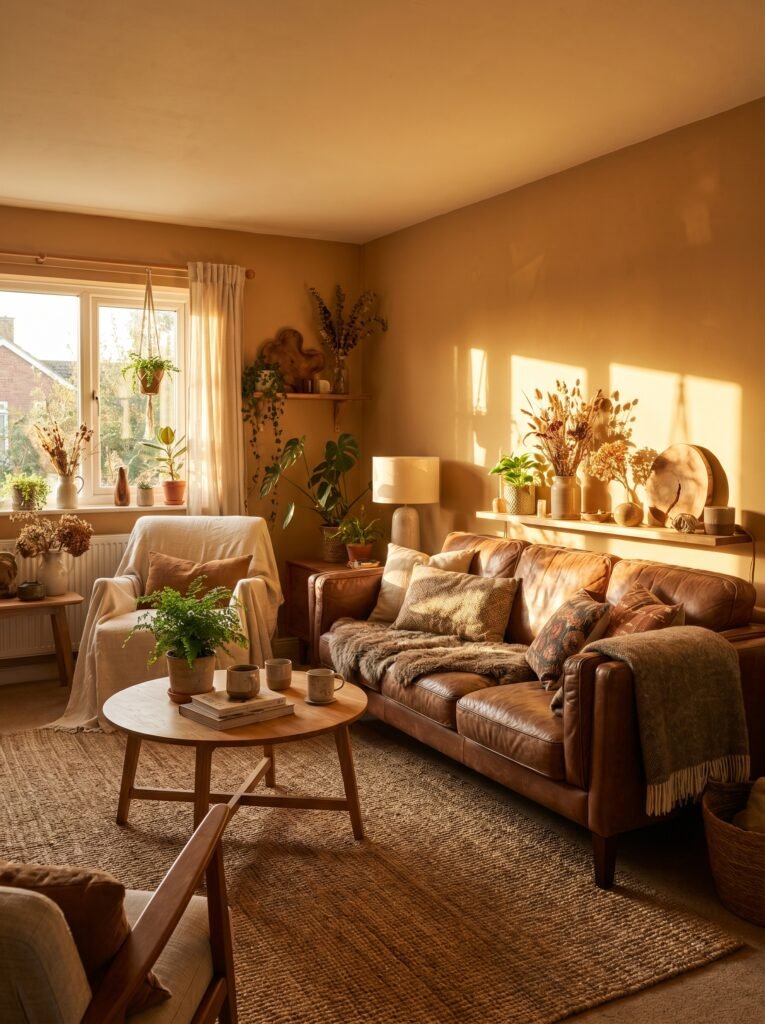
Most people assume a warm interior is simply about painting walls a golden yellow or draping a chunky blanket over a sofa. And while those things help, warmth in interior design runs much deeper than any single element. It’s the sum of how a room makes you feel the moment you cross the threshold — before you’ve even consciously registered what you’re looking at.
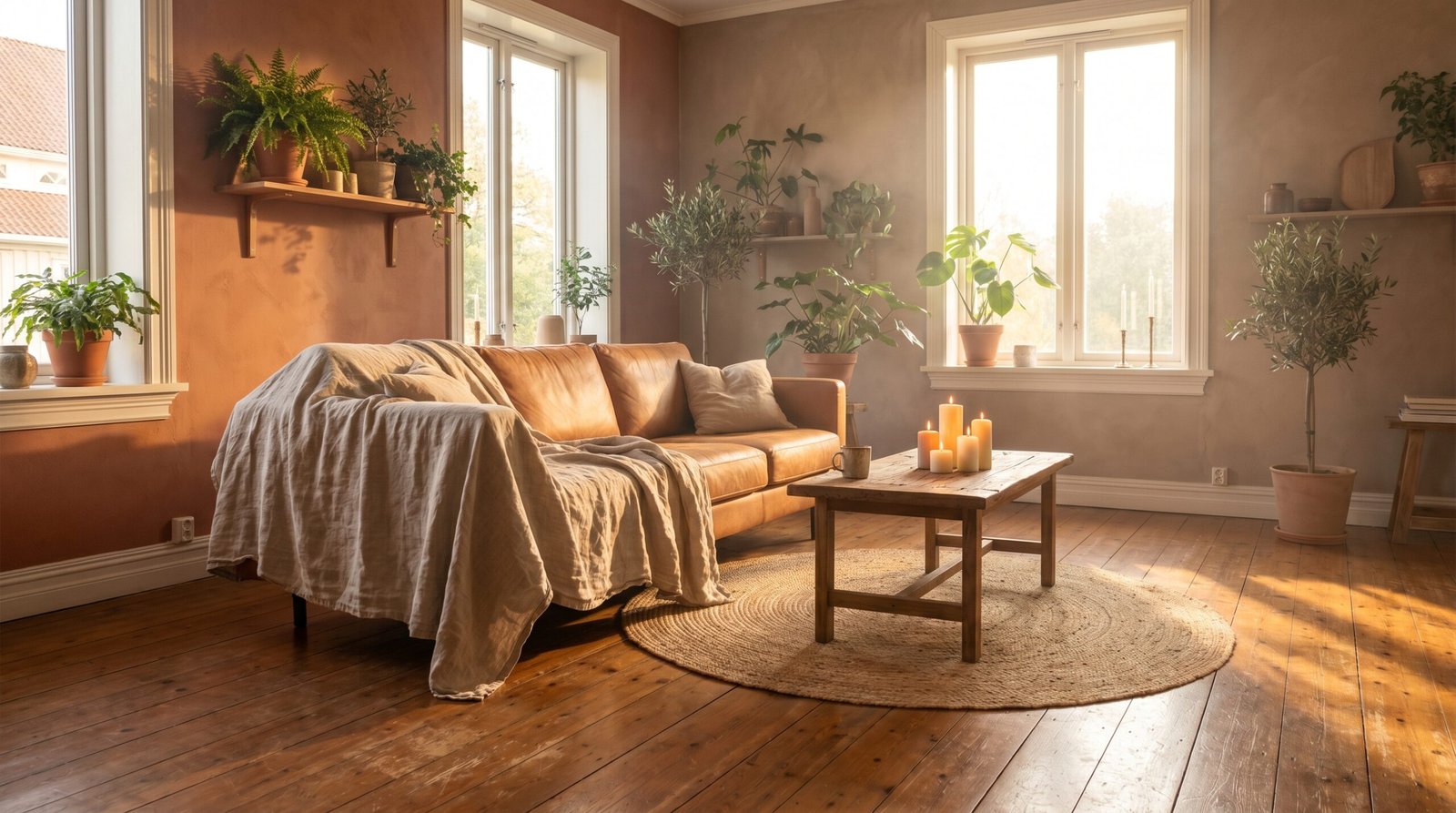
Warmth is a sensory experience. It’s the way late afternoon sunlight pools on a hardwood floor. It’s the visual weight of a linen throw draped casually across a chair. It’s texture layered upon texture — a jute rug beneath a wooden coffee table, beside a worn leather sofa. Warm interiors are spaces that feel inhabited and intentional, not staged.
Design experts often describe warmth using the concept of “biophilic design,” which is the idea that humans are instinctively drawn to environments that echo nature — organic shapes, earthy tones, natural light, and materials that age beautifully. This isn’t a trend. It’s a deeply human need, and understanding it changes how you see every room you’ll ever design.
“A warm room doesn’t ask you to admire it — it asks you to stay.”
2. The Color Palette That Wraps a Room in Comfort

Color is the first language a room speaks. And when it comes to warm interiors, the conversation should be unhurried and rich. Think terracotta, warm taupe, burnt sienna, dusty rose, caramel, and deep cream — shades that seem to glow from within rather than simply reflect light.
The science behind this is fascinating. Warm hues like reds, oranges, and yellows have longer wavelengths on the visible light spectrum. This means our eyes perceive them as advancing — they feel closer, cozier, and more enveloping. Cool colors recede, creating space but also distance. When you paint a room in warm tones, you’re literally changing how the brain perceives the physical dimensions of the space.
But the secret that most decorating guides skip over is undertone. A white wall with pink undertones will feel completely different from a white wall with blue undertones — even if they look identical in the paint chip. When building a warm palette, always choose neutrals with warm undertones. Look for words like “creamy,” “wheat,” “linen,” or “sand” when selecting whites and off-whites. These small decisions accumulate into an atmosphere that feels unmistakably, comfortably warm.
Don’t be afraid of deep, saturated tones either. A moody terracotta accent wall, a library painted in warm tobacco brown, or a dining room in rich ochre can create a profound sense of intimacy that pale shades simply cannot achieve.
3. The Unexpected Power of Natural Light (and How to Fake It Beautifully)
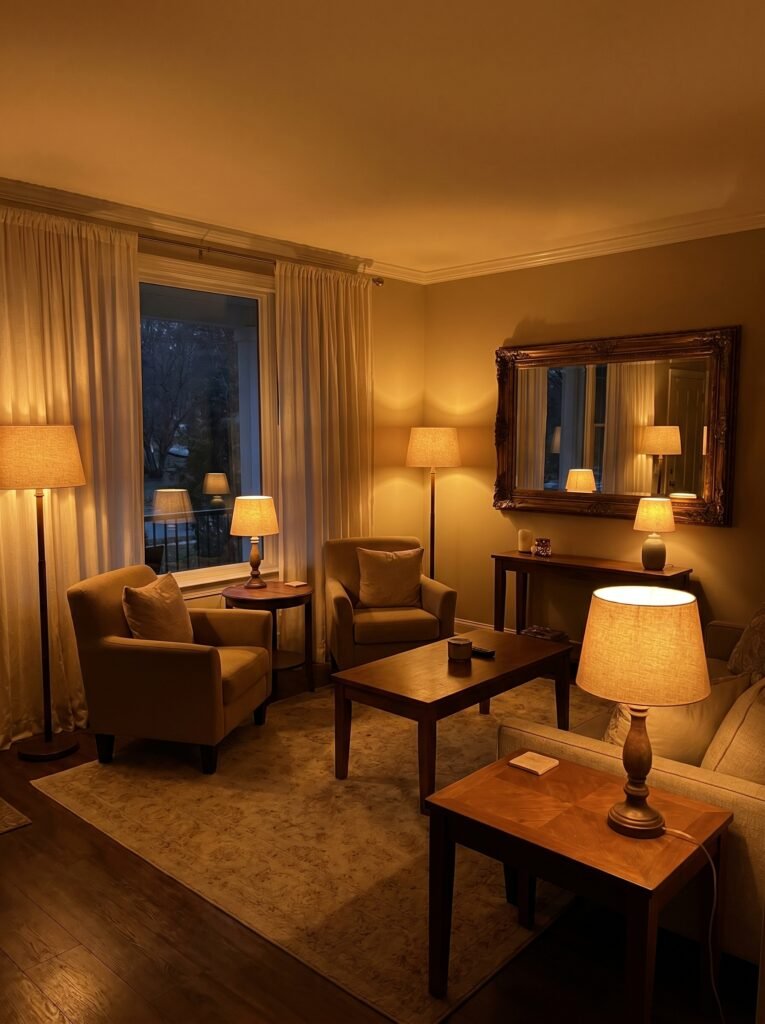
Natural light is the single most transformative element in any warm interior — and yet it’s the one thing most of us feel we can’t control. You either have big beautiful south-facing windows or you don’t, right?
Not exactly. There are strategic ways to invite and amplify natural light that most homeowners never consider. Mirrors placed directly across from windows don’t just reflect the room — they reflect the light source itself, effectively doubling the luminosity. Choosing window treatments in sheer linen or unbleached cotton allows light to filter through while softening its edges into something diffuse and golden. Even the sheen of your paint matters: matte finishes absorb light while satin and eggshell finishes gently bounce it back into the room.
When natural light isn’t possible — in basements, interior rooms, or north-facing spaces — layered artificial lighting becomes your closest ally. The key principle is to avoid relying on a single overhead source. Instead, build layers: ambient light from floor lamps, task lighting from table lamps, and accent lighting tucked into shelves or behind furniture. Always choose bulbs with a color temperature between 2700K and 3000K, which produces that warm, golden-hour glow that feels so instinctively comfortable.
4. Texture Is the Secret Ingredient Every Warm Room Needs
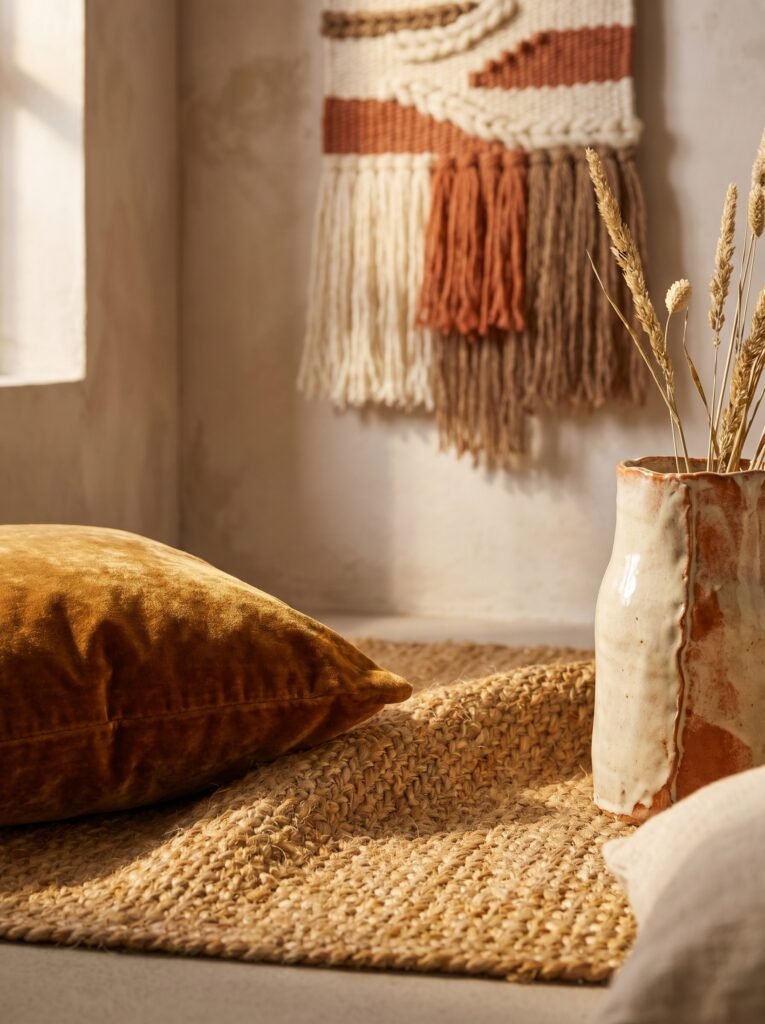
If color is the language of a warm room, texture is its accent — the thing that gives every word its weight and meaning. A room with beautiful warm colors but no texture will feel flat, almost hollow. Layer in texture and suddenly the room has dimension, personality, and that elusive quality of feeling genuinely lived-in.
Think about how you experience texture in nature: the roughness of bark, the softness of moss, the smoothness of a river stone. Your home should offer that same layered tactile experience. A jute rug grounds the room with earthiness. Velvet cushions invite touch. A hand-thrown ceramic vase adds organic imperfection. Woven wall hangings bring in a sense of craft and story.
The practical formula for texture layering goes like this: start with your largest surfaces — floors and walls. Then move to your furniture, followed by soft furnishings like rugs, curtains, and throws. Finally, add smaller objects like cushions, baskets, and ceramics. When each layer is considered, the room develops a richness that photographs beautifully and feels even better in person.
5. Why Wood Is the Backbone of Every Truly Warm Interior
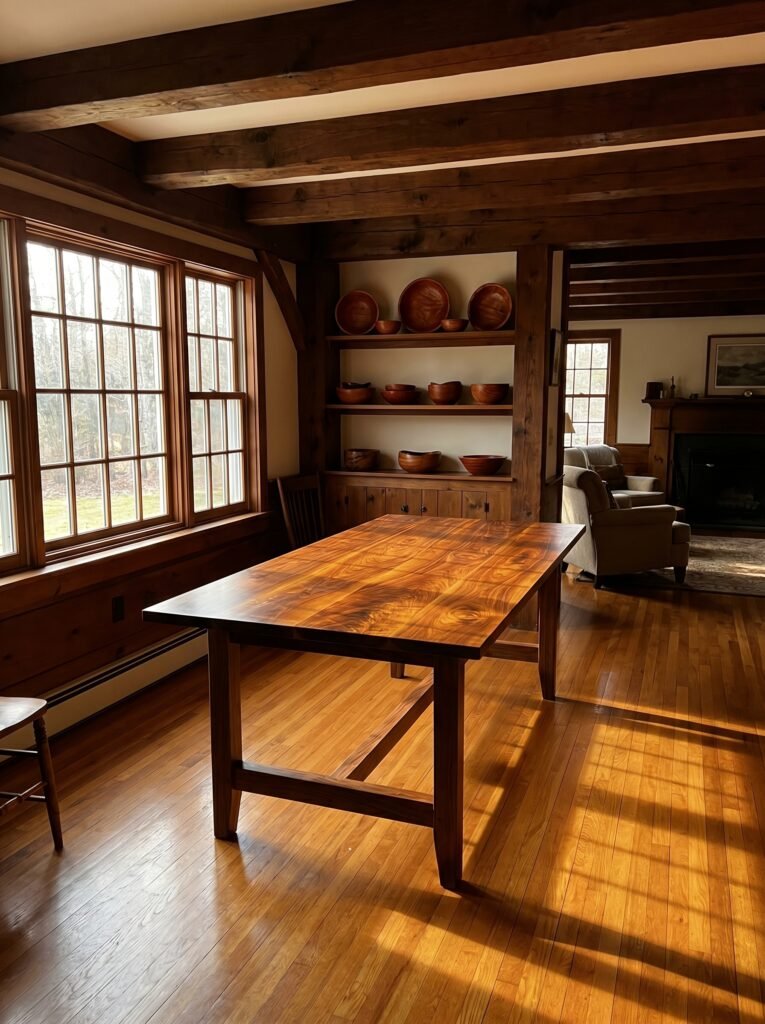
Walk into any room that makes you feel immediately at ease, and there’s a very good chance wood is present. It might be exposed ceiling beams, a farmhouse dining table, a collection of wooden bowls on a shelf, or simply a hardwood floor with visible grain. Wood is the great equalizer of interior design — it brings warmth to cold, minimalist spaces and grounds maximalist ones.
The reason wood works so universally is rooted in our evolutionary history. For most of human existence, wood meant shelter, warmth, safety. Our brains still register its presence as a signal of protection and comfort. Interior designers call this “material memory,” and it’s a powerful tool.
When choosing wood tones for a warm interior, lean toward medium to dark finishes with golden or reddish undertones — walnut, oak with an amber stain, cherry, and reclaimed pine all work beautifully. Avoid very white-washed or grey-washed woods, which pull a room toward cool, Scandinavian minimalism rather than warmth. And don’t worry about mixing wood tones — a room with varied wood elements feels curated and natural, much like a forest.
“Wood doesn’t decorate a room. It grounds it — the way roots ground a tree.”
6. The Art of Layered Lighting: Creating Atmosphere After Sunset
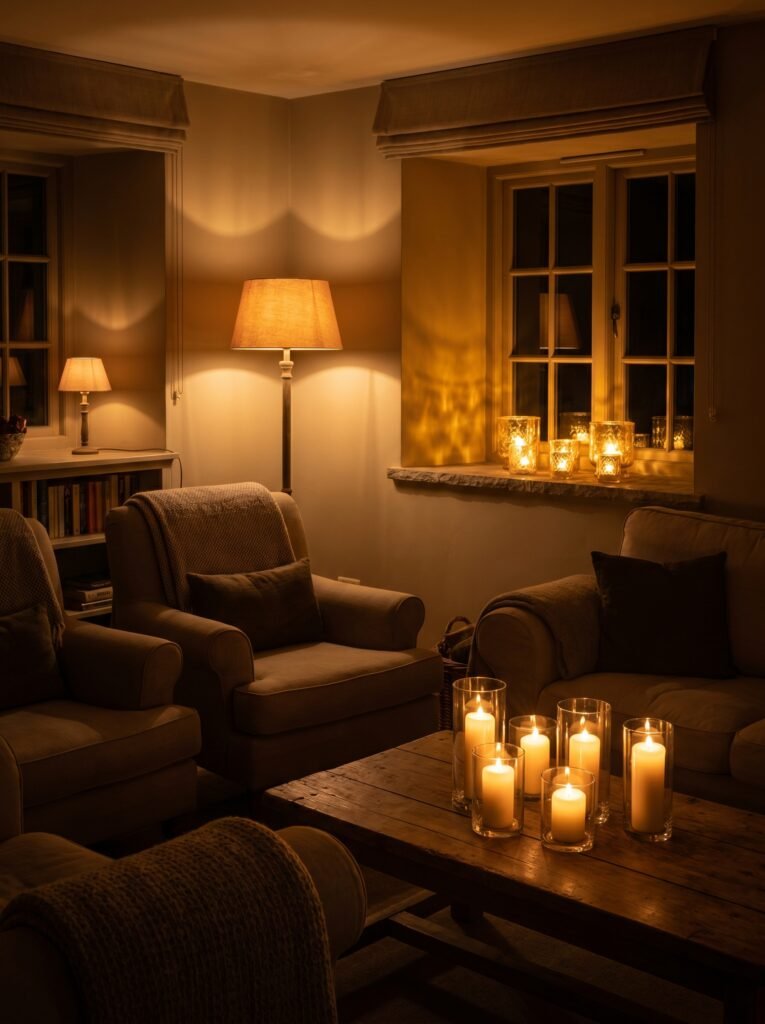
Daylight transforms any room, but the true test of a warm interior is what happens after dark. This is where lighting design separates genuinely cozy homes from simply decorated ones. The goal is to create an environment that glows from within — soft, layered, and alive.
The approach most people take — one ceiling light and perhaps a floor lamp — creates flat, institutional light that washes warmth out of even the most beautifully decorated room. The approach that works is deliberately imperfect: multiple small light sources at varying heights, creating pools of light and shadow that make a room feel intimate and dimensional.
Candles deserve a special mention here. Nothing in the modern design world replicates the warmth of actual flame. The flicker, the softness, the faint scent — these elements engage multiple senses simultaneously in a way that LED lighting simply cannot. Even placing a few pillar candles on a coffee table or a cluster of votives on a windowsill can completely transform the emotional temperature of a room in the evening hours.
7. Furniture Arrangement That Draws People In (Not Around the Walls)
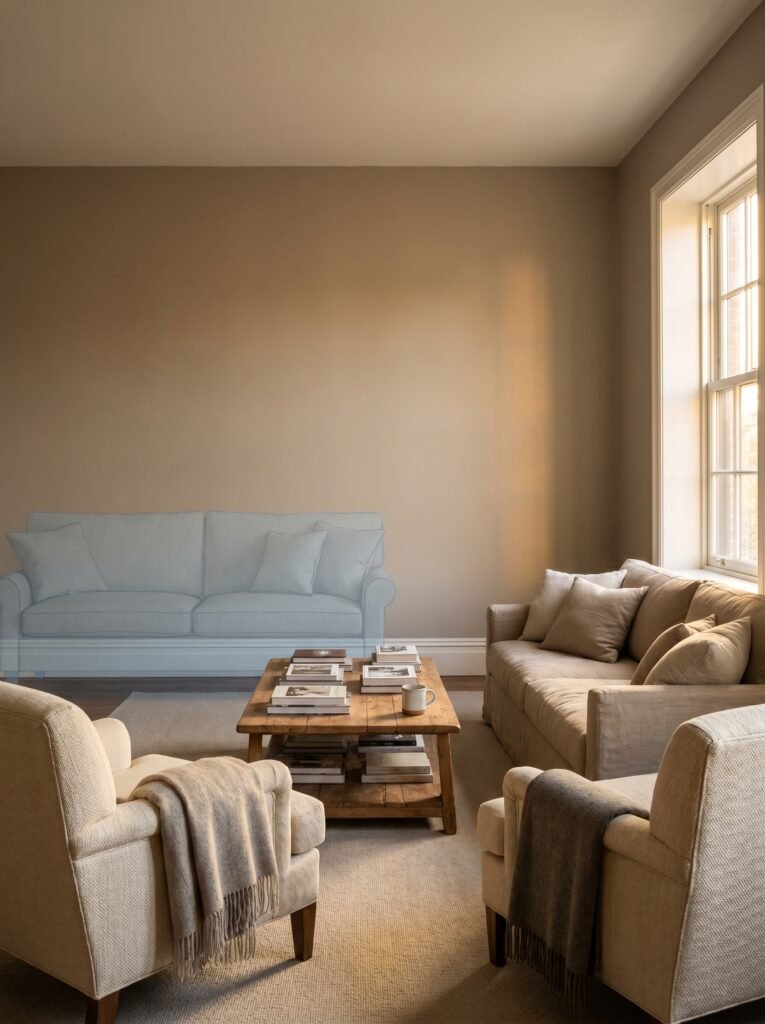
One of the most overlooked contributors to a warm interior is the simple matter of how furniture is arranged. The instinct in many homes — especially smaller ones — is to push furniture against the walls to maximize the sense of space. The counterintuitive truth is that this arrangement actually makes rooms feel colder and less welcoming.
Warm interiors pull furniture inward, creating intimate groupings that encourage conversation and connection. A sofa and two armchairs arranged around a central coffee table feels like an invitation. The same pieces pushed to four separate walls feel like a waiting room.
The principle is sometimes called “conversation distance” — the idea that furniture should be close enough that people can speak comfortably without raising their voices. Typically, this means no more than eight feet between facing seats. When furniture is within this range, a room naturally begins to feel warmer, more human in scale.
8. Plants, Earth, and the Living Elements That Breathe Life Into a Room
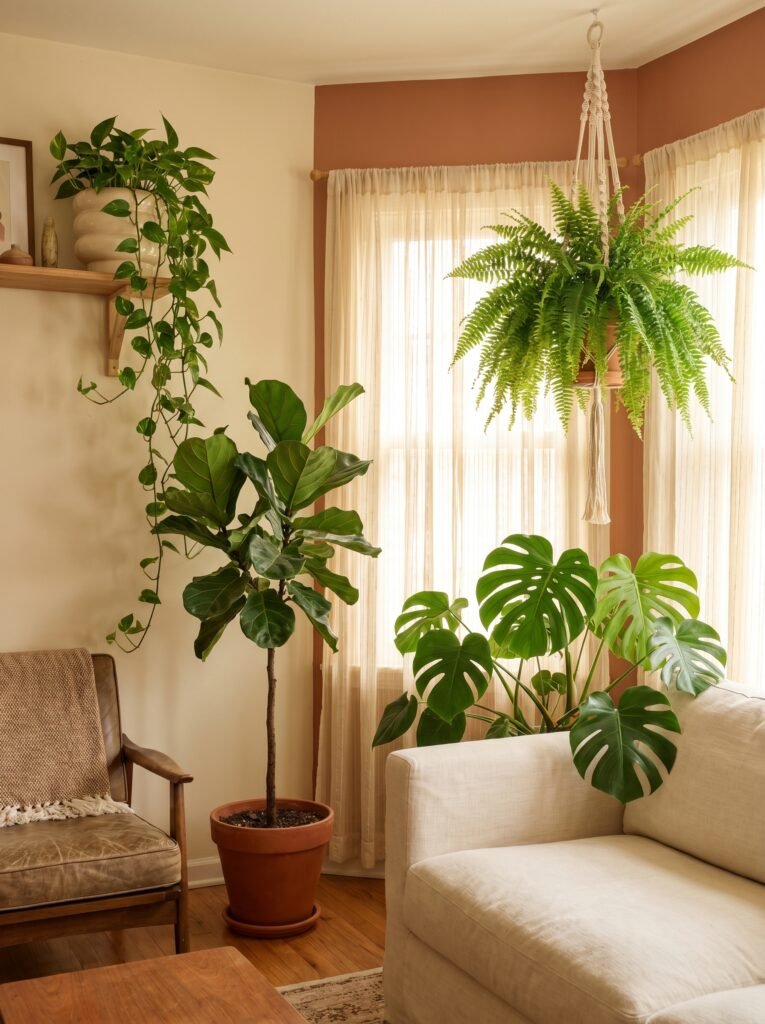
A warm interior is never entirely still. There’s something in it that breathes — and often, that something is green. Plants bring a quality to interior spaces that no manufactured element can replicate: genuine, living, oxygen-producing warmth.
Beyond aesthetics, research consistently supports what we intuitively feel. Studies from the Journal of Physiological Anthropology have found that interaction with indoor plants reduces physiological and psychological stress, promoting feelings of comfort and calm. In design terms, this translates directly to warmth — the perceived temperature of a room rises when living elements are present.
For warm interiors specifically, choose plants with lush, rounded foliage: pothos, fiddle leaf figs, monstera, trailing ivy, or a generous Boston fern. Their organic shapes soften the hard angles of furniture and architecture, creating a room that feels more natural and less constructed. Place them at varying heights — on the floor, on shelves, and on surfaces — to echo the layered quality of a natural landscape.
9. The Role of Scent in a Warm Interior (The Sense Designers Forget)
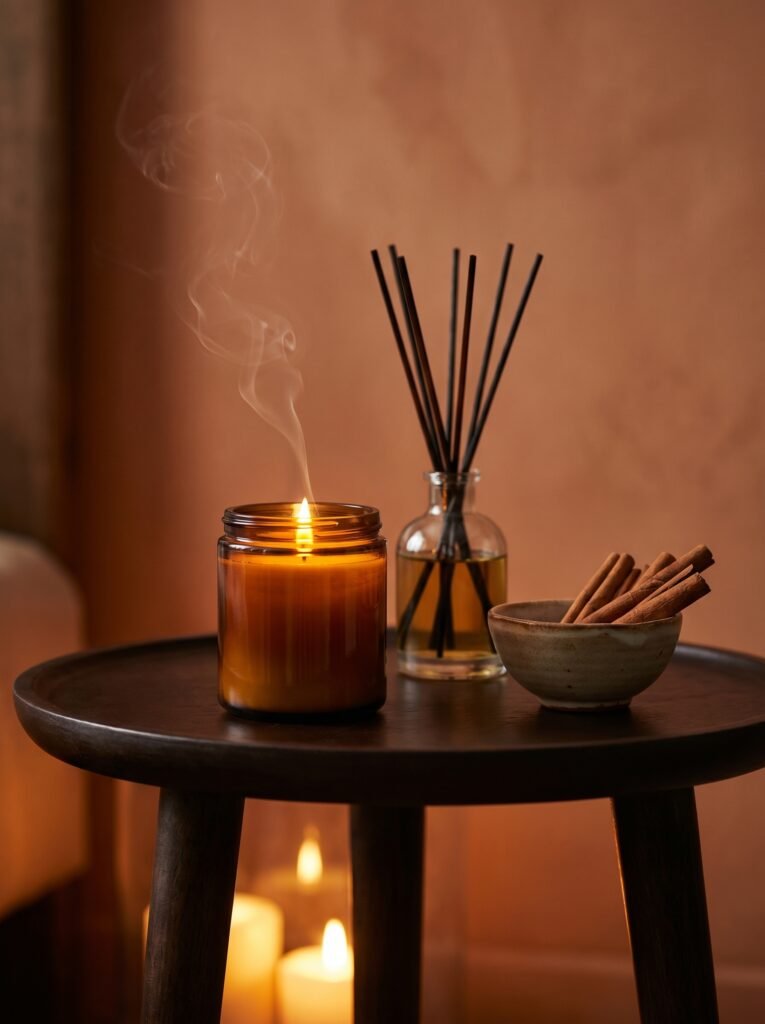
Interior design almost exclusively focuses on the visual — but a warm home engages every sense, including one that’s rarely discussed in design circles: scent. Scent is processed directly by the limbic system, the part of the brain that governs emotion and memory. This means that a room can smell warm before it even looks warm.
The scents most consistently associated with comfort and warmth are vanilla, sandalwood, amber, cinnamon, cedarwood, and beeswax. These are the olfactory equivalents of a warm color palette — rich, grounding, and naturally enveloping. A soy candle in amber and sandalwood, a reed diffuser with cedarwood notes, or even fresh-baked anything from the kitchen can elevate the emotional warmth of a home in a way that no amount of careful decorating can replicate.
Think of scent as the invisible layer of your interior design — the one that guests won’t consciously notice but will absolutely feel.
“You remember how a home smells long after you’ve forgotten how it looks.”
10. Soft Furnishings: The Quiet Heroes of Warmth and Comfort
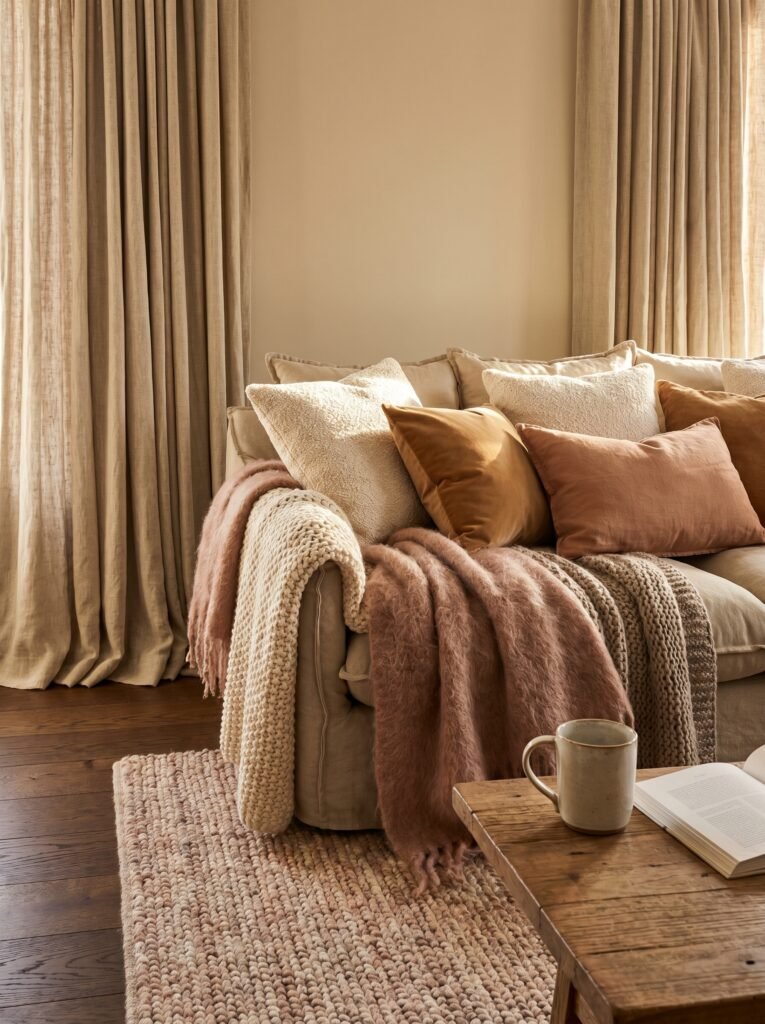
Throws, cushions, rugs, curtains — these are often treated as finishing touches, the last items on the decorating checklist. But in reality, soft furnishings are some of the most powerful tools in creating a warm interior, both aesthetically and literally. They absorb sound, reduce echo, add visual softness, and in the case of rugs and heavy curtains, genuinely insulate a room against cold.
The formula for choosing soft furnishings in a warm interior is guided by three principles: material, weight, and abundance. Natural materials — wool, linen, cotton velvet, boucle, and mohair — always feel richer and more authentic than synthetics. Heavier weights feel more substantial and luxurious. And abundance — more cushions than seems strictly necessary, curtains that puddle slightly on the floor, throws layered over throws — creates that generous, full quality that defines truly cozy spaces.
Resist the minimalist instinct to edit ruthlessly when it comes to soft furnishings in a warm interior. In this context, more is genuinely more.
11. Collecting Meaningful Objects Instead of Decorating With Things
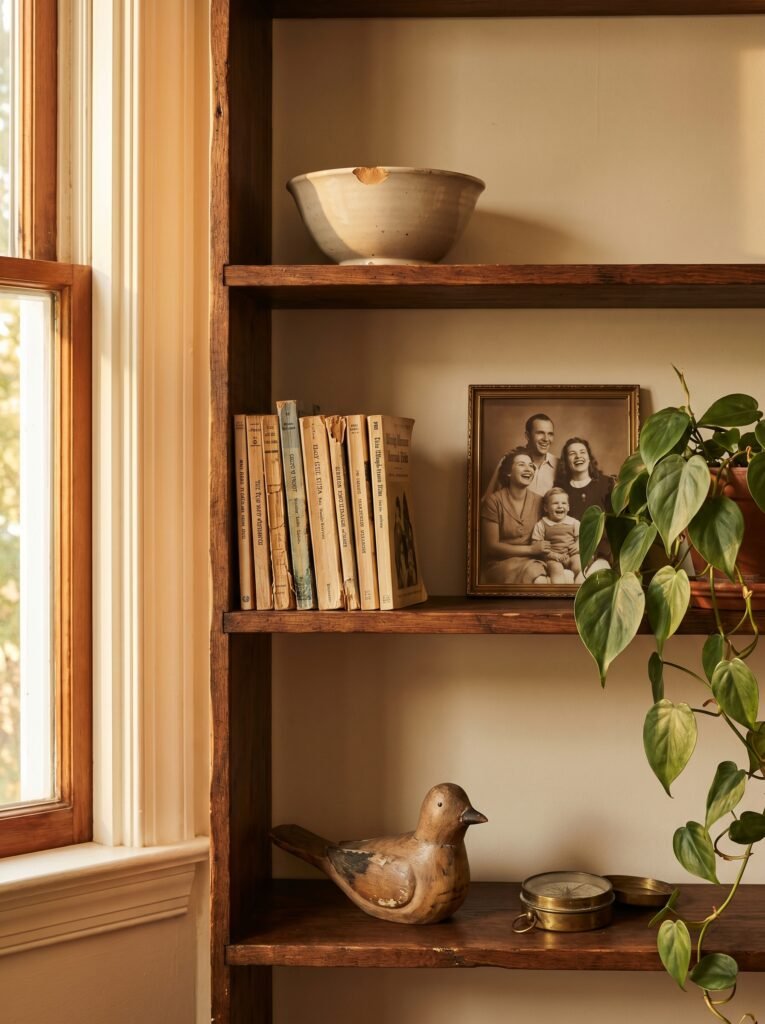
There’s a meaningful difference between a warm interior and a decorated one, and it comes down to the objects in it. Warm rooms are filled with things that have stories — a ceramic bowl bought at a market, a stack of well-loved books, a framed photograph from a particular afternoon, a plant that’s been growing for years.
These objects create what designers call “narrative layers” — the visual equivalent of depth in a photograph. When a room is filled with things that are meaningful, the space communicates personality and history. This is what makes certain homes feel immediately warm and others feel like showrooms, regardless of how beautiful they are.
The practical approach is to buy slowly and intentionally. Instead of filling a room all at once, live with empty shelves and walls for a while. Add pieces gradually, only when something genuinely resonates. The resulting collection will be cohesive not because it matches perfectly, but because it reflects a consistent sensibility — yours.
12. The Final, Most Important Element of a Warm Interior: Imperfection
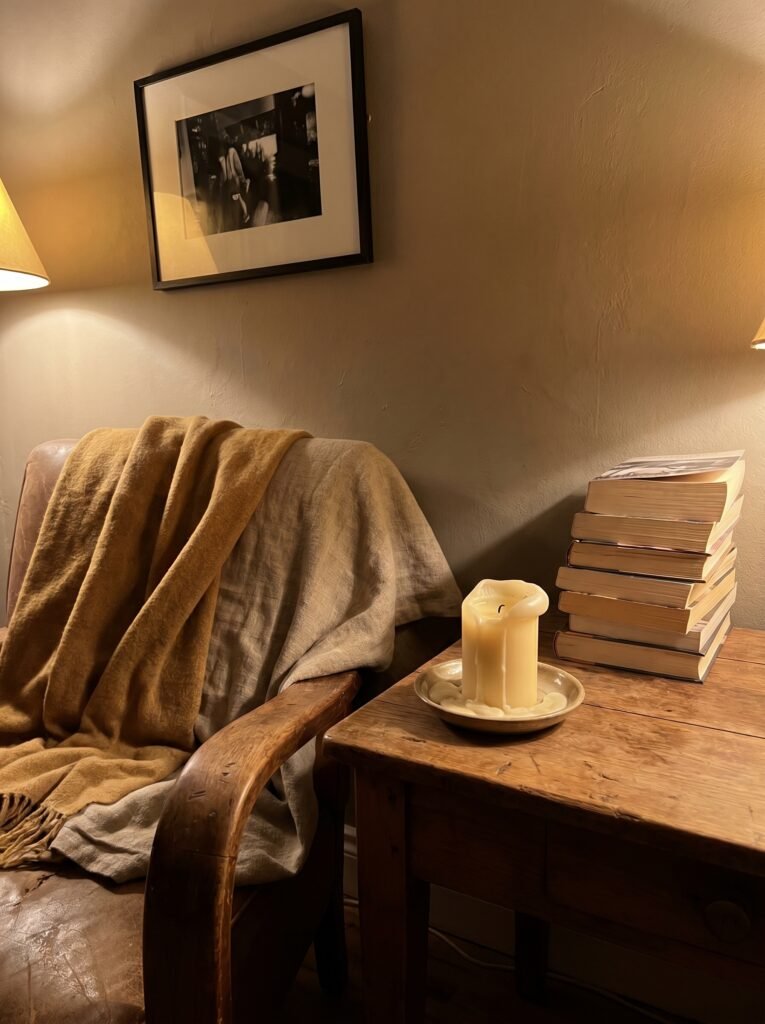
Here is perhaps the most liberating truth about warm interiors: they are never perfect. The perfectly symmetrical, flawlessly staged room exists in catalogs and on Pinterest boards, but it doesn’t feel warm in person. Warmth requires a degree of imperfection — the slightly uneven stack of books, the candle that’s burned down unevenly, the throw that’s been rearranged by someone settling in for an evening.
This is not an excuse for carelessness. It’s a call to stop pursuing the kind of perfection that strips a room of its humanity. Warm interiors show signs of life. They have dog-eared books and slightly tilted picture frames. They have the beautiful patina of furniture that’s been touched and used. They have, in other words, people in them — even when no one is home.
Design with the end goal in mind: not a room that photographs well (though it will), but a room that feels genuinely, unmistakably good to be in. That feeling is warmth. And that is the whole point.
—
🌿 How to Create a Warm Interior on Any Budget
Building a warm interior doesn’t require a complete renovation or a significant budget — it requires thoughtful choices made in the right order. Start with light: change your bulbs to warm-spectrum LEDs (2700K) before spending money on anything else. This single change costs very little and transforms every existing element in the room immediately.
Next, introduce texture through the most affordable soft furnishings you can find — a thrifted throw, a secondhand rug, linen cushion covers. These items have an outsized visual impact relative to their cost. Then, add wood wherever possible: a simple wooden tray, a timber side table, even a set of wooden serving spoons displayed in a ceramic jar in the kitchen count toward the overall warmth of a space.
Layer in plants gradually, starting with low-maintenance varieties like pothos or peace lilies, which thrive in various light conditions and are widely available at very reasonable prices. Finally, edit ruthlessly but keep what’s meaningful. Remove anything that feels cold, clinical, or simply “filler,” and resist the urge to immediately replace it. Often, a room with fewer, better-chosen elements feels warmer than one that’s fully furnished with things that don’t resonate.
—
❓ FAQ
Q: What are the best warm interior paint colors for a small room? A: For small rooms, warm medium tones work beautifully without overwhelming the space — think dusty terracotta, warm taupe, or soft caramel. Avoid very dark saturated colors in very small rooms unless you’re deliberately going for a dramatic, cocoon-like effect. An eggshell finish helps reflect light gently, keeping the room feeling warm without becoming cave-like.
Q: Can a warm interior work in a modern or contemporary home? A: Absolutely, and some of the most beautiful warm interiors exist within very contemporary architecture. The contrast between clean, modern lines and warm, organic materials — wood, linen, leather, ceramics — creates a tension that feels both sophisticated and deeply liveable. The key is to commit to warmth in your materials and lighting while maintaining the clean structure of contemporary design.
Q: How do I make my open-plan living space feel warmer? A: Open-plan spaces can feel cold and disconnected without careful design. The most effective strategies are to use rugs to define separate zones within the open space (each rug creates a visual “room” within the larger area), keep lighting varied and layered rather than relying on one large overhead source, and use consistent warm color tones throughout to unify the space visually. Furniture arrangement is also critical — pull seating into intimate groupings rather than scattering it around the perimeter.
—
💭 Final Thought
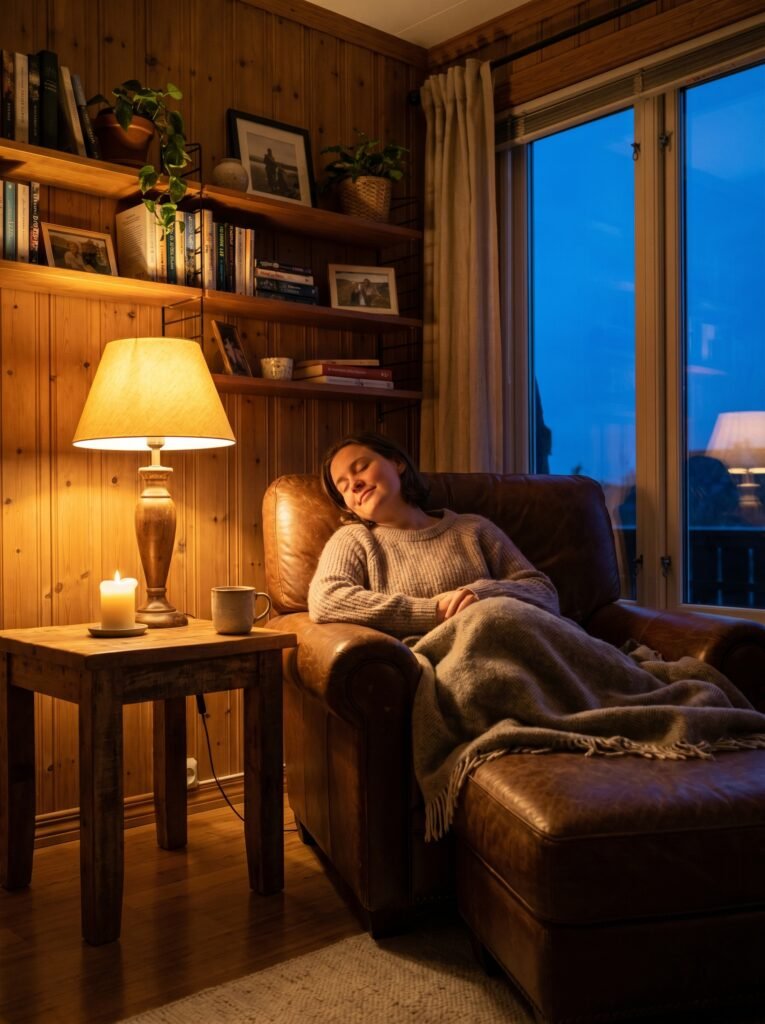
A warm interior is ultimately not about furniture or color or any single design decision. It’s about the commitment to creating a space where people — including you — feel genuinely welcome. It’s about understanding that a home’s greatest purpose is not to impress, but to restore. Every choice you make in building a warm interior is a small act of care: for yourself, for the people you love, and for the ordinary extraordinary moments that happen within your four walls.
So here’s the question worth sitting with: when someone walks into your home and exhales — when they sink into a chair and feel something in them relax — what will your room have said to them before you’ve even spoken a word?