
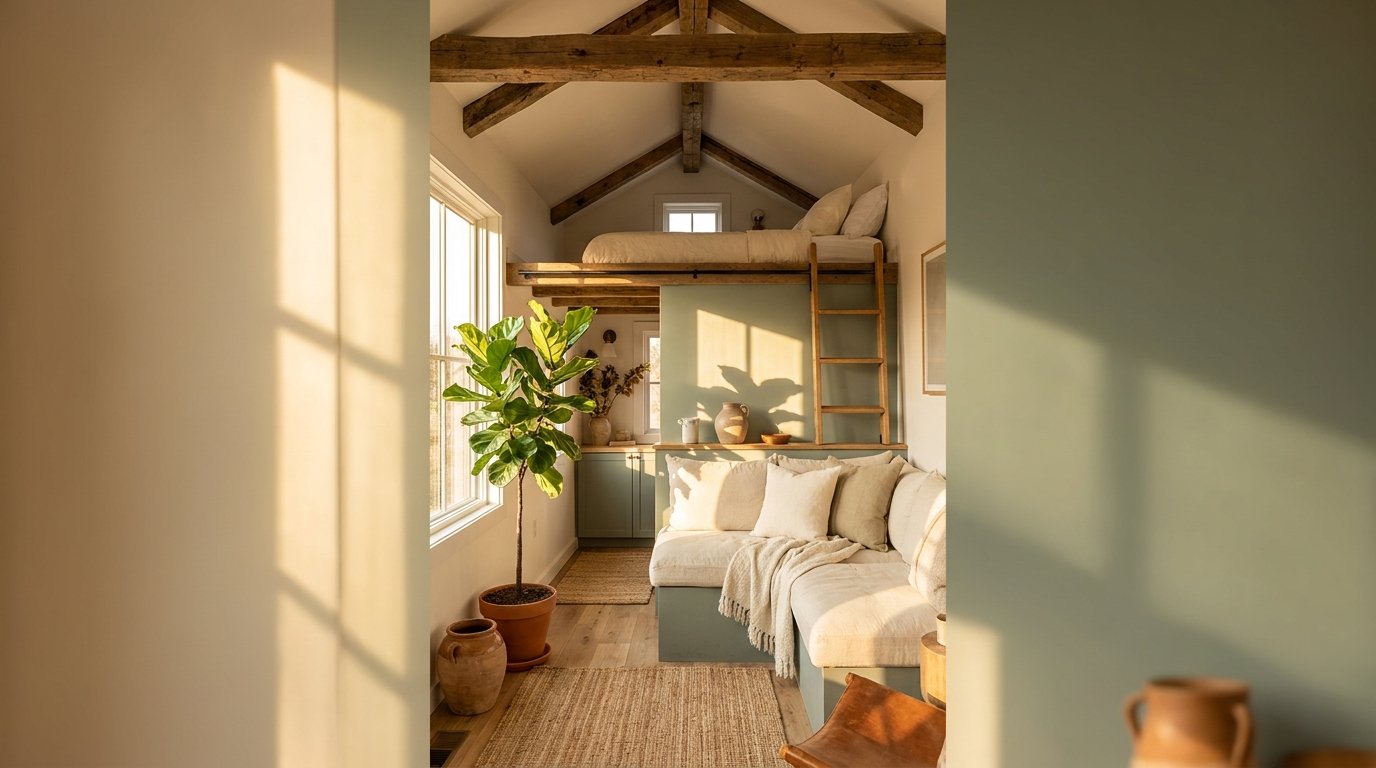
The Tiny Home Interior That Changed How I Think About Living Big
There’s something quietly revolutionary about stepping inside a tiny home for the first time — the way it forces you to look closer, breathe slower, and suddenly understand that less can feel like so much more. Whether you’re dreaming of downsizing, renting a micro-loft, or simply trying to make a small space feel like a sanctuary, this guide is your starting point.
—
1. Why Tiny Home Interiors Are Captivating Millions Right Now
It didn’t happen overnight. The tiny home movement has been building quietly for years, gaining momentum through a collective cultural exhale — a shared desire to step back from the overwhelming pursuit of more. More square footage, more furniture, more rooms that never get used. And somewhere along the way, millions of people looked around at their large, expensive homes and asked a simple, radical question: What if I actually needed less?
Today, tiny home interiors are one of the most saved categories on Pinterest — and for good reason. There’s an intimacy to them, a thoughtfulness that you rarely find in sprawling floor plans. Every single design choice in a tiny home carries weight. A wrong furniture pick throws everything off. A smart storage solution can feel like discovering hidden treasure. That tension between limitation and creativity is exactly what makes tiny home design so compelling to watch — and so deeply satisfying to get right.
“A tiny home doesn’t shrink your life — it focuses it.”
The appeal isn’t just aesthetic. It’s emotional. Tiny homes represent freedom — from debt, from clutter, from the exhausting performance of maintaining a house that’s bigger than your actual life. They represent intention. And that, perhaps more than any shiplap wall or lofted bed, is what people are really saving when they tap that Pinterest heart.
2. The Non-Negotiable First Step: Understanding Your Layout Before You Design
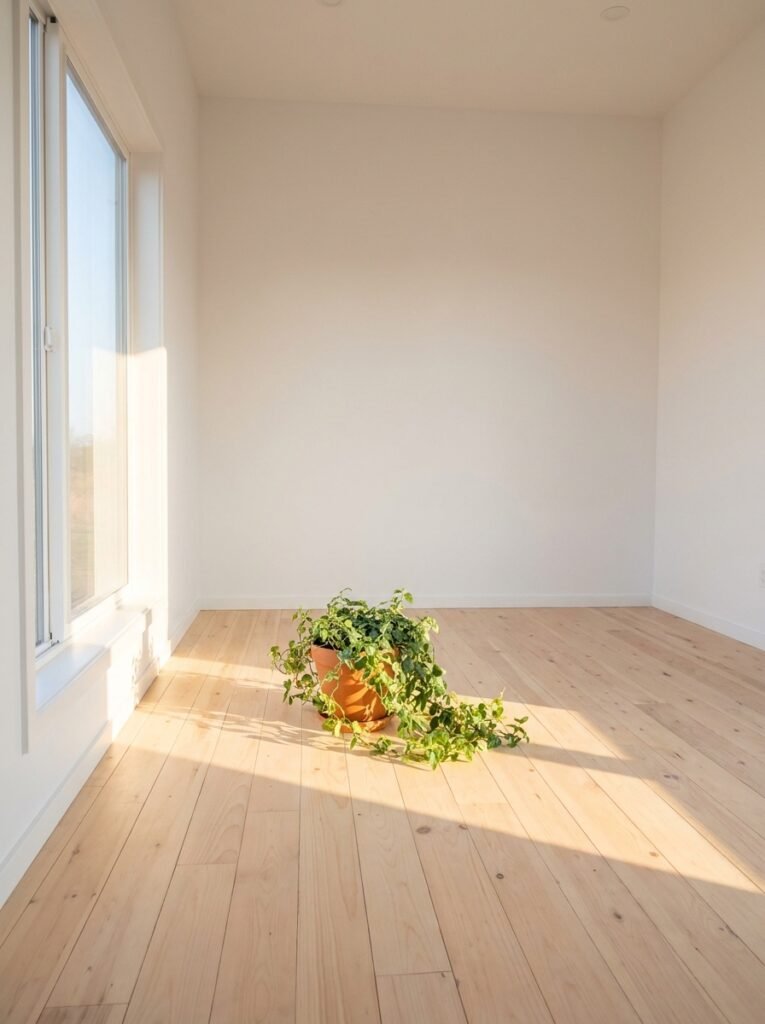
Imagine you’ve just moved into a 300-square-foot space. You’re excited, maybe a little overwhelmed, and your first instinct is to start shopping — a rug here, a shelf there, maybe that gorgeous reclaimed wood coffee table you’ve been pinning for months. Stop. Breathe. The biggest mistake tiny home dwellers make is decorating before they truly understand how they move through their space.
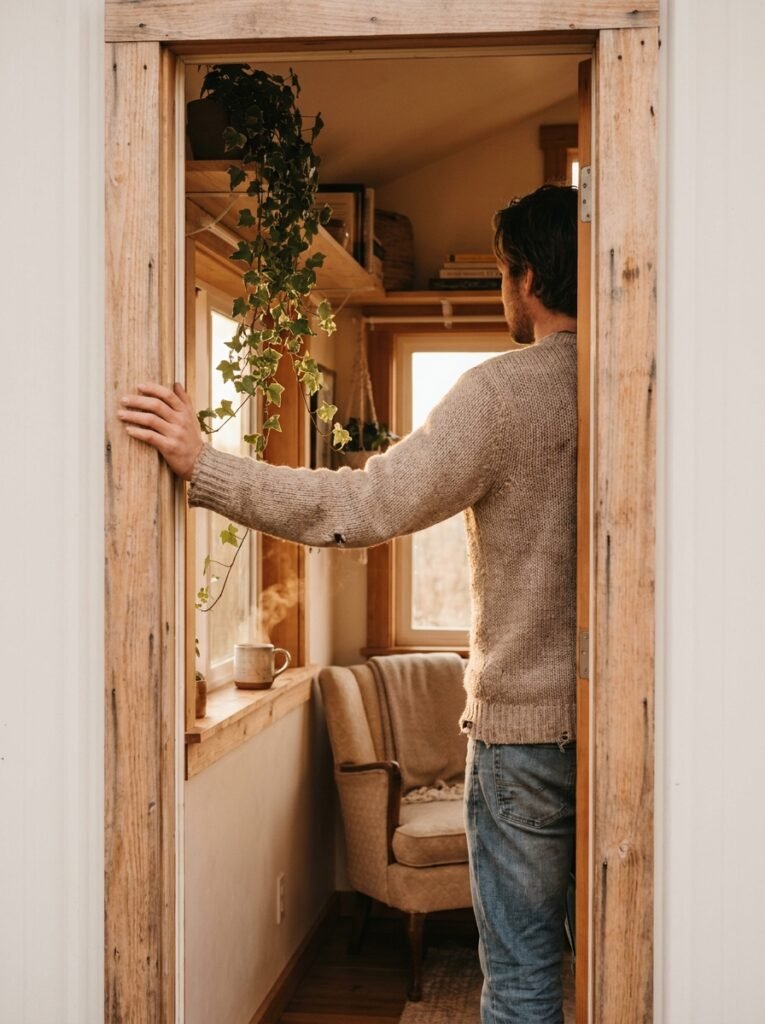
Spend at least one full week living in your tiny home before purchasing a single piece of furniture. Walk through it at different times of day. Notice where natural light falls in the morning — that spot deserves something beautiful, maybe a small reading chair or a trailing plant. Notice where you naturally drop your keys, your bag, your shoes — those friction points need smart storage solutions before they become clutter traps. Notice how you feel in different corners of the space. Cramped? Cozy? Open?
This observational phase is not wasted time. It is, in fact, the most important design work you’ll do. The best tiny home interiors are built on an intimate understanding of how people actually live — not how they imagine they’ll live.
3. The Color Psychology That Makes a Small Room Feel Twice As Large
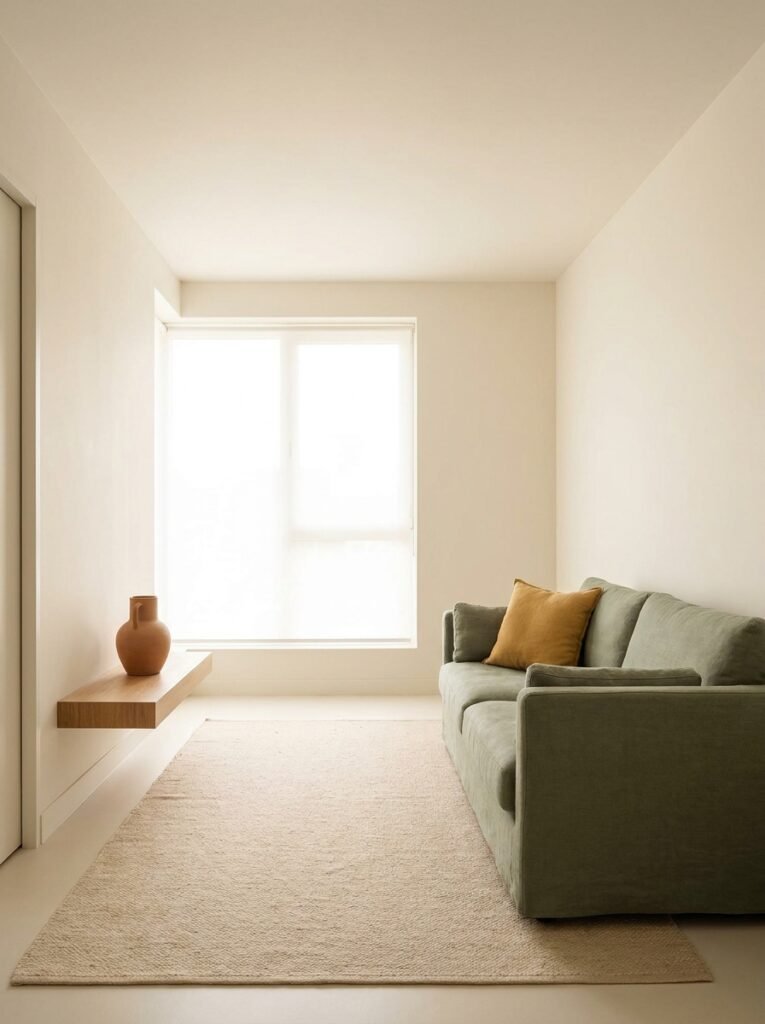
Color is your most powerful and most affordable tool in a tiny home. Used wisely, it can visually push walls outward, lift ceilings skyward, and create a sense of airy calm that makes you forget you’re working with limited square footage. Used carelessly, it can make even the most cleverly designed tiny space feel like a shoebox.
Light, warm neutrals — think soft white, warm linen, dusty sage, or pale sand — reflect natural light and create a seamless visual flow that makes spaces feel continuous rather than choppy. The key word here is warm. Cool grays and stark whites can feel clinical and harsh in small spaces, especially when there’s limited natural light. Warm tones invite you in rather than pushing you away.
For those who find all-neutral interiors a little too sterile, consider the 60-30-10 rule: 60% of your space in a dominant neutral, 30% in a secondary shade (a soft terracotta, a muted blue-green), and 10% in an accent that surprises — a deep navy throw, a terracotta vase, a single mustard cushion. This creates visual interest without the chaos that overwhelms small spaces.
One advanced move: paint your ceiling the same color as your walls. Counterintuitively, this removes the visual boundary between wall and ceiling, making rooms feel taller and more enveloping — a trick interior designers use in boutique hotels to create intimate grandeur.
4. Furniture That Does Double Duty (or It Doesn’t Belong)
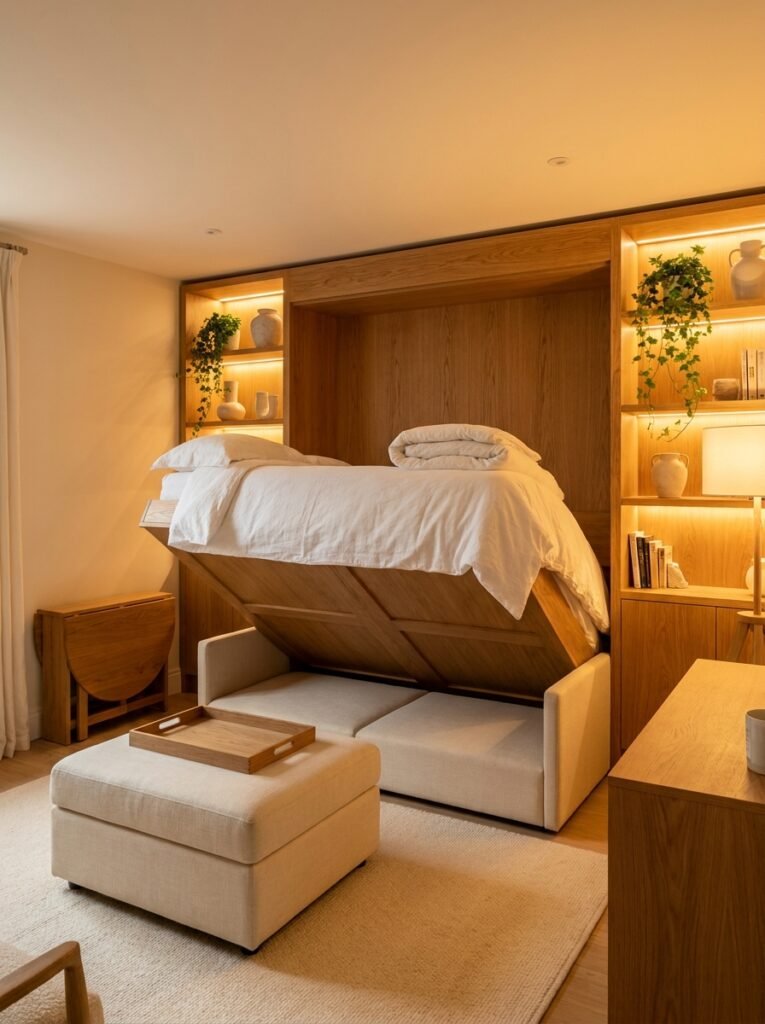
In a tiny home, every piece of furniture must justify its existence — and then some. Single-purpose pieces are a luxury you simply don’t have space to afford. This isn’t a limitation; it’s an invitation to discover the extraordinary world of multifunctional design, which has never been more beautiful or more accessible than it is right now.
A Murphy bed that folds down from a gorgeous wooden wall unit transforms your bedroom into a living room in sixty seconds. A storage ottoman serves as a coffee table, extra seating, and a blanket drawer simultaneously. A dining table with a drop-leaf design seats two on a Tuesday night and eight on Thanksgiving. Nesting side tables tuck away when not needed and expand when guests arrive.
The rule of thumb that experienced tiny home designers swear by is this: if a piece of furniture can’t serve at least two distinct functions, it doesn’t earn floor space. This sounds strict — and it is — but it’s also what keeps tiny home interiors looking curated and intentional rather than cramped and chaotic. The furniture that remains after this filter is genuinely good furniture. Purposeful. Beautiful. Earned.
5. The Vertical Dimension Most People Completely Ignore
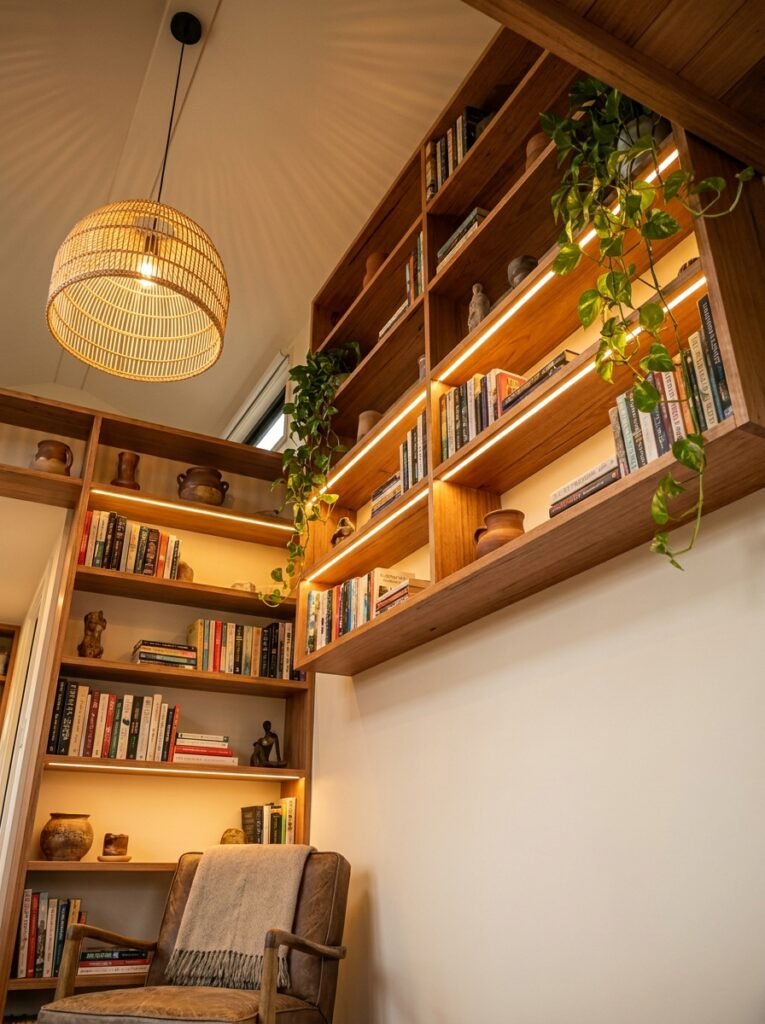
Here’s the thing about tiny homes that most first-timers overlook entirely: they’re thinking about their space in two dimensions when they should be thinking in three. The floor plan gets all the attention. The walls and ceiling? Almost entirely ignored. And that is where enormous, untapped potential lives.
Floor-to-ceiling shelving is your greatest ally. A full-height bookshelf draws the eye upward and provides extraordinary storage without consuming precious floor space. Floating shelves at varying heights create visual rhythm and display space for books, plants, ceramics, and the small objects that make a house feel like a home. Hanging pendant lights drop from the ceiling to fill dead vertical space with warmth and personality — a design move that adds drama without adding footprint.
“Look up. Your tiny home has more room than you think — you just haven’t met it yet.”
Pot racks, hanging herb gardens, wall-mounted bike storage, pegboards in kitchens — all of these solutions move storage off the floor and onto surfaces that were previously doing nothing. In a tiny home, an empty wall is not minimalist. It’s wasted.
6. Natural Light Is Your Most Valuable Interior Design Asset
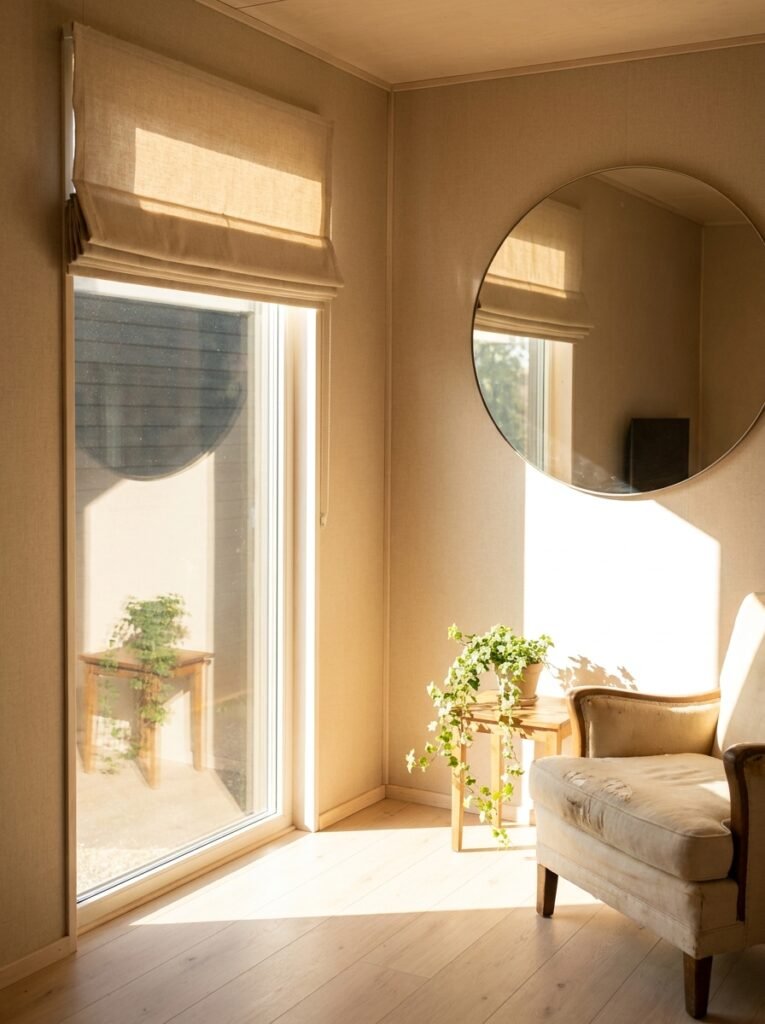
Nothing transforms a tiny home interior more dramatically than natural light — and nothing destroys the feeling of space more completely than blocking it. This seems obvious, but the number of small homes with heavy drapes, furniture placed in front of windows, and light-absorbing dark walls suggests that it bears repeating with some urgency.
In a tiny home, natural light is sacred. Protect it. Amplify it. Design around it. Choose window treatments that can be pulled completely clear of the glass — Roman shades or curtain panels mounted outside the window frame and pushed fully to the sides when open. Place mirrors strategically opposite windows to bounce light deeper into the room, creating the illusion of a second window and effectively doubling the brightness of your space.
If your tiny home doesn’t receive much natural light — a common reality in basement units, north-facing spaces, or heavily wooded lots — then your artificial lighting game needs to be exceptional. Layer three types of light: ambient (overhead or recessed), task (directed lighting for work and cooking), and accent (small lamps, candles, LED strip lights under shelves). This layering creates depth and warmth that flat overhead lighting can never achieve.
7. The Kitchen Design Philosophy That Makes Cooking in a Tiny Space an Absolute Joy
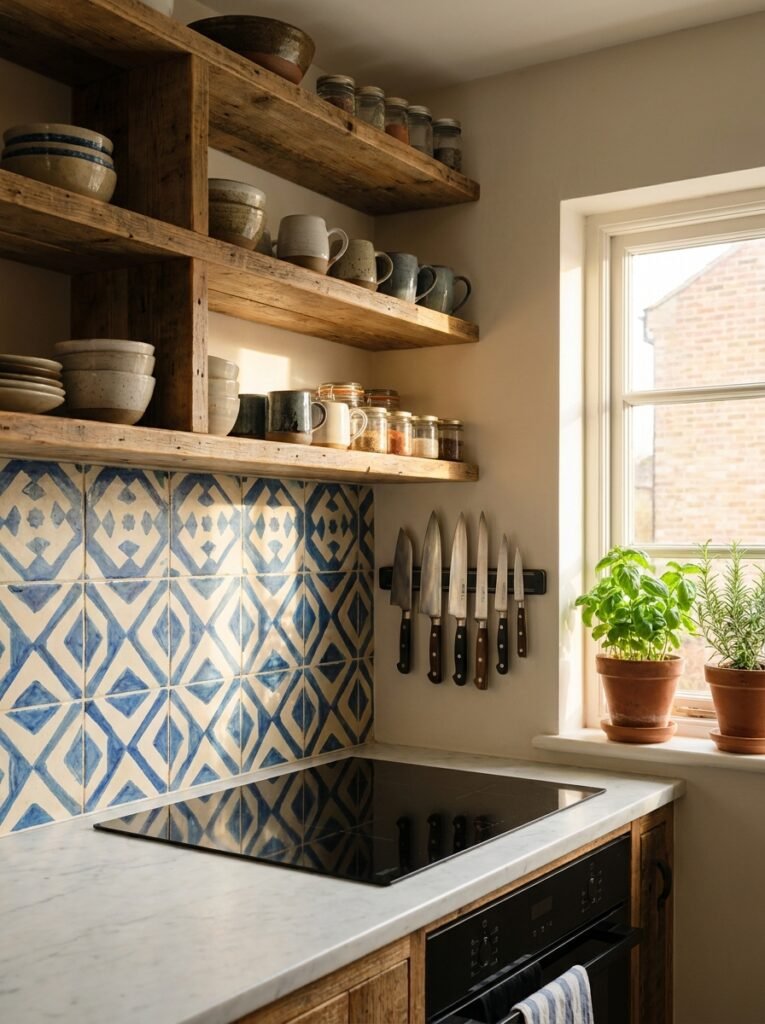
A tiny kitchen is not a compromised kitchen — it is a focused one. Some of the most extraordinary meals in the world are produced in galley kitchens barely wider than a hallway, by cooks who’ve learned that efficiency is not the enemy of joy. In fact, when everything is within arm’s reach and there’s no wasted space between steps, cooking can feel more fluid and intuitive than it does in a sprawling kitchen where you’re constantly walking laps.
The key to a tiny kitchen that actually functions beautifully comes down to ruthless curation and smart vertical storage. A magnetic knife strip replaces a bulky knife block. Open shelving above the counter keeps daily-use items accessible and eliminates the need to open and close cabinet doors a dozen times while cooking. A compact induction cooktop provides professional-level heat control in a fraction of the space of a traditional range.
But the design element that transforms a tiny kitchen from functional to beautiful is often the backsplash. A bold, patterned tile behind the stove or sink draws the eye and adds personality without consuming a single inch of space. It becomes the artwork of the kitchen — the moment that makes someone stop scrolling through Pinterest and reach for the save button.
8. Creating Zones in an Open-Plan Tiny Home (Without Walls)
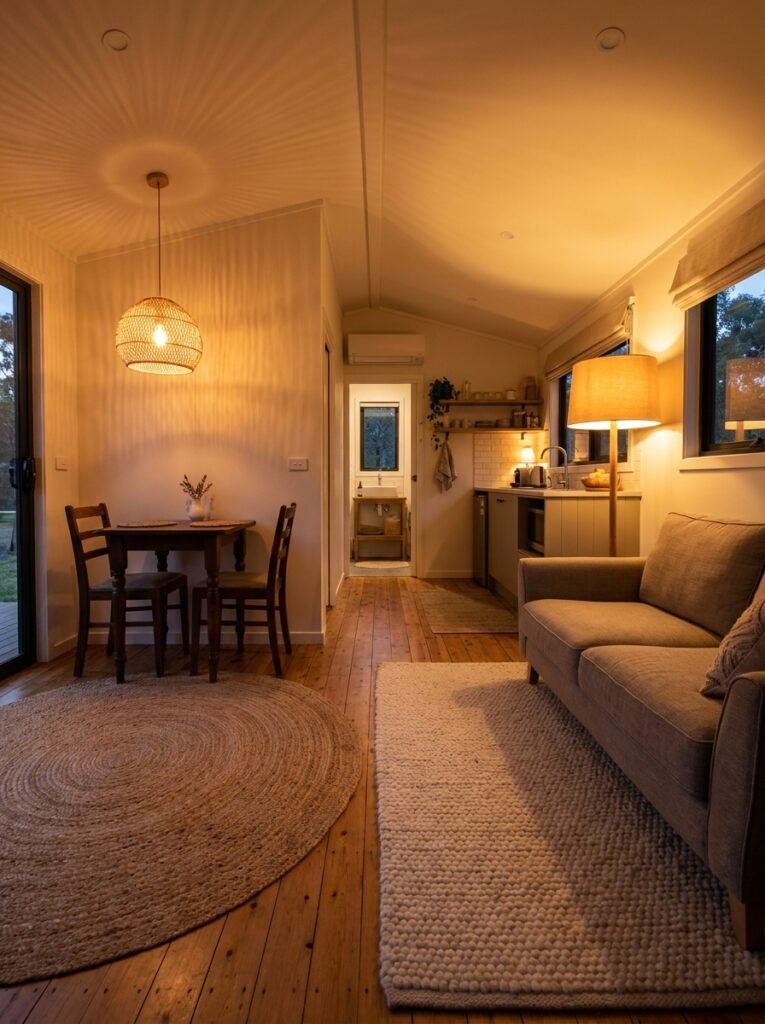
One of the most common challenges in tiny home living is that everything happens in the same room. You cook, eat, work, relax, and sometimes sleep — all within a single open-plan space. Without thoughtful zoning, this creates a low-grade sense of chaos that’s hard to name but impossible to ignore. Everything bleeds into everything else, and the space never quite lets you mentally shift gears.
The solution isn’t walls — it’s cues. Rugs are the most powerful zoning tool available to a tiny home decorator. A rug beneath the dining table creates a dining zone. A different rug in the sitting area creates a living zone. Suddenly, one room reads as two distinct spaces, and your brain responds accordingly — relaxing more fully in the sitting area because it’s been visually separated from the work desk two feet away.
Other effective zoning tools include changes in ceiling height (a lowered beam or canopy over the bed creates an intimate sleeping zone), lighting changes (a warm pendant over the dining table versus softer lamps in the living area), and furniture orientation (a sofa with its back to the kitchen implicitly says “this side is the living room”). These signals are subtle, but the human brain reads them fluently.
9. The Role of Plants in a Tiny Home Interior
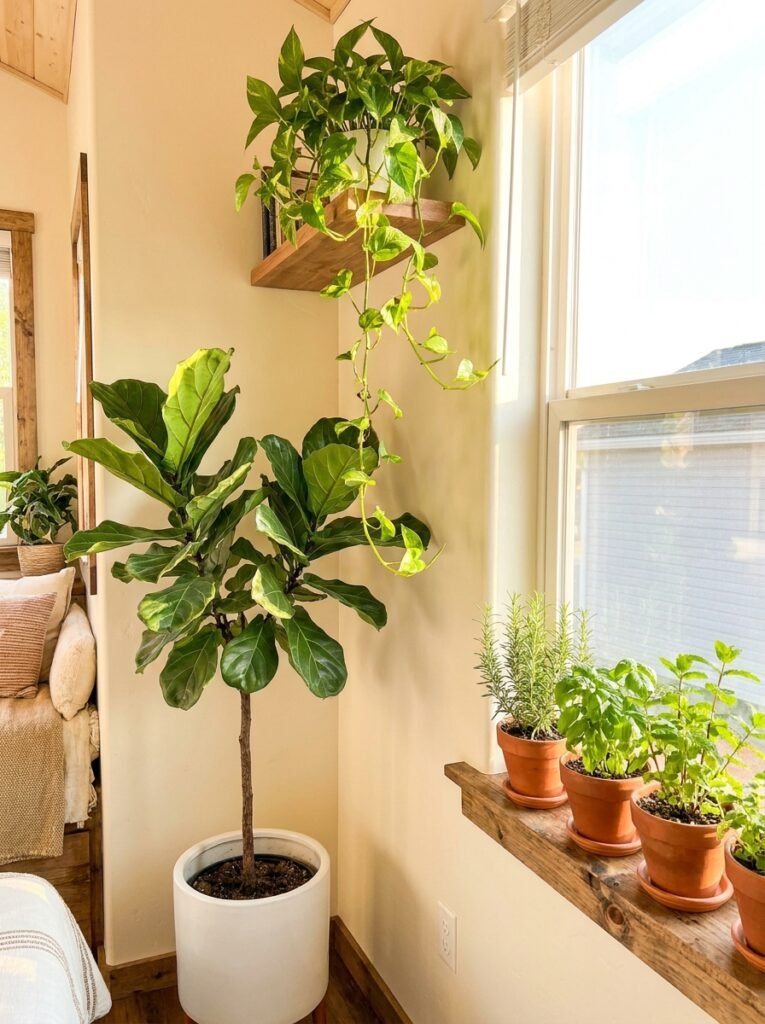
There is a moment that happens in almost every beautifully designed tiny home — a moment where you stop noticing the square footage and simply feel good. More often than not, there’s a plant involved. Plants do something in an interior that no piece of furniture or coat of paint can replicate: they breathe life into a space, quite literally. They connect a carefully designed interior to the living, growing world outside.
“In a tiny home, one well-placed plant does more than a dozen decorative objects ever could.”
The key in a tiny home is choosing plants that earn their space aesthetically and functionally. Trailing pothos on a high shelf cascades downward, adding movement and lushness without consuming floor space. A single large-leafed fiddle fig in a corner creates a dramatic focal point that grounds the room. A row of small herb pots on a kitchen windowsill is beautiful, practical, and deeply satisfying in a way that’s hard to explain until you pinch a sprig of fresh rosemary while cooking on a cold Tuesday evening.
10. The Psychological Power of Clutter-Free Surfaces
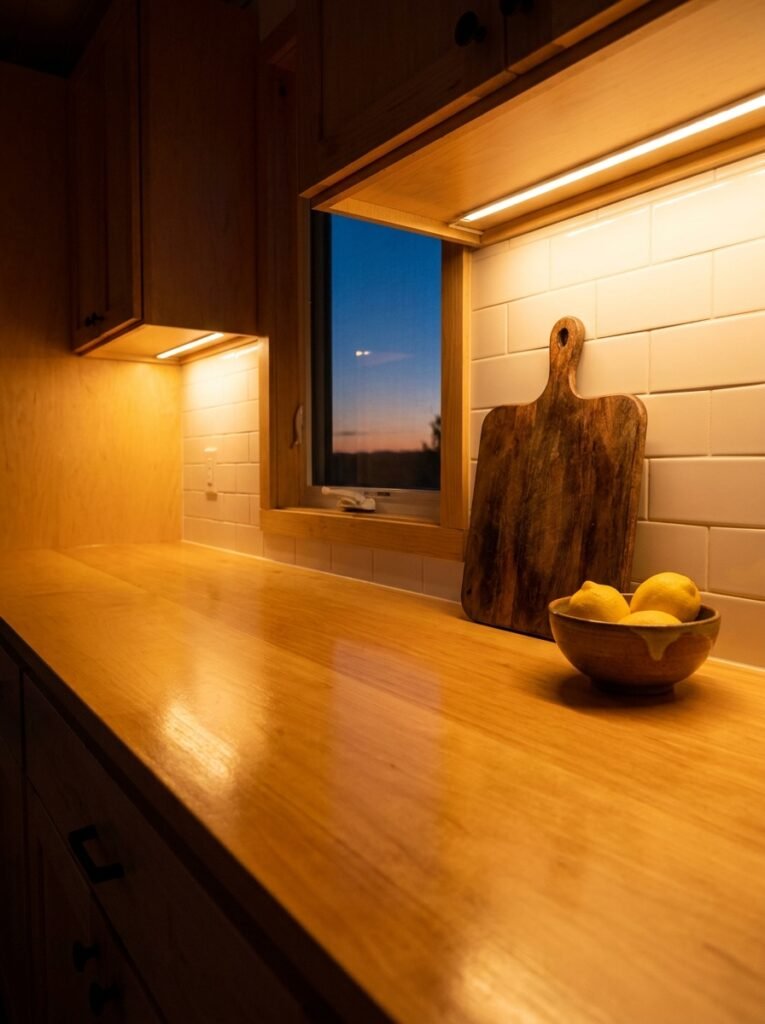
This is perhaps the most confronting truth of tiny home living: clutter in a small space doesn’t just look bad — it actively affects your mental health. Research in environmental psychology consistently shows that visual clutter increases cortisol levels, reduces the ability to focus, and creates a persistent background sense of unease. In a large home, clutter can be contained to a room. In a tiny home, there’s nowhere for it to hide.
The daily habit that tiny home veterans cite most often is the five-minute surface reset — every evening, before sitting down for the night, clearing every horizontal surface back to its curated state. This isn’t obsessive tidiness; it’s an act of self-care. It’s the difference between waking up in a space that feels calm and waking up in one that feels immediately defeating.
Every item that lives on a surface should be either actively beautiful or actively functional — ideally both. A wooden cutting board leaning against the kitchen backsplash is beautiful and functional. A stack of unopened mail is neither. The discipline of deciding, for every object, whether it earns surface space sounds exhausting until it becomes habit — and then it becomes one of the most peaceful aspects of tiny home living.
11. Budget-Friendly Ways to Make Your Tiny Home Feel Expensive
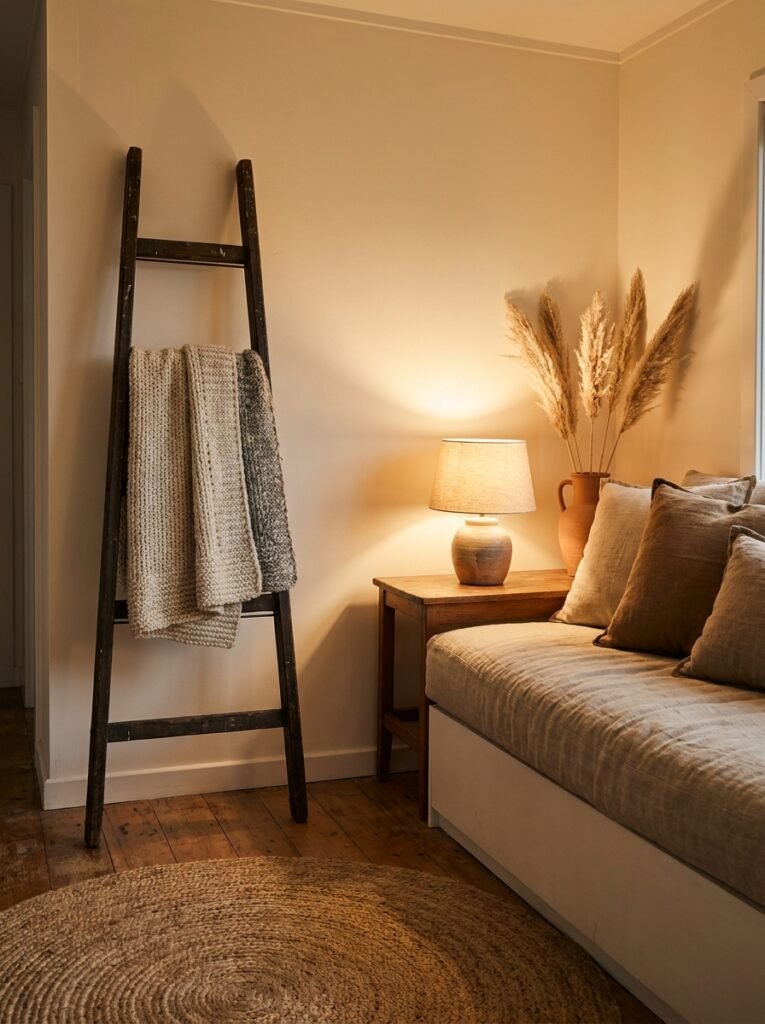
A tiny home with a luxury feel does not require a luxury budget — it requires luxury thinking. The difference between a tiny home that looks curated and one that looks cheap almost always comes down to a handful of strategic decisions, not the total amount spent.
Invest in one or two genuinely high-quality anchor pieces — a beautiful linen duvet, a real ceramic lamp, a solid wood cutting board — and surround them with well-chosen budget finds. The eye anchors on the quality and assumes the rest. This is the same principle that expensive interior designers use, just applied more intentionally.
Secondhand shopping is not a compromise in tiny home design — it is a strategy. A vintage wooden ladder leaned against a wall for blanket storage costs almost nothing at a thrift store and adds more character than anything you’ll find at a big-box retailer. Antique markets, estate sales, Facebook Marketplace, and even curb finds have furnished some of the most gorgeous tiny home interiors on Pinterest.
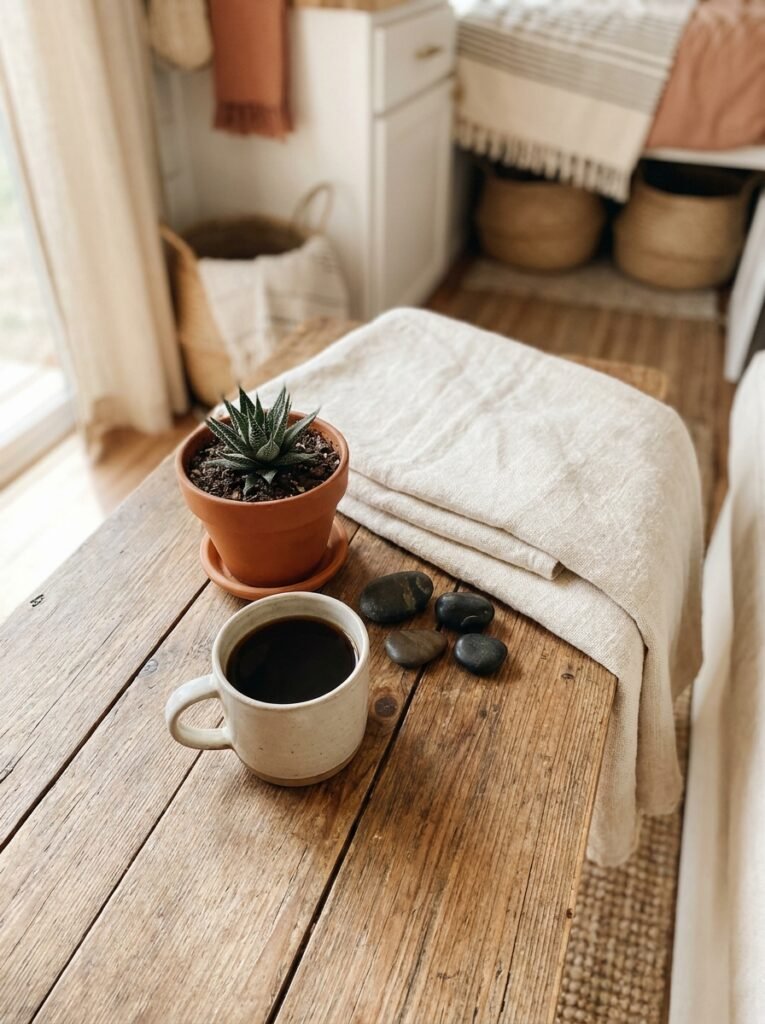
Texture is your secret budget weapon. When you layer textures — a wool throw, a jute rug, a linen cushion, a ceramic vase — your space reads as rich and considered, regardless of what each individual piece actually cost.
12. The Tiny Home Mindset Shift That Makes Everything Easier
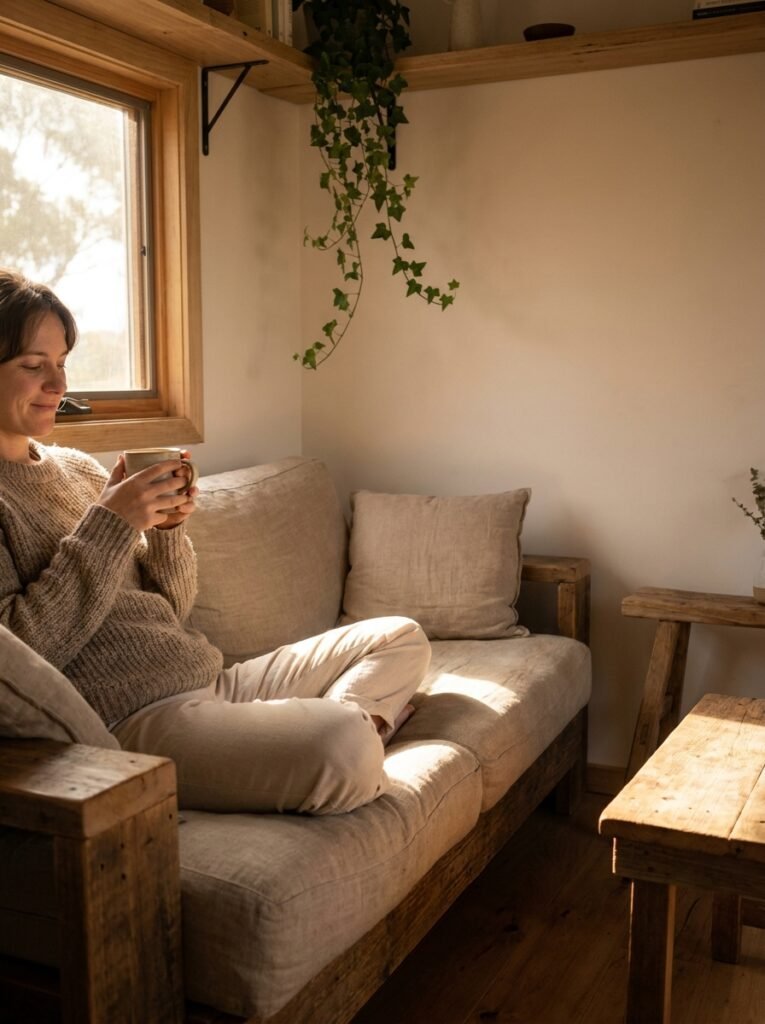
Here, finally, is the truth that underpins every tip in this guide: living well in a tiny home is not primarily a design challenge. It’s a mindset challenge. The people who thrive in small spaces are not the ones who’ve found the cleverest storage solutions — though those help enormously. They’re the ones who’ve genuinely made peace with having less.
That peace doesn’t come automatically. It’s cultivated, often slowly, through the daily practice of choosing intention over accumulation. It comes from standing in your tiny living room on a quiet Saturday morning, with a cup of coffee in your hands and light coming through the window just so, and realizing that this — precisely this — is enough. More than enough.
The tiny home movement is, at its heart, an invitation to redefine what a rich life looks like. Not in square footage. Not in possessions. But in clarity, in warmth, in the quiet confidence of a space that reflects exactly who you are — nothing more, nothing less.
—
🌿 How to Take Care of Your Tiny Home Interior
Maintaining a tiny home interior so it continues to feel curated and calm is far simpler than maintaining a large one — but it does require consistency. Here’s how experienced tiny home dwellers keep their spaces feeling intentional rather than chaotic.
First, adopt a one-in-one-out policy for every new item that enters your home. A new book means one leaves. A new kitchen gadget means one goes. This single habit prevents the slow accumulation of clutter that is the silent enemy of every small space.
Second, do a seasonal refresh every three to four months — not a renovation, just a reassessment. Move things around, swap out cushion covers, rotate which plants are on display. This keeps the space feeling alive and intentional rather than static.
Third, address maintenance issues immediately. In a large home, a leaky faucet or a squeaky hinge can wait weeks without significantly affecting your experience of the space. In a tiny home, every imperfection is present in your daily life. Fix things quickly, and your space will always feel cared for.
Fourth, keep a dedicated “out” box — a basket or bin where items you no longer need, want, or love can accumulate until it’s full enough to donate. Making letting go a continuous, low-friction process prevents the emotional weight of big decluttering sessions.
Fifth, treat cleaning as ritual rather than chore. In a tiny home, a twenty-minute clean touches every room. Light a candle, put on music you love, and approach it as a weekly act of caring for your space. The difference in how you feel afterward is remarkable.
—
❓ FAQ
Q: What is the ideal square footage for a tiny home interior? A: Tiny homes typically range from 100 to 400 square feet, though the term is used loosely to describe any space under about 600 square feet. The “ideal” size depends entirely on how many people are living in the space and how they live — a solo remote worker and a couple with a toddler will have very different requirements. The sweet spot that most tiny home enthusiasts gravitate toward is between 200 and 350 square feet.
Q: How do I make a tiny home feel cozy rather than cramped? A: The difference between cozy and cramped almost always comes down to intentionality and warmth. Warm lighting, layered textiles (rugs, throws, cushions), plants, and personal objects that carry meaning all contribute to a feeling of coziness. Clutter, on the other hand, tips cozy into cramped almost immediately — so the daily surface reset habit is essential. Cozy is curated warmth; cramped is accumulated chaos.
Q: Can a tiny home interior actually accommodate guests comfortably? A: Absolutely — with the right furniture and a little planning. A sofa bed or daybed in the living area handles overnight guests with ease. A drop-leaf dining table that expands for company and folds away afterward is one of the most practical investments a tiny home dweller can make. Many tiny home owners find that the limitation of space actually makes them more intentional and thoughtful hosts — small gatherings feel more intimate and special precisely because the space is human-scaled.
—
💭 Final Thought
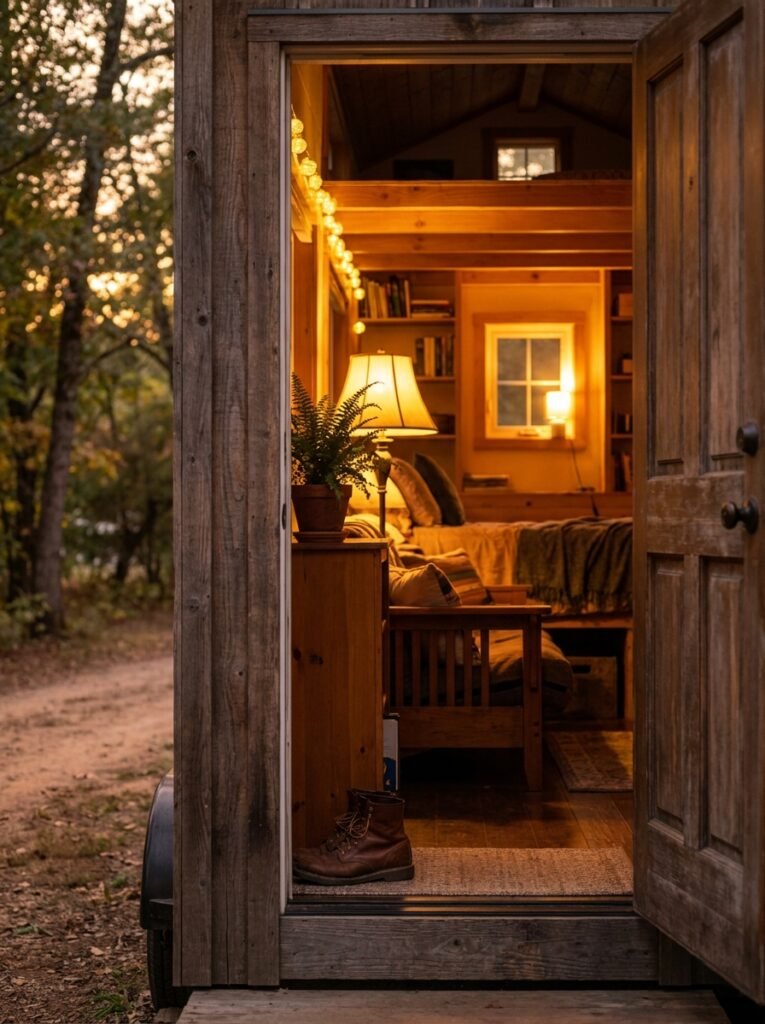
There’s a kind of quiet bravery in choosing a tiny home — in looking at the cultural pressure to accumulate and simply deciding not to play that game anymore. The most beautiful tiny home interiors aren’t beautiful because of their furniture or their color palettes or their clever storage. They’re beautiful because of the philosophy embedded in every single decision made within them: that a life well-lived doesn’t need more room. It needs more intention.
So as you scroll, save, and dream about your own tiny space — ask yourself this: What would you keep, and what would you finally let go of, if you only had room for what truly mattered?