
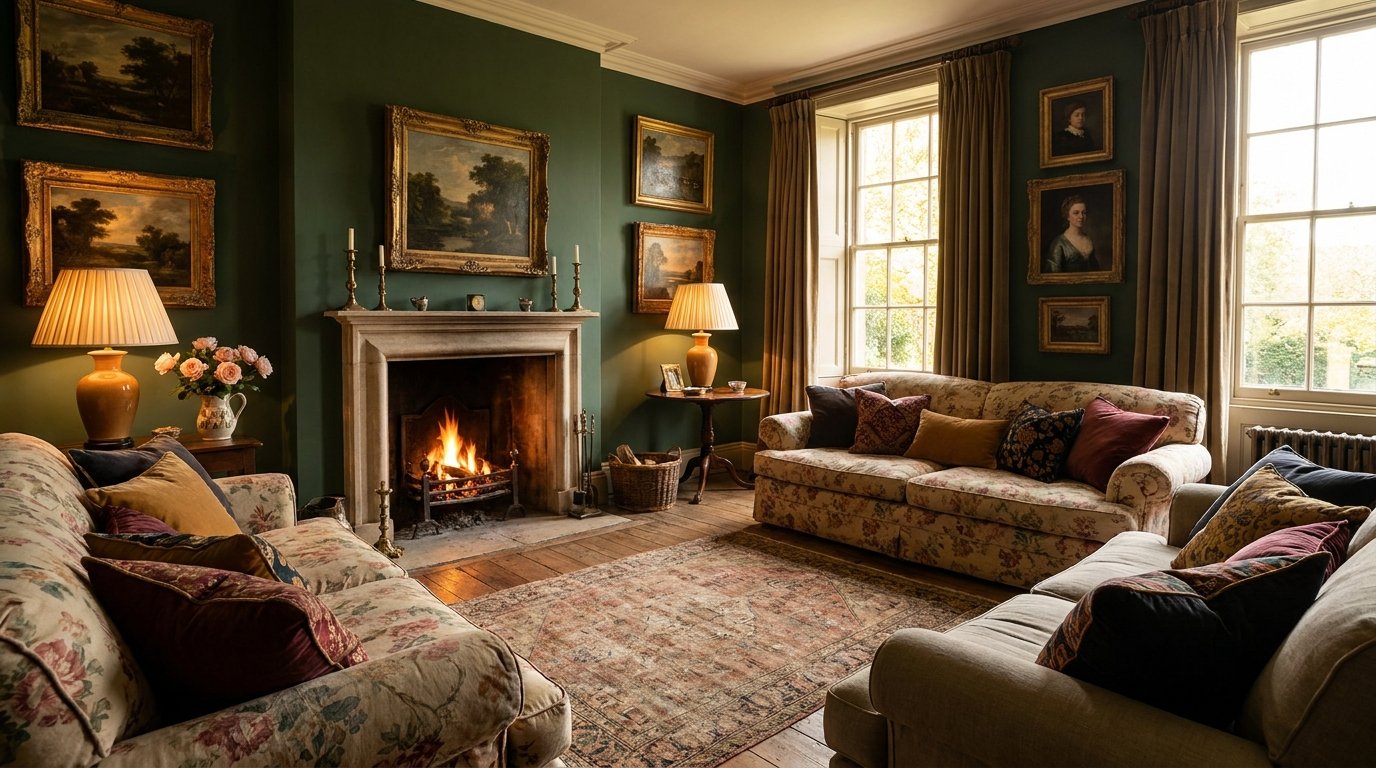
The English Style Interior: How to Bring That Timeless, Soulful Charm Into Your Home
There’s a particular kind of room that stops you in your tracks — layered, warm, slightly worn at the edges, and impossibly beautiful. That room is almost always English in spirit. Whether you’ve fallen in love with it through a period drama, a countryside cottage photograph, or the pages of a worn decorating book, the English style interior has a pull that never quite lets go.
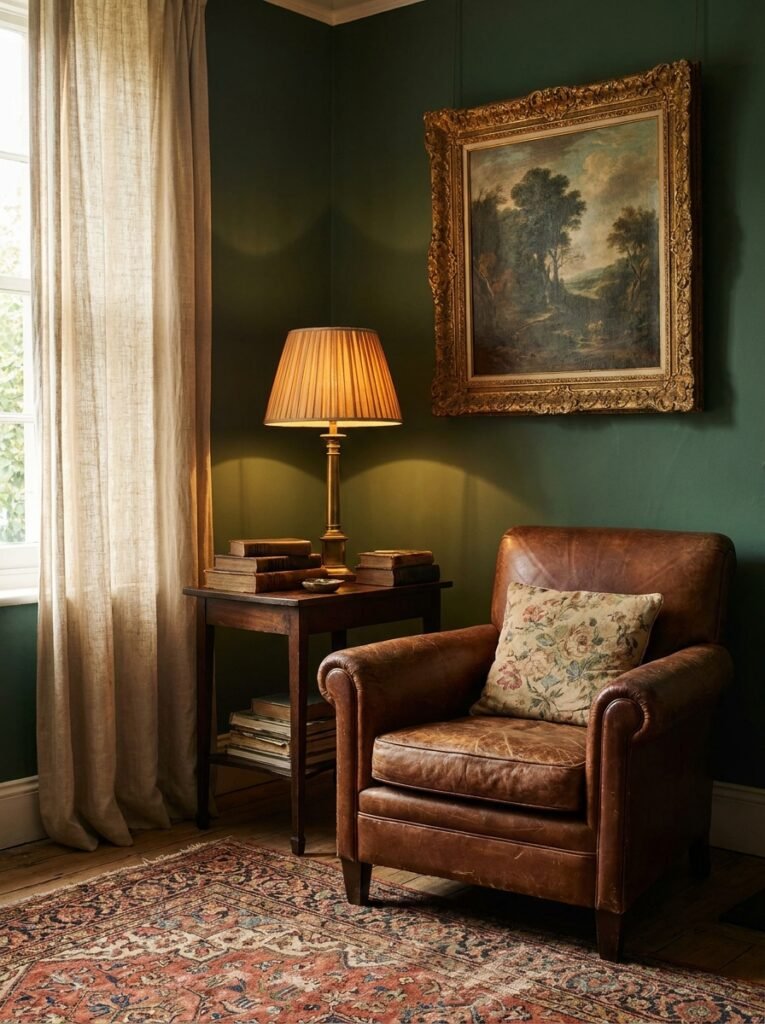
—
1. What Exactly Is the English Style Interior — And Why Does It Feel So Alive?
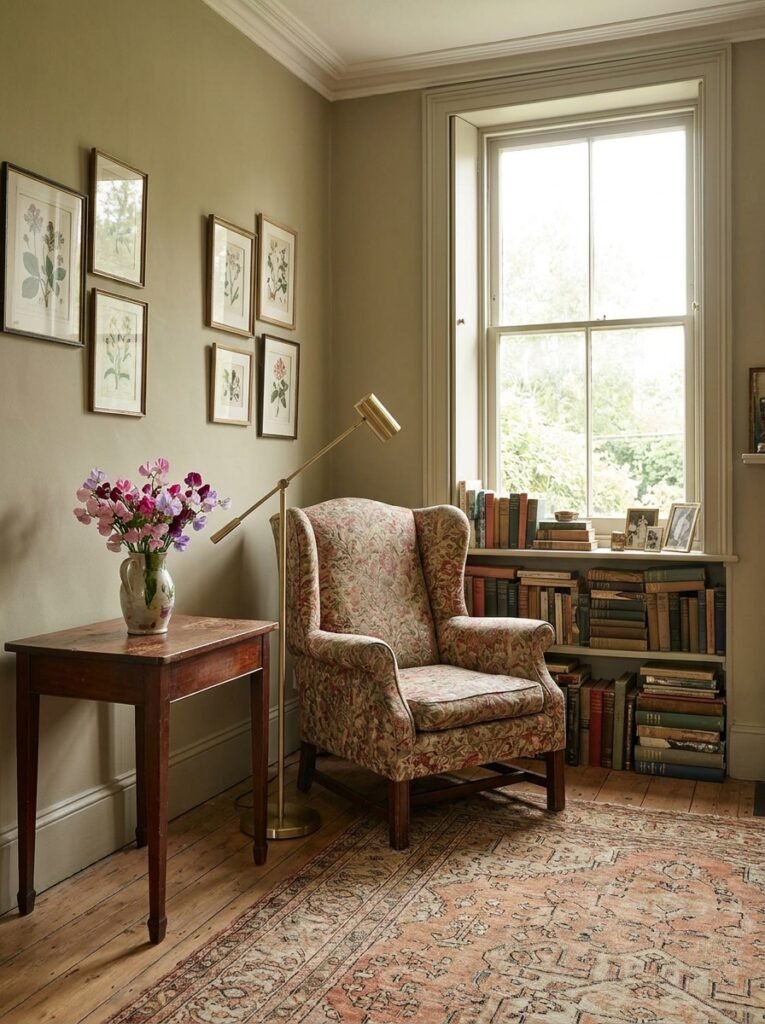
Most decorating trends feel calculated. You look at them and think: someone designed this. The English style interior, by contrast, feels lived in — as if it arrived gradually, piece by piece, generation by generation. That’s not an accident. Traditional English interiors are built on the philosophy that a home should reflect its inhabitants, not a showroom catalog. Rooms accumulate. Bookshelves overflow. A grandmother’s armchair sits beside a brand-new lamp, and somehow, inexplicably, it all works.
At its core, the English decorating style embraces what designers call “collected” interiors — spaces where objects hold stories, where no single piece dominates, and where comfort is treated as a design principle rather than an afterthought. Think overstuffed sofas buried in patterned cushions, faded Persian rugs layered over bare timber floors, and walls adorned with oil paintings in gilded frames sitting quietly beside botanical prints. Nothing matches perfectly. Everything belongs.
“An English room doesn’t ask to be admired — it invites you to stay, sit down, and never quite leave.”
This is the genius of the style. It doesn’t intimidate. It embraces. And in a world of stark minimalism and perfectly staged interiors, that warmth feels — not nostalgic exactly — but necessary.
—
2. The Color Palette That Makes an English Room Breathe
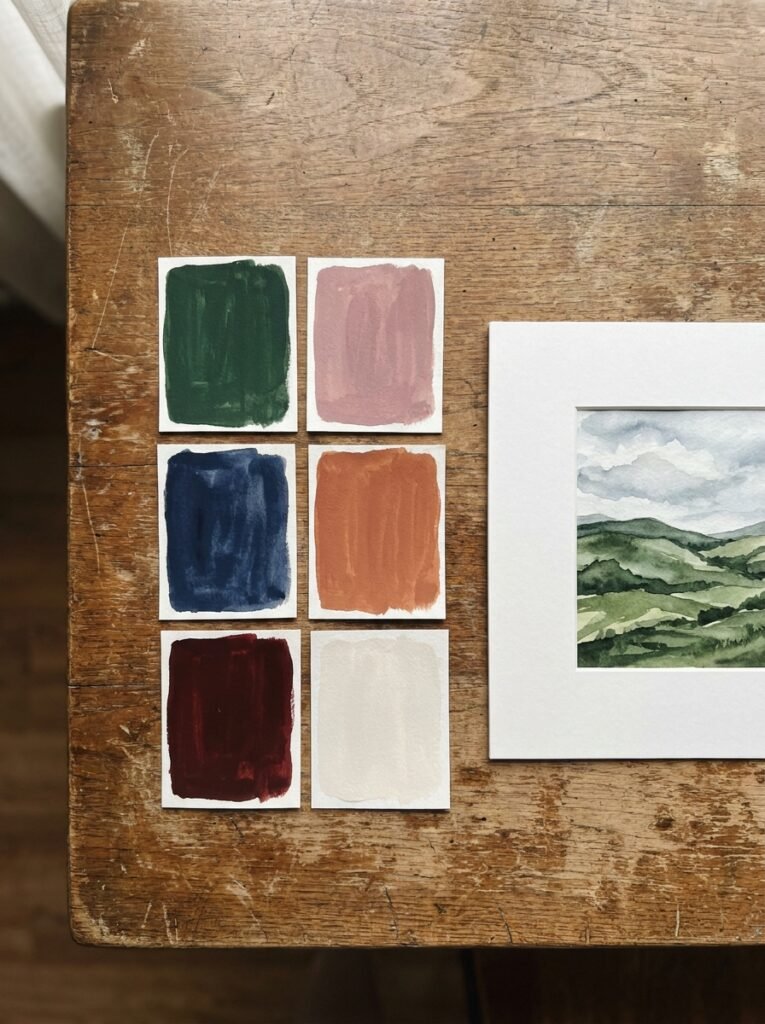
Color in English interiors is one of the style’s most distinctive — and most misunderstood — features. Many people assume “traditional English” means beige walls and safe neutrals. In reality, it’s almost the opposite. The English decorating tradition has always embraced deep, saturated colors with remarkable confidence: forest greens, dusty rose, navy blue, warm terracotta, oxblood red, and the most beautiful range of broken whites and soft creams you’ve ever seen.
The key is that colors in an English interior are never harsh or synthetic-looking. They’re drawn from the landscape — from rolling green hills, grey coastal skies, autumn hedgerows, and the amber glow of a fireplace. Paint brands like Farrow & Ball and Little Greene have built entire identities around capturing exactly this quality — colors that shift in different light, that feel aged and organic rather than factory-fresh.
For walls, consider deep Viridian or Mole’s Breath (actual Farrow & Ball shades that are everything their names suggest). For woodwork, an off-white or soft stone color adds warmth without coldness. And don’t be afraid of color in unexpected places — a navy blue ceiling in a study, a rose-pink hallway, a warm terracotta library. The English interior gives you permission to be bold and cozy at the same time.
—
3. The Art of Layering: Why English Rooms Look So Impossibly Rich
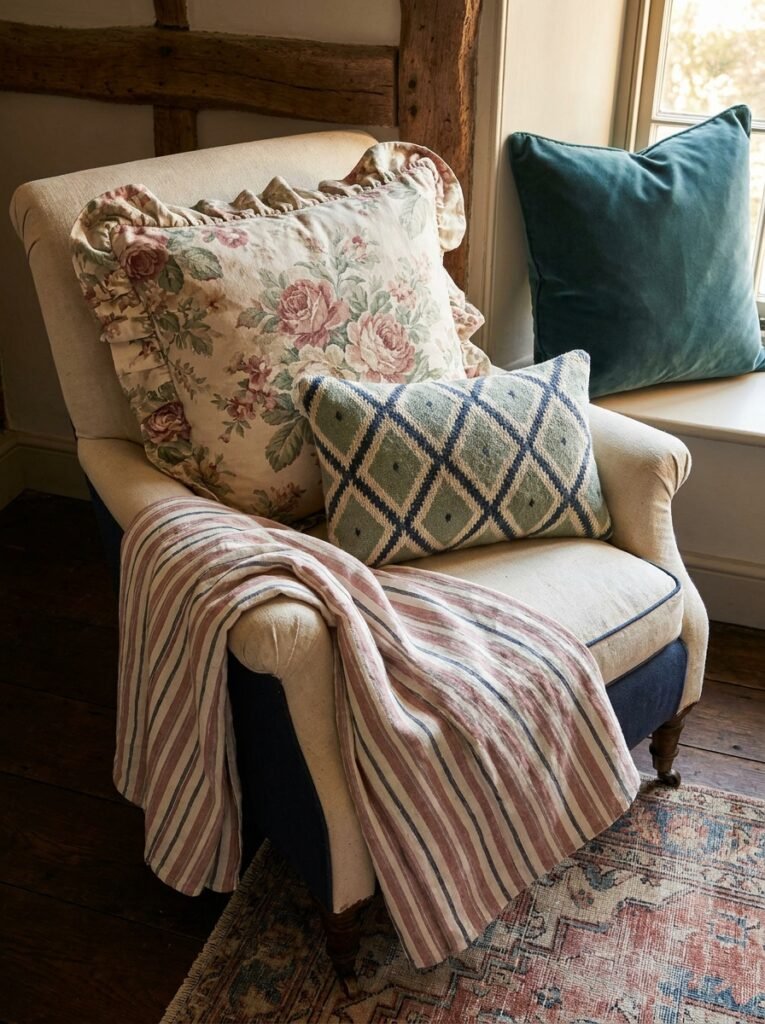
If you’ve ever looked at a photograph of an English country house interior and thought, “How do I get a room to look like that?” — the answer is almost always: layers. English rooms are layered in every dimension. Textiles on textiles. Rugs on rugs. Artwork grouped in salon-style clusters. Books stacked sideways on top of books standing upright. Cushions in three different patterns that somehow harmonize.
This layering is not random, though it looks effortless. The secret is working within a coherent color story and mixing pattern scales thoughtfully. You might have a large floral on the sofa, a small geometric on a cushion, and a medium stripe on a throw — and they coexist because they share a common thread of color. It’s the same principle that makes a Liberty of London fabric so extraordinary: dozens of details, unified by palette.
Texturally, English interiors love the juxtaposition of rough and smooth, hard and soft. Rough-hewn timber beams above a polished mahogany sideboard. A velvet sofa beside a stone fireplace. A brass candlestick on a battered wooden table. These contrasts create visual interest that draws the eye across the room and rewards careful looking.
—
4. Furniture That Has Actually Lived a Life
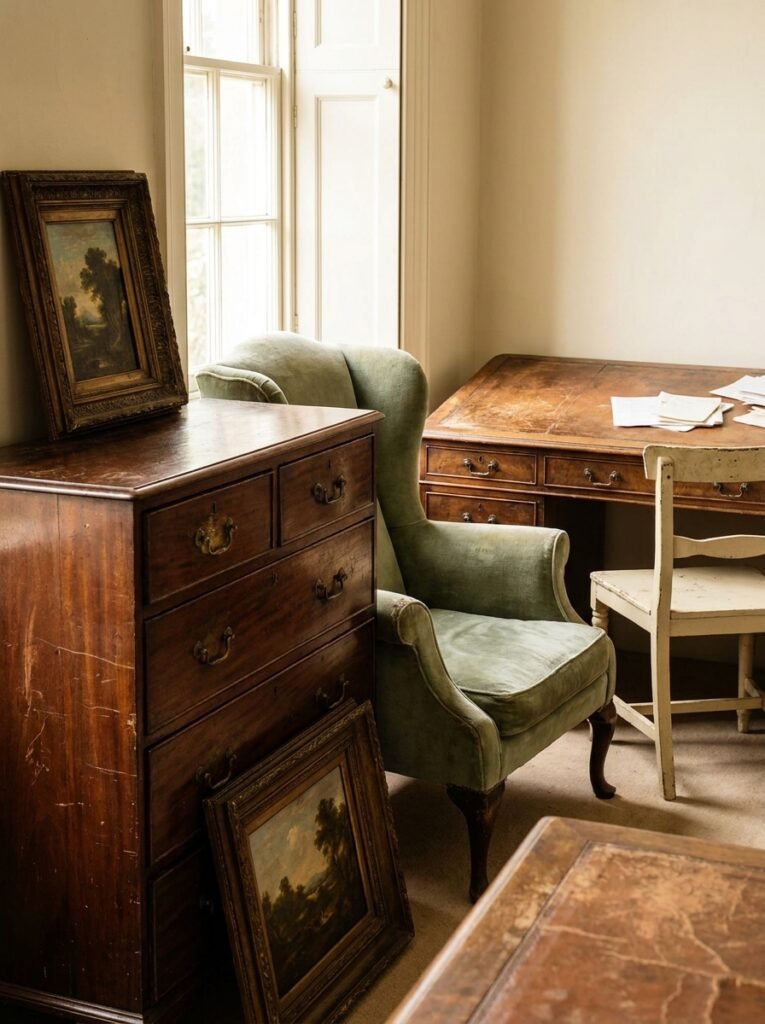
One of the most liberating aspects of the English interior style is its relationship with furniture. In many contemporary styles, furniture must be new, unmarked, and perfectly matched. In the English tradition, the opposite is celebrated. A piece of furniture with scratches, patina, and history is valued more than its showroom counterpart — because it carries proof of life.
Antique and vintage furniture forms the backbone of the English interior. Georgian chests of drawers, Victorian wingback chairs, Edwardian writing desks — all mixed without anxiety about era or origin. The unifying factor isn’t period or provenance; it’s quality and character. A well-made piece from any era earns its place in an English room.
That said, the style is not a museum. New pieces are absolutely welcome — but they tend to be chosen for timelessness rather than trendiness. A classic Chesterfield sofa. A linen-covered ottoman. A simple painted wooden chair that could belong to any decade. The English interior absorbs new pieces gracefully, especially when those pieces have honest materials — solid wood, natural stone, linen, wool, leather.
“Buy the piece you love, not the piece that matches. That’s how an English room is built.”
—
5. The Fireplace: The Heartbeat of Every English Room
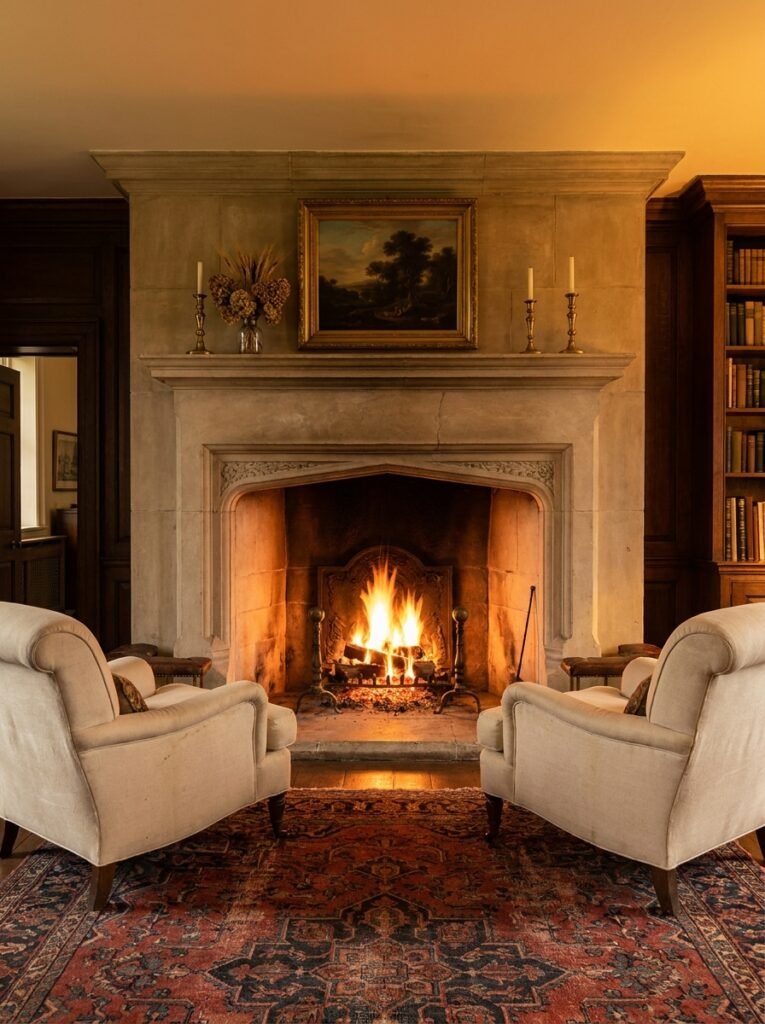
It would be almost impossible to discuss the English interior without pausing at the fireplace. In English design, the fireplace is not merely a heat source — it is the room’s emotional and architectural center. Everything arranges itself around it. Sofas face it. Armchairs angle toward it. Paintings hang above it. Candles cluster on its mantel.
Even in rooms where the fireplace is no longer functional, it remains a focal point — filled with candles, stacked with logs, decorated with seasonal foliage. The hearth is where English hospitality lives. It’s where conversations happen and where the particular warmth of an English home — that sense of being genuinely welcomed — becomes tangible.
Architecturally, English fireplaces range from the grand stone chimneypieces of country houses to the painted cast-iron Victorian mantels common in London townhouses. Both are beautiful; both deserve to be celebrated rather than hidden. If you’re working with an existing fireplace, restore rather than replace. If you’re adding one, choose materials that feel timeless — stone, marble, painted timber.
—
6. Books, Collections, and the Beauty of Displayed Curiosity
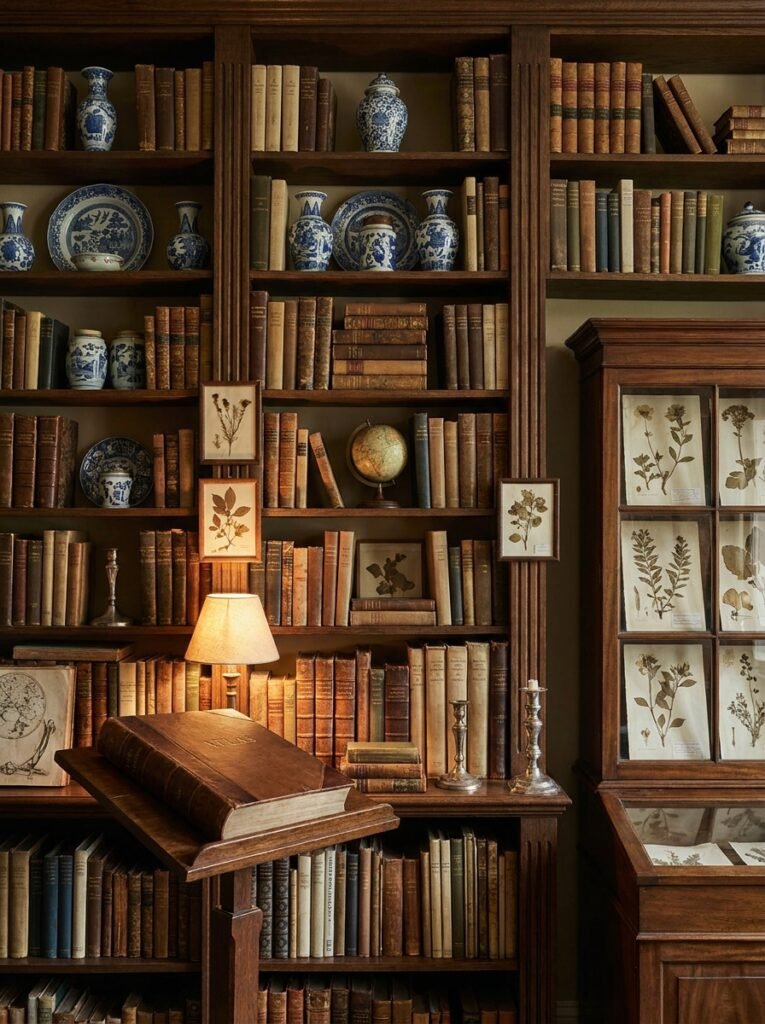
Walk into an English room and your eyes will inevitably travel to the shelves. Not because someone has arranged them according to a color-coded system for the sake of an Instagram photo (though honestly, some of those are beautiful too) — but because the books, objects, and collections displayed there tell a story. Who lives here? What do they love? Where have they been?
The English interior has always celebrated the collector’s eye. Walls of books with spines in every color and size. Wooden display cabinets housing blue-and-white ceramics, silver candlesticks, or a collection of pressed botanical specimens. Antique globes and leather-bound atlases. Small oil paintings in heavy frames. Framed letters and maps. The accumulation of a curious, well-traveled, voracious life.
This doesn’t require wealth or years of travel. It requires only genuine curiosity and the willingness to display what you love without self-consciousness. A shelf of paperbacks you’ve actually read is more authentically English than a staged row of matching hardcovers you’ve never opened. The style rewards authenticity above all.
—
7. Chintz, Toile, and the Patterns That Define a Tradition
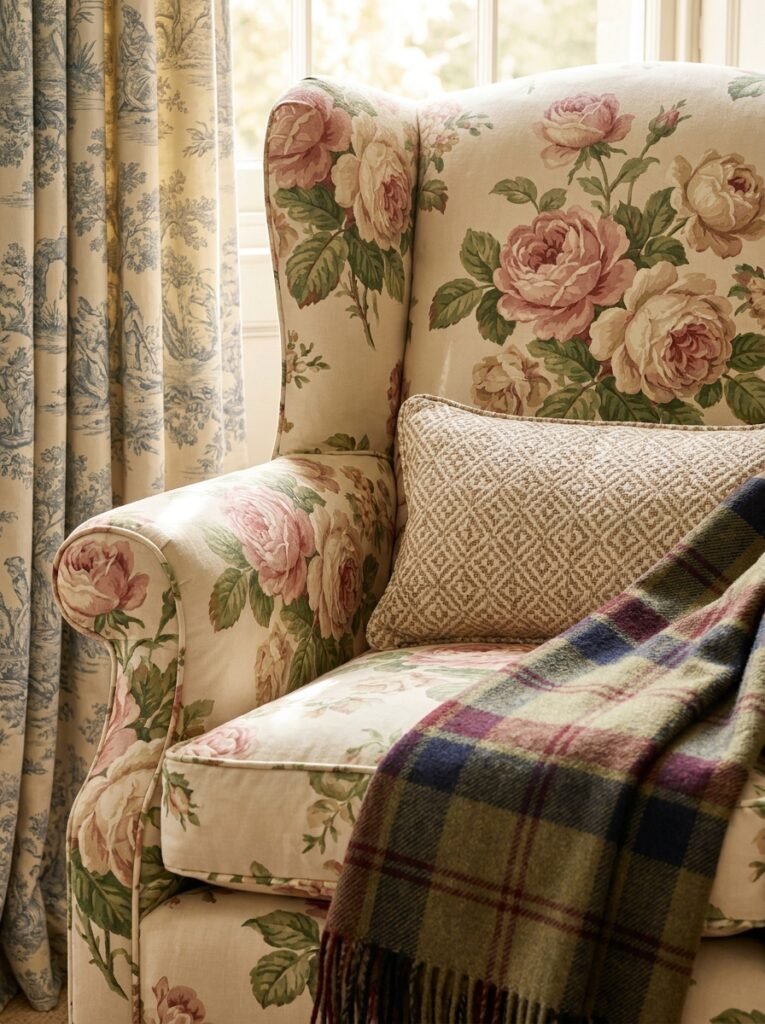
To understand English interior style is to make peace — or better, fall deeply in love — with pattern. The English have always been extraordinarily adventurous with pattern, influenced by centuries of trade with India, China, and the Ottoman Empire. The result is a decorating tradition that embraces florals, paisleys, stripes, toile de Jouy, tartans, and geometrics with extraordinary confidence.
Chintz — that glazed cotton fabric with large floral prints — is perhaps the most iconic of English interior patterns. It defined the country house look of the mid-twentieth century and, after a period of unfashionability, has returned with extraordinary force. A chintz-covered armchair in a room of otherwise subdued textiles is a masterstroke. It brings life, color, and personality without overwhelming the space.
Toile de Jouy, with its pastoral scenes printed in a single color on cream, brings a quieter kind of pattern — sophisticated and story-rich. It works beautifully in bedrooms and studies. Meanwhile, tartan — in muted rather than bright colorways — brings a sense of heritage and warmth, especially in autumn and winter settings.
“Pattern is not chaos. In the right hands, it’s the architecture of emotion in a room.”
—
8. The English Kitchen: Where Warmth and Practicality Become Poetry
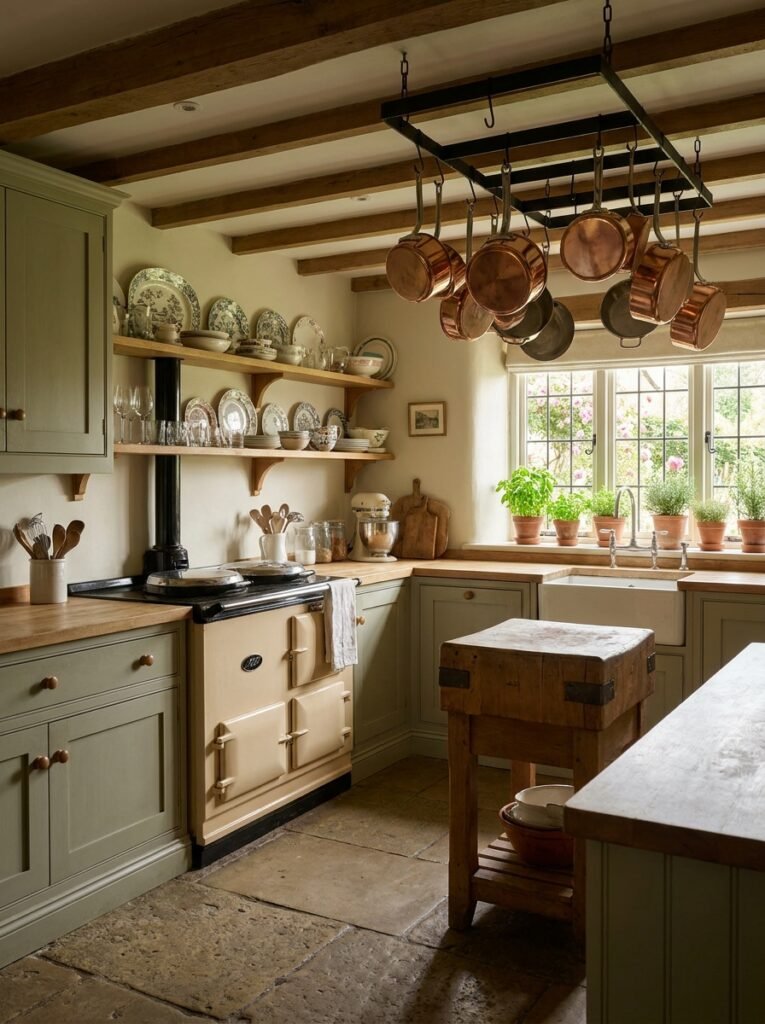
The English kitchen is a room that deserves its own love letter. In the English style, the kitchen is rarely the sleek, handleless, all-white space that dominates modern design. It is instead a room built for actual cooking — for Sunday roasts and sponge cakes, for long breakfasts and cluttered worktops and copper pots hanging from ceiling racks.
The Aga or range cooker is the kitchen’s equivalent of the living room fireplace — a constant, warming presence that anchors the room. Shaker-style cabinetry in muted greens, soft blues, or off-whites forms the practical backdrop. Open shelving displays mismatched china and glass. A large farmhouse sink sits beneath a window that looks onto a garden. Herbs grow in terracotta pots on the windowsill.
Worktops are often natural materials — butcher’s block, slate, or marble — that show their age honestly. The floor might be flagstone, reclaimed brick, or wide-plank timber. Nothing here is precious. This is a kitchen that invites you to cook, to gather, to stay for another cup of tea.
—
9. Bringing the Garden In: Flowers, Botanicals, and Natural Life
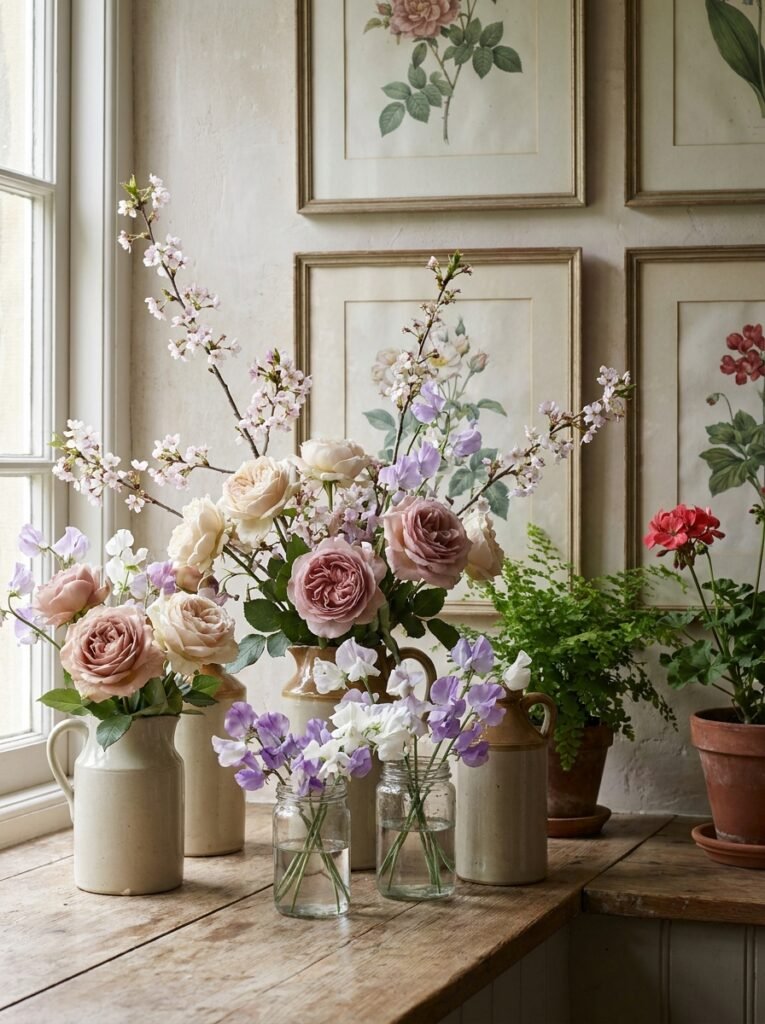
The English interior has an almost romantic relationship with the natural world. Fresh flowers — picked from the garden or bought from a market stall — are considered as essential as furniture. Not arranged in formal displays, but loosely gathered in jugs, mismatched vases, and old jam jars. Garden roses in dusty pinks and creams. Sweet peas in purples and whites. Branches of blossom in spring, berries and holly in winter.
Beyond fresh flowers, botanical prints have been a staple of English decoration for centuries. Framed specimens from antique natural history books. Watercolors of garden flowers. Drawings of birds and insects. These prints add color and pattern to walls while maintaining a connection to the natural world that feels deeply English.
Houseplants, too, find a welcome home in English interiors — but again, not the curated, trendy varieties necessarily. Ferns on a windowsill. A trailing ivy. A geranium in a terracotta pot. The feeling is that nature has wandered in of its own accord and decided to stay.
—
10. Small English Spaces: How the Style Works in Smaller Homes
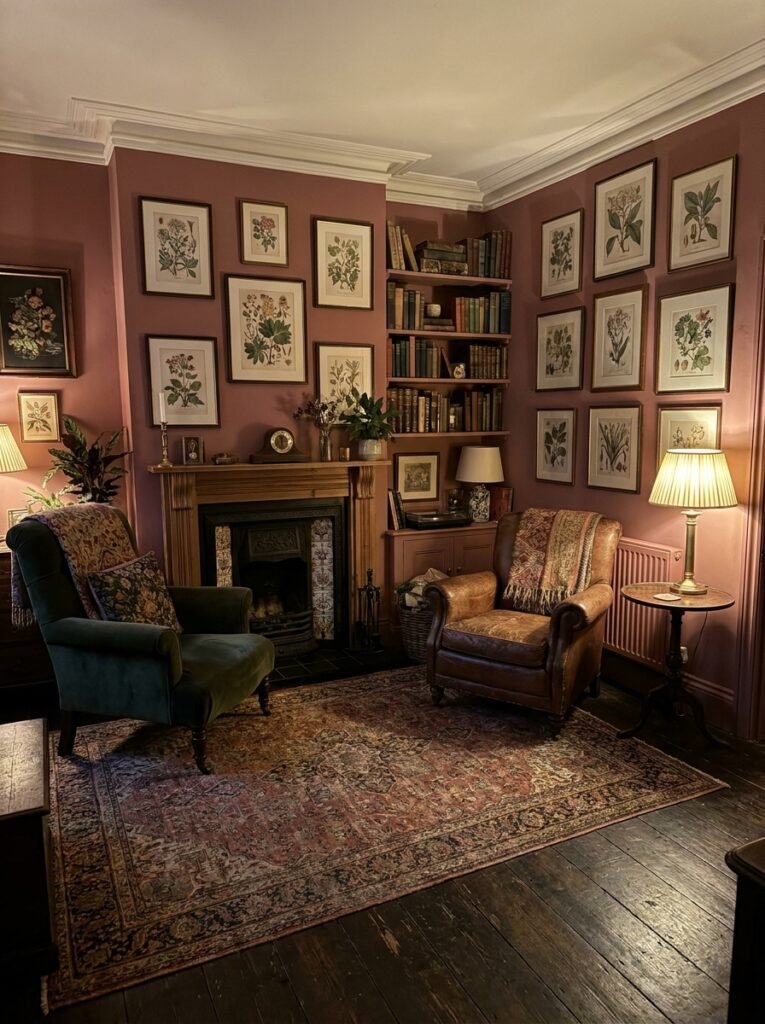
One of the most reassuring things about the English interior style is that it was never designed exclusively for grand country houses. In fact, some of the most beautiful examples of the style exist in small London flats, Victorian terraces, and cottage rooms barely large enough to swing the proverbial cat.
In small spaces, the English style’s principles actually become more powerful, not less. The layering creates depth where there is little square footage. The warm colors make walls feel embracing rather than cramped. The mix of furniture — rather than a matched suite — allows for flexibility and personality. And the emphasis on objects, books, and collections means that even a small space feels rich with life.
The key in smaller rooms is to resist the temptation to edit too aggressively. A small English room should still feel full — just not cluttered. Think of it as a very good poem: every word earns its place, but the poem is still full of meaning and feeling.
—
11. Lighting: The Quiet Secret of Every Atmospheric English Room
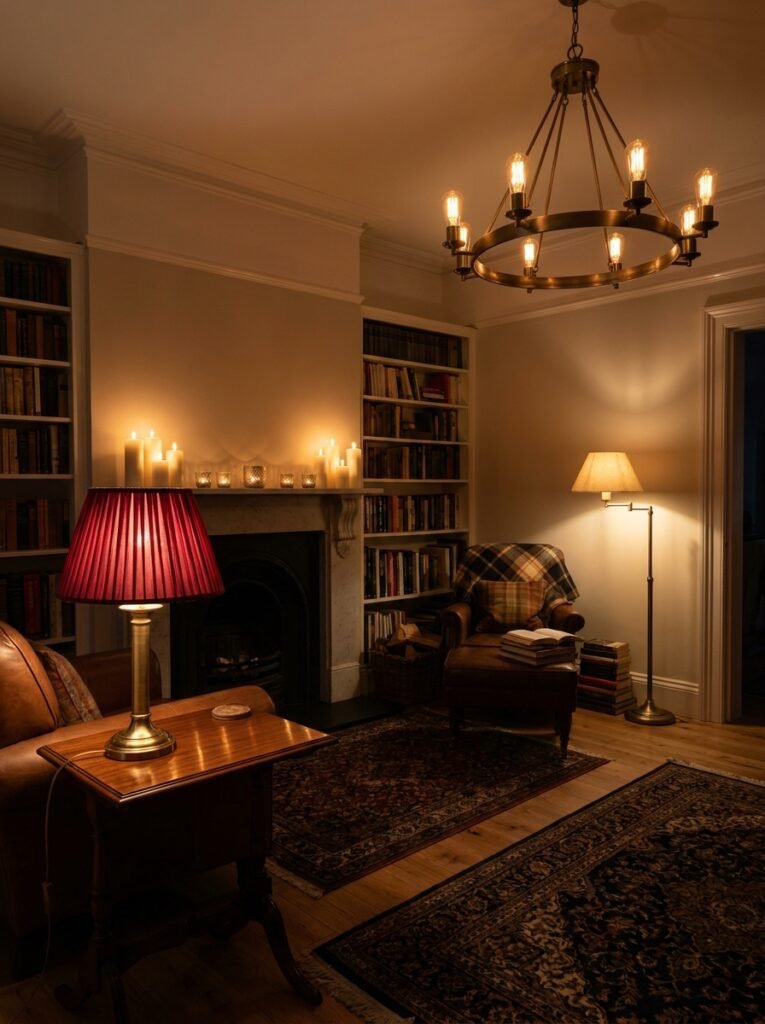
English interiors are almost always lit beautifully, and rarely by overhead lighting alone. The secret is layered light — multiple sources at different heights, creating a warm, dimensional glow that flatters both the room and the people in it.
Table lamps are essential. English rooms tend to have more of them than you might expect — on side tables, on desks, on bookshelves. Their shades are often in warm fabrics: pleated cream linen, deep red silk, classic white cotton. Floor lamps add light to reading corners. Candlelight — in candlesticks, lanterns, and clustered votives — adds the final, irreplaceable warmth.
Overhead lighting, when used, tends to be gentle — a chandelier with dimmed bulbs, a pendant in aged brass, rather than a bright flush fitting. The goal is always to make the room feel warm, enclosed, and intimate after dark — the light equivalent of closing the curtains and settling in for the evening.
—
12. The Feeling You’re Actually Creating: Permanence, Comfort, and Belonging
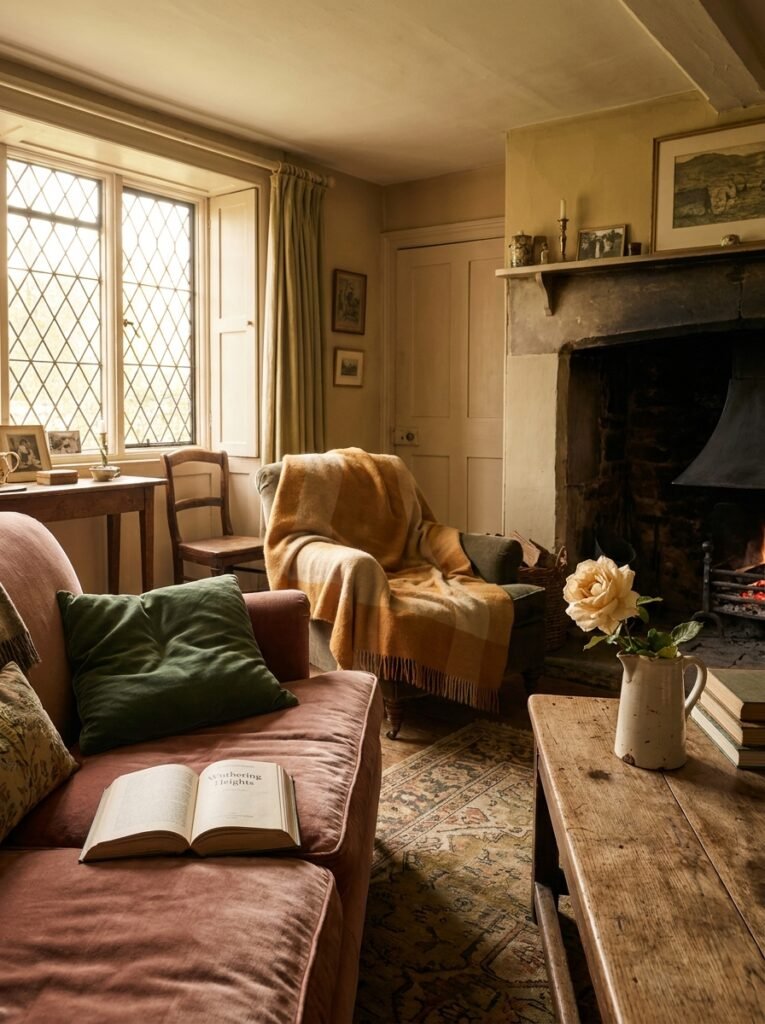
Here is what all of these details — the colors, the furniture, the patterns, the books, the light — are actually in service of: a feeling. The English style interior, when it works at its best, makes you feel that the room has existed for a long time and will continue to exist long after you leave it. That you are part of something larger and more enduring than the present moment.
This feeling of permanence is deeply comforting. It’s why people have been drawn to this style for generations, and why it continues to resonate even as design trends cycle through minimalism, maximalism, and back again. The English interior doesn’t chase trends — it absorbs them slowly, selectively, and usually makes them better.
More than anything else, it is a style rooted in the conviction that a home should be lived in — not preserved, not curated, not photographed and left untouched. Cushions should be squashed. Books should be read. Rugs should be walked on. Fires should be lit. Flowers should wilt a little before they’re replaced. Life should happen here, messily and fully and with great warmth.
“The best English rooms are not designed to impress. They are made to hold the people who matter most.”
—
🌿 How to Bring the English Interior Style Into Your Own Home
Starting with the English style doesn’t require a grand budget or a complete overhaul. Begin with one room — ideally a living space where you spend real time — and make small, intentional changes that build toward that layered, warm, lived-in feeling.
Start with color. Even if you only repaint one wall or add a pair of deeply colored curtains, a saturated, nature-inspired hue will shift the entire atmosphere of a room. Next, focus on textiles — add a throw, swap synthetic cushion covers for linen or wool ones, and layer a rug on top of your existing floor covering. These changes alone are transformative.
Then begin to collect, slowly. Visit antique fairs, charity shops, and estate sales with patience rather than urgency. The piece that speaks to you — the old oil painting, the tarnished silver candlestick, the battered leather-bound book — is always more valuable to an English interior than something bought new and shipped to your door.
Finally, add plants and flowers regularly. Even a simple bunch of market flowers in a jug on your kitchen table brings that essential connection to the natural world that makes English interiors feel alive. Let them age a little before replacing them. The slightly faded rose is just as beautiful as the fresh one.
—
❓ FAQ
Q: Do I need to have a period home to achieve the English style interior? A: Not at all. The English interior is defined by atmosphere and feeling rather than architecture. While original period features like fireplaces and ceiling moldings are wonderful assets, the style can be created through furniture, textiles, color, and collected objects in almost any home — including modern apartments and new builds.
Q: How do I mix patterns without the room looking chaotic? A: The key is to work within a shared color palette and vary the scale of your patterns. Pair a large floral with a small geometric and a medium stripe, as long as all three share at least one common color. Start with two patterns and add a third only once the first two are working harmoniously. Trust your eye — if it feels good to you in person, it is good.
Q: Is the English interior style expensive to achieve? A: It can be, but it absolutely doesn’t have to be. The style’s emphasis on secondhand, antique, and vintage pieces actually makes it one of the more accessible decorating traditions. Charity shops, antique markets, eBay, and estate sales are full of the kinds of pieces — books, ceramics, oil paintings, wooden furniture — that form the backbone of the English interior. Patience and curiosity are far more important than a large budget.
—
💭 Final Thought
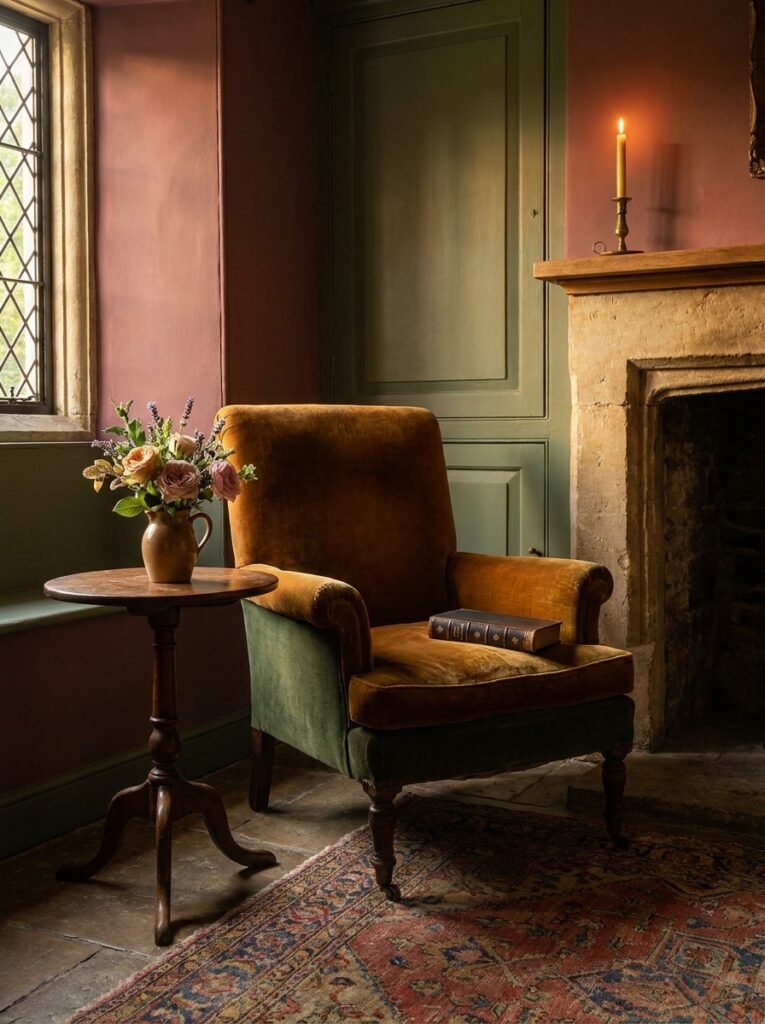
The English style interior is, at its heart, a philosophy of living — a quiet declaration that home matters, that comfort is not a luxury but a necessity, and that beauty is built slowly, deliberately, and with great love over time. It is a style that rewards patience, rewards curiosity, and rewards the willingness to bring your whole, authentic self into the rooms where you live.
As you look around your own home today, which room feels most like you — and which one is still waiting for that warmth to arrive?