Why the Small Modern Farmhouse Living Room Is the Most Satisfying Space You’ll Ever Design
You know that feeling when you walk into someone’s living room and just… exhale? The space is small, but nothing feels cramped. There’s linen and wood and something soft happening in every corner. That’s not an accident. That’s modern farmhouse done right — and it’s more achievable than you think.
—
1. The Couch Decision That Either Makes or Breaks the Whole Room
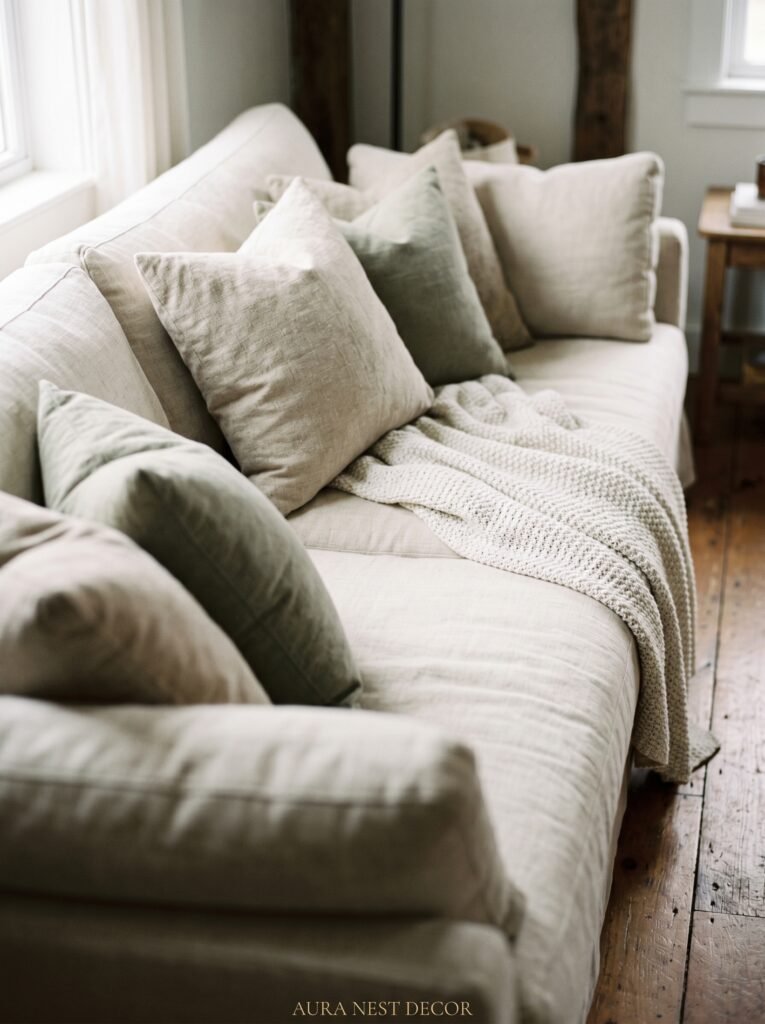
Let’s start here because nothing else matters until this is right.
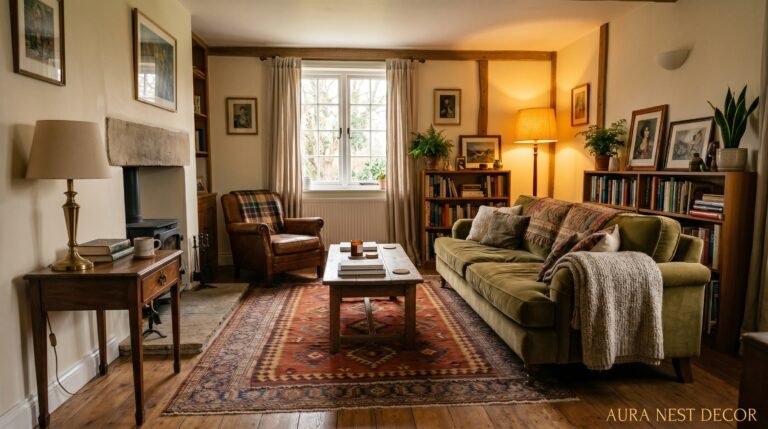
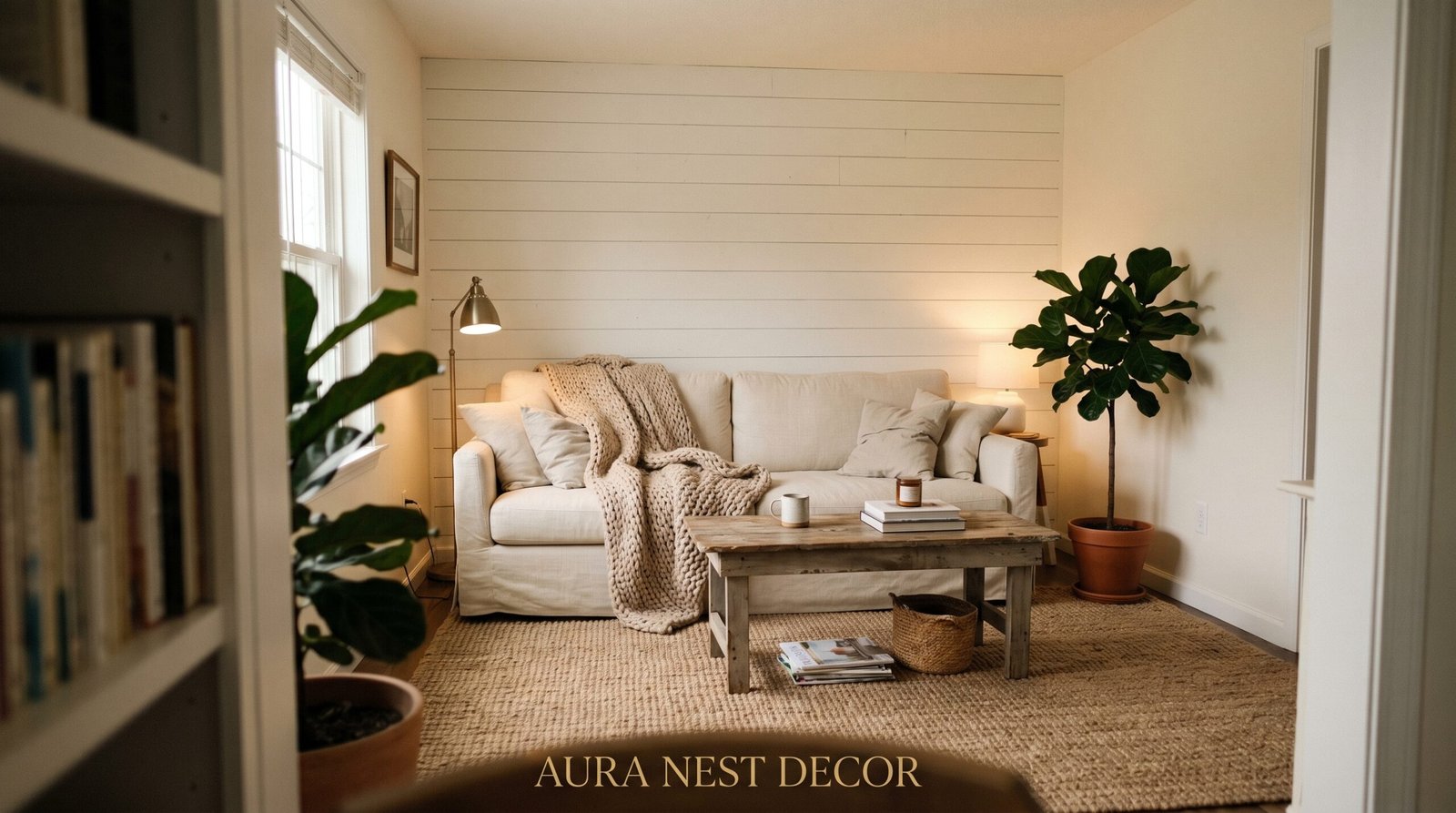
In a small living room, most people make the same mistake: they buy a sofa that’s too small because they’re scared of overwhelming the space. Then the room looks sparse and accidental, like furniture that wandered in from a showroom and never got arranged. The truth is, a generously sized sofa in a natural linen or oatmeal-colored fabric does the opposite of what you’d expect — it anchors the room, gives it intention, and immediately signals that someone with a strong point of view lives here.
Go for clean-lined arms. Nothing too boxy, nothing too slouchy. A tight back cushion reads more modern; a loose pillow back tips warmer and more farmhouse. You want both of those things, so split the difference. A sofa with a tight back and loose scatter cushions in linen, cotton canvas, and maybe one faded floral or gingham — that’s the sweet spot.
Cream, warm white, natural linen, oatmeal, soft sage. Those are your options. Everything else is the wrong choice for this particular room.
“The sofa isn’t the biggest piece of furniture in your living room — it’s the loudest. Get that voice right first.”
—
2. Why Shiplap Accent Walls Work Even When You’re Renting (and How to Fake One)
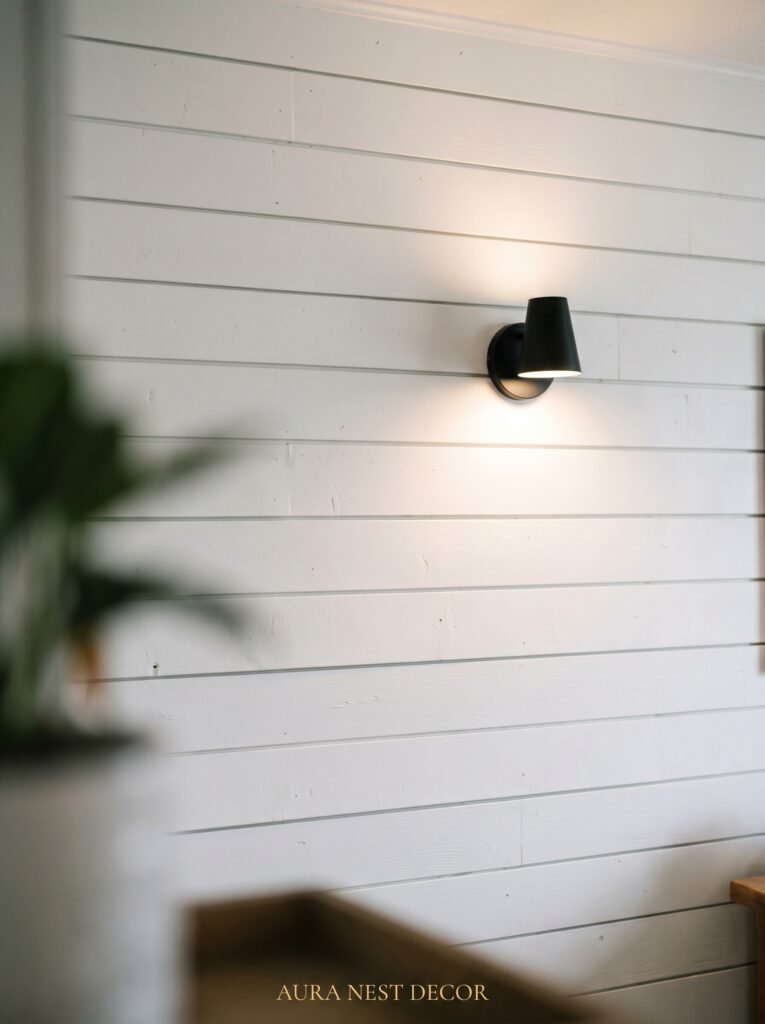
There is a reason shiplap has been dominating Pinterest boards since roughly 2015 and still hasn’t left. It works. It adds horizontal movement that makes a narrow room feel wider, it brings texture without pattern, and it reads both cozy and clean at the same time.
If you own your home, even a single shiplap accent wall — painted in a chalky white or a warm Farrow & Ball “All White” — changes the entire personality of the room. Install it behind the sofa or on the chimney breast if you have one. That’s your focal point, and it will carry everything else.
If you’re renting? Peel-and-stick shiplap panels have genuinely gotten good. The adhesive is stronger, the profiles look more realistic, and you can take them down without a drama. In the US, you’ll find them at most big-box home stores. UK renters, search for “stick-on wall panels” — the market has expanded considerably in the last couple of years.
Paint it. Even the peel-and-stick version benefits from a coat of proper emulsion or latex in the right shade. The paint fills in the seams slightly and makes the whole thing look more intentional.
One more thing: shiplap doesn’t have to be white. A moody dark green or warm charcoal shiplap wall is one of the most striking things you can do in a small modern farmhouse space, and almost nobody is doing it yet.
—
3. The Lighting Setup That Makes Every Other Element Look Better
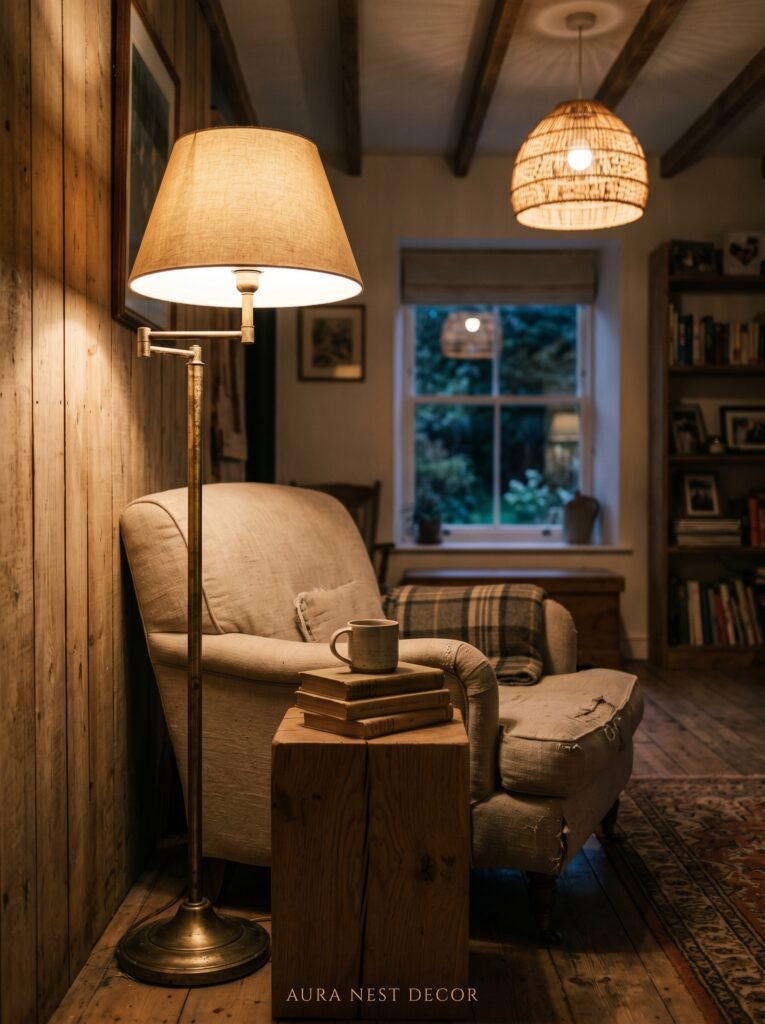
Overhead lighting is the enemy of atmosphere. That single ceiling fixture doing all the heavy lifting? It creates flat, unflattering light that exposes rather than invites.
Layer it. That’s the only rule worth knowing.
Start with something overhead that adds character without dominating — a black iron lantern-style pendant or an aged brass globe fits perfectly in this aesthetic. Then add a tall arc floor lamp in the corner with a warm-toned bulb. Then a table lamp on a side table. If you have a fireplace, candles on the mantel.
The goal is that amber glow at 7pm when everything soft-lit and the room looks like it belongs on the cover of a shelter magazine. That feeling comes from multiple light sources at different heights, never from one overhead bulb working too hard.
For bulbs: warm white, 2700K. Not cool white. Not daylight. Warm. Write it down.
—
4. The Color Combination That Keeps Showing Up in Every Beautiful Small Farmhouse Room Right Now
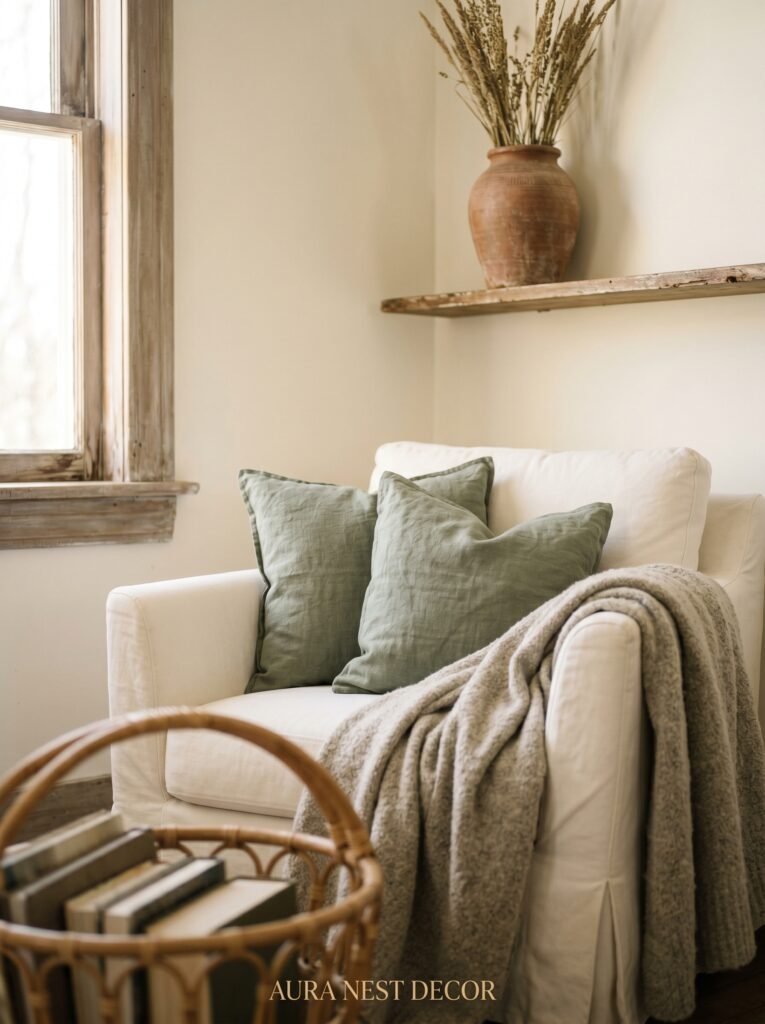
Warm white plus aged wood plus one unexpected accent. That’s it. That’s the formula.
The warm white is on the walls — Benjamin Moore “White Dove” in the US, Dulux “Timeless” in the UK, or Farrow & Ball “Pointing” if you want something with more depth and warmth. Not bright white. Warm, slightly off, like old linen left in the sun.
The aged wood shows up in your coffee table, your side table, maybe a floating shelf. Not new pine. Not orange oak. Something that looks like it has a history — reclaimed, whitewashed, or at minimum a light-colored wood with visible grain and a matte finish.
The unexpected accent is where you put your personality. Soft sage green. Terracotta. A dusty, faded denim blue. A warm charcoal. Just one. You pick it and you commit to it and you let it show up in cushions, a throw, maybe a single painted piece of furniture.
That’s the whole palette. Small rooms need restraint, and restraint in color is what makes a room feel curated rather than cluttered.
—
5. Exactly How Much Vintage and Antique You Need (And Where to Stop)
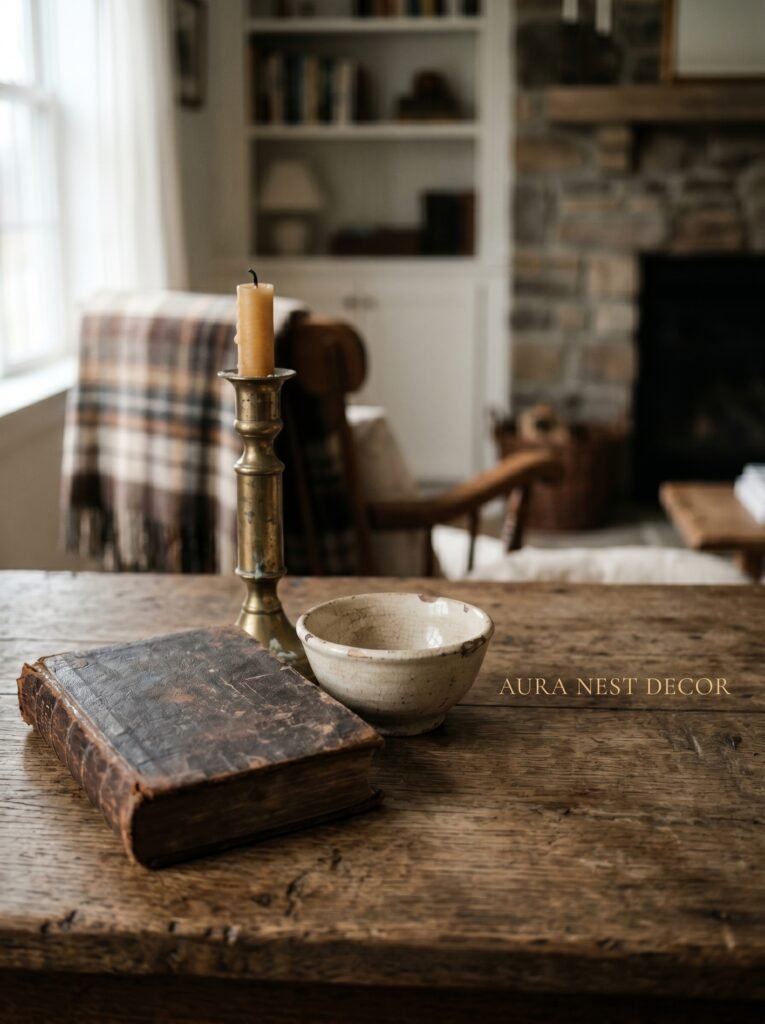
Modern farmhouse lives in a specific tension between clean and worn, new and old. Too far in either direction and the whole thing falls apart.
Here’s the balance: roughly 30% of your decor items should feel like they have a story. A vintage wooden bowl on the coffee table. An old milk glass vase on the windowsill. A stack of aged hardback books on the shelf. One piece of old ironware, maybe a pair of old scales or an enamel jug.
That’s it. The rest of your room can be completely contemporary — clean-lined furniture, modern textiles, fresh paint. Those vintage pieces are the seasoning, not the meal.
The mistake people make is overcrowding the room with too many old things because they found a great market or couldn’t stop at the car boot sale. Then the room tips from “curated farmhouse” into “second-hand shop,” and the modern element disappears entirely.
UK readers have an inherent advantage here — the antique and vintage market is incredible. Ebay UK, local charity shops, Etsy UK sellers. You have access to genuinely beautiful old stuff at accessible prices. Use it wisely.
“One good vintage piece tells a story. Ten vintage pieces just make noise.”
—
6. The Rug Size Mistake That’s Shrinking Your Living Room
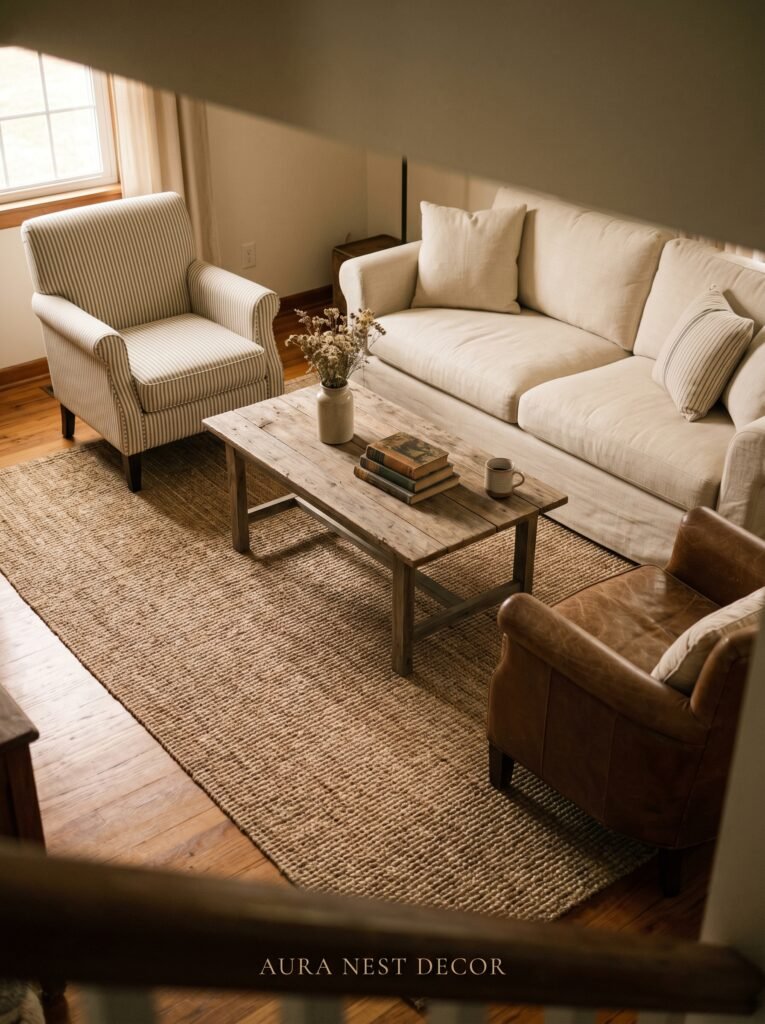
Almost everyone buys a rug that’s too small. Then they wonder why their seating area looks disjointed, why the room doesn’t feel pulled together, why there’s always something slightly off that they can’t identify.
It’s the rug. It’s always the rug.
In a small living room, the rug should be large enough that at least the front legs of every piece of seating sit on it. Ideally, the whole sofa sits on it. This grounds the entire seating area and tells the room — and everyone in it — that this is one unified, intentional space.
For a small room, that usually means you need at least a 5×8 in the US (roughly 150x240cm in the UK). Possibly larger. Yes, it will feel counterintuitive to put a large rug in a small room. Do it anyway.
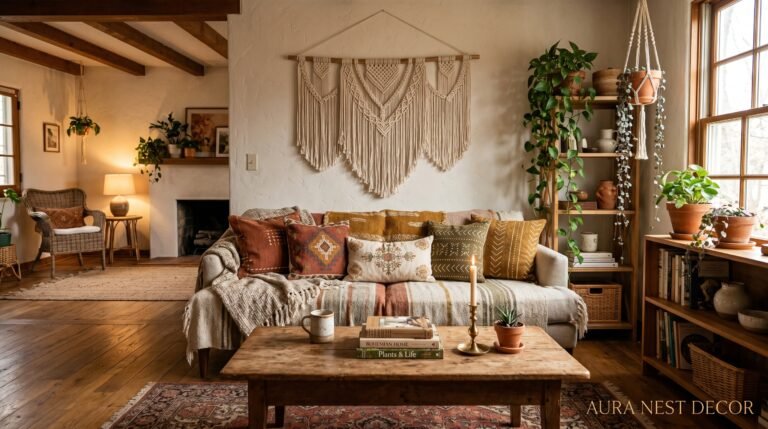
For the modern farmhouse aesthetic: jute, sisal, or a flatweave cotton in a neutral tone. Or a vintage-style Oushak in soft, faded tones — those work beautifully in this aesthetic and add the pattern and warmth that a flat neutral rug lacks. A soft ivory or warm cream vintage-style rug in a living room with wood tones and linen upholstery is one of the most beautiful combinations in residential interior design.
—
7. The Plant Strategy That Adds Life Without Looking Like a Garden Center
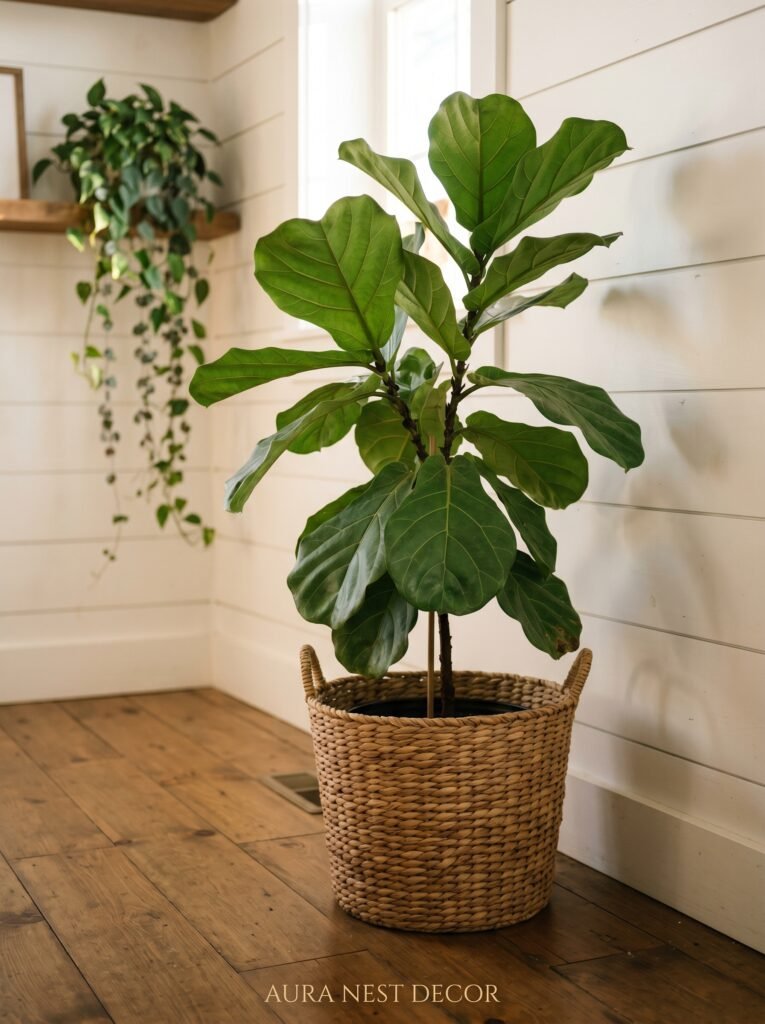
Plants are non-negotiable in this aesthetic. A modern farmhouse living room without greenery looks sterile and unfinished. But there’s a specific way to do this.
One large plant. One.
A big fiddle leaf fig, a full monstera, a tall snake plant, or — my personal favorite — a large olive tree in a simple terracotta or aged cement pot. Place it in the corner near a window, give it enough room to be seen, and let it be a proper feature.
Resist the impulse to add five more small plants on every surface. That’s a different aesthetic entirely. The modern farmhouse plant is singular and considered. It adds scale, softens the architecture, and brings the outside in without overwhelming the room.
If you want secondary greenery: a small trailing pothos on a floating shelf, or a single stem in a narrow ceramic vase. Keep it restrained.
“One big, healthy plant in the right corner does more for a room than a dozen small ones scattered desperately around.”
—
8. What To Do With a Fireplace (Even a Non-Working One) In This Style
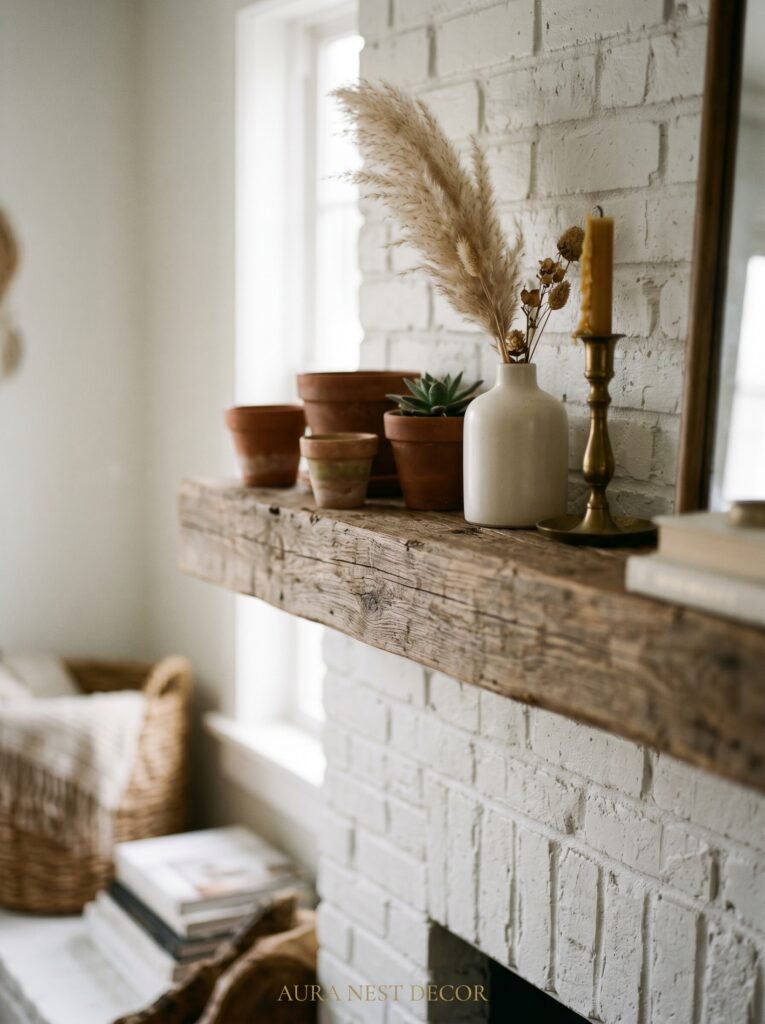
If you have a fireplace — working or decorative — it is the single most important focal point in the room. Don’t underestimate it.
For a modern farmhouse mantel: keep it simple and asymmetric. A wooden candlestick on one side, different heights. A simple framed mirror or a piece of abstract artwork above — slightly oversized, which always looks more considered. One small vase with dried botanicals: pampas grass, dried cotton stems, eucalyptus. A single ceramic object, matte-finished.
Don’t center everything. Symmetry reads formal, and modern farmhouse is the opposite of formal. Cluster things loosely on one end, balance with something taller or larger on the other. Give things room to breathe.
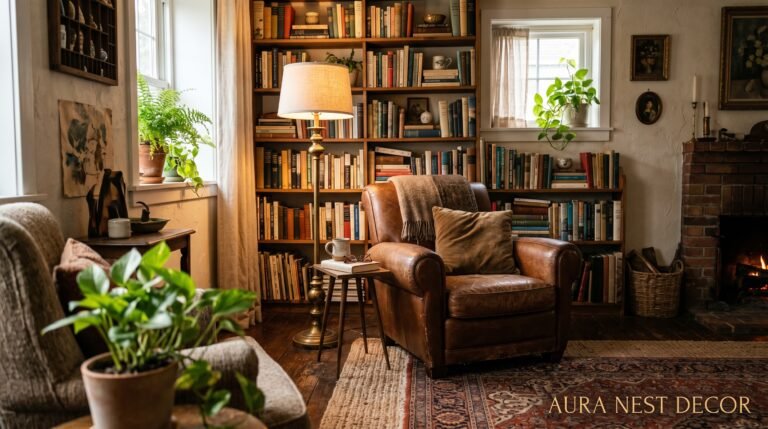
If the fireplace doesn’t work: fill the firebox with something. Stacked birch logs, a cluster of pillar candles at different heights, a large woven basket. An empty firebox reads as neglected. A filled one reads as intentional.
UK homes often have original Victorian or Edwardian fireplaces that people paint over or board up. Please don’t. That original ironwork or tiled surround is the most authentic farmhouse detail you’ll ever have.
—
9. The Curtain Drop Height Trick That Makes Low Ceilings Disappear
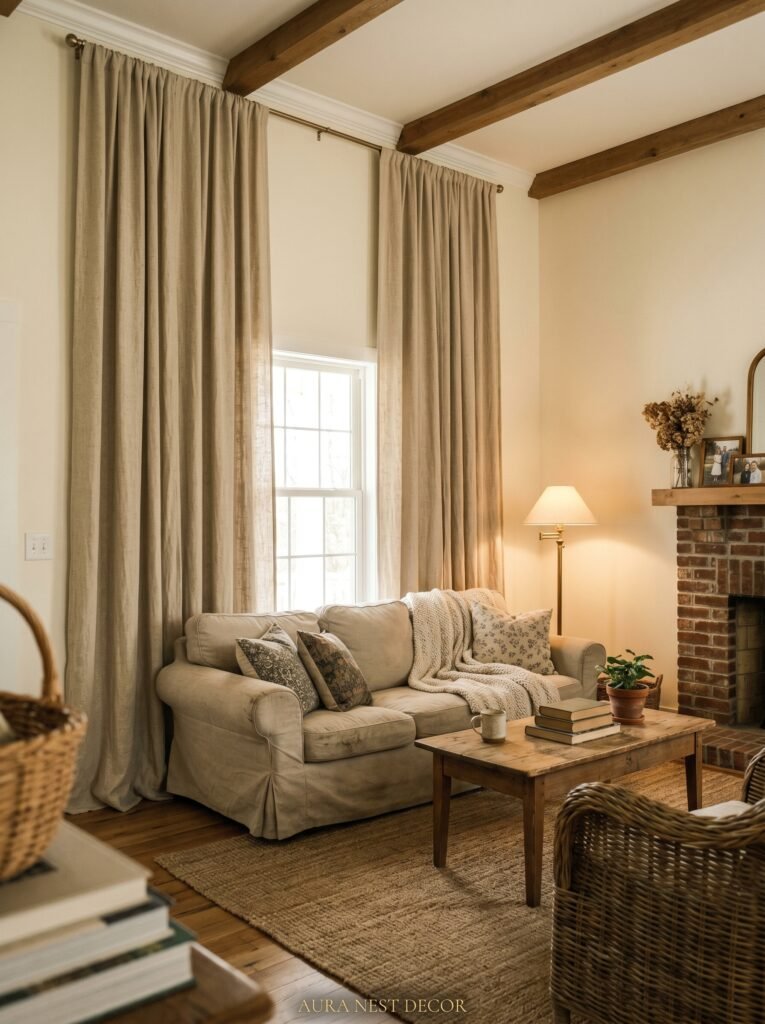
This is the most underused design trick in small home decorating, and it costs almost nothing to implement.
Hang your curtains as close to the ceiling as possible. Not at the window frame. Not even a few inches above it. As close to the ceiling or crown molding as you can get. Then let them drop all the way to the floor.
This single decision makes ceiling height look generous even when it isn’t. It draws the eye upward. It makes the room feel taller, lighter, and more architecturally interesting. It’s also the way properly styled rooms always look in magazines, and now you know why.
For fabric: linen, cotton voile, or a heavyweight cotton canvas in white or natural. Slightly sheer if you want to keep the light flowing. More substantial if you want warmth and privacy. Either way, they should pool very slightly on the floor — half an inch to an inch — because that relaxed puddle at the hem reads expensive and effortless at the same time.
Hardware matters too. A simple black iron or matte brass rod. Nothing ornate. Nothing that shouts.
—
10. The Gallery Wall Formula That Works Every Single Time
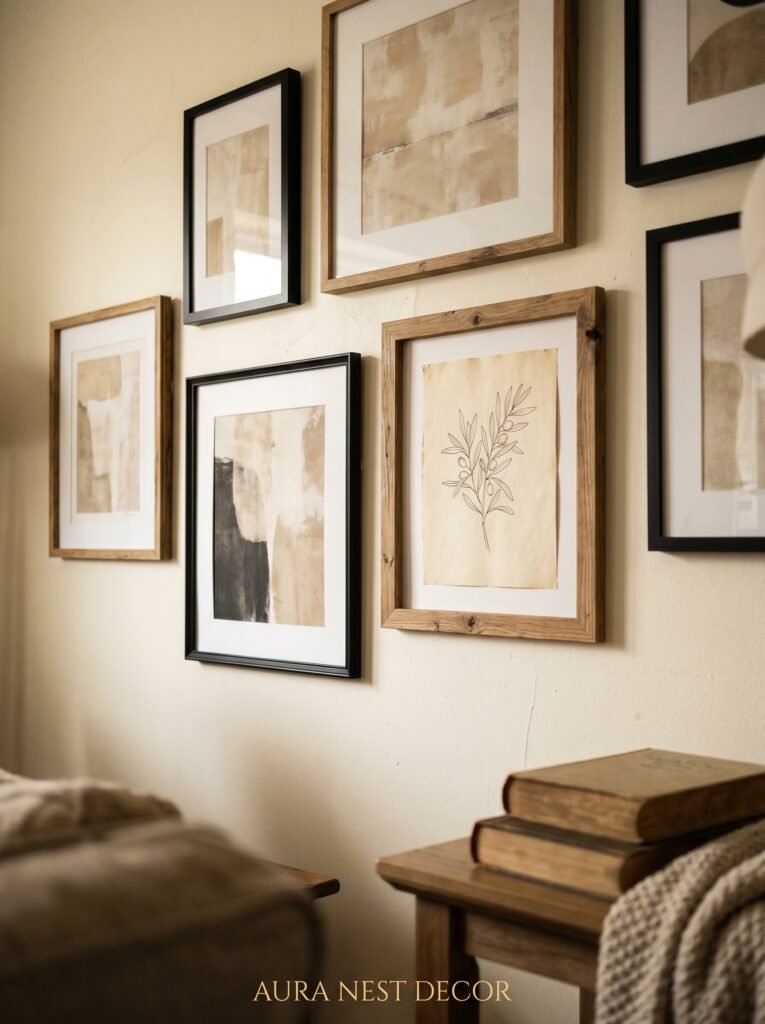
A gallery wall in a small modern farmhouse living room is a commitment, and it’s worth making. But only if you follow a structure that actually works.
Odd numbers. Always. Three pieces, five pieces, seven. Never four, never six. Odd arrangements feel organic; even arrangements feel stiff and retail-display.
Mix your frame finishes: black, natural wood, aged brass or gold. Don’t match them all. Use different frame widths, different sizes. Vary between artwork, photography, and one typographic or text print.
Keep your content cohesive in tone, not subject. Moody botanical illustrations, a black-and-white photograph, a simple abstract print in your accent color — they don’t match, but they feel like they belong together because the palette ties them.
Leave 3-4 inches between frames. Tight clusters look chaotic in small rooms; slightly spaced groupings look airy and curated.
—
11. The Coffee Table Styling That Looks Effortless But Isn’t
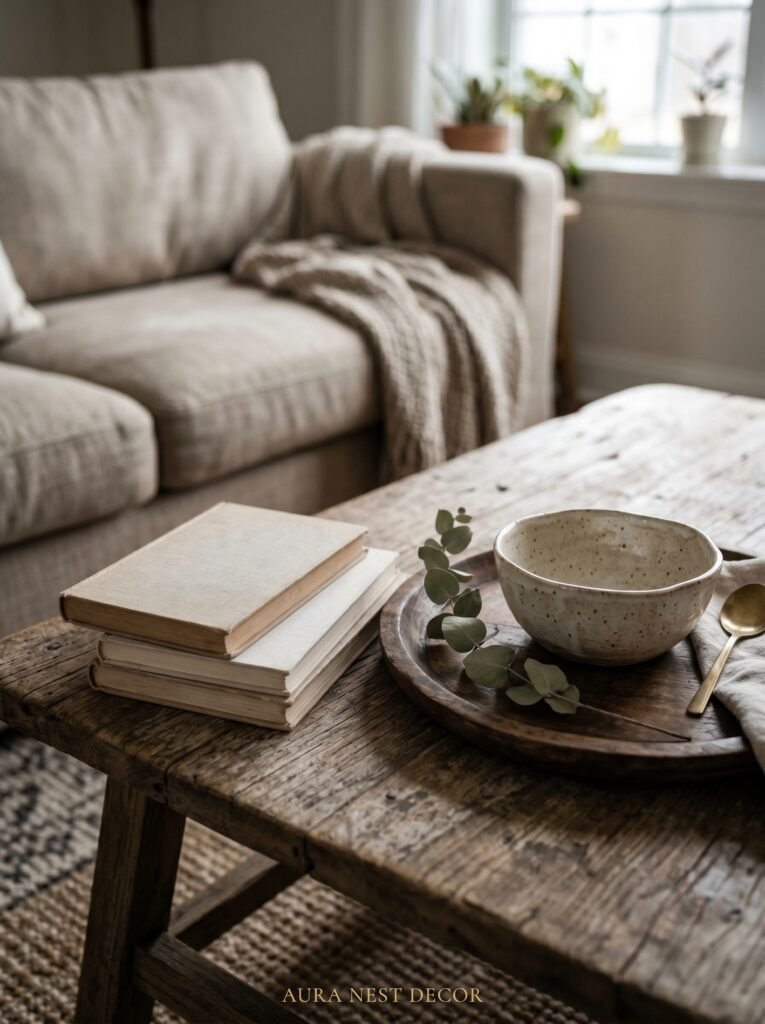
The coffee table is where a lot of people overthink and over-style until it looks like a set from a catalog shoot. The trick is to aim for something that looks like you just set things down thoughtfully.
Three objects. Maximum four.
A stack of two or three beautiful books — actual books you’d read, ideally with interesting spines, with a small object on top like a stone, a matchbox, or a sprig of something. A small tray in natural wood, woven rattan, or matte ceramic — this is where your remote controls live, but it contains the chaos so it looks intentional. One living or dried element: a small vase with a single stem, a candle, a tiny succulent.
That’s it. The coffee table needs surface space to breathe. White space on a coffee table reads as confidence.
For the table itself: live-edge wood, reclaimed oak, or a simple whitewashed wood are all perfect for this aesthetic. Glass tops feel too modern. Heavy dark stained wood feels too traditional. You want something that looks like it came from a workshop, not a showroom.
—
12. The One Wall Color Decision That Will Change How You Feel About Coming Home
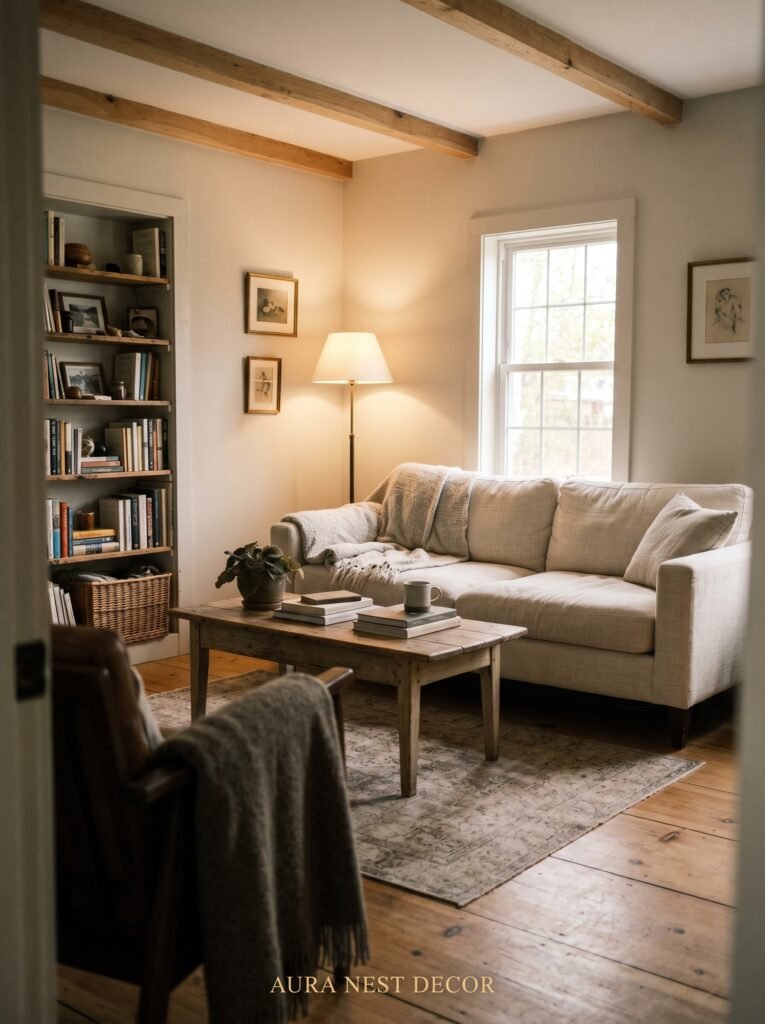
After everything else — the sofa, the rug, the lighting, the vintage pieces — the wall color is what ties it all together or quietly sabotages it.
Warm white, as we discussed, is the classic answer. And it’s classic for a reason: it reflects light, it makes small rooms feel larger, and it provides a backdrop that makes every other element look considered.
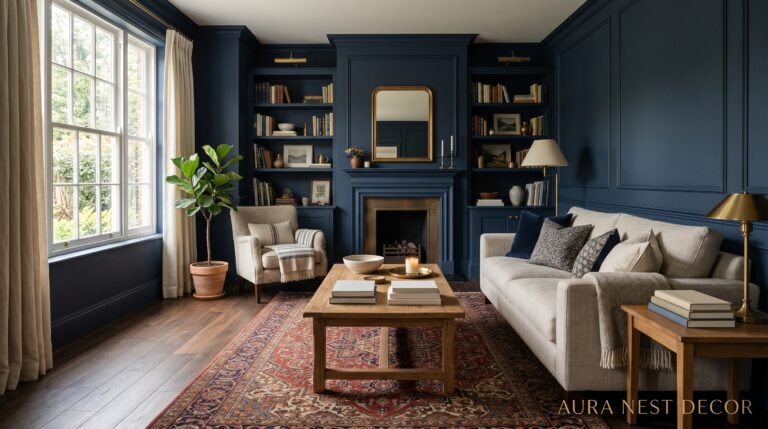
But here’s the braver option that more people should try: paint one wall in a warm, deep tone — a soft sage, a dusty terracotta, an earthy warm grey — and leave the rest warm white. Not an accent wall in the way people did it in 2005, with one random red wall in a beige room. Rather, a thoughtfully chosen wall — behind the sofa, on the chimney breast — that adds depth and intimacy without closing the room in.
A small room with one warm, moody wall and three white ones reads surprisingly large, because the contrast creates the illusion of depth. The eye thinks there’s more space than there is.
Try it. The worst case is you repaint. The best case is you walk into your living room every morning and feel genuinely happy about where you live.
—
❓ FAQ
Q: How do I make a small living room feel bigger without knocking down walls? A: Use a large rug, hang curtains close to the ceiling, keep your color palette cohesive and light, and resist the urge to fill every surface. White or warm neutral walls reflect light and make the space feel open. Mirrors placed opposite a window also do a remarkable amount of work in a small room.
Q: Is modern farmhouse decor the same in the US and UK? A: The aesthetic is closely aligned — both lean on natural textures, neutral palettes, and a mix of old and new. UK homes often have original period features like Victorian fireplaces and sash windows that actually make the farmhouse look more authentic. The main difference is sourcing: US readers lean toward shiplap and American reclaimed wood, while UK readers often have easier access to genuine antiques and original architectural features.
Q: How do I keep a modern farmhouse living room from looking dated? A: The key is leaning into the “modern” half of the label as much as the “farmhouse” half. Keep furniture lines clean. Avoid anything too themed or themed or overtly rustic — no mason jar light fixtures, no “live laugh love” signage. Let the warmth come from textures and natural materials, not from farmhouse-branded accessories. The best modern farmhouse rooms feel timeless because they’re built on restraint.
—
💭 Final Thoughts
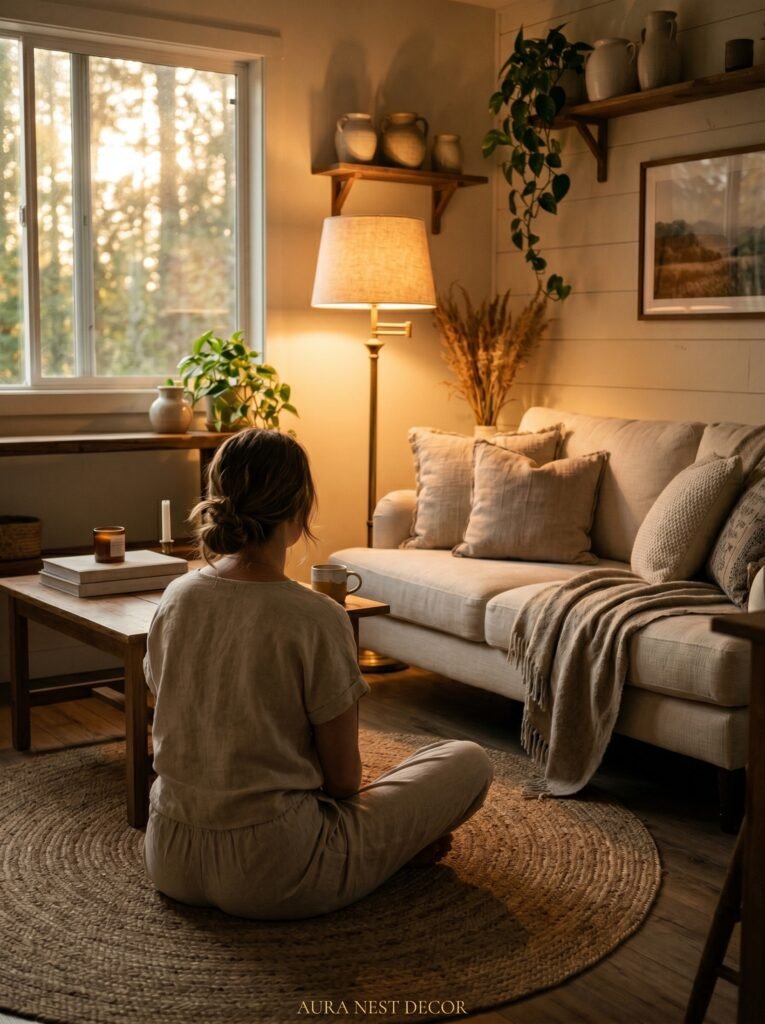
A small modern farmhouse living room isn’t about replicating a look you found on Pinterest. It’s about creating a space that feels completely, specifically yours — warm, honest, layered with things you actually love. The small size is an advantage, not a limitation; it just means every decision counts a little more.
What’s the one element in your living room that’s been quietly bothering you — the rug, the lighting, the wall color? Sometimes fixing just that one thing changes everything.