The Fireplace Is Back — And the Modern Farmhouse Living Room Has Never Looked This Good
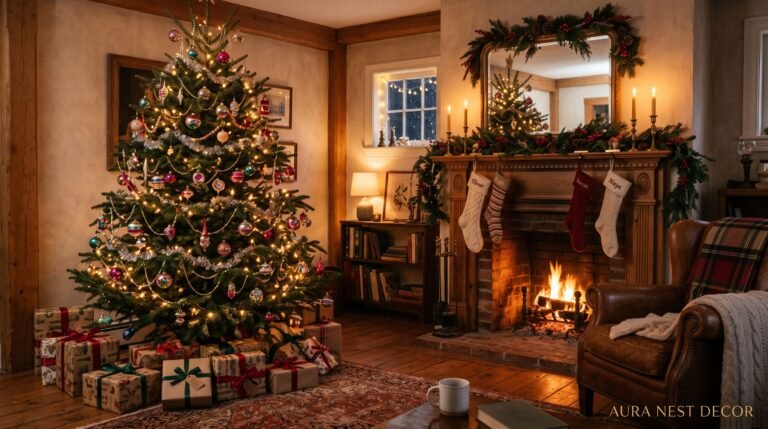
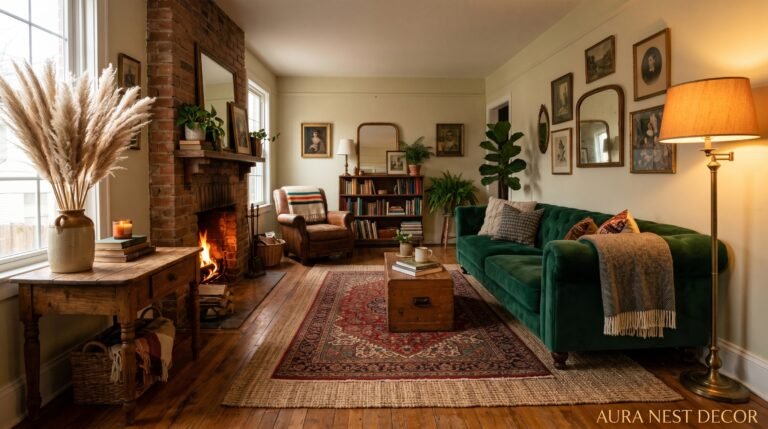
You know the moment. You walk into a living room and something stops you. Not because it’s perfect — but because it feels lived in and loved at the same time. That’s what a modern farmhouse living room with a fireplace gets right when it’s done well. And getting it right? Easier than you think.
—
1. The Difference Between “Farmhouse” and Actually Good Farmhouse
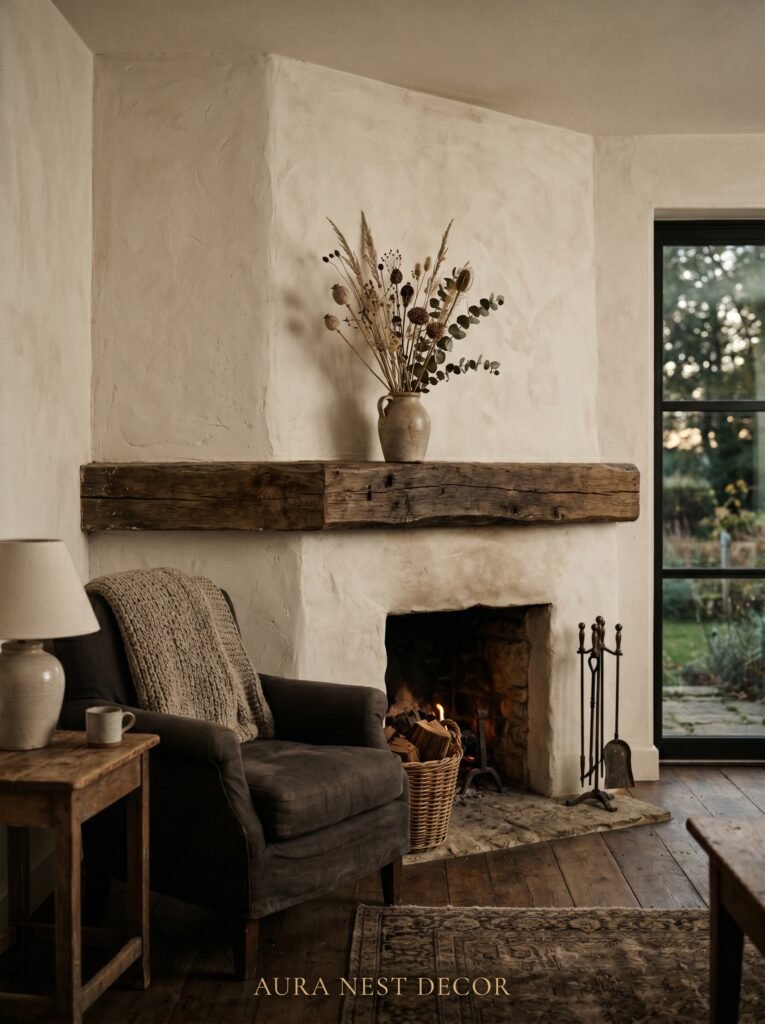
Let’s be honest. There was a version of the farmhouse trend that went sideways. Shiplap on every wall, a chalkboard sign that said “gather,” a mason jar holding exactly three wheat stalks. That era has passed. And honestly? Good riddance.
The modern farmhouse living room has evolved into something far more interesting. It takes the warmth and texture of traditional farmhouse style and filters it through a cleaner, more considered lens. Think natural linen rather than burlap. Aged wood rather than distressed-for-the-sake-of-it faux finishes. Neutral color palettes that feel calm and deliberate rather than bland. The difference between the two is intention. Old farmhouse borrowed every signifier without thinking about why. Modern farmhouse asks: does this piece feel authentic? Does it have weight? Does it earn its place on the mantel?
When you have a fireplace as your focal point — which you absolutely should be leaning into — the whole room has an anchor. Everything else can breathe because something real is holding the space together.
“A fireplace doesn’t just heat a room. It gives every other decision in the room somewhere to point.”
2. The Mantel Moment That Most People Get Wrong
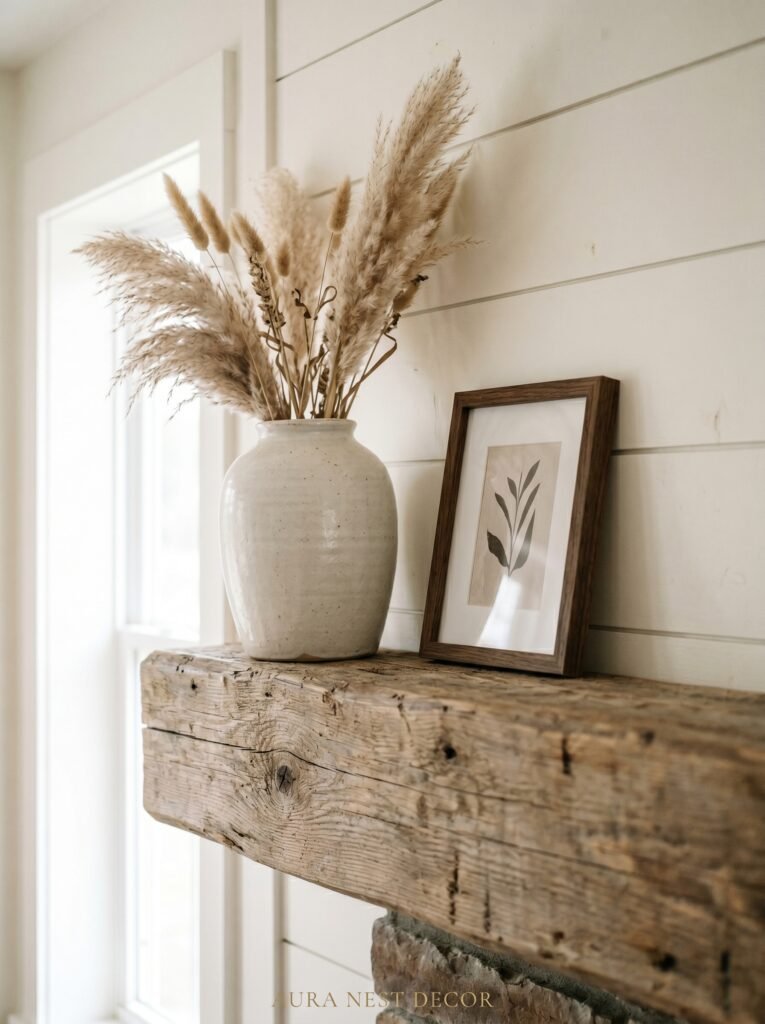
The mantel is having its cultural moment right now. And yet most people either overload it into a seasonal shrine or leave it so bare it looks like they just moved in.
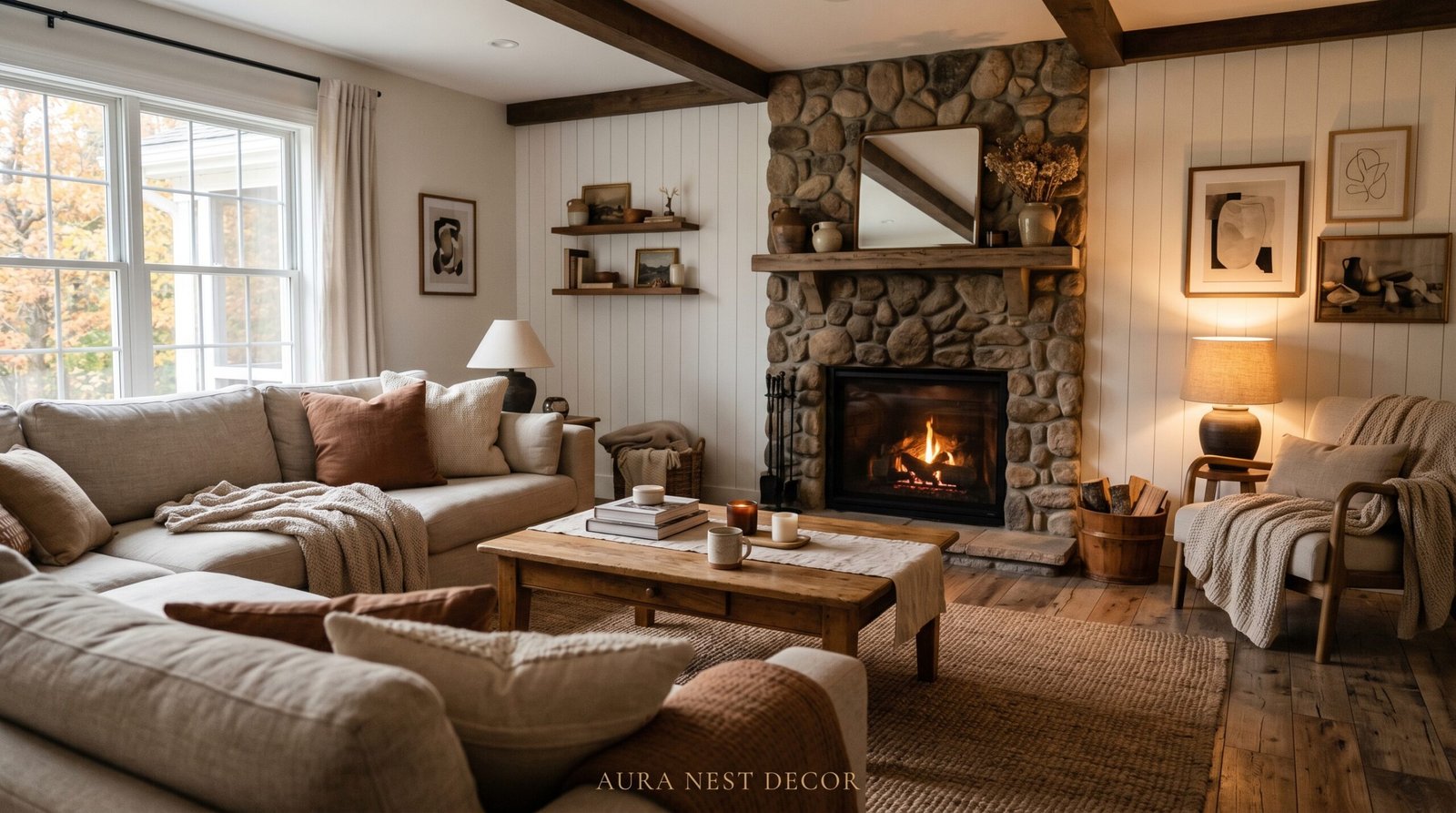
Here’s what actually works: asymmetry with intention. Pick one tall element — a large ceramic vase, a vintage oil painting leaning against the wall, a mirror that’s slightly too big. Then build around it with smaller objects in odd numbers. A stack of two or three well-worn books. A single candlestick in aged brass. A piece of dried botanicals that isn’t trying too hard.
The key is breathing room. Not every inch needs to be occupied. In the UK especially, Victorian fireplaces with ornate surrounds look stunning when styled minimally — the architecture does the heavy lifting and you step back and let it. American farmhouse mantels, often wider and more horizontal, can handle a little more layering, but the same principle applies: less competing, more curating.
What you’re going for is a mantel that looks like it happened over time. Like things collected there because they meant something. Not because someone followed a Pinterest board to the letter — even if, technically, that’s exactly what happened.
3. The Color That Keeps Showing Up in Every Beautiful Farmhouse Living Room Right Now
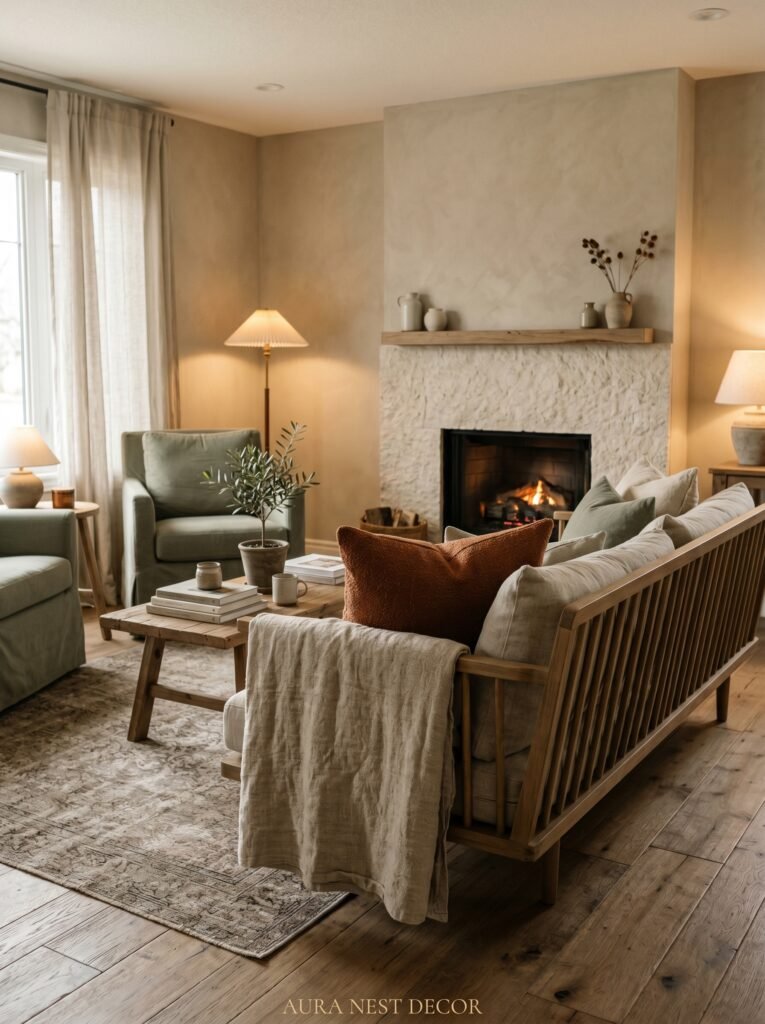
It’s not white. It’s not even off-white. It’s something warmer and more complex — a color that reads almost like natural linen on the wall, somewhere in the territory of warm greige or a soft, slightly toasty taupe.
Paint companies in both the US and UK are calling it different things. Farrow & Ball’s “Elephant’s Breath” does something extraordinary in a room with firelight — it shifts from cool grey in the morning to an almost golden tone in the evening. Benjamin Moore’s “Pale Oak” is doing something similar in American living rooms right now. These aren’t boring neutrals. They’re colors that perform — they change with the light, they make stone and wood look richer, and they make a fireplace look like it’s been the center of the home for a hundred years.
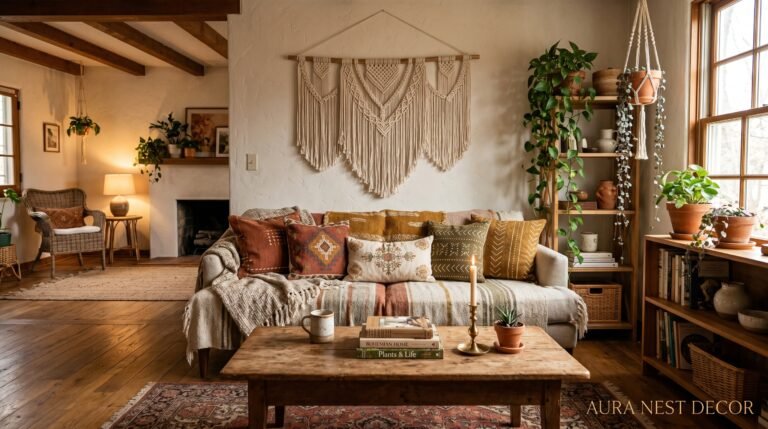
The walls are doing the work so the furniture doesn’t have to be loud. That’s the whole philosophy. One thoughtful backdrop, and then you bring in texture and warmth through layered wool throws, a jute rug underfoot, cushions in cream and charcoal and the occasional muted rust.
4. Stone, Brick, Shiplap, Plaster — Choosing What Actually Belongs Around Your Fireplace
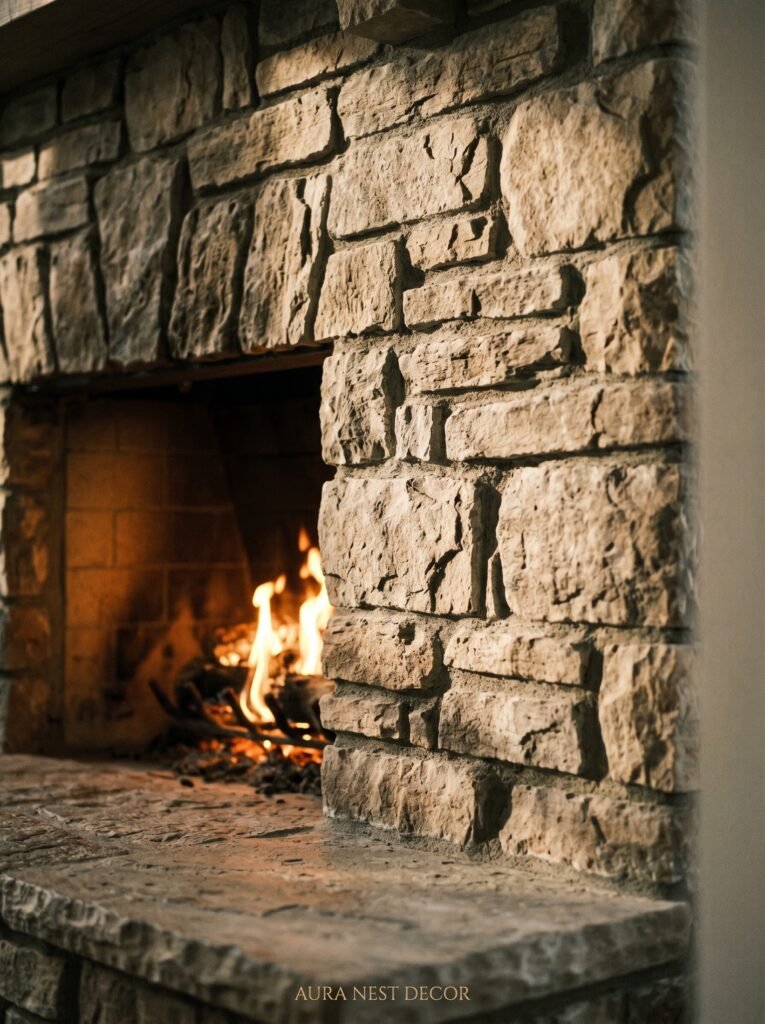
This is where people freeze. And understandably so — the fireplace surround is one of the most permanent decisions in the room.
Stone is having an absolute moment. Stacked ledger stone in a warm grey or beige gives a fireplace that sense of geology, of permanence, of something that couldn’t have been assembled overnight. It photographs beautifully. It reads as both rugged and refined. In a modern farmhouse context, it hits every note.
Brick — especially original exposed brick if you’re fortunate enough to have it — needs very little help. Limewash it if it’s the wrong color for the room. A thin coat of diluted white paint and a dry brush gives aged brick that soft, chalky look that feels more European farmhouse, more considered, without erasing the texture underneath.
Shiplap directly around a fireplace looks best in white or creamy off-white, and works better in American-style rooms where the fireplace is set into a larger chimney breast. British living rooms with smaller, more ornate surrounds often look better with painted wood paneling or simply a beautiful plasterwork surround left to speak for itself.
“Whatever you choose, it should look like it could only be in this room. Not sourced from a catalog. Found.”
5. The One Rule That Makes Any Farmhouse Fireplace Seating Feel Like a Destination
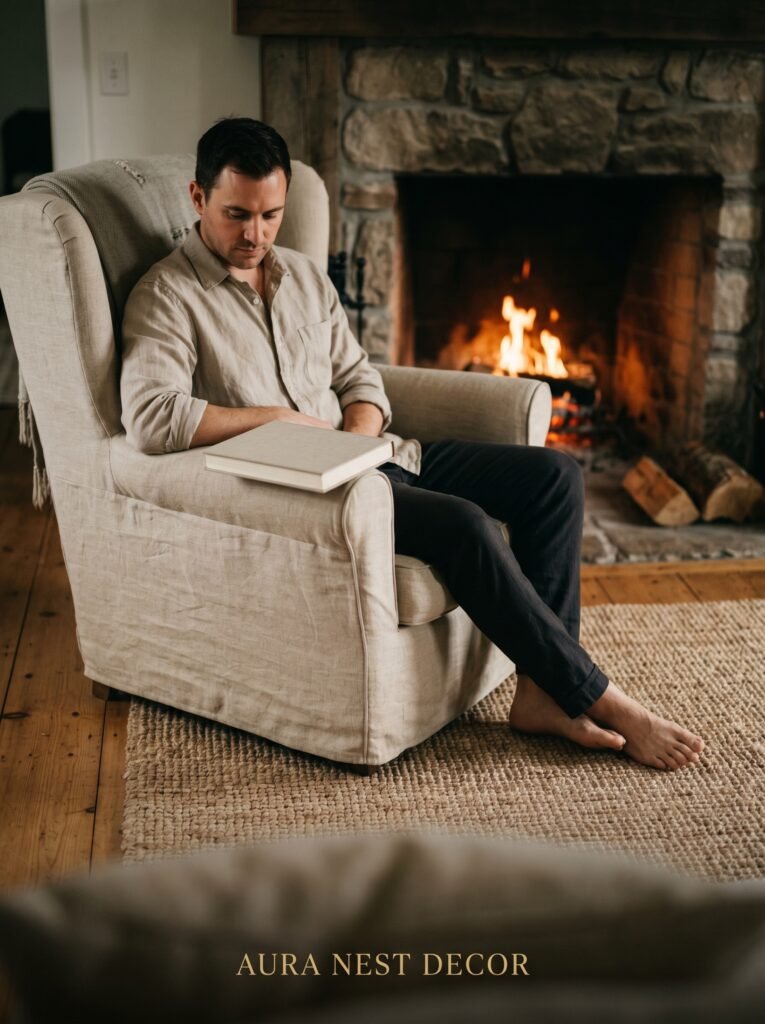
Symmetry is comfortable. But it’s also a little expected.
The best modern farmhouse fireplace seating arrangements aren’t perfectly mirrored. One large sofa facing the fire, flanked by a single accent chair on one side and an open stretch of floor — maybe with a pouffe or a low linen ottoman — on the other. It looks casual. Like the room has been used and adjusted over years of actual living.
What you do want to keep consistent is height and tone. If your sofa sits low and looks relaxed, your chairs shouldn’t be upright and formal. If everything is in natural, muted tones, that one velvet chair in deep forest green can actually work — it’s the surprise that makes the whole room feel considered rather than safe.
Keep the rug large. This is the number one styling error in living rooms on both sides of the Atlantic — a rug that’s too small, marooned in the middle of the floor with all the furniture floating around it. Anchor it properly. All four legs of the sofa on the rug. The fireplace seating pulled inward, connected by the textile underneath.
6. Lighting Decisions That Actually Change How the Fireplace Feels at Night
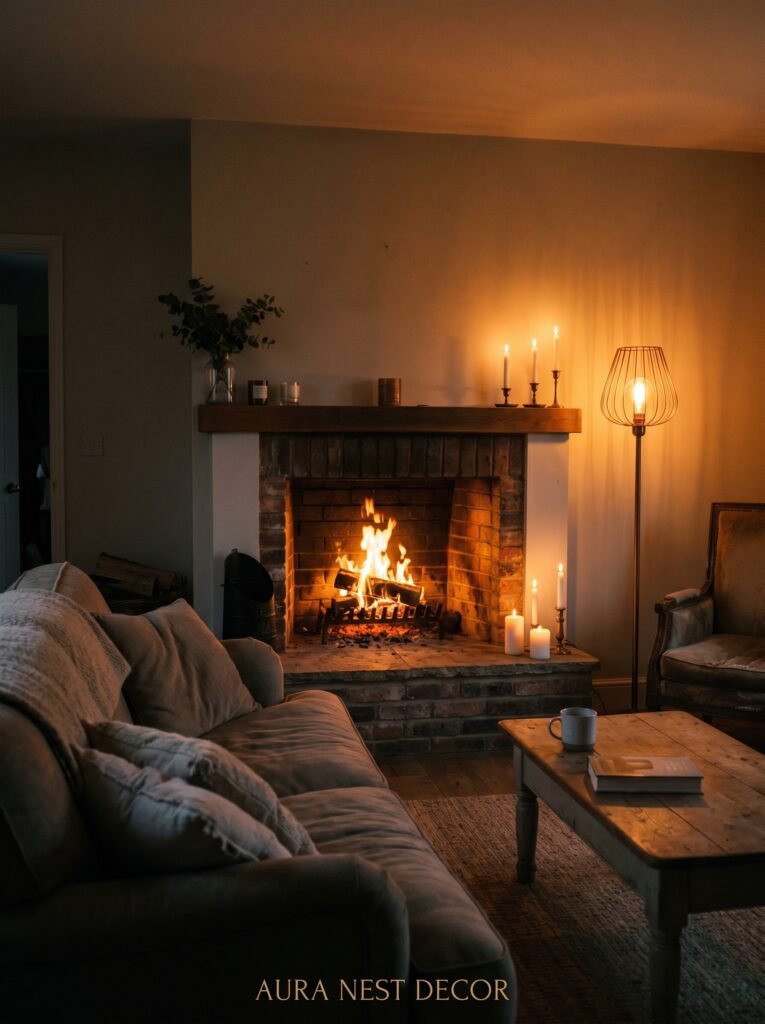
The amber glow of a fireplace at 7pm on a Tuesday evening in November is one of the most genuinely satisfying things in domestic life. But that glow can be undercut — completely sabotaged — by the wrong ambient lighting choices.
Overhead lighting is the enemy. Not entirely, but mostly. In a farmhouse living room built around a fireplace, you want layered light sources that stay low and warm. Table lamps with fabric shades in cream or natural linen. Wall sconces on dimmers. A floor lamp tucked into the corner that throws light upward, not outward.
Edison bulbs — real ones or good LED versions — in a temperature of 2200K to 2700K will match the fireplace’s warmth rather than competing with it. The room should feel like it’s lit from the inside. Like the light is coming from within the room, from objects at human height, not from above the way an office or kitchen is lit.
American farmhouse rooms often have the square footage to play with pendant lighting above a reading corner or a ceiling fixture on a dimmer as a base layer. British rooms, which tend to be smaller and lower, often benefit from cutting the ceiling light almost entirely after dark and relying entirely on lamps and the fire itself.
7. Natural Materials That Do the Heavy Lifting Without Trying Too Hard
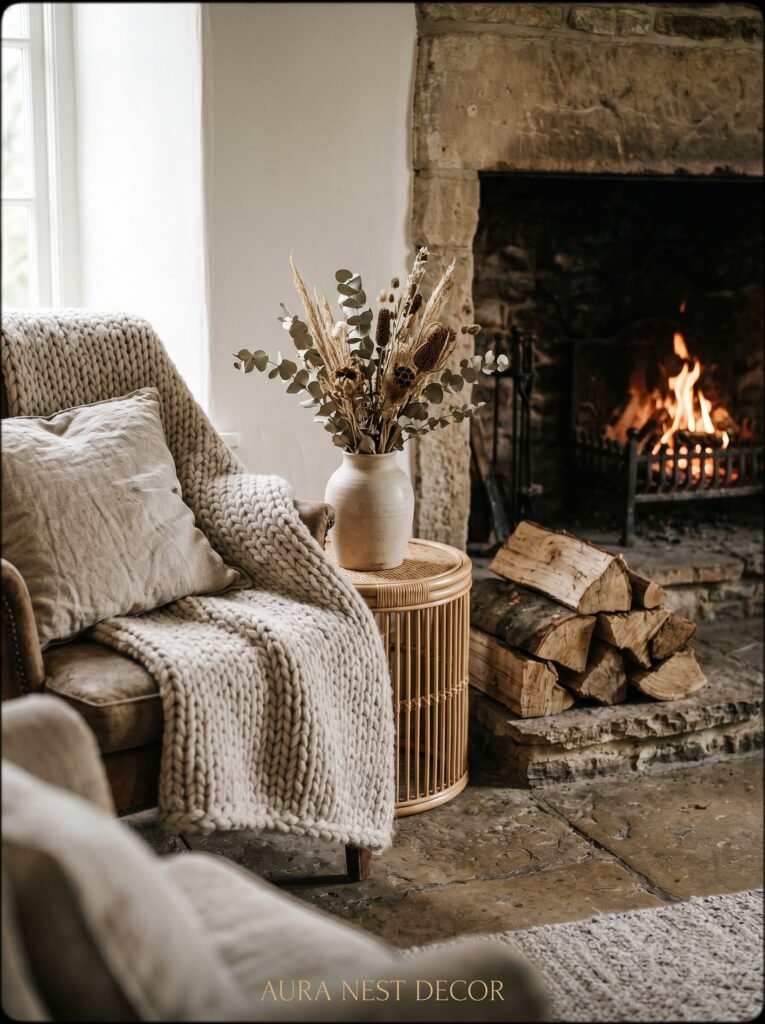
Jute. Linen. Raw oak. Aged brass. Unglazed ceramic.
These five materials, in various combinations, form the backbone of every well-done modern farmhouse living room that still looks good five years later. They’re not trendy in the reactive sense. They’re enduring because they’re real — they have texture you can feel before you touch them, warmth you can see from across the room.
A jute rug underfoot feels completely different from a synthetic alternative. It sounds different when you walk across it. It ages in a way that looks right rather than worn out. Similarly, a linen sofa cover — even a slipcover, honestly — in natural, undyed fabric will develop character over time. Small creases that look lived in rather than just old.
Aged brass is replacing gold and even matte black as the hardware and accent metal of choice in this style right now. It has the warmth without the flash. A brass log holder beside the fireplace. Brass picture frames on the mantel. Brass drawer pulls on built-in shelving if you have it.
“Real materials tell the truth about what they are. And in a home, that honesty reads as warmth.”
8. Built-In Shelving on Either Side of the Fireplace — Done Right vs. Done Wrong
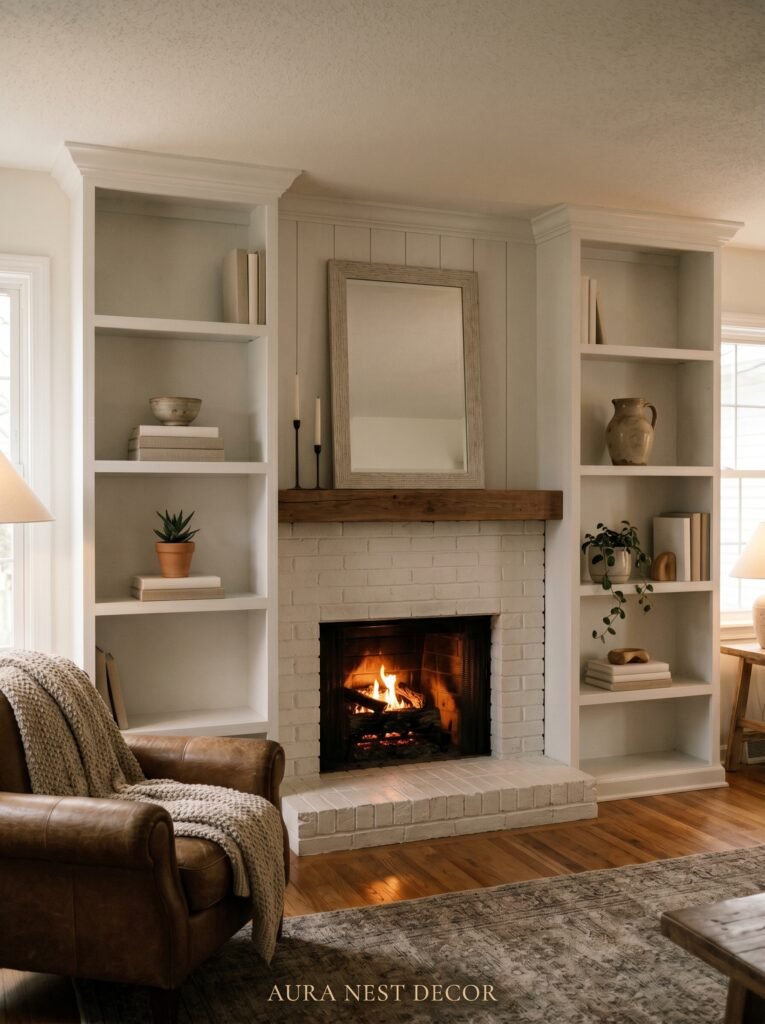
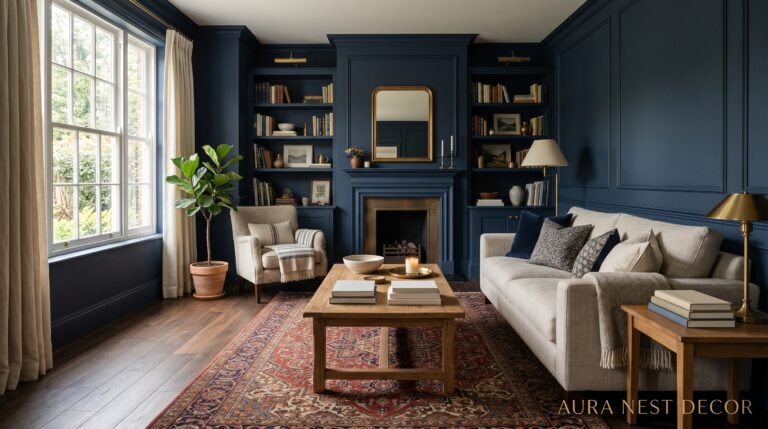
Flanking a fireplace with built-in shelving is one of the most coveted design moves in farmhouse living rooms. It turns a wall into an architectural moment. Done well, it looks considered and collected. Done wrong, it looks like an IKEA showroom that someone gave up styling halfway through.
The mistake is treating the shelves like storage. They’re not storage — they’re display. That means editing ruthlessly. Pull out everything first. Every book, every object, every basket and box. Then put back only what you’d be happy for a guest to look at for thirty seconds.
Books grouped by color rather than author look better in a styled room. You lose some functionality — you can’t find anything by subject — but the visual calm is worth it. Intersperse books with objects: a ceramic bowl, a small piece of driftwood, a framed photograph with a simple white border. Vary the heights. Let some shelves breathe with only two or three things on them.
Baskets on lower shelves are honest about hiding things. Woven seagrass or wicker baskets look right in this context and can hold blankets, remote controls, children’s things. Function and beauty don’t have to fight.
9. The Rug That Ties the Whole Farmhouse Fireplace Room Together
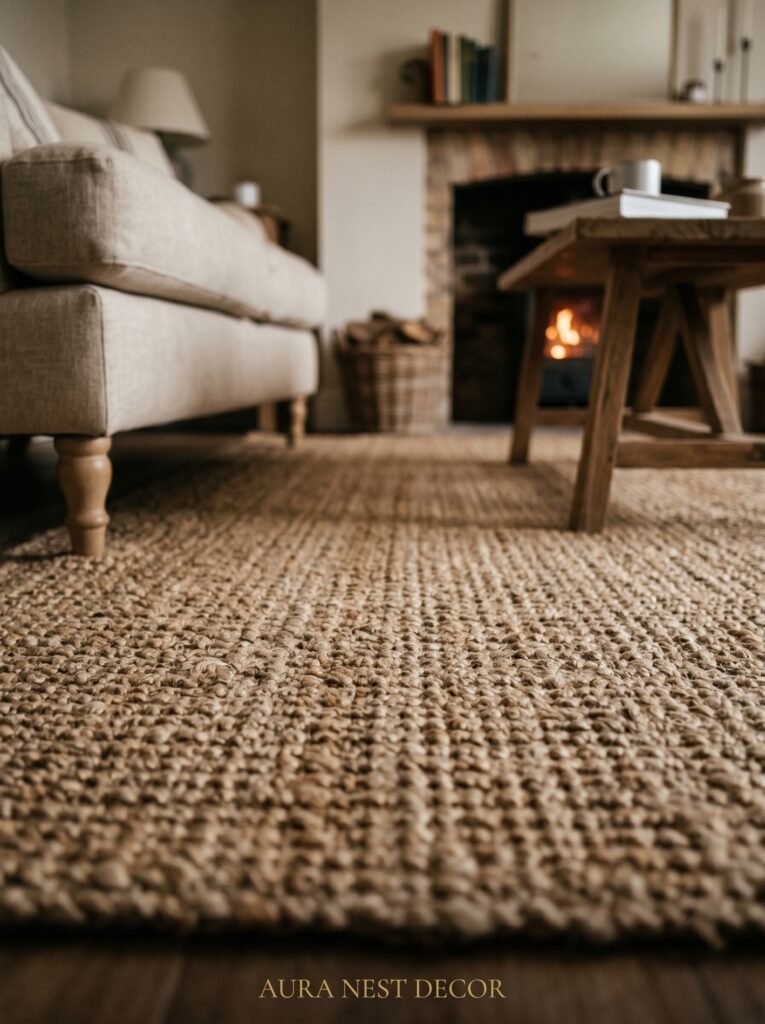
A rug in a modern farmhouse living room is doing more work than any single piece of furniture. It defines the seating zone, adds the texture layer that makes the room feel warm rather than cold, and sets the color temperature of the entire space.
The most beautiful choices right now are woven wool rugs in natural, undyed tones — creamy whites, warm greys, the occasional muted terracotta stripe. Turkish kilim-style flatweaves work brilliantly because they have pattern and age simultaneously. A new kilim looks like it’s been there for decades. A vintage one looks like it was meant to be there forever.
Avoid anything with a high pile in a room with a working fireplace — purely practical. Go for flatweave or a low-pile wool. And go bigger than feels comfortable on paper. In a 14-by-18 foot room, you want a rug that’s at least 9-by-12. It should feel abundant, not cautious.
10. Fireplace Accessories That Don’t Look Like They Came From a Big Box Store
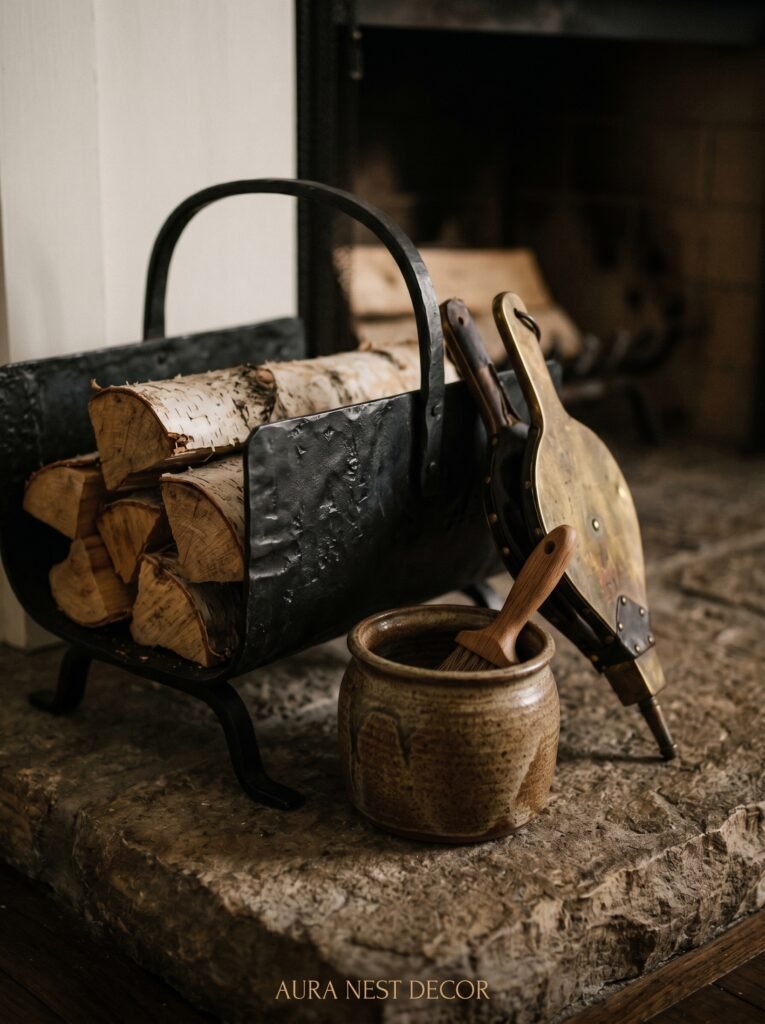
The log holder, the fire screen, the poker set. These objects live at the heart of the room and they’re often the afterthought — grabbed quickly from a home improvement store because nobody thought about them until the fireplace was already installed.
But they matter. They’re sitting in front of the most looked-at wall in your home.
Handforged iron tools with minimal detailing look right in a modern farmhouse context. Simple silhouettes, no fussy scrollwork, just honest function and good weight. A log holder in raw or blackened steel with clean lines. A fire screen in black mesh or wrought iron that doesn’t try to be decorative but earns its place through restraint.
For decorative wood storage — if you keep logs stacked beside the fireplace — a simple galvanized metal bin or a slatted wooden crate reads as completely authentic in this style. Keep a few good-looking pieces of wood on top. It’s the small things.
11. What to Do When Your Fireplace Room Is Actually Quite Small
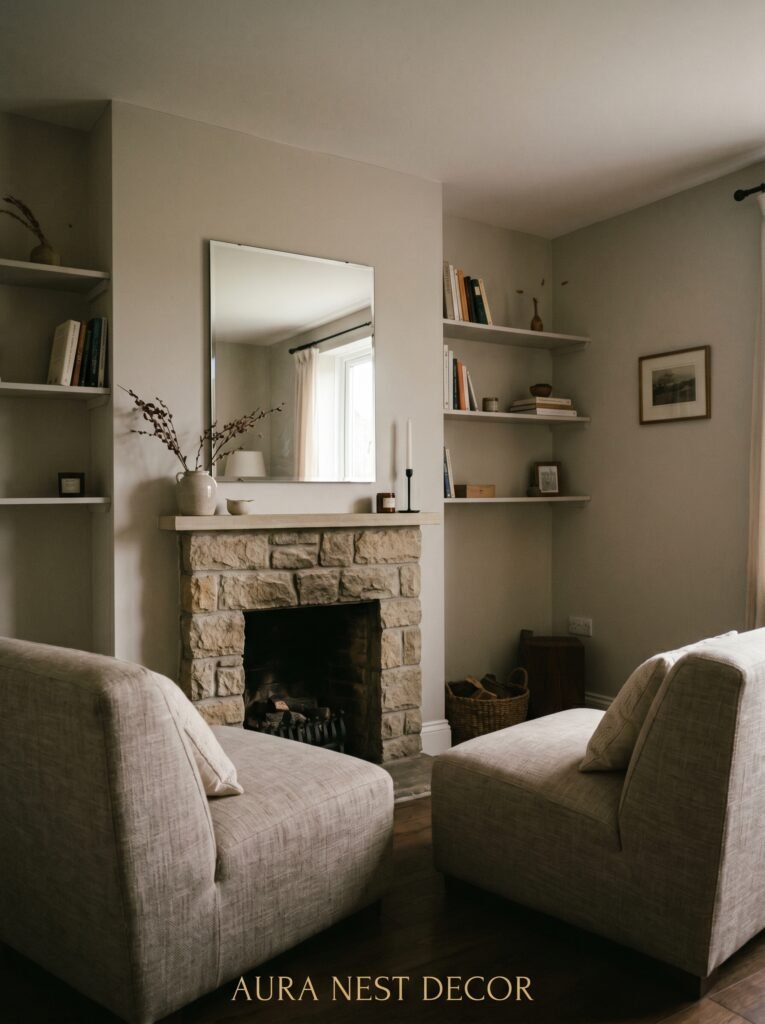
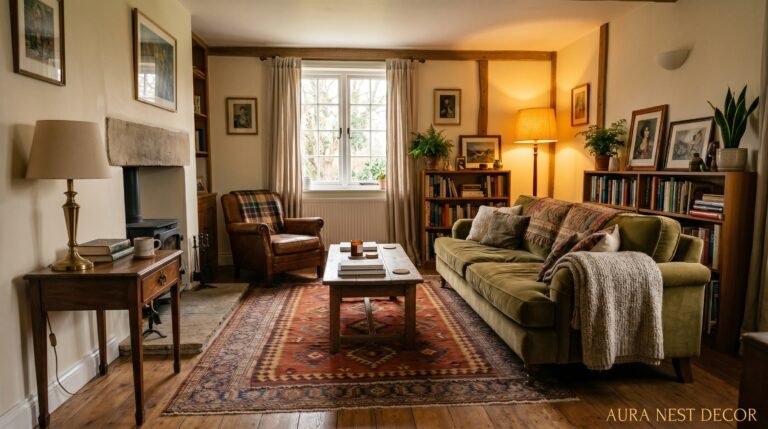
British living rooms, in particular, often present a challenge: the fireplace is beautiful but the room around it is modest. The temptation is to push furniture back against the walls to create more floor space. Resist this.
A small room with furniture pulled away from the walls into a cohesive grouping always looks larger and more intentional than one where the sofa is pressed flat against the plaster. It creates a sense of depth, of layering, of a room that contains a world rather than being emptied out.
Scale down rather than out. One compact loveseat plus two low chairs reads as deliberately intimate rather than cramped. A small fireplace with a large mirror above it doubles the sense of depth. Pale walls bounce the firelight. Fewer objects, chosen more carefully, give each one more room to matter.
In a small American apartment or a British terrace house, the modern farmhouse fireplace room can still feel enormous — in the emotional sense. That’s the only sense that counts.
12. The Art of Layering — Why the Best Farmhouse Rooms Look Collected, Not Decorated
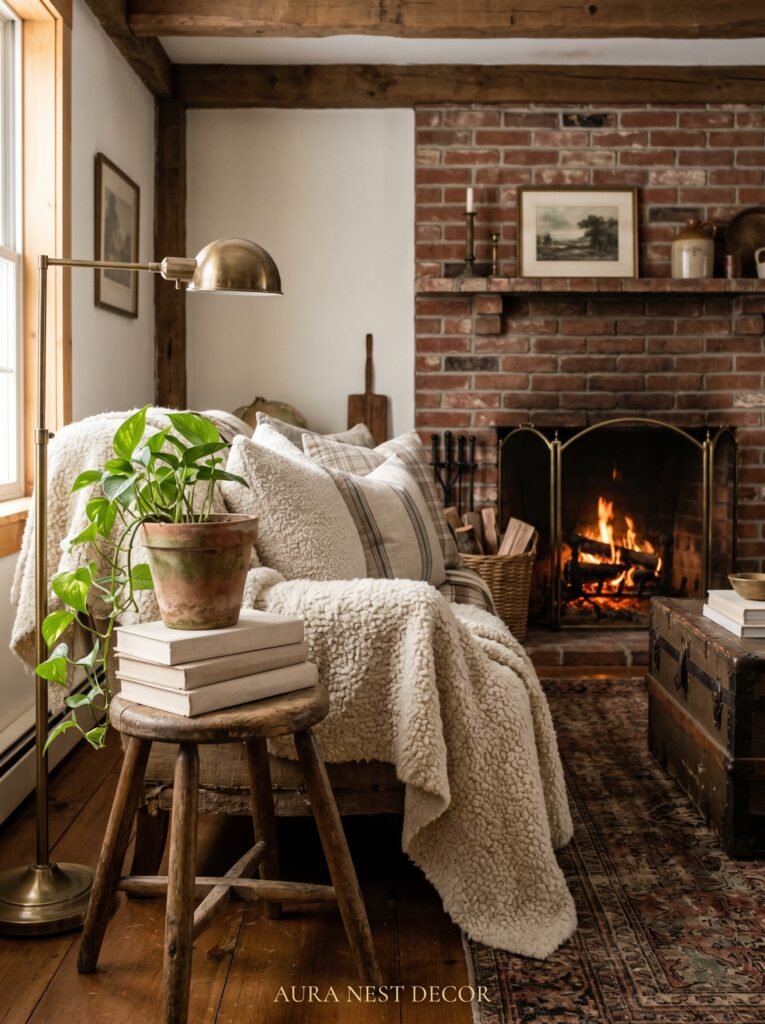
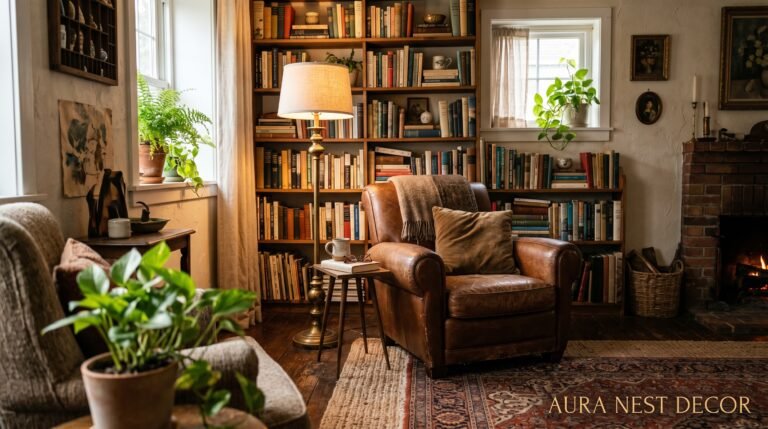
The rooms that stop people mid-scroll on Pinterest, the ones that feel authentic and alive and lived in — they all share one quality. They look like they weren’t finished in an afternoon.
That’s actually achievable on purpose. Layer in time. Buy the sofa, live with it for a month. Then add the rug. Then the lamps. Then the art — one piece at a time, chosen because it means something rather than because it matches. Keep a small collection of things you love on the mantel and let them evolve with the seasons without completely overhauling everything at once.
The worn leather journal on the coffee table. The stack of three design books with their spines facing the same direction. The small framed botanical print that you found at a market and can’t fully explain but love completely. These things cannot be bought as a set. They accumulate.
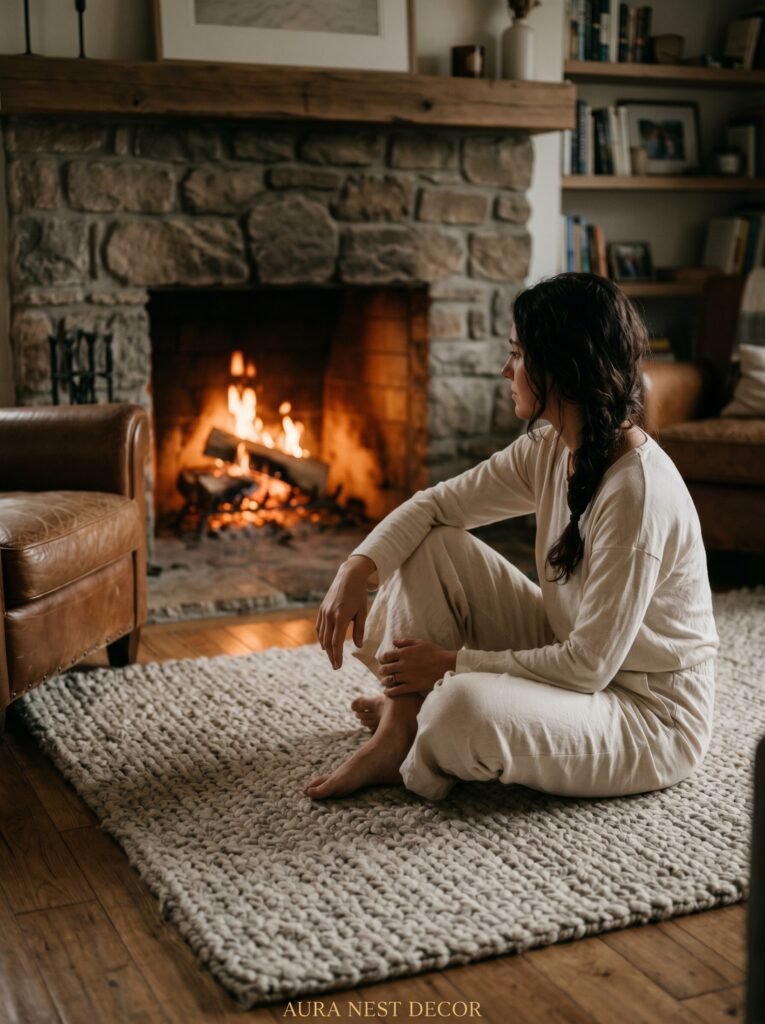
That’s the real secret to the modern farmhouse living room with a fireplace that feels like it belongs to a human life rather than a mood board. You have to let it actually become your room. The fireplace just makes it warmer while it does.
—
❓ FAQ
Q: How do I modernize an old or outdated fireplace surround without replacing it? A: Limewashing or painting the surround is the most impactful low-cost option — chalk paint in white or warm cream can completely transform dated brown brick or old tile. If the shape of the surround is the issue, adding a simple plywood or MDF overlay painted in the same tone as the wall can make it look architectural and intentional rather than tired.
Q: Can I create a farmhouse fireplace look without an actual working fireplace? A: Absolutely. A recessed electric fireplace insert set into a shiplap or stone-clad chimney breast looks genuinely convincing in photographs and in person. The key is building the full chimney breast structure — without that vertical presence in the room, a flat wall insert feels incomplete. Some of the most beautiful modern farmhouse rooms in UK flats use electric inserts in beautifully built surrounds.
Q: What’s the best approach to styling a fireplace mantel for every season without it looking too seasonal? A: Anchor the mantel with one or two permanent objects that don’t change — a large mirror, a meaningful piece of art, a significant ceramic piece. Then rotate one or two smaller items seasonally: dried botanicals in autumn, simple greenery in spring, candles in winter. The constant items provide stability; the rotating ones give the room life without requiring a full overhaul.
—
💭 Final Thoughts
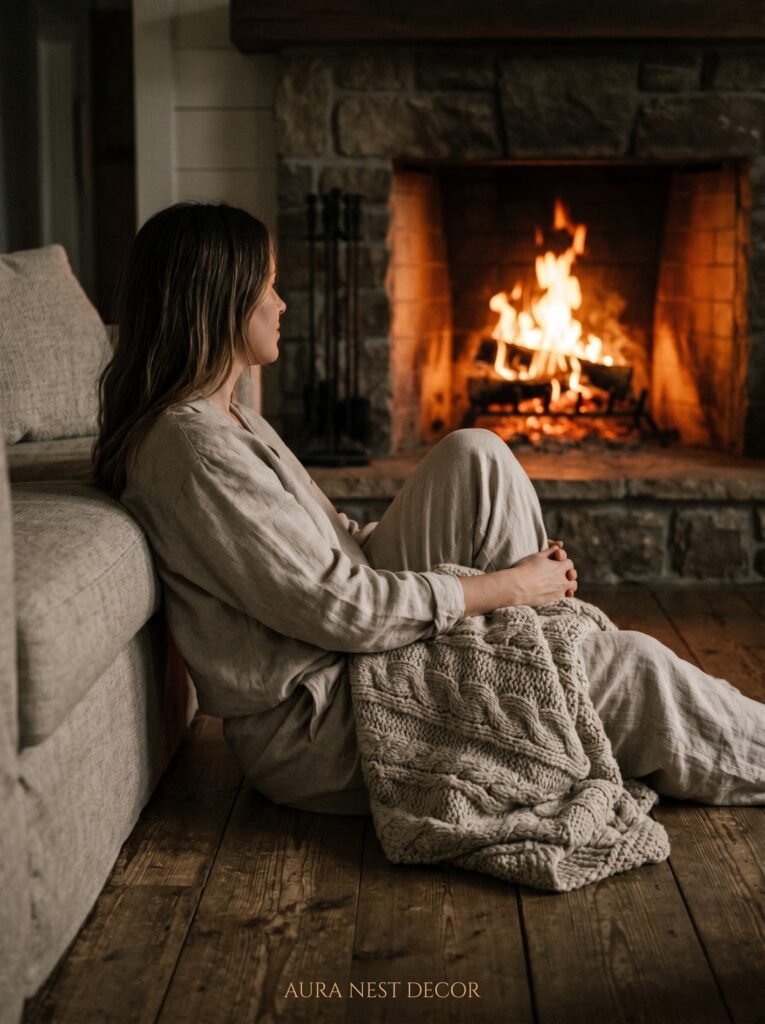
The best modern farmhouse living room with a fireplace isn’t finished — it’s in progress, always. It’s a room that knows what it is and keeps becoming more of itself over time. The fireplace holds the center, and everything else settles around it with the patience of things that belong.
What would you add to the mantel first?