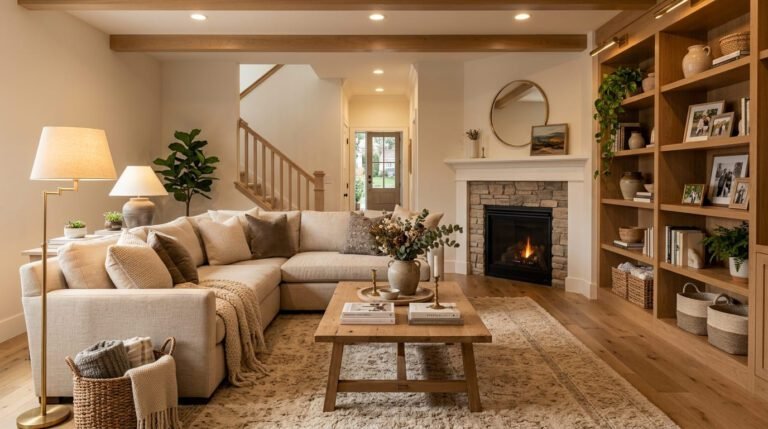
The Side Table Styling Guide That Will Make You Stop Scrolling Every Time You Walk Past It
You know that feeling when you walk into a living room and something just works — and you can’t immediately explain why? Nine times out of ten, it’s a side table done right. Not overloaded, not bare, but exactly right.
—
1. Why Your Side Table Is Actually the Hardest-Working Surface in the Room
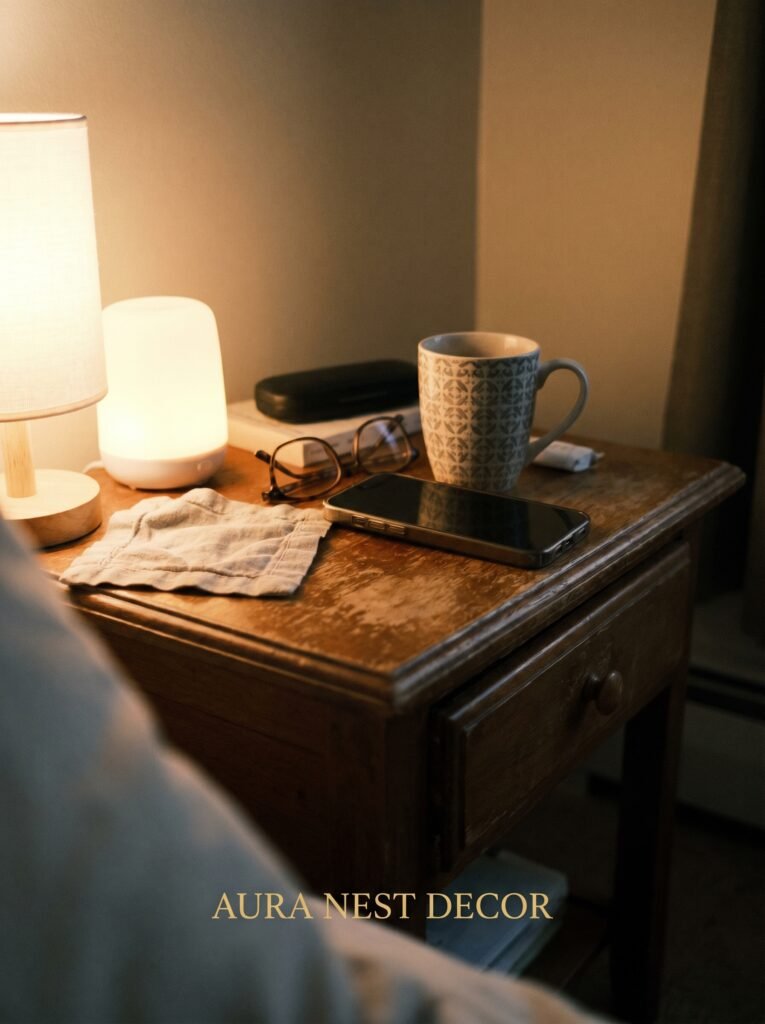
Most people underestimate the side table. They throw a lamp on it, maybe a candle, perhaps a stack of books they keep meaning to read, and call it done. But here’s the thing — your side table is the one surface in the living room that sits at eye level when you’re seated. That matters enormously.
When you’re curled up on the sofa with a cup of tea, your eyes naturally drift sideways. What they land on either creates a moment of quiet satisfaction or a vague, nagging sense of clutter. It’s the difference between a living room that photographs beautifully and one that photographs beautifully and feels good to actually live in.
Interior designers will tell you that the side table is one of the first places they style when they want to give a room personality. It’s small enough that changes feel low-stakes — you’re not repainting a wall — but impactful enough that the right arrangement can genuinely shift the mood of an entire corner.
Think of it as the punctuation mark at the end of a sentence. The sofa is the sentence. The side table is the period, or the em dash, or the exclamation point. Get it right, and everything before it reads better.
“The side table is the punctuation mark of your living room — small, but it changes everything that came before it.”
2. The Three-Level Rule That Every Beautiful Side Table Actually Follows
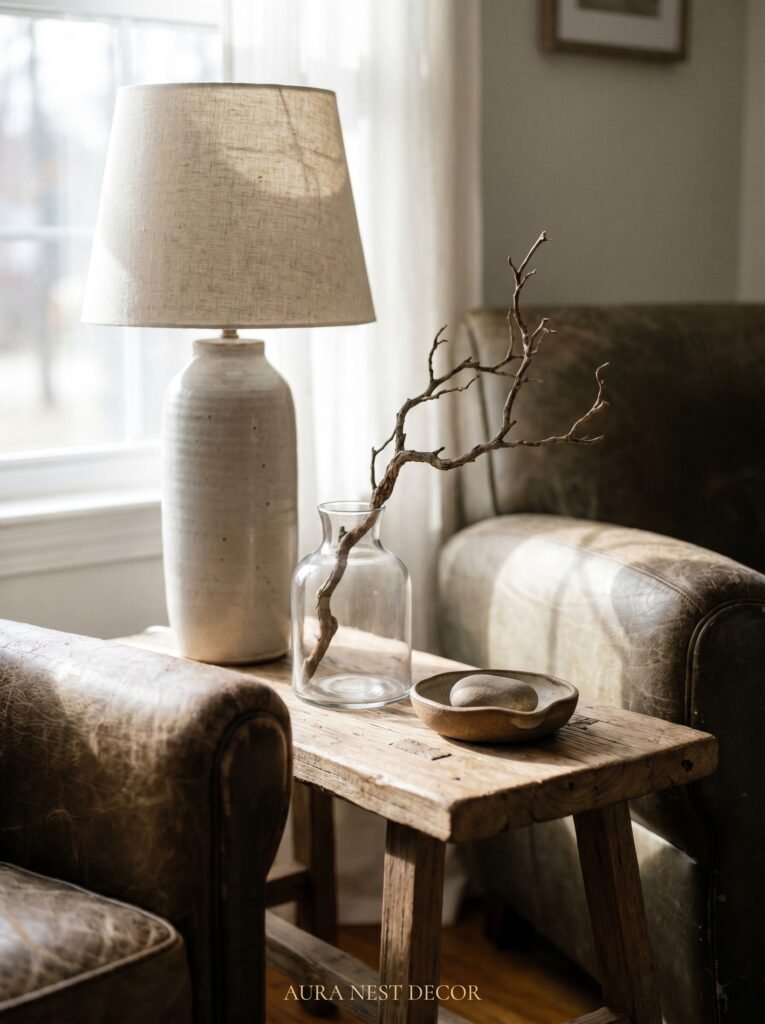
Here’s the styling principle that no one tells you about explicitly, but every gorgeous side table photograph is quietly obeying: vary your heights across three distinct levels.
Low, medium, and tall. That’s it. That’s the secret.
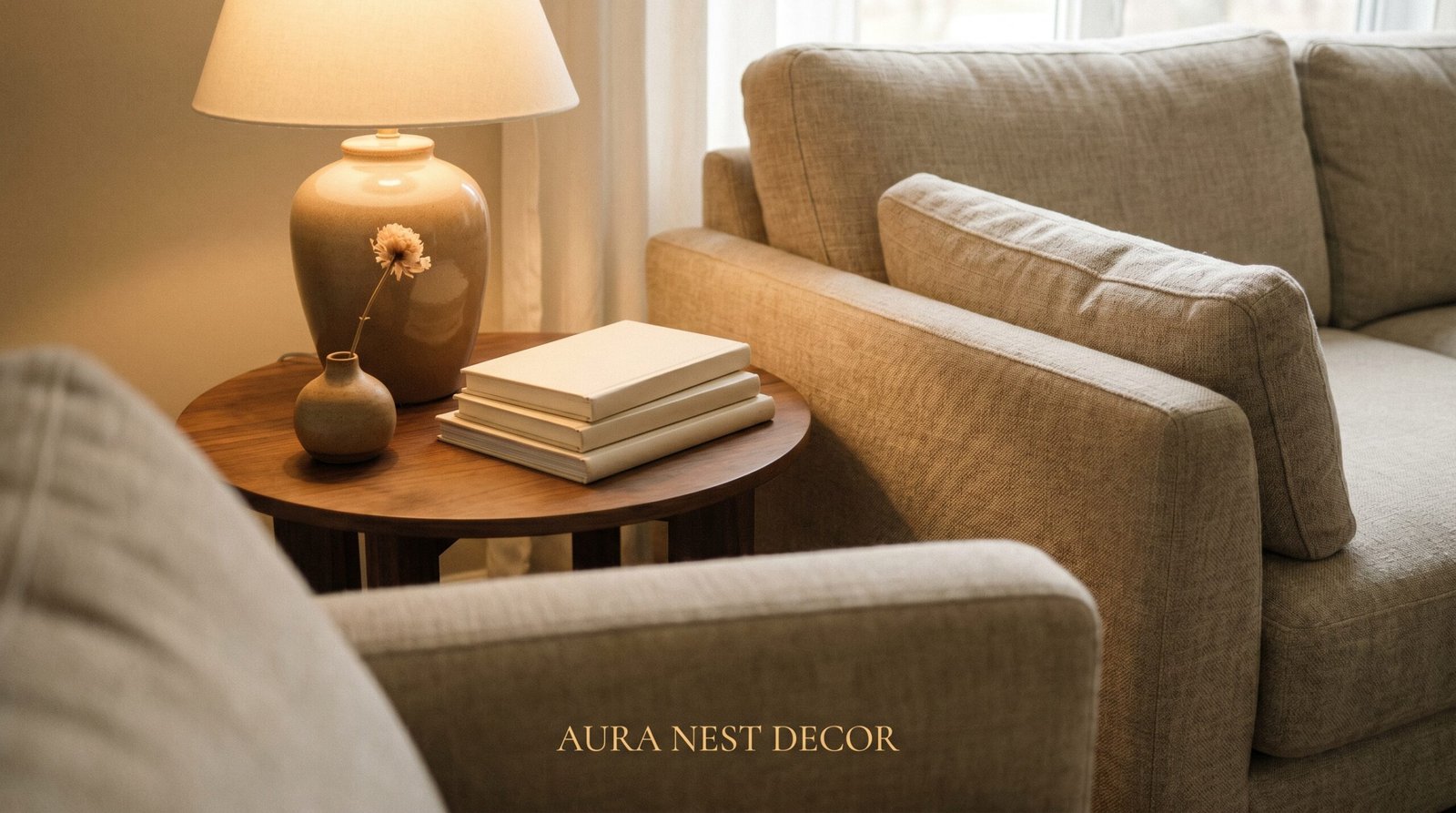
Low could be a small stack of two or three books, a flat decorative tray, or a low bowl of something — dried botanicals, smooth river stones, a cluster of pillar candles at different heights. Medium might be your lamp base, a medium-height vase, or a sculptural object that sits at roughly mid-table height. Tall is whatever draws the eye upward — a lamp with a proper shade, a taller stem vase with dried pampas grass, a tall candlestick.
When everything sits at the same height, the eye has nowhere interesting to travel. It lands flat and moves on. But when you create those three tiers, the eye bounces from level to level and reads the arrangement as intentional, curated, alive.
The ratio matters too. You don’t want equal amounts at each level. Think of it like a good flower arrangement — the tall thing anchors, the medium thing fills, the low thing grounds. And always, always leave some of the table surface visible. Negative space isn’t empty. It’s breathing room, and the eye needs it.
3. The Lamp Question: Height, Shade, and That Specific Glow Nobody Can Stop Pinning
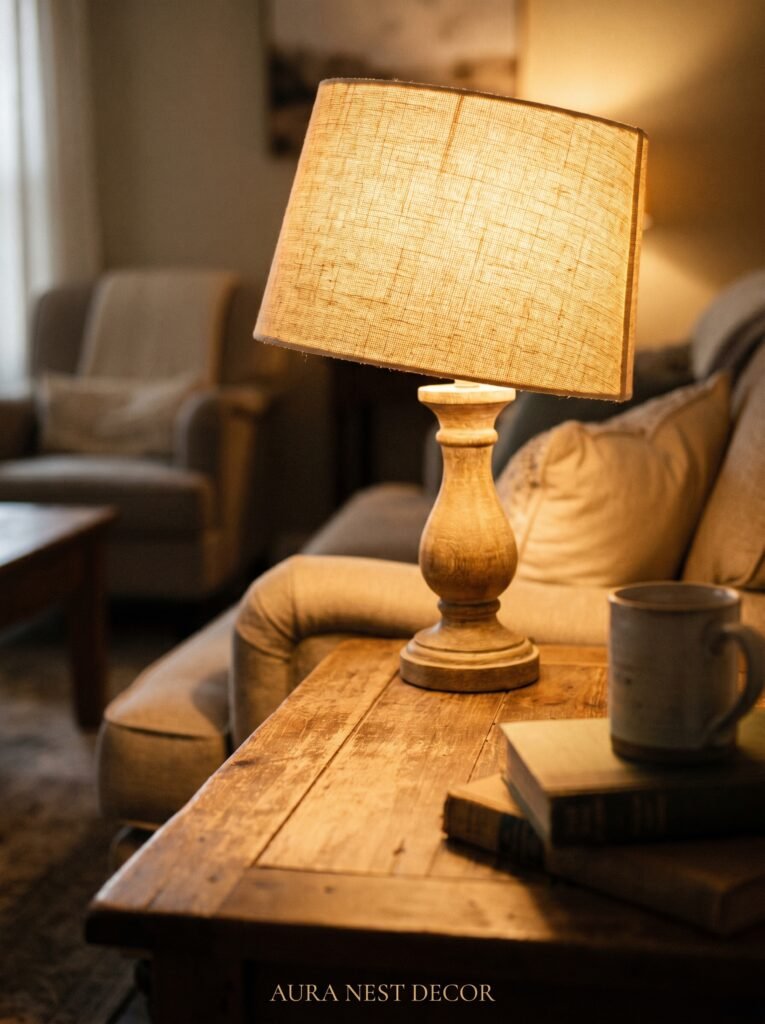
Let’s talk about lamps, because the lamp is almost always the centerpiece of a side table and it’s also where people most often go wrong.
The shade is everything. A drum shade in off-white linen will give you that soft, amber-diffused glow that photographs like a dream and feels like a warm hug at 9pm. A dark shade — deep green, navy, black — flips the whole mood into something more moody and deliberate, casting a tighter circle of light downward. Neither is wrong. Both are very, very different.
Height-wise, the general rule is that the bottom of your lampshade should sit roughly at seated eye level — around 20 to 22 inches from the floor. That means your lamp base and shade combined should hit somewhere between 24 and 28 inches when sitting on a standard side table. If you’re working with a low-slung sofa or a particularly short table, adjust accordingly.
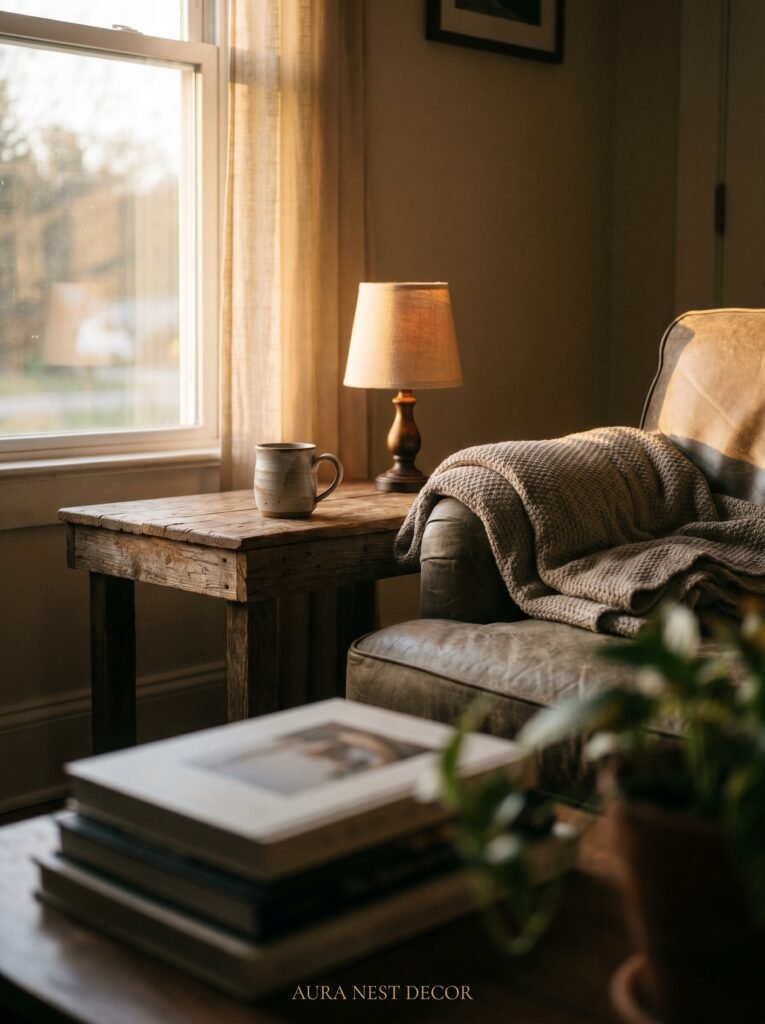
For the US and UK Pinterest crowd obsessed with that warm, lived-in aesthetic right now — think cream shades, ceramic or turned-wood bases, and a bulb with a low kelvin rating around 2700K. That’s the one that produces the amber glow of an Edison bulb at 7pm, the light that makes every room look like it belongs in a design magazine spread shot on a grey October afternoon.
One lamp per side table. Not two. Not zero. One.
4. Stacking Books Like You Actually Mean It (Not Like an Instagram Prop)
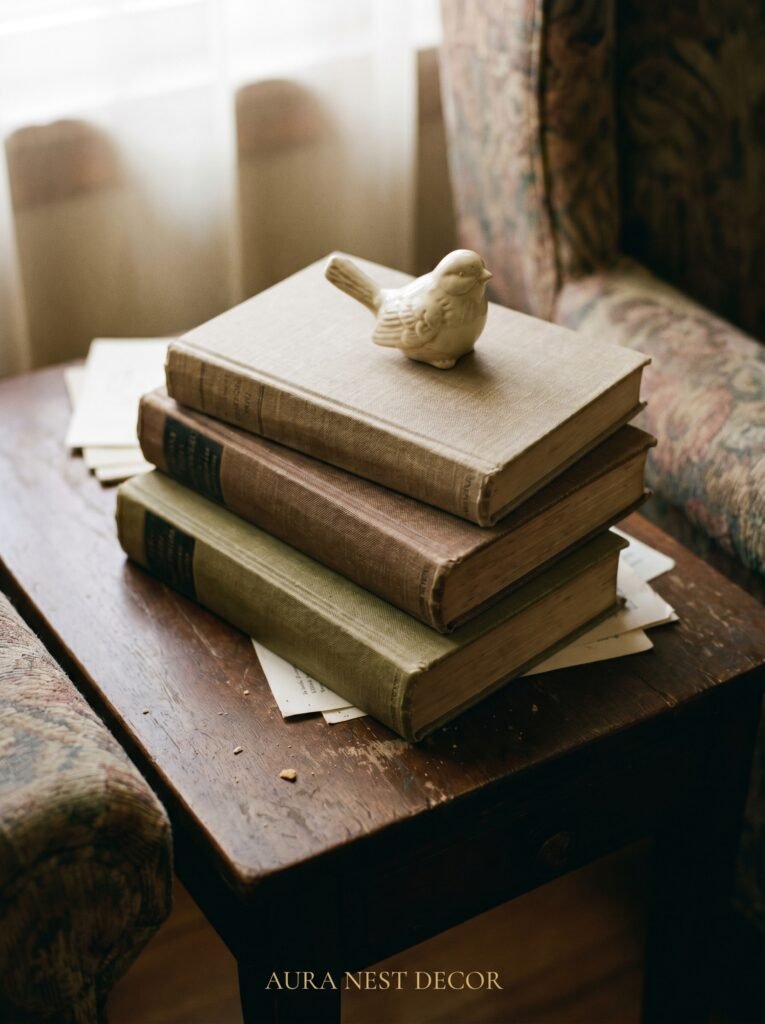
Books on a side table should look like you just set them down, not like you arranged them with a spirit level. There’s a difference, and your eye knows it even if your brain can’t articulate it.
The Pinterest-perfect book stack usually involves two or three volumes, spine facing out if they’re beautiful ones, facing in if they’re not. Stack them horizontally rather than vertically — this is a styling detail, not a library. You want them to create a platform for something else: a small candle, an object you love, a little dish.
“Books on a side table should look like you just set them down, not like you staged them for a photoshoot.”
Choose books with covers or spines that work within your palette. Cream, terracotta, muted greens and blues, black — these all feel intentional. Bright orange paperback thrillers and neon spines are fine in real life and terrible in styled photographs. If you want them there because you’re actually reading them, that’s wonderful and real — just tuck them slightly to the side rather than making them a focal point.
Leave a gap between the book stack and the lamp base. That sliver of negative space makes both objects look more considered. It sounds minor. It makes a significant difference.
5. The Color That Keeps Showing Up in Every Beautiful Living Room Side Table Right Now
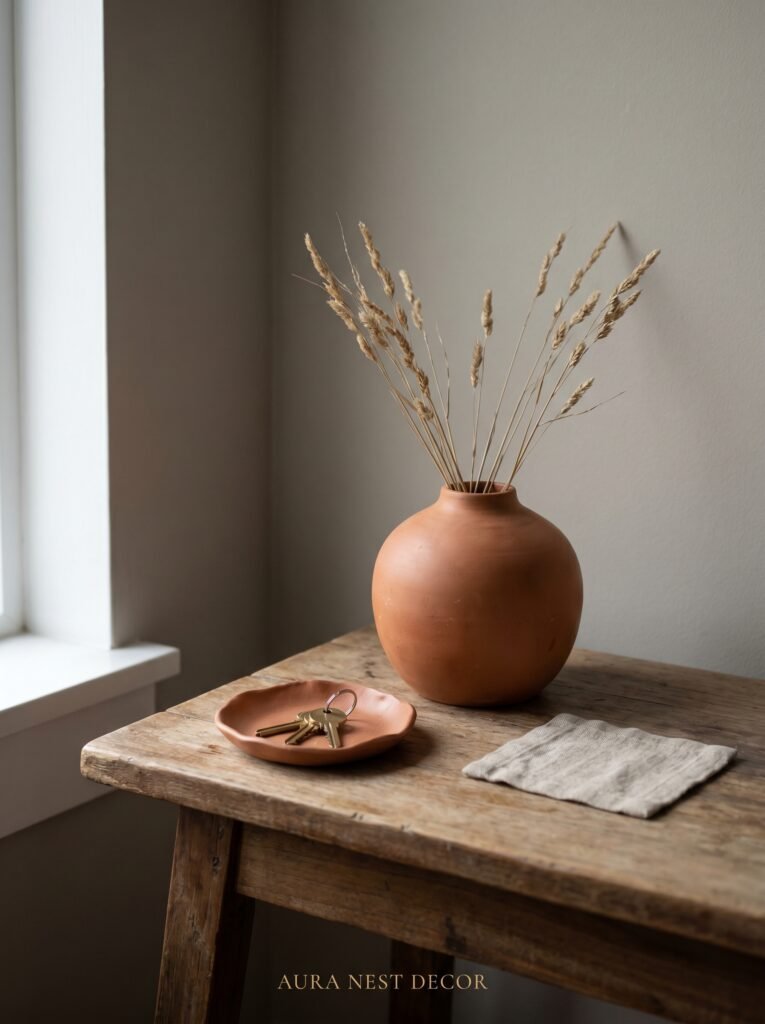
Terracotta. Still. It refuses to leave and honestly, thank goodness for that.
But it’s not the terracotta of a few years ago — the bright, loud, almost orange version. What’s everywhere right now on UK and US Pinterest boards is a more muted, dusty version. Think aged clay. Think the side of a terracotta pot that’s been sitting outside in the British drizzle for two seasons. It photographs beautifully in warm light and pairs with absolutely everything — cream linen, dark wood, brass, sage green, soft black.
A small terracotta vase, even an inexpensive one, placed on a styled side table has a way of making the whole arrangement look expensive and intentional. It adds warmth without shouting. It brings an organic, earthy quality that polished surfaces often lack.
Alongside terracotta, warm off-whites and creamy neutrals continue to dominate. Not stark white — that reads as cold in a living room setting — but the white of old plaster walls, of natural linen, of unbleached cotton. These tones make your lamp base, your ceramics, your candle vessels all feel like they belong together even when they’re different shapes and sizes.
The third color showing up everywhere? Warm black. Not cold graphite-black, but the soft black of cast iron, of worn leather, of matte ceramic. Add one small black object to a neutral side table arrangement and watch how it suddenly looks professionally styled.
6. The One Rule That Makes Any Small Side Table Feel Intentional, Not Cluttered
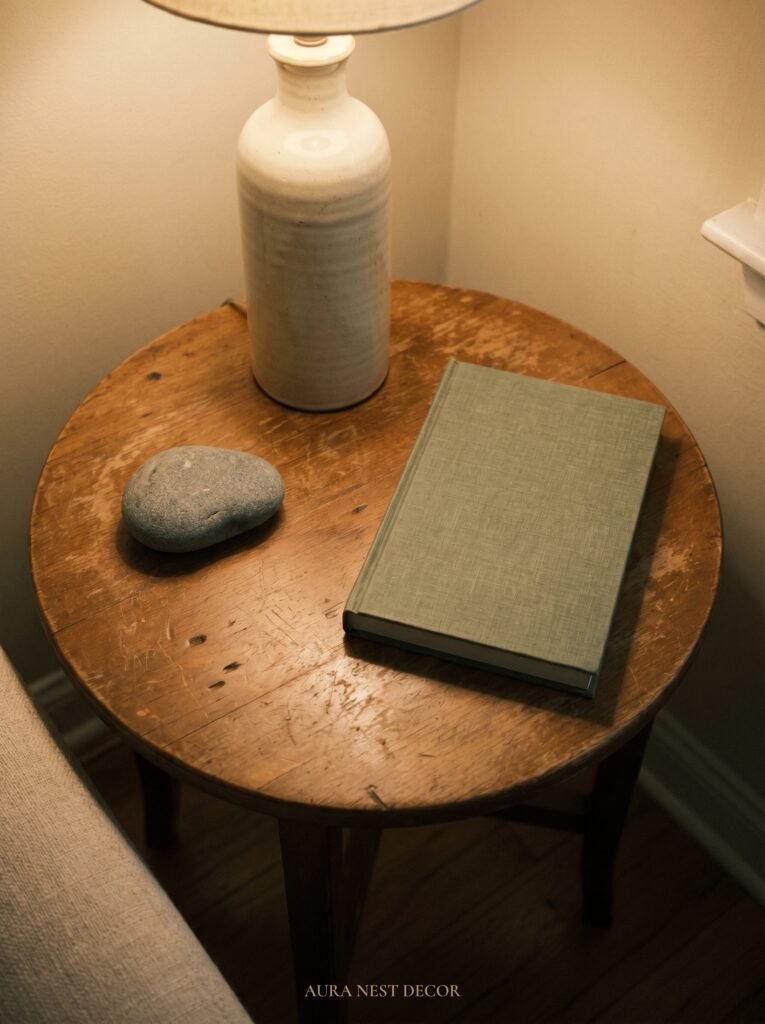
Edit down to five objects maximum. Including the lamp.
That’s the rule. Five things. Lamp counts as one. Books count as one stack, not individual volumes. A tray counts as one even if it has small objects sitting inside it, because the tray creates a visual boundary that contains them.
This is harder than it sounds, especially if you love things and have many things and want to display many things. But the side table is not the place for your collection. It’s a small, curated moment. Everything on it should either serve a function or bring you genuine joy — ideally both.
When you push past five items, the eye starts to read it as clutter, even if every single object is beautiful individually. The problem isn’t the objects. It’s the visual noise of too many separate focal points competing for attention in a small space.
If you want to display more, use a tray. A small tray on a side table acts like a frame around a picture — it groups objects together so they read as one unit rather than five separate things. A tray with three items inside it plus a lamp plus one book is technically five objects, but it feels curated and deliberate rather than overfilled.
7. Dried Botanicals vs. Fresh Flowers: The Honest Answer for Side Table Styling
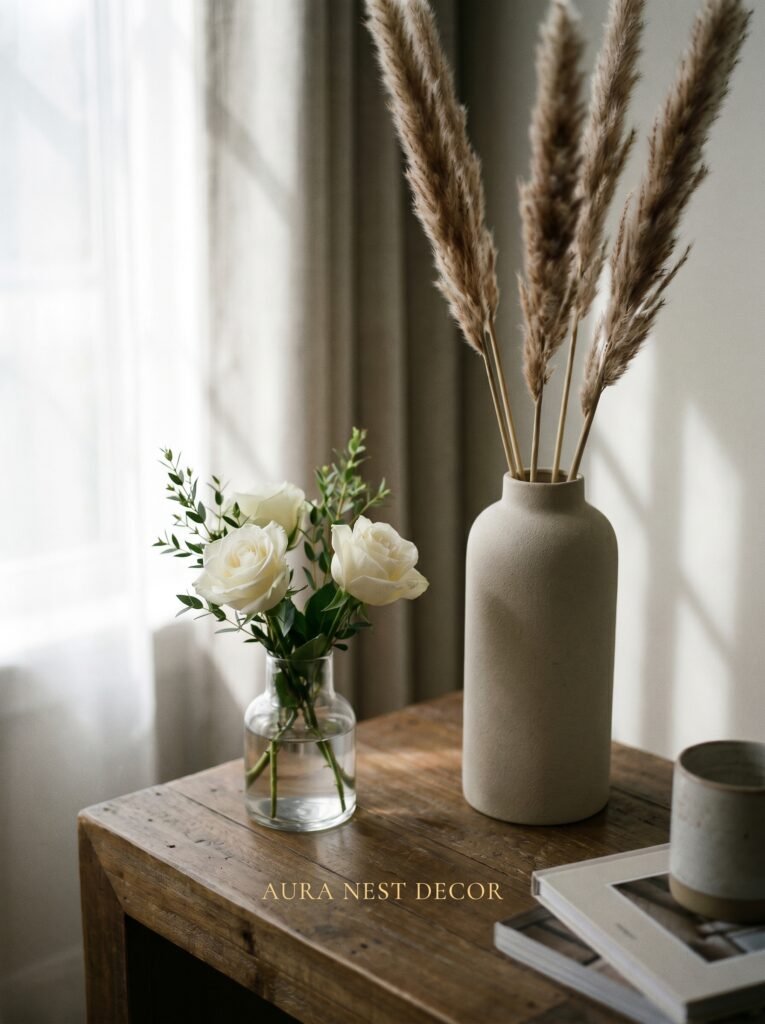
Fresh flowers on a side table are magical for the forty-eight hours they look perfect, and then they start to die, drop petals, and produce that slightly sweet, slightly sad smell of water going stagnant. On a side table, you see them constantly. You notice their decline constantly.
Dried botanicals have had their moment — and the moment isn’t over, because they genuinely work. Dried pampas grass, dried cotton stems, dried citrus slices in a shallow bowl, bundles of dried lavender, preserved eucalyptus. These things photograph beautifully, hold their form for months, and require nothing of you.
“Fresh flowers last two days at their peak. Dried stems look good for two years. Do that math.”
The key with dried botanicals on a side table specifically is scale. You don’t want an enormous vase of pampas that takes over the whole surface. A small, slim vase with three to five stems creates height and texture without dominating. The stems should be tall enough to add visual interest above the lamp base but not so tall they become the only thing you see.
If you do love fresh flowers — and there’s no reason not to — consider keeping them on a coffee table or sideboard where the slightly larger scale makes more sense, and use your side table for something that will look consistently good.
8. The Tray Method: How to Make a Side Table Look Like You Hired Someone
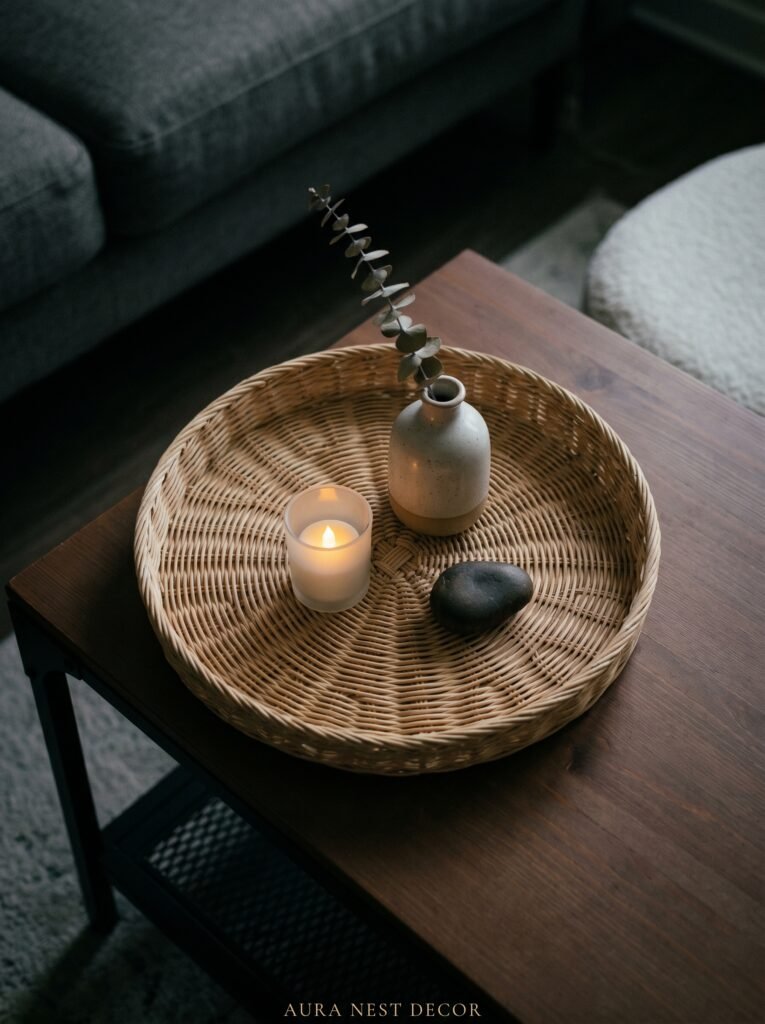
A tray on a side table is one of the simplest styling tricks that exists and it costs almost nothing to implement. You probably already own a tray.
It works because it creates visual containment. When small objects sit directly on a table surface, they float. When they sit inside a tray, they belong together. The tray becomes a room within a room, a tiny styled vignette that the eye reads as a complete, intentional composition.
Materials matter. Wooden trays in walnut or oak tones work beautifully with warm, earthy palettes. Marble or stone trays feel more luxurious and add a textural contrast to organic materials. Woven seagrass or rattan trays bring texture and a relaxed quality that works brilliantly in cottagecore, boho, and coastal interiors. Lacquered black trays have a defined, intentional quality that suits more minimal or dramatic spaces.
Whatever you put inside the tray, follow the three-level rule and the five-objects-maximum rule even within this smaller space. A candle, a small plant or stone, a little perfume bottle or object — and then stop.
9. Candles on a Side Table: The Part Everyone Gets Slightly Wrong
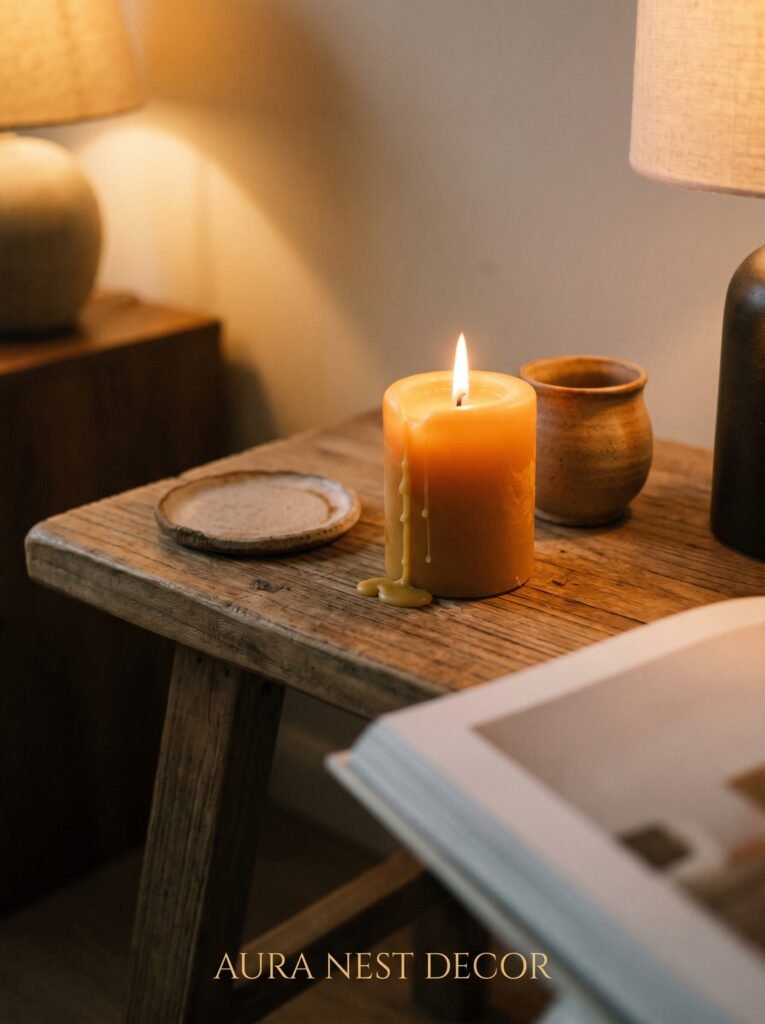
Candles are almost always the right call for a side table. The height, the texture, the promise of that warm amber glow when you light them in the evening — it all works.
The mistake is using a candle that’s either too small or poorly contained. A single tea light sitting directly on the table surface looks like an afterthought. A giant three-wick candle in a heavy glass vessel looks like it belongs in a spa.
What works beautifully on a side table is a medium-height pillar candle in a proper holder, or a clean, matte-finish jar candle in a size that proportions well with your other objects. The container matters as much as the candle itself. A bare pillar candle sitting on a decorative plate or a little ceramic dish looks considered. The same candle sitting directly on wood looks forgotten.
If you’re grouping candles, odd numbers always. Three at different heights arranged closely together creates a cluster that feels warm and intentional. The mix of heights within the cluster creates visual interest without adding clutter.
And please — snuff the wick once you get that beautiful dark-tipped, burned look. It’s part of the aesthetic, and it signals to everyone who sees it that this is a candle that actually gets used.
10. The Small Plant Theory: Not Every Green Thing Belongs Here
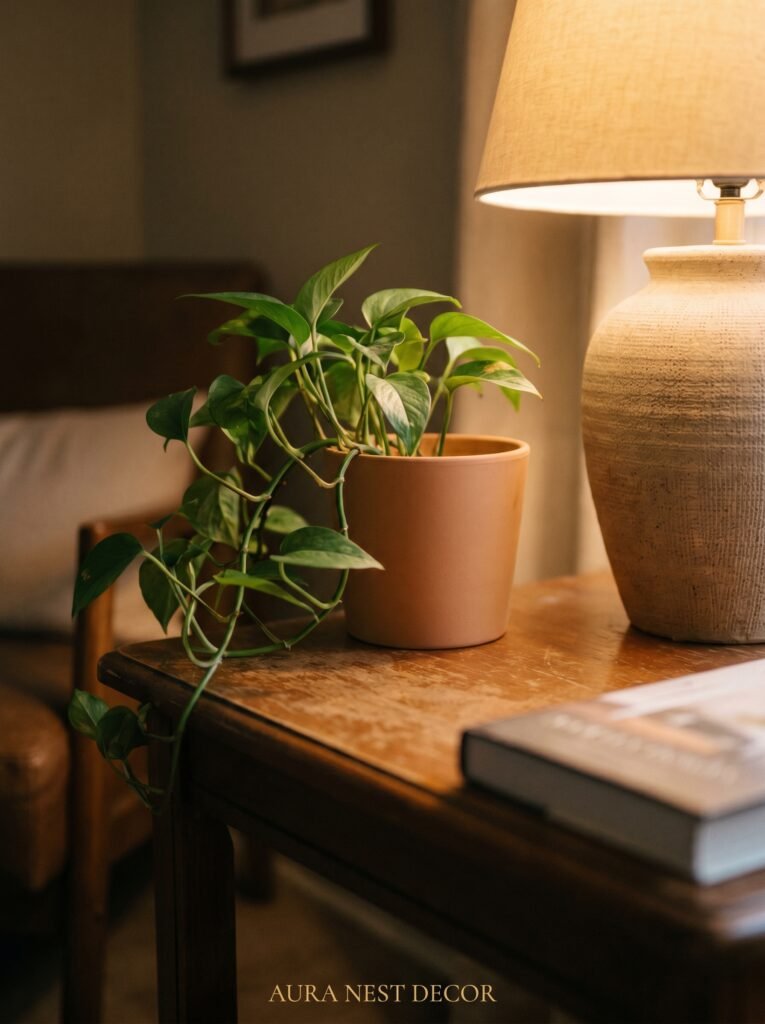
Not every plant is a side table plant. This sounds obvious until you’re standing in a garden center trying to decide and everything looks equally appealing.
Side table plants need to be small and tidy by nature, not just small right now. A tiny pothos will trail within two weeks and suddenly you have a vine situation on your hands that competes with everything else on the table. A tiny monstera sounds charming but will become a large monstera, and then the decision of where to move it becomes your problem.
What actually works: small succulents in good pots, little cacti, a compact snake plant, propagated cuttings in a pretty vessel of water, air plants in a minimal geometric holder, or a single stem in a bud vase. These things stay the right size, ask relatively little of you, and contribute green texture without taking over.
Pot choice is as important as plant choice. A plastic nursery pot on a side table undoes everything you’ve done around it. Repot into terracotta, ceramic, or a simple matte-finish pot that matches the rest of your color palette, even if the repotting feels like a commitment.
11. Mixing Materials Without It Looking Like a Craft Fair
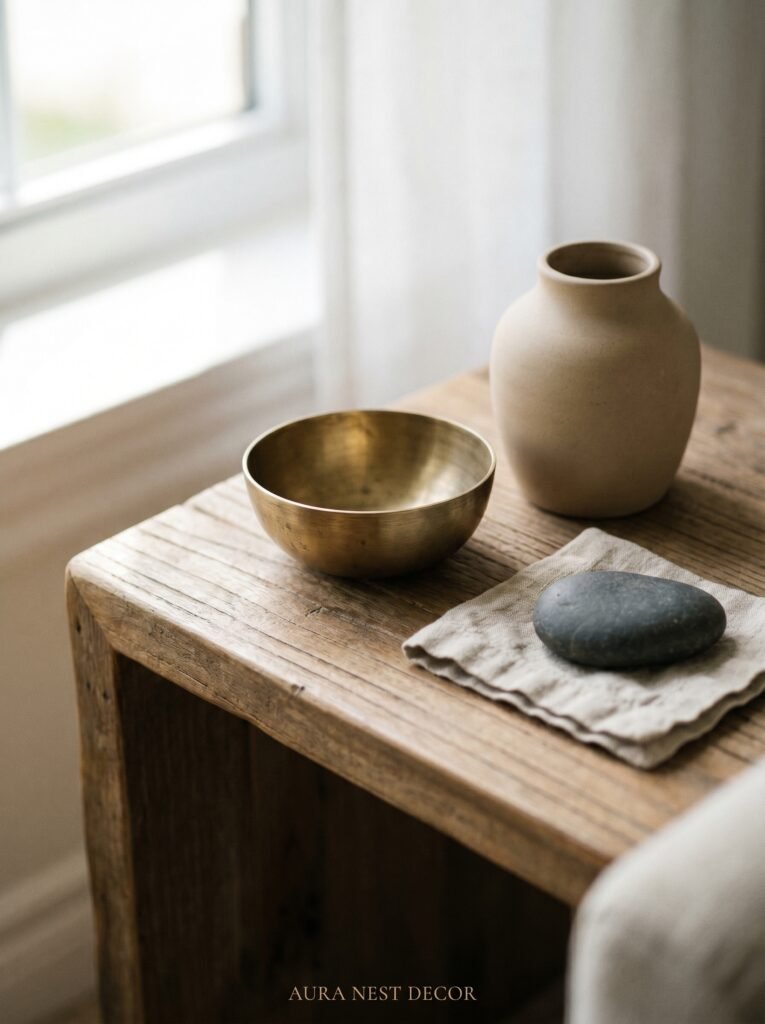
The best side table arrangements use three materials maximum. Wood, metal, and ceramic. Stone, linen, and glass. Rattan, terracotta, and brass. Three materials, working together.
When you introduce a fourth, something almost always starts competing rather than contributing. The eye doesn’t know where to rest. The arrangement starts to feel eclectic in the anxious sense rather than the curated sense.
Mixing metals is where people tend to get into trouble. One metal finish per table — brass, matte black, chrome, bronze. When you mix, say, a brass lamp base with a chrome candle holder, both objects suddenly look less intentional. They look like you couldn’t decide, rather than like you chose deliberately.
Texture contrast within a single material category is the way to make a simple palette feel rich. Two ceramic objects — one matte, one with a subtle glaze — look considered together. Two glass objects — one clear, one smoked — feel intentional. You’re not adding visual noise by adding variety within a material type. You’re adding depth.
12. The Seasonal Refresh: How to Change Everything Without Changing Anything Expensive
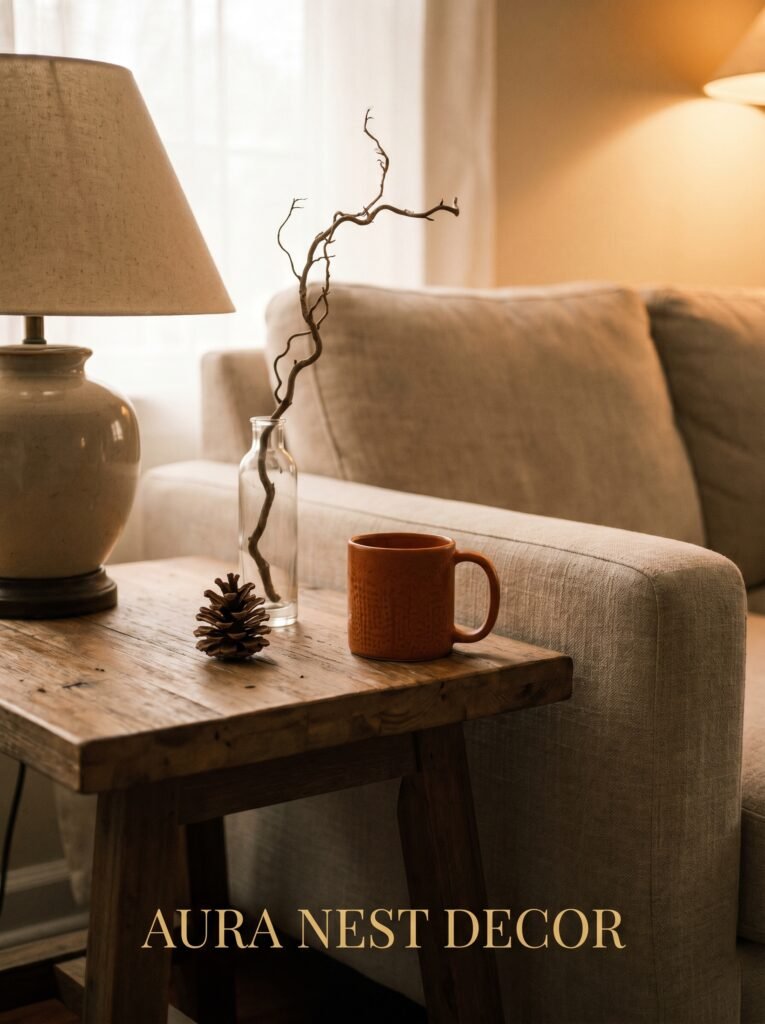
Your side table is the lowest-commitment, highest-impact place in your home to change with the seasons. The lamp stays. The table stays. The books might stay. Everything else shifts.
Autumn: warm terracottas, dried botanicals, beeswax candles, a small dried citrus arrangement, a knitted bookmark tucked into your book stack. The whole table should feel like October feels — rich and slightly melancholy in the best possible way.
Winter: deeper tones, more candlelight, perhaps a small arrangement of bare branches, a thicker candle in a darker vessel, a cashmere throw folded on the chair beside it that coordinates with what’s on the table. Lean into the drama of early evenings and low light.
Spring: clear out half of what’s there. Spring styling is about what you remove as much as what you add. A single stem vase with one or two flowers. A lighter-colored book cover. Something green and genuinely alive rather than dried.
Summer: less is more, always. A condensation-ringed glass becomes acceptable styling at this point. A single plant cutting in water, a low-burn candle, something interesting from a market or beach walk arranged in a simple bowl. The side table in summer should feel uncomplicated.
—
❓ FAQ
Q: How tall should a side table be compared to my sofa? A: The sweet spot is for your side table to be within a couple of inches of your sofa arm height — generally between 24 and 28 inches tall. This makes it easy to reach your drink or lamp without leaning awkwardly, and ensures the whole arrangement looks proportionate when you’re seated.
Q: Can I put two lamps on one side table? A: One lamp per side table is the working rule for most spaces. Two lamps on a single surface creates visual doubling and leaves little room for anything else. If you want more light symmetry in the room, two matching side tables with one lamp each on either end of the sofa will look far more intentional.
Q: What do I do with a side table that’s too small to style properly? A: Go minimal on purpose. A very small side table styled with just a lamp and one small object — a single candle, one beautiful stone, a tiny succulent — reads as deliberately spare and confident, not as a limitation. The worst thing you can do with a small surface is try to put everything on it anyway.
—
💭 Final Thoughts
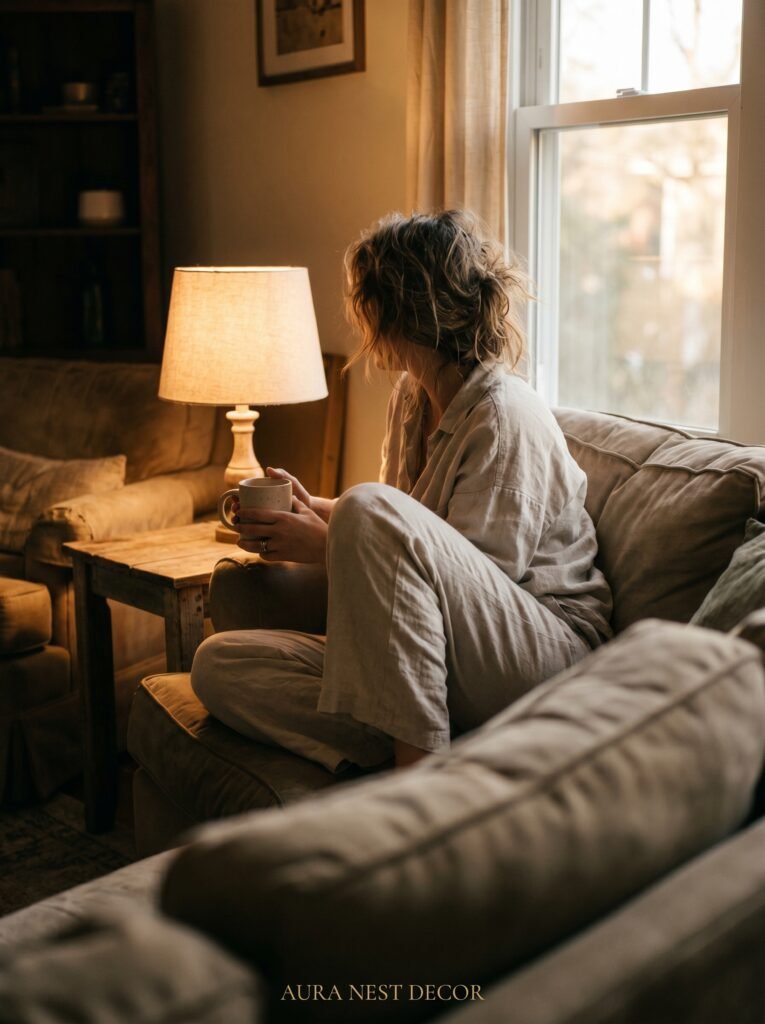
A side table done right is such a small thing that makes such an outsized difference to how a room feels. Not just how it photographs — how it feels to sit next to every single evening. Start with the lamp, edit down to what genuinely earns its place, and let the seasons do the rest of the work for you.
What’s sitting on your side table right now that you’ve been meaning to sort out for months?