The Small Modern Living Room Rules I Wish Someone Had Told Me Sooner
You walk into a small living room and immediately feel it — that low-key tension between wanting it to feel expansive and knowing the walls aren’t moving. But here’s what I’ve learned after years of styling tiny spaces and obsessing over every inch: small doesn’t mean cramped. It means intentional.
—
1. The Measurement That Changes Everything Before You Buy a Single Thing
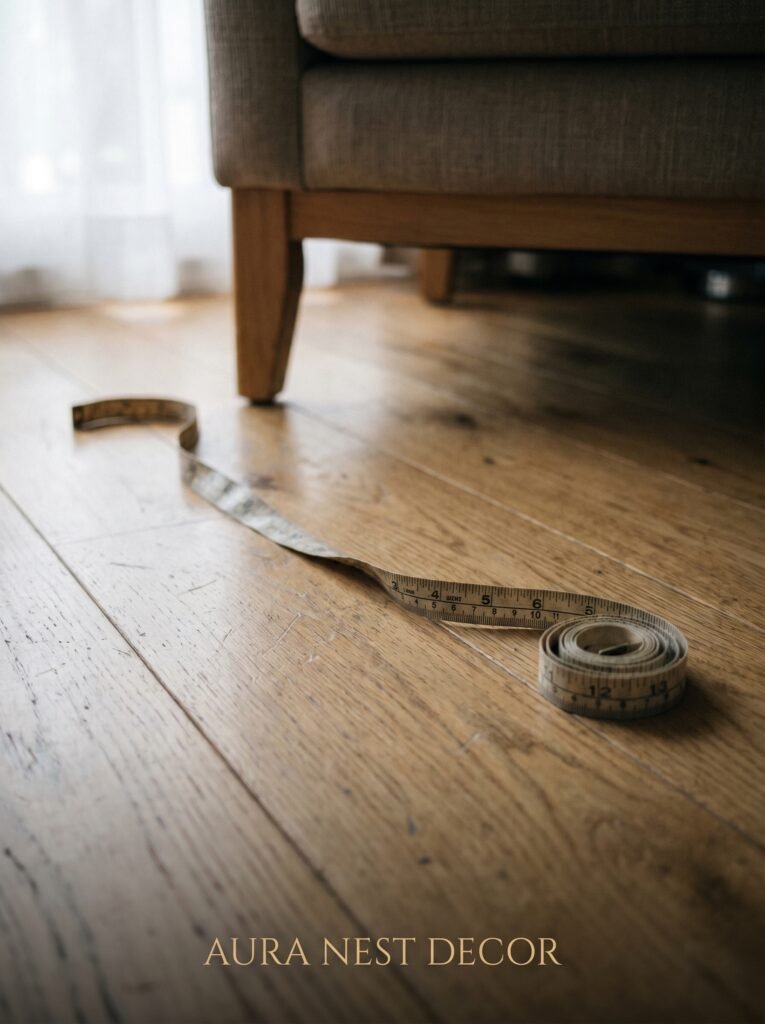
Before paint swatches. Before furniture browsing. Before you lose three hours in the sofa section of a website you can’t afford. Measure the room and then measure it again — but this time, measure with purpose.
Write down the distance from your sofa wall to the opposite wall. Now subtract 18 inches for traffic flow on each side. What’s left? That’s the actual footprint your sofa can occupy. Most people skip this step entirely and wonder why their gorgeous new sectional makes the room feel like a waiting room at the doctor’s office.
In a small modern living room, the relationship between furniture scale and floor space is everything. You want at least 12 to 18 inches between your coffee table and sofa. You want a clear path — not a squeeze — from the doorway to the main seating. You want breathing room.
The rule I come back to again and again: furniture that fits the life of the room, not the fantasy version of the room. A generous two-seater sofa and two accent chairs will almost always feel more spacious than a three-seat sofa shoved against a wall.
“The room doesn’t need more space. It needs fewer decisions competing for attention.”
—
2. The Color That Keeps Showing Up in Every Beautiful Small Living Room Right Now
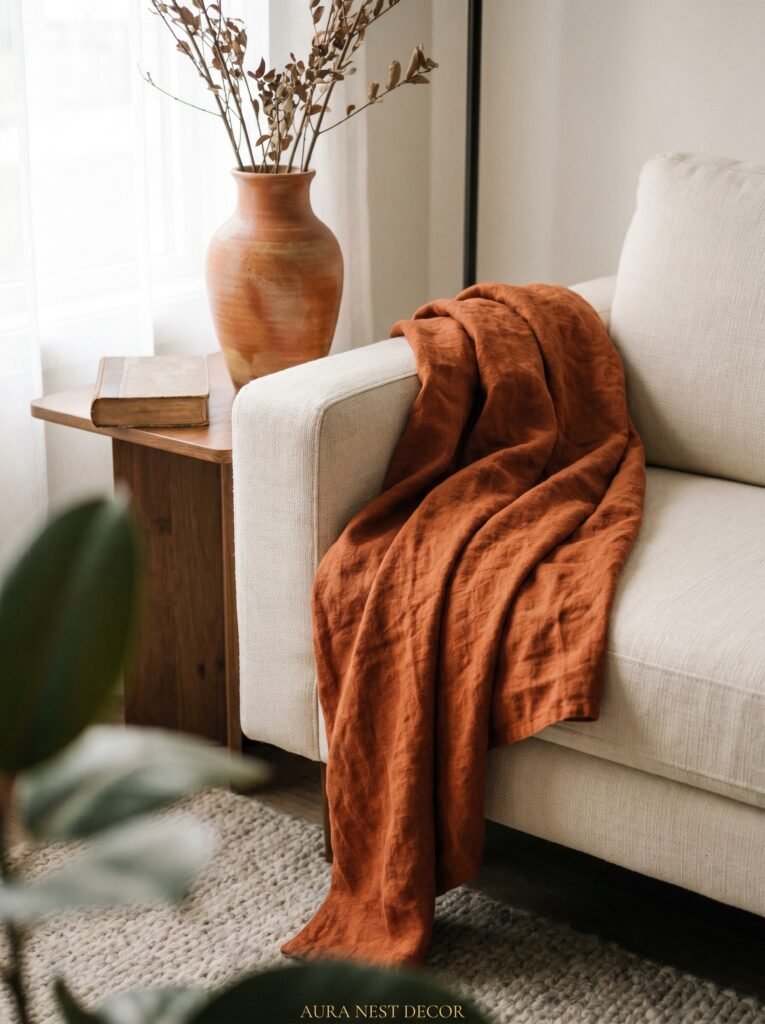
Warm white. But not just any warm white — the kind that sits somewhere between cream and stone, with a faint blush undertone that you only notice when the afternoon light hits it just right.
It’s everywhere. And for good reason.
Cool whites in small rooms can feel clinical. Stark. They bounce light in a way that feels harsh rather than open. But a warm white — something like Farrow & Ball’s Pointing, or Benjamin Moore’s White Dove — does something softer. It holds the light. It makes the room feel like it’s exhaling rather than tensing up.
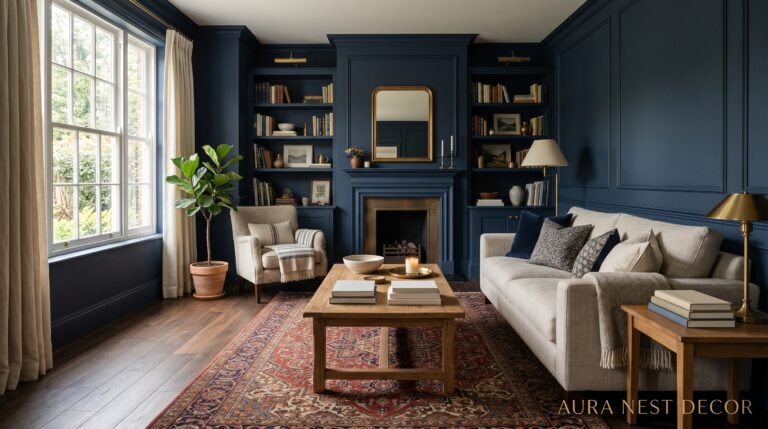
The modern part comes from how you work around that neutral base. A single dark accent wall — deep navy, forest green, even a moody charcoal — gives a small room enormous visual depth without overwhelming it. Pair it with warm natural wood tones, matte black fixtures, and soft textiles and suddenly the room feels considered rather than cautious.
Don’t be afraid of color in small spaces. Be afraid of too many colors fighting each other. Pick two. Three at most. Let them do the work.
—
3. Why Your Lighting Is Doing More Damage Than Your Furniture
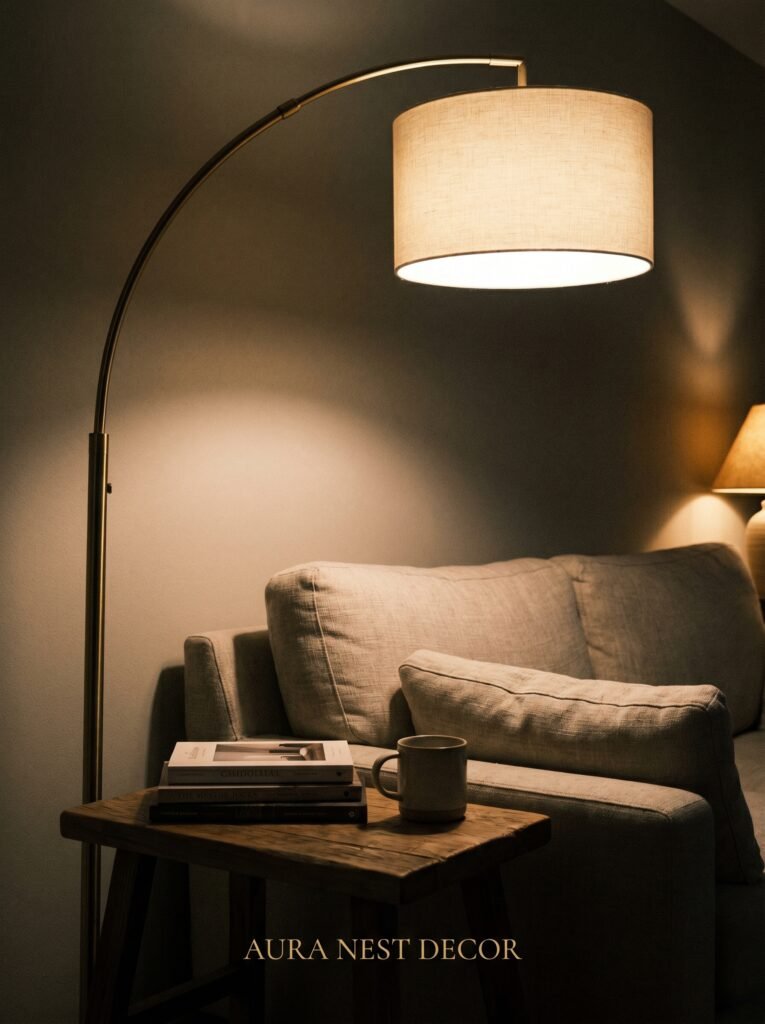
Here is the honest truth that nobody says out loud in enough home decor circles: a single overhead ceiling light is killing your small living room.
One light source, positioned in the center of the ceiling, flattens a room completely. It removes shadow, removes depth, removes the illusion of dimension that makes a space feel interesting rather than just small. The amber glow of an Edison bulb at 7pm in a room with layered lighting sources hits completely differently than the glare of a single LED panel overhead.
Layer your lighting. That’s the mantra, and it works every single time.
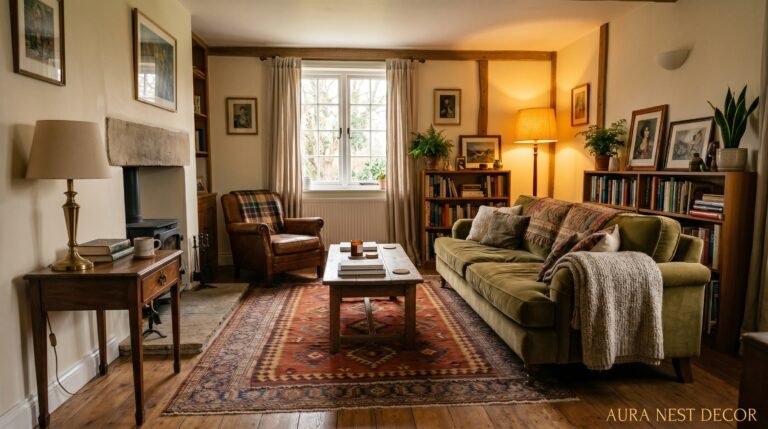
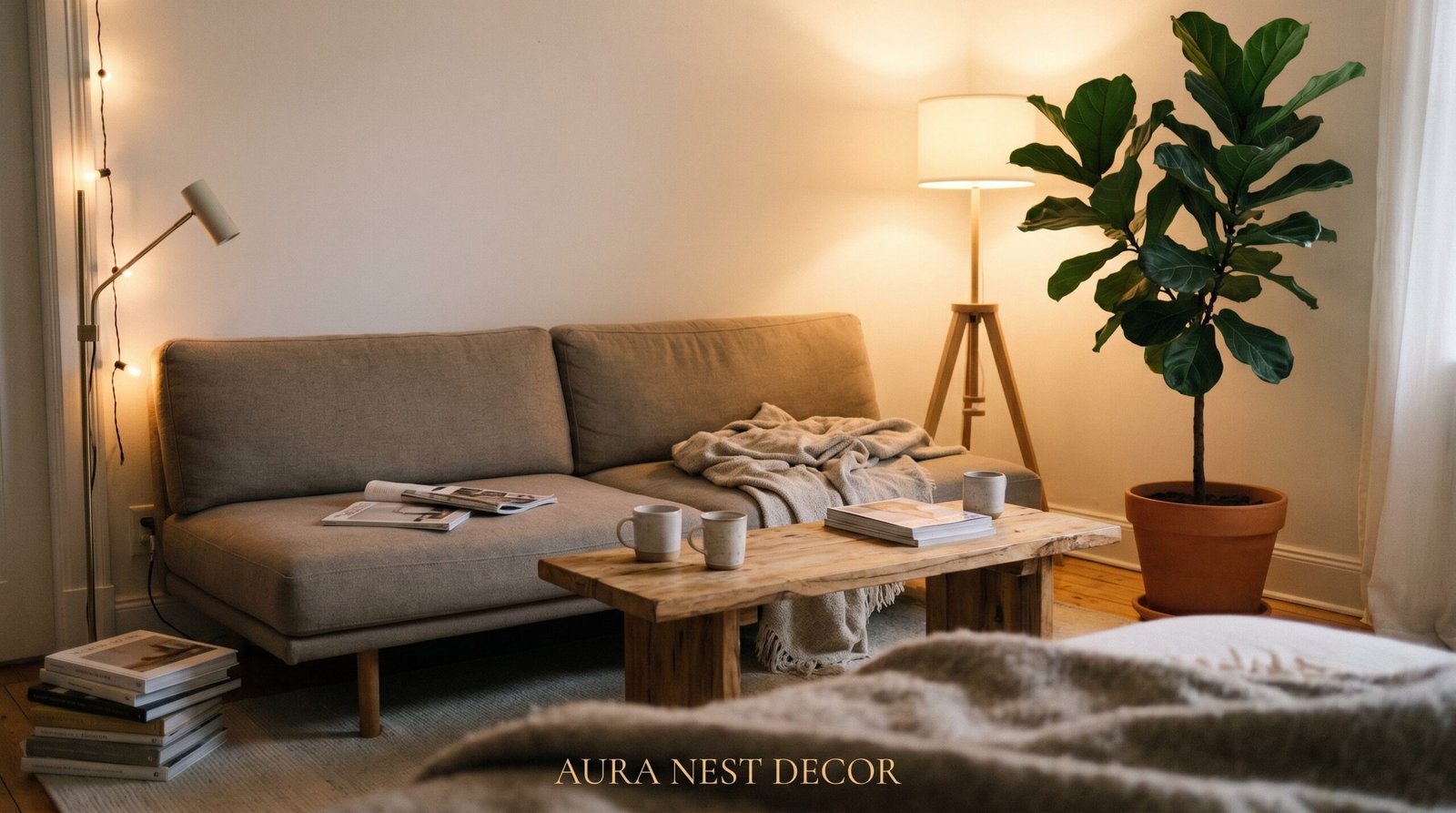
A floor lamp in the corner creates height and pulls the eye upward. A table lamp on a console or side table creates warmth at eye level when you’re seated. Candles — actual candles or very good LED versions — add flicker and intimacy that no bulb can replicate. And if you’re lucky enough to have a dimmer switch, you already know what I mean when I say that one dial can change the entire emotional register of a room.
In the UK, where natural light can be a seasonal luxury, this matters even more. Get the lighting right and you’ve done half the work of making a small room feel modern and alive.
—
4. The One Furniture Piece That Small Modern Living Rooms Need to Stop Avoiding
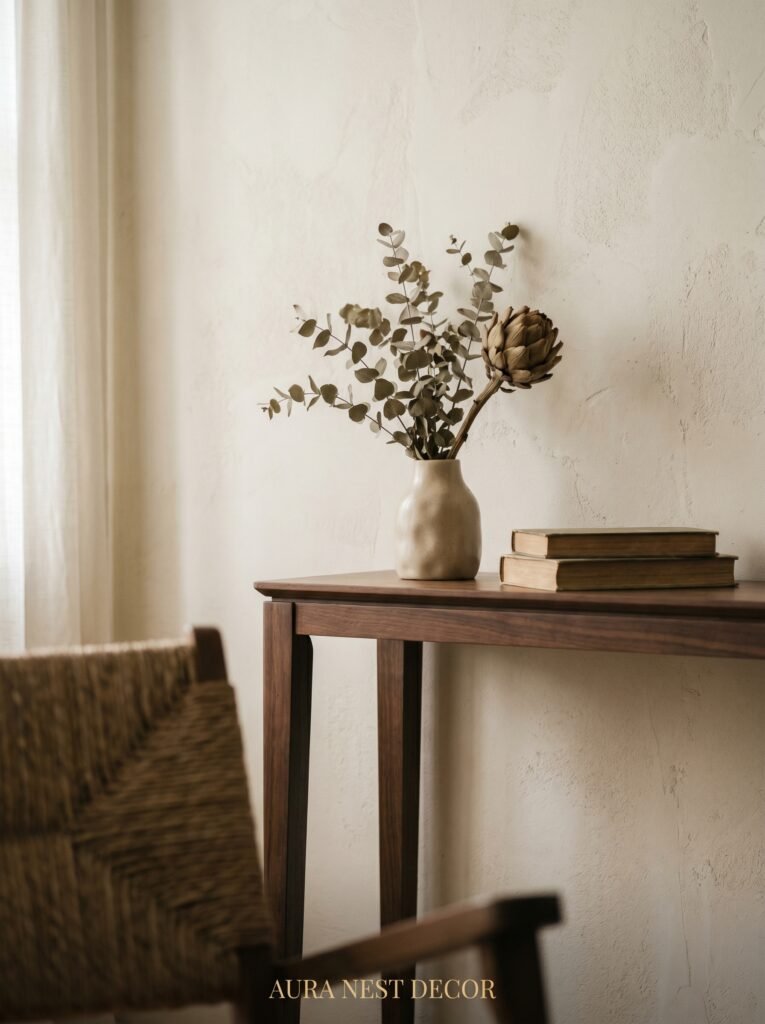
A tall bookshelf.
I know. It sounds counterintuitive. You’re thinking vertical storage will make the room feel even more closed in. But stay with me, because this is one of those aha moments that genuinely changes how you see small spaces.
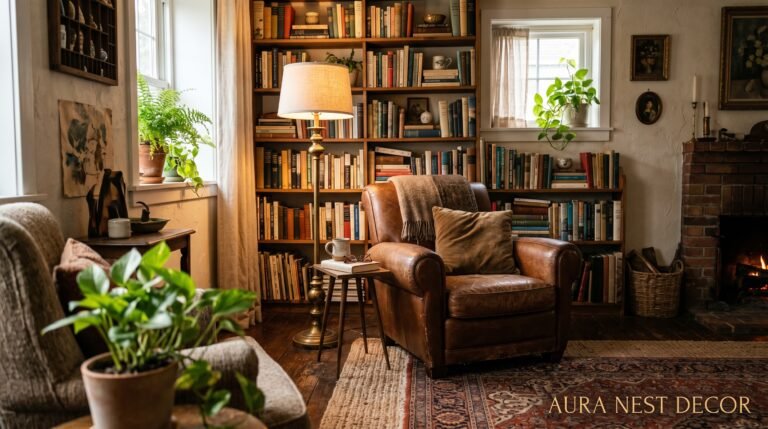
A tall, slim bookshelf — ideally running close to ceiling height — does two things at once. It draws the eye upward, which psychologically increases the perceived height of the room. And it organizes chaos vertically rather than spreading it horizontally, which keeps the floor plan visually clean.
The modern version of this isn’t a dark wood traditional bookcase. Think open shelving in matte white or warm oak. Think styled shelves with a mix of books, small plants, ceramic objects, and empty space. Empty space on a shelf is not wasted. It is a decision. It makes everything around it look intentional.
“Empty space on a shelf isn’t wasted — it’s what makes everything around it look intentional.”
In a small modern living room, vertical thinking is your best friend. Floating shelves, tall plants, floor-to-ceiling curtains hung from as close to the ceiling as possible — all of it pulls the room upward and outward in a way that no rug or furniture arrangement can on its own.
—
5. The Sofa Mistake That Makes Small Living Rooms Feel Immediately Smaller
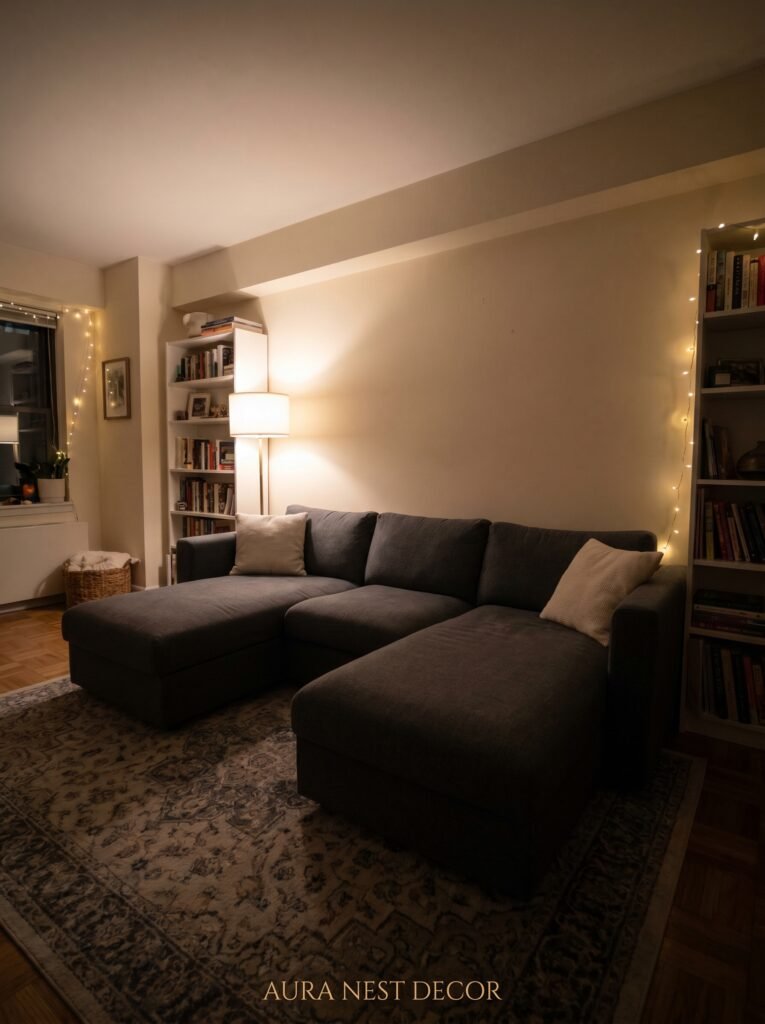
Pushing your sofa flat against the wall.
It feels logical. It feels like you’re gaining space. You are, technically, gaining about four inches of dead space behind the sofa that nobody will ever use and that no one will ever notice. What you’re losing is far more valuable: the appearance of depth.
When a sofa floats even slightly away from the wall — six inches, ten inches — it creates visual layers in the room. The wall behind it becomes background rather than boundary. The sofa becomes furniture rather than a fixture bolted to the architecture. The whole room suddenly has a middle, and rooms with a clear middle feel larger than rooms where everything is pressed to the edges.
Pair a slightly floated sofa with a low-profile coffee table — preferably one with a shelf underneath or a glass top that shows the floor beneath — and a rug that’s large enough to sit under at least the front legs of both the sofa and chairs. That rug anchors the whole arrangement and tells the eye exactly where the conversation area begins and ends. Without it, even the most perfectly scaled furniture feels adrift.
—
6. The Mirror Trick That Every Designer Uses and Nobody Talks About Enough
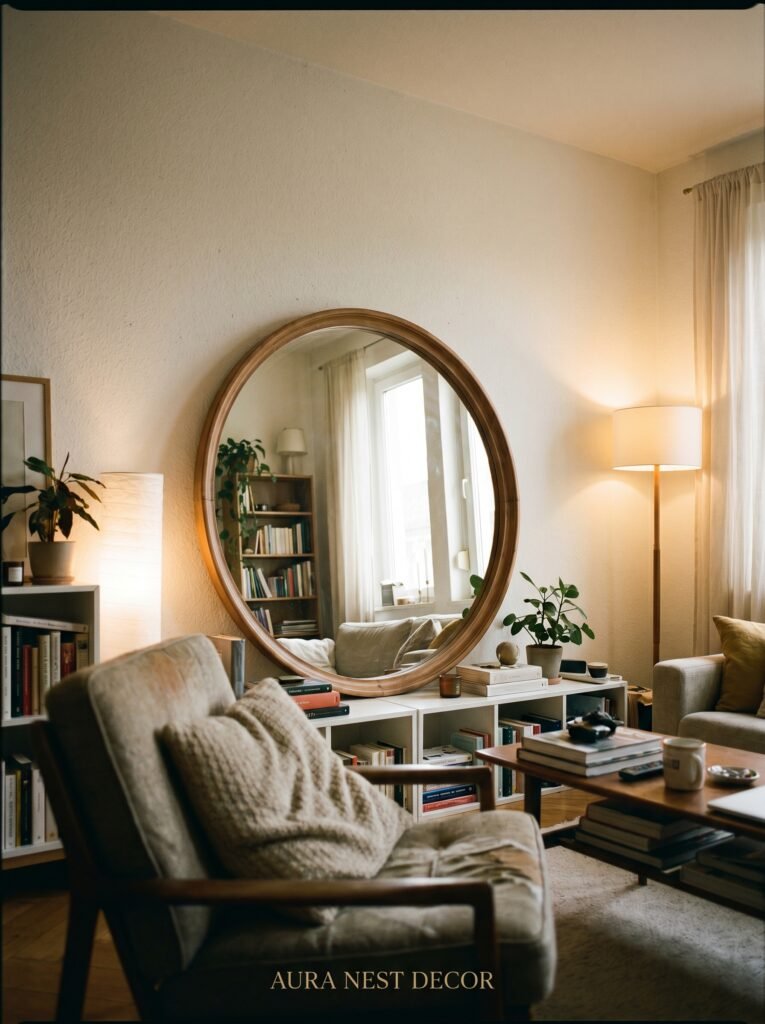
Mirrors in living rooms are not a new idea. But where you place them, and how you frame them, has changed dramatically with modern design sensibility.
The old approach: a decorative mirror above the fireplace, purely ornamental, positioned too high to reflect anything useful. The modern approach: a large, leaning mirror positioned to reflect the best part of the room back at itself.
That means angling it toward your best light source — a window, a lamp, a view of the garden. It means choosing a mirror large enough to matter. A tiny mirror on a vast wall does nothing for a small room. A mirror that takes up a significant portion of a wall — even propped rather than hung — creates the impression of an additional opening, like a door to a room that doesn’t technically exist.
In a small modern living room, the finish of the mirror frame matters too. Thin black metal frames feel contemporary and clean. Warm brass or aged gold edges add richness without heaviness. Frameless mirrors lean minimalist and architectural. Pick the one that matches the story your room is already telling.
—
7. What Your Rug Is Doing Wrong (and the Size That Actually Works)
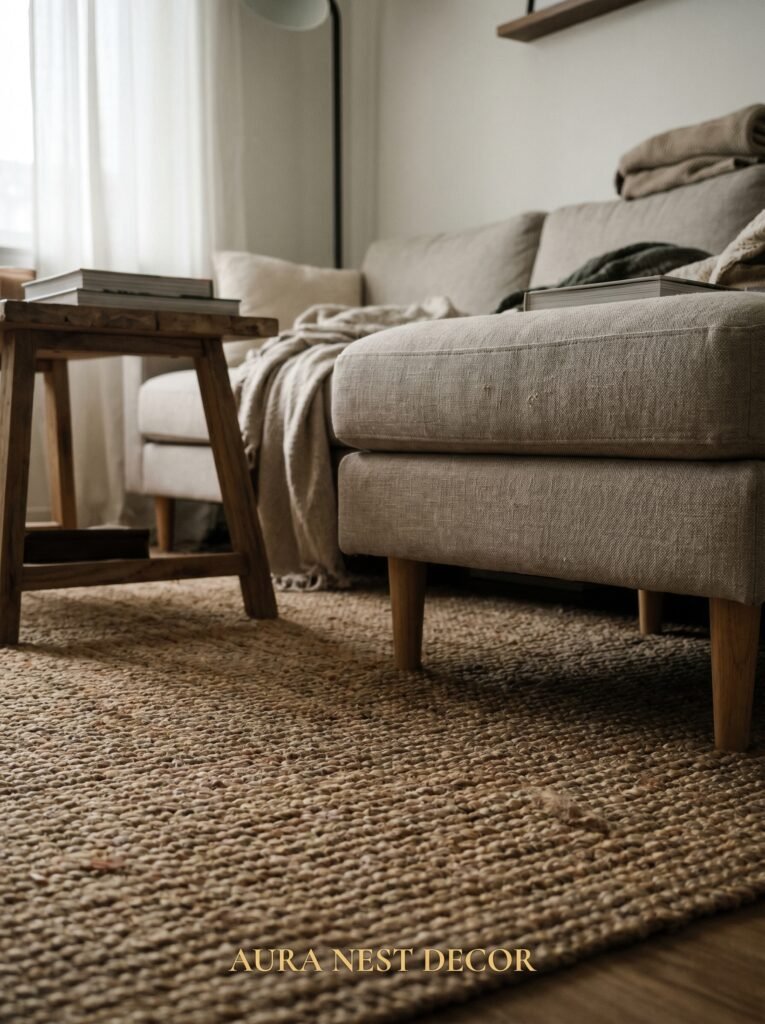
Too small. Almost always, too small.
A rug that only sits under the coffee table — with sofa legs floating on bare floor beside it — makes a small room feel not cozy but fractured. Disconnected. Like someone placed furniture randomly and then threw down a rug as an afterthought.
The rug should be large enough that all main seating pieces have at least their front legs resting on it. In a small living room, this typically means a 5×8 rug at minimum, and often a 6×9 is the sweet spot. Yes, that might feel like the rug is eating the room. It isn’t. It’s grounding it.
“A too-small rug doesn’t save space. It just makes the room look like it wasn’t finished.”
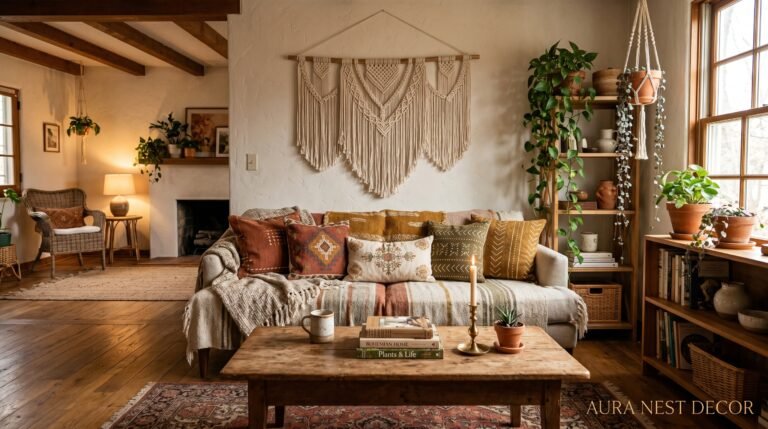
Color and pattern in rugs for small spaces: a low-contrast pattern, or a solid in a mid-tone that complements your walls, will always feel more spacious than a bold, busy print. Warm neutrals — oatmeal, terracotta, dusty sage — work beautifully in modern living rooms and add texture without visual noise. Natural materials like jute or wool add warmth underfoot in a way that synthetic rugs rarely replicate.
—
8. The Plant Situation: Why One Big One Beats Three Small Ones Every Time
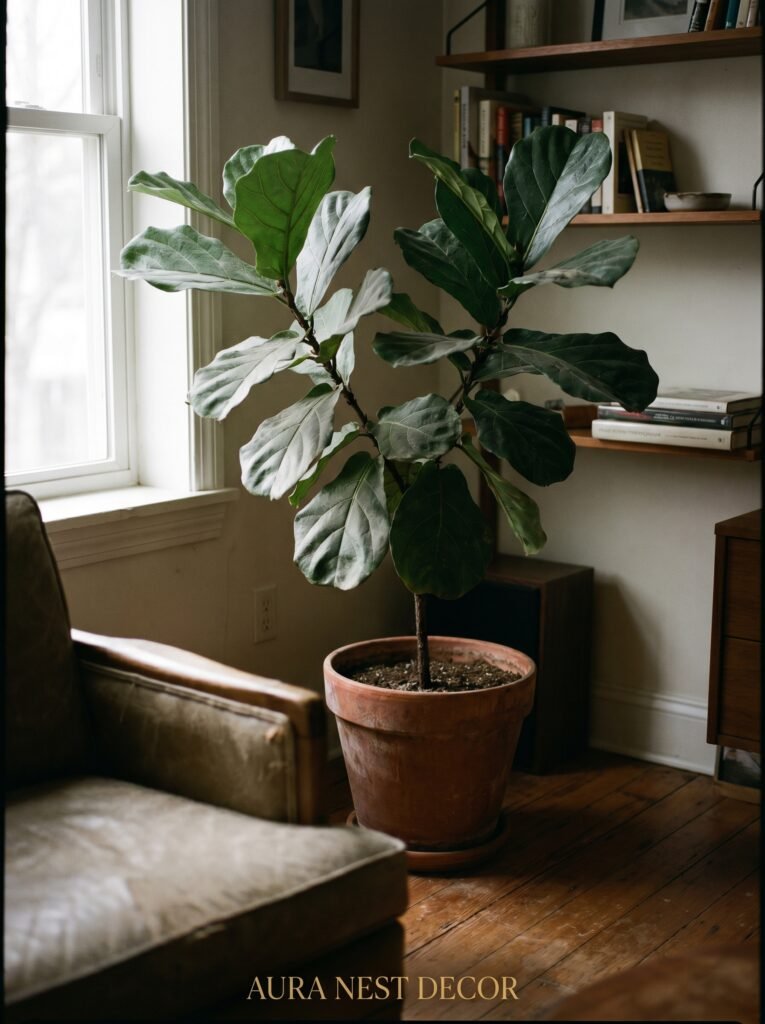
Small plants on every surface are cozy in a cottage kitchen. In a small modern living room, they read as clutter.
One large statement plant — a fiddle leaf fig, a monstera, a tall olive tree, an architectural snake plant — does more for a small room than ten tiny succulents on a windowsill. The scale of a single large plant creates visual interest without fragmentation. It fills vertical space the way a lamp or bookshelf does. And it introduces organic shape into what might otherwise be a room of straight lines and clean edges, which is exactly what modern spaces need to feel warm rather than sterile.
Position it in a corner or beside a piece of furniture — not floating in the middle of the room where it becomes an obstacle. A well-placed large plant in a beautiful pot is a design choice. A scattered collection of small ones is just housekeeping.
For UK homes where certain rooms get limited direct sun, cast iron plants, pothos, or large ZZ plants are practically indestructible and look genuinely architectural. For brighter American rooms, fiddle leaf figs and monsteras reward the light they get handsomely.
—
9. The One Rule That Makes Any Tiny Room Feel Intentional
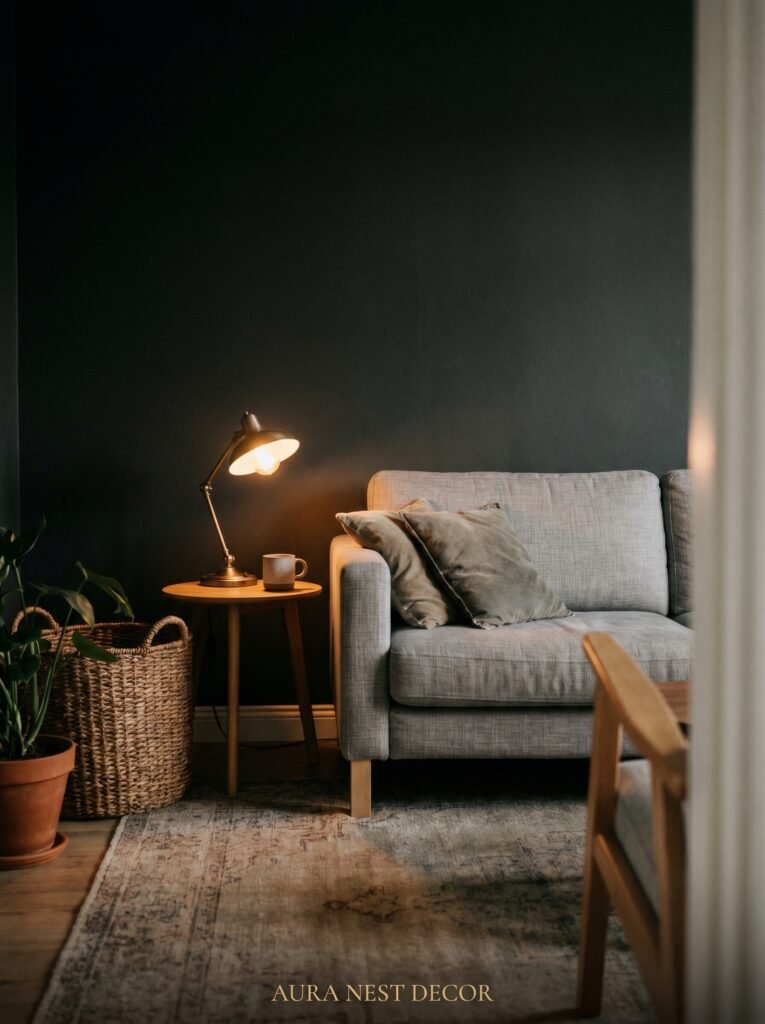
Repetition of material.
When the same material or finish appears in three different places across a room — even in small doses — the room suddenly feels considered. Like someone made choices rather than just accumulated furniture.
Pick one metal finish and stick to it. Matte black across your light switch plates, lamp base, and picture frames. Warm brass on your curtain rod, coffee table legs, and a single candle holder. The material doesn’t need to shout. It just needs to show up enough times that the eye recognizes the pattern.
Same principle applies to wood tones. If you have a warm oak shelf, bring in a warm oak tray, a warm oak cutting board propped decoratively on the shelf, the legs of a side table. Suddenly those things aren’t random objects — they’re a palette. The room tells a coherent story. And coherent stories feel larger, calmer, and more beautiful than rooms that are trying to say too many things at once.
—
10. Window Treatments That Make the Ceiling Feel Like It’s Three Feet Higher
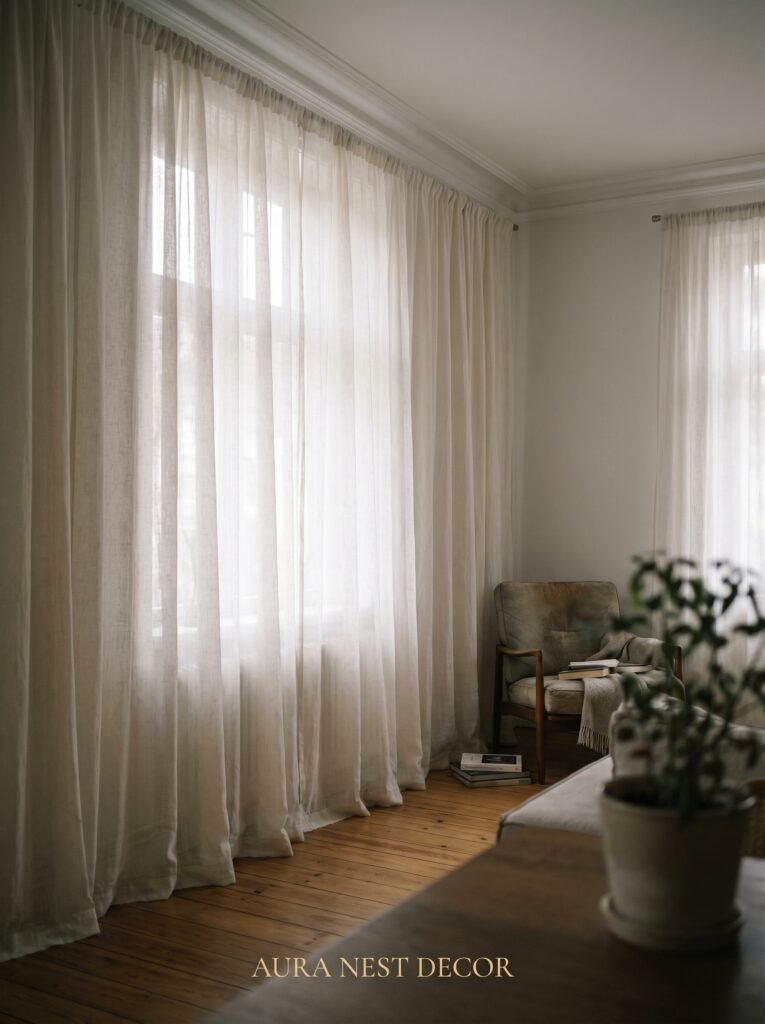
Hang your curtains as close to the ceiling as possible. Full stop.
Most curtain rods get installed at window height, maybe a few inches above the frame. It’s what the hardware suggests, more or less, and it’s almost always wrong. Curtains hung at window height make ceilings feel lower and windows feel smaller. The opposite of what a small modern living room needs.
Hang the rod as close to the ceiling line as you can. Use curtains that are floor-length — even a light pool on the floor is better than curtains that stop awkwardly mid-wall. The unbroken vertical line from ceiling to floor makes the eye read the room as taller than it is, which means more spacious, which means more beautiful.
In terms of fabric: lightweight linen, cotton voile, or any sheer-to-semi-sheer material will let light through while softening the hard edges of the window. Heavy, dark drapes in a small room absorb light and close space in. Save the velvet curtains for bedrooms. Here, keep it light.
—
11. The Coffee Table Geometry Lesson Nobody Told You About
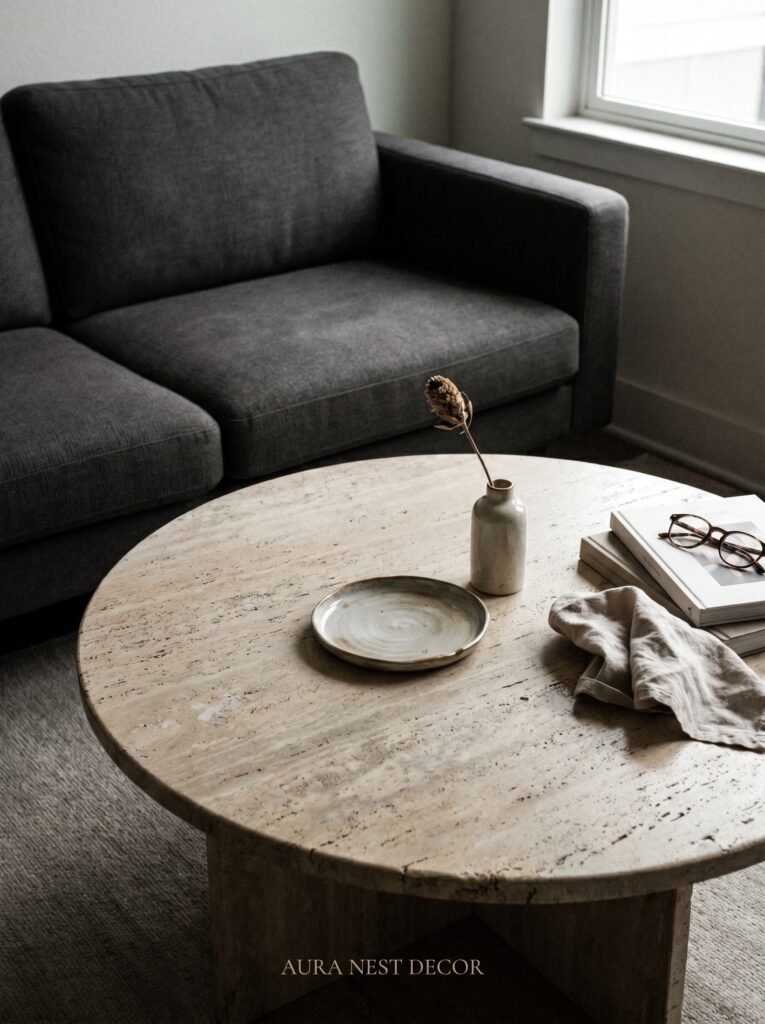
Round coffee tables in small rectangular living rooms. Write it down.
The average small living room is longer than it is wide — a rectangular space that can feel like a corridor if the furniture emphasizes that long axis. A rectangular coffee table exaggerates the existing geometry. A round or oval coffee table interrupts it, softens it, and creates breathing room around all edges.
Beyond shape, consider what the table is made of. A glass-topped coffee table is one of the oldest tricks in the small space playbook for a reason: it takes up visual space without taking up actual space. Your eye travels through it to the rug, the floor, the layers beneath. The room feels open. A solid dark wood coffee table at the same size and position would absorb all that visual depth.
Rattan and wicker coffee tables — very much having a moment right now in both the US and UK — bring natural texture into modern spaces without visual weight. They work particularly well against white walls and linen upholstery. They are also, not unimportantly, forgiving with pets, children, and the general chaos of actual home life.
—
12. The Thing to Deliberately Leave Out (This One Will Feel Wrong at First)
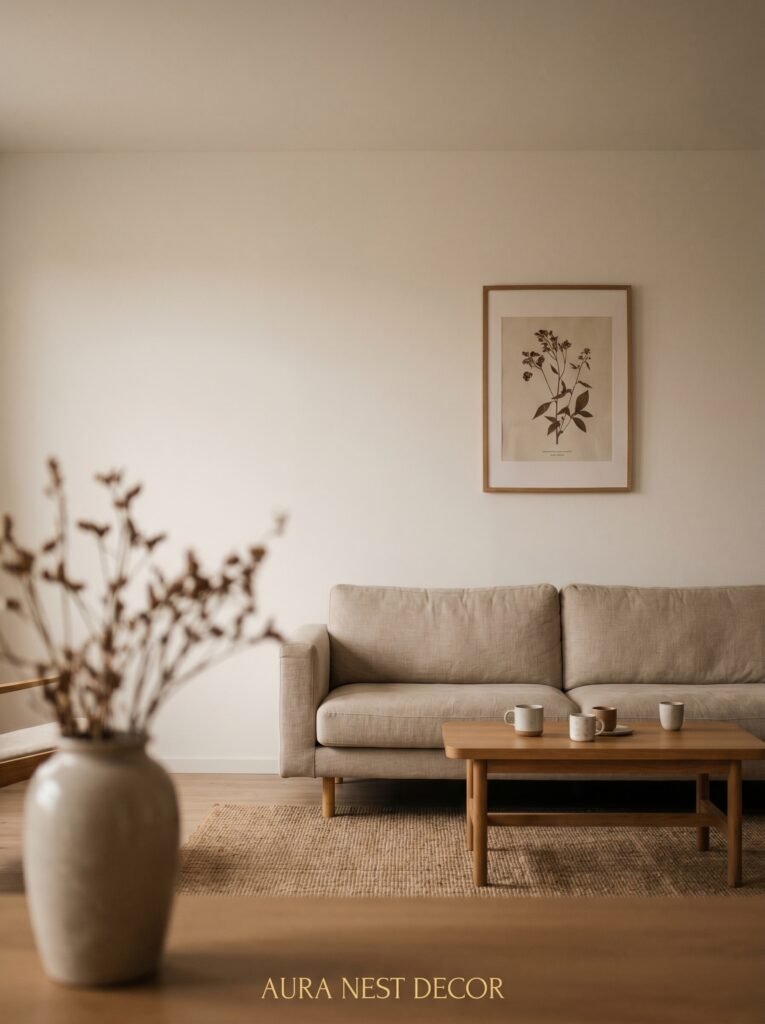
One empty surface.
Somewhere in your small modern living room, there should be a surface — a shelf, a windowsill, a side table — that has nothing on it. Or almost nothing. One beautiful object, maximum. One candle. One piece of ceramic. And then space.
We fill surfaces because we can. Because things accumulate and we find homes for them. But in a small room, every surface that gets fully loaded adds to a visual weight that eventually tips into feeling overwhelming, even if each individual object is lovely.
The empty surface isn’t wasted. It’s actually doing significant design work — it’s giving the eye somewhere to rest. It creates contrast that makes every other styled surface in the room feel more curated and deliberate. The white space in a painting isn’t the part the artist forgot to fill in. It’s the part that makes everything else land.
Leave one surface empty. Then stand back and notice how much calmer the whole room becomes.
—
❓ FAQ
Q: What’s the best sofa color for a small modern living room? A: Mid-toned neutrals — warm gray, soft camel, dusty sage, or a classic oatmeal — tend to work best because they don’t visually anchor the room too heavily. Very dark sofas can feel dominating in small spaces, and very bright white upholstery shows every mark and can feel cold. A mid-tone with texture (boucle, linen, soft velvet) gives you depth without weight.
Q: Can I use dark paint colors in a small living room? A: Absolutely. A single dark accent wall — or even a fully dark room done with intention — can feel dramatic and cozy rather than suffocating, as long as you balance it with good lighting, mirrors, and light-toned furniture. The biggest mistake with dark paint in small spaces isn’t going dark — it’s going dark without thinking about the light sources.
Q: How do I make a small living room feel modern without making it feel cold? A: The secret is texture. Modern design principles — clean lines, minimal clutter, neutral palette — can tip into feeling sterile if there’s nothing tactile in the room. Introduce warmth through materials: a chunky knit throw, a jute rug, ceramic objects, a linen sofa. The lines can stay clean and the palette can stay cool as long as what you’re touching and seeing up close has warmth and texture.
—
💭 Final Thoughts
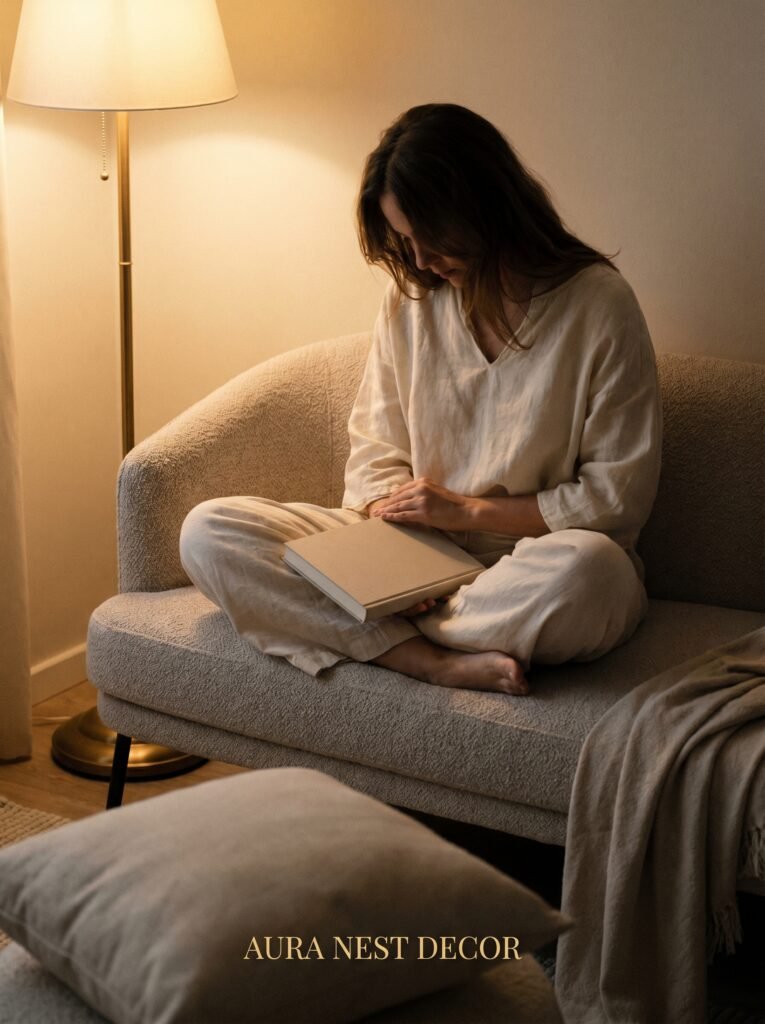
Small living rooms ask something of us that big ones never do: they demand that every choice means something. There’s no hiding in a small space. Every piece, every color, every empty corner is visible and intentional — or it isn’t. And somehow, that constraint ends up producing some of the most beautiful, personal, deeply livable rooms I’ve ever seen.
The rooms that stay with you aren’t always the largest ones.
What’s the one change you’ve been putting off in your living room — and what’s actually stopping you?