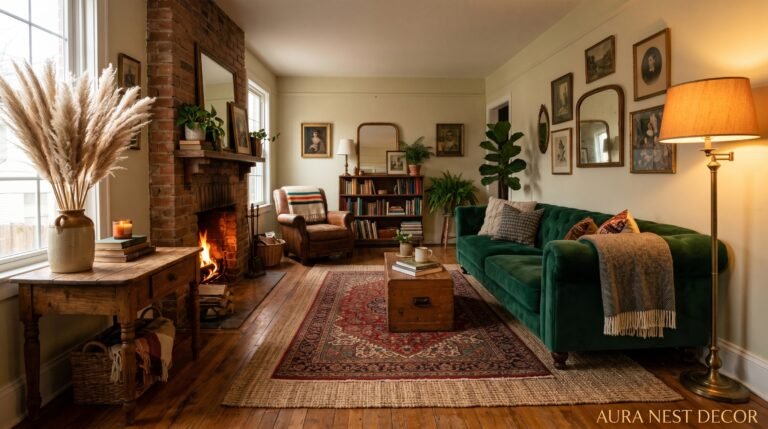
The Minimal Living Room That Actually Feels Like Home (Not a Hotel Lobby)
There’s a version of minimalism that feels cold. Distant. Like someone removed everything including the soul. And then there’s the version that makes you walk in and exhale — where every single thing has been chosen on purpose, and the room quietly does its job without asking for attention. That second version is what we’re chasing here.
—
1. The Difference Between “Minimal” and “Empty” (It’s Not What You Think)
This is where most people go wrong. They clear the shelves, push the furniture to the walls, choose a white paint color from the “neutral” section, and then wonder why the room feels like a waiting area. Minimalism isn’t about subtraction. Not at its core.
It’s about intention.
Every object in a truly minimal living room is doing something — anchoring a visual line, adding warmth, providing contrast, or simply making you happy when you see it. The distinction is surprisingly personal. A handmade ceramic bowl on a coffee table isn’t clutter if it brings you genuine joy and fits the visual calm of the space. A pile of forgotten mail is clutter even if it’s only three pieces.
What you’re creating isn’t emptiness. You’re creating clarity. And clarity feels different in every home because the things that create clarity are different for every person.
Start here: stand in your current living room and identify the one object that, if you removed it, the room would breathe a little more. Just one. That habit of single, honest edits is the whole practice in miniature.
“Minimalism isn’t about having less. It’s about having exactly what belongs.”
2. The Sofa Is Doing More Heavy Lifting Than You Realize
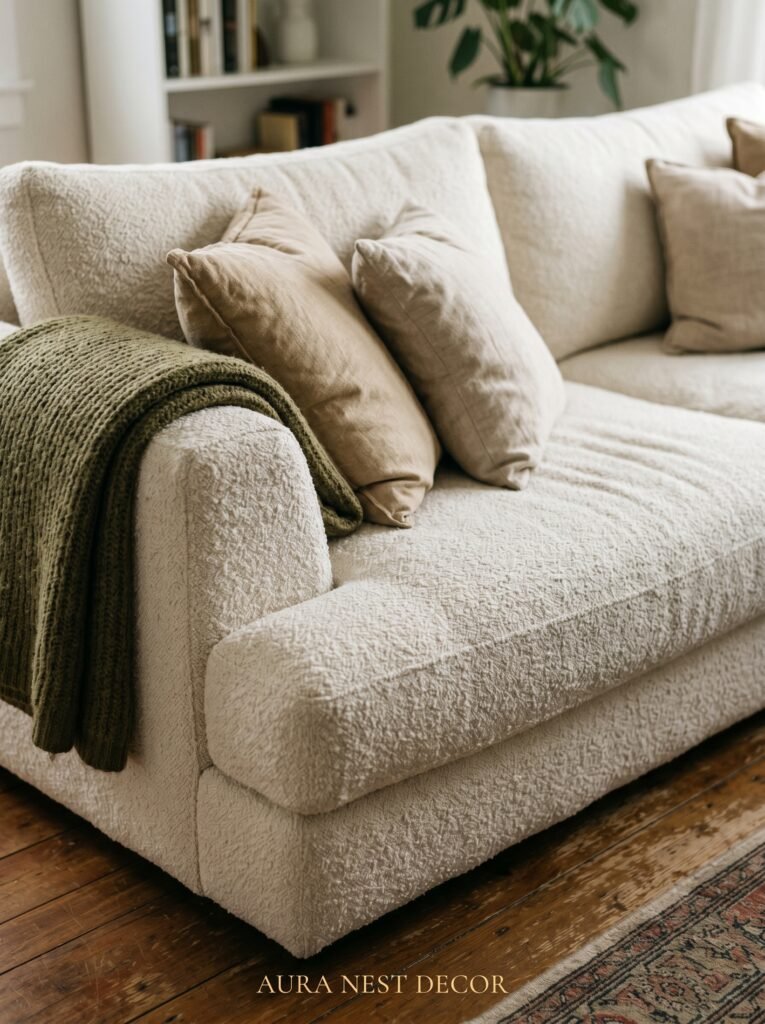
In most living rooms, the sofa is the visual anchor of the entire space. It sets the tone before anything else. So in a minimal room, the sofa choice is quietly enormous.
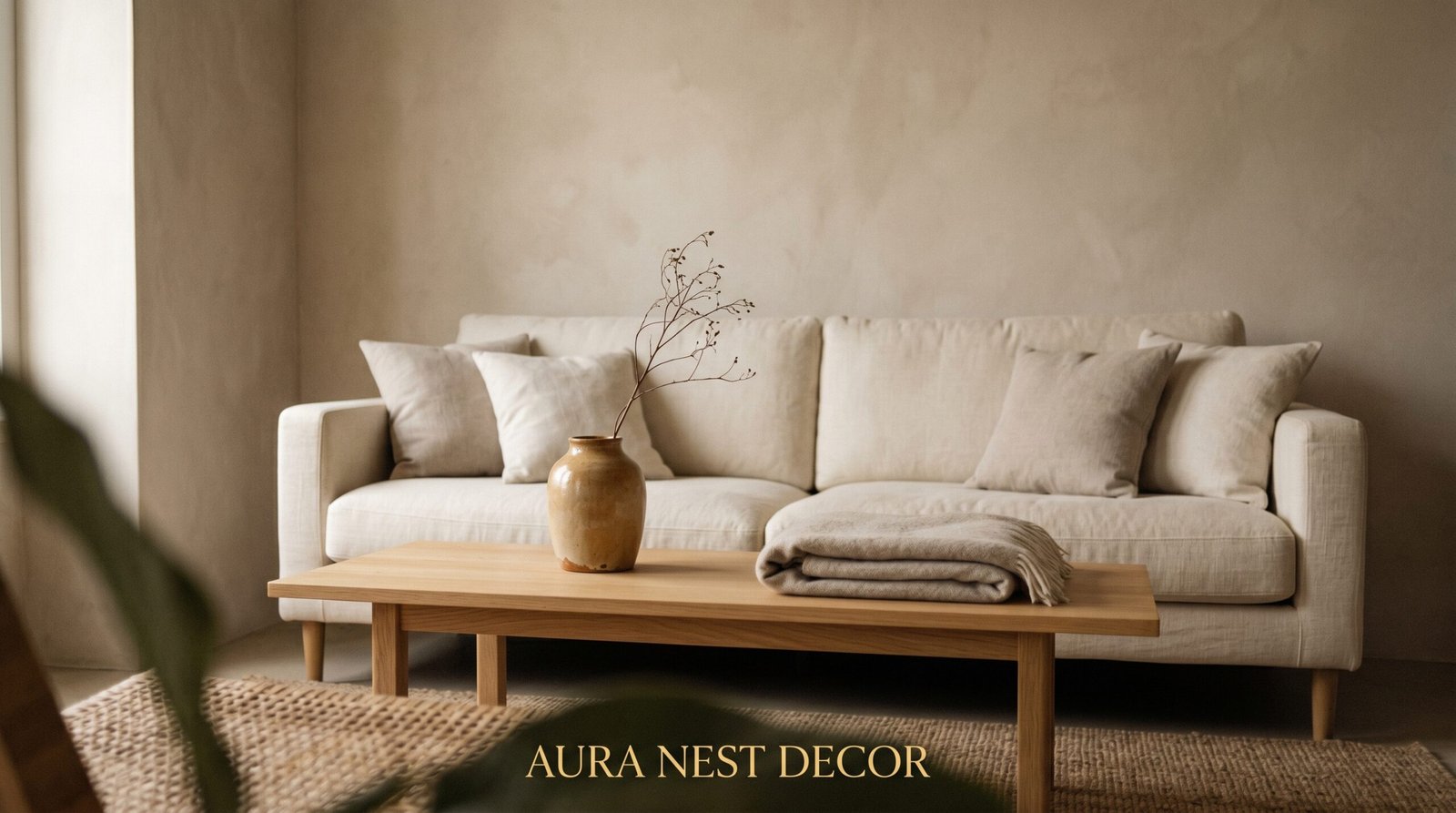
A few things matter here and they matter a lot. First: profile. Low, clean-lined sofas with simple arms — think the kind of thing you’d see in a mid-century California home or a beautifully renovated Victorian terrace in South London — read as minimal even in a busier room. Chunky, rolled arms and curved backs are gorgeous in the right context, but they ask for more visual attention. In a minimal space, they can become the main character when you want the room to be the main character.
Second: color. Neutrals are obvious here, but the specific neutral matters. Warm greige, soft oatmeal, and aged linen feel lived-in and human. Stark white sofas photograph beautifully and look impossible to maintain if you have children, pets, or, honestly, coffee. A deep charcoal or muted sage can work brilliantly as a minimal base — dark and grounded rather than light and airy, but no less calm.
Third: fabric texture. In a room without much pattern, texture becomes everything. A slightly nubby boucle, a linen-cotton blend with natural variation, a velvet that catches light differently at different hours — these add the sensory richness that stops a minimal room from feeling sterile.
3. The Wall Color Rule That Interior Designers Don’t Say Out Loud Enough
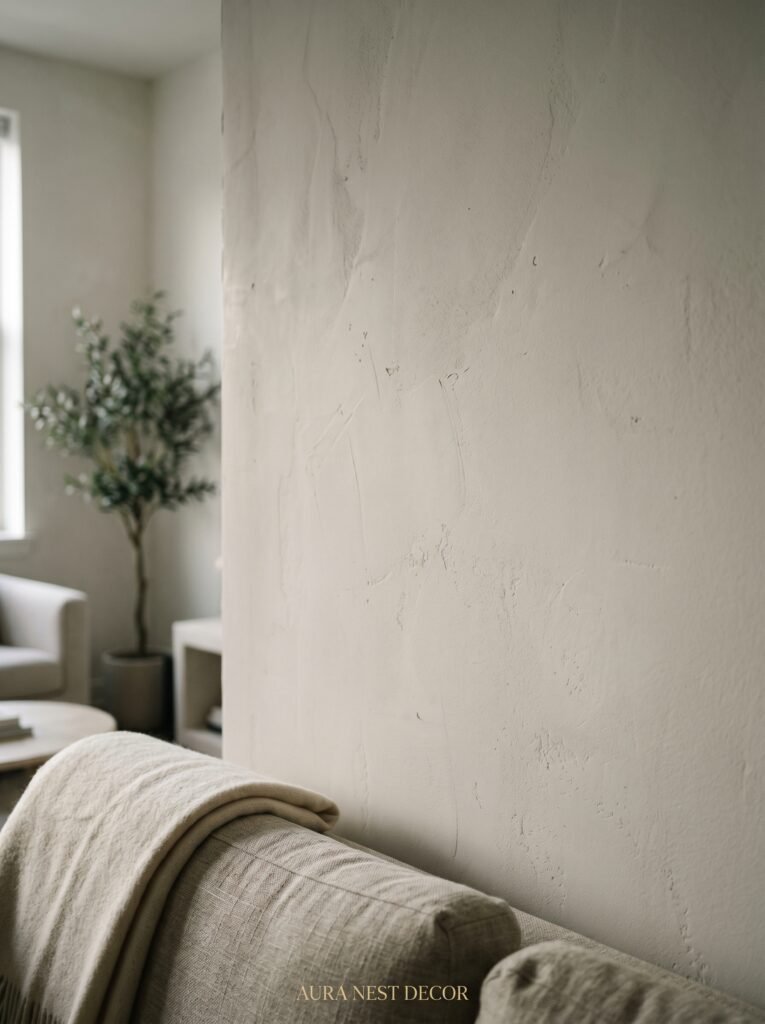
Everyone tells you to use light neutrals. And they’re not wrong. But here’s what they don’t say: the undertone of your wall color will make or break the entire room, and it’s invisible until it’s on your walls at 9pm under artificial light.
Whites and off-whites with pink or purple undertones can make a room feel cold and slightly clinical — even if they photograph warm in daylight. Yellowy-whites can feel dated in certain lights. The safest and most reliably beautiful minimal wall colors have either a warm greige undertone or a very slight green-grey cast. Think the walls of a well-worn Cotswolds farmhouse, or the particular shade of off-white you see in beautifully restored brownstones in Brooklyn. Not quite cream. Not quite grey. Just quietly perfect.
Test paint samples at night. Test them with your curtains closed and your main lights on. Test them with a lamp in the corner. The 9pm version of the color is the version you’ll live with most, and it’s almost always different from the midday version.
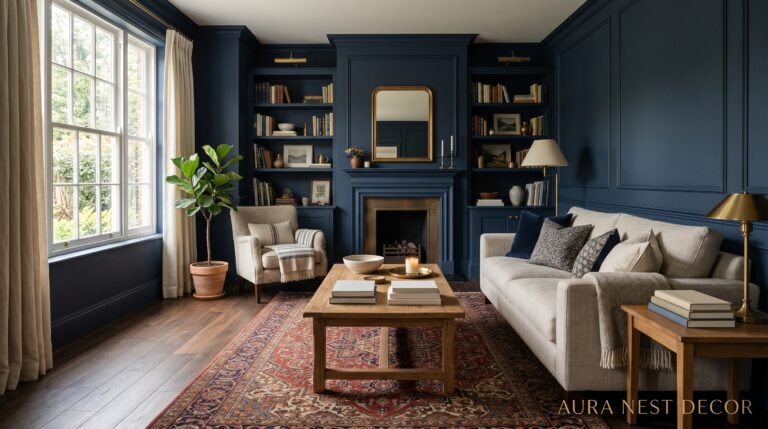
Dark wall colors are genuinely minimal too, and deeply underused. A living room painted in deep plaster pink, dusty blue-grey, or warm dark green can be spectacularly calm if the furniture is restrained. The darkness absorbs rather than reflects, and the room feels almost womb-like in the best possible way.
4. Furniture Placement: The One Rule That Makes Any Living Room Feel Intentional
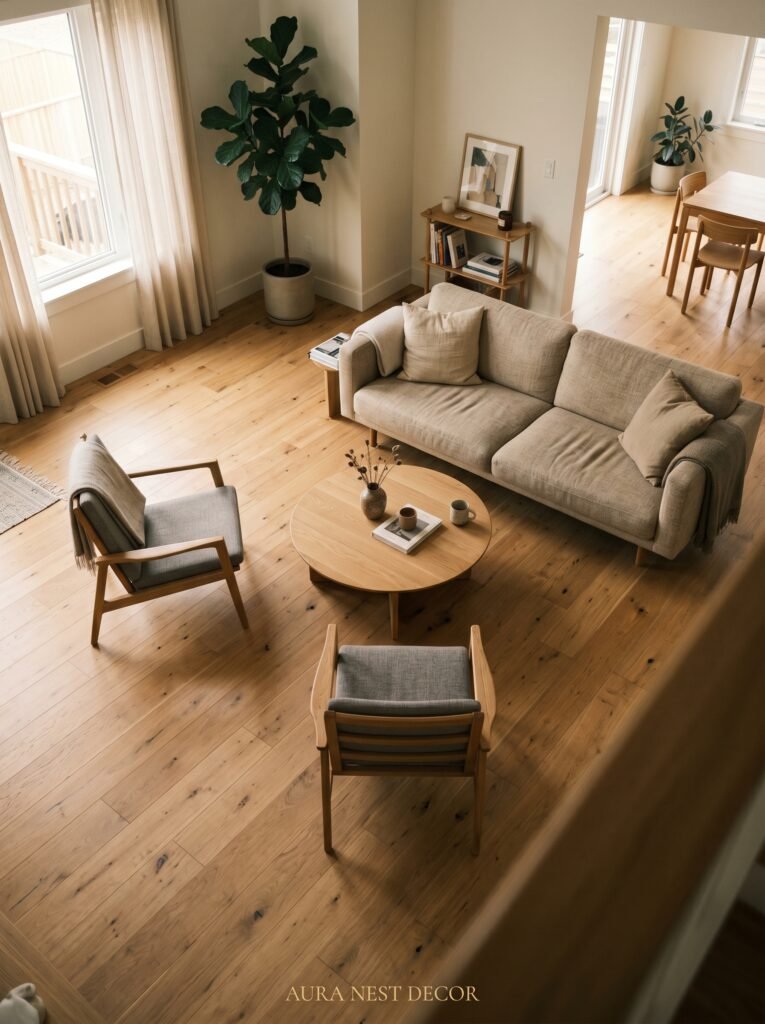
Pull everything away from the walls.
I know. It feels counterintuitive. It feels like you’re taking up more floor space. But furniture pushed against every wall creates a strange formality — it looks like your room is sitting up very straight and holding its breath.
When you float furniture — even just the sofa, pulled forward a foot or two from the wall — something shifts. The room exhales. Conversation areas form naturally. The space starts to feel designed rather than arranged. A small console or narrow bookcase can go behind the sofa to fill that gap, or simply leave it. The visual breathing room back there is actually part of the design.
In minimal living rooms, negative space is furniture. It’s not absence. It’s a considered element, the same way silence is part of music. You’re placing emptiness with the same deliberateness that you’re placing the armchair.
A note for smaller rooms, particularly the kind of compact Victorian or Edwardian living rooms that are so common in UK homes: this rule still applies. Even six inches of space between sofa and wall changes the entire read of the room. Trust the float.
“In a minimal room, the empty spaces are just as deliberate as the full ones.”
5. The Lamp Situation: Why Overhead Lighting Is Ruining Your Room
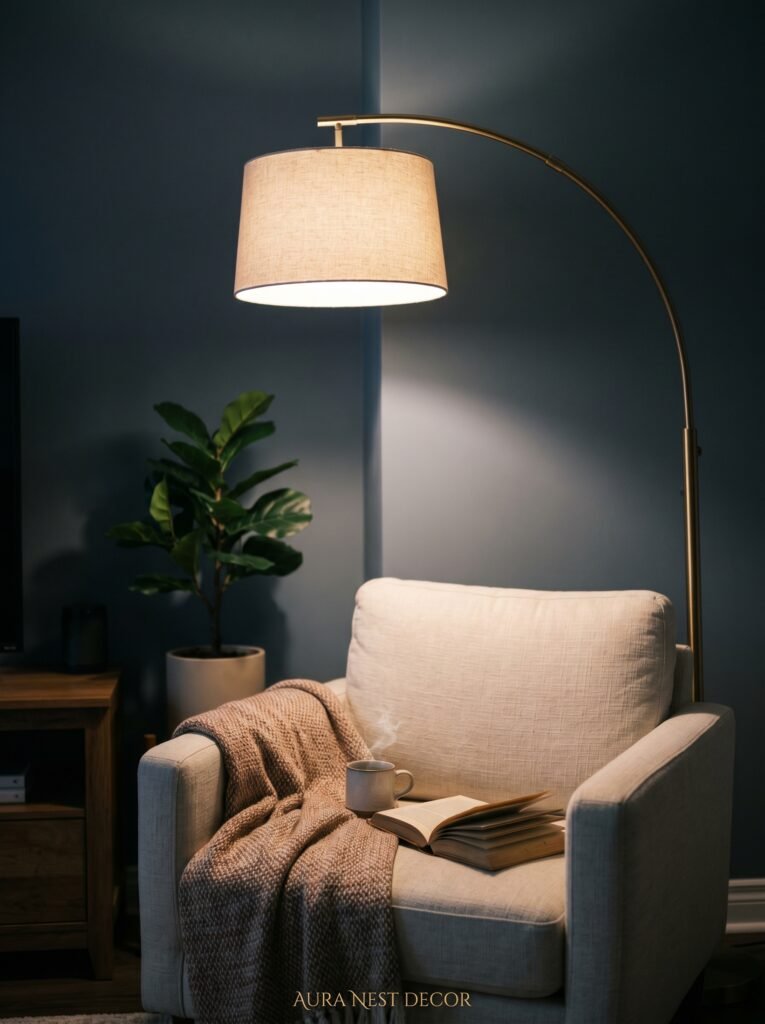
Turn off your overhead lights.
Right now, if you’re reading this at home, go turn off the main ceiling light and turn on a lamp instead. I’ll wait.
Different room, right?
Overhead lighting in residential spaces is almost always too harsh and points in the wrong direction. It flattens surfaces, washes out texture, and creates a kind of low-grade visual stress that we’ve all gotten so used to we don’t notice it anymore. Minimal living rooms rely heavily on considered lighting precisely because without much stuff, the quality of light becomes incredibly visible.
The sweet spot is layered: one floor lamp for ambient warmth, a table lamp or two for intimacy, maybe a small sculptural lamp that’s as much an object as it is a light source. Edison bulbs at around 2700K give that amber glow at 7pm that makes every room look like a painting. Dimmer switches — on any circuit you can get them onto — are worth every penny.
In a minimal room, lamps are art. A beautiful ceramic base, a woven rattan shade, a sculptural brass floor lamp — these are visual anchors that serve double duty. They earn their place twice.
6. The Coffee Table Theory That Will Change How You See Every Tabletop
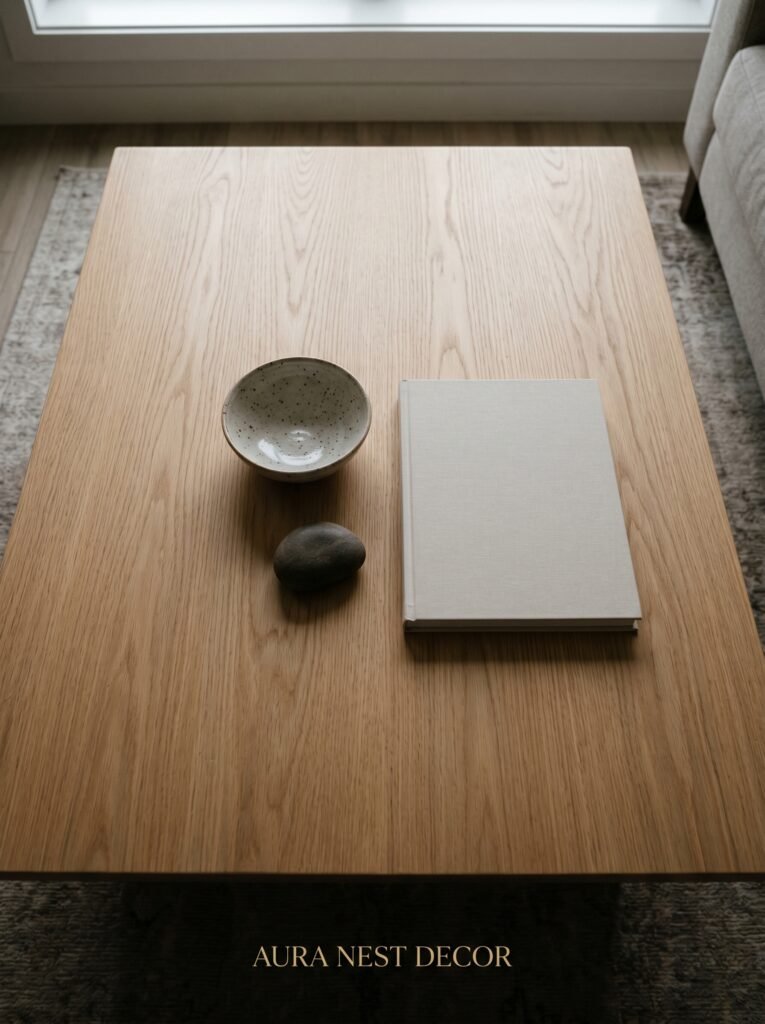
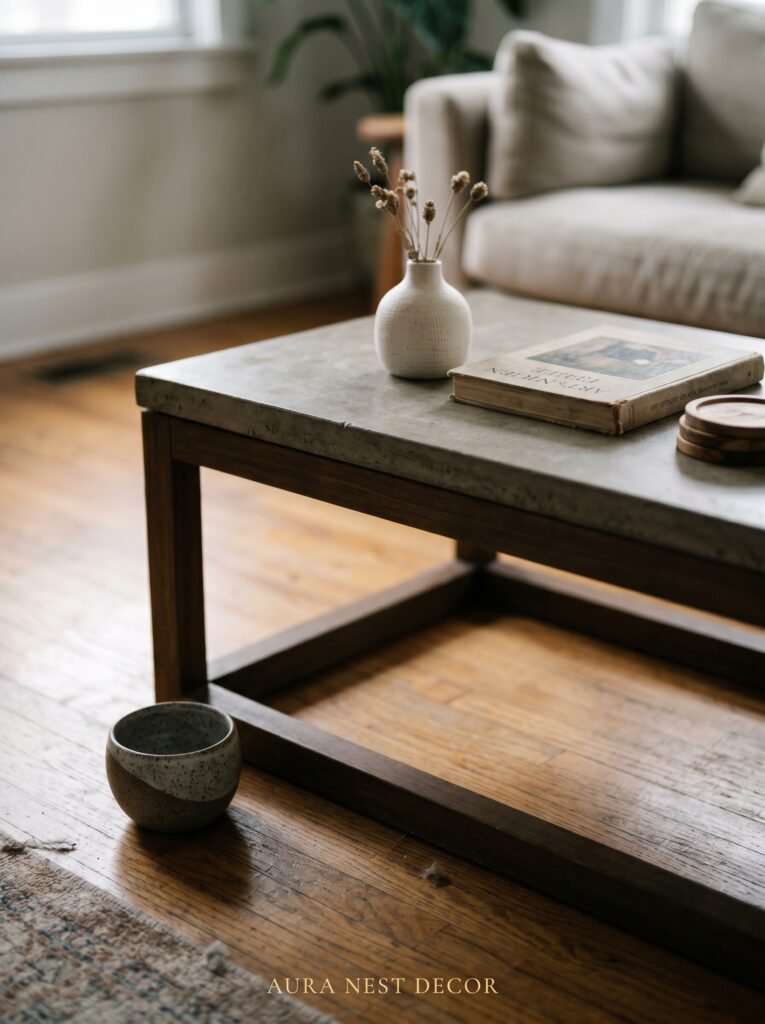
Here’s the rule that saves minimal living rooms from looking finished in a magazine and uninvited in real life: the coffee table should hold exactly three to five things, and at least one of them should be alive or recently alive.
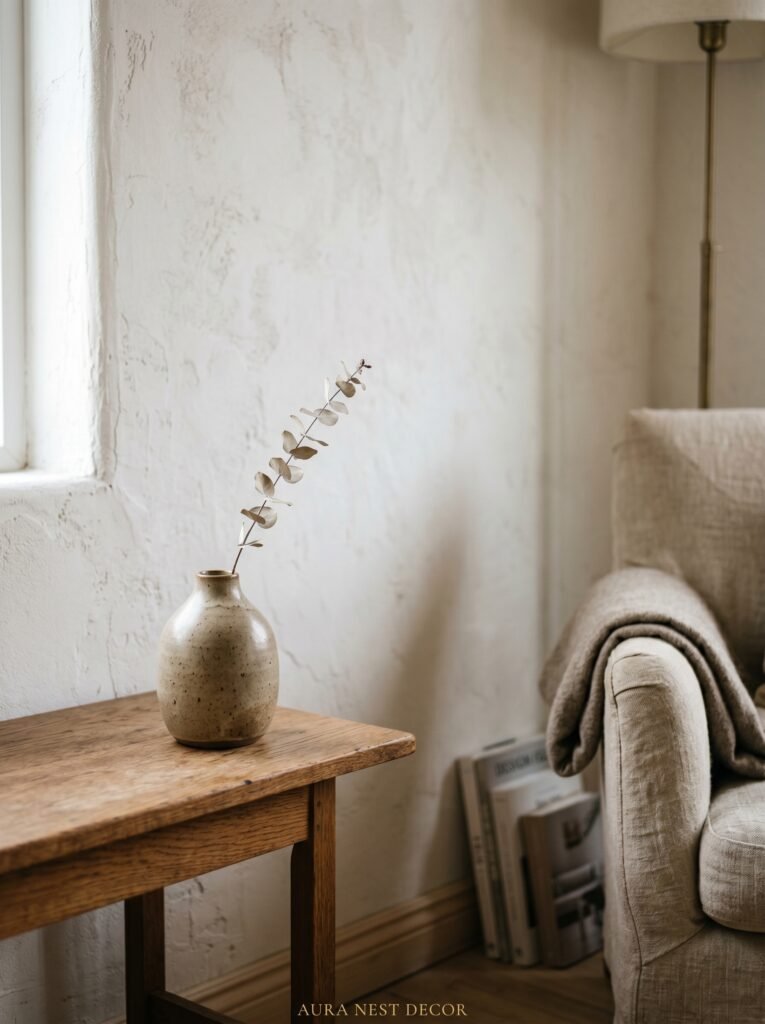
A single art book. A small ceramic or stone object. A candle. A small vessel with a branch or a few dried stems. Maybe a tray to contain it all, which is its own kind of organizing magic. The tray creates a visual boundary and signals to your eye: the arrangement lives here, and the rest is clear.
The “recently alive” part matters more than it sounds. A sprig of eucalyptus that’s slowly drying, a few stems of cotton, a branch with interesting shape — these bring organic irregularity into a space that could otherwise feel too controlled. Minimal doesn’t mean geometric. Nature’s imperfections are part of what makes a space feel warm rather than cold.
What absolutely doesn’t belong: remote controls (get a tray in a drawer), coasters in a stack (one out, rest away), multiple candles competing for attention, and anything you haven’t consciously placed there.
7. Textiles Are Where Minimal Rooms Get Their Warmth — And Their Personality
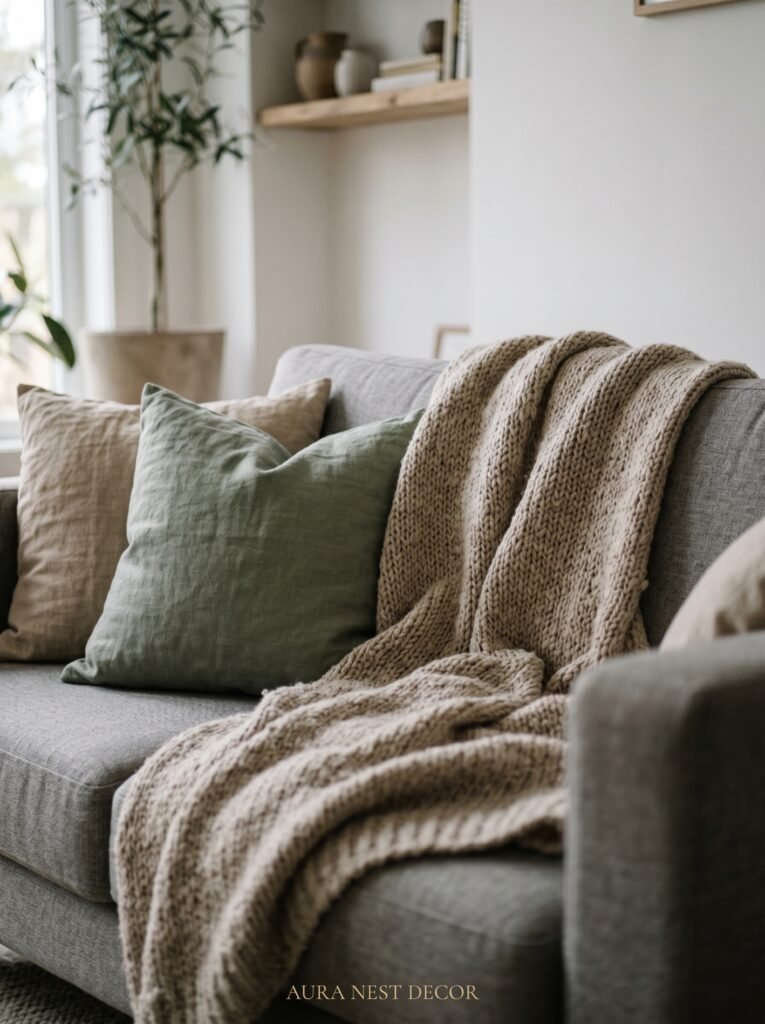
A minimal room without good textiles is a room that’s trying too hard to be minimal.
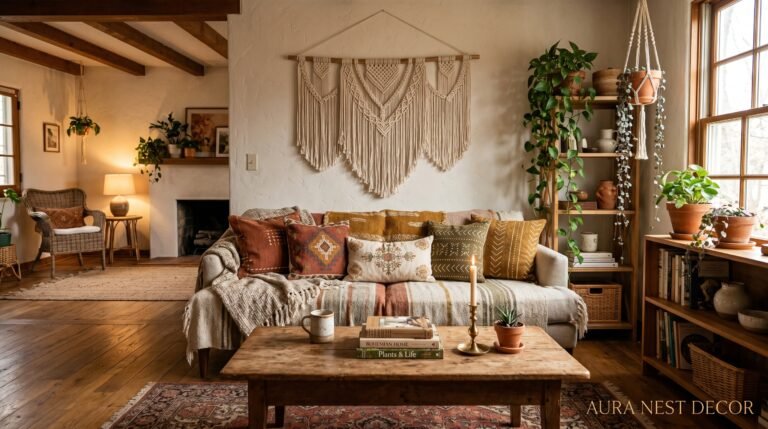
This is where you recover all the warmth and personality that restrained furniture and cleared surfaces might have taken away. A chunky knit throw draped over the arm of the sofa. A wool rug with subtle texture that your feet appreciate every single morning. Two cushions in a fabric that has some interest — a washed linen in a dusty rose, a cotton with a quiet geometric weave, a velvet in a color you’d never paint a wall but love to touch.
The key is restraint in variety, not restraint in quality. One great rug rather than layered rugs that compete. Two perfect cushions rather than six different ones all trying to make a statement. A throw that actually looks like someone draped it rather than styled it.
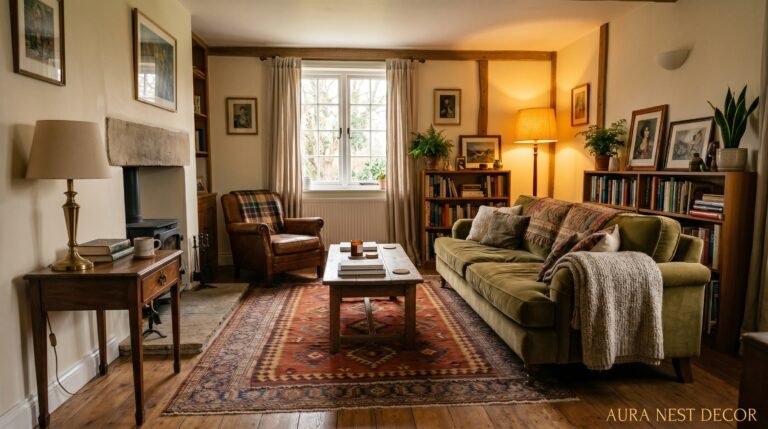
British homes have a particular gift for this — there’s a long tradition of beautiful, slightly worn textiles in UK interiors that gives minimal spaces exactly the kind of lived-in softness that makes them feel like real homes rather than showrooms. American homes tend toward the crisper end, which is gorgeous too, but warmth has to be more deliberately introduced.
“The throw, the rug, the cushion — these are where a minimal room remembers it’s actually a home.”
8. Art on the Walls: The Brave Choice That Most People Avoid
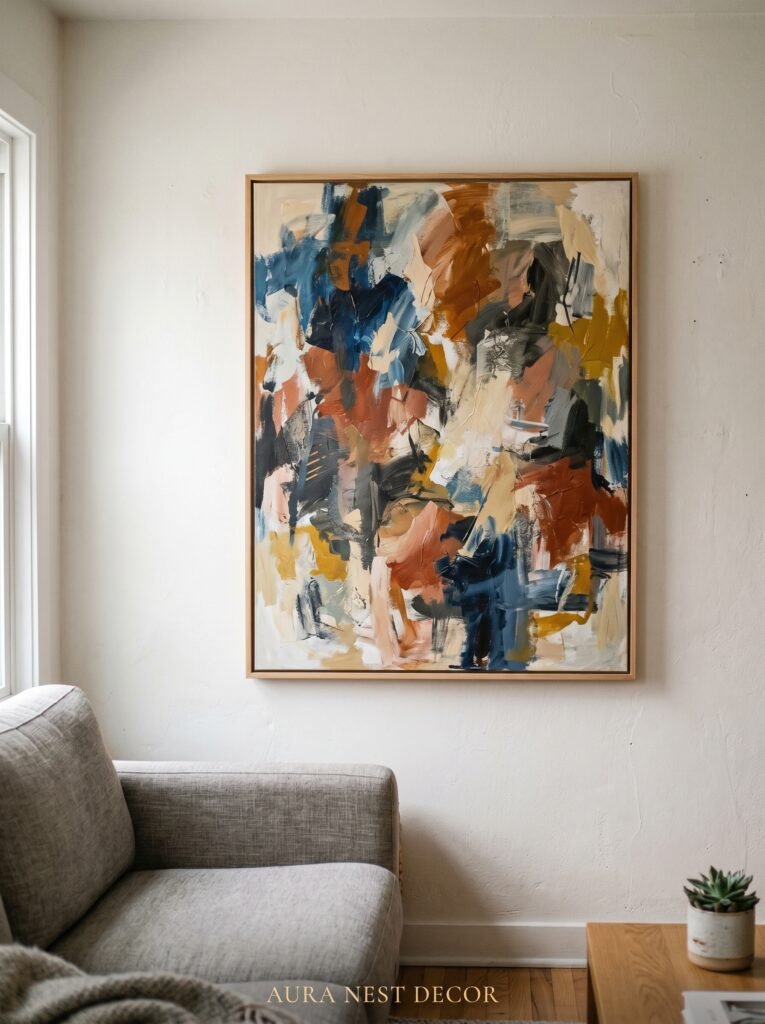
One large piece of art, hung correctly, does more for a minimal living room than an entire gallery wall.
This is the brave choice. Gallery walls are everywhere on Pinterest right now, and they look beautiful in many homes — but they work against minimalism. Multiple frames, multiple focal points, multiple color stories all happening in one place. In a minimal room, the wall is part of the calm. Interrupting it with twenty small prints interrupts the calm too.
One large piece — a print, a painting, a photograph, a framed textile — makes a statement that the room can organize itself around. It doesn’t have to be expensive. A large-format art print from Society6 or from any number of independent UK artists on Etsy can look completely extraordinary when properly framed and hung at the right height.
“The right height” means: center of the art at eye level, which for most people is around 57-60 inches from the floor. Not over the sofa pushed up toward the ceiling. Not floating ambiguously somewhere in the middle. Hung deliberately, like it belongs exactly there. Because it should.
9. The Shelf Styling Method That Keeps Rooms Looking Edited, Not Barren
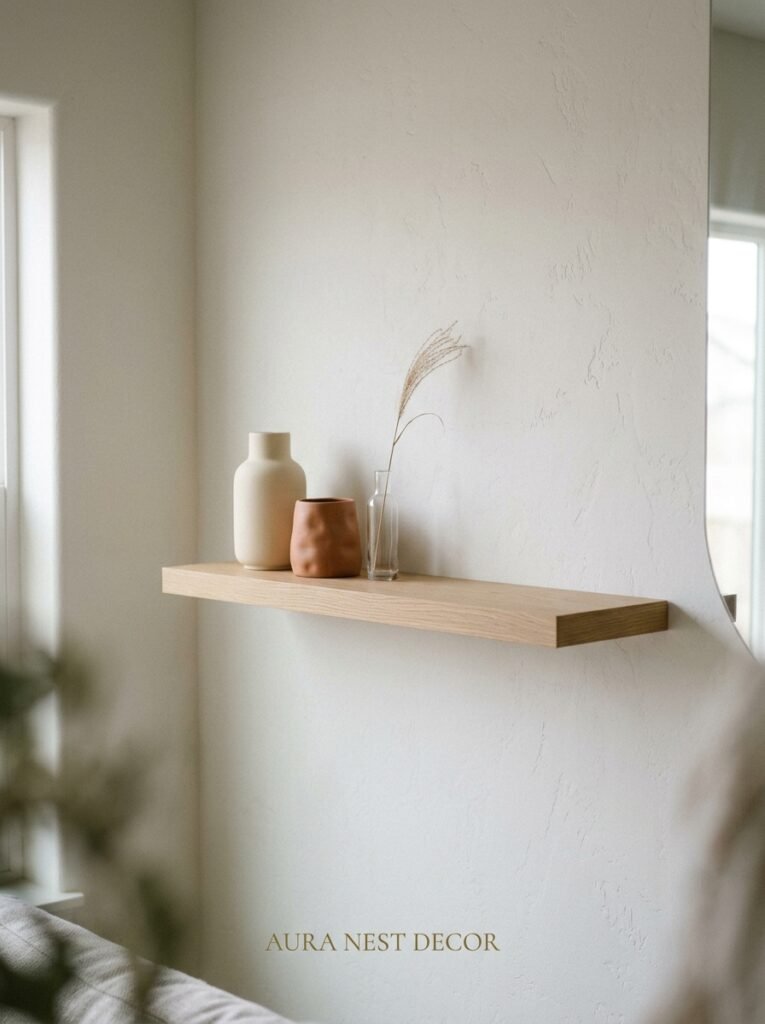
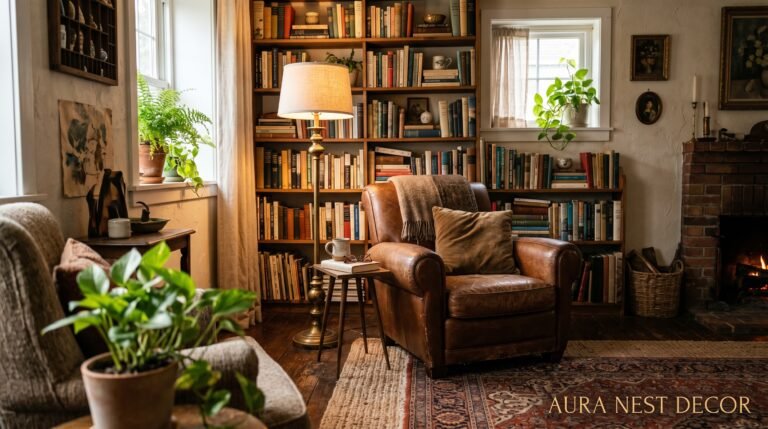
If you have built-in shelves or a bookcase in your living room — which is genuinely common in UK homes especially — minimal styling doesn’t mean empty shelves. It means curated shelves.
Three categories of things belong together on a minimal shelf: books (spines facing forward or, if you’re brave, turned backward so only pages show), objects with interesting form, and occasional empty space that’s treated as a deliberate choice rather than a gap you haven’t filled yet.
The trick is thinking in zones. Leave the top shelf less full. Let a single sculptural object have real room around it. Group books with similar spine colors or heights. Tuck things that matter personally but aren’t visually minimal — children’s drawings, holiday souvenirs, the random-but-beloved — into a different room or a closed cabinet, and let the public shelves be your curated self.
This isn’t dishonest. Your living room doesn’t have to contain every piece of evidence that you live there.
10. The Plants Question: How Much Green Is Too Much for a Minimal Space
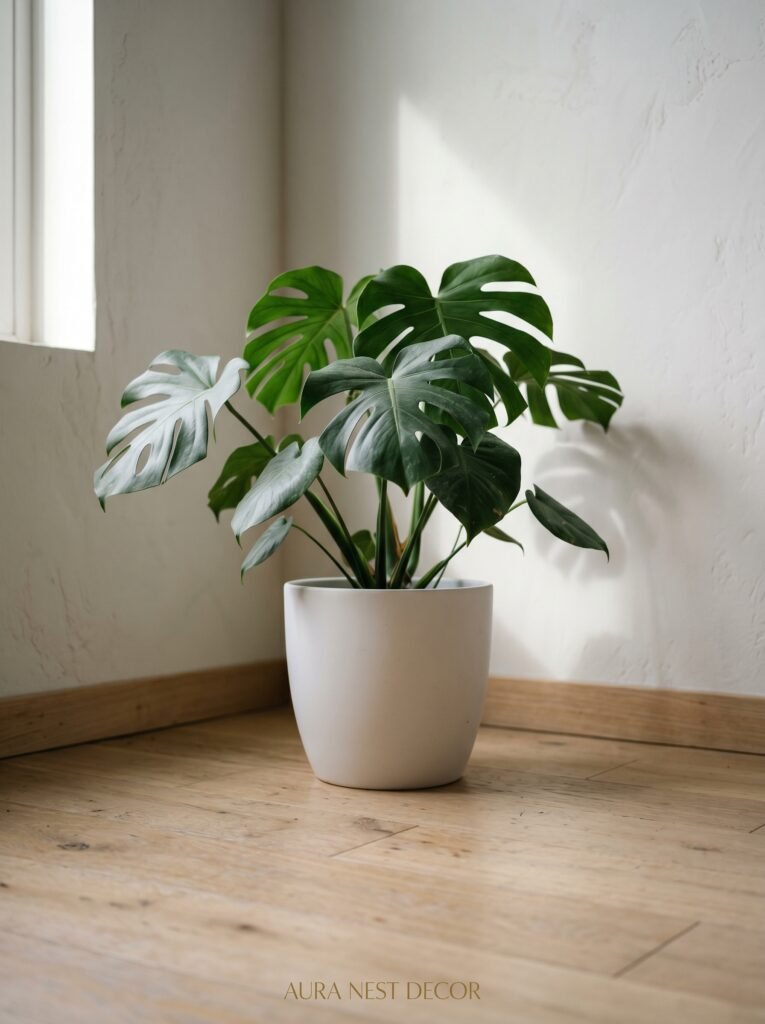
One or two plants, chosen for form.
That’s the answer for truly minimal spaces. Not the jungle aesthetic — which is lush and beautiful and absolutely not minimal. Not zero plants, which removes one of the most reliable sources of organic warmth in interior design. One or two, chosen specifically because their silhouette is interesting and their care requirements won’t leave them looking half-dead by February.
The ones that reliably work: a sculptural fiddle-leaf fig in a corner (yes, still, always), a single trailing pothos on a high shelf where it can cascade, a bold snake plant in a beautiful pot, a monstera with a few strong leaves. In smaller UK living rooms, a single well-chosen plant in a quality ceramic pot can do the whole job.
The pot matters as much as the plant. A terracotta pot, a white stoneware pot, a matte dark ceramic — these are objects in their own right. The plastic nursery pot that most plants come in will undermine even the most beautiful minimal room, so repotting is worth the five minutes.
11. The Floor Rule That Works in Both Small London Flats and Sprawling American Living Rooms
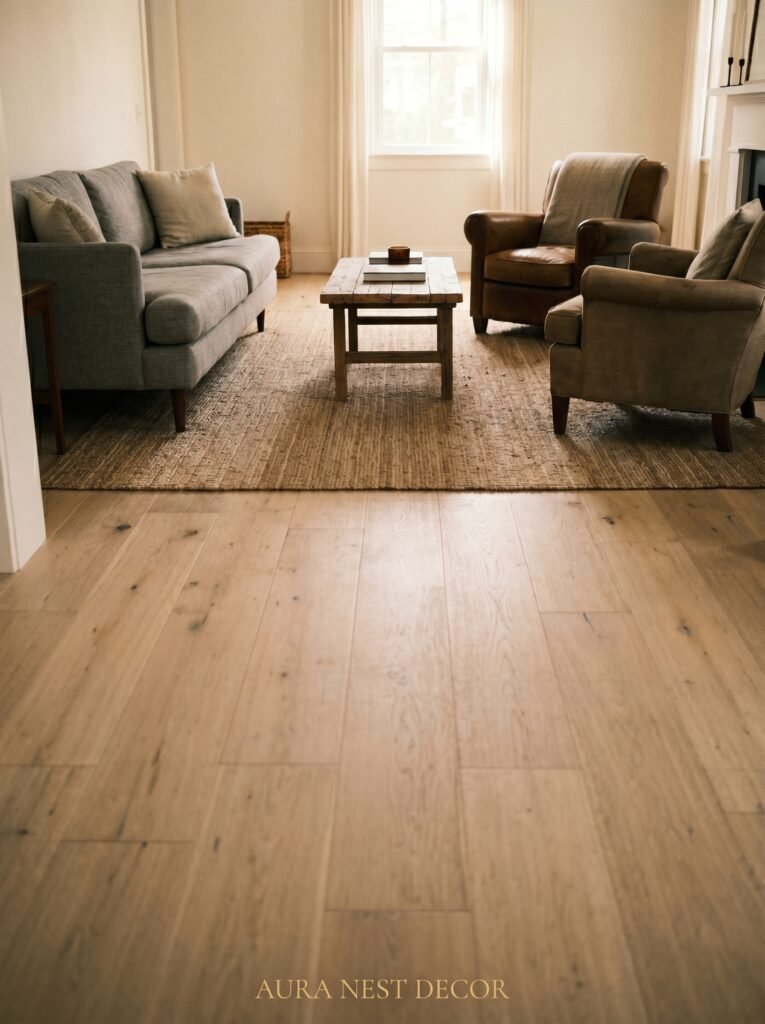
Keep the floor as clear as possible.
Not spotless-clean clear. Not move-everything-to-the-edges clear. Intentionally clear. Floor space creates visual calm faster than almost any other single change you can make. Seeing floor means seeing room, and seeing room means feeling room — even if the square footage is exactly the same as before.
This is a practical challenge in homes with children, in small flats where storage is already a struggle, in homes with a lot of people moving through them daily. But the goal doesn’t have to be perfect. The goal is: by 8pm, the floor of the living room has been mostly returned to itself.
A single storage ottoman that doubles as a coffee table. A cabinet with closed doors for the things that need to exist but don’t need to be seen. Baskets that contain things without looking cluttered. The architecture of the room shows through more when the floor is clear, and the architecture is usually doing beautiful things you’ve stopped noticing.
12. The Edit That Has to Happen More Than Once
Here’s the honest part that most design articles skip: a minimal living room isn’t a one-time project.
It’s a practice. A seasonal reset, at minimum. Things accumulate in living rooms specifically because living rooms are where life happens — the book you’re halfway through, the phone charger that migrated from the bedroom, the candle you bought but haven’t lit, the cushion you bought to replace the one you removed but haven’t decided on yet.
Two or three times a year, move through the room with the intention of a first-time visitor. What catches your eye? What seems to be there out of habit rather than choice? What would you remove if you were setting the room up fresh today?
This isn’t exhausting maintenance. It’s more like a recalibration. The room gets to be what you actually want it to be rather than what it’s slowly becoming when you’re not paying attention. Minimal rooms require a light hand, regularly applied. They reward that attention with something genuinely hard to put into words — the particular feeling of a room that’s completely on your side.
—
❓ FAQ
Q: Can a minimal living room still feel cozy and warm, or does it always end up feeling cold? A: Absolutely yes — and warmth is actually more controllable in a minimal room because you’re working with fewer elements. Warm textiles, layered low lighting, natural materials like wood and linen, and one or two considered plants will bring enormous warmth to a minimal space. The trick is that cozy details hit harder when there’s less visual noise around them.
Q: How do I make a minimal living room work with kids and pets without it looking chaotic constantly? A: Closed storage is your best friend — baskets, ottomans with lids, cabinets that close. Give kids and pets their own designated area within the room (a basket of toys, a pet bed in one specific spot) so the rest can stay clear. Minimal doesn’t have to mean “everything hidden all the time” — it means that when you look at the room, the overall impression is one of calm, even if there’s a LEGO in the corner.
Q: What’s the biggest mistake people make when trying to create a minimal living room? A: Removing personality along with clutter. A truly good minimal living room still has a point of view — one piece of meaningful art, a rug you genuinely love, a lamp with character. When rooms feel cold and empty rather than calm and considered, it’s usually because the editing removed everything distinct, not just everything extra.
—
💭 Final Thoughts
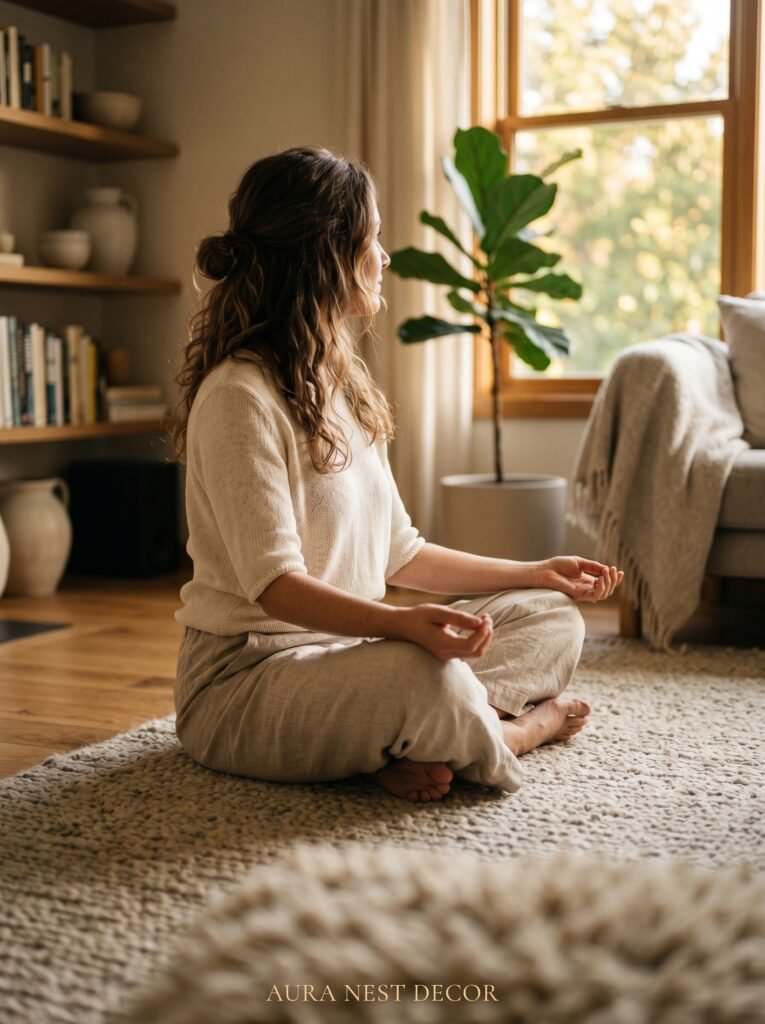
Minimalism in a living room isn’t an aesthetic style you apply once and photograph. It’s a relationship with your space — one where you decide, over and over, what deserves to be there and what’s just along for the ride. The rooms that feel genuinely extraordinary aren’t the ones with the fewest things. They’re the ones where everything present is completely intentional, and the space itself has room to breathe.
What’s the one thing in your living room right now that you’d remove if you trusted your instincts?