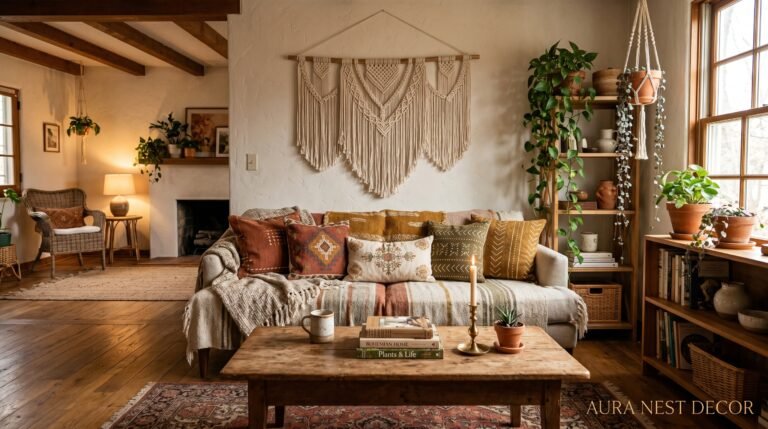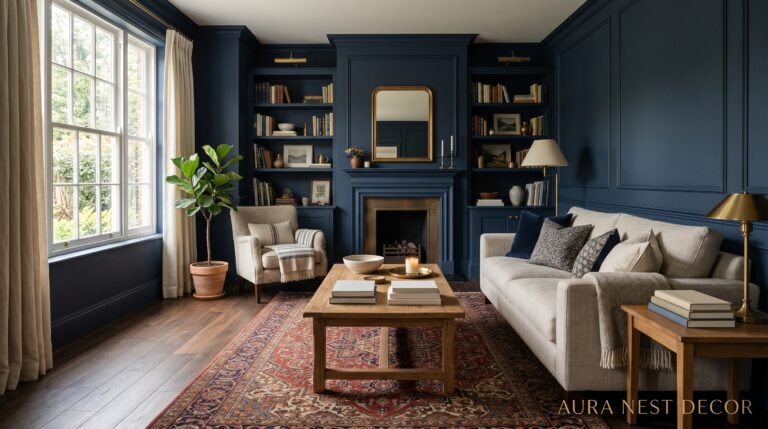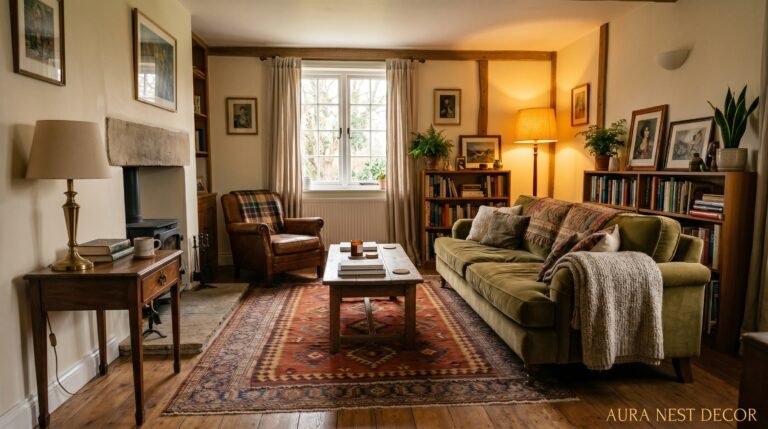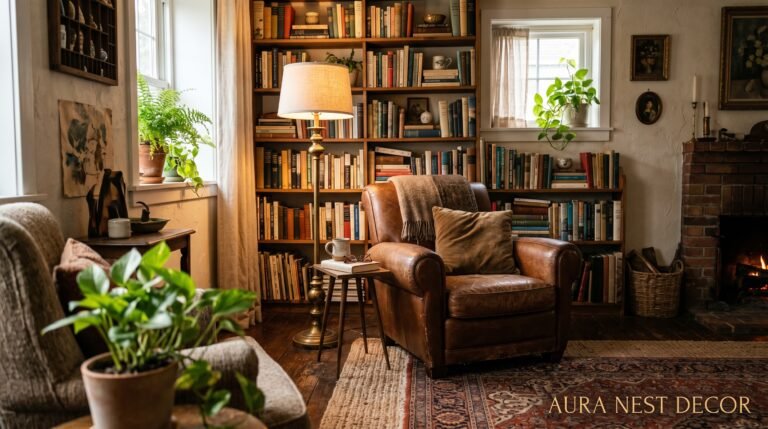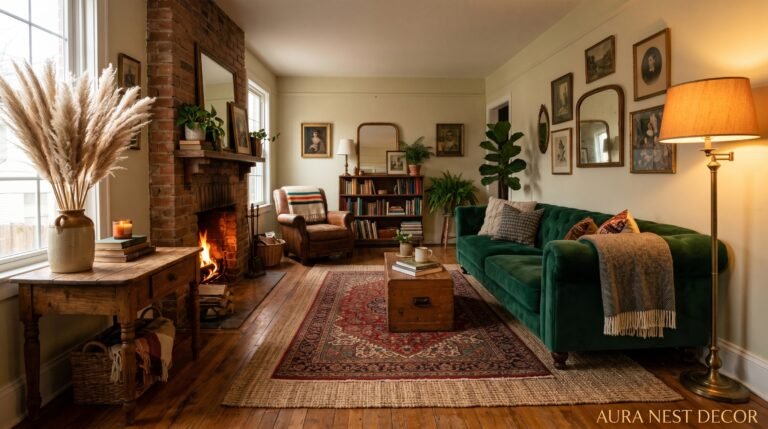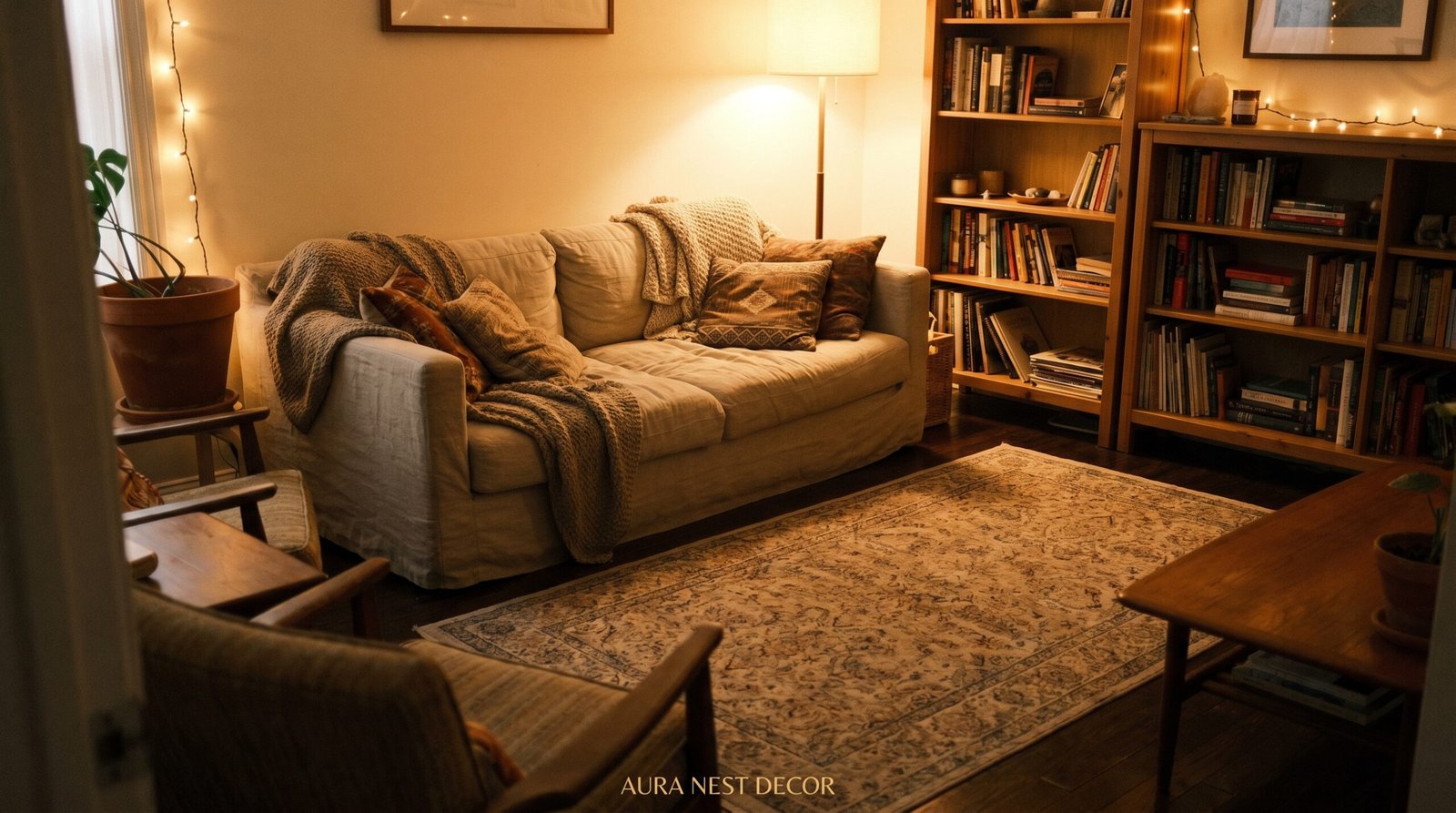
The Small Living Room That Feels Bigger Than It Is (And Cozier Than Any McMansion)
You walked into that apartment, looked at the living room, and thought: okay, we’re going to have to get creative. Maybe it’s 180 square feet. Maybe there’s one awkward window and a radiator in the wrong place. Maybe it’s fine, technically, but it just doesn’t feel like yours yet. Here’s what I want you to know: small living rooms aren’t a problem to solve. They’re an invitation.
—
1. The Furniture Mistake Almost Everyone Makes in a Small Space (and How to Stop)
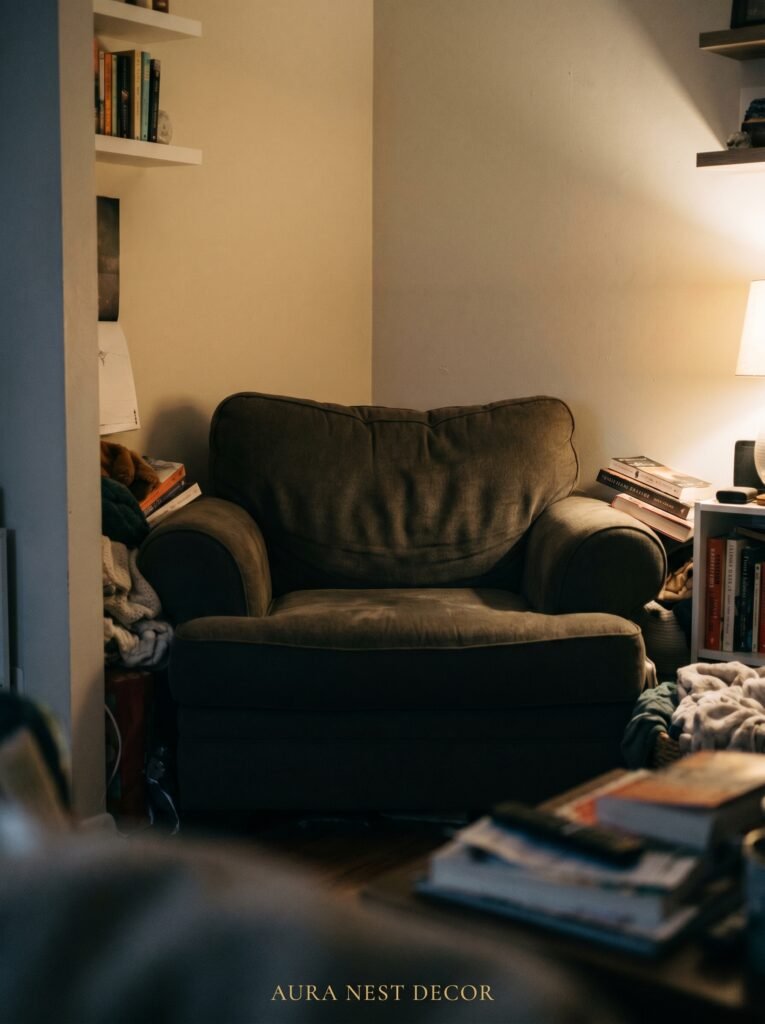
The instinct is understandable. You want a small sofa because the room is small. You push everything against the walls to “make room.” You buy a tiny coffee table so the floor stays visible. And then you sit in your living room and it feels like a waiting area at a dentist’s office.
Here’s the thing that changed everything for me: small rooms don’t need small furniture. They need fewer pieces of the right furniture.
One substantial sofa — something you can actually curl up on, something with real presence — does more for a room than three pieces of undersized seating trying to work together. Pull it away from the wall by even six inches. That gap, barely anything, creates the visual impression of intention. It signals that this space was designed, not just arranged.
The same goes for the coffee table. A round one, ideally in a light material like rattan, glass, or pale wood, keeps the room feeling airy without disappearing entirely. You want something that earns its floor space. A tray on top, a stack of two books, a small candle — that’s a coffee table doing its job.
Think of it this way: your living room should look curated, not crowded, and also not empty. That balance lives in restraint with boldness. One big thing done right beats four small things fighting for attention every single time.
“A small room doesn’t need small furniture. It needs fewer pieces that actually mean something.”
—
2. The Color That Keeps Showing Up in Every Beautiful Small Living Room Right Now
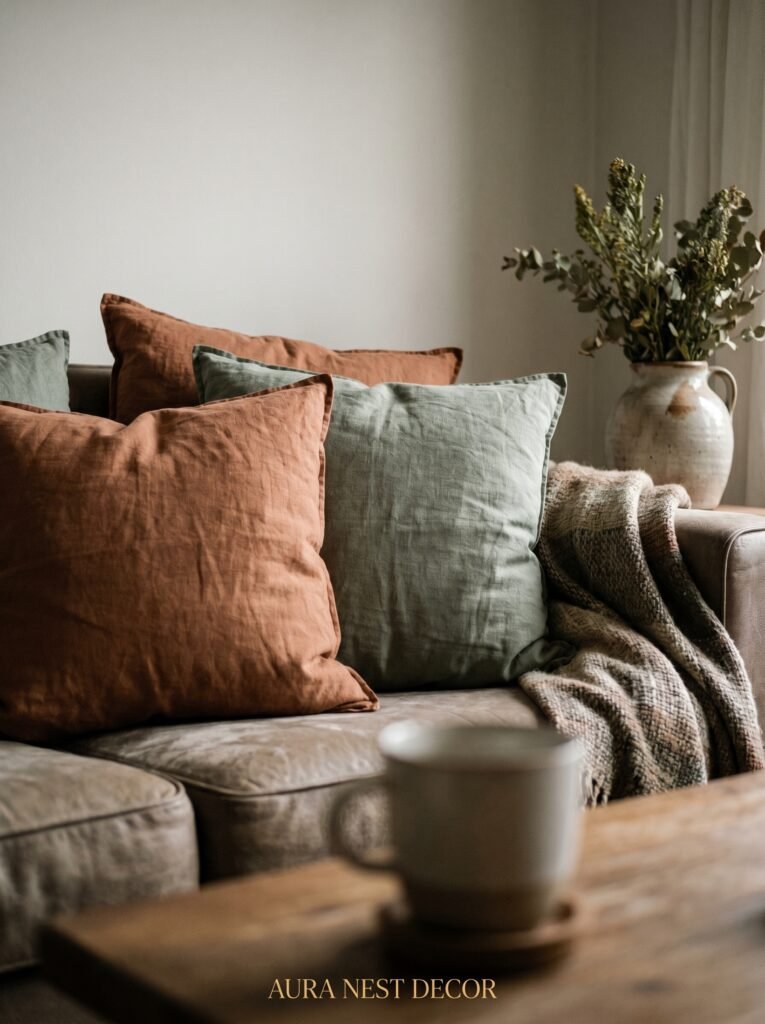
It isn’t white. It isn’t the gray everyone used in 2016. It’s warm off-white with a green or terracotta undertone — think the inside of an antique bookshop, or the walls of a French farmhouse that hasn’t been touched in thirty years in the best possible way.
Farrow & Ball’s “Elephant’s Breath” and “Mole’s Breath” are doing a lot of heavy lifting in British flats right now. In the States, Benjamin Moore’s “Pale Oak” and “White Dove” are the ones I keep seeing in apartments that photograph beautifully and feel even better in person.
Here’s why it works: warm undertones on walls make artificial light feel intentional. The amber glow of an Edison bulb at 7pm bounces differently off a warm cream wall than it does off a stark white or cool gray one. The room goes from feeling clinical to feeling inhabited. Like someone actually lives there and likes it.
If you’re renting and can’t paint, this principle still applies. Lean a large-format art print with warm tones against the wall. Layer in throw pillows and blankets in ochre, rust, or sage. The eye reads the room as warm because of what’s in it, not just what’s behind it.
One caveat: don’t go too dark in a small room unless you’re fully committing. A deep forest green or navy can work magnificently if you go all in — dark walls, dark trim, moody lighting. Half-hearted dark paint in a dim room just reads as unfinished.
—
3. Lighting Layers That Make a Small Room Feel Like It Has Rooms Within It
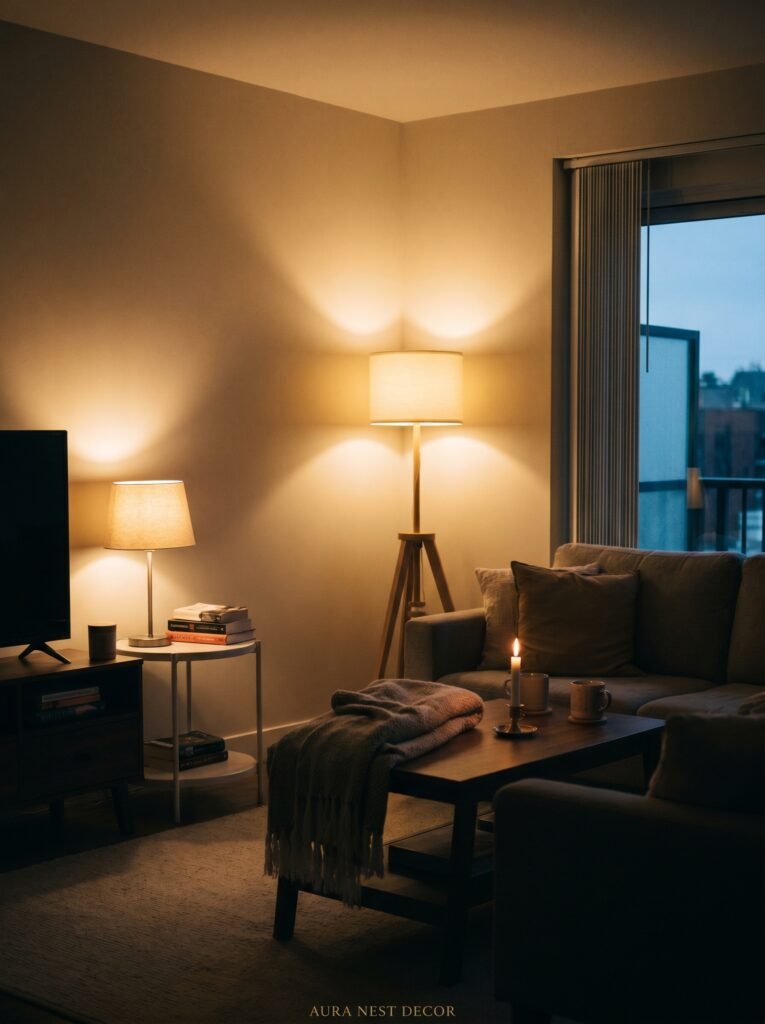
One overhead light is not a lighting plan. It’s a starting point, and not even a good one.
The way light falls in a room is the single fastest way to change how large or intimate it feels. In a small living room, the goal isn’t brightness — it’s warmth and layers. You want pools of light at different heights creating different moods, so the room feels like it has depth even when it doesn’t have square footage.
Start with a floor lamp in a corner. This is the most underrated move in home decor. A tall arc lamp that reaches over the sofa — especially one with a linen or warm-toned shade — creates the illusion of height and fills dead corner space with purpose. Then add a table lamp on a side table or console. Then maybe a string of warm lights tucked along a bookshelf or windowsill.
Now turn off the overhead completely.
Sit with just the lamps on and tell me that room doesn’t feel like somewhere you want to spend the entire evening. The ceiling disappears. The walls soften. The room contracts in the best possible way — intimate rather than cramped, cozy rather than small.
In the UK especially, where natural light is sometimes limited for half the year, this layering approach saves entire winters. It’s not just decorating. It’s survival, honestly.
—
4. The One Rule That Makes Any Tiny Room Feel Intentional
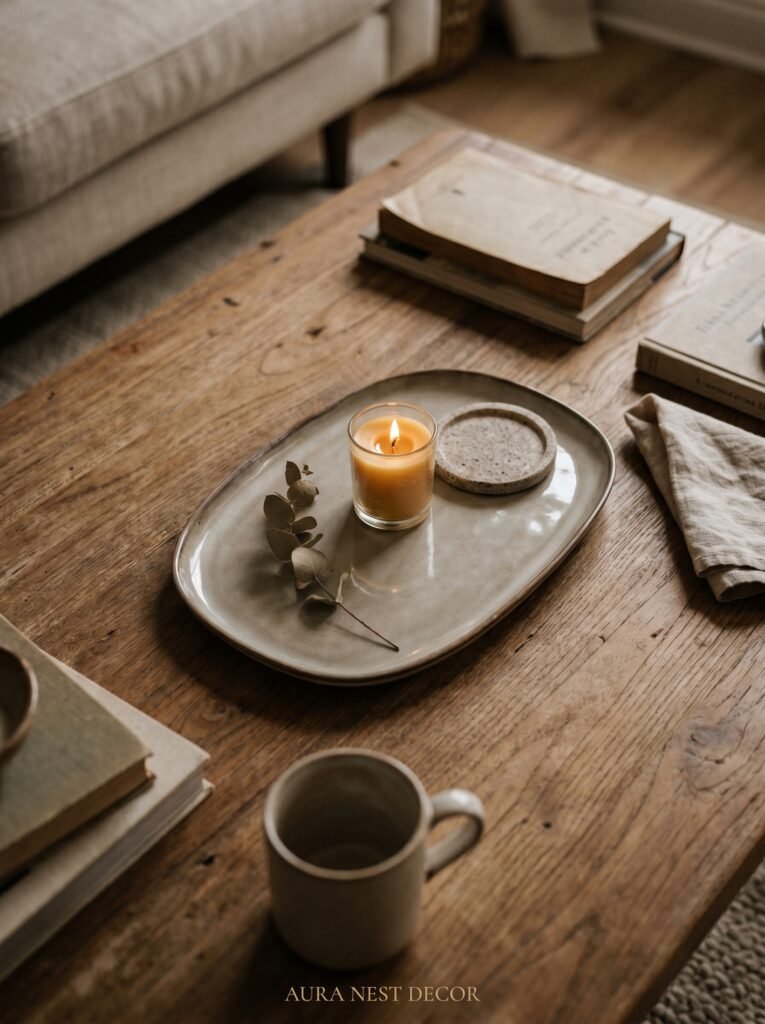
Pick one thing to be the thing. One piece, one wall, one moment in the room that makes someone walk in and say “oh.”
In a small living room, you don’t have space for everything to compete. So stop trying to make everything equal and choose your champion. Maybe it’s a gallery wall done with real commitment — not four scattered frames, but a tight grid of fifteen that covers the wall from console height to near the ceiling. Maybe it’s a vintage rug with actual character, the kind that looks like it came from somewhere. Maybe it’s a single oversized mirror leaning against the wall instead of hanging perfectly.
Whatever it is, let it be undeniably itself. Then let everything else support it.
This is the principle behind every living room that photographs well and feels good in person. There’s always a focal point, and it’s always specific. Not “we have some art” but “we have this art.” Not “there’s a rug” but “there is a rug that tells you something about who lives here.”
“Give a small room one thing to say, and it will say it loudly.”
—
5. Storage That Doesn’t Look Like It’s Trying Too Hard
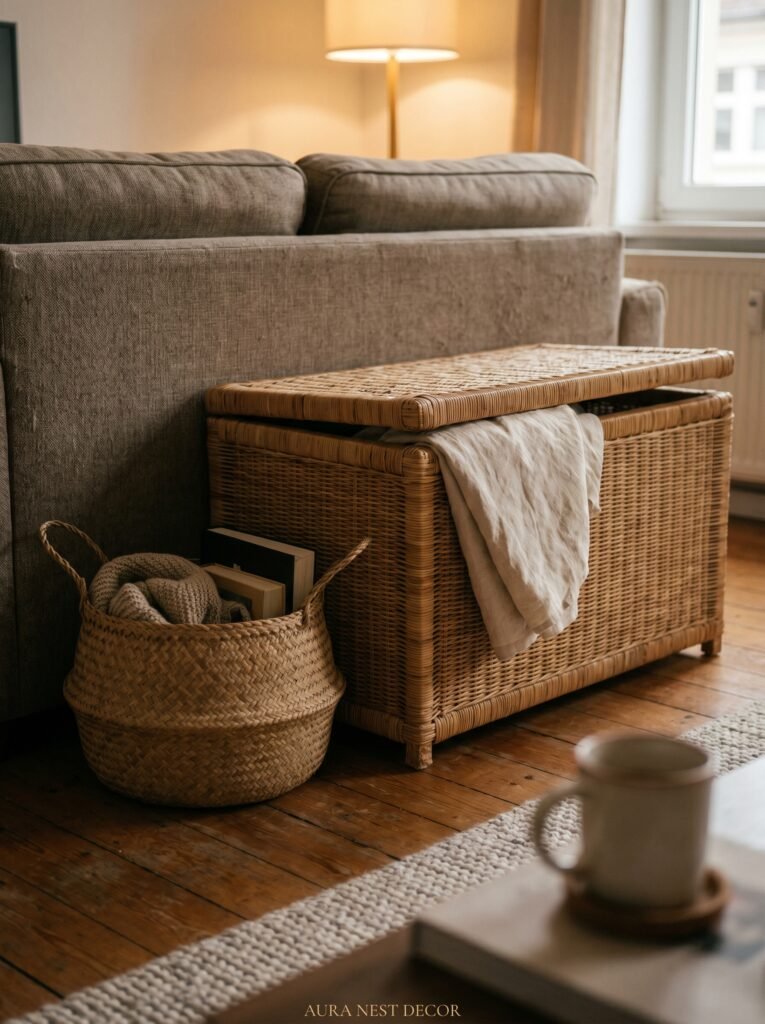
Hidden storage in a small living room is about dignity. You don’t want your space to scream “we have nowhere to put things.” You want it to whisper “everything has a place.”
Ottomans with storage inside are one of the most efficient pieces of furniture on the market and they almost never look like a compromise. Get a good one — linen or boucle fabric, a lid that doesn’t wobble — and it becomes the coffee table, the footrest, and the place where the extra blankets live simultaneously.
Built-in shelving around a fireplace or alcove is the dream, and if you own your home and have an alcove (very common in British Victorian and Edwardian semis), commission it. It will change your life and add value to the house. Style the shelves with books, plants, and some decorative objects — the ratio that works is roughly 60% books and practical items, 40% things you love looking at.
If you’re renting, go vertical. A tall, narrow bookcase pulls the eye upward and makes the ceiling feel higher. Put the things you use daily at eye level and below. Put the beautiful things and rarely touched items above eye level. The room looks styled. The mess is managed. Everyone wins.
—
6. The Rug Size That Actually Works (It’s Bigger Than You Think)
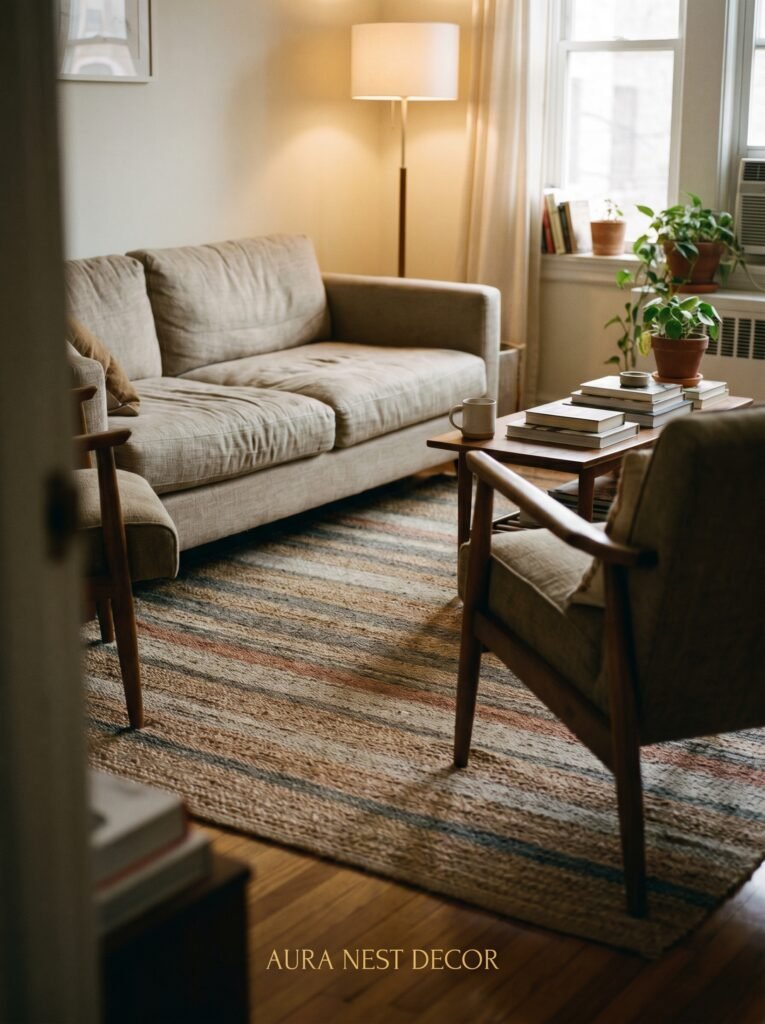
If your rug is floating in the middle of the room with nothing around it, it’s too small. This is the most common styling mistake I see in small living rooms, and it does the opposite of what people intend — instead of making the room feel larger, a too-small rug makes everything feel disconnected and slightly sad.
The rule I follow: in a small living room, the front legs of the sofa and chairs should sit on the rug. Not all four legs necessarily, but the front ones. This anchors the furniture into one visual unit, which makes the seating area read as a composed, intentional zone rather than scattered pieces that happened to end up near each other.
For most small living rooms, this means you need a rug that’s at least 8×10 feet, sometimes larger. That sounds like a lot. But when you put it down with furniture on top, the room suddenly coheres. It becomes a room. A real one.
In terms of style: a low-pile rug in a faded vintage print, or a simple textured flatweave in a warm neutral, works almost universally. It gives the floor something interesting to say without competing with everything else going on in the room.
—
7. Plants That Actually Survive in a Low-Light Apartment
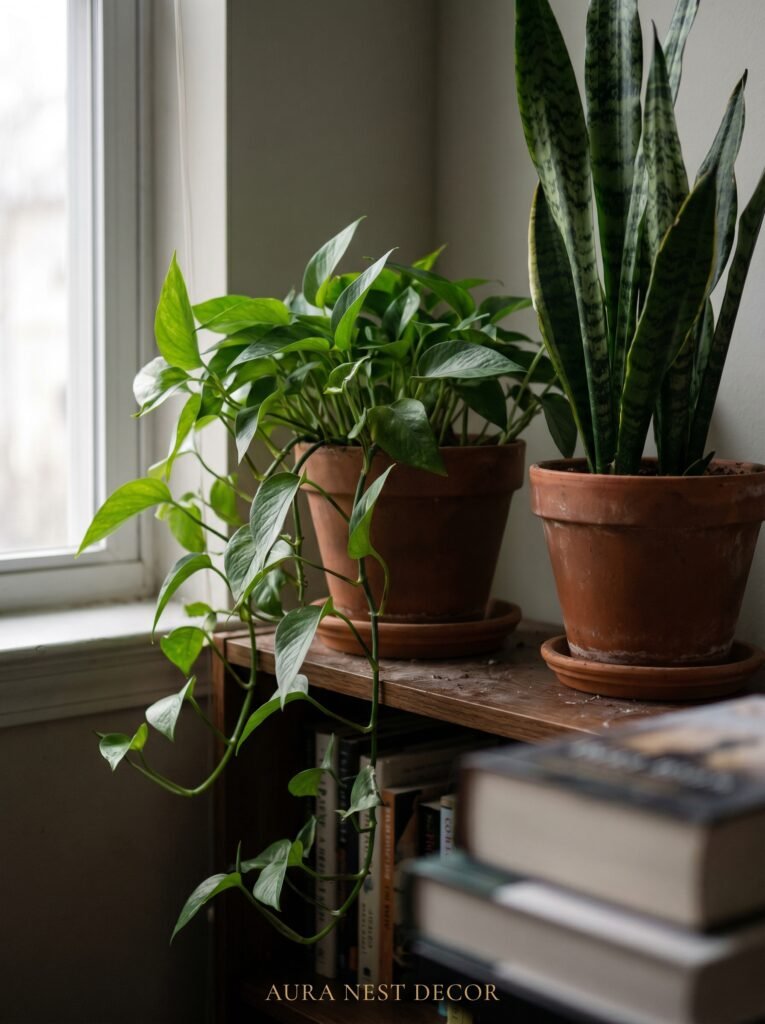
Let’s be real about something. Not every small apartment gets brilliant natural light. And dead plants are not a vibe.
The plants that work hardest in low-light living rooms are pothos, ZZ plants, snake plants, and heartleaf philodendrons. They are genuinely difficult to kill, they grow with purpose, and a pothos trailing off a high shelf looks effortlessly lush in a way that takes years to fake with anything fake.
The arrangement matters as much as the plant itself. One large plant in a beautiful pot in a corner — a fiddle leaf fig if you have decent light, a tall snake plant if you don’t — creates a vertical moment that draws the eye up and adds the kind of organic softness that no furniture can replicate. Then a smaller trailing plant on a shelf or windowsill. Then maybe a tiny succulent on the coffee table tray.
You’re building a little ecosystem. It makes the room feel alive in a way that’s completely different from any other decorating decision.
“A single well-placed plant does more for a living room than a dozen decorative objects. It breathes.”
—
8. The Mirror Trick That Interior Designers Never Stop Using (Because It Works)
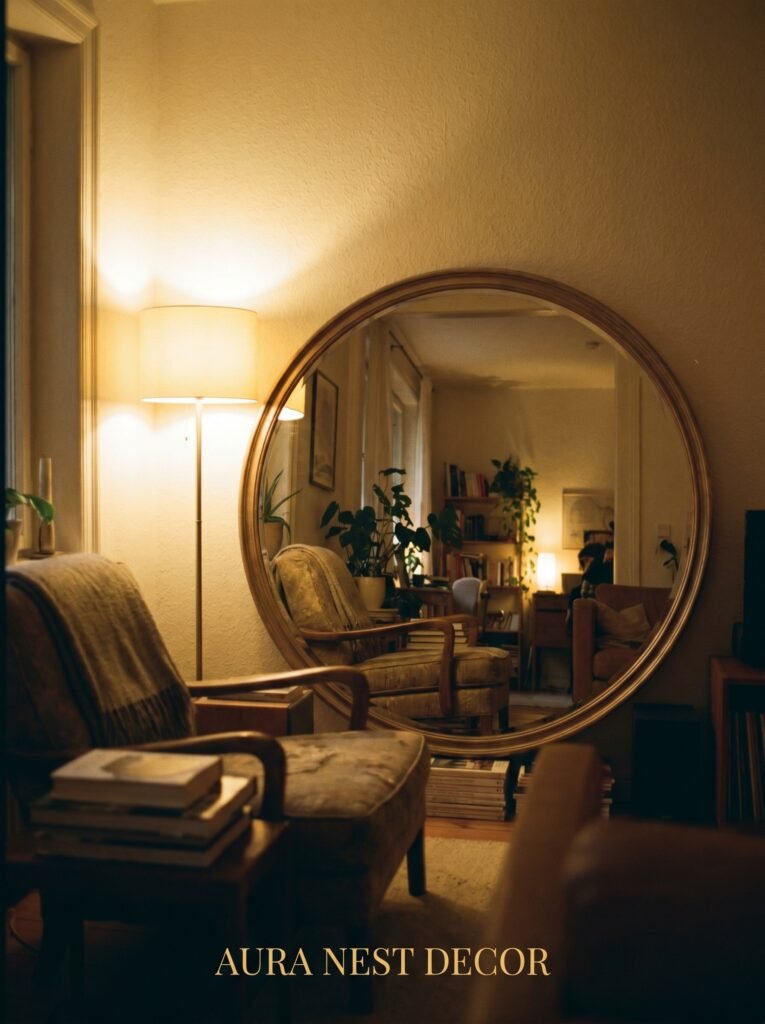
A large mirror in a small room is practically cheating. It doubles the visual space, bounces light around the room, and if it’s a beautiful mirror — arched, ornate, vintage-framed — it functions as art at the same time.
The key is large and placed intentionally. A small mirror over a console does very little. A large mirror — we’re talking 24 inches wide minimum, preferably larger — leaning against a wall or hung in a spot where it captures both the room and a window reflection? That’s a different thing entirely. The room suddenly has a whole second version of itself happening in the background.
For apartments, a leaning mirror is often the better choice. No drilling, easy to reposition, and the casual lean reads as relaxed and considered rather than formal. Pair it with a small console or stack of books beneath it and you have an entry moment or a living room accent that photographs beautifully every single time.
In the UK, you can find stunning ornate frames at antique markets and car boot sales for a fraction of what you’d pay new. In the US, thrift stores and estate sales are your best friend here. The older the mirror, the better — a little age on the glass adds character rather than detracting from it.
—
9. How to Make a Sofa That Cost $400 Look Like It Cost $1,400
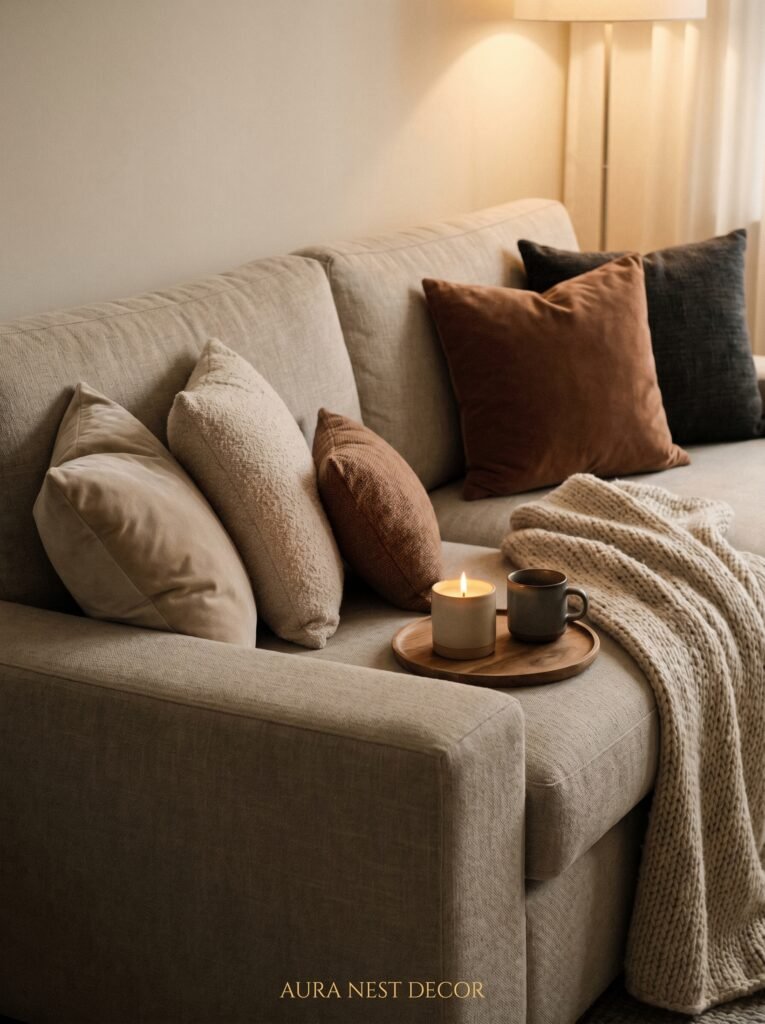
The sofa you have is probably fine. The issue is usually what’s on it and around it.
Three cushions in coordinating but not matching fabrics — a textured boucle, a printed linen, a solid velvet — immediately reads as considered. The key word is coordinating, not matching. Matching looks like you bought a set. Coordinating looks like you have taste.
A good throw folded over one arm (not draped perfectly, slightly casual) adds texture and signals that someone actually uses this sofa and enjoys it. Cashmere or a chunky wool knit are the textures that photograph best and feel incredible to use.
Then there’s the sofa leg situation. If your sofa sits directly on the floor with no visible legs, it can look heavy and low. If it has legs — even short ones — the floor is visible beneath it, the room breathes, and the sofa looks like it was chosen rather than inherited by accident.
You can’t always change the legs. But you can always change the cushions and the throw. Do that first and see how different it looks.
—
10. The Bookshelf Styling Approach That Never Gets Old
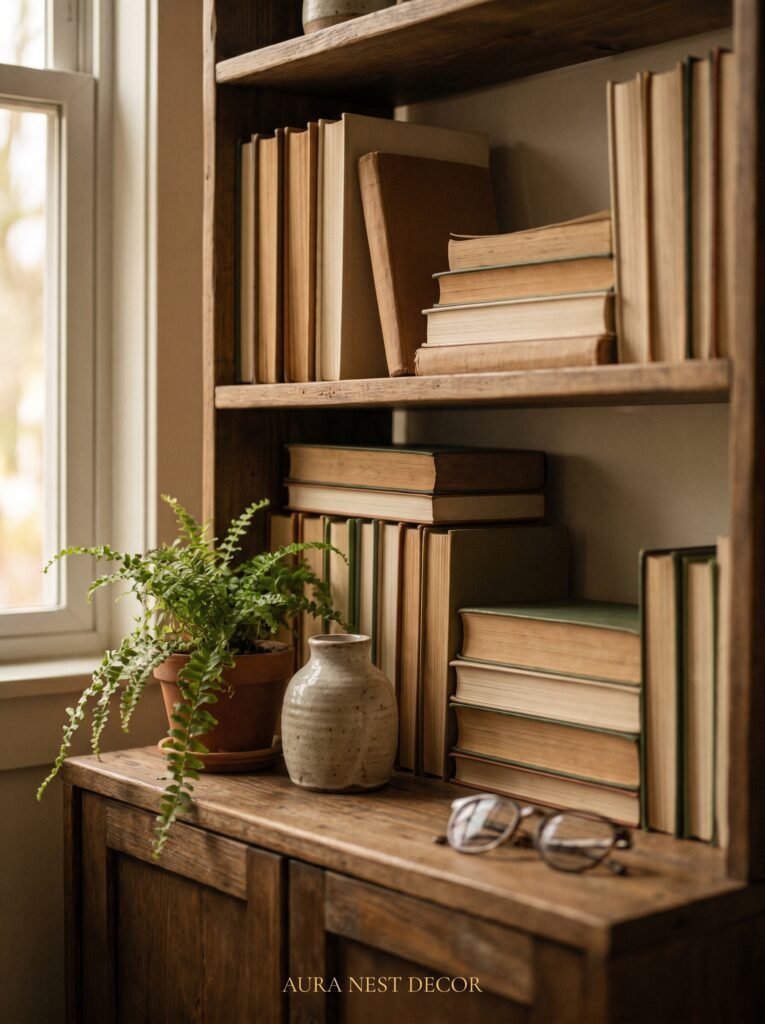
Books first, objects second. Always.
A shelf full of beautiful books with a few meaningful objects interspersed will always beat a shelf full of decorative objects arranged like a shop window. The books bring color, texture, and the sense that someone real lives here. The objects — a small vase, a framed photo, a candle — bring the personal.
Mix horizontal and vertical stacks. A few books laid flat with something small on top breaks the monotonous upright line and creates visual rhythm. Pull a few books forward to the edge of the shelf so they sit at a slightly different depth than the ones behind. The slight asymmetry is what stops it looking staged.
Color organization is beautiful in photographs and often impractical in real life. If you read your books and need to find them, organize by subject or author and let the color chaos happen naturally. It usually ends up looking good anyway.
—
11. The Curtain Height Secret That Adds Three Feet to Your Ceiling
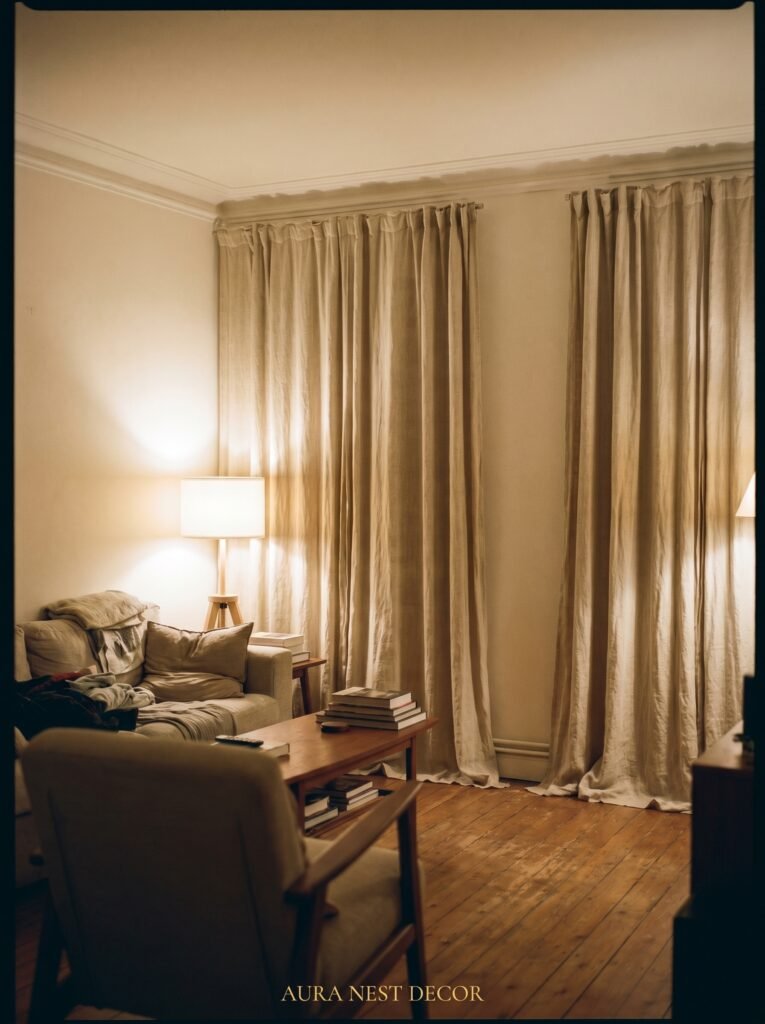
Hang your curtains as close to the ceiling as physically possible. Not at the window frame. Not halfway up the wall. At the ceiling, or just below the crown molding if you have it.
Then let them fall to the floor.
This single choice makes the windows look taller, the ceiling look higher, and the room feel dramatically more spacious than it is. It’s the most impactful thing you can do that costs almost nothing if you’re replacing curtains anyway.
The fabric matters too. Heavy velvet curtains in a small room add drama and incredible coziness — perfect for winter in a British flat or a northern US apartment. Linen curtains in a warm white or flax tone keep things airy while still framing the window beautifully. What doesn’t work is thin, stiff polyester that hangs without any drape. You want fabric that moves a little, that has body, that makes you feel like the room is wrapped in something soft.
—
12. The Small Detail That Ties the Whole Room Together
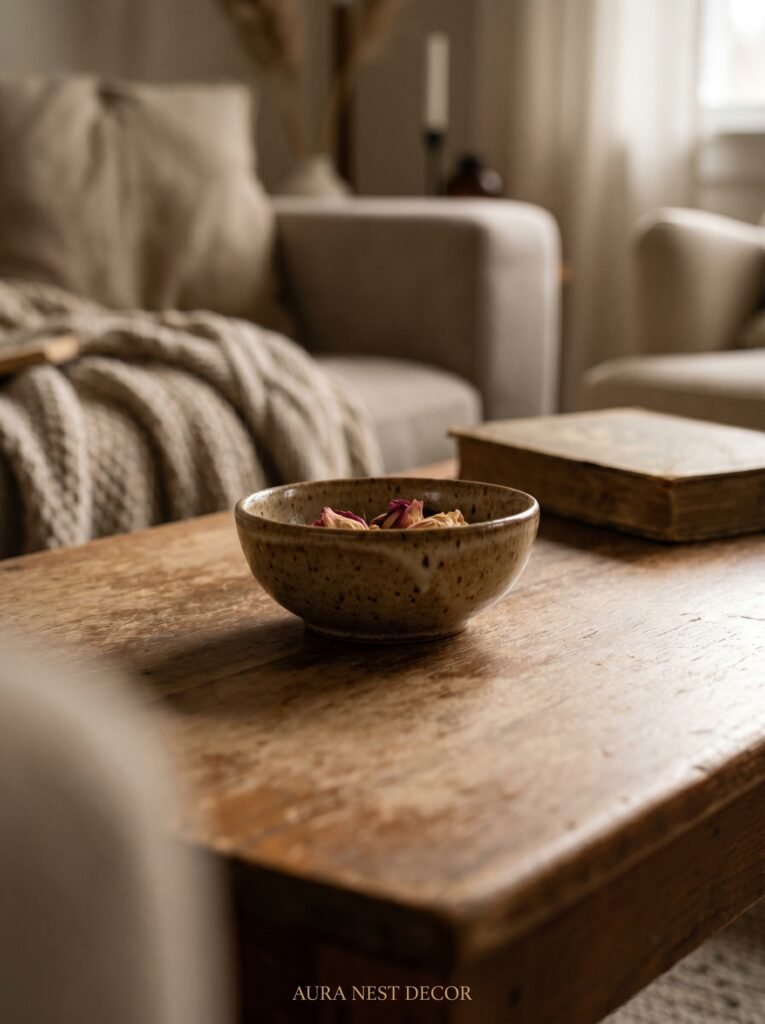
Scent is the thing nobody talks about enough in home decor, and it’s the quickest way to make a room feel finished.
A candle burning while you’re in the room — a good one, something with real fragrance rather than chemical sweetness — completes the atmosphere in a way that no amount of beautiful furniture can replicate. You walk in, the room looks good, and then it smells right, and suddenly it feels like a home rather than a set.
A reed diffuser works for everyday, passive scent. Something in the warm, woody family — sandalwood, amber, cedar, vanilla — layers beautifully with the visual warmth you’ve built everywhere else. Light and clean scents work if you have a naturally bright, airy space, but in a small cozy living room, you want something that smells like being inside somewhere good.
This is the detail guests remember. Not the rug, not the curtains, not the mirror placement. They walk in, smell something wonderful, and feel immediately at ease. That’s the whole point of a home. And it costs less than almost anything else you’ll do.
—
❓ FAQ
Q: How do I make a small living room feel less cramped without moving any furniture? A: Start with the lighting — swap one overhead source for two lamps and put them on in the evening with the overhead off. The room will instantly feel more intimate and less boxy. Then add a large mirror to bounce light around, and declutter one surface completely.
Q: What’s the best sofa size for a small apartment living room? A: Measure your wall and leave at least 18 inches of walkable space on either side of the sofa. A two-seater or compact three-seater in the 72–84 inch range usually works well in smaller rooms. More importantly: choose a sofa with visible legs and a tight, non-pillow-top back to keep the profile clean and light-feeling.
Q: Can I use dark colors in a small living room? A: Yes, but commit fully. A single dark accent wall behind the sofa, or dark curtains against lighter walls, creates depth rather than weight. The mistake is going half-hearted — one dark piece that clashes with everything else. Either use dark tones as a bold choice done with intention, or stick to warm neutrals and add depth through texture instead.
—
💭 Final Thoughts
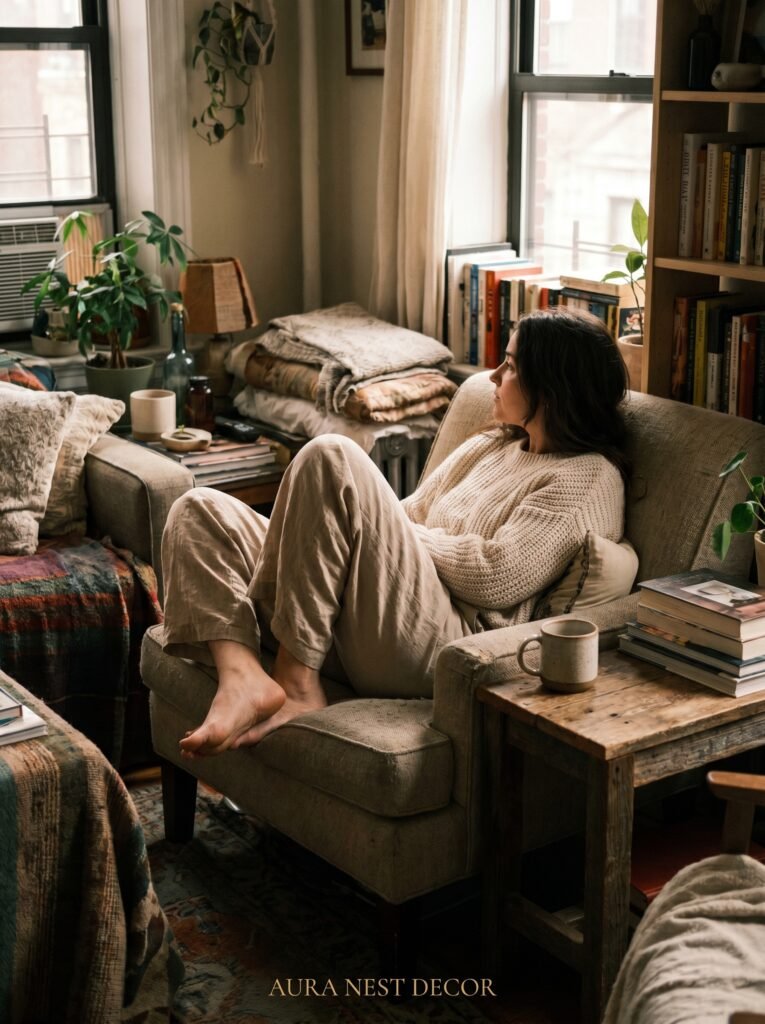
The small living room that feels cozy rather than cramped isn’t about tricks. It’s about choices — each one made with some warmth and a little patience. You’re building a room that feels like it wants you to stay.
Start with one thing. The rug, the lighting, the curtains. See how the room shifts when one element is right.
What would it feel like to love the room you already live in?