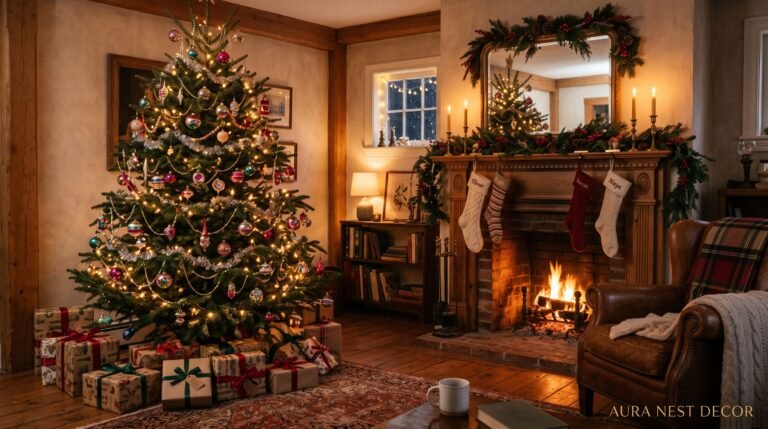
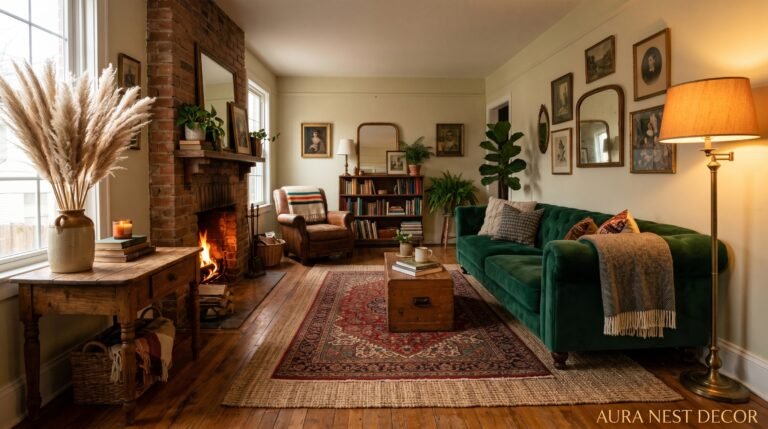
Baroque Aesthetic Living Room Ideas That Feel Indulgent Without Looking Like a Museum
You know that moment when you walk into a room and something in your chest just settles? Like your body recognized beauty before your brain caught up. That’s what a truly good baroque-inspired living room does. Not the overwrought, velvet-on-velvet version — the real thing. The version where drama and comfort somehow coexist.
—
1. Why Baroque Keeps Coming Back (And Why This Time It’s Different)
Baroque design has been threatening to dominate interior circles for a couple of years now, and honestly? It’s finally arrived in a way that actually makes sense for real homes. Not the gilded excess of a French palace, and not the ironic, kitschy version that was everywhere in 2019 either. This is something quieter and more considered — people are drawn to baroque because they’re tired of the cold.
Minimalism had its decade. It was clean, it was editorial, and it photographed beautifully. But a lot of people lived inside those pared-back rooms and felt nothing. No warmth. No story. Baroque is the opposite of nothing. It has weight, depth, and a sense that someone cared deeply about every corner of the space.
The shift happening right now is that homeowners are borrowing from baroque selectively — taking the drama and the richness, but filtering it through a modern lens. Think deep jewel tones instead of full gold leaf. Think one ornate mirror instead of eight. Think velvet cushions on a clean-lined sofa. The excess is curated. The opulence is intentional. And the result is something genuinely beautiful to live inside.
“Baroque done right doesn’t look like too much. It looks like exactly enough.”
2. The Color Palette That Makes a Baroque Room Feel Like Evening All Day
Let’s talk about color first, because it sets everything else in motion. True baroque spaces don’t rely on beige. They don’t apologize. The original aesthetic was built around depth — the kind of depth you see in a Caravaggio painting, where the darkness makes the light feel more precious.
For a living room, this translates into a base palette of deep, saturated colors. Think forest green on the walls — not sage, not pistachio, but the green that makes you think of old libraries and midnight gardens. Or consider deep plum, which reads as incredibly sophisticated and also somehow warm. Oxblood red is having a genuine moment in both the US and UK right now, and for good reason — it layers beautifully with gold, ivory, and dark wood.
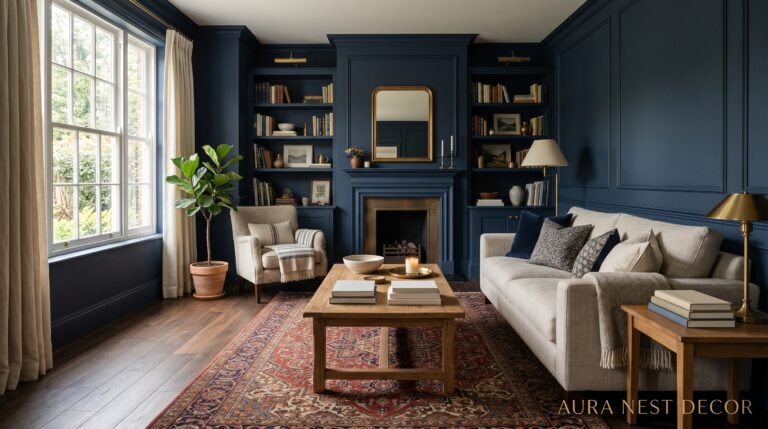
Don’t be afraid of dark walls. The fear that dark colors make a room feel small is mostly unfounded when you balance them correctly. A room painted in deep teal with well-placed lighting and ivory accents doesn’t feel small — it feels intentional. It feels like somewhere.
Your ceiling can be a player too. A baroque-influenced room often treats the ceiling as a fifth wall. Even just painting it one shade lighter than the walls, or bringing in a subtle metallic ceiling paint, completely changes the atmosphere of a space. Try it once and you’ll never go back to plain white up there.
3. The Mirror Trick That Every Baroque-Inspired Room Actually Needs
Here is the one piece of furniture — if you can call it furniture — that will do more heavy lifting than anything else in your baroque living room. A large ornate mirror. Not a generic round one from a chain store. A genuine statement piece with an elaborate frame, ideally in gold, bronze, or aged silver.
The baroque era was obsessed with mirrors because they were expensive, and expensive things were a signal. But in a modern home, a beautiful mirror signals something different — a willingness to commit to beauty for its own sake. There’s something quietly rebellious about that in 2025.
The placement matters. Above a fireplace is the obvious choice, and obvious for good reason — it works. But a full-length baroque mirror leaned casually against a dark wall in the corner of a living room is unexpectedly stunning. It catches light from the opposite side of the room. It makes the space feel layered. It looks like it was always there.
Look for antique and vintage mirrors at estate sales, on Etsy, or at independent antique dealers — both the US and UK have brilliant markets for these. A piece with a little age to it will always look more authentic than a brand new replica, even if the replica costs more.
4. Fabric Choices That Feel Genuinely Luxurious Without Requiring a Trust Fund
Velvet. That’s the short answer. But let’s make it interesting.
The reason velvet works so well in a baroque-inspired space is that it responds to light in a way no other fabric does. Run your hand across a velvet cushion and the color literally changes. Dark blue velvet catches the light and looks almost teal in some spots, almost navy in others. That kind of visual movement is exactly what baroque design is built on — the sense that a room is alive.
You don’t need to reupholster everything in velvet. Pick your moments. A deep jewel-toned velvet sofa in emerald or sapphire is a genuine investment piece that will anchor your whole room. If that feels like too much, velvet cushions on a more neutral sofa are a softer entry point, and they’re easy to swap out seasonally.
Beyond velvet, think about brocade. A single brocade throw pillow with a gold and ivory pattern adds an immediate baroque reference without screaming it. Damask curtains in a deep color, puddling slightly on the floor, are another move that feels genuinely opulent and cost far less than you’d expect, especially if you source fabric and have them made up independently rather than buying off-the-shelf curtains.
Texture stacking is the real skill here. Velvet next to brocade next to a woven wool throw. Each material catches light differently. The layering creates richness.
“You don’t need expensive furniture. You need expensive-feeling fabric, and those are not the same thing.”
5. The Lighting Setup That Actually Makes Baroque Interiors Come Alive
Everything in a baroque room hinges on light. Not bright, even, functional light — dramatic, directional, amber-toned light that makes everything it touches look like a painting.
Candles are non-negotiable. Not scented candles hidden in a corner — actual pillar candles on a substantial candleholder, or a cluster of tapers in a dramatic candelabra. Lit candles at dusk change a room’s entire character within minutes. This isn’t a decoration tip, it’s almost a philosophy.
For electric lighting, chandelier or nothing. Even a modest room benefits from a chandelier with visual weight — it doesn’t have to be enormous, but it should feel considered. Look for styles with visible bulbs, crystal drops, or aged metal finishes. The amber glow of a chandelier at the right dimmer setting is simply irreplaceable.
Table lamps are your supporting cast. They need to be interesting — ornate ceramic bases, sculptural shapes, bases that look like they were made by someone who cared. A pair of matching lamps on either side of a sofa or flanking a fireplace adds balance and creates those pools of warm light that baroque spaces live and breathe in.
Wall sconces, if you can manage them, complete the picture. Candlelight-style sconces on either side of your mirror or above a console table bring that final layer of drama that makes a room feel genuinely finished.
6. Why the Ceiling Rose and Coving You’ve Been Ignoring Are Actually Your Best Assets
This one is particularly relevant for UK readers, many of whom are living in Victorian or Edwardian properties with original architectural details they’ve been treating like wallpaper — part of the background, barely noticed. Stop doing that.
Original coving, ceiling roses, dado rails, picture rails — these are baroque-adjacent gifts. The baroque aesthetic was fundamentally about ornamental architecture, about the built environment itself being decorative. If you already have these details, your job is easier than you think. All you need to do is stop painting them out.
Painting coving and ceiling roses in a contrasting color — cream against a dark wall, or gold against a lighter one — immediately makes them pop. It tells the room’s history. It gives the space a sense of ceremony that modern builds struggle to replicate.
For American homeowners in newer builds without these features, don’t despair. Decorative molding strips are widely available and easier to install than you’d expect. Even basic crown molding, painted in a contrasting color, adds that sense of architectural intention that sits so comfortably within the baroque aesthetic.
The ceiling is part of the room. Start treating it that way.
7. Art That Belongs in a Baroque-Inspired Room (And How to Hang It Right)
Baroque art is characterized by drama, scale, and a certain emotional intensity. Think rich oil paintings with dark backgrounds. Think religious iconography used decoratively, without any particular faith attached. Think portraits — formal, large, a little imposing. Think still life paintings with fruit and shadow.
You don’t need to spend a fortune on original artwork. Printed reproductions of Old Masters look genuinely extraordinary in the right frame — and the frame, honestly, is where the money should go. An ornate, heavy gold frame transforms a print. It’s that simple.
But also consider contemporary artwork that carries baroque energy — dark backgrounds, rich color, intense contrast. There’s a real market for this kind of work on Etsy and at independent galleries in both the US and UK. Supporting working artists while building a gorgeous room feels good.
The hanging matters enormously. Baroque rooms don’t do sparse gallery-style hanging with lots of white space. They do salon walls — multiple pieces of different sizes hung closely together, creating a visual density that reads as collected, not cluttered. The key is keeping consistent framing: if all frames are in the same metallic family, the collection reads as intentional.
“One great painting in the wrong frame is a missed opportunity. One cheap print in a breathtaking frame is a statement.”
8. Furniture Shapes That Carry Baroque Energy Without Dominating the Room
Baroque furniture is curvy. Not mid-century-modern curved, but baroque curved — cabriole legs, rolled arms, tufted backs, carved feet. These shapes have a visual rhythm to them that flat-packed, straight-lined furniture simply doesn’t.
You don’t need to furnish the entire room this way. In fact, one or two genuinely baroque pieces against simpler backgrounds often read better than a fully matched set. An ornate chaise longue in a deep jewel tone in the corner of an otherwise clean room is electric. An elaborately carved wooden occasional table next to a more straightforward sofa makes both pieces look better.
Scouring auction houses — both physical and online via platforms like Invaluable or i-bidder in the UK, or Chairish in the US — is where you’ll find the best pieces. Vintage carved console tables, reproduction Louis XV-style chairs, gilded side tables — they come up regularly, and at prices that would surprise you.
One specific piece worth hunting for: an ornate writing desk or secretary desk, even if you don’t write at a desk. In a living room, it adds instant character, a sense of history, a sense that someone lives a considered life inside this space.
9. The Role of Scent in a Room Built for Sensory Impact
This might sound like a stretch for a decorating article, but bear with me. The baroque aesthetic is fundamentally about full sensory experience. The original baroque spaces — the chapels, the palazzos, the theaters — were designed to overwhelm the senses in the most beautiful way possible. Sound, sight, smell, texture. Everything at once.
In a living room, scent is within reach. A baroque-inspired room should smell the way it looks — deep, warm, complex. Not clean and neutral. Not “fresh linen.” Think frankincense, amber, tobacco flower, dark woods. These scent families anchor a room in a way that lighter fragrances simply don’t.
Diptyque Baies in deep winter, or NEST’s Midnight Moss & Vetiver, or any good quality amber-based candle — these are starting points. The important thing is consistency. Pick a signature scent for the room and commit to it. Over time, walking into that room will trigger an immediate sense of arrival, of this being somewhere.
The connection between smell and memory is extraordinarily strong. If your baroque living room smells as good as it looks, it’ll be the room people remember.
10. Textured Walls: The Move Most People Are Too Cautious to Try
Plain painted walls are fine. But for a room with genuine baroque ambition, textured walls are something else entirely.
Venetian plaster — the real kind, or a good quality modern alternative — creates a surface that looks almost like natural stone, shifting color and texture as the light changes throughout the day. It is perfect for a baroque space. Deeply impractical to apply yourself, but worth hiring someone for at least one wall.
Wallpaper is your more accessible option. The baroque wallpaper revival is real and the options right now are stunning — damask patterns, large-scale botanical prints with dark backgrounds, flock wallpapers that reference the velvet-hung walls of seventeenth-century European interiors. Brands like Cole & Son and House of Hackney in the UK, or Anthropologie Home and Rifle Paper Co. in the US, do prints that would sit perfectly in this aesthetic.
Even one papered wall — behind the sofa, or featuring the fireplace — changes a room’s entire personality. It creates a focal point, adds pattern and depth, and signals to anyone who walks in that you made real choices in here.
11. How Plants Fit Into a Baroque Interior (They Do, Deeply)
Plants in a baroque space should feel a little untamed. Not the pristine, Instagram-minimalist arrangement of a single monstera in a white pot. Think lusher. Think more chaotic. Think trailing plants that hang heavy, or topiary that nods to formal European gardens, or a dark-leafed plant — burgundy rubber trees, black-leafed elephant ears — that sits against a dark wall and creates this incredible tonal layering effect.
Big leafy plants in ornate pots — terracotta with patina, aged bronze-effect planters, stone-look containers — feel genuinely baroque. The combination of organic life against dark walls and rich fabrics has a quality that’s hard to describe and impossible to ignore.
Dried flowers and botanicals also have a place here. A large arrangement of dried pampas, preserved roses, or eucalyptus in an urn-shaped vase on a console table feels both historical and completely current. The slight melancholy of dried flowers — beautiful but not alive — suits the baroque mood exactly.
12. The Small Details That Tell Anyone Who Looks That You Meant Every Single Bit of This
Here is where it all lands. The big pieces are in place — the dark walls, the velvet, the chandelier, the mirror. Now the small details have to confirm the commitment.
Books. Not arranged by color (beautiful but slightly superficial for this aesthetic), but stacked and shelved in that slightly chaotic, well-read way. Old hardbacks with interesting spines. A few art books left open on the coffee table. Books as decoration, as evidence of a life lived inside ideas.
Decorative objects that have weight and age. A bronze figurine. A collection of antique candlesticks. A glass dome containing something unexpected — dried roses, a bird’s nest, a single baroque-style object that makes people ask. These pieces are the ones you find slowly, over time, at flea markets and antique shops and on holiday.
Fringe. Trim. Tassels. On cushions, on throws, on curtains. These are the details that separate a vaguely baroque-inspired room from one that fully commits. They cost almost nothing to add and they completely change the register of a piece.
And finally: don’t finish too quickly. A baroque room should feel like it evolved. Buy things you love, add them slowly, resist the urge to “complete” it. The best version of this room will be the one you’re still adding to in five years.
—
❓ FAQ
Q: Can I achieve a baroque aesthetic in a rented apartment where I can’t paint the walls? A: Absolutely. Focus on what you can change — curtains, cushions, rugs, lighting, and furniture. A large ornate mirror, dark velvet soft furnishings, and a statement chandelier (most can be temporarily installed) will carry the aesthetic without touching a wall. Dark, richly patterned rugs do extraordinary work in neutral-walled spaces.
Q: Is baroque interior design just for large, formal rooms? A: Not at all — and this misconception is probably the biggest thing holding people back. A small living room actually benefits from baroque details because the scale creates intimacy rather than grandeur. One or two key pieces, a dark accent wall, and considered lighting are enough. The key is restraint in quantity with boldness in quality.
Q: Where’s the best place to source genuine baroque-influenced furniture and accessories in the US and UK? A: For the US, Chairish, Etsy vintage sellers, and local estate sales are your best starting points. For the UK, i-bidder, local auction houses, and platforms like Vinterior carry consistent stock. In both countries, Facebook Marketplace is genuinely underestimated for finding ornate pieces at low prices — people often don’t know what they have.
—
💭 Final Thoughts
The baroque aesthetic living room isn’t about excess for its own sake — it’s about caring enough to create a space that actually moves you. A room that feels different at 9am than it does at 9pm. A room that makes guests go quiet for a half-second before they find their words.
Start with one thing. The mirror, or the velvet sofa, or the dark wall. See how it changes the room’s energy — and yours, every time you walk in.
What’s the one baroque detail you’ve been thinking about but haven’t quite committed to yet?