Living Room Decor Ideas 2026: The Styles That Will Make You Fall in Love With Your Home All Over Again
There’s a moment — maybe you’ve had it recently — where you walk into your living room, look around, and feel absolutely nothing. Not joy, not comfort, just… familiarity. If 2026 is the year you finally want your living room to feel like you, this guide was written for exactly that moment.
—
1. Why 2026 Is the Year We’re Redesigning How We Actually Live
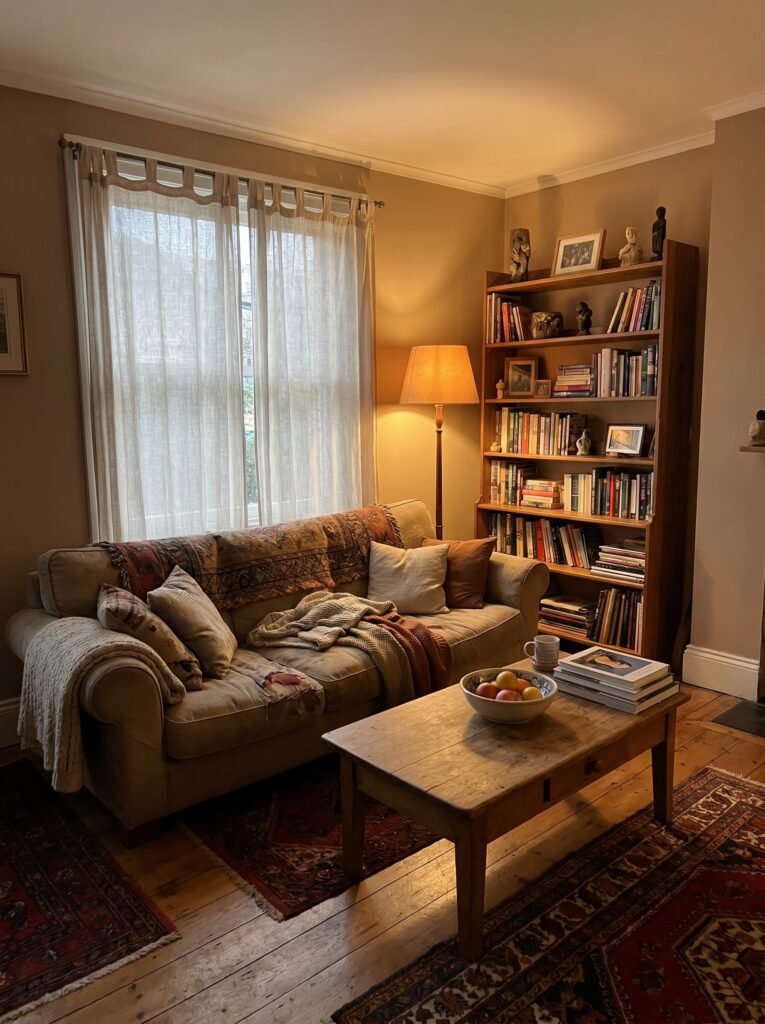
Something shifted after a few years of spending more time at home than ever before. We stopped decorating for guests and started decorating for ourselves — and that quiet revolution is fully visible in the living room trends of 2026.
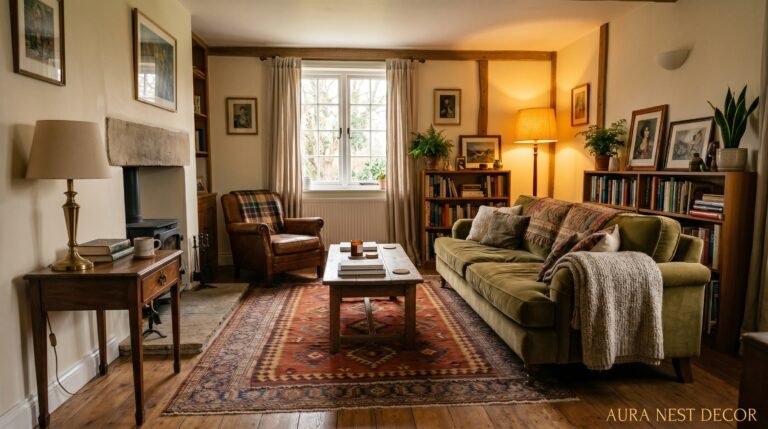
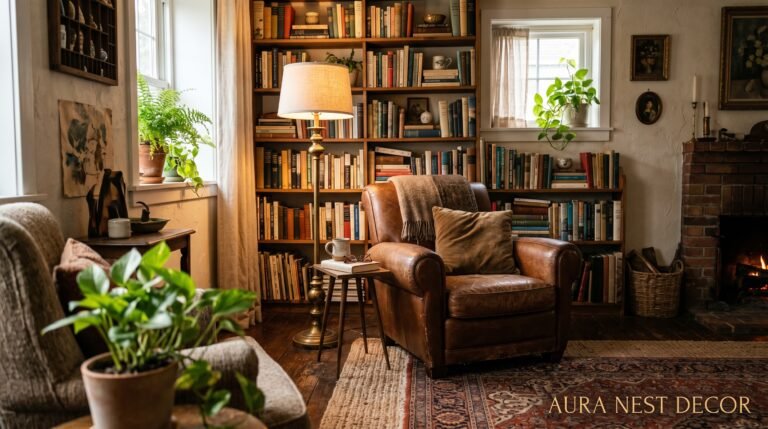
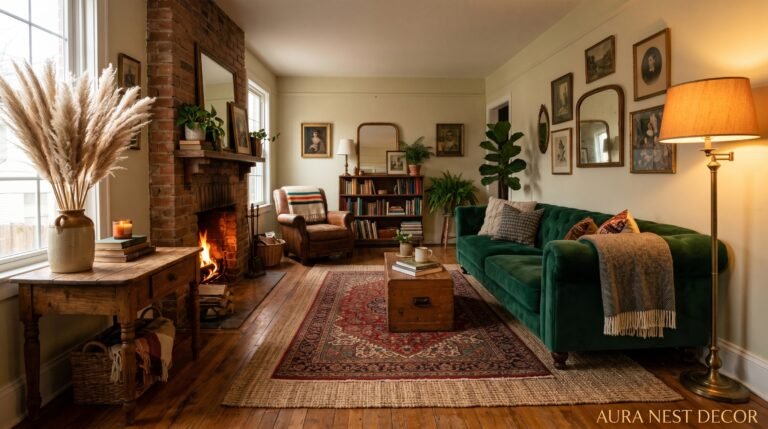
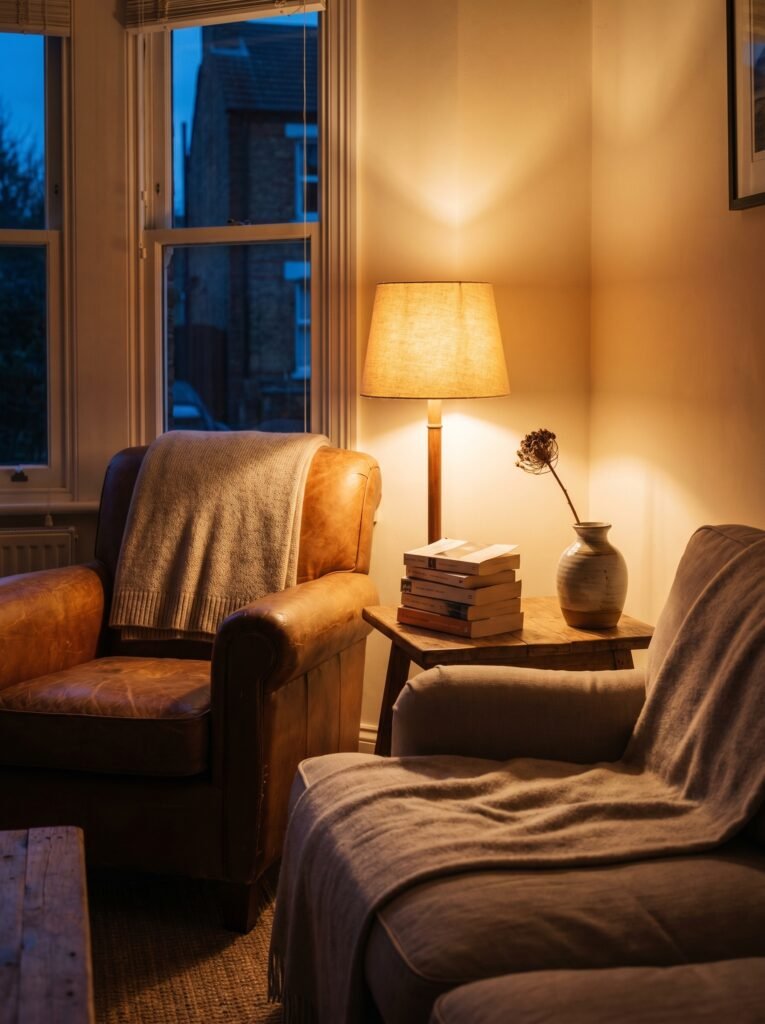
Designers across New York, London, and everywhere in between are reporting the same thing: homeowners want spaces that feel inhabited, not staged. The Pinterest boards that are racking up millions of saves right now aren’t the pristine, untouchable showrooms of years past. They’re rooms with worn leather chairs, bookshelves that look genuinely loved, and soft lighting that makes 7pm feel like a warm embrace.
This isn’t minimalism. It’s not maximalism either. It’s something more honest — an interior design philosophy that starts with the question, “How do I actually want to feel when I sit down here?”
“Your living room should feel like a long exhale — not a performance.”
The trends of 2026 are answering that question with warmth, texture, and a beautiful disregard for perfection.
—
2. The Colour Palette Shift Everyone Is Talking About
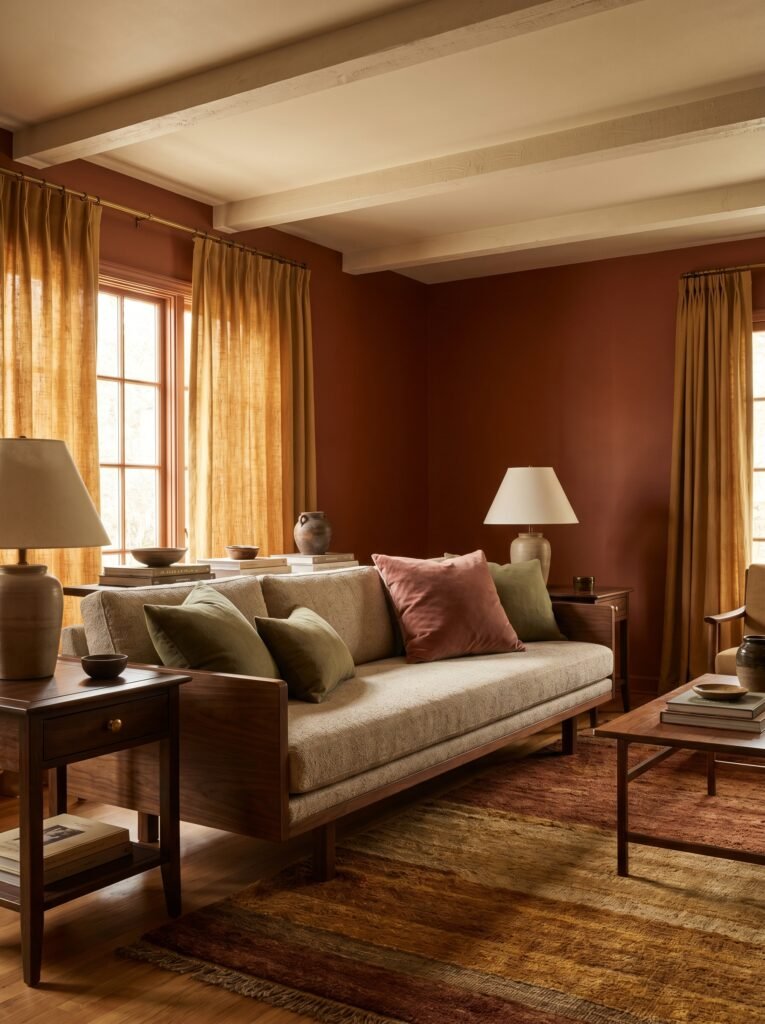
Step away from the greige. 2026 living room palettes are richer, braver, and far more interesting than the safe neutrals that dominated the past decade.
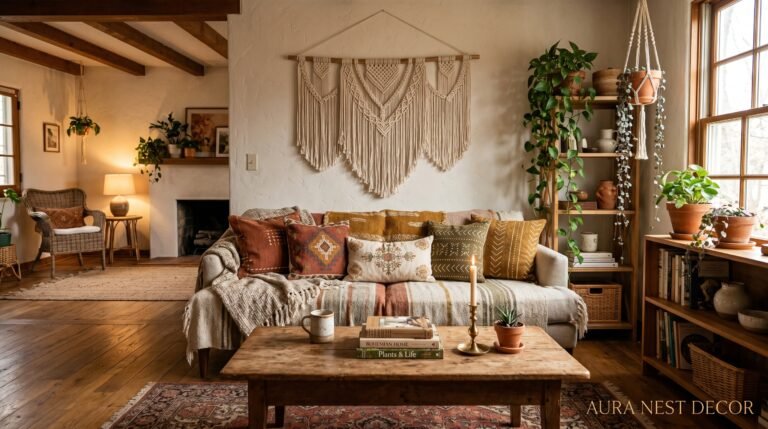
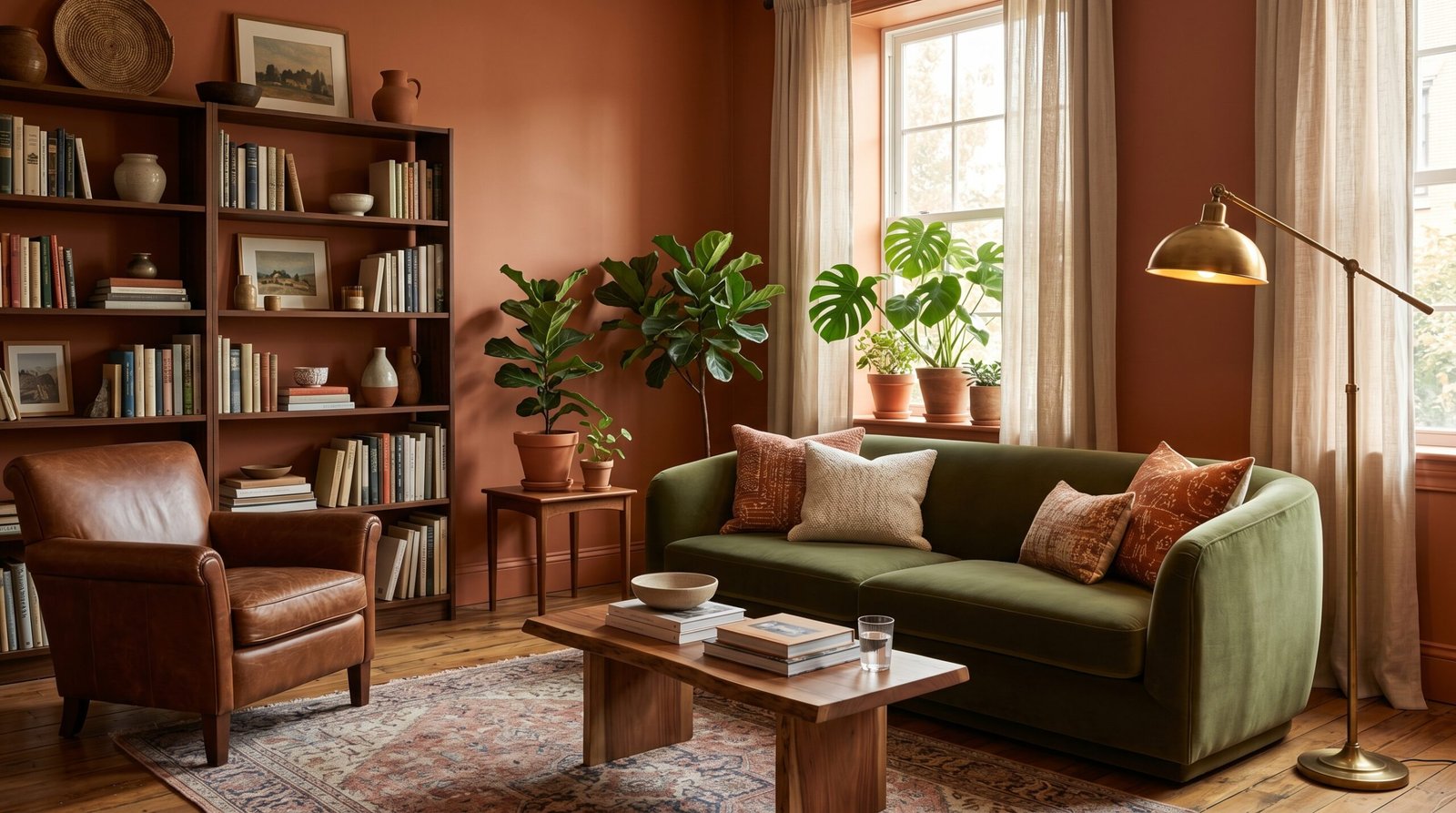
Earthy terracotta is still beloved, but it’s being paired now with deep olive greens and warm ochre — a combination that designers are calling “sunbaked” and that feels equally at home in a Victorian terrace in Bristol as it does in a mid-century ranch house in Austin, Texas.
Dusty rose is making a sophisticated comeback — not the pastel blush of 2018, but a grown-up, slightly muted version that sits beautifully alongside walnut furniture and aged brass hardware. Meanwhile, warm off-white remains a steady foundation, but the cool, stark whites of the early 2010s have been firmly retired.
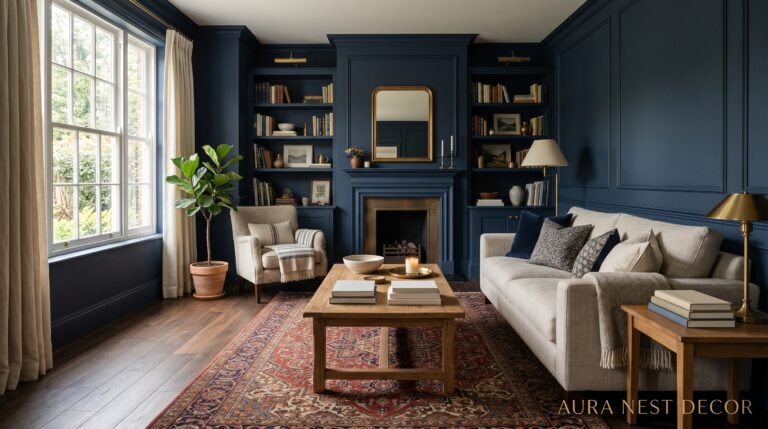
In the UK, there’s a notable lean toward Farrow & Ball’s deeper tones — shades like “Railings” (a near-black navy) and “Pelt” (a complex plum-grey) are appearing in living rooms that want to feel cozy and a little dramatic at the same time. In the US, Benjamin Moore’s “Quiet Moments” and “Hale Navy” are Pinterest darlings for the same reason.
If you’re nervous about committing to a bold wall colour, start with a single accent wall behind your sofa. Even 20 square feet of a rich, saturated hue can completely transform a room’s atmosphere.
—
3. Furniture Shapes That Feel Anything But Ordinary
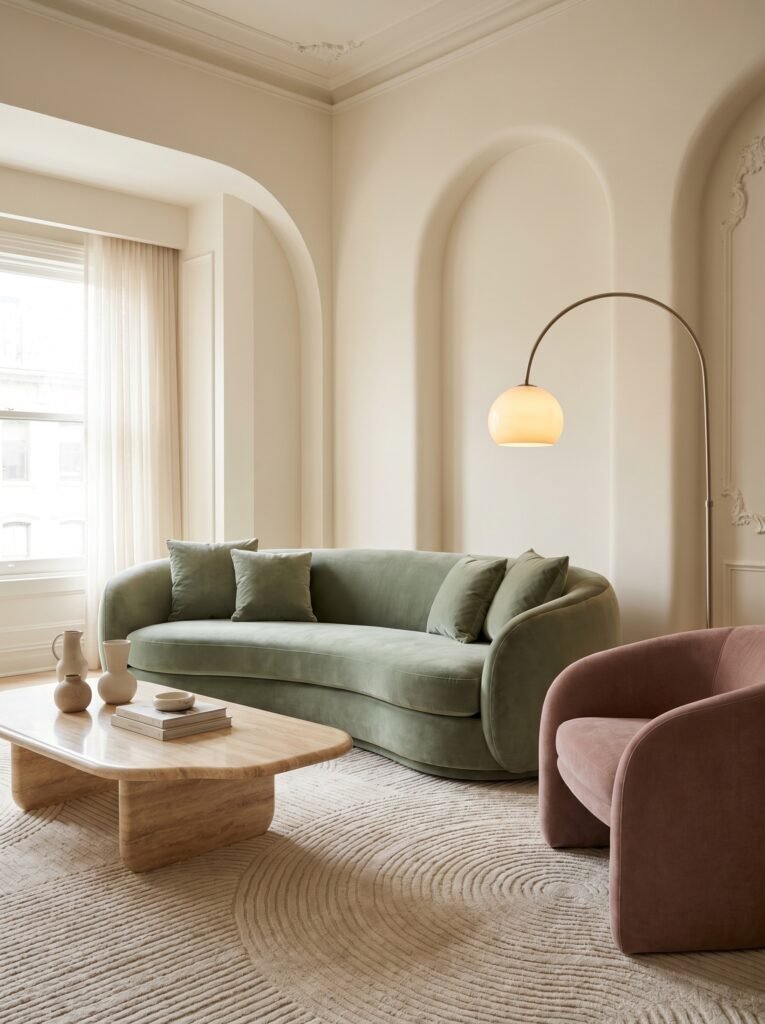
Curves are having a complete and total moment — and honestly, it’s about time.
The hard-edged, angular furniture of the 2010s felt sleek and modern at the time, but in 2026, living rooms are softening. Round-armed sofas with deep, generous cushions. Coffee tables with organic, irregular edges that look like they were carved from stone or driftwood. Curved accent chairs in boucle or velvet that practically beg you to curl up inside them.
This isn’t just aesthetic — there’s genuine psychology at work here. Rounded shapes subconsciously signal safety and comfort, while sharp corners and rigid lines trigger a subtle alertness. If your living room has always felt slightly tense, even when you can’t explain why, the furniture geometry might be part of the answer.
Modular sofas are also enormous right now, particularly among renters in London and flat-dwellers in US cities who need flexibility without sacrificing style. The ability to reconfigure your seating arrangement — to open it up for a dinner party or close it in for a film night — gives a room a sense of personality that static furniture simply can’t match.
—
4. The Return of Statement Sofas (and Why You Should Stop Playing It Safe)
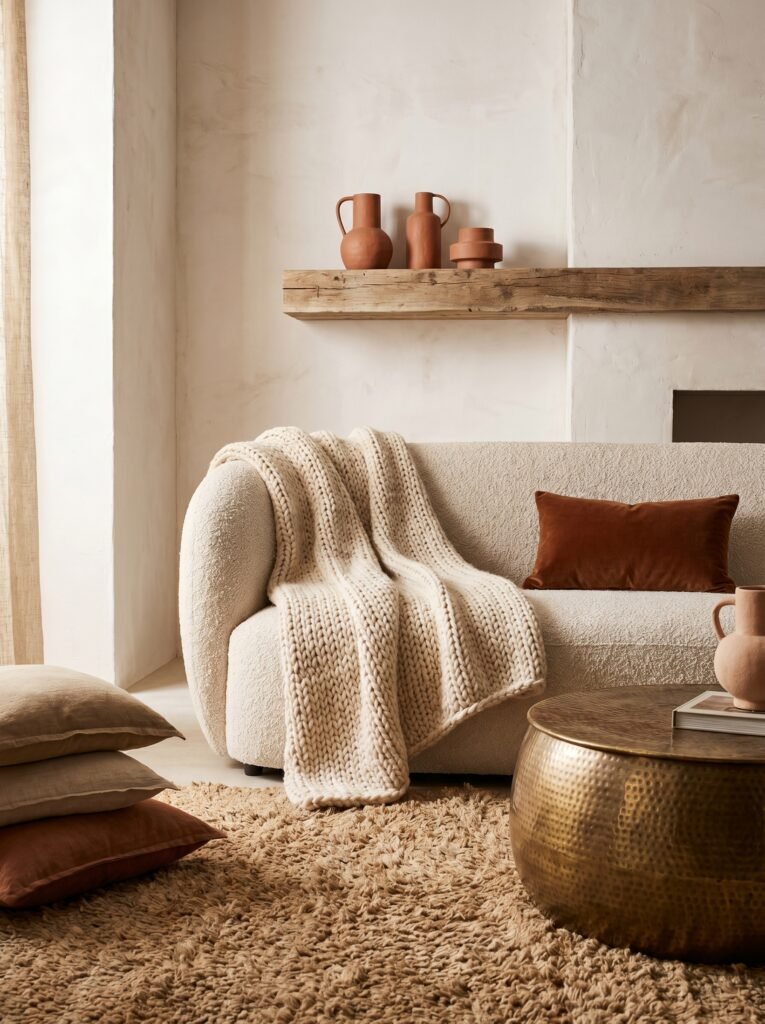
For too long, the sofa was chosen last — the reluctant compromise between budget and taste, usually ending up in a safe grey or beige that wouldn’t offend anyone. In 2026, the sofa is the starting point.
Deep forest green velvet sofas are being pinned tens of thousands of times a week. Burnt orange bouclé sectionals. Cobalt blue tuxedo sofas that anchor an entire room with confidence. These are not timid choices — and they’re not trends that will look dated in 18 months. Rich, saturated sofa colours have a staying power that “greige everything” never really had.
If you’re in the UK, brands like Loaf, MADE, and Neptune are offering stunning statement sofa options at various price points. In the US, Article, Floyd, and Apt2B are producing bold, well-crafted pieces that punch far above their price tags.
The trick to making a statement sofa work is restraint everywhere else. If your sofa is a deep jewel tone, let your walls stay calm, your rug stay neutral, and your cushions do the layering work.
—
5. Texture Layering: The Secret Ingredient Your Living Room Is Missing
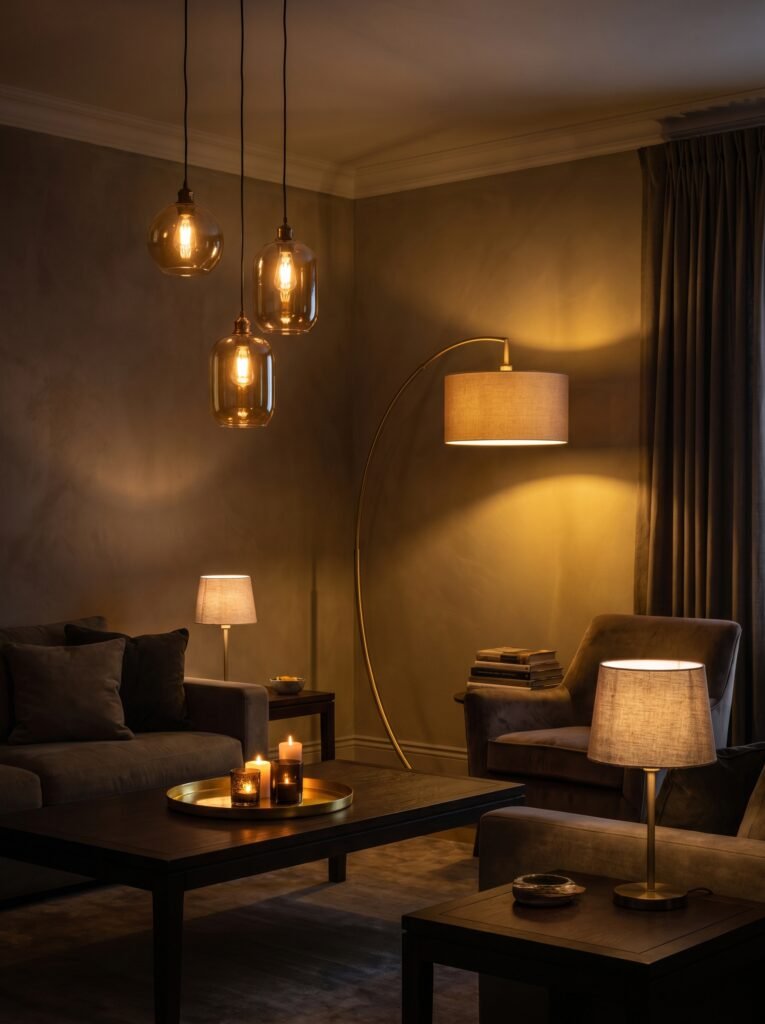
Imagine running your hand across your living room right now. What do you feel? If the answer is mostly the same thing — smooth, flat, uniform — then you’ve found the single change that will make the biggest difference in 2026.
Texture layering is the art of combining different tactile surfaces within the same space so that the room feels visually and physically rich. A linen sofa. A chunky knit throw draped over the arm. A jute rug underfoot. Ceramic vases with a raw, matte finish. Velvet cushions in two different weights.
None of these things are expensive on their own. What makes texture layering feel luxurious is the intentionality — the sense that someone thoughtfully considered what each surface would feel and look like when placed next to the others.
“A room decorated in one texture is technically complete. A room layered in many textures feels genuinely alive.”
This is one of the most Pinterest-friendly decorating approaches of 2026 precisely because it photographs so beautifully. Light behaves differently across matte, shiny, rough, and soft surfaces — and a well-textured room practically glows in a photograph.
—
6. Bringing the Outdoors In: Biophilic Design for Every Budget
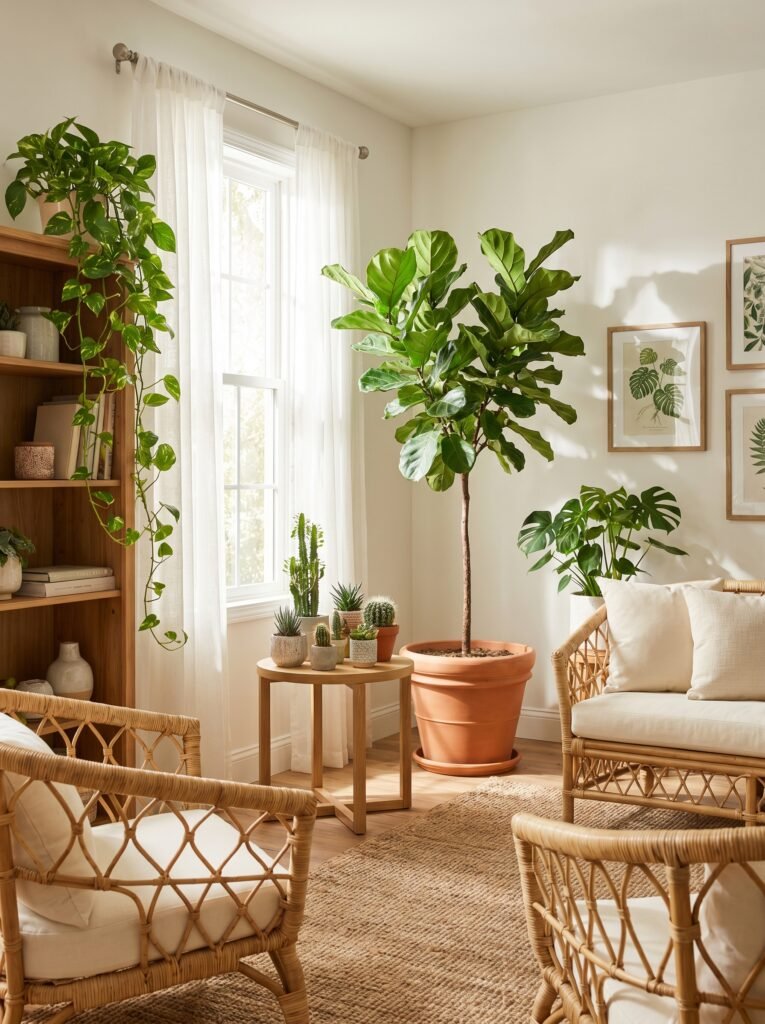
Biophilic design — the practice of incorporating natural elements into interior spaces — has moved well beyond the “one big monstera in the corner” phase. In 2026, it’s becoming a genuine design philosophy that shapes every decision in a living room.
Think wood in unexpected places: a live-edge floating shelf, rattan side tables, a woven seagrass basket that holds your throws. Think stone: marble-look ceramic tiles, a raw concrete side table, or even small river stones used as decorative objects. Think greenery at multiple heights — trailing pothos on a high shelf, a low fiddle-leaf fig beside a reading chair, a small herb pot on a side table that somehow makes the whole room smell alive.
For renters in London apartments or smaller homes in the American Midwest, where space is genuinely tight, biophilic design is particularly transformative because it doesn’t require room — it just requires intention. A single well-placed branch in a tall vase. A piece of abstract art in mossy greens and bark browns. A candle that smells like cedar and rain.
—
7. Lighting That Actually Changes Your Life
Here is a truth that interior designers know and most homeowners don’t: bad lighting can make a beautifully decorated room feel terrible. And great lighting can make a modest room feel extraordinary.
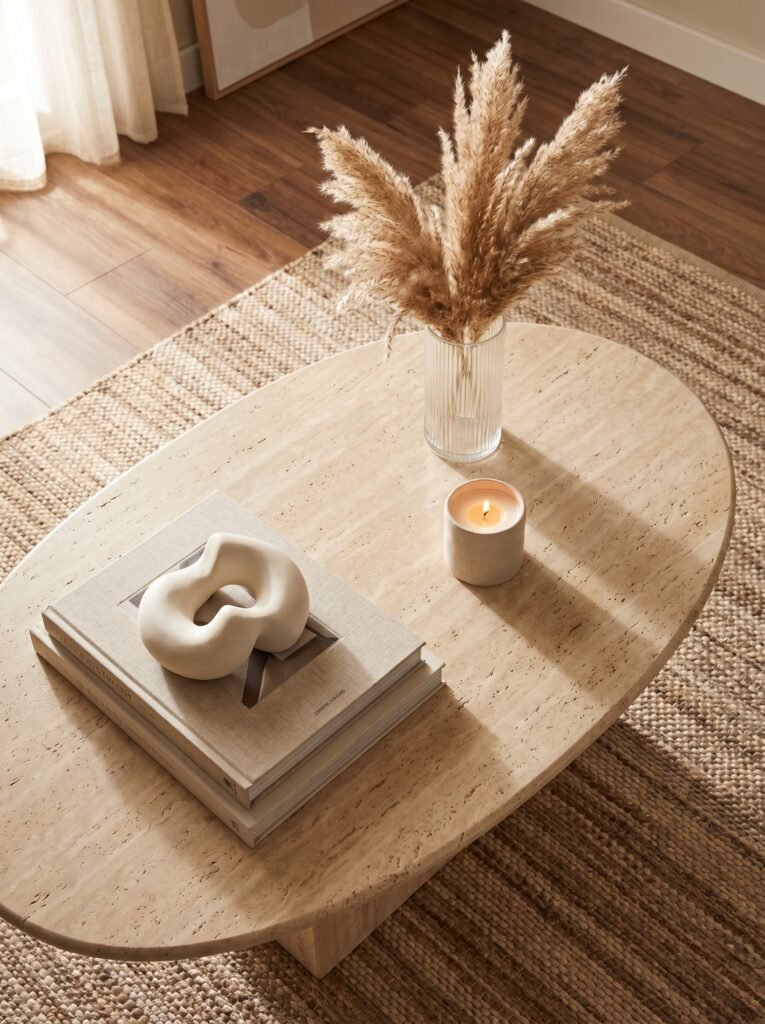
The overhead single-ceiling-light era is officially over. The living rooms that are stopping scrollers on Pinterest in 2026 are lit in layers — ambient, task, and accent lighting working together to create a warm, dimensional atmosphere.
A floor lamp beside a reading chair. A table lamp on a side table that casts a warm pool of light. Candles — real or the good LED kind — clustered at different heights on a coffee table. Fairy lights tucked along a bookshelf. A statement pendant over a seating area that serves as both a light source and a piece of art.
In the UK, plug-in pendant lights have become incredibly popular because they allow renters to achieve a ceiling-light effect without any hardwiring. Brands like John Lewis and IKEA’s SINNERLIG range offer beautiful, affordable options. In the US, check out Schoolhouse Electric or CB2 for pendants that double as sculpture.
The temperature of your bulbs matters enormously — choose bulbs in the 2700K–3000K range for a warm, golden light that flatters both people and furniture.
—
8. Gallery Walls Reinvented for 2026
The gallery wall isn’t going anywhere — but it’s evolved significantly from the matching-frames-in-a-grid approach that dominated Pinterest in 2018.
In 2026, the most compelling gallery walls feel collected rather than curated. A mix of frame finishes — gilded, natural wood, thin black, and frameless prints. A combination of photography, illustration, abstract art, and even three-dimensional objects like small sculptural pieces or pressed botanicals. Different sizes arranged with comfortable breathing room between them.
The key shift is this: in the past, gallery walls tried to look perfectly planned. Now, the most beautiful ones look like they accumulated naturally — like each piece arrived because it was loved, not because it filled a spot.
In British homes, there’s a lovely tradition of mixing vintage prints (think botanical illustrations, old Ordnance Survey maps, or classic British wildlife art) with contemporary photography. In American homes, Etsy printable art has made it genuinely affordable to build a stunning gallery wall for under $50 — you print, you frame, you hang.
—
9. The Small Living Room Problem (And the 2026 Solutions That Actually Work)
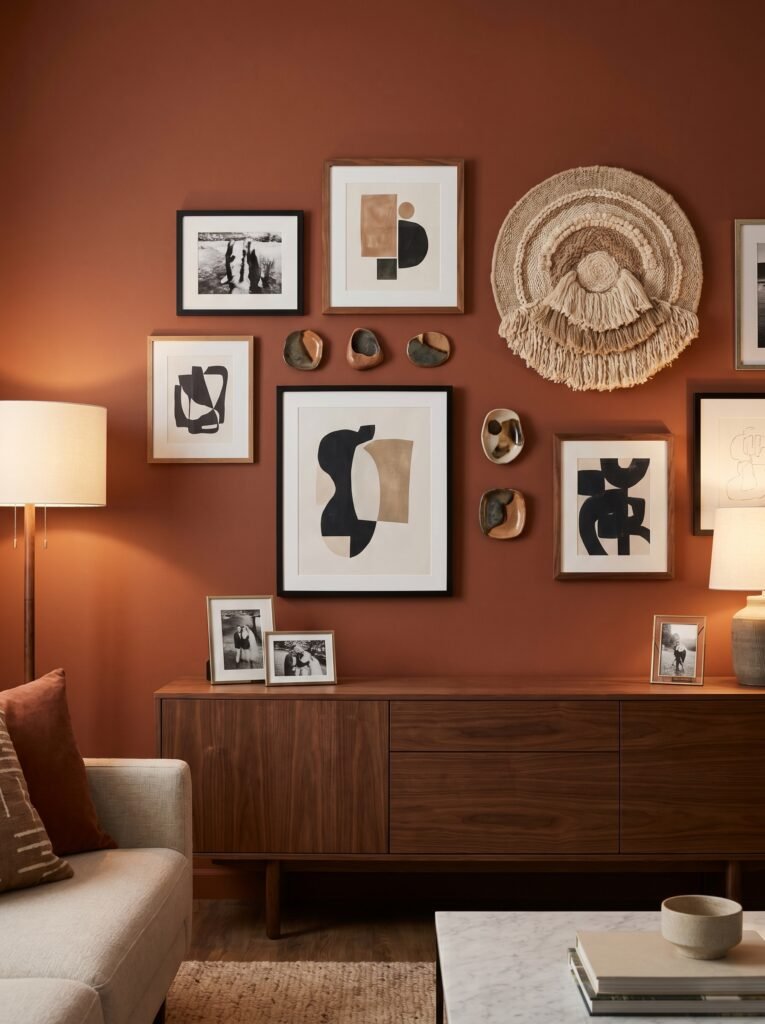
A small living room is not a problem to be solved — it’s a canvas to be understood. And the design world of 2026 has some genuinely brilliant ideas for making compact spaces feel expansive, warm, and completely intentional.
The single biggest mistake in small living rooms is too much furniture. Two sofas, a loveseat, a coffee table, three side tables, and a TV unit — suddenly you’ve created a maze rather than a room. In 2026, designers are advocating fiercely for the “less but better” principle: fewer pieces, higher quality, more breathing room.
Mirrors are still one of the most effective tools for visually expanding a space — but in 2026 they’re being used with more creativity. An oversized arch mirror leaning against a wall rather than hung. A cluster of small round mirrors grouped like art. Mirrored furniture that reflects light without shouting about it.
“A small living room filled with things you love will always feel bigger than a large room filled with things that don’t matter.”
Light colours on walls and ceilings create an upward sense of space that’s well-documented in interior design research. Keeping your sofa low-profile and your furniture legs visible (rather than upholstered to the floor) gives the impression that the room has more floor space — a simple trick with a surprisingly dramatic effect.
—
10. The Bookshelf Moment No One Is Going to Get Tired Of
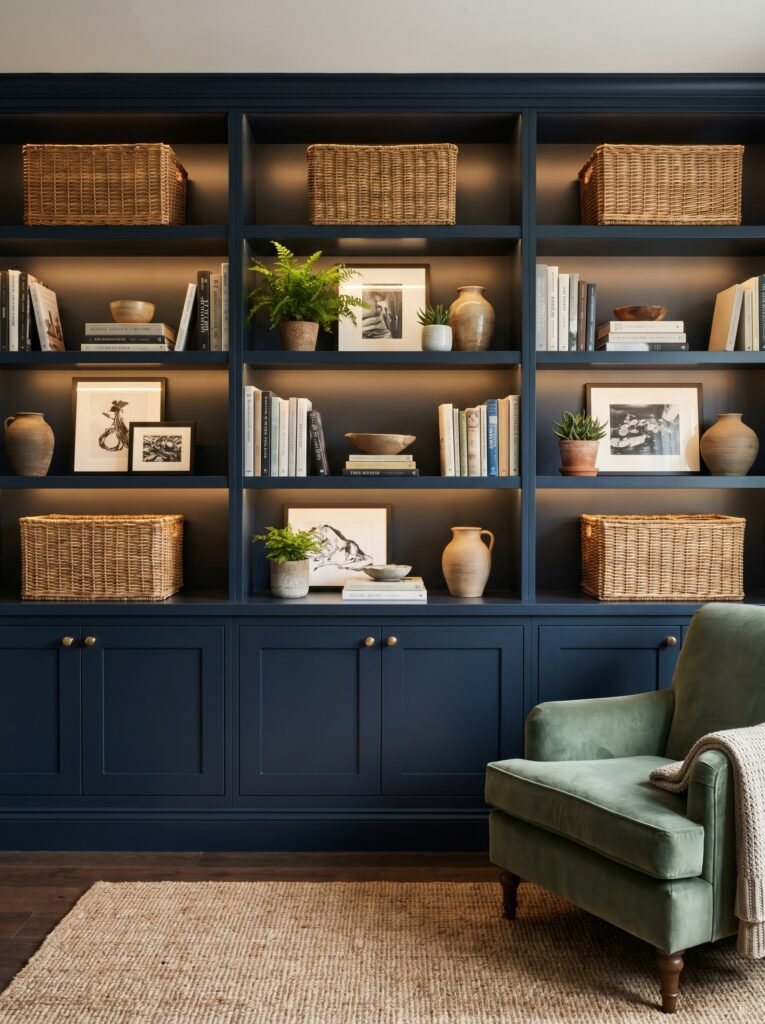
Bookshelves have become the living room equivalent of a personality test — and in 2026, the most interesting ones are deeply individual.
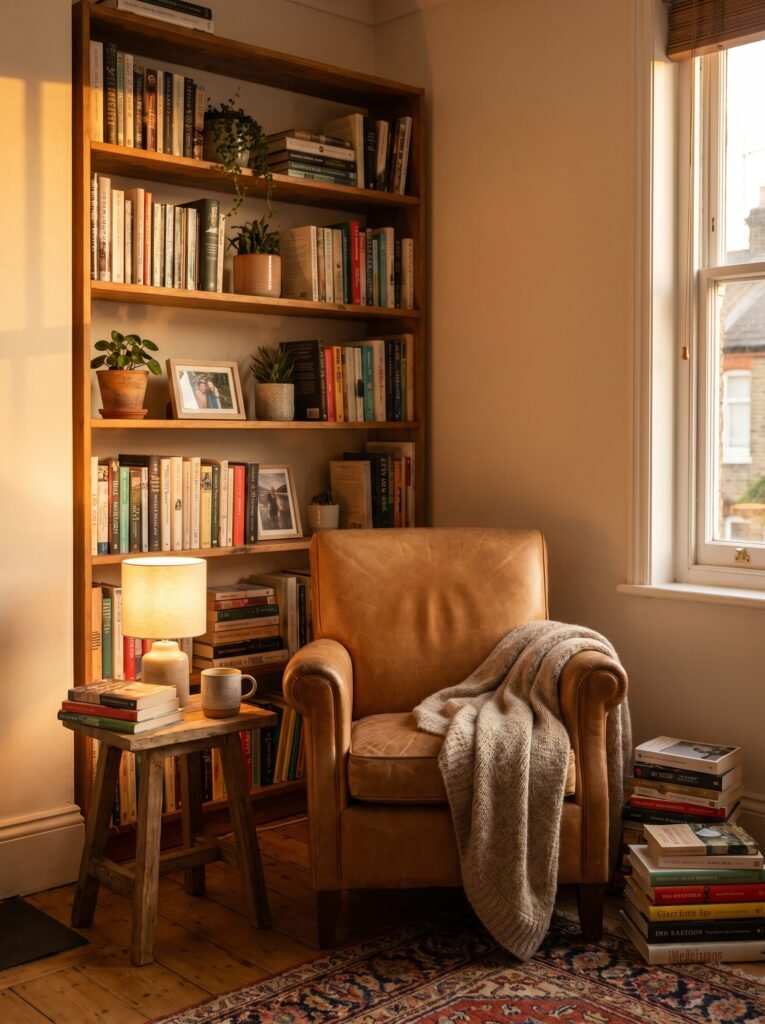
The Pinterest trend of colour-coding books (all spines facing backward for a minimalist aesthetic, or arranged by colour like a rainbow) has given way to something more human. Books stacked horizontally beside books placed vertically. Objects from travels displayed between favourite novels. A small framed photo propped against a plant, next to a candle, beside a stack of interior design books you actually read.
This kind of shelf styling feels lived-in and real. It tells a story. And in an era where so much of interior design can feel aspirational to the point of being alienating, a bookshelf that looks like it belongs to an actual person is quietly revolutionary.
For the British reader: if you have an original Victorian or Edwardian alcove shelf (often found flanking fireplaces), consider painting the interior wall a rich contrasting colour. Navy, hunter green, or even dusty pink against white shelving is one of the most beautiful things you can do to an older home.
—
11. The Rug Rules 2026 Is Rewriting
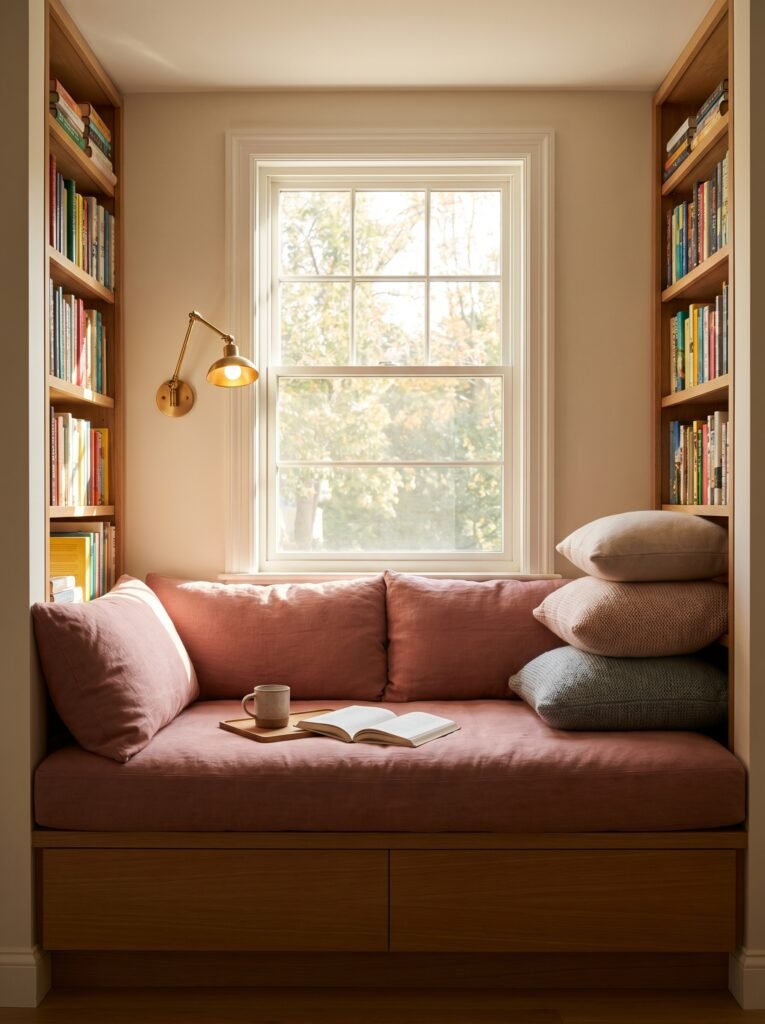
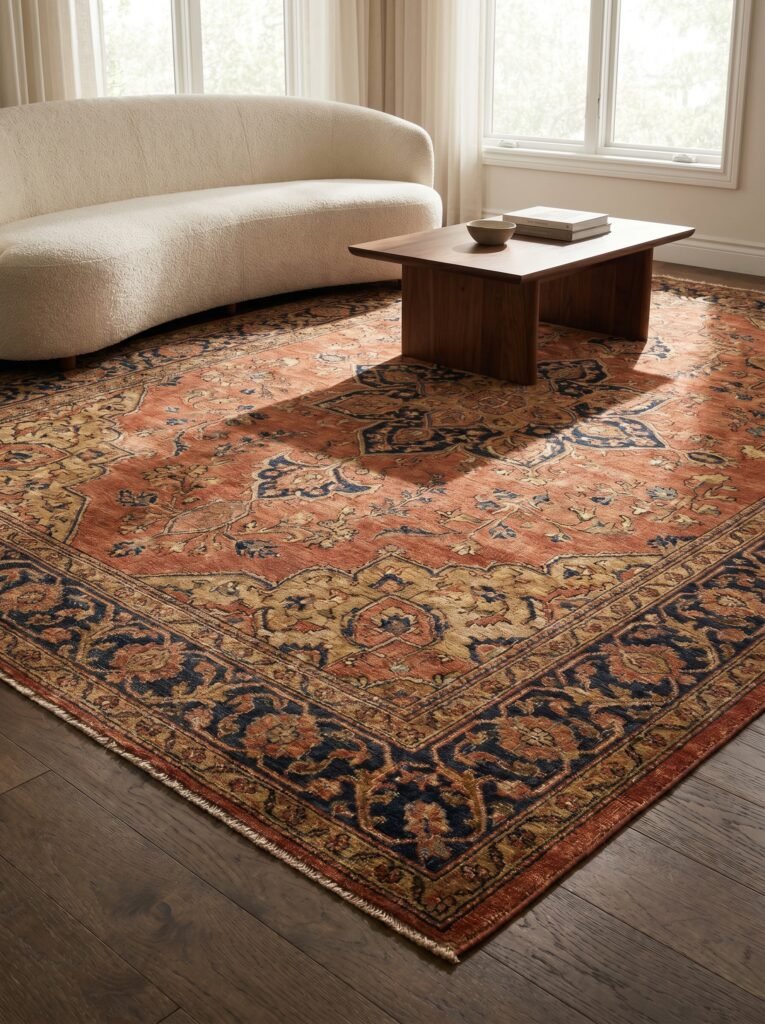
Here’s something that’s been accepted as truth for decades: your rug should be small, practical, and tucked under the front legs of your furniture. In 2026, designers are throwing this rule straight out the window.
Go bigger. Significantly bigger. The biggest mistake homeowners and renters make with rugs is buying one that’s too small — it makes the room feel disconnected, like the furniture is floating rather than grounded. In a typical living room, your rug should be large enough that all key pieces of furniture can sit at least partially on it. In the US, a 9×12 foot rug is often the minimum for a standard living room. In the UK, the equivalent would be around 270x360cm.
As for material: in 2026, wool and cotton blend rugs are the most beloved for their softness underfoot and durability. Jute and sisal are beautiful but less forgiving in a high-traffic living room. Washable rugs — once considered a purely practical choice — have become genuinely stylish, with brands like Ruggable in the US and Scion in the UK offering beautiful patterns in machine-washable versions.
—
12. Making It Personal: The One Thing No Trend Can Replace
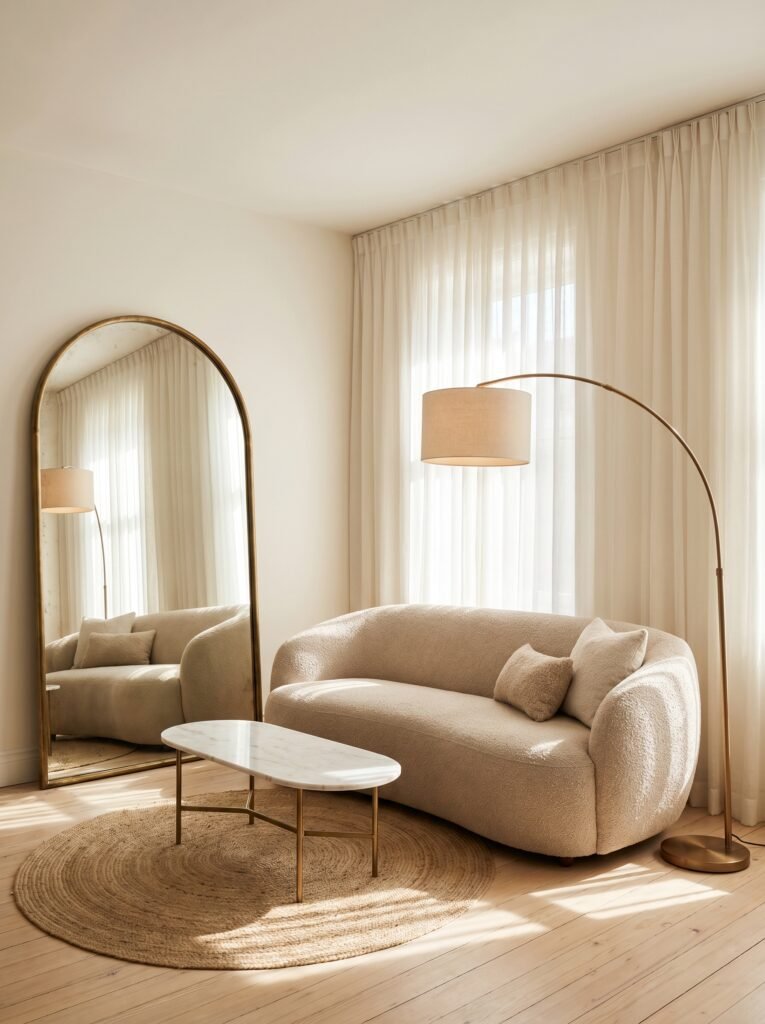
Every trend mentioned in this article is genuinely worth exploring — but there’s something more important than any of them, and it’s this: your living room should contain evidence that you live there.
That sounds obvious. But how many of us have walked into a beautifully decorated room and felt strangely cold inside it? A room that looks like it came directly from a catalogue — perfect, yes, but somehow vacant. A room where every object was chosen for aesthetics but none were chosen for meaning.
In 2026, the living rooms that move people — that make guests say “I could live here” — are the ones where something unexpected catches your eye. A piece of art a child made, properly framed. A ceramic bowl bought at a market in Lisbon or a weekend flea market in Brooklyn. A lamp that belonged to a grandparent and somehow looks contemporary on a side table. A stack of books with obviously cracked spines.
These are the things that no trend guide can tell you to buy, because they can only come from your own life. Every trend in this article is a backdrop — a stage set. What makes a living room genuinely beautiful is the life that happens in front of it.
—
🌿 How to Bring These Ideas Into Your Living Room
Starting a room refresh can feel overwhelming, so treat it as a slow, enjoyable process rather than a weekend project. Begin with paint — it’s the highest-impact, lowest-cost change you can make. Then layer in lighting before you buy any new furniture, because you need to understand how light moves through your room at different times of day. Shop for textiles next: a new throw, two or three cushions in different textures, and a new rug can completely change a room’s atmosphere for well under £150 or $200. Let furniture be your last and most considered investment — buy fewer pieces but buy well. And finally, don’t decorate everything at once. Leave space for things to arrive naturally, the way they would in a home that’s truly lived in.
—
❓ FAQ
Q: What are the biggest living room trends for 2026? A: The dominant themes are warm, rich colour palettes (think terracotta, deep olive, and dusty rose), curved furniture with soft organic shapes, texture layering using natural materials like linen and rattan, and lighting that’s layered rather than relying on a single overhead source. The overarching philosophy is comfort over perfection — rooms that feel genuinely inhabited rather than styled for a photoshoot.
Q: How do I decorate a small living room on a budget in 2026? A: Focus on three high-impact changes: repaint your walls in a warm, light-reflecting colour, replace your rug with something larger and more grounded, and rethink your lighting by adding a floor lamp and at least one table lamp. These three changes alone — often achievable for under £200 or $250 — will transform the feel of a small living room without requiring any new furniture.
Q: What colours are in for living rooms in 2026? A: Warm, earthy tones are leading the conversation — terracotta, ochre, deep olive green, and muted dusty rose. Deep jewel tones like forest green, cobalt blue, and warm navy are appearing as both sofa colours and accent wall choices. Cool greys and stark whites are on their way out, replaced by off-whites with warm, creamy undertones that feel much more welcoming and human.
—
💭 Final Thought
Your living room is the room where your life actually happens — where you rest, where you laugh, where you sit with people you love and sometimes where you sit alone and breathe. It deserves more than whatever you ended up with by default. The ideas in this article aren’t about following trends for trend’s sake — they’re about building a space that genuinely holds you at the end of a long day. So as you look around your living room right now — what’s the one thing that, if it were different, would make you exhale a little more deeply when you walk through the door?