Living Room Wall Decor Ideas That Make Your Home Feel Like a Story Worth Telling
There’s a quiet moment that happens when you walk into a room that feels completely right — your shoulders drop, your breath slows, and something in you exhales. That feeling doesn’t come from expensive furniture or a perfectly curated sofa. Most of the time, it comes from the walls.
—
1. Why Your Living Room Walls Are the Most Powerful Design Element You’re Probably Ignoring
Walls take up more visual space than almost anything else in a room, yet most people treat them as an afterthought — a blank backdrop to the “real” decorating happening below. But here’s what experienced interior designers know that most of us don’t: walls set the emotional temperature of an entire space. Before your eye lands on the coffee table, before it notices the rug, it reads the walls. That first visual impression — whether warm or cold, busy or serene, personal or generic — shapes how every single moment spent in that room will feel.
Think about the living rooms you’ve loved most in your life. The grandmother’s house with sun-faded photos climbing the stairwell. The friend’s apartment with that one giant abstract painting that somehow made everything feel sophisticated. The vacation rental with white shiplap walls that made you feel instantly calm. What you were responding to wasn’t just decoration — it was intention. Someone made a choice about what those walls would say, and you felt it.
“Your walls don’t just hold up your ceiling — they hold the mood of every moment lived beneath them.”
When you start thinking of your living room walls not as surfaces to fill but as storytelling canvases, the entire design process shifts. Suddenly you’re not just picking frames or choosing paint — you’re deciding how you want your home to feel, and that’s a deeply worthwhile question to sit with.
—
2. The Gallery Wall That Doesn’t Look Like Everyone Else’s Pinterest Board
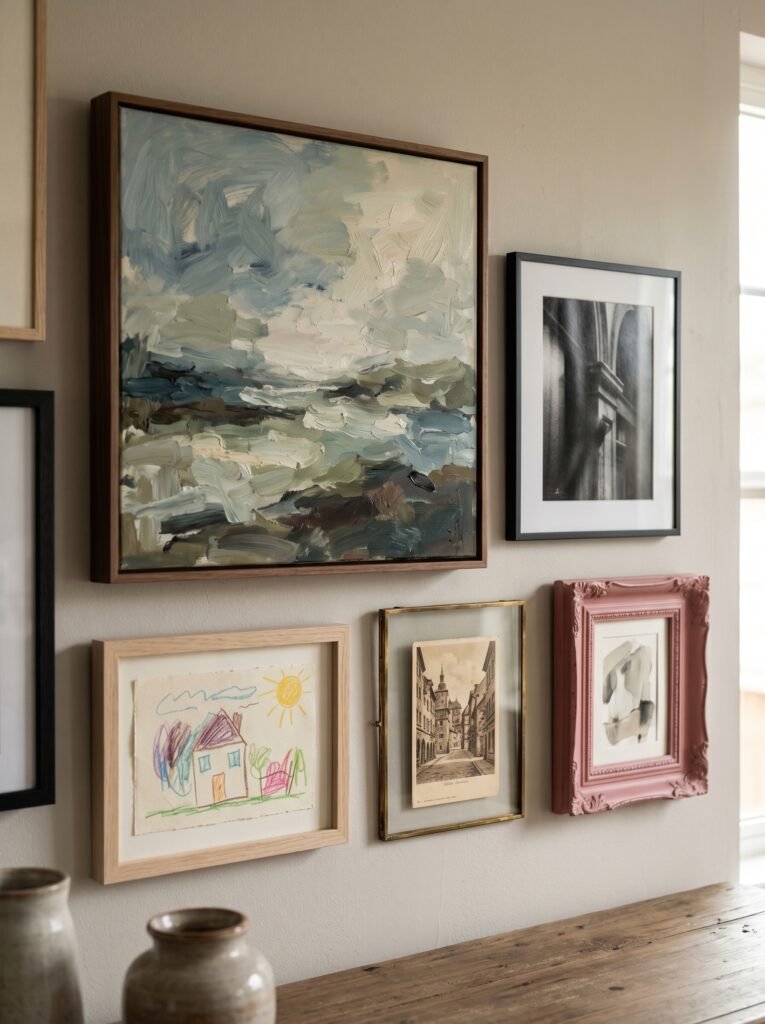
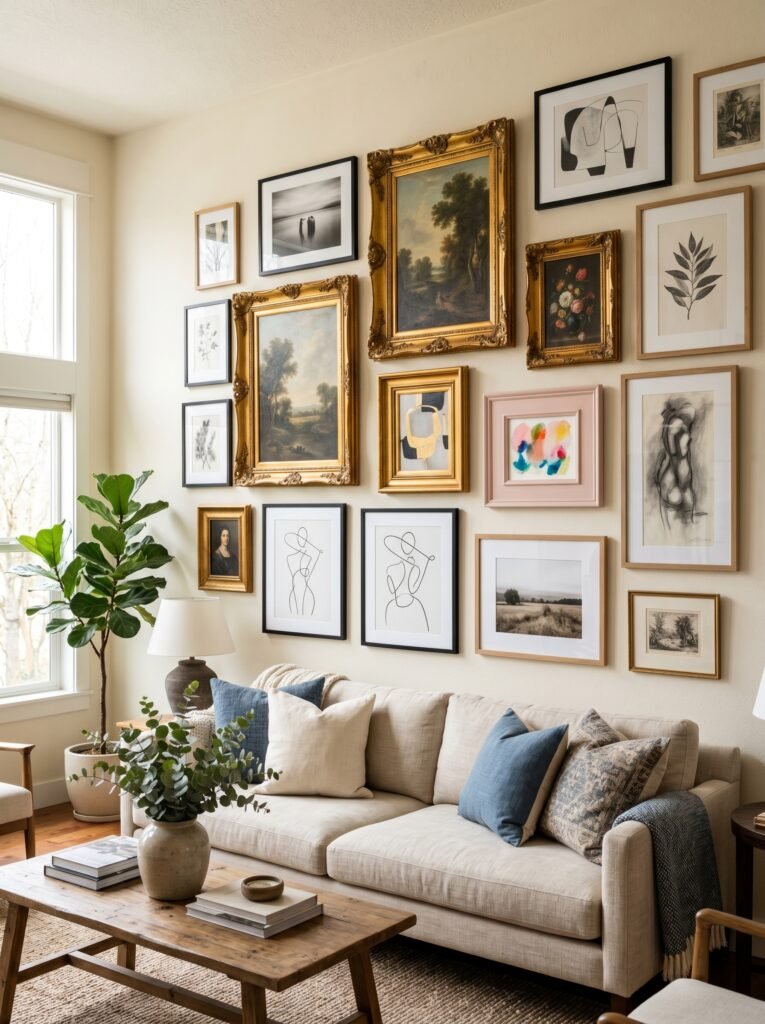
Gallery walls have been trending for over a decade, and there’s a good reason they won’t go away — when done thoughtfully, they are one of the most personal, warm, and visually captivating things you can do in a living room. The problem is that most gallery walls end up looking copy-pasted from a home decor catalog: evenly spaced black frames, generic botanical prints, a few motivational quotes. Safe. Forgettable.
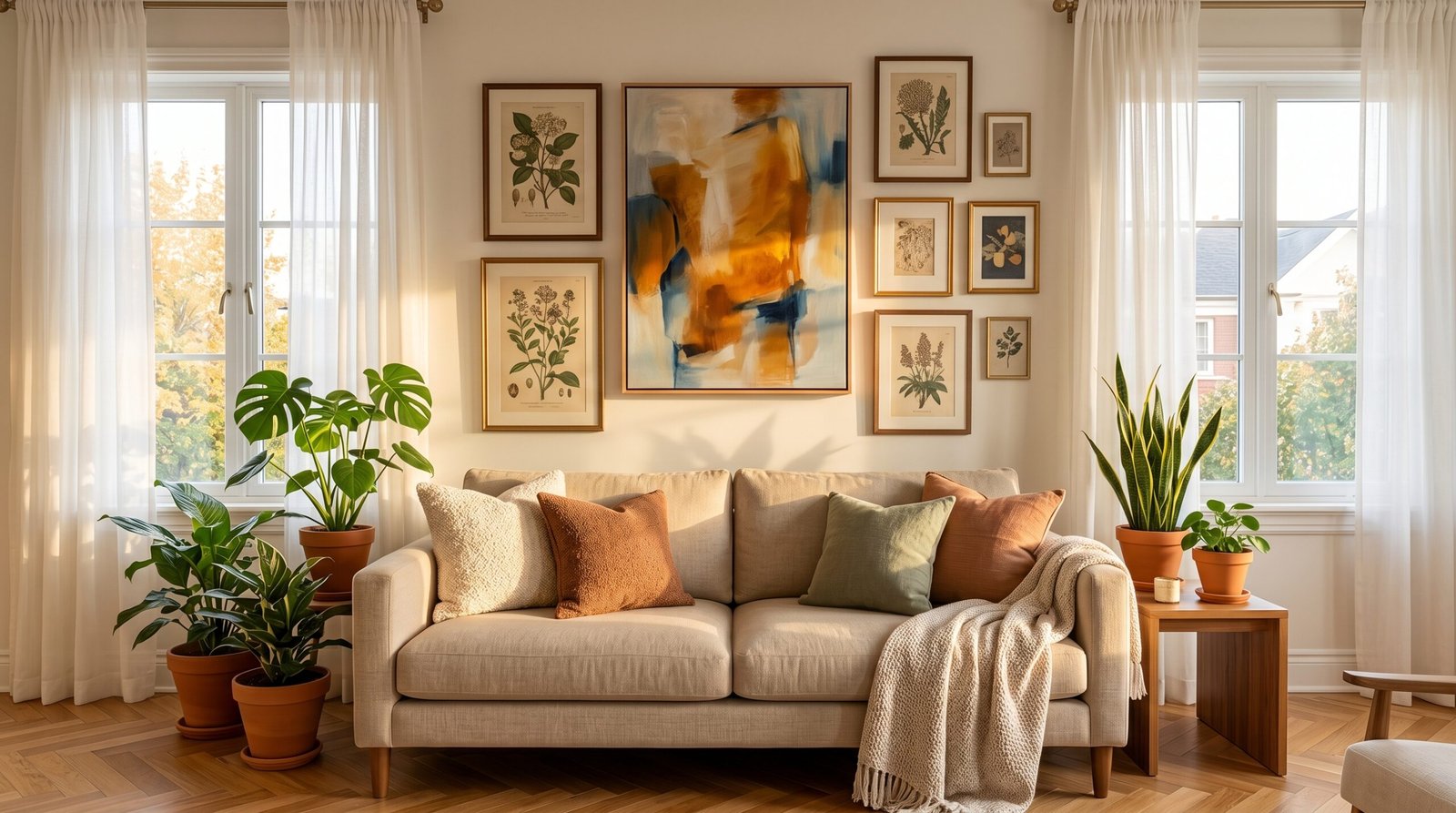
The gallery walls that stop people mid-scroll on Pinterest — the ones that feel genuinely alive — always have a secret ingredient: contrast with intention. Mix a large oil painting with a vintage postcard. Frame a child’s crayon drawing alongside a black-and-white photograph. Include one frame that’s painted a different color than the rest. Lay everything out on the floor first, photograph it, and live with that image for a few days before committing a single nail to the wall. This process alone will save you from endless re-hanging and reveal whether your arrangement has the visual rhythm it needs.
The key to a gallery wall that feels curated rather than cluttered is an underlying thread of cohesion — a consistent color palette, a shared era of photography, or a singular subject matter — while allowing enough variety to keep the eye moving with genuine curiosity.
—
3. Using Large-Scale Art to Anchor a Room Like a Pro
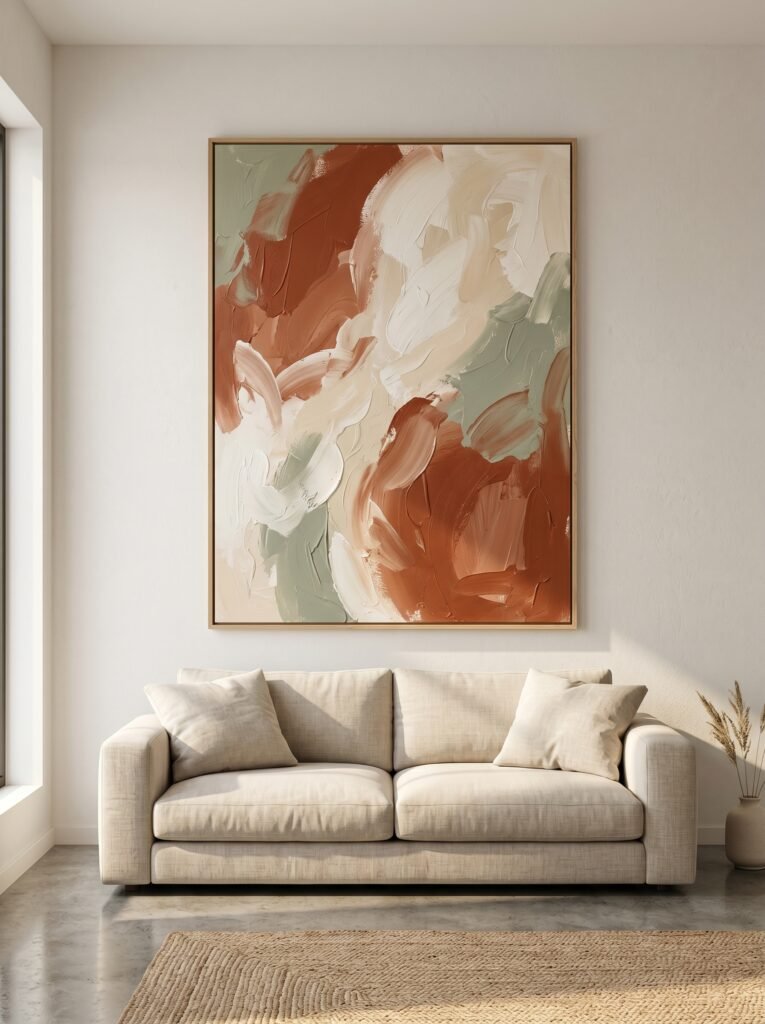
If you’ve ever walked into a hotel lobby or a well-designed restaurant and felt a sense of instant wow, large-scale art is almost certainly part of why. One oversized piece — whether a canvas painting, a tapestry, a framed photograph, or even an architectural textile — can do what ten smaller pieces simply cannot: it creates a singular focal point that pulls the entire room together around it.
The fear most people have about large art is the price tag, and it’s valid. But large-scale impact doesn’t require a gallery budget. Stretched canvas prints, downloadable art printed at a copy shop on large format paper and framed with simple wood molding, oversized mirrors, or even beautiful fabric panels can all achieve the same commanding presence. The golden rule is that large art should occupy roughly two-thirds the width of the furniture it hangs above — this proportion feels balanced to the human eye in an almost mathematical way.
Don’t be afraid of the negative space that large art creates around it, either. That breathing room isn’t emptiness — it’s emphasis.
—
4. Accent Walls That Actually Accent Something Worth Looking At
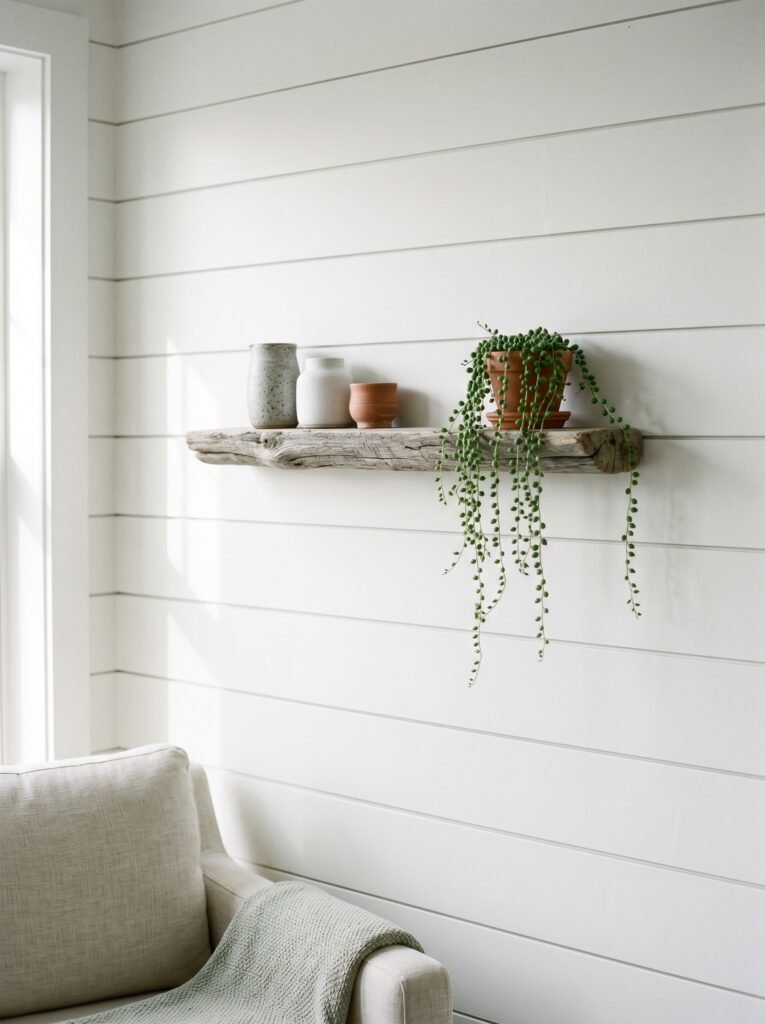
The accent wall had a moment in the mid-2000s that left some bad decorating memories, but in contemporary interior design, the concept has evolved into something genuinely sophisticated. The difference between a dated accent wall and a stunning one comes down to what you’re accenting and how you’re doing it.
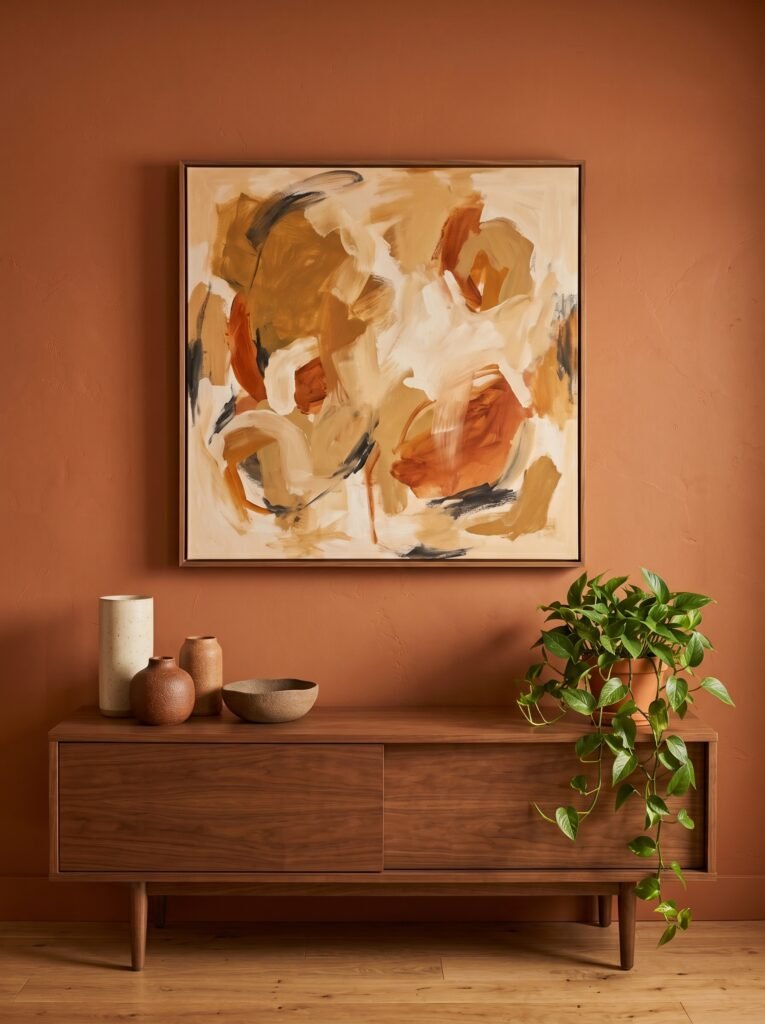
A well-placed accent wall should draw attention to an architectural feature — a fireplace, a window grouping, a built-in bookshelf — or create one where none exists. Deep, moody paint colors like forest green, terracotta, navy, or charcoal can transform a flat wall into something that feels almost three-dimensional. Textured wallpaper — grasscloth, linen-look, or patterned — adds tactile richness that paint simply cannot replicate. Shiplap, board and batten, or reclaimed wood paneling bring warmth and craftsmanship that never goes out of style.
The most important rule: whatever you do to an accent wall should feel like it belongs there, not like it’s fighting for attention with everything around it.
—
5. The Magic of Mirrors — and Why They Work in Every Single Home
Ask any interior designer for a quick-fix recommendation and mirrors will be in the top three every single time. There’s almost no living room situation that the right mirror can’t improve — small spaces feel larger, dark rooms feel brighter, awkward walls feel intentional, and plain rooms suddenly feel polished.
“A mirror in the right place doesn’t just reflect light — it reflects possibility.”
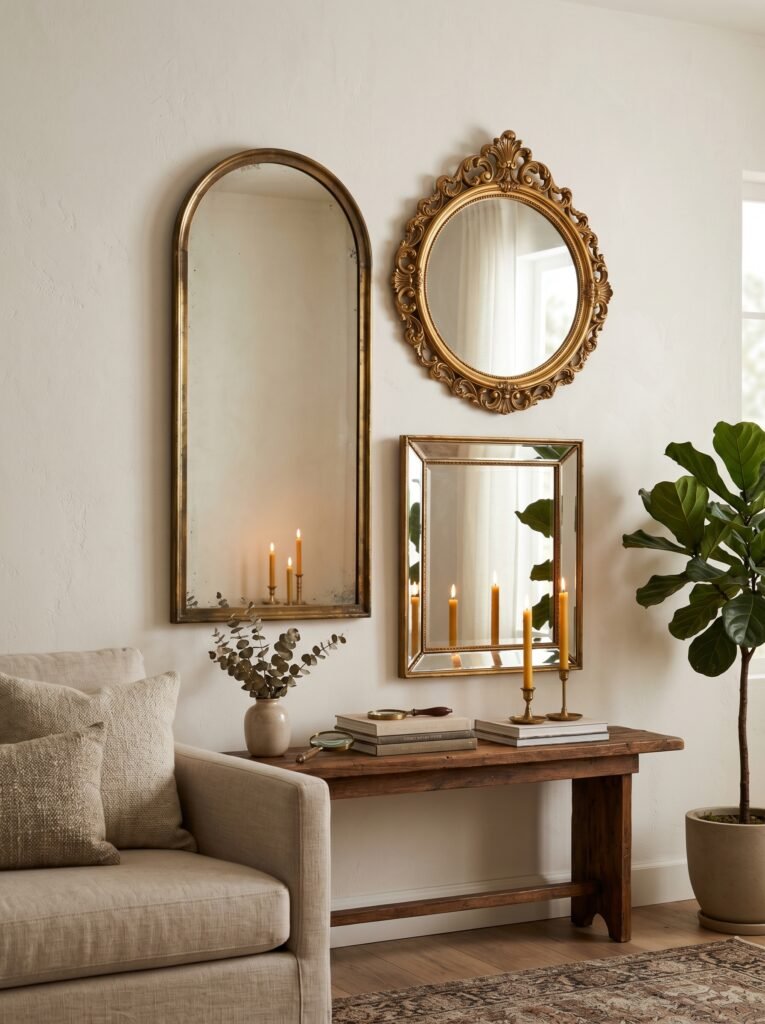
The styling nuance that separates a casually hung mirror from a genuinely impactful one is placement relative to light. Position a large mirror across from or adjacent to your primary light source — a window, a lamp, or a light fixture — and it will double the perceived light in the room. Lean an oversized floor mirror against a wall for a casual, editorial look that feels expensive without being so. Cluster several smaller mirrors of different shapes and frames for a collected-over-time effect that has tremendous visual interest.
Arched mirrors, starburst mirrors, antique-frame mirrors, and simple frameless mirrors all have their place — the choice depends on your overall style direction, but the function is almost universally the same: more light, more space, more life.
—
6. Shelving as Wall Decor — Where Function Meets Genuine Beauty

There’s a reason shelfie culture became its own category on Pinterest. A beautifully styled shelf is one of those rare decorating elements that serves a practical purpose while simultaneously functioning as art. The key is understanding that shelving is not just storage — it’s composition.
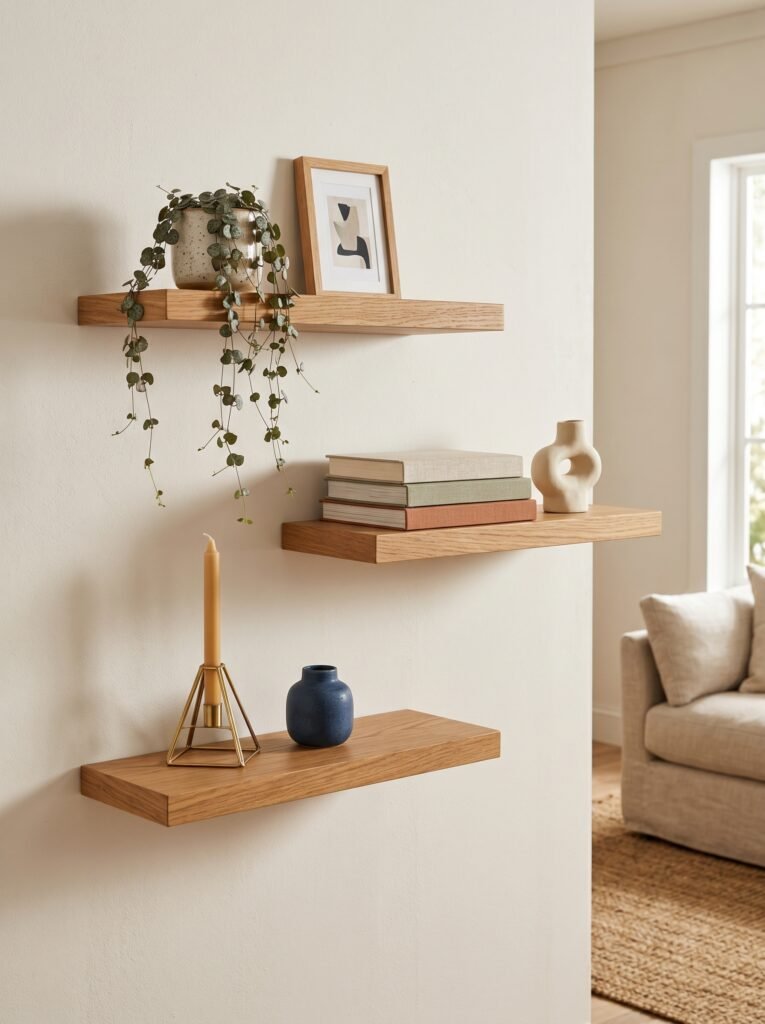
The classic rule of shelf styling involves grouping items in odd numbers, varying heights dramatically, incorporating organic elements like plants or dried botanicals, and leaving generous empty space between groupings. A stack of books, a small ceramic vase, a trailing pothos, and a framed photo — that combination has both weight and lightness, color and texture, the lived-in and the intentional.
Floating shelves in a staggered arrangement across a broad living room wall can replace traditional wall art entirely while offering the added benefit of evolving with you — you can restyle them seasonally, swap in new objects, and let them grow with your life and taste in a way that a painted canvas never can.
—
7. Wallpaper is Back — and It’s More Breathtaking Than Ever
If your wallpaper reference point is a dated floral pattern from your childhood bedroom, it’s time for a genuine refresh. Contemporary wallpaper design has undergone a full renaissance in the last decade, producing patterns and textures so beautiful that many designers use them as the starting point for an entire room’s palette rather than the finishing touch.
Botanical murals that wrap an entire wall in lush jungle imagery. Subtle geometric patterns in earthy, sophisticated neutrals. Abstract watercolor designs that feel like original artwork. Grasscloth textures that add depth without pattern. Modern maximalist prints that make a bold, joyful statement. The range is extraordinary, and with peel-and-stick options now widely available at accessible price points, experimenting has never carried less risk.
Even a single wallpapered wall — the one behind your sofa, the wall between two windows — can completely transform the personality of your living room in a weekend.
—
8. Bringing Nature In — Wall-Mounted Plants, Botanical Prints, and Living Walls
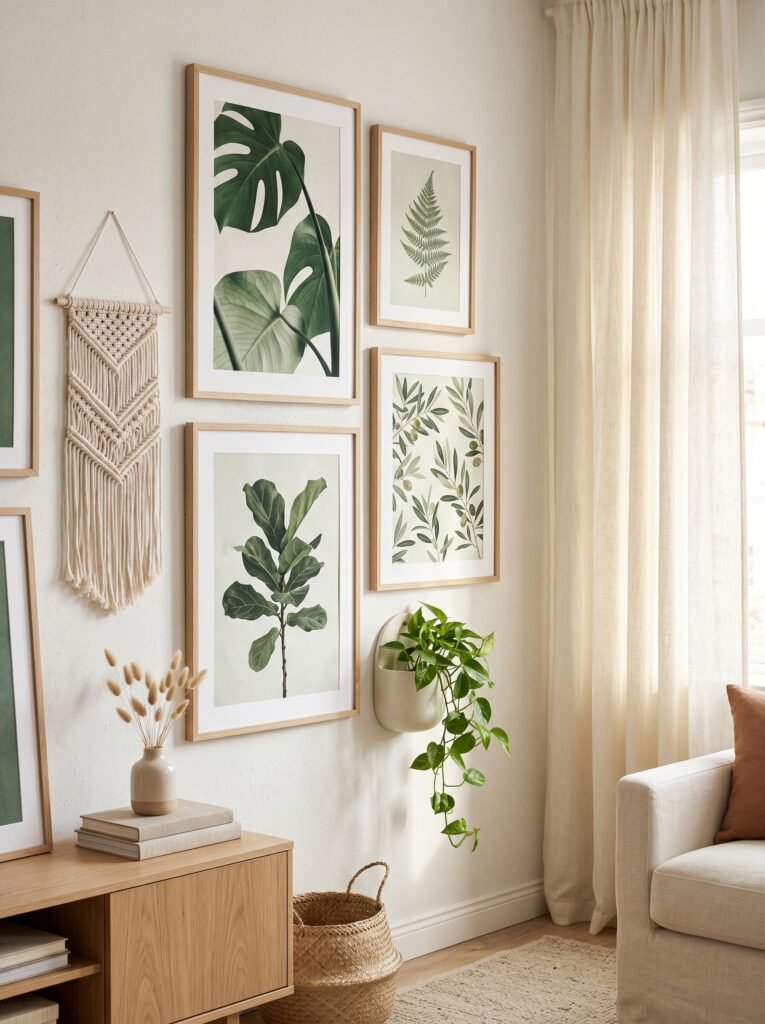
There’s something deeply human about our desire to bring nature indoors, and in living room wall decor, this instinct produces some of the most beautiful, calming results imaginable. Living walls — arrangements of mounted plants or hydroponic systems that allow greenery to literally grow on your wall — are the most dramatic expression of this, and while they require some maintenance commitment, the visual payoff is genuinely unmatched.
For a lower-maintenance approach, wall-mounted planters in terracotta, ceramic, or woven materials can hold trailing pothos, succulents, or air plants with minimal upkeep. Preserved moss panels (moss that has been treated to stay green without watering) offer the organic look and texture of a living wall without any care requirements at all.
If live plants aren’t in the cards, high-quality botanical prints — particularly large-scale vintage botanical illustrations or modern botanical photography — bring the same visual calm and natural palette into a space. The psychological benefits of nature imagery are well documented; even printed representations of plants and greenery have been shown to reduce stress and increase feelings of well-being in indoor environments.
—
9. Textile Wall Art — The Underrated Secret of Warm, Inviting Rooms
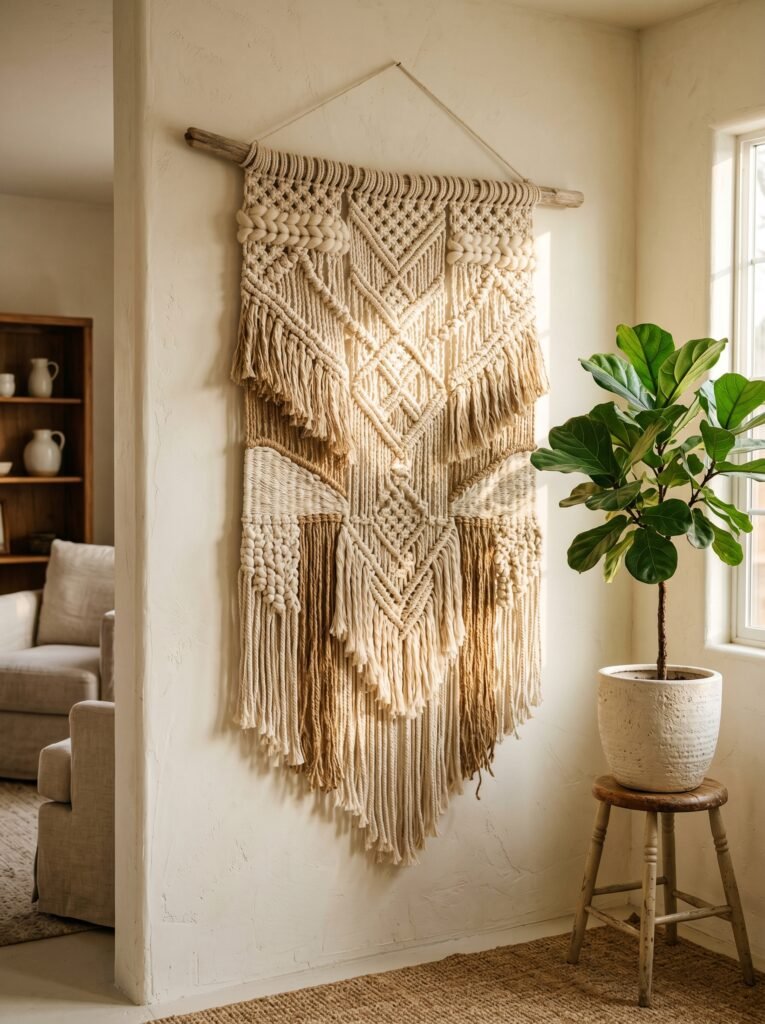
Walk into a living room that feels genuinely warm and cozy rather than just decorated, and there’s a reasonable chance you’ll find some form of textile on the walls. Woven tapestries, macramé wall hangings, quilts, fabric panels, vintage rugs mounted vertically — textiles bring something to a room that no other wall decor element can: softness.
“Soft walls don’t just absorb sound — they absorb the hard edges of the day.”
From an acoustic standpoint, textile wall art actually reduces echo and sound bounce in rooms with hard flooring, making conversations feel more intimate and music more pleasant. From a purely aesthetic standpoint, the texture and warmth of fiber art creates a tactile richness that photographs beautifully and feels incredibly inviting in person.
Handmade textile art from independent artists (Etsy is a tremendous resource here) tends to be far more personal and visually interesting than mass-produced alternatives, and the story behind a piece — a weaving made by a local artist, a vintage textile found at an estate sale, a quilt stitched by a family member — adds immeasurable meaning to a space.
—
10. Color Psychology and the Walls That Change How You Feel
Color is arguably the most powerful tool in interior design, and nowhere is its impact felt more immediately than on the walls. The psychology of color has been studied extensively, and the findings have real practical implications for how you choose to decorate your living room walls.
Warm tones — terracotta, burnt orange, deep red, golden yellow — activate energy, encourage conversation, and create a sense of intimacy that makes social spaces feel welcoming. Cool tones — sage green, muted blue, soft lavender — lower heart rate, reduce perceived stress, and create a sense of calm that makes a living room feel genuinely restful. Neutral tones — warm white, soft greige, deep charcoal — function as sophisticated backdrops that allow furniture, art, and people to take center stage.
The interplay between your wall color and your wall decor is where the real magic happens. A terracotta wall behind a gallery of black-and-white photography creates a warmth that neither element achieves alone. A deep navy wall behind a cluster of gold-framed mirrors creates a drama that feels both glamorous and grounded. These combinations — color and object in conversation — are what give a room its character.
—
11. Budget-Friendly Living Room Wall Decor That Looks Genuinely Expensive

One of the most persistent myths in interior design is that beautiful spaces require significant financial investment. Some of the most stunning living rooms on Pinterest were created on remarkably modest budgets — because good design is fundamentally about proportion, cohesion, and intention, not price tags.
Thrift stores and estate sales remain the most reliable sources for interesting, inexpensive frames, vintage mirrors, and original artwork that carries real character. Download free high-resolution art from sites like Unsplash or The Metropolitan Museum of Art’s online collection, print at a local print shop, and frame in simple molding for gallery-worthy results at a fraction of gallery prices.
DIY wall decor — from painted canvases to woven wall hangings to pressed botanical arrangements under glass — can be genuinely stunning when executed thoughtfully. Removable peel-and-stick wallpaper has democratized the dramatic wallpaper look entirely. Even the simple act of painting a wall — perhaps the most budget-friendly renovation in existence — can transform a room more completely than any object placed in it.
—
12. How to Tie Your Entire Living Room Wall Story Together
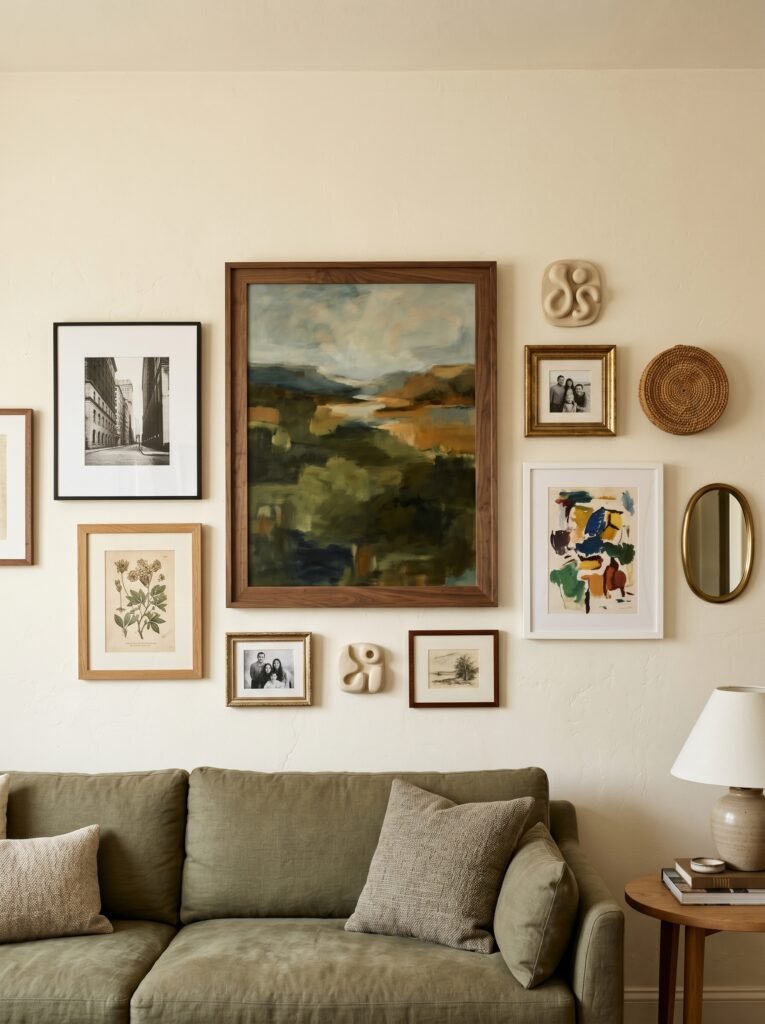
All the individual elements — the gallery walls, the large art, the mirrors, the shelving, the textiles, the plants — only reach their full potential when they work together as a cohesive whole. The living rooms that truly stop people on Pinterest, the ones that get saved thousands of times, always tell a unified story. They have a point of view.
Developing your wall decor story begins with identifying your emotional intention: How do you want this room to feel? Cozy and warm? Sophisticated and calm? Playful and full of life? Once you have that emotional target clearly in mind, every decision — color, texture, scale, subject matter — can be evaluated against it. Does this add to the story I’m trying to tell, or does it muddy it?
The rooms that feel most complete are rarely the ones with the most wall decor. They’re the ones where every element was chosen with care, arranged with thoughtfulness, and given enough breathing room to be truly seen. Trust negative space. Trust restraint. Trust the quiet power of walls that say exactly what they mean to say — and nothing more.
—
🌿 How to Take Care of Your Living Room Wall Decor
Keeping your wall decor looking intentional and beautiful over time requires less effort than you might think, but it does require some attention.
Dust frames and shelves regularly using a soft microfiber cloth — dust accumulation is the fastest way to make even beautiful decor look neglected. For textiles and tapestries, a gentle pass with a hand vacuum on the lowest setting every month or two keeps fibers looking fresh. Rotate your shelf styling seasonally — even small changes to what sits on your shelves can make a room feel refreshed and renewed without any significant investment.
Check that hanging hardware is secure periodically, particularly for heavier pieces, and replace any adhesive strips before they show signs of weakening rather than after. If you have artwork exposed to direct sunlight, consider UV-filtering glass or strategic curtaining to prevent fading over time — this single step can preserve the color and life of beloved pieces for decades.
Finally, give yourself permission to evolve. Your wall decor should grow with you, reflecting where you are in life right now — not where you were three years ago when you first moved in.
—
❓ FAQ
Q: How high should I hang wall art in a living room? A: The standard guideline is to center artwork at approximately eye level, which is typically 57 to 60 inches from the floor to the center of the piece. When hanging art above furniture, aim to leave 6 to 8 inches of space between the top of the furniture and the bottom of the frame — close enough to feel connected, but not so close it looks crowded.
Q: How do I choose wall decor that will still feel right in five years? A: Focus on pieces that have personal meaning rather than simply following current trends, and invest in quality over quantity. Color and style preferences evolve, but pieces that connect to your history, values, or genuine aesthetic sensibility tend to stay relevant in your space because they reflect something real about who you are.
Q: Can I mix different decor styles on the same wall? A: Absolutely — in fact, the most interesting and personal spaces almost always involve style mixing. The key is finding a common thread: a consistent color, a shared scale, or a unified emotional tone. A mid-century frame and a bohemian textile can coexist beautifully when both share warm, earthy tones and a similar level of visual weight.
—
💭 Final Thought
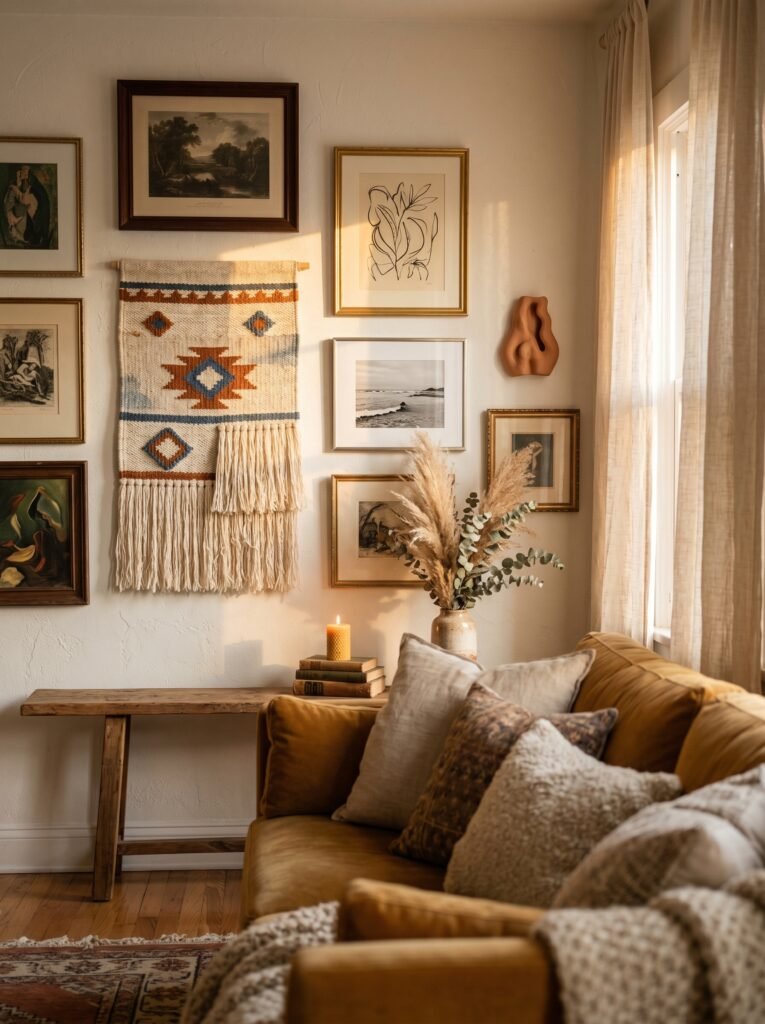
Your living room walls are not just a design challenge — they are an invitation. An invitation to tell the story of who you are, what you love, and how you want to feel when you come home at the end of a long day. There is no single right answer, no perfect formula, no Pinterest board that knows better than you what your own walls should say.
The most beautiful living rooms in the world have one thing in common: they feel like someone actually lives there — someone with taste, history, and something worth sharing.
So as you look at the walls around you right now, I want to leave you with this: If your walls could speak, what story would you want them to tell?