The Living Room That Actually Feels Like Home: 12 Cozy Aesthetic Ideas Worth Stealing
You know that feeling when you walk into someone’s living room and everything in you just… exhales? It’s not always the most expensive room. It’s not always the most “designed” room. But something about it wraps around you like a worn-in flannel shirt, and you don’t want to leave.
That’s what we’re building here.
—
1. The Lamp Situation Is the Whole Situation
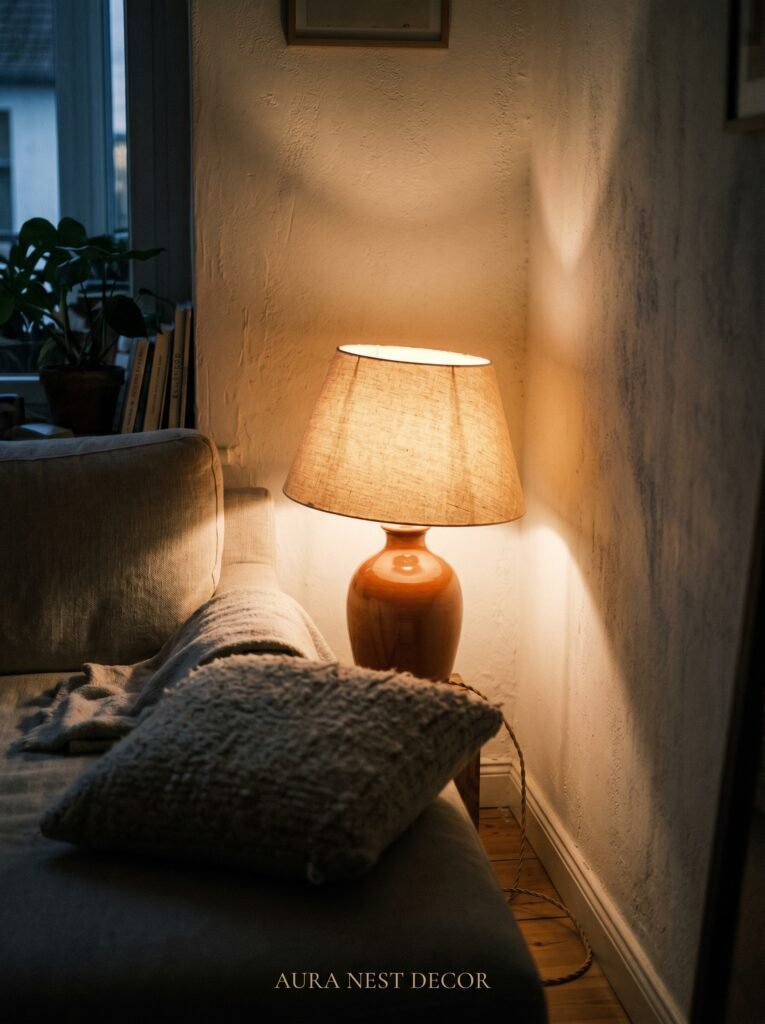
Most living rooms are lit wrong. That’s the honest truth. Overhead lighting — the flat, shadowless kind that bounces off every ceiling in every rental flat and suburban semi-detached in existence — is the single biggest reason a room feels like a waiting area instead of a home.
The fix isn’t complicated, but it does require committing to it.
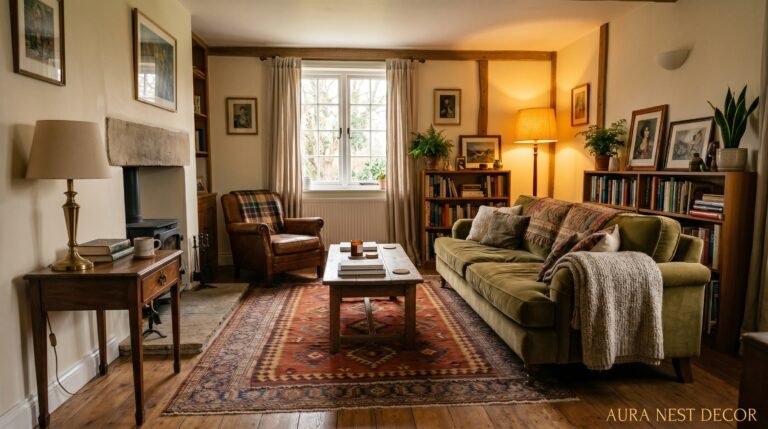
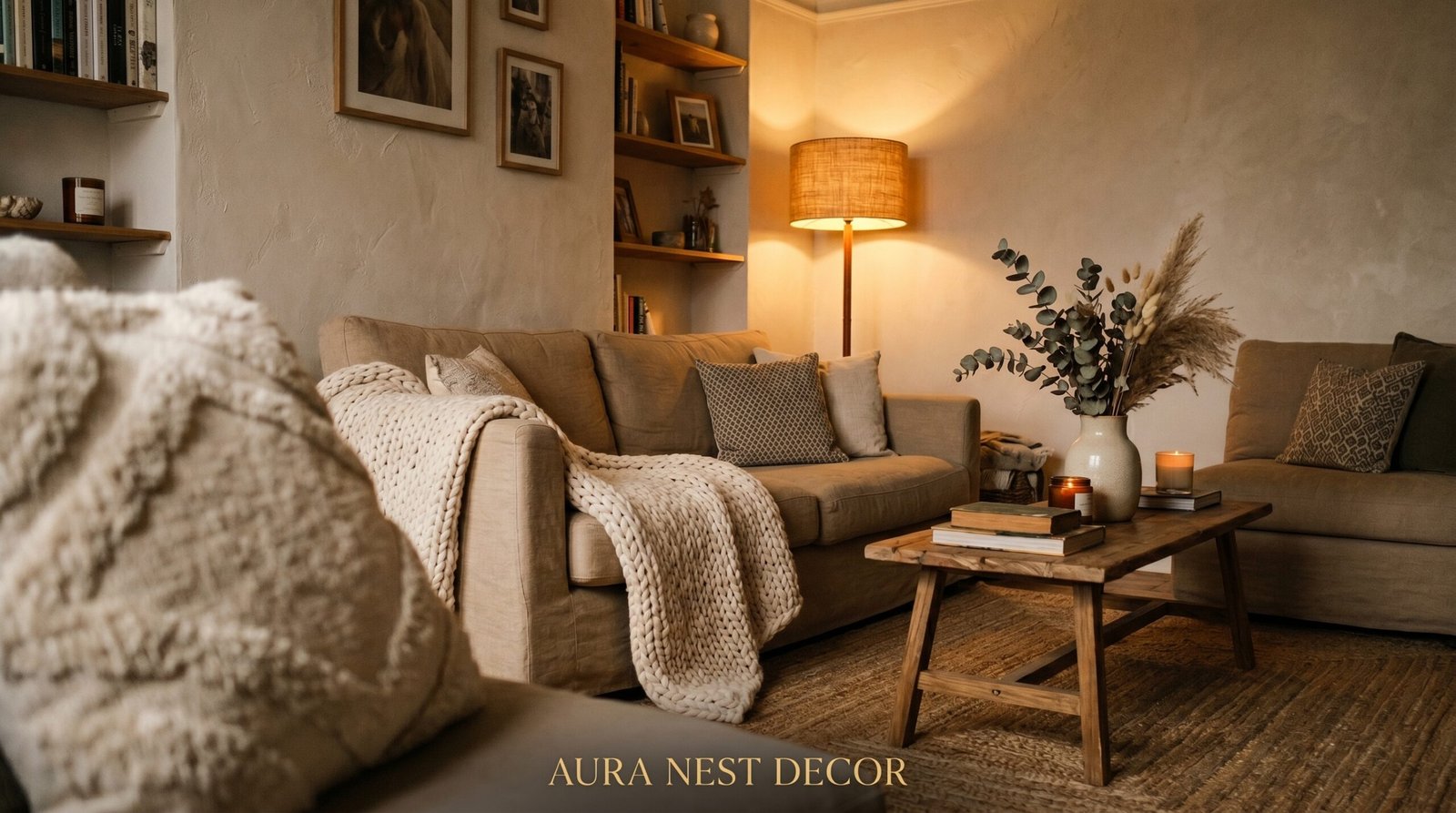
You need layers. A floor lamp in the corner with a warm-toned bulb, something like 2700K or lower, throwing amber light up toward the ceiling. A small table lamp on a side table or console, casting a soft circle of gold near the sofa. Maybe a string of Edison lights along a shelf, or tucked into a bookcase to give it that warm, glowing depth. The goal is to create the feeling of candlelight without actually burning your house down.
The amber glow of a lamp at dusk hits the room completely differently than noon sunlight, and that’s a feature, not a problem. Lean into it. Buy a dimmer switch. It costs almost nothing and it will change your evenings entirely.
Layer your lighting the way you layer blankets — start with a base, then add until it feels right.
“The right lamp in the right corner does more for a living room than any piece of furniture ever could.”
—
2. Why the Sofa You Love Isn’t the Sofa You Actually Live In
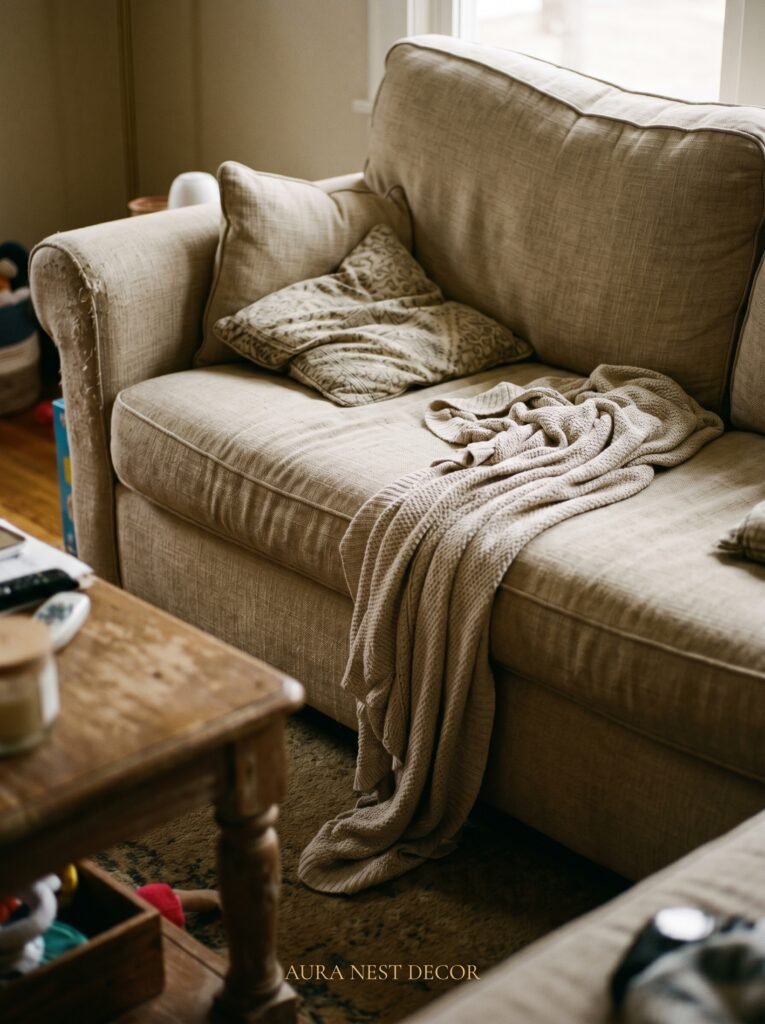
Here’s a question worth sitting with: when you collapse onto your sofa at the end of a long day, does it actually catch you? Or does it just… hold you in place?
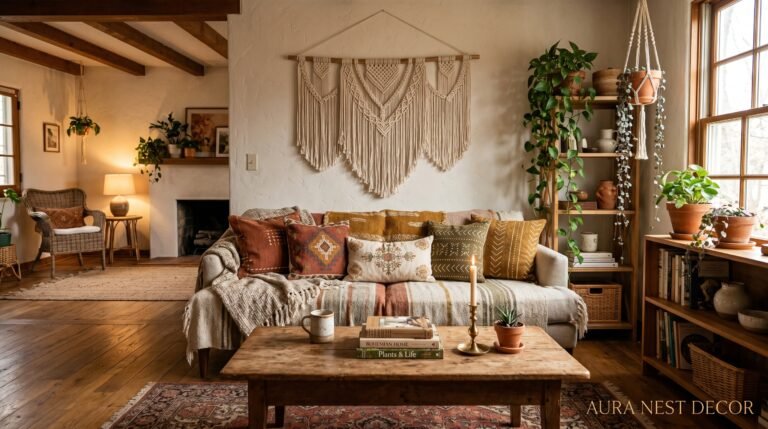
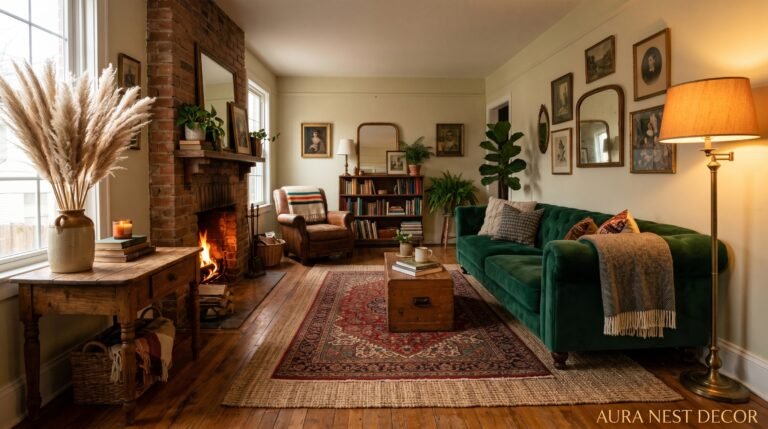
There’s a difference between a beautiful sofa and a lived-in sofa, and the most cozy living rooms have cracked the code on getting both. The secret is texture. A velvet sofa in a deep mushroom, forest green, or dusty terracotta has the same visual softness as a linen sofa, but it photographs richer and it holds warmth differently. For UK readers especially — if you’re fighting a cold flat nine months out of the year, velvet is your friend.
The cushions matter as much as the frame. Not the perfectly matched set from the showroom floor. The mismatched ones — a chunky knit throw pillow, a faded floral from a market stall, a solid deep plum against a warm oatmeal. That slight tension between the pieces is what makes a sofa look lived in rather than staged.
And a throw blanket. Always a throw blanket, slightly imperfectly folded, draped over one arm.
—
3. The Color That Keeps Showing Up in Every Beautiful Living Room Right Now
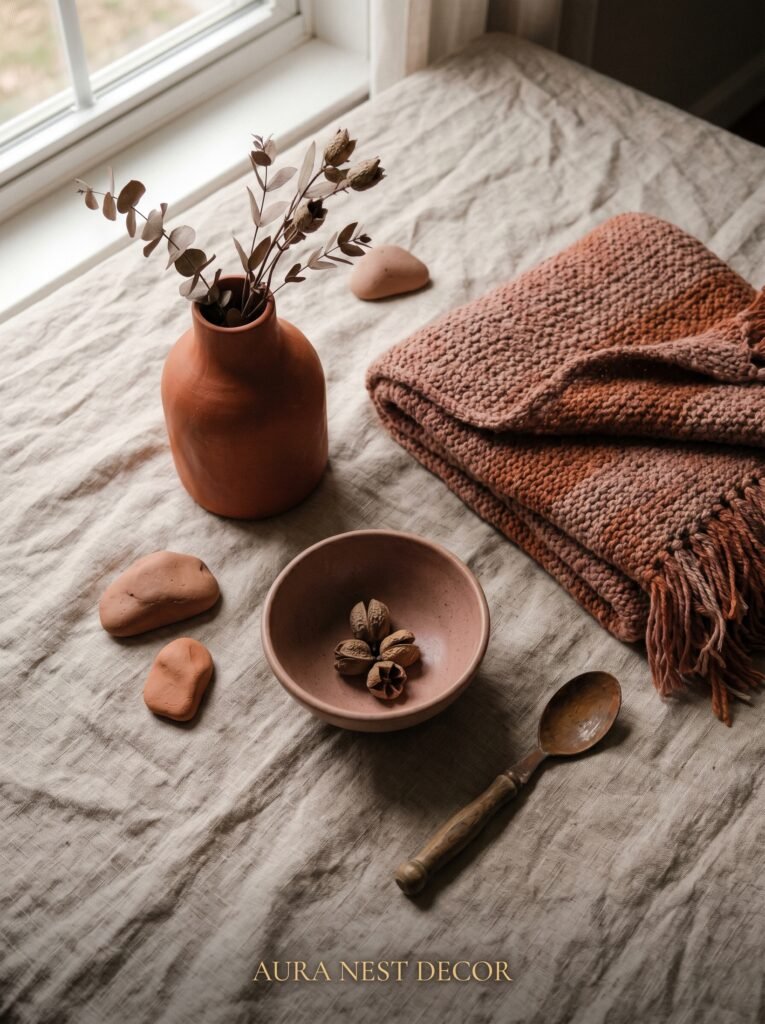
Warm white is out. Not forever, but for now.
The rooms getting saved, pinned, and reshared obsessively right now have a warmth to them that cool whites and Scandi-grey palettes simply can’t replicate. We’re talking about terracotta, which has graduated from trend to genuine classic. Warm sage that leans yellow-green rather than grey-green. Deep clay. Aged linen. The kind of tones that look like they were mixed from earth and left in the sun.
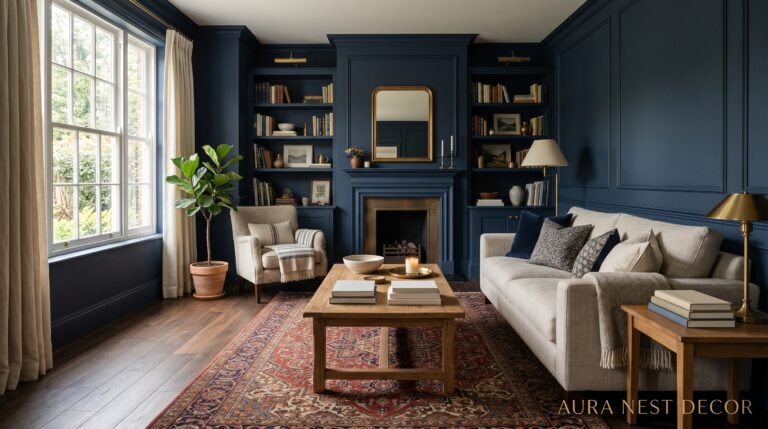
If you own your home and you’re ready to paint, a deep warm tone on a single wall — or better yet, on all four walls and the ceiling in a slightly softer version of the same color — creates the kind of enveloping, womb-like feel that interior designers charge a lot of money to achieve. Farrow & Ball’s “Red Earth” or “Churlish Green.” Sherwin-Williams’ “Cavern Clay” or “Sage.” These aren’t just paint colors. They’re moods.
If you rent and you’re stuck with white, go warm with everything else. A large rug in burnt ochre. Curtains in rust or deep amber. Wood tones that lean orange rather than cool grey.
Color is an atmosphere, not just a choice.
—
4. The One Rule That Makes Any Tiny Living Room Feel Intentional
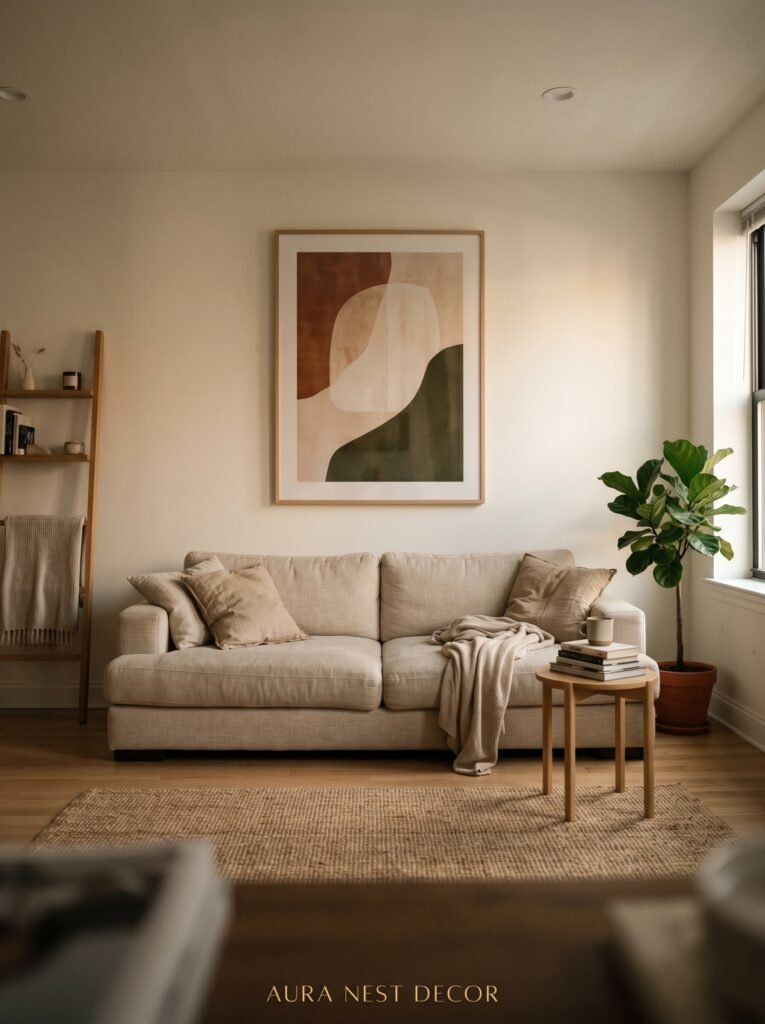
Scale. That’s it. That’s the rule.
So many small living rooms feel cramped not because they’re small, but because everything in them is the wrong size. Tiny sofas that look doll-like. Undersized rugs that float in the middle of the floor touching nothing. Little picture frames scattered across a wall, each one so small it disappears.
The counterintuitive truth is that going bigger — one statement sofa instead of a sectional and a loveseat, one large rug that actually reaches under the furniture, one large piece of art instead of a gallery wall — makes a small room feel more intentional and more spacious at the same time.
The rug thing especially. Your rug should be larger than you think it needs to be. In an American living room, an 8×10 is often the minimum. In a UK terrace living room, you might be working with a smaller footprint, but the proportional logic still holds. The rug should anchor every piece of furniture to it, at least the front legs, so the room reads as a single cohesive space rather than a collection of objects adrift on a sea of floor.
Big, bold, intentional. Every time.
“A rug that’s too small doesn’t just look wrong — it makes the whole room feel accidental.”
—
5. What Nobody Tells You About Styling a Bookcase
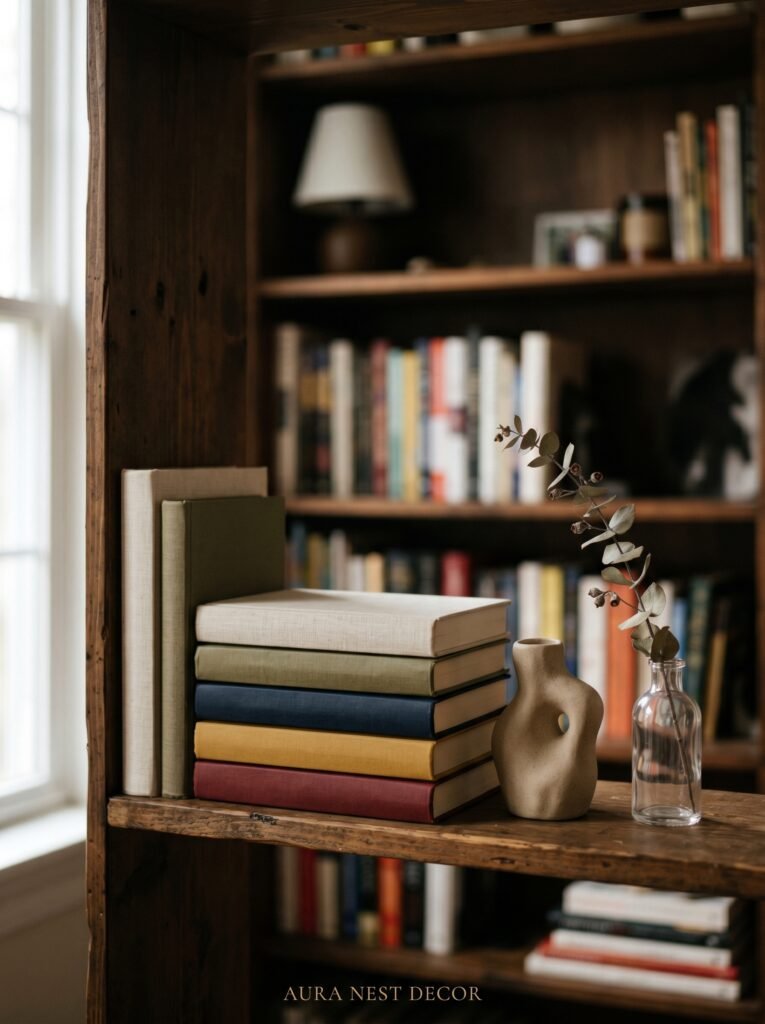
A bookcase is not a storage unit. Not in a cozy, aesthetic living room. It’s a piece of theatre.
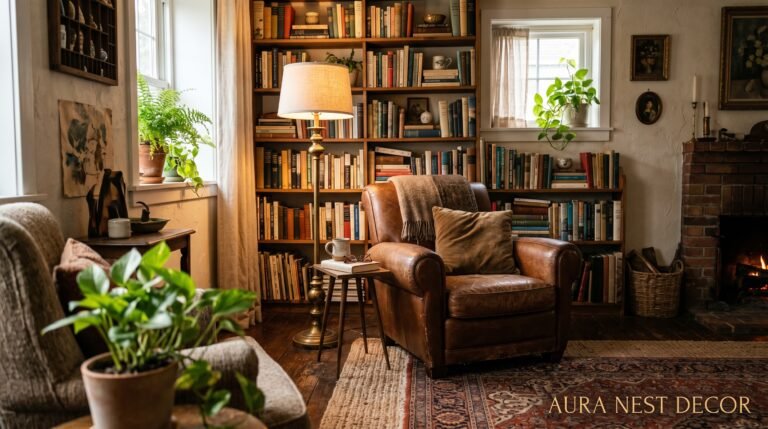
The rooms that stop you mid-scroll — the ones with bookshelves you can practically smell the old paper and candle wax from through the screen — have one thing in common. The books are mixed with objects. Stacks of horizontally laid books create shelves for small sculptures, a ceramic vase, a single candle. Trailing plants spill over the edge of a shelf. A framed photograph leans against the spine of a larger book. Small baskets tuck into the bottom shelves to hide the practical stuff.
And color-organizing your books? It’s divisive, genuinely. Some people love it. Some people think it’s a crime against literature. But even just pulling out the brightest-spined books and facing them spine-in — turning them backwards to a uniform cream — creates this soft, collected feeling that photographs beautifully and reads as deliberate.
The goal is to make it look like the bookcase grew that way over years, not like it was styled in an afternoon.
—
6. Curtains: The Piece That Changes the Entire Architecture of the Room
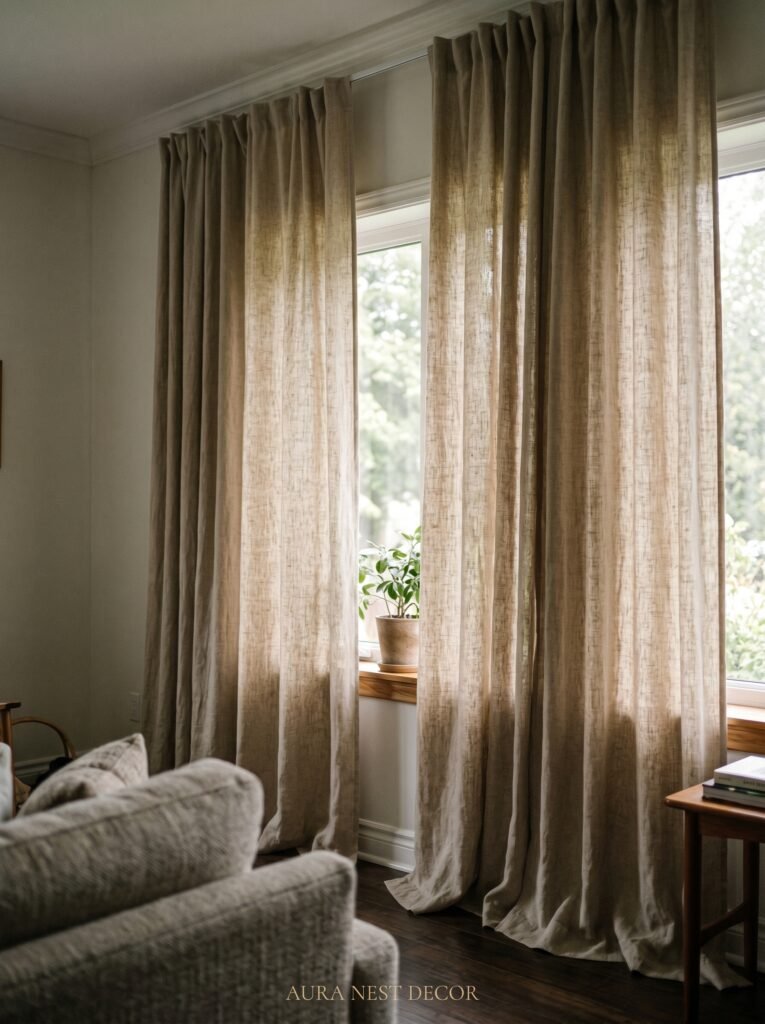
Curtains hung just above the window frame make a room feel like a squat box. Curtains hung just below the ceiling make a room feel tall, grand, and airy — even when it’s neither of those things.
This is one of the cheapest and most dramatic changes you can make to a living room, and it’s still underused. Two curtain rods: mount them close to the ceiling, ideally only a couple of inches down from the crown moulding or the top of the wall. Let the curtains pool very slightly on the floor — not trip-hazard pooling, just a soft inch or two. Choose fabric with weight. Linen, velvet, or a woven texture in a deep neutral or warm earthy tone.
For American homes with higher ceilings, this effect is already built in. For UK Victorian or Edwardian terraces with those lovely high ceilings that most modern renovations have plastered over, this trick restores a sense of original scale.
Even in a new-build with eight-foot ceilings, high-hung curtains create a perceived height that the room earns rather than has.
—
7. The Forgotten Surface That Makes a Room Feel Twice as Warm
The floor.
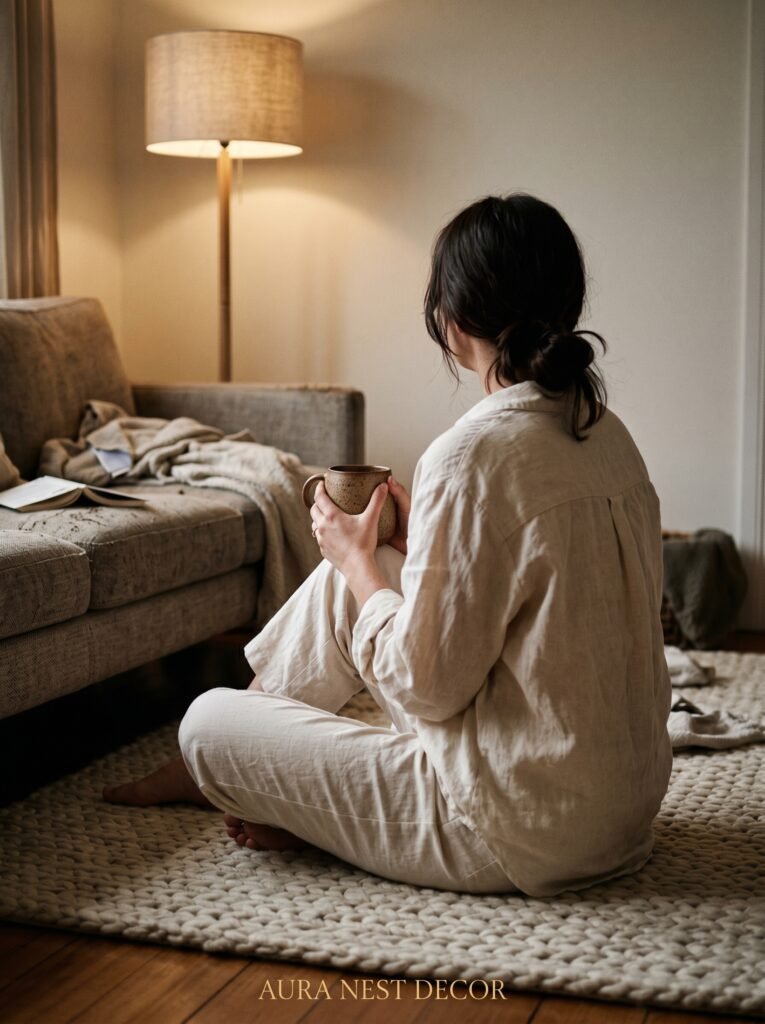
Not what’s on the floor — the floor itself, and how you relate to it. Cozy living rooms have floors that invite you to sit on them. A thick rug with a proper pad underneath it, so it has bounce and give. Cushions or floor pillows stacked in a corner for exactly the kind of lazy Sunday where the sofa feels too formal.
In homes with hardwood or engineered wood floors — which covers roughly two-thirds of the living rooms in both the US and UK right now — the warmth of the wood tone matters enormously. Golden oak, warm walnut, and honey tones make a room feel cozy by default. Cool grey wood floors are beautiful in the right context but fight against warmth constantly.
If you’re stuck with cool floors, the rug is doing heavy lifting. A large, thick, textured rug — a Moroccan berber, a wool flatweave in warm tones, a shaggy cream rug that your toes disappear into — can counteract almost any floor underneath it.
Get down on the floor of your living room. Sit there for a minute. Ask yourself if it’s a place you’d actually want to be.
“The most cozy living rooms aren’t just comfortable to look at — they’re rooms that invite you all the way down to the floor.”
—
8. Plants: Not a Trend, a Temperature
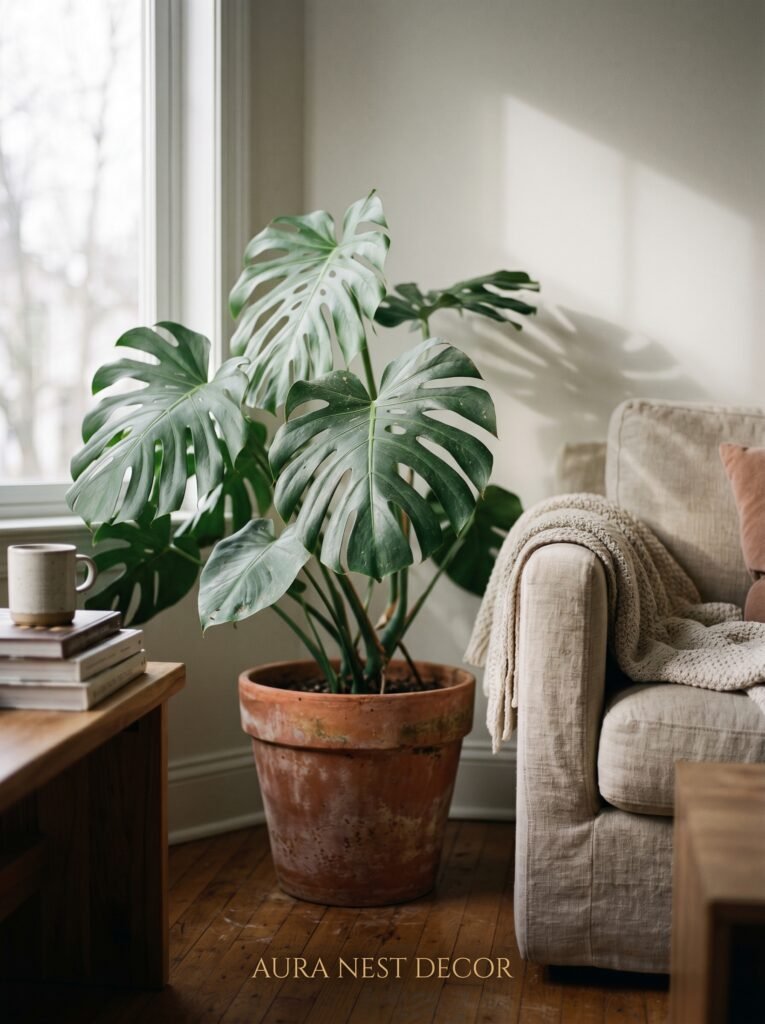
Indoor plants make a room feel alive in a way that no object, no matter how beautiful, can replicate. But the way you use them matters enormously, and the “one small succulent on the windowsill” approach isn’t going to move the needle.
Go big or go layered. A large fiddle leaf fig or a monstera in a proper terracotta or woven pot in a corner immediately draws the eye up and gives the room a vertical presence. A trailing pothos or hoya on a high shelf, draping slowly downward, adds something organic and slightly wild that softens the edges of a room full of straight lines.
For UK readers especially: the light situation means you’re often dealing with low natural light for much of the year. Lean into low-light varieties — devil’s ivy, ZZ plants, philodendrons, peace lilies. They’re not compromise plants. They’re genuinely beautiful and they’ll actually survive your north-facing living room from October through March.
A room with plants feels warmer. Not metaphorically. The humidity they release, the oxygen, the soft rustle — they change the air itself.
—
9. The Styling Trick Hidden in Every Moody Living Room Photo
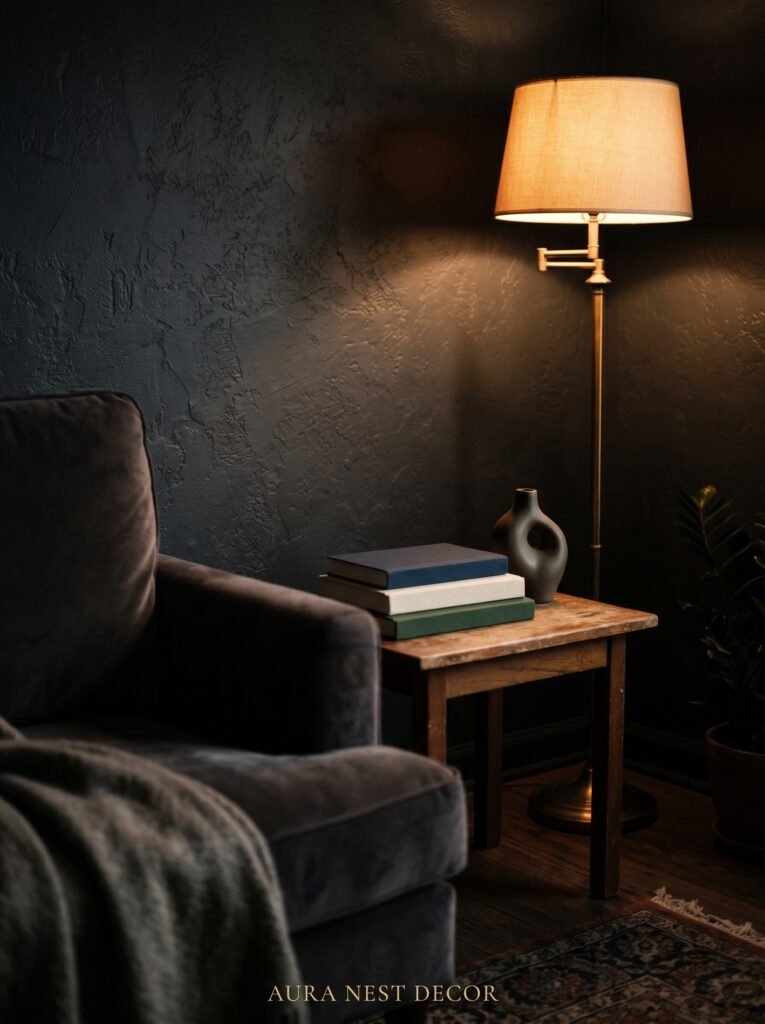
Every living room that photographs as deeply atmospheric has something in common, and once you see it, you’ll spot it everywhere.
Objects in threes. Or rather — objects in odd numbers, at varying heights, with different textures but related tones.
A tall tapered candle. A short, squat ceramic. A small stack of books. All in cream, warm white, and natural materials. Or all in earthy tones — terracotta, rust, soft brown. The variation in height creates movement. The shared color palette creates harmony. The mix of textures — smooth against matte against rough — creates interest.
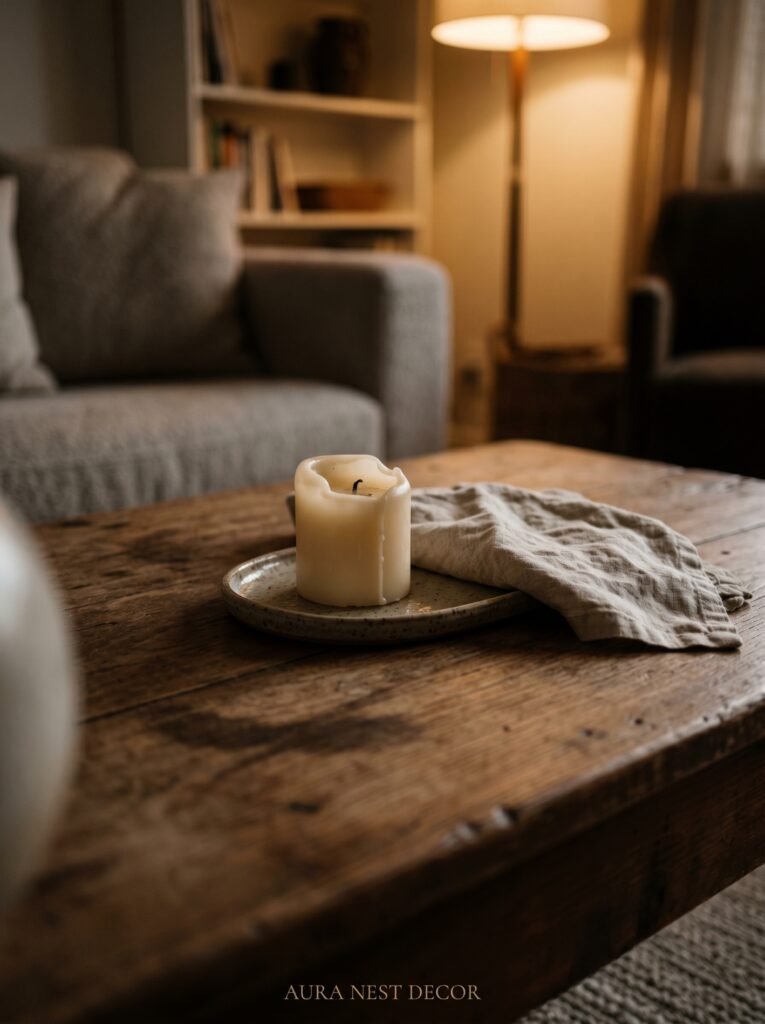
This works on a coffee table, a fireplace mantel, a windowsill, a console table. It works everywhere. The coffee table version: a large tray to contain the grouping, a candle or two, a small stack of coffee-table books, and one organic object — a piece of driftwood, a dried flower stem in a small vase, a single smooth stone from a beach you actually visited.
It’s styled, but it tells a story.
—
10. Fireplace or No Fireplace: The Warmth Comes From the Same Place
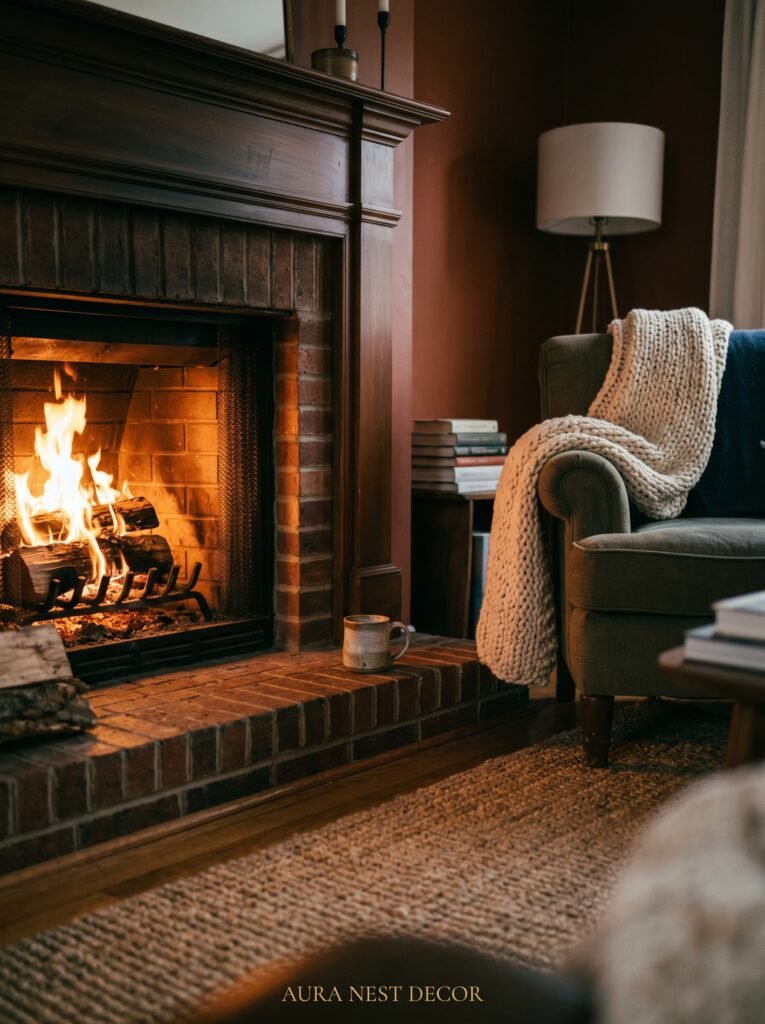
There’s something about a fireplace that rewires the entire energy of a room. Even a non-working one. Even a boarded-up Victorian fireplace in a UK terrace that hasn’t had a fire in thirty years.
A fireplace surround, even unfunctional, gives a room a focal point it desperately needs. Style the mantel thoughtfully — a large mirror or piece of art above it, a few well-chosen objects grouped at different heights, some candles that get lit in the evenings even if the hearth beneath them is cold.
For American homes in states where it gets cold: a wood-burning fireplace is an heirloom. Keep it. Use it. Nothing replicates the smell and the sound and the particular kind of exhaustion that a real fire creates in a room.
For those without a fireplace at all — an electric fire insert inside a freestanding console, a wall-mounted fireplace with LED flame effect, or simply a pillar candle arrangement grouped on the floor of a dedicated corner can create a similar visual anchor. The eye wants something to rest on in a living room. Give it something warm.
—
11. The Scent of a Room Is Half Its Aesthetic
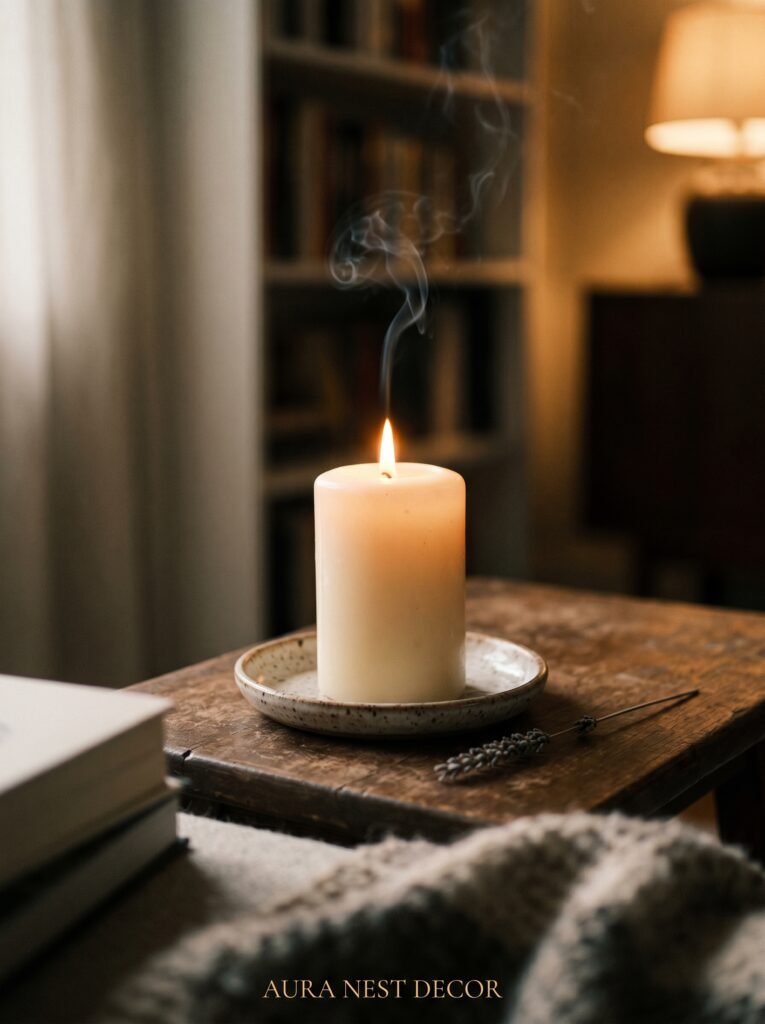
This is the section that most decor articles leave out, and it’s one of the most powerful tools you have.
A room smells like something whether you intend it to or not. The goal is to be intentional about what that something is. Not three competing plug-in air fresheners. Not a single candle that gets lit twice a year. A consistent, subtle, layered scent that becomes the signature of your home.
Beeswax candles have a warm, honey-tinged scent when they’re not even burning. A cedar or sandalwood reed diffuser placed near the door means the scent greets you when you walk in. Fresh eucalyptus in a vase on the coffee table adds a clean, grounding note. In autumn and winter especially — cinnamon, clove, amber, woodsmoke — these are the scents that make a living room feel like a destination.
UK readers will recognize this from old pubs. The ones that smell like wood and hops and years. There’s a reason you want to stay.
Build a scent identity for your living room. It’s not frivolous. It’s fundamental.
—
12. The Last Thing You Put In a Room Is the First Thing People Feel
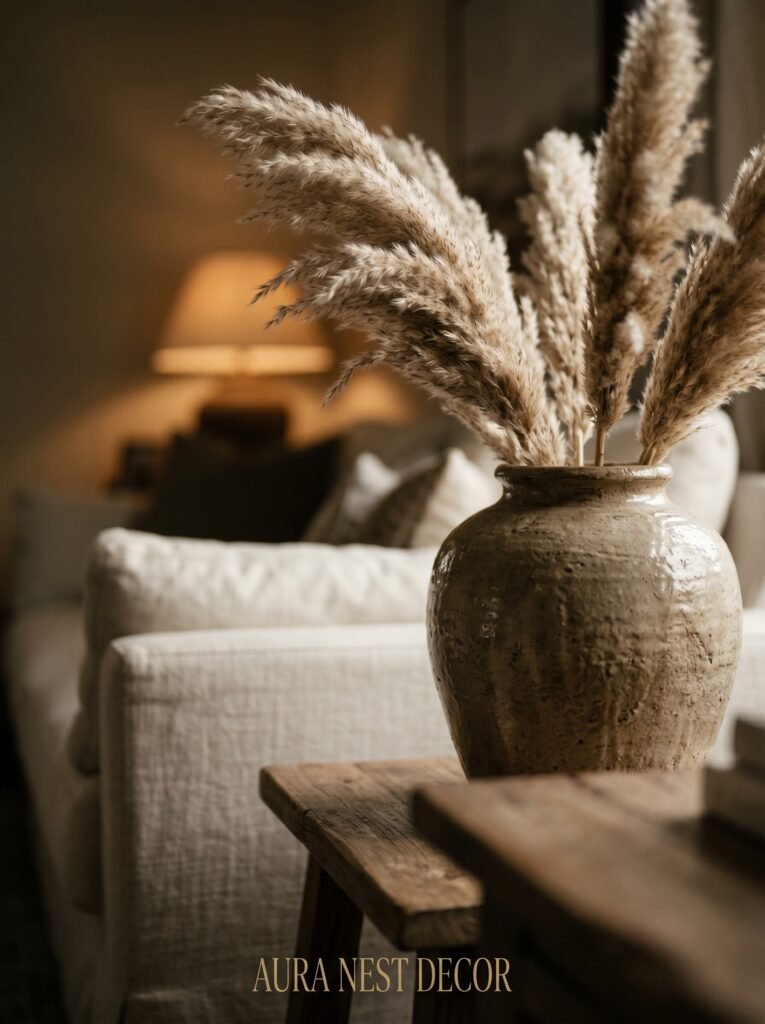
After the furniture is placed, the rug is anchored, the curtains are hung, and the shelves are styled — the last layer is the most personal one. And it’s the one that most people rush or forget.
Personal objects. The things that are yours and only yours.
A framed photograph from a trip that changed you, printed properly and hung at eye level rather than left on your phone forever. A piece of pottery you made, or bought directly from the artist whose studio you stumbled into. Books that you’ve actually read, with their spines cracked and their margins pencil-marked. A throw blanket that belonged to someone you love.
These objects do something that no styled, sourced, beautifully-lit interior can manufacture. They give the room a heartbeat. They tell whoever walks in — guest, family member, stranger — that a real person lives here, with a real life.
A cozy room without personal objects is a hotel room. A beautiful hotel room, maybe, but still a hotel room.
The aesthetic is the starting point. You are the finishing touch.
—
❓ FAQ
Q: How do I make my living room feel cozy without spending a lot of money? A: Start with lighting — swap a single overhead bulb for two floor lamps with warm-toned bulbs, and you’ll see an immediate shift. After that, a large throw blanket and a few candles go further than most furniture updates. Cozy is more about atmosphere than investment.
Q: What colors work best for a cozy living room aesthetic? A: Warm, earthy tones consistently outperform cool neutrals for cozy vibes — think terracotta, warm sage, deep clay, and aged linen. If you can’t paint, bring those tones in through textiles, rugs, and cushions. Avoid anything with a strong blue or grey undertone if warmth is your goal.
Q: How do I style a living room that looks good in photos but also feels nice to actually live in? A: Focus on texture before anything else — layered textiles, mixed materials, objects at varying heights. Rooms that photograph well but feel flat to be in are usually missing real, personal objects. Add something that’s actually yours, not just sourced, and the room will feel as good as it looks.
—
💭 Final Thoughts
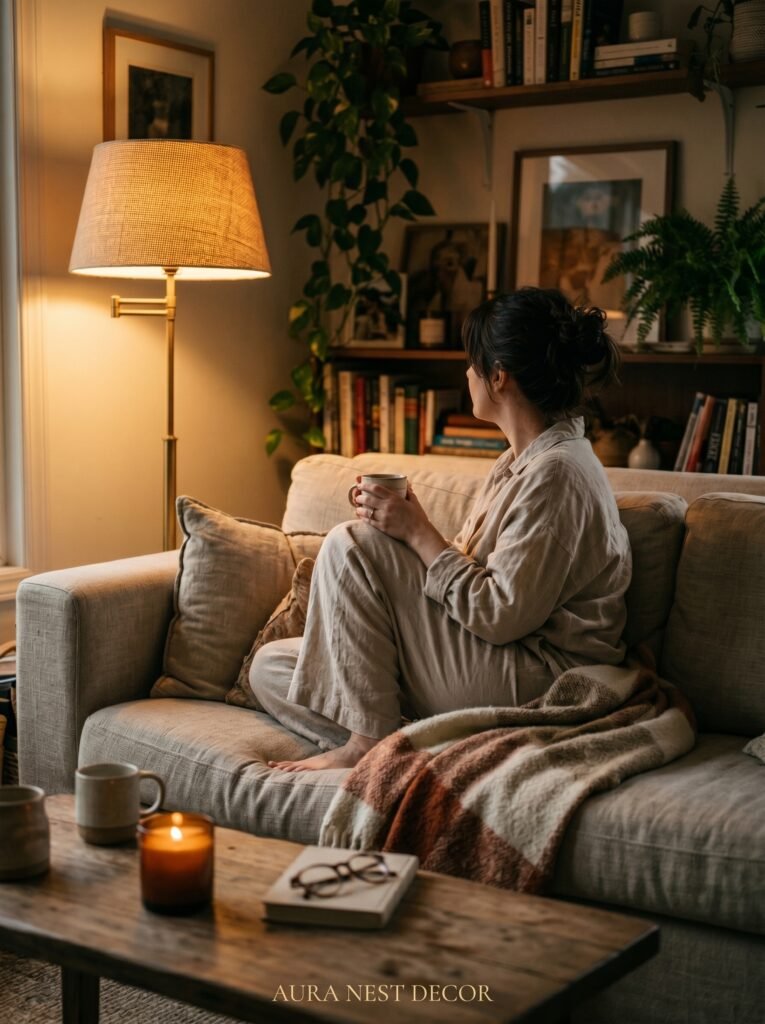
A cozy living room isn’t a style you achieve once and preserve behind glass. It shifts with the seasons, with your life, with the particular quality of late afternoon light in January versus July. The rooms worth spending time in are always a little bit works-in-progress — always gaining something, always reflecting whoever lives inside them.
Give yourself permission to keep adjusting. What would you change in your living room tomorrow morning if you could change just one thing?