The Sitting Room Glow-Up: 12 Modern Interior Ideas That Actually Feel Like You
You walk into someone’s house and within three seconds you either feel it or you don’t. That thing. That sense of a room exhaling. These are the ideas that create that feeling — and yes, you can absolutely have it too.
—
1. The Sofa Placement Nobody Talks About (But Everyone Notices)
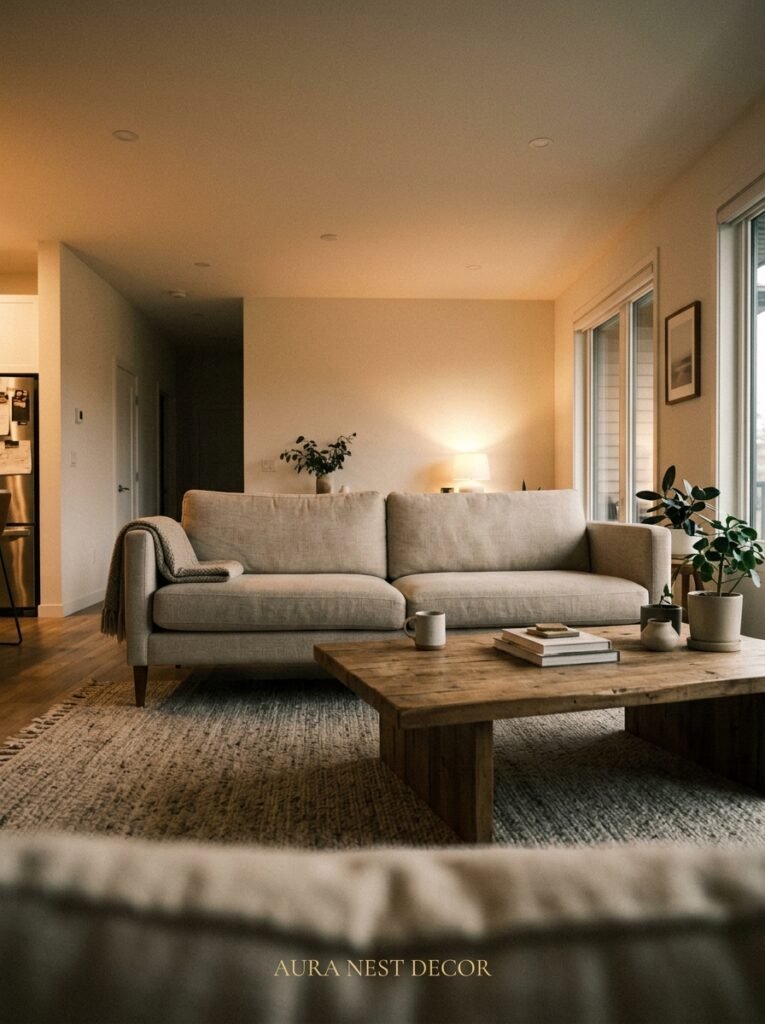
Most of us push the sofa against the wall like we’re clearing space for a school dance. It feels safe. It feels logical. It is, almost always, the wrong move.
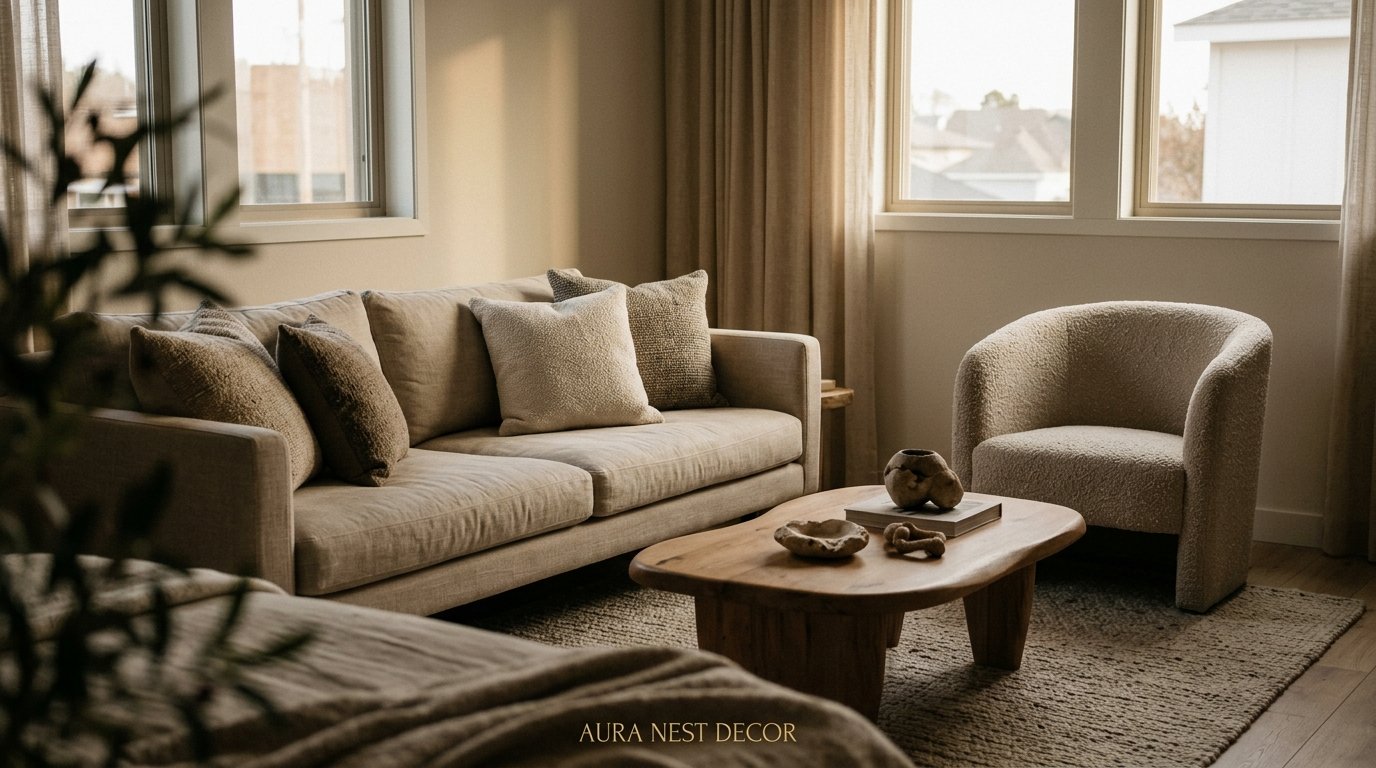
Floating your sofa — even just eight or ten inches away from the wall — creates an invisible architecture in the room. Suddenly there’s depth. There’s the suggestion that this is a space designed to be lived in, not just occupied. The room starts to feel like it has layers rather than edges.
In smaller British terraced houses and American apartments alike, this single shift does something almost magical. It turns a room that feels like a corridor into one that feels like a destination. You don’t need more square footage. You need better placement.
Try anchoring your floating sofa with a generous rug underneath — something that extends at least six inches beyond either end. The rug becomes the room’s foundation, the sofa sits on it like a statement, and suddenly everything else in the space has something to organize around. The coffee table, the side chairs, the floor lamp in the corner. Everything gets a reason to exist.
One more thing: face the sofa toward something worth looking at. A fireplace. A window. A piece of art you actually love. Not a blank wall. Not a television perched on a flimsy stand. Give the room a focal point and let the sofa serve it.
“A floating sofa doesn’t just change where you sit. It changes how the whole room breathes.”
2. The Color That Keeps Showing Up in Every Beautiful Sitting Room Right Now
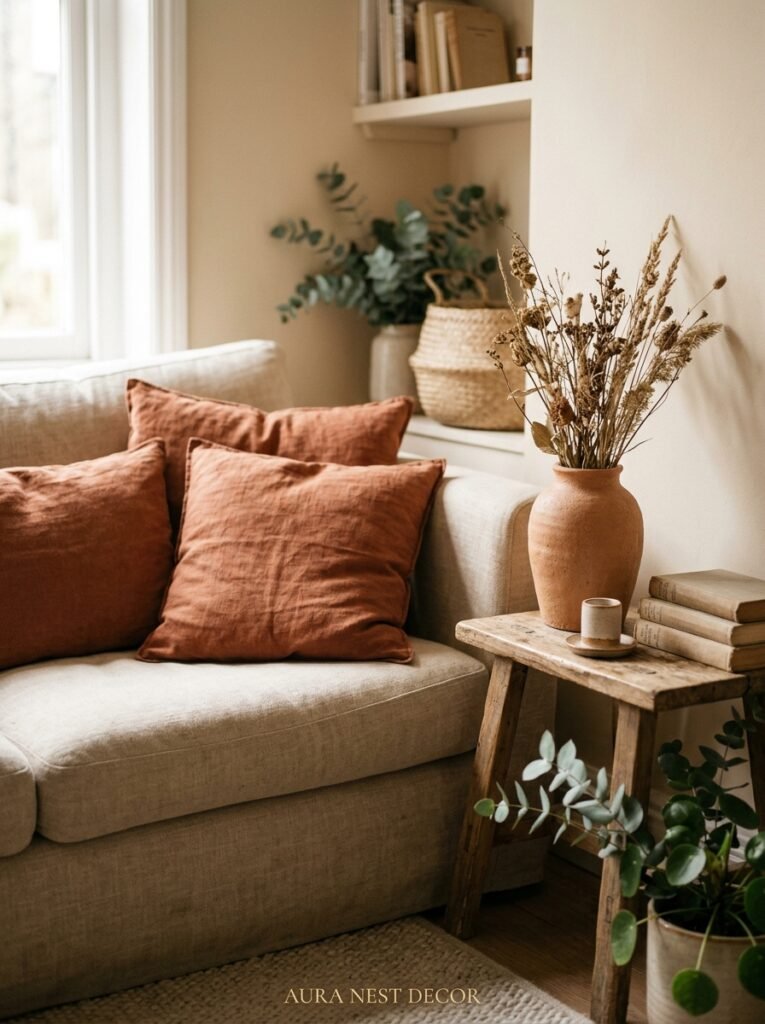
It’s not greige. It’s not Millennial Pink, which had its moment and deserves its rest. Right now, the color doing the heavy lifting in sitting rooms from Brooklyn brownstones to London Georgian flats is a warm, dusty terracotta — but paired with something completely unexpected.
Terracotta on its own can tip into Santa Fe cliché fast. The trick is pairing it with a cool, chalky off-white and one grounding accent in deep olive or forest green. That combination — warm earth, cool cream, living green — creates a palette that feels simultaneously ancient and very much of this moment.
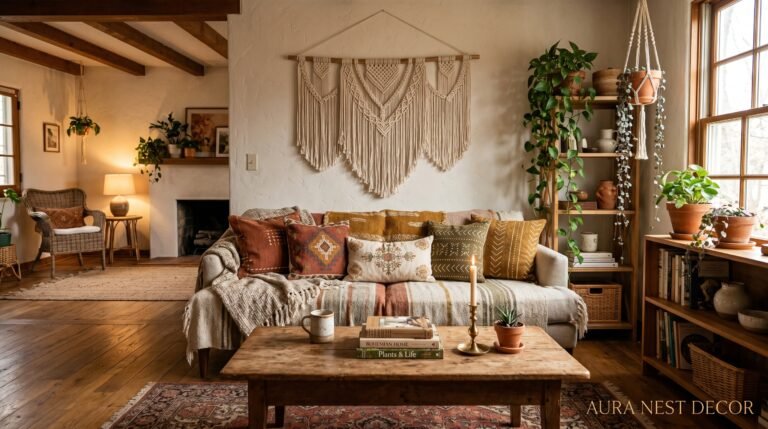
You don’t have to commit to terracotta walls (though if you’re feeling brave, a single feature wall in a matte clay finish will make your room look like it belongs in an interiors magazine). Throw pillows, a ceramic table lamp, a woven throw draped over the arm of your sofa — any one of these introduces the warmth without the commitment.
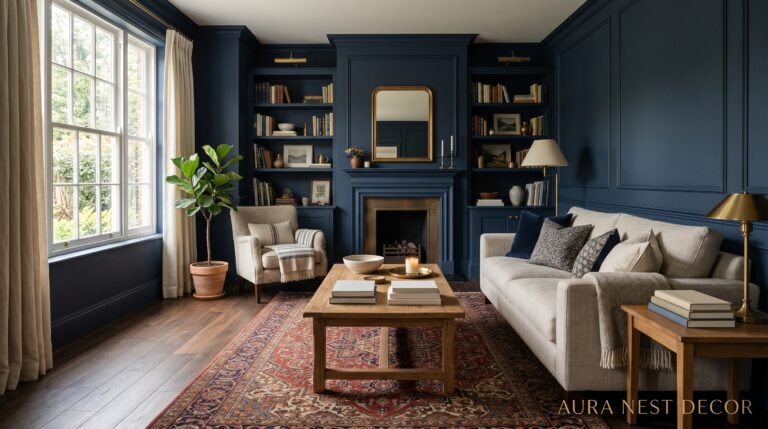
The other color conversation happening in modern sitting rooms right now is the quiet revolution of darker ceilings. Deep charcoal, inky navy, even a moody forest green painted ceiling. It sounds terrifying and looks extraordinary. The ceiling comes down visually, the room feels more intimate, more held. Try it in a reading nook corner first, if you’re nervous. You won’t be nervous long.
3. Why Your Sitting Room Needs One Thing That Has No Practical Purpose Whatsoever
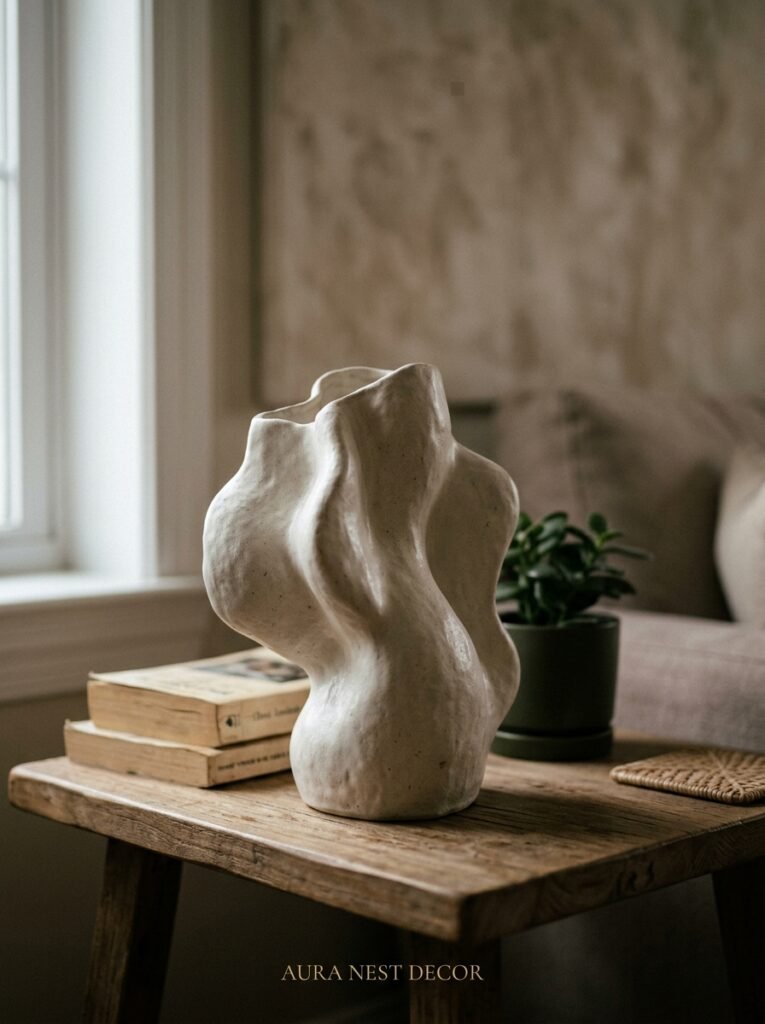
Hear me out. Every stunning sitting room I’ve ever walked into had at least one object that did absolutely nothing useful. A sculptural ceramic vase that holds no flowers. A stack of art books arranged purely for how the spines look together. A vintage globe that nobody consults for navigation.
These objects are not pointless. They are doing the most important work in the room.
Practicality is essential, of course. Storage ottomans, side tables with drawers, good lighting for reading — all necessary. But a room that is only practical feels like a waiting area. It doesn’t have a soul yet. The object with no job gives the room its personality. It says: the person who lives here has taste, and they’re not afraid to spend it on beauty for beauty’s sake.
In American homes, this often shows up as an inherited piece — a grandmother’s brass candlestick, a piece of pottery from a trip that stays out year-round. In British homes it tends to be something found at a Sunday market, casually placed, conspicuously perfect. Either way, the effect is the same. The room starts to tell a story.
Find your object. Put it somewhere obvious. Resist the urge to explain it.
4. The Lighting Layer That Most Sitting Rooms Are Missing
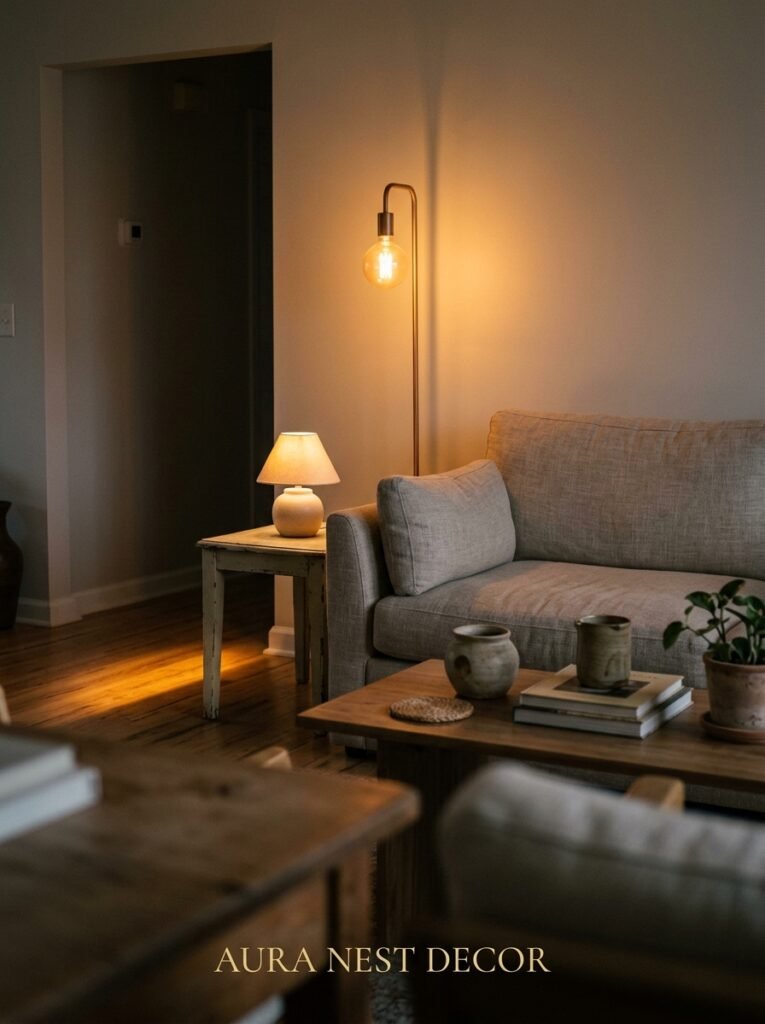
Almost every sitting room I’ve seen — even beautifully decorated ones — is missing a floor lamp in the corner.
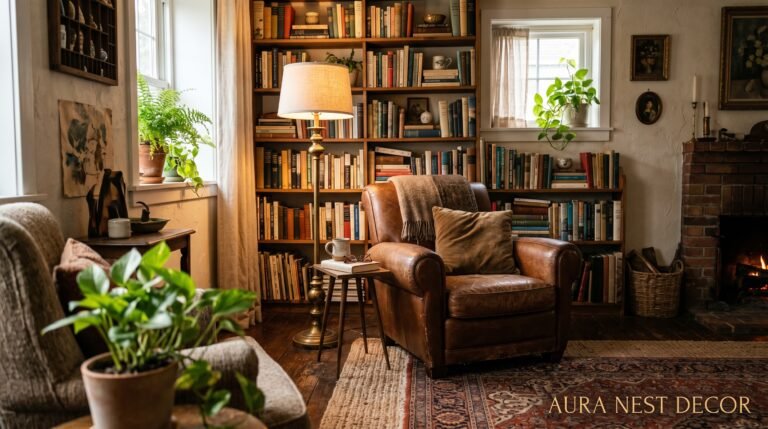
Not a ceiling fixture. Not a table lamp. A floor lamp. In a corner. Switched on at six o’clock when the natural light starts to go, it does something to a room that is genuinely difficult to describe in purely practical terms. It creates a pocket of warmth. A lit corner tells your brain: this is a safe place, a cozy place, a place where the evening is good.
Edison bulb floor lamps are still working hard and they still deserve a place. But if you want something that feels more current, look at arc floor lamps with fabric or linen shades — they throw a softer, more diffuse light than metal or glass, and the shape adds sculptural interest even when they’re switched off.
The layering principle is simple: you need light at three levels. Ceiling or overhead for ambient. Table height for tasks and warmth. Floor level for atmosphere. Most rooms nail the first, do okay at the second, and skip the third entirely. Don’t skip the third.
“The difference between a sitting room that photographs well and one that actually feels good? The floor lamp in the corner.”
5. The One Bookshelf Styling Trick That Makes Everything Look Expensive
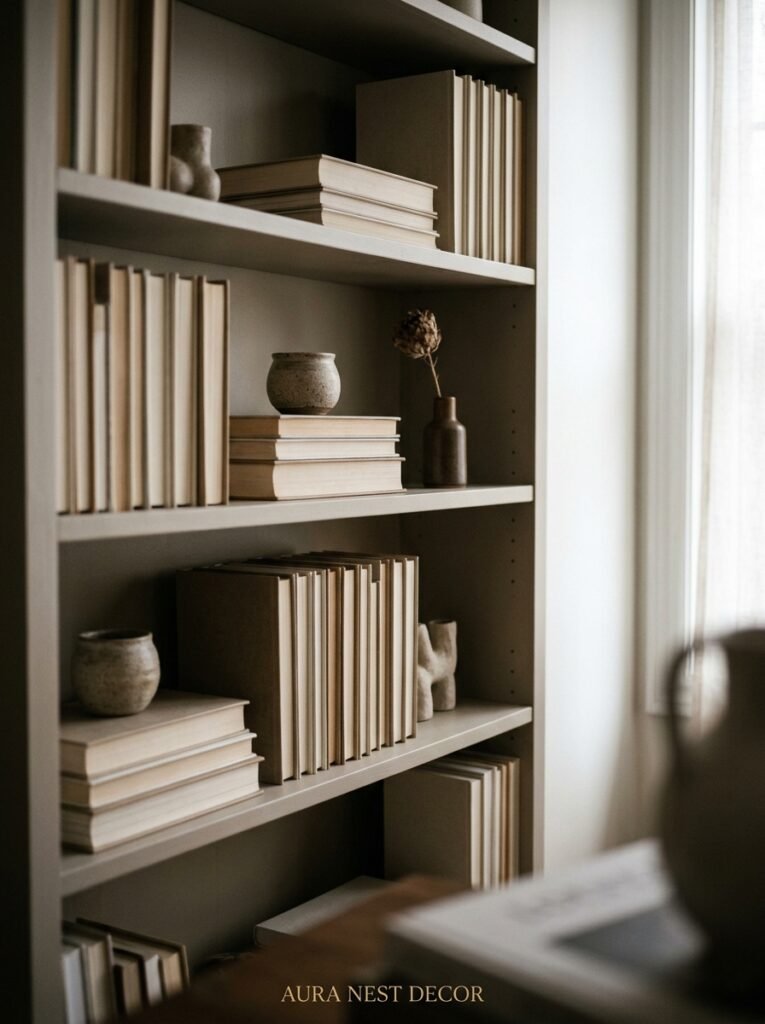
Stop organizing your books by alphabetical order. Or by genre. Or in any way that prioritizes a system over a feeling.
The most visually powerful bookshelves mix vertically stacked books with horizontally stacked piles. Three books standing up, then a small stack of two laid flat with a candle or small plant on top. Then more standing. Then another horizontal cluster. The rhythm creates visual interest without chaos, and it makes the shelf feel curated rather than packed.
Beyond the stacking: use the back of the shelf. Paint it. A deep navy or forest green behind white-spined books is a combination that stops people mid-conversation. Or line it with wallpaper — a small remnant piece from a bolt you loved but couldn’t commit to for a whole room. The inside of a bookshelf is one of the most underused design surfaces in a house.
Take some books off the shelf entirely. Negative space on a bookshelf feels intentional. It lets the remaining objects breathe. Replace a section of books with a single sculptural object, a framed photograph, or a trailing plant. The shelf stops looking like storage and starts looking like a gallery.
6. The Small Rug Mistake That’s Making Your Sitting Room Look Unfinished
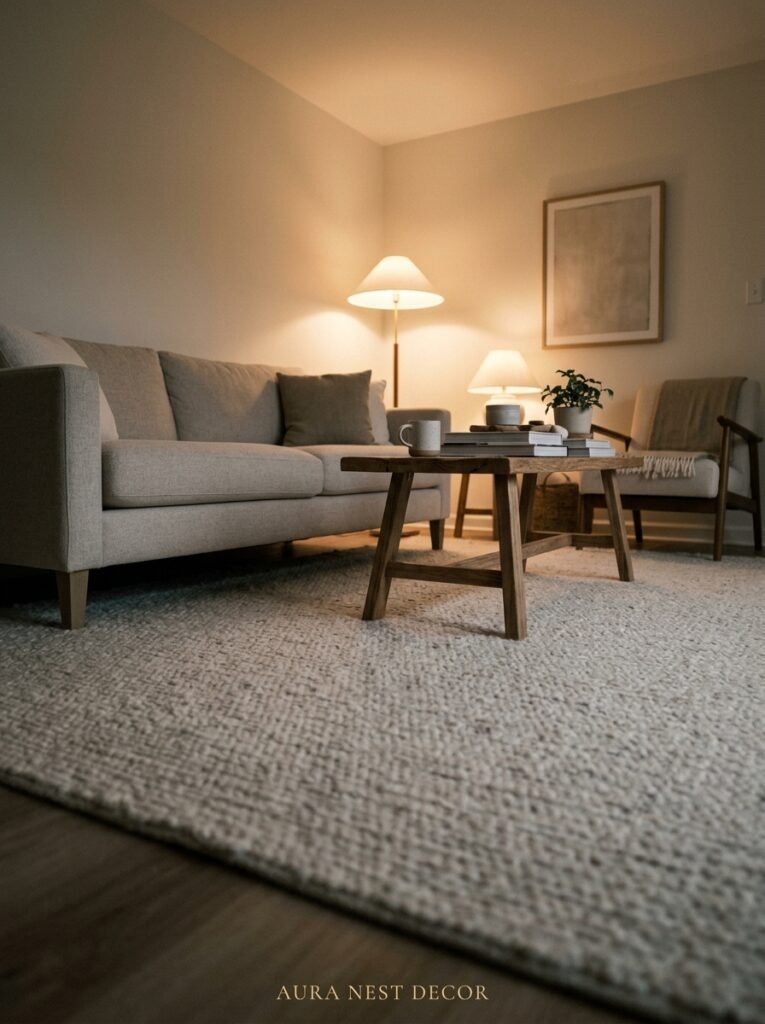
The rug is too small. I say this with love and near-total confidence, because it is almost always the case. The rug is too small.
A sitting room rug should be large enough that all the key pieces of furniture — sofa, coffee table, at least the front legs of any chairs — sit on it or at the very edge of it. A rug that only the coffee table sits on is essentially a decorative island, floating in the middle of the room, visually disconnecting everything around it.
In American sitting rooms, the standard sizing failure is going with a 5×8 when the room needs an 8×10 or larger. In UK homes, the equivalent mistake is the same — a runner-ish rectangle where a generous square or large oval would anchor the space properly.
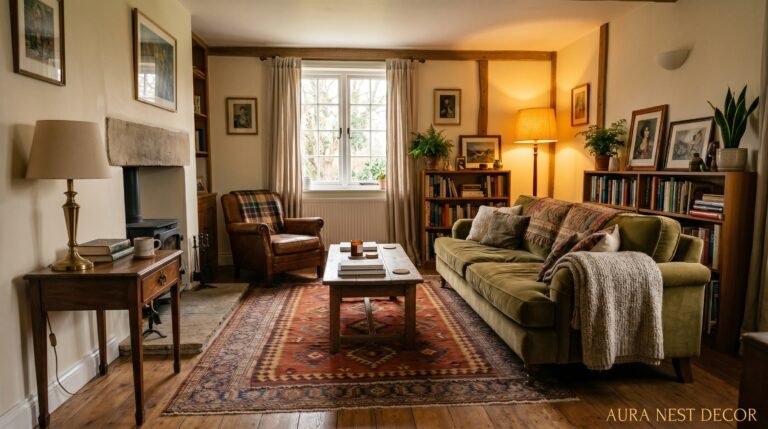
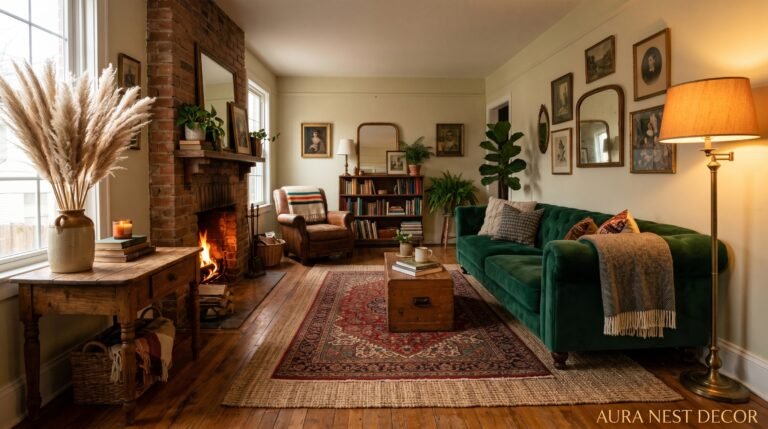
A big, beautiful rug is genuinely one of the best investments you can make in a sitting room. It adds warmth, reduces noise, defines the space, and makes the whole room feel designed. A natural fiber jute rug in a warm honey tone works with almost every color palette. A Persian-style rug in faded reds and blues adds history and character instantly. A chunky loop wool rug in cream or oatmeal makes a room feel like a Sunday morning.
Go bigger than you think you need to. You will never wish you’d gone smaller.
7. What Modern British Sitting Rooms Are Getting Right That American Rooms Often Miss
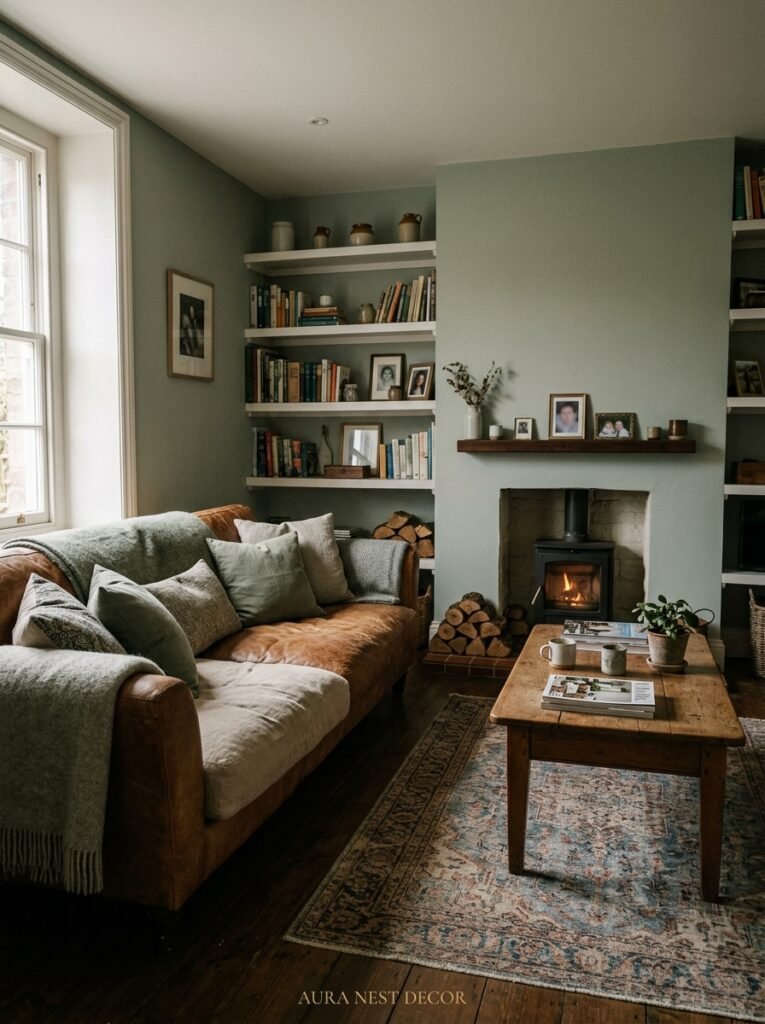
Clutter — managed, curated, intentional clutter — is not the enemy of modern design. American interior culture has swung quite hard toward minimalism in recent years, which produces beautiful, photogenic rooms that can sometimes feel a little cold to actually inhabit.
British sitting rooms, particularly in older homes, tend to have an ease about them. A mix of old and new. A framed print next to a houseplant next to a lamp that belonged to someone’s parents. It doesn’t look messy. It looks lived in, and lived in is exactly what we want.
The key is what designers sometimes call “edited maximalism.” You keep the objects that mean something. You edit ruthlessly for anything that’s just filling space. The result is a room that feels full but not crowded, personal but not chaotic.
The British also tend to commit harder to pattern. A floral cushion on a plain sofa. A geometric rug under a vintage armchair. An antique mirror on a modern wall. These combinations shouldn’t work and absolutely do. Don’t be afraid of pattern. Be afraid of too many competing patterns, which is different.
“The most memorable sitting rooms are full of things. The most forgettable ones are perfectly empty.”
8. The Coffee Table Setup That Interior Designers Repeat Obsessively
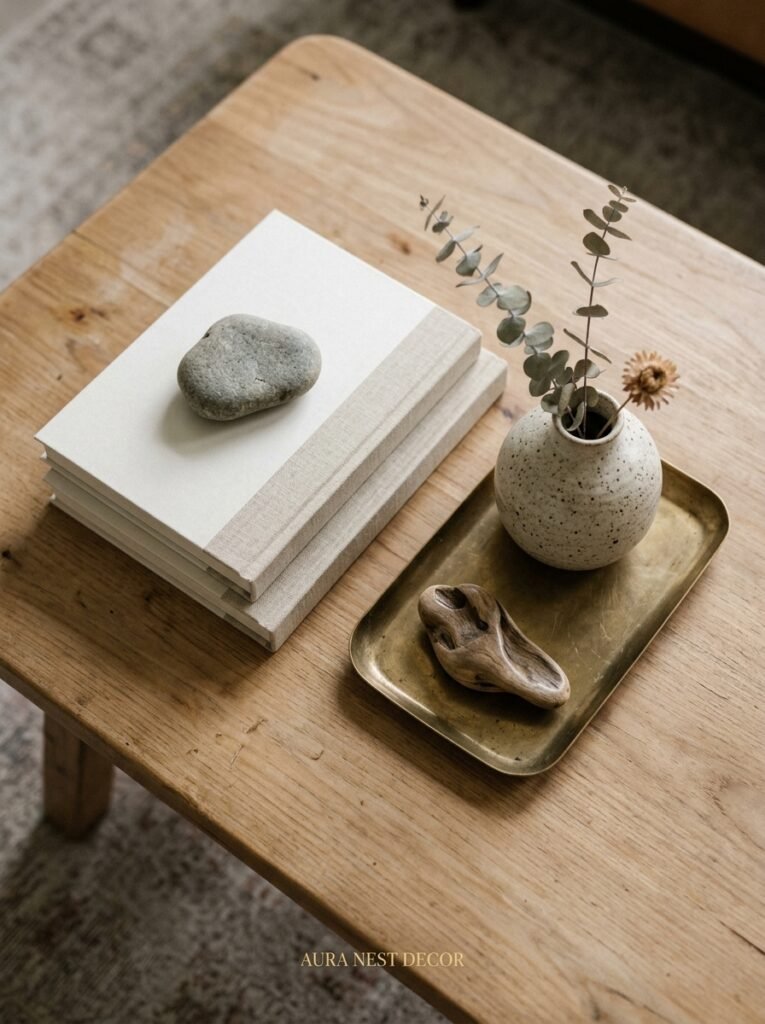
There is a formula, and once you see it you cannot unsee it. Three objects. Different heights. One tray.
The tray grounds everything. It creates a defined zone on the coffee table surface and prevents the styling from looking scattered. Within or around the tray: one tall object (a candle, a small vase), one mid-height object (a small stack of books, a decorative bowl), one low object (a single flower stem, a small sculptural piece).
Three different heights. Three different textures ideally. All within a coherent color story.
What you don’t put on the coffee table matters just as much. Remote controls — find them a basket or drawer. Coasters are fine, even good, but keep them stacked and neat. Loose papers, charging cables, spare change — off. Always off. The coffee table is a stage set, and every performance depends on keeping the stage clear of props that don’t belong to the scene.
9. The Window Treatment That’s Been Making Sitting Rooms Look Taller for Decades
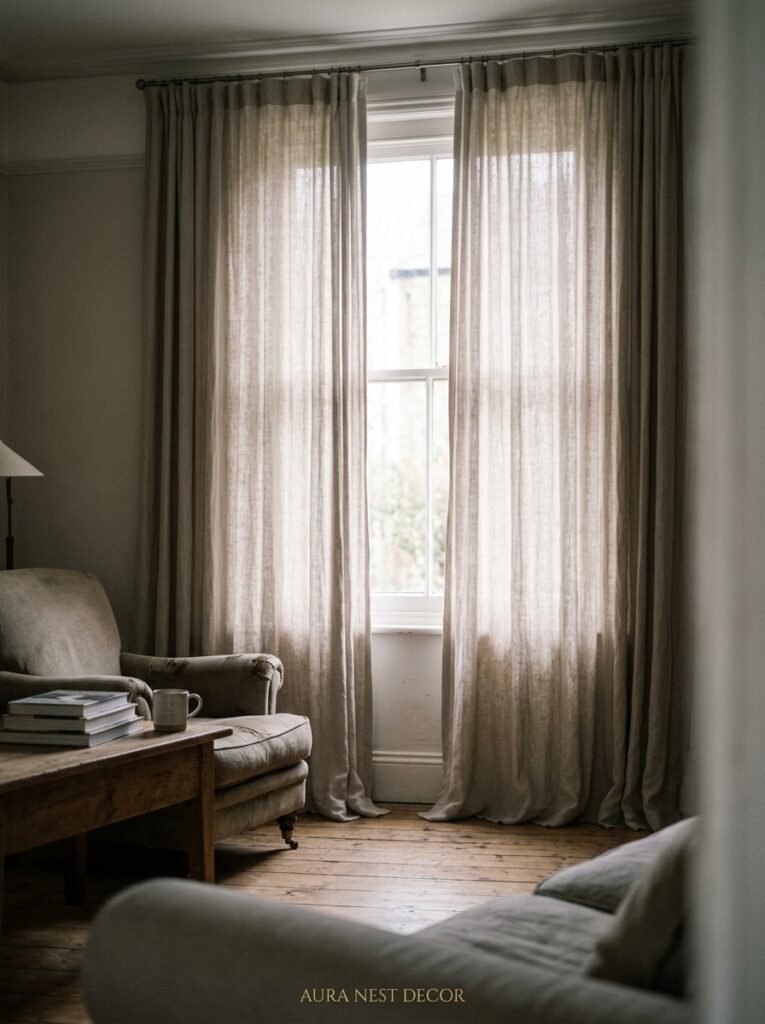
Hang your curtains higher. And wider.
This is such simple advice and it remains, somehow, consistently ignored. Curtain rods should be mounted as close to the ceiling as possible — or at the very least, four to six inches above the window frame. And the rod should extend well past the window on either side, so that when the curtains are open, they don’t block any glass at all.
The result: the window looks enormous. The ceiling looks higher. The whole room seems to expand. It’s not an illusion exactly — it’s just using proportion correctly, which is what all good design is really about.
For fabric: linen curtains in natural, undyed tones are having a long and well-deserved moment. They’re simple, they work in both traditional and contemporary rooms, they let in beautiful soft light when closed, and they age gracefully. If you want more color, a deep velvet curtain in bottle green or midnight blue does things to a room in autumn and winter that are almost unfair.
10. The Single Piece of Art That Changes Everything (And Where to Actually Hang It)
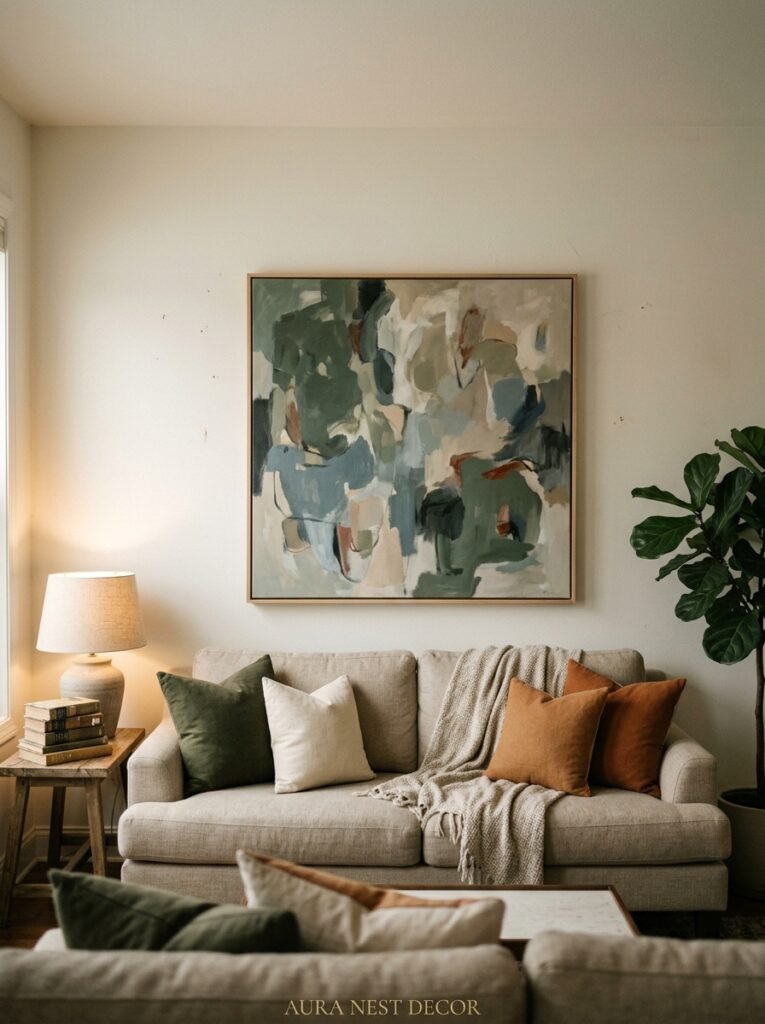
One large piece of art does more for a sitting room than a gallery wall of eight small ones. This is controversial. I stand by it.
A single, oversized artwork — and by oversized I mean something that takes you slightly aback when you see it, something at least 24×36 inches, ideally larger — creates an anchor for the whole room. It becomes a focal point that earns its place. It makes every other design decision in the room respond to it.
Where to hang it: above the sofa is the classic choice, and classic choices are classic for a reason. But keep the proportions right. The art should be roughly two-thirds the width of the sofa below it, and hung so the bottom edge sits eight to ten inches above the sofa back.
What art to choose: this is the one category where I will not give you rules. Choose what you love. The only bad art is art you don’t actually care about, hung because it filled a space. If you don’t love it enough to look at it every day, it is doing the room harm.
11. The Unexpected Texture That’s Showing Up in Every Modern Sitting Room
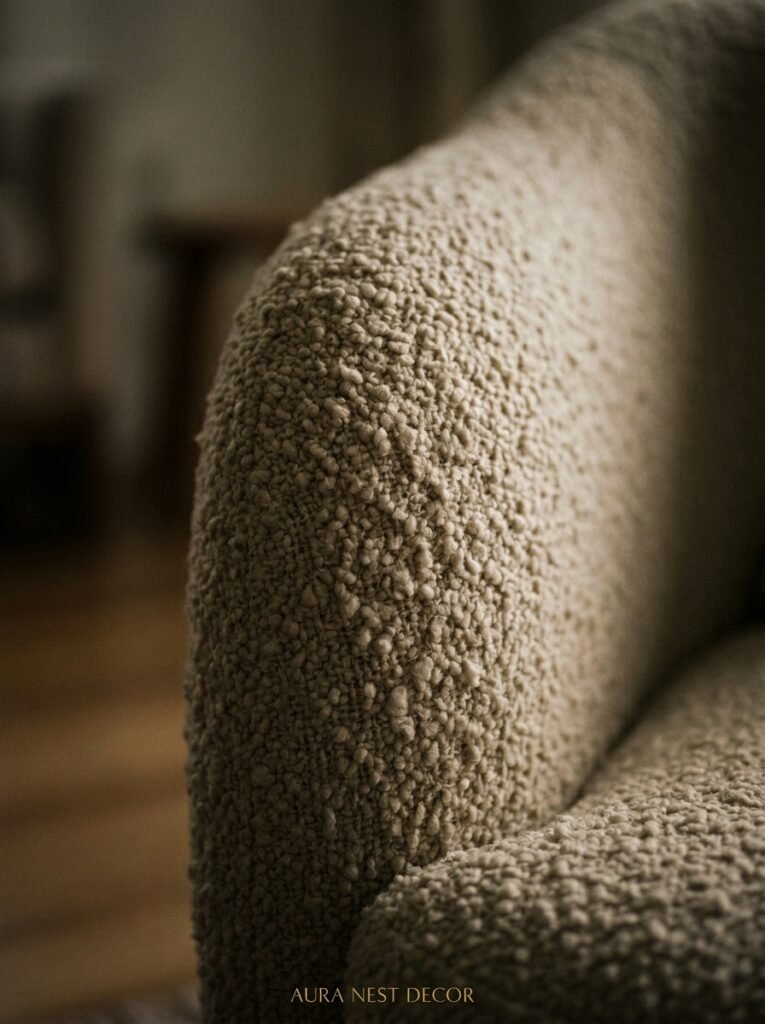
Boucle is everywhere and for good reason — it photographs beautifully, it feels incredible, it adds softness to a room that might otherwise skew too cool or too sleek. But the texture conversation in modern sitting rooms has moved beyond boucle into something a bit more surprising.
Rattan and cane are back in a serious way, and this time they’re not the fussy bamboo furniture of a particular ’70s aesthetic. A single rattan side table, or a cane-paneled cabinet, introduces an organic warmth that plays beautifully against smooth walls, upholstered sofas, and ceramic accessories.
Raw linen. Unglazed ceramic. Unpolished stone. These textures — imperfect, honest, tactile — are showing up everywhere because they push back against the glossy, frictionless feel of so much modern life. A room full of these materials feels grounding in the literal sense. It reminds you that you live in a physical world, made of physical things, and that’s worth celebrating.
Don’t overthink texture. Touch things when you shop. Buy what feels good in your hands, because it will feel good in your home.
12. The Room Edit That Takes Two Hours and Costs Absolutely Nothing
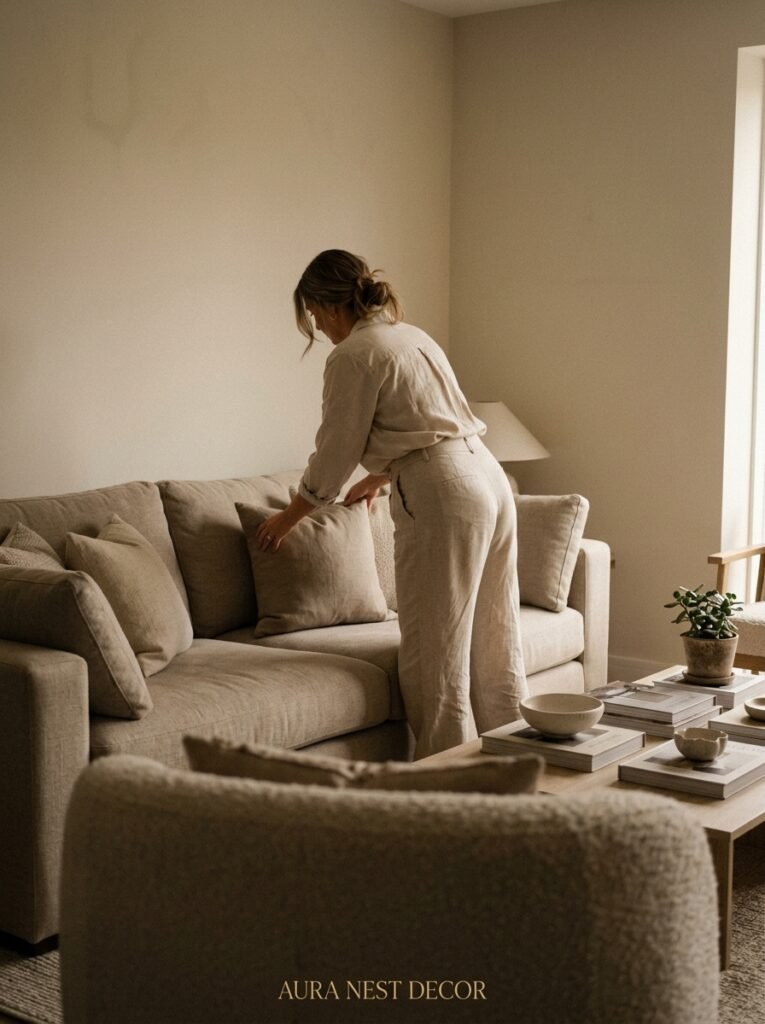
Before you buy anything new, do this: take everything off every surface in your sitting room. Everything. Clear the shelves, the coffee table, the mantle, the side tables. Every object in a pile on the floor.
Now look at the room. It is almost certainly a better room than you’ve been living in. Calmer. More spacious. A better version of itself.
Now put back only the things you actually love. The things that make you feel something when you pick them up. Leave everything else on the floor for now.
What returns to the room is your actual taste — uncluttered, unclouded by habit or obligation. What stays on the floor can be donated, stored, or moved to another room where it might do more work.
This is the edit. It costs nothing, it takes an afternoon, and it will show you exactly what your sitting room has been trying to be all along. Most of us are one honest edit away from the room we’ve been saving to Pinterest for years.
—
❓ FAQ
Q: What’s the best way to make a small sitting room look bigger without knocking down walls? A: Start with the rug — go larger than feels right, and make sure it anchors all the main furniture. Then hang curtains as high and wide as possible to draw the eye up. A large mirror on the wall opposite a window doubles the natural light and genuinely makes the room feel twice its size.
Q: How do I mix old furniture I already own with a more modern look? A: Lean into contrast rather than fighting it. A vintage armchair in a modern room is interesting; a room full of slightly mismatched vintage pieces without any anchor is confusing. Choose one or two statement older pieces, keep everything else relatively simple and contemporary, and let the old things be the personality of the room.
Q: I love the minimalist look but my partner loves maximalism. How do we compromise? A: Give each style a zone. A clean, simple sofa area with edited surfaces can coexist beautifully with a maximalist bookshelf or a gallery-style wall. The key is not blending the styles until they cancel each other out, but rather letting each have its moment clearly. A good rug defines the zones and makes the whole thing feel intentional rather than undecided.
—
💭 Final Thoughts
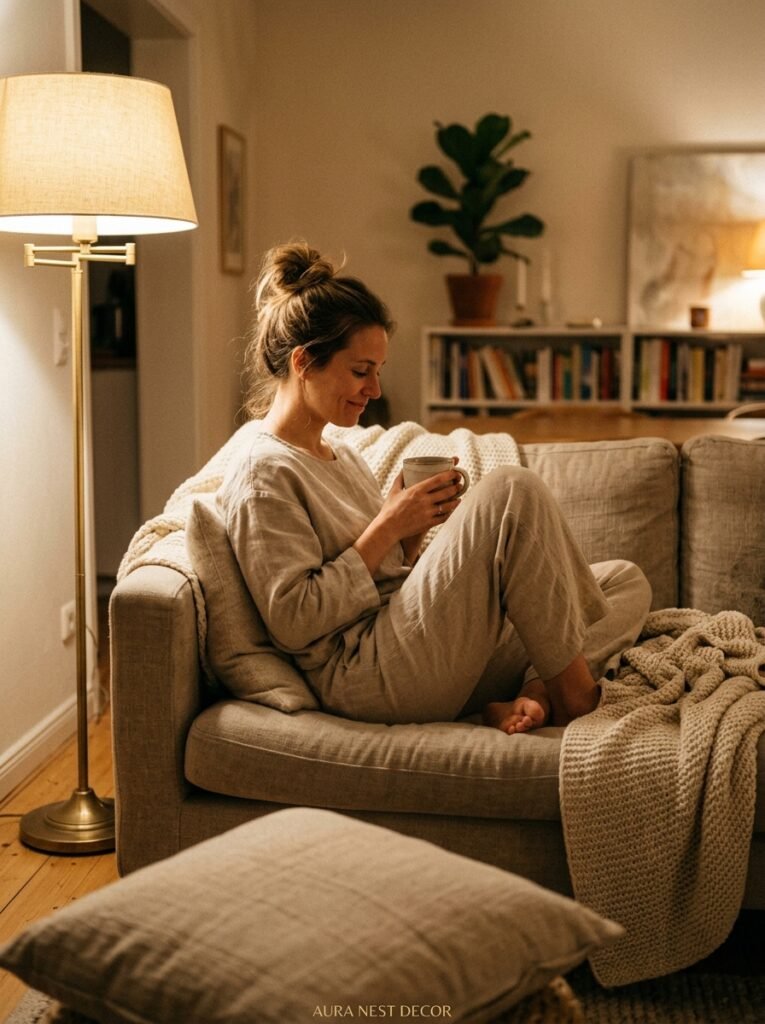
The best sitting room isn’t the one that looks most like a design magazine. It’s the one you actually want to sink into at eight o’clock on a Tuesday, when the day has been a lot and you need somewhere that feels like yours. These ideas are starting points, not rules — take what resonates, leave what doesn’t, and trust that your instincts about your own home are better than you think they are. What’s the one thing in your sitting room right now that you’ve been meaning to change for months?