The Small Living Room Wall Art Rules That Expensive Hotels Break Every Single Time
You walk into a hotel suite — not a grand ballroom, just a room the size of yours — and somehow every wall feels intentional, every inch feels considered, and nothing feels cramped. Then you come home and your living room wall looks like it’s apologizing for existing. There’s a reason for that gap, and it has nothing to do with budget.
—
1. Why “Small Wall” Is a Mindset Problem, Not a Space Problem
Here’s the thing nobody tells you: most small living rooms don’t suffer from lack of wall space. They suffer from a lack of conviction.
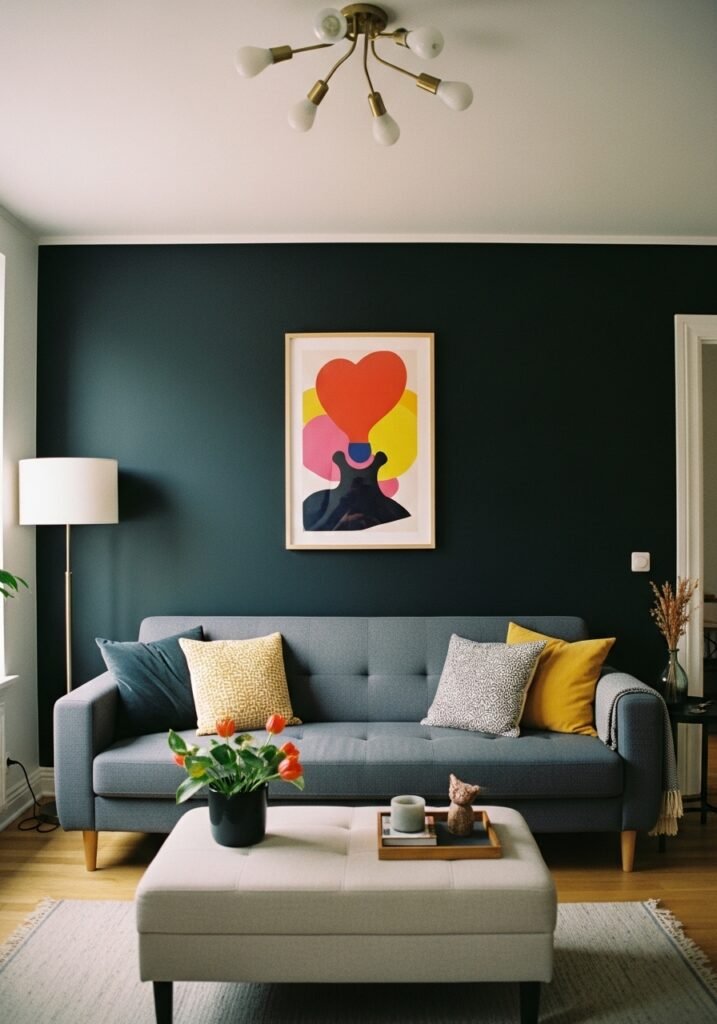
We shrink the art because the room is small. We choose the safer beige frame because we don’t want to “overwhelm” the space. We leave a full foot of wall bare above the sofa because some rulebook we half-read online told us not to go too high. And then we wonder why the room feels timid.
Expensive interiors — the kind you screenshot at midnight — break every single one of those instincts. They hang art boldly. They let a single large piece dominate. They use dark, rich walls that should feel claustrophobic but somehow feel like a hug.
The shift isn’t in your floor plan. It’s in your willingness to commit.
Small rooms don’t need smaller ideas. They need more deliberate ones. Every decision matters more in a tight space, which is actually a gift — it forces you to be precise, intentional, and surprisingly brave. The worst-case scenario of a bold wall choice in a small living room is that you repaint. The best case is that the whole room finally makes sense.
“The worst thing you can do to a small wall is treat it like a small wall.”
—
2. The Single Large Piece Rule That Interior Designers Won’t Stop Using
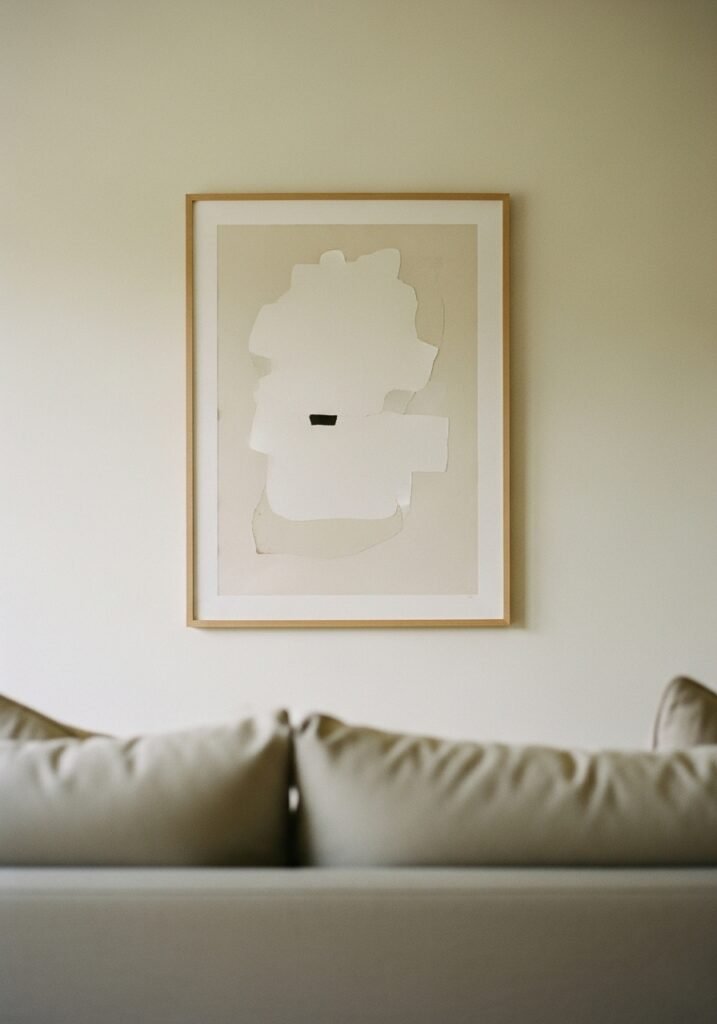
Pick one. Not three small prints arranged to look like one piece. Not a collage of frames that tell seventeen different stories at once. One large, confident piece of art hung at the right height, in the right spot, doing all the work.
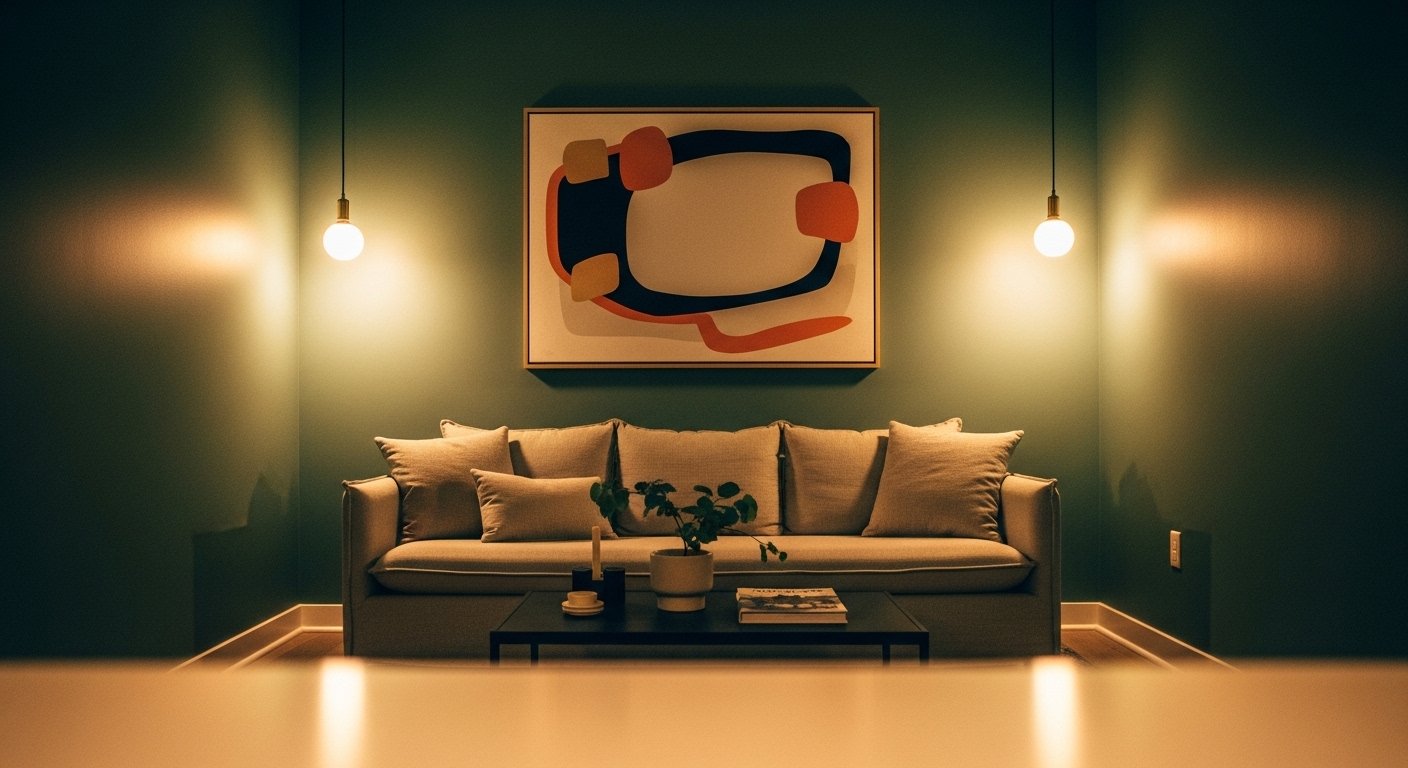
This is the move that separates rooms that photograph beautifully from rooms that just look fine in person. A single large canvas or framed print — think 24 by 36 inches minimum, ideally bigger — creates an instant focal point that makes the eye relax. When your eye relaxes, the room feels larger. When there’s visual clutter, even well-intentioned clutter, the brain reads the space as congested.
For modern luxury, lean into abstract pieces with a limited palette. A creamy white canvas with a single gestural brushstroke in charcoal or terracotta. A large black-and-white photograph with deep contrast. A muted botanical print with breathing room around the subject. The subject of the art matters less than the breathing room within it.
Hang it so the center of the piece sits roughly at eye level — around 57 to 60 inches from the floor. This is the museum standard, and it works because it works. Don’t second-guess it. And push the sofa closer to the wall to close the gap underneath. That floating sofa look ages a room immediately.
—
3. The Color on the Wall That’s Secretly Doing All the Heavy Lifting
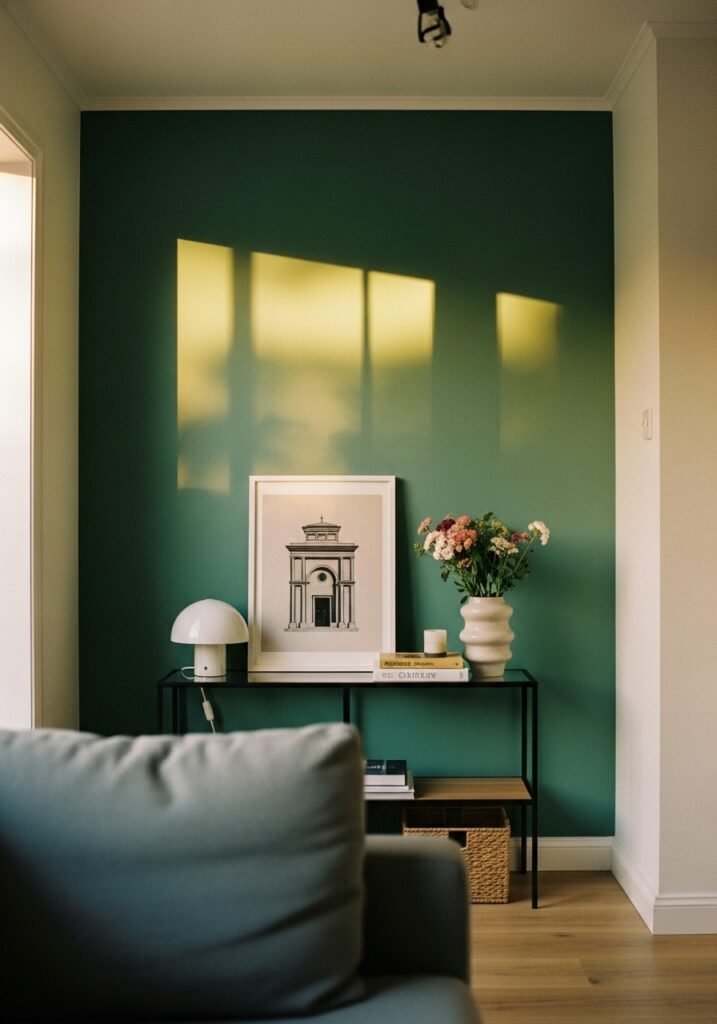
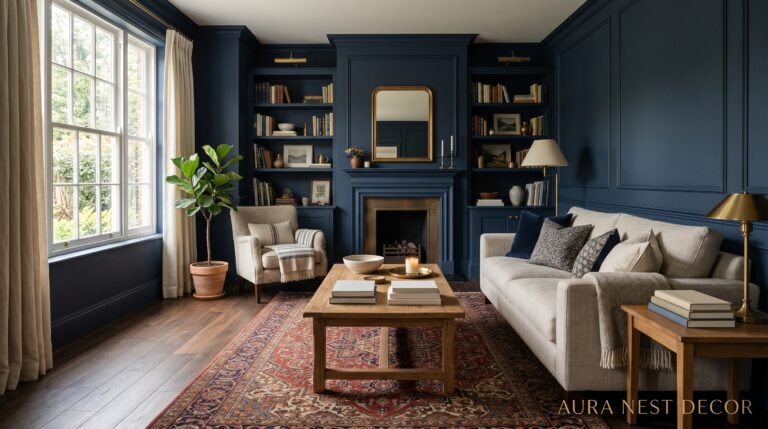
Let’s talk about paint. Specifically, let’s talk about the fact that painting a small living room a deep, moody color — forest green, navy, dusty plum, warm charcoal — is not the disaster you’ve been warned about.
It is, in fact, the move.
Light colors make small rooms feel bigger in theory, but in practice, pale walls with average furniture and standard lighting just feel… unfinished. Like the room is waiting for something. A deep, saturated wall color does something different: it creates depth, it makes your furniture pop, and it wraps the whole room in an atmosphere that feels genuinely luxurious.
The rooms that stop me mid-scroll on Pinterest are almost never the white-walled minimalist spaces. They’re the ones with a single emerald green wall behind a velvet sofa. Or the room with dark inky walls that make a brass floor lamp glow like it’s on stage.
If committing to four walls feels too bold, commit to one. The wall behind your sofa or your TV. Do it properly with a high-quality paint — Farrow & Ball’s Hague Blue, Benjamin Moore’s Wrought Iron, Little Greene’s Obsidian — and watch what happens to the art you hang in front of it.
—
4. How Mirrors Are Being Used in Modern Luxury Interiors Right Now
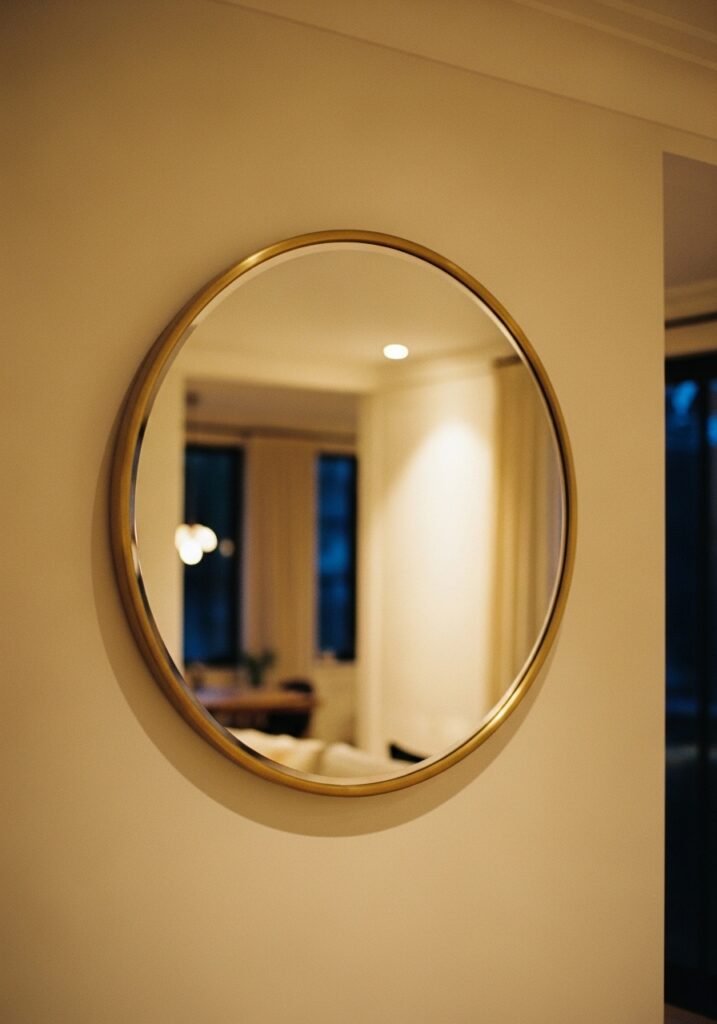
Forget the standard “mirrors make rooms look bigger” advice. Of course they do. That’s not the interesting part.
The interesting part is how the shape, frame, and placement of a mirror changes the entire personality of a room.
Arched mirrors are everywhere right now, and they’re everywhere for a reason. The curved top softens a rectangular room, the shape adds architectural interest where there isn’t any, and when leaned against a wall rather than hung on it, they create an effortlessly expensive look that took approximately zero carpentry skills to achieve.
A large arched mirror leaned against the wall beside your sofa, catching the light from a nearby lamp at about 6pm — that’s the kind of thing that makes guests ask who designed your home.
“A well-placed mirror doesn’t just reflect light. It reflects your confidence in the room.”
But placement matters enormously. You want a mirror to catch something beautiful — a lamp, a window, a plant. You don’t want it to reflect a blank wall or a cluttered shelf directly opposite. Before you hang or lean anything, stand where the mirror will live and look at exactly what it will show the room. Position accordingly.
For modern luxury specifically, lean toward simple, considered frames. Thin black metal. Warm antique brass. Natural rattan for a softer look. Avoid ornate gold frames unless your room is specifically going for maximalist glamour — they read as dated in a contemporary space.
—
5. The Gallery Wall Formula That Doesn’t Look Chaotic
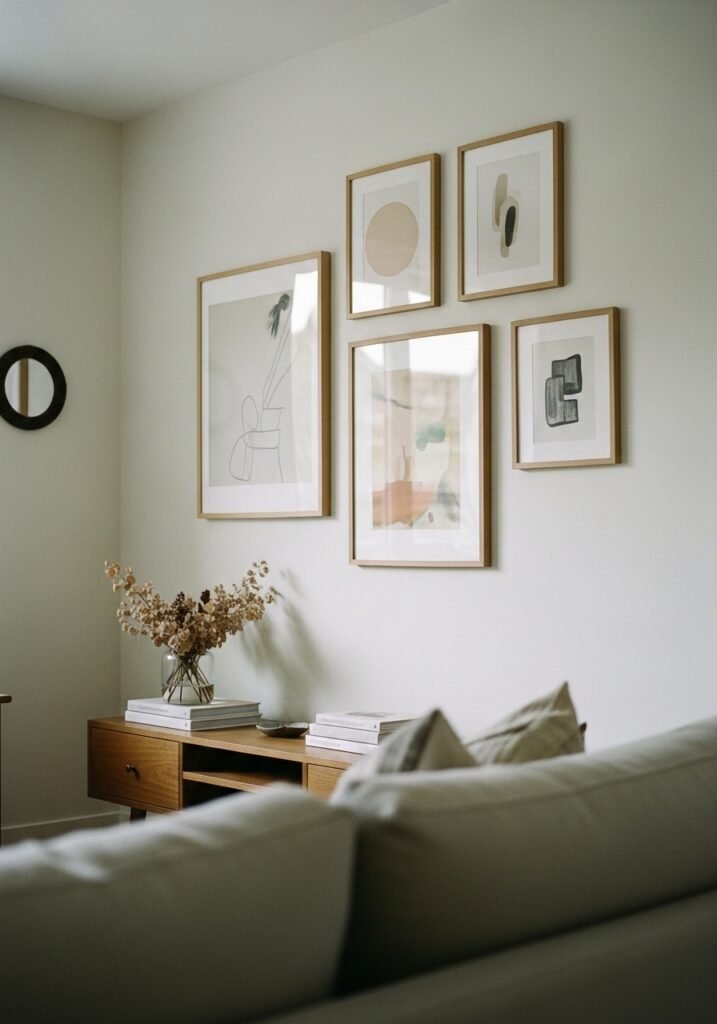
Gallery walls have a reputation. Cluttered. Overwhelming. A bit of a design student energy, maybe. Done poorly, they absolutely earn that reputation.
Done with restraint, they’re stunning.
The key is constraint. Pick two or three frames maximum in a consistent finish — all black, all natural wood, all antique brass — and stick to a limited palette within the artwork itself. Two or three colors that already exist in your room. Nothing jarring, nothing that introduces a whole new story.
Keep the spacing tight and even. Not the organic, organic gallery-wall-of-a-teenage-bedroom spacing, but measured, intentional gaps of two to three inches between every frame. This tight grouping reads as one curated object rather than a collection of individual decisions.
Mix scales deliberately. One large anchor piece, two medium, one or two small. The eye follows a hierarchy, and when you give it one, the whole arrangement feels composed rather than collected.
And here’s the thing most people miss: leave breathing room around the outside of the grouping. The wall space surrounding the gallery is part of the design. Let it be.
—
6. The Texture Your Wall Is Missing and How to Add It Without Renovation
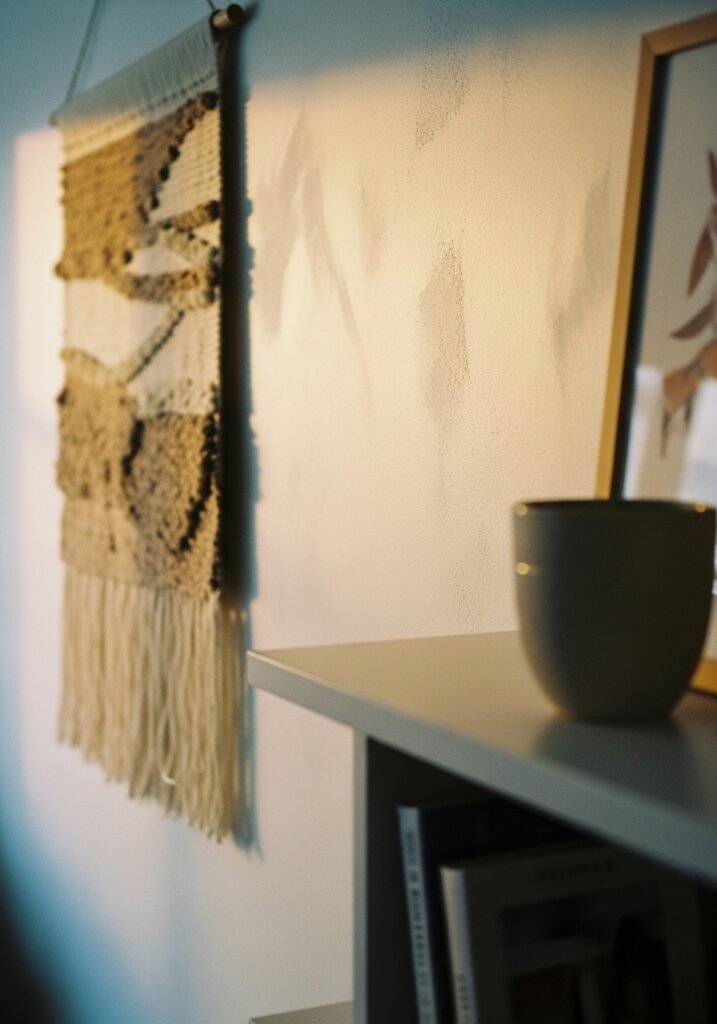
Not everything on a wall needs to be flat.
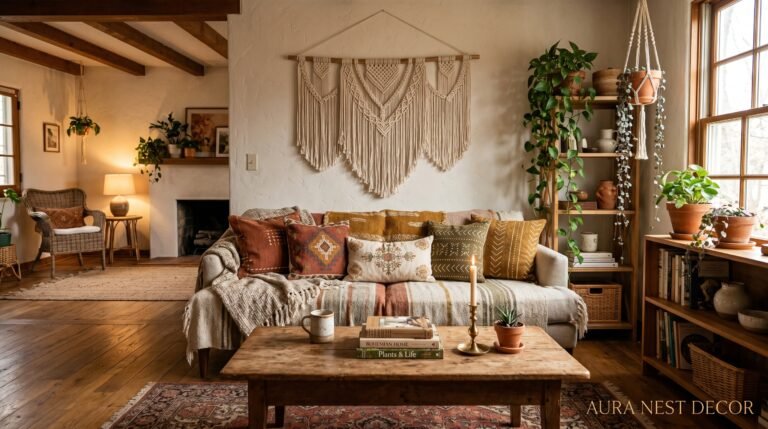
Modern luxury interiors have moved well beyond framed prints and photographs. Woven wall hangings in natural fibers — linen, cotton, jute — add warmth and texture to a room in a way that paint and art simply can’t. A sculptural ceramic piece, a single mounted shelf with one considered object on it, a panel of limewash plaster on a single wall: these things bring dimension that makes a room feel expensive.
Textural wall decor works especially well in small living rooms because it draws the eye and holds it. It gives a visitor something interesting to look at up close, which paradoxically makes the room feel more generous with its space.
For a genuinely achievable version of this, try a single large woven hanging in a neutral tone above a side table or in an awkward corner. The organic, imperfect quality of handmade fiber art adds humanity to a modern room — it stops it feeling like a showroom and makes it feel like somewhere a real person with good taste actually lives.
Layering is the word. A dark painted wall behind a large framed piece, with a small sconce mounted beside it for warm light — that’s three layers of visual interest on one surface. That’s what gives high-end interiors their depth.
—
7. The Lamp Placement That Makes Your Art Look Like It’s in a Gallery
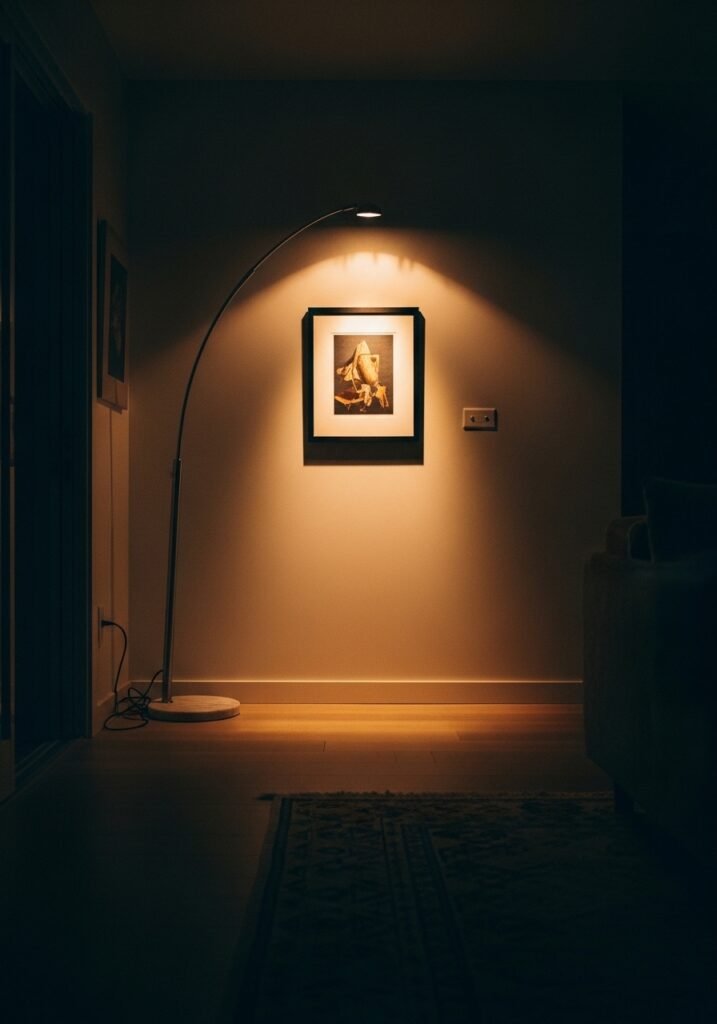
Lighting is not a finishing touch. It is the thing.
You could have the most beautiful piece of art in a perfect frame on a perfectly painted wall, and if the lighting is wrong — overhead only, flat and fluorescent — it will look like a poster.
The secret is directional, warm light pointed at the wall from below or the side. A small picture light mounted above a large canvas. A tall floor lamp tucked behind a sofa with its head angled toward the wall art. A plug-in wall sconce positioned beside a gallery grouping at a height that casts a warm upward glow.
The amber light of an incandescent-style bulb at around 2700K color temperature is the standard for a reason. It’s the light that makes everything look considered, warm, and alive. It is the light in every hotel room that makes you take a photo of the wall and post it with a “why doesn’t my home look like this” caption.
It can look like this. Buy the lamp. Angle it at the wall.
“The right light doesn’t just illuminate your art. It makes the whole room exhale.”
—
8. The Wall Treatment That’s Replacing Wallpaper in Modern UK and US Homes
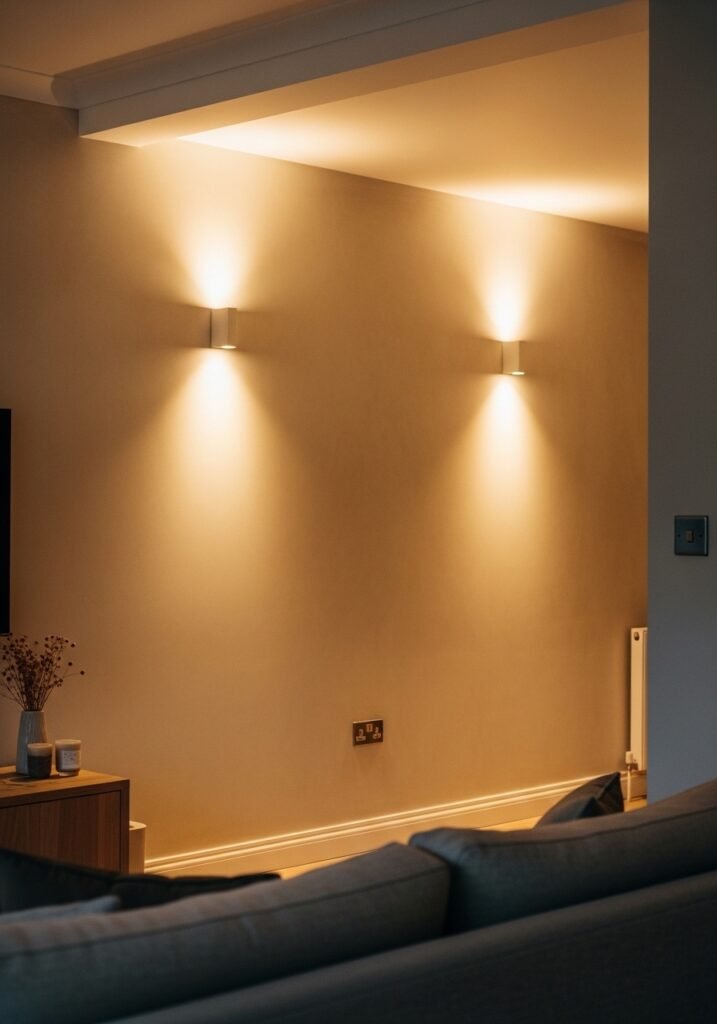
Limewash paint has been popular in Italian farmhouses for centuries. Influencer interiors discovered it about four years ago. And now, in 2025, it has settled into the mainstream as one of the most genuinely beautiful wall treatments available at a relatively accessible price point.
The appeal is the depth. Unlike flat matte paint, limewash paint is applied in layers with a brush in a particular technique that creates subtle variation in color and tone across the wall surface. No two patches look exactly the same. The result is a wall that looks ancient and artful and intentional all at once.
In a small living room, a limewash treatment on the feature wall behind the sofa creates the same envelope effect as a deep paint color, but with more warmth and texture. The variation in tone catches light differently at different times of day, which means the wall itself does something — it has a life to it.
Brands like Portola Paints in the US and Pure & Original in the UK both make limewash products designed for DIY application, and there are genuinely good YouTube tutorials that make the technique feel approachable. It’s not fast, but it’s forgiving. And the result, at about the cost of a mid-range can of paint, looks like it cost ten times more.
—
9. The Shelf-as-Art Approach Nobody Talks About Enough
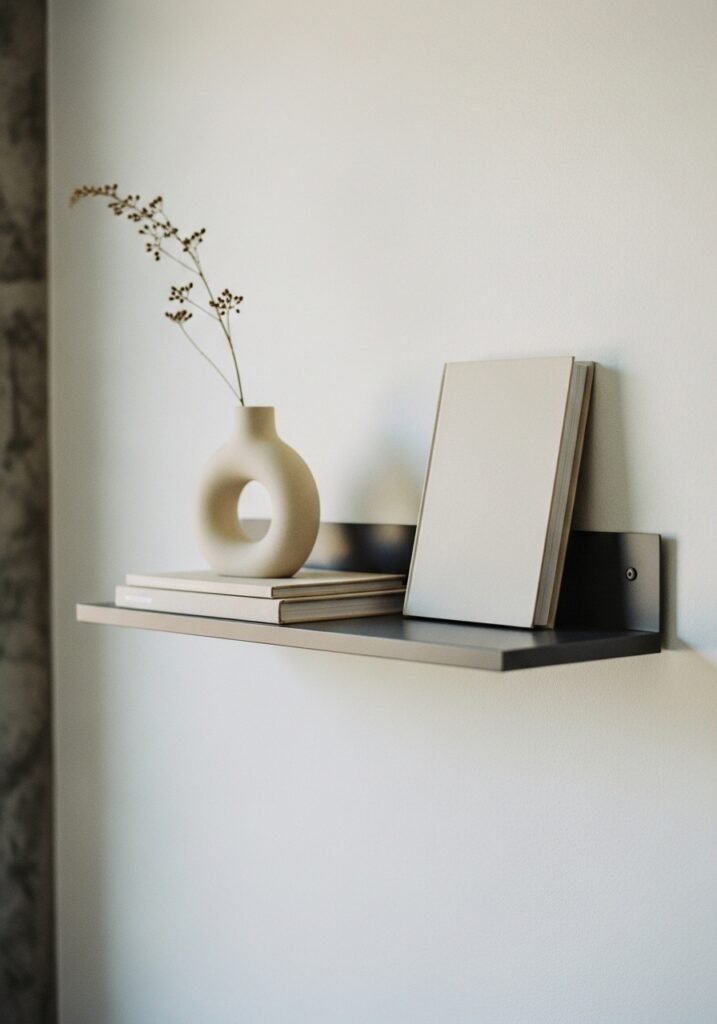
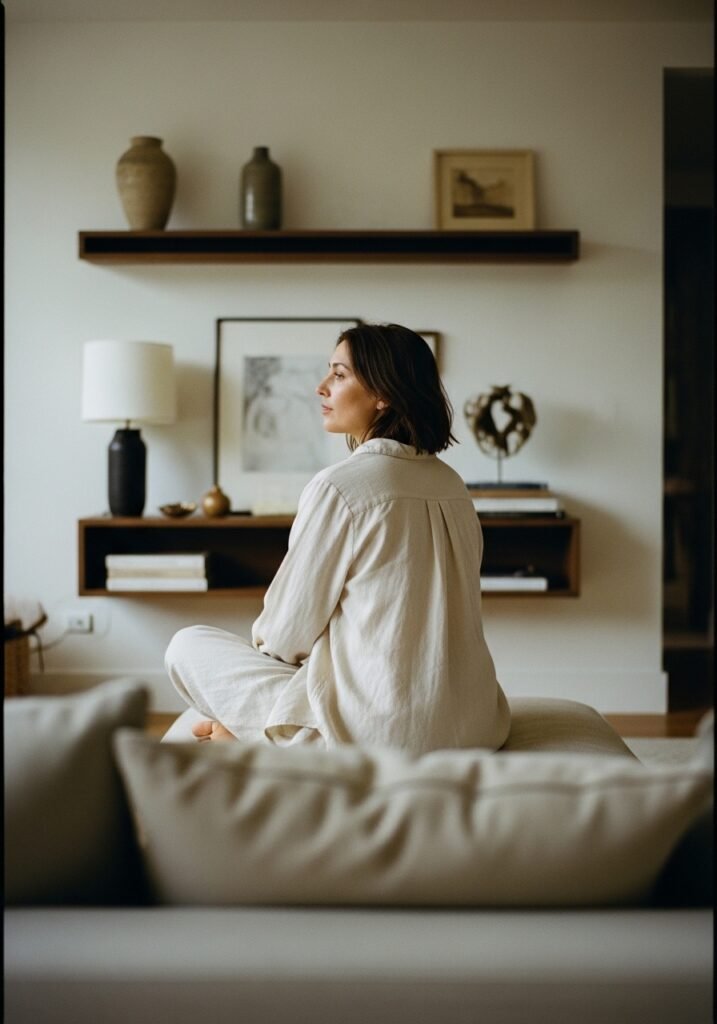
A single floating shelf, mounted at eye level, with three to four objects arranged with deliberate breathing room between them, is wall decor.
We don’t always think about it that way. We think of shelves as storage, as places to put things, as functional. But in a small living room, a slim shelf in a warm wood tone or matte black, mounted on a painted or limewash wall, with one small plant, one small framed photograph, and a beautiful candle — that’s a complete vignette.
It’s also practical. You can change it seasonally. You can respond to what you’re feeling. You don’t need a drill-and-anchor commitment to a piece of art you might grow out of.
The key to making this look intentional rather than collected is restraint. Three to five objects maximum. One tall, one medium, one small. Some negative space, deliberately left. A single color or material running through the grouping — all white ceramics, all terracotta tones, all natural wood — to tie it together.
The shelf itself matters too. Avoid chunky particle board shelves that bow in the middle. Invest in something solid, slim, and mounted properly. The wall is carrying the visual weight; the shelf needs to look like it belongs there.
—
10. The Rule About Hanging Height That Most People Get Wrong
This one is quick and it will change how your room looks overnight.
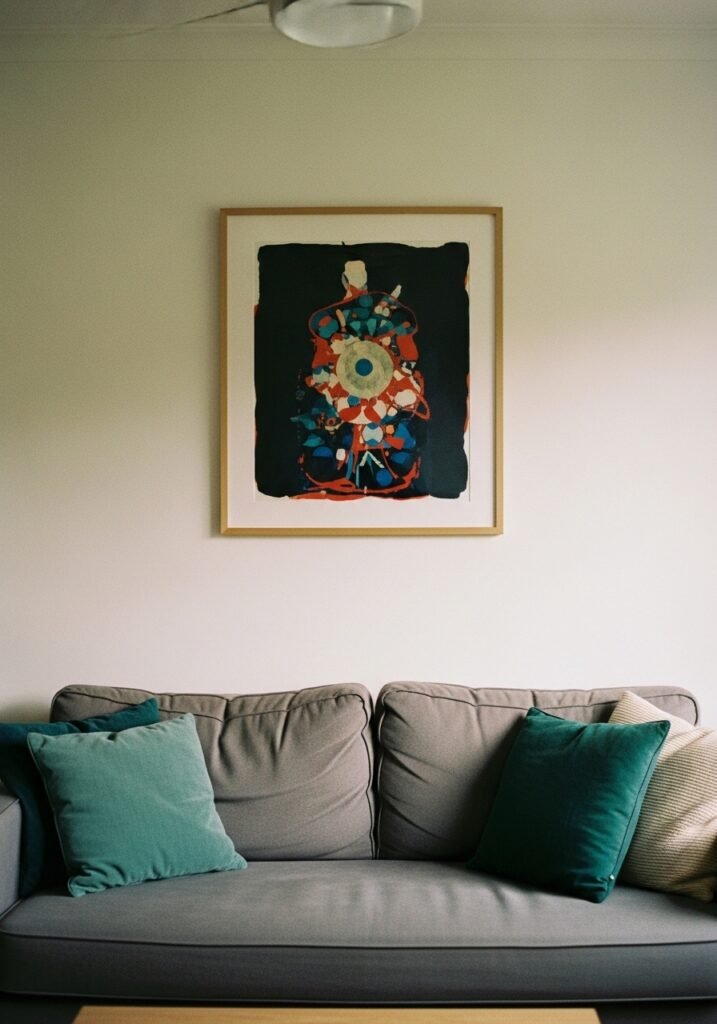
Most people hang things too high. Significantly, embarrassingly too high. Art floats on the wall at eye level when you’re standing, which means it hovers above the furniture it’s meant to anchor, leaving a sea of bare wall between sofa back and frame bottom.
The standard: the center of your artwork should sit at 57 to 60 inches from the floor. That’s it. That’s the rule.
When art is hung above a sofa, the bottom edge of the frame should sit roughly 6 to 8 inches above the sofa back. Not 18 inches, not a foot and a half up in the stratosphere — just close enough that the art and the furniture feel like they belong to each other.
This relationship is what makes a room look designed rather than decorated. The furniture and the art are in conversation. They acknowledge each other. When there’s a gap, the eye notices, the brain feels unresolved, and the room feels less finished than it is.
Put a pencil mark on the wall before you commit. Stand back. Adjust. Hang it close.
—
11. The Unexpected Finish That Makes Frames Look Custom-Made
Here is something genuinely useful that costs almost nothing.
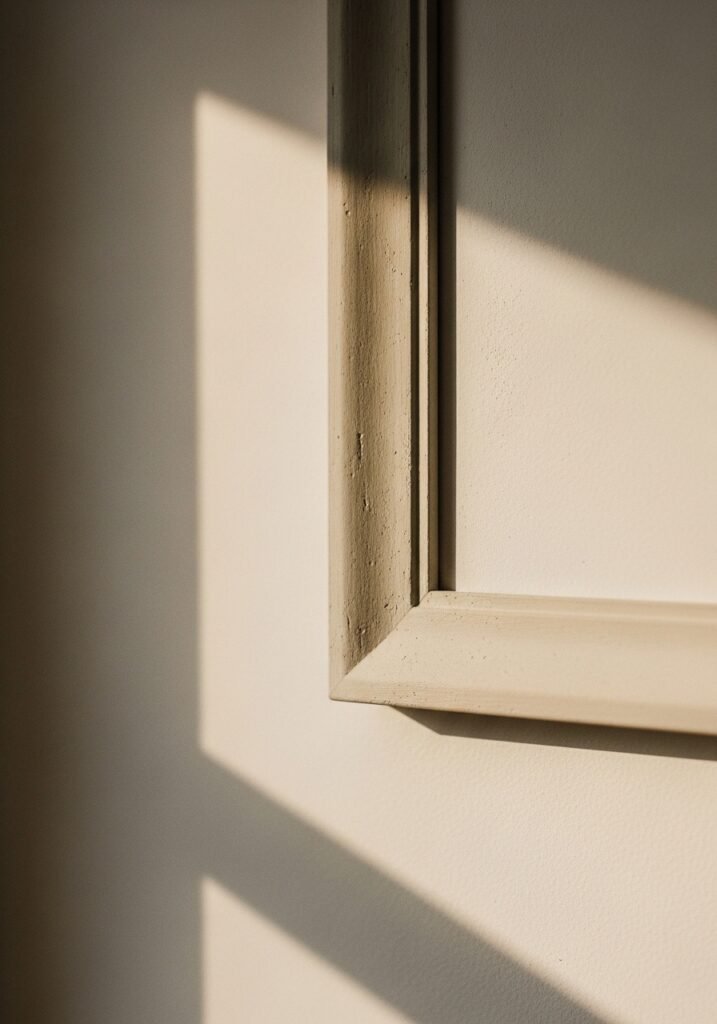
A can of matte black, warm brass, or soft white spray paint, applied to a collection of mismatched frames you already own or picked up from a charity shop, creates an instant cohesion that makes a gallery wall look curated and intentional.
The uniformity of finish is what the eye reads as expensive. Not the size of the art inside, not the brand of the frame — the finish. When every frame on your wall shares the same color and sheen, the collection reads as a single considered decision. And that’s the whole of luxury, really: the appearance of consideration.
This is exactly what is done in hotel rooms. The frames are not always expensive. They are simply consistent. Same finish, similar proportions, arranged with care. You can replicate this for the price of spray paint and an afternoon.
It also gives you permission to use art you already love rather than buying something new to match a frame. The frame becomes a neutral container. The art speaks.
—
12. The One Thing to Remove From Your Living Room Wall Right Now
I’ll be direct.
The inspirational quote print. The “Live, Laugh, Love” adjacent artwork in a script font telling you to breathe or be grateful or chase your dreams. Not because it isn’t true, but because it’s doing nothing for your room visually and it’s doing something slightly anxious to the atmosphere of the space.
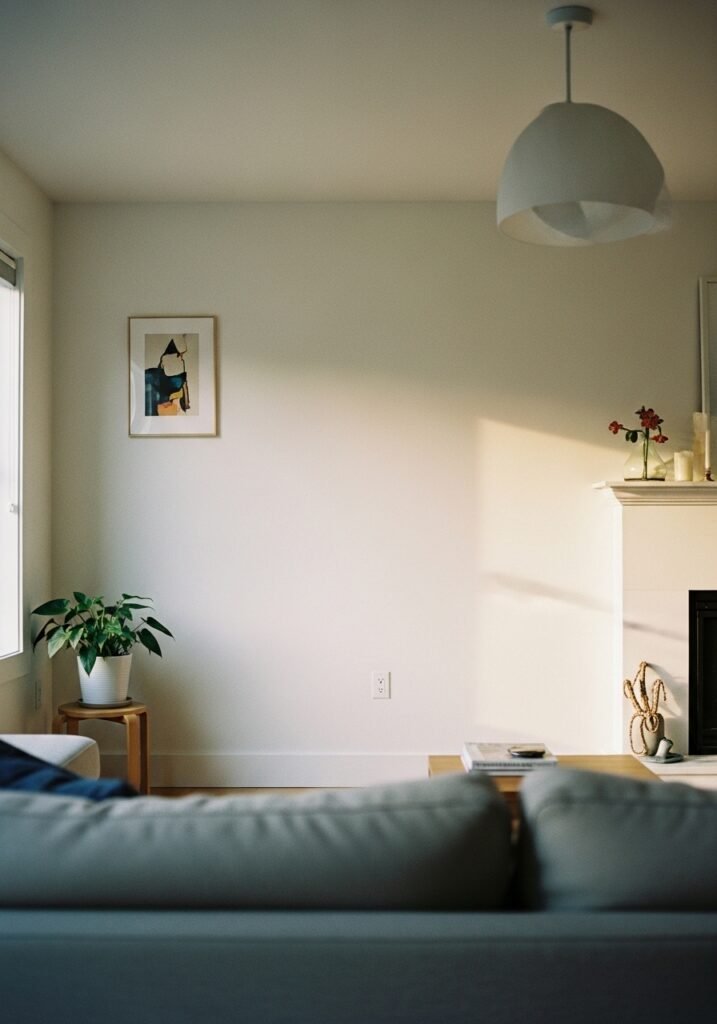
Modern luxury interiors favor ambiguity. Abstract art, botanical references, architectural photography, sculptural ceramics — things that create a mood rather than announce an instruction. When your wall communicates through feeling rather than text, the room settles into something calmer, more confident, and considerably more interesting.
Replace it with one abstract print in the same frame. Or a black-and-white photograph of something that genuinely moves you. Or nothing at all, and let the wall breathe for a while until you find the right thing.
Empty wall, considered deliberately, is better than a filled wall done reflexively.
—
🌿 Quick Tips
Take a photo of your wall before you start. Your eye adjusts to familiar spaces; the camera sees what’s actually there, and usually that’s the push you need to finally make a change.
If you can only do one thing, hang something larger than you think you should. Your instinct in a small room is always to go smaller. Fight it every single time.
Sconces are underused in living rooms in both the US and the UK. A single plug-in wall sconce beside a piece of art changes the entire atmosphere of a room for under $60.
For a cohesive gallery wall without the planning stress, trace your frames onto paper, cut them out, and tape the paper shapes to the wall first. Rearrange until it’s right. Then hang.
Lean something instead of hanging it. A large mirror, a canvas, a framed print propped against the wall on the floor — it reads as relaxed and intentional simultaneously, and you can move it whenever the mood shifts.
—
❓ FAQ
Q: What size art should I use in a small living room? A: Bigger than you think. In a small room, a single piece that measures at least 24 by 36 inches creates a focal point that actually anchors the space. Smaller art in a small room tends to look like an afterthought rather than a decision.
Q: Is it okay to leave some walls completely bare? A: Absolutely, and often it’s the better choice. An empty wall creates breathing room, especially if the opposite or adjacent wall has something interesting happening. Not every surface needs to be filled. Restraint is a design choice, not neglect.
Q: How do I make a rented space feel luxurious without drilling? A: Leaning large mirrors and art against the wall, using adhesive picture rails, investing in a stunning rug that anchors the room, and buying one really good lamp will do more for the feel of the space than almost anything that requires a landlord’s permission.
—
💭 Final Thought
The rooms we remember — the ones we screenshot, the ones we talk about long after we’ve left them — are almost never the biggest ones. They’re the ones where every wall felt chosen. Where the light was warm and the art was confident and someone had clearly decided that small didn’t mean settling.
Your living room is waiting for that kind of attention. Not a renovation, not a budget you don’t have. Just a decision made with conviction and followed all the way through.
What’s the one wall in your home that’s been waiting the longest for you to finally do something about it?