The Soul Lives in the Details: What a New York Brownstone Feels Like From the Inside
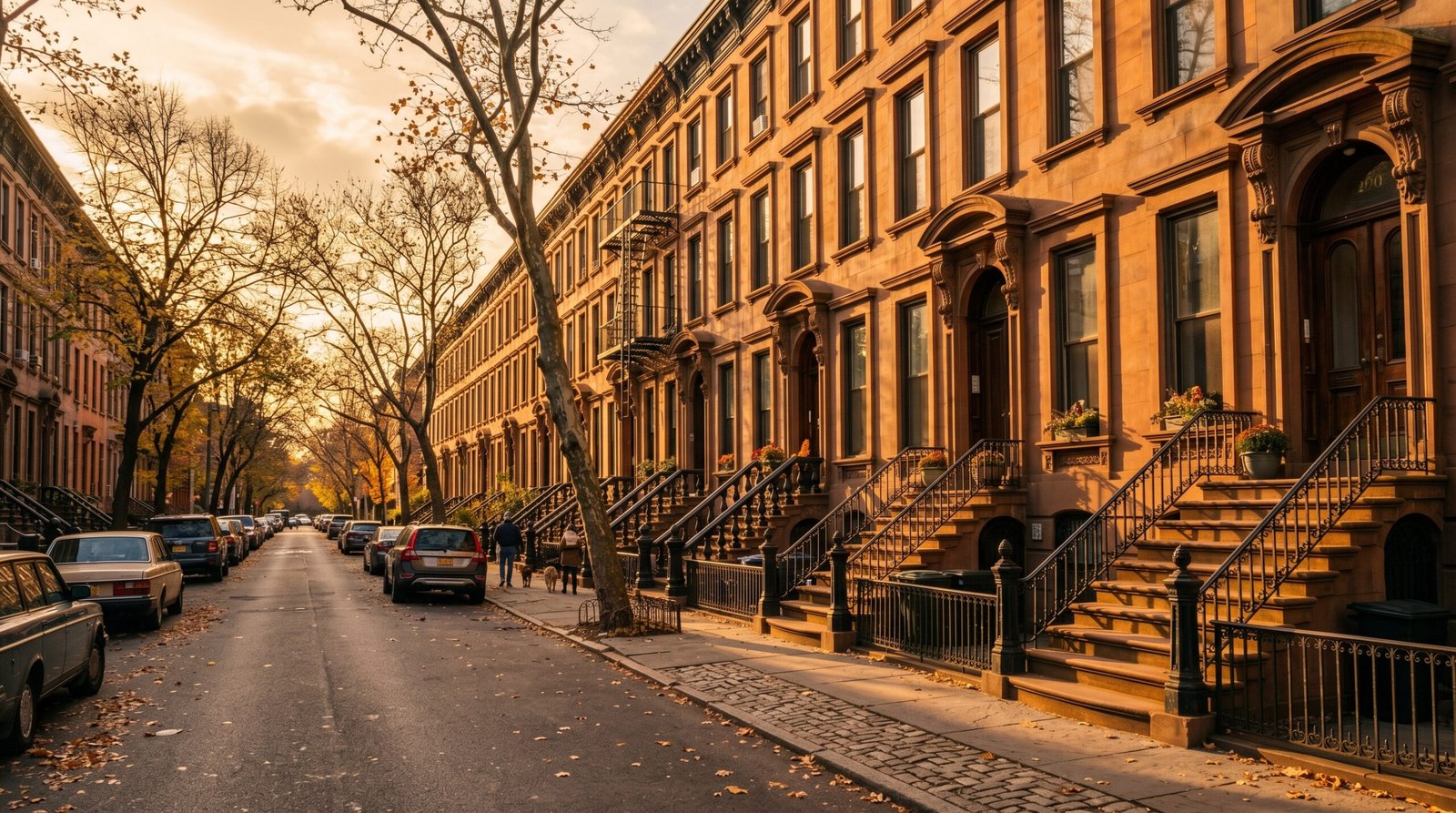
You’ve walked past them a hundred times — those narrow, warm-toned buildings lining the streets of Brooklyn and Harlem, their stoops worn smooth by generations of feet. But have you ever wondered what it actually feels like to step through that heavy wooden door and into the life that waits behind it?
—
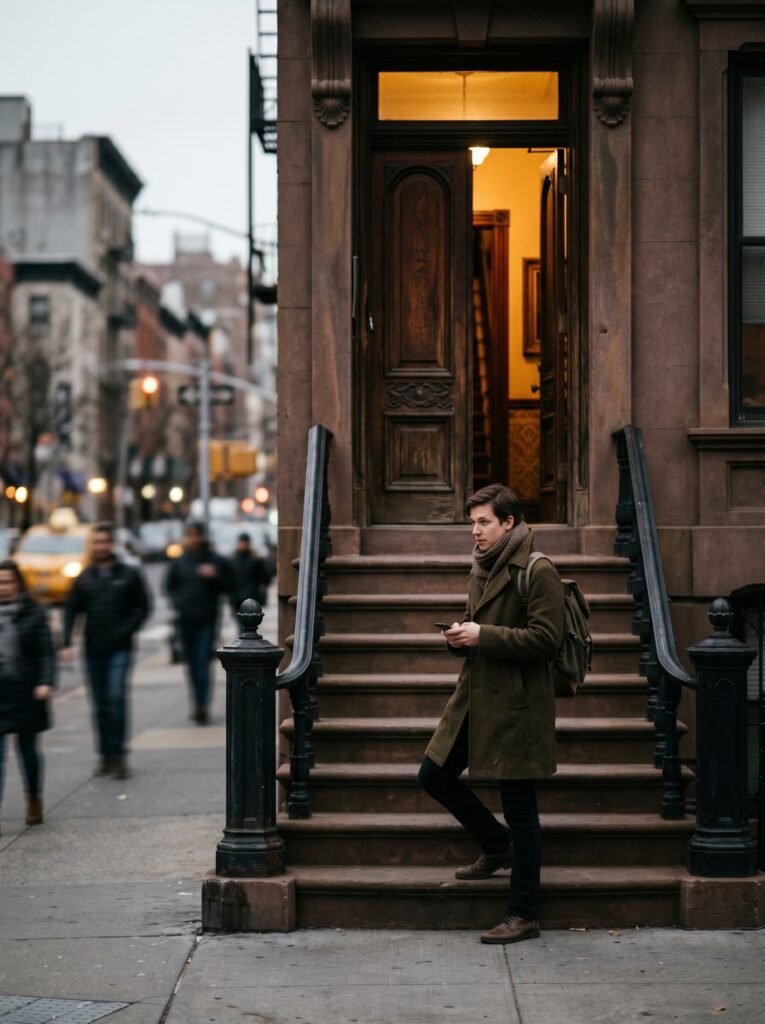
Table Of Content
1. The First Thing You Notice Is the Light — or the Absence of It
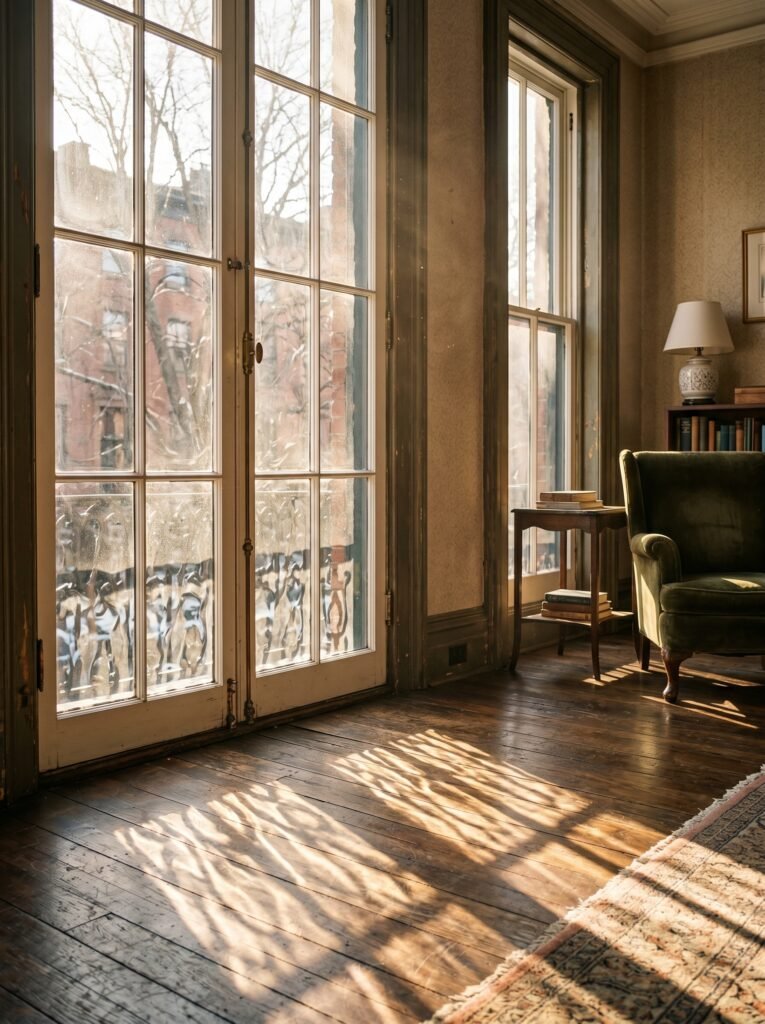
The moment you cross the threshold of a New York brownstone, something shifts. The street noise doesn’t disappear exactly — it softens, like someone turned the city down a few notches. And then the light catches your eye. Or rather, the way light moves in these spaces catches you off guard.
Brownstones were typically built between the 1840s and 1900s, designed to maximize natural light in a pre-electric world. The parlor floor — usually one flight up from street level — sits at the perfect height to catch the afternoon sun through tall, double-hung windows that sometimes stretch nearly floor to ceiling. The glass in older buildings is slightly imperfect, wavy in places, and the light that comes through it has a quality you simply cannot replicate with modern construction. It bends a little. It breathes.
“In a brownstone, light isn’t just something you see — it’s something you feel on your skin at 3 o’clock on a winter afternoon.”
That quality of light is one reason interior designers consistently seek out brownstone renovations as some of the most rewarding projects in New York City. There is already so much character to work with. The bones, as people in the design world say, are extraordinary.
—
2. The Staircase That Tells You Everything About the Building’s Age
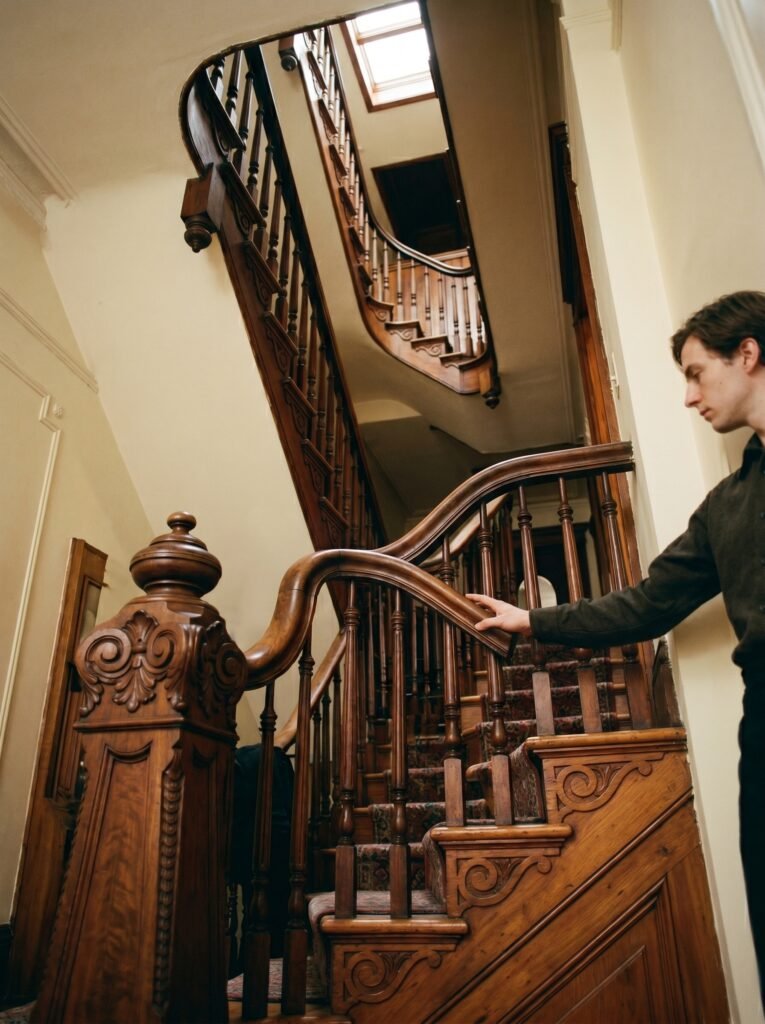
If the light greets you first, the staircase tells you the whole story. Original brownstone staircases are often made of carved walnut or oak, with newel posts that rise dramatically at the base — thick, ornate, occasionally replaced over the decades but often lovingly preserved. Running your hand along a well-kept original banister in a Carroll Gardens townhouse is a strange, intimate experience. Someone built this by hand in 1887. Thousands of hands have touched it since.
The staircase in a brownstone is rarely just functional. It is the spine of the home, connecting four or sometimes five floors in a building that is typically only 18 to 25 feet wide. Architects of the era understood that vertical movement through a home could be made beautiful, and they made it so. Turning banisters, carved risers, and decorative brackets were standard features — not luxury add-ons. In the 19th century, craftsmanship was assumed.
—
3. Ceiling Height That Makes You Stand a Little Straighter
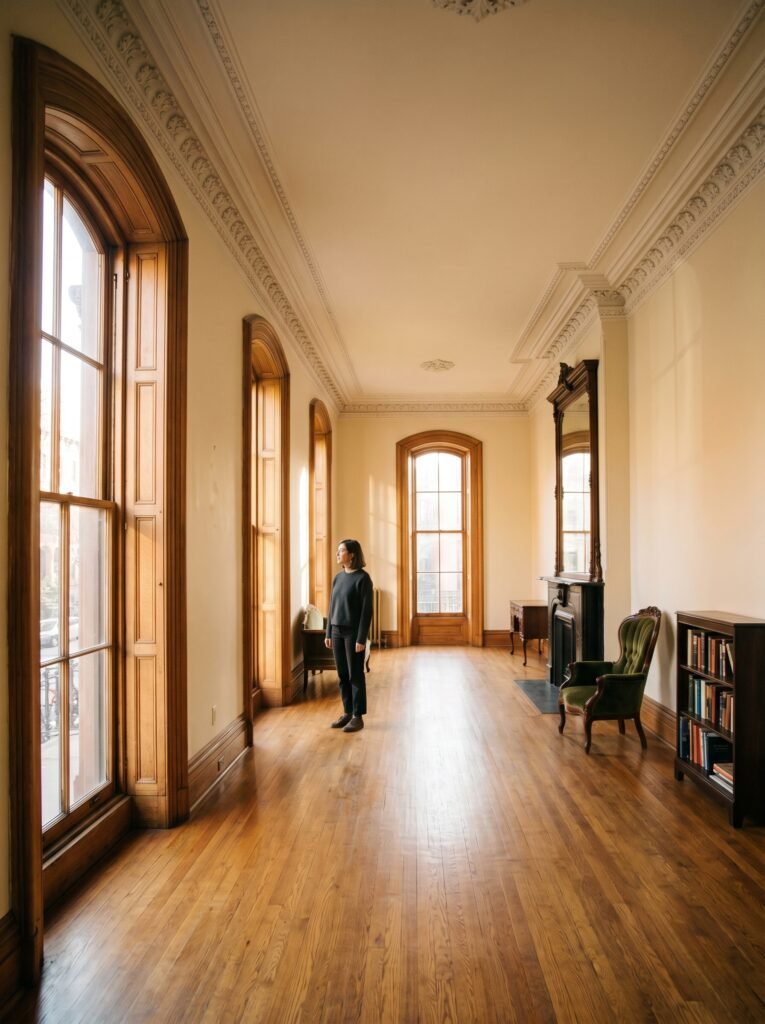
Here is something that surprises nearly every first-time visitor to a well-preserved brownstone: the ceilings. On the parlor floor, ceiling heights of 11 to 13 feet were common. Some of the grandest examples in the Upper West Side and Park Slope push 14 feet. In a city where modern apartments routinely offer 8-foot ceilings, stepping into that kind of vertical space creates a subtle but powerful psychological effect. You unconsciously lift your chin. You breathe a little deeper.
Those high ceilings weren’t purely aesthetic — they reflected theories of ventilation popular in Victorian-era architecture, the belief that warm air should rise and circulate freely. But the effect they create today is undeniably emotional. Rooms feel generous. Conversations feel less cramped. Life, oddly, feels a little more possible in a room with a 12-foot ceiling.
—
4. The Plasterwork Nobody Talks About Enough
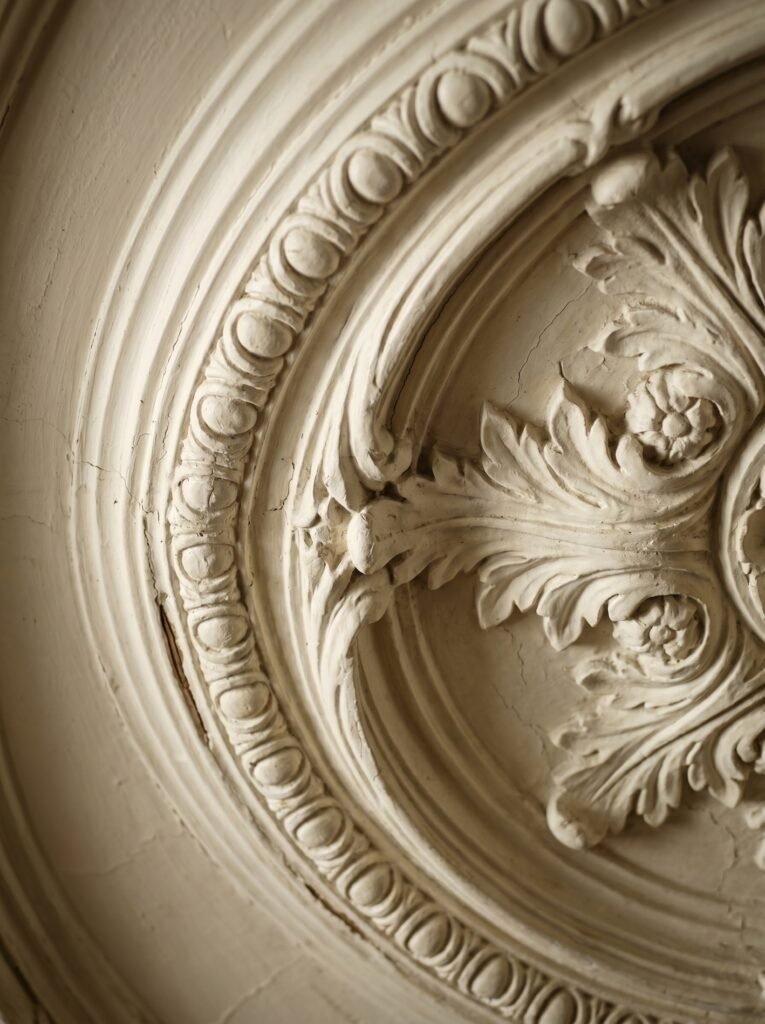
Look up. No, really — look up the next time you’re inside a historic brownstone. The ceiling medallions, the crown molding, the plaster cornices running along the tops of walls: these are the fingerprints of craftsmen whose names nobody remembers, doing work that has lasted 150 years.
Original plaster molding in a brownstone is made of lime plaster applied in multiple coats over a wooden lath base. The depth and crispness of well-preserved examples is remarkable — egg-and-dart patterns, acanthus leaf scrolls, dentil molding lining the perimeter of a room. Many brownstone owners spend years and significant money restoring deteriorated plasterwork to its original precision. It is painstaking, expensive, and absolutely worth it. The detail work is what separates a brownstone interior from every other type of New York City housing.
—
5. Fireplaces in Every Room — Because Warmth Was Once Survival
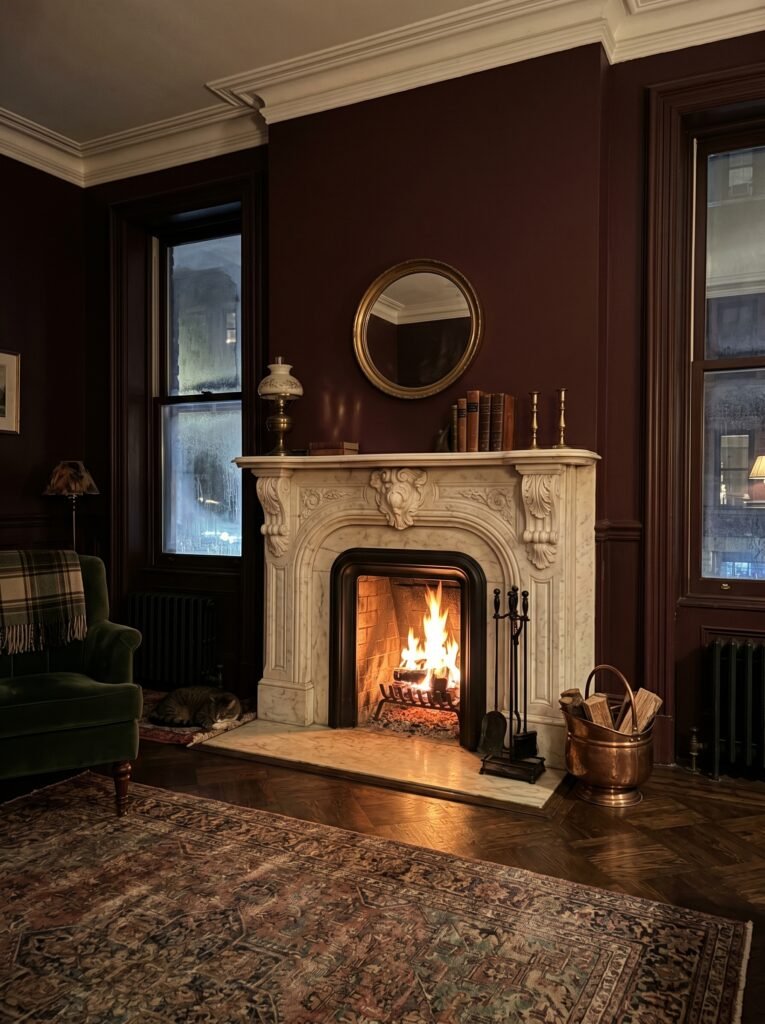
Imagine living in this building in 1880, before central heating. Every room needed a fireplace, and so every room got one. A typical five-story brownstone might have eight to twelve fireplaces — in bedrooms, in parlors, in the dining room, in the kitchen. This is why, when you walk through a historic brownstone today, you encounter these beautiful mantlepieces everywhere you look.
The mantels themselves range from simple painted wood in the upper-floor bedrooms to elaborate marble constructions on the parlor floor, where guests would have been received and impressions needed to be made. Black slate and white Carrara marble were favored materials. Many are still intact. Many are working fireplaces, cherished by their current owners on cold February nights when the radiators knock and hiss and the fire pops and New York City outside is doing whatever New York City does.
“Every brownstone fireplace was once the most important thing in the room. In a different way, it still is.”
—
6. The Kitchen’s Complicated History
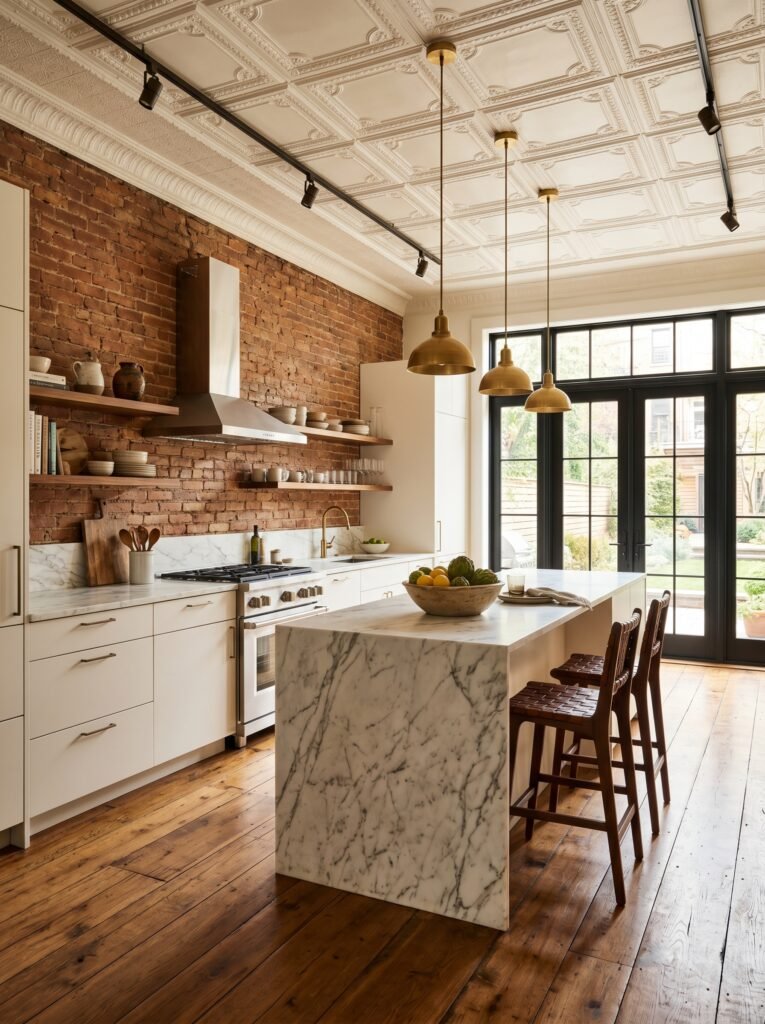
The original brownstone kitchen was not what you see in renovated versions today. It was typically located on the ground floor or in the basement, well below the elegant parlor floors above, staffed by household workers who rarely appeared in the formal spaces of the home. The kitchen was functional, separated, and deliberately invisible to guests.
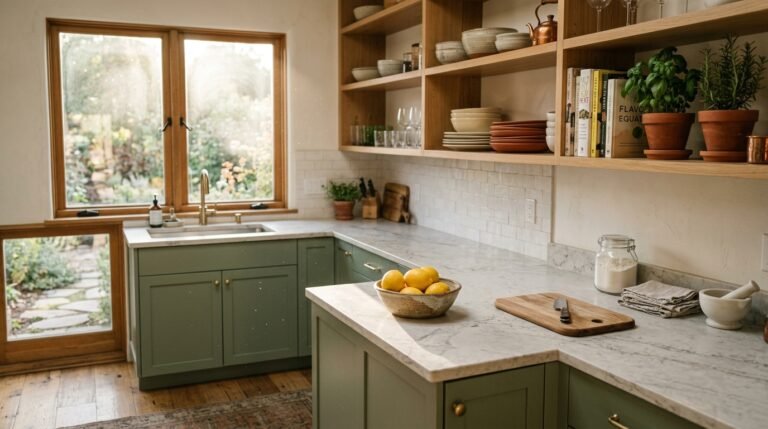
Today’s brownstone kitchens tell a different story. In gut-renovated townhouses, the kitchen is often the design centerpiece — open-plan layouts with custom cabinetry, Calacatta marble islands, and the kind of fixtures that appear in shelter magazines. Yet the best of these renovations maintain something of the original character: exposed brick walls, original tin ceilings, wide-plank reclaimed wood floors. The trick is honoring history without being imprisoned by it.
—
7. Exposed Brick — the Detail Everyone Wants, Few Fully Understand
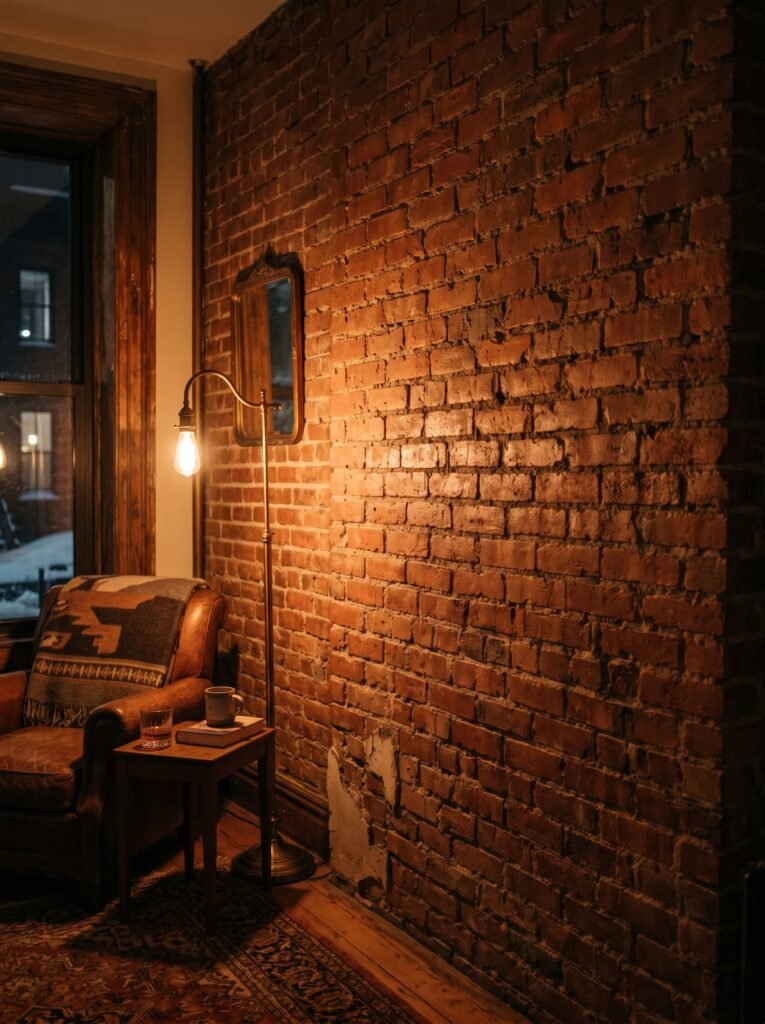
Speaking of exposed brick: the brick beneath a brownstone’s sandstone facade is common red brick, and when exposed on interior walls it creates some of the warmest, most textural surfaces in residential architecture. The phenomenon of “exposing the brick” became fashionable in the 1970s and 1980s as Brooklyners began reclaiming and renovating dilapidated buildings. What they found beneath old plaster was extraordinary — walls of hand-laid brick in running bond patterns, irregular in their humanity, rich in color.
Properly maintained interior brick requires periodic sealing to prevent dust and moisture migration, and purists debate whether to seal it at all. But the visual effect — brick glowing amber-red in the light of a floor lamp on a winter evening — is one of the most distinctively New York interior experiences imaginable.
—
8. The Garden Level: New York’s Best-Kept Secret
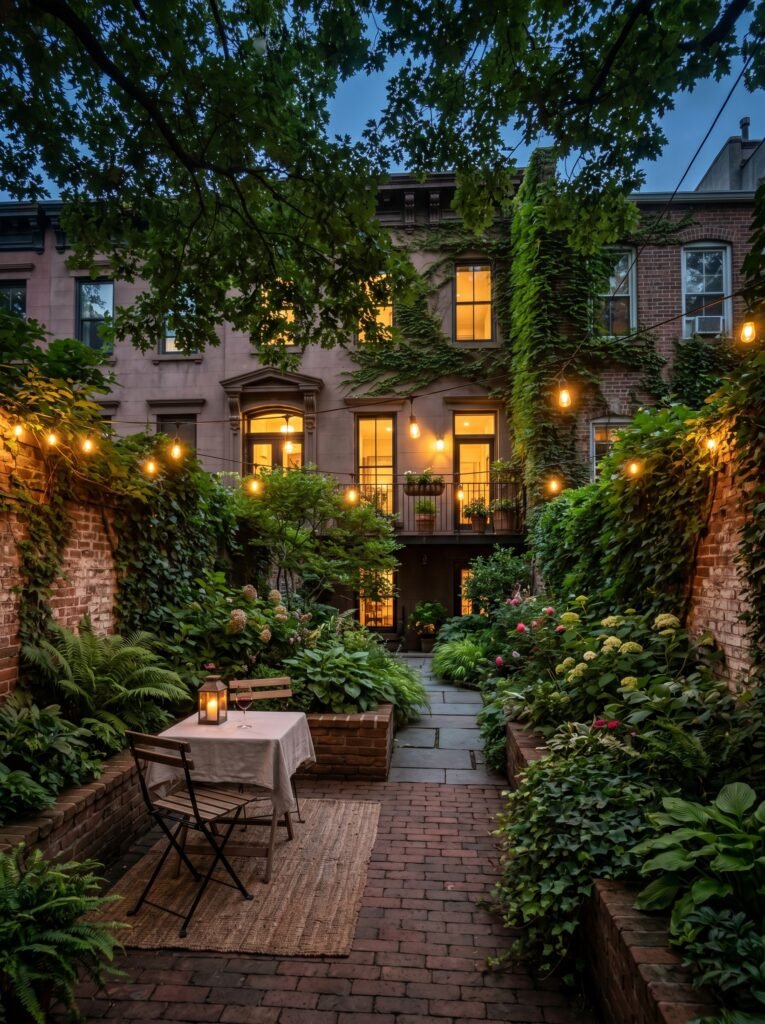
Below the stoop, at street level or slightly below, lies what is known as the garden level. Originally servant quarters or kitchen space, today this floor is frequently converted into a separate rental unit or, in single-family homes, a casual living space that opens directly onto the rear garden.
That garden — often just 20 by 30 feet, tucked behind the building and invisible from the street — is something many New Yorkers don’t even know exists in these homes. Mature trees, raised planting beds, brick patios strung with lights: the brownstone garden is an urban miracle, a private green world in the middle of the densest city in America. Homeowners who have them tend to speak about their gardens with a reverence that borders on devotion.
—
9. Original Floors That Sound Like History Underfoot
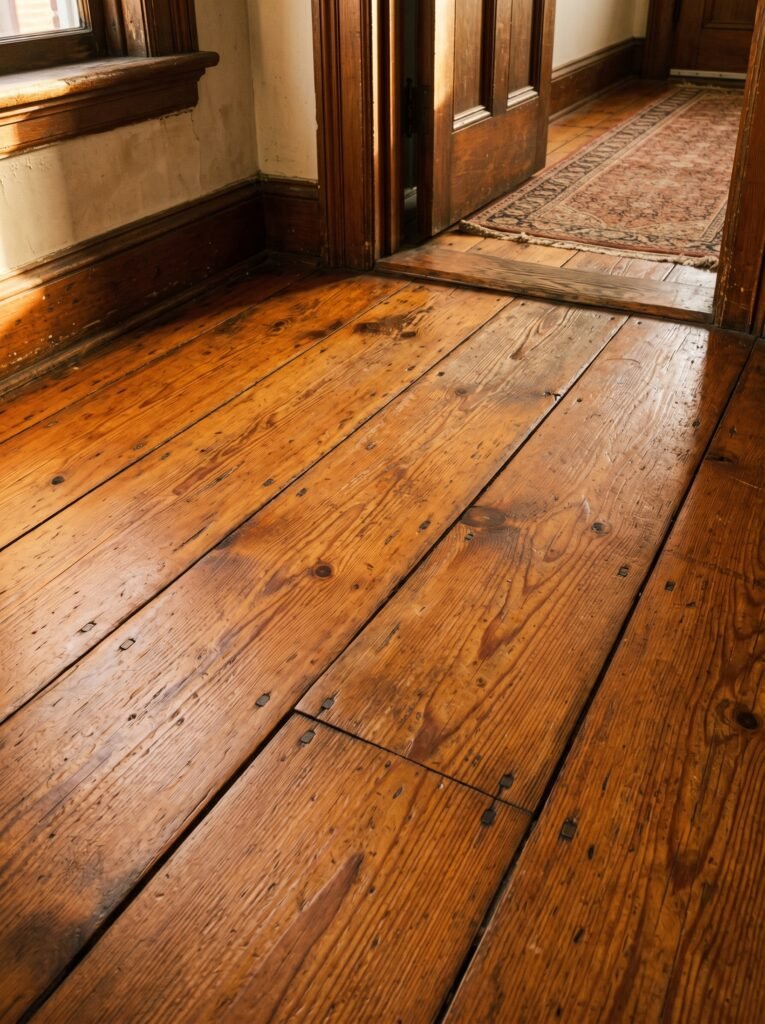
The floors of a pre-war brownstone are almost always wide-plank white oak or heart pine, laid in straight runs with square-cut nails that, in very old buildings, have left slight impressions in the wood. These floors creak. They have soft spots in front of doorways where a hundred thousand footsteps have worn the wood thin. They are not flat. They are not perfect.
They are, by virtually every measure, more beautiful than any modern alternative.
“A floor that creaks in the same place it’s always creaked is a floor that remembers.”
Refinished periodically to remove surface scratches while preserving patina, original brownstone floors are among the most coveted features in the New York real estate market. Buyers who find them intact react with a specific kind of relief, as if they’ve found something they were afraid might no longer exist.
—
10. The Parlor Floor: Where Formality Once Lived
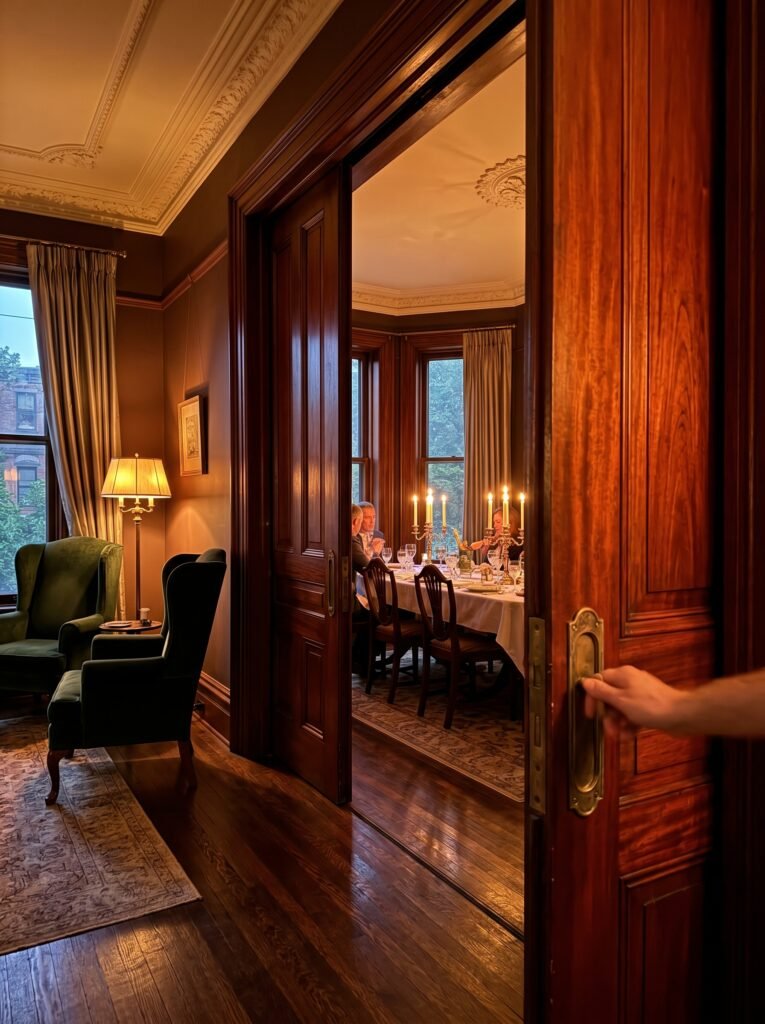
The parlor floor — one level above the stoop entrance — was the social heart of the Victorian brownstone. It typically contained two grand rooms separated by original pocket doors: the front parlor for receiving guests, and the back parlor for family use or dining, with a connecting hallway and access to the rear of the building.
These pocket doors, when they survive, are objects of genuine beauty. Often made of chestnut or mahogany, they slide silently into the walls on original hardware, transforming two rooms into one large, flowing space. Open them fully on a summer evening, set up the dining table in the rear parlor, and let the candlelight carry into both rooms. This is exactly the experience these homes were designed to create.
—
11. What Happens When Old Meets Intentionally New
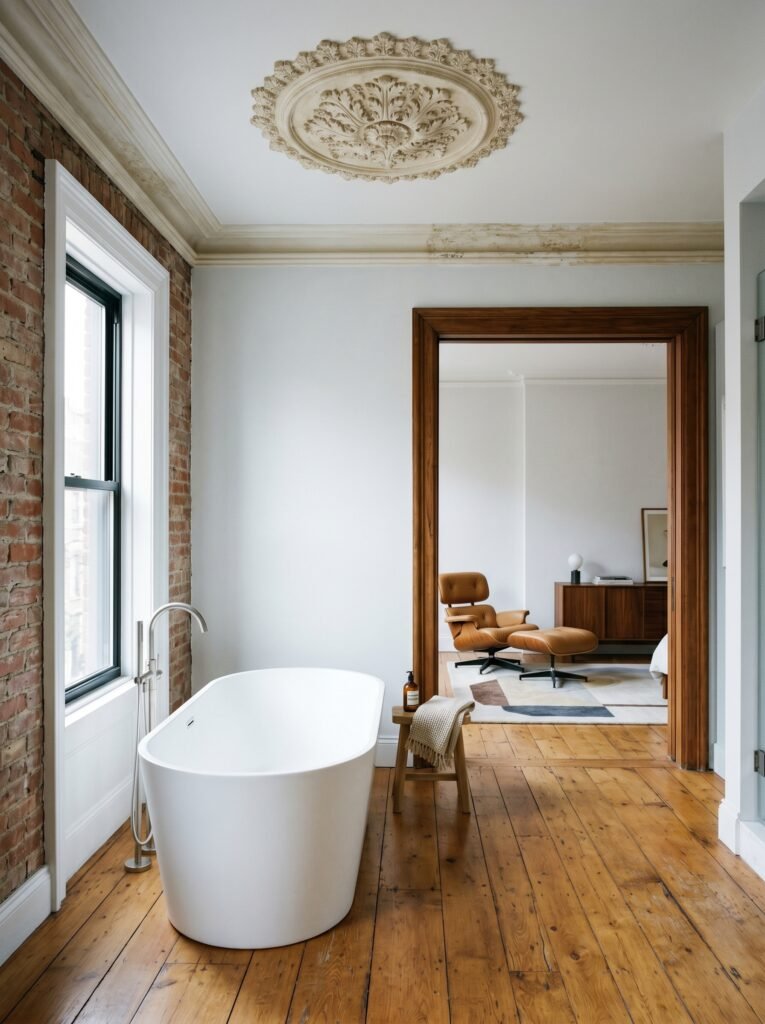
Some of the most compelling brownstone interiors in contemporary New York are not preserved museums of Victoriana. They are collisions — deliberate, thoughtful collisions — between original architecture and modern design. A kitchen with concrete countertops set against original pressed tin ceilings. A master bathroom with a freestanding soaking tub positioned beneath a restored plaster medallion. Mid-century furniture arranged on 140-year-old floors.
These combinations work because the original architecture is strong enough to absorb contrast. The bones are so good, so present, so sure of themselves, that modern interventions read as conversation rather than conflict. The brownstone doesn’t feel threatened by a Barcelona Chair or a minimalist pendant lamp. It has seen enough of history to be confident in itself.
—
12. The Feeling You Carry With You When You Leave

There is a specific feeling you have when you leave a well-preserved, thoughtfully inhabited brownstone after an evening spent inside. It is not easily named. It has something to do with scale — the human scale of a home that was designed for people, not for efficiency. It has something to do with continuity — the awareness that life has been lived in these exact rooms, in this exact light, for longer than any of us have been alive.
You step back out onto the stoop, back into the city’s noise, and you carry something with you. Some residue of permanence. Some reminder that in a city defined by relentless change, certain beautiful things have held on.
—
🌿 How to Take Care of a Brownstone Interior
Whether you own one or are thinking about it, these spaces reward attention and patience more than money.
Protect the original millwork first. Before anything else, preserve what remains. Original molding, mantels, doors, and bannisters are irreplaceable. Strip paint carefully, use appropriate wood treatments, and resist the urge to replace anything you could restore instead.
Address moisture before it addresses you. Brownstones are old masonry buildings and moisture is their most persistent enemy. Check pointing on the exterior facade, maintain gutters, and watch for damp spots on interior walls — especially on the garden and ground levels.
Refinish floors, don’t replace them. Original wood floors have usually been refinished several times already and can be done again. A professional refinish every 10 to 15 years will keep them beautiful for another century without sacrificing the character that makes them extraordinary.
Let the light lead your design choices. Work with the natural light patterns of your specific floors rather than fighting them. South-facing parlor rooms with 12-foot ceilings don’t need much help. North-facing upper floors benefit from warm-toned wall colors and layered artificial lighting that mimics the quality of what the building’s designers originally intended.
Go slow on the kitchen. This is where most renovation mistakes happen. Before committing to a full gut renovation, live in the space through all four seasons. You may find that what you thought was a problem is actually a feature.
—
❓ FAQ
Q: What is the difference between a brownstone and a townhouse? A: “Brownstone” technically refers to the iron-rich sandstone used to face certain 19th-century New York row houses, but the term has come to describe the style of building more broadly. A townhouse is any multi-story urban row house, regardless of exterior material. Most brownstones are townhouses, but not all townhouses are brownstones.
Q: Are brownstones expensive to maintain? A: They can be, particularly when it comes to facade repointing, roof maintenance, and plumbing and electrical upgrades in very old buildings. However, many owners find that the costs are offset by the exceptional quality of the original construction — these buildings were built to last centuries, and the ones that have survived largely prove that point.
Q: Can you modernize a brownstone interior without losing its character? A: Absolutely, and many of the most admired brownstone interiors in New York do exactly this. The key is treating the original architecture as a strong, confident foundation rather than a constraint — and making modern interventions that are equally deliberate and equally well-crafted.
—
💭 Final Thought
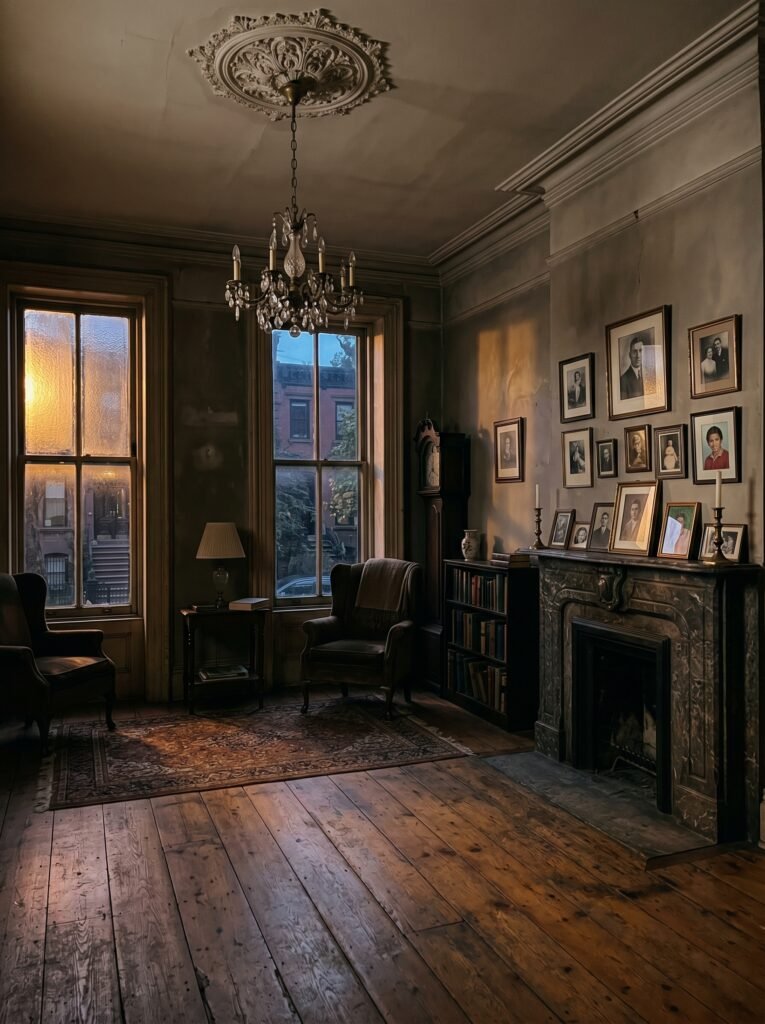
There is something quietly radical about a New York brownstone interior in the 21st century — a space that insists on permanence, on craft, on the kind of beauty that accumulates slowly over generations rather than arriving fully formed from a catalog. In a city that tears things down and builds them back up before the memory has time to settle, these rooms are an act of preservation and, in some ways, an act of faith.
They ask us, every time we step inside, to consider what we want the spaces we inhabit to say about us — not just today, but to whoever lives here a hundred years from now.
So here is the question worth sitting with: if the walls of your home could hold a memory for the next century, what would you want them to remember?