The Room That Remembers You: What Interior Video Is Really Capturing
You walk into a space you haven’t visited in years — maybe your childhood home, a hotel room from a honeymoon, or that little café where you got the news that changed everything — and suddenly, something in the air, the light, the corners of the walls, pulls you backward in time. Now imagine that feeling, bottled inside a screen. That’s the quiet, underestimated power of interior video.
—
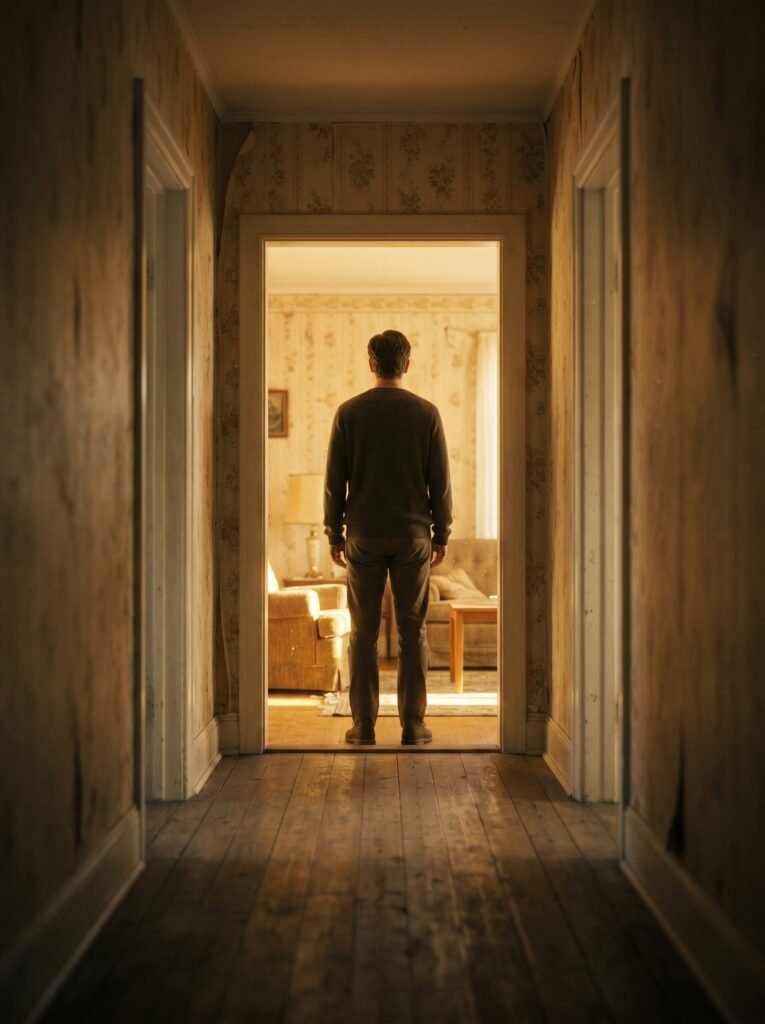
Table Of Content
1. It’s Not Just Filming a Room — It’s Telling a Story Through Space
Most people assume interior video is a simple thing: you point a camera at a couch, press record, and you’re done. Real estate agents use it to sell apartments. Interior designers use it to showcase portfolios. Hotels use it to fill booking pages.
But the people who truly understand it — the cinematographers, the architects who moonlight as visual storytellers, the videographers who’ve spent years learning how a shaft of afternoon sunlight changes the emotional temperature of a room — they’ll tell you something different. Filming an interior space is one of the most psychologically complex acts in visual media.
Every room carries invisible information: who lived there, what was cooked, what was argued about, what was quietly celebrated. A well-executed interior video doesn’t just show dimensions. It communicates atmosphere. It makes the viewer feel something before a single word of narration appears.
“The camera doesn’t just record the room. It reveals what the room is trying to say.”
—
2. The Science Behind Why Certain Interior Videos Stop Us Cold
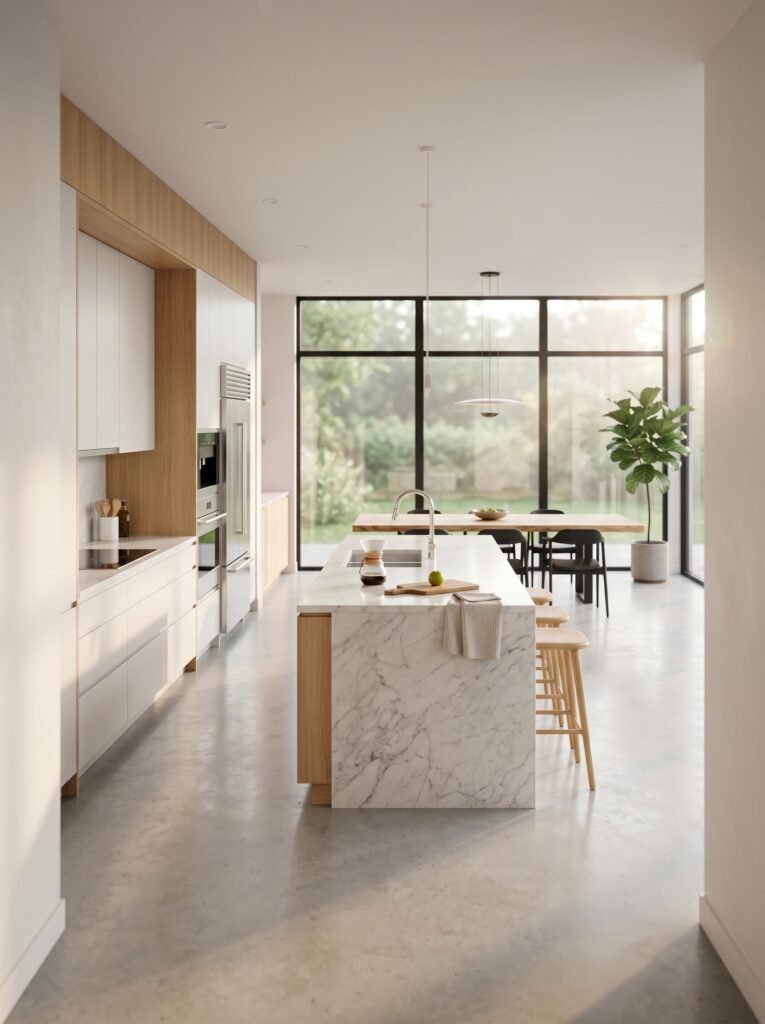
There’s actual neuroscience behind why some interior videos make us pause mid-scroll while others blur into digital wallpaper. The human brain is wired to respond to environmental cues — light levels trigger our circadian rhythms, spatial proportions affect our sense of safety, and texture signals warmth or coldness long before we consciously register what we’re seeing.
When a videographer understands this, the camera becomes a tool of emotional engineering. A slow dolly shot through a sunlit kitchen doesn’t just show us appliances and countertops — it mimics the experience of entering that kitchen, and our brain responds as if we’re actually there. This is sometimes called the “presence effect,” and it’s the reason a great interior video can make a property feel like home before you’ve ever set foot inside it.
Studies in environmental psychology consistently show that people make emotional decisions about spaces within seconds — and those decisions are largely driven by light, scale, and perceived warmth. Interior video, when done right, manufactures those cues deliberately.
—
3. The History Nobody Talks About: How Interior Video Quietly Evolved
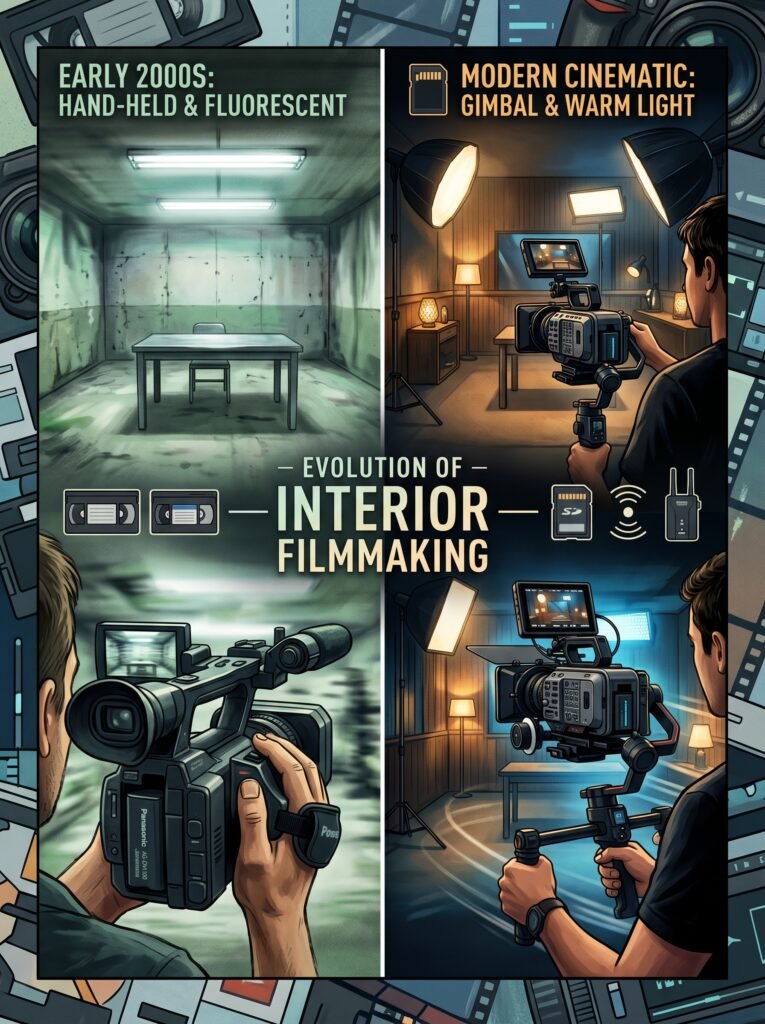
It’s easy to forget that interior video as a craft has a relatively short history. In the early days of real estate and architecture filmmaking, a “walkthrough” meant a shaky hand-held camera and fluorescent lighting that made every room look like an interrogation chamber.
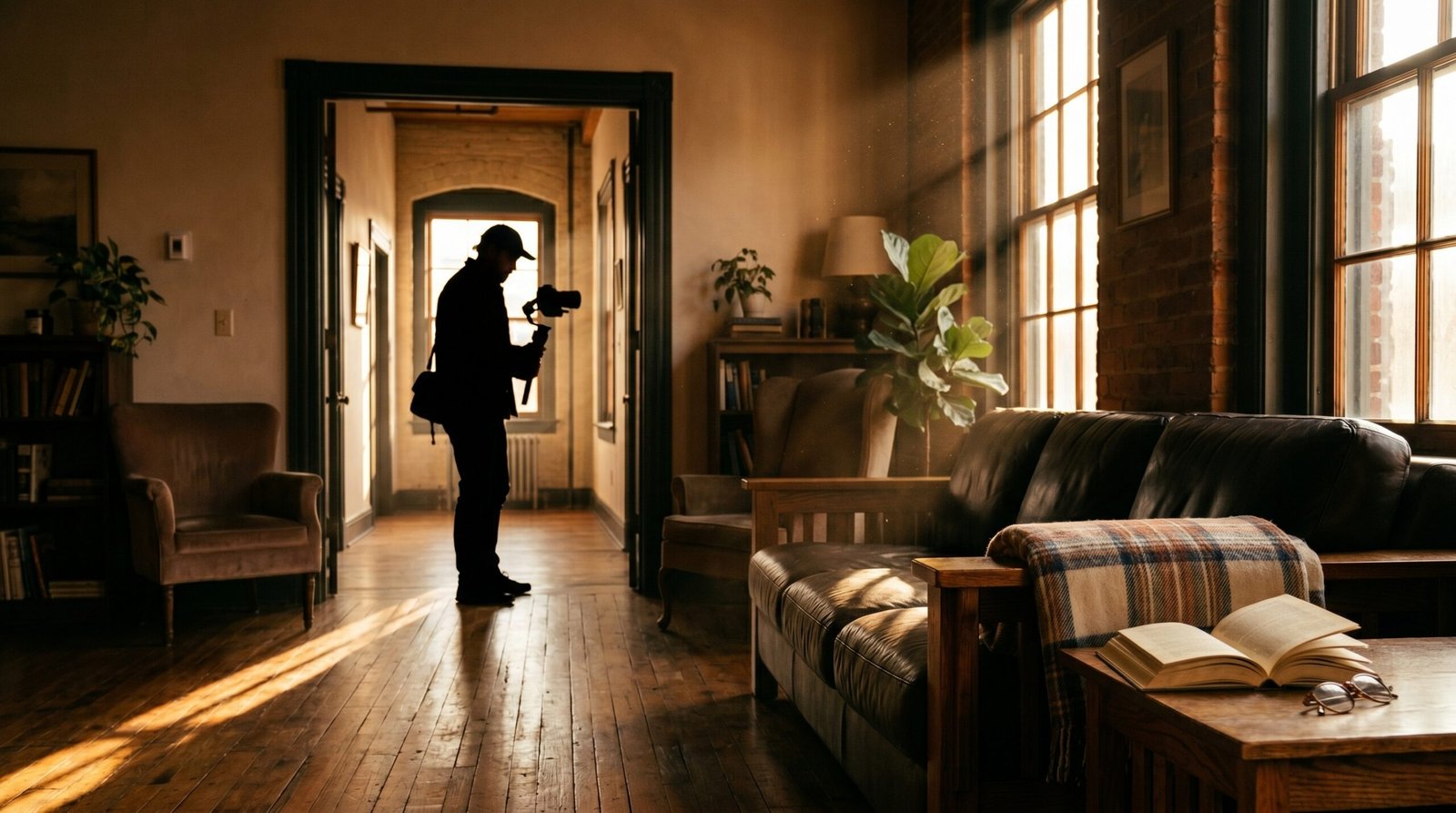
The revolution came gradually. First with the widespread adoption of DSLR cameras capable of shooting cinematic video. Then with the introduction of gimbal stabilizers that allowed silky smooth movement through tight corridors. Then with drone technology, which opened up the aerial context shot — showing a home within its landscape, not isolated from it. And most recently, with the rise of virtual reality interior tours, which have changed the concept of “viewing” a space entirely.
Each technological leap didn’t just improve the image quality. It changed what story could be told.
—
4. Light Is the Real Main Character in Every Interior Video
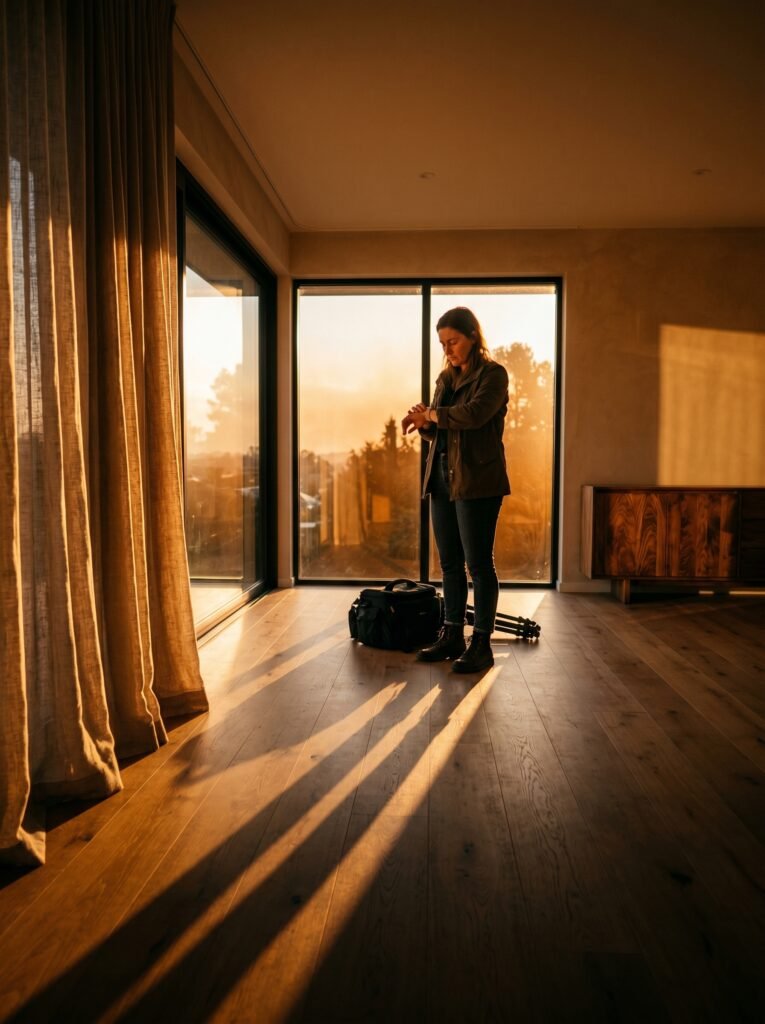
Ask any seasoned interior videographer what separates a forgettable shoot from a transcendent one, and almost universally, the answer is light. Natural light, specifically, and the decision of when to arrive.
The golden hour — that window of warm, angled light roughly an hour after sunrise and an hour before sunset — transforms interior spaces in ways no artificial lighting rig can fully replicate. Shadows lengthen, textures deepen, and rooms that looked flat and ordinary under midday overhead light suddenly acquire dimension and drama.
This is why the best interior video production companies build their entire shooting schedules around light. Not around client convenience. Not around logistical efficiency. Around the sun.
“Arrive too late and you’re filming a room. Arrive at the right moment and you’re filming a feeling.”
—
5. The Equipment That Makes a Room Come Alive on Screen
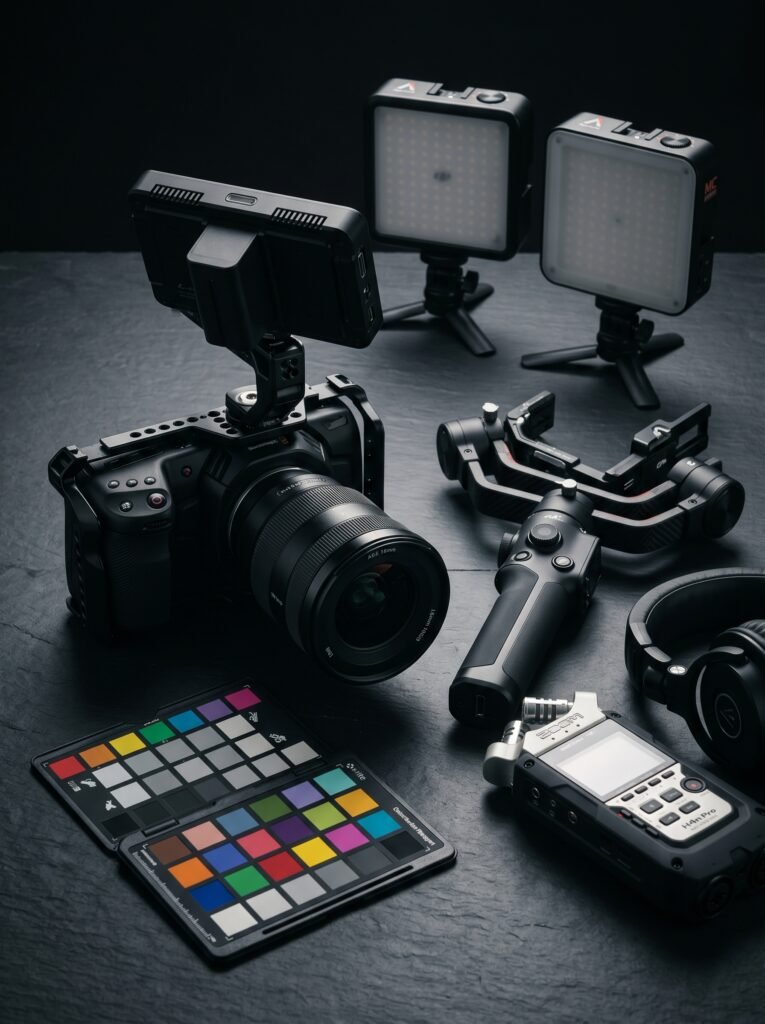
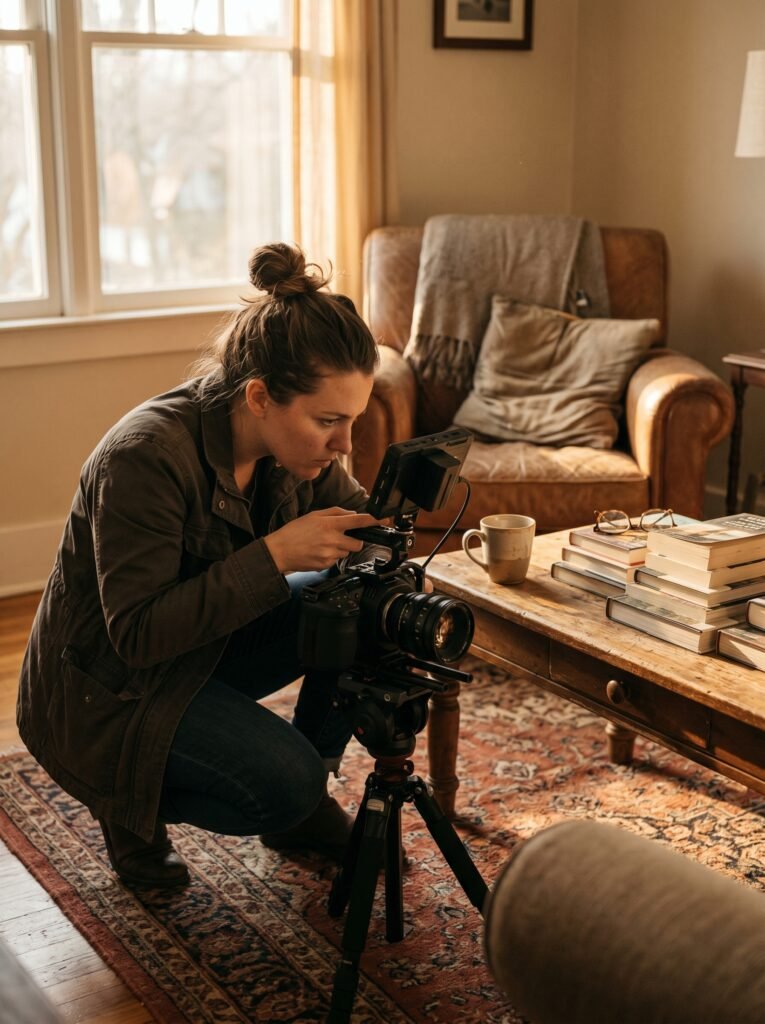
You don’t need to be a filmmaker to appreciate what goes into a professional interior video, but understanding the tools does deepen the respect. Wide-angle lenses, typically between 16mm and 24mm, are essential for capturing the sense of space in rooms that would otherwise feel cramped on camera. But there’s a delicate balance — push too wide and you distort the room, making walls bow and creating a funhouse effect that feels deceptive and ultimately alienates potential buyers or viewers.
Motorized sliders create those graceful, measured lateral movements that feel cinematic without drawing attention to themselves. Audio is captured separately, because the acoustic signature of a room — whether it’s the soft absorption of thick carpets or the lively echo of marble floors — is part of the story. And color grading in post-production can shift an interior’s mood from clinical to cozy without altering a single piece of furniture.
—
6. Real Estate Video vs. Architectural Video: Why They’re Not the Same Thing
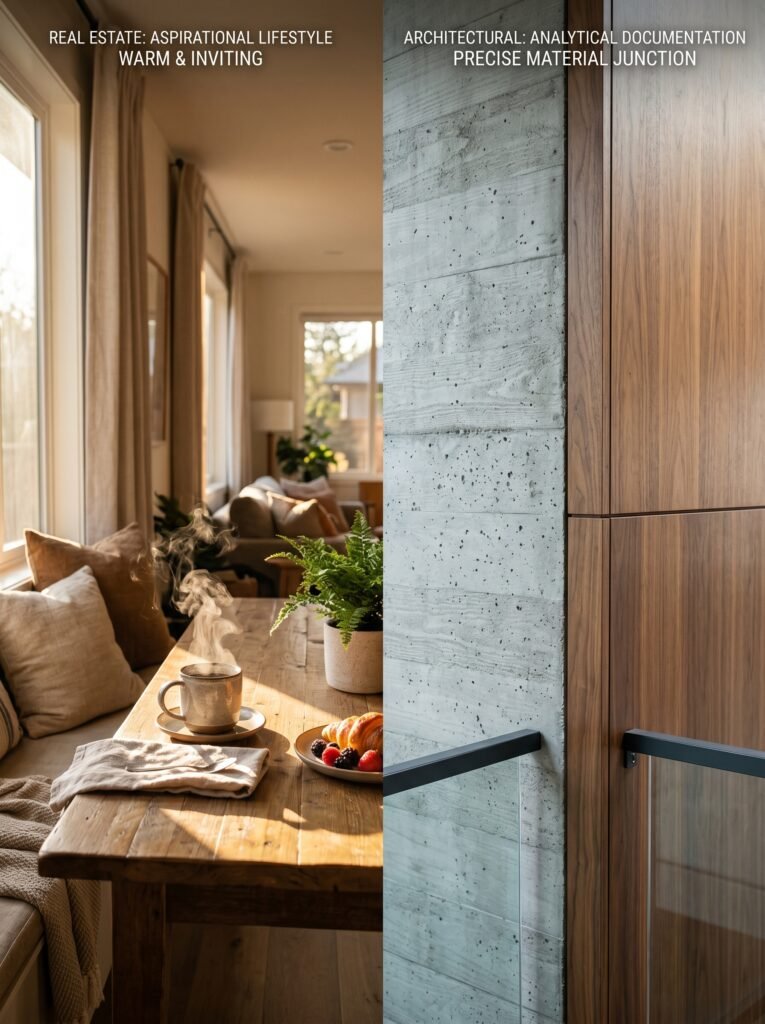
Here’s a distinction that surprises a lot of people: real estate video and architectural video share the same subject matter but have almost entirely different purposes — and that difference shapes every single creative decision.
Real estate interior video is fundamentally transactional. Its goal is to generate desire, to make a viewer imagine themselves in the space, and to accelerate a sale. It prioritizes accessibility, warmth, and aspirational lifestyle cues. The camera lingers on morning light over a breakfast nook. It shows the bathroom as a sanctuary rather than a utility room.
Architectural video, by contrast, is analytical and reverential. It’s made to honor the work of a designer or architect — to document craft, proportion, material choice, and spatial philosophy. It might deliberately show the junction between two different materials, or spend thirty seconds on a detail that a real estate video would skip entirely. It’s made for peers, for journals, for posterity.
Both are forms of interior video. Neither is superior. But confusing them leads to videos that fail at both.
—
7. The Rise of Virtual Interior Tours and What They Changed Forever
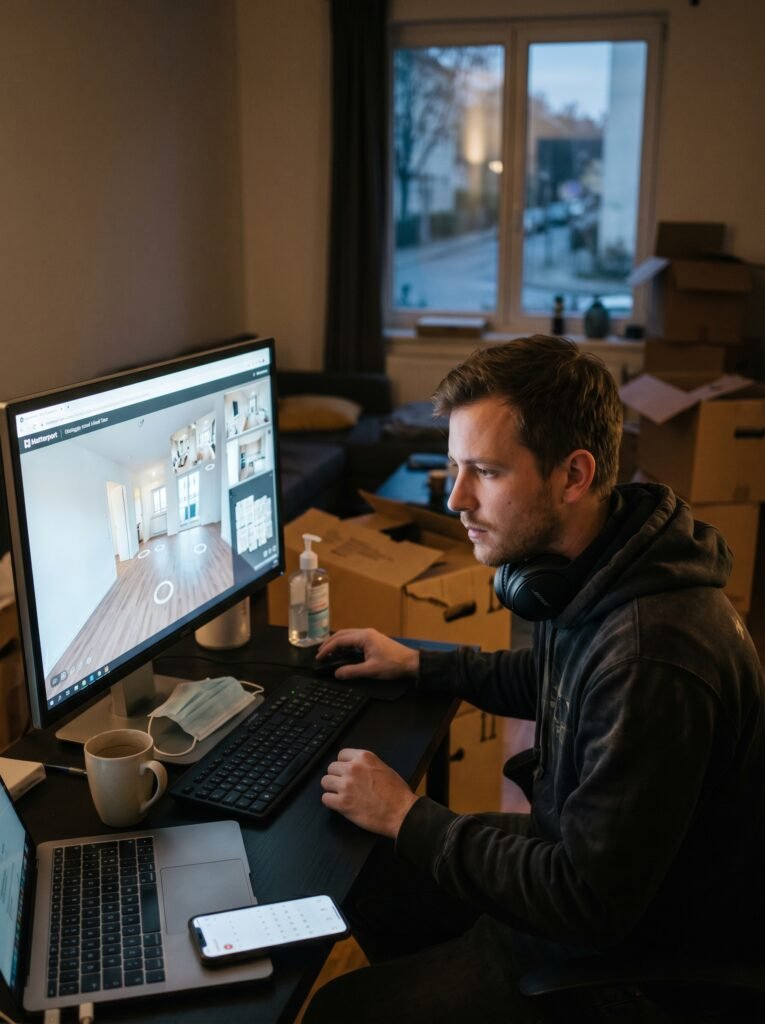
When the COVID-19 pandemic made in-person viewings impossible across much of the world in 2020, interior video stopped being a premium marketing add-on and became an absolute necessity overnight. Real estate platforms reported dramatic increases in video tour consumption. Platforms like Matterport, which allow fully navigable 3D interior scans, saw explosive growth.
But the shift wasn’t just practical — it was philosophical. For the first time, buyers were making significant financial decisions based entirely on video representations of spaces. That placed a moral weight on interior videography that it had never carried before. Accuracy, proportional honesty, and authentic representation became ethical issues, not just aesthetic ones.
The industry responded by developing clearer standards. Responsible platforms began flagging images and videos that used lens distortion to exaggerate space. The conversation around truth in interior media grew louder and more serious.
—
8. Staging, Story, and the Subtle Art of Emotional Manipulation
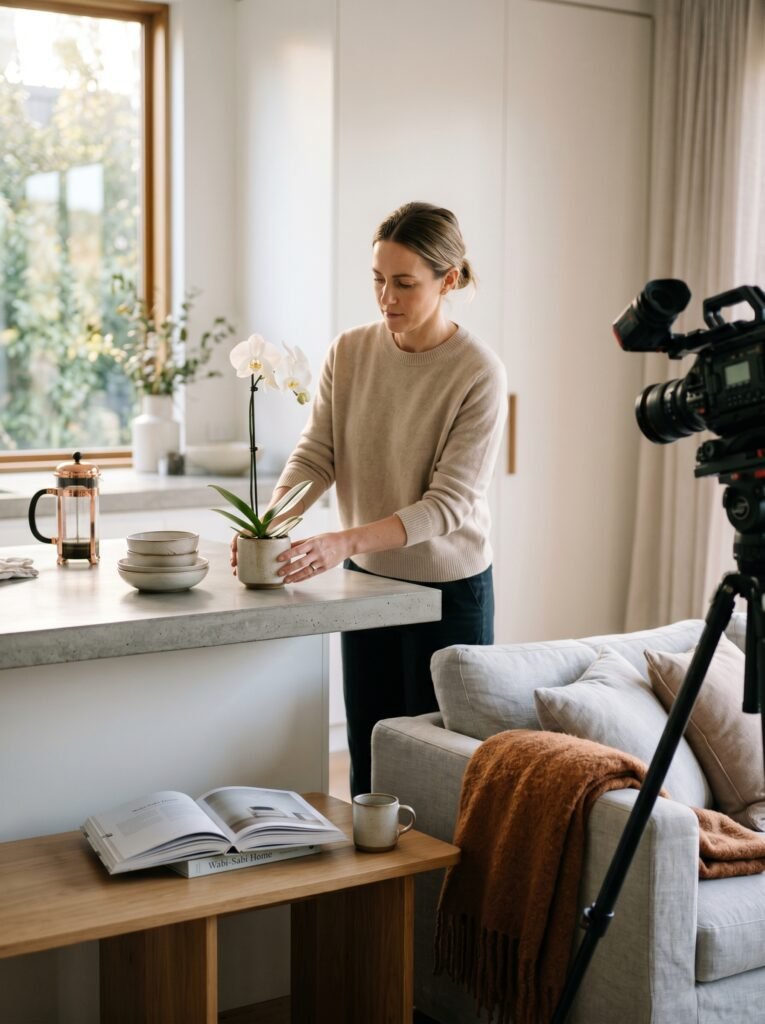
Walk into any professionally filmed interior and look carefully. The book left open on the side table. The single orchid on the kitchen counter. The folded throw blanket draped with deliberate casualness over the arm of the sofa.
None of this is accidental.
Interior video styling is a discipline unto itself, built around a simple but powerful truth: empty rooms feel cold, but cluttered rooms feel chaotic. The art is in achieving a “curated life” aesthetic — spaces that feel inhabited but not overwhelmed, personal but not specific enough to exclude the viewer’s own imagination.
This is why the best interior video productions involve a stylist or stager working alongside the videographer, sometimes spending hours adjusting, removing, and repositioning objects before the camera rolls. The goal isn’t deception — it’s invitation.
“A staged interior isn’t a lie. It’s a possibility presented at its most beautiful.”
—
9. Sound Design: The Invisible Layer Most People Never Notice
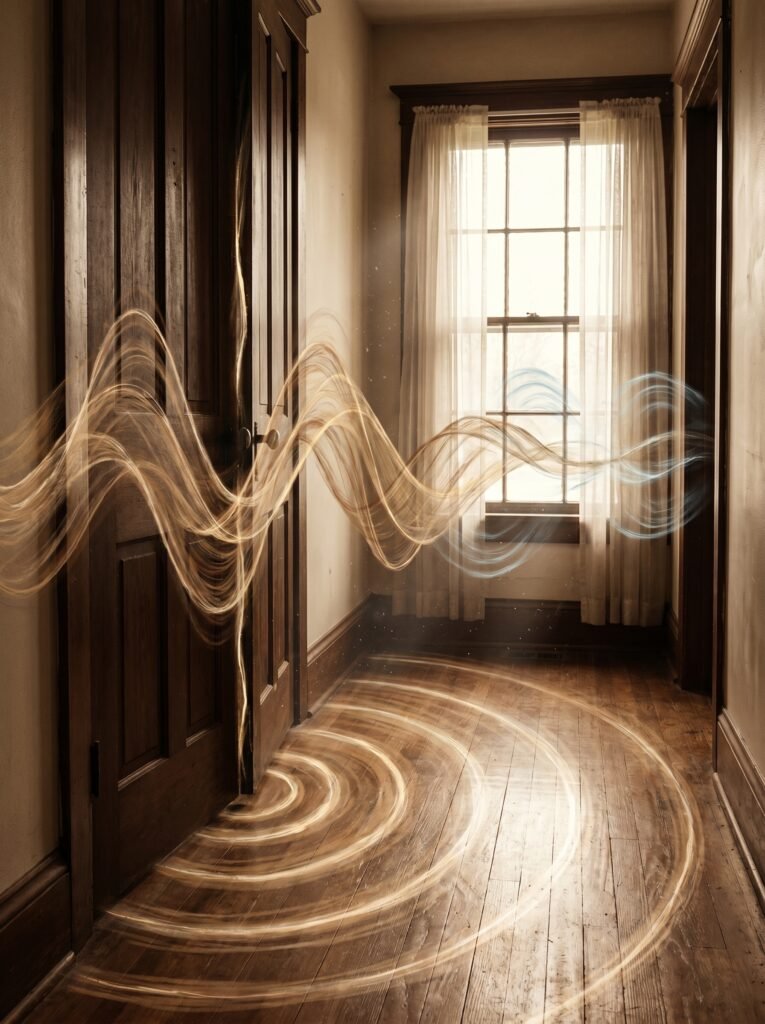
Close your eyes and listen to the interior videos you’ve watched. Most of them have music — often something ambient, instrumental, and vaguely aspirational. But the really sophisticated productions do something else as well: they use sound design.
The gentle creak of a well-made door. The distant sound of birdsong through a window. The soft resonance of footsteps on hardwood. These are not accidents. They are deliberate audio choices made to reinforce the physical experience of being in a space, to bypass the viewer’s visual skepticism and speak directly to their body’s memory.
Sound design in interior video is still an underutilized craft, but the professionals who’ve committed to it report measurably higher viewer engagement and emotional response.
—
10. The Ethical Questions Nobody in the Industry Likes to Discuss
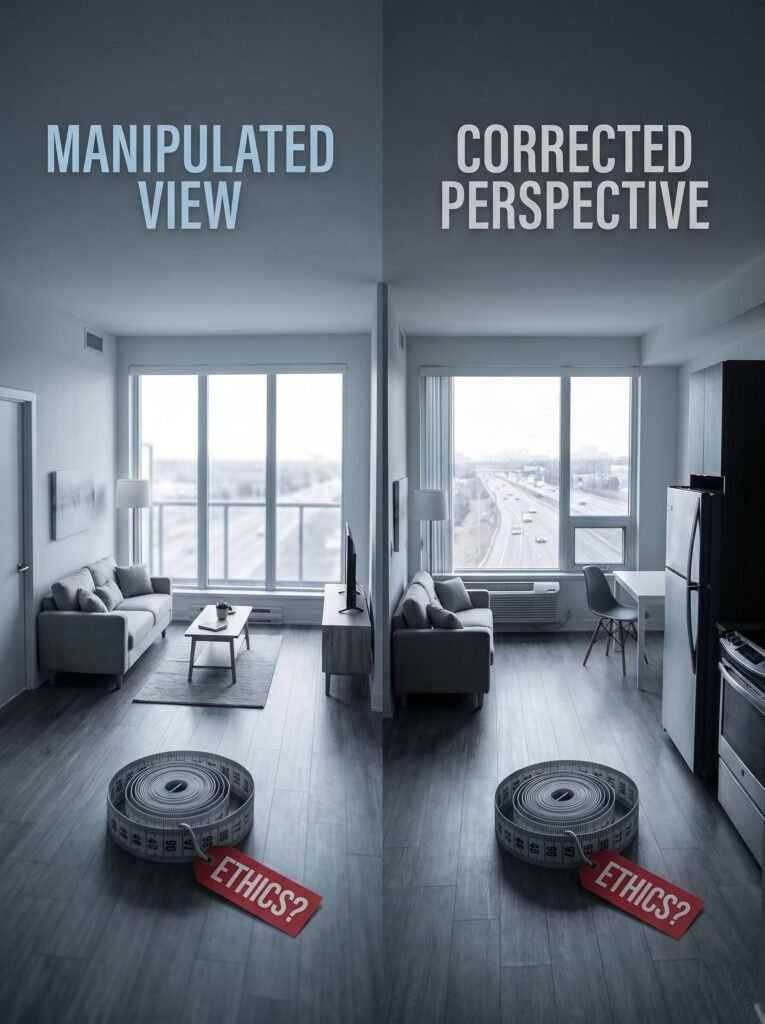
Interior video exists in a complicated ethical space. The tools available — from lens choice to color grading to the selective inclusion and exclusion of certain angles — give videographers enormous power to shape perception. A skilled team can make a 500-square-foot apartment feel twice its size. They can hide a highway view, soften the harshness of fluorescent overhead lighting, or make a north-facing room glow with apparent warmth.
Where does compelling visual storytelling end and misleading representation begin? The industry is still working that out. Some countries have introduced regulations around property marketing video, requiring that footage not materially misrepresent dimensions or proximity to features. But enforcement is inconsistent, and the temptation to optimize rather than represent honestly remains real.
For viewers and buyers, a degree of visual literacy is increasingly essential. Learn to read a wide-angle shot. Notice when furniture is unusually small (a stylist’s trick to make rooms feel larger). Ask for floor plans alongside videos.
—
11. Interior Video in the Age of Social Media: A Different Animal Entirely
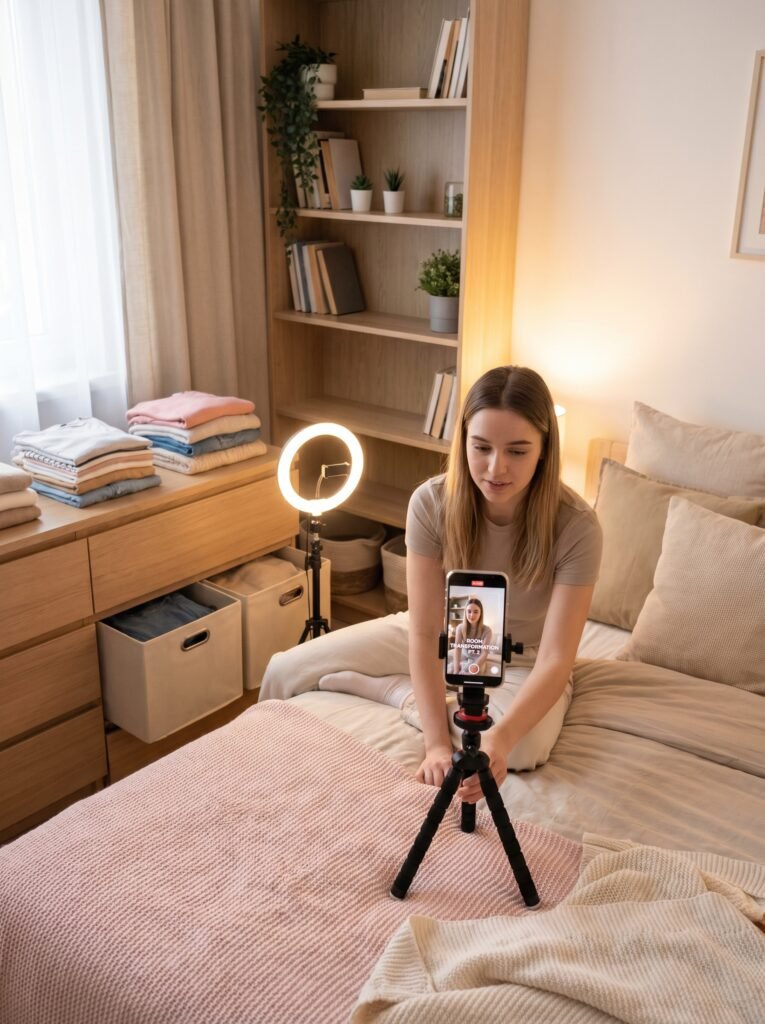
The interior video made for a luxury real estate listing and the interior video made for an Instagram reel are siblings who’ve been raised in different countries. They share DNA but speak different languages.
Social media interior video — the satisfying room transformation reveal, the ASMR-adjacent tidying video, the dreamy slow-motion coffee-making sequence — has its own visual grammar. It’s faster. It’s more intimate. It often embraces imperfection rather than airbrushing it out. And it has cultivated a genuinely enormous audience of people who watch videos of other people’s homes not to buy them, but simply because there is something deeply soothing about witnessing a beautiful, ordered space.
This genre has democratized interior video in ways the professional industry is still absorbing. Anyone with a smartphone, a ring light, and an eye for composition can now produce interior content that reaches millions.
—
12. Why the Best Interior Videos Make You Feel Like You’re Already Home
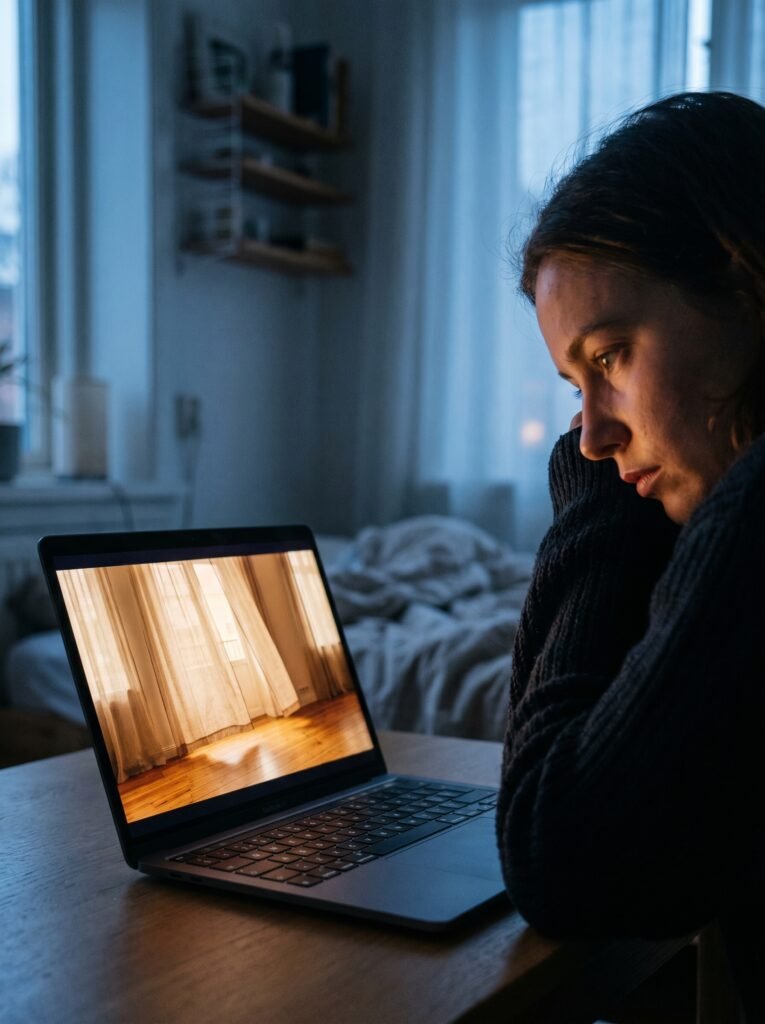
Here’s the thing that keeps coming up when you talk to people who make interior video seriously: they’re not really in the business of showing spaces. They’re in the business of generating longing.
The most effective interior videos — the ones that make viewers stop, exhale, and quietly whisper I want to live there — do something that transcends technical excellence. They locate an emotional frequency that the viewer already carries inside them, some half-remembered version of comfort or peace or belonging, and they tune the room to that frequency.
That’s not a trick. That’s artistry. And it’s why interior video, despite being one of the youngest visual disciplines, has already earned its place among the more meaningful forms of human visual communication.
—
🌿 How to Take Care of Your Interior Video
Whether you’re creating interior video for a home sale, a design portfolio, or your own creative practice, here’s what actually matters:
Respect the light. Schedule your shoot around natural light, not around convenience. Even a smartphone camera in golden-hour light will outperform a professional rig under flat midday sun. Arrive early, stay patient, and let the light do the heavy lifting.
Declutter before you call the camera crew. Every unnecessary object in the frame competes for visual attention. A day of thoughtful decluttering and styling before the shoot will add more value to your final video than almost any equipment upgrade.
Move slowly. Camera movement in interior video should be deliberate and unhurried. Rushed pans and abrupt cuts create anxiety, not aspiration. Slow down, let each room breathe, and trust that stillness communicates confidence.
Tell a sequence, not just a collection of shots. Think about how a person would naturally move through a space — entry, hallway, living area, kitchen, private spaces — and build your video to mirror that natural progression. A logical spatial journey keeps viewers oriented and engaged.
Don’t neglect the audio. Even if you’re not doing full sound design, choose music that matches the emotional temperature of the space, not just the trend of the moment.
—
❓ FAQ
Q: What is interior video used for most commonly? A: Interior video is most widely used in real estate marketing, architectural portfolio documentation, interior design showcases, and hospitality marketing for hotels and short-term rentals. In recent years, social media content creation has become a significant and growing category of its own.
Q: What camera equipment do I need for good interior video? A: A mirrorless or DSLR camera with a wide-angle lens (16-24mm range), a gimbal or slider for smooth movement, and supplemental LED lighting panels for rooms with poor natural light will cover the essentials. For higher-end productions, motorized camera sliders, drone footage for exterior context, and professional audio recording equipment are common additions.
Q: How long should an interior video be? A: For real estate, one to three minutes is the sweet spot — long enough to convey the full property, short enough to hold viewer attention through to the end. Architectural documentary videos can run five to twelve minutes for professional audiences. Social media interior content typically performs best at fifteen to sixty seconds for short-form platforms and three to eight minutes for YouTube-style formats.
—
💭 Final Thought
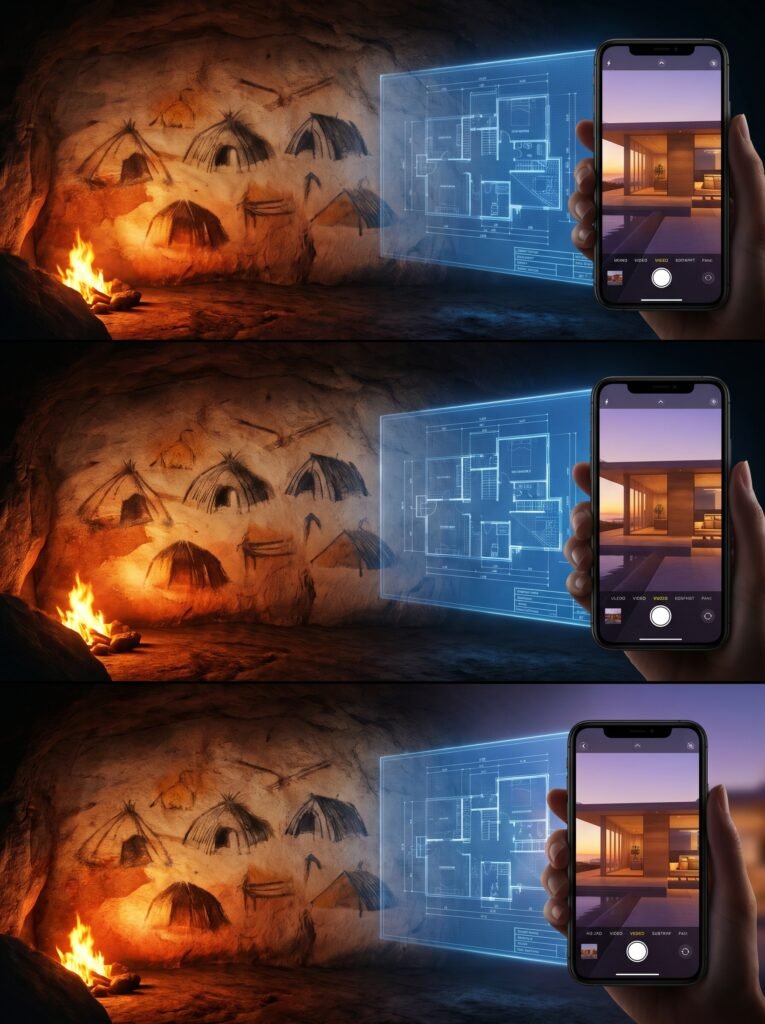
There is something quietly profound about the fact that humans have always tried to document and share the spaces they inhabit — from cave paintings to architectural blueprints to today’s cinematic walkthroughs. Interior video is just the newest chapter in that very old story: the attempt to say this is where I lived, this is what it felt like, this is the light at four in the afternoon. We are, at our core, creatures of space. And the rooms we love leave marks on us we spend lifetimes trying to describe.
So the next time you find yourself watching a video of a beautiful room you’ll never set foot in, ask yourself: what is it, exactly, that you’re really looking for in there?