Your Conservatory Deserves to Feel Like the Best Room in the House
You walk past it every single day — that glass-walled room at the back of your home that somehow ended up as a dumping ground for old garden chairs, half-dead houseplants, and things you swore you’d “find a home for later.” Sound familiar? The conservatory is one of the most overlooked rooms in any house, and yet it holds more potential for beauty, warmth, and genuine daily joy than almost any other space.
—
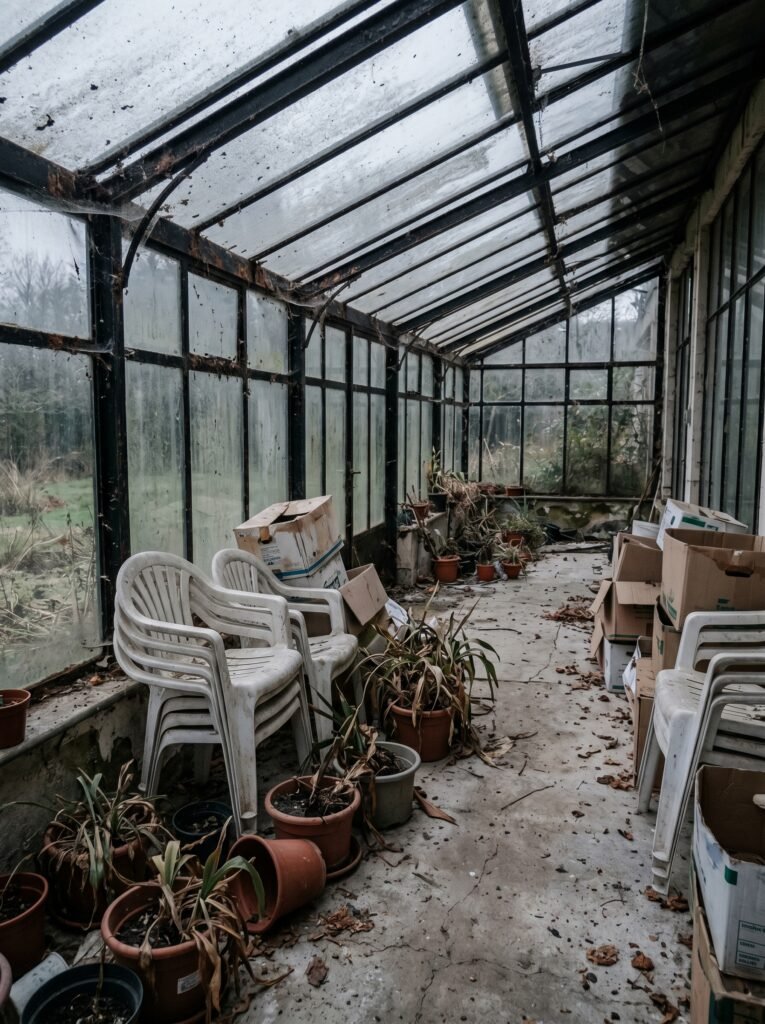
Table Of Content
1. The First Thing Most People Get Wrong About Conservatories
Here’s the mistake almost everyone makes: they treat the conservatory like an outdoor space that just happens to have a roof. So they fill it with plastic garden furniture, leave the floor bare, and wonder why it feels cold and uninviting nine months of the year.
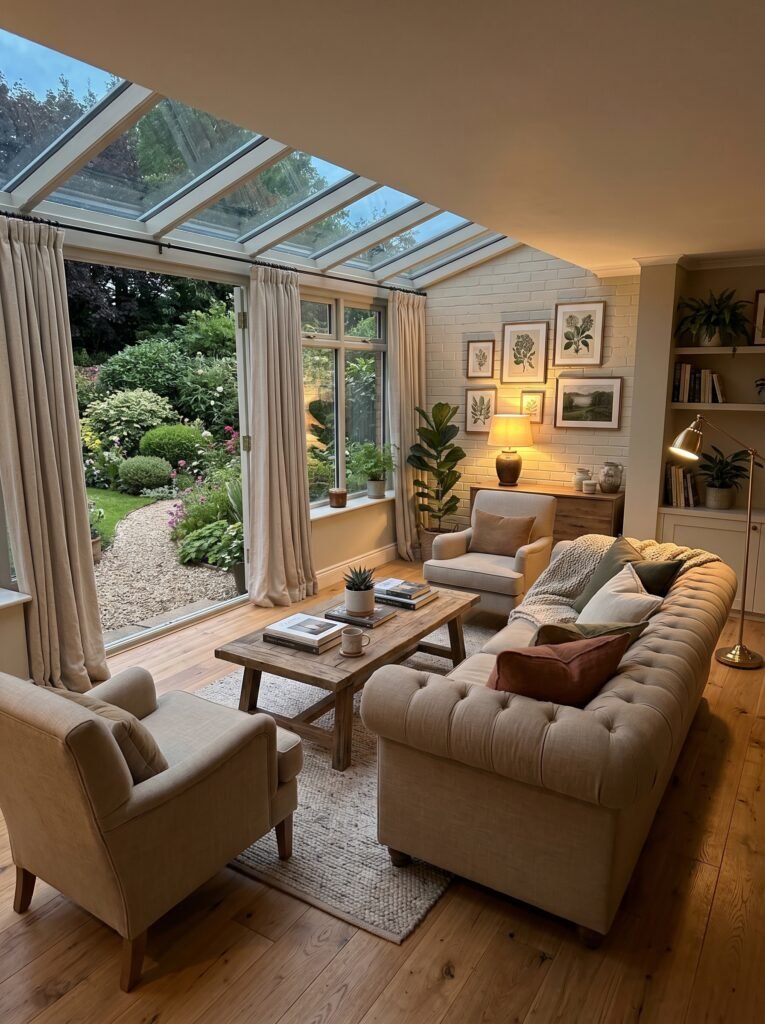
A conservatory is not an extension of your garden. It is an extension of your home — and the moment you start treating it that way, everything changes. The key shift in thinking is this: every design decision you make indoors should apply here too. Real flooring, real furniture, real textiles. The glass walls are the feature, not the excuse for minimal effort.
“A conservatory treated like a living room becomes the most loved room in the house.”
Start by mentally stripping the room back. Imagine it empty. Now ask yourself: if this were a living room with unusually large windows, what would you put in it? That question alone will unlock more creative clarity than any mood board ever could.
—
2. Choosing a Color Palette That Actually Works With All That Natural Light
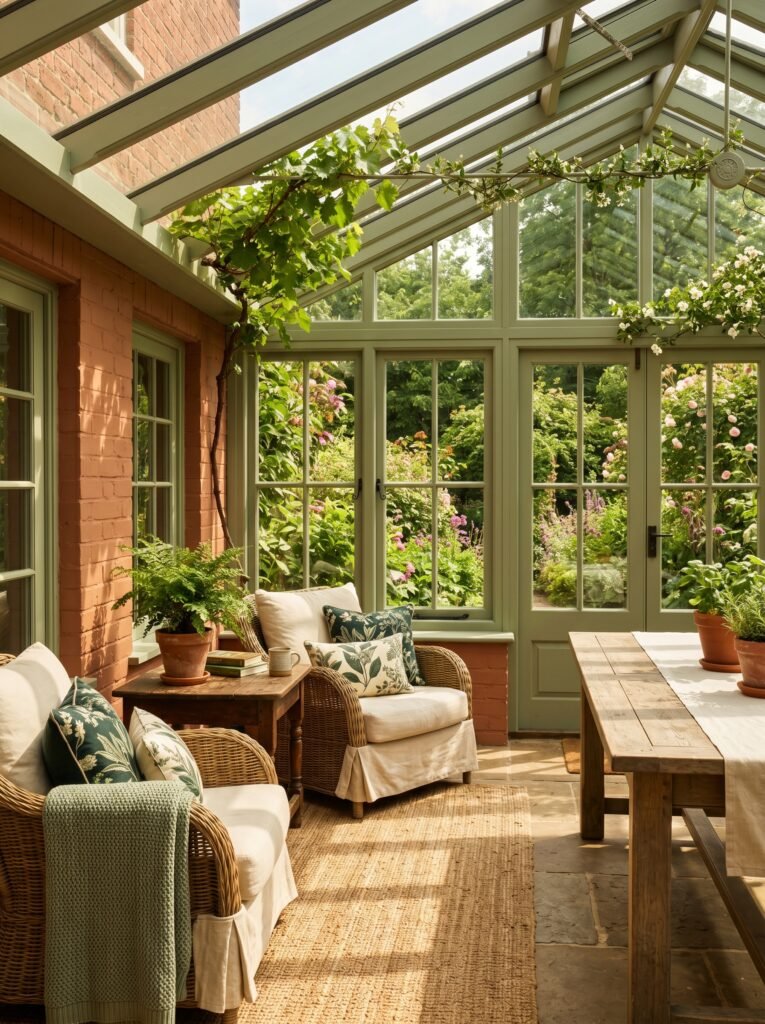
Natural light is generous and brutal in equal measure. It bleaches out colors that look gorgeous on a paint card, and it throws harsh shadows across patterns that seemed subtle in the shop. Choosing colors for a conservatory requires a slightly different eye than choosing for a regular room.
Warm, earthy tones — terracotta, sage green, warm white, soft ochre — tend to absorb and complement natural light rather than fighting it. Cool greys and stark whites can feel clinical and harsh during the middle of the day. If you love pale tones, lean toward warm off-whites like linen or cream rather than blue-toned whites, which can look stark against the changing sky outside.
Consider the view from your conservatory too. If your garden is lush and green, bringing in complementary botanical tones — deep greens, warm terracotta, earthy browns — creates a visual conversation between the inside and outside that feels deeply intentional and genuinely beautiful.
—
3. The Floor That Changes Everything

There is no single design decision with more impact in a conservatory than the floor. Get it wrong and the room always feels temporary. Get it right and suddenly the whole space feels permanent, grounded, and real.
Natural stone — like slate, travertine, or limestone — brings an organic warmth that works beautifully with the garden backdrop and handles temperature fluctuation well. Engineered wood is another strong choice: it gives the warmth and character of real wood without the warping risk that solid timber can suffer in a high-light, temperature-variable environment.
Underfloor heating installed beneath a stone or tile floor is, if your budget allows, genuinely life-changing. It transforms a conservatory from a seasonal novelty into a year-round retreat, and there is something almost magical about walking barefoot on warm stone while rain falls on the glass above you.
—
4. Furniture That Earns Its Place in the Sun
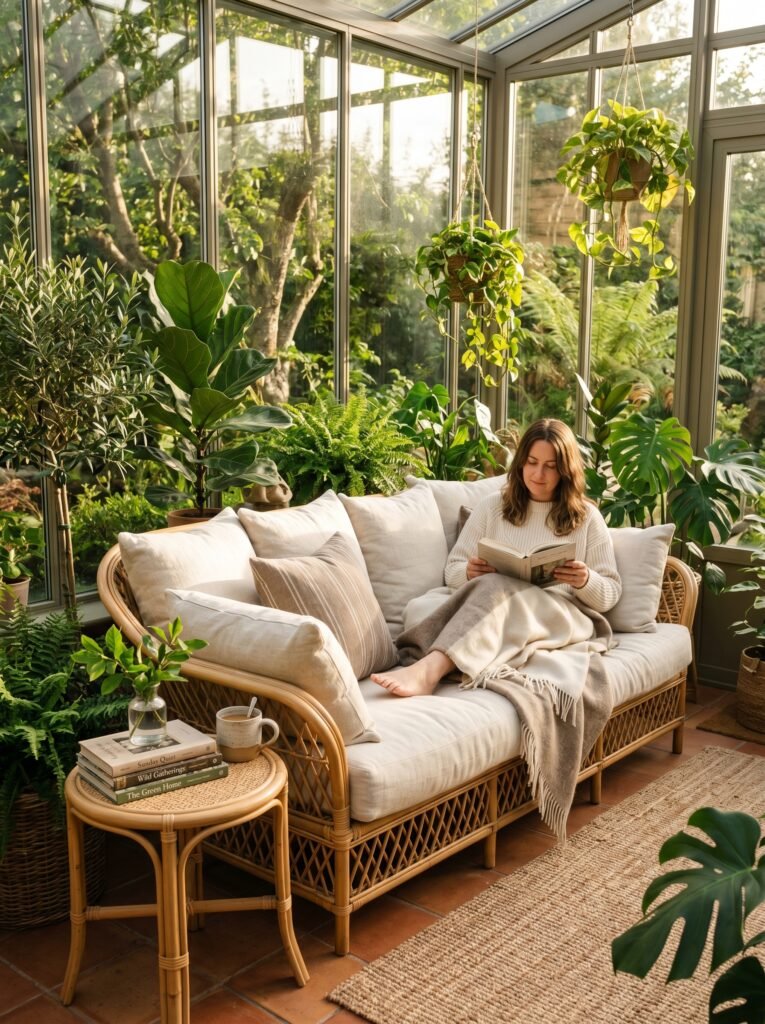
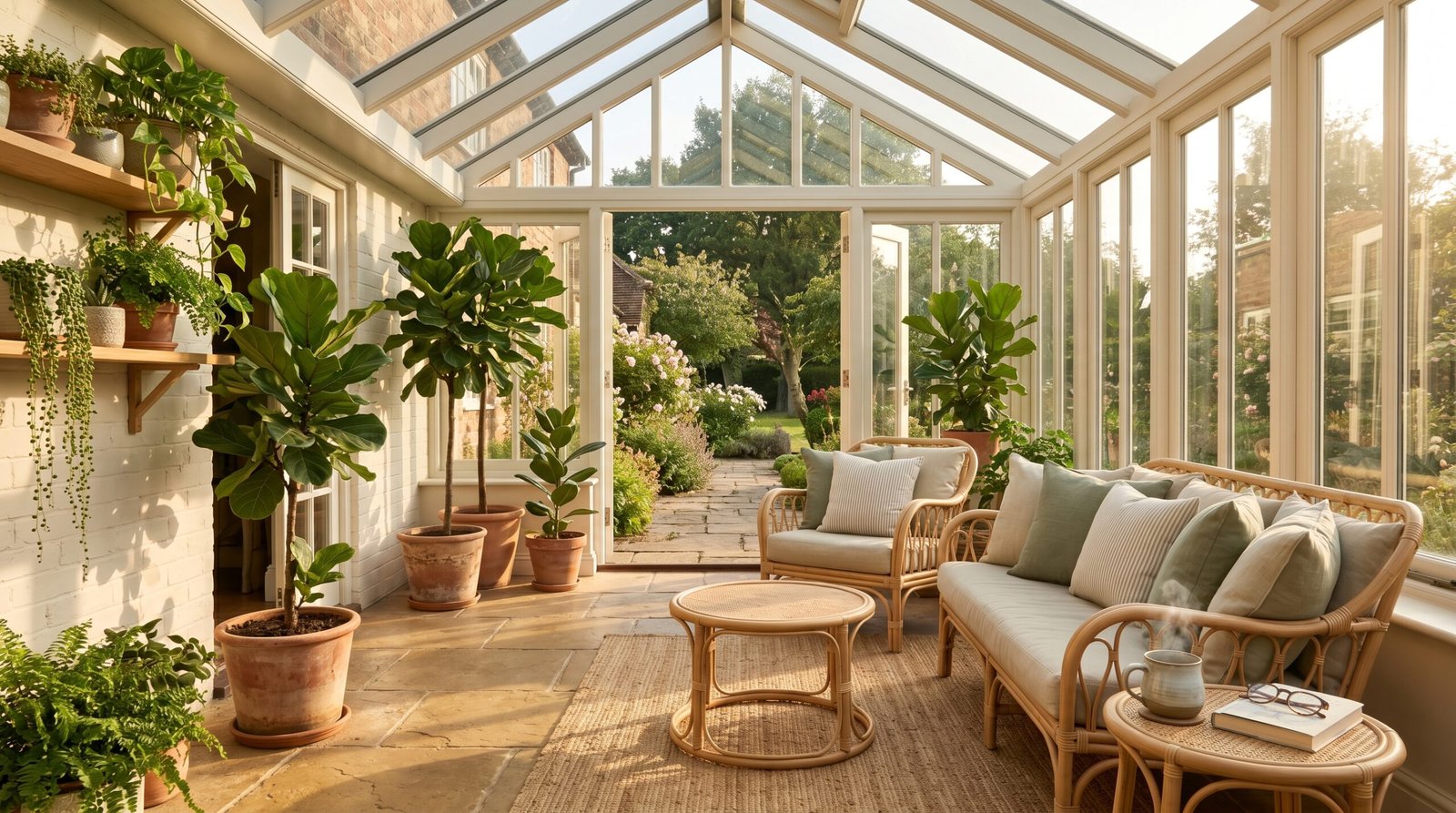
Rattan and wicker have had a full-circle revival, and for good reason — they are naturally beautiful, light enough to rearrange easily, and they age gracefully in bright environments where other materials fade or crack. A deep-seated rattan sofa with thick linen cushions is the kind of furniture that makes you want to spend whole Sunday mornings doing absolutely nothing productive.
But rattan isn’t the only option. Upholstered sofas and armchairs work brilliantly in conservatories too, as long as you choose fade-resistant fabrics. Look for solution-dyed acrylics or performance linens — they handle UV exposure far better than standard upholstery, and they often have a texture and depth that looks genuinely luxurious.
The golden rule: choose furniture scaled for the room. Conservatories are often smaller than a standard living room, and oversized pieces make them feel cramped and awkward. Measure carefully, and if in doubt, go slightly smaller rather than slightly bigger.
—
5. Let the Plants Do Half the Decorating
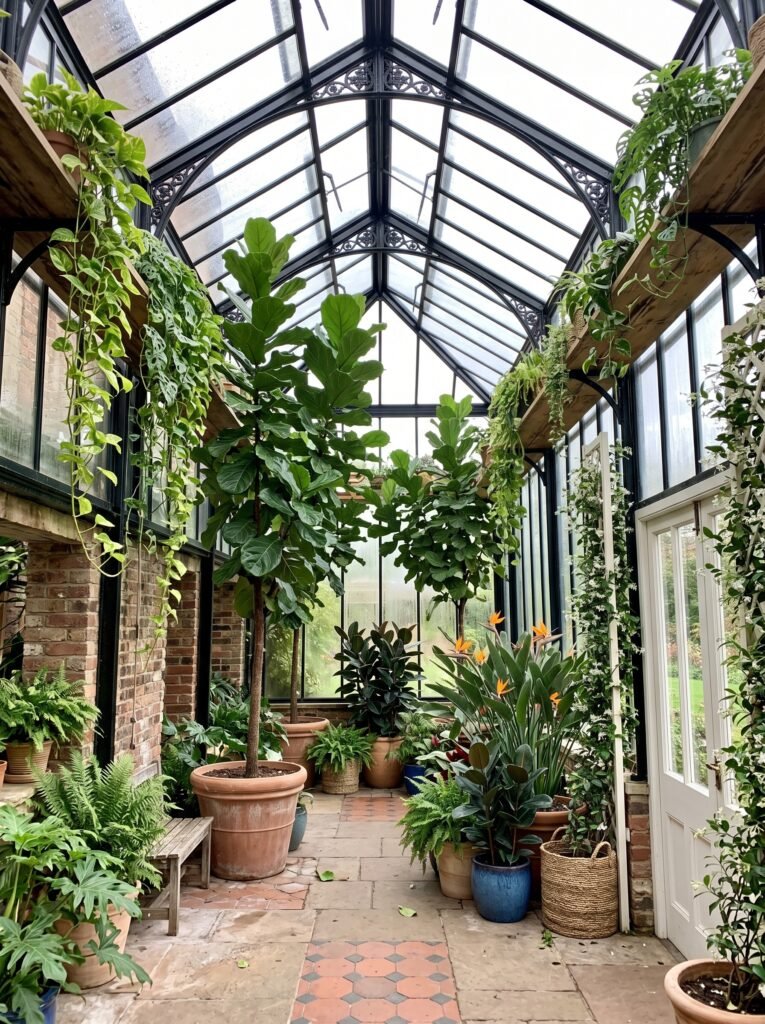
Imagine walking into a conservatory where tall fiddle-leaf figs stand in terracotta pots, trailing pothos cascades from high shelves, and a jasmine climbs a trellis near the door, filling the whole room with scent on warm afternoons. That image isn’t complicated or expensive to achieve — it just requires intention.
Plants are the single most transformative and cost-effective decorating tool available in a conservatory, and they are working with the environment rather than against it. High light levels, good ventilation, and warmth mean that plants often thrive here better than anywhere else in your home.
“In a conservatory, plants aren’t decoration — they’re architecture.”
Go for a mix of heights and textures: tall statement plants like olive trees or banana plants, medium-height bushy specimens like bird of paradise or rubber plants, and trailing varieties that soften shelves and windowsills. Group them in odd numbers and vary the pot materials — terracotta, ceramic, and woven baskets together look collected and intentional rather than matchy-matchy.
—
6. Textiles: The Secret Weapon Against That ‘Greenhouse’ Feeling
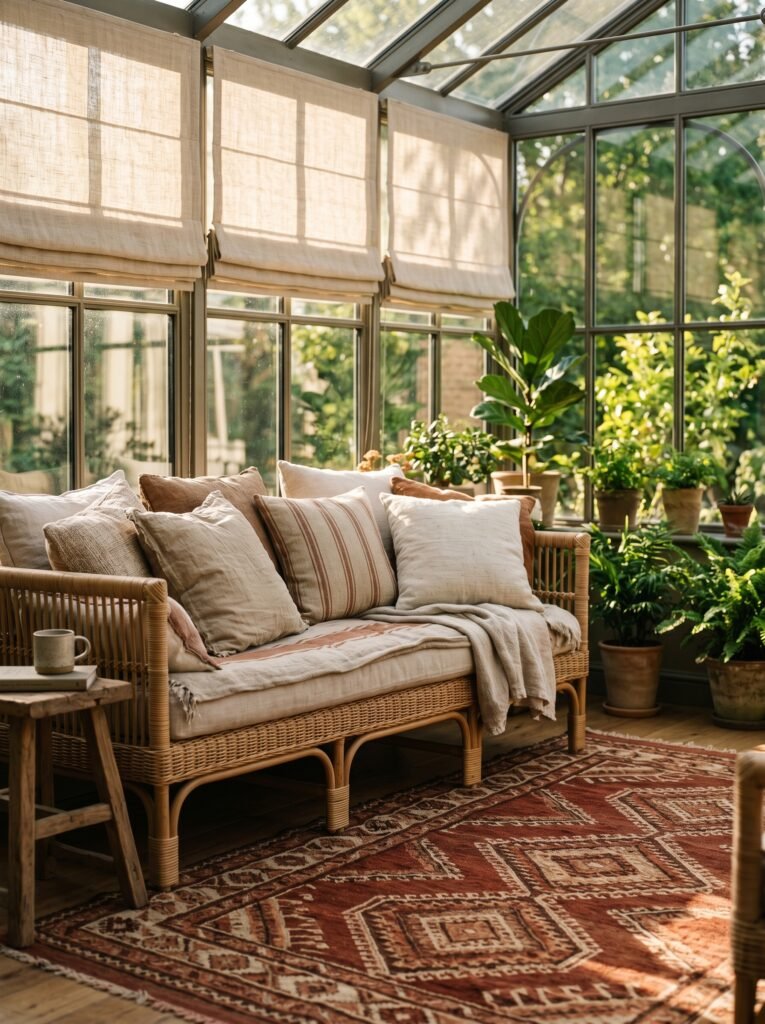
Nothing says “this is a real room” quite like a well-chosen rug, a stack of cushions, or curtains that pool gently onto the floor. Textiles are what separate a beautiful conservatory from a glorified greenhouse.
A large area rug anchors the furniture grouping and adds acoustic softness — glass rooms can echo surprisingly, and a rug absorbs that in a way that makes conversation feel more comfortable and intimate. Choose outdoor-grade rugs for practicality, but don’t sacrifice style: the range available now is genuinely impressive, from Moroccan-inspired flatweaves to plush washable designs.
Curtains or blinds serve both an aesthetic and a practical function in a conservatory. Roman blinds in a natural linen work beautifully and can be drawn against intense afternoon sun without sacrificing the view entirely. Full-length curtains on a roof-height pole make the room feel taller and more dramatic than it actually is.
—
7. Lighting That Transforms the Room After Dark
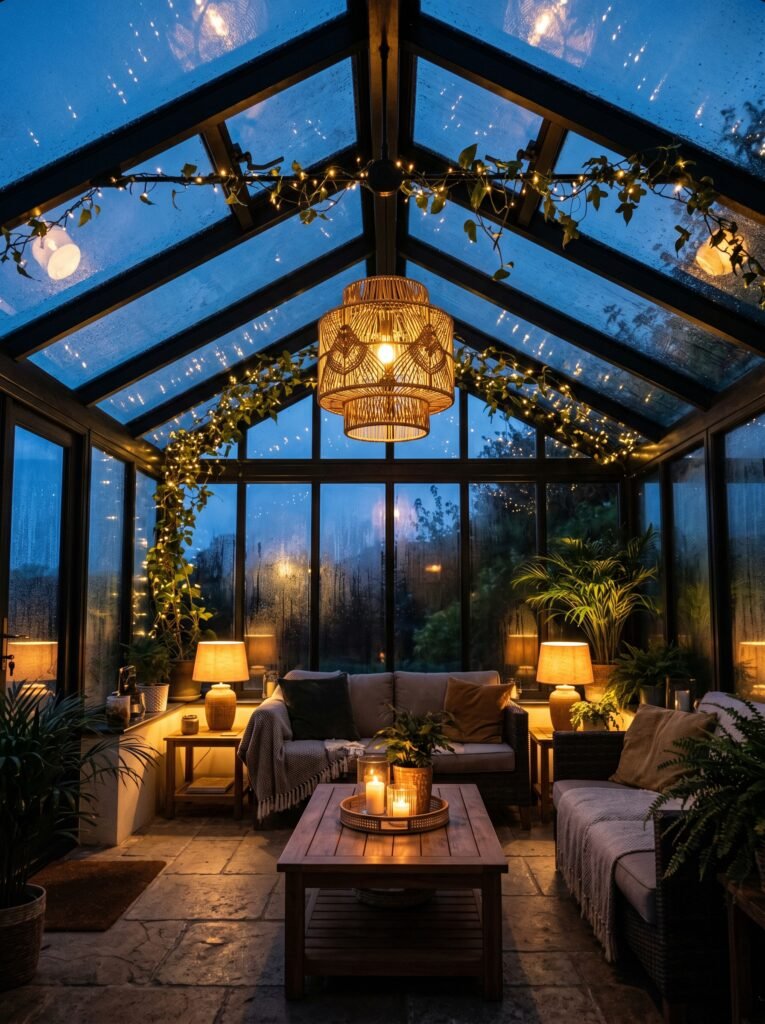
Here’s a truth most people don’t consider until it’s too late: conservatories are designed around daylight, and without deliberate artificial lighting, they become completely unusable after dark. A single overhead pendant — or worse, no overhead lighting at all — creates a flat, cold atmosphere that no candle can fully rescue.
Layer your lighting. A statement pendant or chandelier provides overall illumination and acts as a design focal point. Table lamps and floor lamps at lower levels create warmth and intimacy in the evenings. String lights wound through trailing plants or draped along roof beams add a touch of magic that costs almost nothing but creates an atmosphere that guests will always comment on.
—
8. The Art of Making a Small Conservatory Feel Bigger
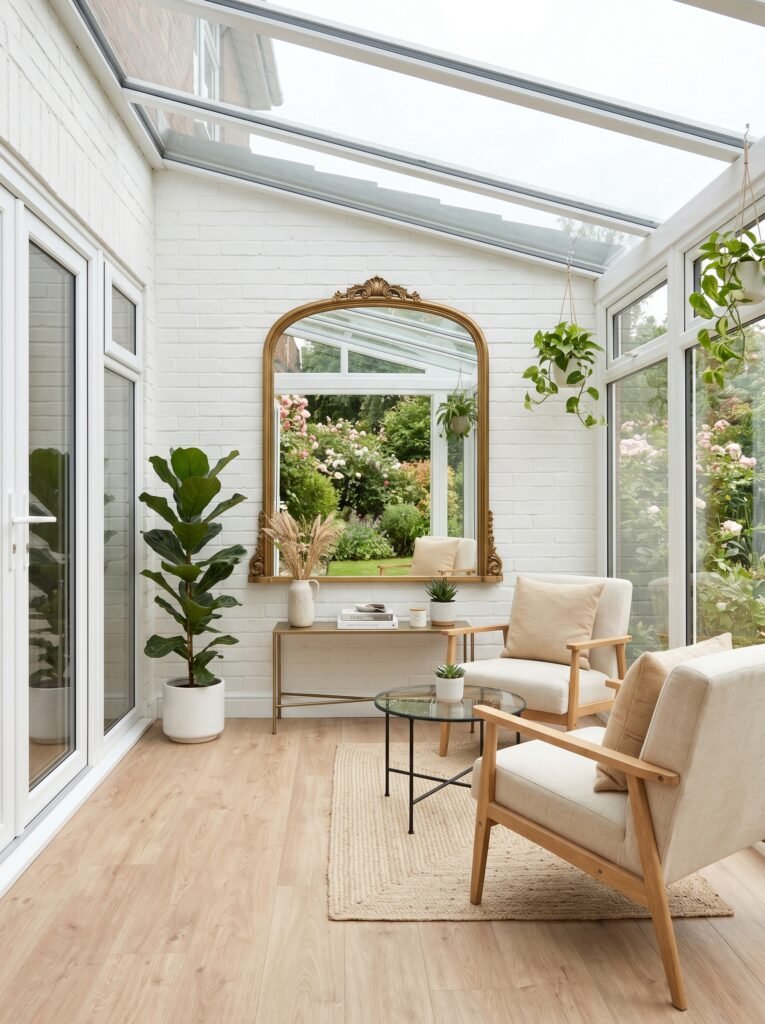
Not every conservatory is a grand Victorian extension. Many are modest lean-tos or compact additions — and that is absolutely fine. Small conservatories can be extraordinarily charming when styled with intelligence and restraint.
Mirrors are your best friend in a compact space. A large mirror on the internal wall reflects light and garden views, creating an illusion of depth that genuinely fools the eye. Keep furniture legs visible rather than opting for heavy, floor-length pieces — visible legs make a room feel airier. And resist the urge to fill every surface: negative space is a design tool, not a gap that needs filling.
—
9. Creating Zones When the Space Is Generously Sized
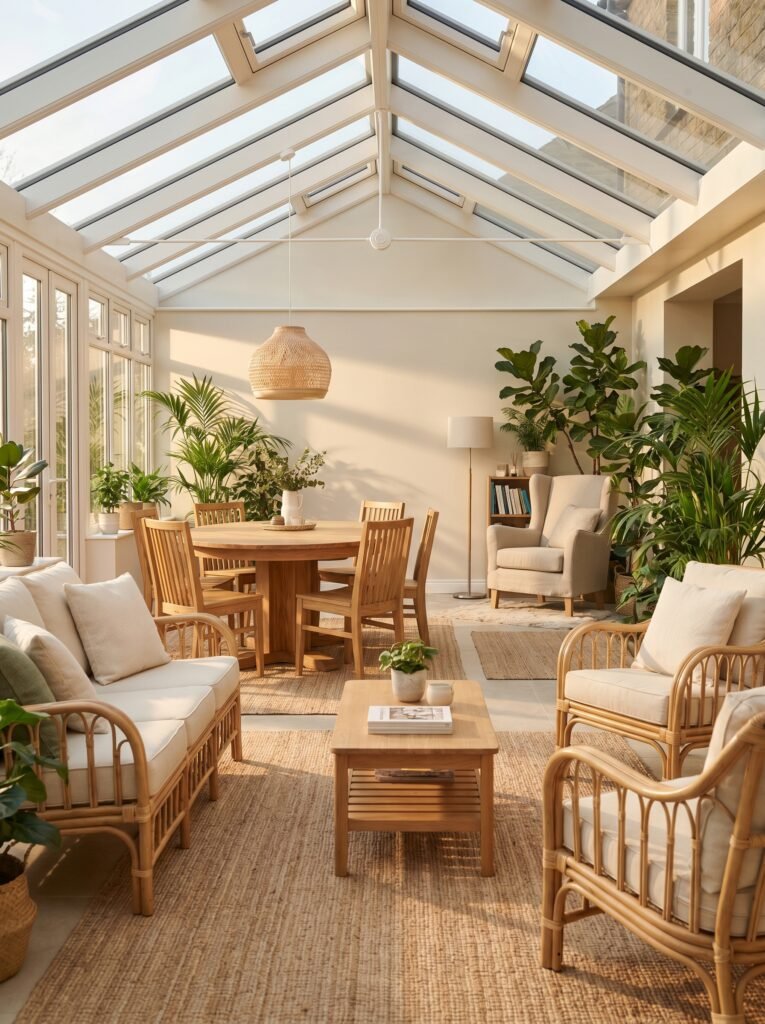
If you are lucky enough to have a larger conservatory, the temptation is to fill it entirely with one sprawling seating arrangement. A more interesting and functional approach is to create distinct zones — a seating area, a dining spot, and perhaps a quiet reading corner.
Area rugs are the most practical way to define zones without using walls or dividers. A round dining table beneath a pendant light creates its own natural zone, separate from a sofa arrangement anchored by a rectangular rug nearby. Tall plants or a bookshelf can act as a soft visual divider between spaces without closing the room off.
“The best conservatories feel like three rooms quietly sharing the same view.”
—
10. Incorporating a Dining Area Without It Feeling Awkward
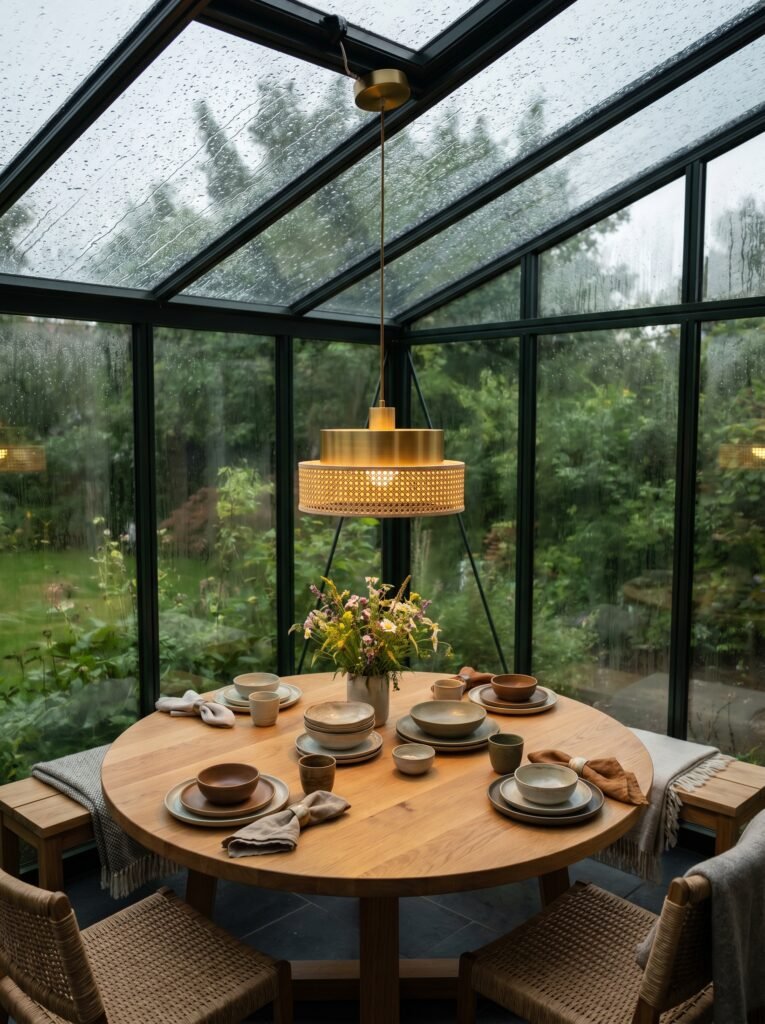
Eating in a conservatory — morning coffee with the garden waking up outside, long Sunday lunches with rain on the glass — is one of life’s genuine pleasures. But a dining table plonked in a glass room without thought can feel oddly exposed and clinical.
Anchor the dining area with a pendant light positioned directly above the table. This simple act transforms the space psychologically, making it feel defined and purposeful. Choose a table with some warmth to it — solid oak, mango wood, or even painted wood — rather than cold glass or chrome, which can feel harsh in such a light-filled environment.
—
11. The Personal Touches That Make It Yours
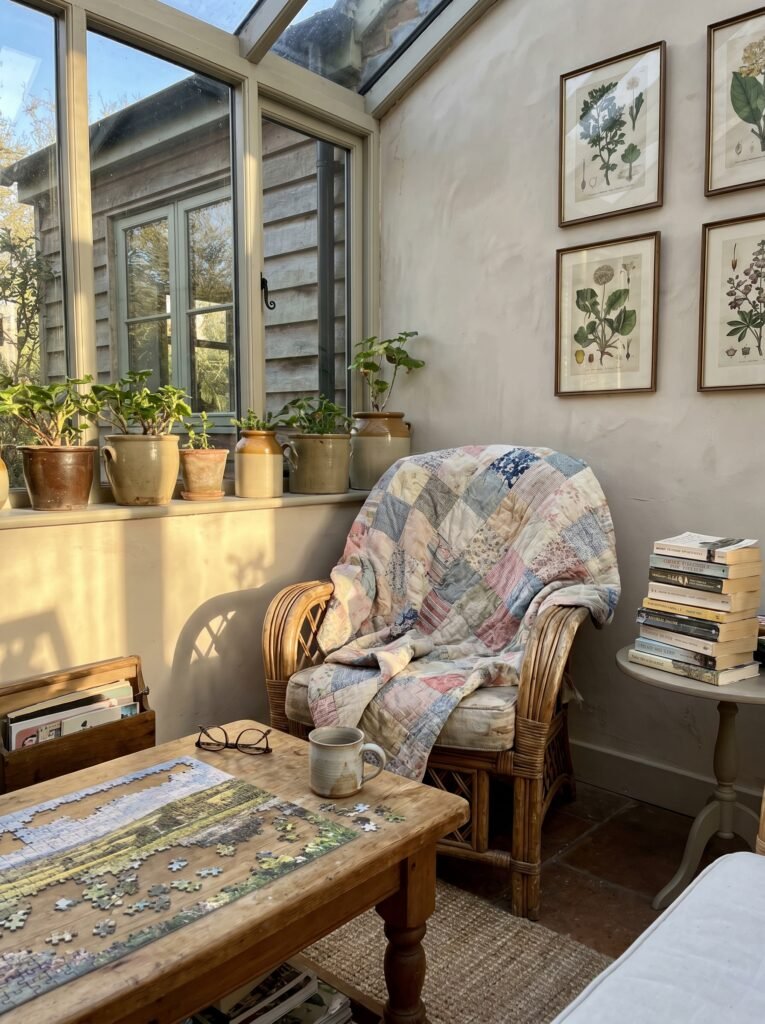
No amount of beautiful furniture or perfect color choices will make a conservatory feel truly alive without personal touches. Stacked books on a coffee table. A worn quilt folded over the arm of a chair. A collection of ceramic pots in varying heights. Art on the internal wall. A half-finished puzzle on a side table.
These small, human details are what tell the story of who lives in a home. They are what make guests feel genuinely welcomed rather than impressed. And they are what make you actually want to spend time in the room, rather than just admire it.
—
12. Thinking Seasonally: How to Keep the Room Feeling Right All Year
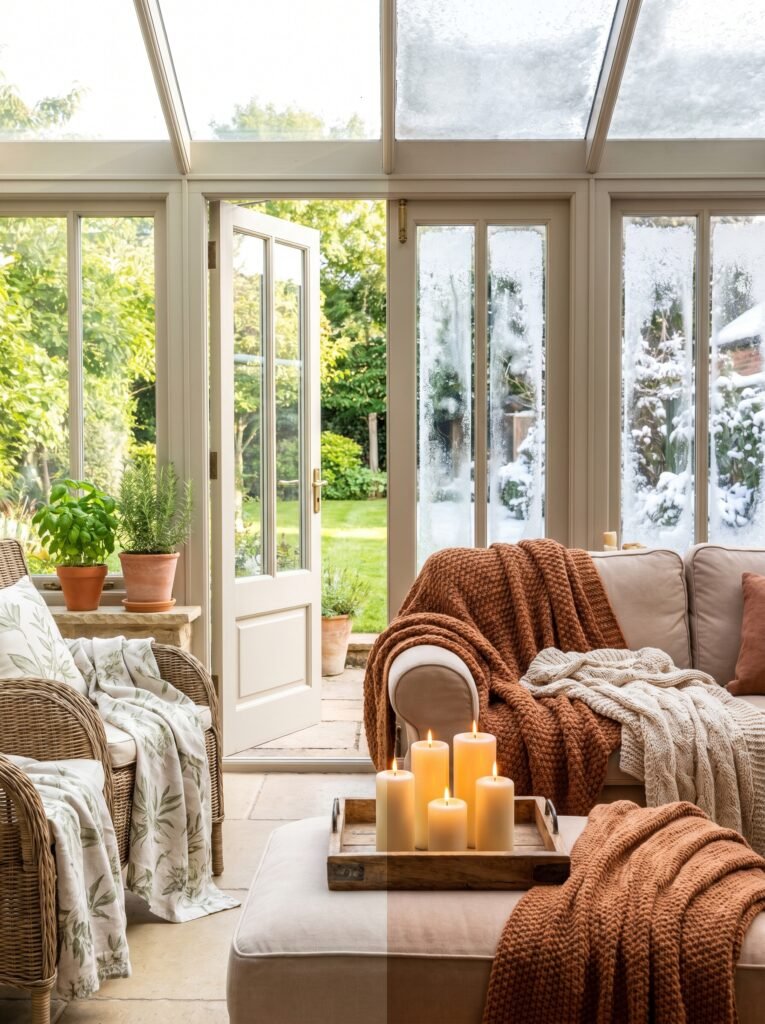
A conservatory that works brilliantly in August but feels cold and uninviting in January is a half-finished project. The most successful conservatory interiors are designed to adapt with the seasons, and this doesn’t require wholesale redecoration — just small, considered shifts.
In summer: lighter throws, botanical linens, the door open to the garden, fresh herbs on the windowsill. In autumn and winter: heavier knit throws layered over the sofa, candles grouped on trays, warm amber lighting, and a plug-in oil diffuser filling the room with something like cinnamon or sandalwood. The bones of the room stay the same; the mood shifts with the season.
—
🌿 How to Take Care of Your Conservatory Interior
Maintaining a beautiful conservatory doesn’t require huge effort, but it does require consistency. Here are a few practical habits that make a real difference.
Clean the glass regularly — both inside and out. It sounds obvious, but clean glass dramatically changes how light enters the room, and dirty windows are the fastest way to make an otherwise lovely space feel neglected. A squeegee and a bucket of warm soapy water is all you need.
Check your plants weekly rather than when they start looking unhappy. Conservatory plants can dry out faster than those elsewhere in the house because of the heat and light, and they can also be susceptible to temperature drops near the glass in winter.
Rotate cushion covers with the seasons if you can. Having a “winter set” and a “summer set” in the same color family is a simple and affordable way to keep the room feeling fresh without buying new furniture.
Finally, don’t let the conservatory become a storage room in disguise. A thoughtful clear-out every few months keeps the space intentional — and intentional spaces are always more beautiful.
—
❓ FAQ
Q: What is the best flooring for a conservatory? A: Natural stone, slate, and engineered wood are consistently the top choices. They handle temperature changes well, look beautiful, and last for many years. If you want to add warmth underfoot without underfloor heating, a good quality area rug over a hard floor works wonderfully.
Q: How do I stop my conservatory from getting too hot in summer? A: External roof blinds are the most effective solution, as they block heat before it enters the glass rather than after. Internal blinds help too, and planting tall trees or climbing plants on a south-facing side provides natural, beautiful shade that also improves the overall look of the space.
Q: Can I use regular household furniture in a conservatory? A: Yes, with some caveats. Choose fade-resistant or UV-stable fabrics for any upholstered pieces, and avoid solid wood furniture near south-facing glass where intense heat can cause warping or cracking over time. Engineered wood and painted wood generally cope much better.
—
💭 Final Thought
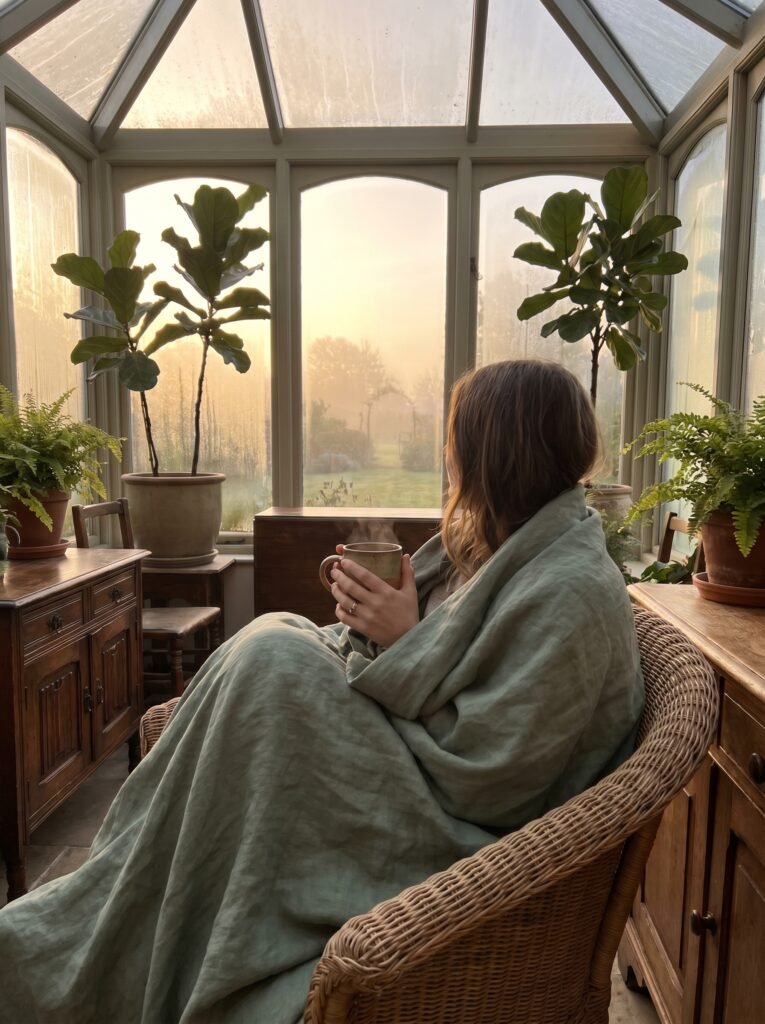
A conservatory at its best is one of the most quietly magical rooms a home can offer — a place where the outside world is close enough to feel connected to, but the inside world is warm and comfortable enough to truly rest in. It deserves the same love and intention you’d give any other room in your home, because it will repay that attention every single morning you sit in it with a cup of something warm in your hand.
So here’s the question worth sitting with: which room in your home are you currently walking past without seeing — and what would it become if you finally paid it the attention it deserves?