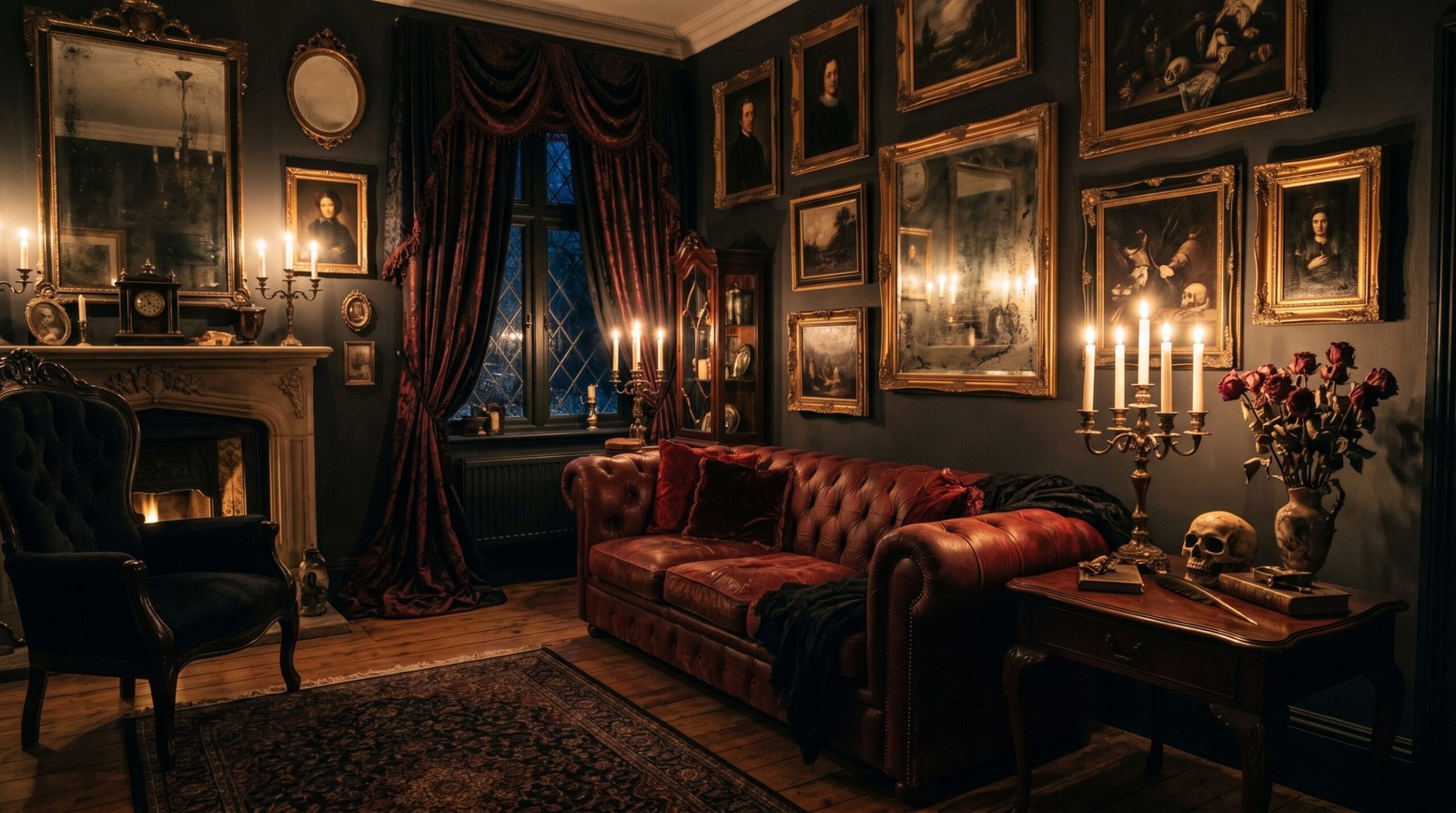
The Dark Rooms That Finally Feel Like Home: A Journey Into Goth Interior Design
There’s a certain kind of person who walks into a bright, beige living room — all cream walls and farmhouse shiplap — and feels absolutely nothing. Maybe that person is you. Maybe you’ve always been drawn to shadows, to candlelight, to the quiet drama of a space that feels like it was pulled from a Victorian novel or a Tim Burton fever dream. If so, goth interior design isn’t just an aesthetic choice. It’s a homecoming.
—
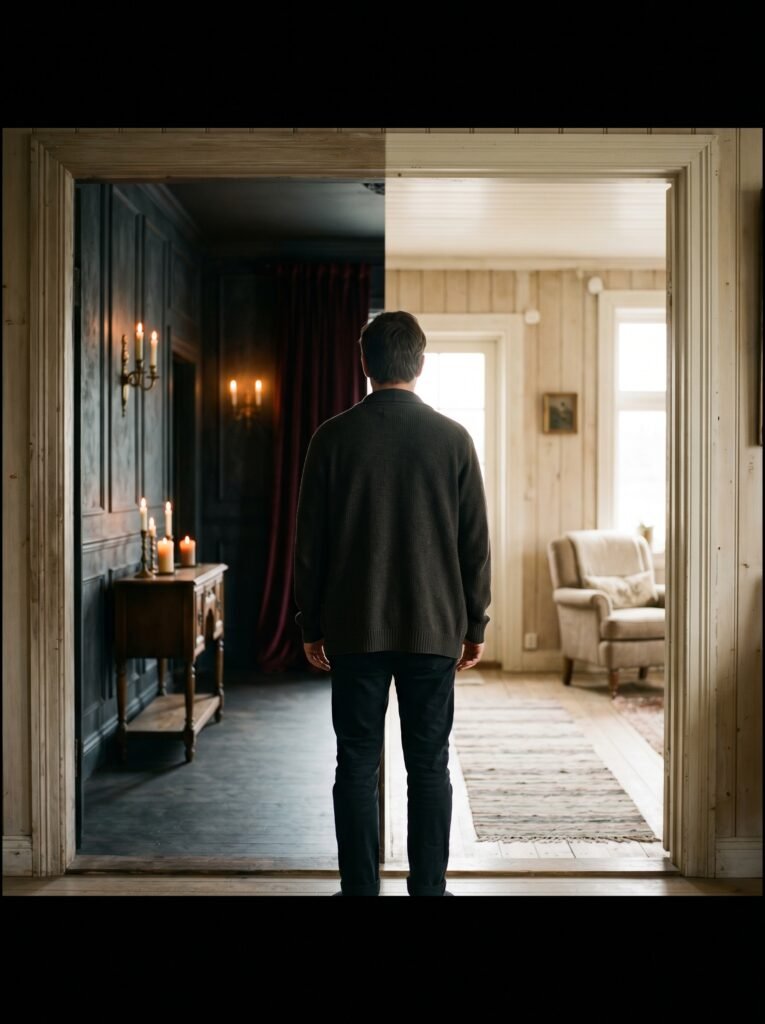
Table Of Content
1. It Starts With a Feeling, Not a Color Palette
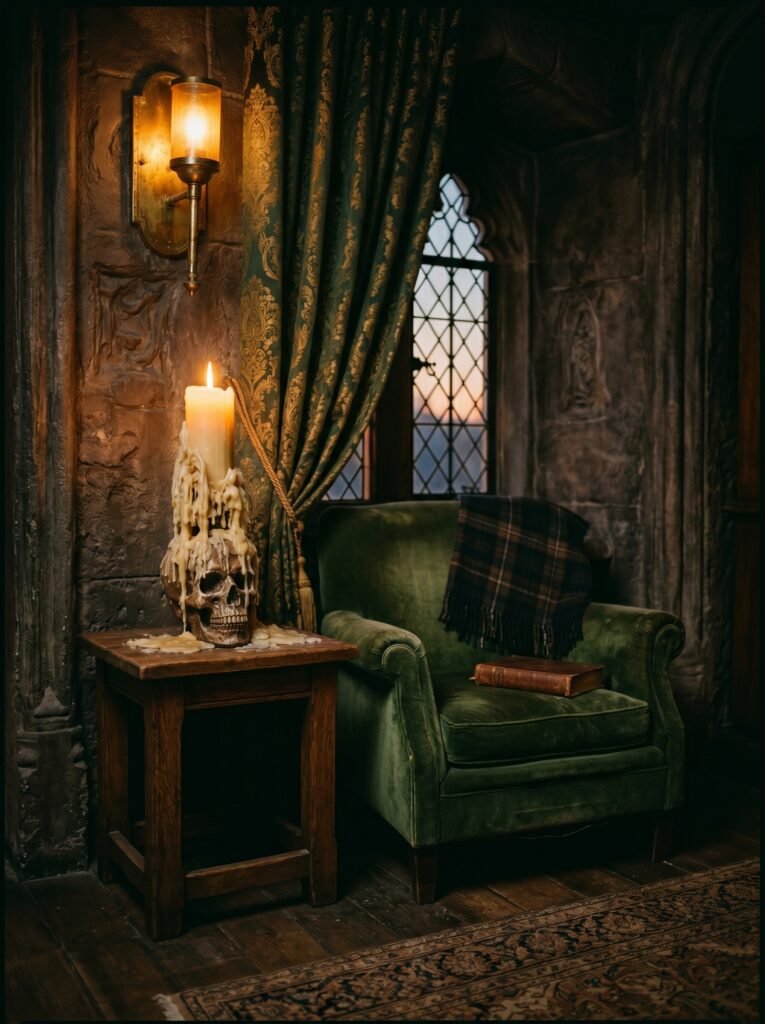
Most people assume goth interior design is simply “paint everything black and call it a day.” But anyone who has ever walked into a truly well-executed dark room knows the truth — it’s not about color at all. It’s about atmosphere. It’s the way your shoulders drop when you step inside. It’s the feeling that the space sees you back.
Goth interiors are built on emotional intention. Every element — the heavy drapes, the aged brass fixtures, the velvets and the skull motifs — serves a psychological purpose. These rooms are designed to make you feel sheltered from the noise of the world, wrapped in something ancient and quiet and deeply personal.
“A goth room doesn’t shut the world out. It invites only the right parts of it in.”
This is why so many people who discover goth interiors describe the experience as relief. Not novelty. Not trendiness. Relief. Like finally being allowed to decorate the inside of their minds.
—
2. The History Is Older Than You Think

Before it was a Pinterest board or an Instagram aesthetic, goth interior design had centuries of roots to draw from. The Gothic architectural movement began in 12th-century France, defined by pointed arches, ribbed vaulting, and those breathtaking stained-glass windows that turned light into something sacred and strange.
By the 18th century, the Gothic Revival swept through England, giving us romantic ruins, asymmetrical castle architecture, and a literary culture obsessed with darkness and the sublime. Think Horace Walpole’s eccentric home Strawberry Hill, a turreted fantasy that was half-medieval manor, half-artistic manifesto.
By the Victorian era, this aesthetic had moved into mainstream domestic spaces — heavy mahogany furniture, dark wallpaper, taxidermy, botanical prints of poisonous plants. The Victorians were, in many ways, the original goth decorators. They simply called it “proper taste.”
—
3. The Non-Negotiables: What Actually Makes a Room Gothic
If you want to understand goth interior design at its core, there are certain elements that appear again and again — not as rules, but as vocabulary. The language this aesthetic uses to communicate.
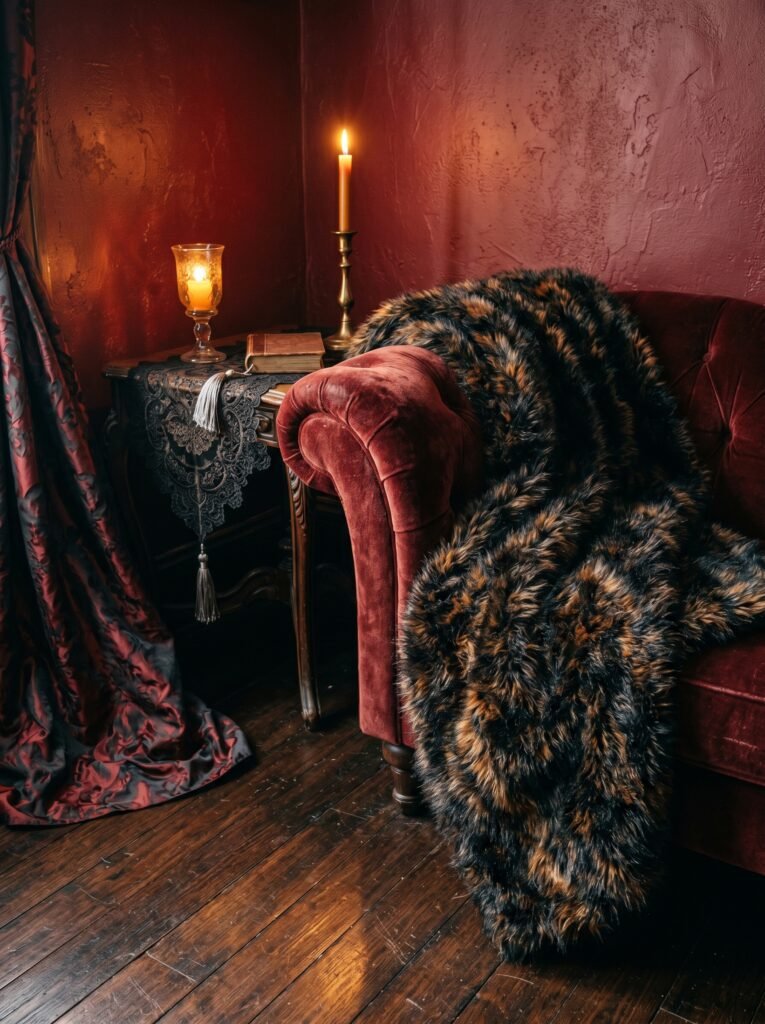
Dark walls are perhaps the most iconic starting point. Deep charcoal, midnight black, oxblood red, forest green, and navy are all considered goth-adjacent. But the magic isn’t just the color — it’s the way dark walls make art pop, make candlelight glow warmer, and make a room feel enclosed in the most comforting way possible.
Texture and fabric are equally critical. Velvet sofas, silk curtains that pool on the floor, faux fur throws, lace overlays. Goth interiors are tactile spaces — they beg to be touched. A cold, sparse room is the opposite of gothic. Gothic rooms are dense with sensation.
—
4. Lighting: The True Architect of Darkness
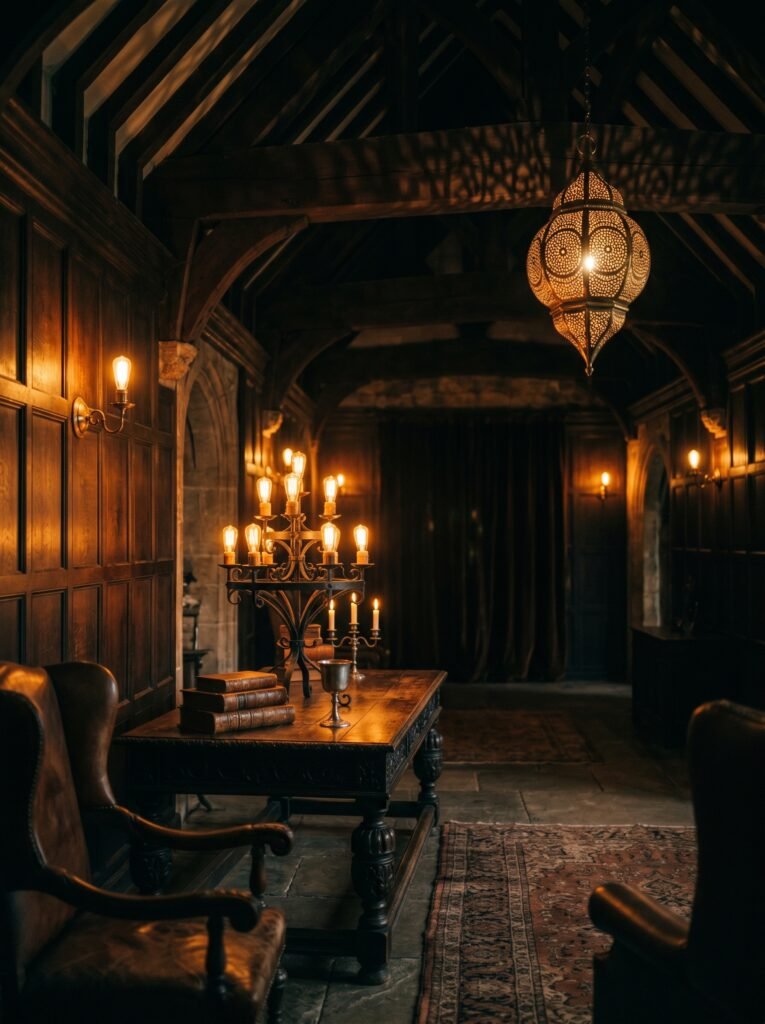
Here’s something that surprises people when they first start exploring this aesthetic: goth rooms are not dark because they lack light. They’re dark because the light is curated.
Candelabras and candles — real or flameless — are the cornerstone of gothic lighting. Wall sconces with amber bulbs, Edison-style filament lights, Moroccan lanterns that cast geometric shadows across the ceiling. The goal is not to illuminate a room evenly, as modern minimalism prefers, but to create pools of warmth in a field of shadow.
This approach to lighting has a name in film and theater: chiaroscuro. The dramatic contrast between light and dark. When applied to interior spaces, it creates a living environment that feels perpetually cinematic — like you’re always the protagonist of something interesting.
“The right light doesn’t fill a room. It sculpts it.”
—
5. Furniture That Has a Past (or Looks Like It Does)
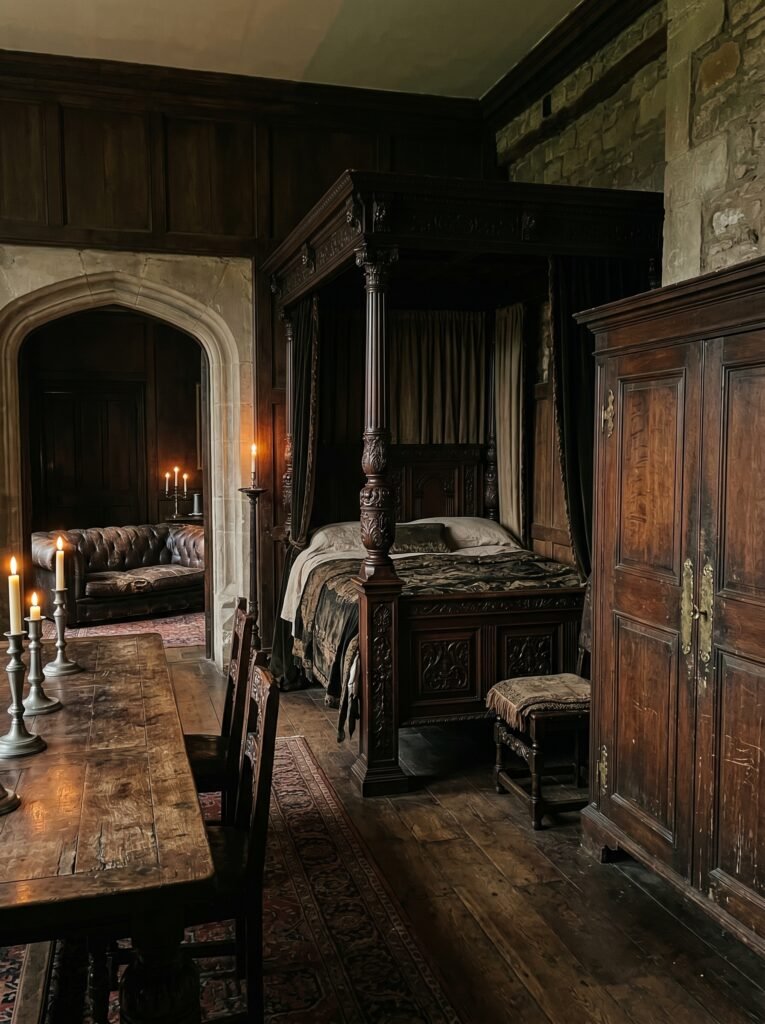
Goth interior design has a complicated relationship with the new. In general, it prefers things that look like they’ve survived something — antique four-poster beds, salvaged church pews repurposed as entryway benches, cabinets with ornate carved detailing that suggests someone spent months crafting them by hand.
This doesn’t mean you need to max out a credit card at an antique auction. It means you train your eye to look for character over cleanliness. A slightly worn Chesterfield sofa. A wardrobe with tarnished brass handles. A dining table that looks like it might have hosted a séance or two.
The key aesthetic principle here is patina — the beauty that comes with age. Goth interiors celebrate rather than hide the evidence of time.
—
6. The Walls Are Doing a Lot of Work
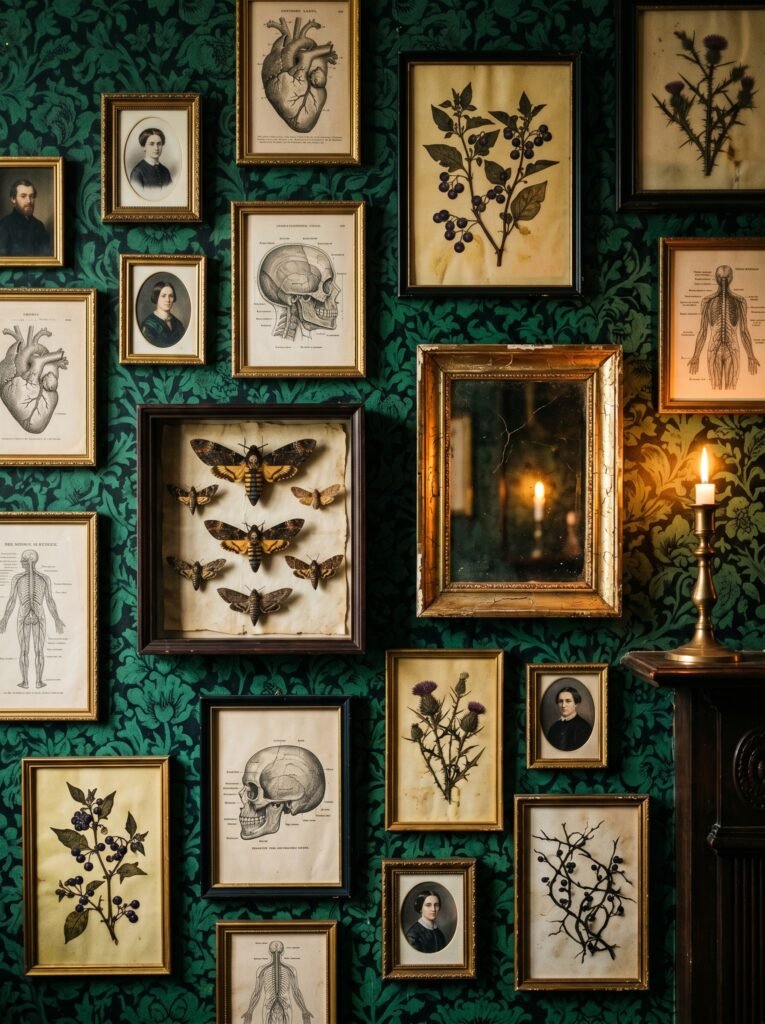
Dark paint is the entry point, but truly committed goth interiors treat their walls as storytelling surfaces. Wallpaper makes a dramatic comeback here — dark floral prints, damask patterns, Victorian botanical illustrations featuring thorns and nightshade, or full-wall murals depicting forests, moons, and gothic architecture.
Gallery walls in goth spaces tend to be dense and layered — Victorian portrait miniatures alongside anatomical illustrations, pressed moth collections in shadow boxes, original artwork, antique mirrors with tarnished frames. The aesthetic resists blank space. Every inch of wall has the potential to mean something.
—
7. Plants, Death, and the Beauty In Between
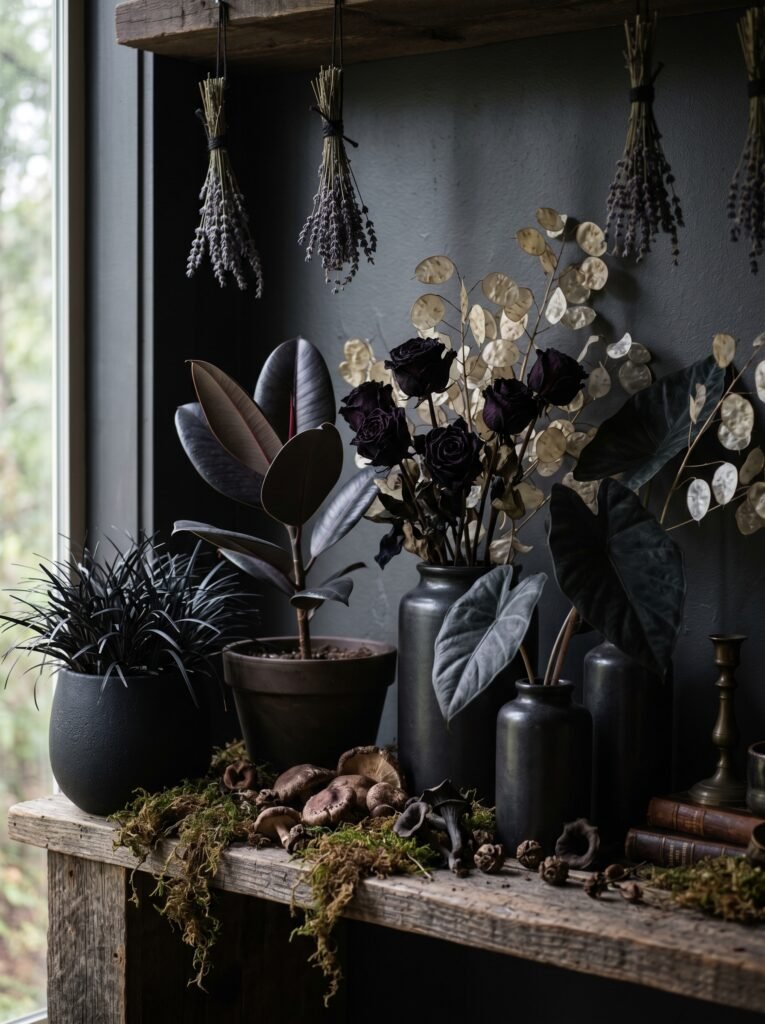
One of the most misunderstood elements of goth interior design is its relationship with nature — specifically, with the darker side of the natural world. This isn’t the bright, tropical, monstera-and-white-pot world of mainstream plant styling.
Gothic plant aesthetics favor dark foliage — black mondo grass, burgundy rubber trees, deep purple Persian shield, crow-black alocasia. Dried flowers and preserved botanicals appear everywhere: dried roses, bundles of dried lavender, eucalyptus, and honesty pods in tall black vases.
There’s also a profound appreciation for mushrooms, ferns, and mosses — things that grow in shadows and on decaying wood. This isn’t morbid for morbidity’s sake. It’s a genuine philosophical stance: beauty exists in cycles of death and growth, and your home can honor that truth.
—
8. The Gallery of Beloved Objects: Collecting as Identity
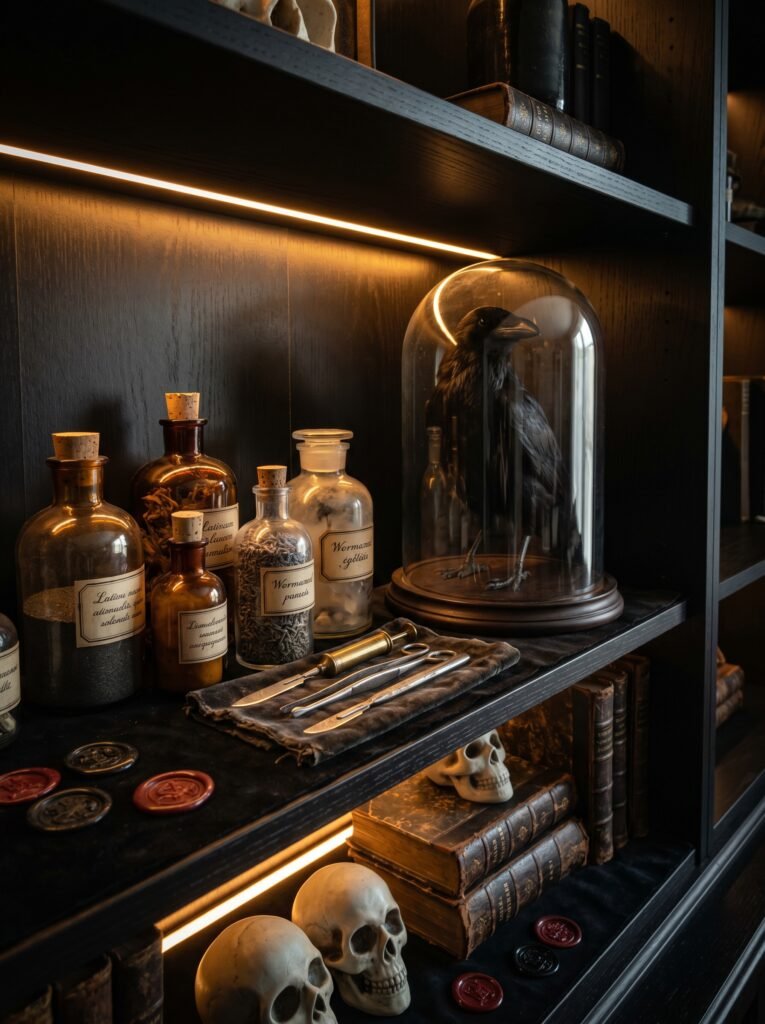
Goth interior design is, at its heart, a collector’s aesthetic. The objects that fill these spaces are rarely mass-produced or generic. They tend to be things with stories — vintage apothecary bottles filled with dark sand or dried herbs, taxidermy birds under glass domes, antique medical instruments repurposed as art objects, handmade ceramic skulls, wax seals, vintage occult books with cracked spines.
“Every object in a goth room was chosen because it meant something to someone, somewhere, once.”
This is why goth interiors feel so profoundly personal. They’re biographical. They’re slow-accumulated expressions of curiosity and obsession and love for the strange and overlooked.
—
9. Modern Goth: Where the Aesthetic Lives Today
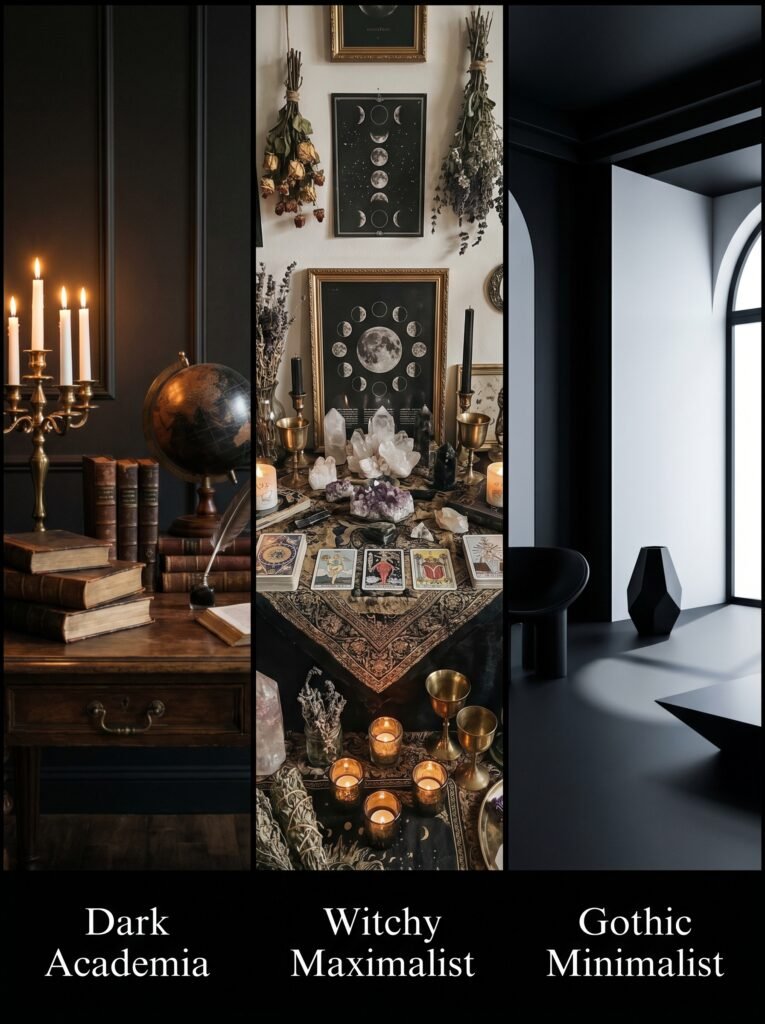
Contemporary goth interior design has evolved far beyond its Victorian origins. Today it exists on a wide spectrum — from Dark Academia (think leather-bound books, wooden globes, the smell of old paper, candlelight over a desk) to Witchy Maximalism (crystal collections, moon phase charts, altars covered in meaningful objects) to Gothic Minimalism (black and white with clean lines, letting negative space do the dramatic work).
The rise of social media has actually served this aesthetic well. Designers and homeowners who once felt too “niche” for mainstream design publications now have entire communities celebrating their dark, layered, emotionally resonant spaces. The hashtag #gothicdecor has tens of millions of posts on Instagram alone.
—
10. Small Spaces, Big Drama: You Don’t Need a Mansion
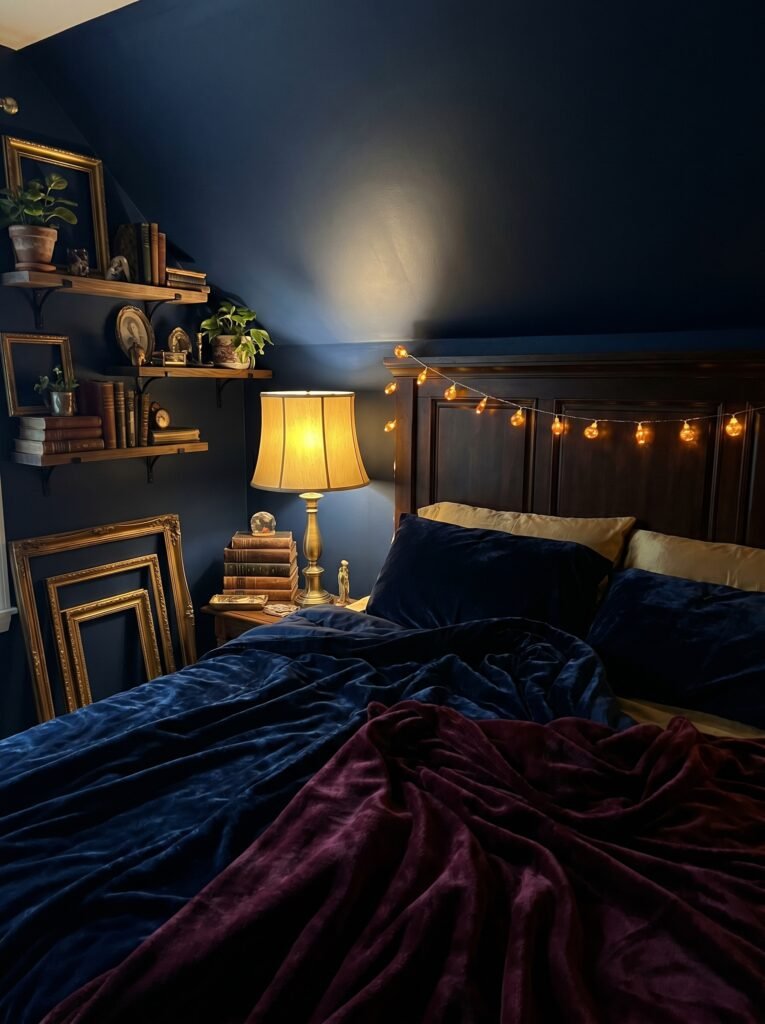
One of the most persistent myths about goth interior design is that it requires high ceilings, large rooms, and dramatic architecture. It doesn’t. In fact, some of the most striking goth interiors exist in small apartments, studio flats, and single bedrooms.
The logic of dark, cozy, layered design actually works better in small spaces. A tiny bedroom painted deep navy, lit by a single bedside lamp and a string of dim fairy lights, draped in velvet and surrounded by meaningful objects, feels like the most intimate sanctuary imaginable. Scale is irrelevant. Intention is everything.
—
11. The Psychology of Dark Spaces: Why This Aesthetic Heals
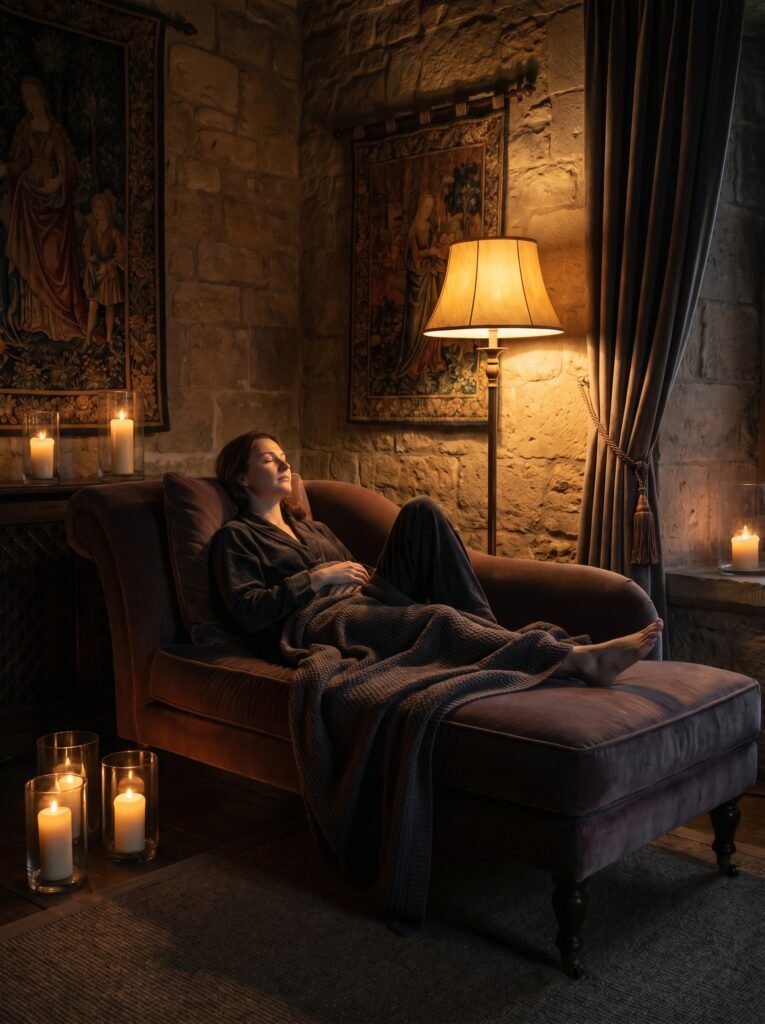
There is real psychological research supporting what goth enthusiasts have always felt intuitively: darkness is comforting. Low-light environments reduce cortisol, lower physiological arousal, and promote emotional regulation. Cozy, enclosed spaces trigger something called “prospect and refuge” theory — our evolutionary preference for spaces where we can see but not be seen, feel safe but not exposed.
Goth interior design, without necessarily intending to be therapeutic, creates environments that match our nervous system’s deepest preferences for rest and safety. It’s not an accident that so many people with anxiety, depression, or sensory sensitivity are drawn to this aesthetic. Dark, layered, candle-lit spaces feel like protection.
—
12. The Subversive Beauty of Choosing the Dark
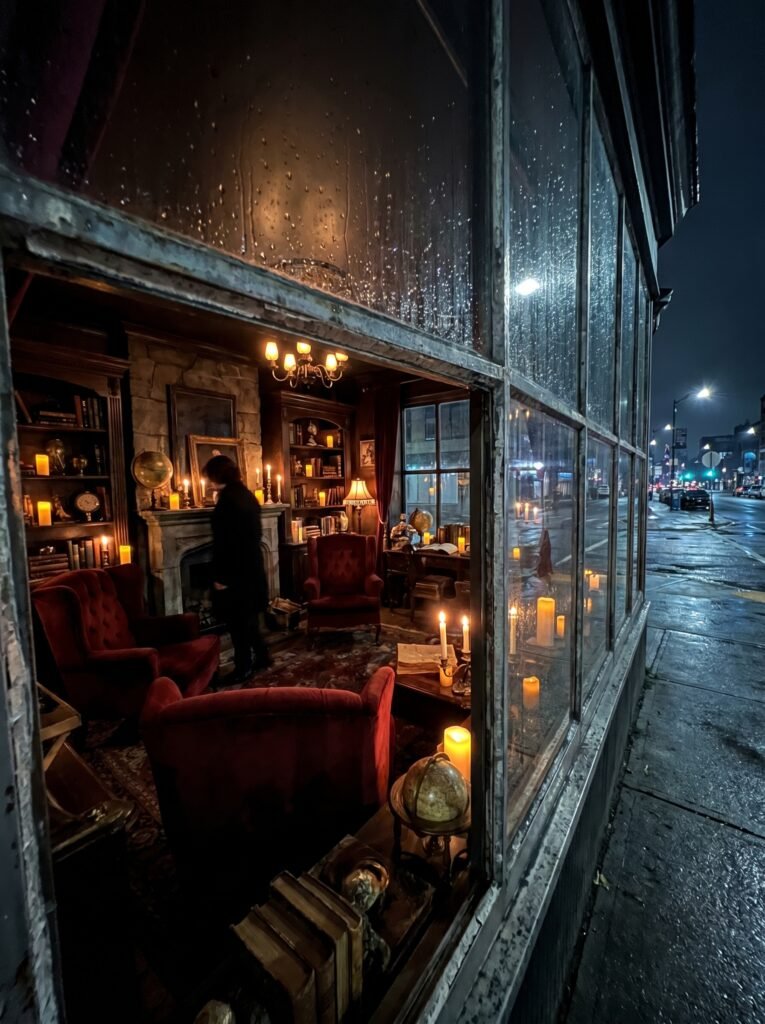
There is something quietly radical about choosing darkness when the world constantly tells you to brighten up, to lighten your walls, to make your home “look bigger” and “feel more open” and appeal to imaginary future buyers who probably don’t even exist. Goth interior design is a refusal of that pressure. It is a choice to design for yourself, for your actual emotional needs, for the specific kind of beauty that moves you.
It says: this home belongs to me. This darkness is mine. And inside it, I am absolutely, completely at peace.
—
🌿 How to Take Care of Your Goth Interior
Building and maintaining a goth interior is an ongoing, evolving practice, not a one-time project. Here are some grounded, practical ways to nurture the aesthetic over time.
Start with one room, one wall. Paint a single accent wall in deep charcoal or oxblood red before committing to a full room transformation. Live with it for a week. Trust your gut reaction. Most people who do this never want to go back.
Thrift first, buy new second. Goth interiors thrive on found objects and second-hand pieces with history. Charity shops, estate sales, antique markets, and online vintage sellers are your best friends here. The aesthetic rewards patience and hunting.
Layer your lighting intentionally. Before buying a single piece of furniture, invest in dimmable bulbs, a few candelabras, and at least one warm-toned floor lamp. Lighting transforms the emotional register of a room more powerfully than almost anything else.
Introduce dark plants gradually. Start with a burgundy rubber tree or a black mondo grass pot. Let yourself get comfortable with living dark things before you build out a full gothic botanical display.
Edit ruthlessly, collect slowly. The difference between a goth room and a cluttered room is curation. Every object should earn its place. Buy less, but buy things that genuinely move you.
—
❓ FAQ
Q: Does goth interior design only work with black walls? A: Not at all. While black is iconic, deep jewel tones like forest green, midnight blue, burgundy, and plum are equally at home in gothic spaces. The goal is depth and atmosphere, not necessarily pure black — though if black calls to you, lean into it without apology.
Q: Is goth interior design too dark and depressing to live in long-term? A: This is one of the most common misconceptions. People who live in dark, richly decorated spaces often report feeling more relaxed, more creative, and more emotionally at ease than in bright, minimalist environments. Darkness, when handled with warmth and intention, feels like a cocoon — not a cage.
Q: Can I mix goth interior design with other styles? A: Absolutely, and many of the most compelling goth interiors do exactly this. Gothic elements blend beautifully with Art Nouveau, Victorian maximalism, Japandi minimalism (in its dark wood forms), and even certain strands of industrial design. The aesthetic is remarkably flexible when you understand its core emotional language.
—
💭 Final Thought
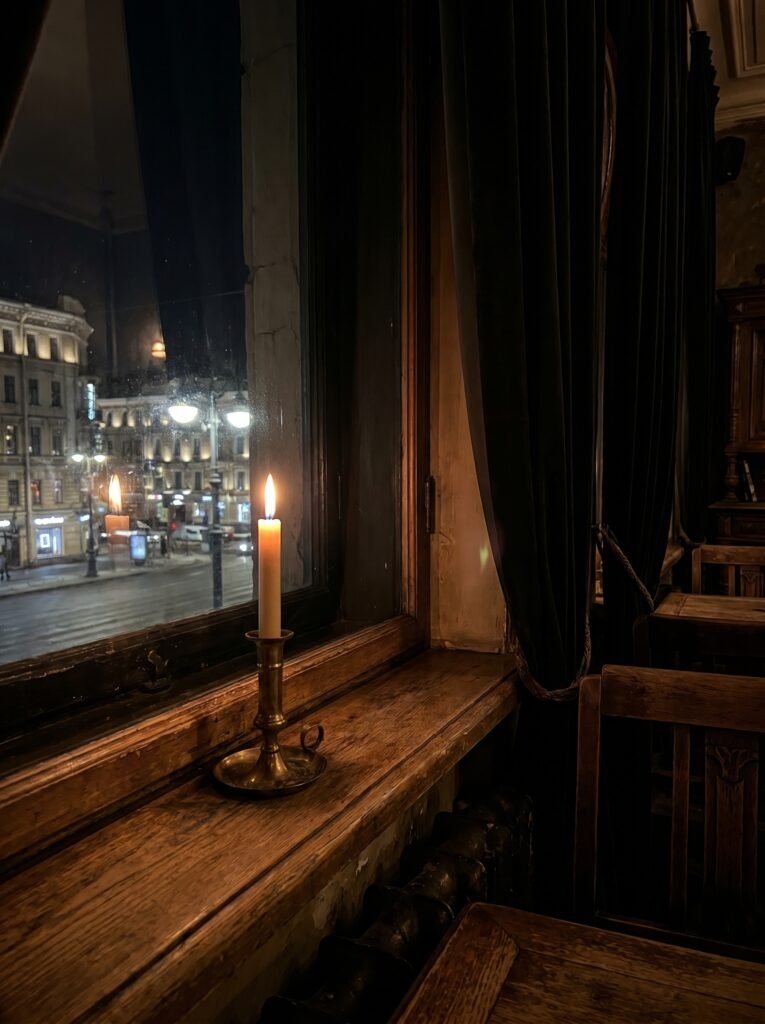
Somewhere right now, someone is standing in a bright white room that everyone tells them is beautiful, feeling quietly hollow and wondering if something is wrong with them. Nothing is wrong with them. They just haven’t found their darkness yet. Goth interior design isn’t about being morbid or theatrical or contrary — it’s about creating a space where your whole self, including the parts that love shadows and candlelight and quiet strangeness, finally gets to exist without apology.
So tell me: what would it feel like to come home to a room that looked exactly like the inside of your own soul?