Bathroom Interior Ideas That Turn a Forgotten Room Into Your Favorite Escape
There’s a room in your home that you visit a dozen times a day — and somehow, it’s almost always the last one you think to love. The bathroom. That small, often overlooked space holds more quiet, private moments than almost anywhere else in your life, and yet most of us settle for whatever was there when we moved in. What if that changed today?
—
Table Of Content
1. Why Your Bathroom Deserves More Intentional Design Than You Think
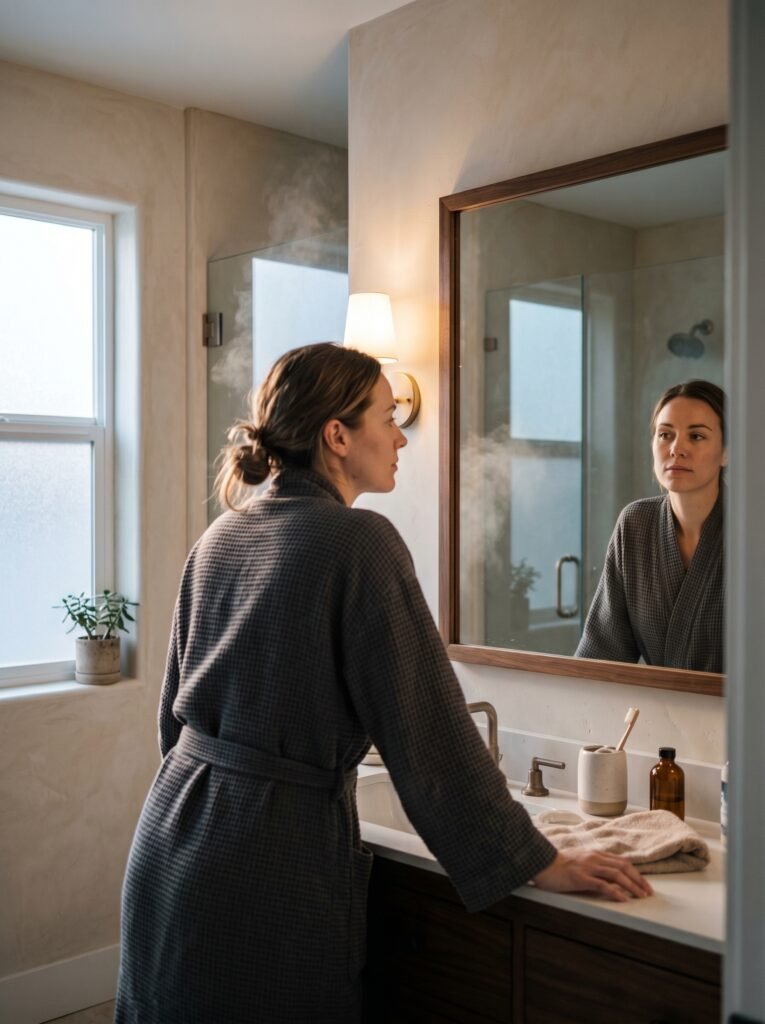
Think about it — the bathroom is where your day begins and where it ends. It’s where you steal five minutes of silence before the rest of the house wakes up, where you decompress after a long week under a hot shower, where you look yourself in the mirror and gather yourself before something important. That’s not a room to treat as an afterthought.
Intentional bathroom design isn’t about luxury — it’s about honoring those small, daily rituals. When the space around you feels calm, beautiful, and considered, those moments of transition (from sleep to waking, from stress to rest) feel entirely different. The emotional weight of a well-designed bathroom is something you can’t fully understand until you’ve experienced it.
Interior design experts often talk about “emotional functionality” — the idea that a space should support how you feel, not just how you move through it. Your bathroom can be a place of genuine restoration, not just a functional checkpoint. That shift in perspective is where every great bathroom redesign begins.
“The bathroom is the smallest room in the house — and the most intimate. Design it with that intimacy in mind.”
—
2. The Power of a Cohesive Color Palette in a Small Space

Color does something extraordinary in a bathroom. Because the space is typically compact, every shade feels amplified — richer, moodier, or brighter than it might in a larger room. That’s not a challenge — it’s an opportunity.
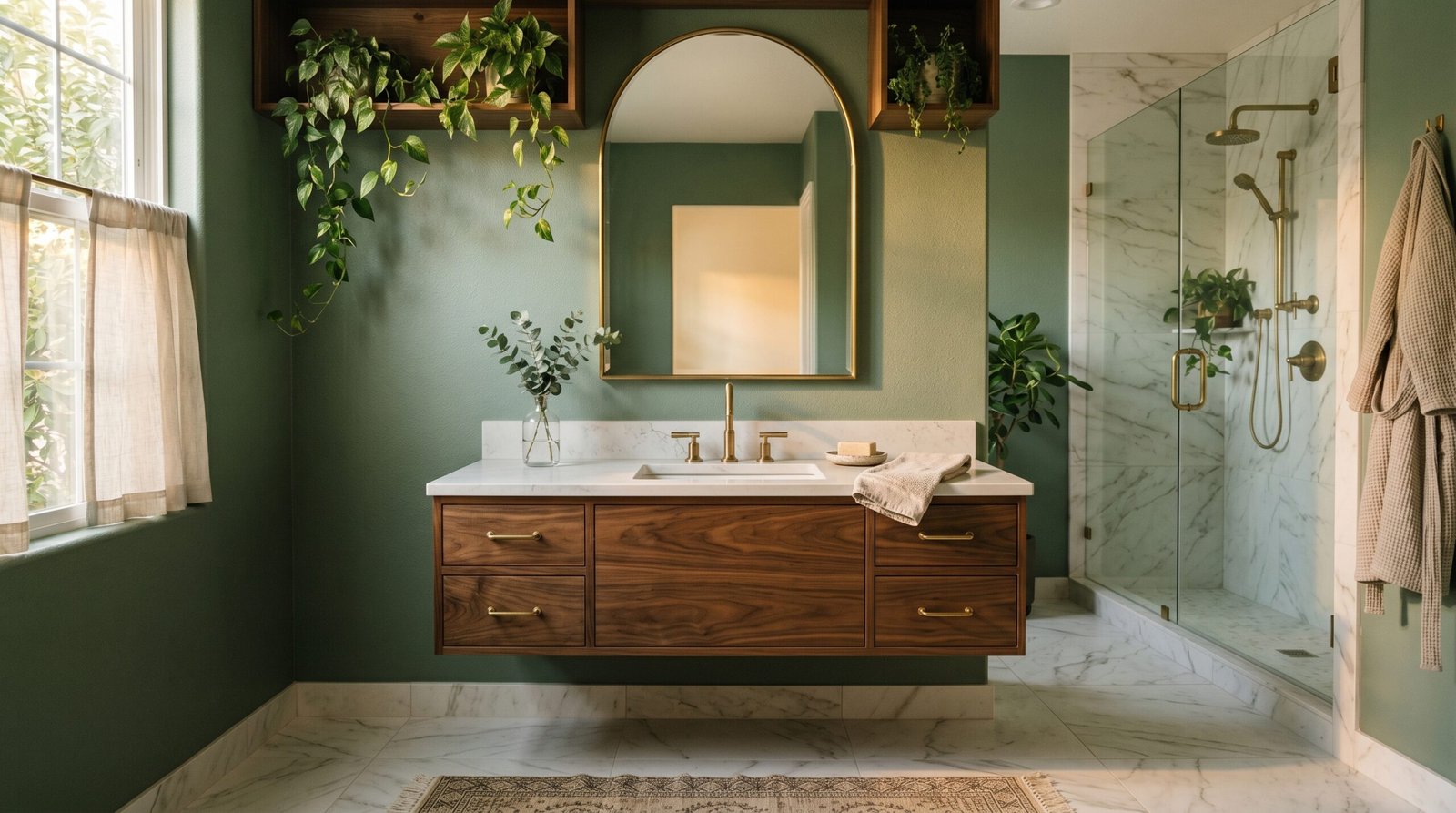
Soft, muted tones like warm white, sage green, dusty blush, and clay beige have dominated bathroom interior ideas for years because they do something specific: they slow the nervous system down. Stepping into a bathroom washed in soft sage green genuinely feels different from stepping into one painted contractor white.
If you love bold choices, consider a deep navy or forest green on a single accent wall or vanity — a technique called “color drenching” that feels surprisingly sophisticated in small bathrooms. The key is keeping surrounding surfaces neutral so the bold tone has room to breathe. And don’t underestimate the power of warm-toned grout in tile work — it’s a tiny detail that makes the entire palette feel cohesive and deliberate rather than accidental.
—
3. Tile Choices That Completely Transform the Mood of a Bathroom
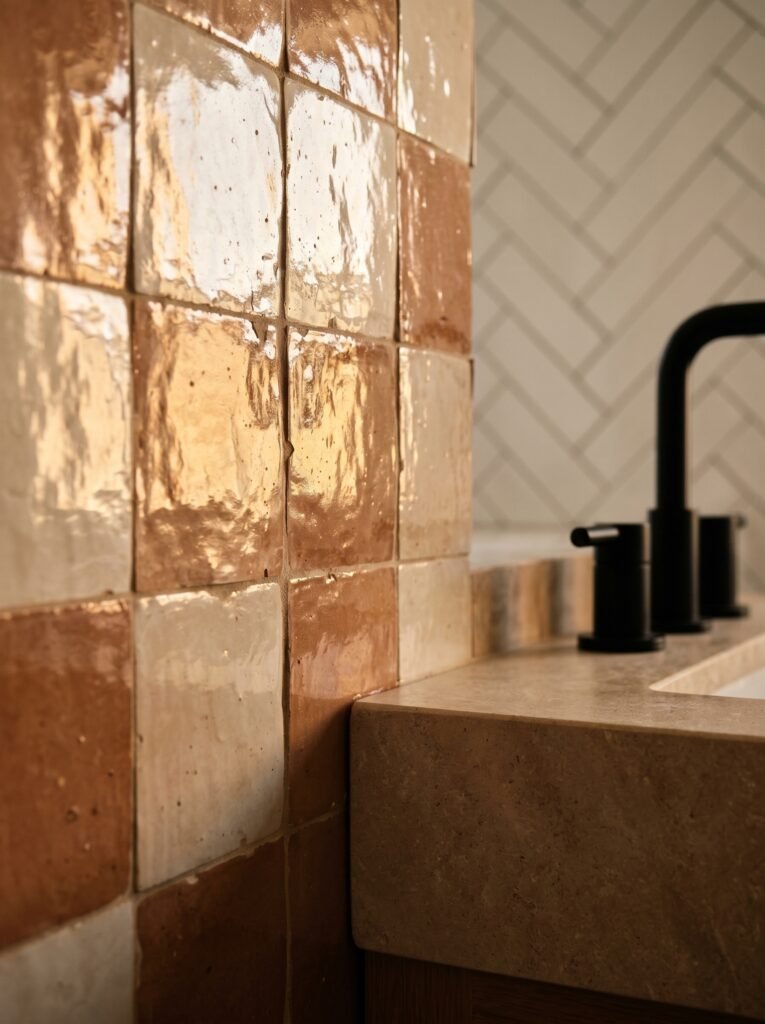
If walls are the canvas of a room, tile is the texture that makes the whole painting come alive. The tile choices you make in a bathroom have an outsized effect on its overall character — and the market right now is genuinely extraordinary for anyone who loves design.
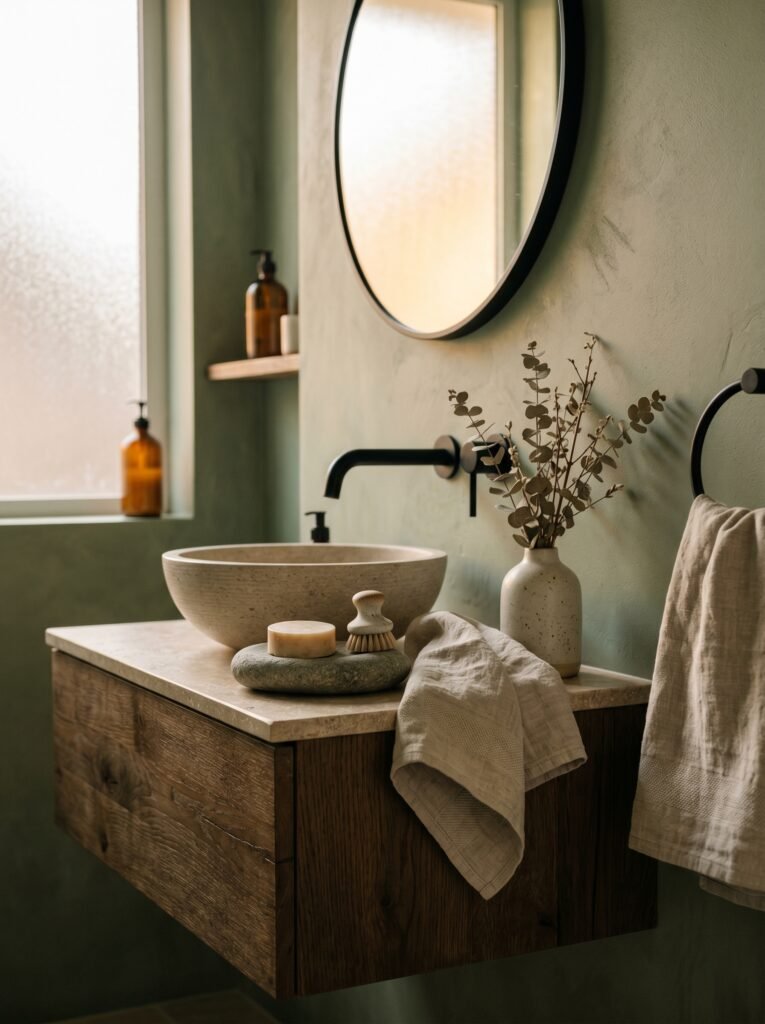
Zellige tiles — those gorgeous, slightly irregular handmade Moroccan ceramic tiles — have moved from boutique hotels into residential spaces in a big way. Their imperfect surface catches light differently throughout the day, giving a bathroom an almost living quality. Paired with matte black fixtures and a warm stone vanity top, they create a space that feels ancient and modern all at once.
For those who prefer something quieter, large-format marble-look porcelain tiles in a soft vein pattern create a seamless, spa-like calm. The trick with these is to use the same tile on both the floor and shower walls — it visually expands the space and creates that effortlessly elegant continuity you see in high-end hospitality design.
Subway tiles remain a classic, but here’s a move worth considering: lay them in an unexpected pattern. A herringbone or vertical stack installation immediately elevates a simple tile into something that looks custom and considered.
—
4. Lighting That Makes Every Bathroom Feel Like a Sanctuary
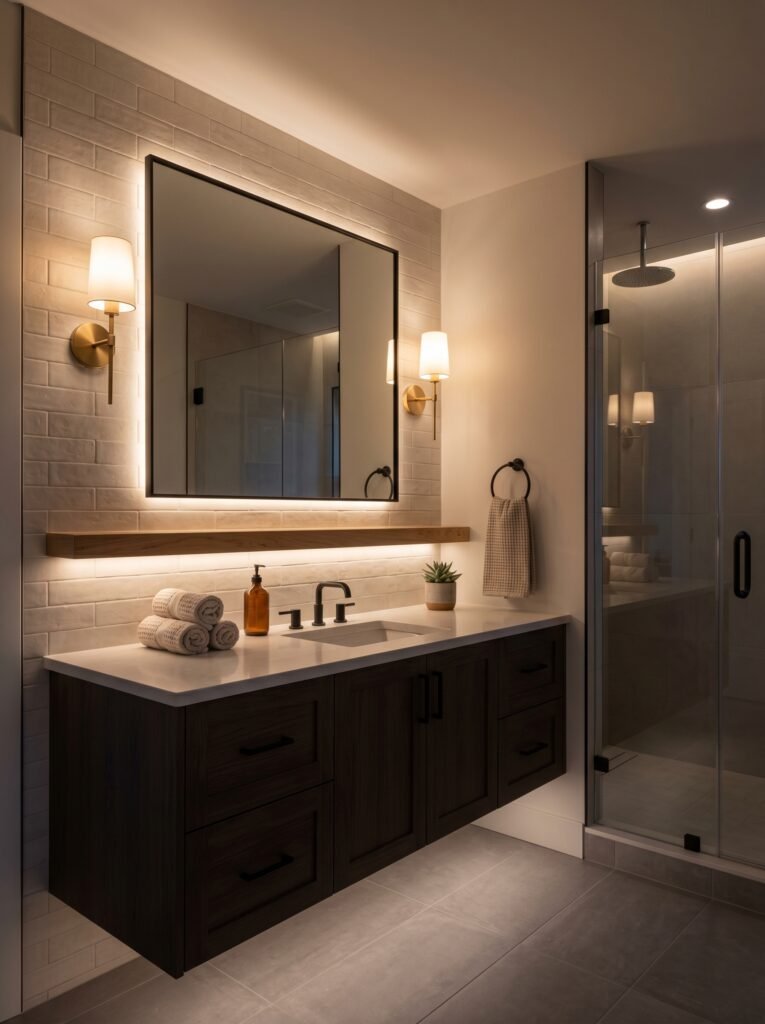
There is perhaps no single design decision more transformative in a bathroom than lighting — and yet it’s the one most people never question. The builder-grade single overhead light casts shadows in all the wrong places, flattens your face, and creates an atmosphere that’s clinical at best and unflattering at worst.
The most beautiful bathrooms layer their light intentionally. Start with ambient lighting — a ceiling fixture or recessed lighting that provides overall illumination. Then add task lighting on either side of the mirror (not above it), which is the most flattering and functional placement for any grooming task. Finally, consider accent lighting: a small LED strip along a floating shelf, a warm-toned sconce beside a soaking tub, or a backlit mirror that glows softly.
Warm white bulbs (2700K–3000K color temperature) are essential for a bathroom that feels cozy rather than clinical. Dimmable options are worth every penny — they let you shift the room from bright and functional in the morning to soft and calm for an evening bath. That flexibility alone changes how the space feels across an entire day.
—
5. Vanity Styling That Balances Beauty and Daily Function
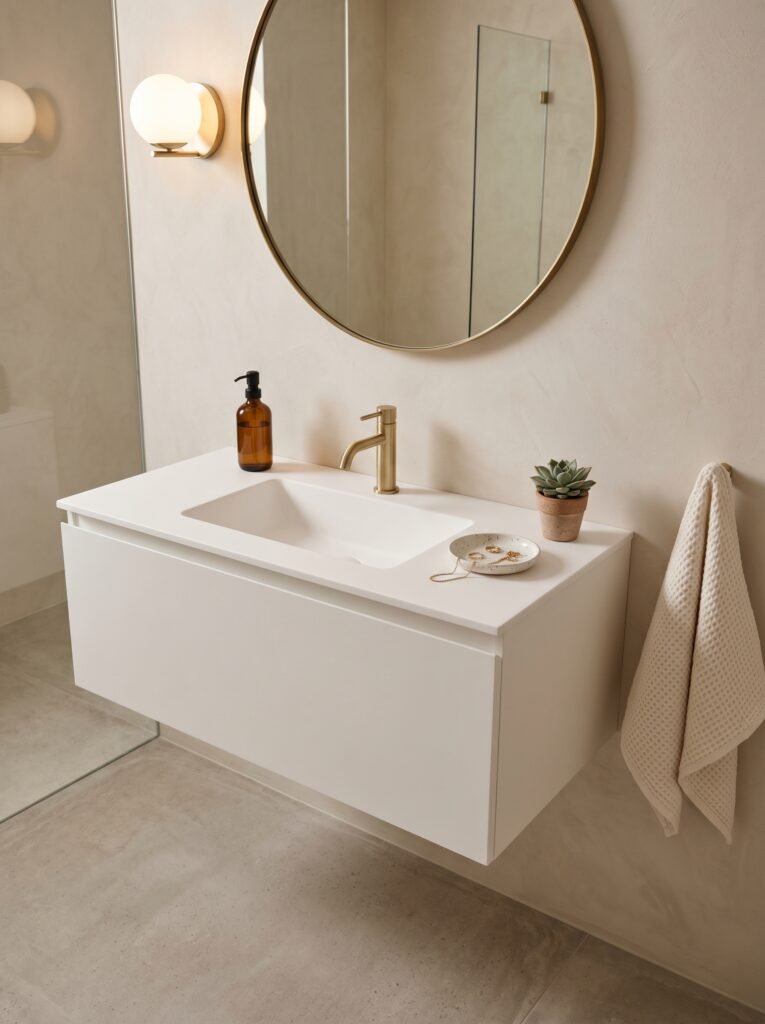
The vanity is the visual anchor of most bathrooms — the first thing your eye lands on and the surface you interact with most. It deserves both beauty and practical intelligence, and the good news is that you don’t have to choose between them.
A floating vanity — one mounted to the wall with exposed floor space beneath — is one of the smartest moves in a small bathroom. It creates the visual illusion of more square footage while also making cleaning considerably easier. Pair it with an undermount sink for a sleek, streamlined look that feels polished without trying too hard.
On the counter surface, restraint is often the right choice. A small ceramic dish to hold jewelry, a clean hand soap dispenser, a single potted succulent or a sprig of eucalyptus in a bud vase — this is the difference between a vanity that looks styled and one that looks cluttered. Everything on that surface should be either beautiful, functional, or both.
“Styled restraint is the highest form of bathroom design. Less isn’t emptiness — it’s intention.”
—
6. Mirror Magic: The Underrated Design Element That Changes Everything
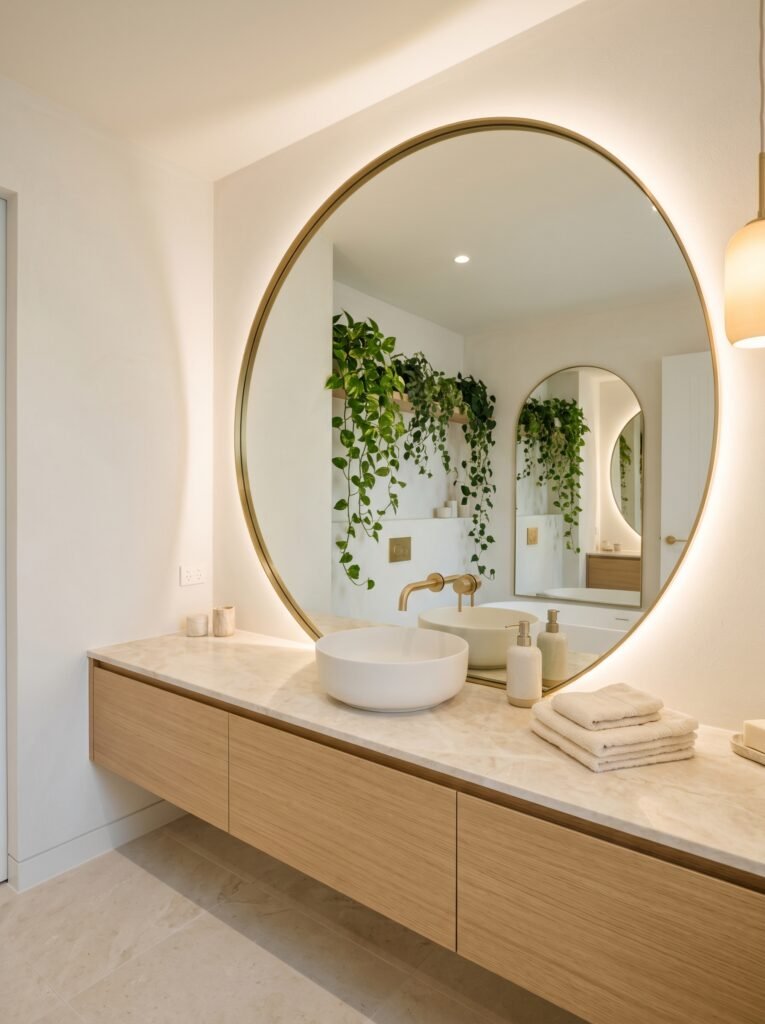
A mirror in a bathroom is never just a mirror. It reflects light, creates depth, contributes to the style narrative of the space, and — when chosen thoughtfully — can be the single most striking focal point in the room.
Round mirrors with simple brass or matte black frames have had an extraordinary run in bathroom design, and it’s easy to understand why: the soft curve introduces organic warmth into a room full of hard, geometric surfaces. Arched mirrors bring a subtle architectural quality that feels both contemporary and timeless.
For smaller bathrooms, consider going larger than feels instinctively comfortable with the mirror. A mirror that nearly spans the full width of the vanity reflects more light and makes the entire room feel larger. In powder rooms — those tiny, high-impact spaces — an oversized, statement mirror is practically a design requirement.
—
7. Storage Solutions That Keep a Bathroom Serene Instead of Stressed
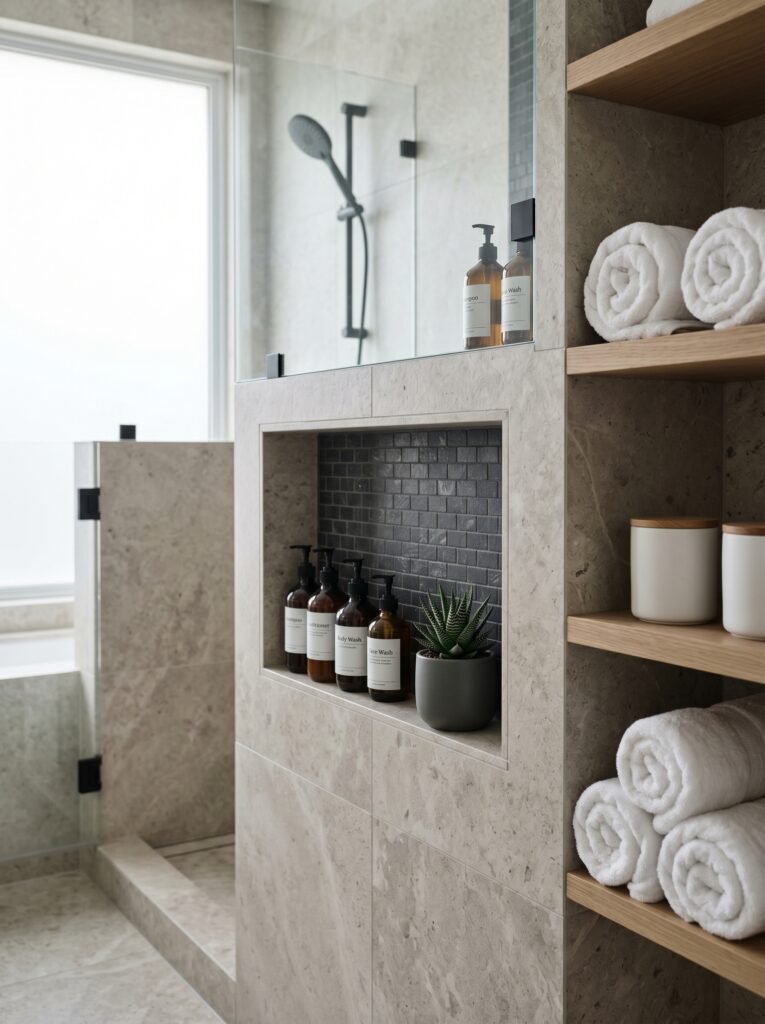
Clutter in a bathroom creates a specific kind of low-grade stress. When countertops are crowded with half-empty bottles and scattered products, the room feels chaotic — even if it’s technically clean. Thoughtful storage isn’t just about organization; it’s about protecting the calm of the space.
Recessed shelving — niches built directly into the wall of a shower or above a toilet — is one of the most elegant storage solutions in bathroom design because it holds objects without consuming floor or counter space. A well-placed shower niche, lined with a contrasting tile, is also a quietly beautiful design detail.
For bathroom cabinets, open shelving with carefully curated objects (neatly folded towels, matching apothecary jars, a small plant) looks effortlessly styled. But if your reality involves a lot of practical products, closed-door storage is the smarter choice — it keeps things organized and out of sight, allowing the visible surfaces of your bathroom to breathe.
—
8. Plants and Natural Elements That Breathe Life Into a Bathroom
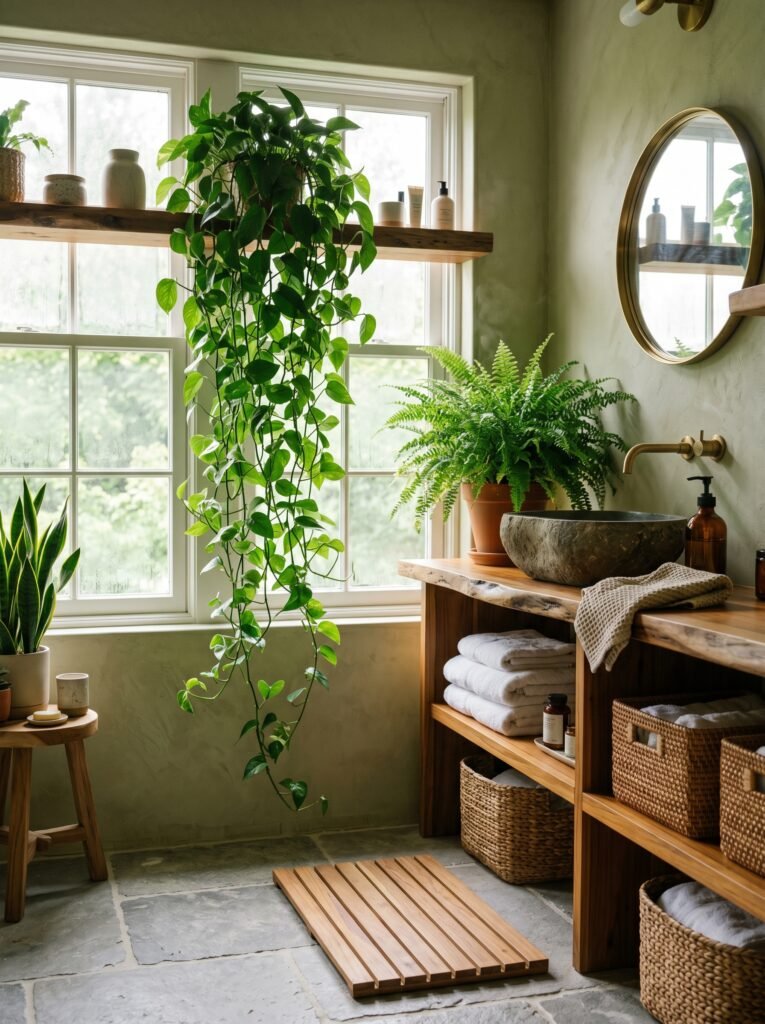
There is something genuinely magical about introducing living things into a bathroom. Plants bring humidity-loving softness to a space that is already rich in moisture, and they add a layer of organic life that no tile or fixture can replicate.
Pothos, spider plants, Boston ferns, and peace lilies all thrive in bathroom conditions — the humidity from showers gives them exactly what they need. A trailing pothos on a high shelf, a small fern beside the sink, or a cluster of air plants arranged on a floating shelf — each of these choices adds texture, color, and a sense of aliveness that transforms the atmosphere.
Beyond plants, natural materials — teak wood bath mats, woven baskets for towel storage, stone soap dishes, linen hand towels — add warmth and earthiness that softens the hard surfaces typical of bathroom architecture. These touches are relatively inexpensive, but their impact on the overall feel of a space is completely disproportionate to their cost.
—
9. The Luxury Shower Experience: Turning a Daily Routine Into a Ritual
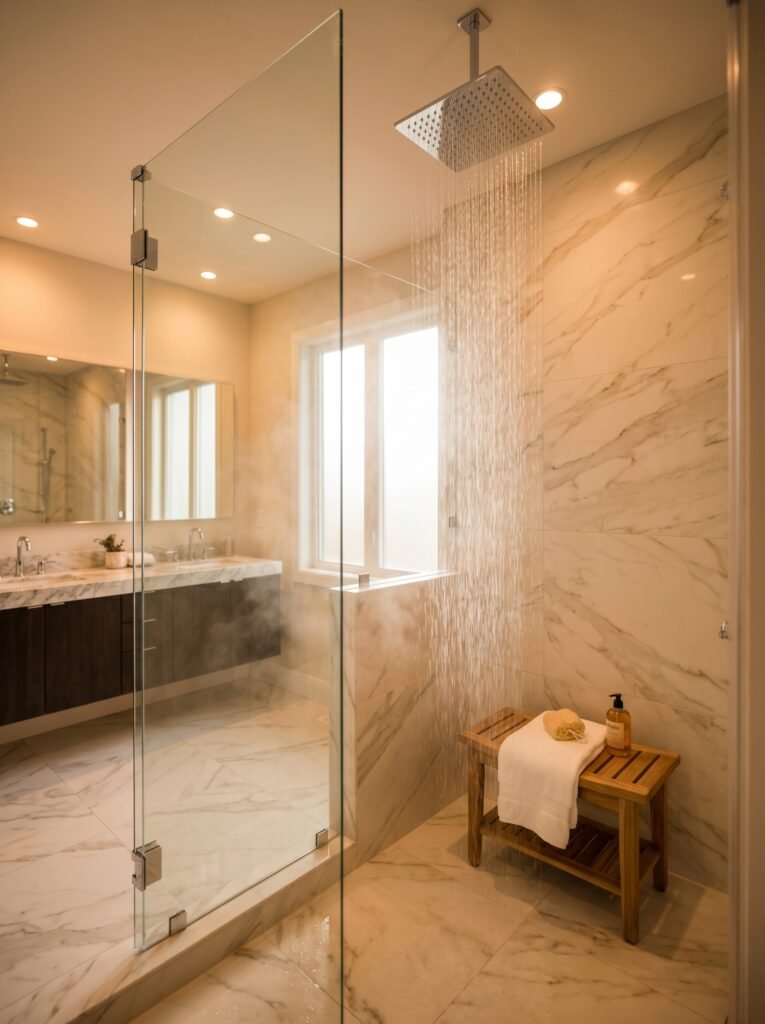
The shower might be the most used feature in your bathroom, and yet so many of us accept a mediocre shower experience without question. Upgrading your shower doesn’t necessarily require a full renovation — sometimes it’s a collection of smaller, considered changes that collectively transform the experience.
A rainfall showerhead is, without question, one of the best investments in bathroom wellbeing. The sensation of standing under a wide, gentle fall of warm water is categorically different from a standard shower — it’s slower, more enveloping, more calming. Paired with a small teak bench inside the shower, even the most ordinary bathroom begins to feel like a high-end spa.
Frameless glass shower enclosures (or replacing a shower curtain with a glass door) open up a bathroom visually in ways that are immediately striking. The transparency allows the eye to travel across the full width of the room without interruption, making the space feel larger, cleaner, and more considered.
“A beautiful shower is not a luxury. It’s an investment in the quality of your most ordinary days.”
—
10. Small Bathroom Ideas That Maximize Every Square Inch
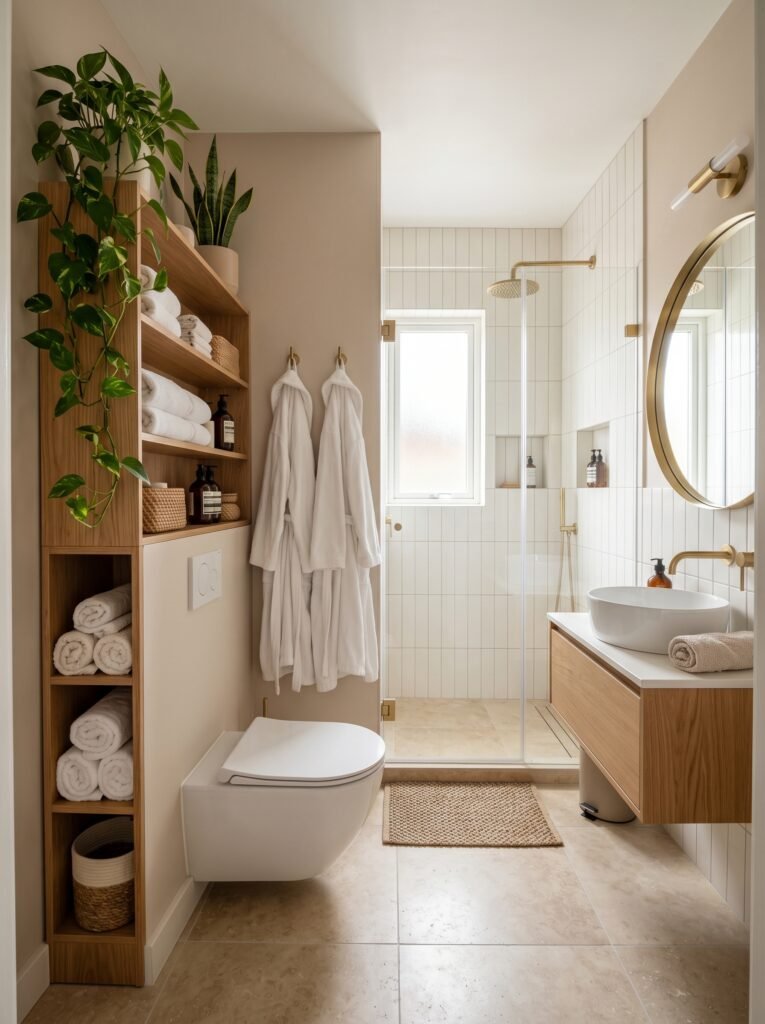
Small bathrooms are, in many ways, the most interesting design challenge — and the most rewarding to solve. The constraints force creativity, and some of the most beautiful bathroom interiors in existence are tiny.
The single most impactful thing you can do in a small bathroom is use vertical space. Tall, narrow shelving units beside the toilet, wall-mounted hooks for towels and robes, and cabinets that extend upward to the ceiling all add storage and styling surface without stealing floor space.
Choosing large-format tiles for a small bathroom floor (counterintuitive as it feels) actually makes the space appear bigger — fewer grout lines means less visual interruption, and the eye reads the floor as more expansive. Similarly, keeping your color palette tight (two or three tones maximum) prevents the visual busyness that makes small rooms feel cramped.
—
11. Trending Bathroom Styles Worth Knowing Right Now
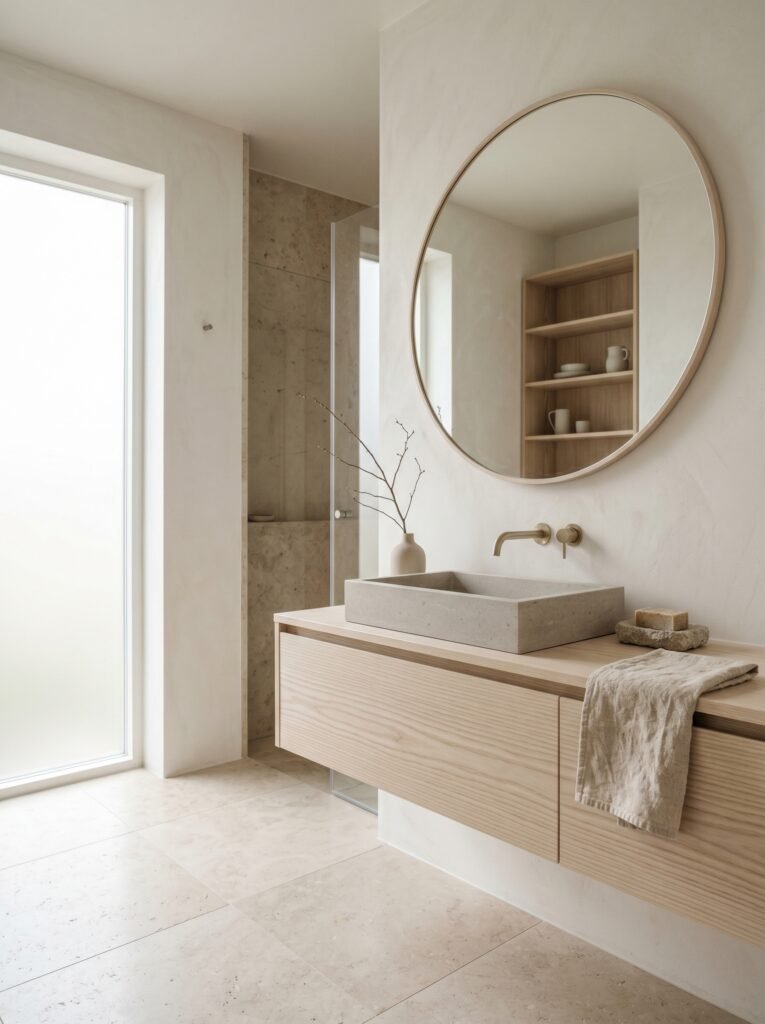
The world of bathroom interior design is always evolving, and right now there are a handful of specific styles gaining momentum across design platforms and architectural publications alike.
Japandi bathrooms — a fusion of Japanese minimalism and Scandinavian warmth — are having a remarkable moment. They combine clean lines, natural materials (wood, stone, linen), a restrained neutral palette, and a profound commitment to functional simplicity. The result is a space that feels deliberately calm, uncluttered, and almost meditative.
The “spa bathroom” concept has evolved beyond just adding a bath tray and candles. True spa-inspired bathrooms now incorporate radiant floor heating, steam showers, warm ambient lighting, and materials like honed marble and raw stone that feel luxurious to touch as well as to see.
Vintage and antique-inspired bathrooms — featuring clawfoot tubs, pedestal sinks, aged brass fixtures, and patterned encaustic tile floors — are also experiencing a genuine design revival, particularly in older homes where they feel architecturally honest and deeply characterful.
—
12. The Finishing Touches That Make a Bathroom Feel Complete
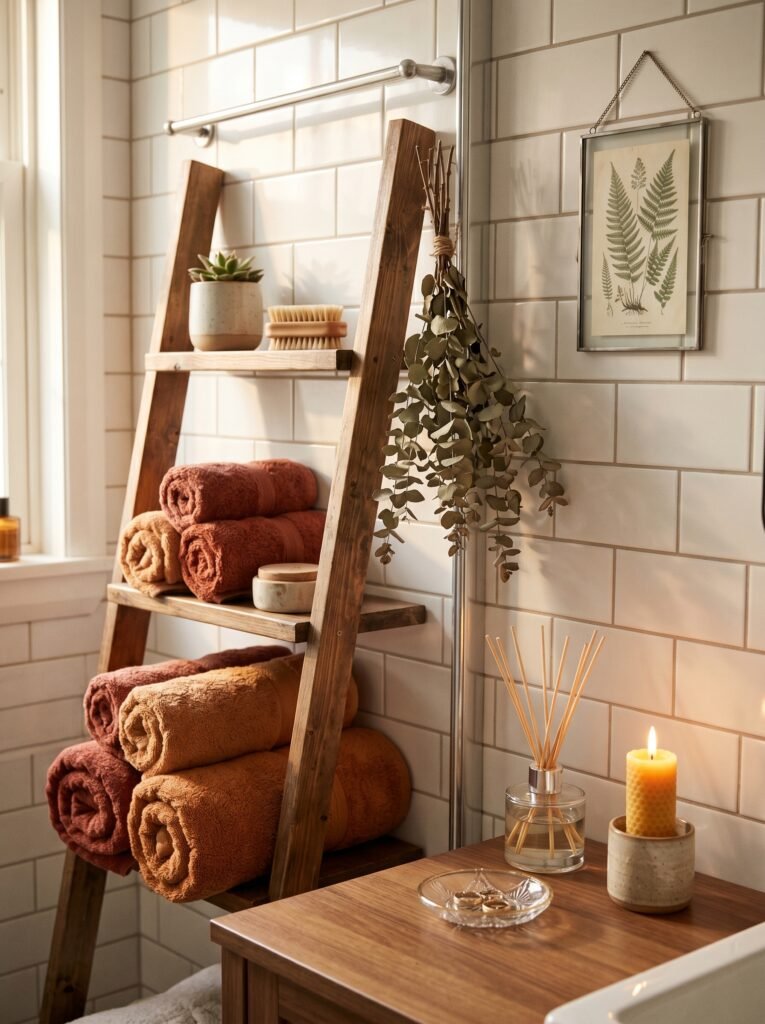
It’s the details that separate a bathroom that looks “done” from one that looks genuinely loved. These final layers of styling are where your personality enters the space, and they matter more than people often realize.
Towels deserve more attention than they typically receive. Thick, high-quality towels in a considered color — folded or rolled neatly and displayed on a ladder shelf or open shelving — look beautiful and feel luxurious to use. Invest in a few really good towels rather than a large collection of mediocre ones.
Artwork in a bathroom is still, somehow, an underused idea. A small framed print, a piece of ceramic art mounted on the wall, or a single botanical illustration in a simple frame — these things give a bathroom a curated, personal quality that feels genuinely elevated. Use a glass frame to protect artwork from humidity.
Finally, scent. A quality reed diffuser, a beautifully fragranced candle, or even a small bundle of dried eucalyptus hanging from the showerhead — these olfactory details complete the sensory experience of a well-designed bathroom in a way that no visual element alone can achieve.
—
🌿 How to Take Care of Your Newly Designed Bathroom
Once you’ve created a bathroom you love, maintaining that sense of calm and beauty becomes part of the daily ritual itself.
Wipe down tile surfaces and mirrors weekly with a gentle, non-abrasive cleaner to keep grout bright and surfaces clear. Natural stone tiles and surfaces (marble, travertine, limestone) require a pH-neutral cleaner and occasional sealing to prevent staining — it takes minutes but protects years of investment.
Keep your counter surfaces edited. Take five minutes each Sunday to reset the vanity — put away anything that crept out during the week, replace products that are running low, and straighten towels. This simple habit maintains the visual calm you worked hard to create.
Water your bathroom plants every one to two weeks, checking soil moisture first. Wipe dust from leaves with a damp cloth monthly to keep them healthy and visually fresh. Trim any yellowing leaves promptly so the plant always looks intentional, not neglected.
Replace small accessories seasonally — a different candle scent, a fresh plant, a new hand towel in a transitional color — to keep the space feeling alive and connected to the time of year.
—
❓ FAQ
Q: What is the best color for a small bathroom to make it feel larger? A: Soft, light neutrals like warm white, pale greige, and soft sage green tend to make small bathrooms feel more open. The key is keeping the palette consistent across walls, tile, and accessories — visual continuity reduces the sense of boundaries and makes the space feel more expansive.
Q: How can I make my bathroom look expensive without a full renovation? A: Focus on fixtures, lighting, and accessories. Swapping outdated faucets and cabinet hardware for matte black or brushed brass alternatives is relatively affordable and has a high visual impact. Adding a statement mirror, quality towels, and layered lighting can elevate a bathroom dramatically without touching a single tile.
Q: Are plants actually good for bathrooms? A: Absolutely — many plants genuinely thrive in bathrooms because of the humidity and indirect light. Pothos, peace lilies, ferns, and orchids are all excellent choices. Beyond aesthetics, plants also improve air quality and add a sense of organic warmth that makes a bathroom feel more like a personal sanctuary.
—
💭 Final Thought
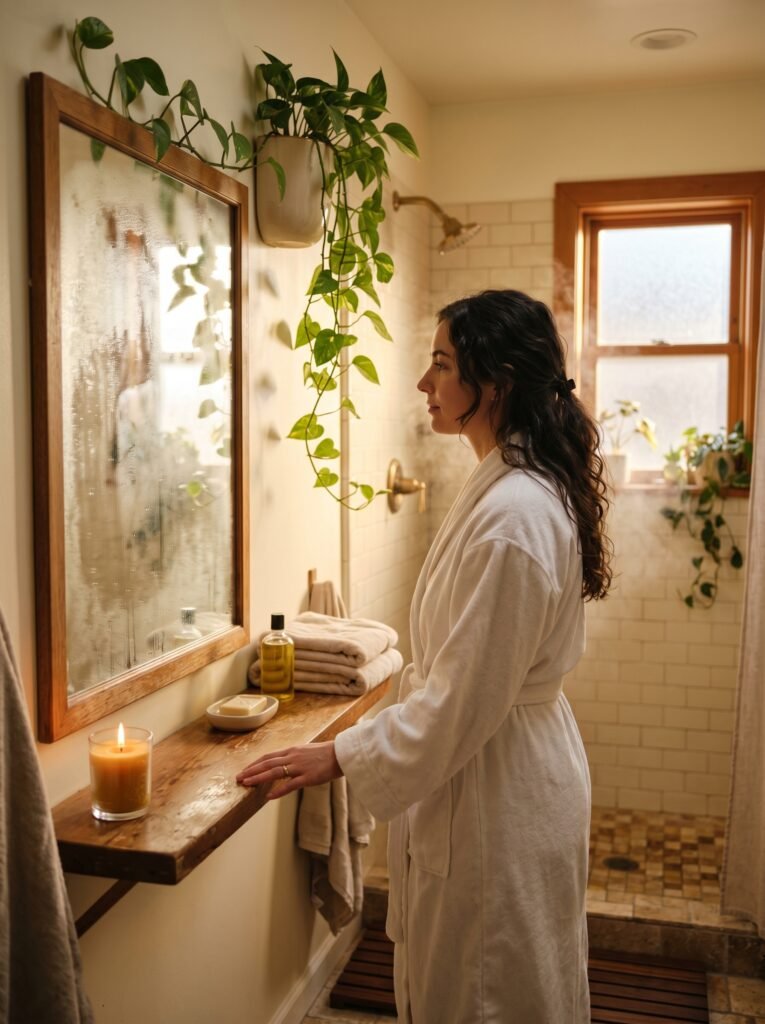
Your bathroom is one of the only places in your home — and in your life — where you are reliably, completely alone. It holds your quietest moments, your most private rituals, and more of your daily life than you probably realize. Designing it with care and intention isn’t vanity — it’s an act of genuine self-respect.
Even small changes — a new mirror, better light, a plant on the shelf, towels you actually love — can transform how a space feels and, in turn, how your day begins and ends. The bathroom you deserve isn’t necessarily expensive. It’s just considered.
So here’s the question worth sitting with: what is one thing in your bathroom right now that, if changed, would make you smile every single time you walked in?