The Modern Classic Kitchen: Where Timeless Beauty Meets the Way We Actually Live
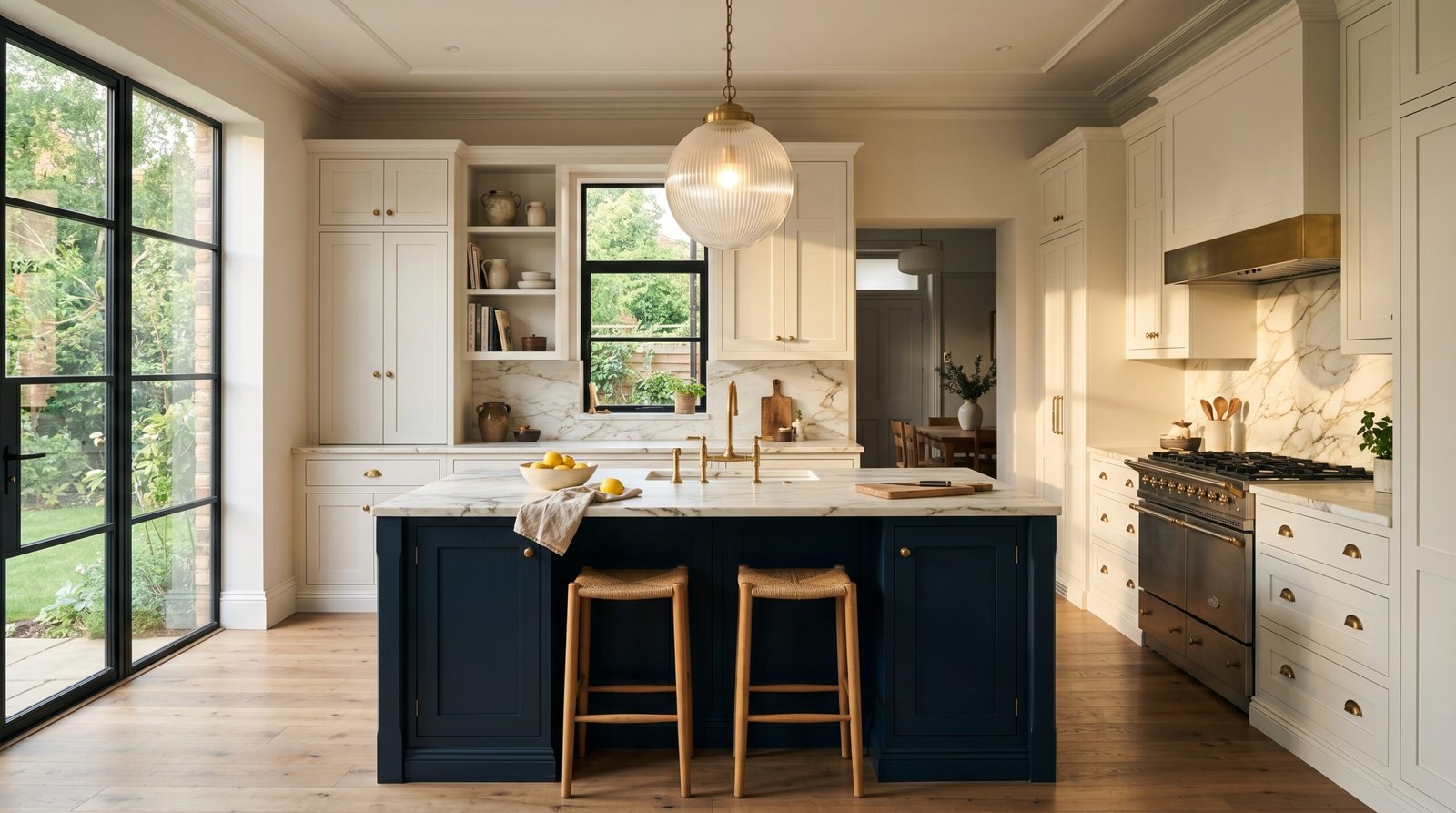
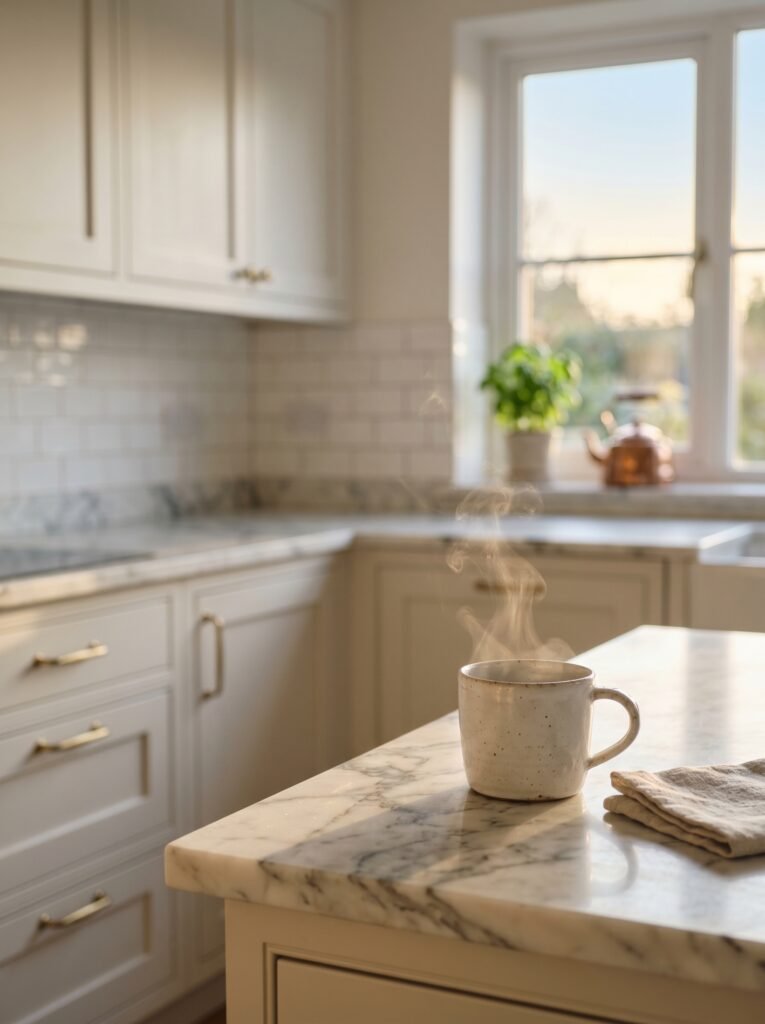
There’s a particular kind of quiet joy that comes from standing in a kitchen that feels exactly right — where the marble countertop catches the morning light just so, where the cabinetry is clean and confident, and where somehow, everything feels both brand new and warmly familiar at the same time. That’s the essence of a modern classic kitchen, and once you understand what makes it work, you’ll never look at a kitchen the same way again.
—
Table Of Content
1. What Makes a Kitchen “Modern Classic” — And Why It’s Not Just a Trend
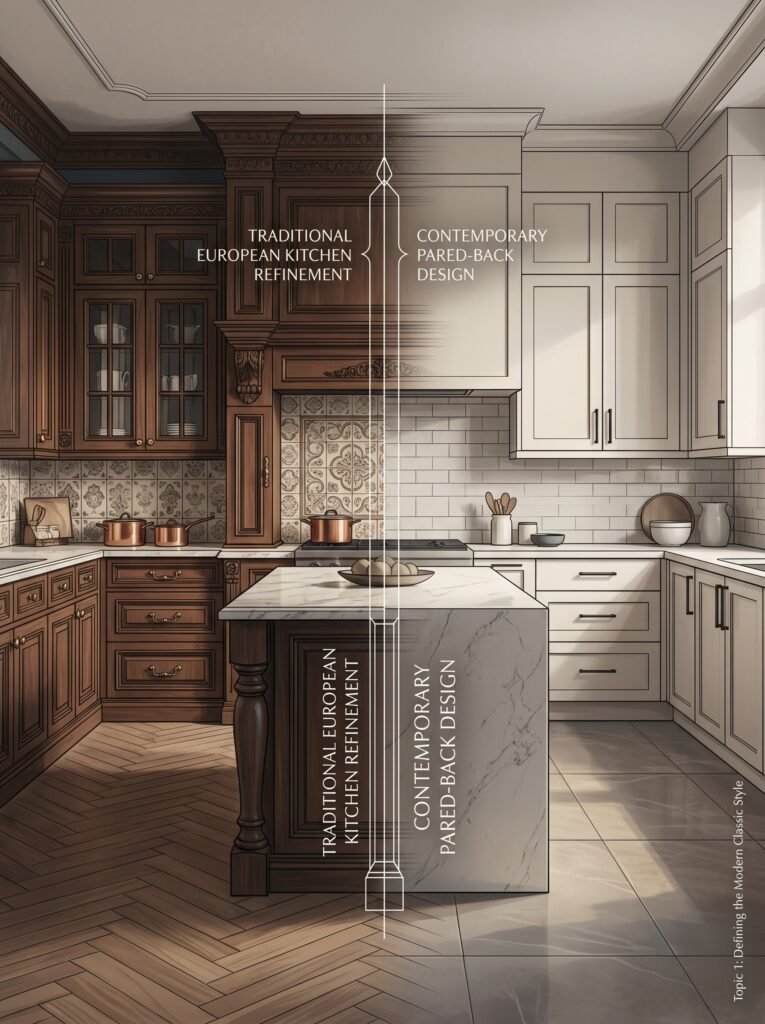
The term gets thrown around freely on Pinterest boards and design magazines, but the modern classic kitchen is genuinely its own design language — not simply a mashup of two styles. Think of it as a conversation between two eras: the refinement and symmetry of traditional European kitchens, and the pared-back confidence of contemporary design. Neither side dominates. Instead, they negotiate beautifully.
Traditional kitchens lean heavily into ornamentation — carved moldings, ornate cabinet doors, heavy drapery, warm woods that feel almost Victorian in their richness. Contemporary kitchens, on the other hand, strip everything back to geometry and function, sometimes so aggressively that they can feel cold and sterile. The modern classic kitchen takes the best of both worlds. It keeps the architectural structure and material quality of traditional design while embracing the cleaner lines and lighter palette of modern aesthetics.
What results is a kitchen that never feels dated — because it was never purely chasing a trend in the first place.
“A modern classic kitchen doesn’t follow the moment. It outlasts it.”
2. The Color Palette That Defines the Style Without Limiting It

Color is where many homeowners make their first mistake in this style, and it’s also where they can make their most powerful statement. The modern classic kitchen thrives on a foundation of neutral, architectural tones — but “neutral” here doesn’t mean boring or beige-by-default.
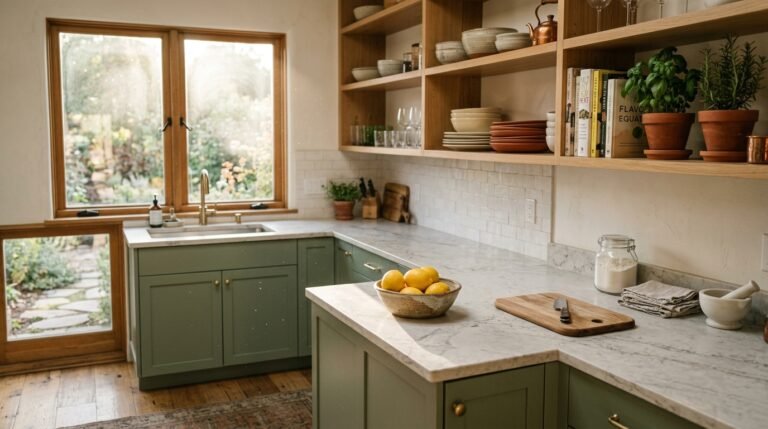
Think deep navy cabinetry anchored by warm brass hardware. Think soft sage green lowers paired with crisp white uppers, where the contrast creates a kind of visual breathing room. Think warm white — not cool white — that holds warmth when the afternoon light shifts. The goal is always to create a palette that reads as intentional, not indecisive.
Accent colors in this style tend to be used sparingly and purposefully. A single terracotta pot on a shelf, a bunch of dried botanicals in an aged ceramic vase, a linen Roman blind in a muted clay tone — these additions don’t shout. They whisper, and that restraint is exactly what gives the space its sophistication.
If you’re starting fresh or repainting existing cabinetry, some of the most beloved choices for this style include Farrow & Ball’s “Mole’s Breath,” Benjamin Moore’s “Hale Navy,” and the eternally satisfying Shaker White in a satin finish. None of these will look out of place in ten years. That’s the point.
3. Cabinetry as Architecture — Not Just Storage
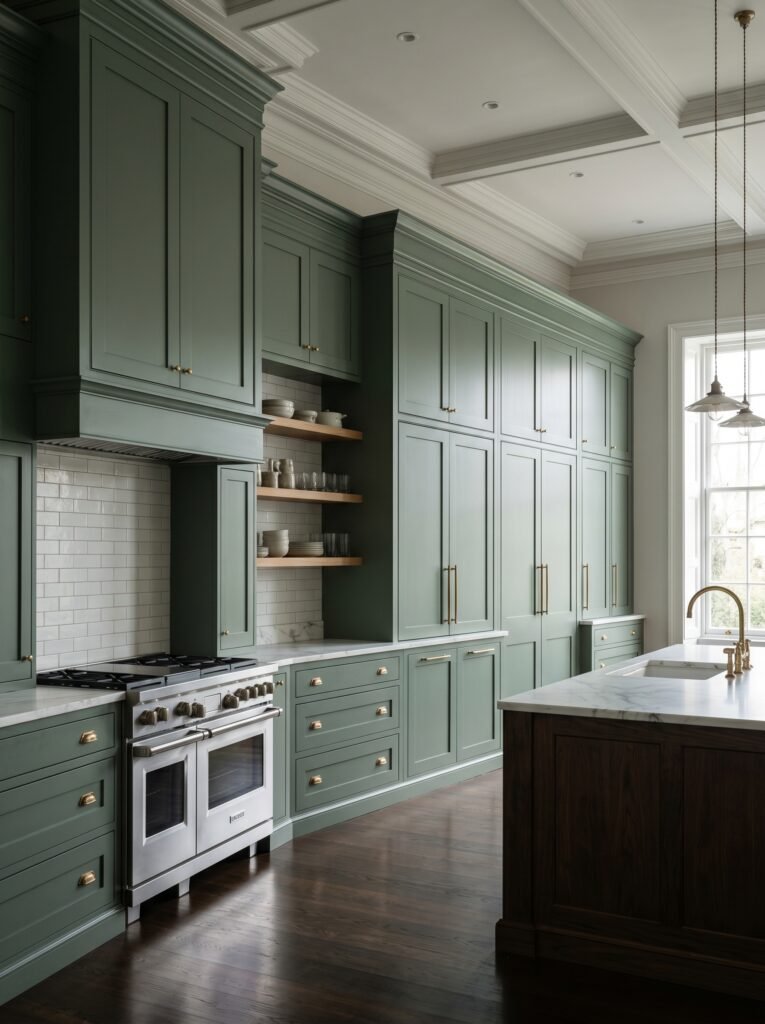
In a modern classic kitchen, the cabinets are not just containers for your pasta and mixing bowls. They are the architecture of the room. This is perhaps the most important distinction to understand when designing or renovating in this style.
Shaker-style cabinetry is the defining feature here — and for good reason. Its flat recessed panel construction is simultaneously traditional in spirit and modern in form. It references craftsmanship and history, but its clean geometric lines prevent it from feeling fussy or overly ornate. Shaker cabinets sit beautifully in a Victorian terrace house and in a new-build apartment, which speaks to their remarkable versatility.
Height matters enormously. Floor-to-ceiling cabinetry — particularly in kitchens with high ceilings — adds a drama and grandeur that immediately elevates the entire space. If your ceilings are lower, running the upper cabinets all the way to the ceiling with trim molding at the top creates the illusion of height and gives the room a more considered, finished quality.
Details to look for: inset cabinet doors (where the door sits flush within the frame, rather than overlapping it) for an upscale traditional feel, integrated handles for a more modern reading, or long bar-pull hardware in unlacquered brass or brushed nickel for that perfect middle ground.
4. Countertops That Age Beautifully and Tell a Story
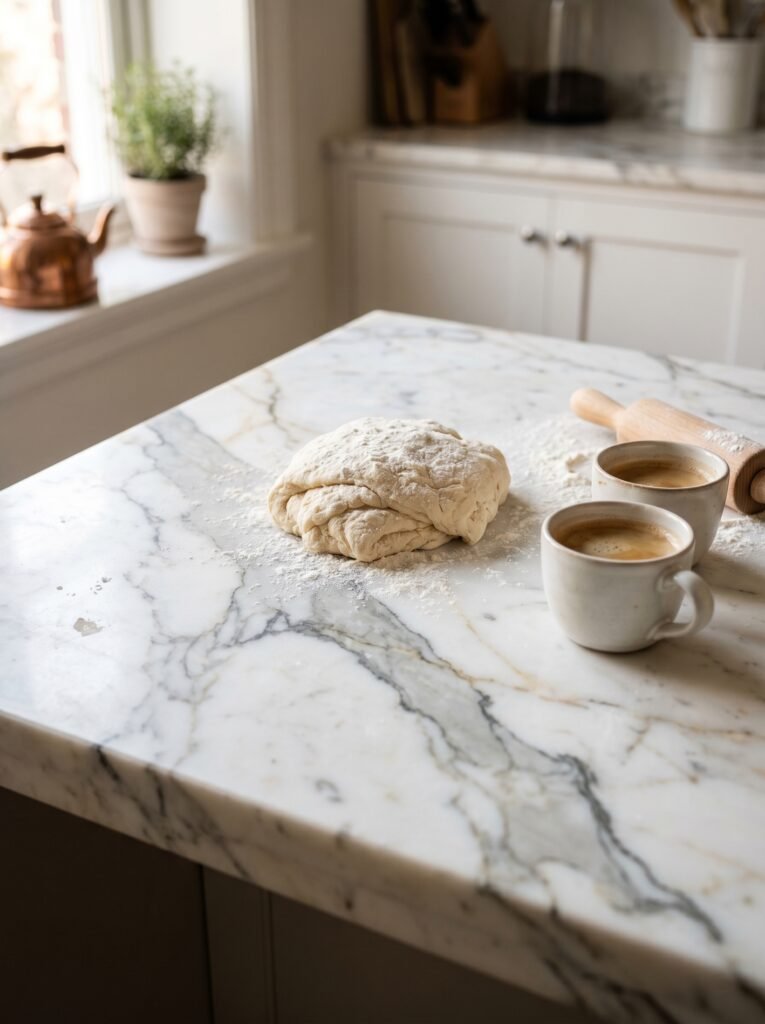
Few material decisions carry as much visual and tactile weight as your countertop choice, and in the modern classic kitchen, this decision is one worth taking your time over. The countertop is where beauty meets daily use — where croissant dough gets rolled out, where coffee cups are set down, where hands rest during long conversations.
Natural marble remains the gold standard for this aesthetic. Its veining is irreplaceable — no engineered stone has quite managed to replicate the organic, one-of-a-kind quality of a slab of Calacatta or Statuario marble. Yes, it requires sealing and a certain amount of care. Yes, it will develop a patina over time. But that’s not a flaw — it’s a feature. A marble countertop that shows decades of kitchen life is a beautiful thing.
For those who prefer a lower-maintenance option, honed quartzite offers remarkable durability alongside a matte, stone-like surface that reads as equally luxurious. Engineered quartz options like Silestone’s “Bianco Calacatta” or Caesarstone’s “Empira White” have also improved dramatically in their realism. They’re a practical concession that doesn’t sacrifice the overall aesthetic.
“The best countertops don’t just hold things — they hold memories.”
5. Hardware: The Jewelry of Your Kitchen
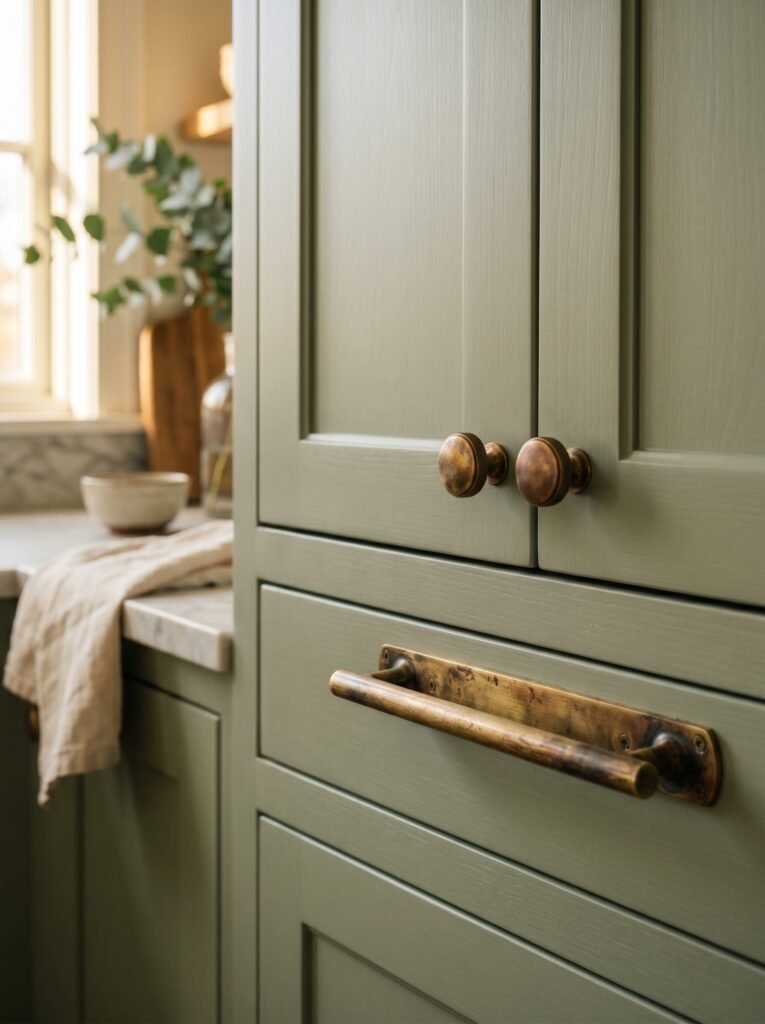
If cabinetry is the architecture, hardware is the jewelry. This is where personality enters — quietly but unmistakably. In the modern classic kitchen, hardware choices follow a simple guiding principle: choose a finish and stay committed to it. Mixing metals can work beautifully in interiors, but in a kitchen where hardware repeats across dozens of cabinet doors and drawers, consistency creates cohesion.
Unlacquered brass is the material of this moment — and for good reason. It starts bright and golden, then gradually oxidizes into a richer, more complex patina that looks genuinely antique over time. It’s warm against white cabinetry, striking against navy, and surprisingly beautiful against sage green. Brushed brass offers a similar warmth without the darkening over time, making it a more predictable choice.
Matte black hardware reads as modern and sharp — it suits the cleaner, more contemporary end of this style spectrum. Polished nickel sits in a beautiful middle ground: it has the cool brightness of chrome but a softer, warmer undertone that suits traditional settings.
Cabinet pulls, bin pulls, and knobs all have their place in this aesthetic. Long bar pulls on drawers keep things modern. Bin pulls on lower cabinetry add a refined utility-room quality. Small knobs on upper cabinets feel classic and restrained. There’s no single correct answer — only the one that feels most like you.
6. The Role of Lighting in a Modern Classic Kitchen
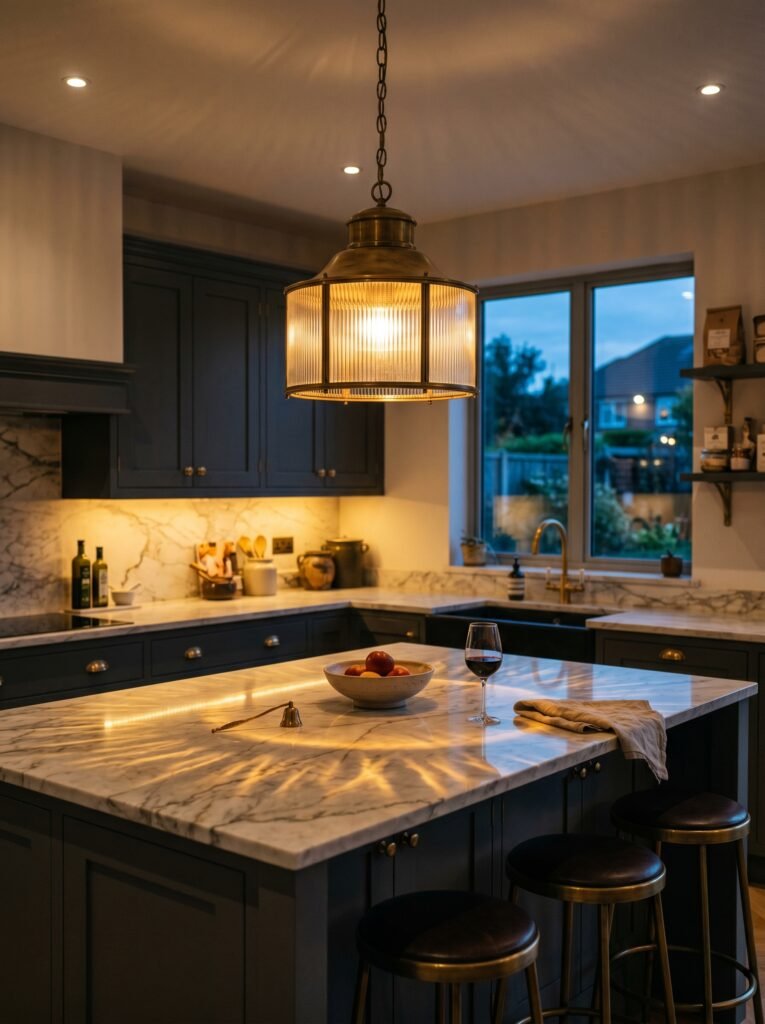
Lighting is the silent architect of any interior space, and in a kitchen, it works overtime. It affects how food looks, how colors read, how people feel — and in a modern classic kitchen, the layering of light sources is what separates a beautiful room from a truly extraordinary one.
The overhead pendant light above an island or dining table is the room’s statement piece — its moment of personality. In this style, that often means a large-scale pendant in aged brass, ceramic, or glass that carries visual weight without imposing. Rattan pendants add organic warmth. Smoked glass pendants introduce a moody sophistication. Fluted glass pendants are having a genuine cultural moment right now, and they deserve it — they scatter light in the most beautiful way.
Under-cabinet lighting is non-negotiable in a functional, well-designed kitchen, and in the modern classic style it should be warm-toned LED tape lighting set to around 2700K — the kind of glow that makes your countertops look like they’re lit by candlelight.
Recessed ceiling lighting should be used sparingly and positioned deliberately — not scattered across the ceiling in a grid, which creates a commercial-kitchen feeling entirely at odds with this aesthetic.
7. Islands and Peninsulas — The Heart of the Modern Classic Kitchen
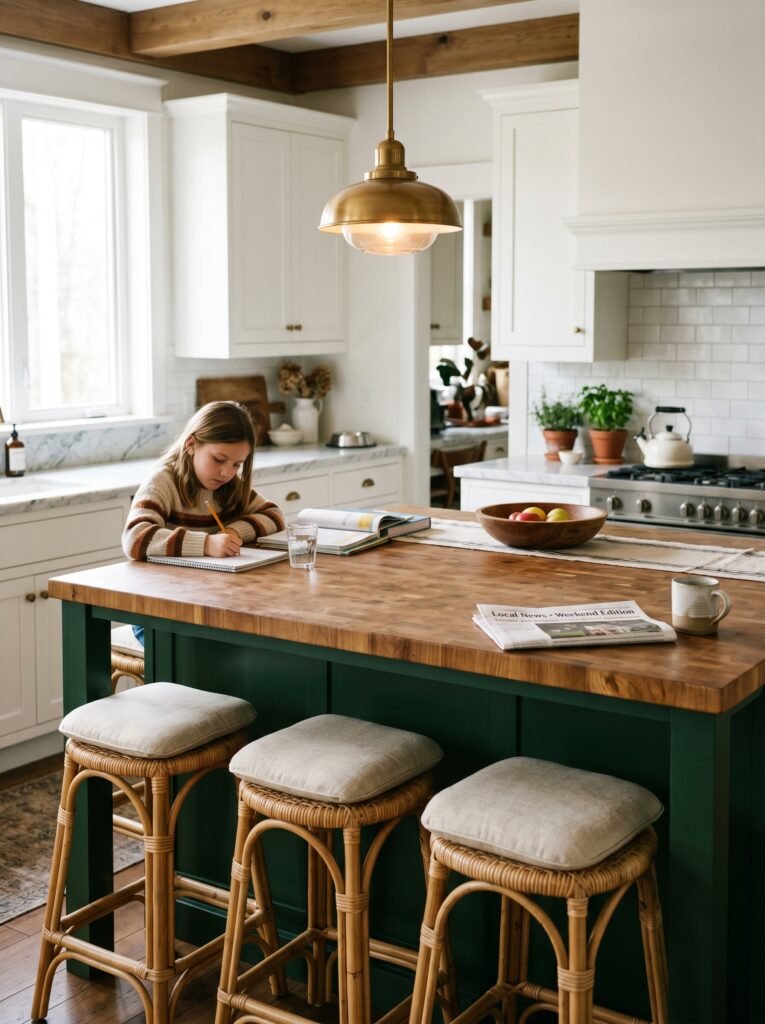
The kitchen island has evolved from a purely functional workspace into something more socially significant — it’s the gathering point of modern domestic life, the place where guests perch on stools while you cook, where children do homework while dinner is being made, where Sunday mornings slow down over coffee and newspapers.
In the modern classic kitchen, the island is often treated as furniture rather than built-in cabinetry. This might mean a different paint color — a deep midnight blue or forest green island against white perimeter cabinetry creates that beautiful contrast that photographs so well on Pinterest. It might mean a contrasting countertop material — a butcher block top on the island when the perimeter has marble, adding warmth and practicality.
Seating is important here. Rattan barstools with a natural linen cushion bring organic texture into a sleek space. Turned-leg wooden stools reference traditional furniture-making traditions. Industrial-style counter stools in matte black can work if the rest of the space leans contemporary. The goal is seating that looks chosen, not merely functional.
8. Backsplash Choices That Elevate Without Overwhelming
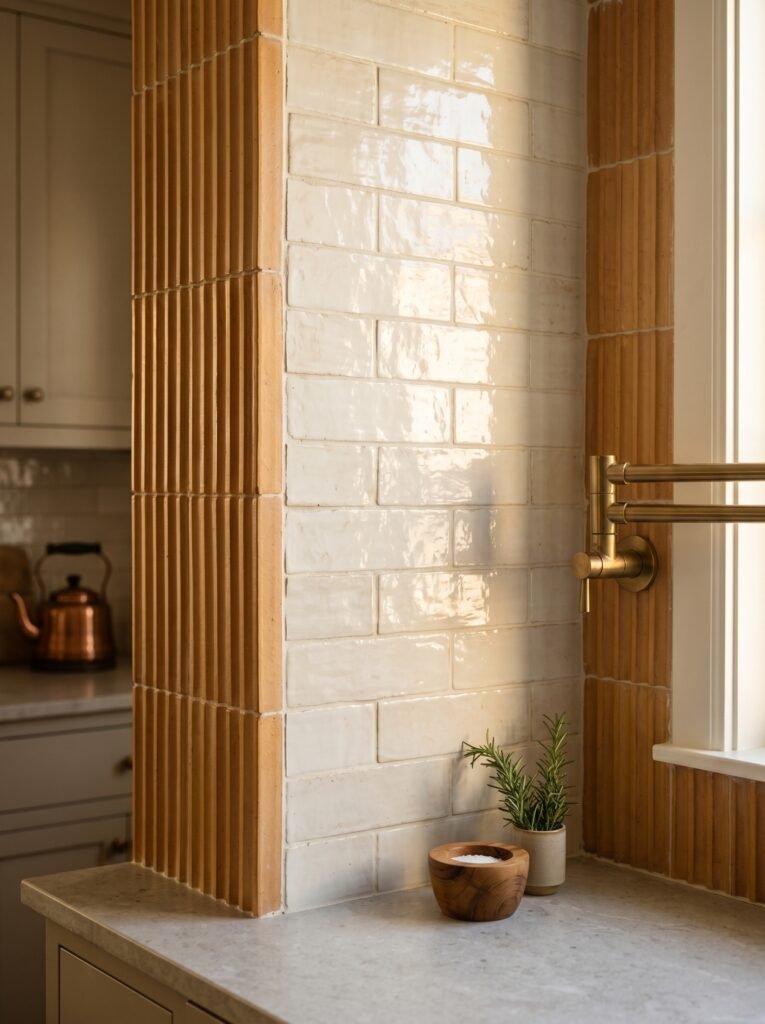
The backsplash is one of the most powerful — and most misused — design opportunities in a kitchen. In a modern classic space, the backsplash serves as a textured backdrop that gives the room depth without competition. It supports the overall palette rather than trying to carry a statement of its own.
Subway tiles, particularly in a handmade or artisan format rather than the machine-perfect version, have an enduring presence in this style. Their slight irregularities and variation in surface texture catch the light in a way that makes them feel genuinely crafted. Laid in a traditional brick pattern they read as classic; in a stacked vertical pattern they become more modern.
Fluted terracotta tiles are currently one of the most coveted choices in this aesthetic — warm, tactile, and deeply beautiful in morning light. Unlacquered brass tile is bold and sophisticated. Simple marble slab backsplash that continues the material of the countertop up the wall creates that seamless luxury that interior designers always favor.
“The backsplash is where the kitchen whispers its design philosophy.”
9. Flooring: The Foundation That Holds Everything Together
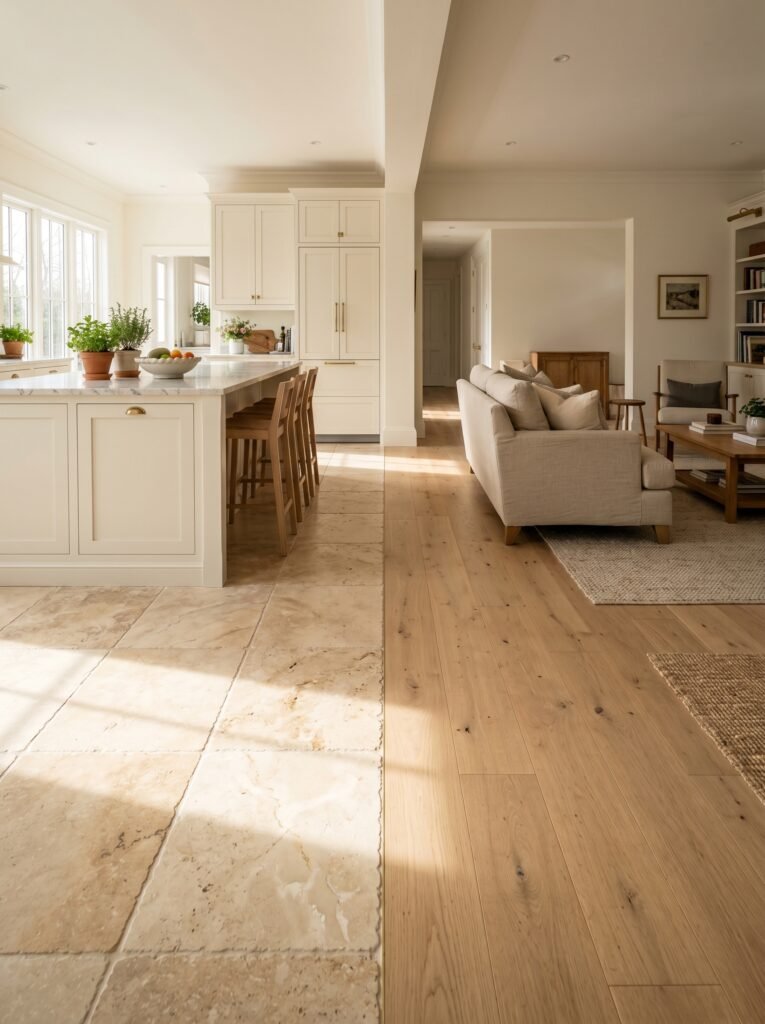
Underfoot, the modern classic kitchen relies on materials that are simultaneously beautiful and practical — because a kitchen floor, above all surfaces, must actually withstand life. Stone and tile remain the dominant choices, and both are exceptionally well-suited to this style.
Large-format flagstone tiles — particularly in a tumbled limestone or honed travertine — bring that European kitchen quality that feels as if the house has always had them. They age gracefully, with each scratch and scuff adding to their character rather than detracting from it.
Encaustic cement tiles with subtle geometric patterns are another exceptional choice: they reference Mediterranean and Moroccan craft traditions while sitting beautifully within a modern color palette. A restrained geometric pattern in cream and grey underfoot grounds the room without distracting from it.
Engineered wood flooring — particularly wide-plank white oak in a natural or lightly brushed finish — brings warmth and softness to a kitchen that’s heavy in stone and tile. It blurs the line between kitchen and living space, which suits the open-plan configurations so common in contemporary homes.
10. Open Shelving vs. Closed Cabinetry — Finding the Right Balance
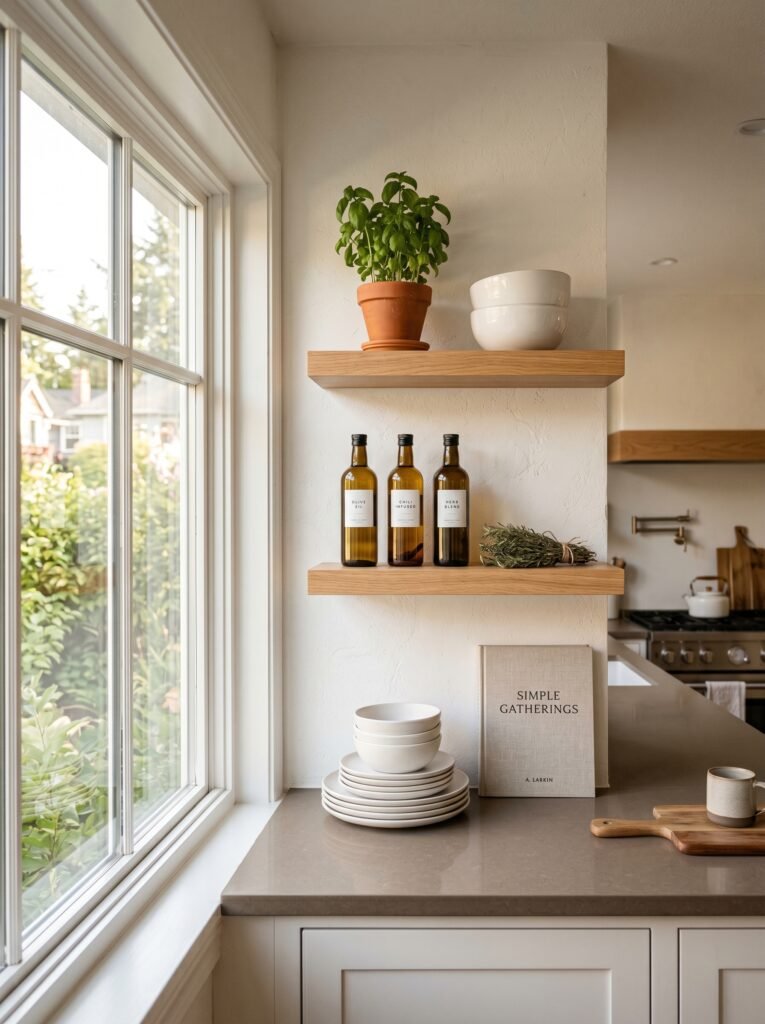
One of the most-debated questions in kitchen design sits here: how much should be on display? The modern classic kitchen approaches this question with characteristic restraint. Open shelving, used thoughtfully, adds a lived-in warmth and visual interest that closed cabinetry alone cannot provide. But open shelving used carelessly is simply visible clutter.
The principle that works best is treating open shelves as a curated display — not a dumping ground for whatever doesn’t fit in the cupboards. Three to five open shelves, positioned flanking a window or beside the range, styled with everyday items that happen to be beautiful: stacked simple white ceramic plates, a row of olive oil bottles, a bundle of dried herbs, a small potted plant, a single cookbook stood upright.
The items on open shelves should be things you actually use regularly. Nothing looks sadder than a beautiful open shelf draped in dust because the items on it are never touched.
11. Mixing Old and New — The Detail That Makes It Feel Personal
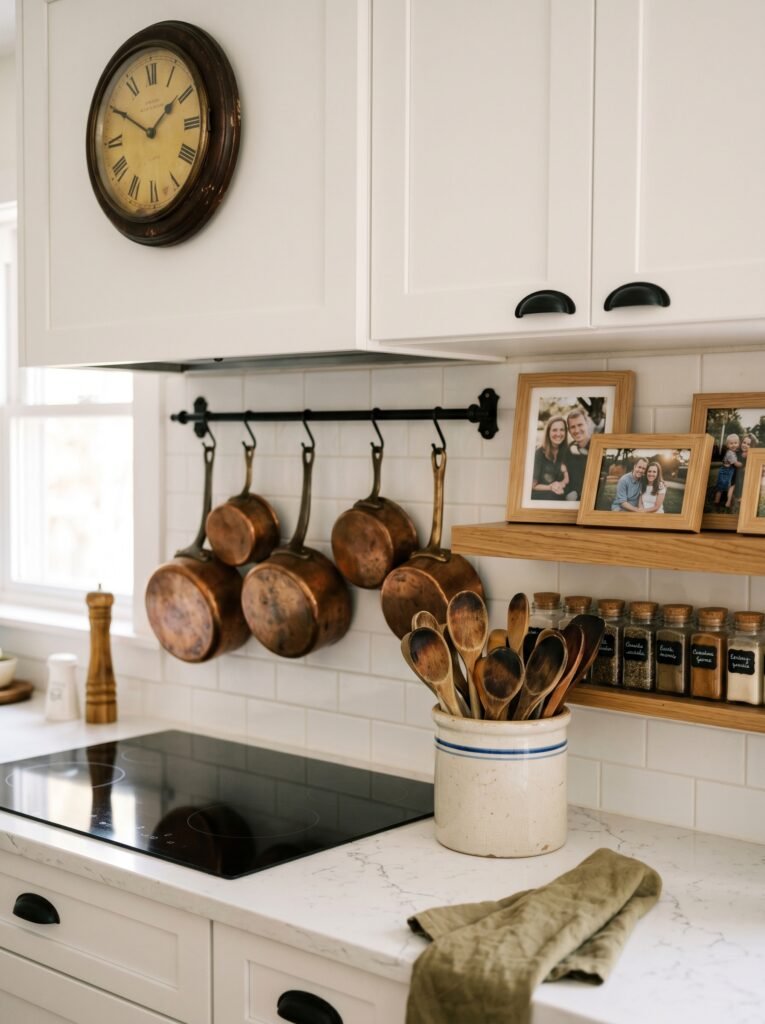
One of the most common mistakes in achieving this aesthetic is being too rigorous about it — making every element so perfectly matched and coordinated that the kitchen feels more like a showroom than a home. The warmth and character of a truly beautiful modern classic kitchen comes from introducing elements that suggest history, personality, and time.
A vintage ceramic crock holding wooden spoons alongside sleek induction hobs. An antique clock on the wall above gleaming cabinetry. A collection of copper pots that have actually been used hanging from a simple rail. Family photographs in simple wooden frames sitting on an open shelf beside a row of spice jars.
These details can’t be purchased as a kit — they accumulate. They tell the story of a family that has cooked in this kitchen, gathered in this space, lived here. That is the warmth that no renovation budget can directly buy, but that good design creates the conditions for.
12. The Sensory Experience — What a Modern Classic Kitchen Should Feel Like
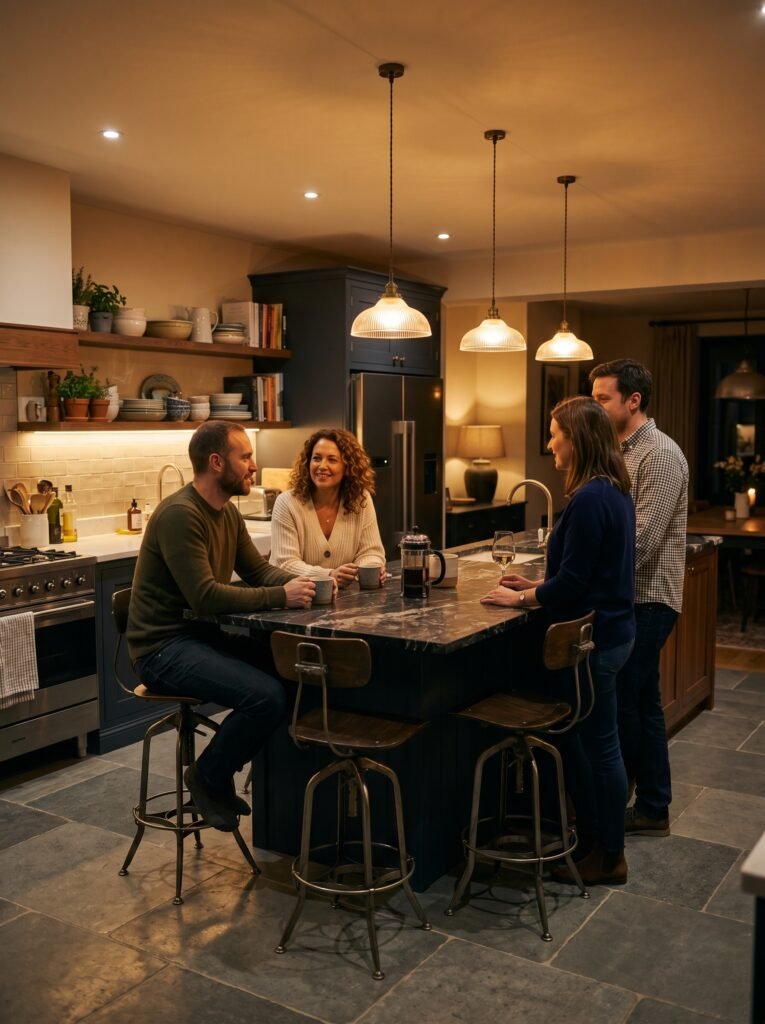
Beyond what you can see, a well-designed modern classic kitchen should have a distinct sensory quality. The sound of a stone floor underfoot. The cool smoothness of a marble countertop under your hands on a warm afternoon. The way the pendant lights cast warm pools across the island in the evening. The smell of wood and stone and something always cooking.
This kitchen should make you want to be in it — not just pass through it. It should slow you down. It should be the kind of space where you don’t rush to leave after the dishes are done, where you linger over a second cup of coffee, where friends gather without invitation because it simply feels good to be there.
That is, ultimately, what design is for. Not photographs. Not Pinterest saves. Not the admiration of guests — though all of those things happen naturally when a space is genuinely well considered. A modern classic kitchen is designed for life. For the actual, messy, nourishing, everyday miracle of living.
—
🌿 How to Begin Designing Your Modern Classic Kitchen
Starting a kitchen renovation or redesign feels enormous, but the process becomes manageable — and even enjoyable — when you approach it with intention rather than anxiety.
Start by anchoring your palette before making any other decisions. Choose your cabinet color, your hardware finish, and your countertop material before committing to anything else. These three elements carry 80% of the visual weight of the kitchen, and when they’re in harmony, everything else falls into place naturally.
Invest in quality where your hands touch most often. Countertops, hardware, and drawer mechanisms are worth spending more on because they’re what you interact with every single day. You notice quality at the everyday scale far more than at the grand scale.
Don’t rush the accessories and styling phase. An empty kitchen with beautiful bones is worth living in for a few weeks before filling it — you’ll discover what it actually needs rather than guessing in advance. The best-styled kitchens on Pinterest weren’t styled on day one.
Consult a kitchen designer for the layout even if you handle everything else yourself. A professional spatial assessment for a few hundred dollars can prevent costly mistakes in the positioning of appliances, the depth of cabinetry, and the flow of the working triangle that would otherwise only become apparent once construction is complete.
Finally — document it. Photograph your kitchen as it evolves, both the process and the result. These photographs will matter to you far more than you expect.
—
❓ FAQ
Q: Is a modern classic kitchen expensive to achieve? A: It doesn’t have to be. The aesthetic relies more on proportion, palette, and material quality than on volume of investment. A coat of high-quality paint on existing cabinetry, new hardware, and a considered accessory edit can dramatically shift a kitchen toward this style without a full renovation.
Q: What’s the most important element to get right in a modern classic kitchen? A: The cabinetry, without question. Because it covers so much visual territory, the style, proportion, and color of your cabinets set the tone for everything else. Get those right and the rest follows naturally.
Q: Does this style work in a small kitchen? A: Beautifully, actually. The restraint built into this aesthetic — the clean lines, the controlled palette, the preference for quality over quantity — suits small spaces particularly well. Avoiding visual clutter, choosing lighter cabinet colors, and using mirrors or glass elements to reflect light can make even a galley kitchen feel considered and expansive.
—
💭 Final Thought
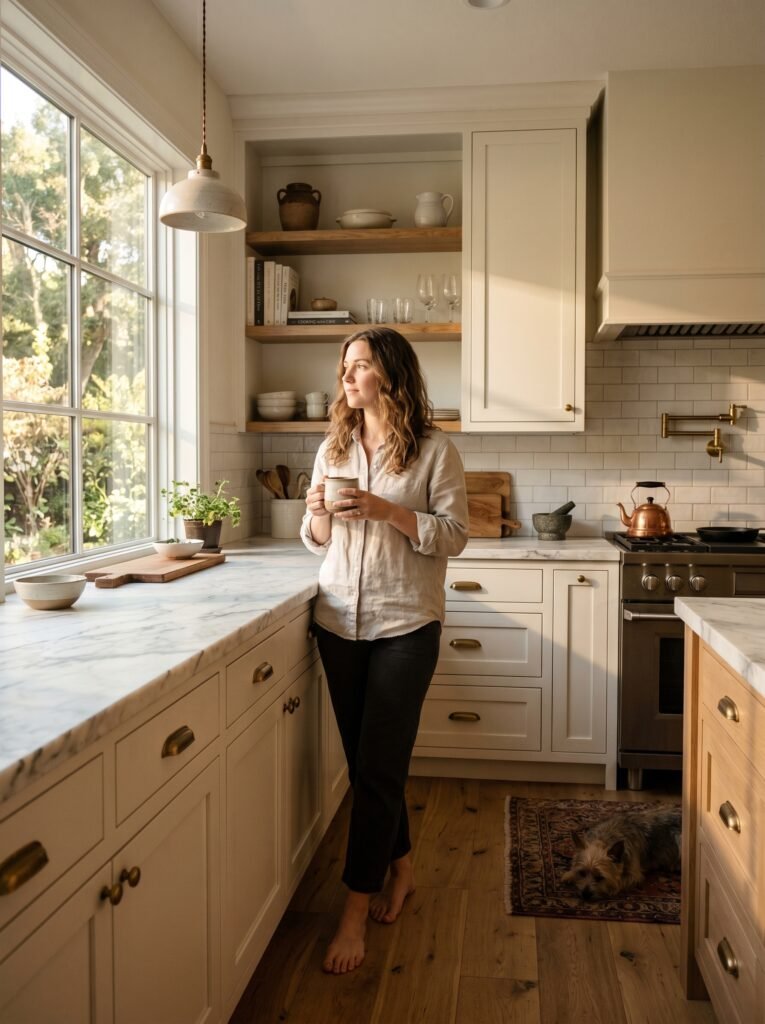
A kitchen is so much more than a room where meals get made. It’s where mornings begin and evenings unwind, where the ritual of cooking becomes a kind of meditation, where the people we love most tend to gather without being asked. Designing that space beautifully isn’t vanity — it’s an act of care for everyone who will live within it.
The modern classic kitchen understands this. It’s built to last, to age gracefully, and to feel just as right on a chaotic Tuesday morning as it does on a slow Sunday afternoon.
So here’s the question worth sitting with: If your kitchen truly reflected the life you want to live in it, what would it feel like — and what’s one small step you could take this week to begin moving toward that?