Eclectic Interior Style: How to Mix Everything You Love Into a Home That Actually Makes Sense
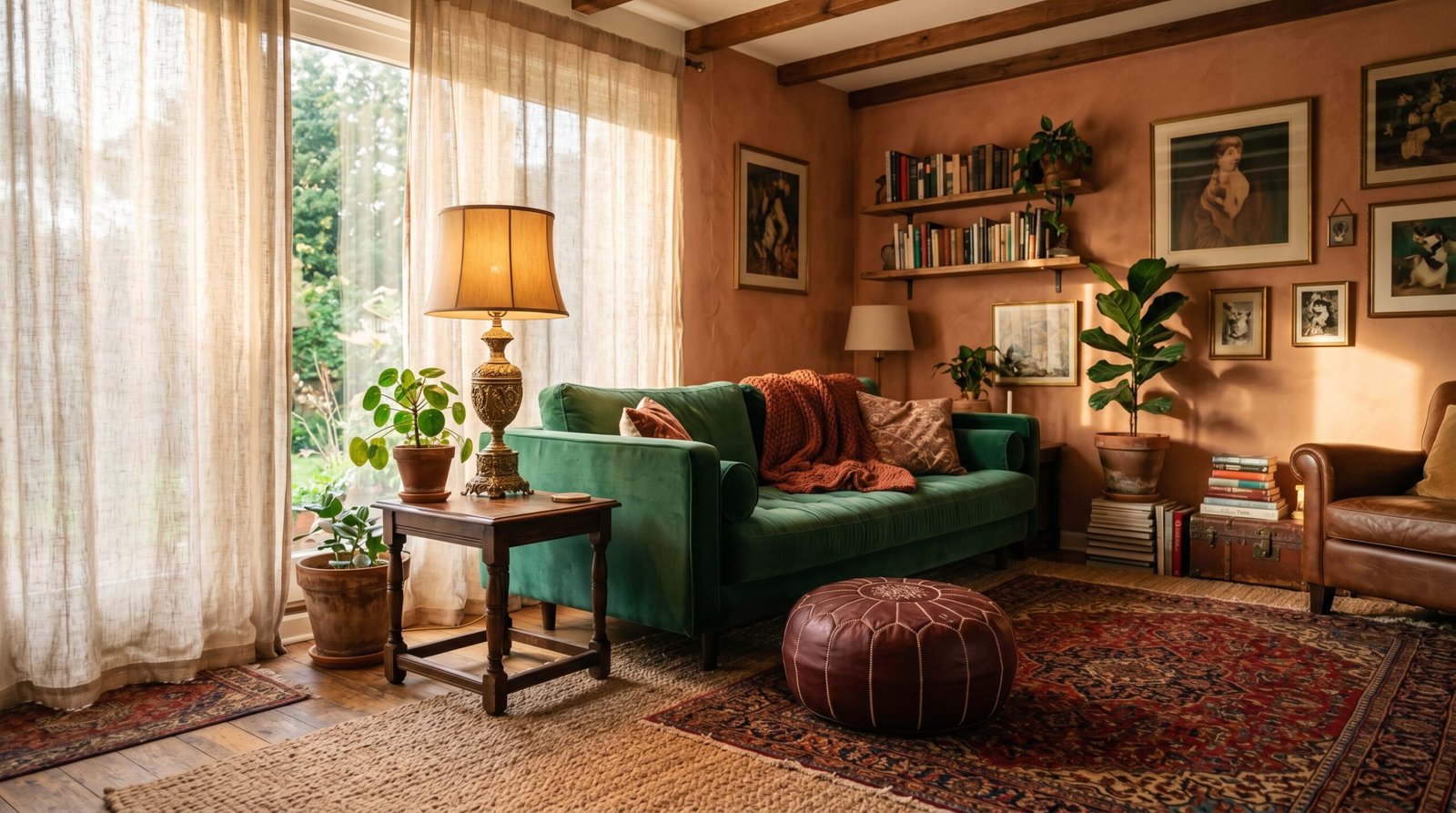
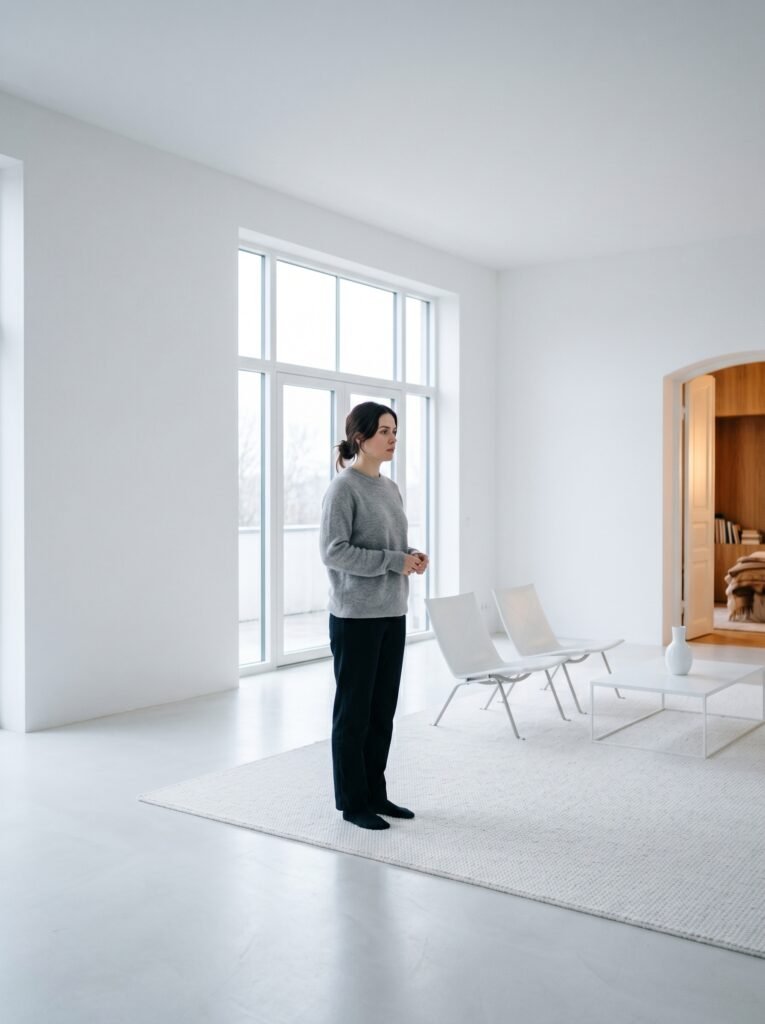
There’s a moment — maybe you’ve had it — when you’re standing in a beautifully curated, all-white Scandinavian living room and thinking, this is stunning, but it doesn’t feel like me. Eclectic interior style exists precisely for that feeling. It’s the design philosophy that says your grandmother’s brass lamp, your Moroccan pouf, and your modern velvet sofa can all live together — and not just coexist, but thrive.
—
Table Of Content
1. What “Eclectic” Actually Means (And What It Doesn’t)
The word “eclectic” gets thrown around a lot in design circles, sometimes as a polite way of saying “I couldn’t commit to one style.” But that couldn’t be further from the truth. Eclectic interior design is one of the most intentional, skill-demanding approaches to decorating a home. It requires you to make deliberate, thoughtful choices — not just throw things together and hope for the best.
At its core, eclectic style is the art of drawing from multiple design traditions — mid-century modern, bohemian, industrial, traditional, coastal, maximalist — and weaving them together through a unifying thread. That thread might be a recurring color palette, a consistent material, a specific scale of furniture, or even just a feeling you want the room to evoke. The chaos is controlled. The mix is intentional.
What eclectic design is not is randomness. A room stuffed with items from every era and every corner of the world, without any visual logic, isn’t eclectic — it’s just cluttered. The difference between an inspired, magazine-worthy eclectic space and an overwhelming one comes down to a handful of principles that, once you learn them, you cannot unsee.
“Eclectic design isn’t about having no rules — it’s about knowing exactly which rules you can break.”
2. The Emotional Pull of Eclectic Spaces — Why They Feel So Human
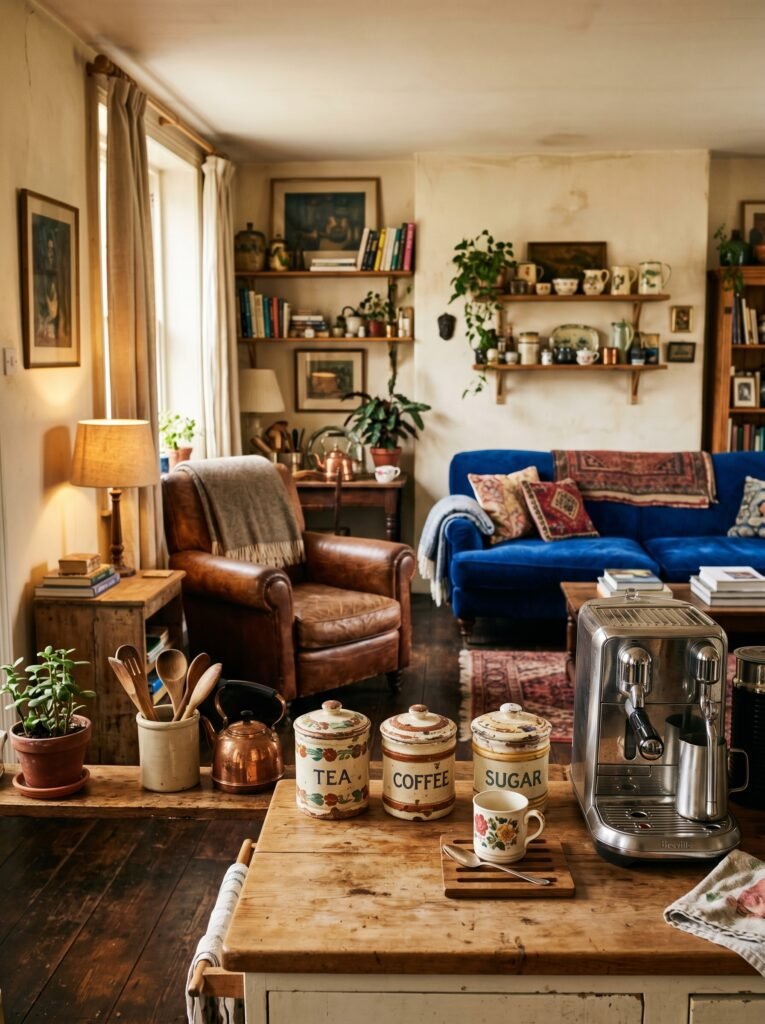
Think about the homes that have moved you most. Not the ones that looked like a showroom, but the ones that told a story the moment you walked in. The kitchen where vintage ceramic canisters sat beside a sleek espresso machine. The living room where a worn leather armchair faced a brand-new, jewel-toned sofa. Those spaces felt lived in — they felt like someone actually inhabited them.
Eclectic interiors carry emotional weight that single-style rooms often don’t. When you walk into an eclectic home, you sense layers of time, experience, and personality. You see evidence of a life being built rather than a set being staged. There’s a warmth to that layering that speaks to something deeply human in all of us — our love of stories, our attachment to objects, our need to feel that where we live reflects who we are.
This is why eclectic design has become one of the most-searched, most-saved aesthetics on Pinterest. People aren’t just looking for beautiful rooms. They’re looking for permission to be themselves at home.
3. The Golden Rule: Find Your Unifying Thread
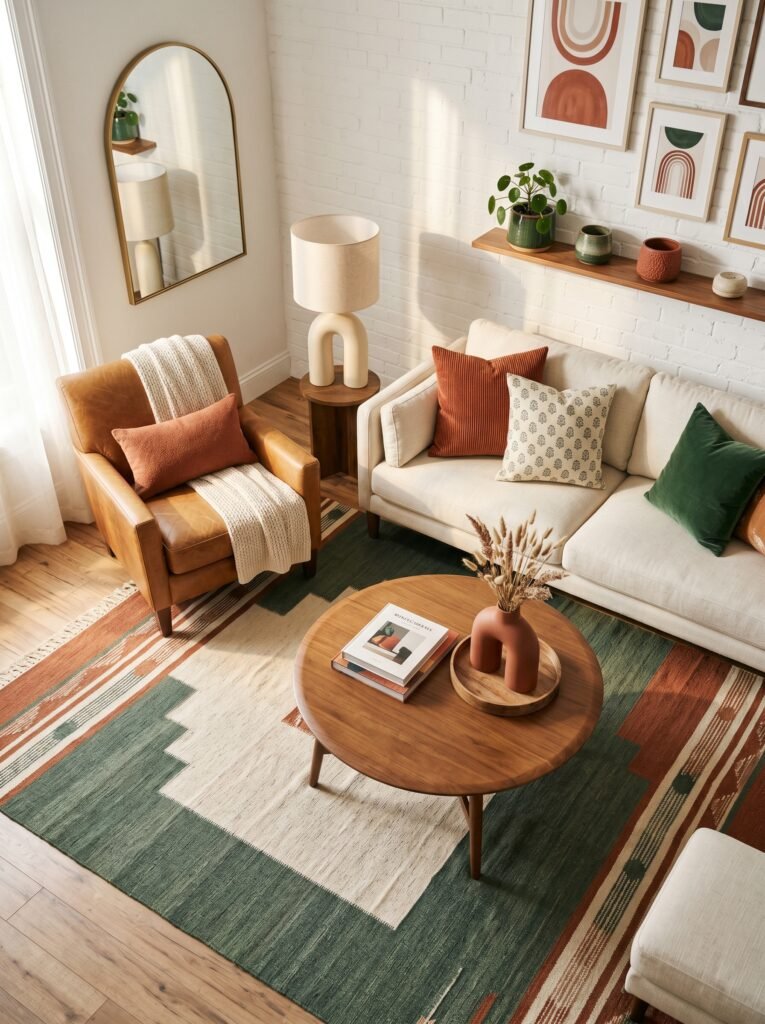
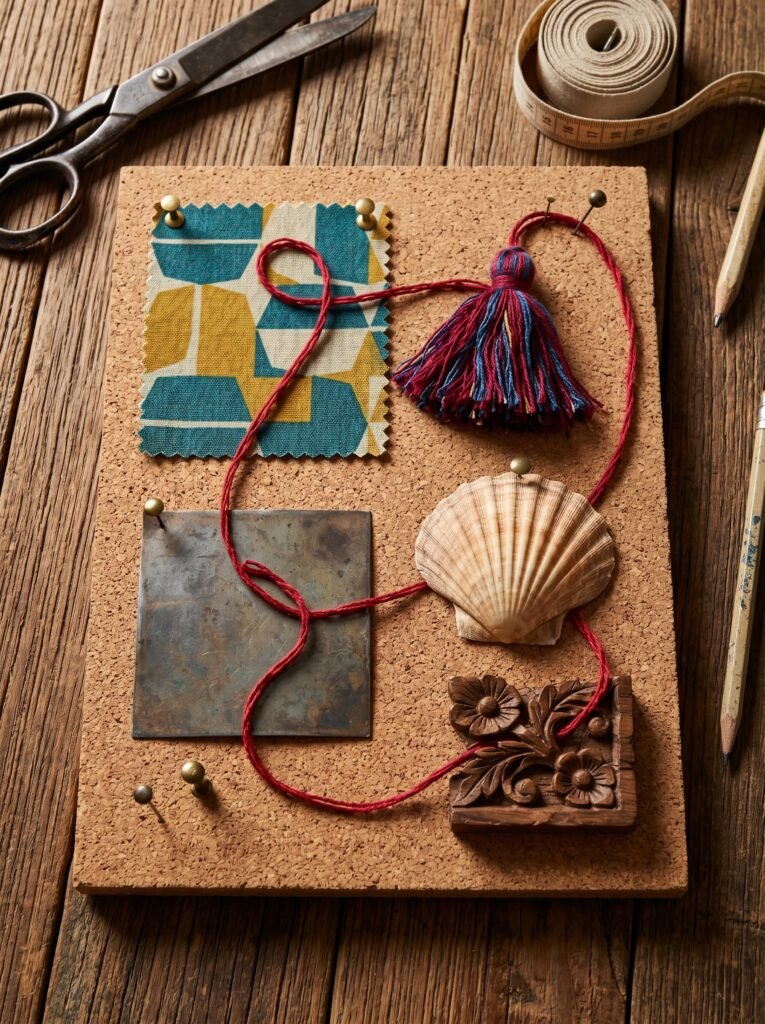
Every successful eclectic room has one thing holding it together. Before you pull out your mood board or move a single piece of furniture, you need to identify yours. This is the non-negotiable foundation of eclectic decorating.
Your unifying thread could be a color story — perhaps a warm palette of rust, cream, and forest green that runs through every piece in the room, from the throw pillows to the artwork to the plant pots. It could be a material — natural wood tones appearing in the coffee table, picture frames, and window shutters. It could be a recurring shape — arches repeated in mirror frames, lamp bases, and doorway details. Or it could be something harder to name but easier to feel: a consistent mood, like “cozy European apartment” or “well-traveled maximalist.”
Once you find your thread, it becomes your decision-making compass. Every new piece you consider gets held up against one question: does this reinforce the thread, or does it cut it?
4. How to Mix Furniture Styles Without Creating Visual Chaos
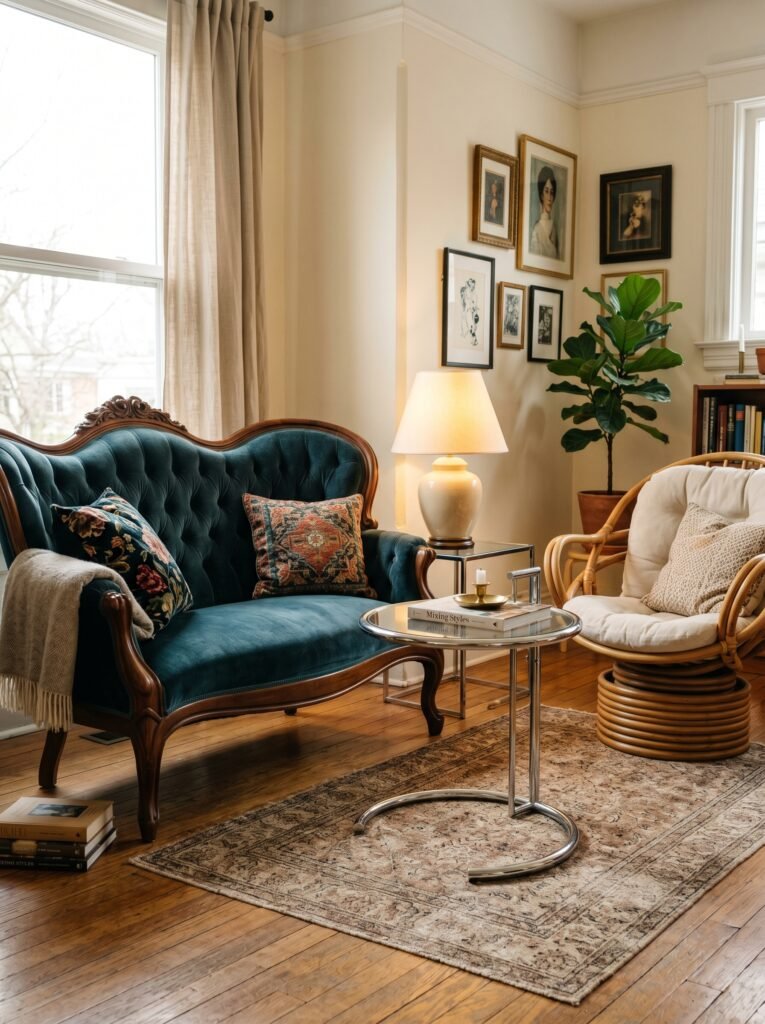
The most common fear people have when attempting eclectic design is furniture mixing. How do you put a Victorian settee next to a Bauhaus side table next to a boho rattan chair without it looking like a very confused estate sale?
The answer lies in scale, weight, and repetition. First, consider the visual weight of each piece — heavier, darker furniture needs to be balanced across the room, not stacked in one corner. Second, vary the heights of your pieces intentionally; the eye needs somewhere to travel and rest. Third, repeat one element across otherwise different pieces — if your Victorian settee has curved legs and your rattan chair has a rounded back, that shared geometry creates a subtle visual conversation between them.
A practical tip: try limiting yourself to three dominant furniture styles in any one room. Any more than that and the room starts to splinter. Three styles, tied together by your unifying thread, creates richness without confusion.
5. Color in Eclectic Interiors — More Deliberate Than It Looks

One of the biggest misconceptions about eclectic spaces is that they’re a free-for-all with color. In reality, some of the most disciplined, carefully considered color work in interior design shows up in eclectic rooms. Because you’re already mixing styles, eras, and textures, your color palette often needs to do the heavy lifting of creating cohesion.
A reliable approach is the 60-30-10 rule: 60% of the room in a dominant color (usually walls and large furniture), 30% in a secondary color (rugs, curtains, accent chairs), and 10% in an accent color that appears in small doses but packs a visual punch. In an eclectic room, that 10% accent color is often where your personality really shows — a pop of chartreuse in a cushion, a deep terracotta in a ceramic vase, a glossy cobalt on a side table.
“In an eclectic home, color isn’t decoration — it’s the language everything speaks.”
6. The Role of Pattern Mixing — Bold, Beautiful, and Surprisingly Logical
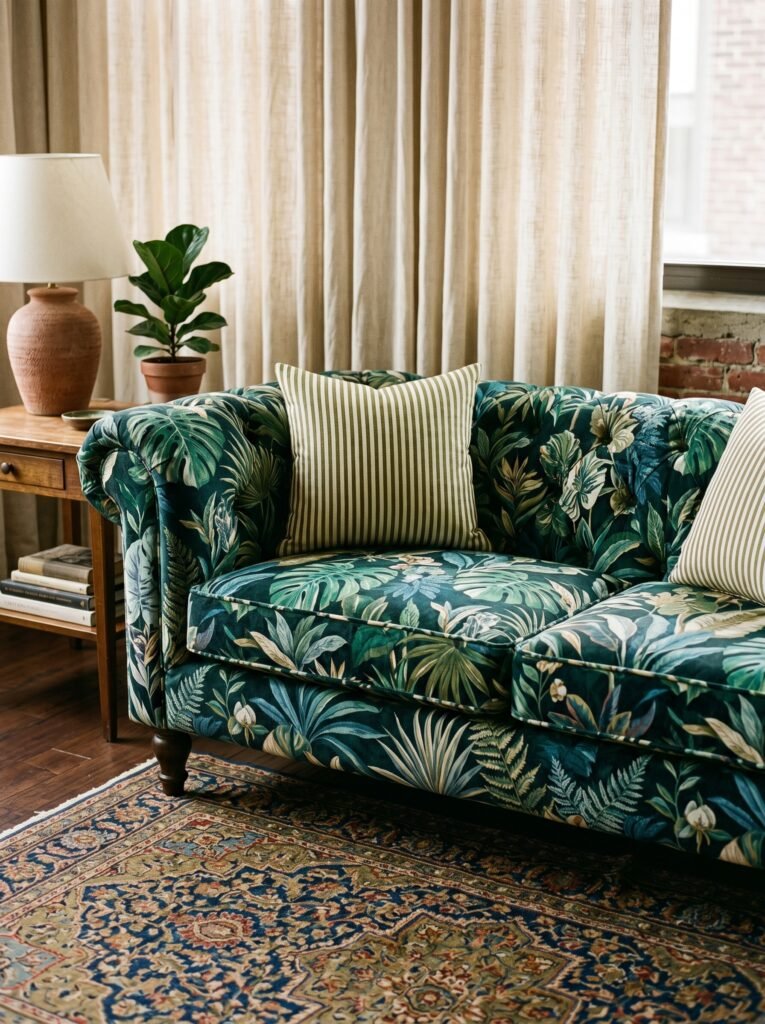
If mixing furniture styles feels brave, mixing patterns feels downright reckless — until you understand the simple logic behind it. Pattern mixing in eclectic design follows one principle above all others: vary the scale.
A large botanical print on a sofa can share a room with a small geometric stripe on throw pillows and a medium-scale Persian rug without any of them fighting for attention, because their scales are distinctly different. Pair a small pattern with another small pattern, and they’ll clash. But a large, medium, and small pattern in a cohesive color family? That’s the recipe for an eclectic room that looks like it was styled by a professional.
Another tip: keep one pattern element neutral or near-neutral. If your rug is bold and your sofa fabric is expressive, let your curtains be a simple linen. Breathing room matters just as much in pattern as it does in furniture arrangement.
7. Layering Textiles — Where Eclectic Rooms Come Alive
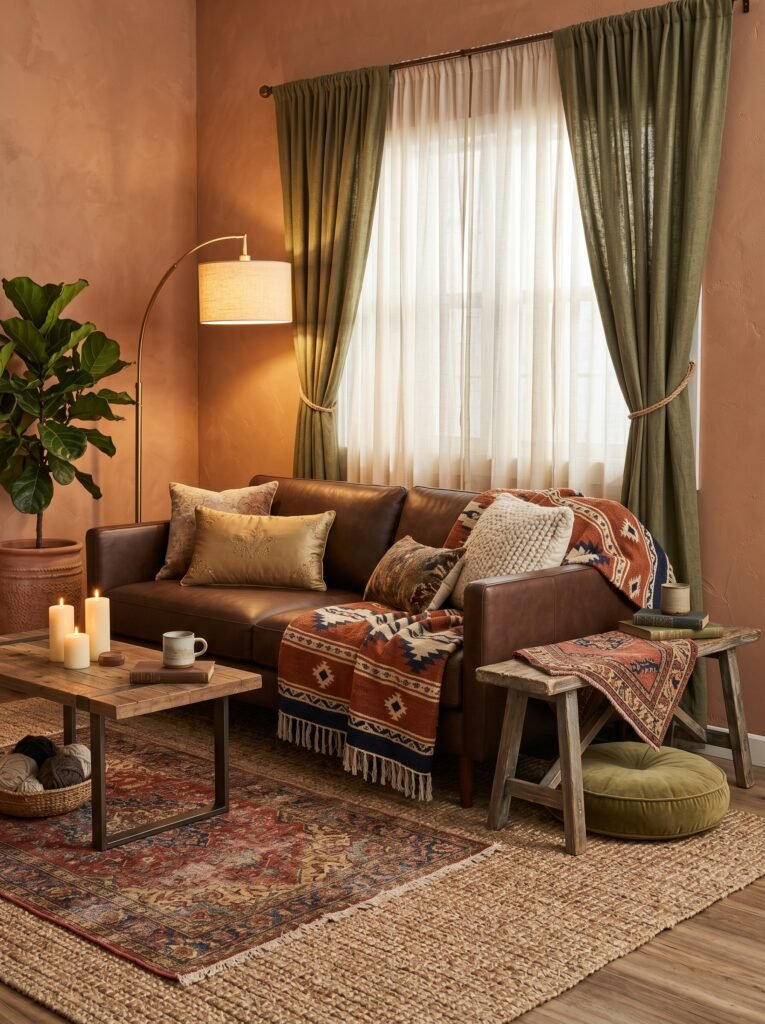
Walk into any eclectic space that makes you want to sit down immediately and stay for hours, and you’ll notice one thing: the textiles. Layered rugs, stacked throw pillows in different fabrics, a chunky knit blanket draped over a velvet armchair, sheer curtains layered behind heavier linen panels. Textiles are the sensory experience of a room — they’re what you feel before you consciously register anything else.
In eclectic design, textiles are also one of the most accessible ways to bridge wildly different pieces. A hand-woven Peruvian throw on a modern leather sofa immediately softens it and introduces warmth. A silk cushion on a rustic wooden bench elevates it. The contrast is the point — and the layering creates that elusive quality that designers chase: depth.
Don’t underestimate the power of a layered rug situation. Placing a smaller, more decorative rug on top of a natural jute or sisal base is a distinctly eclectic move that adds visual texture, defines zones in open spaces, and brings together two different design worlds in a single stroke.
8. Art, Objects, and the Stories They Tell
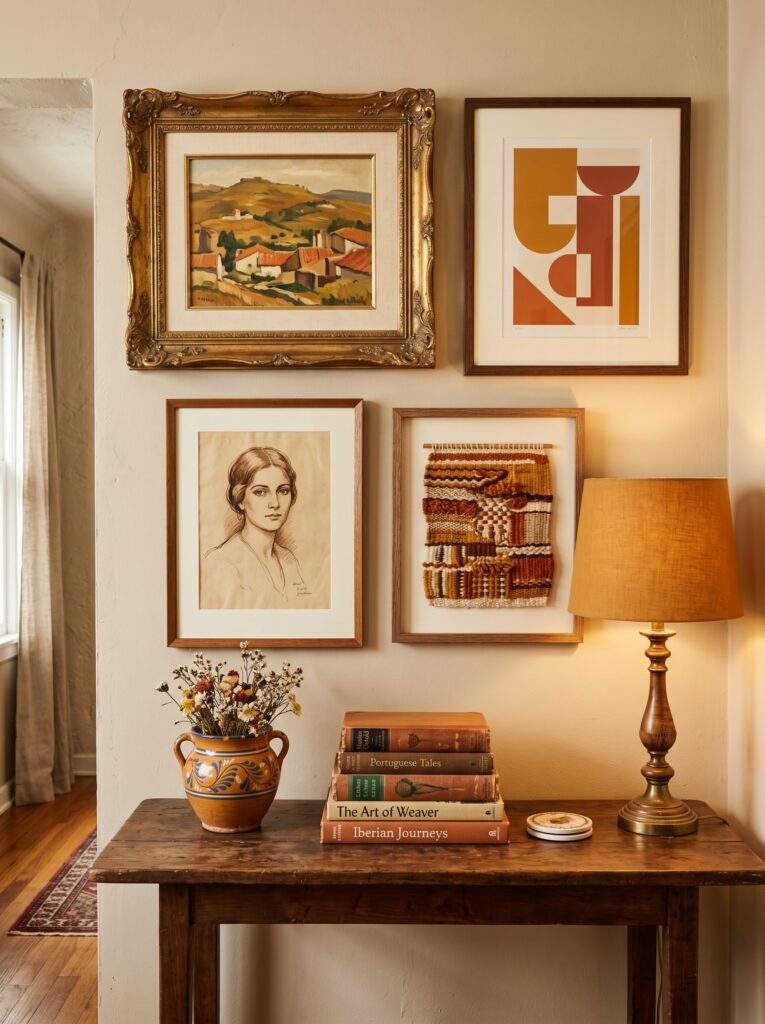
In a single-style home, art and objects are often chosen to match the room. In an eclectic home, the room is often built around the art and objects you love. That shift in thinking is significant — it moves you from decorating around a style to decorating from your actual life.
An eclectic gallery wall might include a vintage oil painting, a graphic modern print, a hand-drawn portrait, and a textile piece — all in frames of varying shapes and materials but tied together by consistent matting or a shared color note. The variety is what makes it interesting. The underlying logic is what makes it work.
Objects in eclectic spaces tend to have provenance — they come from somewhere. A clay pot you bought at a market in Portugal. A stack of well-loved books with beautiful spines. A lamp you inherited that you’ve recovered in a new shade. These objects carry stories, and stories are what transform a house into a home.
9. Lighting in Eclectic Spaces — The Underrated Connector
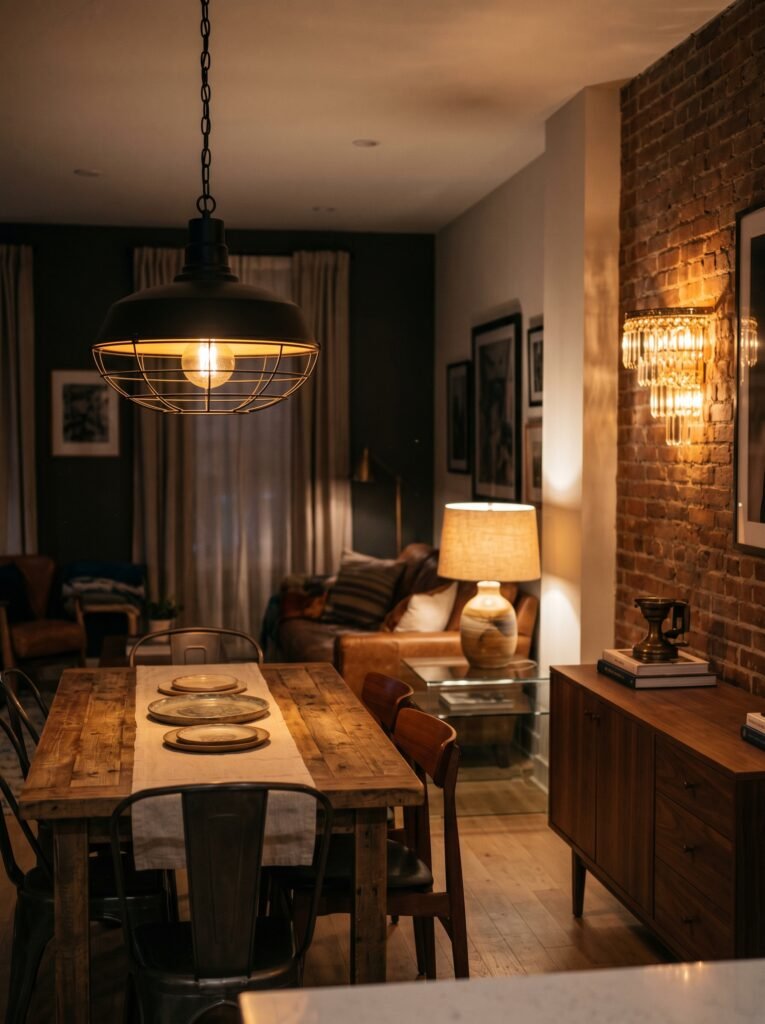
People spend enormous energy choosing furniture, textiles, and art in their eclectic rooms and then forget entirely about lighting — which is, without exaggeration, one of the most powerful tools you have. Lighting doesn’t just illuminate a room. It sets the mood, softens contrasts, and can make the most eclectic mix feel unified and intentional.
In eclectic design, mixing lighting styles is not only acceptable, it’s encouraged. An industrial pendant over a dining table made of reclaimed wood. A glamorous crystal sconce beside a mid-century console. A hand-thrown ceramic table lamp on a glass nightstand. The variety in your light fixtures adds another layer of the intentional diversity that defines the style.
“Light is the great equalizer in eclectic design — it makes the mismatched feel meant to be.”
What matters most is warmth. Warm-toned bulbs (around 2700K) soften the visual noise of an eclectic room and give it that golden, enveloping quality that makes people feel immediately at ease. Cool, bright lighting tends to highlight the differences between objects rather than the harmony between them.
10. The Art of Knowing When to Stop
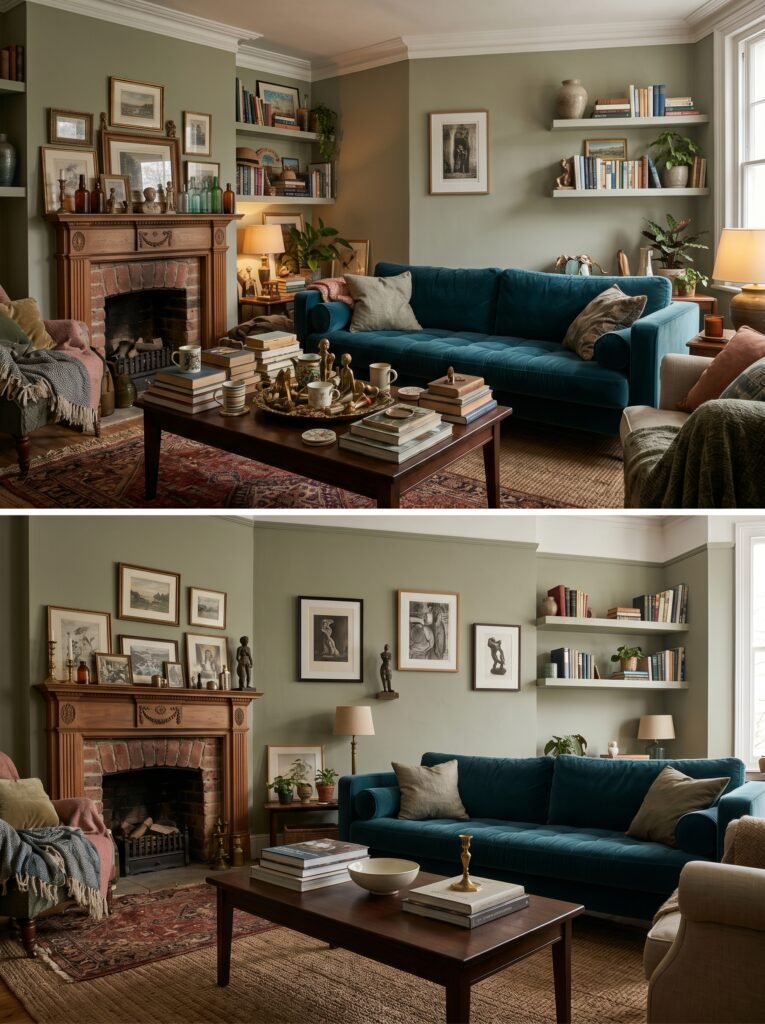
This is perhaps the most sophisticated skill in eclectic decorating, and it cannot be learned from a book — it has to be felt. The eclectic room has a natural stopping point, a moment when the layering has reached its perfect peak and adding anything more would tip it from curated into chaotic.
One practical technique: after you’ve decorated a room, remove five things. Not permanently — just set them aside and live with the room for a week. You’ll almost always discover that the space breathes better without them, and that a few of those five things weren’t doing what you thought they were. Editing is not failure. Editing is the final, most important act of design.
The negative space in an eclectic room isn’t empty — it’s deliberate. It gives your eye somewhere to rest between the richness of everything else.
11. Common Eclectic Design Mistakes (And How to Sidestep Them)
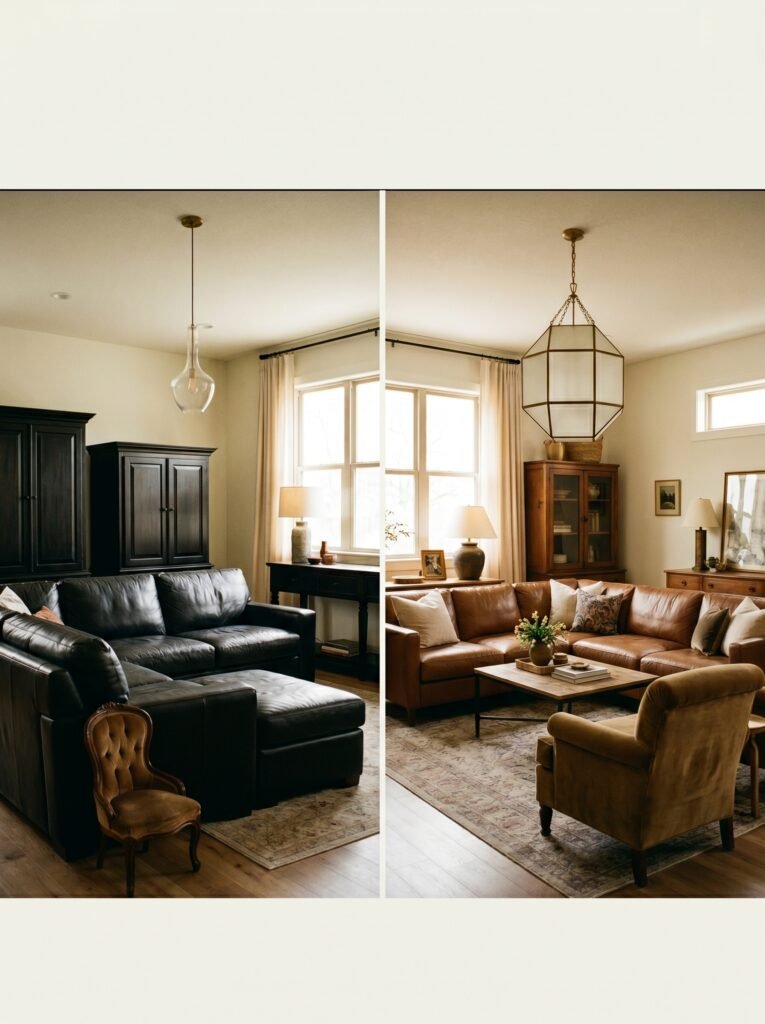
Even the most enthusiastic eclectic decorators can fall into predictable traps. The most common one is confusing “collecting” with “designing.” A room full of things you love is a wonderful start, but love alone isn’t enough to make them work together spatially. This is where the unifying thread — your color story, material consistency, or mood — becomes essential.
Another frequent mistake is neglecting scale. A tiny accent chair next to an oversized sofa, or a delicate pendant light in a room with heavy, dark furniture, creates imbalance that no amount of styling can fix. Always consider scale relationships first, style second.
Finally, many people stop at the first layer — they furnish the room and call it done. But eclectic spaces need time. They evolve as you live in them, as you bring home new pieces, as you travel and collect and change. Give your space permission to be a work in progress. The most beautiful eclectic homes usually took years to reach their fullest expression.
12. Eclectic Style in 2025 — Where It’s Heading
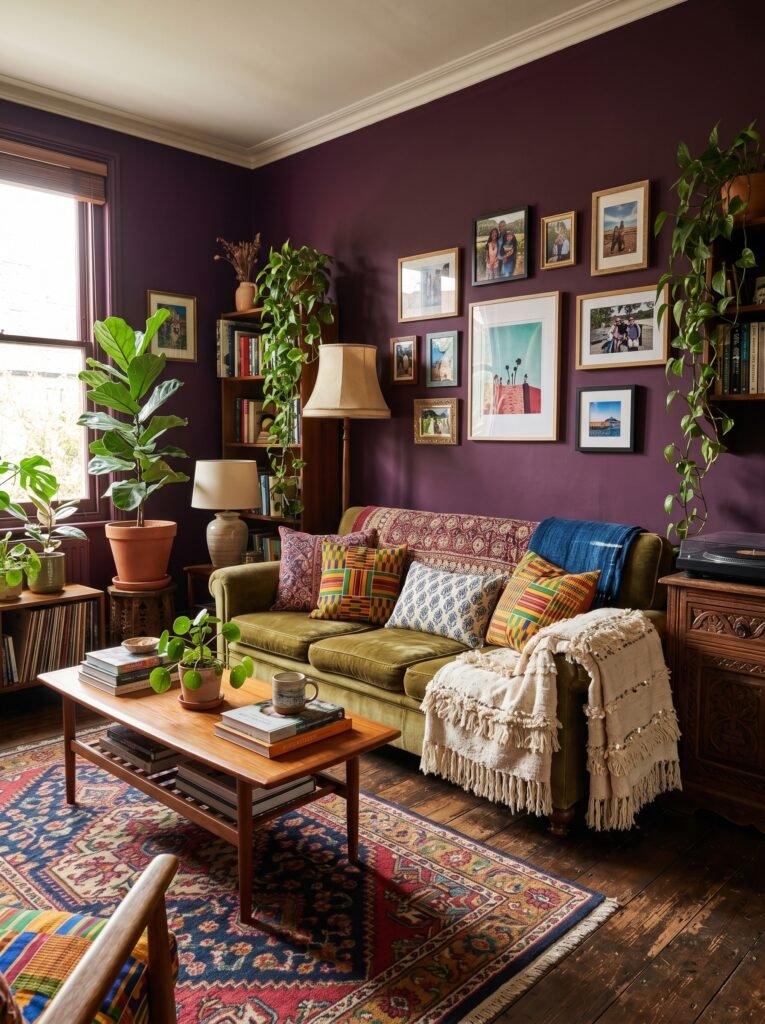
Eclectic design is not a trend — it’s a philosophy. But within it, certain expressions are gaining momentum. The “collected maximalism” movement has moved well beyond the neutral minimalism of the last decade, with homeowners embracing rich color, layered pattern, and deeply personal curation. Vintage and thrifted pieces are no longer a budget compromise — they’re a statement of sustainability and individuality.
We’re also seeing a growing interest in what might be called “cultural eclecticism” — homes that intentionally weave textiles, art, and objects from different global traditions, creating spaces that reflect both personal heritage and a broader curiosity about the world. This approach, when done with respect and intentionality, produces some of the most soulful and visually extraordinary interiors being made today.
What remains constant, regardless of which direction eclectic style moves in, is its central promise: your home can look like you. Not like a catalog, not like a trend board, not like your neighbor’s house — like you, with all your contradictions, your history, your evolving taste, and your very specific idea of what feels like home.
—
🌿 How to Build Your Own Eclectic Interior Style
Starting an eclectic room from scratch — or reimagining one you’ve had for years — doesn’t have to be overwhelming. Begin by gathering images of rooms that make you feel something: not just rooms you think are “nice,” but rooms that produce a physical response of warmth, excitement, or longing. Look for the patterns in what you’ve saved — that’s your unifying thread revealing itself. Then audit what you already own. The best eclectic rooms are built around pieces you genuinely love, not pieces chosen to fill a void. Before buying anything new, try rearranging what you have. You’ll often discover that the room wasn’t missing new objects — it was missing a new arrangement. When you do shop, prioritize quality over quantity. One extraordinary vintage piece will do more for an eclectic room than five generic new ones. Finally, be patient with the process. An eclectic home is assembled over time, and the most meaningful pieces will arrive when you’re not desperately searching for them.
—
❓ FAQ
Q: Can eclectic style work in a small space? A: Absolutely — in fact, small spaces often benefit from eclectic layering because the density of visual interest draws attention away from square footage. The key is to keep larger pieces proportional to the room and use vertical space generously through art, shelving, and lighting.
Q: How do I know if my room is “eclectic” or just “messy”? A: The clearest test is whether your room has a unifying thread — a consistent color story, material, or mood running through it. If you can identify that thread, your room is eclectic. If every piece feels random and unrelated, it may be time to edit and find the common ground between what you love.
Q: Is eclectic interior design expensive? A: It’s one of the most budget-friendly design philosophies available, precisely because it welcomes pieces from every price point. Vintage shops, estate sales, thrift stores, and family hand-me-downs are the lifeblood of great eclectic spaces. What matters is not what something cost, but how it contributes to the story of the room.
—
💭 Final Thought
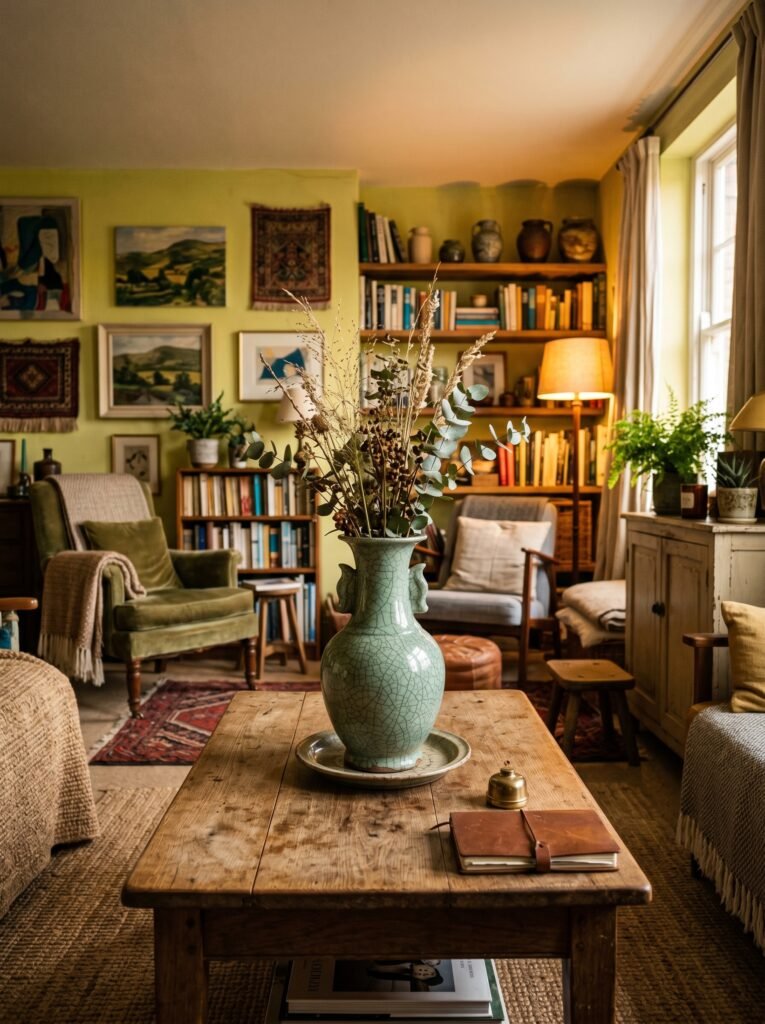
Eclectic interior style, at its most beautiful, is really just an honest reflection of a life fully lived. It says: I have traveled, I have inherited, I have changed my mind, I have loved many things across many years — and all of that is welcome here. In a world that often pushes us toward the curated perfection of a single aesthetic, there’s something quietly radical about a home that looks like a real person lives in it. So as you think about your own space, consider this: what is the one object you’ve been afraid to display because you thought it didn’t “go” — and what would happen if you built the room around it instead?