The Mediterranean Home: How to Bring Warmth, Soul, and Timeless Beauty Into Every Room
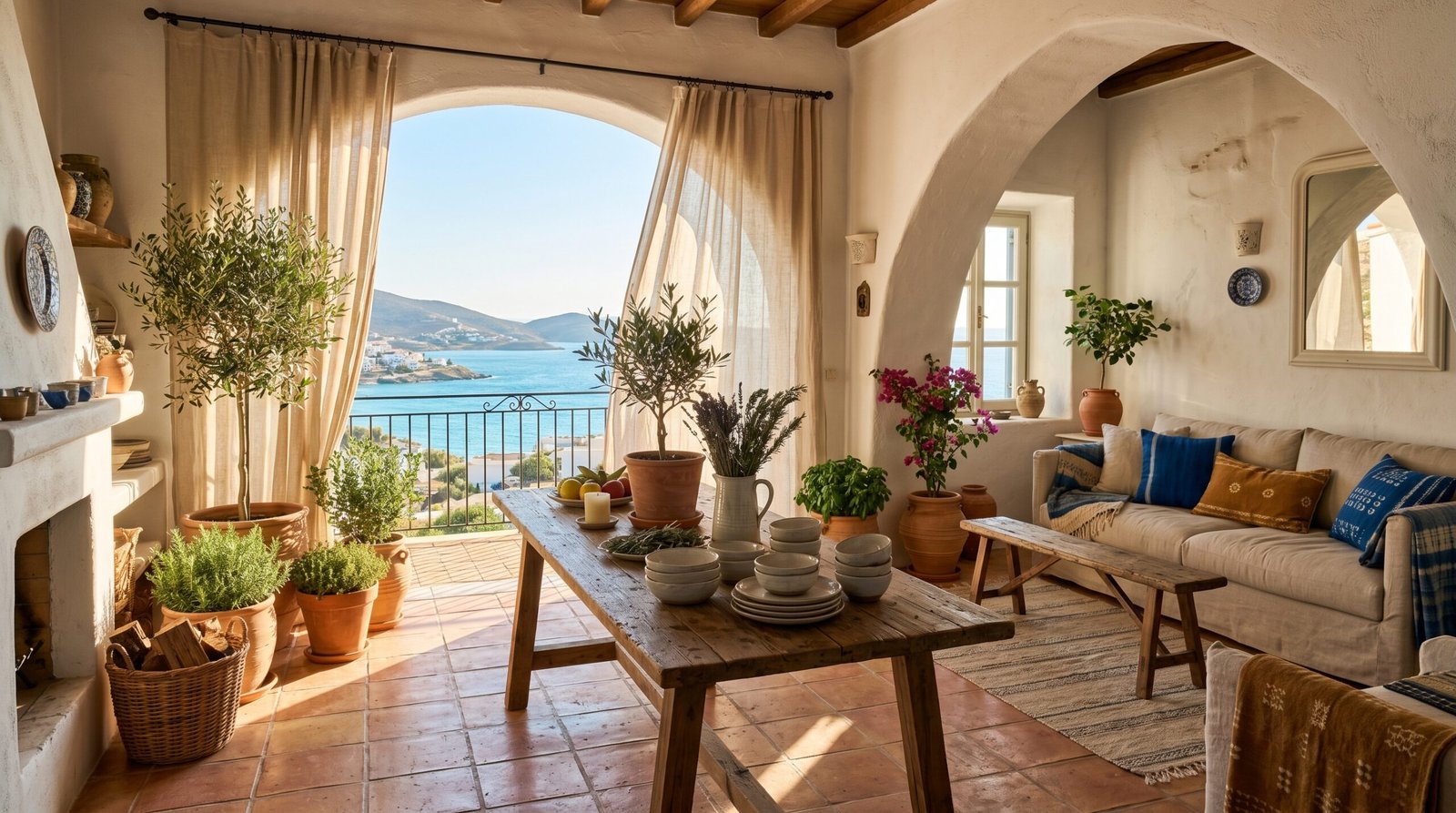
There’s a moment — maybe you’ve felt it — when you step into a room and something in your chest just settles. The air feels warmer, the light feels golden, and somehow you feel both awake and at peace all at once. That’s the quiet power of Mediterranean interior design, and once you understand its soul, you’ll never see your home the same way again.
—
Table Of Content
1. What Makes Mediterranean Design Different From Every Other Style
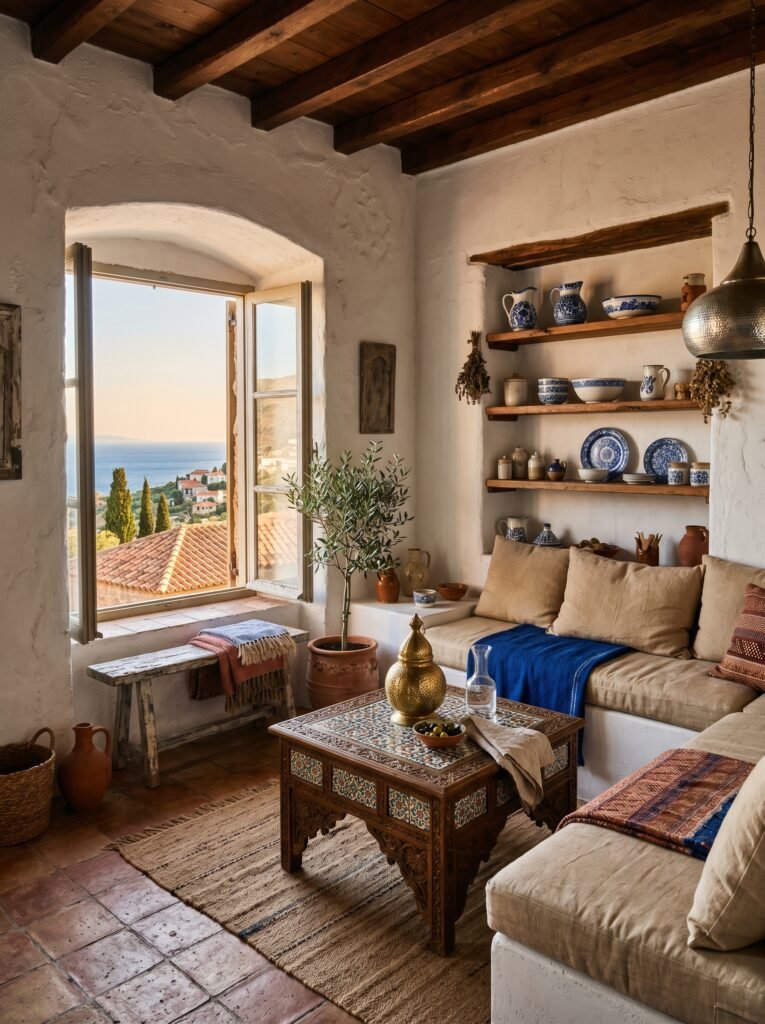
Most design trends ask you to strip things away — go minimal, go neutral, go cold. Mediterranean design asks the opposite. It says: bring more life in. More texture, more color, more warmth, more story. And yet, somehow, it never feels cluttered or chaotic. That’s the paradox at the heart of this style — it’s abundant without being overwhelming, layered without being messy.
Mediterranean design draws from the coastal cultures of Southern Europe — think the sun-drenched hillsides of Greece, the terracotta rooftops of Tuscany, the blue-and-white village houses of the Aegean, the ornate tilework of Morocco and Spain. It’s not one single country’s aesthetic. It’s a whole region’s shared relationship with light, nature, warmth, and slow living. When you bring that into your home, you’re not just decorating — you’re creating a way of being.
“Mediterranean design isn’t a style you follow — it’s a feeling you build.”
2. The Color Palette That Makes Every Room Feel Like Sunlight

If you want to understand Mediterranean color, close your eyes and picture a late afternoon in the south of France. Warm terracotta walls. The deep blue of the sea meeting a bleached-white sky. A lemon tree in a courtyard casting dappled green shadows. Lavender growing wild along a stone path.
That’s your palette.
The Mediterranean color story revolves around a warm, earthy foundation — think terracotta, sandy beige, warm white, and sun-baked ochre. On top of that foundation, you layer richer accent tones: the deep cobalt blues of Greek island architecture, the leafy olive greens of the countryside, the faded burnt orange of Italian shutters, the dusty gold of mosaic tile. These are colors that have been baked by the sun and softened by time. They never feel harsh or jarring because they’re rooted in nature.
When applying this palette at home, start with your walls. A warm white or soft terracotta immediately shifts the energy of a room. Then bring in your deeper tones through textiles, ceramics, and statement furniture pieces. You don’t need every color at once — even two or three tones from this family will create that unmistakable Mediterranean warmth.
3. The Secret Language of Texture and Why It Matters So Much
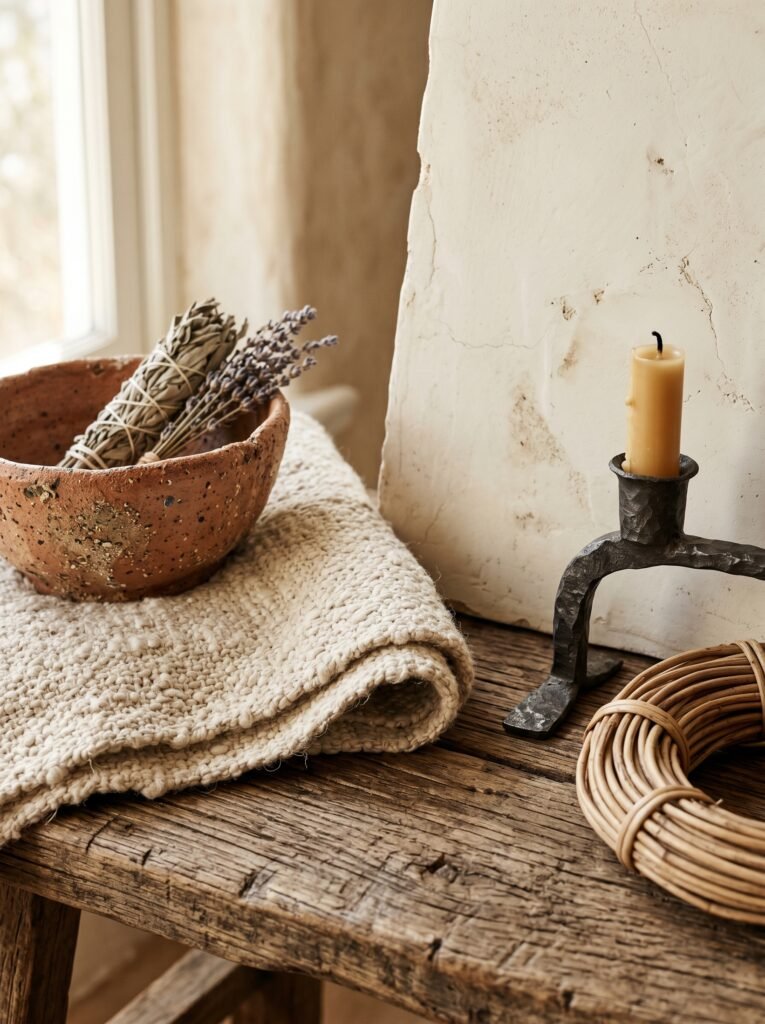
Walk into a beautifully decorated Mediterranean room and you’ll notice your hands want to touch things. The rough grain of a reclaimed wood table. The cool smoothness of handmade ceramic bowls. The nubby warmth of a woven wool throw. The slightly uneven surface of plastered walls. This is not accidental.
Texture is the quiet workhorse of Mediterranean interiors. Where some styles rely on color or statement furniture to create impact, Mediterranean design leans heavily on tactile richness. It favors natural, imperfect materials — stone, clay, linen, rattan, wrought iron, terracotta tile — because these materials carry a sense of history and authenticity that manufactured surfaces simply cannot replicate.
The beauty of this approach is that it’s deeply accessible. You don’t need to gut your home to introduce this kind of texture. A linen tablecloth, a hand-thrown ceramic vase, a jute rug, a rough-hewn wooden shelf — each of these individual elements adds a layer of sensory warmth. When you combine several, the room begins to breathe in a completely different way.
4. The Art of Using Terracotta Without It Feeling Like the 1970s
Terracotta has had a complicated reputation. For a while, it was so tied to a specific era of interior design that many people avoided it entirely. But terracotta’s current renaissance is well-deserved — and when done right, it feels nothing like the avocado-green kitchens of the past.
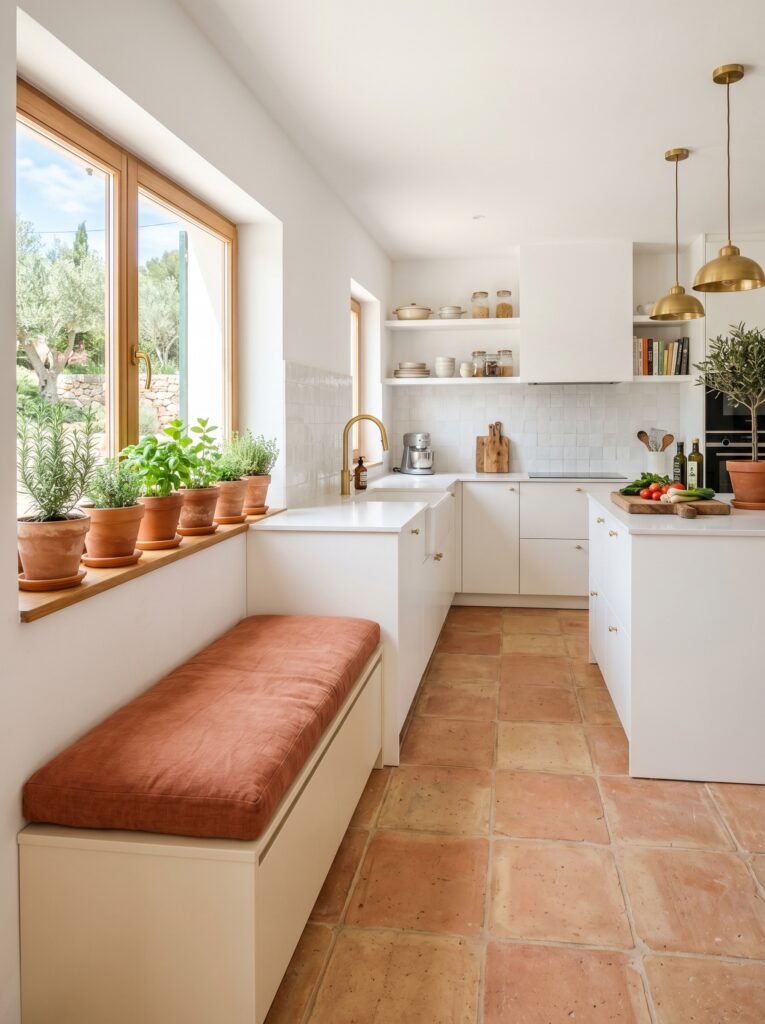
The key is in how you use it. Raw terracotta tile on a floor, paired with crisp white walls and modern brass fixtures, feels simultaneously ancient and entirely fresh. A terracotta-colored linen cushion against a cream sofa reads as sophisticated and earthy, not dated. A row of terracotta plant pots on a sunny windowsill feels so purely right — as though the room has been waiting for them.
Think of terracotta not as a color trend but as a material story. It’s clay, shaped by hand, fired in a kiln. It holds warmth in a literal and aesthetic sense. Whether you use it on your floors, your walls, your shelving, or simply in the form of a single beautiful pot, it anchors a room in something real and enduring.
“A terracotta pot catching the afternoon light is one of the simplest forms of beauty a home can hold.”
5. How Natural Light Becomes Your Most Important Design Element
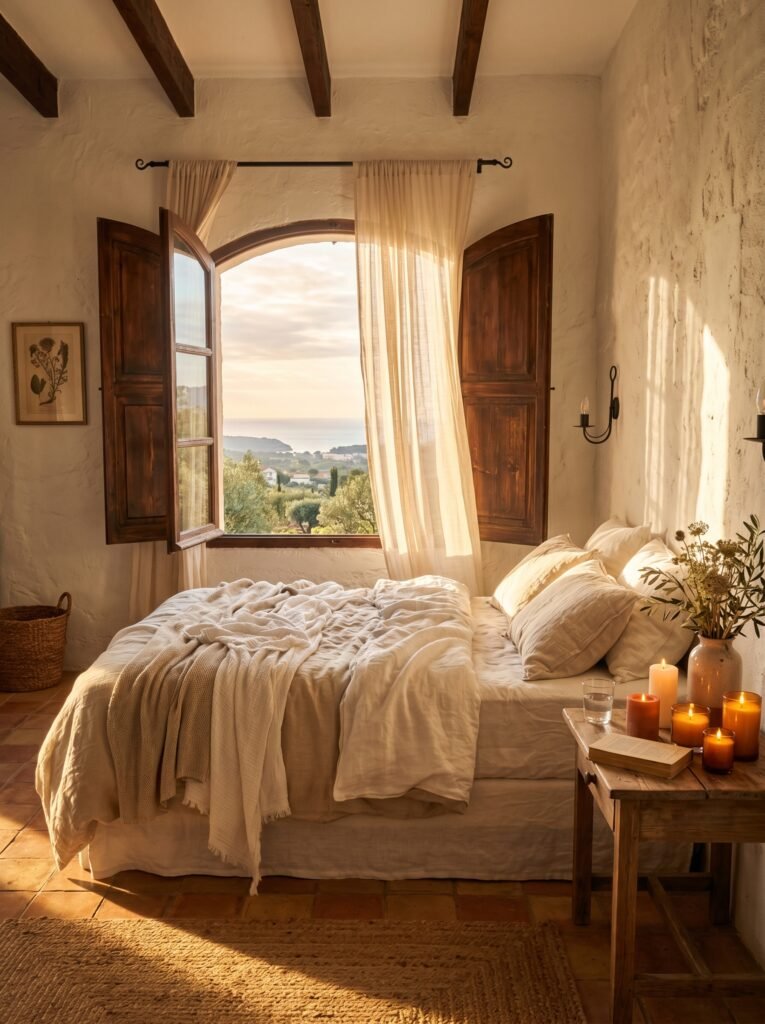
In the Mediterranean, people organize their lives around light. Shutters are opened at dawn to let the morning sun pour in. Afternoon light is filtered through gauze curtains to keep rooms cool and golden. In the evening, candles and warm lamps replicate that amber glow once the sun sets. Light isn’t background — it’s the main event.
To recreate this in your own home, start by auditing your windows. Are your curtains too heavy, blocking the light that could be transforming your space? Swapping out dark or stiff window treatments for sheer linen panels immediately softens and brightens a room in a way that paint alone cannot achieve. If privacy allows, consider leaving some windows completely bare — nothing floods a room with life quite like unobstructed daylight.
For artificial lighting, move away from harsh overhead fixtures and toward layers of warm, low-level light. Think floor lamps with warm-toned bulbs, clusters of candles on the dining table, lanterns on the floor, small table lamps in forgotten corners. The goal isn’t brightness — it’s warmth. Mediterranean rooms glow rather than illuminate.
6. Arches, Curves, and Why Straight Lines Feel Cold
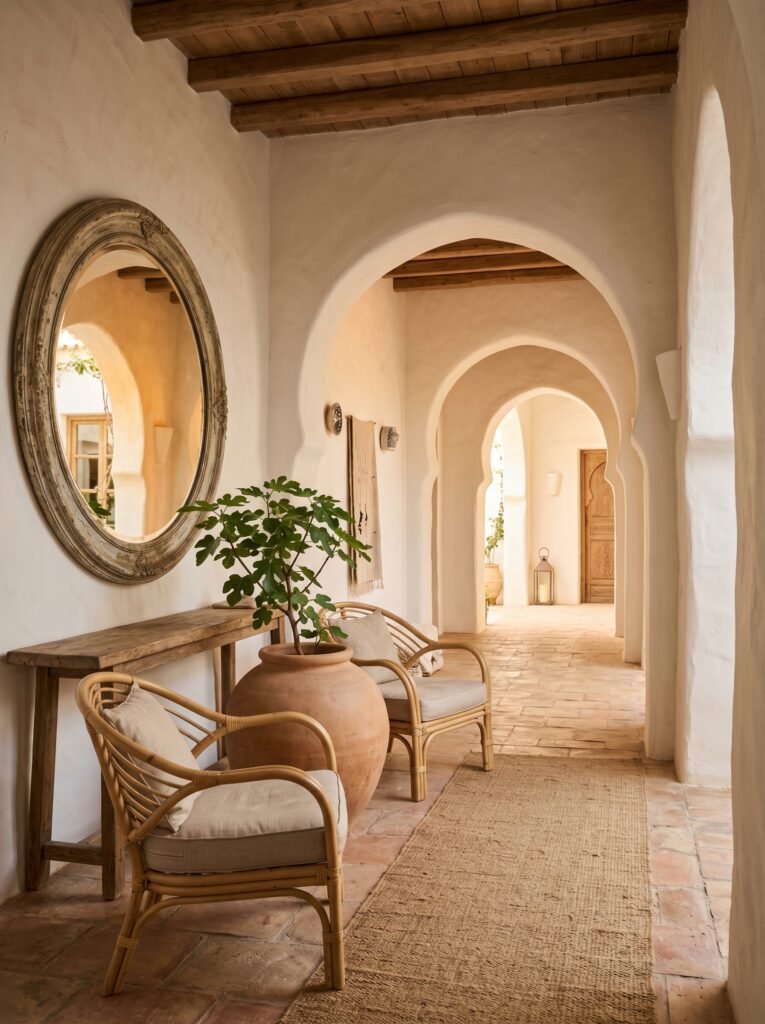
One of the most visually distinctive features of Mediterranean architecture is the arch. From the grand arched doorways of Spanish palaces to the humble curved niches in a Greek village home, the arch appears again and again across cultures and centuries. This isn’t coincidence. The arch is a structural solution, but it’s also an emotional one — rounded forms feel inviting, safe, and organic in a way that sharp angles simply don’t.
If you’re renovating, consider where you might introduce an arch — a doorway, a kitchen pass-through, a built-in shelving niche. Even in a rental or non-renovatable space, you can reference this sensibility through your furniture and decor choices. Round mirrors instead of rectangular ones. Curved-backed chairs. Oval dining tables. Rounded terracotta pots. Bowls rather than square containers.
The cumulative effect of these soft shapes is a room that feels genuinely welcoming rather than aesthetically correct. There’s a difference — and anyone who enters the room will feel it, even if they can’t name it.
7. Tile as Art: Creating Atmosphere With Pattern and Color
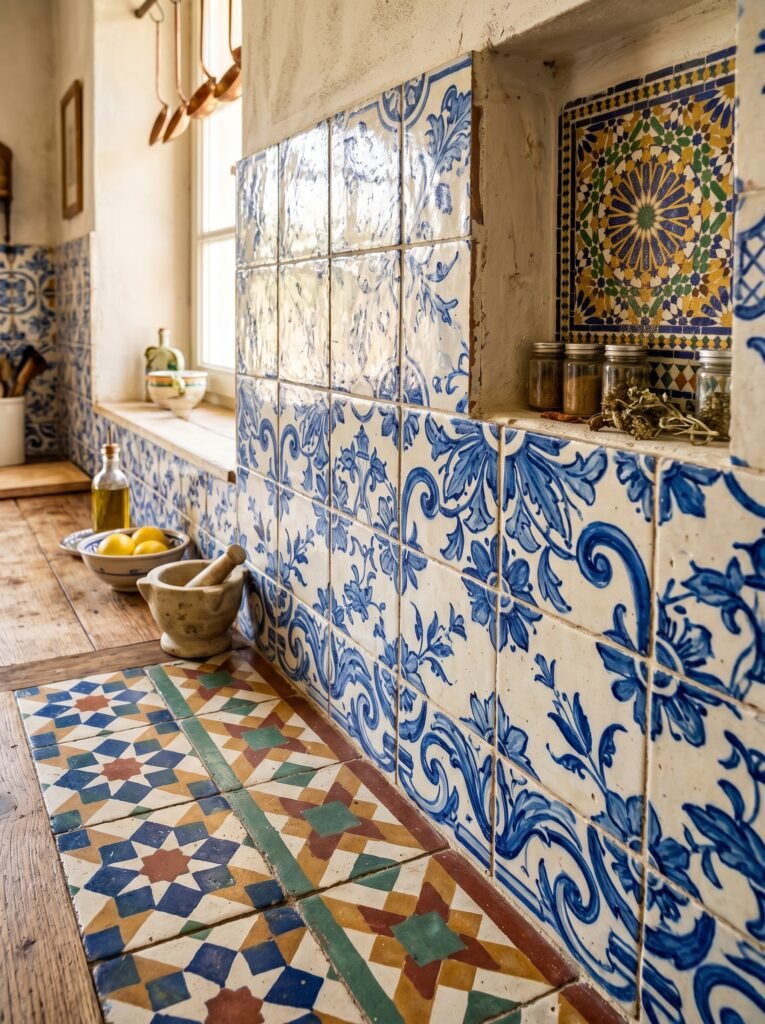
If there’s one design element that is quintessentially Mediterranean, it might be tile. Encaustic floor tiles in geometric patterns. Hand-painted Talavera tiles from Mexico and Spain. Blue-and-white azulejo panels from Portugal. Intricate Moorish-inspired mosaics from Morocco. Glazed, colorful, imperfect, storytelling tile.
Tile in Mediterranean design is not merely functional — it’s narrative. A beautifully tiled kitchen backsplash, a mosaic bathroom floor, a single row of patterned tile along a staircase riser — these are the moments that make a home feel like it was designed with love and intention rather than assembled from a showroom catalog.
For those working on a budget, you don’t need to retile your entire home to capture this spirit. A handful of hand-painted tiles arranged as a trivet or hung as wall art. Peel-and-stick tile panels in a rental kitchen. A single tiled plant pot displayed on a windowsill. The detail is what matters — not the scale.
8. Bringing the Outdoors In: Plants, Nature, and Living Elements
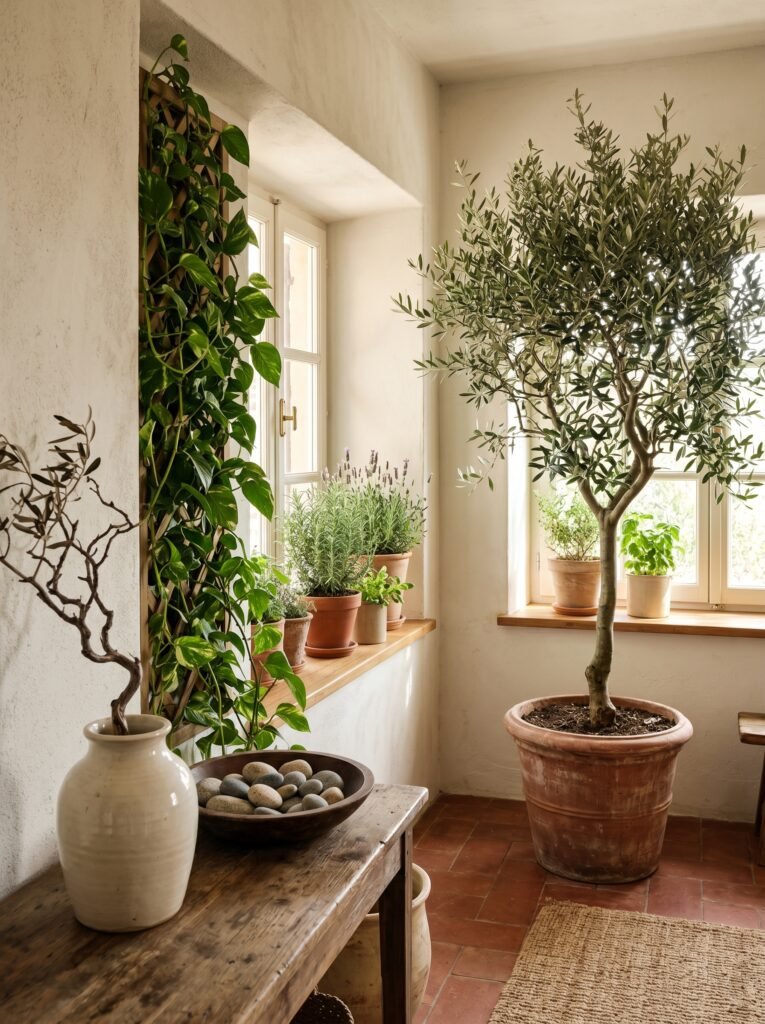
Mediterranean homes are in constant conversation with the outside world. Courtyards open to the sky. Windows frame olive trees. Kitchen herbs grow on every available surface. Potted lemon and fig trees stand in terracotta containers at doorways. Nature is not an afterthought — it’s a structural element of the design.
Bringing this philosophy into your own interior means thinking of plants not as decorative accessories but as living architecture. A large olive tree in a corner dramatically changes the scale and energy of a room. A wall of climbing pothos or ivy on a trellis creates a living texture that no wallpaper can replicate. A cluster of herbs in terracotta pots on the kitchen windowsill is simultaneously beautiful, functional, and deeply connected to the culinary heart of Mediterranean culture.
Beyond plants, you can bring nature inside through organic materials — a driftwood sculpture, a bowl of smooth river stones, a branch arranged in a ceramic vase, dried lavender hung in a bundle from a beam. These elements connect the interior to the natural world in a way that feels effortless and soulful.
“A home that breathes with plants and natural light doesn’t need much else to feel alive.”
9. The Mediterranean Kitchen: Where Food and Design Share the Same Soul
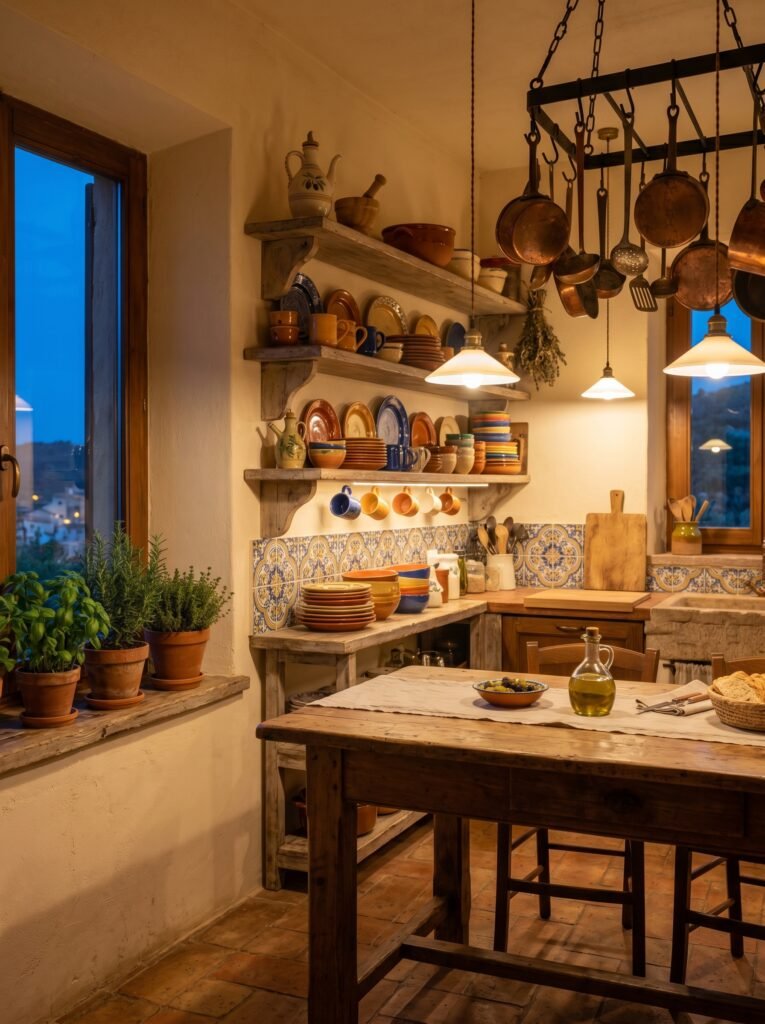
In Mediterranean culture, the kitchen is not a utilitarian room to be hidden away. It’s the heart of the house — the place where family gathers, where conversations stretch past midnight, where the smell of olive oil and garlic and fresh bread signals that you are deeply, completely home.
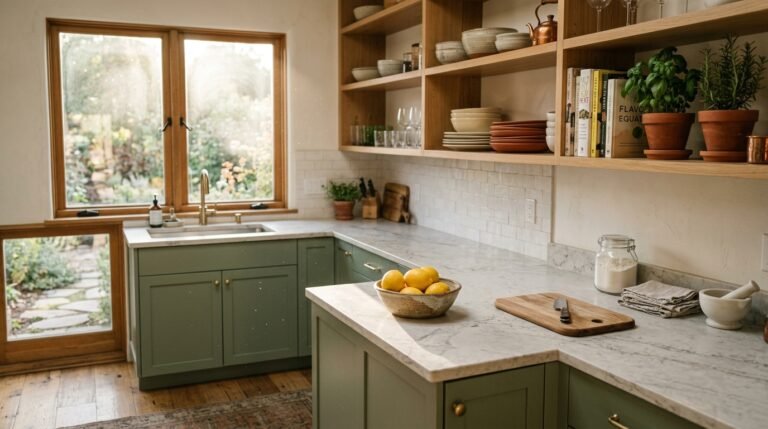
Designing a Mediterranean kitchen means honoring that cultural weight. Open shelving displays beloved ceramics and mismatched plates in warm tones. Copper pots hang from a ceiling rack like functional sculptures. A large wooden table anchors the space for both cooking and gathering. Stone or terracotta floor tiles ground everything in natural warmth.
The color palette leans toward cream, warm white, and soft terracotta, often accented with hand-painted tile in blue, green, or yellow. Brass or bronze hardware adds warmth and a hint of vintage character. Fresh herbs in terracotta pots line the windowsill. And somewhere on an open shelf, there’s always a beautiful olive oil bottle, a handmade ceramic bowl, a small bunch of dried lavender — the details that say someone loves this kitchen and everything that happens in it.
10. Furniture Choices That Tell a Story of Craftsmanship
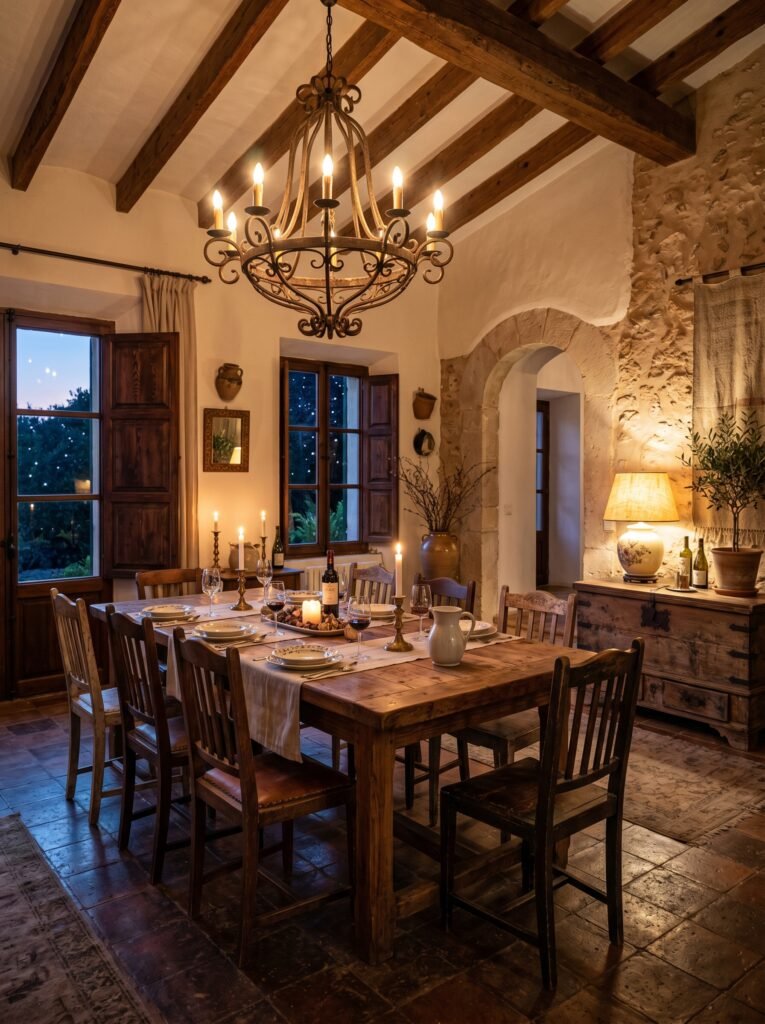
Mediterranean furniture is not mass-produced perfection. It’s handmade, slightly imperfect, built to last decades rather than seasons. Think solid wood dining tables with a visible grain, wrought iron bed frames, rattan or wicker accent chairs, hand-carved wooden doors and shutters. The beauty is in the evidence of human hands.
When selecting furniture for a Mediterranean-inspired home, prioritize weight and substance over lightness. These rooms can handle — in fact, they require — a certain visual gravitas. A heavy farmhouse dining table. A substantial upholstered sofa in warm linen. A solid wood dresser with brass handles. Furniture that makes a room feel settled and inhabited.
Antique and vintage pieces are particularly well-suited to this style. A worn wooden chest used as a coffee table. A pair of mismatched antique chairs flanking a fireplace. A vintage ceramic lamp base. These imperfect, storied pieces bring the kind of authenticity that no brand-new furniture can replicate.
11. The Role of Handmade and Artisanal Objects in Mediterranean Homes
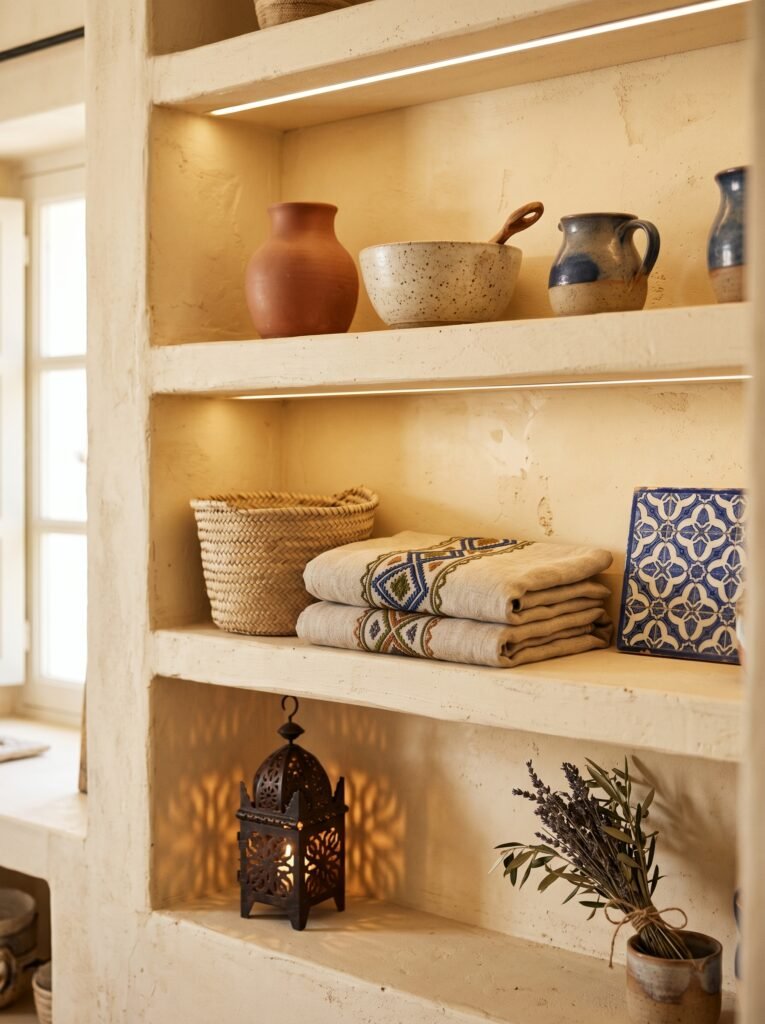
More than perhaps any other design aesthetic, Mediterranean interiors celebrate the human hand. Handmade pottery. Hand-woven rugs and textiles. Hand-painted tiles. Hand-stitched embroidered cushions. Artisanal lanterns and ironwork. These are not luxury items — they are the vernacular of Mediterranean domestic life, the objects that have filled homes in these cultures for centuries.
When you choose handmade objects for your home — even a single hand-thrown ceramic mug or a woven basket from a local market — you’re participating in that tradition. You’re choosing imperfection over uniformity, story over status, craftsmanship over convenience. And the cumulative effect of filling a home with these choices is extraordinary. The space begins to feel less like a showroom and more like a life being genuinely, warmly lived.
12. Small Spaces, Big Atmosphere: Making Any Room Feel Mediterranean
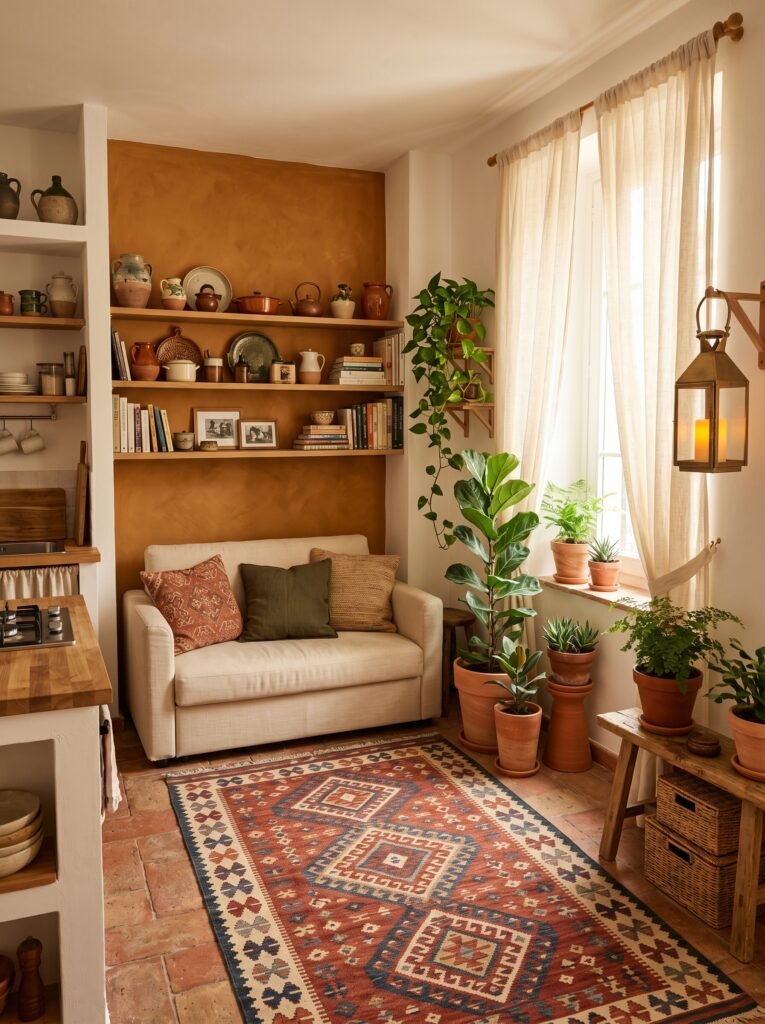
One of the most hopeful things about Mediterranean design is that it doesn’t require grand spaces to make its impact. In fact, many of the most beautiful examples of this style are found in small village homes, compact apartments, and modest studios. The Mediterranean approach to small space design is generous, layered, and completely at odds with the “less is more” minimalism that often dominates small-space advice.
Instead of stripping a small room back, this approach adds warmth: a deep-toned accent wall in ochre or terracotta, a large-scale patterned rug that gives the illusion of expanded floor space, a cluster of plants in varying heights, a warm-glowing lantern in a corner, open shelving displaying beloved objects rather than hidden storage. The goal is not to make the room feel bigger — it’s to make it feel so alive and warm that its size becomes irrelevant.
Even a single well-chosen Mediterranean element — a string of warm lights, a hand-painted tile backsplash, a linen curtain in natural cream — can shift the emotional register of a small room entirely.
—
🌿 How to Take Care of Your Mediterranean-Inspired Interior
Maintaining a Mediterranean interior is really about maintaining a relationship with your home — tending to it with the same care and attention you’d give a garden.
Keep natural materials nourished. Wood surfaces benefit from occasional oiling to prevent drying and cracking. Terracotta floors and tiles should be sealed properly and mopped with gentle, natural cleaners to preserve their character without stripping the material. Linen textiles are best washed in cool water and line-dried to preserve their texture and natural quality.
Let your plants earn their place. A Mediterranean interior depends on living greenery to feel alive, so commit to the care those plants require. Learn the specific needs of each variety — Mediterranean herbs like rosemary, lavender, and thyme are relatively forgiving, while olive trees in pots need consistent watering and good drainage.
Rotate and refresh rather than replace. Mediterranean style is built from accumulation over time, not shopping in a single weekend. Let your home evolve. Add a new piece of pottery from a market, swap a cushion cover with the seasons, bring in fresh branches or dried botanicals. This ongoing tending is what makes a Mediterranean home feel genuinely lived-in rather than staged.
Finally, protect your light. The single most important maintenance task in a Mediterranean interior is keeping your windows clean and your curtains light enough to let the sunlight do its work. Light is your primary design element — treat it accordingly.
—
❓ FAQ
Q: Is Mediterranean interior design expensive to achieve? A: Not at all — it’s actually one of the most budget-friendly design aesthetics precisely because it values imperfection and age over newness. Vintage shops, flea markets, and artisan markets are your best friends here. A single beautiful handmade ceramic piece or a length of natural linen can anchor an entire room without requiring a major financial investment.
Q: Can Mediterranean design work in a modern apartment without architectural features like arches or stone floors? A: Absolutely. The soul of Mediterranean design lives in material choices, color, texture, and warmth — not in specific architectural features. Introducing terracotta tones, natural textiles, handmade objects, warm lighting, and abundant plants will create that atmosphere in any space, from a studio apartment to a suburban living room.
Q: How is Mediterranean style different from Bohemian or Tuscan décor? A: Mediterranean design is the broader umbrella — it encompasses the aesthetics of multiple Southern European and North African coastal cultures. Tuscan style is one specific regional expression of it, leaning toward rustic Italian farmhouse sensibilities. Bohemian design shares some overlapping elements like layering and global textiles, but its spirit is more eclectic and free-form, while Mediterranean design has a stronger connection to nature, architecture, and regional craftsmanship.
—
💭 Final Thought
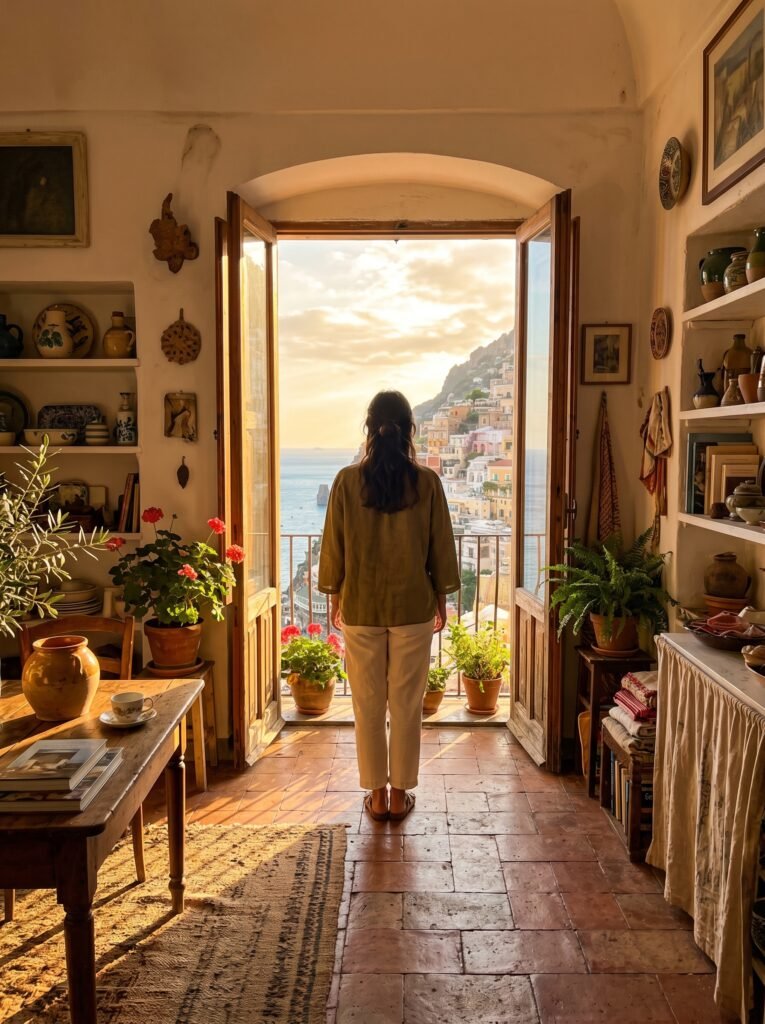
At its deepest level, Mediterranean design is not about how a room looks — it’s about how a room feels. It’s about creating a space where the light is always a little golden, where every surface has a story, where food and conversation and beauty are treated as equally essential parts of a good life. It’s a design philosophy born from cultures that have always understood that a home is not a backdrop for living — it’s a living thing itself.
So as you think about your own space, ask yourself this: what would it feel like to walk into your home every single day and feel that quiet settling in your chest — that wordless sense of being exactly where you belong?